PROBLEMS ENCOUNTERED IN THE PROCESS OF REVERSE LOGISTICS AND THEIR SOLUTIONS
*1
Murat Selim Selvi and
1Department of Business Administration, Faculty of Economics and Administrative Sciences,
2Business Administration Division, Institute of Social Sciences,
ARTICLE INFO ABSTRACT
Businesses have performed reproduction by obtaining cheap raw materials thanks to reverse logistics activities. The aim of this study is to identify the problems being faced in reverse logistics process and to provide solutions for these problems. For this purpose, 23 industrial enterprises were examined in the scope of sample. The research is a case study which can be defined as “integrated
design
reverse logistics. Words and phrases were used as analysis unit in this study, descriptive and discourse analyses were performed on qualitative data. Some sentences were quoted directly. The obtained results were su
validity of the research by creating evidence chain. This study showed a total of 21 problems in reverse logistics process. Some of them are storage, damages encountered d
deliveries and incorrect returns, damages encountered during shipping, waste management, and no knowledge of environmental issues, customer returns etc.
Copyright © 2015 Murat Selim Selvi and Yasemin Kayar
permits unrestricted use, distribution, and reproduction in any medium, provided the original work is properly cited.
INTRODUCTION
In recent years, reverse logistics has become a very important business function for enterprises due to its various benefits. Enterprises obtain cheap raw material by recycling faulty, defective, low quality, broken, damaged, old and unusable products and use them for remanufacturing. In addition, enterprises refurbish products by changing a part of the used or damaged product. On the other hand, reverse logistics secure its position in social life thanks to the concept of recycling. The social awareness level about collecting, sorting, reusing or disposing all kinds of household wastes without threatening human health and nature has been increasing with each passing day and the “green” image has been gaining strength. Consumers prefer recyclable products and gain awareness regarding solid and liquid waste management and assume social responsibility. "Diversification of types of waste, improved technological systems to process waste to support economy, desire to save reduce total logistics costs, improved environmental awareness and increased sales of recycled products due to the green image (Küçük, 2012) increases the importance of reverse logistics.
*Corresponding author: Murat Selim Selvi,
Department of Business Administration, Faculty of Economics and Administrative Sciences, Namik Kemal University, Turkey
ISSN: 0975-833X
Article History:
Received 10th July, 2015
Received in revised form 15th August, 2015
Accepted 07th September, 2015
Published online 31st October,2015
Key words:
Recycling, Recovery, Customer Returns, Çorlu-Çerkezköy.
Citation: Murat Selim Selvi and Yasemin Kayar
International Journal of Current Research, 7, (10
RESEARCH ARTICLE
PROBLEMS ENCOUNTERED IN THE PROCESS OF REVERSE LOGISTICS AND THEIR SOLUTIONS
Murat Selim Selvi and
2Yasemin Kayar
Department of Business Administration, Faculty of Economics and Administrative Sciences, Namik Kemal University, Turkey
Business Administration Division, Institute of Social Sciences, Namik Kemal University, Turkey
ABSTRACT
Businesses have performed reproduction by obtaining cheap raw materials thanks to reverse logistics activities. The aim of this study is to identify the problems being faced in reverse logistics process and to provide solutions for these problems. For this purpose, 23 industrial enterprises were examined in the scope of sample. The research is a case study which can be defined as “integrated
design” type. “Maximum diversity sampling” was made to find out different and similar problems in reverse logistics. Words and phrases were used as analysis unit in this study, descriptive and discourse analyses were performed on qualitative data. Some sentences were quoted directly. The obtained results were submitted to the approval of the respondents. Thereby, it was contributed to construct validity of the research by creating evidence chain. This study showed a total of 21 problems in reverse logistics process. Some of them are storage, damages encountered d
deliveries and incorrect returns, damages encountered during shipping, waste management, and no knowledge of environmental issues, customer returns etc.
Murat Selim Selvi and Yasemin Kayar. This is an open access article distributed under the Creative Commons Att use, distribution, and reproduction in any medium, provided the original work is properly cited.
In recent years, reverse logistics has become a very important business function for enterprises due to its various benefits. Enterprises obtain cheap raw material by recycling faulty, defective, low quality, broken, damaged, old and unusable use them for remanufacturing. In addition, enterprises refurbish products by changing a part of the used or damaged product. On the other hand, reverse logistics secure its position in social life thanks to the concept of recycling. vel about collecting, sorting, reusing or disposing all kinds of household wastes without threatening human health and nature has been increasing with each passing day and the “green” image has been gaining strength. d gain awareness regarding solid and liquid waste management and assume social responsibility. "Diversification of types of waste, improved technological systems to process waste to support economy, desire to save reduce total logistics costs, improved ironmental awareness and increased sales of recycled products due to the green image (Küçük, 2012) increases the
Department of Business Administration, Faculty of Economics and dministrative Sciences, Namik Kemal University, Turkey.
Today, reverse logistics operations have become very important for enterprise, however they encounter with certain difficulties, uncertainties or challenges which may lead to serious problems. For example, “uncertainty about the amount and type of materials, returned time of products, quality of returned products, types and components of returned products, market demand for returned products and amounts of recovered products” are important challenges (Şengül 2011; Dirik 2012; Pinna and Carus, 2012; Acar and
Many authors have studies on difficulties and obstacles encountered during the process of reverse logistics (Rogers and Tibben-Lembke 1998; Ravi and Shankar 2005; Dissanayake 2007; Coşkun, 2011; Temur, Ayvaz and Bolat, 2015)
This study investigates what sort of problems industrial enterprises encounter during the reverse logistics process. Therefore, the main problem of the study is what sort of difficulties, challenges and obstacles industrial enterprises face during the implementation of re
the aim of the study is to identify reverse logistics related problems of industrial enterprises operating in the districts of Corlu and Cerkezkoy of the province of Tekirdag and the Luleburgaz district of the province of
suitable solutions. First, the study gives a brief definition of reverse logistics and describes its scope. Then some information is given related to difficulties and obstacles Available online at http://www.journalcra.com
International Journal of Current Research
Vol. 7, Issue, 10, pp.22046-22053, October, 2015
INTERNATIONAL
Murat Selim Selvi and Yasemin Kayar, 2015. “Problems encountered in the process of reverse logistics and their solutions , 7, (10), 22046-22053.
z
PROBLEMS ENCOUNTERED IN THE PROCESS OF REVERSE LOGISTICS AND THEIR SOLUTIONS
Department of Business Administration, Faculty of Economics and Administrative Sciences,
Namik Kemal University, Turkey
Businesses have performed reproduction by obtaining cheap raw materials thanks to reverse logistics activities. The aim of this study is to identify the problems being faced in reverse logistics process and to provide solutions for these problems. For this purpose, 23 industrial enterprises were examined in the scope of sample. The research is a case study which can be defined as “integrated multi-case
nd out different and similar problems in reverse logistics. Words and phrases were used as analysis unit in this study, descriptive and discourse analyses were performed on qualitative data. Some sentences were quoted directly. The obtained bmitted to the approval of the respondents. Thereby, it was contributed to construct validity of the research by creating evidence chain. This study showed a total of 21 problems in reverse logistics process. Some of them are storage, damages encountered during shipping, wrong deliveries and incorrect returns, damages encountered during shipping, waste management, and no
icle distributed under the Creative Commons Attribution License, which
Today, reverse logistics operations have become very important for enterprise, however they encounter with certain difficulties, uncertainties or challenges which may lead to serious problems. For example, “uncertainty about the amount s, returned time of products, quality of returned products, types and components of returned products, market demand for returned products and amounts of recovered products” are important challenges (Şengül 2011; Dirik 2012; Pinna and Carus, 2012; Acar and Kara 2014). Many authors have studies on difficulties and obstacles encountered during the process of reverse logistics (Rogers and Lembke 1998; Ravi and Shankar 2005; Dissanayake 2007; Coşkun, 2011; Temur, Ayvaz and Bolat, 2015)
tigates what sort of problems industrial enterprises encounter during the reverse logistics process. Therefore, the main problem of the study is what sort of difficulties, challenges and obstacles industrial enterprises face during the implementation of reverse logistics. In this context, the aim of the study is to identify reverse logistics related problems of industrial enterprises operating in the districts of Corlu and Cerkezkoy of the province of Tekirdag and the Luleburgaz district of the province of Kirklareli and propose suitable solutions. First, the study gives a brief definition of reverse logistics and describes its scope. Then some information is given related to difficulties and obstacles
INTERNATIONAL JOURNAL OF CURRENT RESEARCH
encountered in the reverse logistics process. The method section of the study describes the model, type, pattern and sample of the study. It also describes the data collection tool, data analysis process and “validity, reliability and generalization”. This qualitative research gives wide coverage to findings related to observations and interviews. Similar and different problems encountered by enterprises in the reverse logistics process are given categorically. For example, it has been found that there are similar and different problems in terms of packaging, planning, receiving-shipping-storage management and control, material transfer/handling/transport, and order processing/entry.
LITERATURE
The definition and scope of reverse logistics
In the literature, the concept of reverse logistics is also referred to as “reverse distribution”, “reverse channel”, “return logistics”, “reverse flow logistics”, and “environmental logistics”. There are many definitions for reverse logistics in the literature. For example, “for retailers, reverse logistics is taking the product back to the vendor, while for manufacturers, reverse logistics is taking the product back from the consumer” (Taş, 2009). The concept of reverse logistics is usually defined as, unlike traditional supply chain, planning, implementing, and controlling secondary material storages, material flow and related information to recover or appropriately dispose of material (as cited in Acar and Kara; 2014). Reverse logistics is “accepting returns for recycling, remanufacturing or disposal purposes” (Dowlatshahi 2000); “the process of collecting, transporting, sorting, storing and processing wastes”. On the other hand, reverse logistics is “transferring wastes and packaging materials to a central point for recycling and recovery” (Guide et al., 2000). Reverse logistics is “the process of planning, implementing, and controlling the efficient, cost-effective flow of raw materials, in-process inventory, finished goods, and related information from the point of consumption to the point of origin for the purpose of recapturing value or proper disposal” (Rogers and Tibben-Lembke, 1998). Reverse logistics is “an important part of a broader supply chain management process” (Senthil and Sridharan, 2014), “materials management activities needed to perform product recovery, including the upstream movement of materials and source reduction (Napier and Mishra, 2014). Özesen (2009) states that reverse logistics involves activities such as recycling, disassembly, refurbishing and waste management.
According to the author, products and parts are accepted by the enterprise subject to a certain process and various stages. Reverse logistics is “movement of wastes, which were left behind from material used by manufacturers to obtain raw material by recycling and using in remanufacturing, from primary costumer to vendors or from consumption points to manufacturing points” (Küçük, 2012). Reverse Logistics is movement of damaged, defective and end-of-life products in the opposite direction within supply chain for repair, maintenance, sorting or disposal purposes (Erdal et al., 2010). In addition to these operations; collection, inspection-sorting, repair/reuse, redistribution, and disposal are among activities used during the reverse logistics process (Thierry et al., 1995;
Demirel and Gökçen, 2008; Şengül, 2011; Çekerol, 2013; Temur, Ayvaz and Bolat, 2015). Thus, reverse logistics consists of one or more of operations such as repair, product refurbishing, parts recovery, remanufacturing, product cannibalization and recycling operations (Bulut and Deran, 2008; Çekerol, 2013). Reverse logistics is “a process that involves all logistics activities from the used product not needed by the user to the reusable product in the market” (Fleischmann et al., 1997). “Reverse logistics usually involves reverse movement of products such as returns due to various reasons, empty containers and boxes, and reusable packaging materials and it is also known as environment-friendly logistics” (Keskin, 2014).
This view is supported by Koban and Keser (2013) as well. According to the authors “reverse logistics is also known as environment-friendly logistics since it involves recycling of unwanted materials (waste material, boxes, bottles, paper, etc.) and their use in remanufacturing”. Reverse logistics involves processing of returned products due to damage and concepts such as seasonal stock, restocking, scrap, product recalls and overstock. Reverse logistics includes all topics related to logistics activities in resource use, refurbishing, recycling, reuse and disposal of materials (as cited in Acar and Kara; 2014). Reverse logistics also involves topics such as return programs, hazardous materials programs, disposal of outdated equipment and asset recovery (Rogers and Tibben-Lembke, 1998).
Problems encountered in the process of reverse logistics
There are various opinions concerning problems encountered in the process of reverse logistics. For example, there is an uncertainty for enterprises regarding “returned time of a product, quality of a returned product, configurations of parts or components of returned products, locations, amounts of recovered products” (Pinna and Carrus, 2012; Acar and Kara, 2014). McLeod et al. (2010) state that it is difficult to predict the time period when products will be recovered and reused and it is uncertain when returns will occur. In addition to these, “lack of online and real time information systems, uncertainty of quantity of returned products, insufficient traditional communication systems such as phone and fax” are among important obstacles and challenges. In other words, lack of new technology-based information systems, inability to predict future returns, and uncertainty regarding what process returns will be subjected to cause serious problems (Rogers and Tibben-Lembke 1998; Dissanayake 2007).
On the other hand, Ravi and Shankar (2005) and Coşkun (2011) mention “organizational and industrial obstacles”. According to Rogers and Tibben-Lembke (2001), active and passive resistance of employees working at lower and upper levels regarding reverse logistics practices, lack of a well-functioning system, lack of qualified staff who know reverse logistics practices and certain regulations obstruct reverse logistics operations. In addition to these problems, McLeod et al. (2010) summarize obstacles encountered as follows:
Large variations in timing, quality and quantity of product returns
Lack of formal procedures for product returns
Delayed product returns causes reduction in market value Lack of local competence in inspection, evaluation and
disposition of returns
Lack of information regarding costs and vehicles kilometers regarding decentralized returns network
Risk that products returned as new, or which could be sold to a secondary market would be disassembled and recycled instead
Lack of performance measurement of the efficiency of reverse logistics
MATERIALS AND METHODS
The Model, Type, Pattern and Sample of Study
This study employs “The Case Study Model”. This model aims to identify an individual, family, school, hospital, association, etc. and its relation with itself and its environment. These are also referred to as “monographic” studies (as cited in Karasar, 2014). This study also employs “the document review model” and benefits from “reviewing documents on the internet, books, articles, reports, assertions, etc.” (Yurtseven et al., 2013). In this study, 23 industrial enterprises directly applying reverse logistics and operating in food, textile, metal, forest products, paper industries in Corlu, Cerkezkoy and Luleburgaz were examined and studied in their native environment (see. Yin, 2003; Yıldırım and Şimşek, 2008; Lodico et al., 2010). Reverse logistics related problems experienced by enterprises are evaluated as a whole. In this regard, the study employs an “integrated multi-case design” (Yıldırım and Şimşek, 2008).
This study reveals participants’ opinions and experiences related to problems encountered in the reverse logistics process in detail. The study employs the phenomenology pattern, which is one of the qualitative research patterns. Phenomenology aims to “investigate phenomena which could not be understood, comprehended or learned uninterruptedly” (Yıldırım and Şimşek, 2008). According to Baş and Akturan (2008), phenomenon is the presence of events or objects emerging in a social world. Aydın (2015) states that a phenomenon comprises of real experiences and explains certain personal experiences. In this study, “phenomenon is the experience gained in relation to problems faced in the reverse logistics” (Kayar, 2015). Some authors state that “phenomenology draws inductive, descriptive and a holistic portrays" (Baş and Akturan, 2008; Aydın, 2015).
While phenomenology seeks an answer for the question of “What is the truth?”, it is pointed out that “the basis of the phenomenological approach is personal experiences ” (Baş and Akturan, 2008). In this study, the data regarding problems encountered in the reverse logistics process were obtained based on personal experiences of the participants. A holistic representation of the resulting findings was made. For the purposes of this study, “the maximum diversity sampling” was used, which is a purposive sampling method. According to Yıldırım and Şimşek (2008), it is important to describe similar and different aspects between various industrial enterprises, rather making a generalization.
Data Collection Tool
This study utilizes the Unstructured Interview Form which “consists of open-ended questions and is a strong tool that provides rich and valuable data and in-depth information” (Punch, 2001). Denzin and Lincoln (2005) state that multiple data collection tools should be used together in case studies to enrich the study such as “real objects, archived documents, recorded observation, participatory observation, etc." (McDonald, 2010). Punch (2011) states that multiple data sources and data collection methods can be used. This study uses personal observations and experiences as primary sources. This idea is supported by Yıldırım and Şimşek (2008) who state that personal observations and experiences are data collection tools in qualitative researches.
Data Analysis
In this qualitative research, the researcher reveals relations between concepts by making use of data collection tools and understanding them (Merriam, 1998). Findings were systematically obtained, brought together under certain concepts, thematically encoded and descriptively analyzed. According to Erdoğan (2007) descriptive questions are "what" and "how" questions (as cited in Yurtseven et al., 2013). Karasar (2014) points out that descriptive research is looking for an answer to the question “what”? Questions of this study involves questions beginning with "what” and "what kind of”. Discourse analysis was used in the study. Mil (2007) states that “data encoding is one of the stages of the discourse analysis”. In the analysis process of this study, some concepts and expressions were encoded in depth and these codes were interpreted and explained via discourse analysis (Baş and Akturan, 2008). Punch (2011) define these codes as “labels, names or descriptions of names”.
The author points out that “discourse is made up of human experiences and important parts of these experiences are interpreted”. In this study, similar and different data are coded and given in tables. The data obtained from participants consist of words, sentences and phrases and some expressions are presented through direct quotes. Aydın (2015) states that researchers use important remarks, sentences and quotes to direct data (interview transcripts) and create phenomenological data analysis. The author also points out that statements and themes obtained form a combined description with “the essence” of the phenomenon and a “textural and structural description”. For this reason, this study reveals experiences of participants with a combined description by asking the question of “what problems are encountered in the reverse logistics process?”.
Validity, Reliability and Generalization
This study makes use of the data obtained with the Unconstructed Interview Form and the survey form. In addition, an observation form, a questionnaire, websites of enterprises and personal experiences of the researcher were included in the study to support answers given to interview questions for “data diversification” purposes as explained by Darke et al. (1998), Yin (2003) and Yıldırım and Şimşek (2008).
The aim of this study is to reveal similar and different problems encountered by industrial enterprises that implement reverse logistics. The study identifies important statements and experiences regarding what sort of problems enterprises encounter, what difficulties and challenges are present in the reverse logistics process (Kayar, 2015). Answers given by participants were checked for consistency and plausibility. Because the resulting data is obtained in conditions and environment of enterprises (see Denzin and Lincoln, 2005; Daymon and Holloway, 2005). In addition, this study allows for generalization of enterprises with similar aspects.
FINDINGS
Findings Based on Observation
12 enterprises included in the study were examined in their native environment with face-to-face interviews with their representatives. Representatives gave detailed information regarding the reverse logistics process inside and outside the enterprise with examples and stated problems encountered in the process. Interviews were held in a friendly manner and answers provided information about problems encountered in enterprises and indicated that enterprises had expectations from employees in this regard and wanted to implement certain activities. Enterprises operating in food, forest products, textile, glass, metal, recycling and distribution (warehouse services) industries emphasized during interviews that they gave great importance to consumers and explained problems they faced to stay competitive in their respective markets and possible solutions.
Findings Related to Interviews: Findings obtained during the
interview stage of the study are summarized as problems encountered and possible solutions.
Problems Encountered in the Process of Reverse Logistics:
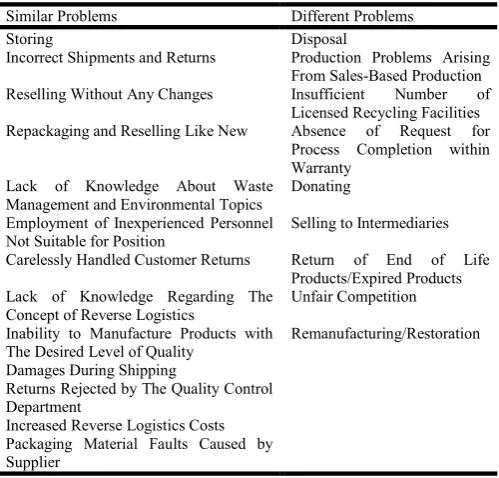
[image:4.595.305.563.463.602.2]Similar and different problems encountered by enterprises in the reverse logistics process are given Table 1.
Table 1. Similar and Different Problems Encountered in The Reverse Logistics Process
Similar Problems Different Problems
Storing Disposal
Incorrect Shipments and Returns Production Problems Arising From Sales-Based Production
Reselling Without Any Changes Insufficient Number of
Licensed Recycling Facilities Repackaging and Reselling Like New Absence of Request for
Process Completion within Warranty
Lack of Knowledge About Waste Management and Environmental Topics
Donating
Employment of Inexperienced Personnel Not Suitable for Position
Selling to Intermediaries
Carelessly Handled Customer Returns Return of End of Life Products/Expired Products Lack of Knowledge Regarding The
Concept of Reverse Logistics
Unfair Competition
Inability to Manufacture Products with The Desired Level of Quality
Remanufacturing/Restoration
Damages During Shipping
Returns Rejected by The Quality Control Department
Increased Reverse Logistics Costs Packaging Material Faults Caused by Supplier
Source: Kayar, 2015: 105.
The findings show that the inventory and storage culture and management are not developed in this region and storage areas are disorganized and occupy unnecessary space. Also, it is seen that enterprises have a lack of knowledge regarding proper storage layout. It is also mentioned that wrong shipments are sent to the factory (manufacturer) in wrong parcels or pallets, which cause a repeating error in manual controls, and returns are sent with inappropriate packaging. It is seen that the level of knowledge about how to collect and sort wastes according to type and associated environmental effects is insufficient and process improvement cannot be done due to employment of individuals without required level of reverse logistics knowledge.
It is especially stated by participants that customer returns are not checked by responsible persons in enterprises, sub-parts are not used in processes such as refurbishing, storage inspections are not performed and inventory is not updated manually and through the system for counting. In addition, it is seen that products are not compatible with quality standards, reverse logistics costs increase and there are problems related to packaging material. It is among important findings that enterprises do not have disposal procedures, carry out sales-based production and have to work with unlicensed companies. Also, it is seen that enterprises are not able to complete the process within warranty, have to face with insufficient inventory due to using reserved inventory for another order without tracking, do not have melting processes to recover surplus products and have to incur additional costs for this operation.
Similar and different problems encountered by enterprises in the reverse logistics process are given in the following Tables.
Table 2. Similar and Different Problems in Packaging
Similar Problems Different Problems
Non-matching product ID and
package content
Shipping correct products with wrong barcodes
Lack of packaging materials needed for ordered product quantity Failure to perform quality check for packaging materials with specified coil quantities
Failure to procure packaging material with desired level of quality and resulting costumer returns due to damaged product
Failure to calculate required packaging material in terms of m2 and failure to identify
necessary amount of material Low quality products such as packages or bottles sent by supplier
Keeping standard packaging material of materials procured for special customer orders in storage areas unnecessarily Shipping wrong products with correct barcodes
Source: Kayar, 2015:112.
[image:4.595.39.289.515.754.2]Table 3. Similar and Different Problems in Planning
Similar Problems Different Problems
Inability to plan orders and perform inspection and sorting for returned products due to failure to check inventory.
Inability to perform refurbishing due to failure to lack of studies such as productivity, work and time study according to product groups.
Inability to perform collection due to sending work orders to operator at the wrong time.
Inability to perform refurbishing due to shifting products with close due dates without checking product availability.
Inability to estimate the production of the next month and provide sub-parts for disassembly in returned products due to numerical inaccuracies in quality reports.
Giving incorrect due dates for imported sub-parts to be used in processed orders.
Planning department’s failure to send material quantity/request forms to purchasing department and enterprise’s failure to calculate procurement time and inability to design and inspect products.
Shipping wrong products due to use of wrong work orders (lack of information such as order no, machine name, production start time and duration on work orders).
Inability to satisfy returns and perform reuse due to failure to carry out demand forecasting.
Performing the disassembly operation in “product recall”.
Inability to carry out shipping plan and production plan concurrently.
Failure to calculate actual cost and systemic cost, calculate rate of waste and provide
required procurement
information.
Inability to forecast when a given product will be returned and balance quantity in stock due to failure to adopt JIT (Just in Time) production and 6 sigma as the corporate culture.
Failure to enter data regarding machine performance in MRP system.
Failure to submit design duration of product groups on Cad software and inability to answer returns.
Failure to obtain balance information of orders and update orders on the system
Source: Kayar, 2015: 113.
Table 4. Receiving-Shipping-Storage Management and Control
Similar Problems Different Problems
Inability to reuse parts of a product due to failure to update inventory after monthly counts
Inability to perform product receiving and transfer operations due to processing orders without considering minimum inventory quantities
Failure to manually check and update data obtained using MRP/ERP systems and work orders created for the production area in a time manner, thus failure to re-design products
Inability to perform inspection and sorting activities due to insufficient storage space allocated
Failure to take inventory each month or taking inventory only once in six months or responsible person’s failure to check inventory on counting days and inability to perform remanufacturing
Failure to take inventory both physically and on the system and consequent inability to inspection, parts removal and refurbishing Inability to control the disassembly process by issuing the waybill for a canceled order, unwittingly keeping products in the warehouse without delivering to customer and causing products to get lost
Quality control department’s approving an order which has more products than specified on the invoice, thus inability to remove parts of extra products for refurbishing
Not using kanban systems in warehouses and production areas
Failure to read product IDs with the pharmacode system and quality control department’s transferring products under its initiative to the warehouse, thus delaying production
Returned orders due to missing products because of failure to use warehouse softwares Failure to update material information on the system when shifting orders for a new product and causing newly received products to get lost Failure to ensure product information flow regarding special orders in different workshops in the production area and failure to apply “FIFO” method and failure to take inventory due to inability to apply “LIFO” method because of low-cost sales
Source: Kayar, 2015: 114.
It is seen that incorrect work orders are opened, wrong barcodes are printed on correct products, or products with close due dates are shifted without checking product availability due to insufficient knowledge of the planning department in enterprises. In addition, failure to determine stock quantities obstructs reverse logistics activities for returned products such as parts removal, disassembly, product refurbishing, selling as new and leads to planning related similar and different problems as shown in Table 3.
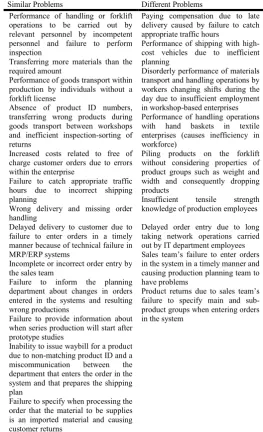
[image:5.595.306.570.307.740.2]Misapplication of operations (waybill, invoice, quality control and warranty, path details, etc.) required for internal and external warehouses, which are among the most important fields of activity of enterprises, leads to wrong product receipt and wrong delivery. In addition, misapplication of these operations cause problems such as ordering wrong inventory quantities and wrong supply materials or scrapping products to be kept in warehouse.
Table 5. Material Transfer/Handling/Transport/Order Processing/Order Entry
Similar Problems Different Problems
Performance of handling or forklift operations to be carried out by relevant personnel by incompetent personnel and failure to perform inspection
Transferring more materials than the required amount
Performance of goods transport within production by individuals without a forklift license
Absence of product ID numbers, transferring wrong products during goods transport between workshops and inefficient inspection-sorting of returns
Increased costs related to free of charge customer orders due to errors within the enterprise
Failure to catch appropriate traffic hours due to incorrect shipping planning
Wrong delivery and missing order handling
Paying compensation due to late delivery caused by failure to catch appropriate traffic hours
Performance of shipping with high-cost vehicles due to inefficient planning
Disorderly performance of materials transport and handling operations by workers changing shifts during the day due to insufficient employment in workshop-based enterprises Performance of handling operations with hand baskets in textile enterprises (causes inefficiency in workforce)
Piling products on the forklift without considering properties of product groups such as weight and width and consequently dropping products
Insufficient tensile strength knowledge of production employees
Delayed delivery to customer due to failure to enter orders in a timely manner because of technical failure in MRP/ERP systems
Incomplete or incorrect order entry by the sales team
Failure to inform the planning department about changes in orders entered in the systems and resulting wrong productions
Failure to provide information about when series production will start after prototype studies
Inability to issue waybill for a product due to non-matching product ID and a
miscommunication between the
department that enters the order in the system and that prepares the shipping plan
Failure to specify when processing the order that the material to be supplies is an imported material and causing customer returns
Delayed order entry due to long taking network operations carried out by IT department employees Sales team’s failure to enter orders in the system in a timely manner and causing production planning team to have problems
Product returns due to sales team’s failure to specify main and sub-product groups when entering orders in the system
Source: Kayar, 2015: 115.
[image:5.595.28.299.421.731.2]Implementation of sales-based production in enterprises, inefficient and slow materials transport and handling activities cause similar and different problems given in Table 6 during the production.
Conclusion
This study investigates problems encountered by various industrial enterprises in the reverse logistics process and presents some suggestions. Reverse logistics operations are carried out in different ways depending on the industry and production type. Good management and development of the reverse logistics process in enterprises make serious contributions to effective performance of business functions such as production, storage, shipping, purchasing, and finance/accounting. Handling and transport costs in particular have a significant share in total costs since reverse logistics operations are considered within the scope of total costs. Enterprises contribute to increasing awareness level of their local community about reverse logistics in terms of gaining household and industrial wastes back to economy through recycling and recovery operations. It seems possible that enterprises can acquire competitive advantage by increasing customer satisfaction as they solve their problems in the reverse logistics process.
This study conducted in different fields of industry revealed that problems in the reverse logistics process are related to storage, wrong shipping, wrong returns, disposal, selling to intermediary and remanufacturing/refurbishing. In addition, enterprises experience problems due to lack knowledge about selling without any changes, waste management and environmental issues, employment of inexperienced individuals in unsuitable positions and unfair competition. Returns rejected by the quality control department, returns received before warranty period is over, returns of expired products, insufficient number of licensed recycling facilities or insufficient support given to existing facilities are among commonly seen problems.
The data of this study conducted with industrial enterprises operating in the districts of Corlu and Cerkezkoy of the province of Tekirdag and the Luleburgaz district of the province of Kirklareli were limited to answers given to questions in interview forms. In addition, the data obtained with interview forms were supported with personal observations and experiences of the researcher. The number of qualitative studies on reasons of problems seen in the reverse logistics process and feasible solutions is limited. This study gives important clues about what kind of problems enterprises in various industries encounter in the reverse logistics (recovery-recycling-returns, etc.) process and what factors obstruct the implementation of reverse logistics. The results obtained may give important ideas about what methods similar enterprises can use. The resulting descriptive and explanatory findings are expected to help develop a hypothesis and contribute to the literature. More prominent statistical analyses can be performed by conducting quantitative studies on problems encountered in the reverse logistics process. Studies may be conducted on factors affecting the selection of collecting center, reverse logistics network design, factors
obstructing the implementation of each activity in the reverse logistics process.
RECOMMENDATIONS
Recommendations for solution of problems identified as a result of the study can be listed as follows:
If enterprises have flow charts or procedures related to “disposal” activities, they can perform these activities faster without awaiting approval.
Information regarding returned products should be taken from customers in order to sort returns according to their identity and keep them in appropriate areas.
In-site warehouses should be sorted by product ID and positioned according to geographic conditions. Each product should be stored with a separate ID and in suitable storage areas and controlled with shelf systems.
Products to be piled for a long time should be kept under suitable conditions until sold or transferred.
Enterprises that perform remanufacturing should replace manual control operations with serial robots. Remanufacturing operations to be carried out during the day should be performed with a separate group, according to weekly production plan and completed in a single shift (8 hours).
After approved by the quality control department, manual packaging operations should be subjected to visual examination and shipped to customer after reporting with suitable techniques.
Collaborative efforts should be made with trade associations and educational institutions to improve the level of awareness of employees and community with promotive programs, campaigns, local and regional educational activities.
In order to improve the reverse logistics process, employers should employ qualified individuals who have a good knowledge of reverse logistics and ability to use required softwares.
Recycling companies that comply with legal requirements, fulfill their obligations and provide employment should be supported.
Agreements regarding the customer return process should be executed and manufacturer-consumer follow-up should be performed.
Enterprises should be encouraged to give grants to institutions and enterprises that give grants should be rewarded.
Vehicles should be chosen according to area covered (width, length, height) by and quantity of orders or suitable logistics companies should be preferred.
Orders, inventory and procurement process should be ensured with cross checks.
Packaging wastes should be collected in separate containers in order to minimize “handling and transportation costs”. Feasible new logistics network structures are necessary to establish warehouses and recycling facilities in areas close to collecting points.
A separate department should be established within the enterprise in order to determine returned time of products, quantity of returned products, routes of returned products and processing time, efforts should be made towards process improvement and new academic researches should be supported.
Statistics should be kept in periodic intervals to estimate returns by conducting scientific studies.
ACKNOWLEDGMENTS
We would like to thank redeemed representatives of enterprises operating in various industries, who made it possible to obtain important findings by giving honest and sincere answers during interviews.
REFERENCES
Acar, A. Z. and Kara, K. 2014. Tersine Lojistik, In. A. Z. Acar ve A. M. Köseoğlu (Eds), Lojistik Yaklaşımıyla Tedarik Zinciri Yönetimi, 1. Basım, Ankara, Nobel Akademik Yayıncılık, pp. 347-365.
Aydın, M. 2015. Beş Nitel Araştırma Yaklaşımı, İçinde J.W Creswell, (Eds) Nitel Araştırma Yöntemleri, Beş Yaklaşıma Göre Nitel Araştırma ve Araştırma Deseni (Trans: M. Bütün ve S.B. Demir), 2. Baskı, Ankara, Siyasal Kitabevi, pp.69-110,
Baş, T. and Akturan, U. 2008. Nitel Araştırma Yöntemleri, NVivo 7,0 ile Nitel Veri Analizi, 1. Baskı, Ankara, Seçkin Yayıncılık,
Bulut, E. and Deran A. 2008. “Ters Lojistik ve Şirketlerin Maliyet Yönetimi Üzerine Etkileri”, Ekonomik Yaklaşım,19(Special), 325-344.
Çekerol, G. S. 2013. “Lojistik ve Tersine Lojistik”, In M.N. Timur (Ed.), Lojistik Yönetimi, 1. Baskı, Eskişehir, Anadolu Üniversitesi Yayınları.
Coşkun, A. 2011. Üreticilerin Tersine Lojistik Faaliyetlerini Etkileyen Faktörler: Beyaz Eşya Sektöründe Bir Uygulama, Unpublished Master Thesis, Nevşehir. Nevşehir Üniversitesi, Sosyal Bilimler Enstitüsü.
Darke, P., Shanks, G. and Broadbent, M.1998. Succesfully Completing Case Study Research: Combining Rigour, Relevance and Pragmatism, Wiley Online Library, Info Systems Journal, 8 (4): 273-289.
Daymon C. and Holloway I. 2005. Qualitative Research Methods in Public Relations and Marketing Communications, New York: Routledge, Taylor and Francis.
Demirel, N. Ö. and Gökçen, H. 2008. “Geri Kazanımlı İmalat Sistemleri İçin Lojistik Ağı Tasarımı: Literatür Araştırması”, Gazi Üniversitesi Mühendislik Mimarlık Fakültesi Dergisi, 23(4), 903-912.
Denzin, N. K. and Lincoln, Y. S. 2005. Introduction: The Discipline and Practice of Qualitative Research, In N. K. Denzin andY.S. Lincoln, (Eds), The Sage Handbook of
Qualitative Research, 3. Baskı. Sage Publications, Inc. California, pp. 651-679.
Dirik M. 2012. Tersine Lojistik ve Karaman Organize Sanayi Bölgesinde Gıda Sektöründe Tersine Lojistiğin Değerlendirilmesine Yönelik Bir Uygulama, Unpublished Master Thesis, Karaman, Karamanoğlu Mehmetbey Üniversitesi, Sosyal Bilimler Enstitüsü.
Dissanayake, D.N.K. D. 2007. Reverse Logistics and Information Management Issues in Manufacturing and E-Business Industries, Unpublished Doctoral Dissertation, Australia, School of Business Information Technology Faculty of Business RMIT University,
Dowlatshahi, S. 2000. “Developing a Theory of Reverse Logistics”, Interfaces, 30(3): 143-155.
Erdal, M., Görçün, Ö. F., Görçün, Ö. and Saygılı, M. S. (2010). Entegre Lojistik Yönetimi, 2.Basım, İstanbul, Beta Yayınları.
Erdoğan, N. 2007. Lojistik Maliyetlemesi ve Lojistikte Faaliyete Dayalı Maliyetleme, Anadolu Üniversitesi Yayınları, Eskişehir.
Fleischemann, M., Jacqueline, M., Van Der Laan, E., Van Nunen, JO A.E.E. and Van Wassenhove, L.N. 1997. “Quantitative models for Reverse Logistics: A Review”, European journal of Operational Research, 103(2): 1-17. Guide Jr. V. D. R., Jayaraman, V., Srivastava, R., and Benton,
W. C. 2000. “Supply-Chain Management for Recoverable Manufacturing Systems”, Interfaces, 30 (3): 125-142. Karasar, N. 2014. Bilimsel Araştırma Yöntemi. 27. Baskı,
Ankara, Nobel Yayın Dağıtım.
Kayar, Y. 2015. Ters Lojistik Sürecinde Karşılaşılan Sorunlar ve Çözümlere İlişkin Nitel Bir Araştırma, Unpublished Master Thesis, Tekirdağ, Namık Kemal Üniversitesi, Sosyal Bilimler Enstitüsü.
Keskin, M. H. 2014. Lojistik, Tedarik Zinciri Yönetimi, Geçmişi, Değişimi, Bugünü, Geleceği, 6. Baskı, Ankara, Nobel Akademi Yayıncılık.
Koban, E. and Keser, H.Y. 2013. Dış Ticarette Lojistik, 5. Baskı, Bursa, Ekin Basım Yayın Dağıtım.
Küçük, O. 2012. Uluslararası Lojistik, 1. Baskı, Ankara, Detay Yayıncılık.
Lodico, M.G., Spaulding, D.T. and Voegtle, K.H. 2010. Methods in Educational Research, From Theory to Practice. 2nd edi. San Francisco. CA: Jossey-Bass.
McDonald V.L. 2010. “Before-and-After Case Study Design” In Mils, A.J.; Durepos, G. ve Wiebe E. (eds) Encyclopedia of Case Study Reseach, I(B), 51, SAGE Publications, Inc.California.
McLeod, F., Hickford, A., Maynard, S. Cherrett, T. and Allen, J. 2010. “Developing innovative and more sustainable approaches to reverse logistics for the collection, recycling and disposal of waste products from urban centres”, Green Logistics, 1-145.
Merriam, S. 1998. Qualitative research and case study applications in education. San Francisco. CA: Jossey-Bass. Mil, B. 2007. Nitel Araştırmalarda Söylem Analizi ve İlkeleri,
In Yüksel, A.; Mil,B. ve Bilim, Y. (eds) Nitel Araştırma, Neden, Nasıl, Niçin, 1.baskı Ankara, Detay yayıncılık, pp.157-167.
Performance Effects”, Journal of Supply Chain and
Operations Management, 12(2): 33-49.
Özesen, E. 2009. Yeşil Tedarik Zinciri Yönetimi ve Ambalaj Sanayisinde Bir Uygulama, Unpublished Master Thesis, İstanbul, Marmara Üniversitesi, Sosyal Bilimler Enstitüsü. Pinna, R. and Carrus, P. P. 2012. Reverse Logistics and the Role of Fourth Party Logistics Provider, (içinde) A, Groznik, ve Y, Xiong, Pathways to Supply Chain Excellence, Italy.
Punch, K.F. 2011. Sosyal Araştırmalara Giriş, Nicel ve Nitel Yaklaşımlar, (trans: Bayrak, D.; Arslan, H.B. and Akyüz, Z.) İkinci Baskı, Ankara, Siyasal Kitabevi.
Ravi, V. and Shankar, R. 2005. “Analysis of interactions among the barriers of reverse logistics”, Technological Forecasting and Social Change, Sayı: 72, 1011–1029. Rogers, D. S., and Tıbben-Lembke, R. 2001. An Examination
of Reverse Logistics Practices. Journal of Business Logistics, 22(2): 129-147.
Rogers, D. S.and Tibben-Lembke R. S. 1998. Going Backwards: Reverse Logistics Trends and Practices, Nevada, USA, Reverse Logistics Executive Council, Reno. Şengül, Ü. 2011. “Tersine Lojistik Kavramı ve Tersine Lojistik
Ağ Tasarımı”, Atatürk Üniversitesi İİBF Dergisi, 10. Ekonometri ve İstatistik Sempozyumu Özel Sayısı, 407-429. file:///C:/Users/yasemin/Downloads/7788-32617-1-PB%20(3).pdf, erişim: 06.06.2015.
Senthil, S. and Sridharan, R. 2014. “Reverse Logistics: A Review of Literature”, International Journal of Research in Engineering and Technology, 3(11): 140-144.
Taş, F. 2009. Akü Geri Dönüşüm Sistemi İçin Tersine Lojistik Ağ Tasarımı ve Karma Tamsayılı Programlama Modeli, Unpublished Master Thesis, Ankara, Gazi Üniversitesi, Fen Bilimleri Enstitüsü.
Temur, G.T., Ayvaz, B. and Bolat, B. 2015. Tersine Lojistik Yönetimi Dünya’da ve Türkiye’de Durum, 1. Baskı, İstanbul, Nobel Yayınları.
Thierry, M., Salomon, M., Vans Nunen, J. and Van Wassenhove, L. 1995. “Strategic issues in product recovery management,” California Management Review, 37 (2): 114-135.
Yıldırım, A. and Şimşek, H. 2008. Sosyal Bilimlerde Nitel Araştırma Yöntemleri, 6.Baskı, Ankara, Seçkin Kitapevi. Yin, R.K. 2003. Case Study Research, Design and Method 3rd
edi. Applied Social Research methods Series, 5, California, Sage Publications Inc, Beverly Hills.
Yurtseven, H.R., Erkul, H. and Morkoç, 2013. Örneklerle Sosyal Bilimlerde Araştırma Yöntem ve Teknikleri, Ankara, Detay Yayıncılık.