warwick.ac.uk/lib-publications
A Thesis Submitted for the Degree of PhD at the University of Warwick
Permanent WRAP URL:
http://wrap.warwick.ac.uk/106052
Copyright and reuse:
This thesis is made available online and is protected by original copyright. Please scroll down to view the document itself.
Please refer to the repository record for this item for information to help you to cite it. Our policy information is available from the repository home page.
M A
E
G NS
I T A T MOLEM
U N
IV
ER
SITAS WARWIC EN
SIS
An Adaptive Data Filtering Model for
Remaining Useful Life Estimation
by
Oguz BEKTAS
Thesis
Submitted to the University of Warwick
for the degree of
Doctor of Philosophy
Warwick Manufacturing Group
Contents
List of Tables v
List of Figures vii
Acknowledgments x
Declarations xi
Abstract xiii
Symbols xiv
Abbreviations xvii
Chapter 1 Introduction 1
1.1 Motivation . . . 3
1.2 Problem Statement . . . 4
1.3 Research Question and Hypotheses . . . 6
1.4 Significance and Contribution . . . 9
1.5 Thesis Organisation . . . 10
Chapter 2 Background and Literature Survey 11 2.1 Condition Based Maintenance . . . 15
2.1.2 Data Processing . . . 19
2.1.3 Decision Making . . . 24
2.2 Prognostics and Definitions . . . 24
2.2.1 Prognostic Definitions . . . 29
2.3 Review of RUL Prediction Methods . . . 32
2.3.1 Physics-Based Models . . . 32
2.3.2 Knowledge-based Models . . . 36
2.3.3 Data-driven Models . . . 40
2.3.3.1 Stochastic Algorithms . . . 42
2.3.3.2 Statistical Algorithms . . . 46
2.3.3.3 Artificial Neural Networks . . . 51
2.3.4 Comparison of Prognostic Models and Hybrid Applications 69 2.4 Performance Evaluation . . . 73
2.5 Challenges of Prognostics . . . 83
2.5.1 Lack of Common Data Sources . . . 83
2.5.2 Data Characteristics . . . 84
2.5.3 Uncertainty in Predictions . . . 84
2.5.4 Validation Issues . . . 85
2.6 Expected Contributions to the Literature . . . 86
Chapter 3 Methodology 88 3.1 Motivation behind the Methodology . . . 88
3.2 Problem Definition . . . 89
3.3 Justification for the Methodology . . . 93
3.4 Research Procedures . . . 99
3.4.1 Identifying Existing Failures . . . 101
3.4.1.1 Data Pre-processing . . . 102
3.4.1.2 Multi-regime Normalisation . . . 103
3.4.2 Neural Network Filter . . . 111
3.4.2.1 Feed Forward Neural Network . . . 112
3.4.2.2 Network Library . . . 114
3.4.2.3 Filtered Health Indicators . . . 115
3.4.3 Multi Step Ahead Prediction . . . 117
3.4.3.1 Pairwise Distance Relation . . . 117
3.4.3.2 RUL Estimation . . . 119
3.5 Summary . . . 122
Chapter 4 Case Studies 124 4.1 Application: Gas Turbine Engine Case . . . 125
4.1.1 C-MAPSS Simulation and Datasets . . . 127
4.2 Preparing Multidimensional Data . . . 132
4.3 Network Configuration . . . 145
4.4 RUL Estimation . . . 152
4.5 Testing with Synthetic Data . . . 157
4.5.1 Network Training with Synthetic Data . . . 161
4.6 Performance Pre-Evaluation Using Secondary Datasets . . . . 165
4.7 Critical Discussion of Model to Other Data Sources . . . 167
4.8 Summary . . . 170
Chapter 5 Results & Discussions 172 5.1 Prognostic Metrics for Analysis . . . 173
5.2 Performance Evaluation . . . 174
5.3 Benchmarking with Data Challenge . . . 187
5.4 Summary . . . 190
Chapter 6 Conclusions and Future Work 192 6.1 Contributions . . . 193
6.3 Implications and Limitations . . . 195
6.4 Further Work . . . 196
Appendix A 237
A.1 Data Challenge Leader Board and Performance Metrics . . . . 237
A.2 Multi Regime Data . . . 239
Appendix B 241
B.1 MATLAB Code for Synthetic Data Generation . . . 241
Appendix C 243
C.1 MATLAB Code for Secondary Data Adaptation . . . 243
Appendix D 246
List of Tables
2.1 Classification of Maintenance . . . 12
2.2 Physics Based Models . . . 33
2.3 Knowledge Based Models . . . 37
2.4 Data-driven Prognostics . . . 41
2.5 ANN-based Prognostics in Complex Systems . . . 55
2.6 Comparison of Prognostic Approaches . . . 70
4.1 PHM08 challenge data set parameters available to participants as sensor data . . . 130
4.2 Number of trajectories and regimes in C-MAPSS data sets . . 131
4.3 Corresponding values for regimes . . . 138
4.4 Results of Prognostic Parameter Suitability Metrics . . . 141
4.5 Distribution of PHM08 Final Test Trajectories According to Operational Length . . . 153
5.1 Prognostic Metrics . . . 174
5.2 RUL estimation range for the units with lowest performance . 177 5.3 Secondary Dataset#1 RUL estimations with lowest performance 178 5.4 Prognostic metrics for Secondary Data set #1 with different window sizes used for HI moving average filtering . . . 182
5.6 Secondary Dataset#12 RUL estimations with lowest performance183
5.7 Performance Evaluation of Secondary Datasets . . . 186
5.8 Prognostic Performance of the Presented Model . . . 188
5.9 Previous Leader board of the “final data set” of PHM08 . . . 188
A.1 Performance of selected approaches . . . 237
A.2 PHM08 Data Challenge Leader board . . . 238
List of Figures
2.1 Major Steps in CBM . . . 17
2.2 Failure progression timeline . . . 26
2.3 System life model . . . 27
2.4 A Typical Prognostic Application . . . 29
2.5 Prognostic Terms . . . 30
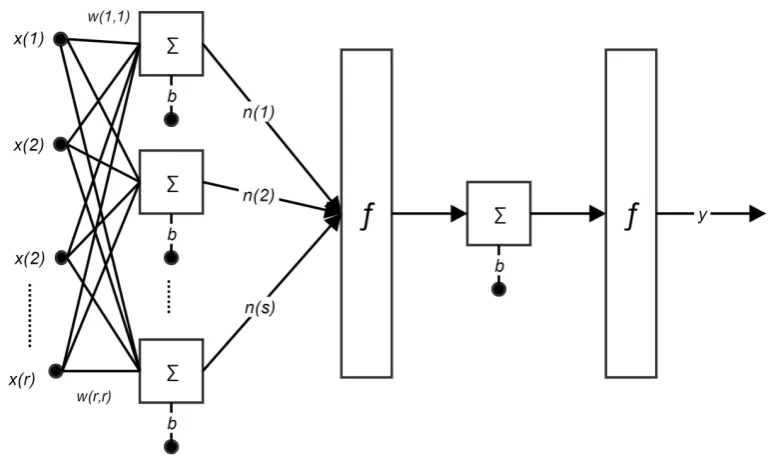
2.6 A single neuron . . . 59
2.7 A single neurone with multiple inputs . . . 60
2.8 A multiple-layer neural network . . . 61
2.9 Characteristic of Scoring Function . . . 81
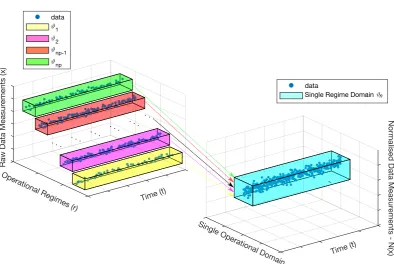
3.1 Multidimensional Data . . . 92
3.2 Stages of the Methodology . . . 100
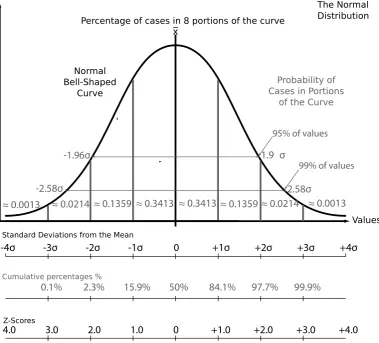
3.3 A sample demonstration of z-scores in a normal distribution . 105 3.4 Normalisation of Multidimensional Data . . . 107
3.5 Feed-forward neural network with multidimensional input data and HI output . . . 113
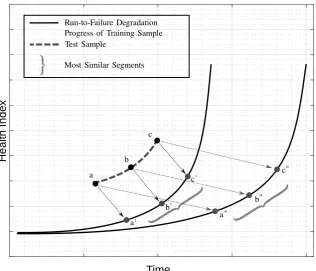
3.6 Similarity Methodology . . . 120
3.7 RUL Estimation . . . 121
4.1 A simplified diagram of an engine simulation modelled in C-MAPSS . . . 128
4.3 Flowchart representing data processing and multistep ahead
re-maining useful life calculation . . . 133
4.4 Raw Data Characteristics . . . 134
4.5 Sensor 11 - Static pressure at HPC outlet . . . 135
4.6 Sensor 11 - Static pressure at HPC outlet (y-axis limited) . . 136
4.7 Operational settings in different regimes . . . 137
4.8 Sensor 1 with constant values at each regime domain . . . 138
4.9 Clustered Regimes for Sensor 11 - Static pressure at HPC outlet 139 4.10 Normalised Sensors . . . 140
4.11 Useful sensors in all training trajectories . . . 141
4.12 Non-Useful sensors in all training trajectories . . . 141
4.13 Useful Normalised Sensors . . . 142
4.14 Adjusted Trajectory and HI . . . 144
4.15 Alternative Fitting Functions . . . 144
4.16 Neural Network Learning Stage . . . 146
4.17 Neural Network validation with the same input . . . 147
4.18 Neural Network estimation with a different input . . . 148
4.19 Neural Network Library Results . . . 149
4.20 Moving Average Applied in Network Library Estimations . . . 151
4.21 Comparison of Full and Interrupted Data . . . 152
4.22 Pairwise Distance Calculation . . . 155
4.23 Minimum Pairwise Distance Position and Best Matching Location155 4.24 Top similarities and RUL calculation . . . 156
4.25 Test trajectories resulting in a wide range of RUL estimations 157 4.26 HI Estimation from a Network Trained using a Synthetic Target 160 4.27 Synthetic Raw Data with a Linear Decrease . . . 163
4.28 Network Estimations for Synthetic Data . . . 164
5.1 Comparison of True and Predicted RULs . . . 175
5.2 Demonstration of density estimations of predicted RULs . . . 176
5.3 Comparison of Absolute Error and Unit Test Length for SD#1 179
5.4 Risky positions with respect to the data fluctuation . . . 179
5.5 RUL calculation for Unit #421 . . . 180
5.6 RUL calculation for Unit #3 . . . 180
5.7 Comparison of Absolute Error and Scoring Function for
Sec-ondary Dataset #1 . . . 181
5.8 Demonstration of density estimation of predicted RULs . . . . 182
5.9 Comparison of Absolute Error and Unit Length for Secondary
Dataset #12 . . . 184
5.10 Comparison of Absolute Error and Scoring Function for
Sec-ondary Dataset #12 . . . 184
5.11 Top Matching Similarities and RUL calculation for Dataset
#12, Trajectory Unit #421 . . . 185
5.12 Top Matching Similarities and RUL calculation for Dataset
#12, Trajectory Unit #3 . . . 185
A.1 Clustered Regimes for Raw Sensors . . . 239
Acknowledgments
I would like to thank my supervisors, Dr Jeffrey Jones and Dr Jane Marshall,
for their kind support and guidance throughout my research. Their supervision
and advice are of inestimable value for my study.
I want to express my thanks to my thesis examiners: Dr Faris Elasha
and Dr James Marco for their kind comments and corrections in my thesis. I
appreciate them taking the time out to examine my thesis.
I would like to thank Dr Kai Goebel and the Prognostics Center of
Excellence of NASA Ames Research Center for their support of my work.
Their hospitality during my research visit is most gratefully acknowledged.
I would also like to thank my department, research fellows, advisors
and collaborators; their discussion, ideas, and feedback have been absolutely
invaluable.
I would like to thank the people of Turkey for providing the government
scholarship which allowed me the opportunity to fulfil my dreams.
Finally, I would especially like to thank my amazing family for their
love, support, and encouragement. In particular, I would like to thank my
wonderful wife “Aysenur Bektas” who has made countless sacrifices to help us
get to this point and my little son “Yavuz Selim” who always gave his father
extra motivation to finish this thesis as soon as possible.
To all those cited by name here and the many more I could not mention
by their name, I will forever owe you this achievement.
Thank you all most sincerely - Hepinize en i¸cten dileklerimle te¸sekk¨ur
Declarations
I hereby declare that this thesis is my own work and effort and that it has not
been submitted anywhere for any award. Where other sources of information
have been used, they have been acknowledged.
I undertake not to quote or make use of any information from this thesis
without making acknowledgement to the author. I further undertake to allow
no-one else to use this thesis while it is in my care.
The material is based upon work supported in part by NASA under
award NNX12AK33A with the Universities Space Research Association. Any
opinions, findings, and conclusions or recommendations expressed in this
ma-terial are those of the author and do not necessarily reflect the views of the
National Aeronautics and Space Administration.
Parts of this thesis have been published by the author:
1. Poster presentation at WMG Research and Innovation Conference on
the 10th and 11th July 2014. A Framework for Performance Metrics
of Rotating Machinery Prognostics within Maintenance Free Operation
Period -Oguz Bektas
2. Conference Proceeding in The Twelfth International Conference on
Con-dition Monitoring and Machinery Failure Prevention Technologies CM2015
Engines -Oguz Bektas & Jeffrey Jones
3. Technical Presentation at WMG Research and Innovation Conference on
the 30th June and 11th July 2015. Narx Model in Gas Turbine
Prognos-tics -Oguz Bektas
4. Conference Proceeding in Third European Conference of the PHM
So-ciety - PHME16. NARX Time Series Model for Remaining Useful Life
Estimation of Gas Turbine Engines -Oguz Bektas & Jeffrey Jones
5. A journal article in Journal of Failure Analysis and Prevention. “
Reduc-ing Dimensionality of Multi-regime Data for Failure Prognostics - Oguz
Bektas, Amjad Alfudail, Jeffrey A. Jones
Abstract
The field of Prognostics and Health Management is becoming ever more important in the modern maintenance era, with advanced techniques of automa-tion and mechanisaautoma-tion becoming increasingly prevalent. Prognostic technology has promising abilities to forecast remaining useful life and likely future circumstances of complex systems. However, the evolution of data processing and its critical impact on remaining useful life predictions continually demand increasing development so as to meet higher performance levels. There is often a gap between the adequacy of prognostic pre-processing and the prediction methods. One way to reduce this gap would be to design an adaptive data processing method that can filter multidimen-sional condition monitoring data by incorporating useful information from multiple data sources.
Due to the incomplete understanding on the multi-dimensional failure mech-anisms and the collaboration between data sources, current prognostic methods lack the ability to deal effectively with complicated interdependency, multidimensional condition monitoring information and noisy data. Further conventional methods are unable to deal with these efficiently. The methodology proposed in this research handles these deficiencies by introducing a prognostic framework that allows the effective use of monitoring data from different resources to predict the lifetime of systems. The methodology presents a feed-forward neural network filtering approach for trajectory similarity based remaining useful life predictions. The extraction of health indicators is applied as a type of dynamic filtering, in which the time se-ries having full operational conditions are used to train a neural network mapping between raw training inputs and a health indicator output. This trained network function is evaluated by repeating condition monitoring information from multiple data subsets. After the network filtering, the training trajectories are used as base-lines to predict the future behaviours of test trajectories. The similarity between these data subsets compares the relationship between the historical performance de-terioration of a system’s prior operating period with a similar system’s degradation behaviour.
The proposed prognostic technique, together with dynamic data filtering and remaining useful estimation, holds the promise of increased prediction performance levels. The presented methodology was tested using the PHM08 data challenge provided by the Prognostics Centre of Excellence at NASA Ames Research Centre, and it achieved the overall leading score in the published literature.
Symbols
The following list contains the symbols most frequently used in this thesis. References to sections are given at the beginning and then the symbols are defined.
Section 2.1 & 2.2
Ω Dimensions space
Ψ Dimension levels space
Cb Multidimensional data set
D List of dimensions
L List of regime levels
R Set of multidimensional data
x Multidimensional data
H Health Measure
∆θ Life distance
ε Noise
pG(ε) Gaussian Noise
µ Mean
σ Standard Deviation
SN R Signal to Noise Ratio
Psignal Power of signal
Pnoise Power of noise
X Variable of RUL
t Time index
Z Preceding condition profile
Rt Survival function
θt History of operational profiles
P H Prognostic horizon
EOP End of prediction
Section 2.3
a Crack length
∆K Range of stress intensity factor
q Training trajectory
p Test Trajectory
fs State transition function
fm Measurement function
¨
x Damage State
¨
p Model parameters
˙
ε Process noise
¨
Fs State evolution matrix
Fm Measurement matrix
P Autoregressive model order
Q Moving average model order
φ Auto-regressive term
Θ Moving average term
y Target variable
β Coefficients
d Regime
h Health index
e(t) Efficiency
H Overall health index
w Weight
b Bias
M ANN model
H Hessian matrix
Section 2.4
e Error
AE Absolute error
M AE Mean absolute error
AB Average bias
M SE Mean square error
F P False positive rate
F N False negative rate
M AP E Mean absolute percentage error
M AD Mean absolute deviation from
the sample median
M dAD Median absolute deviation from
the sample median
s Score function
Section 3
Ω Multidimensional space
T Operational trajectory
r Regimes (operating conditions)
x Raw condition monitoring data
n Number of time series points
θ(t) Number of unique time index variables
θ(r) Number of unique regimes
np Number of regimes
lr Lower regime domain limits
ur Upper regime domain limits
ϑr Regime domain
wp Noise and measurement
uncer-tainties at regime, p
Hp Health information at regime, p
tcurrent Time stamp of the current
mea-surement index
tend Ending time stamp
ttest Time index of the test instance
ttraining Time index of the training
(run-to-failure) instance
d Initial wear level
a, b Degradation model parameters
ns Number of sensors
fN N Neural network function
y Neural network output (target)
N(x) Normalised data
xr Raw data at regime r
σr Standard deviation of regime r
µr Mean of regime r
c Cluster variable
x(c) Raw data at cluster c
σ(c) Standard deviation of cluster c
µ(c) Mean of cluster c
ˆ
x(c) Normalised data at cluster c
s Moving average
f(x(t)) Feed forward neural network function
wi Fixed real-valued weights
L(i) Neural network library
l Number of trained network
functions
d Euclidean distance
ntr Length of the base curve
(train-ing trajectory)
nte Length of test trajectory
M n Stored pairwise distances
Lte,tr Location of the best-matching
part at the training baseline
Section 4
Abbreviations
AB Average Bias
AN N Artificial Neural Network
ARM A Auto-Regressive Moving-Average
AT T F Actual Time to Failure
BR Bayesian regularisation
CBM Condition Based Maintenance
C−M AP SS Commercial Modular Aero-Propulsion System Simulation
ES Expert Systems
EOP End of Prediction
ET T F Estimated Time to Failure
F EA Finite Element Analysis
F L Fuzzy Logic
F N False Negative Rate
F P False Positive Rate
HI Health Indicator
HP C High Pressure Compressor
HP T High Pressure Turbine
HM M Hidden Markov Model
IGBT Insulated Gate Bipolar Transistors
KbM Knowledge-based Models
LP C Low Pressure Compressor
LP T Low Pressure Turbine
LQE Linear Quadratic Estimation
M A Moving Average
M AD Mean Absolute Deviation from the Sample Median
M dAD Median Absolute Deviation from the Sample Median
M AE Mean Absolute Error
M AP E Mean Absolute Percentage Error
M LP Multi-Layer Perceptron
M RO Maintenance, Repair, and Operations
M SE Mean Square Error
N N Neural Network
N F LT No Free Lunch Theorem
P bM Physics-based Models
P CA Principal Component Analysis
P CoE Prognostics Center of Excellence
P DF Probability Density Function
P F Particle filtering
P H Prognostic Horizon
P HM Prognostics and Health Management
P M Preventive Maintenance
RBF N Radial Basis Function Networks
RN N Recurrent Neural Network
RU L Remaining Useful Life
SD Secondary Dataset
SM C Sequential Monte Carlo
Chapter 1
Introduction
The focus of reliable systems community is on the basic principles of system
failures to explain how complex systems age and fail. Over the last decade,
Prognostics and Health Management (PHM) has been an emerging discipline
as a responding point to this focus, and it has established a connection with
failure mechanisms and system life-cycle management (Uckun et al., 2008).
PHM aims to maximise operational availability and safety by incorporating
functions of condition monitoring, prognostics, state assessment, diagnostics
and failure progression (Sheppard et al., 2008). Due to the constantly
increas-ing interest in PHM technologies, which has received great attention from the
industry at all levels, there has been a significant change in attitude towards
these functions.
As a steadily growing subject in PHM applications, prognostics are a
particularly well-known practice in a wide variety of applications (Lee et al.,
2014). The term “prognostics” in the context of PHM field refers to the
es-timation of a time at which a system (or a component) is at the end of its
useful life point and will no longer perform its desired functional requirements
(Saxena et al., 2014). Therefore, prognostic methods are mainly focused on
main-tenance decision making process (Sandborn and Wilkinson, 2007). Within the
last decade, these methods have advanced expertise in various disciplines and
an overall understanding of the predictions for health management has
sub-stantially improved. Many breakthroughs in prognostics and their ability to
predict RUL for maintenance purposes can be found in various areas, notably
in advanced engineering systems such as, gearboxes (Elasha et al., 2014a,c,
2015b,c, 2017), batteries (Pastor-Fern´andez et al., 2016; Saha et al., 2009;
Goebel et al., 2008a; Rezvani et al., 2011), actuators (Byington et al., 2004b),
fuel cells (Morando et al., 2013), turbofan engines (Wang et al., 2008; Heimes,
2008; Peel, 2008) and even NASA‘s launch vehicles and spacecraft systems
(Luchinsky et al., 2007).
Prognostic technology has also been used to design platforms with
pre-diction capacity as an integral feature of the overall system architecture (Uckun
et al., 2008), such as the Joint Strike Fighter Programme and the Future
Com-bat Systems Programme (Hess et al., 2004; Barton, 2007). As the technology
develops further, prognostics continue to play a prominent role in the evolution
of such complex systems. Introducing prognostic development to the earliest
stages of complex system design can highlight elements requiring
reconsider-ation earlier in the design stage and allows the process of testing, validating,
and refining to provide a higher quality design (Kramer and Tumer, 2009).
Many advanced modelling techniques exist for system design and significant
research have been related to the predictive capabilities for future operations,
and resulted in the development of notable prognostic applications. The
ma-jority of these applications concentrate on imposing alternative strategies for
maintenance, and have led to a huge and diverse literature on machinery
prog-nostics with a considerable number of papers, substantial theories and practical
1.1
Motivation
Today, many sophisticated sensors and computerised components are
capa-ble of delivering system’s performance data to prognostics that can
contin-uously track health degradation and extrapolate the temporal behaviour of
system’s health to predict risks of unacceptable performance over time as well
as synchronising necessary maintenance actions with the overall operation of
the system (Lee et al., 2006). Since the key point in maintenance actions is
the involvement of all operation-related activities (BSI, 1993), the prognostic
applications are directly related to the development of prediction-based
main-tenance actions required to keep systems at a desired level of mainmain-tenance
with minimum operational cost. The structure of maintenance, accordingly, is
highly interrelated with prognostics to reduce maintenance expenses. To gain
an appreciation for prognostic technology and amounts of maintenance
expen-diture, the global airlines market can be considered an illustrative example. In
2014, the worldwide airliner spending on maintenance, repair, and operations
(MRO) accounted for $62.1 billion, in which engine maintenance was about
40% of the total cost (IATA, 2011). Although the size of the MRO market
is expected to reach $90 billion in 2024, it is estimated that the developing
trends in such areas as prognostics, innovations and technologies will reduce
MRO costs by 15 to 20%, and predictive maintenance strategies are expected
to increase airliner availability by up to 35% (IATA, 2011).
As the predictive maintenance strategies develop, the ability to find
solutions to key challenges have become a crucial push towards developing
models that apply performance in maintenance. In this context, data
pro-cessing for maintenance decision making can be regarded a major step in a
successful maintenance programme (Tsang et al., 1999; Jardine et al., 2006a).
In order to avoid unnecessary maintenance tasks, data processing analyses
re-quired (Lee et al., 2014). However, unless the uncertainties in the predictions
are also considered, data processing may not be a sufficiently practical step
for decision makers to justify the need for prognostic actions (Goebel et al.,
2013). Since it is very unlikely to attempt to estimate the operating and
environmental conditions under which a given system operates, a systematic
framework for data processing is necessary to account for the uncertainties in
prognostics (Sankararaman and Goebel, 2015). Data processing should
han-dle and analyse the condition monitoring data for a better understanding and
interpretation of the system’s damage propagation, which characterises how
the damage is expected to grow in upcoming operational and environmental
conditions, along with any other effects that might have an impact on damage
(Goebel et al., 2013).
1.2
Problem Statement
Recent technological advances have resulted in increasingly complex systems
that pose considerable challenges in terms of successful operations and use over
their life cycles (Venkatasubramanian, 2005). Ensuring safety and performance
in complex and safety-critical systems is a major problem to be tackled, and
above all, complexity is one most prominent issue that must be addressed to
make theoretical models applicable to real-life applications (Boussif, 2016). A
complex engineering system is defined as a group of interrelated, interacting,
and/ or interdependent components (constituents) forming a complex whole
(Jamshidi, 2008).
Condition monitoring of such complex systems is usually based on
var-ious sensors of components to receive information on the system health status
and recognise any potential problems at an early stage so that corrective
interpretation of sensor data from multiple elements is often a challenging
as-pect due to complicated interdependencies between monitored data and actual
system conditions (G¨unel et al., 2013).
As a result of operational conditions and regimes, some complex
sys-tem works under different superimposed operational margins at any given time
instant and the wearing process of such systems is not usually deterministic,
and commonly not one-dimensional (Saxena et al., 2008b). These
multidimen-sional and noisy data streams are measured from a large number of monitoring
channels from a population of similar components such as the operational or
environmental conditions, direct and indirect measurements that are
poten-tially related to the damage progress (Uckun et al., 2008). Therefore, a simple
model is mostly unable to present the wearing phenomena and one should
con-sider a more advanced decision-making process for the condition monitoring
data in multidimensional form (Cempel, 2009).
While the literature has recognised the importance of the multiple axes
of information and multidimensional data, there is still a lack of analysis in
such data, leaving the analysts with yet more information and data to process
through the complex systems (Tumer and Huff, 2003). This can be attributed
to two fundamental issues:
• Incomplete information on the multi-dimensional mechanisms failure and fault modes;
• Lack of collaboration between different but similar data sources
When a prognostic model planned and tested under controlled
experi-ments, it has to face the challenges brought up by the complexity of real-world
systems (Wang, 2010). The models should reduce the future uncertainty of
operations according to the needs of system itself, and limitations of
prognostic algorithm for a successful and practical implementation in complex
systems depends on understanding of the challenges associated with the type
of applications (Zaidan et al., 2013). Therefore, the majority of prognostic
researches to date has been mostly disparate, theoretical and restricted to a
small number of cases, and there are few published examples of full prognostic
frameworks being applied in the field of complex systems where the
moni-tored condition data are exposed to a range of dynamic operating conditions
(Sikorska et al., 2011).
1.3
Research Question and Hypotheses
The key element to design prognostics for such complex systems is the data
pro-cessing for conditioning and feature extraction of acquired multidimensional
data. For RUL estimations, data processing capabilities are of greater
signif-icance for design and implementation point of view (Saxena et al., 2008a). If
condition monitoring data is not available sufficiently, the prognostic
require-ments cannot be met (Uckun et al., 2008). One way to satisfy the prognostic
requirements is to perform a data collaboration effort distributed across
mul-tiple suppliers, rather than using separate and self-contained sources.
Collab-oration, from this perspective, is the act of working together with one or more
sides in order to achieve the objective of higher accuracy (Soukhanov, 2001);
when used in intelligence-intensive activities, this may lead to increased and
improved results (Moyle, 2009).
Additionally, data processing can be understood as the conversion of
multidimensional and complex monitoring data to meaningful information for
RUL estimation. Because the effort needed to filter prognostic parameters
from multiple data can quickly make the prognostic approach applicable for
optimal, or near-optimal, filtering is very promising for RUL estimations.
The literature shows that because of the lack of understanding on the
multi-dimensional failure mechanisms and incomplete collaboration between
different but similar data sources, current prognostic methods are unable to
deal effectively with complicated interdependency (G¨unel et al., 2013),
multi-dimensional data (Saxena et al., 2008b) and noisy data (Uckun et al., 2008).
The traditional pre-processing models lack the ability to address this efficiently.
The method proposed in this research handles these issues by introducing an
adaptive data filtering model for RUL estimation.
The main focus in the research is to make an original contribution to
the development of prognostics by considering data filtering requirements on
multiple data resources. The point at issue is the modelling of such a
concep-tual prognostic framework to overcome the challenges presented by different
datasets and to increase prediction performance. The model should be based
on adaptation of complicated prognostic filtering algorithms for different
exter-nal input resources and satisfying the generic demands on the performance of
RUL predictions by using alternative trained functions. In this respective, an
effective method is necessary to approximate any filtering function arbitrarily
well.
In this work, the intention to use such an adaptive filtering function
is to visualise information from different but similar data sources, and get
this information to the right place, in the right arrangement, and in good
time to use it in making effective predictions. Then, a prognostic prediction
method can be swamped with data from multiple sources and investigate data
filtering and processing techniques, with the ultimate goal of improving RUL
predictions.
Research Question
”How can an adaptive data filtering model be designed as a part of
multi-step ahead remaining useful life predictions? ”
Research Aim
The aim of this research is to study the possibility of developing a prognostic
and health management prediction approach to complex machinery systems
under dynamic operating regimes. This prediction is based on the systematic
monitoring of multidimensional data and the filtered available information,
and it is in line with adaptable stages consisting of data processing and
multi-step ahead predictions. Therefore, the research aims to develop a multifaceted
prognostic approach that integrates data filtering and RUL estimation to
en-hance the prediction results and to increase the applicability of prognostics
and health management in machinery applications under a set of operational
cases with multi-regime operating conditions.
Research Objectives
The research has following key objectives that will help to satisfy the
above-mentioned issues and address the current gap indicated by the research
ques-tion.
• To develop an understanding of emerging concepts of prognostic use in maintenance
• To design an adaptive prognostic model that can process filtering and prediction modes
• To develop a merging process between data qualification and RUL esti-mation
• To increase the performance of RUL estimations and provide more
de-tailed results in terms of maintenance planning
• To reduce excessive RUL prediction error rates for critical cases
• To minimise the gap between false positive or negative error rates of life-time predictions
1.4
Significance and Contribution
The significance of this study can be found in the sense that it can introduce
a novel perspective to data filtering and prognostics accuracy by considering
multi-dimensional condition monitoring data from complex systems. A
con-sideration of operational requirements in terms of multiple data employment
has improved the prediction performance of prognostics. An adaptive
prog-nostic method is designed to introduce a sequential process from training to
prediction. A neural network-based data training function is presented to map
between a set of raw monitoring inputs and a set of targets. Then, external
datasets are applied to this function to allow for an adjustment from their raw
scales to a notionally common target scale. This allows for the fact that
mul-tiple data sources can be filtered separately and be used for RUL estimations.
The contribution of this study, as a response to the formulated research
question, is the introduction of a data-driven filtering process (feed-forward
neural network) into collaborative RULs (trajectory similarity-based
prognos-tics). In particular, the research investigates how pre-processing methods
af-fect algorithm performance. The algorithm will be tested by PHM08 data
1.5
Thesis Organisation
This thesis is composed of six chapters. The organisation of thesis is as follows:
Chapter 2reviews the progress of the current literature and gives the state-of-art on current prognostic applications as well as the various sources
and methods applied in complex system domains.
Chapter 3 includes the methodology sections. This chapter provides the details of the multi-regime normalisation, data filtering and RUL
predic-tion frameworks. A feed-forward dynamic network relating to the raw input
time series with a target vector is introduced. Then, the similarity-based
fore-casting setup is summarised.
Chapter 4applies the presented method to different case studies which are then used as examples of how to gain a better understanding of the risks
posed by various conditions. Case studies contribute to more focused analyses
which, in the context of damage, demonstrate the effectiveness of prognostic
methods and metrics, and identify risks in multi-step ahead projections.
Chapter 5 brings forward the analysis, performance evaluation and validation of the model, as based on true RUL parameters. The chapter also
deals with the issues of critical assessment of this study, contribution to
knowl-edge, and a comparison of this model with rival ones.
Chapter 2
Background and Literature
Survey
Maintenance has witnessed substantial changes, perhaps more so than any
other discipline in the industry as a direct result of an increase in the
vari-ety and quantity of complex systems requiring novel practices and progressive
views (Moubray, 1997). Due to the increasing awareness of high plant
avail-ability and reliavail-ability, maintenance strategies have been going through a stage
where there is a necessity to respond the rapidly changing expectations. There
is a significant risk that complex systems and their related interfaces would
not be satisfied by classic breakdown repairs; therefore, various approaches
in maintenance applications have been defined in an attempt to meet their
increasing requirements (Jardine and Tsang, 2013).
A classification of maintenance is shown in Table 2.1. Simply, the
poli-cies are divided into unplanned and planned categories according to the
histor-ical perspective of maintenance. These types are related to how a user would
like to approach repair procedures. Determination of the optimum schedule
for performing maintenance has been a long-standing challenge. Maintenance
Table 2.1: Classification of Maintenance (BSI, 1993; Jones, 2010)
Unplanned Maintenance: or “run to failure”, is an option of “do nothing until it breaks”
Corrective
Maintenance It is carried out after a failure has occurred Emergency
Maintenance
EM is required where immediate action is necessary to avoid serious consequences
Planned Maintenance: carried out and organised with forethought
Preventative Maintenance
PM performed at predetermined intervals. It aims to reduce the probability of failure.
Scheduled Maintenance
It attempts to forestall breakdown by operating on a predetermined interval of time
Condition-Based Maintenance
CM is initiated as a result of condition monitoring knowledge. It seeks to determine actual operating conditions
maintenance, to preventive maintenance (PM) schemes, and then to
condition-based maintenance (CBM) (Heng et al., 2009). Breakdown maintenance was
the earliest attitude taken, including the repair or replacement of equipment
when a failure occurs (Misra, 2008). This type of basic approach shifted
to-wards PM in order to prevent unscheduled downtime and avoid catastrophic
failures. However, each maintenance type has still its own unique
advan-tages that make each desirable for specific needs. For example, until the most
spectacular changes that occurred in maintenance after World War II (Brown
and Sondalini, 2014), corrective maintenance had been the only option for a
maintainer to fix or replace an item; that is after a failure had occurred.
Nev-ertheless, corrective maintenance is still in use for simple components in which
the failure consequences are less critical. Moreover, no matter how extensive a
may fail and corrective maintenance become necessary (Sheut and Krajewski,
1994). On the other hand, changing customer requirements demand planned
maintenance designs at all levels. From the 1950s, mechanisation and
automa-tion of systems have arisen due to an increasing intolerance of downtime and
labour costs, with the first planned maintenance practices introduced in the
form of preventive maintenance to avoid catastrophic failures and emergency
shutdowns (Heng, 2009).
In the case of PM, maintenance is carried out on a regular basis to
reduce the failure rate or performance decrease of given piece of equipment
(BSI, 1993). Preventive actions involve fixed scheduled servicing, inspections,
and repairs to reduce failures and costs. In such a procedure, maintenance
is considered where inspections and overhauls take place at different time
in-tervals without seriously considering the condition of a given system’s health
(Badıa et al., 2002).
Bazovsky (1961) laid the groundwork for the application of
mathemat-ical optimisation methods in PM plans and Jardine (1973) pioneered decision
models for assignment of optimal replacement and/or repair intervals by
inves-tigating historical breakdown measures and cost implications. In subsequent
years, Lee and Rosenblatt (1987) analysed the use of machine inspection in PM
for restoration purposes of economical manufacturing quantity, and Groenevelt
et al. (1992) studied the role of PM in an unreliable production system with a
constant failure rate and randomly distributed repair times. Other studies have
also shown that PM strategies can be an effective way to extend the lifetime of
several randomly failing production units and reduce operational costs (Barlow
and Proschan, 1996; Nakagawa, 1981; Nakagawa and Yasui, 1991). Under the
assumption of non-negligible maintenance restoration times, all these studies
addressed the use of planned maintenance that is regularly performed on a
increas-ing system complexity, these scheduled maintenance policies have financial
and safety implications that may result in labour-intensive and unnecessary
maintenance actions that can be associated with over-maintaining. While PM
strategies are robust enough to continue earlier and relatively simple routine
maintenance tasks to reduce component damage, they may have shortcomings
when dealing with catastrophic failures in complex systems. PM approach
can be costly when it is, or needs to be, performed frequently (Bohlin et al.,
2010), and fixed scheduled maintenance policies are not considered functional
by most practitioners (Kelly, 1989). This is why, it is necessary to invest in
monitoring efforts to maintain the correct item at the right time. Dynamic
planning using malfunction signs is required to reduce unpredictable events
and unnecessary maintenance tasks.
In recent times, the performance of PM has started to be questioned.
Wood (1999) and Moubray (1997) defended the idea that scheduled and
time-based PM often fails to make best use of the remaining service life; on many
occasions, units are replaced despite the fact that they have many hours of
RUL. The fixed repair intervals required by PM tasks waste a considerable
amount of resources (Tsang, 1995), such that systems or units are often
un-reasonably maintained (Ellis and Byron, 2008). These queries resulted in the
subdivision of CBM.
A properly and effectively established CBM programme can notably
decrease maintenance costs by dropping unnecessarily scheduled preventive
maintenance actions (Jardine et al., 2006a). CBM is similar to PM in the
sense that it aims to prevent abnormality in advance of an incident, but it
differs from the fixed time-oriented approach of scheduled maintenance (Shin
and Jun, 2015). Hence, CBM offers an alternative to PM considerations of
simple age-related failure modes.
at-tention from maintenance service providers and end users who require higher
planned maintenance performance, and the reduction of unnecessary
inspec-tions (Chen et al., 2012; Ahmad and Kamaruddin, 2012; Gulati and Mackey,
2003). Use of CBM in industry, therefore, has been reported to be one of the
most substantial ways to decrease maintenance budgets (Bengtsson, 2004), and
have thus seen a considerable increase in their uptake over time. For example,
in 1981, domestic plants in the United States had spent more than$600 billion
in maintaining critical systems; by 1991, this cost increased to more than$800
billion, and exceeded$1.2 Trillion in 2000 (PlantServices, 2004). Considering
that the cost of ineffective maintenance constitutes around one-third of the
total maintenance cost, and there is a similar trend in many other countries,
there is a clear and immediate need to continuously progress and improve
cur-rent maintenance strategies (Heng et al., 2009). As a response to this need,
CBM allows maintenance service providers to avoid the inevitability of
high-cost maintenance due to the elimination of redundant maintenance activities
(Shin and Jun, 2015).
2.1
Condition Based Maintenance
Condition-Based Maintenance is a programme recommending maintenance
ac-tions based on condition monitoring data (Raheja et al., 2000); it attempts to
avoid redundant tasks by taking repair actions only when there is evidence of
unexpected operational issues (Jardine et al., 2006a). Certain signs, condition
changes, or malfunction indications can precede the vast majority of machine
failures (Pusey, 1999; Heinz P. Bloch, 2012), and maintenance actions based
on monitoring can be taken prior to a severe performance reduction in a given
system, with condition-based monitoring offering the ability of yielding
According to Horner et al. (1997), the optimal time period for
per-forming maintenance could be decided by the actual monitoring of a given
system, and its subcomponents or units, and the condition monitoring
assess-ment could vary from basic visual checks to detailed automatic inspections.
Considering the continuous data related to the operational condition of
criti-cal systems, Knapp and Wang (1992) argued that CBM aims to minimise the
cost of repairs, and Knapp et al. (2000) noted that condition monitoring can
provide adequate warnings as to pending failures, which would thus allow for
more detailed planned maintenance actions as based on system degradation.
On the other hand, as stated by Ellis and Byron (2008), CBM in some
instances may not be cost-effective or sufficient data may not exist to justify
intervention. Raheja et al. (2006) also claimed that some current CBM
ap-proaches are extremely specific and a common structure for CBM is missing,
so that each domain has its own understanding that may not be well-suited for
the requirements of other applications. Although CBM may not be applicable
to all maintenance systems, it could be applied in instances where modules
of condition-monitoring are available and are well-integrated (Horner et al.,
1997)
Such typical modules of effective CBM implementation include the
stages of data acquisition (information collecting), data processing
(informa-tion handling) and maintenance decision-making (see Figure 2.1). These three
key elements provide the necessary conditional information on which the
main-tenance process can be based, and help to avoid unnecessary mainmain-tenance
op-erations. The data acquisition and processing modules in a CBM programme
are critical pre-processing stages that present and process monitoring data to
produce the information useful to the diagnostic and prognostic stages. After
the raw condition monitoring data is processed, organised and restructured,
identification, while prognostics deal with the prediction of the future lifetime
of a system over a fixed time horizon (Brotherton et al., 2000). These lifetime
estimation applications are key enablers of the CBM strategy (Byington et al.,
2008), and have significant value within complex system operations in terms
of maintenance scheduling thus the reduction of maintenance downtime and
costs (Brotherton et al., 2000).
Data Acquisition
• Event Data
• Condition monitoring data
Data Processing
• Signal processing
• Feature extraction & selection
Maintenance Decision
Making
• Diagnostics
• Prognostics
Figure 2.1: Major Steps in CBM
CBM objectives are designed to determine the condition and the
re-maining life of in-service equipment. Diagnostics and/or prognostics can be
effectively used according to these objectives, and applied when developing
the decision-making stage of complex maintenance applications (Heng et al.,
2009). They are considered as significant procedures effecting a substantial
shift in the current manner of technology that can push the boundary of
sys-tems health management (Elattar et al., 2016).
2.1.1
Data Acquisition
In the data acquisition stage, useful information is collected and stored from
target physical assets in order to monitor the condition of systems, diagnose
faults, and predict the remaining lifetime of assets (Tran and Yang, 2012).
In parallel with the increasing development of advanced computer and sensor
expen-sive technologies that could implement data for CBM in a more affordable and
feasible way (Jardine et al., 2006a).
Data acquisition for a CBM programme is mainly supported by
condition-monitoring data. For a complex mechanical system, condition condition-monitoring
in-formation can be very diverse; superficially, it can constitute temperature,
acoustic, oil analysis, environment moisture or weather data, etc. Condition
monitoring of such systems in operation is generally multidimensional
(Cem-pel, 2003). The analysis and extraction of useful information from
multidimen-sional data is inevitably based on high-performance computing capabilities of
data processing (Baurle and Gaffney, 2008).
Although condition monitoring could provide sufficient information for
the development of data processing, there is still the requirement to collect
common datasets and a mutual comparison to validate the methods introduced
by different researchers. However, the nature of data acquisition has its own
challenges in terms of the availability of condition monitoring data (Eker et al.,
2012). To start the acquisition of raw monitoring data for effective lifetime
estimations, the first major issue is to find available data sources. A common
database is an important aspect for life estimation applications of maintenance
decision making (Kans and Ingwald, 2008). Considering that such a database
includes information from several but similar engineering domains, it can form
the basis for the stage of data acquisition and required actions (Sim˜oes et al.,
2011).
Use of the common database practice allows for the comparison of
cur-rent applications and potential areas of improvement with regard to other
re-searches in the literature (Bask et al., 2008), and since this type of a database
can provide easy access to relevant data, it can demonstrate the detection of
deviations at an early stage (Sim˜oes et al., 2011). However, Saxena et al.
a deficiency of common run-to-failure data sets, and that real-world data in
most cases includes fault signs for an increasing degradation but no or little
data capture for fault progress until failure. There have been synthetic data
generating methods that can closely match the characteristics of raw data
such as Eklund (2006); Zaidan et al. (2013); Bektas and Jones (2015) but
these methods were developed for individual cases and the common data sets
through which researchers can compare their approaches are required for an
effective data acquisition stage in CBM.
2.1.2
Data Processing
A major issue confronting condition monitoring is ability to handle the
col-lected data in terms of measurable machinery conditions. Data processing is
the most critical stage in CBM because it is not always clear during the
col-lection and manipulation of raw data from different sensors when meaningful
information useful to lifetime estimations is being produced (Vatani, 2013).
Condition monitoring data collected from the data acquisition stage
is versatile and falls into various categories such as value type (single value
collected at a specific time epoch ), waveform type (time series of a condition
monitoring variable) and multidimension type (multidimensional time series
acquired from multiple operating conditions) (Jardine et al., 2006b) .
In the case of complex systems under dynamic operating regimes, special
attention is given to multidimension type data as it requires more processing
and many techniques have been developed for its analysis and interpretation.
Raw multidimensional data acquired from sensors providing information under
multiple operating conditions are almost always processed before it is used for
further analysis.
A typical complex system is made of different interacting components
individ-ual components, system predictability is limited, and the responses do not
scale linearly (Bar-Yam, 2003). Additionally, the technological advancements
have resulted in easy and efficient generation of data sets, most of which are
multidimensional and/or multivariate (Seo, 2005).
A multidimensional database is composed of sets of vectors on
rela-tional elements constructed from hierarchies of dimension levels (Vassiliadis,
1998). Considering Ωas the space of all dimensions andΨas the space of all dimension levels, for each dimension D there exist a set of regime levels and
there is a set of values belonging to it. Accordingly, a basic multidimensional
data set,Cb, can be defined as a 3-tuple <Db,Lb,Rb > (Vassiliadis, 1998),
where
Db=< D1, D2,· · ·Dn, M > (2.1)
is a list of dimensions (Di, M ∈Ω) andM is a dimension that represents
the measure of Cb.
Lb=< DLb1, DLb2,· · ·DLbn,∗M L > (2.2)
is a list of regime levels (DLbi,∗M L ∈ Ψ). M L is the multi-valued
dimension level of the measure of Cb. Rb is a set of cell data and formed of
x= [x1, x2,· · · , xn] (2.3)
Having specified this cell data, there is a possibility to assess the system
breakdown time,θb, by using the life dependence of observed sensor readings,
R, in terms of a function of some simplified health measure,H (Cempel, 2003).
H= t
tb
where t is the current system life time and tb is the anticipated breakdown
time. A single observed sensor of order n points dependent on the health
measure, H, is expressed as:
Rn(t) =Rn
t tb
·θ
=Rn(H·t), (2.5)
n = 1,2,· · · , r (2.6)
Usually, the signal observations are over some life distance, ∆θ, in which
the condition of the operating system, hence the values of observed signals,
may substantially change (Cempel, 2003).
Rn(tm) = Rn(m∆t) =Rmn, (2.7)
n = 1,2,· · ·, r, m = 1,2,· · · , p (2.8)
Condition monitoring data in such a multidimensional and multivariate
form needs to be processed to produce meaningful information. Appropriate
data characteristics are required to be calculated, selected and/or extracted
for effective life estimations of the monitored systems (Heng, 2009). In this
respect, data processing module carries out the functions of signal processing,
feature extraction and selection (Tran and Yang, 2012). The data in these
steps is processed to remove distortions and re-establish the actual form of
signals.
Raw signals received from sensors are also generally very noisy, have
very low signal-to-noise ratios and can be biased. Referring to equation 2.5,
the noise in data needs to be added to the single observed sensor dependent
on the health measure.
whereε is a random variable accounting for noise and/or the
measure-ment uncertainties. Since the values in the term ε are identically distributed
and statistically independent (and hence uncorrelated), it is commonly
as-sumed that ε is drawn from a Gaussian white noise (It is called white in
analogy to white light which has uniform emissions at all frequencies in the
visible spectrum) (Li et al., 2000; Menezes and Barreto, 2008; Lam et al.,
2014). The probability density function (p) of such a Gaussian noise (ε) is
given by the normal distribution.
pG(ε) =
1 σ√2πe
−(ε−µ)2
2σ2 (2.10)
where µ and σ represent the mean value and the standard deviation
respectively (Cattin, 2013). The relative power of ε in the channel of Rn is
typically described by the measure of “signal-to-noise ratio” (SNR) per sample
which is defined as the ratio of the power of a signal to the unwanted signal
(Ede et al., 2010).
SNR = Psignal Pnoise
(2.11)
where P is average power. Both the power of signals and noise are
measured at the same points, and within the same bandwidth.
To extract useful information from the data where theεis high and SNR
is low, various signal processing methods have been developed to evaluate and
analyse the characteristics of noisy and multidimensional raw data (Jardine
et al., 2006a).
The common techniques used those of Fourier Transform (Schoen and
Habetler, 1993; De Almeida et al., 2002; Liu et al., 2004) and Wavelets
Trans-form (Staszewski and Tomlinson, 1994; Wang and McFadden, 1996; Rubini
meth-ods transform a time-domain signal into another domain, with an attempt to
extract the useful information embedded within the time series that is
other-wise not readily understandable in its raw form. Although these techniques
are widely applied in the waveform type time series, further signal processing
methods are needed to extract information from multidimensional data.
In later signal processing studies, Kalman filter (Peng et al., 2012a),
principal component analysis (Liao and Sun, 2011) and Gaussian kernel
smooth-ing (Wang, 2010) are used to perform dimension reduction and data filtersmooth-ing.
The main advantage of these methods is the ability to reduce noise in raw
signals; however, when a common data source is available and different
oper-ational trajectories are included, the population of the entire dataset should
be considered for signal processing. To that end, Wang et al. (2008) and Peel
(2008) introduced the multi-regime data normalisation technique, which
per-forms a standardisation method based on the population parameters of the
entire dataset. Different operational trajectories can be filtered into a
com-mon range with respect to their initial wear levels and failure points. The main
drawback in such dimension reduction methods is the introduction of novel
tra-jectories that change the population characteristics and force the repetition of
dataset standardisation.
Alternatively, the neural network based prognostic approaches are
pro-posed (Heimes, 2008; Greitzer et al., 1999; Fink et al., 2014; Wu et al., 2016;
Loutas et al., 2017; Elforjani, 2016; Yang et al., 2016; Zheng et al., 2017) and
these could filter the data sets even though novel trajectories are introduced.
The network function is able to standardise various trajectories without
re-quiring population characteristics but these trajectories have distinct initial
wear levels which should be considered with the entire dataset. Taking into
account the associated merits and drawbacks, multi-regime data
method that can produce desired outcomes with due consideration to dataset
population parameters and wear-level characteristics.
2.1.3
Decision Making
After the data is collected and processed, the maintenance decision is made
to provide sufficient and efficient support in terms of maintenance personnel’s
judgements on maintenance actions. This support within a CBM process can
be further analysed by diagnostics and the prognostics (Jardine et al., 2006a).
Diagnostics deal with the detection, isolation and identification of the
system state, while prognostics are concerned with the prediction of its future
behaviour and the remaining life time of the system (Efthymiou et al., 2012).
The main distinction between them is the nature of their analyses. Prognostic
applications are based on prior event analysis, whilst a diagnostic application
is concerned with posterior and current event analysis (Butler, 2012).
Prog-nostic use of CBM can prevent faults or failures, and avoid further unplanned
maintenance costs. These features help prognostic applications to gain
ad-vanced practice qualifications in maintenance but, as some faults and failures
cannot be predicted in any way, prognostics cannot fully substitute for
diag-nostic use (Jardine et al., 2006a). Both of the applications can be practised in
similar machinery domains and such successful implementations can be seen
in the literature such as Elasha et al. (2014a,d, 2015a,c, 2016, 2014b).
2.2
Prognostics and Definitions
The ability to perform accurate and reliable prognostic estimations is a key
concept in CBM management, and is additionally of critical value to
improv-ing safety, maintenance schedulimprov-ing, mission plannimprov-ing and lowerimprov-ing costs and
procedures to detect, diagnose, and analyse system degradation, and to
esti-mate RUL within the bounds of acceptable operating conditions before the
occurrence of a failure or intolerable performance degradation levels. In order
to provide sufficient lead time to maintenance personnel, the success of a CBM
strategy is subject to these automated procedures of prognostics, which are
responsible for sending out prior notices about the pending equipment failure
(Butler, 2012).
In the development of a prognostic method, the main objective is to
predict the failure time, at which a component or a system cannot complete
its desired functions (Pecht, 2008). Predictions can be made by understanding
the current system condition processes and the historical conditions that will
affect the future behaviour of the system (Goebel et al., 2013). Thereupon,
prognostics are always associated with other components of CBM.
Since a prediction is a statement about an uncertain event, the main
prognostic approaches are concerned with basic assumptions regarding the
characteristics of system degradation, and the science of prognostics is based
on the following fundamental notions (Uckun et al., 2008):
• All systems deteriorate as a result of time, usage, and environmental
conditions.
• Accumulation of damage and ageing are monotonic processes that
dis-close themselves in the physical and chemical composition of the systems.
• Ageing symptoms are detectable prior to system failure.
• Correlation of ageing symptoms is attainable with a model of system
degradation and, therefore, the RUL of individual systems can be
pre-dicted.
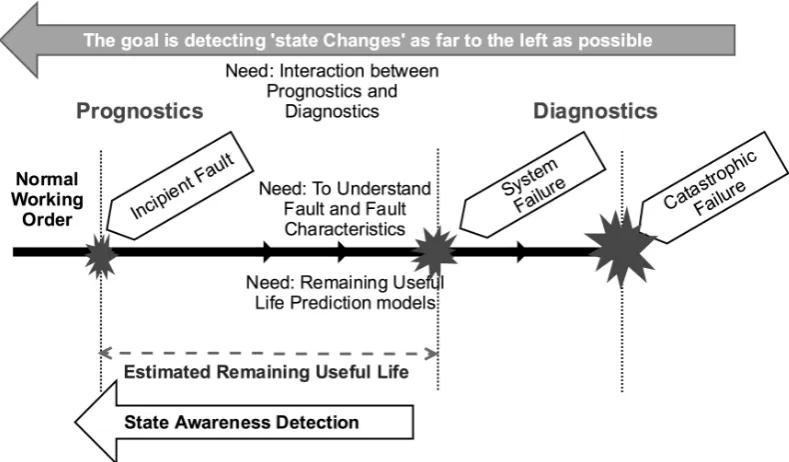
Regarding these notions, Figure 2.2 represents a typical initial fault
Figure 2.2: Failure progression timeline (adapted from Hess et al. (2005))
explains the role of prognostics and how the connection between prognostics
and diagnostics can be achieved. At the beginning of a system’s lifetime, all
components are in proper working order and maintenance is not necessary.
Each operational trajectory has its own specific initial health level, which is
generally stable during the early stages of use. This continues until a critical
period where an early incipient fault condition occurs. As time progresses and
operation continues, the risk of system failure, which can cause a system
dam-age and eventually a catastrophic failure, grows with time. Note that system
failure and catastrophic failure are two different points in time. The initial
de-tection of these failures and damage is always crucial to the estimation of RUL.
The detection of state changes and fault characteristics requires interactions
between prognostics and diagnostics. The goal in the timeline is improving
state awareness detection as close as possible to the point of the first incipient
In Figure 2.3 (Lewis, 2017; Goode et al., 2000), the system health
con-tinues to decrease due to the degradation process from an initial problem in
the system, and eventually reaches a critical state that causes functional
fail-ure. The system starts with a certain level of initial health and manufacturing
variation that can be considered normal, i.e., it is not representative of a fault
condition.
System Installation
Initial Problem
Stable Zone
System Health
Time
Potential Failure
Functional Failure
F P
Failure Zone
PF Interval
[image:47.595.155.487.242.508.2]IP
Figure 2.3: System life model (adapted from (Lewis, 2017; Goode et al., 2000))
The potential failure point defines the transition from stable zone to
functional failure point. Stable zone is the time from initial machine
instal-lation to the potential failure point. This interval contains largely
condition-monitoring measurements which are randomly varying around the higher
sys-tem health limit. When the health index derived from condition monitoring
readings exceed the alarm limit of potential failure, it is assumed that the
sys-tem has entered the failure zone and will deteriorate, at an exponential rate,
zones and failure points, prognostics relate to the task of making multi-step
ahead life prediction.
The prognostic prediction is practised between the initial detection of
the failure and the progression to actual failure conditions (Lee et al., 2014).
Since the lifetime estimation is applied within the CBM domain, it includes
similar stages regarding data acquisition, signal processing and diagnostics.
For example, a typical prognostic application is a sequential process with the
following major stages in which the applications of various other CBM
appli-cations can be found (Tobon-Mejia et al., 2010; ISO-13381, 2015).
• Pre-processingdescribes any type of processing performed on raw data and pre-evaluation of existing failure modes. This step identifies the
symptom relations regarding the performance and determines the
po-tential impending failure modes.
• Existing failure mode is a step-by-step approach to identifying all existing failures in the processed data.
• Future failure mode estimates the most likely future modes, and their influence factors. Additionally, the estimated time to failure is calculated
in this mode.
• Post-action prognostics proposes the maintenance actions that need to be done. To avoid the effects of undesired failure modes, the
post-action prognostics are applied with consideration to the recommended
actions.
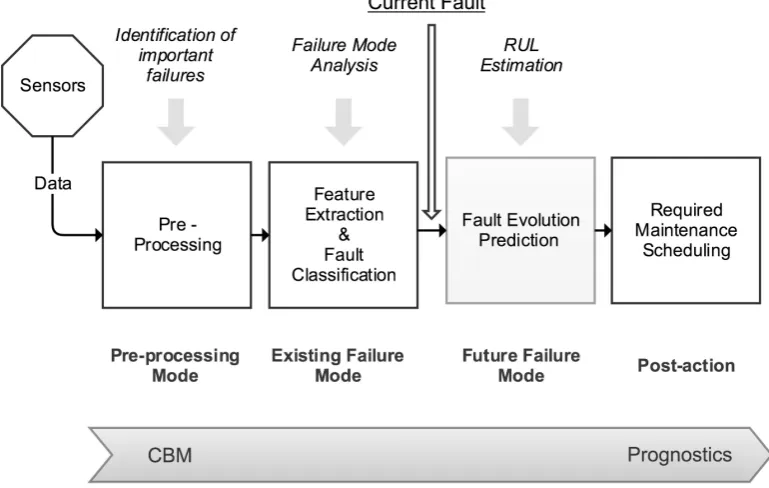
Figure 2.4 demonstrates the above-mentioned basic stages of prognosis.
The pre-processing phase receives the machinery information from sensors and
identifies important failure features that are useful for determination of any
applied for feature extraction and fault classification. Considering the current
fault level in the system, multi-step prediction is performed to calculate the
fault evolution in the future failure mode. After receiving an estimated
time-to-failure, the maintenance scheduling is performed to keep the prognostic
[image:49.595.127.512.234.478.2]application as reliable as possible.
Figure 2.4: A Typical Prognostic Application (adapted from (Vachtsevanos et al.))
2.2.1
Prognostic Definitions
Common terms used in prognostic practice and their definitions have been
reported in several studies (Wang et al., 2004; Muller et al., 2008; Lebold and
Thurston, 2001; Byington et al., 2002). Apart from the terminology
differ-ences, these definitions mostly agree regarding the prediction aspect and RUL
estimation of the system failure (Tobon-Mejia et al., 2012). Some of these