Protein Word Detection using Text Segmentation Techniques
G.Devi
Department of CSE IIT Madras Chennai-600036, India
Ashish V. Tendulkar
Google Inc., Hyderabad-500084, India
Sutanu Chakraborti
Department of CSE IIT Madras Chennai-600036, India
Abstract
Literature in Molecular Biology is abun-dant with linguistic metaphors. There have been works in the past that attempt to draw parallels between linguistics and bi-ology, driven by the fundamental premise that proteins have a language of their own. Since word detection is crucial to the de-cipherment of any unknown language, we attempt to establish a problem mapping from natural language text to protein se-quences at the level of words. Towards this end, we explore the use of an unsupervised text segmentation algorithm to the task of extracting ”biological words” from pro-tein sequences. In particular, we demon-strate the effectiveness of using domain knowledge to complement data driven ap-proaches in the text segmentation task, as well as in its biological counterpart. We also propose a novel extrinsic evaluation measure for protein words through protein family classification.
1 Introduction
Research works in the field of Protein Linguistics (Searls,2002) are largely based on the underlying hypothesis that proteins have a language of their own. However, modeling of protein molecules us-ing lus-inguistic approaches is yet to be explored in depth. This might be due to the structural com-plexities inherent to protein molecules. Instead of resorting to purely wet lab experiments, we pro-pose to make use of the abundant data available in the form of protein sequences together with knowledge from domain experts to model the pro-tein language. From a linguistic point of view, the first step in deciphering an unknown language
will be to identify the independent lexical units or words of the language. This motivates our current attempt to establish a problem mapping from nat-ural language text to protein sequences at the level of words. Towards this end, we explore the use of an unsupervised word segmentation algorithm to the task of extracting ”biological words” from protein sequences.
Many unsupervised word segmentation algo-rithms use compression based techniques ((Chen,
2013), (Hewlett and Cohen,2011), (Zhikov et al.,
2010), (Argamon et al.,2004), (Kityz and Wilksz,
1999)) and are largely centred around the princi-ple of Minimum Description Length (MDL). We use the MDL based segmentation algorithm de-scribed in (Kityz and Wilksz,1999) which makes use of the repeating subsequences present within text corpus to compress it. It is found that the seg-ments generated by this algorithm exhibit close re-semblances to words of English language. There are also other non-compression based unsuper-vised word segmentation and morphology induc-tion algorithms in literature ((Mochihashi et al.,
2009), (Hammarstr¨om and Borin, 2011), ( Sori-cut and Och,2015)). However, in this context of protein sequence analysis, we have chosen to use MDL based unsupervised segmentation because it resembles closely the first natural attempt of a lin-guist in identifying words of an unknown language i.e. looking for repeating subsequences as candi-dates for words.
As we do not have access to ground-truth knowledge about protein words, we propose to use a novel extrinsic evaluation measure based on protein family classification. SCOPe is an ex-tended database of SCOP hierarchy (Murzin et al.,
1995) which classifies protein domains based on the structural and sequence similarities. We have proposed a MDL based classifier for the task of
automatic SCOPe prediction. The performance of this classifier is used as an extrinsic measure of the quality of protein segments.
Finally, the MDL based word segmentation used in (Kityz and Wilksz, 1999) is purely data driven and does not have access to any domain-specific knowledge source. We propose that con-straints based on domain knowledge can be prof-itably used to improve the performance of segmen-tation algorithms. In English, we use constraints based on pronounceability rules to improve word segmentation. In protein segmentation, we use knowledge of SCOPe Class labels (Fox et al.,
2014) to impose constraints. In both cases, con-straints based on domain knowledge are seen to improve the segmentation quality.
To summarize, the main contributions of our work are the following :
1. We attempt to establish a mapping from pro-tein sequences to language at the level of words which is a vital step in the linguistic approach to protein language decoding. To-wards this end, we explore the use of an un-supervised text segmentation algorithm to the task of extracting ”biological words” from protein sequences.
2. We propose a novel extrinsic evaluation mea-sure for protein words via protein family clas-sification.
3. We demonstrate the effectiveness of us-ing domain knowledge to complement data driven approaches in the text segmentation task, as well as in its biological counterpart.
2 Related Work
Protein Linguistics (Searls, 2002) is the study of applying linguistic approaches to understand the structure and function of protein molecules. Re-search in the field of Protein Linguistics is largely based on the underlying assumption that proteins have a language of their own. David Searls draws many analogies between Linguistics and Molecu-lar Biology to show how a linguistic metaphor can be seen interwoven into many problems of Molec-ular Biology. The fundamental analogy is that the 20 amino acids of proteins and 4 nucleotides of genes are analogous to the 26 letters in English al-phabet.
Literature is abundant with parallels between language and biology (Bralley, 1996; Searls,
2002; Atkinson and Gray, 2005; Gimona, 2006;
Tendulkar and Chakraborti,2013). There are strik-ing similarities between the structure of a protein molecule and a sentence in a Natural Language text some of which have been highlighted in Fig-ure1.
Gimona (2006) presents an excellent discus-sion on linguistics-based protein annotation and raises the interesting question of whether compo-sitional semantics could improve our understand-ing of protein organization and functional plastic-ity. Tendulkar and Chakraborti (2013) also have drawn many parallels between biology and lin-guistics.
The wide gap between available primary se-quences and their three dimensional structures leads to the thought that the current protein struc-ture prediction methods might struggle due to lack of understanding of the folding code from protein sequence. If biological sequences are analogous to strings generated from a specific but unknown language, then it will be useful to find the rules of the unknown language. And, word identification is fundamental to the task of learning rules of an unknown language.
Motomura et. al ((2012),(2013)) use a fre-quency based linguistic approach to protein de-coding and design. They call the short consequent sequences (SCS) present in protein sequences as words and use availability scores to assess the bi-ological usage bias of SCS. Our approach of using MDL for segmentation is interesting in that it does not require prior fixing of word length as in ( Mo-tomura et al.,2012), (Motomura et al.,2013).
3 Word Segmentation
Word is defined as a single distinct conceptual unit of language, comprising inflected and vari-ant forms1. In English, though space acts as a
good approximation for word delimiter, proper nouns likeNew Yorkor phrases likeonce in a blue moonmake sense only when taken as a single unit. Therefore, space is not a good choice for delimit-ing atomic units of meandelimit-ing.
Imagine a corpus of English text with spaces and other delimiters removed. Now, word seg-mentation is the problem of dividing a continu-ous piece of text into meaningful units. For exam-ple, imagine a piece of text in English with delim-iters removed such as ’BIRDONTHETREE’. The
Figure 1: Structural levels in a Protein Molecule [Image source : (Wikipedia,2017)] vs. Natural Lan-guage Sentence
uous text can be segmented into four meaningful units as ’BIRD’,’ON’,’THE’,’TREE’. Analogously, we de-fine protein segmentation as the problem of divid-ing the amino acid sequence of a protein molecule into biologically meaningful segments. For exam-ple, the toy protein sequence ’MATGQKLMRAIRVFEFGG-PEVLKLQSDVVVPVPQSHQ’ can consist of three segments ’MATGQKLMRAIR’, ’VFEFGGPEV’, ’LKLQSDVVVPVPQSHQ’. For our work, we assume that the word segmentation algorithm does not have knowledge about English lexicon. The significance of this assumption can be understood in the context of protein segmenta-tion. Since the ground truth about words in protein language is not known, we consider the problem of protein segmentation to be analogous to unsuper-vised word segmentation in English.
We begin this section by explaining why MDL can be a good model selection principle for learn-ing words followed by description of the algorithm used and results obtained on Brown corpus.
3.1 MDL for Segmentation
According to the principle of Minimum Descrip-tion Length (MDL),
Data compression→Learning
Any regularity present in data can be used to compress the data which can also be seen as learn-ing of a model underlylearn-ing the data (Gr¨unwald,
2005). In an unsegmented text corpus, the rep-etition of words creates statistical regularities. Therefore, the key idea behind using MDL for word segmentation is that we can learn word-like segments by compressing the text corpus.
Description Length (DL) of a corpus X is de-fined as the number of bits needed to encode it us-ing Shannon Fano codus-ing [ (Shannon,2001),( Ki-tyz and Wilksz,1999)] and is expressed as given below.
DL(X) =−X xV
c(x) logc|(Xx|) (1)
where, V is the language vocabulary,c(x) is the frequency of wordxin the given corpus and|X|
is total number of words inX.
As an unsupervised learning algorithm does not have access to language lexicon, the initial DL of the corpus is calculated by using the language alphabet as its vocabulary. When the algorithm learns word-like segments, we can expect the DL of corpus to get reduced. According to MDL, the segmentation model that best minimizes the com-bined description length ofdata+model(i.e. cor-pus+vocabulary) is the best approximation of the underlying word segmentation.
An exponential number of candidate segmenta-tions is possible for a piece of unsegmented text. For example, some candidate segmentations for the text ’BIRDONTHETREE’ are given below.
(Kityz and Wilksz, 1999) define a goodness measure called Description Length Gain (DLG) to quantify the compression effect produced by a candidate segmentation. DLG of a candidate seg-mentation is equal to the sum of DLGs of indi-vidual segments within it. DLG of a segment s
is defined as the reduction in description length achieved by retaining this segment as a single lex-ical unit while aDLG stands for the average de-scription length gain as given below.
DLG(s) =DL(X)−DL(X[r →s]⊕s)
aDLG(s) = DLGc(s)(s)
where, X[r → s]represents the new corpus ob-tained by replacing all occurrences of the segment
sby a single tokenr,c(s)is the frequency of the segment s in corpus and ⊕ represents the con-catenation of two strings with a delimiter in be-tween. This is necessary because MDL minimizes the combined DL of corpus and vocabulary. ( Ki-tyz and Wilksz, 1999) uses Viterbi algorithm to find the optimal segmentation of a corpus. Time complexity of the algorithm is O(mn) where n
is the length of the corpus andm is the maximal word length.
3.2 Imposing Language Constraints
MDL based algorithm as described in (Kityz and Wilksz, 1999) performs uninformed search through the space of word segmentations. We propose to improve the performance of unsuper-vised algorithm by introducing constraints based on domain knowledge. These constraints help to improve the word-like quality of the MDL seg-ments. For example, in English domain, we have used the following language constraints, mainly inspired by the fact that legal English words are pronounceable.
1. Every legal English word has at least one vowel in it
2. There cannot be three consecutive conso-nants in the word beginning except when the first consonant is ’s’
3. Some word beginnings are impossible. For example, ’db’, ’km’, ’lp’, ’mp’, ’ns’, ’ms’, ’td’, ’kd’, ’md’, ’ld’, ’bd’, ’cd’, ’fd’, ’gd’, ’hd’, ’jd’, ’nd’, ’pd’, ’qd’, ’rd’, ’sd’, ’vd’, ’wd’, ’xd’, ’yd’, ’zd’
4. Bigrams having high probability of occur-rence at word boundaries are obtained apriori from a knowledge base to facilitate splitting of long segments
3.3 MDL Segmentation of Brown Corpus
The goal of our experiments is twofold. First, we apply an MDL based algorithm to identify word boundaries. Second, we use constraints based on domain knowledge to further constrain the search space and thereby improving the quality of seg-ments.
The following is a sample input text from Brown corpus (Francis and Kucera,1979) used in our experiment.
implementationofgeorgiasautomobiletitlelaw wasalsorecommendedbytheoutgoingjury iturgedthatthenextlegislatureprovideenab lingfundsandresettheeffectivedatesothata norderlyimplementationofthelawmaybeeffect
The output segmentation obtained after apply-ing MDL algorithm is given below. It can be seen that the segments identified by the MDL algorithm are close to the actual words of English language.
implementationof georgias automo-bile title l a w wasalso recom-mend edbythe outgoing jury i tur g edthat thenext legislature pro-vide enabling funds andre s et theeffective d ate sothat anorderly implementationof thelaw maybe ef-fect ed
The segments generated by MDL are improved by applying the language constraints listed in pre-vious section. Sample output is shown below. We can observe the effect of constraints on seg-ments, for example, [l][a][w] is merged into [law] ; [d][ate] is merged into [date].
implementationof georgias automo-bile title law wasalso recommend edbythe outgoing jury i tur ged that thenext legislature provide en-abling funds andre set theeffective date sothat anorderly implementa-tionof thelaw maybe effect ed
Algorithm Precision Recall MDL (Kityz and
Wilksz,1999) 79.24 34.36
[image:5.595.80.284.61.118.2]MDL + Constraints 82.57 41.06
Table 1: Boundary Detection by MDL Segmenta-tion
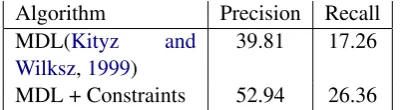
Algorithm Precision Recall
MDL(Kityz and
Wilksz,1999) 39.81 17.26
MDL + Constraints 52.94 26.36
Table 2: Word Detection by MDL Segmentation
a correct word only if both the starting and ending boundaries are identified correctly by the segmen-tation algorithm. Word precision and word recall are defined as follows.
Word Precision= No. of correct segmentsTotal no. of segments
Word Recall= Total no. of words in corpusNo. of correct segments
Boundary precision and boundary recall are de-fined as follows.
Boundary Precision= # correct segment boundaries# segment boundaries
Boundary Recall= # correct segment boundaries# word boundaries
The performance of our learning algorithm av-eraged over 10 samples of size 10,000 characters (from random indices in Brown corpus) is shown in Tables1and2. The reported results are in line with our proposed hypothesis that domain con-straints help in improving the performance of un-supervised MDL segmentation.
4 Protein Segmentation
In this section, we discuss our experiments in pro-tein domain. Choice of propro-tein corpus is very critical to the success of MDL based segmenta-tion. If we look at the problem of corpus selection from a language perspective, we know that simi-lar documents will share more words in common than dissimilar documents. Hence, we have cho-sen our corpus from databases of protein families like SCOPe and PROSITE. We believe that protein sequences performing similar functions will have similar words.
4.1 Qualitative Analysis
The objective of our experiments on PROSITE database (Sigrist et al., 2012) is to qualitatively analyse the protein segments. It can be observed that within a protein family, some regions of the protein sequences have been better conserved than others during evolution. These conserved regions are found to be important for realizing the protein function and/or for the maintenance of its three di-mensional structure. As part of our study, we ex-amined if the MDL segments are able to capture the conserved residues represented by PROSITE patterns.
MDL segmentation algorithm was applied to 15 randomly chosen PROSITE families containing varying number of protein sequences. 2 Within a
PROSITE family, some sequences get compressed more than others. An interesting observation is that the less compressed sequences are those that have evolved over time and hence have low se-quence similarity with other members of the pro-tein family. But, they have the conserved residues intact and MDL segmentation algorithm is able to capture those conserved residues.
For example, consider the PROSITE pattern 3
for Amidase enzyme (PS00571) G-[GAV]-S-[GS](2)-G-x-[GSAE]-[GSAVYCT]-x-[LIVMT]- [GSA]-x(6)-[GSAT]-x- [GA]-x-[DE]-x-[GA]-x-S- [LIVM]-R-x-P-[GSACTL]. The symbol ’x’ in a PROSITE pattern is used for a position where any amino acid is accepted. ’x(6)’ stands for a chain of five amino acids of any type. For patterns with long chains of x, MDL algorithm captures the con-served regions as a series of adjacent segments. For example, in the protein sequence with UniPro-tKB id O00519, the conserved residues and MDL segments are shown in Figure2.
As another example, consider the family PS00319 with pattern G-[VT]-[EK]-[FY]-V-C-C-P . This PROSITE pattern is short and does not contain any ’x’. In such cases, the conserved residues can get captured accurately by MDL segments. The pro-tein sequence with UniProtKB id P14599 has less sequence similarity but its conserved residues GVE-FVCCP are captured exactly in a single MDL seg-ment. We also studied the distribution of segment lengths among the PROSITE families. A single corpus was created combining the sequences from
2The output segments are available at https://1drv.ms/f/s!AnQHeUjduCq0ae9rWhuoybZoA-U
[image:5.595.82.283.160.215.2]Figure 2: Conserved residues and MDL segments of a protein sequence (UniProtKB id O00519) in PROSITE family PS00571
Figure 3: Distribution of MDL segment lengths among PROSITE families PS00319, PS00460, PS00488, PS00806 and PS00818
5 randomly chosen PROSITE families and the dis-tribution of segment lengths is shown in Figure3. Protein segments that were common among the families were typically four or five amino acids in length. However, within each individual family there were longer segments unique to that family. Very long segments (length>15) are formed when the corpus contains many sequences with high se-quence similarities.
4.2 Quantitative Analysis
Unlike in English language, we do not have access to ground truth about words in proteins. Hence, we propose to use a novel extrinsic evaluation mea-sure based on protein family classification. We describe a compression based classifier that uses the MDL segments (envisaged as words in pro-teins) for SCOPe predictions.The performance of the MDL based classifier on SCOPe predictions is used as an extrinsic evaluation measure of protein segments.
4.2.1 MDL based Classifier
Suppose we want to classify a protein sequence
p into one ofk protein families, the MDL based classifier is given by,
family (p)= argmax
family DLG(p,family1...k) (2) where DLG(p,familyi) is the measure of the com-pression effect produced by protein sequencepin the protein corpus of familyi. We hypothesize that a protein sequence will be compressed more by the protein family it belongs to, because of the presence of similar words among the same family members.
Experimental Setup The dataset used for pro-tein classification is ASTRAL Compendium (Chandonia et al., 2004). It contains protein domain sequences for domains classified by the SCOPe hierarchy. ASTRAL 95 subset based on SCOPe v2.05 is used as training corpus and the test set is created by accumulating the protein do-main sequences that were newly added in SCOPe v2.06. Performance of the MDL classifier is dis-cussed in four SCOPe levels - Class, Fold, Su-perfamily and Family. At all levels, we consider only the protein domains belonging to four SCOPe
classes A,B,C and D representing All Alpha, All Beta, Alpha+Beta, Alpha/Beta respectively. The blind test set contains a total of 4821 protein do-main sequences.
SCOPe classification poses the problem ofclass imbalancedue to the non-uniform distribution of domains among different classes at all SCOPe lev-els. Due to this problem, we use macro precision and macro recall (Yang, 1999) as performance measures and are given by the below equations.
P recisionmacro= 1q q
X
i=1
T Pi
T Pi+F Pi (3)
Recallmacro= 1q q
X
i=1
T Pi
T Pi+F Ni (4)
4.2.2 Performance of MDL Classifier
[image:6.595.327.525.578.648.2]SCOPe level Macro Average Precision
Macro Average Recall
Class 75.64 69.63
Fold 60.59 45.08
Super family 56.65 43.73
Family 43.25 37.7
Table 3: Performance of MDL Classifier in SCOPe Prediction
SCOPe level Weighted Average Precision
Weighted Average Recall
Class 76.38 69.77
Fold 81.49 49.25
Super family 72.80 48.23
Family 45.02 35.85
Table 4: Performance of MDL Classifier in SCOPe Prediction - Weighted Measures
Fold Prediction SCOPe v2.05 contains a total of 1208 folds out of which 991 folds belong to
classes A,B,C and D. The distribution of protein sequences among thefoldsis non-uniform ranging from 1 to 2254 sequences with 250folds contain-ing only one sequence. MDL Classifier achieves a macro precision of 60.59% and macro recall of 45.08% infoldclassification.
Impact of Corpus Size The number of pro-tein domains per class decreases greatly down the SCOPe hierarchy. The folds (or families, super-families) that have very few sequences should have less contribution in the overall prediction accu-racy. We weighted the macro measures based on the number of instances which resulted in the weighted averages reported in Table4. The MDL classifier achieves a weighted macro precision of 81.49% in SCOPefoldprediction which is higher than the precision at any other level. This obser-vation highlights the quality of protein segments generated by MDL algorithm. It is also important to note thatfoldprediction is an important sub task of protein structure prediction just as how word detection is crucial to understanding the meaning of a sentence.
4.3 MDL Classifier as a Filter
[image:7.595.93.271.62.159.2]The folds which are closer to each other in the SCOPe hierarchy tend to compress protein se-quences almost equally. Instead of returning a
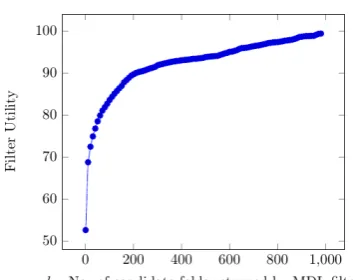
Figure 4: Variation of Filter Utility with Filter Size
k
single fold giving maximum compression, if the MDL classifier returns the top-kcandidates, then we can reduce the search space for manual or high cost inspections. We define utility of the MDL classifier when used as a filter as given below.
Utility = No. of predictions where correct fold is in top-k listTotal no. of predictions Figure4shows thekversus utility on test data. It can be seen from the graph that atk=400 (which is approximately 33% of the total number of folds), top-k predictions are able to give 93% utility. In other words, in 93% of the test sequences, MDL filter can be used to achieve nearly 67% reduction in the search space of 1208 folds.
4.4 Impact of Constraints based on Domain Knowledge
Similar to experiments in English domain, the MDL algorithm on protein dataset can also be enhanced by including constraints from protein domain knowledge. For example, in a protein molecule, hydrophobic amino acids are likely to be found in the interior, whereas hydrophilic amino acids are more likely to be in contact with the aqueous environment. This information can be used to introduce checks on allowable amino acids at the beginning and end of protein segments. Unlike in English, identifying constraints based on protein domain knowledge is difficult because there are no lexicon or protein language rules read-ily available. Domain expertise is needed for get-ting explicit constraints.
As proof of concept, we use the SCOPe class
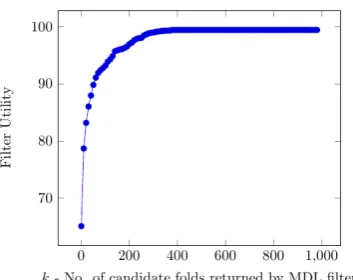
[image:7.595.312.489.63.203.2] [image:7.595.92.274.201.300.2]Figure 5: Variation of Filter Utility with Filter Size
kafter adding constraints based on SCOPe Class labels
of the test sequences, MDL filter can be used to achieve nearly 90% reduction in the search space of 1208 folds. In the absence ofclassknowledge, the same filter utility was obtained atk=400 which is only 67% reduction of search space (Figure5). Through this experiment, we emphasize that ap-propriate domain knowledge can help in improv-ing the quality of word segmentation in protein se-quences. Such domain knowledge could be im-posed in the form of constraints during unsuper-vised learning of protein words. We would like to emphasize the fact that introducing domain knowl-edge in the form of class labels as in supervised or semi-supervised learning frameworks may not be appropriate in protein sequences due to our current ignorance of the true protein words.
5 Discussion
In the words of Jones and Pevzner (Jones and Pevzner, 2004), ”It stands to reason that if a word occurs considerably more frequently than expected, then it is more likely to be some sort of ’signal’ and it is crucially important to figure out the biological meaning of the signal”. In this pa-per, we have proposed protein segments obtained from MDL segmentation as the signals to be de-coded.
As part of our future work, we would like to study the performance of SCS words (Motomura et al., 2012), (Motomura et al., 2013) in protein family classification and compare it against MDL words; We would also like to measure the avail-ability scores of MDL segments. It may also be in-sightful to study the co-occurrence matrix of MDL segments.
6 Conclusion
Given the abundance of unlabelled data, data driven approaches have witnessed significant suc-cess over the last decade in several tasks in vi-sion, language and speech. Inspired by the corre-spondence between biological and linguistic tasks at various levels of abstraction as revealed by the study of Protein Linguistics, it is only natural that there would be a propensity to extend such ap-proaches to several tasks in Computational Biol-ogy. A linguist already knows a lot about language however, and a biologist knows lot about biology; so, it does make sense to incorporate what they al-ready know to constrain the hypothesis space of a machine learner, rather than make the learner re-discover what the experts already know. The latter option is not only demanding in terms of data and computational resources, it may need us to solve riddles we just do not have answers to. Classifying a piece of text as humorous or otherwise is hard at the state of the art; there are far too many inter-actions between variables than we can model, not only do the words interact between them, they also interact with the mental model of the person read-ing the joke. It stretches our wildest imaginations to think of a purely bottom up Deep Learner that is deprived of common-sense and world knowl-edge to learn such end-to-end mappings reliably by looking at data alone. The same is true in biological domains where non-linear interactions between a large number of functional units make macro-properties ”emerge” out of interactions be-tween individual functional units. We feel that a realistic route is one where top down (knowledge driven) approaches complement bottom up (data driven) approaches effectively. This paper would have served a modest goal if it has aligned itself to-wards demonstrating such a possibility within the scope of discovering biological words, which is just one small step in the fascinating quest towards deciphering the language in which biological se-quences express themselves.
References
Shlomo Argamon, Navot Akiva, Amihood Amir, and Oren Kapah. 2004. Efficient unsupervised recur-sive word segmentation using minimum description length. In Proceedings of the 20th international
conference on Computational Linguistics.
Cu-rious parallels and cuCu-rious connectionsphylogenetic thinking in biology and historical linguistics.
Sys-tematic biology54(4):513–526.
Patricia Bralley. 1996. An introduction to molecular linguistics. BioScience46(2):146–153.
John-Marc Chandonia, Gary Hon, Nigel S Walker, Loredana Lo Conte, Patrice Koehl, Michael Levitt, and Steven E Brenner. 2004. The ASTRAL com-pendium in 2004. Nucleic acids research32(suppl 1):D189—-D192.
Ruey-Cheng Chen. 2013. An improved mdl-based compression algorithm for unsupervised word seg-mentation. InACL (2). pages 166–170.
Naomi K Fox, Steven E Brenner, and John-Marc Chan-donia. 2014. Scope: Structural classification of pro-teinsextended, integrating scop and astral data and classification of new structures. Nucleic acids
re-search42(D1):D304–D309.
W Nelson Francis and Henry Kucera. 1979. The brown corpus: A standard corpus of present-day edited american english. Providence, RI: Department of Linguistics, Brown University [producer and dis-tributor].
Mario Gimona. 2006. Protein linguisticsa grammar for modular protein assembly? Nature Reviews Molec-ular Cell Biology7(1):68–73.
Peter Gr¨unwald. 2005. A tutorial introduction to the minimum description length principle. Advances in minimum description length: Theory and
applica-tionspages 23–81.
Harald Hammarstr¨om and Lars Borin. 2011. Unsuper-vised learning of morphology. Computational Lin-guistics37(2):309–350.
Daniel Hewlett and Paul Cohen. 2011. Fully unsuper-vised word segmentation with bve and mdl. In Pro-ceedings of the 49th Annual Meeting of the Associ-ation for ComputAssoci-ational Linguistics: Human
Lan-guage Technologies: short papers-Volume 2.
Asso-ciation for Computational Linguistics, pages 540– 545.
Neil C Jones and Pavel Pevzner. 2004.An introduction to bioinformatics algorithms. MIT press.
Chunyu Kityz and Yorick Wilksz. 1999. Unsupervised learning of word boundary with description length gain. InProceedings of the CoNLL99 ACL Work-shop. Bergen, Norway: Association f or Computa-tional Linguistics. Citeseer, pages 1–6.
Daichi Mochihashi, Takeshi Yamada, and Naonori Ueda. 2009. Bayesian unsupervised word segmen-tation with nested pitman-yor language modeling.
In Proceedings of the Joint Conference of the 47th
Annual Meeting of the ACL and the 4th International Joint Conference on Natural Language Processing
of the AFNLP: Volume 1-Volume 1. Association for
Computational Linguistics, pages 100–108.
Kenta Motomura, Tomohiro Fujita, Motosuke Tsut-sumi, Satsuki Kikuzato, Morikazu Nakamura, and Joji M Otaki. 2012. Word decoding of protein amino acid sequences with availability analysis: a linguis-tic approach. PloS one7(11):e50039.
Kenta Motomura, Morikazu Nakamura, and Joji M Otaki. 2013. A frequency-based linguistic approach to protein decoding and design: Simple concepts, di-verse applications, and the scs package. Computa-tional and structural biotechnology journal5(6):1– 9.
Alexey G Murzin, Steven E Brenner, Tim Hubbard, and Cyrus Chothia. 1995. Scop: a structural classifica-tion of proteins database for the investigaclassifica-tion of se-quences and structures. Journal of molecular biol-ogy247(4):536–540.
David B Searls. 2002. The language of genes. Nature
420(6912):211–217.
Claude Elwood Shannon. 2001. A mathematical the-ory of communication. ACM SIGMOBILE Mobile
Computing and Communications Review5(1):3–55.
Christian JA Sigrist, Edouard De Castro, Lorenzo Cerutti, B´eatrice A Cuche, Nicolas Hulo, Alan Bridge, Lydie Bougueleret, and Ioannis Xenarios. 2012. New and continuing developments at prosite.
Nucleic acids researchpage gks1067.
Radu Soricut and Franz Josef Och. 2015. Unsu-pervised morphology induction using word embed-dings. InHLT-NAACL. pages 1627–1637.
Ashish Vijay Tendulkar and Sutanu Chakraborti. 2013. Parallels between linguistics and biology. In Pro-ceedings of the 2013 Workshop on Biomedical Nat-ural Language Processing, Sofia, Bulgaria: Associ-ation for ComputAssoci-ational Linguistics. Citeseer, pages 120–123.
Wikipedia. 2017. Protein structure — Wikipedia, the free encyclopedia. http://en.wikipedia. org/w/index.php?title=Protein% 20structure&oldid=774730776. [Online; accessed 22-April-2017].
Yiming Yang. 1999. An evaluation of statistical ap-proaches to text categorization. Information re-trieval1(1-2):69–90.
Valentin Zhikov, Hiroya Takamura, and Manabu Oku-mura. 2010. An efficient algorithm for unsupervised word segmentation with branching entropy and mdl.
InProceedings of the 2010 Conference on Empirical
Methods in Natural Language Processing.
![Figure 1: Structural levels in a Protein Molecule [Image source : (Wikipedia, 2017)] vs](https://thumb-us.123doks.com/thumbv2/123dok_us/1464200.685039/3.595.148.455.64.245/figure-structural-levels-protein-molecule-image-source-wikipedia.webp)