LIFE SATISFACTION AND SELF
ARTICLE INFO ABSTRACT
The purpose of
compassion. Participants were 381 (193 female and 188 male) university students, between age range of 17–
the Self
examined using correlation analysis and the hypothesis model was tested through structural equation modeling. In correlation analysis, se
positively and self
negatively related to life satisfaction. The model demonstrated fit (
p=.00008, AGFI=.92, GFI=.97, CFI=.97, NFI=.96, NNFI=. 93, IFI=.97, RFI=.91, SRMR=.072, and RMSEA=.090
were predicted positively by life satisfaction. isolation, and over
Copyright © 2014 Recep Uysal. This is an open access article distributed under the Creative Commons Attribution License, which permits unrestricted use, distribution, and reproduction in any medium, provided the original work is properly cited.
INTRODUCTION
Happiness and subjective well-being has
interest for many centuries and accepted very important for most of the people so individuals have wondered about what makes a happy life (Diener, 1984; Diener
Although subjective well-being and happiness are popular subjects and have a long history in philosophy and psychology, recently researchers have begun to investigate the constructs of happiness and subjective well-being (Lim and
In addition, lately psychologists became more interested in positive feelings and emotions of
well-depression and anxiety (Van Hoorn, 2007). Subjective well being which has been defined as an individual’s experience or appraisal of the positive qualities in his or her life (Diener, 1984) is ‘a broad category of phenomena that includes people’s emotional responses, domain satisfactions, and global judgments of life satisfaction (Diener, Sih, Lucas
1999). Previous research reported that subjective well has two distinctive constructs. The first one is
emotional part, which usually further broken down into presence of positive affect which refers to experience of pleasurable emotional states and moods such as excitement, vigor, confidence, and optimism and the absence of negative affect which refers to frequency of negative or bothersome emotions such as fear, anxiety, sadness, anger, or hostility (Diener and Emmons, 1984; Diener, Lucas
Suldo and Huebner, 2005).
*Corresponding author: Recep Uysal Istanbul, Turkey.
ISSN: 0975-833X
Article History:
Received 23rd March, 2014
Received in revised form 10th April, 2014
Accepted 15th May, 2014
Published online 25th June,2014
Key words: Life satisfaction; Self-compassion; Path analysis
RESEARCH ARTICLE
ELF-COMPASSION: A STRUCTURAL EQUATION MODELING
*Recep Uysal PhD
Istanbul, Turkey
ABSTRACT
The purpose of this study was to determine the relationships between life satisfaction and self compassion. Participants were 381 (193 female and 188 male) university students, between age range
–26, who completed a questionnaire package that includes the Satisfacti the Self-compassion Scale. The relationships between life satisfaction and self
examined using correlation analysis and the hypothesis model was tested through structural equation modeling. In correlation analysis, self-kindness, common humanity, and mindfulness were found positively and self-judgment, isolation, and over-identification factors of self
negatively related to life satisfaction. The model demonstrated fit (
p=.00008, AGFI=.92, GFI=.97, CFI=.97, NFI=.96, NNFI=. 93, IFI=.97, RFI=.91, SRMR=.072, and RMSEA=.090). According to path analysis results, self-kindness, common humanity, and mindfulness were predicted positively by life satisfaction. Moreover life satisfaction predicted self
isolation, and over-identification in a negative way.
is an open access article distributed under the Creative Commons Attribution License, which permits unrestricted use, ion, and reproduction in any medium, provided the original work is properly cited.
being has been a topic of interest for many centuries and accepted very important for most of the people so individuals have wondered about what makes a happy life (Diener, 1984; Diener et al., 1985). being and happiness are popular and have a long history in philosophy and psychology, recently researchers have begun to investigate the constructs of and Putman, 2010). In addition, lately psychologists became more interested in -being instead of depression and anxiety (Van Hoorn, 2007). Subjective well-being which has been defined as an individual’s experience or appraisal of the positive qualities in his or her life (Diener, enomena that includes people’s emotional responses, domain satisfactions, and global judgments of life satisfaction (Diener, Sih, Lucas and Smith, 1999). Previous research reported that subjective well-being has two distinctive constructs. The first one is an affective and emotional part, which usually further broken down into presence of positive affect which refers to experience of pleasurable emotional states and moods such as excitement, vigor, confidence, and optimism and the absence of negative which refers to frequency of negative or bothersome emotions such as fear, anxiety, sadness, anger, or hostility Emmons, 1984; Diener, Lucas and Oishi, 2002;
The second one is cognitive judgmental part, which referred to life satisfaction or perceived quality of life (Andrews Withey, 1976) that depends on individual judgements about perceived life circumstances.
cognitive appraisal of one’s quality of life and depends on one’s cognitive and subjective evaluation (Gilman Huebner, 2003), described as “excellence or goodness in aspects of life that go beyond mere subsistence, survival, and longevity” (Frisch, 2000, p. 208). D
Nachreiner, and Schaufeli
satisfaction can be described as the extent to how much a person's life is satisfying her/his physical and psychological desires and wishes. The person wishes can be reflected in many different aspects of life such as family, friends, work, and school (Rostami and Abedi, 2012). Hence, people evaluate how well they are doing in lives that are important to them when they judge their life satisfaction (Caldwell, 2009).
Research has shown that life satisfaction can act as a protective factor against the development of psychopathology (Suldo Huebner, 2004) and people who have greater life satisfaction tend to experience better mental and physical health (Siahpush, Spittal, and Singh, 2008). In addition, life satisfaction is positively related to adaptive constructs such as happiness and optimism (Sapmaz and Doğan, 2012), self
2012), identity achievement (Özgüngör, 2009), emotional intelligence (Palmer, Walls, Burgess,
perceived social support (Edwards
support (Suldo and Huebner, 2006), marital adjustment (Çelik and Tümkaya, 2012), hope (Bailey,
2007), positive affectivity (Busseri,
2007), ego strength, and positivism (Diener, International Journal of Current Research
Vol. 6, Issue, 06, pp.7251-7256, June,2014
INTERNATIONAL
COMPASSION: A STRUCTURAL EQUATION MODELING
this study was to determine the relationships between life satisfaction and self-compassion. Participants were 381 (193 female and 188 male) university students, between age range
26, who completed a questionnaire package that includes the Satisfaction with Life Scale and compassion Scale. The relationships between life satisfaction and self-compassion were examined using correlation analysis and the hypothesis model was tested through structural equation kindness, common humanity, and mindfulness were found identification factors of self-compassion were found negatively related to life satisfaction. The model demonstrated fit (χ2=34.39, df=9, χ2/df= 3.82, p=.00008, AGFI=.92, GFI=.97, CFI=.97, NFI=.96, NNFI=. 93, IFI=.97, RFI=.91, SRMR=.072, and kindness, common humanity, and mindfulness satisfaction predicted self-judgment,
is an open access article distributed under the Creative Commons Attribution License, which permits unrestricted use,
The second one is cognitive judgmental part, which referred to life satisfaction or perceived quality of life (Andrews and Withey, 1976) that depends on individual judgements about Life satisfaction refers to the raisal of one’s quality of life and depends on one’s cognitive and subjective evaluation (Gilman and Huebner, 2003), described as “excellence or goodness in aspects of life that go beyond mere subsistence, survival, and longevity” (Frisch, 2000, p. 208). Demerouti, Bakker, (2000) proposed that life satisfaction can be described as the extent to how much a person's life is satisfying her/his physical and psychological desires and wishes. The person wishes can be reflected in fferent aspects of life such as family, friends, work, Abedi, 2012). Hence, people evaluate how well they are doing in lives that are important to them when they judge their life satisfaction (Caldwell, 2009).
that life satisfaction can act as a protective factor against the development of psychopathology (Suldo and Huebner, 2004) and people who have greater life satisfaction tend to experience better mental and physical health (Siahpush, 8). In addition, life satisfaction is positively related to adaptive constructs such as happiness and Doğan, 2012), self-esteem (Yiğit, 2012), identity achievement (Özgüngör, 2009), emotional Walls, Burgess, and Stough 2001), perceived social support (Edwards and Lopez 2006), parental Huebner, 2006), marital adjustment (Çelik Tümkaya, 2012), hope (Bailey, Eng, Frisch,and Snyder, 2007), positive affectivity (Busseri, Sadava, and Decourville, 007), ego strength, and positivism (Diener, Napa-Scollon,
Oishi, Dzoketo, and Suh, 2000). On the other hand life satisfaction negatively associated with perceived stress (Extremera, Duran and Rey, 2009) as well as loneliness (Goodwin, Cook, and Yung, 2001), negative automatic thoughts (Bulut, 2007), alexithymia (Palmer, Donaldson, and Stough, 2002), and depression (Wong and Lim 2009).
Self-compassion
Self-compassion which has been explored and has begun to study by western psychologists in recent years is a substantial psychological construct derived from Buddhist thought (Neff, 2003a, b). Self-compassion can be defined as being caring and compassionate toward oneself during the difficult times (Bennett-Goleman, 2001). This construct is an alternative conceptualization of a healthy attitude toward oneself and involves being open to one’s own suffering, rather than avoiding or disconnecting from it, generating the desire to diminish one’s suffering and to ameliorate oneself with kindness, offering non-judgmental understanding to one’s problem, inadequacies, and failures, so that one’s experience is seen as part of the larger human experience and avoiding evaluations of self-worth (Neff, 2003a, b).
According to Neff (2003a, b), self-compassion consists of three components: self-kindness versus self-judgment, common humanity versus isolation, and mindfulness versus over identification. Self-kindness involves being kind, content, and understanding toward oneself when an individual suffers, fails, or feels inadequate, instead of punishing himself/herself with self-criticism. The first component; self-kindness entails that being imperfect and failures, difficulties in life is inevitable, so an individual can soothe and warm himself / herself when confronting his/her pain rather than getting nervous or sad when thinks get bad or have a fail in his/her life (Neff, 2012). The second component; common humanity is being aware of one’s pleasant or painful experiences as not personal, but as all human beings’. Common humanity involves recognizing that all humans are flawed that they fail and have also inadequacies (Neff, 2009) and forgiving oneself for being just a human, for being limited (Barnard and Curry, 2011).
The third component, mindfulness is a non-judgmental, balanced awareness mind-state in which feelings and thoughts are observed as they are, without trying to change or denying them and prejudice (Neff, 2012), accepting painful feelings and thoughts in mindful awareness instead of being completely absorbed in them or exaggerate them (Barnard and Curry, 2011).
Self-compassion is an important way to raise emotional well-being and contentment in life, fosters positive mind states such as happiness and optimism, allows to individual flourishing (Neff, 2011), and promotes health-related behaviors (Adams and Leary, 2007). Self-compassionate individuals were less likely to feel isolated by their problems and experience less anxiety when thinking about them (Leary, Tate, Adams, Allen, and Hancock, 2007). Research has found that self-compassion is associated with happiness and positive affect (Neff, Rude, and Kirkpatrick, 2007), psychological well-being (Neff, 2004; Neff, 2004), and social connectedness (Neff and McGehee,
2010). Similarly greater self-compassion is linked to less anxiety and depression (Neff, 2009). Neff, Rude, and Kirkpatrick (2007) also demonstrated that self-compassion was associated with wisdom, personal initiative, and curiosity. Other studies have showed that self-compassion is negatively associated with perfectionism (Neff, 2003a), social anxiety (Werner et al., 2011), loneliness (Akın, 2010), and internet addiction (Iskender and Akın, 2011), and positively associated with social relationship, emotional intelligence, self-determination (Neff, 2003a), positive mental health and adaptive functioning (Neff, 2004), self-efficacy (Iskender, 2009), and optimism (Neff and Vonk, 2009).
The present study
Life satisfaction is not only a key indicator of psychological well-being, a core dimension of subjective well-being and an important correlate of psychological health (Diener, 1984; Diener et al., 1999; Pavot and Diener, 2008), but also emerged as a strong predictor of other important constructs such as self-compassion which heals the painful experiences of all humans with compassion and understanding (Neff, 2012). In a similar way, by nature, self-compassion may be significant predictor of well-being and life satisfaction, possibly by buffering people against the displeasing emotional and cognitive reactions that accompany negative life experiences (Allen, 2011). People who are self-compassionate tend to experience more happiness, optimism, curiosity, and positive affect than those who lack self-compassion (Neff, et al., 2007). Also key feature of compassion is the lack of criticism and self-criticism is negatively related to happiness (Doğan, Sapmaz and Çötok, 2011).
Research on self-compassion is relatively new, different researches that study researcher that study self-compassion and its relation to positive findings in various areas of life are also needed. One of these areas is the relationship between self-compassion and life satisfaction. Along with other positive constructs (Bailey et al., 2007; Busseri et al. 2007; Edwards and Lopez 2006; Özgüngör, 2009; Palmer et al., 2001; Sapmaz and Doğan, 2012; Suldo and Huebner, 2006; Yiğit, 2012) life satisfaction may be an important predictor of self-compassion. Thus, the aim of the present study is to examine the relationships between life satisfaction and dimensions of self-compassion. Based on the relationships of life satisfaction (Bulut, 2007; Goodwin, Cook, and Yung, 2001; Pavot and Diener, 1993; Suldo and Huebner, 2004) and self-compassion (Akın 2010; Iskender, 2009; Neff, 2003a, b; Neff, 2004; Neff, Kirkpatrick, and Rude, 2005; Neff, et al., 2007; Neff and Vonk, 2009; Neff and McGehee, 2010) with psychological constructs we hypothesized that life satisfaction would be associated negatively with self-judgment, isolation, and over-identification and positively with self-kindness, awareness of common humanity, and mindfulness.
MATERIALS AND METHOD
Participants
Participants were 381 volunteer undergraduate students (193 (51%) female and 188 (49%) male) studying various subjects,
at the mid-size state university, Turkey. Of the participants, 104 (27%) were freshman, 93 (24%) were sophomores, 82 (22%) were juniors, and 102 (27%) were seniors. Their ages ranged from 17 to 26 year-old (M = 20.9, SD= 0.9).
Measures
The Satisfaction with Life Scale (SWLS, Diener, Emmons, Larsen, and Griffin, 1985). The SWLS consists of five items
(e.g., In most ways my life is close to my ideal) using a Likert scale from 1 (strongly disagree) to 7 (strongly agree). A sum of all scores yields a total score that ranges from 5 to 35; a higher score indicates a higher life satisfaction level. Turkish adaptation of this scale had been done by Durak, Senol-Durak, and Gencoz (2010). They found that internal consistency coefficient was .81 and the corrected item total correlations ranged from .55 to .63. Results of confirmatory factor analysis indicated that the scale was well fit. Self-Compassion Scale
(Neff, 2003b). The Self-Compassion Scale consists of 26 items
and six sub-scales. Responses are given on a 5-point scale (1=strongly disagree to 5=strongly agree). Mean scores on the six subscales are then averaged (after reverse-coding negative items) to create an overall self-compassion score. Turkish adaptation of the scale has done by Deniz, Kesici and Sümer (2008). Different from the original scale, the Turkish version showed a single dimension and in addition, the scale was reduced to 24 items since two items which were below.30’ as a result of total item correlation were taken from the scale. Internal consistency reliability obtained for the adapted version was .89 and test–retest reliability was .83.
Procedures
Participants voluntarily participated and were free to fill out the questionnaires without pressure. Completion of the questionnaires was anonymous and there was a guarantee of confidentiality. The instruments were administered to the students in groups in the classrooms. The measures were counterbalanced in administration. Prior to administration of measures, all participants were told about purposes of the study. In this research, Pearson correlation coefficient was applied to assess statistical significance for the relations of life satisfaction with self-compassion and to test the hypothesis model structural equation modeling (SEM) was used. Analyses were carried out with LISREL version 8.54 (Jöreskog and Sorbom, 1996) and IBM SPSS Statistics 20.
RESULTS
Descriptive Data and Inter-correlations
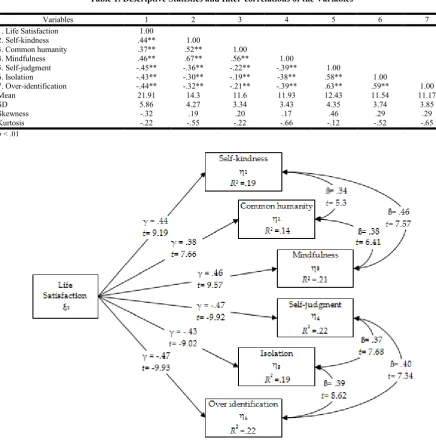
Table 1 shows the means, standard deviations, and Pearson correlation coefficients for the variables.
When Table 1 is examined, it is seen that there are significant correlations between life satisfaction and self-compassion. Correlations between life satisfaction and self-compassion were statistically significant. Self-kindness (r= .44), common humanity (r= .37), and mindfulness (r= .46) related positively to life satisfaction. On the other hand, self-judgment (r= -.45), isolation (r= -.43), and over-identification (r= -.44) were found negatively associated with life satisfaction.
Structural Equation Modeling
The results of SEM analysis presented in Figure 1. The model demonstrated fit (χ2= 34.39, df= 9, χ2/df= 3.82, p=.00008, AGFI=.92, GFI=.97, CFI=.97, NFI=.96, NNFI=. 93, IFI=.97, RFI=.91, SRMR=.072, and RMSEA=.090) and accounted for 19% of self-kindness, 14% of common humanity, 21% of mindfulness, 22% of self-judgment, 19% of isolation, and 22% of over-identification variance.
It can be seen from figure 1 that self-kindness (γ= .44), common humanity (γ= .38), and mindfulness (γ= .46) were predicted positively and self-judgment (γ= -.47), isolation (γ= -.43), and over-identification (γ= -.47) were predicted negatively by life satisfaction.
DISCUSSION
The purpose of this research is to investigate the relationships between life satisfaction and self-compassion. The findings of the present study have demonstrated that there are significant relationships between life satisfaction and the dimensions of self-compassion. As expected, path analysis illustrated that self-kindness, common humanity, and mindfulness were predicted by life satisfaction positively. These dimensions involves being kind toward oneself and understanding to oneself, seeing our own experiences as part of the larger human experiences and holding painful thoughts and feelings in balanced awareness (Barnard and Curry, 2011; Neff, 2003a). The positive relationships between self-kindness, common humanity, and mindfulness and life satisfaction which have found in the present study support the results of previous research which suggest that self-compassionate people possess many of the psychological strengths such as happiness, optimism, and positive affect (Neff, et al., 2007), and psychological well-being (Neff, 2004). Similarly, life satisfaction was found correlated positively with adaptive psychological variables, including happiness, optimism, self-esteem, and hope. In addition, Gilbert (2005) suggested that self-compassion enhances well-being through helping individuals feel cared for, connected, and emotionally calm.
of the study findings is somewhat limited, it is also important to investigate the variables studied in this research on other sample groups other than university students. Secondly, because this research intended to build a model rather than test a model that already exists, findings from the research are of explanatory characteristics. Therefore, if it is not tested on another sample, it is wise to avoid taking the findings as definite. The third, even though structural equation modeling suggests results related to causality, it is difficult to give full explanation related to causality among the variables examined in the research, because correlational data were used. And finally the data reported here for life satisfaction and self-compassion are limited to self-report. Although this study includes multiple limitations, it also contributes to the literature on life satisfaction and self-compassion. The present research indicates that as life satisfaction increased, self-kindness, common humanity, and mindfulness increased as well. On the other hand, as life satisfaction decreased, self-judgment, isolation, and over-identification decreased. This research also suggests that enhancing of life satisfaction could
be highly beneficial for self-compassion. Nonetheless it is important to note that further research investigating the relationships between life satisfaction and self compassion, and other psychological constructs are needed to reinforce the findings of this study.
REFERENCES
Adams, C. E., and Leary, M. R. 2007. Promoting self-compassionate attitudes toward eating among restrictive and guilty eaters. Journal of Social and Clinical
Psychology, 26, 1120 –1144
Akın, A. 2010. Self-compassion and loneliness. International
Online Journal of Educational Sciences (IOJES), 2(3),
702-718.
[image:4.595.76.513.63.509.2]Allen, A. B. 2011. Understanding the self-compassionate mindset in older adults. Unpublished PhD Dissertation, Duke University, Duke.
Table 1. Descriptive Statistics and Inter-correlations of the Variables
Variables 1 2 3 4 5 6 7
1. Life Satisfaction 1.00
2. Self-kindness .44** 1.00
3. Common humanity .37** .52** 1.00
4. Mindfulness .46** .67** .56** 1.00
5. Self-judgment -.45** -.36** -.22** -.39** 1.00
6. Isolation -.43** -.30** -.19** -38** .58** 1.00
7. Over-identification -.44** -.32** -.21** -.39** .63** .59** 1.00
Mean 21.91 14.3 11.6 11.93 12.43 11.54 11.17
SD 5.86 4.27 3.34 3.43 4.35 3.74 3.85
Skewness -.32 .19 .20 .17 .46 .29 .29
Kurtosis -.22 -.55 -.22 -.66 -.12 -.52 -.65
**p < .01
Andrews, F. M., and Withey, S. B. 1976. Social indicators of
well-being: Americans perceptions of life quality. New
York: Plenum Press.
Bailey, T. C., Eng, W., Frisch, M. B, and Snyder, C. R. 2007. Hope and optimism as related to life satisfaction. The
Journal of Positive Psychology: Dedicated to furthering research and promoting good practice, 2(3), 168-175.
Barnard, K. L., and Curry, J. F. 2011. Self-compassion: Conceptualizations, correlates, and interventions. Review of
General Psychology, 15 (4), 289-303.
Bennett-Goleman, T. 2001. Emotional alchemy: How the mind
can heal the heart. New York: Three Rivers Press.
Bulut, N. 2007. Relations between school psychological counselors’ life satisfaction, strategies of coping with stress and negative automatic thoughts. Turkish Psychological
Counseling and Guidance Journal, 3 (27), 1-13.
Busseri, M. A., Sadava, S. W., and Decourville, N. 2007. A hybrid model for research on subjective wellbeing: Examining common- and component-specific sources of variance in life satisfaction, positive affect, and negative affect. Social Indicators Research, 83, 413–445.
Caldwell, A. E. 2009. The relationship between life
satisfaction and self-beneficial behaviors. Unpublished
PhD. Dissertation, Texas Christian University, Texas. Çelik, M. and Tümkaya, S. 2012. The relationship between job
variables of life satisfaction and marital satisfaction of lecturers. KEFAD, 13 (1), 223-238.
Demerouti, E., Bakker, A. B., Nachreiner, F., and Schaufeli, W. B. 2000. A model of burnout and life satisfaction among nurses. Journal of Advanced Nursing, 32, 454–464. Deniz, M. E., Kesici, Ş. and Sümer, S. A. 2008. The validity
and reliability of the Turkish version of the Self-Compassion Scale, Social Behavior and Personality, 36(9), 1151–1160.
Diener, E. 1984. Subjective well-being. Psychological
Bulletin, 95, 542-575.
Diener, E., and Emmons, R. A. 1984. The independence of positive and negative affect. Journal of Personality and
Social Psychology, 47, 1105-1117.
Diener, E., Emmons, R. A., Larsen, R. J., and Griffin, S. 1985. The satisfaction with life scale. Journal of Personality
Assessment, 49, 71-75.
Diener, E., Lucas, R. E., and Oishi, S. 2002. Subjective well-being: The science of happiness and life satisfaction. In C. R. Snyder and S.J. Lopez (Ed.), Handbook of Positive
Psychology. Oxford and New York : Oxford University
Press.
Diener, E., Napa-Scollon, C. K., Oishi, S., Dzoketo, V., and Suh, E. M. 2000. Positivity and the construction of life satisfaction judgments: Global happiness is not the sum of its part. Journal of Happiness, 1, 159-176.
Diener, E., Suh, E. M., Lucas, R. E., and Smith, H. L. 1999. Subjective well-being: Three decades of progress.
Psychological Bulletin, 125(2), 276-302.
Doğan, T., Sapmaz, F. and Çötok, N. A. 2011. Self-criticism and happiness. Kastamonu Education Journal, 21 (1),
391-400
Durak, M., Senol-Durak, E., and Gencoz, T. 2010. Psychometric properties of the satisfaction with life scale among Turkish university students, correctional officers,
and elderly adults. Social Indicators Research, 99(3), 413-429.
Edwards, L. M., and Lopez, S. J. 2006. Perceived family support, acculturation, and life satisfaction in Mexican American youth: A mixed-methods exploration. Journal of
Counseling Psychology, 53(3), 279–287.
Extremera, N., Duran, A., and Rey, L. 2009. The moderating effect of trait meta-mood on perceived stres on life satisfaction. Personality and Individual Differences, 47, 116–141.
Frisch, M. B. 2000. Improving mental and physical health care through quality of life therapy and assessment. In E. Diener and D. R. Rahtz (Eds.), Advances in quality of life: Theory
and research (pp. 207-241). London: Kluwer.
Gilbert, P. 2005. Compassion: Conceptualizations research
and use in psychotherapy. Brunner-Routledge, London.
Gilman, R., and Huebner, E. S. 2003. A review of life satisfaction research with children and adolescents. School
Psychology Quarterly, 18, 192-205.
Goodwin, R., Cook, O., and Yung, Y. 2001. Loneliness and life satisfaction among three cultural groups. Personal
Relationships, 8, 225-230.
Iskender, M. 2009. The relationship between self-compassion, self-efficacy, and control belief about learning in Turkish university students. Social Behavior and Personality,
37(5), 711-720.
Iskender, M.and Akın, A. 2011. Self-compassion and internet addiction. The Turkish Online Journal of Educational
Technology, 10(3), 215-221.
Jöreskog, K. G., and Sorbom, D. 1996. LISREL 8 reference
guide. Lincolnwood, IL: Scientific Software International.
Leary, M. R., Tate, E. B., Adams, C. E., Allen, B. A., and Hancock, J. 2007. Self-compassion and reactions to unpleasant self-relevant events: The implications of treating oneself kindly. Journal of Personality and Social
Psychology, 92, 887–904.
Lim, C., and Putnam, R. 2010. Religion, social networks, and life satisfaction. American Sociological Review, 75, 914– 933.
Neff, K. D. 2003a. Self-compassion: An alternative conceptualization of a healthy attitude toward oneself. Self
and Identity, 2(2), 85−102.
Neff, K. D. 2003b. The development and validation of a scale to measure self-compassion. Self and Identity, 2(3), 223−250.
Neff, K. D. 2004. Self-compassion and psychological well-being. Constructivism in the human sciences, 9(2), 27-37. Neff, K. D. 2009. Self-compassion. In M. R. Leary and R. H.
Hoyle (Eds.), Handbook of individual differences in social
behavior (pp. 561–573). New York, NY: Guilford Press.
Neff, K. D. 2011. Self-Compassion. Harper Collins Publishers, New York.
Neff, K. D. 2012. The science of self-compassion. In C.Germer and R. Siegel (Eds.), Compassion and wisdom in
psychotherapy (pp. 79-92). New York: Guilford Press.
Neff, K. D., and McGehee, P. 2010. Self-compassion and Psychological Resilience Among Adolescents and Young Adults, Self and Identity, 9(3), 225-240.
Neff, K. D., and Vonk, R. 2009. Self-compassion versus global self-esteem: two different ways of relating to on self.
Neff, K. D., Kirkpatrick, K. L., and Rude, S. S. 2005. Accepting the human condition: Self-compassion and its link to adaptive psychological functioning. Manuscript
submitted for publication, 1-43.
Neff, K. D., Rude, S. S., and Kirkpatrick, K. L. 2007. An examination of self-compassion in relation to positive psychological functioning and personality traits. Journal of
Research in Personality, 41, 908–916.
Özgüngör, S. 2009. Postmodernizm, identity status and life satisfaction. Turkish Psychological Counseling and
Guidance Journal, 4 (31), 32-42
Palmer, B., Donaldson, C., and Stough, C. 2002. Emotional intelligence and life satisfaction. Personality and
Individual Differences, 33, 1091–1100.
Palmer, B., Walls, M., Burgess, Z., and Stough, C. 2001. Emotional intelligence and effective leadership. Leadership
and Organisational Development Journal, 22, 5–10.
Pavot, W., and Diener, E. 2008. The Satisfaction with Life Scale and the emerging construct of life satisfaction. The
Journal of Positive Psychology, 3, 137–152.
Pavot, W., Diener, E. 1993. Review of the Satisfaction with Life Scale. Psychological Assessment, 5 (2), 164-172. Rostami, Z., and Abedi, M. R. 2012. Dose academic burnout
predicts life satisfaction or life satisfaction is predictor of academic burnout? Interdisciplinary Journal of Contemporary Research in Business, 3(12), 668-674.
Sapmaz, F., and Doğan, T. 2012. Optimism as a predictor of happiness and life satisfaction. Mersin University Journal
of the Faculty of Education, 8(3), 63-69.
Siahpush, M., Spittal, M., and Singh, G. K. 2008. Happiness and life satisfaction prospectively predict self-rated health, physical health, and the presence of limiting, long-term health conditions. American Journal of Health Promotion,
23, 18–26.
Suldo, S. M. and Huebner, E. S. 2004. Does life satisfaction moderate the effects of stressful life events on psychopathological behavior during adolescence? School
Psychology Quarterly, 19, 93-105.
Suldo, S. M., and Huebner, E. S. 2006. Is extremely high life satisfaction during adolescence advantageous? Social
Indicators Research, 78, 179-203.
Van Hoorn, A. 2007. A short introduction to subjective well-being: Its measurement, correlates and policy uses.
Werner, K. H., Jazeieri, H., Goldin, P. R., Ziv, M., Heimberg, R. G., and Gross, J. J. 2012. Self-compassion and social anxiety disorder. Anxiety, Stress and Coping, 25(5), 543-558.
Wong, S. S., and Lim, T. 2009. Hope versus optimism in Singaporean adolescents: Contributions to depression and life satisfaction. Personality and Individual Differences,
46, 648–652.
Yiğit, R. 2012. Examination of relationship between self-esteem, life satisfaction of riot policemen and their approach to dealing with stress, KEFAD, 13 (1), 61-75.