Statistical Science 2019
A Conversation with Peter Diggle
Peter M. Atkinson
(1)and Jorge Mateu
(2)(1)
Faculty of Science and Technology, Lancaster University, Bailrigg, Lancaster LA1 4YW, UK. Email: [email protected]
(2)
Department of Mathematics, University Jaume I of Castellon, E-12071 Castellon, Spain. Email: [email protected]
Abstract.
Peter John Diggle was born on February 24, 1950, in Lancashire, England. Peter went to school in Scotland, and it was at the end of his school years that he found that he was good at maths and actually enjoyed it. Peter went to Edinburgh to do a maths degree, but transferred halfway through to Liverpool where he completed his degree. Peter studied for a year at Oxford and was then appointed in 1974 as a lecturer in statistics at the University of Newcastle-upon-Tyne where he gained his PhD, and was promoted to Reader in 1983. A sabbatical at the Swedish Royal College of Forestry gave him his first exposure to real scientific data and problems, prompting a move to CSIRO, Australia. After five years with CSIRO where he was Senior, then Principal, then Chief Research Scientist and Chief of the Division of Mathematics and Statistics, he returned to the UK in 1988, to a Chair at Lancaster University. Since 2011 Peter has held appointments at Lancaster and Liverpool, together with honorary appointments at Johns Hopkins, Columbia and Yale. At Lancaster, Peter was the founder and Director of the Medical Statistics Unit (1995-2001), University Dean for Research (1998-2001), EPSRC Senior Fellow (2004-2008), Associate Dean for Research at the School of Health and Medicine (2007-2011), Distinguished University Professor, and leader of the CHICAS Research Group (2007-2017). A Fellow of the Royal Statistical Society since 1974, he was a Member of Council (1983-1985), Joint Editor of JRSSB (1984-1987), Honorary Secretary (1990-1996), awarded the Guy Medal in Silver (1997) and the Barnett Award (2018), Associate Editor of Applied Statistics (1998-2000), Chair of the Research Section Committee (1998-2000), and President (2014-2016). Away from work, Peter enjoys music, playing folk-blues guitar and tenor recorder, and listening to jazz. His running days are behind him, but he can just about hold his own in mixed-doubles badminton with his family. His boyhoood hero was Stirling Moss, and he retains an enthusiasm for classic cars, not least his 1988 Porsche 924S. His favourite authors are George Orwell, Primo Levi and Nigel Slater. This interview was done prior to the fourth Spatial Statistics conference held in Lancaster, July 2017 where a session was dedicated to Peter celebrating his contributions to statistics.Key words and phrases: CSIRO, Geostatistics, Lancaster, Longitudinal data analysis, Point
Peter M. Atkinson is Professor of Spatial Data Science, Dean of the Faculty of Science and Technology and Dean of the Faculty of Health and Medicine at Lancaster University, Bailrigg, Lancaster LA1 4YW, UK. Peter is also currently Visiting Research Professor at Queen’s University at Belfast, UK, Visiting Professor at the University of Southampton, Southampton, UK and Visiting Professor at the Chinese Academy of Sciences, Beijing, China. e-mail: [email protected]
Jorge Mateu is Professor of Statistics, Department of Mathematics, University Jaume I of
Castellon, E-12071 Castellon, Spain. Director of the Research Unit Eurocop: Statistical
Modelling of Crime Data, based at the Department of Mathematics, University Jaume I of
Castellon. e-mail: [email protected]
This conversation took place in Lancaster in June 2017, during a research visit of Jorge Mateu. The nearly four-hour conversation was recorded and then transcribed. Several parts have been lightly edited and reorganized for clarity. The interview questions were designed to provide the desired coverage and balance. We also tried to draw on our personal insights into Peter's character and his unique contributions to the scientific community.
Lancaster, June 2017.
1. EARLY YEARS, EDINBURGH, LIVERPOOL, OXFORD,
NEWCASTLE-UPON-TYNE AND CSIRO
Pete and Jorge: Thanks Peter for doing this, we really appreciate it and it's really nice for us to
do it.
FIG 1. Peter, age 6, 1956 FIG 2. Peter (left-seated) with friends after BSc graduation , 1972
Pete: There are about nine questions in this first section. Tell us about your early years. What led
you to undertake a Bachelor’s at Liverpool in Computational and Statistical Science?
Peter: It was a very indirect route. I suspect, like most people of my age in your teens, I
[image:3.612.72.211.71.252.2]very unsettled. By that time my parents had left Scotland and moved to Merseyside. So I transferred halfway through my Bachelor’s degree to Liverpool, And again intending to do a degree in maths, but that was when I really got interested in statistics. The seed had been sown in Edinburgh because statistics was part of the maths curriculum, obviously, but in particular that's when I was taught by Julian Besag and he was really inspiring.
Pete: Where was that?
Peter: Liverpool. Julian was an inspiring teacher and so it was under his influence that I
graduated in Computational and Statistical Science, which for me was mainly statistics plus some computer programming and numerical analysis.
Pete: But that was the next question really. I presume that degrees in computational statistical
science were not common in 1969.
Peter: Indeed! It was a very farsighted move on Liverpool's part. They had a maths department,
which was pure and applied, and they had a separate department, which had computer scientists - which was a very young discipline in 1972 - numerical analysts and statisticians. And the curriculum allowed you to mix and match across those three subjects and to do a little bit of continuing maths. But they also offered what would nowadays in modern jargon be called ‘pathways’. Rather than people just choosing modules at random, they said well if you enjoy statistics, here's a suggestion, and if you enjoy computing, here's a suggestion. So I did a fair bit of numerical analysis, I did a little bit of applied maths, and a lot of statistics.
Pete: So, tell us about Oxford. Was that a fundamental learning period for you and it sounds like,
from what you just said, Julian Besag had a big, big influence on you. So how did that carry through? Who influenced you at Oxford?
Peter: Oh yes, absolutely. Well, the way that came about was very simple. Quite late on in my
to apply to Oxford, I also applied to Cambridge and to Imperial, and basically Maurice came up with an offer for a funded place and so off I went and I worked with Maurice Bartlett for a year, intending to do my DPhil. But then Maurice said he was buzzing off to Australia and I thought “Hmm, that's not so good” because to my surprise in those days – 1972-3 – there wasn't a statistics department at Oxford at all! Maurice Bartlett was head of what was called a Department of Biomathematics, and it had about six academic staff. It was very small and I was one of two research students. So it really was not a strong department, I mean, it had a fantastic person as its head and everybody in it was very talented, but it wasn't the powerhouse you would imagine it to be as it is today. So I then wrote to Julian saying Maurice is buzzing off, how about if I come back and do my PhD with you? To which he said, fine. So yes, I went to Liverpool, after one year at Oxford where I took a master's by research with the work I'd done in my first year, and went back to Liverpool in September 1973 to do my PhD at Liverpool. Now, between me making these plans and arriving in Liverpool, Julian phoned me up one day and said he'd been asked to apply for a senior post at Newcastle. He also said they’d got a junior job going as well, they’d got a readership and a lectureship. So if I apply for the readership, why don’t you apply for the lectureship? So I said, OK, that sounds like a plan. So I applied for the lectureship from Oxford. And then I arrived in Liverpool and I said “I got my application in”, and Julian said ‘Oh, I’ve decided not to apply”.
Pete:Laughs
Peter: So there I was on 1st October, you see, coming back to Liverpool to do my PhD and a
few weeks later I got an interview at Newcastle and got the job. So in the January after one term at Liverpool I took up a lectureship in Newcastle-upon-Tyne. So that was how I found myself at Newcastle and at that point Robin Plackett took me under his wing and said “Well, you should still finish your PhD”. So my PhD is actually a Newcastle PhD which was done as a member of staff.
Peter: Well, I was appointed as a lecturer from 1st January 74 and I simply did what academics do; I did research, I taught, and when I’d got enough to write up as a thesis that's what I did. So for me there was no point at which I particularly took time out from being a lecturer. I just did it. And it took quite a long time and Robin was getting a bit impatient with me and so he said “Okay, if you submit your PhD, you can have a sabbatical”. So, that was the stimulus to write it up. Because in those days you couldn't just put papers in, you had to write a thesis, so I did have to write a 200-page document, which was essentially a rewriting of my papers, which by then were trickling out. And then I got my sabbatical in 1978 and I went to Sweden for six months.
Pete: What drew you towards ecological applications at that time?
Peter: Well, that was really a by-product of getting interested in spatial statistics because it was
there for a year, it was natural to look for applications in biology rather than in some other field that might have presented itself.
Pete: In those early years, through starting to do research and the PhD, what was the biggest
thing that you were working on?
Peter: Well, initially it was things that really look incredibly primitive and naive these days. I mean, simply defining a set of models that can generate spatial patterns that were either completely random, or more regular than random, or more clustered than random, and simple methods for testing empirically which of those three things prevailed. And I look back now and I think I was very fortunate to be starting off at a time when very simple questions hadn’t been answered and, therefore, you could publish stuff that editors of good journals today wouldn't look at. So my first paper was published in Biometrika but it wasn't by modern standards at all a deep paper. It was simply saying: here's a way of modelling clustered point patterns and here's how some simple estimators behave when the data are generated by those patterns. So they were very simple questions, but they did get me interested in the general area of point processes and over the years I then was, sort of gradually, learning a lot from other people mainly, developing a more general interest in spatial point processes and in spatial statistics more generally.
Pete: Everything’s easy once somebody has shown you how. But it's a privilege, isn’t it, to be
there at the right place at the right time?
Peter: Absolutely! In the mid-70s, we ran a series of short conferences on spatial statistics, each
conference. So it was very much an emerging field. Although I discovered much later in my career that of course there was a lot of stuff going on in other places under different names, most notably geostatistics, which in those days was not connected to mainstream spatial statistics at all. It was an entirely separate field.
Pete: So you made Reader at Newcastle and then moved to Australia. That’s a big move. What
motivated that?
Peter: Well, that was part of what really I think has been a continuing direction of travel in my
did my first fieldwork there. I actually did some primary data collection, which was a real education. And so I was discovering that applied statistics doesn't just mean taking some dataset out of a book and playing around with it. It means you work with scientists. And while I was at Sweden, I got a letter inviting me to go to Australia. At the time CSIRO had a very active programme of visiting lecturers, who would come out to Australia and typically over somewhere between one and two months they would tour around the different sites in Australia, because CSIRO is a national umbrella for government-funded science in Australia. The visiting researchers were supposed to give lectures and seminars, and talk to the CSIRO staff. The programme had been initiated by Joe Gani, who was chief of maths and stats at CSIRO at the time. So entirely by exchanging paper letters, over the space of 18 months, we arranged that visit and so in 1980 I went out as one of the visiting lecturers, spent time in Brisbane, Sydney, Canberra, Adelaide, tripped across to Auckland and Wellington, just giving my standard lecture on spatial point processes. But again, following on from my experience in Sweden, getting the message that at CSIRO statistics was embedded in science. That was great, and I really enjoyed myself and decided I'd quite like to go back for a longer spell. So I then arranged another sabbatical, which wasn't a problem because these were unpaid sabbaticals, I was occupying paid posts in the places I was going, and I took a one-year post at CSIRO in Canberra, in 1982.
Pete: Was that on a secondment?
Peter: Well it depends what you mean by secondment. It was unpaid leave-of-absence, so the
job back in Newcastle was waiting for me, and CSIRO was simply employing me, paying me and getting me to do stuff. And again, that was a very positive experience. To make a long story short, CSIRO asked me if I'd go back permanently and after much agonising, I said yes. So in January 84 I went back to Australia, on a permanent contract, as a research scientist in CSIRO. At that point, there was no intention particularly to come back. I mean it’s like any job, you might move on, you might not, but that was a de facto permanent move.
Peter: It was an absolutely tremendous place for a statistician to work. In particular, it was a fantastic apprenticeship for a young statistician who is genuinely interested in science. The way CSIRO operated in those days, is that the Division of Mathematics and Statistics had about 100 professionally qualified statisticians, plus a few mathematicians. The statisticians were organisationally one unit, but physically spread around the cities of Australia. They had an office with their fellow statisticians and they had an office in another division, and they split their time between the two locations. The idea was that when they were with their statistician colleagues, they could share problems and ideas, and when they were out in the divisions, they were acquiring problems that needed statistical input. And I thought it was a wonderful way to organise a statistics research outfit that was equally serious about methodology and applications. And it really was for me a fantastic experience. But it all went pear-shaped when the consulting firm McKinseys came in and decided this was a very inefficient model.
Pete: Really?
Peter: Yes, and that statisticians should not have the luxury of these two bases – they should all
be put out to the divisions. Essentially, their view of statistics was that it was a service role (not an uncommon view, however wrong-headed). And in the space of a year, our division lost a lot of strong researchers. By that time I had been appointed Chief of Division and two days after I started they told me they were going to close the Division. They eventually shipped out about half of the statisticians to the other divisions and retained a core, which was much reduced in size. There were very talented people in CSIRO who weren't research statisticians but published with their scientific collaborators in substantive science journals. If you look at the statistics journals, back to the early, mid 80s when I was there, you'll also see CSIRO authorships in
statistical theory and methods and applied work that is genuinely embedded in science, rather than just an add-on, was a model for me of how statistics should operate.
Pete: Ok, thanks. I'm going to hand over to Jorge, who is going to talk about Lancaster.
2. LANCASTER
Jorge: So, Peter, after all this moving from Edinburgh to Liverpool, Oxford, Liverpool again,
Newcastle, Sweden and then Australia, at one point in June 1988, you came back to the UK. What was the real motivation for you to move back to Lancaster, to the UK?
Peter: It was the conjunction of two completely different things. One is that, much as I enjoyed
my time in Australia, I never really felt at home there, and I always thought that at some point I would come back to the UK. And then I had this really very bad year when essentially the model that I espoused and that I had just been appointed to lead was immediately thrown away. So at that point I started actively looking for opportunities to come back to the UK. And, you know how the classic first interview question is "Why do you want this job?” Well, my honest answer was because this looks like a nice place to live, but of course you can't say that. But that was the motivation. So, I decided I wanted to come back to the UK, I looked at what was available and there were two Chairs, advertised about the same time, one in Lancaster, one at the Open University. I was shortlisted for both. I went to Milton Keynes and decided I didn't want to live there, so I withdrew from that job. And I was lucky enough to get the Lancaster job, so, back I came.
Jorge: So you were offered a Chair, and at that time, were you really aware that that would be
your final location for the rest of your research career?
Peter: No, no, not at all. It was just the next job. It turned out to be my final location because it’s
to Johns Hopkins, which started when I was in Australia. And how that's been, arguably, even more important than CSIRO in terms of setting the direction of my career.
Jorge: Shall we talk about that then?
Peter: Ok, so after I was in Australia for about two years, this must be about 1986, my
then-Chief, Terry Speed, came back from a visit to London, saying he had met a statistician who he thought I'd probably get on with because we were working on similar problems. I should say that in Australia I thought I was saying goodbye to spatial statistics, because I had just begun to get interested in longitudinal data analysis. And working in a research environment where predominantly people were doing things like agriculture and biology, there was huge scope to develop longitudinal data analysis and I thought I was done with spatial statistics. So in Australia I was very much developing my ideas on repeated measurements and longitudinal analysis, bringing in ideas from stochastic processes - which is harking back to an earlier comment about the way I tended to approach all problems. And Terry had met Scott Zeger, who was also working on longitudinal data analysis and had just published the first paper with Kung-Yee Liang on generalised estimating equations. And Terry said, I think you would really get on with this guy. You should try and link up with him. At the time, I was editor of JRSSB and I came over each year for an editorial board meeting, and Scott was on sabbatical at Imperial. So I arranged to meet him and we just chatted for an hour and indeed we got on. We said “Great! That was fun. See you”. And then – we're still in the pre-email era – I went back to Australia and wrote a letter to Scott inviting him to come over as one of these CSIRO visitors. And it crossed in the post with a letter from Scott inviting me to visit Johns Hopkins. So, it was kind of meant to be.
Peter: So Scott did visit me and did one of these CSIRO lecture tours of Australia and I did visit
my conversion to medical statistics. Because again this was the kind of environment that I really felt comfortable in and, partly I guess because of my own personal history, I really was attracted to the idea of working in medicine. And I hadn't had the opportunity to do that in Australia because CSIRO didn't do medical research. But, Hopkins, it's a fantastic place and also all of the School of Public Health is in one building, so it's a very interactive place. So that set me off in that direction and, in particular, set off a long-standing friendship and collaboration with Scott. When I came to Lancaster, just about the only dowry I got, because nobody bothered about those things in those days, was that I could have a visitor. So I asked Scott to come to Lancaster, which he did. We started sowing the seeds of the book.
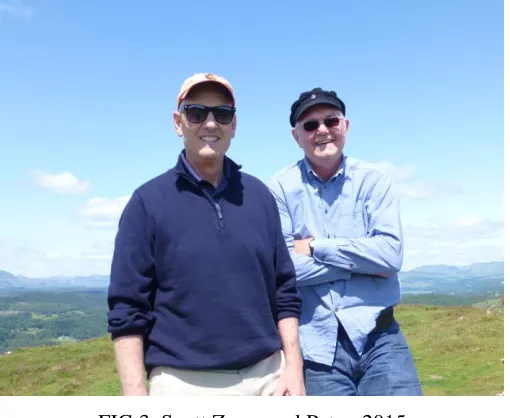
FIG 3. Scott Zeger and Peter, 2015
Jorge: That’s very interesting. So, this is nice because the thing is that when you came to the
Chair in Lancaster, after visiting Scott in Johns Hopkins and starting your collaboration, then in mind you sort of turned more into medical statistics. But you were coming to a Department of Mathematics and Statistics.
Jorge: Was there any trouble between the more theoretical-based mathematical science and the more practical and pragmatic ideas that came with you? What was your initial starting point in Lancaster?
Peter: Well, the honest answer is I wanted to come back to the UK. Lancaster had a vacancy, so
I applied for it. And the prevailing view among my Australian colleagues was “Why on earth are you going to Lancaster?” because at the time there were three statisticians. But, very good statisticians, and although they were very much in a minority within a maths department, they were all people who worked at the interface of theory and application. There was Granville Tunnicliffe-Wilson, who did time-series, and was an ex-student of Gwilym Jenkins. There was Joe Whitaker, who did a lot of graphical modelling and social statistics, and there was Brian Francis, who was very much a social statistician. Joe and Granville have now retired, but Brian is still working at Lancaster. Then I arrived and I was appointed to a Chair of Mathematics, ironically, although I'm not a mathematician. But I just called myself Professor of Statistics anyway. Nobody seemed to mind. And so it was a very small group, but with good people. I also got a lot of support from the Head of Department, David Towers, and from the Dean of the Faculty, Colin Hannaford. So I started chipping away and things really took off when I discovered an opportunity to capitalise on the NHS’s aspiration to embed research more into clinical practice. There was a bidding opportunity to get some NHS money to support activities away from the big cities - in our case, Liverpool and Manchester. I managed to persuade the University to fund one academic position and a part-time secretary and the NHS funded an academic position and so that was the beginning of the medical statistics unit.
Jorge: Within the Department of Maths?
Peter: Within the Department of Maths. And it was some years later, in the mid 90s, that things
was building medical statistics, Brian Francis, social statistics, and so we were building a de
facto department, working at the methodology and applications interface, and that's always been
the Lancaster statistics badge, that's where we sit. If you want pure theory, you’ll probably get it better elsewhere and if you want very applied stuff, with no methodology, then you might do better to be embedded in a medical school (where I now am!) but at the interface, that's where Lancaster statistics built its reputation. And it was, broadly speaking, medical, environmental and social. Nobody imposed this from above, it was just an organic development. And gradually we built up stats at Lancaster to where it is today.
Jorge: Let's go back to when you founded the medical statistics unit within the Department of
Maths and Stats, and that kept on growing and growing and probably that was the motivation for your move from the Department of Maths and Stats into the Faculty of Health and Medicine.
Peter: It was two things. One was that having championed medical statistics within maths and
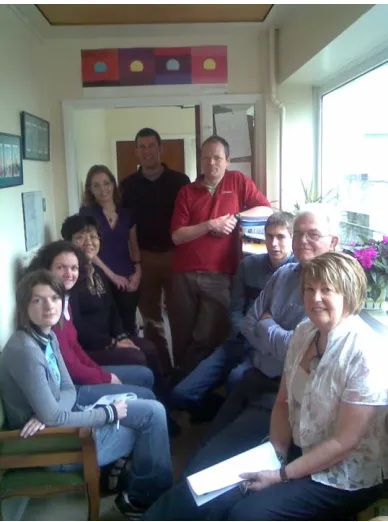
FIG 4. CHICAS group, June 2009
Jorge: And that links with our next question about CHICAS. CHICAS is the continuation of the
medical statistics unit. So there are several things about CHICAS. The first thing: I really like the name!
Peter: I thought you would! I’m sure you would as a Spaniard.
Jorge: In Spanish, it means girls. So this is nice. When I first heard the name CHICAS, I thought
it was some funny name for a research group, but the thing is that if you just go into the details about CHICAS, it's a kind of summary of everything you've done, and that you are doing right now. Combining health information, computer tasks, statistics, altogether in one area is a good way to define the CHICAS group.
Peter: Yes, there is a story behind the name. Going back to Scott, at the time, there was a bit of
derogatory or demeaning to women?”, and they said, “No, no, not at all, it's just a friendly expression”. So it was sort of an in-joke, but at the same time it was an attempt to make us distinctive. There was no point in me trying to duplicate what was going on in maths and stats. Particularly, there was no point in trying to duplicate medical statistics, in its usual sense, so I had to think of a niche that was genuinely distinctive, but also compatible with the new Faculty's goals. And it was 2007-8 and I was thinking, there's a lot of things happening now in medical statistics, where we've really got to get away from restricting ourselves to classical ideas, and actually make more use of observational data such as routine clinical data that was being collected electronically but mostly not being analysed. So, I had this idea back in 2008 in the direction of real-time epidemiology; what would probably now be called Health Informatics. The idea was that we would be at the interface of statistics, epidemiology and informatics. It was very much the idea that we could do what we were good at and not duplicate what was going on elsewhere in the University. So we never had a service role in the Faculty. We were set up and recognised as a research group from the start. We do teach, and we are very willing to teach. We contribute to the undergraduate medical programme and we teach our own courses, not very many yet, but we want to grow them. But it was an attempt to see a direction that I thought, population, health, sciences and statistics were jointly going in, and to sort of reflect that in the name. So that's what we did. We've always tried to work on problems which have quite strong statistics and software elements to them, but are very much linked to population health science questions: health surveillance, epidemiology, public health and that kind of stuff.
Jorge: So just a follow-on question is: How important was growing the CHICAS group to you?
Peter: Very important because what we primarily do is train the next generation. And I think
grown, we've got a much more diverse and robust structure that isn't dependent on me, which is great! I really think it is important - I think one of the most important things statisticians can do is improve the health of the public. I care about it and I want us to do it. I might add, incidentally, that in Australia I was going away from spatial statistics, and what got me back into spatial statistics actually was a health problem. Because when I came to Lancaster, in 1988, one of the first people I met was Tony Gatrell, who was a geographer interested in medical geography and also in statistical methods, and he just came to see me in my office and said he had this interesting problem about an apparent cluster of cancers near an industrial incinerator. And I thought, that sounds important! So it was the public interest in particular in cancer clusters near industrial installations in the late 80s that got me back into spatial statistics. And it was the conjunction of spatial statistics and my conversion to medical statistics that essentially set the seeds to all of what CHICAS now does.
Jorge: Thanks for mentioning Tony because it was implicit in my mind that Tony must have
been there.
Peter: Definitely! Oh, no, very important and very keen! It is thanks to Tony that I got back into
spatial statistics and health at that time, and you'll remember it was the time of the Black report, it was the time when Paul Elliott’s small-area health statistics unit was founded in London. And it was almost like the world replaying itself, instead of us discovering stuff in forestry journals from the 50s and 60s, we were discovering stuff in epi journals in the 80s, Knox's early work and work by John Bithell and so on. And again that stimulated a lot of interesting statistical work. I don't think it necessarily helped us understand cancers near nuclear installations, but it did stimulate a lot of work that was very useful in other health applications. So really now spatial statistics is embedded in most epidemiological work..
Jorge: That’s right, yes.
Jorge: The very last thing about CHICAS I’d like to mention is the following. I really don't know if you were aware that when you created CHICAS you were creating a modern space for the next generation of people working on data science.
Peter: I changed my view on data science. When the term first came about, I thought it was just
another name for biostatistics, sorry, for statistics, provided it was the kind of statistics that I think is important, which is statistical science rather than statistics in isolation. But I've changed my view because I think the important thing about data science is that it recognises that computer scientists, broadly interpreted - infomaticians, software engineers - they have things to teach us just as much as we have things to teach them. And also I think the idea, which is sometimes lacking in things that are called data science, of having a base in science is very important. So to me data science is essentially a triangulation - again almost identical to CHICAS’s but 10 years later - of statistics, computing and science. And it's that triangulation that I hope CHICAS embodies and that I think is important. And I remain unconvinced that context-free methods of analysing data are ultimately going to tell us interesting things. They may allow us to make forecasts, predictions, and that is a very useful thing, but in order to really understand the underlying mechanisms that make the world the way it is, I think you need subject-matter science, you need context. And so that’s the angle that I try to promote and it's what CHICAS was set up to do. And when we had the opportunity, thanks to the University's support, to add five posts to CHICAS two years ago, I deliberately set out to appoint a range of people, so that the people I appointed were two people who would call themselves statisticians, two people who would call themselves epidemiologists, and one statistical geneticist. And it's that mix that I think you really need. I was very lucky to be given the opportunity to make that mix of recruits. Whereas if I had appointed five statisticians then you might have said “Hey! what's the point?”
Jorge: The next block of questions is much more focused on your scientific achievements during your career.
Jorge: The first thing I would like to have your opinion on is the sibling-relationship between
mathematics and statistics and the position they have in science.
Peter: The way I would put it is that I have total respect for people who I call statistical
mathematicians, but they need to recognise that there's a difference between statistical mathematics and statistical science. And both sorts have to respect each other's contributions because if we don't have both, we're going to be dead in the water in 20 years’ time. Because unless we retain that intellectual depth, that the mathematical foundations give us, we are going to be redundant because computer scientists will take over everything. So you do need both, but you need to recognise that they are different. I certainly think that statistics is a mathematical science but it's not part of mathematics, any more than theoretical physics is part of mathematics. So at one level names don't matter but on another level they do, because they give people signals. I should add that it's fair to say that most statistics, if it's judged as mathematics, isn't terribly impressive, although it has other strengths. The best statistical mathematicians are doing absolutely first rate mathematics. But a lot of the mathematics we do is mathematics of a kind that engineers use. It’s taking existing mathematics and adapting it to particular purposes rather than advancing mathematics.
Jorge: Peter, what are the secrets of your success in pushing the frontiers of knowledge? what
are your secrets of doing such good things?
Peter: Well, I don't necessarily accept the premise, but what I have done, I've done primarily
can enthuse other people, and I like working with other people. I seem to have evolved a mode of working that works for everyone.
Jorge: You started working with spatial point processes, then you moved to time-series analysis,
to longitudinal data analysis, then came back to spatial stuff. You have touched a wide range of methodologies within statistical science. This is quite rare; I mean people are very much focused on one particular stream within statistics and they are happy to keep within that stream most of their career. However, you've covered a wide range of scientific areas.
Peter: I think it probably stems from the idea that science matters. It’s again the difference
have something you want to measure and it’s replicated under different conditions that you want to compare and contrast. And the fact that it happens to be a time-series rather than a single number is kind of secondary. The paper I wrote on replicated biomedical time-series, one of the RSS read papers, was exactly motivated by this work with Alison Murdoch..
Jorge: I see.
Peter: So in that sense the statistics I've done has stemmed from the problems I’ve encountered.
To some extent, I've never really looked for them, but they sort of naturally come to me and I’ve responded very positively to the extent of changing the direction of the methodological research I'm doing.
Jorge: Right. And was it the same way with geostatistics?
Peter: Same with geostatistics. The only reason I got involved in geostatistics is because
somebody approached me saying they had a problem to do with analysing data from residual contamination in the Marshall Islands following nuclear testing in the 1950s. And actually I owe Noel Cressie a favour because he was asked to do it and he said he was too busy, but they should contact me. And that led to another RSS read paper which is the model-based geostatistics paper with Jonathan Tawn and Rana Moyeed.
Jorge: Within all the different areas of mathematical methodology, when do you think you really
got hooked on spatial statistics? When did you think, “oh, this is really the thing that I want to get involved in”?
Peter: Well, in a sense, never. I mean, I've always found spatial statistics very interesting but
But I've never been thinking “I really like spatial statistics, let me find some applications”. It’s really much more of a symmetric two-way thing, applications stimulate methodology, methodology feeds back to new applications.
Jorge: I would have thought that basically from the beginning you were motivated by events
happening in space, in time, or lately in both.
Peter: It wasn't the motivation. I started off very briefly wanting to do a PhD in stochastic
processes. Frankly, the only reason I wanted to do a PhD in stochastic processes was that that was the course that Julian taught at Liverpool. And it was a wonderful course and I thought “I want to do this”. It did mean that I approached problems from a stochastic process perspective and, therefore, problems that involved variation in space or time or both are ones that I feel comfortable with. Whereas, I had a relatively weak training in the analysis of designed experiments. And I learned a lot in CSIRO about that side of statistics, and I now think I can give people good advice on designing experiments. But it wasn't where I started and so I'm very much a user of other people's ideas in the analysis of designed experiments. Whereas I can think through stochastic modelling problems ab initio, and stochastic models almost inevitably must involve space or time or both, if you think about it. So, you have a core skill set which is understanding how to build stochastic process models. And you have a range of applied interests and the skill set that I’ve now got is broad enough and it keeps me busy.
Jorge: You briefly mentioned your paper on model-based geostatistics. You know that this paper
changed the game in some sense. Did you really notice that you were changing the rules of working with geostatistics?
Peter: Yes, in a very specific sense. The point of that paper was really to say that there is
prediction based on incomplete data. And so I would regard, for example, log Gaussian Cox processes as geostatistical models. They happen to be point processes as well, but their value is in their ability to make spatially continuous predictions with incomplete data.
Jorge: Good point.
Peter: The work that Matheron did in Fontainebleau was phenomenal, and he was a genius and
that really was game-changing in a whole suite of industries. But there was no need to invent new names for things, there was no need to abandon classical inferential principles. And all that Jon Tawn, Rana Moyeed and I were trying to say in that paper was that we've got a paradigm, here’s a problem, here's a stochastic model, we can fit the data and here's a principled approach to inference through the likelihood. And you can apply that to geostatistical problems.
Jorge: And that’s the point when I said changing the rules. You know it used to be very
compartmentalised; people working on point patterns never mixed up with the geostatistical community, and, for example, Cox processes were never used by geostatisticians.
Peter: It’s kind of like the world repeating itself because to me a paradigm shift in classical
that is a profound difference, in terms of what you do. But you don't have to think “Oh no! Now I've got to learn a whole new set of tools”. It gives it a kind of unity.
Jorge: Sure, that’s right.
Peter: And that's also why although you put it very generously, over-generously, earlier, actually
going from spatial point processes to longitudinal data and geostatistics is not such a big thing at all.
Jorge: Another key and eminent contribution that you've done in applied statistics is software
development. “Splancs” is considered the very first open software in point pattern analysis. Then “Geo-R” and other software came over time, but Splancs was the very first one. I can see this as a natural side-effect of being pragmatic in solving real problems and helping others in their tasks. So, what was your motivation for that software development?
Peter: Well, three comments on that. Firstly, it was a recognition, which is now universal, that if
you develop new statistical methods and you want people to use them, you've got to provide some software for it. Somebody's got to provide an implementation. Secondly, it was at a time when Splus initially, which then evolved into R, was basically becoming the industry standard for the dissemination of statistical methods. And thirdly, and most important of all, my role in Splancs, my role in Geo-R, my role in Prev-Map, which is the latest, has been only to motivate and to advise the people who built those packages: Barry Rowlingson and Splancs, Paulo Ribeiro and Geo-R, Emanuele Giorgi and Prev-Map. I mean, some of my colleagues would laugh at the idea that I'm a software expert. I recognise the importance of it and I can motivate and advise and help, sort of stimulate the work, but that's a perfect example of how I would have achieved nothing without great colleagues. I couldn't have done any of that on my own. Not in a million years. But Barry, Paulo and Emanuele in succession, bring real skills to the table that I don't have, and that's the CHICAS ethos really.
Jorge: Interesting! And talking about software development, some years ago a new scientifically
competing, with more classical MCMC approaches. Is INLA a nice contribution to science and to the software toolkit?
Peter: Well, to start from a very general comment, I think it's a mistake to focus on tools. I think
you need to focus on problems, and you need to focus on methods to solve those problems. And then you need to find a tool that implements the method. The second general comment I have is that relative to the time, money and effort spent in collecting scientific data, I fail to understand the obsession with wanting to analyse it in minutes of computing time. I recognise the need for quick, real-time interactive software when you’re exploring data, but for a definitive analysis of a dataset, frankly, if it takes a week to do the computing, I don't care.
Jorge: I see.
Peter: Because compared to the field effort, that's trivial. But you can't explore data waiting a
Whereas if you're not sampling, you have to have essentially a menu of options. There is no way of getting a universal, non-sampling inferential machine in practice. So I think it’s a question of not being obsessed with the tools, but using the tools where they are appropriate. And I'm sure that there are many, many cases where INLA is both robust and fast and great! But for me personally, it’s not an interesting question.
Jorge: Yes, that’s absolutely right.
Jorge: I hope, Peter, this is not a tricky question, but I would like you to identify those papers or
books on spatial statistics that were more influential on you.
Peter: Let me think carefully, this is an important question. Undoubtedly, Julian Besag’s 1974
RSS read paper, which is rightly considered a classic, is a paper full of deep ideas. To be honest, I’ve never worked in any deep way on the problems Julian was working on in that paper. But it was the paper from my mentor who most inspired me. And it also had an influence way beyond its notional content. If you read Alan Hawkes seconding a vote of thanks for that paper, he was thanking Mr Besag for giving us an interesting class of distributions for data on lattices and then he said, “or indeed for any multivariate data at all”. And I never asked Alan, but I was there, and it sounded to me almost as though he had almost just thought: “Hang on a minute. This could apply to any distributions!” It's a way of building joint distributions from full conditionals. And in that sense Julian Besag has been called, not just by me, the father of MCMC. Although his name is not typically associated with it. But the seeds of it, the seeds of multivariate graphical modelling in MCMC were sown in that 1974 paper.
Jorge: It was certainly a groundbreaking paper at the time. Do you really think it was not only
the first one in that context, but also so far ahead of time in the early seventies?
Peter: I haven't yet found anybody who can point me to a publication in graphical modelling of
a place we'd never heard of, but that was just full of ideas; you’d turn the page and there was just a couple of sentences on what turned out to be an inhibitory spatial point process, a Markov point process, random sets. And so that was hugely important.
Jorge: You mean Matérn (1960) Spatial variation. I always wondered how did that get so well
known.
Peter: Yes, that's right. David Cox told me, many years later, that Bertil Matérn had been invited
to come and give a series of lectures at Imperial College, and after that people said “Where can we read up about this? And Bertil said “Oh, it’s just in my thesis”. So someone then got his permission to reproduce his thesis. I've still got on my desk the original dusty version, as well as the Springer reprint. So that was hugely influential. And I think that the next most influential thing is a paper, because the paper led to the meeting. It’s the Scott Zeger and Kung-Yee Liang
Biometrika paper on generalised estimating equations.
Pete: Can I ask just one final question in this section? So, we’ve talked before about statistics
being a non-intuitive subject and definitely very different to mathematics. It takes time to get one's head around it, because it's very conceptual, conceptual-based. Do you think there's an optimal career stage for somebody working in statistics? Are some people like a good wine that gets better and better?
Peter: You’re kind of touching on this, sort of, off-putting thing that mathematicians are said to
in the way that mathematics does attract people who like to really nail the problem. In mathematics, when it's solved, it's solved forever. That's not true in statistics.
4. ROYAL STATISTICAL SOCIETY, AIMS, BIOSTATISTICS
Jorge: You've belonged, Peter, to a wealth of important societies. You've been in environmental
societies, the American Statistical Association, biometrical associations, and of course the Royal Statistical Society. Let's focus a bit more on the Royal Statistical Society. What do you think is the role and impact of this statistical society in British Society? What are its connections to other societies worldwide?
Peter: I would say I have to first answer that question to the past because certainly, early on in
my career, the RSS, Royal Statistical Society, was the de facto communication network for British statisticians – remember it was in the pre-electronic era. And the way you kept up with what was going on was attending the RSS meetings in London. You didn't worry what the paper was, you just went. But that was where I first met Bernard Silverman, Brian Ripley, Frank Kelly, John Kent... You'd meet them in the pub after the RSS meetings. So the RSS was the de facto
network that kept British research statisticians in touch with each other. At that time the RSS as a whole was simply a scholarly society and that was its primary role. And the journals were, of course, important as well because we didn't have the Internet or archives and such like. Nowadays, the RSS is much more, I think, a very active and successful organisation for promoting statistics throughout society. It's really very active in, for example, intersecting with parliament, commenting on public policy, education and training. So it's now a very, very far-reaching and diverse body and it's been really very interesting and inspiring to see how much more diverse it is now than it was in the early part of my career.
Peter: One of my particular things is internationalism and it's clear that the RSS has a very positive view of reaching out to other societies so that, for example, it's now an active member of the collective that sponsors what are called the Joint Statistical Meetings, which are primarily North American meetings, but RSS is formally part of it. As President, I was also very pleased that the RSS was able to fashion a partnership agreement with the African Institute of Mathematical Sciences (AIMS), which is a training organisation in Africa. We've certainly tried to establish links with other societies around the world without wanting to be in any sense empire building – that's not the point. I just think international scientific connections are ever-more important the way geopolitical trends are going, which it seems to me are against internationalism broadly speaking, which I think is horrific. I think learned societies can counter that by promoting internationalism in all its forms. As I say, I'm particularly pleased about the link with AIMS.
Jorge: As just mentioned, you've been recently President of the RSS. Would you like to
highlight some particular facts in these two years?
Peter: Yes, I think I'd choose two things. One was the partnership with the AIMS that I’ve
Jorge: In 1997 you were awarded with a Guy Medal in Silver from the RSS. What did it really mean to you?
Peter: It was wonderful, as it was a complete surprise. The Guy Medal in Silver is linked to
papers read at ordinary meetings of the society. I think at the time I'd only read one or two research papers, but as a recognition from your peers, that was just wonderful. So, very moving, I was really very honoured by that. Julian Besag was a Guy Silver Medallist and to follow in his footsteps is an honour. It was a very big thing for me.
Jorge: You've been Editor-in-Chief and Associate Editor for many journals – top, leading
journals. But now I would like you to comment on the one you founded, Biostatistics. What was your motivation to bring this journal into life?
Peter: Well, if you hadn't said that, I would have picked it as my proudest achievement in what
said “Ah, we've got an email, got a reply from David”. I said, “What does he say?” Scott says “He says that he can see that under some circumstances this might not be an unreasonable thing to do” and Scott said to me so he likes it, to which I replied “No, Scott, he does not like it”. But we then went over to Oxford we met David and the OUP editors and OUP agreed they'd be pleased to run it. They wanted David as the Advisory Editor; he was very supportive, but never afraid to say if he thought something wasn’t right. And so we got going and it was extraordinarily gratifying to see how quickly the journal took off. It was a delight to run it, really, because for 10 years we had a weekly phone conversation, so that every paper that came into that journal, we both discussed and decided what to do with, whereas in my previous editorial roles, as one of several editors, you worked independently, and there wasn't that sense of control over the journal. So, although we didn't fully realise our ambitions for rapid publication, I think we did have an impact and it was really great to see that journal flourish. And then after 10 years, partly because Scott had become vice-president of Hopkins, and partly because I think you should only run any particular job for a limited amount of time, we thought “Ah, it's time to hand over”. One of the things that fixed the decision for us was that we're both in our way quite old-fashioned and OUP insisted on bringing on one of these electronic submission systems, where authors become unpaid copy editors. So we said “We can't handle this. We’re going to let somebody else do it.” Anyway, it's still there. Seems to be doing fine.
Jorge: There's something really important about your relationship with Scott, isn't there? I mean,
that's the basis for making it work and you've mentioned so many big names through this interview. I think the world was so different, so much smaller in a sense that you could have that community through the RSS.
Peter: Sure, I think in the late 70s I could probably have named most British academic
Pete: But there's still something about trying to find a community, isn't there? Even though the world is bigger, trying to find a community of people to work with, people to work with is absolutely key, isn't it?
Peter: Absolutely, you need a local community, but you also need that broader community. I
[image:33.612.204.409.247.501.2]occasionally think, when I'm sitting in my office, if I asked people in this corridor “what are you part of?” would they say CHICAS? the medical school? Lancaster University? or would they say statistics? It's interesting whether people affiliate with a place or a peer group.
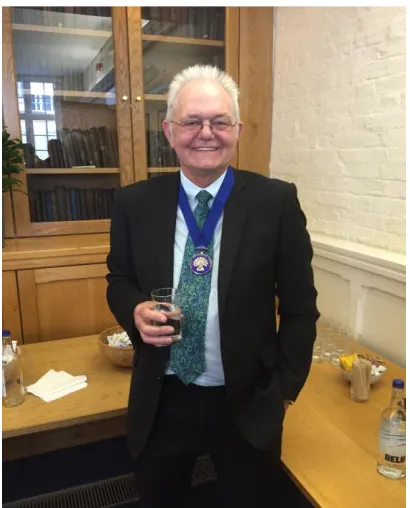
FIG 6.Signing RSS contract with AIMS, 2015
5
.
KIDNEY TRANSPLANTATION
Pete: The next set of questions jumps forward a bit, Peter. Let us talk about your kidney
transplantation. You’ve experienced some serious challenges with your health. Would you like to talk about that? What impact did it have on you? On your career?
Peter: Well, initially, I fell ill during my first year as an undergraduate, when I was 17 years old.
[image:34.612.175.436.72.244.2]from the character point of view, I think I feel very positive about it. It had very practical, very negative, consequences for several years, when I was on dialysis. But since I was fortunate enough to get a transplant from my brother, I’ve enjoyed good health… well, I’ve enjoyed it with some blips. Once your kidneys have failed, as the doctors and nurses say, you never leave them. It's a life-long condition, even after a transplant, you still have to go to the hospital regularly. You still have to have your drug-doses calibrated. You have rejection episodes. An episode can often be treated, so you have ups and downs. But what I haven’t been on is a constant downward spiral, so it’s been a very positive experience with occasional ‘blips’ that you just have to cope with. And so, it’s been fine really. It’s been good.
Pete: What’s the situation now
Peter: Well, the prognosis is that, unless something else happens to me, like the proverbial
falling under a bus, I’ll probably need another kidney at some point. I think I’m probably on about the median survival time now. But I’m very fortunate, hugely fortunate, having had the transplant, after having been really extremely ill for several years…
Pete: When was that?
Peter: I got the transplant in 2003.
Pete: Right, so before that you were seriously ill.
Peter: Yeah, I was on dialysis, so I was basically bed-bound between about 6pm and 8am, every
day on dialysis. So, life was a bit limited. But, again, you then come out of that and you do feel positive! I mean, the most extraordinary experience of my life was waking up after the surgery to put the kidney in and within a second I knew it had worked. Instantly! I felt like I hadn’t felt for years. So extraordinary, absolutely extraordinary!
Pete: Fantastic!
Peter: Yes, I just wanted to get going again. So, it does give you a certain buzz, when you come
Pete: Yes, sure, absolutely. Thank you for sharing that. I’m going to move on to the sixth block of questions.
6
.
TRAVEL STORIES, MUSIC, AND FUTURE PLANS
Pete: Peter, now some strange questions. As a fellow guitar player, I was delighted to find a
photo of you online performing in a club. Tell us about the place of music in your life.
Peter: Ah, well, it wasn’t a club, it was my sixty-fifth birthday party. For which I took the
Gregson, which is a local venue, a local sort of club-venue. And I just took it for the evening and invited any of my friends who played to bring their instruments. But I also prepared something with Barry Rowlingson, who’s a drummer, and with a former student Jan Heffernan, who plays sax. So we did a few numbers and then we invited people to come up and join in. So music is my go-to recreation, where I just kind of unwind. I play guitar and also tenor recorder in a consort. We play when we get together as a group, typically once a week, on Saturdays. I just pick up the guitar when I have five minutes, it relaxes me. And I love listening to music as well. If I’m in the kitchen cooking, or in the car I have music on. I wish I could play jazz, but I can’t, and I love listening to it.
Pete: So, if you don’t mind me saying, it’s obvious that your family plays a central role in your
life. How have you balanced your work with family life?
Peter: Lancaster was where I met my partner, Mandy Chetwynd, and we’re basically kindred
spirits. She is a very successful academic and a mathematician. We’ve done work together, we’ve written two books together, we’ve published papers together. We’ve raised children together and it’s been hard work, when the kids were young, but it was always – I like to think, and you’ll have to ask Mandy when I’m not listening – very harmonious, sharing, because we think the same way about what's important in life. And we’ve done our best to balance the two.
Peter: Work and home, yes. Mandy became a Pro Vice Chancellor when our children were in their early teenage years, but earlier when we were both bench academics and the kids were young, they came with us on all our research travels. So they came with us on sabbaticals to Adelaide, to Baltimore, to Belgium. Jono had been to preschools in three continents before he went to school. Hannah, who’s four years younger, travelled less because by then Jono was in school, but we still travelled a fair bit. Who knows whether that was best for them or not… I haven't perceived it to be a problem at all, with Mandy because, as I say, we really get on so well.
Pete: What is your ideal weekend?
Peter: The ideal weekend is to get home from work on Friday, open a bottle of wine and watch a
movie at home with Mandy. Saturday morning I get up early and I go and buy The Guardian. Mandy and I read The Guardian for an hour or two, and then we go and play the recorder. After that, we say “Well, what are we going to do this weekend?” because that's the programmed part of the weekend over. The rest always involves some work because both of us like to catch up over the weekend. We're not obsessed about work but we don't like leaving it to pile up and we certainly don't work to the clock, as academics don't. So then we'll say “how much work have you got to do over this weekend?” And we negotiate. When are we going to work then? And we'll say: Let’s work Sunday morning or whatever. And then the rest of the time we either have friends round to dinner or go out for a quiz or just relax. Maybe we do a little bit of gardening. The one thing we used to do more, and we keep saying we should get back to, is a bit more sport because we both, for many years, played badminton for the maths department team. But I don't think either of us has played that much in the last year or two, so we really need to revive that. And, well, that's it really.
Pete: What have you got planned for the next 10 years? What does that look like?
Peter: God knows! Seriously, professionally, I would say I’m at the stage of seeing CHICAS
Africa and I want to write – I’ve got a couple of books I still want to write. So those are my professional ambitions. And, personally, we're at a stage where what Mandy and I do as a couple is bound up to some extent with what the kids do, because Jono's 23 and Hannah is 19 and in a few years’ time they will be somewhere – we don’t know where. Depending on where that is, it might affect where we want to be.
Jorge: Let me add something here to this question. In the next 10 years you will be facing
retirement in some sense, right?
Peter: For sure. It’ll be long before then, I think. I'm 67 now, so I'm not going to last another 10
years in employment. I hope my brain’s still active but I certainly don't want to be coming to the office every day.
Jorge: That's the thing, I mean, is this something you are really thinking seriously about? Or is
this something that’s not important for you?
Peter: I'm doing things, I can't imagine any other way to do it. I’ve got my plan for ramped
FIG 7. Peter’s 65th birthday, playing the guitar, 2015
FIG 8. Family walk in the Lakes (Cumbria), 2004
Pete, Jorge: We’re done, Peter. Thank you for taking the time to share your thoughts with us. It
[image:39.612.221.391.72.326.2] [image:39.612.169.443.335.554.2]many scientists worldwide. In particular, you have bridged across disciplines to lead a very large number of communities of applied scientists towards statistically principled approaches to their science. That is a very deep and lasting contribution to science generally. Many thanks.
Peter: Well, it is very kind of you to say that.
Pete and Jorge: Well, thanks for allowing us to do it.
Peter: No, no… sure! Great, well, I couldn't have wished for two nicer people! Like we were
just saying, it's always nice to do these things with people who are friends anyway.
Pete and Jorge: It's a privilege for us.
ACKNOWLEDGEMENTS
Jorge Mateu was partially funded by project MTM2016-78917-R from the Spanish Ministry of Economy and Competitiveness. Lancaster University is gratefully acknowledged for providing the environment to record the interview.
REFERENCES
Besag, J. (1974). Spatial interaction and the statistical analysis of lattice systems. Journal of the
Royal Statistical Society, Series B, 36 (2), 192-236.
Diggle, P.J., Tawn, J.A. and Moyeed, R.A. (1998). Model-based geostatistics. Applied Statistics,
47 (3), 299-350.
Giorgi, E. and Diggle, P.J. (2017). PrevMap: An R Package for Prevalence Mapping. Journal of Statistical Software, 78 (8).
Liang, K-Y. and Zeger, S.L. (1986). Longitudinal data analysis using generalized linear models.
Biometrika, 73 (1), 13-22.
Ribeiro Jr, P.J. and Diggle, P.J. (2001). geoR: A package for geostatistical analysis. R-NEWS, 1 (2).
Rowlingson, B.S. and Diggle, P.J. (1993). Splancs: Spatial point pattern analysis code in S-plus.
Computers & Geosciences, 19 (5), 627-655.