THE QUESTION-BEHAVIOUR EFFECT: CAUSES AND MODERATORS
TOMMY VAN STEEN
A thesis submitted in partial fulfillment of the requirements of the University of the West of England, Bristol for the degree of Doctor of Philosophy
ABSTRACT
The question-behaviour effect, how asking attitude, intention and prediction questions influences behaviour, has been widely examined since its discovery by Sherman (1980). This PhD thesis on the question-behaviour effect consists of three parts: 1) A meta-analysis of the research thus far, 2) A series of studies investigating possible underlying mechanisms of the question-behaviour effect, and 3) A series of studies investigating the moderating roles of self-affirmation and goal difficulty in question-behaviour effect interventions.
The meta-analysis in the first part of this thesis is carried out to examine the
effectiveness of the question-behaviour effect as influence technique. Studies were included if they used an experimental design with random allocation of participants, where the
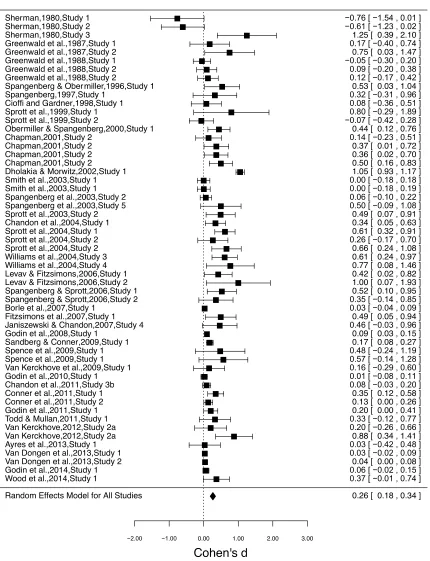
experimental condition consisted of asking attitude, intention and/or prediction questions, and the dependent variable was a behavioural measurement. This resulted in 55 comparisons in 35 papers, with a total of 49108 participants. Applying a random-effects model on the data resulted in a small effect (d = 0.26, 95%CI [0.18, 0.34]). Methodological causes and moderators related to the applicability and universality of the technique are discussed.
The second part of this thesis consists of three experimental studies that investigated whether dissonance processes can explain question-behaviour effects. The studies
investigated how predicting future behaviour can influence participants’ recalled past
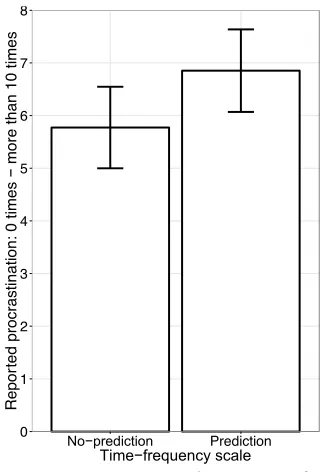
behaviour regarding both positive and negative behaviours. Study 1 investigated how asking participants about positive (daily exercise) or negative (not brushing your teeth before going to bed) behaviours affected recalled past behaviour. Study 2 focused on how recalling past behaviour using a time-frequency (number of times) or likert-type scale (never – all the time) influences the effect of prediction questions on recalling a negative behaviour
positive or negative prime could influence recalled past behaviour regarding buying bottled water.
The results of Study 1 showed that asking participants about a negative behaviour (going to bed without brushing your teeth) reduced recalled past behaviour. Study 2 showed that offering time-frequency rather than likert-type scale answering possibilities is required to find an effect and the results of Study 3 showed that a positive or negative prime can
influence recalled past behaviour in that direction, while adding a future behaviour prediction question attenuates the effect. Theoretical explanations of the findings and ideas for further research are discussed and a fourth, correlational, study is described that suggests social proof might explain some of the question-behaviour effect findings.
In the third part of this thesis, the moderating role of self-affirmation and goal difficulty in question-behaviour effect interventions was investigated. In studies 5-7, participants were asked a prediction question related to eating five-a-day (hard-goal) or eating fruit and vegetables in general (easy-goal). Some participants received a self-affirmation task as part of their questionnaire and all participants received a voucher they could use to collect a free bowl of fruit or vegetables after completing the questionnaire.
ACKNOWLEDGEMENTS
I would like to thank and acknowledge the following people for their support with regard to completing this thesis:
DISSEMINATION OF EARLY RESULTS
van Steen, T. (2015, December). Why does asking people questions about their behaviour influence this behaviour? Investigating the underlying mechanisms of the
question-behaviour effect, Poster presented at the ASPO Conference 2015, Amsterdam, The
Netherlands.
van Steen, T., Joinson, A.J., & Carruthers, J. (2015) Asking attitude, intention and prediction questions as a social influence technique: A meta-analysis of the question-behavior effect, Paper Available at SSRN: http://ssrn.com/abstract=2686184
van Steen, T (2015, July). Why does asking people questions about their behaviour influence this behaviour? Investigating the underlying mechanisms of the question-behaviour
effect, Oral Presentation at the PsyPAG General Meeting, Glasgow, United Kingdom.
van Steen, T. (2014, December). Asking attitude and intention questions as a social influence technique: A meta-analysis of the question-behavior effect, Oral Presentation at the ASPO Conference 2014, Groningen, The Netherlands.
van Steen, T. (2014, July). How asking attitude and intention questions can influence
behaviour: A meta-analysis, Poster presented at the PsyPAG General Meeting,
Cardiff, United Kingdom.
van Steen, T. (2014, July). How asking attitude and intention questions can influence
behaviour: A meta-analysis, Poster presented at the European Association of Social
TABLE OF CONTENTS
ABSTRACT ... II ACKNOWLEDGEMENTS ... IV DISSEMINATION OF EARLY RESULTS ... V TABLE OF CONTENTS ... VI LIST OF TABLES ... XIII LIST OF FIGURES ... XIV
CHAPTER 1 | INTRODUCTION ... 1
1.1 OVERVIEW OF THE THESIS ... 2
1.2 CONTRIBUTION ... 3
CHAPTER 2 | LITERATURE REVIEW ... 4
2.1 INTRODUCTION... 4
2.2 THE QUESTION-BEHAVIOUR EFFECT ... 4
2.3 BEHAVIOURS ... 6
2.3.1 VOTING BEHAVIOUR ... 6
2.3.2 HEALTH BEHAVIOURS ... 7
2.3.3 ALCOHOL CONSUMPTION ... 8
2.3.4 PHYSICAL ACTIVITY ... 9
2.3.5 DONATING BLOOD ... 11
2.3.6 PURCHASING BEHAVIOUR ... 12
2.3.7 RISKY DRIVING BEHAVIOUR ... 14
2.3.8 DISPUTE OVER QUESTION-BEHAVIOUR EFFECTS ON VICE BEHAVIOUR ... 15
2.3.9 META-ANALYSES OF THE QUESTION-BEHAVIOUR EFFECT ... 20
2.4 EXPLANATIONS ... 23
2.4.1 COGNITIVE DISSONANCE THEORY ... 24
2.4.2 ATTITUDE ACTIVATION ... 27
2.4.3 A CRITICAL REVIEW OF THE QUESTION-BEHAVIOUR EFFECT ... 29
2.4.4 EASE OF MENTAL REPRESENTATION ... 30
2.4.5 MOTIVATIONAL STATES ... 32
2.4.6 ACTION CONTROL AS EXPLANATION OF THE QUESTION-BEHAVIOUR EFFECT ... 32
2.4.7 THE ROLE OF SOCIAL IDENTITY IN QUESTION-BEHAVIOUR EFFECTS ... 33
2.4.8 THEORETICAL PAPERS RELATING TO THE QUESTION-BEHAVIOUR EFFECT ... 34
2.4.9 THEORIES OUTSIDE THE QUESTION-BEHAVIOUR EFFECT LITERATURE ... 35
2.4.10 CONCLUSION ... 36
2.5 MODERATORS OF THE QUESTION-BEHAVIOUR EFFECT ... 36
2.5.1 SPECIFICITY OF THE INTERVENTION QUESTION ... 36
2.5.2 SELF-MONITORING AS MODERATOR OF QUESTION-BEHAVIOUR EFFECT... 38
2.5.3 PERSONAL NORMS ... 38
2.5.5 PROCESSING FLUENCY AS MODERATOR OF THE QUESTION-BEHAVIOUR EFFECT ... 39
2.5.6 THE MEDIATING ROLE OF ATTITUDE ACCESSIBILITY ... 40
2.5.7 THE QUESTION-BEHAVIOUR EFFECT AND NORMATIVE BELIEFS ... 41
2.5.8 ASKING MULTIPLE QUESTIONS ... 42
2.6 METHODS ... 42
2.6.1 A METHOD TO INVESTIGATE THE QUESTION-BEHAVIOUR EFFECT IN A SINGLE SESSION ... 43
2.6.2 ATTITUDES, INTENTIONS AND FUTURE BEHAVIOUR PREDICTIONS ... 44
2.6.3 THEORY OF PLANNED BEHAVIOUR QUESTIONNAIRE ... 44
2.6.4 QUESTION FRAMING ... 45
2.6.5 MEASURING PAST BEHAVIOUR AS INDEPENDENT VARIABLE ... 46
2.6.6 HYPOTHETICAL QUESTIONS ... 48
2.6.7 INTERVENTION SETTING ... 49
2.6.8 FIELD STUDIES ... 51
2.6.9 MEASURING OUTCOME BEHAVIOUR ... 52
2.6.10 NOT ANSWERING QUESTIONS AS INFLUENCE TECHNIQUE ... 53
2.6.11 CONCLUSION ... 54
2.7 APPLICABILITY ... 54
2.7.1 COMPARING THE EFFECTIVENESS OF DIFFERENT TYPES OF QUESTIONS ... 55
2.7.2 APPLICABILITY OUTSIDE THE AREA OF THE QUESTION-BEHAVIOUR EFFECT ... 56
2.8 LIMITATIONS AND IDEAS FOR FUTURE RESEARCH ... 57
2.8.1 LIMITATIONS OF QUESTION-BEHAVIOUR EFFECT INTERVENTIONS ... 57
2.8.2 GAPS IN THE LITERATURE ... 58
CHAPTER 3 | META-ANALYSIS... 60
3.1 INTRODUCTION... 60
3.1.1 PREVIOUS META-ANALYSES ... 60
3.1.2 THE PRESENT STUDY ... 61
3.1.3 MODERATOR ANALYSES ... 62
3.2 METHOD ... 64
3.2.1 SEARCH CRITERIA ... 64
3.2.2 INCLUSION AND EXCLUSION CRITERIA... 65
3.2.3 CODING OF THE MODERATORS ... 65
3.2.4 STATISTICAL ANALYSIS ... 67
Investigating the overall effect. ... 67
Random versus fixed effects model. ... 69
Publication bias... 70
3.3 RESULTS ... 70
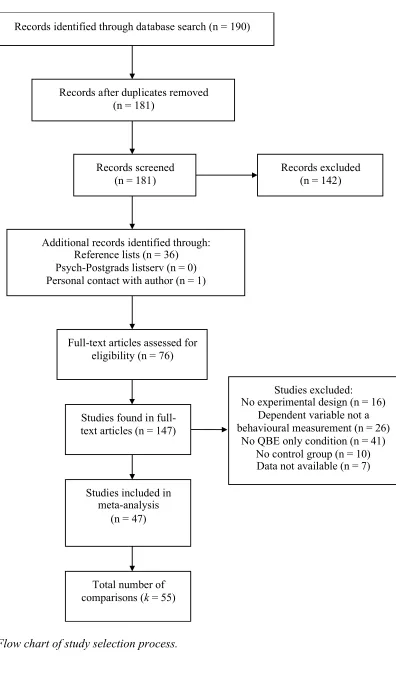
3.3.1 STUDY SELECTION ... 70
3.3.2 OVERALL EFFECT... 71
3.3.3 PUBLICATION BIAS ... 76
3.3.4 SOCIAL DESIRABILITY BIAS ... 76
3.3.5 APPLICABILITY AND UNIVERSALITY OF THE QUESTION-BEHAVIOUR EFFECT... 77
Type of intervention question. ... 77
Intervention Setting. ... 77
Time interval between intervention and behaviour measurement. ... 77
3.4 DISCUSSION ... 80
3.4.1 PUBLICATION BIAS AND SOCIAL DESIRABILITY BIAS ... 81
3.4.2 APPLICABILITY AND UNIVERSALITY OF THE QUESTION-BEHAVIOUR EFFECT... 81
3.4.3 LIMITATIONS AND SUGGESTIONS FOR FURTHER RESEARCH ... 84
3.5 CONCLUSION ... 85
CHAPTER 4 | BEHAVIOURAL QUESTIONNAIRE ... 87
4.1 INTRODUCTION... 87
4.1.1 BEHAVIOURS INCLUDED IN THE PILOT STUDY ... 88
4.2 METHOD ... 89
4.2.1 PARTICIPANTS ... 89
4.2.2 MATERIALS ... 90
4.2.3 PROCEDURE... 91
4.3 RESULTS AND DISCUSSION ... 91
4.3.1 PARTICIPANT BACKGROUND ... 91
4.3.2 BEHAVIOURS ... 93
Weekly behaviours... 93
Monthly behaviours. ... 94
Yearly behaviours. ... 95
4.4 CONCLUSION ... 95
CHAPTER 5 | STUDY 1: POSITIVE AND NEGATIVE BEHAVIOURS ... 97
5.1 INTRODUCTION... 97
5.2 METHOD ... 101
5.2.1 PARTICIPANTS ... 101
5.2.2 MATERIALS ... 101
Filler task. ... 101
5.2.3 PROCEDURE STUDY 1A ... 102
5.2.4 PROCEDURE STUDY 1B ... 103
5.2.5 DATA ANALYSIS STRATEGY ... 103
5.3 RESULTS AND DISCUSSION STUDY 1A ... 104
5.4 RESULTS AND DISCUSSION STUDY 1B ... 106
5.5 CONCLUSION ... 107
CHAPTER 6 | STUDY 2: LIKERT-TYPE SCALES OR TIME-FREQUENCY RESPONSE FORMATS ... 109
6.1 INTRODUCTION... 109
6.1.1 PROCRASTINATION ... 110
6.1.2 PRESENT STUDY ... 111
6.2 METHOD ... 112
6.2.1 DESIGN ... 112
6.2.2 PARTICIPANTS ... 112
6.3 RESULTS ... 113
6.4 DISCUSSION ... 115
6.4.1 SUMMARY OF THE FINDINGS ... 115
6.4.2 POSSIBLE EXPLANATIONS ... 116
6.5 FOLLOW-UP QUESTIONNAIRE ... 116
6.6 RESULTS AND DISCUSSION ... 117
6.7 GENERAL DISCUSSION ... 117
CHAPTER 7 | STUDY 3: ADDING BEHAVIOURAL NORMS ... 120
7.1 INTRODUCTION... 120
7.1.1 NORMS ... 120
7.1.2 DIFFERENT TYPES OF NORMS ... 121
7.1.3 THE PRESENT STUDY ... 122
7.2 METHOD ... 124
7.2.1 DESIGN ... 124
7.2.2 PARTICIPANTS ... 124
7.2.3 PROCEDURE... 124
7.3 RESULTS ... 126
7.3.1 MANIPULATION CHECKS ... 126
7.3.2 NORMS AND PREDICTION QUESTIONS ... 126
7.4 DISCUSSION ... 128
7.4.1 SUMMARY OF FINDINGS ... 128
7.4.2 EXPLANATION OF THE FINDINGS ... 129
7.4.3 INFLUENCE OF NORMS ON QUESTION-BEHAVIOUR EFFECTS ... 129
7.4.4 SOCIAL PROOF AS EXPLANATION OF THE QUESTION-BEHAVIOUR EFFECT ... 131
7.4.5 RESEARCH ON SOCIAL PROOF... 131
CHAPTER 8 | LITERATURE UPDATE ... 133
8.1 META-ANALYSIS BY WOOD ET AL. 2015 ... 133
8.2 SOCIAL DESIRABILITY ... 135
8.3 SOCIAL PROOF ... 135
CHAPTER 9 | STUDY 4: SOCIAL PROOF SCORES ... 137
9.1 INTRODUCTION... 137
9.1.1 SOCIAL PROOF ... 138
9.1.2 THE PRESENT STUDY ... 139
9.2 METHOD ... 140
9.2.1 PARTICIPANTS ... 140
9.2.2 MATERIALS ... 141
Social Proof Rating Questionnaire. ... 141
9.2.3 PROCEDURE... 141
9.3 RESULTS ... 144
9.4 DISCUSSION ... 145
9.5 GENERAL DISCUSSION STUDY 1-4 ... 146
CHAPTER 10 | STUDY 5: ATTENUATING EFFECTS OF SELF-AFFIRMATION 148 10.1 INTRODUCTION... 148
10.1.1 SELF-AFFIRMATION AS A WAY TO REDUCE COGNITIVE DISSONANCE ... 148
10.1.2 SELF-AFFIRMATION METHODS ... 149
10.1.3 SELF-AFFIRMATION IN AN INTERVENTION SETTING ... 150
10.1.4 SELF-AFFIRMATION AND THE QUESTION-BEHAVIOUR EFFECT ... 151
10.1.5 THE PRESENT STUDY ... 153
10.2 METHOD ... 153
10.2.1 DESIGN ... 153
10.2.2 PARTICIPANTS ... 154
10.2.3 MATERIALS ... 154
Free Fruit or Vegetables Voucher... 154
Self-Affirmation Task... 155
10.2.4 PROCEDURE... 155
10.3 RESULTS ... 157
10.3.1 ATTITUDE MEASUREMENTS ... 157
10.3.2 MANIPULATION CHECK ... 158
10.3.3 QUESTION-BEHAVIOUR EFFECT FINDINGS ... 158
10.4 DISCUSSION ... 159
10.4.1 SUMMARY OF THE FINDINGS ... 159
10.4.2 EXPLANATION OF THE FINDINGS ... 160
10.4.3 SELF-AFFIRMATION AS ATTENUATING FACTOR IN THE QUESTION-BEHAVIOUR EFFECT .. 161
CHAPTER 11 | STUDY 6: SELF-AFFIRMATION REPLICATION STUDY ... 163
11.1 INTRODUCTION... 163
11.2 METHOD ... 164
11.2.1 DESIGN ... 164
11.2.2 PARTICIPANTS ... 164
11.2.3 MATERIALS ... 165
Free Fruit or Vegetables Voucher... 165
Self-Affirmation Task... 165
11.2.4 PROCEDURE... 165
11.3 RESULTS ... 166
11.3.1 MANIPULATION CHECK ... 166
11.3.2 QUESTION-BEHAVIOUR EFFECTS ... 166
11.4 DISCUSSION ... 168
11.4.1 SUMMARY OF THE FINDINGS ... 168
CHAPTER 12 | STUDY 7: EASY-GOAL VS. HARD-GOAL PREDICTION ... 171
12.1 INTRODUCTION... 171
12.2 METHOD ... 172
12.2.1 DESIGN ... 172
12.2.2 PARTICIPANTS ... 172
12.2.3 MATERIALS ... 173
Free Fruit or Vegetables Voucher... 173
Self-Affirmation Task... 173
12.2.4 PROCEDURE... 173
12.2.5 META-ANALYTIC APPROACH TO STUDIES 5-7 ... 175
12.3 RESULTS ... 175
12.3.1 MANIPULATION CHECKS ... 175
12.3.2 QUESTION-BEHAVIOUR EFFECTS ... 176
12.3.3 META-ANALYTIC FINDINGS STUDIES 5-7 ... 177
12.4 DISCUSSION ... 178
12.4.1 EASY-GOAL VS. HARD-GOAL PREDICTION ... 179
12.4.2 META-ANALYTIC FINDINGS ... 179
12.4.3 LIMITATIONS ... 180
12.5 CONCLUSION ... 182
CHAPTER 13 | GENERAL DISCUSSION ... 183
13.1 GAPS IN THE QUESTION-BEHAVIOUR EFFECT LITERATURE ... 183
13.2 WHAT HAS THIS THESIS ADDED? ... 184
13.3 SUMMARY OF FINDINGS ... 184
13.3.1 META-ANALYSIS ... 184
13.3.2 STUDIES 1-4 UNDERSTANDING THE UNDERLYING MECHANISMS ... 185
13.3.3 STUDIES 5-7 THE ATTENUATING ROLE OF SELF-AFFIRMATION ... 188
13.4UNDERLYINGMECHANISMSOFTHEQUESTION-BEHAVIOUREFFECT 189 13.4.1 ATTITUDE ACTIVATION ... 189
13.4.2 COGNITIVE DISSONANCE ... 190
13.5 ALTERNATIVE EXPLANATIONS ... 191
13.5.1 SELF-REGULATION AND THE QUESTION-BEHAVIOUR EFFECT ... 191
Goal-Setting. ... 192
13.5.2 SOCIAL PROOF. ... 192
Downward comparison. ... 193
Peers as reference point for goal-setting. ... 194
False consensus effect. ... 195
13.5.3 ARISING OBSTACLES... 196
Goal Difficulty. ... 196
13.5.4 CONFIDENCE ... 196
Promotion or prevention focus. ... 196
Self-efficacy. ... 197
Self-handicapping... 198
Strength of social proof perception. ... 199
Collectivistic and individualistic orientations. ... 200
Implications for the applicability of the Question-Behaviour Effect. ... 200
13.6 SELF-AFFIRMATION AS ATTENUATING FACTOR OF THE QUESTION-BEHAVIOUR EFFECT ... 201
13.7 UNIVERSALITY AND APPLICABILITY OF THE QUESTION-BEHAVIOUR EFFECT ... 202
13.7.1 WHEN (NOT) TO USE THE QUESTION-BEHAVIOUR EFFECT AS AN INFLUENCE TECHNIQUE203 13.8 FUTURE RESEARCH ... 204
13.8.1 FUTURE RESEARCH ON THE QUESTION-BEHAVIOUR EFFECT AND SOCIAL PROOF ... 206
13.8.2 FUTURE RESEARCH BASED ON THE META-ANALYSIS ... 209
13.8.3 NEED FOR IMPROVEMENT OF METHODS IN QUESTION-BEHAVIOUR EFFECT RESEARCH ... 211
13.8.4 NEED FOR FOCUS ON EMBEDDING NEW THEORIES IN EXISTING FRAMEWORKS ... 213
13.8.5 NEED FOR OPENNESS ABOUT NULL-RESULTS IN THE QUESTION-BEHAVIOUR EFFECT LITERATURE... 214
13.9 CONCLUSION ... 216
APPENDIX I: TEMPLATE INFORMATION SHEET EMPIRICAL STUDIES ... 217
APPENDIX II: BEHAVIOURAL QUESTIONNAIRE ITEMS ... 218
APPENDIX III: FILLER TASK ... 221
APPENDIX IV: SOCIAL PROOF QUESTIONNAIRE ... 222
APPENDIX V: FRUIT AND VEGETABLES ATTITUDE QUESTIONS ... 225
APPENDIX VI: FIVE-A-DAY INFORMATION ... 226
APPENDIX VII: SELF-AFFIRMATION CONTROL TASK ... 227
APPENDIX VIII: SELF-AFFIRMATION TASK ... 232
APPENDIX IX: FREE FRUIT AND VEGETABLES VOUCHER ... 236
REFERENCES ... 237
LIST OF TABLES
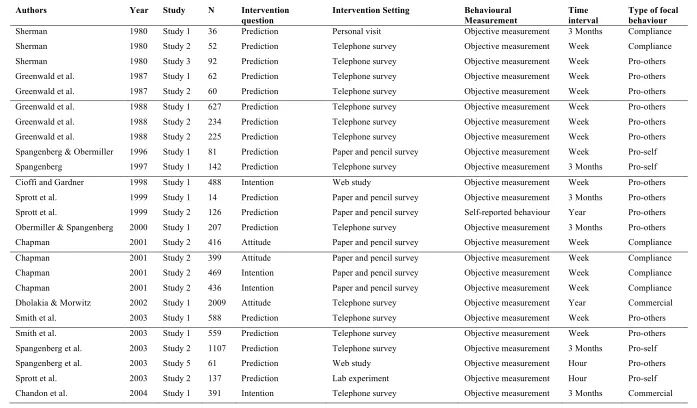
Table 1. Overview of the studies included in the meta-analysis and moderator coding ... 73
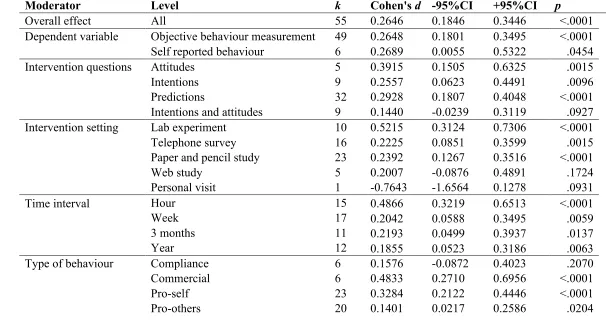
Table 2. Outcomes of the moderator analyses ... 79
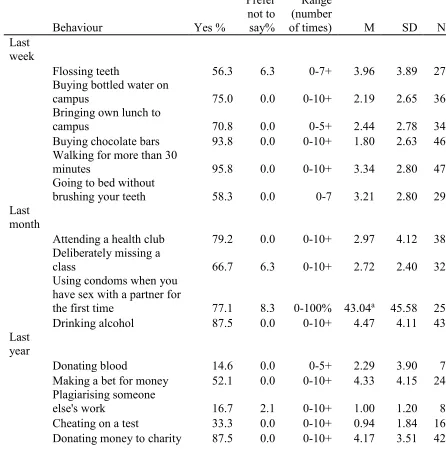
Table 3. Results behavioural questionnaire... 92
Table 4. Aggregated data Study 1A and 1B ... 105
Table 5. Aggregated data Study 2 ... 114
Table 6. Aggregated data Study 3 ... 127
Table 7. List of behaviours and aggregated data Study 4 ... 143
Table 8. Aggregated data Study 5 ... 158
Table 9. Aggregated data Study 6 ... 167
LIST OF FIGURES
Figure 1. Flow chart of study selection process. ... 72
Figure 2. Forest plot of the studies included in the meta-analysis ... 75
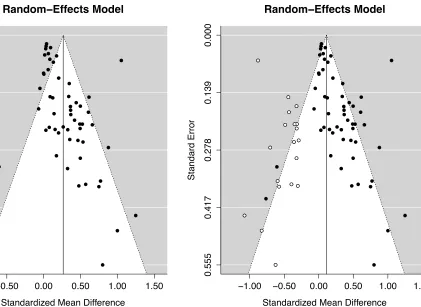
Figure 3. Funnel plot of the studies included in the meta-analysis. ... 76
Figure 4. Funnel plot after trim and fill analysis ... 76
Figure 5. Flowchart of the procedure used in Study 1A and 1B. ... 103
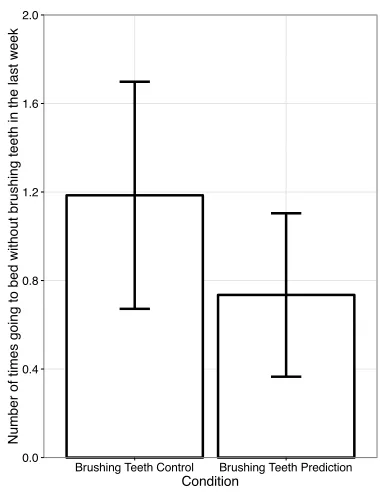
Figure 6. Results Study 1A. ... 106
Figure 7. Results Study 1B. ... 106
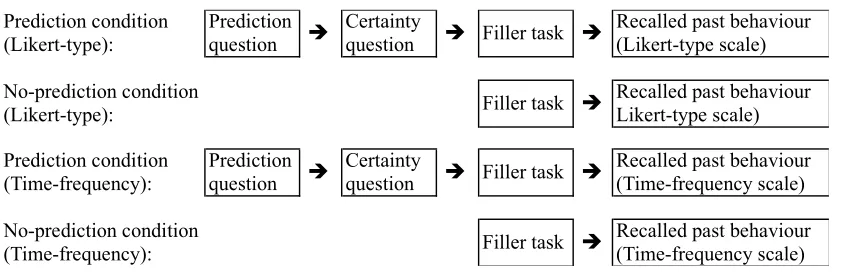
Figure 8. Flowchart of the procedure used in Study 2. ... 113
Figure 9. Results Study 2 (likert-type scales). ... 115
Figure 10. Results Study 2 (time-frequency scales). ... 115
Figure 11. Flowchart of the procedure used in Study 3. ... 125
Figure 12. Results Study 3... 128
Figure 13. Flowchart of the procedure used in Study 5. ... 157
Figure 14. Results Study 5... 159
Figure 15. Flowchart of the procedure used in Study 6. ... 166
Figure 16. Results Study 6... 168
Figure 17. Flowchart of the procedure used in Study 7. ... 174
CHAPTER 1 INTRODUCTION
What did you do this weekend? Are you going to the cinema tomorrow? Will you attend our meeting next week? People often ask each other these kinds of questions in social contexts. This happens for all kinds of reasons such as arranging to meet, starting a
conversation or to pass the time. Asking these sorts of questions about past and future behaviour seems harmless, but what if merely asking questions about behaviour influences people? Or, more specifically, what if asking people questions about their behaviour
influences their future behaviour? The concept of how asking questions can influence future behaviour has been studied under various labels such as the self-erasing nature of errors of prediction (S. J. Sherman, 1980), the mere-measurement effect (Morwitz, Johnson, & Schmittlein, 1993) and the self-prophecy effect (Spangenberg & Obermiller, 1996).
In 2006 researchers from different streams of research on the topic published a paper
in Social Influence, in which they explained how these concepts could be integrated in one
label: The Question-Behaviour Effect (Sprott, Spangenberg, Block, et al., 2006). They suggested “the use of the label question-behavior effect to describe any phenomenon
whereby questioning of a person (whether it be through an intention measure, self-prediction, a measure of satisfaction, or other means) influences the future performance of the focal behavior” (Sprott, Spangenberg, Block, et al., 2006, p. 129).
1.1 Overview of the Thesis
In the literature review all the papers written on the question-behaviour effect between 1980 and present are discussed. This includes focal behaviours, underlying
mechanisms and research methods as well as other relevant aspects of the question-behaviour effect such as moderating factors and the applicability of the effect when designing a
behavioural change intervention. In addition, theories linked to the question-behaviour effect and gaps in the literature are discussed.
The literature review is followed by a meta-analysis of the question-behaviour effect. This meta-analysis synthesises the findings in the question-behaviour effect literature in a systematic way and addresses questions about the effectiveness of question-behaviour effect interventions, underlying mechanisms and moderating study characteristics such as type of question, intervention setting, time interval, measurement of behaviour and type of focal behaviour.
Following the meta-analysis, a series of experimental studies investigating the underlying mechanism of the question-behaviour effect are reported. This part starts with a behavioural questionnaire to decide which focal behaviours to use in the experimental studies and is followed by three experimental studies investigating the causes of the
question-behaviour effect (studies 1-3). These studies focus on recalled past question-behaviour related to some of the focal behaviours identified in the behavioural questionnaire. The findings of these three studies, together with a literature update, result in Study 4, a correlational study investigating social proof in relation to the question-behaviour effect.
consumption and an objective behavioural measurement was used to investigate the effects of adding self-affirmation to these questions.
The implications of the findings presented in this thesis, as well as their limitations and directions for further research are considered in the general discussion chapter that follows after the empirical part of the thesis and concludes the thesis.
1.2 Contribution
This thesis contributes to the existing knowledge of the question-behaviour effect in three ways. First, the thesis provides an updated effect-size of question-behaviour effect research in the meta-analysis, as well providing evidence that commercial and personal relevant behaviours are affected to a greater extent by question-behaviour effect interventions compared to compliance or societal relevant behaviours.
Second, while the meta-analysis shows a robust effect, the empirical studies show that the effect is fragile and that small changes in the wording of the question, type of behaviour and goal difficulty can influence the direction and size of the effect.
CHAPTER 2 LITERATURE REVIEW
2.1 Introduction
In this review, the scientific literature on the question-behaviour effect is summarised. The key aspects of this phenomenon are covered: different types of focal behaviours, the underlying mechanisms, factors moderating the effectiveness of the question-behaviour effect as social influence technique, methods used in question-behaviour effect research,
applicability, and limitations and gaps in the literature. Based on this literature review, three research questions are posited, which are the basis for the rest of this thesis. While the label “question-behaviour effect” first occurred in the literature in 2006 (Sprott, Spangenberg, Block, et al., 2006), the literature on this topic that was published before that date will be referred to as question-behaviour effect research, regardless of the original label used by the researchers, which was often either the mere measurement effect or the self-prophecy effect.
2.2 The Question-Behaviour Effect
The question-behaviour effect is defined as: “[A label] to describe any phenomenon whereby questioning of a person (whether it be through an intention measure, self-prediction, a measure of satisfaction, or other means) influences the future performance of the focal behavior.” (Sprott, Spangenberg, Block, et al., 2006, p. 129) and that definition is used in this thesis.
condition who were not asked questions about their behaviour. Sherman measured the behaviour of the participants who had answered the behaviour questions and found that even though participants under-predicted or over-predicted their future behaviour compared to the actual behaviour of peers, they compensated for this error by performing the behaviour in the way they predicted. This first study showed that merely predicting future behaviour could increase or decrease the likelihood of the occurrence of that behaviour. Sherman found this effect in three studies (S. J. Sherman, 1980). People who made a prediction whether or not they would write a counter attitudinal essay were less likely to write the counter attitudinal essay on request. Predicting to sing the US national anthem showed the same result. However, when people were asked to collect money for the cancer society for three hours, people who were asked to predict their behaviour complied with the request more often compared to the participants in the control group.
2.3 Behaviours
While the question-behaviour effect has been investigated in relation to a wide variety of focal behaviours, some behaviours have been investigated by multiple teams in different studies. In this section, these are clustered and discussed by behaviour.
2.3.1 Voting Behaviour
One of the first studies on the question-behaviour effect in an applied setting was conducted to investigate the effects of predicting future behaviour in relation to voting (Greenwald, Carnot, & Beach, 1987). During a phone call, people were asked to predict whether or not they expected to register for voting (Study 1) or whether they expected to vote (Study 2). The results showed that participants were more likely to register to vote (Study 1) and vote (Study 2) after being asked to predict their future voting behaviour compared to a control group that was not asked to predict their future behaviour.
Greenwald later tried to replicate the effect in two other elections (Greenwald, Klinger, Vande Kamp, & Kerr, 1988). In their first study no significant effect was found, which the authors attributed to a possible ceiling effect. Their second study did find the effect
previously found; that predicting future behaviour increased voter turnout. In this study, they also took into consideration prior voting behaviour and found that only the group of
participants with a moderate prior voting turnout showed a significant increase in voting in the elections after predicting their future behaviour.
conclude that Greenwald and colleagues’ findings were probably the result of small samples or a type-1 error.
Voting behaviour has been investigated more recently by Goldstein and colleagues (D. Goldstein, Imai, Göritz, & Gollwitzer, 2008). Goldstein et al. set out to compare the effects of measuring intentions and using implementation intentions on the topic of voting. In addition, the authors compared two types of focal behaviours: “one-shot goals” (voting on the Election Day) and “open ended goals” (voting early) as well as manipulating whether the goal is in the near or farther future. Their results showed that implementation intentions influenced both near or farther in the future behaviours as well as both types of behaviour, voting on the day and voting early. The intention questions showed the same results, apart from the distant one-shot goal, indicating that, compared to implementation intentions, question-behaviour effects are more likely to decay over time. Overall there seems to be some evidence that asking people questions about their voting intentions can influence voting behaviour.
2.3.2 Health Behaviours
Health behaviours were further investigated by Conner, Godin, Norman and Sheeran (2011) who tested the effect of a question-behaviour effect intervention for two disease prevention behaviours, a health check for the general public (Study 1) and an influenza vaccination for health care professionals (Study 2). Analysis showed significant increases in disease prevention behaviours in both studies for the participants that received the
questionnaire compared to their respective control group. Closer inspection found that completing and not merely receiving the questionnaire accounted for these effects.
Using cervical screening attendance as focal behaviour, Sandberg and Conner (2009) investigated whether adding anticipated regret (Simonson, 1992) to a question-behaviour effect intervention would moderate the outcome. They found that the attendance rate significantly increased in both experimental groups (behavioural questions only and behavioural questions plus anticipated regret) compared to a control group. The prediction plus anticipated regret condition increased the attendance rates significantly compared to the prediction only condition for people who returned the questionnaire as requested.
2.3.3 Alcohol Consumption
Another behaviour that has been investigated in relation to the question-behaviour effect is alcohol consumption. In a first study, McCambridge and Day (2008) asked a sample of university students to complete a questionnaire. As part of the questionnaire, the
month follow up were reduced. Some of the secondary outcome measurements, such as self-reported number of drinks in the past seven days, were also lower compared to the
participants in the control group (15.9 versus 18.7), while others, number of days drinking in the past month for example, slightly increased. In their results section, the authors do warn that the outcomes might be due to a Hawthorne effect (Miller & Landsberger, 1959) as the participants self-reported their drinking behaviour and knew they were monitored during the follow-up period.
Todd and Mullan (2011) investigated binge drinking in female undergraduate students. They asked participants to either fill in either a Theory of Planned Behaviour questionnaire, containing questions about the different factors in the Theory of Planned Behaviour such as attitudes, social norms and intentions, or an unrelated questionnaire. In addition, all
participants completed a behaviour component at the end of the session. The statistical analysis showed that, when controlling for past behaviour, the participants in the experimental condition showed lower amounts of alcohol consumption at the follow up measurement after two to three weeks compared to the control group. So while the first study found an effect of measuring past behaviour (AUDIT scores), on future behaviour, this study adds to that by measuring elements of the Theory of Planned Behaviour compared to a behavioural outcome. Together, these two studies show that asking people questions related to the Theory of Planned Behaviour and past behaviour can reduce self-reported drinking behaviour. This suggests that question-behaviour effect interventions do not necessarily increase behaviour, but can influence the behaviour in a social desirable way.
2.3.4 Physical Activity
They asked a sample of overweight/obese adults to fill in a Theory of Planned Behaviour questionnaire regarding their physical activity (experimental condition), or fruit and vegetable consumption (control condition). At the three-month follow up measurement, participants in the experimental condition reported significantly higher levels of physical activity (d = 0.20) compared to the control group. In addition to this small effect of asking questions on future behaviour, the authors point out the simplicity of the intervention, as distributing a questionnaire is not time consuming and very cost effective. Like the studies on alcohol consumption, this study relied on self-reported behaviour as outcome measurement so the question remains whether these effects hold up when an objective behaviour
measurement is used.
Spence and colleagues used pedometers to investigate question-behaviour effects in relation to walking behaviour (Spence, Burgess, Rodgers, & Murray, 2009). They compared conditions with or without a behavioural questionnaire with conditions in which participants were provided with a pedometer to trace their steps. They found that providing the pedometer increased reported walking behaviour, but that the behavioural questionnaire did not
influence the behaviour or attitudes towards walking.
Spangenberg (1997) set out to increase health club attendance rates by asking whether or not people were expecting to use their health club during the next week. All participants in this study were members of a health club that had not attended their health club recently. The health club attendance measurement after ten days did not show an effect, while the six month follow up measurement showed a marginally significant effect, meaning that members who were asked the prediction question visited their health club more often than the members who were not asked such question. In addition, after removing the members who had
2.3.5 Donating Blood
The effects of asking questions on subsequent blood donation have been investigated in a series of papers. In a first study on blood donation, Godin, Sheeran, Conner and Germain (2008) investigated to what extent a question-behaviour effect intervention could motivate people to donate blood. Blood donors either received a question-behaviour effect
questionnaire (experimental condition) or no questionnaire (control condition). Receiving this questionnaire resulted in an 8.6% and 6.4% increase in number of registrations at a blood drive after six and twelve months respectively. These statistically significant findings also have a practical significance as the intervention could easily be rolled out in a larger population, thereby substantially increasing the absolute amount of blood donated.
A second study by Godin and colleagues, however, found different results (Godin et al., 2010). In a study focusing on retaining novice blood donors, participants again received a questionnaire or no questionnaire. There was no significant difference between the
(Study 2) and found that neither group was more inclined to donate blood after answering questions about their blood donation behaviour.
They also found no overall effect of sending questionnaires. However, there were significant differences between participants who completed versus not completed the
questionnaire. After a comparison of these studies, they concluded that there was no evidence that distributing questionnaires could influence blood donation behaviour, unless participants completed the questionnaire. The question remains whether completion of the questionnaire influences people to donate blood, or that those people were more likely to donate blood to begin with. The need for a focus on non-compliance in clinical randomised controlled trials as reported in this paper was further discussed in a commentary on the paper by Ferguson (2013).
Expanding the research by investigating long term effects, Godin and colleagues focused on lapsed donors (Godin, Germain, Conner, Delage, & Sheeran, 2014). This study found that after six months, participants receiving a question-behaviour effect intervention did not significantly donate more blood. However, the 15-month follow up did show a significant increase in blood donation in this condition compared to the control group. An included implementation intention condition showed a significant effect after 6 and 15 months, where the effect size at 15 months was similar to the question-behaviour effect condition.
2.3.6 Purchasing Behaviour
influence behaviour, it is possible that these satisfaction surveys influence future behaviour in a similar way.
Fitzsimons and Morwitz (1996) investigated the effect of measuring intentions on brand-level purchase behaviour of cars. They used an existing survey panel that, among others, answered questions related to their intentions to buying a new car. This panel
completed the questionnaire every three months and new panel members were compared with panel members who had filled in the questions several times before. In this
quasi-experimental study, they found that people who already owned a car were more likely to buy another car by the same brand after answering intention questions regarding purchasing a car and brand preference, while people who bought their first car tended to buy a brand that had a large market share. This shows that asking questions about behavioural intentions does not only influence small, relatively insignificant decisions, but also large financial ones.
Further research in the automotive industry investigated the influence of filling in surveys on service purchases using the same type of satisfaction questionnaire (Dholakia, Morwitz, & Westbrook, 2004). Their high response rates (in the order of 90-95%, p.102) are helpful as earlier studies on the influence of satisfaction surveys suggested that the effect might be driven by response bias instead of a genuine effect of asking people questions (Morwitz et al., 1993). Dholakia et al. discovered that the number of service visits and number of services bought at those visits both increased when taking part in a satisfaction survey. The authors noted that even customers who expressed negative views in the
satisfaction surveys showed an increase in number of service visits and number of services bought. They explained this as a consequence of the company’s ostensibly honest interest and valuing of the customers’ expressed opinions.
Anderson, Hansen and Tripathi (2007) attempted to mathematically correct for these biases. They came up with a model taking into consideration “two major obstacles [we identified] to measuring the mere measurement effect in a non-experimental, field setting. These are: Who is asked to participate in a survey? Who agrees to respond to a survey?” (Anderson et al., 2007, p. 4). They found that without controlling for these questions in a study on purchasing behaviour from an online store, an increase of 15% was predicted, while taking these biases into consideration resulted in a decrease in purchasing behaviour of 17%. This study shows that, since the effect size is in the opposite direction compared to the original findings, taking into consideration selection bias is key in interpreting findings of satisfaction measurement studies. This issue can be addressed by focusing on a high response rate in field settings where randomised controlled experiments are not an option.
Not all research on the question-behaviour effect in relation to consumer behaviour has focused on purchasing products. Obermiller and Spangenberg (2000) investigated the effectiveness of the question-behaviour effect as a way of increasing university fundraising donations. University alumni were phoned and asked whether or not they wanted to donate money to the university. Analysis showed that more people were willing to donate money when asked to predict their donating behaviour first. There was no difference in the amount of money donated per participant.
2.3.7 Risky Driving Behaviour
investigated three different subscales of the questionnaire in the first study separately. All three subscales; risky driving behaviour, attitudes to risk taking and attitudes to accidents, resulted in lower self-reported risky driving at the follow up measurement. This indicates that not only asking people about behaviour can influence subsequent behaviour, but that merely asking people about their attitudes can have the same effect.
Interestingly, Falk also looked into the location where the participants completed the questionnaire. Whether the participants filled in the pre-test and post-test questionnaire in two different locations (a military enrolment centre and at home) or the same location (at home) did not influence the results. This implies that a question-behaviour effect intervention does not require personal contact between the participant and researchers and that postal
questionnaires are likely to have similar effects compared to questionnaires distributed on another location.
2.3.8 Dispute Over Question-Behaviour Effects on Vice Behaviour
Williams, Block and Fitzsimons (2006) investigated whether the question-behaviour effect can only be used to increase the occurrence of socially normative behaviour, or that socially non-normative health behaviour could also be increased by such an intervention. They showed that both exercising and illegal drug use were more likely to occur after answering questions about these behaviours. They suggested that researchers should be careful when asking people about negative behaviours, as asking these questions could result in the participants engaging in the negative behaviours more frequently.
the data. Since the data on illegal drug use was skewed and there were a high number of zero values, they stated that the statistical test used by Williams et al. was not justified. When they re-analysed the data taking into account outliers and testing for the assumptions of the
statistical test, the effect of the intervention was non-existent. When the data on exercising behaviour was reanalysed, this also produced a non-significant effect.
The authors of the original paper on vice behaviours responded to the findings by Schneider and his colleagues in a commentary in Social Influence, the same journal where the original paper as well as the re-analysis by Schneider et al. were published (Fitzsimons, Block, & Williams, 2007). They agreed with the critique on using incorrect statistical tests. However, their stance was that some of the tests carried out by Schneider’s team were
actually showing significant results (2 out of the 13 analyses) or marginally significant (3 out of 13 analyses) and they stated that readers should decide for themselves whether or not to accept the conclusions from their original studies. In addition, they felt it was not justified to delete outliers, because there was no way to find out whether these outliers were drug users before, or if they were ‘regular’ participants who were affected by the intervention to an extreme extent. They finished their response by pointing out a series of replication studies (Fitzsimons, Nunes, & Williams, 2007) that should prove their point that asking people about vice behaviours is risky. The focal behaviours in those experiments were skipping classes, procrastinating and going for drinks. While these behaviours in the replication studies might not be socially desirable, they do not seem as negative compared to drug use, the vice behaviour in the original study.
many classes they would skip during the next semester predicted the same number of classes compared to the actual behaviour of a control group. However, measurements of their behaviour showed that these students skipped more classes than their fellow students in the control group.
The next behaviour, procrastination, was measured by giving students the opportunity to attend screenings of new movies. To take part, they had to be able to attend at least four film screenings in one week. Participants who were interested in attending had to provide their email address after filling in the question-behaviour effect questionnaire. Analysis showed that more people provided their email address when they had first been asked to predict their future procrastination behaviour.
The last study they designed had two focal behaviours, either going out with friends for drinks or watching television; both were regarded as forms of procrastination by the authors. In both behaviours, results showed that being asked to predict future behaviour increased the occurrence of the behaviour. However, when a different intervention was used, in which implementation intentions or reward interventions were added to the self-prediction, they found a significant effect in the opposite direction. Students watched less TV and did not go out for drinks with friends as much in the intervention group compared to the control group.
As mentioned before, the behaviours might not be socially desirable, but it is unclear how ‘vice’ these behaviours really are and whether increased performance of these
behaviours should always be a considered negative outcome. For all behaviours, skipping classes, watching movies or television, or going for drinks with friends, it is difficult to pinpoint what the students were doing the rest of the time and whether or not they
question-behaviour effect intervention, the question remains whether vice behaviours such as drug use are negatively influenced by asking questions about the behaviour.
The link between vice behaviours and the question-behaviour effect was further discussed in a research dialogue in the Journal of Consumer Psychology (Schwarz, 2008). The dialogue kicked off with a paper stating that asking questions about risky behaviours was risky itself and that screening adolescents for risky behaviours might be counterproductive (Fitzsimons & Moore, 2008). They discussed the paper by Williams et al. (2006) that found the increase in drug use as a result of the question-behaviour effect and suggested that when people are asked about a negative behaviour towards which they have at the least an implicit positive attitude, this could lead to an increase in performance of this negative behaviour. They warned that asking questions about behaviour can have these negative effects and suggested researchers should look into how they can ask questions that do not influence future behaviour in a negative way such as warning participants about possible question-behaviour effects.
In a response to this paper, Sherman (2008) suggested that the conclusions that negative behaviours occur more often after being asked questions about the behaviour were premature and not as robust as proposed by Fitzsimons and Moore (2008). Sherman
In the concluding reply to this paper, Moore and Fitzsimons addressed these criticisms (Moore & Fitzsimons, 2008), stating that since the answers on the prediction questions do not correlate with the dependent variable, the self-reported drug use, this can be seen as an example of implicit attitudes changing instead of a visible change in the explicit attitudes of participants. While this might be the case, it seems unlikely that all these studies show correlations “close to zero and […] non-significant in all of the reported studies” (Moore & Fitzsimons, 2008, p. 112) and yet still show an effect of prediction on future behaviour. Given that these correlations are close to zero, the conclusion by Schneider and colleagues that the effects are due to errors in the data-analysis seems more feasible (Schneider et al., 2007).
Spangenberg and Obermiller (1996) investigated the effect of asking a prediction question on cheating behaviour. They asked students to predict whether or not they would cheat if they were highly unlikely to get caught (experimental group) or the students made no prediction at all (control group). Compared to the behaviour of the control group, the
2.3.9 Meta-Analyses of the Question-Behaviour Effect
Besides the experimental research and literature reviews on the question-behaviour effect, some researchers have investigated the phenomenon by using meta-analysis. In 1999, two researchers with experience in conducting question-behaviour effect research performed a meta-analysis in which they included all papers that had been published on the topic up to that point in time (Spangenberg & Greenwald, 1999). This meta-analysis consisted of 11 comparisons in six papers. The list of included studies not only shows that relatively few papers were written on the topic by that time (six papers of which five were published in peer-reviewed journals), but also that the number of researchers investigating the effect was surprisingly low as only one paper (Sherman, 1980) was not co-authored by a researcher involved in conducting the meta-analysis. Converted to a standardised effect size, Cohen’s d, the meta-analysis showed that asking people prediction questions about their future behaviour resulted in a small effect on future behaviour (d = 0.26). Studies introducing a new
phenomenon usually overestimate the effect size as a result of publication bias and small samples. Since this first meta-analysis, several large scale studies have been conducted (e.g. Godin et al., 2008; van Dongen et al., 2013) which provide the need for an updated meta-analysis to rule out publication bias as the underlying mechanism of the question-behaviour effect.
In 2006, another meta-analysis was conducted (Sprott, Spangenberg, Knuff, & Devezer, 2006). This meta-analysis focused on self-prophecy studies related to health behaviours and consisted of seven studies. They found an effect size, converted to Cohen’s d, of d = 0.54. Interestingly, all seven studies had one co-author in common, which might raise questions as to whether the phenomenon can be replicated in different labs, using different procedures and target groups. As shown recently in a replication effort in social psychology, it can be
Conducting a new meta-analysis that includes all those studies as well as more recent studies, in addition to including a wider variety of behaviours, can determine whether the found effects are lab specific or more universal.
More recently, a meta-analysis of the question-behaviour effect related to health behaviour included 33 studies and found an effect size of d = 0.09 (Rodrigues, O’Brien, French, Glidewell, & Sniehotta, 2014). Compared to the other two meta-analyses, this study included papers from a range of different authors and labs. However, the meta-analysis only focused on health behaviours instead of a wide range of behaviours, which leaves the question of what the general effect of question-behaviour effect interventions is. Also, the authors made decisions in extracting the data, which give cause for caution in interpreting their findings.
In their paper, they focus on health behaviours. Since the studies included in the meta-analysis used different target behaviours, a standardised effect size was calculated (Cohen’s d). Based on how Cohen’s d is calculated, a positive effect size means that the experimental group has a higher mean score than the control group, while a negative effect size indicates the opposite. So if, for example, a study on blood donation (Godin et al., 2008) finds a positive effect of asking prediction questions on blood donation behaviour, this means that the group that has been asked to predict their behaviour donates more blood than the control group. However, health can be improved not only by performing certain behaviours more often (e.g. more exercise), but also by performing other behaviours less often (e.g. eating less unhealthy food). In the latter case, the expectation would be to find negative effect sizes, as the experimental group will show a lower score of unhealthy behaviour compared to a control group. This is exactly what a study on eating less unhealthy snacks shows (Levav &
choose the fatty food option. When including this result in a meta-analysis, the effect size needs to be transformed into a positive effect size, so that across the meta-analysis positive effect sizes indicate improving health, while negative effect sizes indicate deteriorating health. However, in the meta-analysis on health behaviour by Rodrigues et al. (2014), the negative effect size was reported, thereby decreasing the overall effect size.
Another example relates to the often-heard critique that meta-analyses compare apples and oranges. When investigating the effectiveness of a social influence technique like the question-behaviour effect, conditions included in the meta-analysis should be as close to a control condition and an experimental condition that, as far as possible, only consists of this intervention. An interesting study by Todd & Mullan (2011) compared three conditions, a control group, a prediction only condition and a prediction condition with an additional intervention. For meta-analytic purposes, the control condition and prediction only condition should be compared, instead of the prediction with additional intervention. However,
Rodrigues et al. report the latter, which seems to have reduced the reported effect size for that study.
Another paper on the question-behaviour effect described two studies, where Study 2 was a replication of Study 1 (a standard question-behaviour effect experiment) with the addition of a vague question condition compared to the original, specific, experimental question (Sprott, Smith, Spangenberg, & Freson, 2004). The authors explicitly state that “Control and specific predictions were identical to those described in Study 1.” (Sprott et al., 2004, p. 1184). This would offer the option of including three comparisons (Study 1, Study 2 Control/Vague, Study 2 Control/Specific), while Rodrigues et al. only included the third option, which may have led to an overestimation of the effect size.
questionnaires to peoples’ homes or via e-mail, there is a need to control for a selection bias. This means that all participants of all conditions need to be included, instead of only
including the participants who returned a completed questionnaire, especially if the control group is not asked to fill in a questionnaire. In their paper, Cioffi and Garner (1998) took this into consideration, but the effect size reported in the meta-analysis by Rodrigues et al. (2014) seems to be based on the returned questionnaires by the experimental group and all of the participants in the control group, likely to have resulted in an overestimation of the effect size for that study in the meta-analysis.
Overall, the question-behaviour effect has been studied in three interesting meta-analytic studies, but given the limitations, there is a need for a meta-analysis that focuses on all research streams of the question-behaviour effect, that does not limit itself to one specific type of behaviour and that assesses all studies conducted on this topic since the milestone paper by Sherman (1980). Such a meta-analysis would result in an updated effect size estimate while also providing information on a possible publication bias, together with insights on the universality of the question-behaviour effect1.
2.4 Explanations
While the use of the label ‘question-behaviour effect’ implies that there is only one effect, it does not answer the question of what causes the effect to occur. In this section, empirical research and theoretical papers discussing the underlying mechanisms of the question-behaviour effect are reviewed.
1 Since completing the literature review and meta-analysis, another meta-analysis on the
2.4.1 Cognitive Dissonance Theory
One suggested underlying mechanism is cognitive dissonance (Festinger, 1957). According to Festinger, people have a need to be consistent and when they feel they are inconsistent, for example when two of their cognitions do not match, this gives them a feeling of dissonance. Since cognitions can be attitudes (e.g. “I should exercise”) as well as a
person’s own behaviour (e.g. “I haven’t exercised this week”), a discrepancy between attitudes and behaviours can also lead to feelings of dissonance. People who experience dissonance have a need to resolve this feeling. Festinger stated that to resolve dissonance, one of the held cognitions would need to change, so that it is in line with the other. In the
exercising example, this would mean that participants either change their cognition “I should exercise” to something similar to “exercise is not important”, or they change their cognition “I haven’t exercised this week” by exercising.
Spangenberg and colleagues investigated experimentally whether cognitive dissonance could serve as underlying mechanism of the question-behaviour effect
(Spangenberg, Sprott, Grohmann, & Smith, 2003). In a series of studies, they manipulated downward comparison as this is known to be a coping mechanism for cognitive dissonance (Hakmiller, 1966). They found that asking participants to answer a prediction question about their peers before answering the question in relation to themselves resulted in lower
psychological discomfort. This same result was found after participants had the option to self-affirm (Steele & Liu, 1983; Steele, 1988) after answering the prediction question. Self-affirmation is the process of reducing dissonance by casting the ‘self’ in a positive light through affirming an important aspect of the concept. To investigate whether self-affirmation might also attenuate question-behaviour effects, they designed a study in which participants were asked to predict whether they would support the American Cancer Society, after which some participants received a self-affirmation task. At the end of the
web-questionnaire, participants were asked to fill in a short survey for the American Cancer
Society. Those in the prediction only group were more likely to do so compared to the control group and prediction plus self-affirmation conditions, showing that self-affirmation can attenuate question-behaviour effects.
Additionally, they set out to investigate the need for personal contact in question-behaviour effect interventions (Spangenberg et al., 2003). In a study on recycling question-behaviour, they found that no personal contact in administering the question-behaviour effect
quasi-experimental design as no real control group was used, the results suggest that mass-communicated questions can influence subsequent behaviour.
They found the same results when this method was applied to a different behaviour, attending a health club. Health club users who received a prediction question through a mailed questionnaire were more likely to attend the health club than people in the control groups. Interestingly, a statement that people should work out at the health club had a smaller effect on health club attendance than when the same statement was turned into a prediction question. Since both statements should activate attitudes towards working out at the health club, it seems that merely activating attitudes is not sufficient to change behaviour.
2.4.2 Attitude Activation
Another explanation of the question-behaviour effect is attitude activation(Morwitz et al., 1993). This explanation suggests that by asking a question about future behaviour, attitudes that are associated with the questioned behaviour are activated. People then use these attitudes to decide what they will do in the future and answer the future behaviour question in the same way.
Morwitz and colleagues investigated how measuring intentions affects purchase behaviour regarding expensive products: cars and personal computers (Morwitz et al., 1993). In this study, participants were asked to complete surveys every six months in which they were asked about their intentions towards buying a personal computer or buying a car. The results showed that asking participants questions about intentions toward purchasing either product resulted in more of these products being bought by these participants compared to participants who did not receive the survey. Participants reporting low levels of intent were less likely to purchase these products later on. However, prior experience with the product moderated the question-behaviour effect, showing that people with limited experience were more likely to purchase the product afterwards. They used the label mere-measurement effect to describe these findings.
Fitzsimons and Williams (2000) discussed the possibility of automatic versus effortful processes underlying the question-behaviour effect. They found that the effect of asking questions is not due to deliberate processes but instead is caused by automatic cognitive processes. They suggested that when people are asked questions about their behaviour, this activates automatic categorisations that are used to decide whether or not to perform the behaviour.
whether they would buy a Canadian chocolate bar if it became available in the US, these participants were more likely to choose a chocolate bar out of a selection of five bars that they had positive and accessible attitudes towards compared to a control group that was not asked a prediction question. In addition, participants in the prediction conditions were also less likely to choose a brand towards which they had negative accessible attitudes. While these findings provide some evidence that attitude activation might play a role in decision making processes after completing a prediction question, the findings are related to a
situation in which people have choose one option over the other, which is different compared to the studies investigating whether people are more likely to perform/not perform a
behaviour after being asked a prediction question.
Additional research on brand choice shows that asking questions about behaviour related to a specific brand results in a higher state of activation of the brand which is attenuated after making a brand choice related task (Van Kerckhove, Geuens, & Vermeir, 2011).
Chandon, Morwitz and Reinartz (2005) used structural equation modelling to investigate how measuring intentions to purchase products was related to actual behaviour. They suggest that self-generated validity, the inflation of the association between intentions and actual
behaviour, could play a role in the question-behaviour effect literature regarding purchasing behaviour.
underlying mechanism of the question-behaviour effect, as thinking about attitudes regarding a behaviour could reduce or inflate the chance of performing said behaviour. While the authors discard social norms – which behaviours are considered normative in a group of peers – as underlying mechanism by stating that these norms would influence everyone in the same way instead of strengthen or weaken the likelihood of changing behaviour based on pre-survey intentions, it is unclear whether this assumption is warranted.
For example, research has shown that people differ in their preference for consistency, or how likely they are to change their behaviour to make sure the attitudes, norms and
behaviour towards a certain behaviour are consistent (Cialdini, Trost, & Newsom, 1995). It is possible that social norms do not apply to consumer behaviours but in a time where ordering online (Chandon et al., 2004) and buying a PC (Morwitz et al., 1993) were not as common as they are today, some form of social status or norms might have been at play.
2.4.3 A Critical Review of the Question-Behaviour Effect
When Sprott and colleagues (2006) coined the term “question-behavior effect” they effectively combined different streams of research (i.e. self-prophecy and mere-measurement effect research) under the same umbrella term: question-behaviour effect. Later, a critical review of the question-behaviour effect was published (Dholakia, 2010), in which research on the question-behaviour effect was discussed while taking into account those different streams. He distinguished three different types of question-behaviour effect research: lab-based and field-lab-based mere-measurement effect research, and self-prophecy effect research.
Dholakia suggested that lab-based mere-measurement effect research focuses mainly on brand preference, with choice as a dependent measurement. These studies are often quite short and the measurement of the dependent variable occurs relatively soon after the
studies include brands with which the participants are already familiar and are carried out over longer periods of time. Both types of research focus on consumer behaviour and can measure actual behaviour (e.g. brand choice in lab studies and purchasing behaviour in field studies).
Where mere-measurement effect studies often focus on consumer behaviour and ask questions about the customer experience and satisfaction, the self-prophecy effect studies use predictions about future behaviour as an independent factor in experiments. Dholakia
suggested that the self-prophecy effect could be used to explain findings that cannot be explained by a mere-measurement effect approach, making the distinction between attitude activation (mere-measurement effect) and cognitive dissonance processes (self-prophecy effect). Since the findings in the self-prophecy effect literature cannot be explained by attitude activation, Dholakia suggests that this means that the two effects have different underlying mechanisms. As Dholakia first used attitude activation to explain the effect and used cognitive dissonance only to explain the findings that attitude activation cannot, it remains unclear whether cognitive dissonance could explain the findings of attitude activation research as well.
2.4.4 Ease of Mental Representation
While attitude activation and cognitive dissonance are the most extensively investigated mechanisms of the question-behaviour effect, researchers have suggested other explanations for the effects of asking questions on subsequent behaviour.
behaviour after answering a related prediction question. They investigated this hypothesis in several ways. In one study, they altered the prediction question in two experimental groups, with one group answering the question regarding themselves, while another group answered the question as if it was about their average classmate. Participants who answered a
prediction question regarding flossing their teeth were more likely to floss in the following two weeks than participants who answered the same question about a classmate.
In a second study, they showed that asking people whether they would eat fatty foods or asking whether they would not eat fatty foods both reduced the number of participants choosing the fatty food option in a subsequent taste test. However, asking a question
regarding avoiding eating fatty foods rather than not eating fatty foods reduced the number of participants choosing the fatty food option significantly more compared to the other two prediction questions.
A subsequent manipulation check revealed that answering questions phrased as “will you not” takes significantly longer than answering questions that are phrased as “will you” or “will you avoid”, which is, according to the authors, proof that ease of mental representation is at play. However, while the avoidance question showed a significant decrease in fatty food choice compared to the other two experimental conditions, the “will you not” and “will you” questions both showed similar, significant decreases in behaviour compared to a control group.
A third study investigated ease of representation by focusing on frequency of behaviour instead of positive or negative questions to investigate the likelihood of
participants flossing their teeth or reading for pleasure. They asked people questions related to either regular (7 or 21 times per week) or irregular (2 or 8 times per week) occurrences of the behaviours. The results showed that for regular behaviours (flossing teeth) asking
found for irregular behaviours (reading). The authors conclude that this adds to the ease of mental representation hypothesis, as it is easier to imagine doing something on a regular, rather than an irregular basis.
2.4.5 Motivational States
Most of the studies on the question-behaviour effect have investigated behaviours about which people have an a priori belief, such as blood donation (e.g. Godin et al., 2014), eating healthy foods (e.g. Levav & Fitzsimons, 2006) or going to the gym (e.g. Spangenberg, 1997). Van Kerckhove and colleagues investigated the likelihood of buying a specific, new brand of chocolate in order to remove prior beliefs about the behaviour and to investigate the influence of motivational states (Van Kerckhove, Geuens, & Vermeir, 2012).
In a series of studies, they showed participants new brands of chocolate and asked an intention question related to which brand the participant would choose. They found that when participants answered intention questions, these intentions became activated. In turn, these intentions were the basis for actual changes in behaviour. Once a brand had been chosen, the intention toward that brand moved from activation to inhibition. In addition, a longer time period between the intention question and brand choice did not reduce the effect, suggesting that a specific intention stays activated until the participant has a chance to act upon this intention.
2.4.6 Action Control as Explanation of the Question-Behaviour Effect
direction of a question-behaviour effect intervention is determined before the question is asked rather than as a result of the question frame.
2.4.7 The Role of Social Identity in Question-Behaviour Effects
Perkins and colleagues investigated whether social identity instead of cognitive dissonance might drive the question-behaviour effect (Perkins, Smith, Sprott, Spangenberg, & Knuff, 2008). They related the outcomes of two question-behaviour effect interventions to levels of self-esteem. They argued that self-esteem should be reduced if dissonance is
present, as dissonance theory would predict a drop in self-esteem based on dissonance between social norms (recycling is a good thing) and their behaviour (not recycling). However, if people predict in line with their social identity, they do not experience
dissonance and therefore no drop in self-esteem is expected. They tested this hypothesis in two experiments. In the first study, using Implicit Association Tests (IAT, Greenwald, McGhee, & Schwartz, 1998), they found that self-esteem increased in the prediction group compared to the control group, indicating a social identity factor in question-behaviour effect research. The second study focused on manipulating self-esteem before answering a