http://wrap.warwick.ac.uk
Original citation:
Zeh, Peter, Sandu, H., Cannaby, A. M. and Sturt, Jackie. (2014) Cultural barriers
impeding ethnic minority groups from accessing effective diabetes care services : a
systematic review of observational studies. Diversity and Equality in Health and Care,
Volume 11 (Number 1). pp. 9-33.
Permanent WRAP url:
http://wrap.warwick.ac.uk/61901
Copyright and reuse:
The Warwick Research Archive Portal (WRAP) makes this work of researchers of the
University of Warwick available open access under the following conditions.
This article is made available under the Creative Commons Attribution 4.0 International
license (CC BY 4.0) and may be reused according to the conditions of the license. For
more details see:
http://creativecommons.org/licenses/by/4.0/
A note on versions:
The version presented in WRAP is the published version, or, version of record, and may
be cited as it appears here.
Research paper
Cultural barriers impeding ethnic minority
groups from accessing effective diabetes
care services: a systematic review of
observational studies
Peter Zeh MSc
Strategic Health Authority Research Fellow, University Hospitals Coventry & Warwickshire NHS Trust, Coventry, UK and Warwick Medical School, University of Warwick, Coventry, UK
Harbinder K Sandhu PhD
Assistant Professor in Health Psychology, Warwick Medical School, University of Warwick, Coventry, UK
Ann Marie Cannaby PhD
Executive Director of Nursing, Hamad Medical Corporation, Doha, Qatar
Jackie A Sturt PhD
Professor of Behavioural Medicine in Nursing, Florence Nightingale School of Nursing and Midwifery, King’s College, London, UK
What is known on this subject
. Many authors have reported the existence of inequalities in health and access to diabetes healthcare provision among ethnic minority groups.
. There is much emphasis on the need to provide patient-centred care, but little is known about specific cultural barriers that prevent or discourage members of ethnic minority groups from accessing effective diabetes care.
What this paper adds
. Eight key cultural barrier themes are identified that hinder members of ethnic minority groups from accessing effective diabetes care services.
. It is proposed that these eight themes could inform professional education as to how to develop and deliver culturally competent diabetes services for members of ethnic minority groups.
. Gaps in current diabetes service delivery are identified.
. Based on the findings, suggestions are offered to improve the commissioning and diabetes service delivery tailored to the needs of ethnic minority groups with diabetes.
ABSTRACT
A number of reports indicate that cultural barriers may prevent members of ethnic minority groups from accessing diabetes services, but little is known about the specific nature of these barriers. This systematic review of observational studies aimed to identify and explore cultural barriers as a basis for improvements in care. Articles published from inception to September 2011 were retrieved from
P Zeh, HK Sandhu, AM Cannabyet al 10
Introduction
Diabetes is a long-term, serious and challenging meta-bolic condition and a major health issue worldwide. Although diabetes affects every society, some popu-lations are particularly susceptible but also lack under-standing of the condition (Baradaran and Knill Jones, 2004; International Diabetes Federation, 2009; Alam
et al, 2012). Evidence suggests that, where members of susceptible populations are in the minority, they may not receive equitable diabetes care. This is attributed to a mixture of cultural factors and some service providers’ lack of cultural competence (Hawthorne
et al, 1993; Narayan and Rea, 1997; Coneet al, 2003; Brownet al, 2002; Zeh, 2010; Zehet al, 2012; Mainous
et al, 2007). The National Service Framework for Diabetes stipulates the minimum standards of dia-betes care to be offered to all patients, irrespective of ethnicity, language, culture, religion, gender, dis-ability, age and location (Department of Health, 2001). Healthcare practices should be designed to ensure that health workers take into account the individual patient’s background and deliver tailored services (Cone et al, 2003; NHS Health Scotland, 2004). However, few studies have explored the effects of cultural and linguistic barriers which may compro-mise the quality of care delivered to members of ethnic minority groups with diabetes (Davies, 2006; Hill, 2006; Fleming and Gillibrand, 2009). Very little is known about how these barriers may operate in par-ticular societies, and some service providers do not appear to appreciate the nature of these barriers or how they may prevent members of ethnic minority groups from receiving patient-centred diabetes care (Department of Health, 2001; Roberts, 2007; Wilson
et al, 2012). A better understanding of these cultural issues may guide healthcare commissioners and clini-cal commissioning groups (CCGs) to reconfigure diabetes services in primary care, which may improve both care service engagement and outcomes in min-ority populations (NHS Health Scotland, 2004).
Culture is a shared and dynamic phenomenon displayed by the behaviours and attitudes of a social group, which remains difficult to interpret, but requires a good understanding by health workers (Naeem, 2003). In this review, culture is defined broadly as a shared system of values, beliefs, identities, traditions, behaviours, and verbal and non-verbal patterns of communication that bind a group of people together and differentiate them from other groups (Salimbene, 1999). It encompasses beliefs, language, social norms and values, including practices which can create a sense of social support and belonging for individuals who share the same core beliefs. These can both facilitate and impede health coping styles, access to and utilisation of healthcare services, and implemen-tation of professional advice. This study focused on the cultural barriers to accessing and use of diabetes services. In this review, the termethnic minority group
refers to a population group with an ethnic origin different from that of the majority population of the host country (Bulmer, 1996; Modood and Berthoud, 1997).
Scoping searches identified 10 reviews that reported cultural barriers among members of ethnic minority groups with diabetes. Two were systematically con-ducted reviews (Brown et al, 2002; Fleming and Gillibrand, 2009) and eight were literature reviews with some methodological flaws, for example, reviews with no inclusion criteria (Hawthorne et al, 1993; Davies, 2006; Hill, 2006; Gohdes, 1988; Brown, 1997; Oldroyd et al, 2005; Greenhalgh, 1997, 2008) and single-authored reviews (Davies, 2006; Gohdes, 1988; Brown, 1997; Greenhalgh, 1997, 2008; Hill, 2006). Although these reviews provided some insight into cultural barriers, the following two questions seemed to have received less attention. The present systematic review aimed to address these.
1 What specific cultural barriers impede members of ethnic minority groups from receiving effective diabetes care services, and how do they do so? were retrieved, 22 of which were included in the
review. Due to the heterogeneity of the studies, a narrative analysis was undertaken. Eight key cul-tural issues emerged, namely participants’ strong adherence to cultural norms, religious beliefs, lin-guistic diversity, low health literacy levels, different beliefs about health and illness, belief in expert and professional support, low accessibility of culturally appropriate services/information, and low con-cordance with western professional advice. These issues compromised the level of diabetes care services
received by members of ethnic minority groups. It is recommended that further attention is given to the development of culturally competent interventions for improving access to healthcare and diabetes outcomes for members of specific ethnic minority groups.
Cultural barriers to accessing effective diabetes care services 11
2 What can be done to minimise these cultural barriers?
Methods
Design, search strategy, data sources
and eligibility
This is a systematic review, which included qualitative, quantitative and mixed methods study designs. CINAHL and MEDLINE databases were searched from incep-tion to September 2011 using the search terms listed in Table 1. In addition, searches were conducted using Cochrane and DARE databases, two NHS Evidence specialist libraries based at Warwick University for diabetes (www.library.nhs.uk/diabetes) and for eth-nicity and health (www.library.nhs.uk/etheth-nicity), and Warwick Medical School Research Publications from 2004 to 2011 (http://www2.warwick.ac.uk/fac/med/ staffintranet/staffresources/researchpublications/n = 1) and diabetes and behavioural change research (n= 1) were contacted for advice and to identify additional studies. The journalDiabetesPrimary Care was hand searched as these articles were relevant to our topic but not accessible via PubMed or other major databases.
The inclusion criteria were as follows:
. Participants: children or adults with any type of diabetes, provided that they were an ethnic min-ority population in the country of study.
. Design: observational studies using qualitative or quantitative methods. Randomised controlled trials and quasi-experimental studies are deliberately excluded from consideration in this paper, as they are included in another published review using the same search strategy (Zehet al, 2012).
. Setting: participants were recruited from any set-ting.
. Reporting: studies were included if they reported on cultural differences and data extracted from themes that explored any cultural barriers. . Only primary published studies with no language
restriction were included.
The screening and mapping exercise for the papers identified as a result of the search strategy (see Table 1) identified two issues, namelycultural barriers preventing members of ethnic minority groups from accessing effective diabetes care services, which is the focus of this review, andculturally competent healthcare interventions in ethnic minority groups with diabetes,which has been published elsewhere (Zehet al, 2012). We found that ‘any struc-tured intervention, tailored to ethnic minority groups by
Table 1 Search strategy
Search terms
Unless otherwise specified, search terms are free text terms: MeSH for Medical Subject Headings (CINAHL and MEDLINE medical index terms); exp = exploded MeSH; adj = adjacent; ti,ab = title, abstract; * = truncation.
‘Diabetes’ search terms:
exp DIABETES MELLITUS/ OR exp DIABETES MELLITUS, EXPERIMENTAL/ OR exp DIABETES MELLITUS, TYPE 2/; (diabet*2 adj2).ti,ab; NIDDM.ti,ab; T2DM.ti,ab; (gestational AND diabetes*).ti,ab; (Juvenile AND diabetes*).ti,ab; Diabet*1adj1.ti,ab; (Type AND 1 AND diabetes*).ti,ab; T1DM*.ti,ab; IDDM*.ti,ab; exp DIABETES MELLITUS/ OR exp DIABETES MELLITUS, TYPE 2/
‘Cultural barriers’ search terms:
culture*.ti,ab; (cultural AND competent*).ti,ab; (language AND barrier*).ti,ab; exp COMMUNICATION BARRIERS/ OR exp INTERDISCIPLINARY COMMUNICATION/ OR exp NONVERBAL
COMMUNICATION/ OR exp COMMUNICATION/ ; (NHS AND healthcare AND systems).ti,ab; (NHS AND health AND care AND systems).ti,ab; (delivery AND healthcare).ti,ab; exp HEALTH SERVICES ACCESSIBILITY/; exp CULTURAL DIVERSITY/ OR exp CULTURAL COMPETENCY/ OR exp HEALTH SERVICES ACCESSIBILITY/ OR exp NURSING STAFF/ ; (religious AND beliefs*).ti,ab; (cultural AND awareness*).ti,ab; (cultural AND characteristics*).ti,ab; multicultural*.ti,ab; transcultural*.ti,ab; crosscultural*.ti,ab
‘Population’ search terms:
P Zeh, HK Sandhu, AM Cannabyet al 12
integrating elements of culture, language, religion, and health literacy skills, produced a positive impact on a range of patient important outcomes’ (Zehet al,2012, p. 1237).This strengthens the case for further exploring and understanding specific cultural barriers to diabetes healthcare provision.
Selection criteria
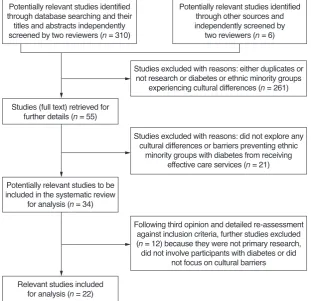
All citations were downloaded into Endnote Web and duplicates removed. All types of cultural and linguistic themes from any study involving any ethnic minority group with any type of diabetes in any setting globally were included. The titles/abstracts were independently scrutinised for eligibility by two reviewers (PZ for 100% of all papers, and JS or HS for 50% of the papers) using the inclusion criteria, and disagreements were resolved through discussion and a third opinion (JS or HS or AMC). Cohen’s kappa was used to test the screening process inter-coder reliability and to calcu-late agreement levels. Cohen (1960) sets a threshold of 0.85 as representing a very high level of agreement, whereas Landis and Koch (1977) stipulate limits of greater than 0.61 as a substantial agreement and greater than 0.81 as a perfect agreement. The Preferred Reporting Items for Systematic Reviews and Meta-Analyses (PRISMA) flow diagram details the results of the screening and selection processes (see Figure 1) (Moheret al, 2009).
Data extraction and quality
assessment of studies
One reviewer (PZ) read and re-read each of the full included publications to understand how cultural barriers hindered the studied populations from accessing effective diabetes care services within the research settings. He extracted data using a revised data extraction form (Zehet al, 2012; see Box 1). This form was piloted by three reviewers on three random included papers by cross-checking independent notes for consistency. The methodological quality of the qualitative studies was assessed using Popay et al
(1998) and Jadad et al (1996) for quantitative and Creswell and Plano Clark (2007) for the mixed method research studies (see online Tables S1S3). Individual quality assessment checklists, in contrast to a universal tool (Pluyeet al, 2009), were deemed more appropri-ate to facilitappropri-ate specific study design assessments due to the heterogeneity of the included studies.
Data analysis
A narrative synthesis of the evidence was used because of the heterogeneity of the included studies. Following coding, thematic analysis was performed for each study and then tabulated across studies. Themes were dis-cussed among all the researchers until agreement was reached. The results were triangulated without
[image:5.595.142.454.444.745.2]Cultural barriers to accessing effective diabetes care services 13
arating the study designs (qualitative, quantitative or mixed-methods) to reduce duplication of themes and to improve validity and generalisability.
Results
Available evidence
The searches identified 316 studies (310 studies from databases and 6 studies from other sources) (see Figure 1) and of 55 potentially relevant studies (all in English), a total of 22 were included (see Table 2). The inter-coder reliability of the screening process was high (kappa score = 0.92).
Characteristics of the included studies
Of the 22 included studies (see Table 2), 18 used qualitative methods (one used mixed-qualitative methods (Greenhalghet al, 1998), 13 used in-depth interviews (Kelleher and Islam, 1994; Duthie-Nurse, 1998; Rhodes and Nocon, 2003; Rhodeset al, 2003; Fagerli et al, 2005; Hjelmet al, 2005; Lawton et al, 2005, 2006a, 2006b, 2007, 2008), two used focus groups (Greenhalghet al, 2011; Brownet al, 2006), and two used case study methods (Narayan and Rea, 1997; Fleminget al, 2008). Two studies used mixed methods (Greenhalghet al, 2006; Lloydet al, 2008) and three used quantitative methods (Naeem, 2003; Sedgwicket al, 2003; Povlsenet al, 2005). Studies were conducted in six different countries, namely the UK (n
= 16), the USA (n= 2), Denmark (n= 1), Sweden (n= 1), Norway (n= 1) and the Netherlands (n= 1). A total of 1897 participants with varied ethnicities, of which 15 were stated and two were unspecified (see Table 3), were recruited from three settings (community, pri-mary care and acute sectors). Nine studies included adults with type 2 diabetes (Greenhalghet al, 2006,
2011; Fleming et al, 2008; Lawton et al, 2005, 2007; Lloydet al, 2008; Kohinoret al, 2011; Duthie-Nurse, 1998; Kelleher and Islam, 1994), two studies involved women with gestational diabetes (Narayan and Rea, 1997; Hjelmet al, 2005), one study included children with type 1 diabetes (Povlsenet al, 2005), four studies included participants with both type 1 and type 2 diabetes (Fagerliet al, 2005; Stoneet al, 2005; Rhodes and Nocon, 2003; Rhodeset al, 2003), and five studies did not specify the diabetes type (Brownet al, 2006; Greenhalghet al, 1998; Naeem, 2003; Sedgwicket al, 2003; Gonzalez, 2008). The characteristics and cul-tural and linguistic needs of these populations were varied. Participants’ ages in all 22 studies ranged from 0 to 80 years. Although 21 of the studies included between 5 and 1100 ethnic minority participants each, one study (Narayan and Rea, 1997) included only one participant with gestational diabetes.
Quality assessment of the included
studies and risk of bias
Of the 22 included studies (see online Tables S1S3), 14 studies were of good quality and met 80100% of the quality criteria (scored A) (Lloyd et al, 2008; Greenhalgh et al, 1998, 2006, 2011; Kohinor et al, 2011; Gonzalez, 2008; Lawtonet al, 2005, 2007; Stone
et al, 2005; Hjelmet al, 2005; Fagerliet al, 2005; Rhodes and Nocon, 2003; Rhodeset al, 2003; Chowdhuryet al, 2000). A further 8 studies were of moderate quality and met 5079% of the quality criteria (scored B) (Fleminget al, 2008; Brownet al, 2006; Duthie-Nurse, 1998; Narayan and Rea, 1997; Kelleher and Islam, 1994; Povlsenet al, 2005; Naeem, 2003; Sedgwicket al, 2003). No study scored below 50%. Ten studies in-cluded a range of different ethnic minority groups; the largest was black Caribbean (n= 522) in a UK study (Sedgwick et al, 2003), and the smallest number of minority participants involved in the studies were Lebanese (n= 1) in a Swedish study which included 27 participants from four ethnicities (Hjelm et al, 2005). Of all the included studies, 73% (n = 16) were published in the UK, and smaller numbers were published in the USA (n= 2), Denmark (n= 1), Sweden (n= 1), Norway (n= 1) and the Netherlands (n= 1).
Cultural barriers to diabetes care and
management
Analysis revealed eight themes related to cultural barriers to diabetes care and management:
. cultural adherence in diet, exercise, and social interactions
. commitment to religious beliefs
Box 1 Data extraction form
Study number Title
First author Year of publication Country of publication Aim of the study Number of participants Ethnicity of participants Cultural theme
Methodological details Content of the cultural issues Summary of findings
P
Zeh,
HK
Sandhu,
AM
Cannaby
et
[image:7.595.80.790.96.517.2]al
Table 2 Summary of included studies
Reference (first author and year)
Country of publication
Ethnic minority group and numbers studied
Comparison and numbers studied
Design Key cultural findings reported
Greenhalghet al
(2011)
UK 82 adult participants: African Caribbean (n= 7), Bangladeshi (n= 23), Tamil (n= 11), Punjabi/ Urdu (n= 34), Somali (n= 7)
Nil Qualitative study based on narrative story-sharing in groups
Strong attachment of social meaning and moral worth of real-life accounts of diabetes self-management
Disapproval of shared facilities such as swimming pools (due to social/cultural beliefs about modesty), especially the Bangladeshi participants Strong adherence to religious beliefs (Muslim, Hindu, Sikh or Christian), with the perception that diabetes self-management is secondary Language barriers and unfamiliarity with the healthcare system (e.g. participants not aware of the availability of interpretation or advocacy services)
Low levels of health literacy among participants (e.g. some participants lacked knowledge and skills in diabetes complications and prevention) Illness storylines affecting all life choices and decision making (e.g. great stigma attached to diagnosis of diabetes, and further increased by going on to insulin, which caused participants to feel awful, frightened, isolated and worthless to family or society)
Strong adherence to fatalism (feeling of
powerlessness against fate) at initial diagnosis of diabetes
Cultural
barriers
to
accessing
effective
diabetes
care
services
[image:8.595.73.784.88.517.2]15
Table 2 Continued
Kohinoret al
(2011)
Netherlands 32 Surinamese adults: African Surinamese (n= 16), Hindustani
Surinamese (n= 16)
Nil Qualitative study using in-depth interviews
Strong adherence to Surinamese traditional food even though participants were aware of the need to change their dietary behaviour in line with healthy dietary guidelines
Strong adherence to cultural maintenance identity of traditional Surinamese cooking and eating practices
Perception by many participants that dietary guidelines were based on Dutch eating habits, which are not in line with Surinamese cooking/ eating practices
Participants’ food choices based on Surinamese beliefs with regard to ‘good’ (e.g. bitter vegetables) or ‘bad’ (e.g. spicy dishes) foods for diabetes, rather than being based on their nutritional qualities Participants’ perception of healthy
recommendations (e.g. eating at fixed times) as interfering with their traditional values, such as hospitality
Gonzalez (2008) USA 12 adult Puerto Ricans (Latinos) with diabetes recruited from six sites in a South Florida city
Nil Narrative inquiry approach using semi-structured interviews in their preferred language: English (n= 3), Spanish (n= 8), both Spanish and English (n= 1)
Participants’ preference for ethnically and culturally concordant healthcare providers (e.g. one participant who received care from an ethnically discordant provider described feeling rushed, and not being given time to express their feelings and issues of concern)
P
Zeh,
HK
Sandhu,
AM
Cannaby
et
[image:9.595.83.777.107.507.2]al
Table 2 Continueds
Reference (first author and year)
Country of publication
Ethnic minority group and numbers studied
Comparison and numbers studied
Design Key cultural findings reported
Greater trust in the culturally concordant Puerto Rican physicians for their diabetes care service delivery
Strong reliance of participants (11 out of 12) on family for support and guidance, such as
accompanying them to the physician’s office to act as translators and/or providing emotional and physical support
Religiosity and spirituality helped the participants to cope with their diabetes, but these two aspects did not influence their decision making
Preference for western medicines to treat their diabetes, even though they were aware of culturally based ethno-medicine. Lawtonet al(2005,
2006a, 2006b, 2008)
UK 32 adult South Asian patients with type 2 diabetes: Pakistanis (n= 23), Indians (n= 9)
Nil Qualitative study using in-depth interviews in participants’ first language (English or Punjabi) by a bilingual researcher
Strong adherence to traditional diets/food (due to attachment of social and symbolic meanings) despite an awareness of their detrimental effects Strong adherence to religious beliefs about food and fasting during Ramadan, and attribution of beliefs to Allah’s will
Perceived cultural beliefs included the notion that health, illness and death are pre-ordained by Allah, and that diabetes ‘weakened and aged’ the body (barrier to physical exercise and stigma associated with diabetes)
Cultural
barriers
to
accessing
effective
diabetes
care
services
[image:10.595.67.807.86.516.2]17
Table 2 Continued
Perception that western medicines have detrimental effects if taken in excess or without traditional foodstuffs, leading to self-adjusting without medical advice
Perception that oral hypoglycaemic agents (oral hypoglycaemic agents)give them the identity of a sick person, reflecting their uncertain attitudes towards western drugs
Strong attachment to commensal acts, and their need to eat ‘strength-giving’ South Asian foods; managing diet by cutting down on rather than replacing perceived unhealthy South Asian foodstuffs Inappropriate and/or conflicting information from health workers leading to non-concordance with dietary, medication and other healthcare advice Lack of culturally sensitive single-sex facilities (e.g. at swimming pools) or same-sex instructors in gyms, as well as lack of culturally sensitive advice from white health workers with traditional dietary needs Prefer receiving hospital rather than primary care reviews, as perceived services for prompt detection and treatment of complications, rather than provision of advice on management Language barriers leading to lack of diabetes knowledge reinforcing women’s vulnerability with regard to the cultural norms of staying indoors Low levels of health literacy among participants Gratitude for the availability of free diabetes services in the UK
P
Zeh,
HK
Sandhu,
AM
Cannaby
et
[image:11.595.91.786.96.528.2]al
Table 2 Continueds
Reference (first author and year)
Country of publication
Ethnic minority group and numbers studied
Comparison and numbers studied
Design Key cultural findings reported
Lawtonet al(2007) UK 32 adult South Asian patients with type 2 diabetes (Pakistani and Indian)
32 adult white patients
Qualitative in-depth interviews
South Asian participants consider the British weather, unfamiliar lifestyles, UK values or past offences as responsible for their diabetes onset in particular, whereas white British participants perceive their own lifestyle (e.g. eating the wrong food, sedentary lifestyle) as responsible for their diabetes South Asian participants consider life
circumstances such as poverty, limited access to healthcare services and family-related stress to be responsible for their diabetes onset generally, whereas white participants associate their own lifestyle choices and personal lifestyle failings (e.g. non-adherence to healthy lifestyle, and lack of self-discipline in diet and physical exercise) with their diabetes onset, portraying themselves, rather than their circumstances, as being to blame Some South Asian participants attribute their diabetes onset to the will of Allah, who is responsible for dictating their health and destiny Greenhalghet al
(2006)
UK 98 British Bangladeshi adults
Nil Multi-phase study involving narrative interview, vignette construction, questionnaire development, and questionnaire validation in relation to two scales (well-being and cultural adherence
Strict adherence to Bangladeshi culture (e.g. conserving their traditional dishes)
Low literacy level among participants
Cultural
barriers
to
accessing
effective
diabetes
care
services
[image:12.595.81.784.95.511.2]19
Table 2 Continued
Rhodes and Nocon (2003)
UK 12 Bangladeshi adults Nil Qualitative in-depth interviews in English (n= 1) and Bengali (n= 11)
Very limited interpretation services resulting in communication difficulties between health workers and patients
Use of informal interpreters is a necessity due to limited availability of professional interpreters, resulting in both positive and negative effects Preference for same-sex consultations, especially by females, irrespective of language barrier Poor professional attitudes and methods of working, especially doctors, whose manner was described as ‘abrupt and peremptory’, resulting in unsatisfactory consultations
Chowdhuryet al
(2000)
UK 40 first-generation immigrant Bangladeshi adults
Nil Diverse qualitative methods involving interviews and focus group discussions conducted in their language (Sylheti)
Diverse range of individual food choices partly based on affordability and availability as well as cultural influences
Strong adherence to religious restrictions on particular food items (e.g. Islamic prohibition of pork, wine or spirits)
Food choices determined by two interrelated and intersecting binary classification systems: ‘strong’/ ‘weak’ and ‘digestible’/‘indigestible’
Conservation of cultural identity by adhering strictly to traditional diets/food (with social and symbolic meanings) despite an awareness of their detrimental effects
Duthie-Nurse (1998)
UK 20 first-generation adult Hindu women of South Asian origin
Nil Qualitative face-to-face questionnaire-based interview by researcher in the presence of a Gujarati speaker
Strong adherence to traditional diets/food (with social and symbolic meanings) despite an awareness of their detrimental effects
P
Zeh,
HK
Sandhu,
AM
Cannaby
et
[image:13.595.86.794.91.515.2]al
Table 2 Continueds
Reference (first author and year)
Country of publication
Ethnic minority group and numbers studied
Comparison and numbers studied
Design Key cultural findings reported
Language barriers reinforced women’s vulnerability to the cultural norms of staying indoors, coupled with fear of racial harassment Perceived belief of being ‘cured’ when they go to India resulting in the association of illness with living in the UK, rather than with their diet and physical inactivity
Narayan and Rea (1997)
USA 1 Indian woman Nil Case study of an Indian woman at 34 weeks’ gestation, diagnosed with gestational diabetes
An experienced nurse failed to meet client’s needs due to lack of knowledge of South Asian cultural beliefs and practices
Nurse advice and dietary prescriptions contrary to Indian Hindu tradition of not eating beef
perceived as unacceptable and taboo
Participant’s family not aware of nurse culture; feeling of humiliation and embarrassment as not involved in the patient’s care planning
Greenhalghet al
(1998)
UK 40 first-generation immigrant Bangladeshi adults with diabetes: male (n= 23), female (n= 17)
10 non-South Asian: white (n= 8), African Caribbean (n= 2)
Qualitative study using narratives, semi-structured interviews, focus groups, structured vignette and pile-sorting exercises conducted in Syheti and English
Lay sources of information within Bangladeshi culture cited as key influence on behaviours; oral sources of information highly valued
Strong adherence to religious views (Muslims); explanation given in terms of ‘God’s will’, with the perception that it is the duty of the ill person to adhere to dietary choices
Adherence to health beliefs (e.g. perception that diabetes is caused by western lifestyle, as it may be cured if they return to Bangladesh)
Cultural
barriers
to
accessing
effective
diabetes
care
services
[image:14.595.77.787.88.507.2]21
Table 2 Continued
Food classifications not based on western notions of nutritional content, but rather on perceived strength of their nourishing properties
Bangladeshi participants displayed more negative attitudes towards physical exercise, and linked exercise to worsening of their illness; women were afraid to leave their homes due to fear of physical harassment
Perception by Bangladeshi participants that doctors know all about diabetes, but the other participants were openly assertive about and critical of health workers
Kelleher and Islam (1994)
UK 20 Bangladeshi adults: male (n= 12), female (n
= 8)
Nil Qualitative study using in-depth interview, conducted in Sylheti dialect (n= 18) or English (n= 2)
Despite receiving dietary advice, still strong adherence to religion and traditional foods; fasting during Ramadan and perception that western diets have a weakening effect Religion seen as a major influence for understanding illness and managing the treatment; explanation of the condition given in terms of ‘God’s will’ (God is in front, the doctor is behind)
Perception that even with diabetes, God’s orders must be adhered to, and that disobeying them could lead to something worse
Fleminget al(2008) UK 5 English-speaking Gujarati Muslim men
Nil Case-study approach using interviews and participant observation methods in English
P
Zeh,
HK
Sandhu,
AM
Cannaby
et
[image:15.595.79.799.96.514.2]al
Table 2 Continueds
Reference (first author and year)
Country of publication
Ethnic minority group and numbers studied
Comparison and numbers studied
Design Key cultural findings reported
Lloydet al(2008) UK 31 participants from two ethnic minority groups, both male and female, whose main spoken language is Sylheti (n= 16) and Mirpuri (n= 15), conducted by two researchers fluent in English and either Sylheti or Mirpuri
Nil Five focus groups of 5 sessions to consider the content and method of delivery; two questionnaires measuring diabetes knowledge and confidence in diabetes self-care
Culturally competent content successful for both questionnaires
Particular terminology, such as HbA1c
(glycosylated haemoglobin) and carbohydrate, not universally understood, or has a single meaning/ interpretation
Mirpuri participants’ groups (Pakistanis) preferred assisted or partially assisted completion in their spoken language, whereas Sylheti (Bangladeshi) ) groups preferred independent audio delivery in their spoken language
Low literacy level, with more than half of Sylheti men and women illiterate (59% of men and 62% of women)
Brownet al(2006) UK 39 adults with diabetes from multicultural ethnic minority groups
Nil Qualitative study using a
participatory approach with consumer groups (6 focus groups)
Lack of culturally appropriate diabetes information for African Caribbeans and South Asians, especially in their own language
Lack of information on culturally specific foods, especially in restaurants and cafes
African Caribbeans and South Asians valued one-to-one support from their health workers Ethnic minority groups valued culturally and linguistically appropriate services; there was a need for bilingual health workers for direct communication
Cultural
barriers
to
accessing
effective
diabetes
care
services
[image:16.595.70.790.82.532.2]23
Table 2 Continued
Stoneet al(2005) UK 15 South Asian adults 5 white adults Qualitative study using semi-structured in-depth interviews in their preferred language: English (n= 7), Gujarati (n= 12) or Punjabi (n= 1)
Most South Asian patients expressed an attitude of resignation at diagnosis (family history or an expressed view that their diabetes is God’s will), whereas the white participants were very shocked and in some cases in denial
Strong adherence to traditional diets by South Asians, coupled with a lack of specific dietary information compared with their white counterparts South Asian patients expressed more health-related anxiety than white patients, and were supported more by families and religious leaders Cultural barriers (e.g. preference for gender-specific education sessions); location and health problems are restrictive factors
Communication problems, including conflicting messages expressed by both groups as health workers use technical terminology not understood by patients, with South Asians experiencing more language barriers Povlsenet al(2005) Denmark 58 child participants from
ethnic minority groups
919 Danish young participants
Survey question-naire (about gender, age, diabetes mellitus duration, HbA1c, incidents of severe hypoglycaemia and ketoacidosis) from a national register to all 20 Danish paediatric diabetes centres and to 38 ethnic minority group families, completed by professional interpreters
HbA1C significantly higher in ethnic minority groups (mean value 9.05 +/– 1.4%) than in the Danish patients (mean 8.62 +/– 1.3%;P= 0.018) No significant difference in HbA1C among the different ethnic minority groups, or in the prevalence of severe hypoglycaemia or ketoacidosis
Low literacy rate with limited educational backgrounds
P
Zeh,
HK
Sandhu,
AM
Cannaby
et
[image:17.595.86.780.101.517.2]al
Table 2 Continueds
Reference (first author and year)
Country of publication
Ethnic minority group and numbers studied
Comparison and numbers studied
Design Key cultural findings reported
Hjelmet al(2005) Sweden 14 Middle Eastern women: Iraqi (n= 10), Iranian (n= 3) and Lebanese (n= 1)
13 Swedish-born women
Qualitative study using in-depth semi-structured interviews
conducted at weeks 34–38 of gestation in their first language using Arabic-speaking interpreters when required
Lack of knowledge about gestational diabetes by Middle East women; healthcare professional dependent, not concerned to discuss their own role in their healthcare
Swedish women had a good knowledge of gestational diabetes; searched for help and advice from health workers; expressed beliefs about health and illness in medical terms, whereas others were reluctant to seek medical advice as influences are based on perceived social and supernatural factors
Swedish women reacted more with negative feelings and worries when informed of gestational diabetes diagnosis, unlike the other who had a family history of diabetes and attributed it mostly to God’s will
Strict adherence to traditional and religious celebrations and feastings by Middle Eastern women, and eating of traditional foods Low educational and literacy levels of Middle Eastern women, who were all housewives, unlike the others with high-level education/jobs. Fagerliet al(2005) Norway 15 Pakistani adults Nil Qualitative
in-depth interviews
Communication problems due to language barrier and use of concepts and terminology not
understood by participants
Lack of interpreters in consultations
Cultural
barriers
to
accessing
effective
diabetes
care
services
[image:18.595.78.781.72.544.2]25
Table 2 Continued
Sedgwicket al
(2003)
UK 1100 participants: black Caribbean (n= 522), black African (n= 163) and other ethnic minority groups (n= 415)
799 white participants
Questionnaire survey
No evidence that black African or black Caribbean people received less access to diabetes healthcare than their white counterparts in relation to their need; perhaps low quality due to language and cultural differences
Need for interpretation support Rhodeset al(2003) UK 23 participants from
ethnic minority groups: Bangladeshi (n= 12), Pakistani (n= 14), Indian (n= 4), Eastern European (n= 2) and West Indian (n= 1)
22 white British participants
Qualitative in-depth interviews
Participants’ experiences were varied, and their problems were not solely attributed to cultural insensitivity caused by their providers’ ‘like it or lump it’ approach
Bangladeshi participants were dissatisfied with primary care due to lack of confidence in the doctors’ competence, inadequate appointment systems, inappropriate information, lost files, failure of health workers to follow up missed appointments, and difficulty in seeing doctor of choice
Bangladeshi participants perceived negative attitudes of doctors in primary care
Lack of professional language support, resulting in limited choice which led to the use of informal support, not fully favoured
Low literacy level even in their own Bengali language Naeem (2003) UK 106 Muslim Kashmiri
men
Nil Survey using face-to-face question-naire completed by the researcher of ethnic background who understood their culture and spoke the language as well
Strong adherence to religious beliefs and practices, resulting in failure of participants to control and manage their condition; overall perceived attitude that one should enjoy life and ‘leave the rest to Allah’ Strong adherence to cultural practices; influence of cultural values dominated their behaviour (e.g. eating traditional food)
Participants were in denial about being overweight; belief influenced by cultural norms in which overweight figures tend to convey prosperity and well-being in the community
P Zeh, HK Sandhu, AM Cannabyet al 26
. linguistic differences between patients and health workers
. low health literacy levels
. different beliefs about health and illness . belief in expert and professional support
. low accessibility of culturally appropriate services/ information
. low concordance with western professional advice.
Cultural adherence with regard to
diet, exercise and social interactions
A total of 13 studies reported strict adherence to cultural norms (Kelleher and Islam, 1994; Narayan and Rea, 1997; Greenhalghet al, 1998, 2006, 2011; Chowdhury et al, 2000; Naeem, 2003; Hjelm et al, 2005; Lawton et al, 2005, 2006b, 2008; Stone et al, 2005; Fleminget al, 2008; Gonzalez, 2008; Kohinor
et al, 2011). Participants in ten of these studies were of South Asian origin (Narayan and Rea, 1997; Kelleher and Islam, 1994; Lawton et al, 2005, 2006b, 2008; Stoneet al, 2005; Chowdhuryet al, 2000; Greenhalgh
et al, 1998, 2006, 2011; Fleminget al, 2008; Naeem,
2003). They had strong traditions with regard to food, and their traditional dishes generally had a very high content of fat or deep-fried food despite awareness of the detrimental effects of these on health and well-being. Food classifications were based on their percep-tions of the strength of the food’s nourishing powers, rather than on western notions of nutritional content. Participants reported managing their diet by ‘cutting down on’ rather than replacing perceived unhealthy foodstuffs (Lawton et al, 2008). Food choices were determined by two interrelated and intersecting bi-nary classifications, ‘strong’/‘weak’ and ‘digestible’/ ’indigestible’, which have social and symbolic mean-ings (Chowdhuryet al, 2000). Some participants per-ceived western medicines as having detrimental effects if taken in excess or without eating traditional food-stuffs; this could lead to inappropriate self-adjustment of medication without medical consultation (Lawton
et al, 2005). Surinamese participants also reported strong traditions related to food despite an awareness of the need to change their behaviour and adapt to healthy dietary guidelines (Kohinoret al, 2011).
Some participants of South Asian origin displayed more negative attitudes towards exercising, which they perceived as worsening their condition (Greenhalgh
et al, 1998; Lawton et al, 2006b). Women reported more barriers to physical exercise, including fear of physical harassment, gender norms, social rules and cultural expectations that women should be indoors. It was stated that diabetes ‘weakened and aged’ the body, and this was reported as an additional barrier to undertaking physical exercise. Social interactions, and consumption of traditional dishes at social and cul-tural events such as weddings and religious festivals were regarded as very important (Chowdhury et al, 2000; Duthie-Nurse, 1998; Hjelmet al, 2005; Lawton
et al, 2008). There was a strong attachment to social meanings and moral worth in real-life accounts of diabetes self-management (Greenhalghet al, 2011).
Commitment to religious beliefs
Religious beliefs (Muslim, Christian, Hindu and Sikh) and practices were reported in 12 studies (Greenhalgh
et al, 1998, 2011; Kelleher and Islam, 1994; Duthie-Nurse, 1998; Hjelm et al, 2005; Lawton et al, 2005, 2006a, 2007, 2008; Naeem, 2003; Kohinoret al, 2011; Stoneet al, 2005; Gonzalez, 2008; Chowdhuryet al, 2000). Eleven of these studies reported that partici-pants, especially Muslims, demonstrated a strict com-mitment to religious beliefs about food and fasting during Ramadan, and diabetes self-management was a secondary consideration. All but one study (Lawton
[image:19.595.75.285.116.469.2]et al, 2007) identified religion and spirituality as major influences on coping with, managing and/or under-standing diabetes. Religion was seen to be a source of
Table 3 Ethnicity of ethnic minority
groups
Bangladeshi 222
Black African 163
Black Caribbean 522
Eastern European 2
Gujarati Muslim 5
Hindu 20
Indian 38
Iranian 3
Iraqi 10
Lebanese 1
Multicultural ethnic minority group
543
Muslim Kashmiri 106
Pakistani 121
Puerto Rican 12
South Asian 15
Surinamese 32
Mixed ethnicity participant 82
Cultural barriers to accessing effective diabetes care services 27
support in coping with anxiety in one study (Stone
et al, 2005).
Many studies found that most Muslim and some Hindus and Sikh participants reported an external health locus of control. For example, Muslim partici-pants reported that having diabetes was the will of Allah, and thus beyond their control, and therefore they accepted their fate. They generally attributed their beliefs and other behaviours to Allah’s will, and held the view that adhering to dietary choices was the duty of an ill person. Although most of the participants were generally concerned about the impact of poor diabetes control, some Muslim participants held an attitude of ‘enjoying life and leaving the rest to Allah’, which resulted in poor diabetes control, especially during fasting periods (Naeem, 2003). In studies involving both ethnic minority and white European adults (Lawtonet al, 2007; Hjelmet al, 2005; Stone
et al, 2005), the ethnic minority participants, most of whom were Muslims, showed resignation at the diag-nosis of diabetes, citing family history or a view that it was Allah’s will, whereas their white counterparts reacted with shock, denial, and concern about the perceived consequences of diabetes complications.
Linguistic differences between
patients and health workers
In total, 14 studies attributed ineffective diabetes man-agement to communication difficulties and lack of linguistically appropriate healthcare services (Greenhalgh
et al, 1998, 2006, 2011; Duthie-Nurse, 1998; Rhodes and Nocon, 2003; Rhodeset al, 2003; Sedgwicket al, 2003; Fagerliet al, 2005; Hjelmet al, 2005; Stoneet al, 2005; Lawtonet al, 2005, 2006a, 2006b; Brownet al, 2006; Povlsen et al, 2005; Gonzalez, 2008). Five of these studies identified lack of knowledge about dia-betes in ethnic minority groups arising from their inability to communicate in English (Greenhalghet al, 1998, 2011; Hjelm et al, 2005; Lawton et al, 2005; Gonzalez, 2008). In three studies, participants pre-ferred linguistically competent healthcare providers to interpreters because they wanted communication to be direct, and interpreters were perceived as a source of anxiety and frustration (Gonzalez, 2008; Brown
et al, 2006; Lawton et al, 2006a). Two UK studies (Duthie-Nurse, 1998; Lawtonet al, 2006b) reported that linguistic barriers between participants and the public limited participants’ knowledge of their neigh-bourhood and reinforced their vulnerability and social isolation, which led to some participants, especially women, staying indoors.
Seven studies identified a need for interpreter support (Greenhalgh et al, 1998, 2011; Rhodes and Nocon, 2003; Rhodeset al, 2003; Sedgwicket al, 2003; Fagerli et al, 2005; Povlsen et al, 2005), with four
reporting a preference for professional interpreters rather than friends, relatives or receptionists (Rhodes and Nocon, 2003; Rhodeset al, 2003; Sedgwicket al, 2003; Fagerliet al, 2005). Reliance on family members or friends to interpret was inconvenient, as it disrupted people’s routines and responsibilities. These partici-pants also reported being uncomfortable discussing some aspects of their illness in front of their relatives or friends, and preferred to ‘die in silence’ (Rhodes and Nocon, 2003; Fagerliet al, 2005). Some partici-pants were unaware of the availability of local inter-pretation or advocacy services (Greenhalgh et al, 2011). Participants cited the use of medical jargon or technical terminology by health workers as a com-munication barrier (Fagerli et al, 2005; Stone et al, 2005; Lloydet al, 2008).
Low health literacy levels
Eight studies reported low health literacy levels (low reading and numerical ability, resulting in reduced access to health information), which were perceived by the specific populations as hindering them from receiving effective diabetes care services (Narayan and Rea, 1997; Greenhalghet al, 1998, 2011; Rhodeset al, 2003; Hjelm et al, 2005; Lawton et al, 2005, 2008; Povlsenet al, 2005; Gonzalez, 2008; Lloydet al, 2008). Some participants’ lack of knowledge about diabetes was seen as a barrier to effective glycaemic control and/or diabetes self-management. For example, some participants only took their prescribed oral hypo-glycaemic agents (OHAs) when their blood glucose levels were very high, over 18 mmol/l, or skipped meals in order to avoid taking them (Lawton et al, 2005).
In studies involving majority and minority popu-lations, lower levels of educational attainment were reported within the minority groups, resulting in a lower level of understanding of diabetes care (Rhodes
P Zeh, HK Sandhu, AM Cannabyet al 28
Beliefs about health and illness
In total, 11 studies reported various beliefs about health and illness based on religious, individual and societal factors, as well as compromising healthcare service provision and/or concordance with profes-sional advice or treatment (Greenhalgh et al, 1998, 2011; Kelleher and Islam, 1994; Duthie-Nurse, 1998; Hjelm et al, 2005; Lawton et al, 2005, 2006b, 2007; Brown et al, 2006; Naeem, 2003; Stone et al, 2005; Gonzalez, 2008). Muslim, Hindu and Sikh partici-pants reported that these factors contributed to the way they perceived health and illness. Two sub-themes emerged in relation to perceived beliefs about health and illness, namely causation and the integration of curative and diabetes self-management measures into everyday life.
Causation
Nine studies discussed perceived beliefs relating to the cause of diabetes (Lawtonet al, 2006b, 2007; Greenhalgh
et al, 1998, 2011; Kelleher and Islam, 1994; Duthie-Nurse, 1998; Hjelmet al, 2005; Naeem, 2003; Stone
et al, 2005). These included heredity, cold weather, unfamiliar western lifestyles, stress, Allah’s will and supernatural factors. It was believed that heredity meant that diabetes was unavoidable (Naeem, 2003; Stoneet al, 2005). Attributing diabetes onset to ‘Allah’s will and beyond their control’ was common among Muslim participants in six studies (Lawton et al, 2006b, 2007; Kelleher and Islam, 1994; Hjelmet al, 2005; Naeem, 2003; Stoneet al, 2005). Health, destiny, illness and death were perceived to be pre-ordained by Allah. Five studies discussed the power of Allah beyond the individual patient’s control, often leading to an attitude of resignation at diagnosis (Lawtonet al, 2007; Hjelm et al, 2005; Greenhalgh et al, 2011; Naeem, 2003; Stoneet al, 2005). In one study (Hjelm
et al, 2005), involving ethnic minority and non-ethnic minority Swedish-born female participants, the non-ethnic minority Swedish-born participants attributed the cause of gestational diabetes to scientific explana-tory concepts, feared developing type 2 diabetes, and sought medical help and advice from healthcare pro-fessionals. Their beliefs about health and illness were explained in medical terms. Ethnic minority partici-pants attributed the onset of diabetes to social and supernatural factors which made them reluctant to seek medical advice. In another study, South Asian participants attributed the onset of diabetes to UK lifestyles and/or values, or as a form of punishment for their past religious sins. Other life circumstances, such as poverty, limited access to healthcare services, and family-related stress, were also regarded as causes of diabetes. In contrast, white British participants con-sidered their own lifestyle choices and personal
fail-ings, thus adopting an internal locus of control to a greater extent (Lawtonet al, 2007).
Five studies reported diet and/or lifestyle as factors that contributed to developing diabetes (Greenhalgh
et al, 1998; Naeem, 2003; Hjelmet al, 2005; Brownet al, 2006; Lawtonet al, 2006b), with one aligning ‘over-weight figures’ with the cultural norms of projecting prosperity and well-being in the community rather than a health risk (Naeem, 2003). In two of these studies, participants partially associated physical ex-ercise with diabetes, linking such exex-ercise to worsen-ing of their condition (Greenhalghet al, 1998; Lawton
et al, 2006b). South Asian participants linked cold weather rather than diet and/or inactivity to the onset of their diabetes, and believed that returning to South Asia would ‘cure’ them (Duthie-Nurse, 1998; Greenhalgh
et al, 1998).
Integrating curative and diabetes
self-management measures into everyday life
This sub-theme examines the perceived healing para-digms and beliefs about diabetes self-management. In total, 11 studies reported at least one aspect of diabetes self-management, which demonstrated participants’ perceptions of diabetes and their daily coping mech-anisms. In 10 studies, participants acknowledged that diabetes was a permanent condition and could be con-trolled, to an extent, through natural or supernatural and/or medicinal means. For example, in the study by Lawton et al(2005), participants reported that if western medicines were taken in excess, they could cause side effects, worsening their condition. In add-ition, they believed that traditional diets, such as chapatti and curry, had strengthening properties that counterbalanced these side effects of medication. In another study (Lawton et al, 2008), participants acknowledged the detrimental effects on their blood glucose control of some South Asian foodstuffs, such as ‘roti’, used by most participants to describe com-plete meals consisting of curries, chapatti and/or rice with side dishes, although its literal meaning is ‘chapatti.’ However, most of them, especially among the first generation, did not effect dietary changes.Cultural barriers to accessing effective diabetes care services 29
Belief in expert and professional
support
In seven studies, some participants expressed reduced confidence in health workers, and questioned their competence and the support that they offered (Narayan and Rea, 1997; Greenhalghet al, 1998; Lawtonet al, 2005, 2006a; Rhodes and Nocon, 2003; Rhodeset al, 2003; Brownet al, 2006; Gonzalez, 2008). Participants in three of these studies had confidence in UK doctors and perceived them to be competent and trustworthy. In contrast, doctors from the Indian subcontinent were perceived as untrustworthy, lacking training, and as sometimes giving preferential treatment to the wealthy and to relatives and friends (Lawtonet al, 2005, 2006a; Rhodes and Nocon, 2003; Rhodeset al, 2003). One of these studies reported that medicines available in the UK were superior but inherently dangerous compared with those available from the Indian subcontinent (Lawton et al, 2005). Another perceived the purpose of healthcare services to be the prompt detection and treatment of complications, rather than the provision of advice about managing their condition (Lawtonet al, 2006a).
In one study (Narayan and Rea, 1997), family members of a Hindu patient with gestational diabetes felt humiliated and embarrassed following their ex-clusion from her care planning. They saw this as contrary to their customs of involving family members and valuing their contribution to care. In two studies involving African-Caribbeans, South Asians (Brownet al, 2006) and Puerto Ricans (Gonzalez, 2008), partici-pants valued one-to-one linguistically and culturally concordant support from their health workers.
Low accessibility of culturally
appropriate services and information
Nine studies reported variations in participants’ ex-periences, with negative issues relating to accessing culturally appropriate services or information (Narayan and Rea, 1997; Greenhalghet al, 1998, 2011; Rhodes and Nocon, 2003; Rhodeset al, 2003; Stoneet al, 2005; Brownet al, 2006; Lawtonet al, 2006a, 2006b, 2008; Kohinoret al, 2011). These included gender issues, lack of culturally sensitive facilities during clinical con-sultations, and preferences for same-sex health workers irrespective of language barriers (Rhodes and Nocon, 2003). Some women avoided mixed-sex leisure facili-ties, such as swimming pools, and male gym instruc-tors (Rhodes and Nocon, 2003; Lawtonet al, 2006b), due to social and cultural beliefs about modesty (Greenhalghet al, 2011). Six studies reported inap-propriate and/or lack of culturally apinap-propriate infor-mation about diet and foods (Greenhalghet al, 1998; Narayan and Rea, 1997; Stoneet al, 2005; Brownet al, 2006; Lawtonet al, 2008; Kohinoret al, 2011).
Par-ticipants in one study expressed a particular prefer-ence for gender-specific diabetes education sessions (Stoneet al, 2005). Participants in two studies reported having received inappropriate information from health-care workers that led to non-concordance with dietary and other healthcare advice (Greenhalghet al, 1998; Rhodes et al, 2003). For instance, some Bangladeshi participants reported receiving leaflets in Bengali despite having very limited literacy skills (Rhodes
et al, 2003). A further two studies reported the receiving of culturally insensitive advice (Narayan and Rea, 1997; Lawtonet al, 2006a). For example, a Hindu patient was prescribed beef, perceived by Hindus as taboo, which contributed to the patient’s non-concordance with the care package recommended by the nurse (Narayan and Rea, 1997).
Low concordance with western
professional advice
In total, 11 studies reported that participants did not follow professional advice due to lack of cultural knowledge, religious and language differences, or con-textual factors, which were sometimes misinterpreted by health workers (Kelleher and Islam, 1994; Narayan and Rea, 1997; Duthie-Nurse, 1998; Chowdhuryet al, 2000; Naeem, 2003; Hjelmet al, 2005; Lawtonet al, 2005, 2008; Stone et al, 2005; Fleming et al, 2008; Greenhalghet al, 2011; Kohinoret al, 2011). Partici-pants expressed a desire for dietary balance, but reported the importance of the traditional norms and beliefs about their foods, which some claimed made them ‘weak and not strong enough’ (Kelleher and Islam, 1994; Duthie-Nurse, 1998; Chowdhury
et al, 2000; Lawtonet al, 2008; Fleminget al, 2008). All of these factors contributed to their non-adherence to professional recommendations. Two studies reported conflicting professional dietary advice and prescrip-tions that were contrary to participants’ tradiprescrip-tions (Narayan and Rea, 1997; Kohinoret al, 2011). Two studies reported healthcare professionals’ lack of cul-tural awareness resulting in a mismatch between prescribed interventions and the patient’s beliefs and values (Narayan and Rea, 1997).
P Zeh, HK Sandhu, AM Cannabyet al 30
Discussion
The themes identified from this review of different ethnic, cultural and religious groups are participants’ strong adherence to culture, religious beliefs, linguis-tic differences between them and their health workers, low health literacy levels, different beliefs about health and illness, belief in expert and professional support, low accessibility of culturally appropriate services and information, and low concordance with western pro-fessional advice. Although we do not claim that our findings are universal, our review has collated and demonstrated significant cultural and linguistic bar-riers that are perceived by members of ethnic minority groups as compromising diabetes care. There ap-peared to be gaps in identifying and making reason-able adjustments to meet specific needs which could enhance the engagement of members of ethnic min-ority groups, increase their personal satisfaction with diabetes service provision, and ultimately improve their health-related outcomes. Only three studies (Lawton et al, 2006a; Sedgwick et al, 2003; Brown et al, 2006) reported specific attempts to seek their opinions of services or their cultural needs (Goody and Drago, 2009; Brown et al, 2002; Hill, 2006). More work is needed to improve cultural competence among health workers to enable them to more effectively empower patients to self-manage their diabetes. Health policies should therefore be directed towards improving cul-tural competence training to facilitate partnership working between patients and their healthcare pro-viders. This has been shown to improve professional skills, cultural knowledge and attitudes among health-care professionals, enabling them to work effectively in cross-cultural situations, thereby yielding positive health-related outcomes for their ethnic minority patients (Majumdaret al, 2004; Khannaet al, 2009).
For people with diabetes, knowledge of diabetes can significantly predict their perceptions of the quality of services they receive, as well as their own illness perceptions (Baradaran and Knill Jones, 2004). The inability of members of ethnic minority groups to speak English fluently and low levels of health literacy in their own mother tongue are seen, in the UK context, as factors contributing to increasing social distance and reducing communication, which often threaten trust between patients and their health workers (Audit Commission, 2000; Greenhalgh et al, 2011). Appropriate linguistically competent tools have been proposed to provide high-quality diabetes care ser-vices to ethnic minority groups (Roy and Lloyd, 2008). As culture consists of shared but dynamic patterns of behaviours and interactions that remain ongoing among different ethnic groups (Naeem, 2003), cau-tion should be exercised when interpreting these results, due to the heterogeneity of the studies with
regard to factors such as place of publication, recruit-ment setting, study design, studied population, and the cultural barriers explored. In total, 73% (n= 16) of the included studies were published in the UK, which has a significant number of ethnic minority people with diabetes (Zehet al, 2012), and merits substantial investment in researching the cultural differences faced by these populations (Brownet al, 2002, 2006). There-fore this review may be more applicable to the UK primary care situation.
Health workers need to acknowledge cultural similarities and differences and build trust that might encourage concordance (Goody and Drago, 2009). Dietary advice and information should not be pre-scriptive, but rather it should be negotiated, afford-able, culturally sensitive, and take account of the importance of food in the individual patient’s ethnic and social context, as well as the importance of their religious, cultural, and health and illness beliefs (Brown, 1997; Hill, 2006). Diabetes health workers need to possess culturally competent knowledge of different cultures and ethnic foods, in order to empower patients with diabetes to adopt healthy lifestyles rather than to abandon familiar foods, as the evidence from the studies included in this review demonstrates limited cultural competence in these areas.
Strengths and limitations of the
review
The search criteria included all ethnic minority groups with all types of diabetes and all primary qualitative and quantitative studies, excluding randomised con-trolled trials and quasi-experimental studies (which have been reported elsewhere), that have explored cultural differences globally. We assessed the quality of studies and included any research design to uncover any relevant studies that have explored cultural dif-ferences in diabetes. Triangulation of the results from the three included designs (quantitative, qualitative and mixed-methods) was a strength of the review, as they complemented each other, thereby improving the validity and generalisability of the findings. Our de-sign was rigorous compared with previous systematic reviews that limited their search to specific ethnic minority groups, certain study types or specific types of diabetes, and which did not formally assess the methodological quality of the included studies (Brown
et al, 2002; Fleming and Gillibrand, 2009).
Cultural barriers to accessing effective diabetes care services 31
randomised controlled trials and quasi-experimental studies from this review may have resulted in the omission of some important information about eth-nic minority groups, such as exploration of different aspects of cultural barriers and their effectiveness. However, our aim was to collate and highlight these barriers in order to target appropriate interventions for ethnic minority groups with diabetes. Zeh et al
(2012) identified the key elements for such inter-ventions. Further reviews, including both randomised controlled trials and observational studies, may pro-vide more insight into this area. Some cultural barriers may be specific to certain ethnic minority groups. Grouping all ethnic minority groups together may be contentious, as they may differ in terms of health patterns and the effects of interventions, making it difficult to provide generic recommendations (Davidson
et al, 2013). In fact the definitions of ethnic minority groups, culture and cultural barriers have been re-stricted in this review, as they have diverse interpret-ations. The fact that not all of the studies included participants’ health literacy levels may pose training and comprehension problems, and it is difficult to ascertain whether specific cultural barriers pertained to specific ethnic groups and/or age groups, which may have different educational needs. In addition, some vital information about ethnic minority groups may have been missed by excluding other chronic conditions, such as cancer.
Conclusions, implications for
practice and recommendations
for further research
This review has examined cultural barriers that can affect the quality of life of ethnic minority groups with diabetes and their glycaemic control, including com-munication problems, religion, health literacy levels and beliefs about health and illness. Understanding these issues may enable health workers to deliver culturally appropriate and individualised care, and thus reduce health inequalities in diabetes service provision. The review has examined some of these cultural issues and offers suggestions to guide the planning and commissioning of culturally appropri-ate diabetes services for ethnic minority populations. Sustained and targeted actions by health commis-sioners and partnership with all stakeholders in diabetes management (local authorities, community organis-ations, diabetes leads in primary and secondary care, academic institutions and service users) are essential for improving diabetes-related outcomes (see Box 2).
ACKNOWLEDGEMENTS
We wish to thank all those who, either in person or online, helped us to undertake this review, especially Samantha Johnson and Jackie Cox, who reviewed the search strategy, Professor Trisha Greenhalgh and
Box 2 Recommendations
. Use the eight themes identified in this review to inform healthcare professional training curricula to develop and deliver culturally competent diabetes services.
. Provide culturally competent training to diabetes health educators who will support the development and implementation of specific community-based interventions, designed to help newly diagnosed patients come to terms with their condition and to facilitate their navigation through healthcare systems (Greenhalghet al, 2011).
. Target recruitment and training of multilingual healthcare professionals to improve their knowledge of diabetes and health literacy.
. Minimise the use of medical jargon and technical terminology, and ensure continuous assessment of patients’ understanding during clinical engagements.
. Develop psychological and behavioural interventions to enable individuals to take responsibility for their diabetes self-management.
. Acknowledge the influence of dominant and minority cultures on concordance, and seek to influence those aspects that are perceived to be changeable by the patient through patient-centred education. . Undertake further research to investigate the effectiveness of community-led interpersonal health
information sources and/or centres, including written and audio-visual materials associated with ethnic minority populations’ cultural beliefs.
. Conduct randomised controlled trials relating to the themes identified from this review.