University of Warwick institutional repository: http://go.warwick.ac.uk/wrap
A Thesis Submitted for the Degree of PhD at the University of Warwick
http://go.warwick.ac.uk/wrap/57619
This thesis is made available online and is protected by original copyright.
Please scroll down to view the document itself.
HRM in Practice:
An Application of Actor-Network Theory to
Human Resource Management in Retail
by
Juan Pablo López-Cotarelo Pérez
A thesis submitted in partial fulfilment of the requirements
for the degree of Doctor of Philosophy in Management
University of Warwick – Warwick Business School
TABLE OF CONTENTS
List of tables ... 7
List of figures ... 9
List of vignettes ... 9
List of abbreviations ... 10
Acknowledgements ... 11
Abstract ... 13
Chapter 1: Introduction ... 14
1.1 Locating the thesis ... 14
1.2 Towards a practice-based approach to human resource management ... 15
1.3 Research objectives ... 16
1.4 Methods ... 17
1.4.1 Research setting ... 18
1.4.2 Data collection ... 19
1.4.3 Writing up ... 20
1.5 Thesis outline ... 20
Chapter 2: Review of prior research... 24
2.1 Introduction ... 24
2.2 The strategic human resource management literature ... 25
2.3 Assessing the SHRM literature... 30
2.4 The top-down view of HRM ... 33
2.4.1 Implementation ... 35
2.4.2 Communication ... 38
2.5 Limitations of the top-down view of HRM ... 40
2.6 Research questions ... 45
2.7 Conclusion ... 46
Chapter 3: Towards A Practice view of HRM ... 48
3.1 Introduction ... 48
3.2 Practice-based approaches in management and organisation studies ... 50
3.2.1 What is a practice view ... 50
3.2.2 Theoretical foundations: theories of practice and structuration ... 51
3.2.3 Theoretical foundations: actor-network theory ... 53
Table of contents
3.3.1 Capabilities perspective on organisational routines ... 58
3.3.2 Practice perspective on organisational routines ... 60
3.4 Towards a practice-based view of HRM ... 63
3.4.1 A ‘flat’ view of HRM? ... 64
3.5 Conclusion ... 64
Chapter 4: Methods ... 66
4.1 Research design ... 66
4.1.1 Research setting ... 68
4.1.2 Data collection ... 69
4.1.3 Writing-up strategy ... 70
4.2 Obtaining access... 71
4.3 The company ... 72
4.4 Data collection ... 74
4.4.1 Wave 1 ... 76
4.4.2 Wave 2 ... 77
4.4.3 Retail HR ... 78
4.4.4 Documentary data ... 79
4.5 Data analysis ... 79
4.5.1 Stage 1: coding to interview schedule ... 79
4.5.2 Stage 2: coding to HRM activities ... 80
4.5.3 Stage 3: coding to narrative mode ... 81
4.5.4 Stage 4: coding to narratives ... 82
4.5.5 Analysing participant narratives ... 85
4.6 Conclusion ... 85
Chapter 5: HR function and HRM SYSTEM ... 87
5.1 Introduction ... 87
5.2 The HR function ... 87
5.3 Centralised HR ... 90
5.3.1 Store managerial structure ... 90
5.3.2 Staffing levels ... 93
5.3.3 Salary ... 94
5.3.4 Bonuses ... 95
5.4 Decentralised HR ... 96
5.4.1 Progression ... 97
5.4.2 Performance management ... 101
5.5 Rationales for (de-)centralisation ... 109
Chapter 6: Performance Management ... 112
6.1 General introduction to chapters 6 & 7 ... 112
6.2 Introduction ... 112
6.2.1 Time and Attendance ... 113
6.2.2 Job performance ... 118
6.2.3 Misconduct ... 123
6.2.4 Concluding remarks ... 127
6.3 Actors and artefacts in performance management narratives ... 127
6.3.1 Line managers ... 127
6.3.2 Incumbents ... 131
6.3.3 HR department ... 132
6.3.4 Other actors ... 134
6.3.5 Policy documents ... 134
6.3.6 Computer systems ... 137
6.3.7 Other documents ... 139
6.3.8 Workplace ... 139
6.3.9 Concluding remarks ... 140
6.4 Moments of performance management ... 140
6.4.1 Noticing actions and behaviours ... 140
6.4.2 Evaluating behaviours... 143
6.4.3 Engaging the disciplinary process ... 146
6.4.4 Shaping decisions... 152
6.4.5 Concluding remarks ... 154
6.5 Conclusion ... 154
Chapter 7: Progression ... 156
7.1 Introduction ... 156
7.1.1 Permanent appointments ... 156
7.1.2 Temporary appointments ... 160
7.1.3 Unsuccessful applications ... 162
7.1.4 Career and succession ... 164
7.1.5 Concluding remarks ... 164
7.2 Actors and artefacts ... 167
7.2.1 Recruiting line managers ... 167
7.2.2 Current line managers ... 169
7.2.3 Applicants/candidates ... 171
7.2.4 HR department ... 173
7.2.5 Other actors ... 174
Table of contents
7.2.7 Company intranet ... 179
7.2.8 Other documents ... 180
7.2.9 Concluding remarks ... 180
7.3 Moments of progression ... 180
7.3.1 Dimensioning positions ... 180
7.3.2 Sourcing candidates ... 183
7.3.3 Interviewing ... 186
7.3.4 Developing staff ... 189
7.3.5 Concluding remarks ... 190
7.4 Conclusion ... 191
7.5 General conclusion to chapters 6 & 7 ... 191
Chapter 8: tHE PRODUCTION OF INDIVIDUAL EMPLOYMENT OUTCOMES ... 193
8.1 Introduction ... 193
8.2 Zooming in on HRM activities ... 194
8.2.1 Multiple actors ... 195
8.2.2 The role of artefacts ... 197
8.2.3 Uncertain outcomes ... 200
8.2.4 HRM activity as distributed and emergent ... 205
8.3 Zooming out of HRM activities ... 207
8.3.1 The circulation of texts and talk ... 209
8.3.2 Transforming text and talk of the field into HR text and talk ... 215
8.5 Conclusion ... 216
Chapter 9: A flat description of HRM ... 218
9.1 Introduction ... 218
9.2 Courses of HRM action ... 219
9.2.1 Redistributing the local: the production of individual employment outcomes .. 220
9.2.2 Localising the global: patterns in HRM activities ... 223
9.2.3 Tracing the connexions: the circulation of standards ... 224
9.2.4 Summary ... 227
9.3 HRM practices ... 227
9.3.1 Prospective representations of HRM action: intended HRM practices ... 228
9.3.2 Retrospective representations of HRM action: actual and perceived HRM practices 229 9.3.3 Deliberating and reasoning about HRM ... 230
9.4 HRM and organisational performance ... 231
9.5 Conclusion ... 232
10.1 Summary of the thesis ... 234
10.2 Contribution ... 236
10.2.1 Empirical contribution ... 236
10.2.2 Theoretical contribution ... 237
10.2.3 Methodological contribution ... 240
10.3 Implications ... 240
10.3.1 For HRM research ... 240
10.3.2 For HR practitioners ... 242
10.4 Limitations and further research ... 244
10.4.1 Single case study ... 244
10.4.2 Use of interview data... 245
10.4.3 Areas of HRM activity ... 245
10.4.4 Suggested area for further research ... 246
Appendices ... 247
Appendix 1: Consent statement ... 247
Appendix 2: Wave 1 interview schedules ... 248
Store managers ... 248
Other managers ... 250
Appendix 3: Wave 2 interview schedule... 251
Appendix 4: HR interview schedule ... 253
List of tables
LIST OF TABLES
Table 2.1 Predictors of employees’ perceptions of HRM practices in Nishii and Wright (2008) .. 43
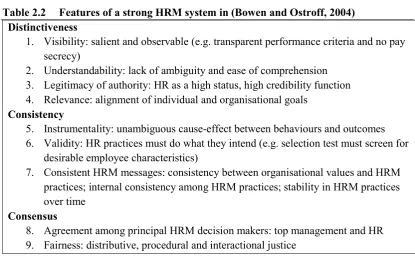
Table 2.2 Features of a strong HRM system in (Bowen and Ostroff, 2004) ... 44
Table 4.1 Interviews... 74
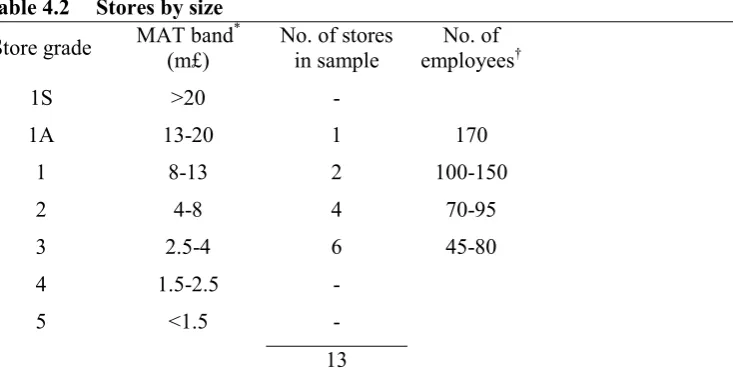
Table 4.2 Stores by size ... 75
Table 4.3 Research sample ... 75
Table 4.4 Stores by number of interviews ... 76
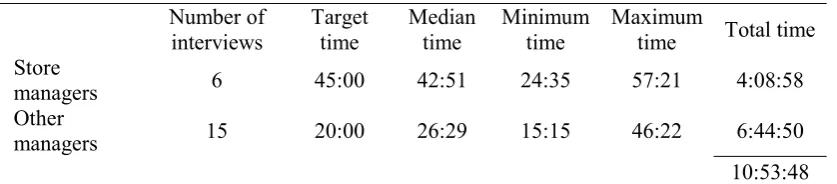
Table 4.5 Wave 1 interview times ... 77
Table 4.6 Wave 2 interview times ... 78
Table 4.7 Retail HR interview times ... 78
Table 4.8 Coding stages... 79
Table 4.9 Coding to interview schedule, wave 1 ... 80
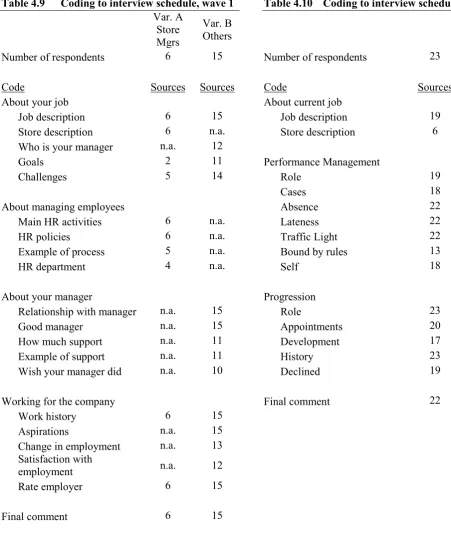
Table 4.10 Coding to interview schedule, wave 2 ... 80
Table 4.11 Coding to narrative modes ... 82
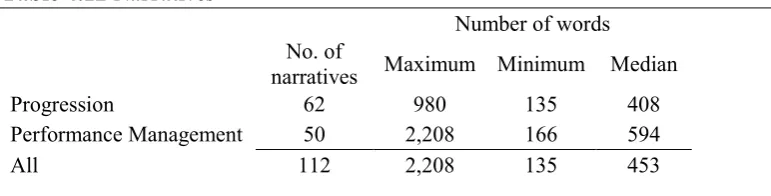
Table 4.12 Narratives ... 83
Table 4.13 Respondents by number of narratives ... 83
Table 4.14 Stores by number of narratives ... 84
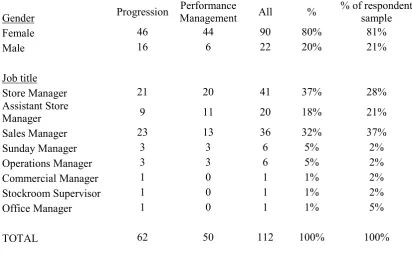
Table 4.15 Narratives by gender and job title of respondent ... 84
Table 6.1 Performance management narratives by theme ... 113
Table 6.2 Performance management narratives: Time and attendance ... 114
Table 6.3 Performance management narratives: Job performance ... 119
Table 6.4 Performance management narratives: Misconduct ... 124
Table 6.5: Policy documents ... 135
Table 6.6: Computer systems ... 138
Table 7.1 Progression narratives by theme ... 156
Table 7.2 Progression narratives: Permanent appointments... 157
Table 7.4 Progression narratives: Unsuccessful applications ... 163
Table 7.5 Progression narratives: Career and succession ... 165
Table 7.6: Policy documents in progression ... 176
List of figures List of vignettes
LIST OF FIGURES
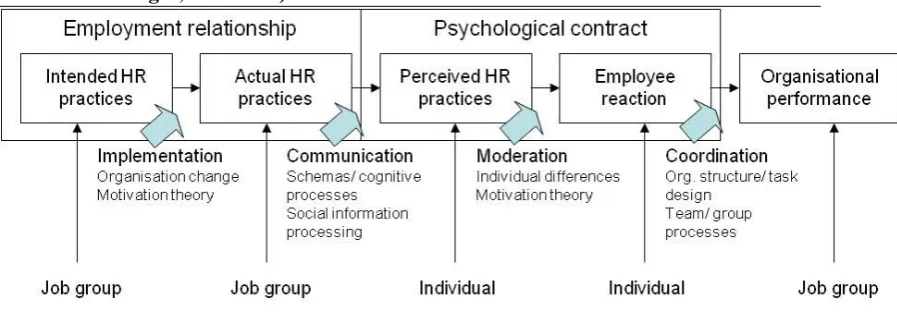
Figure 2.1: Mediating links in the HR practices-performance relationship (Nishii and Wright, 2008:
227) ... 34
Figure 6.1: The disciplinary process, from Retail Disciplinary Guide (Company Guide for Retail Managers) ... 136
Figure 7.1: Vacancy bulletin; cover page ... 178
Figure 7.2: Vacancy bulletin; sample current vacancies page ... 178
Figure 7.3: Vacancy bulletin; sample poster ... 179
Figure 9.1: The HR department as a ‘centre of calculation’ or ‘oligopticon’ (Latour, 2005) ... 227
LIST OF VIGNETTES
Vignette 8.1 ... 195Vignette 8.2 ... 197
Vignette 8.3 ... 198
Vignette 8.4 ... 200
Vignette 8.5 ... 202
Vignette 8.6 ... 205
Vignette 8.7 ... 210
Vignette 8.8 ... 211
Vignette 8.9 ... 212
LIST OF ABBREVIATIONS
AMO Ability, motivation and opportunity
ANT Actor-network theory
EOR Employee-organisation relationship
HR Human resources
HRM Human resource management; human resource manager
KSAs Knowledge, skills and abilities
MGR Manager
PM Performance management
POS Perceived organisational support
PR Progression
Acknowledgements
ACKNOWLEDGEMENTS
This thesis was made possible by the help of many. The following must be
acknowledged here.
IESE – Universidad de Navarra provided generous funding during this research. I am
particularly indebted to Professor Javier Quintanilla for his unwavering support and his
warm friendship.
My supervisors Professor Paul Edwards and Professor Paul Marginson provided
invaluable guidance and support. I am grateful to them for their liberality with their time,
and for their patience with the many dead-ends and U-turns I have taken during my PhD.
They have been for me a model of rigour and honesty.
Jane Varley, formerly of the Doctoral Programme Office at Warwick Business School,
provided assistance when it was most needed.
All my respondents and everyone at the company who helped arrange for my
fieldwork were great fun to work with and have taught me a huge deal on what HRM is
about.
Above all, my family has meant everything to me.
Cecilia y Santiago, veros crecer es mi sustento y cada día me hacéis estar más
orgulloso de vosotros.
Mónica, me has dado mucho más de lo que te podré corresponder nunca. Soy feliz de
pensar que tenemos muchos años por delante para disfrutar juntos de lo que vamos
Abstract
ABSTRACT
HRM practices have predominantly been seen as means put in place by top management to achieve certain ends. This thesis argues that approaching the HRM phenomenon in this way is limiting because it establishes a divide in HRM activities between those aspects that conform to top management intentions, contribute to consistency of HRM practices, and produce desired effects; and those that are not part of top
management design, are a source of variability in HRM practices, and are at best irrelevant, at worst detrimental to the efficacy of HRM practices. Variability in HRM practices within organisations has become an important focus for debate in the strategic human resource management (SHRM) literature. This thesis argues that an alternative view of HRM is required for the field to move forward.
Practice perspectives in organisation and management studies provide the basis for an alternative approach to studying HRM. Actor-network theory is particularly well suited for examining patterns of repetitive activity across time and space, and thus constitutes a useful framework for understanding consistency and variability in HRM practices.
This thesis presents empirical research that applies actor-network theory to provide a ‘flat’ description of HRM activities in a large UK-based fashion retailer. Through an innovative research design that uses participant narratives of HRM episodes (n=112), HRM activity in the company is characterised as distributed, emergent and patterned. It is distributed in the sense that employment outcomes were produced through assemblies of heterogeneous –human and nonhuman– elements. It is emergent in the sense that the set of associations that were made in order to produce an employment outcome was not
predictable, nor was the outcome itself. Both were the result of the associations that became stabilised during the flow of activity. Finally HRM activities were patterned through the standardising actions of central actors and their associated artefacts. In particular members of the HR department found ways to retrieve information from the field, transform it into standards, and deploy these standards back to the field in order to produce repetitive patterns.
This alternative view of HRM implies a novel understanding of the nature of HRM practices, the role of variability and consistency, and the ways in which the effects of HRM may be produced. Such understanding acknowledges that effects of HRM are produced as much through variability as through consistency, and that these must not be understood as opposite, mutually exclusive features of HRM systems.
CHAPTER 1: INTRODUCTION
1.1
Locating the thesis
Variability in human resource management (HRM) practices within organisations has
become an important focus for debate in the strategic human resource management (SHRM)
literature. Nishii and Wright (2008) recently asserted that ignoring within-firm variability in
HRM practices, as most SHRM research in effect has done, is likely to produce misleading
empirical results and obfuscate the relationship between HRM and its possible effects. They
therefore urged scholars to “give fuller consideration to the sources of variability” (2008:
227).
Within the SHRM field, HRM practices have predominantly been seen as means put
in place by top management to achieve certain ends. In this view, only those elements of
HRM activity that are part of top management design are deemed relevant to producing
desired outcomes. This understanding therefore establishes a divide in HRM activities
between those aspects that conform to top management intentions, contribute to consistency
of HRM practices, and produce desired effects; and those that are not part of top
management design, are a source of variability in HRM practices, and are at best irrelevant,
at worst detrimental to the efficacy of HRM practices.
This thesis argues that approaching the HRM phenomenon in this way is limiting and
that attempts to account for variability within this framework are hampered by overly
complex theories and empirical research methods. It further proposes that practice
perspectives of organisations can offer the basis for alternative approaches that enable
exploration of the dynamics of consistency and variability in HRM practices in a more
Chapter 1 - Introduction
1.2
Towards a practice-based approach to human resource
management
Recent decades have seen a surge in practice-based research in management and
organisation studies. Organisation scholars have developed practice perspectives on
knowledge, technology and routines; whilst management fields such as accounting, strategy
and information systems have established extensive practice-based empirical literatures. Part
of the broader ‘practice turn’ in social sciences, practice perspectives consider organisational
outcomes as the product of people’s day-to-day activities and their interactions with the
material arrangements around them (Orlikowski, 2010). Rather than looking for the causes
of phenomena in the properties of entities, practice perspectives investigate what
organisational members actually do to bring about outcomes in the world (Feldman and
Orlikowski, 2011). A practice perspective on HRM therefore implies a shift in focus away
from examining the properties of HRM practices as discrete entities, to being concerned with
the everyday activities that organisational actors call HRM. Consistent with this view, the
research presented in this thesis took as its starting point participants’ actions in specific
episodes of HRM activity. This is a departure from the dominant perspective which
typically identifies HRM practices first, and then explores the complications of their
implementation.
One of the most interesting practice-based literatures for the purpose of studying HRM
activities is the practice perspective on organisational routines (Parmigiani and
Howard-Grenville, 2011). Organisational routines are repetitive patterns of organisational actions, a
definition which encompasses a wide range of activities in organisations, including HRM.
The practice perspective has helped re-conceptualise routines as flexible and changing,
rather than stable and static (Feldman and Pentland, 2003). Still, it has clearly been more
successful in elucidating stability and change along the time dimension, than in providing an
understanding of consistency and variability along the spatial dimension. Since this is the
central concern of this thesis, exploring ways of extending the practice perspective on
The result of this exploration has been the adoption of actor-network theory (ANT), as
systematised by Latour (2005). ANT overcomes the limitations of the previous approach
which, like most practice perspectives in management and organisation studies, was based
on two related theories of social action, Bourdieu’s (1977, 1990) theory of practice and
Giddens’s (1984) theory of structuration. These two theories postulate a recursive
relationship between agency and structure and highlight the importance of shared
understandings that render action meaningful to practitioners. While this framework has
been useful in explaining stability and change in routines over time based on practitioners’
shared understandings of the routine, it has limited applicability to the analysis of
consistency and variability across locations. This is because Feldman and Pentland’s model,
even as later partially amended with elements of ANT, still requires some sort of macro
abstract entity –the ostensive aspect– which is formed by the individual performances and
enacted in each of them. The mutually constituting recursive mechanisms that link the
abstract understanding of a routine and its enactment are easier to explicate when moving
along the time dimension, keeping locations and actors constant, than over the spatial
dimension, when actors are distributed across many locations whose links are not obvious.
Actor-network theory by contrast posits a flat description of the social world, which
locates structural effects in the actions of specific actors, who devise standards and
quasi-standards and put them in circulation. This framework can describe patterns in actions
across space as well as over time. Within management and organisation studies,
actor-network theory has often provided elements to complement or extend existing practice or
structuration perspectives, but has seldom been fully deployed to produce a flat description
of an organisational phenomenon. Thus the approach taken in this thesis represents a
significant innovation within the field.
1.3
Research objectives
The goal of this research is to examine how HRM activities are carried out in
Chapter 1 - Introduction
how variation and repetition may impinge on the outcomes of HRM activity. Through the
deployment of actor-network theory, this thesis develops a flat description of HRM activities
within a retailing organisation, which accounts for consistency and variability in HRM
practices across sites.
In order to avoid privileging consistency over variability, this thesis will focus its
attention on the individual courses of action through which employment terms are produced
–a promotion, a hire, a dismissal– rather than on overall descriptions of action, where
variability is already averaged out. This approach is operationalised in the following
research question:
Research question 1: How are individual employment outcomes produced?
One of our main concerns with the top-down view of HRM is its difficulty in treating
variability in HRM practices. This thesis aims at an even treatment of variability and
consistency as integral elements to HRM. This aim is operationalised in the following
research question:
Research question 2: What are the sources of variability and consistency in HRM
activities?
Although the main goal of this thesis is to develop an alternative conceptualisation of
HRM, the top-down view has dominated SHRM research for decades and retains a strong
commonsense appeal. This thesis will aim to integrate the concepts of intended, actual and
perceived HRM practices within its new theory of HRM, thus providing some
commensurability between the two approaches. This aim is operationalised in the following
research question:
Research question 3: How do intended, actual and perceived HRM
practices relate to the production of individual employment outcomes?
1.4
Methods
The methods used in this thesis are consistent with three central elements of practice
participant activities (Nicolini, 2009b). This inevitably implies the use of qualitative data
collection methods that can provide the material for rich descriptions of the phenomena
under investigation (Weick, 2007). It also highlights the importance of locating activity in
space and time, and for researchers to engage in fieldwork at “the sites of accomplishment”
(Nicolini, 2011).
Second, practice research needs to identify patterns of interest in situated activities,
and trace the connections that account for their production (Latour, 2005, Nicolini, 2009b).
Actor-network theory locates the source of patterned activity in the circulation of actors and
artefacts over time and across sites. Thus, following the actors and artefacts as they travel
from site to site allows researchers to trace the network of connections that explains
collective action (Latour, 2005, Czarniawska, 2007).
Finally, practice researchers need to write up a description of practice that succeeds in
representing it to others (Czarniawska, 2004, 2007, Latour, 2005, Nicolini, 2011). Writing
up is as much a part of the research strategy as the fieldwork, insofar as composing an
account cannot be viewed as a mere reflexion of the world out there, but as the creation of a
new object that may or may not be successful in advancing an understanding of the world.
As Latour put it, “we [social scientists] write texts, we don’t look through some window
pane” (Latour, 2005: 123). The challenge therefore is to produce a text where practices
‘show up’ (Nicolini, 2011), so that readers are made to “feel as if they were there, in the
field” (Czarniawska, 2004: 118).
The rest of this section elucidates the choices made in this research with respect to
setting, data collection and writing up, and links these choices to the three elements of
practice-based methods described above.
1.4.1 Research setting
The research sites for this thesis were 13 stores and the HR department of a large
multi-store fashion retailer. I first completed all fieldwork in the stores before moving to
head office. This choice was significant for a number of reasons. First, it identified the
Chapter 1 - Introduction
This not only positioned the research closer to the actors who ‘do’ HRM –line managers–,
rather than those who ‘own’ it –HR and top management–, it also made easier to detect the
connections to other activities accomplished in the same sites, including the very outcomes
of HRM.
Moreover, retail was chosen as an ideal setting for uncovering the dynamics of
consistency and variability in HRM activity: thirteen different but comparable business units,
sharing the same management job roles and applicable HR policies, and being
geographically separated from each other and from head office, offered the ideal setting for
identifying the sites where activities were performed and for tracing the movements of
people and artefacts. Moving to head office at the end of the fieldwork helped trace the
connections between the activities in the periphery and those in the centre.
1.4.2 Data collection
Most –though by no means all– practice-based studies of organisations have relied on
ethnographic observation as their main method for field data collection (Nicolini, 2011).
The research reported in this thesis however has made extensive use of participant
interviews, and this has been an important strength of the study. First, the use of interviews
enabled the research to cover a larger number of HRM episodes (n=112) than would have
been possible through observation. Analysis of a larger and more diverse set of cases was
crucial in developing the insights that underpinned theory production in this thesis. Second,
interviews helped overcome some of the challenges inherent to the study of practices that
span across different spaces and times (Czarniawska, 2007). Participant narratives contained
within the interviews considered elements of HRM activities that were located far in space
and time, and which would have been virtually impossible to directly observe. Third, using
participant narratives as the main source of data allowed for participants’ own ‘theories of
action’ to be taken into account (Latour, 2005: 57), thus transcending the role of mere
informants given to them in other research designs. Finally, Czarniawska (2004) noted that
in any interview situation three types of logic –of theory, of practice and of representation–
techniques targeted at eliciting specific episodes of HRM activity, and the single focus of
data analysis on situated narratives ensured that theories were developed from data that
privileged the logic of practice over the other two.
1.4.3 Writing up
Latour (2005) described the role of text in social science as the equivalent of the
laboratory in natural sciences. Social scientists compose texts in which they experiment at
retracing and reassembling bits of the social world. Their texts –like natural scientists’
experiments– may fail in that the social does not show through. A good text however,
succeeds in deploying the wide range of heterogeneous elements that produce any social
outcome. Czarniawska (2004) has suggested that two elements are crucial to a good write
up. First is rich description that deploys the complexities, contradictions and differences in
the world, while avoiding summaries and “formulations that strip out most of what matters”
(Weick, 2007: 18). This thesis attempts just that through the description of HRM activities
in chapter 6 and 7. Second is the use of theory as the means to give the text the structure that
helps make sense of the phenomenon reported. This thesis uses actor-network theory,
particularly as put forward by Latour (2005), as a common thread throughout. In particular,
the discussion in chapter 7 is firmly structured around Latour’s (2005) ideas.
1.5
Thesis outline
Chapter 2 reviews past strategic human resource management literature and locates
the problem of within-firm variability in HRM practices. The chapter argues that the SHRM
literature has been dominated by a top-down view of HRM, which has fundamental
limitations to account for variability in HMR practices.
Chapter 3 lays out the theoretical framework that informs this thesis. First, it
introduces practice-based research in management and organisation studies, and the three
main sociological theories that underpin such research – the theory of practice, the theory of
structuration and actor-network theory. The chapter then presents prior research on
Chapter 1 - Introduction
HRM activities. It is argued that current approaches within the routines literature, while
successful at explaining endogenous sources of change in routines over time, have
limitations in explaining variability of practices across sites of a single organisation. It is
further suggested that a ‘flat’ description of HRM, based on Latour’s (2005) actor-network
theory, could overcome such limitations and provide a robust explanation of consistency and
variability across sites as well as stability and change over time.
Chapter 4 expounds the research design and the methods used in this research. First, it
describes and justifies research design choices, establishing a rationale for undertaking
qualitative research, for the selection of a retail organisation as the research setting, for the
use of interviews as the main source of data, and for the specific approach to writing up.
Second, it details the steps followed for obtaining access, carrying out the interviews and
analysing the data.
Chapter 5 provides an overview of HRM practices in the company under study. First
is a description of how the HR specialist function was structured. Then follows a description
of each area of HRM activity as either centralised or decentralised HRM activity, according
to the extent to which decisions were taken with or without significant input from actors
based in the stores. Centralised HRM activities at the company included store structure,
staffing levels, salary and bonus; whereas decentralised HRM included two major areas of
activity which respondents called progression and performance management. Because
decentralised HRM offered the best opportunities to examine the interactions between the
centre –HR department– and the periphery –the stores–, these two areas of activity were
chosen for further detailed analysis in chapters 6 and 7.
Chapters 6 and 7 set forth the details of 112 participant narratives on specific episodes
of progression and performance management. Each chapter presents a set of narratives in
three ways. First, they are classified by topic in order to facilitate a quick review of the
content of each narrative. The next section introduces the main actors and artefacts in the
narratives, along with an analysis of their roles in the set of narratives. The final section
common to most narratives in each set. By combining three different ways of presenting the
data, the chapter conveys a thorough description of the narratives, while avoiding the loss of
rich detail that would come as a consequence of summarising by abstracting common
features.
Chapter 8 takes a further look at these participant narratives in order to achieve a
deeper understanding of how individual employment outcomes were produced. The first
section zooms in on some selected respondent narratives to establish ‘doing HRM’ as a
distributed and emergent activity. It was distributed in the sense that there was a wide range
of actors involved in the production of HRM decisions, including but not limited to line
managers, HR officers, employees, and material elements such as artefacts and physical
spaces, all of which shaped decision outcomes in important ways. Further, doing HRM was
emergent in the sense that the outcome of each decision could not be anticipated at the
outset, but was constructed every time through the actions of the wide range of actors and
materials involved. Finally doing HRM is not only distributed and emergent, but at the same
time patterned.
The second section zooms out of HRM activity and identifies the origin of such
patterns in the activities of the members of the HR department, who found ways to retrieve
information from the field, transform it in different ways to produce standards and
quasi-standards, and finally re-distribute these back to the field, to be assembled into new courses
of action.
Chapter 9 develops an alternative understanding of HRM as situated action (Suchman,
2007). First, section 9.2 builds on the insights of chapter 8 to develop a ‘flat’ (Latour, 2005)
description of HRM activities. Then, section 9.3 discusses the role of intended, actual and
perceived HRM practices, as representations of HRM action. Finally, section 9.4 provides
new theory on the link between HRM actions and organisational performance. Section 9.5
summarises the conclusions reached in the chapter.
The concluding chapter 10 discusses the contribution, implications and limitations of
Chapter 1 - Introduction
empirical, theoretical and methodological contributions of this research. The third section
discusses the implications for research and practice in HRM. The final section
CHAPTER 2: REVIEW OF PRIOR RESEARCH
2.1
Introduction
Peter Boxall recently described the strategic human resource management (SHRM)
literature as “something of a ‘curate’s egg’: good in parts” (2012: 50) 1. He echoed others (e.g. Nishii and Wright, 2008, Guest, 2011) in pointing out that the field lacks an
understanding of how HRM is implemented and that this poses a major limitation to its
advancement. Such assessments have been accompanied by calls for improved research
methods (Boxall, 2012), more careful design of empirical studies (Guest, 2011), and better
measurement that is able to tease out the effects of variation in the implementation of HRM
practices by line managers, and in employees’ perceptions of the practices they are subjected
to (Nishii and Wright, 2008).
This chapter offers a novel critique of the SHRM literature, which has investigated the
organisational effects of human resource management activities (Wright and Boswell, 2002).
It supports the idea that attention needs to be given to [so-called] ‘implementation’ of HRM
practices (Guest and Conway, 2011). However, my core criticism is precisely that past
approaches have been limited by a conception of HRM as a set of managerial interventions
that are then implemented, enacted or put into practice. I will show that this is at the root of
major unresolved problems in the literature, particularly those related to the definition and
measurement of the HRM construct, and its potential causal relationship with organisational
performance. It is argued that, rather than refining research techniques within this paradigm,
progress could be made by exploring alternative views of organisational activity that
introduce a ‘practice lens’ (Feldman and Orlikowski, 2011) into the analysis of human
resource management.
1
Chapter 2 – Review of prior research
The chapter is structured as follows. First is a review of the strategic human resource
management field that draws attention to the historical antecedents of its emergence, and
presents its major findings. Second is a review of assessments of these findings, which
explains the main controversies that have been discussed in the literature. The third section
argues that the SHRM literature has universally adopted what I describe as a ‘top-down’
view of HRM, where HRM practices are seen as discrete entities originating in management
intentions, which are subsequently enacted by line managers, and perceived and reacted
upon by employees. The section further discusses extant research on the implementation and
communication of HRM practices. Section 2.5 explores the issue of variability in HRM
practices within organisations, and suggests that it poses a more difficult problem than has
been acknowledged in the literature. In particular, the section argues that attempts at
addressing HRM variability within the top-down view of HRM are unlikely to produce
workable research programmes that are conducive to definitive results on the
HRM-performance link or to advice that is relevant to practitioners. Finally, and following from
the critique of the SHRM literature contained in this chapter, the last section states the goal
of this thesis and its research questions.
2.2
The strategic human resource management literature
The beginnings of strategic human resource management research can be traced to the
1980s (Wright and Boswell, 2002). During that decade, attention increased among US
academics towards ‘strategic’ aspects of management, and many functional fields –
including HRM – sought to define their contribution to the strategic management process
(Wright and McMahan, 1992). After some years of mostly conceptual and practitioner
oriented publications, by the middle of the 1990s a major empirical research effort gathered
around the goal of measuring the effects of HRM on firm performance. Such effort in
SHRM contributed to the wider literature that explored how possession of strategic resources
might impinge on organisational performance, thus attempting to test the propositions of the
Although drawing on earlier theories, RBV formally appeared in the late 1980s and
early 1990s through the works of Barney (1991) and Wernerfelt (1984), among others. RBV
states that firms can utilise resources that are valuable, rare, inimitable and non-substitutable
to achieve sustained superior performance (Barney, 1991). While not uncontested (Priem
and Butler, 2001), over the next decade RBV established itself in the strategy literature as the
dominant framework for explaining differences in performance among firms, displacing
previous explanations based on relative market position (Teece et al., 1997). This shift of
attention from external to internal determinants of performance gave HRM practitioners and
academics the prospect to improve their standing within the management profession
(Kaufman, 2007). It was argued that resources that rely on the makeup of the workforce are
likely to be valuable, rare, inimitable and non-substitutable because they tend to be socially
complex, causally ambiguous and path dependent (Wright et al., 2001, Becker and Gerhart,
1996, Barney and Wright, 1998). More specifically, HRM activities were proposed to help
establish the workforce as a strategic resource by building the skills and encouraging the
behaviours that drive business performance (Wright et al., 1994, Boxall and Steeneveld,
1999).
Two contemporaneous publications gave a definitive thrust, and shaped most SHRM
empirical research for the following decade. On the one hand, Pfeffer’s (1994) book –
written for a general management audience but also summarised as a journal article (Pfeffer,
1995) – made the RBV-based argument that “employees and how they work” are
increasingly important sources of competitive advantage, as other resources such as
technology, protective regulation and finance become more accessible to all, and therefore
less relevant in differentiating competitors. ‘Effective’ people management was thus
becoming an increasingly important way in which firms would achieve strategic success.
The book went on to list 16 “practices for managing people” selected on the basis of
“extensive reading of both the popular and academic literature, talking to numerous people
Chapter 2 – Review of prior research
30-1). The potential fruits to be obtained from the adoption of these practices were
illustrated with vivid examples of iconic companies and business leaders of the time.
On the other hand, Huselid (1995) provided the first empirical evidence of a link
between HRM and financial performance in a large sample of firms from multiple industries.
The article received several important academic awards and has been widely considered the
most influential empirical study on the performance effects of HRM (Wright and Boswell,
2002, Paauwe, 2009). The study was based on a large sample survey of American
publicly-held companies using mailed questionnaires. A single HR respondent in each firm was
asked to report their organisation’s use of a set of 13 practices, which were adapted from a
set of practices that had been identified in a U.S. government report as representing
‘sophistication’ in HR management and thereby labelled as ‘high-performance work
practices’ (US_Department_of_Labor, 1993). Working with data from close to one thousand
companies, the study used multivariate statistics to explore the relationship between the
extent these practices were used and different measures of performance. It concluded that
“investments in [these HR] practices are associated with lower employee turnover and
greater productivity and corporate financial performance”. Moreover, the article quantified
the ‘substantial’ returns for investment in these practices in annual dollar sales, profit and
market value per employee, and suggested that “at least in the near term, such returns are
available for the taking” (Huselid, 1995: 668). Leaving aside the hyperbole in some of its
claims, the strength of Huselid’s paper resided in the comprehensiveness of its approach.
The study included measures of performance at multiple levels, evaluated the influence of
internal and external policy fit, and formally addressed some methodological issues inherent
to survey research designs. Each of these elements on their own have rarely featured in the
later SHRM literature, let alone in combination. Indeed even authors that have been critical
of Huselid’s findings have recognised the paper’s groundbreaking nature (Wright et al.,
2005), unmatched sophistication (Purcell and Kinnie, 2007), or notable treatment of multiple
For the following decade, the SHRM field was dominated by the goal of establishing
and measuring the causal effects of HRM activities on firm performance (Purcell and Kinnie,
2007). In what remains the most comprehensive review to-date, Boselie and his colleagues
(2005) analysed over a hundred studies published during that period. Their findings
highlighted the eclectic nature of this body of literature and its substantial theoretical and
methodological shortcomings. First, they found there was wide variation in both the
conceptual makeup of the HRM construct and the choice of specific measures. Although the
most common research design was by far the statistical analysis of survey data, there was no
consensus on which practices needed to be included, and what the best way of measuring
them was. Second, most studies failed to devote sufficient attention to explaining how HRM
activities might produce their alleged effects. Elements from a range of theoretical
frameworks were often blended to provide a general rationale for the study or to produce
a-posteriori explanations of its findings, but very seldom were theoretically-driven
propositions formulated and then tested. Likewise, only a few studies included mediating
variables in their statistical models. Boselie and his colleagues concluded their review
stating that “no consistent picture exists on what HRM is or even what it is supposed to do”
(Boselie et al., 2005: 81), and stressing that the literature’s findings are affected by serious
methodological limitations which will not be overcome without the support of better theory.
A very different summary of largely the same literature was carried out by Combs and
colleagues (2006) who aggregated the results of 92 SHRM studies using meta-analytic
statistical techniques. They found sufficient support to establish .20 as a “conservative point
estimate” of the effect of HRM practices on organisational performance, that is, “increasing
use of [high-performance work practices] by one standard deviation increases performance
by .20 of a standard deviation” (2006: 517-8). This, they claimed, dissipated “any doubt
about the existence of a relationship” between HRM practices and firm performance (2006:
524). Their results, however, come with an important caveat. Meta-analytic techniques rely
on the assumption that much of the variance found in the results of the different studies is
Chapter 2 – Review of prior research
produce more accurate estimates. To the extent that a good portion of that variance may in
fact be due to differences in the definition and operationalisation of the constructs involved,
as shown in Boselie et al.’s (Boselie et al., 2005) review, the value of Comb et al.’s (2006)
aggregation is put into question.
In the years since Boselie et al.’s (2005) review and Combs et al.’s (2006)
meta-analysis the empirical effort in SHRM research seems to have substantially diminished.
Recent reviews have discussed new theoretical contributions, but have included little in
terms of fresh empirical evidence (e.g. Boxall, 2012, Batt and Banerjee, 2012, Guest, 2011,
Paauwe, 2009). Guest (2011) characterised this latest period as one of ‘growing
sophistication and complexity’, which can be observed on two fronts. First, there have been
attempts at broadening the set of theories mobilised to explain the relationship between
HRM and performance, particularly by incorporating theories from social psychology. For
example, Nishii and her colleagues (2008) developed and tested a model based on attribution
theory. They found support for the proposition that employees’ attributions of the intentions
of management in adopting HRM practices have an impact on their attitudes and behaviours.
Similarly, Bowen and Ostroff (2004) theorised that organisational climate mediated the
relationship between HRM system characteristics and firm performance – although Guest
and Conway’s (2011) empirical study failed to find support for at least part of their theory.
Second, the statistical techniques used in quantitative studies of SHRM have become
increasingly complex, facilitated by the generalisation of data analysis software packages,
and methodological innovation in other management research fields, notably marketing
research. For instance, in the study mentioned above, Nishii and her colleagues (2008) used
structural equation modelling, which has recently become a standard in testing complex
causal models in marketing research (Hair et al., 2011). Likewise, Liao and her colleagues
(2009) used hierarchical linear modelling to analyse the relationship among constructs
spanning three nested levels in an organisation. Such developments suggest that, far from
the ‘big science’ called for by Wall and Wood (2005), research on the HRM-performance
activity and performance in large samples of firms, to more specialised – even niche –
studies that test relatively small extensions of theory using data from multiple levels and
respondents in one organisation.
2.3
Assessing the SHRM literature
Assessments of the SHRM literature’s findings have ranged from concluding that
significant progress has been made, to dismissal of extant results as inconclusive and lacking
any causal implications. Positions on either end of the continuum seem to be largely a
consequence of the research tradition in which the commentator is placed. Thus, as might be
expected, the harshest criticism of the SHRM field has come from authors in traditions
generally condemnatory of its positivist and managerialist stance. Thus, critical management
scholars (e.g. Legge, 1995, 2005, Keenoy, 1999) have denounced HRM’s failings as
managerial rhetoric, its unitarist discourse, and its thinly veiled affirmation of managerial
dominance; while post-structuralists (Townley, 1993, Alvesson and Kärreman, 2007) have
decried HRM as an identity control mechanism. Critical realists for their part have exposed
the literature’s simplistic treatment of causality and its poor theorising (Edwards and Wright,
2001, Hesketh and Fleetwood, 2006).
Also unsurprisingly, the strongest advocates of the literature’s achievements have
been adherents of a strongly empiricist research agenda, who have seen value in
accumulating ‘point estimates’ of the relationship between HRM and firm performance, in
order to build a ‘cumulative body of knowledge’ (Becker and Gerhart, 1996) that may yield
increasingly precise estimates of the size of ‘the HRM effect’ (Gerhart et al., 2000, Gerhart,
2007) – a goal which indeed provided the rationale for Combs et al.’s (2006) meta-analytic
study. Such favourable assessments include Becker and Huselid’s, for whom SHRM boasts
“two decades of solid academic progress” (2006: 898-9). They shared Combs et al.’s (2006)
conclusion that the link between HRM practices and firm performance has been established
Chapter 2 – Review of prior research
now in need of guidance on effective implementation of HRM systems, in order to realise
their fruits.
Other authors who have similarly emphasised the achievements of the SHRM
literature have nevertheless made more cautious assessments. For instance, Paauwe (2009)
concluded that progress has been ‘modest’, and that no more than a weak relationship
between HRM practices and firm performance can be established. Similarly, Wall and
Wood (2005) concluded that empirical results were still insufficient to establish a causal
link, but that the theoretical underpinnings of the literature provided strong grounds for
‘believing’ there should be such a link. In order to move forward, they advocated the
deployment of ‘big science’ studies that would overcome the unresolved methodological
issues.
The line of criticism that will be pursued here, however, builds on the position of a
group of scholars gathered under the label ‘analytical HRM’ (Boxall et al., 2007). These
authors have been significant contributors to the SHRM literature at different stages, but
have nevertheless expressed strong scepticism about the suitability of extant empirical
research to support any claim of a link between HRM and performance. Boxall, for instance,
recognised the value of the literature’s concern with performance implications of HRM
activities, but was critical of its “confusing definitions, unjustified assertions, and
weaknesses in research methods” (2012: 170). Purcell, for his part, expressed
disappointment at the literature’s failing to produce a sound model of HRM which includes a
clear definition of its remit, and a chain of causal links to performance (Purcell and Kinnie,
2007). Finally, Wright’s work has exposed the literature’s important methodological
shortcomings in establishing a causal relationship between HRM and firm performance
(Wright et al., 2005). A further important author who might be included in this approach is
David Guest, who recently wrote that “after hundreds of research studies we are still in no
position to assert with any confidence that good HRM has an impact on organisation
Much of the scepticism of analytical HRM scholars stems from the fact that most
empirical SHRM research has relied on analysis of cross-sectional survey data (Boselie et
al., 2005), and the inadequacy of such research design to establish causal relationships. For
Wright and colleagues (2005) causality can only be reasonably inferred when, besides there
existing statistically significant covariation, two other conditions are met. First, there needs
to be evidence of temporal precedence. In their ensuing examination of temporal precedence
in 68 empirical SHRM studies they reached a devastating conclusion: the research design in
only 10 of the studies was consistent with temporal precedence of HRM; in 50 of them,
HRM practices were actually measured after the performance period (Wright et al., 2005).
Moreover, the few longitudinal studies that have been published have failed to find support
for a causal link between HRM and performance (Cappelli and Neumark, 2001, Guest et al.,
2003, Wright et al., 2005). Rather, they have consistently shown that controlling for past
performance eliminated any impact of HRM practices on future performance.
The second condition for inferred causality is that all other possibilities be
theoretically rejected. While for Huselid and Becker (1998) the use of corporate-level
financial measures of performance is a strength of the literature, the conceptual distance
between HRM activities and firm-level performance outcomes weakens causality claims: a
host of variables other than the use of HRM practices may have an influence on measured
firm performance (Guest, 1997), so that without sufficient theoretical development it is
impossible to rule out simultaneity or omitted variables (Edwards and Wright, 2001). At any
rate, research on the ‘HRM black box’ –what happens between the adoption of HRM
practices and the performance effects they allegedly produce– remains a crucial topic of
research for the advancement of the literature (Boxall, 2012, Guest, 2011, Nishii and Wright,
2008, Purcell and Kinnie, 2007).
The following section examines the literature’s dominant framework for
understanding the HRM black box and discusses one of the most elaborate models that have
Chapter 2 – Review of prior research
2.4
The top-down view of HRM
For all the debates and criticism about theory –or lack thereof– in SHRM, the field
shares a fairly standardised framework for understanding HRM activity and the way it
generates organisational outcomes. First, the SHRM literature conceives of human resource
management as a set of managerial interventions, that is, HRM practices are means put in
place by top management to achieve certain ends2. In this view, top management –with the help of HR specialists– prescribe the HRM activities to be adopted by the organisation, and
set the necessary incentives –positive and negative– for other organisational members,
notably line managers, to perform the prescribed activities. Since there exists the possibility
that line managers do not perform the actions as specified, SHRM research has differentiated
between intended and actual HRM practices.
Second, the performance effects of HRM are produced through its impact on
employees’ ability, motivation and opportunity (AMO) to perform3 (Bailey et al., 2001). The ability element focuses on how HRM practices, such as training and employee selection,
contribute to augmenting the human capital of the organisation, that is, the pool of
knowledge, skills and abilities (KSAs) embodied in the workforce. The motivation element
refers to the role of HRM practices in fostering willingness from the part of employees to
exert themselves and apply their KSAs to prescribed behaviours that make up the productive
processes of the organisation. Finally the opportunity element refers to the impact of job
design –e.g. multidisciplinary teamwork– and employee participation schemes on the
organisation’s ability to tap into and make productive use of employees’ KSAs. Whereas
much of earlier SHRM research focused on the effects of HRM on ability and opportunity
(e.g. Arthur, 1994, Ichniowski et al., 1997, Guthrie, 2001), it is the motivation element that
2
Cf. Wright and McMahan “we define strategic human resource management as the pattern of planned human resource deployments and activities intended to enable an organization to achieve its goals” (1992: 298), and Boxall, Purcell and Wright “the management of work and people towards desired ends” (2007: 1).
3
has received most attention in recent SHRM research, particularly through the introduction
of organisational behaviour theories and constructs –such as the psychological contract,
attributions theory, and perceived organisational support–, which posit an exchange
relationship between individual employees and their employer (Coyle-Shapiro et al., 2004).
Since such exchanges can only be based on employees’ perceptions of HRM practices, rather
than on the actual practices they are subjected to, a further distinction between actual and
perceived HRM practices has been introduced.
This standard view, which I label ‘the top-down view of HRM’, has recently been
summarised by Nishii and Wright (2008) in the diagram reproduced in Figure 2.1. Their
model illustrates the differentiation between intended, actual and perceived HRM practices,
and identifies implementation and communication as critical mediating processes between
them. First, HRM practices originate in the intentions and designs of top management and
HR specialists. Second, these designs are enacted by line managers in specific situations.
Third, line manager enactments of HRM practices are perceived by individual employees
through the lens of their individual cognitive schemas and, through social interaction, those
perceptions may become shared. Finally employees react to their perceptions of HRM
practices with attitudes –e.g. commitment, job satisfaction– and behaviours –e.g.
continuance, job behaviours, discretionary behaviours– that support organisational
[image:37.595.115.564.575.733.2]performance outcomes.
Chapter 2 – Review of prior research
The rest of this section discusses extant research on the implementation and
communication of HRM practices.
2.4.1 Implementation
The notion of a gap between intended and actual HRM practices was initially
introduced by Dyer (1985) as an extension of Mintzberg’s (1978) intended and realised
business strategy. Intended HRM referred to practices as designed and articulated by top
management, whereas actual HRM referred to “those HR activities that take place within the
organization, regardless of whether or not they are in response to any articulated HR
strategy” (Truss and Gratton, 1994: 681). McGovern and his colleagues (1997) were among
the first to report evidence of the intended-actual HRM gap, which they attributed to line
managers’ inconsistency in the implementation of HRM practices. Later, in a detailed case
study of the British subsidiary of an American multinational, Truss (2001) found ‘a strong
disconnect’ between formal HRM practices and those experienced by employees. Although
she presented her findings as support for the critique of human resource management as
managerial rhetoric (Legge, 1995) , and mostly attributed the mismatch to pressure from the
external context and the inertia of the informal organization, she also acknowledged “the role
of each individual manager as agent, choosing to focus his or her attention in varying ways.”
(Truss, 2001: 1145).
Thus, the general view in the literature is that HRM practices are largely designed by
top management and HR specialists, but they are implemented (Boxall, 2012, Nishii and
Wright, 2008, Purcell and Hutchinson, 2007), enacted (Purcell and Hutchinson, 2007, Boxall
et al., 2007) or translated into practice (Truss, 2001) by line managers. What exactly is
behind by these terms, however, is not entirely clear. There are at least three approaches the
literature has taken to exploring the impact of line managers on HRM implementation; we
review them in the following paragraphs.
The first approach to researching the role of line managers in HRM has looked at the
degree to which line managers engaged or not in the specific HRM activities prescribed by
showed how bank branch managers “muted or reinterpreted” coercive corporate policies in
order to maintain employee consent; which not only was in the managers’ own interest, but
also helped attain the long-term corporate productivity goals in a way not foreseen by top
management. Another research stream has looked at line-manager engagement in HRM as
part of the debate on the limitations of HR ‘devolution’ to the line (Brewster and
Soderstrom, 1994, McGovern et al., 1997). In a representative study, McGovern and
colleagues (1997) analysed interview and survey data from seven UK organizations and
found that there was a wide variation within organisations in the consistency of
implementation and the quality of HR practices, due to line manager involvement. Many
line managers in each of the organisations did not perform their HR role, or did so in a
cursory way, because of time pressures and competing priorities. This led to an uneven
spread of intended HRM practices within organisations, so that a practice was present or
absent in different departments and units depending on its manager’s personal willingness to
devote effort to their implementation. Some recent quantitative research has attempted to
extend this literature by exploring the determinants of such line manager involvement in
HRM activity, looking at the effects of manager, practice and organisation characteristics
(Bos-Nehles, 2010, Gilbert et al., 2011, Sikora and Ferris, 2011).
A second approach has examined the impact of line managers on procedural and
interpersonal aspects of HRM practice implementation. For instance, managers in Truss’s
(2001) study were found to pre-write performance appraisals, rather than draft them jointly
with the employee over the appraisal interview, as company policy required. In a more
recent study, managers similarly conducted appraisals with less frequency than required by
HR policy (Purcell and Hutchinson, 2007). In both these instances, managers followed
procedures that were different from those set by policy makers, with negative implications
for employee perceptions of procedural justice and satisfaction with HR processes.
Conversely, line manager actions were found to have a positive impact in Bartel (2004),
where differences in employee satisfaction with three areas of HR activity (skills,
Chapter 2 – Review of prior research
as on-going communication, frequent positive feedback and recognition. Finally, Nishii and
Wright (2008) appear to refer to procedural and interpersonal aspects when they note that
managers influence perceptions of HRM through their leadership style, personality and
behaviour.
A final, third approach has been to look at the impact of line managers on the
distributive aspects of HRM practices, that is, on the actual individual employment outcomes
that are produced through HRM decision processes. Here, the ‘functional’ or ‘micro’ HRM
subfield (Wright and Boswell, 2002) has produced abundant evidence of the influence that
line managers have in the outcomes of the different HRM processes. Much of this work has
focused on identifying the various sources of cognitive bias in manager decision making.
Such research assumes the existence of a ‘psychometrically correct’ outcome – i.e. an
accurate rating that reflects an employee’s true performance, or a candidate that is
objectively the best person for a specific position – and tries to uncover the reasons why
managers may make ‘wrong’ decisions. For instance, the performance appraisal literature
has at least three decades of research on rater antecedents that influence performance
appraisal outcomes (Feldman, 1981, Landy and Farr, 1980). Among the many different
variables that have been put forward as sources of bias, supervisor affect or liking for
subordinates has featured highest in the agenda (Lefkowitz, 2000, Levy and Williams, 2004).
Likewise, the personnel selection literature has shown that the behaviour of interviewers
influences the performance of applicants (Liden et al., 1993), and that interviewer similarity
and affect towards the interviewee is linked to perceived job suitability of the applicant
(Howard and Ferris, 1996). Separately, some research has uncovered line managers’ role in
surreptitiously compensating for the negative distributive effects of prescribed practice. For
instance, Purcell and his colleagues reported that, in organizations where managers seemed
to have little discretion over formal rewards, there were “‘unofficial’ practices creeping in as
a means of motivating people such as allowing time off, access to training, and providing
more challenging work.” (Purcell et al., 2009: 63). Similarly, Nadisic (2008a, 2008b) found
intended”, particularly to compensate for unfairness in HRM policy areas outside their
influence.
In summary, the gap between intended and actual HR practices remains mostly
attributed to line managers’ actions (Nishii and Wright, 2008, Purcell and Kinnie, 2007).
Moreover, the actions of line managers have been overwhelmingly portrayed as detracting
from the efficacy of HRM. Line managers are a source of slippage (Boxall and Purcell,
2008: 220) or undesired variability (Nishii and Wright, 2008); they distort the uniform
application of the policy as designed by top management and HR specialists, thus potentially
“undermin[ing] the contribution which HR policies are supposed to make towards
organisational success” (McGovern et al., 1997: 12).
2.4.2 Communication
Attention to a possible gap between the practices employees are subjected to and their
perceptions of those practices derived from organisational behaviour research on the
employee-organisation relationship (EOR) (Shore and Coyle-Shapiro, 2003, Shore et al.,
2004). EOR scholars see HRM practices as representing an organisation’s offering to its
employees (Rousseau and Greller, 1994). Through mechanisms based on the norms of
reciprocity (Gouldner, 1960) and social exchange (Blau, 1964), employees reciprocate their
organisation’s offering with attitudes and behaviours that drive organisational performance
(Hannah and Iverson, 2004). The gap between actual and perceived HRM practices is seen
to arise because the practices may be ambiguous –different practices send conflicting
messages–, or because individual employees may filter the practices they receive through
their own idiosyncratic cognitive schemas (Nishii and Wright, 2008).
The EOR has been operationalised through different constructs that have given rise to
different empirical literatures. First, the psychological contract literature posits that
employees define their relationship with their organisation as an exchange agreement –the
psychological contract–, which “encompasses the actions employees believe are expected of
them and what response they expect in return from the employer” (Rousseau and Greller,