67
ISSN: 2250 – 2688
CODEN: CRPSBZ (USA)
Received: 24/09/2019 Revised: 20/10/2019 Accepted: 23/10/2019 Published: 30/12/2019
Sara H. Mohamed and Yasmine M. Saied
Department of Microbiology, National Organization for Drug Control and Research, Giza, Egypt
Correspondence
Sara H. Mohamed
Department of Microbiology, National Organization for Drug Control and Research, Giza, Egypt
Email:[email protected]
DOI: 10.24092/CRPS.2019.090403
Website: www.crpsonline.com
Quick Response Code:
Ascorbic acid inhibitory activity on resistant strains of
Enterobacter
spp
.:
in vitro
study
Sara H Mohamed and Yasmine M Saied
ABSTRACT
Enterobacter species, members of Enterobacteriaceae family that belong to the ESKAPE group, were expressed as the principal rise of nosocomial resistant infections. This study was aimed to test the antibacterial activity of ascorbic acid on Enterobacterclinical strains. Four Enterobacter strains were collected and identified by both biochemical and MALDI-TOF methods. Antibiotic susceptibility testing of commercially available antibiotics was performed using disc diffusion method. Antibacterial activity of ascorbic acid was tested by using agar well diffusion and broth microdilution methods. The collected strains were identified as three strains Enterobacteraerogenes and one strain
Enterobacter cloacae. High resistance rates toward both cefotaxime and nalidixic acid were obtained by disc diffusion method. By well diffusion, 100 mg/ml and 50 mg/ml concentrations of ascorbic acid were found to be effective. While by using microbroth dilution, concentrations of 1.5, 3.125 and 6.25 mg/ml of ascorbic acid were detected as minimum inhibitory concentrations. Our results demonstrated a good antibacterial activity of ascorbic acid on Enterobacter strains and further studies on ascorbic acid/antibiotics combinations are in need.
Keywords: Enterobacter aerogenes;Enterobacter cloacae; ascorbic acid; MALDI-TOF.
1. INTRODUCTION
Nowadays, antimicrobial resistance (AMR) is of great concern, as it is common in hospitals where acquired infections can be placed. 1 The increased AMR which had seen in recent years caused by bacteria suggest that the choice of antibiotic should be guided by sensitivity assays, and as a result monitoring of antibiotic resistance pattern has to be a rational way to reduce the antibiotic treatment failure risk. 2–4 Multidrug-resistant Gram-negative bacteria [MDR-GN] involving MDR Enterobacteriaceae has taken place to be predominantly in charge of most drug-resistant contagions that arise in healthcare facilities. 5Enterobacter species, members of Enterobacteriaceae family that belong to the ESKAPE group, were expressed as the principal rise of nosocomial resistant infections. 6
Enterobacter species (E. aerogenes and E. cloacae) present highly preserved
regulation mechanisms acting to modulate porins expression integrated into the outer membrane. The pathogenic mechanisms and virulence factors contributing to the disease are not understood yet; this could be due to the scarcity and dispersion of information available. Its ability to form biofilms and to secrete various cytotoxins like: enterotoxins, hemolysins, and pore-forming toxins is important for its pathogenicity. 7Enterobacter spp. outer membranecontains lipopolysaccharides from which Lipid-A, an endotoxin which is the major stimulus for the release of cytokines which are the mediators of systemic inflammation and its complications. 8
68
Vitamins are compounds that are required in small amounts but that cannot be synthesized in quantities large enough to meet the normal needs. 10In order to find an alternative to antimicrobial usage or reduce antibiotics effective doses, new antimicrobial agents need to be tested. Vitamin C presents one such alternative, because it is cheap, easily available and has few or no adverse effects and also because it is frequently prescribed as a nutritional supplement as it has established antioxidant effects and has been used as an adjuvant in cancer chemotherapy. 11 Many other health benefits have been attributed to ascorbic acid (Vitamin C) such as an immuno-modulator, anti-atherogenic, prevents cold, and more other benefits. 12 Because of all that, the aim of this study was designed to test the activity of vitamin C as antibacterial agents against Enterobacter strains.
2. MATERIALS AND METHODS
2.1 Bacterial isolates
Four different bacterial strains of Enterobacter spp. were kindly collected from Kasr El-Ainy hospital, Egypt from October 2015 to December 2015. Isolates were defined as Enterobacter spp. according to routine biochemical testing.13 After confirmation of isolates, they were collected on glycerol broth and stored at-80 freezer until been used.
2.2 Bacterial identification by MALDI-TOF
Direct transfer-formic acid method was used,14 bacteria were applied as a thin film onto a 384-spot polished steel target plate and allowed to air dry. To the bacterial spot 1μl of 70% formic acid was added and allowed to air dry. Then, 1μl of MALDI matrix (α-cyano-4-hydroxycinnamic acid saturated solution (HCCA) in 2.5% trifluoroacetic acid and 50% acetonitrile) was applied to each bacterial colony and allowed to dry. Analysis was operated in the positive linear mode (mass over charge ratio (m/z) ranging from 2,000 to 20,000) under control of FlexControl software. Spectra were compared to fingerprint database by using the Bruker Biotyper 3.1 software and library of 5,623 entries.
2.3 Antibiotic sensitivity test
Antimicrobial susceptibility of the Enterobacter isolates wasdetermined by the disk diffusion as recommended by CLSI.15The commercial antibiotics tested were imipenem (10µg), meropenem (10µg), cefotaxime (30µg), cefepime (30µg), cefoxitin (30µg), gentamicin (10µg), amikacin (30µg), tobramycin (10µg), nalidixic acid (30µg), ciprofloxacin (5µg), levofloxacin (5µg) andamoxicillin/clavulanic (30µg). Results were interpreted according to CLSI criteria.
2.4 Cluster analysis
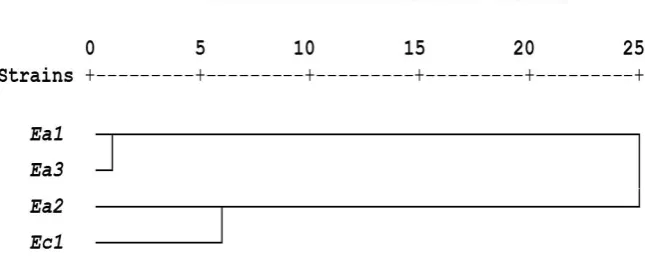
Based on the results of antibiotic sensitivity of different Enterobacter strains Hierarchical cluster analysis was carried out using SPSS software (SPSS Inc. v. 12). Antibiotic results for eachwere coded as „1; Resistant‟ and Non-Resistant coded as „0‟. The analysis was presented graphically to find the strains that are most similar according to antibiotic profile, clustering of the samples was performed based on average linkage, and the branch length represents the distance between the strains.16
2.5 Antibacterial activity of ascorbic acid and sodium ascorbate
Different concentrations of both ascorbic acid and sodium ascorbate were prepared according to recommendations. 2.5.1 Well diffusion method
The method was performed according to that previously reported.17 A sterilized Muller Hinton Agar was poured into sterile plates, after solidification, 100 µl of fresh culture of Enterobacter strains (0.5 MacFarland) were swabbed on the respective plates. Standard wells were made on the agar plate. 100 µl of ascorbic acid and sodium ascorbate at different concentrations of 100 mg/ml, 50 mg/ml, 25 mg/ml and 12.5 mg/ml were added into the wells and incubated for 24 h at 37 °C. Then the diameters of the zones of inhibition were measured.
2.5.2 Minimum Inhibitory Concentration (MIC)
The effect of ascorbic acid was studied using the method reported with modifications.18 Briefly, 100 μl (0.5 MacFarland bacterial cultures) was dispersed into each well of microplate, and then was mixed with 100 μl twofold dilutions of treatment concentrations for 24 h at 37 °C. Final concentrations were 0.1875–100 mg/ml for both ascorbic acid and sodium ascorbate. Well containing 100 μl of fresh broth with 100 μl of bacterial culture was used as a positive control, whereas negative control was broth only. The lowest concentration of the tested antimicrobial agents that inhibited visible growth is considered MIC.
2.5.3 Minimum Bactericidal Concentration (MBC)
MBC was evaluated by plating 5μl from each well that showed no growth on nutrient agar medium after incubation at 37 °C for 24 h, at which the lowest concentration that cause no growth on agar is considered MBC.19
3 RESULTS AND DISCUSSION
69
Therefore, updating knowledge about resistance rates of those infectious agents has become an important role to achieve success with antibiotics treatment.
In our study, the four bacterial isolates were identified as Enterobacter spp. using biochemical tests, and confirmed by MALDI-TOF as three strains of Enterobacter aerogenes and one strain Enterobacter cloacae,howeverdifferent prevalence have been reported in other studies.2,8By using antibiotic sensitivity testing results interpretation (Table 1), high resistance rates were observed to cefotaxime (100%), nalidixic acid (100%) followed by cefepime (75%) and cefoxitin (75%). To compare the sensitivity and resistance of different strains toward antibiotics Hierarchical cluster analysis was performed
(fig. 1). Ea1 and Ea3 were found to be more sensitive toward the tested antibiotics than Ea2 and Ec1.
Different reports from other countries were also founded. Among 61 Enterobacter spp., the antibiotic susceptibility results revealed that all isolates were resistance to amikacin, and then mostly resistance to cefotaxime and gentamicin with 90.2% and 75.4%, respectively.21 High Susceptibility of Enterobacter species was reported for amikacin (91.22%), norfloxacin (92.98%) and imipenem (98%).2Over a period of six years (2010-2015), 939 Enterobacter species were isolated by Maraki et al.,reported that 83.3% sensitivity of these strains to trimethoprim/sulfamethoxazole.22
Table 1: Resistance pattern of different commercial antibiotics among Enterobacter strains
Antibiotics Enterobacter
aerogenes Ea1
Enterobacter aerogenes Ea2
Enterobacter aerogenes Ea3
Enterobacter cloacae Ec1
A
n
ti
b
ioti
c
gr
ou
p
s
Carbapenems MEM S R S I
IPM S R S I
Cephamycins FOX S R R R
Aminoglycosides AK S R S R
CN S R S R
TOB S R S R
Cephalosporins CTX R R R R
FEP S R R R
Fluoroquinolones NA R R R R
CIP I R I R
LVX I R S R
Penicillins/ß-lactamase inhibitors
AMC S R S S
IPM, imipenem (10µg); MEM, meropenem (10µg); CTX, cefotaxime (30µg); FEP, cefepime (30µg); FOX, cefoxitin (30µg); CN, gentamicin (10µg); AK, amikacin (30µg); TOB, tobramycin (10µg); NA, nalidixic acid (30µg); CIP, ciprofloxacin (5µg); LEV, levofloxacin (5µg); AMC, amoxicillin/clavulanic (30µg); S, susceptible; I, intermediate; R, resistant.
In 2009, Amin et al.,reported that among Enterobacter strains high sensitivity rates were reported to amikacin (94.4%).23 By studying the susceptibilities to eightantimicrobial agents against ESKAPE pathogens, its observed that Enterobacter spp. from intra-abdominal
infections had the susceptibility to amikacin exceeded 95 %, while for isolates from urinary tract infections amikacin, imipenem and levofloxacin were the most active agents tested, with rates of susceptibility of 90.9, 87.0 and 81.8 %, respectively.24
70
Different antibiotic resistance rates were often reported in different countries. In middle-income countries, which are rapidly converging to consumption levels found in high-income countries, poor sanitation, a continued high background burden of bacterial infections and the increasing use of antibiotics have facilitated the rapid growth and spread of AMR.25 In addition to that the antibiotic exposure may provide the selection pressure for the creation of resistant mutants, the movement of people, lack of access to clean water, poor hygiene, vaccine availability, and healthcare facilities promote their broader dissemination.26
Besides its role involving in different fields,27-29 Vitamin C has a well-known role as an antioxidant agent.It serves as a cofactor in several important enzyme reactions, such as those involved in cholesterol, amino acids, and certain peptide hormones synthesis.30
In our study, different concentrations (100, 50, 25 and 12.5 mg/ml) were used, minimum inhibitory concentration (MIC) of ascorbic acid was detected for all strains (Table 2), while for sodium ascorbate the MIC was detected for only Enterobacter aerogenes Ea1. Minimum bactericidal activity of ascorbic acid was observed for both Enterobacter aerogenes Ea2 and Enterobacter aerogenes Ea3. Several studies have shown that vitamin C, in the form of ascorbic acid exerts significant antibacterial effects on pathogenic organisms alone or in combination with known antibiotics. Ascorbic Acid was reported to inhibit the growth of P. mirabilis planktonic
cells.31 It did not show any synergistic action in combination with ciprofloxacin when tested on uropathogenic E. coli. However, when tested alone, it significantly inhibited the growth of E. coli.32 Cursino et al., indicated that multi-resistant P. aeruginosa was affected by the combination of Ascorbic acid and antibiotics except the antagonism observed only for Chloramphenicol.18
The antibacterial activity of ascorbic acid is not well understood, howeverPandit et al., propose that the inhibitory effect of vitamin C on biofilm formation proceeds by inhibition of quorum sensing and other stationary phase regulatory mechanisms underpinning biofilm development, which specifically leads to inhibition of polysaccharide biosynthesis. 33 Also, sensitivity of ciprofloxacin against E. coli has enhanced in the presence of ascorbic acid which observed by Srividya et al., suggested to be due to its pro-oxidant activity or by altering the membrane permeability.34 While by studying Mycobacterium smegmatis, Syal et al., suggest that vitamin C has the potential to be developed as the inhibitor of (p)ppGpp synthesis which considered the master regulator of stress response and is responsible for bacterial survival under stress.35 On the other hand, about the toxicity level, it was suggested that the high doses of vitamin C can be toxic, although excess ascorbate is normally excreted harmlessly in the urine, the excess formation of oxalate can accumulate in various organs in patients such as kidney transplanted patients and patients undergoing dialysis. 36
Table 2: Antibacterial assays using different methods against Enterobacter strains
Bacterial strains Methods of antibacterial assay
Well diffusion (cm) Microbroth dilution (mg/ml)
MIC* MBC**
AA (mg/ml) *** SA (mg/ml) **** AA SA AA SA
100 50 25 12.5 100 50 25 12.5
Enterobacter aerogenes Ea1 1 1 - - - 1.5 12.5 - -
Enterobacter aerogenes Ea2 1.2 1 - - - 6.25 ˃ 100 100 -
Enterobacter cloacae Ec1 1.3 1.2 1 1 - - - - 3.125 ˃ 100 - -
Enterobacter aerogenes Ea3 1.2 1 0.8 0.6 - - - - 6.25 ˃ 100 6.25 -
*Minimum inhibitory concentration, ** Minimum bactericidal concentration, *** Ascorbic acid,**** Sodium ascorbate.
4. CONCLUSION
Our study suggested the strong antibacterial activity of the used concentration of ascorbic acid against Enterobacter strains. However further studies on their mechanism of action, toxicity and antibiotic combination are still in need.
CONFLICT OF INTEREST
71 REFERENCES
1. Nirbhavane HM, Bagde US. Resistance by Enterobacter spp. towards several antimicrobial drugs and heavy metals : A review. African J Biotechnol. 2017;16(16):826-841. doi: 10.5897/AJB2017.15875. 2. Bhat S, Shobha KL, Rao AS, Rao GS. Antibacterial Susceptibility Pattern
of Uropathogenic Enterobacter Species from a Tertiary Care Hospital. J Krishna Inst Med Sci Univ. 2018;7(4):32-37.
3. Mohamed SH, Salem D, Azmy M, Fam NS. Antibacterial and antibiofilm activity of cinnamaldehyde against carbapenem-resistant Acinetobacter baumannii in Egypt : In vitro study. J Appl Pharm Sci. 2018;8(11):151-156. doi: 10.7324/JAPS.2018.81121.
4. Mohamed MSM, Abdallah AA, Mahran MH, Shalaby M. Potential Alternative Treatment of Ocular Bacterial Infections by Oil Derived from Syzygium aromaticum Flower (Clove). Curr Eye Res. 2018;43(7):873-881. doi: 10.1080/02713683.2018.1461907.
5. Agyepong N, Govinden U, Owusu-ofori A, Essack SY. Multidrug-resistant gram-negative bacterial infections in a teaching hospital in Ghana. Antimicrob Resist Infect Control. 2018;7(37).https://doi. org/10.1186/s13756-018-0324-2
6. Mulani MS, Kamble EE, Kumkar SN, Tawre MS, Pardesi KR. Emerging Strategies to Combat ESKAPE Pathogens in the Era of Antimicrobial Resistance: A Review. Front Microbiol. 2019;10(April):539. doi: 10.3389/fmicb.2019.00539.
7. Davin-regli A, Pagès J. Enterobacter aerogenes and Enterobacter cloacae; versatile bacterial pathogens confronting antibiotic treatment. Front Microbiol. 2015;6:392. doi: 10.3389/fmicb.2015.00392.
8. Mordi RM, Hugbo PG. Frequency of Isolation of Enterobacter Species from a Variety of Clinical Specimens in a Teaching Hospital in Nigeria. Trop J Pharm Res. 2011;10(December):793-800. http://dx. doi. org/10.4314/tjpr. v10i6.13
9. Pati NB, Doijad SP, Schultze T, et al. Enterobacter bugandensis : a novel enterobacterial species associated with severe clinical infection. Sci Rep. 2018;8:5392. doi: 10.1038/s41598-018-23069-z.
10. Mahmoud I, Shahhat A, Ghazal GM, Mohamed GS. Effect of Ascorbic acid and Niacin on Protein, Oil Fatty Acids and Antibacterial Activity of Lupinus termis Seeds. Int J Pharmacogn Phytochem. 2014;6(4):866-873.
11. Verghese R, Mathew S, David A. Antimicrobial activity of Vitamin C demonstrated on uropathogenic Escherichia coli and Klebsiella pneumoniae. J Curr Res Sci Med. 2017;3:88-93. doi: 10.4103/jcrsm. jcrsm.
12. Naidu KA. Vitamin C in human health and disease is still a mystery ? An overview. Nutr J. 2003;2:7.
13. Rave AFG, Kuss A V, Peil GHS, Ladeira SR, Villarreal JP V, Nascente PS. Biochemical identification techniques and antibiotic susceptibility profile of lipolytic ambiental bacteria from effluents. Brazilian J Biol. 2019;79(4):555-565. https://doi. org/10.1590/1519-6984.05616 14. Abouseada, Moheb, Moez. Impact of MALDI-TOF in the Routine
Diagnostic Microbiology Laboratory in Alexandria University, Egypt. Egypt. J Med Microbiol. 2016;3:616-620.
15. The Clinical and Laboratory Standards Institute. Performance Standards for Antimicrobial Susceptibility Testing CLSI Supplement M100-S29; 2019.
16. Mohamed SH, Mohamed MSM, Khalil MS, Mohamed WS, Mabrouk MI. Antibiofilm activity of papain enzyme against pathogenic Klebsiella pneumoniae. J Appl Pharm Sci. 2018;8(06):163-168. doi: 10.7324/JAPS.2018.8621.
17. Mummed B, Abraha A, Feyera T, Nigusse A, Assefa S. In vitro Antibacterial Activity of Selected Medicinal Plants in the Traditional Treatment of Skin and Wound Infections in Eastern Ethiopia. Biomed Res Int. 2018;2018:1862401. https://doi. org/10.1155/2018/1862401 18. Cursino L, Chartone-Souza E, Nascimento AMA. Synergic interaction
between ascorbic acid and antibiotics against Pseudomonas aeruginosa. Brazilian Arch Biol Technol. 2005;48(3):379-384. doi: 10.1590/S1516-89132005000300007.
19. Mohamed SH, Mohamed MSM, Khalil M, Azmy M, Mabrouk M. Combination of essential oil and ciprofloxacin to inhibit/eradicate biofilms in multidrug-resistant Klebsiella pneumoniae. J Appl Microbiol. 2018;125:84-95. doi: 10.1111/jam.13755.
20. Ramsamy Y, Essack SY, Sartorius B, Patel M, Mlisana KP. Antibiotic resistance trends of ESKAPE pathogens in Kwazulu-Natal, South Africa : A five-year retrospective analysis. Afr J Lab Med. 2018;7(2):a887. https://doi. org/10.4102/ajlm. v7i2.887
72
Resistant Enterobacter Spp. at A Tertiary Care Hospital in Southwest of Iran. J Krishna Inst Med Sci Univ. 2017;6(2):33-39.
22. Maraki S, Vardakas K, Perdikis D, et al. In vitro susceptibility and resistance phenotypes in contemporary Enterobacter isolates in a university hospital in Crete, Greece. Futur Microbiol. 2017;12:683-693. 23. Amin M, Mehdinejad M, Pourdangchi Z. Study of bacteria isolated from
urinary tract infections and determination of their susceptibility to antibiotics susceptibility to antibiotics. Jundishapur J Microbiol. 2009;2(January 2009):118-123. http://jjm. ajums. ac. ir
24. Karlowsky JA, Hoban DJ, Hackel MA, Lob SH, Sahm DF. Antimicrobial susceptibility of Gram-negative ESKAPE pathogens isolated from hospitalized patients with intra-abdominal and urinary tract infections in Asia–Pacific countries : SMART 2013–2015. J Med Microbiol. 2017;66:61-69. doi: 10.1099/jmm.0.000421.
25. Okeke IN, Laxminarayan R, Bhutta ZA, et al. Antimicrobial resistance in developing countries. Part I : recent trends and current status. Lancet Infect Dis. 2005;5(August):481-493.
26. Dphil IF, Thomas P, Boeckel V, Pires J, Ba JC, Laxminarayan R. Global geographic trends in antimicrobial resistance : the role of international travel. J ofTravel Med. 2019:1-13. doi: 10.1093/jtm/taz036.
27. Mehnaz S, Afzal S, Khalil S, Khan Z. Impact of Iron, Folate and Vitamin C Supplementation on The Prevalence of Iron Deficiency Anemia In Non-pregnant Females of Peri Urban Areas of Aligarh. Indian J Community Med. 2006;31(3):201-203.
28. Pullar JM, Carr AC, Vissers MCM. The Roles of Vitamin C in Skin Health. Nutrients. 2017;9:866. doi: 10.3390/nu9080866.
29. Sharma SR, Poddar R, Sen P, Andrews JT. Effect of vitamin C on collagen biosynthesis and degree of birefringence in polarization sensitive optical
coherence tomography (PS-OCT). African J Biotechnol. 2008;7(12):2049-2054. http://www. academicjournals. org/AJB 30. Akbari A, Jelodar G, Nazifi S, Sajedianfard J. An Overview of the
Characteristics and Function of Vitamin C in Various Tissues : Relying on its Antioxidant Function. Zahedan J Res Med Sci. 2016;18(11):e4037. doi: 10.17795/zjrms-4037. Review.
31. ´nska-Piróg JK, Skowron K, Bogiel T, Białucha A, Przekwas J, Gospodarek-Komkowska E. Vitamin C in the Presence of Sub-Inhibitory Concentration of Aminoglycosides and Fluoroquinolones Alters Proteus mirabilis Biofilm Inhibitory Rate. Antibiotics. 2019;8:116. doi: 10.3390/antibiotics8030116
32. Verghese RJ, Ramya S, Kanungo R. In vitro Antibacterial Activity of Vitamin C and in Combination with Ciprofloxacin against Uropathogenic Escherichia coli. J Clin Diagnostic Res. 2017;11:DC01-DC05. doi: 10.7860/JCDR/2017/31251.10960.
33. Pandit S, Ravikumar V, Abdel-haleem AM, et al. Low Concentrations of Vitamin C Reduce the Synthesis of Extracellular Polymers and Destabilize Bacterial Biofilms. Front Microbiol. 2017;8:2599. doi: 10.3389/fmicb.2017.02599.
34. Srividya G, Deepthi B, Lakshminarasaiah S. Ascorbic acid enhances ciprofloxacin antibacterial activity in vitro against isolates of Escherichia coli from subclinical mastitis cases of buffaloes. 2017;2(5):21-24. 35. Syal K, Bhardwaj N, Chatterji D. Vitamin C targets (p)ppGpp synthesis
leading to stalling of long-term survival and biofilm formation in Mycobacterium smegmatis. FEMS Microbiol Lett. 2017;346:fnw282. doi: 10.1093/femsle/fnw282.