Volume 7
Issue 2 Spring 2019 Article 8
April 2019
Occupational Therapy Assistant Students’ Perspectives About the
Occupational Therapy Assistant Students’ Perspectives About the
Development of Clinical Reasoning
Development of Clinical Reasoning
Jeanne M. Coviello
Thomas Jefferson University-Bucks County Campus - USA, [email protected]
Marie Christine Potvin
Thomas Jefferson University-East Falls Campus - USA, [email protected]
LaRonda Lockhart-Keene
Thomas Jefferson University-Bucks County Campus - USA, [email protected]
Follow this and additional works at: https://scholarworks.wmich.edu/ojot
Part of the Occupational Therapy Commons
Recommended Citation Recommended Citation
Coviello, J. M., Potvin, M. C., & Lockhart-Keene, L. (2019). Occupational Therapy Assistant Students’ Perspectives About the Development of Clinical Reasoning. The Open Journal of Occupational Therapy, 7(2). https://doi.org/10.15453/2168-6408.1533
This document has been accepted for inclusion in The Open Journal of Occupational Therapy by the editors. Free, open access is provided by ScholarWorks at WMU. For more information, please contact
Abstract Abstract
A mandatory component of the training of occupational therapy assistant (OTA) students is the
development of their clinical reasoning skills. As the demand for OTAs continues to increase in response to the growing need for occupational therapy services, the number of academic programs to prepare these future therapists has expanded. Unfortunately, there is no empirical literature addressing the preparation of OTA students, specifically the development of their clinical reasoning skills. Artifact analysis, focus groups, and questionnaires were used to explore OTA students’ perceptions of what Level II fieldwork learning experiences facilitated the development of their clinical reasoning skills. The results suggest OTA students develop clinical reasoning skills during Level II fieldwork by engaging in a variety of learning experiences with support from fieldwork educators who are welcoming and approachable. Learning experiences that students perceived as most helpful to the development of clinical reasoning included hands-on learning, opportunities to witness best practice, receipt of clear expectations and regular feedback, gradual responsibility for caseload management, and opportunities for collaboration. This study adds to the profession’s body of knowledge and has implications for OTA educators, fieldwork educators, OTA students, and future consumers of occupational therapy services.
Comments
The authors report that they have no conflicts of interest to disclose.
Keywords Keywords
occupational therapy assistant students, clinical reasoning, level II fieldwork
Cover Page Footnote Cover Page Footnote
The authors would like to acknowledge Wendy Krupnick, PhD, MBA, OTR/L; Janette Boney, MS, OTR/L; and the spring 2016 OTA student cohort for their invaluable contributions to this study.
Credentials Display
Jeanne M. Coviello, OTD, OTR/L; Marie-Christine Potvin, PhD, OTR/L; LaRonda Lockhart-Keene, OTD, OTR/ L
Copyright transfer agreements are not obtained by The Open Journal of Occupational Therapy (OJOT). Reprint permission for this Topics in Education should be obtained from the
corresponding author(s). Click here to view our open access statement regarding user rights and distribution of this Topics in Education.
DOI: 10.15453/2168-6408.1533
Occupational therapy students, whether they are future occupational therapists (OTs) or
occupational therapy assistants (OTAs), are required to complete apprenticeships called fieldwork (FW) in clinical settings as part of their educational requirements (American Occupational Therapy
Association [AOTA], 2011; Cohn, 1989). The part-time, Level I FW rotations OTA students complete are supplemental to didactic coursework (AOTA, 2011). At, or near, the end of their academic
preparation, OTA students complete two 8-week full-time Level II FW experiences (AOTA, 2011). The purpose of Level II FW is to develop competent, entry-level therapists (AOTA, 2011). Level II FW requires students to apply academic knowledge and skills in clinical practice settings and to demonstrate clinical competence (AOTA, 2011). A component of becoming clinically competent is the development of clinical reasoning skills (Liu, Chan, & Hui-Chan, 2000). Clinical reasoning is the process by which therapists collect information; develop an understanding of clients’ needs; and then plan, direct, perform, and reflect on client care (Cronin & Graebe, 2018; Schell & Schell, 2008). In her seminal work
regarding the development of clinical reasoning skills in OT students, Cohn (1989) stressed that there is “more to clinical reasoning than translating academic theory into practice. Clinical reasoning is based on our knowledge of procedures, interaction with patients, and interpretation and analysis of the evolving situation” (p. 241).
There is literature examining the development of clinical reasoning skills among students from various health professions, specifically medical, physical therapy, and nursing students. Examples of the types of instructional strategies that have been attributed to clinical reasoning development include information chunking, material scaffolding, problem-based learning, repeated quizzing, small group discussion, and concept mapping (Cohn, 1989; Distler, 2007; Lee, Lee, Gong, Bae, & Choi, 2016; Tiruneh, Verburgh, & Elen, 2014). Further, learning activities, such as role playing, setting personal learning goals, sharing preferred learning styles, completing case studies, reviewing evidence-based articles, treating consistent client populations, and videotaping student-client interactions, have also been associated with the development of health profession students’ clinical reasoning (Coates & Crist, 2004; Cohn, 1989; Distler, 2007; LaRochelle et al., 2012; Tiruneh et al., 2014). In addition, strategies,
including asking probing questions, telling stories, modeling, completing evaluations of students’ performances, using chart talk, explaining thinking procedures aloud, and offering feedback, have been associated with facilitating students’ development of clinical reasoning skills (Alnervik & Svidén, 1996; Cohn, 1989; Distler, 2007; Tiruneh et al., 2014). In a study involving medical students (n = 64),
Wolpaw, Papp, and Bordage (2009) recommend the use of a structured case presentation technique to promote the development of clinical reasoning in clinical settings. In another study, physical therapy students (n = 91) indicated that their clinical decision-making abilities improved through practicing clinical reasoning skills while in supervised situations, completing clinical case studies, and receiving instructor feedback (Babyar, Pivko, & Rosen, 2010).
A few researchers have investigated the development of clinical reasoning skills for students studying to become OTs. Scaffa and Smith (2004) studied the significance of Level II FW on the development of clinical reasoning skills in OT students. The results of their study suggest that Level II FW decreases dependence on written clinical protocols, expands confidence to make clinical judgments, increases reliance on experience to make clinical decisions, enhances tolerance for ambiguous clinical situations, and increases students’ self-perceptions of their clinical reasoning skills and behaviors. Sladyk and Sheckley (2001) explored the effects of seven learning activities on the development of OT students’ clinical reasoning skills (n = 70) during Level II FW and concluded that treating a caseload
consisting of clients with no more than three diagnoses and reviewing videotapes of interactions with clients appear to have the most impact on the development of students’ clinical reasoning skills.
Although there have been many studies investigating clinical reasoning skill development of bachelor and graduate level students from various health professions, there are no published studies examining the development of clinical reasoning skills in OTA students who are typically educated at the associate degree level. It cannot be assumed that OTA students develop clinical reasoning skills in the same manner as OT or other health profession students (Schell & Schell, 2008). For example, OTA students are required to complete fewer weeks of Level II FW (i.e., 16 weeks instead of 24 weeks), thus affording them less time to develop clinical reasoning skills through field experiences (AOTA, 2011). Further, it cannot be determined from the existing literature whether the same learning experiences that are effective for health profession students educated at the bachelor and graduate levels are also
effective in developing clinical reasoning skills for associate degree level students. To ensure OTA students develop the requisite clinical reasoning skills to be prepared for entry-level practice, it is essential that we gain a greater understanding of the types of learning experiences that promote the development of clinical reasoning skills during Level II FW.
Study Objectives
An exploratory study was conducted to gain insight into OTA students’ perspectives regarding which Level II FW learning experiences promoted the development of clinical reasoning skills. The study aimed to:
1. Explore OTA students’ perspectives regarding what constitutes clinical reasoning.
2. Explore OTA students’ impressions of what promoted their development of clinical reasoning skills during Level II FW.
3. Explore Level II OTA FW students’ perceptions about the number and frequency of different learning experiences on their development of clinical reasoning skills.
Method Study Design
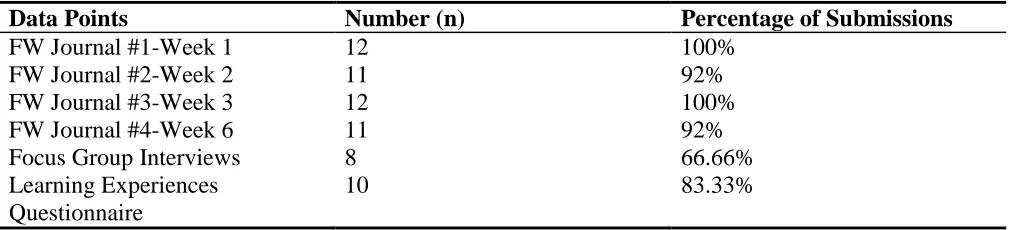
This ethnographic study used multiple data sources, including focus groups and artifacts (i.e., FW journals) to acquire an in-depth, first-person account of OTA students’ perspectives on clinical reasoning and the learning experiences that contribute to its development (see Table 1). Quantitative data obtained from the Level II Learning Experience & Frequency Questionnairesupplemented the qualitative data collected. The questionnaire consisted of fourteen 5-point Likert scale questions developed through a literature review. The university institutional review board approved this study.
Table 1
Data Sources
Data Points Number (n) Percentage of Submissions
FW Journal #1-Week 1 12 100%
FW Journal #2-Week 2 11 92%
FW Journal #3-Week 3 12 100%
FW Journal #4-Week 6 11 92%
Focus Group Interviews 8 66.66%
Learning Experiences Questionnaire
10 83.33%
Note.FW = Fieldwork.
2 https://scholarworks.wmich.edu/ojot/vol7/iss2/8
Participants
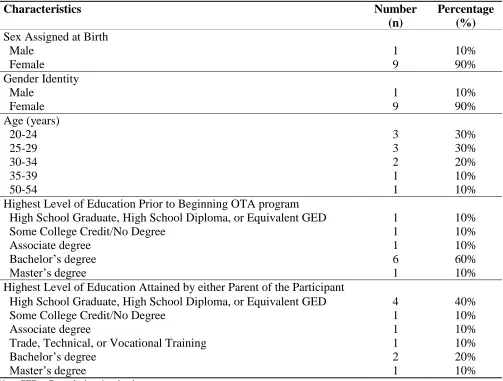
A convenience sample was recruited from a cohort of sixteen OTA students enrolled in a program located in a suburban region of Pennsylvania. All OTA students from this cohort who were registered to complete a Level II FW during fall 2017 were eligible to participate in the study. Twelve of the 16 eligible students agreed to participate. Ten of the 12 students (83%) who consented to participate completed the questionnaire (see Table 2).
Table 2
Demographic Characteristics of Participants
Characteristics Number
(n)
Percentage (%) Sex Assigned at Birth
Male 1 10%
Female 9 90%
Gender Identity
Male 1 10%
Female 9 90%
Age (years)
20-24 3 30%
25-29 3 30%
30-34 2 20%
35-39 1 10%
50-54 1 10%
Highest Level of Education Prior to Beginning OTA program
High School Graduate, High School Diploma, or Equivalent GED 1 10%
Some College Credit/No Degree 1 10%
Associate degree 1 10%
Bachelor’s degree 6 60%
Master’s degree 1 10%
Highest Level of Education Attained by either Parent of the Participant
High School Graduate, High School Diploma, or Equivalent GED 4 40%
Some College Credit/No Degree 1 10%
Associate degree 1 10%
Trade, Technical, or Vocational Training 1 10%
Bachelor’s degree 2 20%
Master’s degree 1 10%
Note.GED = General education development.
Procedure
There were two primary sources of qualitative data: The participants’ fieldwork journals (FWJs) and the focus groups. The participants submitted FWJs during Weeks 1, 2, 3, and 6 of their Level II FW. Each journal was de-identified before coding. Immediately following completion of their first Level II FW, the participants were invited to one of two focus group sessions. Each session lasted about 1 hr and occurred in a classroom on campus. Of the 12 students who signed a consent form, 10 (83.3%) signed up to participate in a focus group. Of the 10 participants who signed up, eight participated in a focus group.
The first author developed an open-ended question guide with input from an experienced researcher. Both focus groups were audio-recorded, and the recordings were transcribed verbatim. The first author verified the accuracy of 100% of the transcriptions. In addition, handwritten field notes were taken during the focus groups and typed for reference during coding and analysis.
To avoid priming the participants, the Level II Learning Experience & Frequency Questionnaire was distributed after the focus groups concluded. Two of the four participants who did not attend a focus group submitted completed questionnaires via email.
Qualitative Data Analysis
The FWJs and focus group verbatim transcripts were analyzed in an immersive fashion by the first and third authors using a stepwise process of coding data into themes, developing a coding key by grouping data intocategories, and drawing connections related to the study objectives (Green et al., 2007; Leedy & Ormrod, 2016; Rubin & Rubin, 2011). The first author began data immersion and analysis with the participants’ FWJs, and 50% of the FWJs were also coded by a research assistant. The two sets of codes were compared, discrepancies were discussed, duplicate codes were eliminated, and the initial coding key was developed (Leedy & Ormrod, 2016). All FWJs were then recoded and sent to the third author, along with the code definitions. The third author reviewed and coded 100% of the FWJs and the same process of comparing, discussing, and removing duplicate codes was repeated. Any
discrepancies between these two sets of codes were discussed and the FWJ coding key was finalized (Leedy & Ormrod, 2016).
Data analysis continued with the coding of the focus group transcripts using a similar step-by-step, multiple-coder process. The finalized FWJ coding key served as a starting point for coding the focus group transcripts. As additional codes emerged, the coding key was modified. The first and third authors coded 100% of the focus group transcripts. Both sets of codes were compared in terms of the total number of coded references with the total number of identified codes, and a 92% agreement was achieved.
Multiple coders were used for the FWJs and focus group transcripts to enhance the confirmability and trustworthiness of the study results (Anderson, 2010; Leedy & Ormrod, 2016; Ortlipp, 2008; Trochim, 2006). With the same intent, the data were triangulated through three distinct data sources: FWJs, focus groups, and the participants’ questionnaires. Finally, to provide transparency and reduce the potential impact of bias on the results, the primary author maintained an audit trail and detailed reflexivity log through the data collection and data analysis process (Portney & Watkins, 2009; Trochim, 2006). All qualitative data were stored and coded using NVivo.
Results
Ten of the 16 eligible OTA students participated in the study. The majority of the participants were white, female, and 20 to 39 years of age. Sixty percent of the participants obtained a bachelor’s degree prior to beginning the OTA associate degree program. Fifty percent of the participants were first generation college students, with four of the participants having a parent with a high school diploma or a General Education Development (GED) and one participant having a parent who attended a trade or technical school. Six of the participants completed their first Level II FW in a community-based setting with a peer partner, while four of the participants completed FW in a traditional setting (see Table 3). The distant supervision model, which requires occupational therapy FW educators to be on-site a minimum of 8 hr per week, was the most frequently used mode of supervision experienced by the
4 https://scholarworks.wmich.edu/ojot/vol7/iss2/8
participants, with five of the participants having experienced this model. The results of the qualitative data analysis follow, organized by the study objectives.
Table 3
Level II Fieldwork Supervision Models of Participants
Primary Mode of Supervision Number
(n)
Frequency Count (%)
One supervisor: One student 3 30%
One supervisor: Two OT students 1 10%
Distant supervision: One student 1 10%
Distant supervision: Two students 5 50%
Note. Distant supervision = occupational therapist(s) onsite a minimum of 8 hr per week.
Objective 1: OTA Students’ Perspectives Regarding What Constitutes Clinical Reasoning On completion of their Level II FW, the participants demonstrated a clear sense of what
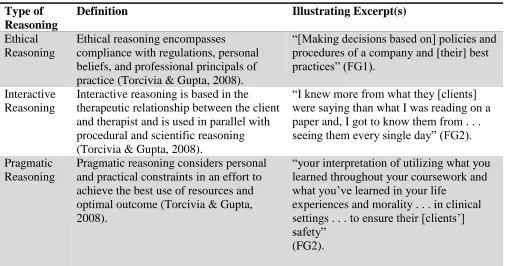
constitutes clinical reasoning by their statements and use of a variety of terms to define it. For example, a participant from Focus Group 1 (FG1) stated, “I’ve learned in my placement that clinical reasoning is [an] abundance of things, it’s what you are going to do next and how you’re going to treat the client,” and a participant from Focus Group 2 (FG2) stated, “[it’s] everything that I’ve learned in school to make the best choice for interventions, and . . . how you are going to treat your client.” The participants provided examples of the five types of clinical reasoning that have been described in the literature: ethical, interactive, pragmatic, procedural, and scientific reasoning (Torcivia & Gupta, 2008). Table 4 includes the definitions for the five types of clinical reasoning and excerpts from data sources
illustrating each of the five types.
Table 4
Clinical Reasoning Definitions and Data Excerpts
Type of Reasoning
Definition Illustrating Excerpt(s)
Ethical Reasoning
Ethical reasoning encompasses compliance with regulations, personal beliefs, and professional principals of practice (Torcivia & Gupta, 2008).
“[Making decisions based on] policies and procedures of a company and [their] best practices” (FG1).
Interactive Reasoning
Interactive reasoning is based in the therapeutic relationship between the client and therapist and is used in parallel with procedural and scientific reasoning (Torcivia & Gupta, 2008).
“I knew more from what they [clients] were saying than what I was reading on a paper and, I got to know them from . . . seeing them every single day” (FG2).
Pragmatic Reasoning
Pragmatic reasoning considers personal and practical constraints in an effort to achieve the best use of resources and optimal outcome (Torcivia & Gupta, 2008).
“your interpretation of utilizing what you learned throughout your coursework and what you’ve learned in your life
experiences and morality . . . in clinical settings . . . to ensure their [clients’] safety”
(FG2).
Procedural Reasoning
Procedural reasoning is based on reliable methods of treatment related to scientific protocols (Torcivia & Gupta, 2008).
“[treatment planning required] a lot of . . . research and homework about what this diagnosis is, what deficits they might have, [and] what are some activities that can focus on each of those deficits” (FG2).
“Picking the right [intervention] off of the evidence and things you researched” (FG1).
Scientific Reasoning
Scientific reasoning relates to information about standards of care for clients with particular diagnoses based on data
describing how a typical person reacts to a specific intervention (Torcivia & Gupta, 2008).
“You would start with looking at the . . . information on the patient . . . records, diagnosis . . . to help you . . . build your clinical reasoning as to what . . . that person needs” (FG1).
The participants described examples of the different types of clinical reasoning; however, many of the examples in the participants’ early FWJs (i.e., Weeks 1 to 3) appeared to be based on intuition, or “gut reactions.” Being intuitive is described as unconsciously knowing or perceiving something based on an instantaneous suspicion or understanding (Intuitive, 2019). Examples of the participants’ reliance on intuition are reflected in the following: “[a client’s hypotensive episode] taught me to trust my gut feelings” (FWJ2, P9) and “if I did not listen to my gut feeling, then [my client] would have fell to the floor and could have potentially hurt himself”(FWJ2, P12).
However, as the participants progressed through their Level II FW, they appeared to be aware that clinical reasoning is complex, multifaceted, and develops over time. This participant’s comments illustrate the experiences that contribute to clinical reasoning development: “When working with my clients, I must be mindful about their functional skills, cognition, and abilities. I must read the client’s evaluation to understand the client’s condition and what they’re able to do”(FWJ4, P2). The
participant’s comments suggest that OTA students are aware that clinical reasoning requires the application of knowledge and skills learned through didactic coursework with an understanding of policies and procedures, interaction with clients, and an ongoing analysis of clients’ responses to care. During the focus groups, when asked to describe the process of clinical reasoning development, one participant stated,“After finishing, I do feel like I know a lot more than I thought I did . . . we’re always going to be constantly learning” (FG2, P9).
Objective 2: OTA Students’ Impressions of What Promoted the Development of Clinical Reasoning Skills
Eight major themes emerged in the data reflecting the participants’ impressions of experiences that promoted the development of their clinical reasoning skills.
Onboarding. In their first journals, the participants described the importance of the onboarding process as they began their Level II FW. The onboarding experience is perceived to be an important component to the development of their clinical reasoning. In the participants’ view, onboarding included the following components: site orientation, provision of site policies and procedures, 8-week outline of expectations, learning objectives, exposure to the client population, and the welcome provided by supervisors and site staff. The participants described the onboarding process as “vital, important, and essential” (FWJ1, P3; FWJ1, P9). One participant stated, “Feeling comfortable at the facility, knowing
6 https://scholarworks.wmich.edu/ojot/vol7/iss2/8
what is expected, and being oriented to all the components of the job are essential to being successful” (FWJ1, P7). Most of the participants described the onboarding process as adequate; however, one participant indicated the onboarding process was “very stressful and overwhelming” (FWJ1, P9), and one stated that it “could have been better” (FWJ1, P6). Neither of the participants explained what could have improved their experiences. Rodger, Fitzgerald, Davila, Millar, and Allison (2011) suggest
students do prefer a detailed orientation with clearly stated expectations, a welcoming environment, quality feedback, consistent role modeling, a graded program for learning, and open and honest communication. This appears to be true of this study’s participants.
Knowing expectations. Knowing whether expectations were met appeared to be a concern for the participants throughout their FW as reflected in statements, such as, “My fieldwork supervisor has informed me that I am managing the workload that is expected of me” (FWJ4, P7). However, some of the participants appeared to be unsure if they were fully meeting expectations. For example, one
participant stated, “I . . . run three groups per week, averaging about five to seven people in each group. However, I think my fieldwork educator would like to see an increase in participants in the groups” (FWJ4, P4). As they developed stronger clinical skills, the participants expressed a desire for decreased dependency on the fieldwork educator (FWE), as reflected in the following statement: “I look forward to my upcoming weeks where I will take on more responsibilities and become more independent” (FWJ4, P10).
Experience of the FWE. Characteristics of the FWE were frequently described by the
participants as a contributing factor to the development of their clinical reasoning skills. Specifically, the participants mentioned the FWEs’ credentials, years of clinical and student supervisory experience, participation in FW-related training, availability, receptiveness, and timeliness of responses to students’ questions as notable factors. However, the participants’ opinions about the importance of these
characteristics, and the degree to which they contributed to students’ success and development of
clinical reasoning, varied. One participant stated, “A FW educator who is prepared and aware of the FW experience is more likely to supervise and provide a better experience for the student”(FWJ1, P1). Another stated, “If a student wants to succeed, then they will find a way to do so, even if their fieldwork supervisor is not very good”(FWJ1, P7).
Importance of feedback. Communication, in the form of feedback, was highlighted throughout the participants’ FWJs, during the focus groups, and in their responses on the questionnaires. There were over 120 references in the data regarding feedback, including written and verbal feedback, scheduled supervisory sessions, debriefing after treatment sessions, and FWE’s use of probing questions. The participants seemed to rely on feedback received from their FWEs, clients, and site staff to enhance their clinical reasoning. One participant explained this when stating that, “the feedback that I got from my supervisors on how to change” and “getting that feedback from the clients was what helped me learn more” (FG1).
Value of collaboration. Interprofessional and intraprofessional collaboration was another factor that the participants perceived as important to the development of their clinical reasoning skills. Over 100 statements related to the ability to work with FWEs to establish appropriate treatment interventions and interact with, learn from, and ask questions of peer partners, staff, and team members. Most
references to all forms of collaboration were positive; for example, one participant stated, “when
collaborating with the art therapist at the site, I realized my thoughts were truly that of an OTA” (FWJ4, P5) and another said, “as far as the things that make me think like an OTA, communication with nursing
about the clients places me in the mind frame of an OTA” (FWJ4, P2). Some of the participants
perceived interactions with other professions as barriers to learning, as indicated by the statement: “with the psychologist, I felt like we were . . . doing the same thing . . . . So, I didn’t feel like it was the most beneficial aspect in terms of learning for me” (FG2, P9).
Hands-on learning. The participants discussed the value of hands-on learning experiences with the occupational therapy process for the development of their clinical reasoning skills. The participants made 62 references to having hands-on experiences with assessments, identifying clients’ needs in the clinic and other contexts, developing interventions, modifying interventions, and documenting services. The impact of hands-on learning on clinical reasoning development is reflected by the following
statements. One participant stated, “I think for me it [clinical reasoning] was actually being able to create and implement client-centered interventions”(FG1, P10), and another commented, “so it [clinical reasoning] was just a lot of guess and tests . . . like a clinical guess . . . test it out and quickly adapt based on their [clients’] performance” (FG2, P7), while another participant stated, “just having that actual hands-on experiences definitely helps clinical reasoning skills” (FG1, P3).
Consistency in caseload. In the FWJs and questionnaires, the participants also described how the number of clients they treated, the clients’ attributes, and the consistency in treating the same clients over time were contributing factors to their development of clinical reasoning skills. During the 8-week placement, 100% of the study participants reported having the experience of treating a gradually
increasing caseload, some at a greater frequency than others. Consistency in treating the same clients appeared to be important to this participant: “I am comfortable with gradually taking on clients each week. This allows for me to get to know each of the 35 clients and determine who would benefit from occupational therapy services”(FWJ1, P5).
Self-reflection. Self-reflection is a process that requires critical examination to determine the effectiveness of practice, and it has been associated with the development of clinical reasoning
(Alnervik & Svidén, 1996; Cohn, 1989; Sladyk & Sheckley, 2001). Analysis of the participants’ FWJs and focus group transcripts yielded 70 references coded to the theme of self-reflection, although eight of the 10 participants reported they never completed reflective journaling for their FWEs. Comments, such as, “One skill I believe I can further develop is my ability to be assertive with clients”(FWJ4, P3) and “the more experiences I have in adapting and grading activities, the more knowledge I will gain and the more comfortable I will become with the skill”(FWJ4, P7), provide examples of the participants’ use of self-reflection during their FW experiences.
Objective 3: OTA Fieldwork Students’ Perceptions About the Number and Frequency of Different Learning Experiences on their Development of Clinical Reasoning Skills
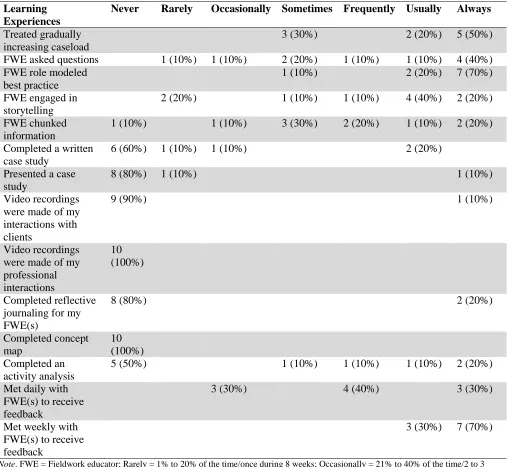
Based on the literature, a questionnaire was developed for the participants to report quantitatively on the learning experiences in which they engaged during their Level II FW. The participants reported engaging in 12 of 14 learning experiences (see Table 5). Of the 12 learning experiences reported, 10 occurred at least four to five times during the 8-week FW experience.
On their questionnaires, the participants indicated that the two most frequently occurring learning experiences were their FWEs modeling and providing feedback. Seventy percent of the
participants indicated that these two learning experiences always occurred. The participants’ comments in their FWJs and in the focus groups, and their responses to the questionnaires, did reflect the great importance of role modeling by FWEs for the development of students’ clinical reasoning skills. All of the participants listed modeling as a learning experience that occurred during their Level II FW. A
8 https://scholarworks.wmich.edu/ojot/vol7/iss2/8
statement that illustrates this is: “one experience that has helped me the most is when I had the opportunity to observe my supervisor lead treatment sessions” (FWJ6, P1). During the 8-week
placement, the frequency of feedback meetings between the FWEs and the participants varied. Weekly feedback meetings between the FWEs and the students were most prevalent, occurring 81% to 100% of the time, whereas daily feedback meetings with FWEs were reported to occur 41% to 100% of the time for seven out of the 10 participants. The value of consistent, daily feedback on the development of clinical reasoning is highlighted in the following statement: “I think, for me, the constant feedback that I got from my supervisors [was the most important learning experience]” (FGI, P4).
Treating a consistent caseload has been associated with the development of clinical reasoning skills among OT students (Cohn, 1989). FWJs and questionnaires indicate that seven of the 10 participants experienced a gradually increasing caseload at a frequency of 81% to 100% of the time; however, two of the participants described being assigned a set number of clients at the onset of their FW experiences. One of these two reported, “I [was] assigned six clients. This [did] not increase . . . . Instead, I fully focused on these six clients” (FWJ1, P7).
On the one hand, all of the participants indicated the FWE engaged in storytelling and asked probing questions at least once during their Level II FW. On the other hand, the FWEs chunking information (provided information in organized, digestible amounts) appeared to be a learning
experience with which the participants had the greatest variance. The participants’ experiences with the FWE chunking information ranged from a frequency of always (20%) to never (10%). The frequency of the FWEs asking probing questions ranged from always (40%) to rarely (10%); however, there were no references to these learning experiences in the participants’ FWJs or during the focus groups. As a result, it is difficult to determine the students’ perceptions regarding how these learning experiences impact the development of their clinical reasoning skills.
Fifty percent of the students were required to complete an activity analysis during their Level II FW. One participant perceived the completion of an activity analysis as beneficial to developing clinical reasoning skills and stated, “once I started getting on that road [analyzing activities], it helped me think more like an OTP”(FG1, P12). Forty percent of the participants were required to complete a case study, and two of the 10 participants submitted a reflective journal for their FWEs. It is difficult to ascertain to what extent the participants perceived these learning experiences as contributing to their development of clinical reasoning skills, since there were no references to these learning experiences in the participants’ FWJs or during the focus groups.
The literature suggests that the use of videotaping professional interactions and concept mapping are associated with the development of clinical reasoning (Cohn, 1989; Lee et al., 2016). None of the participants described the use of videotaping of professional interactions, and none of the participants created a concept map. One participant experienced the use of videotaping of client interactions.
Table 5
Participants’ (n = 10) Self-report of Frequency of Learning Experiences That Occurred During Level II Fieldwork
Learning Experiences
Never Rarely Occasionally Sometimes Frequently Usually Always
Treated gradually increasing caseload
3 (30%) 2 (20%) 5 (50%)
FWE asked questions 1 (10%) 1 (10%) 2 (20%) 1 (10%) 1 (10%) 4 (40%)
FWE role modeled best practice
1 (10%) 2 (20%) 7 (70%)
FWE engaged in storytelling
2 (20%) 1 (10%) 1 (10%) 4 (40%) 2 (20%)
FWE chunked information
1 (10%) 1 (10%) 3 (30%) 2 (20%) 1 (10%) 2 (20%)
Completed a written case study
6 (60%) 1 (10%) 1 (10%) 2 (20%)
Presented a case study
8 (80%) 1 (10%) 1 (10%)
Video recordings were made of my interactions with clients
9 (90%) 1 (10%)
Video recordings were made of my professional interactions
10 (100%)
Completed reflective journaling for my FWE(s)
8 (80%) 2 (20%)
Completed concept map
10 (100%) Completed an
activity analysis
5 (50%) 1 (10%) 1 (10%) 1 (10%) 2 (20%)
Met daily with FWE(s) to receive feedback
3 (30%) 4 (40%) 3 (30%)
Met weekly with FWE(s) to receive feedback
3 (30%) 7 (70%)
Note. FWE = Fieldwork educator; Rarely = 1% to 20% of the time/once during 8 weeks; Occasionally = 21% to 40% of the time/2 to 3 times during 8 weeks; Sometimes = 41% to 60% of the time/4 to 5 times during 8 weeks; Frequently = 61% to 80% of the time/6 to 7 times during 8 weeks; Usually = 81% to 90% of the time/8 to 9 times during 8 weeks; and Always = 100% of the time/10 times during 8 weeks.
Discussion
In recent years, there has been a 53% increase in the number of OTA educational programs across the country (AOTA, 2008; AOTA, 2015). The expansion of the number of OTA programs nationally appears to be directly related to the projected 43% increase in job market growth for OTAs expected by 2024 (United States Department of Labor, 2015). Despite the increase in the number of OTA programs, little is known about the types of learning experiences that may contribute to clinical reasoning development in OTA students during Level II FW (Schell & Schell, 2008). This study aimed to gain insight into OTA students’ perceptions regarding what learning experiences facilitated
development of their clinical reasoning skills during Level II FW.
10 https://scholarworks.wmich.edu/ojot/vol7/iss2/8
Clinical reasoning according to OTA students. In this study, the participants articulated components of clinical reasoning. They appeared to see the different ways that clinical reasoning is expressed in practice. The participants identified five types of clinical reasoning described in the
literature (Torcivia & Gupta, 2008). Clinical reasoning skills appeared to progress in sophistication from initial reliance on intuition to more sophisticated forms of reasoning, suggesting students benefit from experience in addressing the complex issues that arise in clinical practice.
Promoting clinical reasoning in OTA students. Several of the learning experiences the
participants attributed to fostering clinical reasoning skills are consistent with the literature (Alnervik & Svidén, 1996; Cohn, 1989; LaRochelle et al., 2012; Rodger et al., 2011; Sladyk & Sheckley, 2001; Tiruneh et al., 2014). The students mentioned benefitting from hands-on learning with an opportunity to engage in all aspects of the occupational therapy process. They also noted the benefits of having FWEs who demonstrate the following behaviors and supervision methods: They are welcoming and
approachable, they provide clear expectations and regular feedback, they require students to increase their responsibility for caseload gradually, they model best practices, and they provide opportunities for collaboration. Opportunities to self-reflect, whether as a requirement of the FWE or via journaling for the academic program, may also contribute to Level II OTA students’ development of clinical reasoning skills.
In the literature, many of the instructional strategies and learning activities found to contribute to the development of clinical reasoning skills among other health professions students, such as concept mapping, problem-based learning, repeated quizzing, small group discussion, role playing, setting personal learning goals, sharing preferred learning styles, completing case studies, reviewing evidenced-based articles, completing evaluations of students’ performance, using chart talk, explaining thinking procedures aloud, and videotaping of professional interactions, were not experienced by the study participants (Alnervik & Svidén, 1996; Coates & Crist, 2004; Cohn, 1989; Distler, 2007; LaRochelle et al., 2012; Lee et al., 2016; Tiruneh et al., 2014). Since none of the participants in this study engaged in these activities, it is difficult to determine whether these learning experiences would enhance the OTA students’ clinical reasoning skills.
Learning experiences during fieldwork. The OTA students did participate in a variety of learning experiences during their Level II FW that were consistent with other health professions students. However, since this study collected data on the OTA students’ self-perceptions, it is not possible to conclude definitively how the number and variety of learning experiences currently offered in traditional and community-based Level II FW settings facilitate the development of clinical reasoning skills in OTA students. The results suggest that the OTA students perceived modeling of best practices and receipt of consistent feedback as learning experiences that most significantly contributed to clinical reasoning skills development. Since the OTA students have fewer weeks of Level II FW, as compared to graduate level OT students, FWEs and academic fieldwork coordinators may wish to carefully consider opportunities to incorporate these learning experiences into Level II fieldwork programs to foster OTA students’ development of clinical reasoning skills.
Limitations
The primary limitation of this study is the use of a relatively small convenience sample where all of the participants were students of the same academic program. The participants completed their FW at sites located in the same geographical area. Six of the 10 participants completed Level II FW in a community-based setting, receiving only 8 hr of OT FWE supervision per week, which may impact the
generalizability of the results to more traditional settings, where students receive more in-person supervision. Despite efforts made throughout the study to minimize researcher bias, it may have tainted the results. Furthermore, it was not possible to conduct member checking to confirm the meaning of statements.
Directions for Future Research
Additional studies, with a larger sample, expanded geographic area, and inclusion of other OTA programs, are needed to further explore Level II OTA students’ perceptions regarding which learning experiences best contribute to the development of clinical reasoning. In addition, research on the FWEs’ perceptions and a comparison between the perceptions of OT and OTA students would add to the profession’s current body of knowledge regarding students’ development of clinical reasoning skills. Conclusion
Level II FW is an essential component of OTA student education, and the development of clinical reasoning is required for OTA students to meet entry-level competence. This study is the first published that attempts to describe the types of learning experiences that are associated with promoting the development of clinical reasoning skills in OTA students during Level II FW. As a first step, the study sought to describe how OTA students define clinical reasoning and what Level II OTA students perceive are the learning experiences that contributed to their development of clinical reasoning. The development of clinical reasoning of Level II OTA students appears to be the result of many factors, several of which are consistent with the learning experiences that have been attributed to the
development of clinical reasoning in other health professions and bachelor or graduate level OT students. It is clear from the OTA students’ points of view that FWEs’ behaviors and supervision
methods are crucial to their learning. OTA students described high learning and clinical reasoning when FWEs provided role modeling and consistent feedback during Level II FW. Since OTA students’ Level II FW is 8 weeks, integration of learning experiences that students perceive as contributing to the development of their clinical reasoning should be given priority. When selecting and/or developing student programs that are inclusive of OTA students, academic programs should provide training to FWEs on the various learning experiences that OTA students consider the most valuable to promote the development of this crucial skill.
Jeanne M. Coviello, OTD, OTR/L, graduated from Towson University with a BS degree in 1988 and has over 30 years of experience as an occupational therapist. During her clinical career, she worked with adult clients in a variety of settings. She currently serves as the academic fieldwork coordinator for Thomas Jefferson University’s Occupational Therapy Assistant Studies Program, and recently earning her postprofessional OTD from Thomas Jefferson University-East Falls.
Marie-Christine Potvin, PhD, OTR/L, is an occupational therapist with 21 years of clinical pediatric experience and is the associate director of the clinical occupational therapy doctorate at the East Falls campus of Thomas Jefferson University. Dr. Potvin completed a PhD in rehabilitation sciences and a postdoctoral fellowship at the University of Vermont. She has extensive knowledge in research methodology, experience with teaching adult learners, and expertise in the fields of autism and participation.
LaRonda Lockhart-Keene, OTD, OTR/L, is currently the program director of Thomas Jefferson University’s Occupational Therapy Assistant Studies Program. Over the course of her 21-year career, she has worked with populations from infancy to older adulthood. Dr. Lockhart-Keene has spent the majority her career working with the geriatric population and
transitioned to academia 6 years ago. Dr. Lockhart-Keene completed her doctoral degree at Philadelphia University with an emphasis on education and the transition of OT clinicians to academicians.
12 https://scholarworks.wmich.edu/ojot/vol7/iss2/8
References
Alnervik, A., & Svidén, G. (1996). On clinical reasoning:
Patterns of reflection on practice. Occupational
Therapy Journal of Research: Occupation, Participation and Health, 16(2), 98-110. https://doi.org/10.1177/153944929601600202 American Occupational Therapy Association. (2018).
Academic programs annual data report. [PDF]. Retrieved from
https://www.aota.org/~/media/Corporate/Files/E ducationCareers/Educators/2017-2018-Annual-Data-Report.pdf
American Occupational Therapy Association. (2011). Accreditation Council for Occupational Therapy
Education (ACOTE) standards. American
Journal of Occupational Therapy, 66(Suppl. 6), S6-S74. Retrieved from:
https://ajot.aota.org/article.aspx?articleid=18530 50&resultClick=3
American Occupational Therapy Association. (2012). COE Guidelines for an Occupational Therapy Fieldwork Experience - Level II. [PDF]. Retrieved from https://www.aota.org/~/media/Corporate/Files/E ducationCareers/Educators/Fieldwork/LevelII/C OE%20Guidelines%20for%20an%20Occupation al%20Therapy%20Fieldwork%20Experience%2 0--%20Level%20II--Final.pdf
American Occupational Therapy Association. (2015). Academic programs annual data report. [PDF]. Retrieved from
http://www.aota.org/~/media/Corporate/Files/Ed ucationCareers/Educators/2014-2015-Annual-Data-Report.pdf
Anderson, C. (2010). Presenting and evaluating
qualitative research. American Journal of
Pharmaceutical Education, 74(8), 141. https://doi.org/10.5688/aj7408141
Babyar, S. R., Pivko, S., & Rosen, E. (2010). Pedagogical tools to develop clinical reasoning: Physical
therapy students’ perspective. Journal of Allied
Health, 39(3), 97E-104E.
Coates, G. L. F., & Crist, P. A. (2004). Brief or new: Professional development of fieldwork students: Occupational adaptation, clinical reasoning, and
client-centeredness. Occupational Therapy in
Health Care, 18(1-2), 39-47.
https://doi.org/10.1080/J003v18n01_05 Cohn, E. S. (1989). Fieldwork education: Shaping a
foundation for clinical reasoning. The American
Journal of Occupational Therapy, 43(4),
240-244.https://doi.org/10.5014/ajot.43.4.240
Cronin, A., & Graebe, G. (2018). Clinical reasoning in
occupational therapy. Bethesda, MA: AOTA
Press.
Distler, J. W. (2007). Critical thinking and clinical competence: Results of the implementation of student-centered teaching strategies in an
advanced practice nurse curriculum. Nurse
Education in Practice, 7(1), 53-9.
http://dx.doi.org/10.1016/j.nepr.2006.08.003 Green, J., Willis, K., Hughes, E., Small, R., Welch, N.,
Gibbs, L., & Daly, J. (2007). Generating best evidence from qualitative research: The role of
data analysis. Australian and New Zealand
Journal of Public Health, 31(6), 545-550.
https://doi.org/10.1111/j.1753-6405.2007.00141.x
Intuitive. (2019). Merriam-Webster. Retrieved from
https://www.merriam-webster.com/
LaRochelle, J. S., Durning, S. J., Pangaro, L. N., Artino, A. R., van der Vleuten, C., & Schuwirth, L. (2012). Impact of increased authenticity in instructional format on preclerkship students’ performance: A two-year, prospective,
randomized study. Academic Medicine, 87(10),
1341-1347. Retrieved from
https://doi.org/10.1097/ACM.0b013e31826735e 2
Lee, J., Lee, Y., Gong, S., Bae, J., & Choi, M. (2016). A meta-analysis of the effects of non-traditional teaching methods on the critical thinking abilities
of nursing students. BMC Medical
Education, 16(240).
https://doi.org/10.1186/s12909-016-0761-7
Leedy, P., & Ormrod, J. (2016). Practical research:
Planning and design. New York, NY: Pearson.
Liu, K. P. Y., Chan, C. C. H., & Hui-Chan, C. W. Y. (2000). Clinical reasoning and the occupational
therapy curriculum. Occupational Therapy
International, 7(3), 173-183. https://doi.org/10.1002/oti.118
Ortlipp, M. (2008). Keeping and using reflective journals
in the qualitative research process. The
Qualitative Research Report, 13(4), 695-705.
Portney, L. G., & Watkins, M. P. (2009). Foundations of
clinical research: Applications to practice (3rd ed.). Upper Saddle River, NJ: Pearson Prentice-Hall.
Rodger, S., Fitzgerald, C., Davila, W., Millar, F., & Allison, H. (2011). What makes a quality occupational therapy practice placement? Students’ and practice educators’
perspectives. Australian Occupational Therapy
Journal, 58(3), 195-202. https://doi.org/10.1111/j.1440-1630.2010.00903.x
Rubin, H. J., & Rubin, I. S. (2011). Qualitative
interviewing: The art of hearing data. Thousand Lakes, CA: Sage.
Scaffa, M. E., & Smith, T. M. (2004). Effects of Level II fieldwork on clinical reasoning in occupational
therapy. Occupational Therapy in Health Care,
18(1-2), 31-38.
https://doi.org/10.1080/J003v18n01_04
Schell, B. A. B., & Schell, J. W. (2008). Clinical and
professional reasoning in occupational therapy.
Philadelphia, PA: Lippincott Williams & Wilkins.
Sladyk, K., & Sheckley, B. (2001). Clinical reasoning and reflective practice: Implications of fieldwork
activities. Occupational Therapy in Health
Care, 13(1), 11-22.
https://doi.org/10.1080/J003v13n01_02 Tiruneh, D. T., Verburgh, A., & Elen, J. (2014).
Effectiveness of critical thinking instruction in higher education: A systematic review of
intervention studies. Higher Education
Studies, 4(1), 1-17.
https://doi.org/10.5539/hes.v4n1p1
Trochim, W. (2006). Qualitative validity. Web Center for
SocialResearch Methods. Retrieved from https://www.socialresearchmethods.net/kb/qualv al.php
Torcivia, E., & Gupta, J. (2008). Designing learning experiences that lead to critical thinking and
enhanced clinical reasoning. OT Practice,
13(15), 1-8.
United States Department of Labor, Bureau of Labor and Statistics. (2015). Occupational therapy assistant
and aides. Occupational Outlook Handbook.
Retrieved from
http://www.bls.gov/ooh/healthcare/occupational-therapy-assistants-and-aides.htm#tab-6
Wolpaw, T., Papp, K. K., & Bordage, G. (2009). Using SNAPPS to facilitate the expression of clinical reasoning and uncertainties: A randomized
comparison group trial. Academic
Medicine, 84(4), 517-524.
https://doi.org/10.1097/ACM.0b013e31819a8cbf
14 https://scholarworks.wmich.edu/ojot/vol7/iss2/8