Review article Available online www.ijsrr.org ISSN: 2279–0543
International Journal of Scientific Research and Reviews
A Review on Strategies for Production of (Poly-3-Hydroxyalkanoates):
The Green Materials for Sustainable Development - Current Status
and Future Prospects
Godbole Suchitra
Dept. of Microbiology, Dr. D.Y. Patil Arts, Commerce and Science College, Sant Tukaram Nagar Pimpri , Pune, India
E-mail : [email protected]
ABSTRACT
One of the major paradigm shifts towards sustainable development is the substitution of nonrenewable resources with renewable resources. Petroleum derived plastics pose a great danger to the environment and also due to the finite supply of petroleum products, research efforts are now shifted towards finding alternatives to synthetic plastics, which are also environmentally friendly. Polyhydroxyalkanoates are one such class of biodegradable plastics, which have gained much attention in recent years. The present paper reviews various aspects of Polyhydroxyalkanoate production, including different strategies for production of PHAs in bacteria, transgenic plants and activated sludge., the various applications of PHAs, PHA production from inexpensive renewable resources, different fermentation strategies, methods for recovery of polyhydroxyalkanoates (PHAs) from biomass,economic considerations for cost effective PHA production, strategies to produce PHAs in activated sludge and transgenic plants. The current status and the future trends have been discussed.
KEY WORDS
:
Bioplastics, Polyhydroxybutyrate, renewable resources, biodegradation, polyhydroxyalkanoates.
Corresponding Address:
Dr. Suchitra.S. Godbole Dept. of MicrobiologyDr. D.Y. Patil Arts, Commerce and Science College, Sant Tukaram Nagar Pimpri , Pune-411018
1. INTRODUCTION :
The replacement of petro derived plastics by biodegradable plastics is one of the major
paradigm shifts towards sustainable development. It is now well established that petro derived
plastics are non biodegradable and may remain in the environment for the next 250 – 450 years.
Though plastic waste can be managed through source reduction, recycling, thermal destruction and
land filling, the associated technologies for such management are not environmentally friendly.
Public awareness for the need to avoid endangerment of the natural systems that support life
on earth i.e. the atmosphere, water soil and the living beings has also intensified. Thus the need of
the hour is sustainable development in the manufacturing processes. There is a need to improve the
efficiency of industrial processes thus minimizing wastage. Another approach for the development
of sustainable technology is to design Eco-friendly products, which can be derived from the vast
diversity of resources on the earth, and are also environmentally friendly. With this view the present
paper reviews the research on Polyhydroxyalkanoates, the most promising substitute for synthetic
plastics, which can be the future green materials as an alternative to non degradable plastics.
2. NEED FOR RESEARCH ON DEGRADABLE PLASTICS:
During the last two decades, the awareness for the clean environment has compelled
scientists, engineers and technologists to search for alternatives to the non-degradable plastics. In the
recent years it has been argued that degradable plastics could provide a solution for the management
of plastics waste. Environmentally friendly plastic in terms of “Sustainable development” should
possess the following properties:
Appropriated thermo-mechanical attributes
Recyclable
Completely biodegradable
Produced from renewable resources
Degradable plastics are either photodegradable or Biodegradable. Photodegradation occurs
when plastics are exposed to ultraviolet light 1.
3. RECENT DEVELOPMENT IN BIODEGRADABLE PLASTICS:
The production of biodegradable plastics can be viewed within the wide context of the
“greening of industry” with the use of renewable biomass as an alternative feedstock to fossil fuels in
Most biodegradable plastics made from renewable resources are products of biotechnology,
films suitable for certain packaging applications are made from microbial polysaccharides such as
pullulan and xanthan 2, as well as from cellulose and chitosan 3 Polylactides, such as those marketed
by Du Pont are produced from another fermentation product, lactic acid 4. A number of plastic like
materials consisting of chemically modified naturally polymers have been developed 5. Materials
made from exclusively modified starch which constitutes 70 – 90% of the total and remainder is
plasticizers and additives which are also degradable. Manufacturers claim that this class of polymers
performs similarly to biopolymers produced by microorganisms. They degrade in a matter of
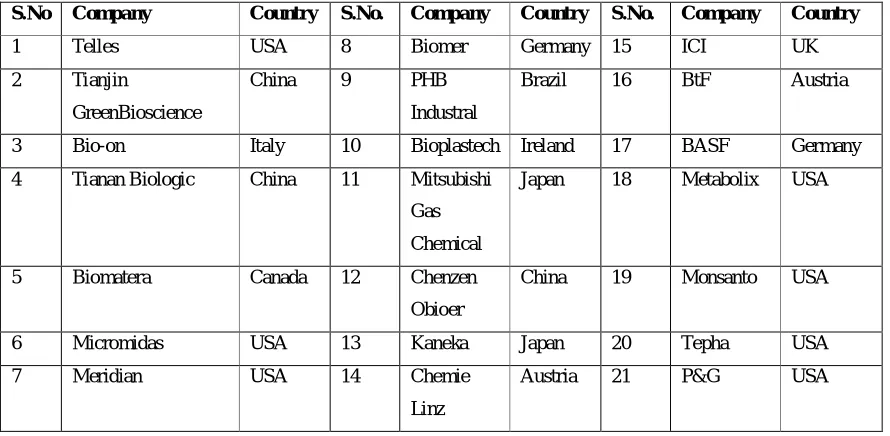
months and do not release toxic or metallic pollutants 5 .Table 1.0 gives the list of some of the
companies producing biodegradable polymers.
Table 1.0: Current players in PHA based resins ( Polyhydroxyalkanoates)
S.No Company Country S.No. Company Country S.No. Company Country
1 Telles USA 8 Biomer Germany 15 ICI UK
2 Tianjin
GreenBioscience
China 9 PHB
Industral
Brazil 16 BtF Austria
3 Bio-on Italy 10 Bioplastech Ireland 17 BASF Germany
4 Tianan Biologic China 11 Mitsubishi
Gas
Chemical
Japan 18 Metabolix USA
5 Biomatera Canada 12 Chenzen
Obioer
China 19 Monsanto USA
6 Micromidas USA 13 Kaneka Japan 20 Tepha USA
7 Meridian USA 14 Chemie
Linz
Austria 21 P&G USA
The most interesting of other biologically produced replacements for synthetic plastics are the
polyhydroxyalkanoates. PHAs have received much industrial attention because of their material
properties similar to conventional plastics, their complete biodegradability and the ability to be
produced from renewable resources. A number of review articles encompassing the general features
of PHAs 6,7,8,9,10,11, the physiology, genetics of PHA producing microorganisms and molecular
biology 12,13, the development of PHAs having novel monomer constituents 14,15,16, production
processes and their economic evaluation 17,18,19,20,21, and biodegradability of PHAs have been
4.POLYHYDROXYALKANOATES(PHAs)-
THE
BIODEGRADABLE
MICROBIAL THERMOPLASTICS:
Polyhydroxyalkanoates are polyesters of hydroxyalkanoates (HAs) synthesized by numerous
bacteria as intracellular carbon and energy compounds and accumulated as granules in the cytoplasm
of the cells. Many microorganisms accumulate large quantities of PHA intracellularly when their
growth is limited by some element other than carbon. Such cultures are found in wide variety of
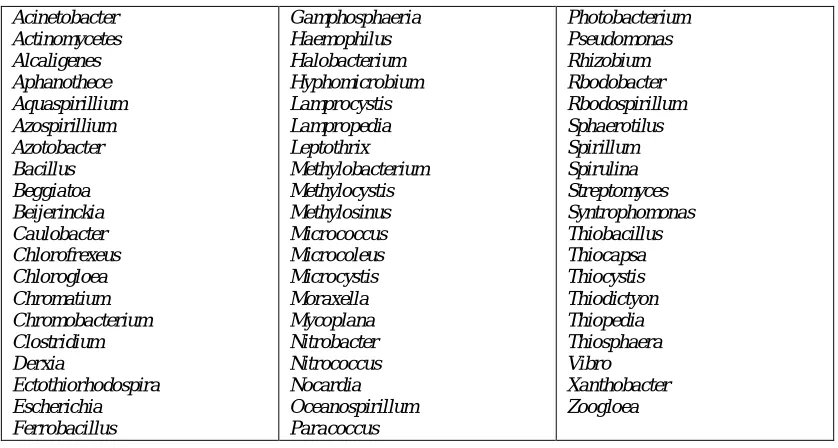
niches. The list of PHA accumulating microorganisms is shown in Table 2.0.
Table 2.0 Poly (3-hydroxybutyrate)-Accumulating Microorganisms
Acinetobacter Actinomycetes Alcaligenes Aphanothece Aquaspirillium Azospirillium Azotobacter Bacillus Beggiatoa Beijerinckia Caulobacter Chlorofrexeus Chlorogloea Chromatium Chromobacterium Clostridium Derxia Ectothiorhodospira Escherichia Ferrobacillus Gamphosphaeria Haemophilus Halobacterium Hyphomicrobium Lamprocystis Lampropedia Leptothrix Methylobacterium Methylocystis Methylosinus Micrococcus Microcoleus Microcystis Moraxella Mycoplana Nitrobacter Nitrococcus Nocardia Oceanospirillum Paracoccus Photobacterium Pseudomonas Rhizobium Rbodobacter Rbodospirillum Sphaerotilus Spirillum Spirulina Streptomyces Syntrophomonas Thiobacillus Thiocapsa Thiocystis Thiodictyon Thiopedia Thiosphaera Vibro Xanthobacter Zoogloea
Of all the PHAs, Poly-3-hydroxybutyrate (PHB) is the best known. It was first discovered
and initially described in 1925, although it was not until Late 1950s that the metabolic pathways
involved in the synthesis and degradation were elucidated. The first indication that there might be a
role for PHB as a commercial plastic emerged in 1959 & 1960 when a US Patent for its use as a
surgical suture was applied for.
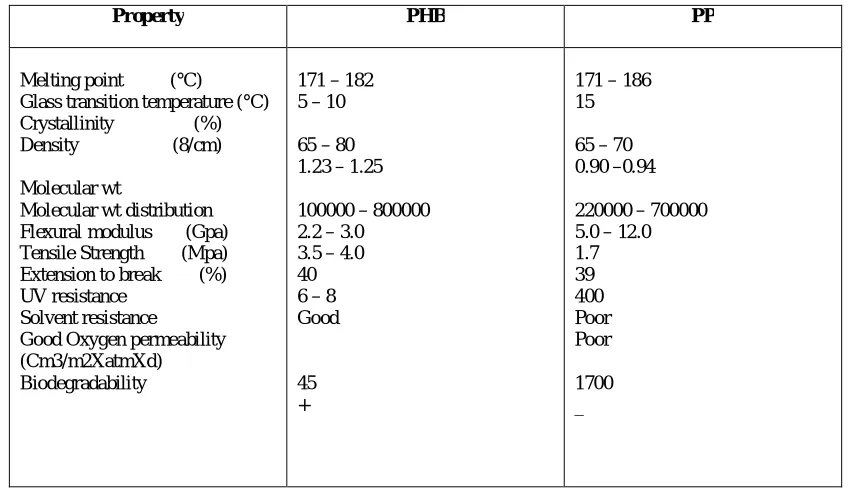
PHB homopolymer shown similarities in its physical properties to polypropylene (PP). The
main difference between the two is the biodegradability of PHB. Although other difference such as
the density can have an impact on potential applications. PHB is much denser material than PP, so
that whilst the latter floats, PHB will sink to the bottom of an aquatic ecosystem. This property
allows PHB to be degraded in surface sediments by biogeochemical mechanisms. The comparison
Table 3.0 : Chemical and Physical Properties of PHB v. PP
Property PHB PP
Melting point (°C) Glass transition temperature (°C) Crystallinity (%) Density (8/cm)
Molecular wt
Molecular wt distribution Flexural modulus (Gpa) Tensile Strength (Mpa) Extension to break (%) UV resistance
Solvent resistance
Good Oxygen permeability (Cm3/m2XatmXd) Biodegradability
171 – 182 5 – 10
65 – 80 1.23 – 1.25
100000 – 800000 2.2 – 3.0 3.5 – 4.0 40 6 – 8 Good
45 +
171 – 186 15
65 – 70 0.90 –0.94
220000 – 700000 5.0 – 12.0 1.7 39 400 Poor Poor 1700 _
5. PHB METABOLISM:
PHB synthesis involves three enzymatic steps. The pathway of PHB synthesis starts with
conversion of an appropriate carbon substrate (sugar, alcohol, organic acids or carbon dioxide) into
acetyl CoA. Two molecules of acetyl-CoA are condensed by the action of 3-ketothiolase
(acetyl-CoA acetyltransferase). The intermediate is reduced to D(-)-3 hydroxybutyryl (acetyl-CoA by NADPH_
dependent acetoacetyl CoA- reductase. PHB is then produced by the action of PHB synthase
(polymerase) key regulatory enzyme in PHB metabolism is acetyl CoA- acelytransferase, which is
inhibited by high concentrations of free coenzyme A. Under balanced growth conditions CoA-SH
levels are high and the synthesis of PHB is inhibited. In nutrient limited but carbon excess condition,
build up of NADH inhibits citrate synthase, which results in augmentation of acetyl CoA level to a
point where inhibition by CoS-SH is overcome. The condensation reaction to acetoacetyl CoA
proceeds and PHB is polymerized with the action of PHB synthase 24.
6. BIODEGRADATION OF PHAs:
PHAs can be completely mineralized to H2O and CO2 in aerobic systems 25, H2O, CO2 and
CH4 are the final end products when PHA is degraded under anaerobic conditions 26. PHA
degradation in lakes has been described 27,28. There seems to exist a wide distribution of PHA
Polymer degradation is controlled through the oxidation of monomeric 3-hydroxybutyrate, by
the enzyme 3-hydroxybutyrate dehydrogenase. This enzyme is subject to product inhibition by
acetoacetate and NADH. These main regulatory elements of the cycle are supplemented by a second
level of control: intermediates of tricarboxylic acid cycle cause feedback inhibition of the enzymes.
Thus synthesis and breakdown of PHB is linked to the metabolic status of the cell and the carbon
flux through intermediary metabolism. The degradation of PHAs and the composition of microbial
destructors under natural conditions were studied by Volova et.al. 30. Biodegradation of PHAs have
been reviewed by Reddy et al. 31, and the degradation by thermophilic streptomyces has been
reported 32.
7. APPLICATION OF PHAs:
PHAs have been drawing considerable industrial interest as candidates for biodegradable
and/or biocompatible plastics for a wide range of applications, some of which are listed in table 4.0.
Table: 4.0 Applications of polyhydroxyalkanoates
Sr.No. Applications
1. Packaging films (for food packages) bags, containers, paper coatings
2. Biodegradable career for long term dosage of drugs, medicine, insecticides, herbicides or fertilizers
3. Disposable items – such as razors, utensils, diapers, feminine hygiene products, cosmetic containers, shampoo bottles, disposable cups
4. Starting materials for chiral compounds
5. Medical applications- Surgical sutures, staples, swabs, wound dressings, bone replacements and plates, blood vessel replacements, stimulation of bone growth by piezoelectric properties
There are consumer focused applications which will benefit from both the product’s
biodegradability and the fact that, it is made from renewable resources. PHAs can be used in many
fields and new potential applications are still emerging 33. Applications ranging from denitrification
in water and wastewater treatment 34, to tissue engineering materials 35, to the applications of PHA
nano/microparticles in biotechnological and biomedical applications 36, and sustained drug release
8. COMMERCIAL PRODUCTON OF PHA IN BACTERIA:
Zeneca Bioproducts Billingham UK had developed PHB and PHB/V under the trade name
Biopol since mid 1970s, and is the commercial producer of PHB and PHB-CO-HV. The
production being around 1000 tons per annum. Biopol was being sold at US $ 16/kg. If we consider
the price of conventional plastics, such as polyethylene and polypropylene, which is less than the US
$ 1/kg. PHAs may be considered too expensive to be used as bulk plastic materials. However, it is
unfair to compare the price of PHAs with polyethylene or polypropylene since the latter is not
biodegradable. Therefore the comparisons should be made with other biodegradable polymers such
as Polylactides, diol-diacid based aliphatic polyesters and starch based polymers which are currently
sold at US $ 5-15/per kg.
Even though the prices of PHAs are still very high, there are several companies producing
PHA to meet the demands of the market. PHB and PHBV are still the main members of PHAs that
are produced on commercial scale. Presently there are some PHAs products in the markets such as
Biopol, Mirel and Nodax made in USA, Biomer in Germany, Biocycle in Brazil, Degrapol in Italy,
Tiannan PHBV and PHB in China. Most companies have started to increase their production
capacities of PHAs to several thousand tons or 10 thousand tons per year e.g. Tianjin Green
Biosciences Ltd., company has been building a new factory to produce PHAs at the capacity of 10
thousand tons per year 38. There are now about 75,000/- metric tons of annual capacity globally to
produce PHAs from five companies. Telles (USA), Green bioscience/DSM (China), Bio-on (Italy)
Tianan Biologiy material co (China), Biomatera (Canada); Nine other companies are conducting
developmental work on PHAs some with pilot plants micromidas (USA), Meridian (USA), Biomer
(Germany). PHB Industrial Brazil, Bioplastic (Ireland). The salt and marine chemical Res Institute
(India), Mitsubishi gas chemical (Japan), Shenzen Obioer China and Kaneta (Japan).
9.PHA PRODUCTION FROM LOW COST RENEWABLE RESOURCES:
For the commercialization of PHAs, much effort has been devoted to reduce the cost by
employing efficient bacterial strains and more efficient fermentation/recovery process. Many
bacteria such as Alcaligenes eutrophus, Methylopophs, Pseudomonas oleovorans synthesize PHAs
under limitations of nutritional element such as N, P, Mg, K and /or O or S in presence of excess of
carbon source. For the cultivation of these bacteria, two-step cultivation method is employed. Cells
are first grown without nutrient limitation. Nutrient limitation is applied for PHA synthesis in the
In order to make PHAs production cost effective and economical, research on PHAs
production from inexpensive raw materials a substrates have shown that even though PHA could be
produced from low cost substrates but in most cases the cell density and PHA contents were at low
level, making it more difficult for PHAs to be separated from the dilute culture broth.PHA
production from inexpensive carbon sources such as agricultural wastes and surplus materials 39,
plant oils 40,41,42,43, molasses 44,45,46, starch 47,48,49, whey 50,51, other inexpensive carbon sources
52,53,54,55 have been reported.
As compared to processes using single pure culture, the use of mixed cultures as a cheaper
method to produce PHAs has gained much attention in recent years. Mixed cultures could become
the most effective and potential means of producing PHAs in the future 56.
The use of mixed culture using industrial wastes was reported by Dias et al. 57. PHA production
using mixed culture and saponified sunflower oil and mixed culture with sugarcane molasses have
been reported recently 58,59,60.
Review articles on production of polyhydroxyalkanoates have been published recently 61,62.
In most cases of mixed cultures PHAs were produced from the organic acids contained in the
wastewater or transformed from other industrial wastes. Thus mixed culture strategy not only helps
to solve the problem of environmental pollution but also simultaneous production of value added
materials which is important for sustainable development and environmental protection. Two
recently published reviews have included studies in production of PHAs from agro-industrial
byproducts and low cost sustainable raw materials 63,64.
10. RESEARCH ON NEW PHA PRODUCING SPECIES:
The best PHA producing species should satisfy several demands such as, it should be fast
growing, should be able to utilize inexpensive carbon sources, have a high conversion rate. Such
strategies include isolation of efficient strains from natural environments and designing new
recombinant strains.
Newer and newer strains continue to be reported, but most of the studies are at just shake
flask level, or batch culture, so that the cell densities and PHA contents are not so high. Much
research efforts are needed to be focused in this area.
However, some bacteria such as Alcligenes latus, Azobactor vinelandii and recombinant E.coli do
not require nutritional limitation for the synthesis of PHAs and can accumulate PHAs during growth.
should be optimized for each bacterium. The current strategies for production of optimization of
PHA production have been reviewed by Robin Green 65.
11
. RECOVERY OF PHAs FROM MICROBIAL BIOMASS:
Several methods have been developed for the recovery of PHAs, (Mostly PHB) from the
cells. PHA containing biomass can be recovered by centrifugation or filtration and may be separated
from the non PHA portion of the biomass by extraction using solvents such as chloroform,
methylene chloride, propylene carbonate and dichloromethane 66.
However, the extracted polymer solution containing more than 5% (W/V) PHB becomes very
viscous and removal of cell debris is difficult. The large amount of solvent required makes this
method economically unattractive even after the recycle of solvents. Several other methods have
been developed involving use of sodium hypochlorite for the differential digestion of non-PHA
cellular materials 67, however during the digestion of non PHA cellular material (NPCM), severe
degradation of PHB has been observed. Surfactant pretreatment and hypochlorite digestion under
optimized conditions resulted in higher purity of PHB with less degradation 66. An enzymatic
digestion method developed by Zeneca consists of thermal treatment of biomass, enzymatic
digestion and washing with an anionic surfactant to solubilize NPCM 68. A process for PHB
recovery using a dispersion of sodium hypochlorite and chloroform has been developed 69,70. It was
suggested that chloroform immediately dissolves the isolated PHB by hypochlorite, and thus protects
polymer from degradation.
Process analysis and economic evaluation for PHB production processes using different
microorganisms and various recovery processes by Lee et al.71 have demonstrated that the cost of
carbon source contributes significantly to the overall economics and various recovery processes have
demonstrated that the cost of carbon source contributes significantly to the overall economics in
large production scale. For the production of 2,850 tons of purified PHB, the process employing A.
eutrophus with recovery method of surfactant- hypochlorite digestion resulted in lowest price of
PHB, $ 5.58/kg. As the scale of production increase to one million tons per year the price will drop
to $ 4.75/kg 71.The strategies for isolation and recovery have been reviewed recently by
12. ECONOMIC CONSIDERATIONS:
Process analysis and economic considerations for PHB production process by Lee et.al.71,
have demonstrated that the cost of carbon source contributes significantly to the overall economics in
large production scale. For the production of 2850 tons of purified PHB, the process employing A.
eutrophus with recovery process of surfactant-hypochlorite digestion could result in lowest price of
PHB$ 5.58/kg. As the scale of production increases to one million tons per year the price will drop to
4.75/kg.
There are continued efforts to reduce the production cost of PHB so as to make them
comparable to the currently available thermoplastics. The production cost could be considerably
lowered when inexpensive carbon substrates such as whey, cane molasses, agricultural wastes or
hemicellulosic hydrolysate are used for fermentation, since the cost of carbon substrate accounts for
70 – 80% of total raw material cost.
The use of whey as a substrate in a two stage fermentation process and use of non solvent
based extraction and recovery process for PHB was demonstrated. The pre-design cost estimate of
the process revealed that the cost of production of PHB could be reduced to $3.04/kg. 73, Even
though this price is still higher than petrochemical based plastic materials, complete biodegradability
of PHB could justify higher price.
Since fermentation strategies for the production of PHB have been well developed, adopting
these strategies using cheaper carbon substrates for large scale production of PHB could further bring
down the cost of PHB. Studies are underway to optimize fed- batch fermentation using whey, lactic
acid and propionic acid produced from whey, in turn, can bring down the cost of copolymer
production as these acids are inexpensive.
13.
PHAs FROM ACTIVATED SLUDGE
:PHAs are known to be temporarily stored by microorganisms in activated sludge especially
in the anaerobic-aerobic process. When PHA is extracted from activated sludge, it is thermoplastic
with the remarkable characteristics of biodegradability. Activated sludge as a possible source of
biodegradable plastics has been reviewed by Satoh et. al. 74,75. Various research papers on the
augmentation of PHA content in activated sludge have been published 76,77,78.Much research has been
like paper mill effluent 79,molasses spent-wash 80,food processing industries wastewater treatment
plants81,milk waste and dairy wastewater 82. Studies on process optimization for optimum production
of PHAs from activated sludge have been carried out 83,84,85. The optimum yields of PHA obtained
was 49.5% of the biomass. An efficient PHA production process from activated sludge has been
reported 86. A techno-economic evaluation of PHA production process from waste activated sludge
was evaluated by Mudliar et.al. 87. Research is now directed towards the biopolymer production from
different wastewaters as an economic alternative for the cost effective production.
The attempt to produce PHA by activated sludge could provide a techno-economic solution to
bioplastic production and commercialization; However further investigations are needed in these
directions.
14. PRODUCTION OF PHA IN TRANSGENIC PLANTS:
With recent advances in plant molecular biology, allowing expression of foreign proteins in a
variety of plants, genetic engineering of crop plants was aimed at both increasing the quantity and
modifying the quality of the products produced in crop plants. In view of the flexibility of plants in
expressing foreign genes, it was of interest to explore the feasibility of synthesizing PHAs in plants.
Transgenic plants harboring A. eutrophus PHA biosynthesis genes have been developed with the aim
of ultimately reducing the price of PHA to close to that of starch. Up to 10mg/g PHB (which
represents 10% of dry cell weight), could be produced in the model transgenic plant Arabidopsis
thaliana. The concentration and yield of PHA will increase as our understanding of plant
biochemistry and genetic engineering improves. It has been shown that PHA in potato, tobacco leaf,
corn, sugarcane can be produced transgenically 88,89,90.Various researchers have reviewed the
feasibility of producing PHAs in transgenic plants 91,92,93,94.The challenge of producing PHA
involves expression of several genes along with optimization of PHA synthesis in the host. The idea
is that if the carbon that is normally present in starch, sucrose or oils can be diverted to PHA, it may
be possible to produce these PHAs at low cost and in large quantities in maize, potato, sugar beet,
cereals or even oil containing seeds. It is assumed that after the necessary research and
development,it will ultimately be possible to obtain comparable yield of PHAs,with around 2.5t PHA
year-1 ha-1 might be anticipated. PHA could be produced by using fallow land and by investing
presently unproductive land: production of bulk amounts of polyesters would require on the order of
would ultimately probably decrease to around $ 0.50 – 1.00/kg. Thus transgenic plants may become
economically feasible alternative source of PHAs in the future.
15. CONCLUDING REMARKS:
Replacement of synthetic non degradable plastic with biodegradable PHA derived plastics may not
significantly affect the consumption of fossil fuels but biodegradable plastics will have great
contribution in minimizing problems related to environmental pollution.
At present, PHA is not cost competitive compared to fossil-derived products. Encouraging and
intensifying research work on PHA is anticipated to enhance its
economic viability in the future. A lot of research is being done on production of PHAs to bring
down the cost of production. Various reviews on production of PHAs have been published 61,95,96,97.
Efforts are being made to design or isolate new strains with high production capacities, optimize
fermentation processes with increased yields, cost effective extraction and recovery processes 98,99,100
.
Utilization of inexpensive carbon sources, and development of transgenic plants for
economical production. While the processes are not yet economically competitive with that of
petroleum bases plastics with further research however PHA products may soon become
commercially viable. However in order to bring, biodegradable plastics to market, further research
efforts are needed for techno economical feasibility of producing PHAs at competitive cost with
synthetic plastics with all these efforts PHAs will become a major biodegradable plastic material in
wide range of applications in near future.
References :
1. Geschwindt S. and Ward M. plastic recycling from craedle to grave “ An Environment Matter Research Management report.1987 , Infonet publication Ltd.
2. Hosokawa M, Mashiyama M, Yoshihara K. and kupo T. Biodegradable materials derived from chitosan and cellulose. International symposium on Biodegradable polymers (1990), Tokyo, Japan.
4. Vert M, Feijen J, Albertson Scott G, Chiellini E. Biodegradable polymers and plastics- proceedings of second international workshop on Biodegradable polymers and plastics.1991; Nov 25-27.
5.Ramsay JA, Berger E, Voyer R, Chavari C, Ramsay BA. Poly B-Hydroxyalkanoic acids (PHAs) : Unique microbially produced thermoplastics. Appl. Phycol. 1990; 7:3-5.
6. Byrom D. polymer synthesis by microorganisms:Technology and economics. Trends in Biotechnol.1987; 5: 246-250.
7. Byrom D. production of polyB-hydroxybutyrate poly B-hydroxyvaterate copolymers. FEMs Microbiol. Rev.1992; 103: 247-250.
8. Marchessault RH. Tender Morsels for bacteria. Recent developments in microbial polyesters. TRIP (1996); 4(5):163-168.
9. Page, WJ. Bacterial polyhydroxyalkanoates – Natural biodegradable plastics with a great future. Can. J. Microbiol. 1995; , 41(1): 1-3.
10.Hankermmeyer CR, Tjeerdema RS. Polyhydroxybutyrate-plastics made and degraded by microorganism. Environ Contam. Toxicol. (1999). 159-62.
11.Steinbuchel A, and Fuchten buch B. Bacterial and other biological systems for polyester production. Trends in Biotechnol. 1998; 16: 419-426.
12. Anderson A J, and Dawes EA.Occurance, metabolism, metabolic role and industrial used of bacterial polyhydroxyalkanotes. Microbiol. Rev. 1990; 54 (4):450-472.
13.Haywood GW, Anderson A J, Dawes EAA .Survey of the accumulation of novel polyhydroxyalkanoates by bacteria. Biotechnol. Lett. 1989; 11(7): 471-476.
14. Lee S Y. Bacterial polyhydroxyalkanoates. Biotechnology and Bioengineering. 1996; 49: 1-14.
15. Hori Y, Takahashi Y, Yamaguchi A, Hagiwara T. Chemical synthesis of novel biodegradable polymers. Can. J. Microbiol. (1995); 41 (1):282-288.
16. Lee SY, Plastic bacteria? Progress and prospects for polyhydroxyalkanoate production in bacteria. Trends in Biotechnol. 1996; 14: 431-438.
17. Choi J and Lee S Y. Economic consideration in the production of poly (3-hydroxybutyrate –co-3-hydroxyvalerate) by bacterial fermentation. Appl. Microbiol. and Biotechnol.2000; 53: 646-649.
18.Choi J and Lee S Y, Factors affecting the economics of polyhydroxyalkanoate production by bacterial fermentation. Appl. Microbiol. & Biotechnol.1999; 51 (1): 13-21.
20.Harbak O. Industrial production of poly-B-hydroxy butyrate. FEMS Microbiol. Rev. (1992);103: 251-256.
21.Jendroseek D, Schirmer A, Schlegel HG.Biodegradation of polyhydroxyalkanoic acids. Appl. Microbiol. & Biotechnol.1996; 451-463.
22.Brandl H, Reinhard B, Mayer J and Wintermantel E. Degradation and applications of polyhydroxyalkanoates. Can. J. Microbiol.1995; 41 (1): 143-153.
23.Brandl H and Puchner P. Biodegradation of plastic bottles made from Biopol in aquatic ecosystems under in situ conditions. Biodegradation .1992; 2: 237-243.
24.Doi Y. Microbial polyesters, Book published by VCH publisher Inc. 1990
25. Krupp LR, Jewell WS. Biodegradability of modified plastic films in controlled biological environments. Environ. Sci. & Technol.1992; 26: 193-198.
26. Bidwill K, Fedesak P M and Paje WJ. Methanogenic degradation of poly-3-hydroxyalkanoates. Appl. Environ. Microbiol.1992; 58: 1398-1401.
27. Yamada MK, Doi Y. Enzymatic degradation poly-hydroxyalkanotes by marine bacterium. Polym. Degrad.1993; 41: 85-90.
28. Mergert JW, Swings AJ, Kerters K. Microbial flora involved in the biodegradation of polyhydroxyalkanoates. Biodegradable polymers and plastics .1992
29. Matavulj M, and Molitaris HP. Fungal degradation of polyhydroxyalkanoates and a semiquantitative assay for screening their degradation by terrestrial fungi. FEMS Microbiol. Rev. 1992; 103: 323-331.
30. Volova TG, Gladshev MI, Trusova M, Yu Z. N.O., Degradation of polyhydroxyalkanoates and the composition of microbial destructors under natural conditions. Microbiologya. 2006; 75 (5): 682-688.
31.Reddy SV, Thirumala M, Mahmood SK. Biodegradation of polyhydroxyalkanoates. The internet J. of Microbiology. 2008; vol 4(2). ISSN 1937:82-89.
32.Chitwadee P C, Yosita R, Sutipa T, Thanwadee L, Sei I A, Iaso N, Verawat C. Microbial degradation and physiochemical atteration of PHAs by a thermophilic streptomyces sp. Biologia. 2009;64 (2):246-251.
33. Phillips Keshavraz Z T, Roy I. Polyhydroxyalkanoates : Biodegradable polymers with a range of applications. J. Chem.Technol. Biotechnol. 2007; 82:233-237.
34.Hiraishi A, Khan ST. Applications of polyhydroxyalkanoates for denitrification in water and wastewater treatment. Applied Microbiol. Biotechnol.2003; 61: 103-109.
36.Katrin G, Anika C J, Natalie P, Rajasekaran P, Indira A R, Jane A A, Bernd HA, Rehm. Bacterial polyhydroxyalkanoate granules: Biogenesis, structure and potential use as nano/microbeads in biotechnological and biomedical applications. Biomacromolecules.2009; 10 (4): 660–669.
37. Yu Q X, Yong CY, Xian YZ, Guo QC. Applications of polyhydroxyalkanoates nnanoparticles as intracellular sustained drug release vectors. J. of Biomat. Sci. 2010; 21: 127-140.
38. Pin YT, Longan S, Hong R, Yu M, Dai DF and Min J. Biosynthesis of polyhydroxyalkanoates current research and Development- Review. African J. of Biotechnol.2009; 8(5) : 709-714.
39. Martin K, Podofo B, Gerhart B, Carmen H, Berlarg H, Markus K, Julia M, Jose N, Luis P, Paula V. Production of PHAs from agricultural wastes and surplus materials. Biomacromolecules 2005; 6(2):561-565.
40. Shang L, Jiang M, Yun Z, Yan HQ, Chang HN. Mass production of medium chain length poly (3-hydroxyalkanoates) from hydrolyzed corn oil by fed batch culture of Pseudomonas putida. World J. Microbiol. Biotechnol. 2008; 24 (12) :2783-2787.
41. Bhubalan K, Lee W H, Loo C, Yamamoto T, Tsuge T, Doi Y, Sudesh K. Controlled biosynthesis and characterization of poly (3-hydroxyalkanoates-co-3hydroxyvalerate-co-3-hydroxyhexanoate) from mixture of palm kernel oil and 3HV precursors. Polym. Degrad. & Stab.2008; 93:17-23.
42. Lee WH, Loo C Y, Nomura CT, Sudesh K. Biosynthesis of PHA copolymers from mixtures of plant oils and 3HV precursors. Bioresource. Technnol. 2008; 99:6844-6851.
43. Kek YK, Lee WH, Sudesh K. Efficient bioconversion of palm acid oil and palm kernel acid oil to poly (3-hydroxyalkanoate) by cupriavidus necator. Can. J. Chem.2008; 86: 533-539.
44. Albuquerque MGE, Eiroa M, Torres C, Nunes BR, Reis MA. Strategies for the development of a side stream process for PHA production from sugar cane molasses. J. Biotechnol. 2007; 130:411-421.
45. Solaiman D, Ashby R, Hotchkiss A, Foglia T. Biosynthesis of medium-chain length polyhydroxyalkanoates from soy molasses. Biotechnol Lett. 2006; 28:57-162.
46. Full TD, Jung DO, Madigan MT. Production of poly-B-hydroxyalkanoates from soy molasses oligosaccharides by new rapidly growing bacillus species. Lett. in Appl. Microbiol. 2006; ISSN 0266: 82-84.
47. Chen C W, Don T M, Yen H F. Enzymatic extruded starch as a carbon source for the production of poly (3-hydroxybutyrate-co-3-hydroxyvalerate) by Haloferax mediterranei. Proc. Biochem. 2006; 41: 2289-2296.
48. Halami, PM. Production of polyhydroxyalkanoate from starch by the native isolate Bacillus cereus. J. Biotechnol. 2007; 24:805-812.
50. Koller M, Bona R, Chiellini E, Fernandes EG, Hervat P, Kutschena C, Hesse P, Braunegg G. Polyhydroxyalkanoate production from whey by Pseudomonas hydrogenovora. Bioresource. Technol. 2008; 99(11):4854-63.
51. Anastasia A P, Christos P P, Agathi G P, Maria LK, Dimitrios A, K. Production of PHA from whey by Thermus Thermophilus HB-8. proc. Biochem. 2009; 44(8):847-853.
52. Thammawong C, Thongkhong K, Lamtassana KA, Sharp PO. Production and characterization of PHAs from inexpensive carbon substrates by Alkaligenes latus. Adv. Mat. Res. 2008; 55-57 : 893-896.
53. Singh AK, Mallick N. Exploitation of inexpensive carbon substrates for production of a novel SCL-L-LCL-PHA co-polymer by Pseudomons aeruginosa MTCC-7925. J.of ind. Microbiol. & Biotechnol. 2009; 36(3):347-354.
54. Leda R, C, David A M, Denise M, Freire G. Production of polyhydroxyalkanoates from waste materials and by products by submerged and solid state fermentation. Boresource Technol. 2009; 100 (23):5996-6009.
55. Leda RC, David A M, Denise MG, Freire. Microbial production of polyhydroxyalkanoates from
Alcaligenes spp and Pseudomonas oleovorans using different carbon sources. African journal of Biotechnology.2010; 9(21): 3144-3150.
56. Lu YP. Advance on the production of polyhydroxyalkanoates by mixed cultures. Front. Biol. China.2007; 2(1):21-25.
57. Dias JML, Lemos PC, Serafilm LS, Olivera C, Eira M, Albuquerque MGE, Ramas AM, Oliveira R, Reis MAM. Recent advances in polyhydroxyalkanoate production by mixed aerobic cultures from the substrate to the final product. Macromol. Biosci.2006; 6: 885-906.
58. Fahil M, Din MD , Zaini U, Loosdrecht MV and Mohd AA. Polyhydroxyalkanoates production from saponified sunflower oil in mixed culture under aerobic condition. Journal Tekonologi.2008; 48 (F):1-19.
59. Bengtsson S, Pisco A R, Reis M A, Lemos P C. Production of polyhydroxyalkanoates from fermented sugar cane molasses by a mixed culture enriched in glycogen accumulating microorganisms. J. Biotechnol. 2010; 145 (3) : 253-63.
60. Johnson K. Polyhydroxyalkanoate production in aerobic mixed microbial cultures. Ph.D. thesis. ISBN No. 978909024 9421. Delft University of Technology. Institutional Repository. 2010
61. Akaraonye E, Tajjalk K,Roy I. Production of polyhydroxyalkanoates : The future green materials of choice-Review. J. of chem.Technol.& Biotechnol. 2010; 85(6) : 732-743.
62. Keshavartz T, Roy I. Polyhydroxyalkanoates : Bioplastics with a green agenda. Curr. Opin. in Microbiol. 2010; 13 (3): 321-326.
64. Chenyu D U, Sabairova J, S, Wim K. Lin K. PHA from low cost sustainable raw materials. Current Chem. Biol. 2012; 6(1):14-25.
65. Green R. Current strategies for optimizing PHA production in bacterial systems. Basic Biotechnology e journal. 20122010; 6(1).
66. Ramsay BA, Ramsay JA, Chavarie C, Braunegg G. (1989) PHB recovery by hypochlorite digestion of non PHB biomass Biotechnol Tech. 3: 227-232.
67. Ramsay JA, Berger E, Voyer R, Chavarie C, Ramsay BA . Extraction of poly-3-hydroxybutyrate using chlorinated solvents. Biotechnol. Tech.1994; 8: 589-594.
68. Holmes PA, Lim GB. Separation process. Us patent .1990; 4,910,145.
69.Hahn SK, Chongy K, Kim BS, Lec KM, Chang HN. The recovery of poly 3-hydroxybutyrate by using dispersion of sodium hypochlorite and chloroform. Biotechnol Tech.1993; 7: 209-212.
70.Hahn SK, Chang YK, Kim BS and Chang HN. Optimisation of poly-3-hydroxybutyrate recovery using dispersion of sodium hypochlorite and chloroform. Biotechnol Bioengg. 1994; 44: 256-261.
71. Lee SY.Bacterial polyhydroxyalkanoates. Biotechnol.& Bioeng.1996; 49: 1-14.
72. Kunasundari B, Sudesh K. Isolation and recovery of microbial Polyhydroxyalkanoate, Express, Polymer Lett.2011; 5(7): 620–634
73. Godbole S, Chakrabarti T, Daginiwala HF and Khanna P. An improved process for the recovery of poly-3-hydroxybutyrate from microbial biomass. Indian Patent 232481/1997.
74. Satoh H, Iwamota Y, Mino T., Matsuno T. Activated sludge as a possible source of biodegradable plastic. Water Sci. Technol. 1998; 38(2):105-109.
75. Satoh H, Mino T, Matsuno T. Polyhydroxyalkanoate production by activated sludge. International journal of biological macromolecules.1999; 25: 105-109.
76. Chua H, Mies W F, Hu and L Y H. Recovery of biodegradable polymers from food processing wastewater activated sludge system. Journal of institutions of engineers. 1997a; Singapore, 37 (27): 9-13.
77. Chua H, Yu PHF, Ho L Y. Coupling of wastewater treatment system with storage polymer production. Appl. Biochem. Biotechnol. 1997b; 63-65 : 627-635.
78. Chua H,Yu PHF. Production of biodegradable plastics from chemical wastewater. A novel method to reduce excess activated sludge generated from industrial wastewater treatment. Water sci Technol.1999; 39 (10-11) : 273-280.
80. Khardenavis AA, Suresh Kumar M, Mudliar SN, Chakrabarti T. Biotechnological conversion of agroindustrial wastewaters into biodegradable plastics, Poly beta hydroxybutyrate. Biores. Technol.2007; 98(18):3579-84
81. Suresh Kumar M., Mudliar SN, Reddy KMK, Chakrabarti T. Production of biodegradable plastics from activated sludge generated from a food processing industrial waste water treatment plant. Bioresource Technol.2004; 95:327-330.
82. Fransceca B, Fulvia C. Production of polyhydroxyalkanoates using milk whey and dairy wastewater activated sludge: Production of bioplastics using dairy residues. J. of Biosci. and Bioengg.2010; 109(4) : 418-421.
83. Chem H, Huang H, Wu H. Process optimization for PHA production by activated sludge using response surface methodology. Biomass and Bioenergy.2009; 33(4): 721-727.
84. Sopa C, Clifford W, Randall T P. Simultaneous COD removal and PHA production in an activated sludge system under different temperatures. Engg J. 2009; 13(3).
85. Michael R, Guangxue W. Production of polyhydroxyalkanoate by activated sludge performing enhanced biological phosphorous removal. Bioresource Technol.2010; 101 (3) : 1049-1053.
86. Yamini J, Yinguang C, Xiong Z. Efficient PHA production from waste activated sludge alkanine fermentation liquid by activated sludge submitted to aerobic feeding and discharge process. Environ. Sci. Technol.2009; 43(20) : 7734-7741.
87. Mudliar SN, Vaidya AN, Suresh Kumar M, Dahikar S, Chakrabarti T. Techno-economic evaluation of PHB production from activated sludge. Clean Technol. and environ. policy, 2008; 10(3) : 255-262.
88. Bohlmann G M. Polyhydroxyalkanoate production in crops. In feedstock for the future: renewables for the production of chemicals and materials. ACS symposium series. 2006; 921: 253-271.
89. Kadouri D, Jurkevitch E, Okon Y. Ecological and agricultural significance of bacterial polyhydroxyalkanoates. Crit. Rev. Microbiol. 2005; 31: 55-67.
90. Neilson L. Polyhydroxyalkanoate production in sugarcane recognizing temporospecial complexity. J. Biotechnol.2007; 131 (2):528-529.
91. Feike R, Vander L, Bernard W. Strategies for sustainable production of new biodegradable polyester in plants- A review. Can. J. Microbiol. 1995; 41(1).
92. Abdul M, Hatyunus, Ghulam K, Ahmad P, Chailing H O. Transgenic plants producing polyhydroxyalkanoates. Asia pacific J. of Mol. Biol. & Biotechnol.2008; 16 (1) 1-10.
94. Suriyamongkol P, Randall W, Suresh N, Moloney M, Shah S. Biotechnological approaches for the production of polyhydroxyalkanoates in microorganisms and plants-A review. Biotechnol. Adv.2007; 25 (2) : 148-175.
95. Nicolas T, Roy I, SummersD, Sivaniah E. In-vitro production of polyhydroxyalkanoates: achievements and applications. J.of chem. Technol. & Biotechnol. 2010; 85(6):760-767.
96. Chanprateep S. Current trends in biodegradable polyhydroxyalkanoates. Biologia, 2010; 6 (2):246-251.
97. Reemmer J. Advances in the synthesis and extraction of biodegradable polyhydroxyalkanoates in plant system- A review. MMG 445. Basic Biotechnol. 2009; 5: 44-49.
98. Quillanguaman J, Hector C, Doan VT, Hattikaul R. Synthesis and production of polyhydroxyalkanoates by halophiles : Current potential and future prospects. Appl. Microbiol. and Biotechnol. 2010; 85(6): 1687-1696.
99. Dublin. Research and Markets - Practical guide to microbial Polyhydroxyalkanoates; various microbial aspects that govern the design and synthesis of commercially useful PHA: http//www.businesswire.com/ news/home/20100406006392/en/Research markets.2010