Research Article
CODEN: IJPNL6
FORMULATION AND EVALUATION OF ORAL DISINTEGRATING RELEASE
DOSAGE FORM CONTAINING MECLIZINE HCL
Ramanjaneyulu M
*1, M Shubash Kumar
2, Ravindar Bairam
3and P Mahesh
Babu
4*1
Department of Pharmacology, KVK College of Pharmacy (JNTUH), Surmaiguda, Hyderabad,
Andhra Pradesh, India
2
Department of Pharmaceutical Chemistry, KVK College of Pharmacy (JNTUH), Surmaiguda,
Hyderabad, Andhra Pradesh, India
3
Department of Pharmaceutical Chemistry, Vignan Institute of Pharmaceutical Sciences
(JNTUH), Hyderabad, Andhra Pradesh, India
4
Department of Pharmaceutics, SRM College of Pharmacy (SRMU), Kattankulathur, Chennai,
Tamilnadu, India
*Corresponding author e-mail: [email protected]
ABSTRACT
Orally Disintegrating Tablet ( ODT ) is a solid unit dosage form containing drugs that disintegrates rapidly and dissolves in the mouth without taking water within 60seconds or less. Hence , in the present study an attempt made to formulate and evaluate the oral dissolving tablets of Meclizine Hydrochloride of ( 25 mg ) oral disintegrating tablets containing different concentration of excipients used for anti vertigo and motion sickness. Microcrystalline cellulose selected as diluents , crosscarmellose sodium , crosspovidone were selected as super disintetegrants. Magnesium stearate was used as a lubricant. Direct compression method was used to formulate the tablets. All the formulations shown the acceptable flow properties & pre-compression parameters like bulk density, tap density, angle of repose. The post compression parameters like hardness, friability, disintegration time, wetting time, values found to be within I.P. limits. The percentage content of all tablets found to be between 97.6 to 99.8 of meclizine hydrochloride which is within the limit.
Keywords: Disintegration, Meclizine Hydrochloride, Excipient, Vertigo and Motion sickness.
INTRODUCTION
Orally Disintegrating Tablet ( ODT ) is a solid unit dosage form containing drugs that disintegrates rapidly and dissolves in the mouth without taking water within 60seconds or less [1,2]. Drug absorption through local oral–mucosal and through pre and post gastric parts of G.I.T. ODTs are also called as Oro-disperse, mouth dissolving, rapidly disintegrating, fast melt, quick dissolve and freeze dried wafers. Recent technological developments in the dosage form designing the
ODTs fulfill the requirement of patient needs without compromising its efficacy. The ODTs satisfies the patient’s requirements that are difficulty in swallowing of the conventional tablets or capsules. Another benefit of ODTs it does not require water or chewing before swallowing. Some ODTs ( Chang RK., Guo X, Burnside B, Couch R ), are designed to dissolve within a few seconds are generally known as true oral disintegrating tablets. Other ODTs containing some agents which will increase the rate of disintegration in the oral cavity ( Super
International Journal of Pharmacy
disintegrants ) are simply called as oral disintegrating tablets, which may take up to a minute for complete disintegration in the mouth (Seager H). The target of these new oral dissolving/disintegrating dosage forms ( Habib W, Khankari R, Hontz J ) have generally been pediatric, geriatric, bedridden and developmentally disabled patients and also patients with persistent nausea, who are in traveling, or who have little or no access to water are also good candidates for ODTs [3].
Taste Masking Methods: The success of this delivery system is because of good taste. Taste is a chemical reaction derived from sensory responses from the four main taste perceptions salt, sour, bitter and sweet [4]. The drugs are mostly bitter in nature. Skillful taste masking is needed to hide the bitter taste in ODT formulations. This can be achieved by using combination of right flavor and right sweeteners. The taste masking in ODT has more influences on dissolution method development, specifications and testing. Following methods are used in taste masking is given as follows [5]:
Simple wet granulation method or roller compaction of other excipients. Spray drying can also employed to shroud the drug.
Co-sifting method the large quantities of water soluble polymers are used as an excipients. Drugs can be sifted twice or thrice in small particle size mesh with excipients such as sweeteners and flavors etc [6].
Hydroxyl propyl methyl cellulose, Ethyl cellulose, Methacrylates, Kollicoat, Polyvinyl pyrolidone polymers can be used to coat to mask the taste.
Cyclodextrins can be used to trap or complex, cyclodextrin help to solubilize many drugs [7].
Drug complexation with resonates are insoluble and no taste in oral cavity. With the correct selection of the ion exchange resin, the drug will not be released in the mouth so that the patient does not taste the drug when it is swallowed. When the drug resinate comes into contact with the gastrointestinal fluids, such as the acid of the stomach, the drug is released from the resinate, directly into solution and then absorbed in the usual way. The resin passes through the GI tract without being absorbed. Examples of drugs where this technique has
been successfully demonstrated include ranitidine, risperidone and paroxetine.
Other methods include hot melt and supercritical fluids [8].
MATERIALS AND METHODS
Preparation Of 0 .1 N HCl Buffer: Take 7.35 gm of potassium chloride and dissolve in 100 ml water and 7.35ml of HCl in 100ml of water. Pipette out 50 ml of KCl solution and 85ml of HCl solution and make upto 1000ml [9].
Preparation of working Standard: 100mg of drug dissolve in 2 ml ethanol and made upto 100 ml with buffer. Take 0.5, 1.0, 1.5, 2.0, 2.5 ml and made up to 10 ml and absorbance was measured.
Preformulation Studies: Preformulation studies were carried out for the prepared directly compressible blends. The following parameters like angle of repose, bulk density, tapped density; percentage compressibility and flow ability are evaluated. Direct compression method is followed by using crosscarmellose and cross povidone as super disintegrants. We planned to conduct six trials by varying the diluents and super disintegration concentration [10].
Angle of Repose: Angle of repose (α) was
determined by using funnel method. The blend was poured through the funnel that can be raised vertically until a maximum cone height ( h ) was obtained. The radius of the heap was measured and angle of repose was calculated.
A= tan-1(h/r)
Bulk Density: Apparent bulk density (b ) was determined by placing pre sieve drug excipients blend into a graduated cylinder and measuring the volume ( V ) and weight ( M ). Bulk density is calculated by using the formulae: b=M/V
Tapped Density: The measuring cylinder
containing a known mass of blend was tapped for a fixed time. The minimum volume ( v ) occupied in the cylinder and the weight (M) of the blend was measured. The tapped density (t) was calculated using the formula.
t = M / V
Compressibility Index: The simplest way of
by % compressibility which is calculated as follows [11].
C = (t - b)/t ×100
t-tapped density; b-untapped density
Hausner’s Ratio: Hausner’s ratio is an index of
ease of powder flow it is given by the formula. Hausner’s ratio = t / b
t-tapped density; b-untapped density
Preparation of Meclizine Oral Disintegrating Tablets: The ingredients depicted above table except magnesium stearate and aerosol were weighed accurately and blended in a mortar and pestle to get a homogenous mass [12]. Finally magnesium state and aerosol were added and bended for 5 minutes. The mixed blend of the drug and excipients was compressed using a single punch CADMACH punching machine which is used to punch round tablets with diameter 12mm. A minimum of 20 tablets were prepared for each formulation.
Step 1: Weigh the ingredients individually and accurately.
Step 2: Blend the ingredients using mortar and pestle for 5 minutes excluding magnesium stearate and aerosil.
Step3:Now add magnesium sterarte, aerosol and
punch the tablets.
Step4: Compress the granules by Direct Compression
Method.
Step5: Evaluation parameters were performed [13,14].
Post Compression Studies
Evaluation of Tablets: The prepared tablets were evaluated according to the guidelines of Indian Pharmacopeia.[15]
Thickness: Six to ten tablets were randomly selected from each batch a their thickness were measured by using vernier calipers.
Weight Variation: Twenty tablets were randomly selected from each batch, individually weighed, the average weight and standard deviation of 20 tablets was calculated.
Hardness: Hardness was determined by taking six tablets from each formulation using a Monsanto Hardness Tester.
Friability: Friability of the sample was measured using a Roche Friabilator. Six pre-weighed tablets were rotated at 25rpm for 4 minutes. The tablets
were then reweighed after removal of fine’s using a muslin cloth.
Wetting Time And Water Absorption Ratio [16]
A piece of paper folded twice was placed in a petri – dish containing 6ml of water. A tablet having amaranth powder on the upper surface was placed on the filter paper. The time required for developing red colour on the upper surface of the tablet was recorded as wetting time. The same procedure was repeated without amaranth powder and the water absorption ratio R was determined by the following equation:
R = [(WA - WB)/WB] × 100
WA: weight of tablet after absorption
WB: weight of tablet before absorption
Content Uniformity: Weigh and powder 20 tablets. Accurately weigh 0.3 gm and extract with 50ml of chloroform 3 times. Combine the 3 extracts and evaporate to 50ml. Cool an 50ml of anhydrous glacial acetic acid, 5ml acetic anhydride, 12ml mercuric acetate. Titrate with 0.1 M perchloric acid using quinalidine as indicator.
In-Vitro Disintegration Time: The disintegration
was performed using an IP-85 disintegration apparatus with distilled water maintaining temperature at 37 oC.
In-Vitro Dispersion Time: Tablet was added to 10ml of phosphate buffer solution ( pH 6.8 ) at 37 and time required for complete dispersion of tablet was measured.
In-Vitro Dissolution Studies: Dissolution rate of Meclizine from all formulations was performed using Electrolab an eight stage dissolution rat testing apparatus with paddle.
The dissolution test was performed using 900ml of 6.8 pH buffer at temperature 37 with a speed of 50rpm. A sample of 5ml of solution was withdrawn from dissolution apparatus at different time intervals of 5, 10, 15, 30, 45, 60 minutes and the samples were replaced with fresh dissolution medium.
The samples were filtered through a 0.45 membrane filter and diluted to suitable concentration with phosphate buffer. Absorbance of these solutions was measured at 237 nm using UV / VISIBLE double-beam spectrophotometer. Cumulative percentage drug release was calculated using the standard calibration curve
RESULTS AND DISCUSSION
The objective of the present study was to formulate and evaluate disintegrating release dosage form containing meclizine hydrochloride an antiemetic. The present study is an attempt to select best possible combination of diluents and disintegrants to formulate immediate dosage release form of meclizine hydrochloride which disintegrates within seconds in mouth their by reducing the time of onset of action. Microcrystalline cellulose is selected as diluents, crosscarmellose sodium, crosspovidone were selected as super disintetegrants. Magnesium stearate was used as a lubricant.
Direct compression method was used to formulate the tablets.
All the formulations show the acceptable flow properties & pre-compression parameters like- bulk density, tap density, angle of repose.
The post compression parameters like- hardness, friability, disintegration time, wetting time, values was found to be within I.P. limits.
The percentage content of all tablets was found to be between 97.6 to 99.8 of meclizine hydrochloride which is within the limit [19,20].
From the data obtained, it’s observed that the formulation containing crosscarmellose sodium 4mg in formulation F2 with 100mg of tablet eight show the percentage release of the drug 95.20% & the disintegration time was 104 seconds, satisfied all the tablet evaluation parameters. Thus, among all the 6 formulations the best formulation as found to be F2.
CONCLUSION
Meclizine Hydrochloride was formulated using various disintegrants like crosscarmellose and crosspovidone with different concentrations. The Preformulation studies were performed. The post compression studies i.e. evaluation parameters were performed and the best formulation ( F2 ) was evaluated. The results observed from the formulation were reproducible.
Table 1: List of Materials used in formulation of ODT Tablet
MATERIALS PROPERTY COMPANY NAME
Meclizine Pure Drug Micro crystalline
cellulose
Diluent INDIAN RESEARCH PRODUCTS, CHENNAI
Croscarmellose Super disintegrant LOBA CHEMICALS PVT. LTD. Crospovidone Super disintegrant LOBA CHEMICALS PVT. LTD. Aerosil Glidant SOUTHERN INDIA SCIENTIFIC
CORPORTION
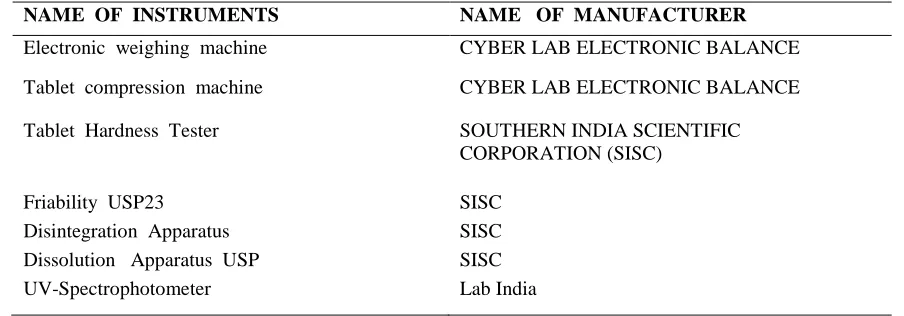
Table 2: List of instruments used in formulation of ODT tablet
NAME OF INSTRUMENTS NAME OF MANUFACTURER
Electronic weighing machine CYBER LAB ELECTRONIC BALANCE Tablet compression machine CYBER LAB ELECTRONIC BALANCE Tablet Hardness Tester SOUTHERN INDIA SCIENTIFIC
CORPORATION (SISC) Friability USP23 SISC
Table 3: Standard Calibration Curve
CONCENTRATION(µg) ABSORBANCE(nm)
5 0.1729
10 0.3153
15 0.4481
20 0.600
25 0.7454
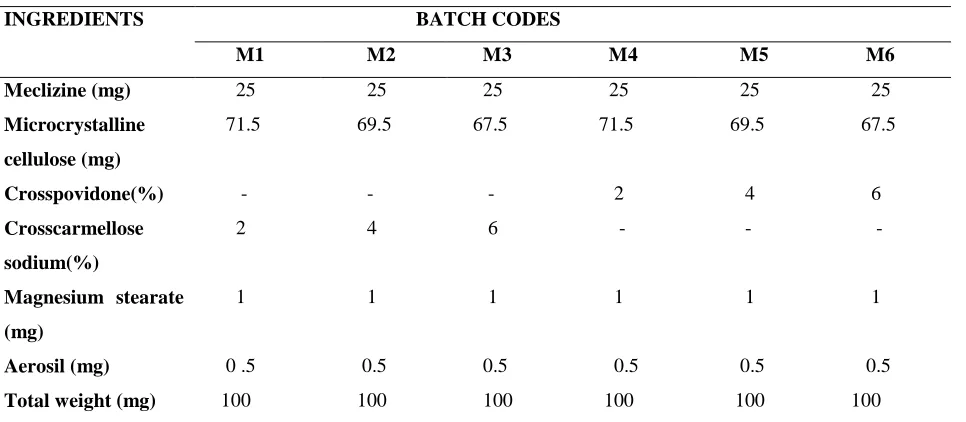
Table 4: Formulation Batches of Meclizine Oral Disinregranting Tablets
INGREDIENTS BATCH CODES
M1 M2 M3 M4 M5 M6
Meclizine (mg) 25 25 25 25 25 25
Microcrystalline
cellulose (mg)
71.5 69.5 67.5 71.5 69.5 67.5
Crosspovidone(%) - - - 2 4 6
Crosscarmellose
sodium(%)
2 4 6 - - -
Magnesium stearate
(mg)
1 1 1 1 1 1
Aerosil (mg) 0 .5 0.5 0.5 0.5 0.5 0.5
Total weight (mg) 100 100 100 100 100 100
Table5: Preformulation Studies of Directly Compressible Blend
PROPERTY BATCH CODES
F1 F2 F3 F4 F5 F6
Angle of repose 36 38 32 26 28 30
Bulk density(gm/cm2) 0.49 0.50 0.52 0.48 0.50 0.52
Tapped density(gm/cm2) 0.64 0.66 0.67 0.59 0.60 0.62
% compressibility 23.43 24.24 22.18 18.6 16.66 16.12
Flowability good good Fair good Fair Poor
Hardness(kg/cm2) 3.3 3.5 3.4 3.2 3.2 3.4
Thickness(Mm) 2.5 2.5 2.6 2.5 2.5 2.6
Friability(%) 0.206 0.408 0.808 0.102 0.618 0.714
WettingTime(Sec) 90 76 92 89 95 87
% Purity 99.8 99.6 98.9 99.3 98.3 97.6
Disintegration Time In Seconds
118 104 124 119 123 142
Table 6 : Weight Variation Formulation Weight variation
Positive deviation Negative deviation F1 3.09 7.02
F2 2.04 8.16
F3 1.00 9.09
F4 2.04 8.16
F5 3.09 7.21
F6 2.04 8.16
Table 7: In Vitro Dissolution Studies Of Formulations Using 0.1n Hcl Buffer TIME IN
MINUTES
% DRUG RELEASE
F1 F2 F3 F4 F5 F6
5 11.07 14.6 12.6 12.03 10.8 12.44
10 25.09 30.9 24.09 26.64 26.64 21.68
15 34.56 44.6 32.46 32.56 29.52 30.6
30 74.56 78.6 75.6 72.84 69.84 59.4
45 80.48 89.5 82.8 79.76 74.88 68.4
60 90.50 95.2 87.5 86.34 81.64 79.2
0 10 20 30 40
F1 F2 F3 F4 F5 F6 ANGLE OF REPOSE
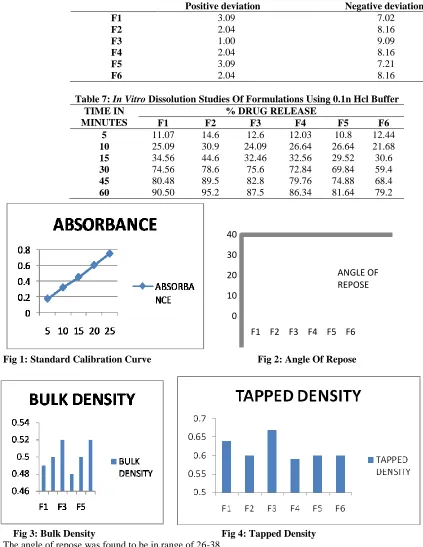
Fig 1: Standard Calibration Curve Fig 2: Angle Of Repose
Fig 3:Bulk Density Fig 4: Tapped Density
The angle of repose was found to be in range of 26-38 The bulk density was found to be in range of 0.48-0.52
Fig 5:%Compressibility Fig 6: Hardness
The % compressibility was found to be 16.12-24.2.
The hardness was found to be 3.2-3.5(kg/cm2)
Fig 7: Thickness Fig 8: Weight Variation
The thickness was found to be 2.5-2.6mm.
All the formulations pass the test as per I.P. limits.
Fig9: Friability Fig10: Wetting Time
The friability was found to be in range of 0.102-0.808.
Fig11: Content Uniformity Fig12: Disintegration Time
The content uniformity was found to be in range of 97.6-99.8% The disintegration time was found to be 104-142 seconds
Fig13: Water Absorption Ratio Fig 14: %Drug Release Of Formulation 1
The water absorption was found to be 132.9-206.3 The % drug release at 60 minute was found to be 90.50
Fig15: %Drug Release Of Formulation 2 Fig16: %Drug Release Of Formulation 3
The % drug release at 60 minute was found to be 95.2
Fig17: % Drug Release Of Formulation 4 Fig18: % Drug Release Of Formulation 5
The % drug release at 60 minute was found to be 87.34
The % drug release at 60 minute was found to be 81.64
Fig19: % Drug Release Of Formulation 6 Fig 20 : % Drug Release Of 6 Formulations
The % drug release at 60 minute was found to be 79.2
The % drug release at 60 minute was found to be for all the formulation in the range of 79.2-95.2 REFERENCES
1. Abdelbary G, Prinderre P, Eouani C, Joachim J, Reynier JP, Piccerelle P. Int J Pharm , 2004; 278: 423-33.
2. Panigrahi D, Baghel S, Mishra B. J Pharm res, 2005; 4: 33-8.
3. Ashutosh Mohapatra, Rajesh K. Parikh, MC Gohel. Asian J Pharm Sci, 2008; 2: 167-71. 4. Brown D. Drug Del Tech, 2003; 3: 58-61.
5. Chang RK, Guo X, Burnside B, Couch R. Pharm Technol, 2000; 24 (6):52-8.
6. Chaudhari GN, Khachane VS, Vaibhav P, Bhamre NB. Application Num-ber: 11/193542, 2006.
7. El-Barghouthi M, Eftaiha A, Rashid I, Al-Remawi M, Badwan A. Drug Dev Ind Pharm, 2008; 34(4): 373-83.
8. Dobetti L. Fast disintegrating tablets. US Patent, 2003; 6:311. 9. Dobetti L. Pharm Technol Nam, 2001; Suppl: 44-50.
10. Bansal AK. The Industrial Pharmacist, 2003; 31: 9-12.
12. Francesco Cilurzo, Irma E. Cupone, Paola Minghetti, Francesca Selmin, Luisa Montanari. Eur J Pharm Biopharm, 2008; 70 (3): 895-900.
13. Shangraw RF. Direct Compression Tableting. Encyc-lopedia of Pharmaceutical Technology. Marcel Dekker, USA, 1988; 4(2): 85-160.
14. Advantose™ 100. Maltose Powder for Direct Compression. Technical Bulletin. SPI Pharma. 15. Cecil W Propst. Meeting the Challenge of Scaling Up High Dose ODTs. SPI Pharma, 2007.
16. GalenIQ™ 721, Direct Compression Agglomerated Isomalt (Ph.Eur./BP / USP-NF), http://www.beneo-palatinit.com/en/ Pharma_ Exci-pients / galenIQ / galenIQ_ Grades / galenIQ721. Ac-cessed: 15/01/2010. 17. Grassano A, Marchiorri M, Di TM, Castegini F. Fast dissolving compositions having analgesic activity.
US Patent, US 6197336, 2001.
18. Iyad Rashid, Mayyas Al-Remawi, Ala'a Eftaiha, Adnan Badwan. J Pharm Sci, 2008; 18314884. 19. Joshi V. Drug Del Technol, 2002; 2. Available at http://www.drugdeliverytech.com/
cgi-bin/articles.cgi?idArticle=69.