Abstract—The increasing cases of HIV/AIDs among the women and infants transmitted from the drug abuser through sharing of needles and unsafe sex had forced the Ministry of Health to initiate harm reduction programmes. A group of researchers from Universiti Sains Malaysia (USM) administered two harm reduction programmes: needle & syringe exchange programme (NSEP) and the methadone maintenance programme (MMT). The two programmes were conducted for patients at a local NGO and a public hospital in Kota Bharu, Kelantan. The efforts were not received favourably by many people because it involves the use of public funds. As accounting professionals, the first three authors were invited by USM researchers to review of the costs effectiveness of the programmes. Basically, the drug users who participated in these programmes are mostly youths and young adults who are at their prime age. In this paper the authors discuss the cost effectiveness of the NSEP and MMT intervention programmes. The paper also looks into the quality of life of the clients/patients.
Index Terms—Effectiveness of harm reduction, methadone
maintenance therapy (MMT), needle and syringe exchange programme (NSEP), Quality of life.
I. INTRODUCTION
Every year the Malaysian government spends millions of ringgits to combat the spreading of HIV/AIDS that can falter the economy of the country. HIV refers to Human immunodeficiency virus that can cause an individual immune system to fail and lead to life threatening infection. HIV can be transmitted through unsafe sex, contaminated needles, breast milk and transmission from an infected mother to her baby. This is the virus that causes AIDs. HIV attacks the immune system cells that are supposed to protect us from illness. AIDs stands for Acquired Immune Deficiency Syndrome. It is the advanced stage of HIV infection.
The harm reduction was introduced to reduce the spreading of the virus through the sharing of needles by drug addicts as well as the unsafe sex. These activities are normally funded by the government. One of the groups who conducted the harm reduction program was a group of researchers from Universiti Sains Malaysia (USM). To respond to the issue of “costs versus benefits”, three accounting researchers from Universiti Teknologi MARA were invited to specifically review the cost effectiveness of the harm reduction programme. In this paper, the authors
Manuscript received September 5, 2013; revised November 8, 2013. Sharifah Fadzlon Abdul Hamid, Normah Omar, Suzana Sulaiman, and Wee Shu Hui are with the Accounting Research Institute and Faculty of Accountancy, Universiti Teknologi MARA, Malaysia (e-mail: [email protected], [email protected])
Rusli Ismail is with the University Malaya, Malaysia.
examined the costs implications of the programme and gauged them with benefits as reflected by the quality of life of HIV/AID patients, who are the subject of this study.
II. GOVERNMENT FUNDING
In general, funding for the HIV/AIDS intervention program is provided by the government. Understandably, the public wants to know if such program is effective. The question whether the government funding contributes towards better syringe exchange program (SEP) coverage needs to be addressed. Similarly, the association between government funding and syringe coverage may be important for future HIV prevention programmes, which may indicate that those areas receiving such funding may have had early support (e.g., early SEPs) from local public health officials and possibly researchers. Such support may have helped other local and state officials understand the importance of preventing the spread of HIV and influenced their decisions to fund such programmes [1].
III. NEEDLE SYRINGE EXCHANGE PROGRAM (NSEP) Needle and Syringe Exchange Program (NSEP) is part of harm reduction activities conducted all over the world to combat the spreading of HIV/AIDS among drug users and people in contact with them. The first official NSEP was established in 1983 in Amsterdam. Its establishment was in response to Hepatitis B outbreak [2]. The programme involves distribution of clean syringes to drug users. In addition NSEP also provides i) advice on safer injecting practices, ii) advice on how to avoid an overdose, iii) information on safer disposal of injecting equipment, iv) access to blood-borne virus testing, vaccination and treatment services, v) help to stop injecting drugs, including access to drug treatment and encouragement to switch to non-injecting methods of drug taking and vi) other health and wealth services. Drop-in centres (DICs) are another initiative introduced to reduce Hepatitis C and Hepatitis B virus in Iran, whereby condoms and MMT were provided for the IDUs [3]. Advantages of NSEP
NSEP was able to reduce HIV infection and has brought about an increase in the financial investment in eight Eastern European and Central Asia Countries between2005-2010.The number of needles-syringes distributed and proportion of IDUs reached increased by 300%. 10% to 40% of HIV infectious was averted (D. Wilson et al) [4].
Apart from reducing HIV infection, the needles are provided free of charge and thus drug users do not have to
Cost Effectiveness of Harm Reduction: Comparison
Needle and Syringe Exchange Programme
spend money. Drug users do not have to steal money to purchase these needles and the criminal activities are controlled. It was reported that drug users in Malaysia are estimated to spend an average of between RM30 and RM50 per day or RM900 to RM1, 500 per month for the drug [5].
IV. METHADONE MAINTENANCE PROGRAMME (MMT) Methadone maintenance (MM) is a widely used and highly accepted medication for heroin and opiate addiction since it is safe and has relatively few side effects [6], [7]. MMT is considered as the most effective form of treatment for drugs dependence in terms of treatment and decrease in the use of illicit drugs [8], [9]. The average maintenance dose however, ranges from 60mg to 120mg depending on the quality of the heroine and the different ethnic groups [10]-[12].
Advantages of MMT
MMT was found to be helpful in improving the quality of life of outpatients in MMT clinic in Xi‟an, China, during the first three months of treatment [13]. Those on methadone reported that there were improvement in their work performance or they had gained employment. However they agreed that they still need to attend frequent follow ups as part of the overall protocol of MMT.
V. QUALITY OF LIFE
QoL is an overarching concept, which has often been applied in health care research [14]. The Centre for Health Promotion at the University of Toronto, Canada, defines quality of life as: “The degree to which a person enjoys the important possibilities of his or her life.”These „important possibilities‟ are made up of various factors that can be different for different people, in different contexts. These factors can also change over time as our living situations change, and as were-prioritise what is important to us. (See www.aidsmap.com issue 155 april 2006). Mental health includes depression, anxiety, vigour, happiness, schizophrenia, paranoia, panic attacks, agitation, lower -self esteem and personality disorder [15].
VI. METHODOLOGY
Data was collected from a series of interviews conducted with the supervisors at SAHABAT and the medical officer at the Hospital Universiti Sains Malaysia. Interviews were mainly made to gather the information pertaining to the progress of the clients/patients of these programmes. There were about 113, 149 and 103 clients from SAHABAT in the NSEP, 40 clients from SAHABAT in MMT and 32 patients for MMT at the public hospital.
To determine the demographic characteristics of the client /patients, the authors obtained cooperation from the supervisors and medical officer to assist the clients/patients to answer simple survey questions.
Costs data was obtained from the annual report of SAHABAT, the medical officers at SAHABAT and Hospital Universiti Sains Malaysia. The costs information covers the
periods between 2009 to July 2013 for the NSEP whereas for the MMT both at SAHABAT and public hospital will be the average yearly cost.
VII. FINDINGS
A. Demographic Characteristics of Clients/Patients Some of the clients/patients were reported to be involved in petty theft and jailed for the crimes committed. They have limited number of friends and sometimes felt alienated.
B. Costs of Harm Reduction
The above table shows that the costs incurred to run NSEP was the highest compared to the two MMT programmes. However, the costs are spread among a larger number of clients. The cost per client was therefore, only RM92.055. The reported contacts made by the outreach workers were 14,105. This would mean the costs per contact for NSEP to be RM38.56.
TABLEI:DEMOGRAPHIC CHARACTERISTICS
NSEP CLIENTS MMT SAHABAT MMT HUSM
Demographic Characteristics
99% were male 54% within prime age (31-40 years) Users more than one type of drugs Poor knowledge about danger of sharing needles
Poor knowledge on how to clean needles They shared needles 44% graduated from high school
57% have full time job
100% were male 51% within prime age (31-40years) Users of more than one type of drugs 56% graduated from high school
50% have full time job
100% were male 76% within prime age(31-40 days) Users of more than one type of drugs 61%graduated from high school 33% have part-time job/odd job
Quality Of Life
32% are satisfied with their health
47% are satisfied with their quality of lives 91% are able to perform daily tasks 26% enjoy lives 69% can stay focus
55%are satisfied with their health
47% are satisfied with their quality of lives 50% are able to perform daily tasks
56% are satisfied with their health 43% are satisfied with their quality of lives
41% are able to perform daily tasks 16% enjoy lives 41% can stay focus
The total preventive costs for the programme were also higher than the consequences costs. Applying the concept of Total Quality Management (TQM) the activities are cost effective. Here, preventive costs are deemed as quality costs whereas the continuous assessment costs are non- quality costs.
TABLEII:COSTS OF HARM REDUCTION FOR THE YEAR 2012 NSEP at
SAHABA T
MMT at SAHABA
T
MMT at HUSM
RM RM RM
PREVENTION
AWARENESS 256612.90 27,552.00 8,840.40 CONTINUOUS
ASSESSMENT
89,342.84 120,000.00 41,981.14
345,955.74 147,552.00 50,821.80
CONSEQUENCES
INTERNAL 36,000.00 36,400.00 68,112.00 EXTERNAL 162,000.00 44,329.00 60,480.00
198,000.00 80,729.00 128,592.00
TOTAL 543,955.74 228,281.00 179,821.80
CLIENTS 5,909 170 32
COST PER CLIENT
RM92.055 RM1,342.8
3
RM5,606.68
C. Interviews 1) NSEP
Awareness on the importance of not sharing needles and willingness to seek medical help
Table III shows the rate of returned for the syringes and needles are generally above 80% indicating that most of the clients complied with the requirements. By returning the needles and syringes, they will need to get a fresh set from the outreach workers. This implies that they try not to use dirty needles when injecting heroine. However, the urgency to satisfy the craving for drugs often forced these addicts to still continue sharing needles.
TABLEIII:PERCENTAGE OF NEEDLES RETURNED BY CLIENTS FOR 2009-2012
Year Metha
done
VCT Return
ed
%age New clients VCT
2008 77 47 163863 82 2690 47
2009 44 27 259059 90 780 27
2010 45 68 221189 92 437 68
2011 97 69 223799 99 568 69
2012 81 32 155163 86 480 32
July20 13
16 0
96,516 76 356 160
Total 344 40
3
1,119,62 5
5311 403
Reduce stigmatisation and discrimination
The clients are very knowledgeable about the need to seek treatment if they are infected with HIV virus. They did not try to hide the status of their health. The above table shows that about 7.6% of the IDUs have volunteered to be treated for HIV/AIDS. These addicts participated in many events organised by SAHABAT.
Quality of life has improved
The clients are able to earn income through the job placement programme conducted by SAHABAT and the other NGOs as well as INFORMM. The main activities include agriculture projects .They managed to earn income from the cultivations and selling of the products to the local buyers around Kota Bharu. In addition, some of the clients managed to kick the habits of taking drugs and have now
joined the outreach team and are paid monthly salary. They are now part of the team that sits in meetings with the police, hospitals, anti narcotic department etc.
Reduction in new case of HIV/AIDS patients due to sharing of needles.
Fig. 3 shows that heterosexual habits are the major contributor for the spreading of HIV virus is now and not needles sharing indicating that the harm reduction programme initiated by the Government is successful.
2) Methadone maintenance therapy in SAHABAT Similar to the harm reduction practised all over the world, the harm reduction and in particular the MMT in SAHABAT had proven to be effective.
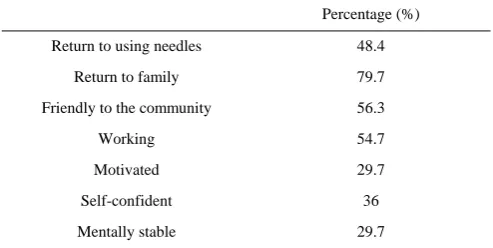
TABLEIV:CHANGE IN THE ATTITUDE OF METHADONE CLIENTS
Percentage (%)
Return to using needles 48.4
Return to family 79.7
Friendly to the community 56.3
Working 54.7
Motivated 29.7
Self-confident 36
Mentally stable 29.7
Overall (See Table IV), there are positive changes in the attitude of the clients. The statistic above was provided in the annual report of the SAHABAT. The statistic shows that the clients had become more responsible towards themselves and their family members.
An interview was conducted with Associate Professor Dr Nasir Mohamed on the 7 April 2013. He shared with us the noble effort that he had done to reduce the spreading of HIV among the IDUs and their family or partners. What seem to be satisfying is when the clients are able to go back to their family members and lead a normal live. They were thrown out of the house when they were dependent on drugs and had committed many drug related crimes that leave the family with a lot of shame and frustration.
The clients were able to secure their jobs and are now supporting their school going children and other family members. Dr Nasir shared the story of eight (8) clients who were able to turn around and became very successful in their career. They are now driving their own cars. They used to undergo the MMT programme and slowly were able to leave the bad habits and improve their status in the society.
By securing jobs, less incident of crimes were reported. They became self sufficient and not dependent on drugs that are very expensive in the long run.
Most of the clients have improved spiritually. They used to be reluctant to perform the prayer. But now they perform the minimum five times prayer per day. The MMT programme is holistic that it is able to strengthen the clients‟ religious beliefs.
ex-IDUs became more confident and more approachable. Some even managed to get married and have a family.
When many clients successfully leave their old habits, they can collectively contribute to the economy of the state. In addition the state will spend less on cost of imprisonment.
3) Methadone maintenance therapy at HUSM
Interviews conducted with the medical officer revealed that 48% of the patients are satisfied with their lives while undergoing the MMT programme. This is because they are able to get the supply of methadone at regular basis. They are able stay focus to perform their jobs and become more responsible towards their family. Their family members became more receptive towards these addicts.
The patients were also given medication for other diseases when they went to get the methadone supplies. Their health improved and they felt that the quality of live improved as well. They are more confident to meet the public and became less aloof when they are among family members.
Some of the clients were able to abstain from their bad habits and became successful in their respective career. Most of the patients have their own business and this allow them to improve the family economy.
The programme taught these addicts to be more discipline since they have to adhere with the appointment dates and the methadone dosage.
VIII. CONCLUSION
The intervention costs vary with the types of harm reduction since the activities involved in each programme are different. Running the NSEP seems cheaper compared to the methadone therapy. However, there are fewer cases of abstinence in drug consumption for NSEP compared to the MMT. The intervention programmes, both the NSEP and MMT managed to improve the quality of life of these drug addicts. Awareness of the danger of taking drugs should therefore start at primary school since there are reported cases where children at the age of 12-14 had started taking drugs. The government need to seriously have a proper prevention plan to avoid incurring a larger financial as well as non -financial consequences cost.
ACKNOWLEDGEMENT
Special thanks to Exploratory Research Grant Scheme (ERGS), Universiti Teknologi MARA (UiTM) for funding this research and SAHABAT Kota Bharu Kelantan for providing data. We also greatly appreciate INFORMM as research collaborator, Nur Hazeera Mohd Zan and Nur Shahida Ab Fatah.
REFERENCES
[1] B. Tempalski, H. L. Cooper, S. R. Friedman, D. C. Des Jarlais, J. Brady, and K. Gostnell, Correlates of Syringe Coverage for Heroin Injection in 35 Large Metropolitan Areas in the Us in Which Heroin is the
Dominant Injected Drug, 2000.
[2] A. Wodak and A. Cooney, “Effectiveness of Sterile Needle and Syringe Programmes,” The International Journal of Drug Policy, Supplement, vol. 16, pp. 31-44, 2005.
[3] A. R. Mirahmadizadeh, R. Majdzadeh, K. Mohammad, and M. H Forounzanfar, “Prevalence of HIV and hepatitis C virus infections and related behaviour determinants among injecting drug users of drop-in
centres in Iran,” Iranian Red Crescent Medical Journal, vol. 11, no. 3, pp. 325-329, 2009.
[4] D. P Wilson, L. Zhang, A. Kwon, and A. Hoare, Evaluating the cost effectiveness of Needle Syringe exchange programme in Kazakhstan
period, , UNAIDS, 2000-2010.
[5] A. Sinyang, RM2b Setahun Beli Dadah, Utusan Malaysia, pp. 11, 2004 [6] C. P. O‟Brien, “Drug addiction and drug abuse,” in Goodman and
Gillman’s The Pharmacological Basis of Therapuetics, 9th ed., J. G.
Hardman and L. E. Limbird, Eds. New York: McGraw-Hill, 1996, pp. 557-557.
[7] R. Schilling, K. Doring, and L. Lungrenm, “Treatment of heroin dependence: Effectiveness, costs, and benefits of methadone maintenance,” Research on Social Work Practice, vol. 16, pp. 48-56, 2006.
[8] R. Mattick, C. Breen, J. Kimber, and M. Davoli, “Methadone maintenance therapy versus no opioid replacement therapy for opioid dependence,” Cochrane Database of Systematic Reviews, vol. 2009, no. 3.
[9] R. Mattick, J. Kimber, C. Breen, and M. Davoli, “Buprenorphine maintenance versus placebo or methadone maintenance for opioid dependence,” Cochrane Database of Systematic Reviews, vol. 16, no. 2, 2008.
[10] J. S. Gill, A. H. Sulaiman, and M. H. Habil, “The first methadone programme in Malaysia: overcoming obstacles and achieving the impossible,” Asean Journal of Psychiatry, vol. 8, no. 2, pp. 64-70, 2007.
[11] V. P. Dole, M. E. Nyswander, and M. J. Kreek, “Narcotic blockade: a medical technique for stopping heroine use by addicts,” Trans
association Phys,vol. 1996, no. 76, pp. 122-36. 1996.
[12] D. M. Norvick, B. L. Richman, J. M. Friedman, J. E. Friedma, C. Fried, J. P. Wilson et al., “The medical status of methadone maintenance patients in treatment for 11-18 years,” Drug Alcohol Deoend, vol. 33, no. 3, pp. 235-245, 1993.
[13] L. Xiao, Z. Y. Wu, W. Luo, and X. L. Wei, “Quality of Life of Outpatients in Methadone Maintenance Treatment Clinics,” Acquir
Immune Defic Syndr, vol. 53, Supplement, 2010.
[14] Z. Padaiga, E. Subata, and G. Vanagas, “Outpatient methadone maintenance treatment program. quality of life and health of opioid dependent persons in Lithuania,” Medicina (Kaunas). vol. 43, pp. 235-241, 2007.
[15] S. F. A. Hamid, N. Omar, S. Sulaiman, and W. S. Hui, “Money Laundering Through Drug Trafficking and Its Impact on Costs of Harm Reduction: A Case Study of Nsep,” 2013.
Associate Professor Sharifah Fadzlon Abdul Hamid has won silver award and consolation prize in the MIA Articles of Merit Award on Practice Accountants in Business(PAIB) for the year 2008 and 2011 consecutively. She has also won three gold, two silver awards and a bronze for the research sponsored by the Government of Malaysia entitled Integrated Strategic Governance Dashboard (ISG) at the national and international level.
Normah Omar was born on 6 August 1955 in Selangor, Malaysia. She obtained her Diploma in Accountancy in 1977 from the Institute Teknologi MARA (ITM), Malaysia and proceed to do her BBA (Accounting) at the University of Iowa, USA in 1980. She obtained her MBA (Accounting) from Southern Illinois University, USA in 1982 and was awarded PhD (Accounting) from the Manchester Metropolitan University, UK in 1993.
She is a Professor in Management Accounting and Corporate Governance and is the Director of Accounting Research Institute (ARI) at the Universiti Technology MARA, which is one of the Malaysia‟s six centres of excellence recognised and funded by the Ministry of Higher Education Malaysia.Her research interest include Management Accounting, Forensic Accounting and Financial Criminology. As a proponent of applied research, Professor Normah has completed a lot of collaborative works with government agencies, professional bodies, regulators, non-government organizations and corporate sector. To mention a few, she has successfully completed research projects such Developing Fraud Risk Indicators in the Audit of Financial Statements, Bank Frauds through the use of cheques and credit cards, Anti-money Laundering and Anti Terrorism Financing in Financial Institutions, Management accounting practices Asia, Japanese Management Accounting in Automobile Industry, Corporate Governance Reporting and the National Award for Management Accounting (NAfMA). She has numerous publications and has presented in many conferences all over the world. Her publications include Moderating Effect of E-Commerce Experience on Usage Performance Relationship in Malaysia Service Industry, Journal of Systems and Information Technology. (SCOPUS) – 2011, Fraud Prevention Mechanisms of Malaysian Government-Linked Companies: An Assessment of Existence and Effectiveness, Journal of Management Accounting and Auditing (USA) ISSN 1548 6583, Fraud Diamond Risk Indicator: An Assessment of Its Importance Usage. 2010 International Conference on Scientific and Social Research (CSSR 2010), Seri Pacific Hotel, Kuala Lumpur, SCOPUS, IEEE Explore. Professor Dr Normah Omar has won 13 gold, 9 silver and 3 bronze awards for her numerous research and innovations.
Suzana Sulaiman was born on 11 October 1965 in Johor, Malaysia. She obtained her Diploma in Accountancy from Institut Teknologi MARA in 1986 before proceeding to acquire the Professional degree from Chartered Institute of Management Accountant (CIMA) in the United Kingdom in 1991. In 1997 she was awarded Master of Accounting (distinction) from Curtin University of Technology, Australia and obtained her postgraduate Degree of Doctor of Philosophy (PhD) from the University of Edinburgh, Scotland in 2003.
Suzana Sulaiman (ACMA, CGMA & CA) is a Professor of Management Accounting at Universiti Teknologi MARA (UiTM) Faculty of Accountancy, Malaysia. Her research interests and publications are in the areas of evolution of management accounting, enterprise governance and value management. She is currently the Assistant Vice Chancellor (iLQAM), CIMA (UK) Research Board, Deputy Chairman, CIMA (UK) Malaysia Country Branch Committee, Head of Asian Management Accounting Research Centre (AMARC) and Managing Editor for Asia-Pacific Management Accounting (APMAJ), UiTM. Her past appointment to include as the CIMA Malaysian Treasurer and Divisional EXCO Member and Chairman for Assessment Committee, Malaysian National Award for Management Accounting (NAfMA) Best Practices. Her interests in management accounting have proven by the list of her publication, research books and proceedings. Several patented and trademark products were produced from these research. These products have won several awards at the national and international invention, innovation and design competitions. She was also invited to be speaker at several national and international interviews and conferences. She has published numerous papers which include The Influence of Culture on the Relationship Between Level of Participation Budgeting and Firm Performance in the Context of Libya,2011 Asian journal of Business management Studies 2 (2), 84 – 93, The Role of Management Accounting in the Successful Implementation of Strategy and Its Impact on Leverage and Performance,2009 (APMAJ), Vol 4, Issue 2 , Value Engineering Value Management Innovation in Automotive and Construction Companies: A Malaysian Multiple Case Scenario,2007, Journal of Accounting and Management Information Systems (JAMIS), 20, 78 – 97.