GSJ: Volume 7, Issue 12, December 2019, Online: ISSN 2320-9186 www.globalscientificjournal.com
A CASE STUDY ON MERGER OF HDFC & CBOP
SUSHA SREE
MASTER OF BUSINESS ADMINISTRATION
ABSTRACT
This study examines the details of merger in between HDFC – CBOP banks. The primary objective of the merger is to achieve growth at the strategic level in terms of size and client base. The objective of the study is to determine the reasons for merger have been taken place in between the banks and also the benefits derived out of the merger. This study also includes analysis of banks performance with its different financial tools before and after its merger. This analysis has been shown with the help of line graphs. Data presented for the study is collected from secondary sources such as websites, articles and merger reports. The study shows that merger of these banks has gained a lot of improvements in its efficiency, expansion, performance. It has also been found that after merger there is no data exposed under the name of CBOP bank. The complete financial statements have been prepared under the name of HDFC bank only. The analysis also shows that the performance of HDFC bank in terms of EPS is high with comparison to other corporate firms.
CHAPTER I - INTRODUCTION
1. DEFINITION OF BANK
1.1. DEFINITION OF MERGER
Merger is outlined as combination of two or more entities or companies getting into one company where one company survives and also the others lose their company existence. The survivor company acquires all the assets additionally as liabilities of the integrated
company or corporations. Merger is also known as amalgamation.
1.2. INTRODUCTION TO MERGER
Mergers and acquisitions (M&A) are those transactions in which the ownership of one company with the ownership of other business entity has been transferred or formed as a single entity. From a view of strategic management, M&A will enable enterprises to grow both in the upward and downward and also gets a change in the nature of their business or competitive position.
From a legal perspective, a merger is a legal consolidation of two entities into one entity, whereas an acquisition occurs when one entity takes ownership of another entity's stock, equity, interests or assets. From a billboard and economic perspective, each act of those transactions usually ends up with the consolidation of assets and liabilities below one entity, and the difference between a "merger" and an "acquisition" is less clear.
A transaction which has been structured in form of merger, it gives each of the parties into contract with partial ownership i.e. in merger two or more companies will be colliding together and will be forming a new company. But in case of an acquisition, it has the effect of placing acquired company(sold company) with that of acquiring company(purchasing company) i.e. when acquisition has taken place one company will be completely taking over other company and functions in its own way.
1.2.1. TYPES OF MERGERS
(A) VERTICAL MERGER: A corporation would really like to take over another company or ask for its merger therewith company to expand espousing backward integration to assimilate the resources of offer and forward integration towards market outlets. The feat company through merger of another unit tries on reduction of inventories of material and finished product, implements its production plans as per the objectives and economizes on
working capital investments. In different words, in vertical combos, the merging enterprise would be either a provider or a vendee exploitation its product as treater material for final production.
(B) HORIZONTAL MERGER: It is a merger of two competing firms which are at the same stage of industrial process. The getting firm belongs to an equivalent trade because the takeover target. The main purpose of such mergers is to induce economies of scale in production by eliminating duplication of facilities and additionally the operations and broadening the merchandise line, reduction in investment in capital, elimination in competition concentration in product, reduction in advertising costs, increase in market segments and exercise better control on market.
(C) CONCENTRIC MERGER: In some cases, two companies will share customers but provide different services. An example would be Sony World Health Organization manufacture optical disc players however World Health Organization conjointly bought the Columbia photos pic studio in 1989. Sony was now able to produce films to be able to be played on their DVD players. Indeed, this was a key part of the strategy to introduce Sony Blu-Ray DVD players.
(D) CONGLOMERATE MERGER: It is amalgamation of two companies engaged in unrelated industries like DCM and Modi Industries. The basic purpose of such amalgamations remains utilization financial of economic} resources and enlarges debt capability through re-organizing their monetary structure therefore on service the
shareholders by inflated investment and EPS, lowering monetary value of capital and thereby raising gift value of the outstanding shares. Merger enhances the general stability of the acquirer company and creates balance within the company’s total portfolio of various
1.2.2. STAGES INVOLVED IN M&A
STAGE 1: PRE-ACQUISITION REVIEW: This stage states that, before the merger has been taken place between the companies, it need to firstly assess of its own regarding the need for merger, valuation of company and which merger is best suitable etc. All these
reviews will be done in this stage to process the data and carry on with the next step of merger.
STAGE 2: SEARCH & SCREEN TARGETS: The data collected earlier gets screened in this step. It means the company will be filtering its options and analyze among the available opportunities. So that they can minimize their list of companies available to take proper decision.
STAGE 3: INVESTIGATE & VALUATION OF TARGET: Here the companies will be shortlisted through primary screening and detailed analysis will be conducted regarding of its assets and liabilities. Then the companies chosen will be valued in accordance of its net worth in order to go with the process of merger. This is also referred to as due diligence.
STAGE 4: ACQUIRE THE TARGET THROUGH NEGOTIATIONS: A particular
company among the targeted companies is selected in this stage and the next step is preceded with the negotiation of that company. Thus the both companies come into a deal on a certain value to form the merged company.
STAGE 5: POST MERGER INTEGRATION: If all the above steps fall in place, there is a formal announcement of the agreement of merger by both the participating companies.
1.3. NEED FOR THE STUDY
The actual and only need was recently there has been mergers happened between many firms. So the present study is an attempt to find out the reasons for the raise of merger deal between HDFC bank and Centurion Bank of Punjab.
1.4. SCOPE OF THE STUDY
The scope of the study is based on the performance at before merger and the performance of HDFC bank after merging with CBOP.
To know the reasons of HDFC merger with CBOP.
To study the performance of HDFC and CBOP after merger. To study the benefits of HDFC merger with CBOP.
1.6. LIMITATIONS OF THE STUDY
The study is related to HDFC merged with Centurion Bank of Punjab. Considering 10 years of time period.
Data collection completely based on secondary data. Time is a constraint i.e. duration is less than 45 days
1.7. RESEARCH METHODOLOGY: For this project, only secondary data was used and it is taken from different sources as follows
Financial statements of HDFC – CBOP banks are used to measure the financial
performance of banks at pre and post mergers
10 years values of net profits and EPS have been used to measure the trend analysis of
HDFC bank
Data analysis was done with the help of graphical representation
CHAPTER II - REVIEW OF LITERATURE
Egl Duksait and Rima Tamosiunien (2009) described the most common motives for company’s decision to participate in mergers and acquisitions transactions. The reason is
growth, synergy, access to intangible assets, diversification, horizontal and vertical integration and so on arises from the primary company’s motive to grow. Most of the
motivations for mergers and acquisitions feature function suggest that of reshaping competitive advantage among their individual industries. However, it may be that some of the
motives identified affect some industries more than others, and in that sense they can be expected to be associated with a greater intensity of mergers and acquisitions in sure sectors instead of others.
information has been collected for 6 years from 2000-06. Pre-merger and post-merger financial ratios have been examined using paired sample t test. The results of the analysis reveal that there's vital distinction between the monetary performance of the businesses before and once the merger. Further, it has been found that the type of industry does seem to make a difference to the post-merger operating performance of acquiring firms.
Mital Menapara et al evaluated the impact of mergers and acquisitions on financial Performance of Indian Corporate Sectors and examined the impact of merger and acquisitions on Return on Investment, Profitability and Liquidity position of selected companies. The authors concluded that emerging from the point of view financial evaluation is that the merging Companies were taken over by companies with reputed and good management. And therefore, it was possible for the merged firms to turnaround successfully in due course.
Pramod Mantravadi & A Vidyadhar Reddy (2008) studied the impact of mergers on the operating performance of acquiring corporate in different industries, by examining some pre- merger and post-merger financial ratios, with the sample of firms chosen as all mergers involving public limited and traded companies in India between 1991 and 2003. The results from the analysis of pre- and post- merger operating performance ratios for the acquiring firms in the sample showed that there was a differential impact of mergers, for different industry sectors in India. Type of industry does seem to make a difference to the post-merger operating performance of acquiring firms.
Jagdish R. Raiyani (2010) in her study investigated the extent to which mergers lead to efficiency. The financial performance of the bank has been examined by analyzing data relevant to the select indicators for five years before the merger and five years after the merger. It is found that the private sector merged banks are dominating over the public sector merged banks in profitability and liquidity but in case of capital adequacy, the results are contrary. Further, it was observed that the private sector merged banks performed
well as compared to the public sector merged banks.
liquidity position of the firms. The result of the study indicate that M&A cases in India show a significant correlation between financial performance and the M&A deal, in the long run, and the acquiring firms were able to generate value.
Nisarg A Joshi and Jay M Desai in their study measured the operating performance and shareholder value of acquiring companies and comparing their performance
before and after the merger. They used Operating Profit Margin, Gross Operating Margin, Net Profit Margin, Return on Capital Employed, Return on Net Worth, Debt-Equity Ratio, and EPS P/E for studying the impact. They concluded that as in previous studies, mergers do not improve performance at least in the immediate short term.
CHAPTER III - INDUSTRY AND COMPANY PROFILE
3.1. THE INDIAN BANKING SYSTEM
At the top of the Indian banking system is the central bank of India known as Reserve Bank of India. The Federal Reserve Bank of Asian nation is accountable for the Indian banking industry since 1935, the industrial banks in Asian nation area unit quarantined into Public sector banks, non-public sector banks and Foreign banks .All these banks fall under Reserve Bank of India classification of scheduled commercial banks (SCBs).Public sector, Private sectors and Foreign banks as they are include in the second scheduled of the reserve bank of India 1934. The Public sector was altogether closely-held by the govt. of Republic of India before the reforms. The PSBs area unit the most important player within the Republic of Indian industry and that they account for 70% of the assets of scheduled industrial banks in India
3.1.2. MERGER OF BANKS IN INDIA
Merger may be outlined as a mean of unification of 2 players into single entity. Merger could be a method of mixing 2 business entities underneath common possession. According to Oxford lexicon the expression “merger means that hairdressing 2 industrial corporations into one”.
body measures. Merger and Acquisition in Indian banking sectors are initiated through the recommendations of Narasimham committee II. The committee counseled that “merger
between sturdy bank / monetary establishments would create larger economic and industrial sense and would be case wherever the full is larger than the total of its components and have “force number effect”
Mergers and acquisitions within the banking sector could be a common development across the world. The primary objective behind this move is to achieve growth at the strategic level in terms of size and client base. This, in turn, will increase the credit-creation capability of the incorporated bank staggeringly. Small banks fearing aggressive acquisition by an outsized (larger) bank generally enter into a merger to extend their market share and defend themselves from the possible acquisition. Banks also prefer to mergers and acquisitions to reap edges the advantages the of economies of scale through reduction of prices and maximization of each economic and non-economic benefits. This is a vertical form of merger as a result of all banks area unit within the same line of business of aggregation and mobilizing funds. In some instances, other financial institutions prefer merging with a bank in case they provide a similar type of banking service.
Another vital issue is that the elimination of competition between the banks. This way considerable quantity of funds earlier used for sustaining competition will be channelized to grow the banking business. Sometimes, a bank with an outsized debt portfolio and poor revenue can merge itself with another bank to seek support for survival. However, such sorts of mergers area unit attended with retrenchment and a forceful amendment within the structure.
3.2. INTRODUCTION OF HDFC BANK
Housing Development Finance Corporation (HDFC) Bank Ltd is one of India's premier banks. Headquartered in Mumbai HDFC Bank is a new generation private sector
treasury. The retail banking section serves retail customers through a branch network and different delivery channels. This section raises deposits from customers and makes loans and provides different services with the assistance of specialist product teams to such customers. The wholesale banking section provides loans non-fund facilities and group action services to company public sector unit’s government bodies’ monetary establishments and medium-scale
enterprises. The treasury section includes internet interest earnings on investments portfolio of the Bank. The Bank's ATM network can be accessed by all domestic and international Visa/MasterCard Visa Electron/Maestro Plus/Cirrus and American Express Credit/Charge cardholders. The Bank's shares area unit listed on the urban center stock market restricted and also the National stock market of Republic of India Ltd. The Bank's yankee facility Shares (ADS) area unit listed on the ny stock market (NYSE) and also the Bank's international facility Receipts (GDRs) area unit listed on Luxembourg stock market.
3.2.1. HISTORY OF HDFC BANK
HDFC Bank Ltd Was incorporated on August 30, 1994 by development Finance Corporation Ltd. In the year 1994 development Finance Corporation Ltd was amongst the primary to receive Associate in nursing 'in principle' approval from the banking company of Republic of India to line up a bank within the personal sector as a part of the RBI's easement of the Indian banking system. HDFC Bank commenced operations as a scheduled banking concern in January 1995. Ramon House Church gate branch was inaugurated on 16 January 1995 as the first branch of the bank. In March 1995, HDFC Bank launched Rs 50-crore initial public offer (IPO) (5 crore equity shares at Rs 10 each at par) eliciting a record 55 times over subscription. HDFC Bank was listed on the urban center stock market on nineteen could 1995. The bank was listed on the National stock market on 8 November, 1995.In the year 1996 the Bank was appointed as the clearing bank by the NSCCL. In the year 1997 they
launched retail investment advisory services. In the year 1998 they launched their 1st retail loaning product Loans against Shares. In the year 1999 the Bank launched on-line time period internet Banking. On 20 July, 2001 HDFC Bank's yankee depositary receipt (ADR) was listed on the ny stock market underneath the image HDB. Also they created the alliance with LIC for providing on-line payment of premium to the shoppers.
3.2.2. AWARDS AND RECOGNITION OF HDFC BANK
Ranked 60th in 2019 BrandZ Top 100 Most Valuable Global Brands HDFC Bank was
featured BrandZ Top 100 Most Valuable Global Brands 2019 for the 5th consecutive year. The Bank's brand value has gone up from $20.87 billion in 2018 to $22.70 billion in 2019.
Recognized as Best Large Bank & Fastest Growing Large Bank in 2019, by Business
World Magna Awards.
Best Banking Performer, India in 2016 by Global Brands Magazine Award.
TABLE 1: LISTING AND SHAREHOLDING OF HDFC BANK
Shareholders (as of 31 December 2018) Shareholding
Promoter group ( HDFC ) 21.57%
Foreign Institutional Investors (FII) 32.4%
Individual shareholders 8.5%
Bodies corporate 7.5%
Insurance Companies 5.38%
Mutual funds 8.65%
NRI/OCB/others 0.29%
The equity shares of HDFC Bank are listed on the Bombay Stock Exchange (BSE) and the National Stock Exchange (NSE) .Its American Depository Shares are listed on NYSE and the Global Depository Receipts(GDR) are listed on the Luxembourg Stock Exchange where two GDRs represent one equity share of HDFC Bank.
3.3. INTRODUCTION OF CENTURION BANK OF PUNJAB
Centurion Bank of Punjab is one amongst the leading new generation non-public sector banks in India. The bank serves individual customers, little and medium businesses and huge companies with a full vary of monetary product and services for finance, loaning and recommendation on monetary coming up with. The bank offers its customers Associate in Nursing array of wealth management product like mutual funds, life and general insurance and has established a leadership 'position'. The bank is additionally a robust player in interchange services, personal loans, mortgages and agricultural loans. Additionally the bank offers a full suite of NRI banking product to overseas Indians.
On August 29, 2007, Lord Krishna Bank (LKB) merged with Centurion Bank of Punjab, post obtaining all requisite statutory and regulatory approvals. This merger has additional reinforced the geographical reach of the Bank in major cities and cities across the country, especially in the State of Kerala, in addition to its existing dominance within the northern a part of the country. Centurion Bank of geographic area presently operates on a strong nationwide franchise of 394 branches and 452 ATMs in 100 eighty locations across the country, supported by employee base of over 7,500 employees. In addition to being listed on the foremost Indian stock exchanges, the Bank’s shares are also listed on the Luxembourg
Stock Exchange.
3.3.1. HISTORY OF CBOP
name warrior Bank of Punjab. Bank of Punjab also had been founded in 1994. In 2007, Centurion Bank of Punjab acquired Thrissur-base Lord Krishna Bank, and soon it was acquired by HDFC Bank, which was also incidentally begun in 1994.
CHAPTER IV - DATA ANALYSIS AND INTERPRETATION
4.1. REASONS FOR MERGER
The HDFC bank was amongst the first to get a banking license, the first to do a merger in the private sector with Times Bank in 1999, and now after the merger of CBOP Bank of geographic area, it was the largest merger in the private sector banking space in India. HDFC Bank was looking for an appropriate merger opportunity that would add scale, geography and experienced staff to its franchise. This opportunity arose and also the bank thought it's a beautiful route to supplement HDFC Bank’s organic growth. The bank believes
that CBOP Bank of geographic area would be the correct slot in terms of culture, strategic intent and approach to business.
The HDFC Bank-CBOP merger is expected to be a win-win for both banks in terms of both asset size and footprint. While CBOP is concentrated in the northern and southern parts of the country, HDFC Bank is focused throughout India. These are exciting times for the Indian industry. The planned merger can position the combined entity to considerably exploit opportunities during a market globally recognized united of the quickest growing. This is significantly optimistic concerning the potential of business synergies and cultural work between the 2 organizations. The combined entity is an excellent bigger force within the market.
Over the previous couple of years, Centurion Bank of Punjab has set benchmarks for growth. The bank thereon day incorporates a giant nationwide network, a particularly valuable franchise, 7,500 gifted workers, and strong leadership positions in the market place.
It is believe that the merger with HDFC Bank will create a world class bank in quality and scale and will set the stage to compete with banks both locally as well on a global level.
4.1.1. INSIGHTS OF HDFC-CBOP MERGER
merger the share price of CBOP moved from Rs 49.85 to Rs 56.40. However, it seems, investors of HDFC Bank didn't just like the development. The share price of HDFC Bank on Thursday moved up from Rs 1,534.50 to Rs 1,543. But in next day, it fell sharply to Rs 1,475. Prior to this, in August 2007, CBOP was merged with Lord Krishna bank.
Approved a swap ratio of 1:29 (one share of HDFC Bank for every 29 shares of Centurion Bank of Punjab held), for the proposed merger of Centurion Bank of Punjab with HDFC Bank. The name of the bank would stay as HDFC Bank. The combined entity would have a nation-wide network of 1,148 branches, the largest among private sector banks, A strong deposit base of around Rs. 120,000 crore and net advances of around Rs. 85,000 crore. The balance-sheet size of the combined entity would be over Rs. 150,000 crore.
4.2. FINANCIAL PERFORMANCE OF HDFC-CBOP BANKS
TABLE 2: Pre merger financial performance of HDFC bank
PARTICULARS/YEARS 2007 2006 2005
Net Profit (lakhs) 114145 87078 66556
EPS 22.92 27.92 36.29
FIGURE 1: Graphical representation of pre merger financial performance of HDFC bank
INTERPRETATION
In the above table, the net profit of HDFC bank is high in the year of 2007 compared
with the rest of the years. Also shows it is gradually increasing from the year 2005. EPS is high in 2005 later it started decreasing from 36.29 to 27.92 in the year of 2006.
In the next year 2007 also EPS is decreasing from 27.92 to 22.92.
Total assets or liabilities are high in the year of 2005 and later it has been decreasing in next year’s and reached to the value of 51429.
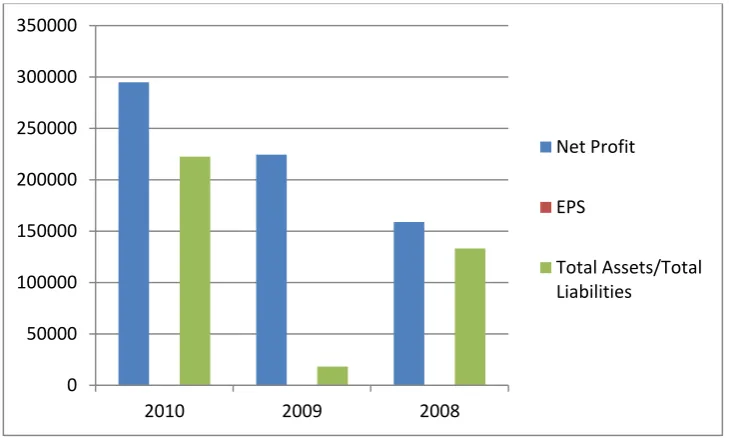
TABLE 3: Post merger financial performance of HDFC bank
PARTUCULARS/YEARS 2010 2009 2008
Net Profit (lakhs) 294870 224494 159018
EPS 67.56 52.85 46.22
Total Assets/Liabilities(Crores) 222458.5 18320.77 133176.6 0
20000 40000 60000 80000 100000 120000
2007 2006 2005
Net Profit
EPS
FIGURE 2: Graphical representation of post merger financial performance of HDFC bank
INTERPRETATION
In the above table, the net profit is increasing year after year from 2008 to 2010. It
also shows that the net profits even before and after merger are in increasing mode only.
In case of EPS, before merger its value is decreasing over the years but after the merger has taken place the value of EPS has started increasing gradually.
The same has happened in case of total assets and liabilities too. After the merger, the
value of total assets and total liabilities has been started increasing gradually.
TABLE 4: Pre merger financial performance of CBOP bank
FIGURE 3: Graphical representation of pre merger financial performance of CBOP bank 0
50000 100000 150000 200000 250000 300000 350000
2010 2009 2008
Net Profit
EPS
Total Assets/Total Liabilities
PARTICUALRS/YEARS 2007 2006 2005
Net Profit (Crores) 121.38 122.48 30.15
EPS 0.77 0.87 0.3
INTERPRETATION
In the above table, all the three particulars values have been increasing year after year.
The net profit of CBOP has been increasing from 30.15 to 121.38 in three years. EPS, in the year 2005 is 0.3 later it has been increased to 0.87 in the year of 2006 and
then it has decreased to 0.77 in the year of 2007
Totals assets and liabilities have been increasing every year from 4611.68 in the year 2005 to 18482.78 in the year 2007.
0 2000 4000 6000 8000 10000 12000 14000 16000 18000 20000
2007 2006 2005
Net Profit
EPS
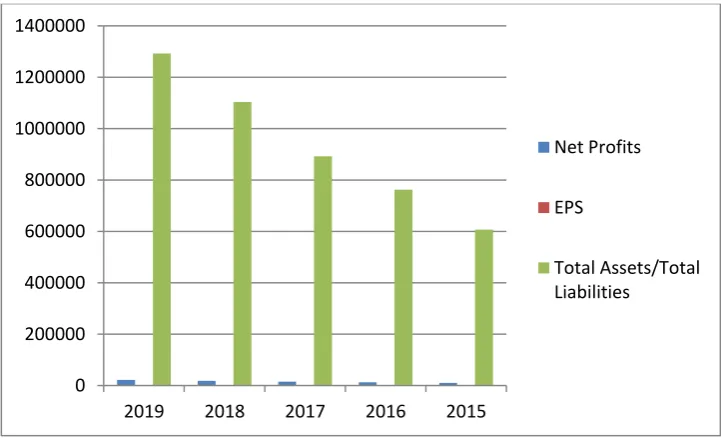
TABLE 5: Recent year’s financial performance of HDFC bank
FIGURE 4: Graphical representation of financial performance of HDFC bank
0 200000 400000 600000 800000 1000000 1200000 1400000
2019 2018 2017 2016 2015
Net Profits
EPS
Total Assets/Total Liabilities
PARTICULARS/YEARS 2019 2018 2017 2016 2015
Net Profits (lakhs) 22332 18510 15280 12801 10689
EPS 82 71.33 59.53 48.61 40.95
INTERPRETATION
Over the years from 2015 to 2019, the net profit of HDFC bank has been increasing
gradually. It raised from 10689 in the year 2015 to 22332 in the year 2019. Here it can be observed even before and after merger the value of net profit has been in stage of increasing only.
In case of EPS, before merger its values are decreasing but after the merger has taken
place the value of earnings per share has been increasing from 40.95 to 82.
As usual the value of total assets and liabilities are also increasing over the years from
607169 to 1292806 in the year of 2019.
4.3. TREND ANALYSIS OF HDFC BANK FOR 10 YEARS
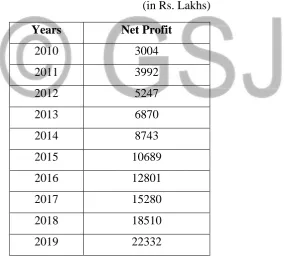
TABLE 6: Net profits of HDFC bank for 10 years
(in Rs. Lakhs)
Years Net Profit
2010 3004
2011 3992
2012 5247
2013 6870
2014 8743
2015 10689
2016 12801
2017 15280
2018 18510
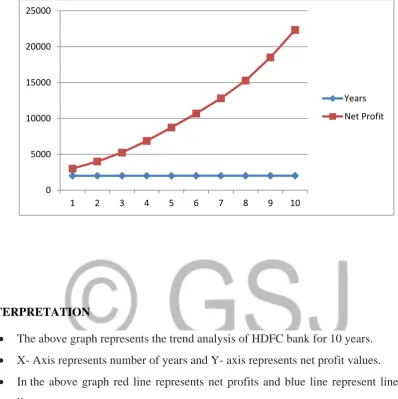
FIGURE 5: Graphical representation of net profits of HDFC bank for 10 years
INTERPRETATION
The above graph represents the trend analysis of HDFC bank for 10 years. X- Axis represents number of years and Y- axis represents net profit values.
In the above graph red line represents net profits and blue line represent liner trend line.
The graph slopes upward left to right which indicates that net profit is increasing year by year.
0 5000 10000 15000 20000 25000
1 2 3 4 5 6 7 8 9 10
Years
TABLE 7: EPS of HDFC bank for 10 years
Years EPS
2010 12.72
2011 16.63
2012 21.66
2013 27.93
2014 35.26
2015 40.95
2016 48.61
2017 59.53
2018 71.33
2019 82
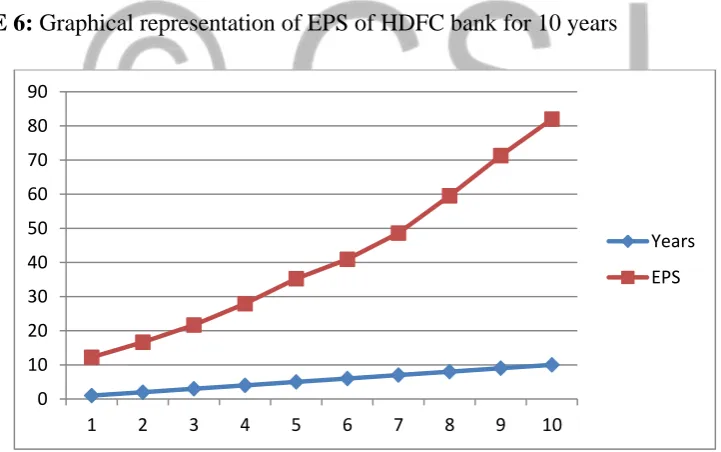
FIGURE 6: Graphical representation of EPS of HDFC bank for 10 years
INTERPRETATION
The above graph represents the trend analysis of HDFC bank for 10 years. X- Axis represents number of years and Y- axis represents EPS values.
In the above graph blue line represents EPS values and red line represents EPS trend
line.
Even the slope of EPS is also upward left to right indicating that the values are increasing every year.
0 10 20 30 40 50 60 70 80 90
1 2 3 4 5 6 7 8 9 10
Years
4.4. BENEFITS OF MERGER
The deal created an entity with an asset size of Rs 1,09,718 crore (7th largest in India), providing massive scale economies and improved distribution with 1,148 branches and 2,38 ATMs (the largest in terms of branches within the personal sector). CBOPs strong SME relationships complemented HDFC banks bias towards high rated
corporate entities.
CBOP management had relevant experience with larger banks (as evident in the
centurion bank and BOP integration earlier) managing business of the size commensurate with HDFC bank.
For CBOP, HDFC bank would exploit its underutilized branch network that had the
requisite expertise in retail liabilities, transaction banking and third party distribution. The combined entities of HDFC-CBOP would improve productivity levels of CBOP
branches by leveraging HDFC banks brand name.
For HDFC bank, this merger would provide an opportunity to add scale, geography
(northern and southern states) and management bandwidth. In addition, there exists a potential of business synergy and cultural fit between two organizations.
CHAPTER V - FINDINGS, SUGESTIONS AND CONCLUSION
5.1. FINDINGS
The primary objective behind the idea of merger is to attain growth at the strategic
level in terms of size and customer base. This, in turn, will increase the credit-creation capability of the incorporated bank staggeringly.
The main reason behind merger is, HDFC Bank was looking for an appropriate merger opportunity that would add scale, geography and experienced staff to its
franchise. The bank believes that CBOP Bank of geographic area would be the correct slot in terms of culture, strategic intent and approach to business.
The combined entity of HDFC-CBOP would have a nation-wide network of 1,148
branches, the largest among private sector banks, a strong deposit base of around Rs. 120,000 crore and net advances of around Rs. 85,000 crore. The balance-sheet size of the combined entity would be over Rs. 150,000 crore.
The swap quantitative relation for merger is around 29 shares of Re 1 of CBOP; an
investor will get one share of Rs 10 of HDFC Bank.
In the year 2014, HDFC Bank first lunched the missed call banking service allowing
customers to use banking services without having to visit the Bank or connect online. On 16 June 2015 HDFC Bank launched the 10-second personal loan approval service
thereby becoming the first in the retail lending space to fully automate the process of loan approval and disbursement.
In 2016 HDFC Bank introduced loans at ATMs as the country's first innovation to
turn ATMs into Loan Dispensing Machines (LDMs) further extending the functionality of the Bank's ATMs.
In recent times, India has witnessed entry of many international banks like CITI Bank,
YES Bank etc which posses an external entrant threat to HDFC Bank – as this Banks are identified for his or her art of operating and maintain high standards of client service.
5.2. SUGGESTIONS
If compared with the EPS of other private sector banks, HDFC bank has the highest
earnings per share with a max price of 80.62. So it suggested maintaining the same position in the list of highest EPS by following good techniques and standards.
The P/E of HDFC bank was decreased after the merger, so the bank requires
concentration on policy more attractive so as to create interest among investors in the stock.
HDFC bank stands with 4,729 branches and 12,259 ATMs across the world. But if
observed SBI stands in first position holding 16,333 branches and 54,560 ATMs, so it is suggested that HDFC bank can explore its business by increasing more number of branches to increase its productivity.
5.3. CONCLUSION
profit margin, earnings per share (EPS), trend analysis for 10 years of net profit and EPS data has shows the improvement after the merger as specified for the purpose and objective of the study. The most important thing is to notice the actual success of merger is laid at generating net higher profit after the merger in order to justify the decision of merger undertaken by the management to the shareholders. Having a sight on data analysis, it can be noticed that in pre
and post merger data the post merger data results are satisfactory. It is ended that the monetary performance of bank has accumulated once merger.
BIBLIOGRAPHY
R. Saluja, S. Sharma,R. Lal “Impact of Merger on financial performance of Bank- A Case study of Hdfc Bank” International Journal of Research in Finance & Marketing,
Vol. 2, No. 2,pp. 313-326
UNCTAD: Impact of cross-border mergers and acquisitions on development and policy issues for consideration, note by UNCTAD secretariat (TD/B/COM.2/EM.7/2,
8 June 2000) (http://unctad.org/en/docs/c2em7d2.en.pdf)
BBC News Online: Banking on size to compete (http://news.bbc.co.uk, 7 Feb. 2000). Sherman Andrew J, “Merger and acquisition from A to Z” ,AMACOM ; 2011,pp.
1-9+
http://www.livemint.com/Home-Page/w5I98u8oIRffQUgHbCNxPM/Centurion-Bank-of-Punjab-posts-quarterly-profit-ofRs28-cror.html
http://www.wikinvest.com/stock/HDFC_Bank_LTD_Ads_%28HDB%29/Merger_Ce
nturion_Bank_Punjab_Limited