AN OVERVIEW OF WORKFLOW MANAGEMENT SYSTEM STRUCTURE IN THE SUPPLY CHAIN
Huei-Huang Chen
Department of Information Management, Tatung University, Taiwan No. 40, Chung-Shan North Road, Section 3, Taipei 104, Taiwan
Kuo-Shean Liu
Department of Information Management, Tatung University No. 40, Chung-Shan North Road, Section 3, Taipei 104, Taiwan
Shih-Chih Chen (corresponding author) Department of Information Management, Tatung University No. 40, Chung-Shan North Road, Section 3, Taipei 104, Taiwan
Chan-Yen Chang
Department of Business Administration and Graduate School of Service Operation Management, Chihlee Institute of Technology, Taiwan
Kai-Shih Hsieh
Department of Information Management, Tatung University, Taiwan
Yu-Wei Yang
Department of Computer Science and Engineering, Tatung University, Taiwan
ABSTRACT
Supply chain is an inter-enterprise process that connects upstream and downstream companies closely. In order to accelerate the information flow in supply chain, therefore, we need an inter-enterprise and integrated information sharing method. The information sharing among enterprises can be transparency. Upstream and downstream companies access virtual data warehouse. That makes enterprise can achieve customer quick response by supply chain management. This study mainly proposed a reference model to adopt fast information flow mechanism and transfer information from customer demand to the manufacturing facilities. Besides, this study reviewed some key points for supporting business process collaborations when organizations implemented the work flow management system. Finally, we proposed our major findings and future directions
Keywords: Supply Chain Management, Workflow Management System, Information Flow
1. INTRODUCTION
A supply chain refers to the complex network of relationships that organizations maintain with trading partners to source, manufacture, and deliver products. It encompasses all activities associated with flow and transformation of goods and services from the point of origin, through to the end user, as well as the associated information and financial flows. Material and information flow both up and down the supply chain. And Supply Chain Management (SCM) is the integration of these activities through improved supply chain relationships, to achieve a sustainable competitive advantage (Kalakota & Robinson, 2001).
companies that function as efficiently and effectively as a single company, with full information visibility and accountability.
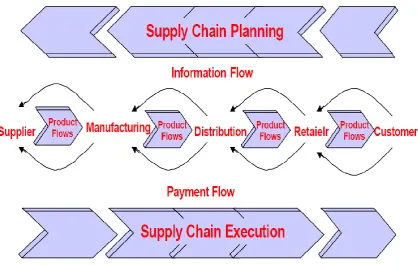
Figure 1: The process viewpoint of supply chain
In a nutshell, SCM is the coordination of material, information, and financial flows between and among all the participating enterprises. Material flows involve physical product flows from suppliers to customers through the chain, as well as the reverse flow via product returns, servicing, recycling, and disposal. Information flows involve demand forecasts, order transmits, and delivery status reports. Financial flows involve credit card information, credit terms, payment schedules, and consignment and title ownership arrangements. Supply chain management is a business framework comprised of multiple applications and divided into two application camps: planning and execution.
The planning process focuses on demand forecasting, inventory simulation, distribution, transportation, and manufacturing planning and scheduling. Planning software is designed to improve forecast accuracy, optimize production scheduling, reduce inventory costs, decrease order cycle times, reduce transportation costs, and improve customer service.
The execution process addresses procuring, manufacturing, and distributing products throughout the value chain. Supply chain execution applications are designed to management the flow of products through distribution centers and warehouses and help ensure that products are delivered to the right location using the best transportation method.
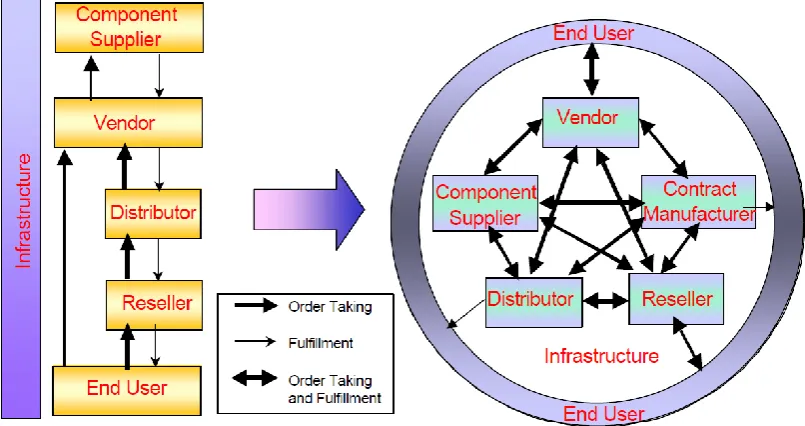
Figure 2: Relationship among supply chain partners
SCM is a complex subject involving the flow of goods from upstream suppliers to manufacturers, distributors, and end customers. It involves many disciplines, from procurement and supplier management to multisite manufacturing, customer management, order processing, distribution planning, forecasting, demand management, warehousing, transportation, and managing final points of sale. Integrating all this is not easy, nor can it be executed quickly. Because there are some business problems, such as a lack of knowledge about the end-to-end demand planning function. This often results in an unstable demand figure that changes frequently in the production schedule and can lead to expedited transfers and shipments.
Among supply chain partner, there are interactions between them: such as order process and distribution process. These interactions range from simple inquiries to complex interactions between companies to the situation where organizational units of different companies are tied together by sharing data and business processes and operate like an independent enterprise.
The interaction between different business processes covers a wide spectrum. First, an activity in a business process invokes another business process. That new business process executes totally independently of the original business process. Second, an activity in a business process invokes another business process and waits until that new business process has completed. Third, an activity in a business process invokes another business process, and an activity later in the business process waits until that new business process has completed.
A business process represent in a form that should supports automated manipulation, such as modeling, or enactment by a workflow management system. The process definition consists of a network of activities and their relationships, criteria to indicate the start and termination of the process, and information about the individual activities, such as participants, associated IT applications and data, etc.
Workflow can be a means of implementing value chains that operate across and between organizations. A status update on which vendors can offer this capability is provided together with an explanation of how the capability of particular vendors can be assessed. The delivery of business through E-Commerce involves the deployment of business processes for which workflow is an obvious supporting technology.
2. SUPPLY CHAIN MANAGEMENT INFORMATION FLOW METHOD 2.1 SCM Require Inter-enterprise Integration
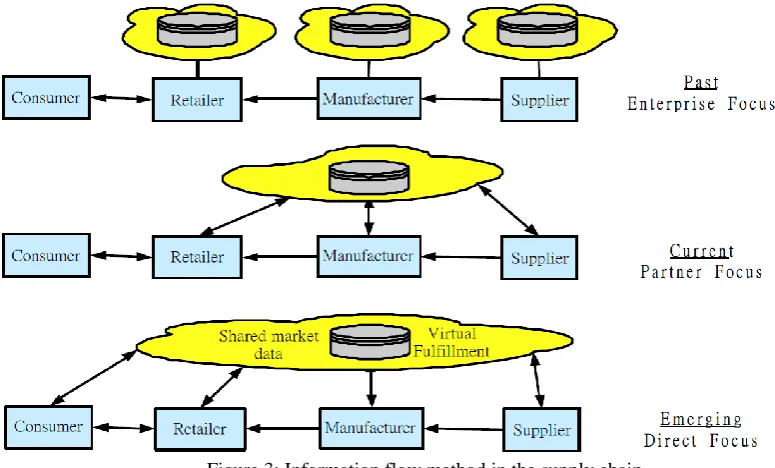
Inter-enterprise integration is the core of SCM. As Figure 3 illustrates, SCM is evolving from enterprise-centric models to more collaborative, partnership-oriented models. Now, there is a need to create an increasingly streamlined supply chain model with mass-customization and customer-direct capability (Kalakota & Robinson, 2001).
Figure 3: Information flow method in the supply chain (Kalakota & Robinson, 2001)
2.2 Past (Enterprise focus)
No company wants excess inventories. The rallying cry behind inter-enterprise integration is “drive down inventory, production, and distribution.” The basic economic reality, however, is that retail stores and distributors maximize profits by inventory turns – frequent delivery of goods to replace sales, whereas manufacturers maximize profits by longer production lead times. To manage the mismatch between the two, companies create stores of inventory in the supply chain (Yung & Yang, 1999a; Yung & Yang, 1999b). The data is not consistent among partners, and the information provided is not enough to make precise forecast and best decisions. In the traditional supply chain, the path between customers and the suppliers is. The longer the path is, the bigger the distortion is. Most of the enterprises have to shorten their supply chain to reduce the information distortion.
Electronic data interchange (EDI) is important in sharing information especially for the causes of demand forecasting and order batching. In recent years, many enterprises, organizations and companies now adopt EDI are considering a move to eXtensible Markup Language (XML) to open up new markets. It can provide an effective way to record, process and disseminate the supply chain information. It can also enhance the Just-In-Time (JIT) inventory management by faster and more accurate filling of orders. In addition, the processed data can be used in management decision making. Therefore, EDI is a powerful tool in managing the supply chain in the past years. However, there are limitations in the EDI, first, it is costly to develop and operate. Secondly, it limits the accessibility to the customer. It is only a standard that can be communicated between companies or vendors. Thirdly, EDI needs the users to fulfill rigid requirements. If one small company and one big company cannot agree at the same standard, they cannot use EDI to communicate. Fourthly, EDI cannot cover all the services needed in the supply chain, and it only automates the transaction process. In fact, it may take the companies more time to handle the data conversion from the EDI data to the standard of the value-added systems. Finally, EDI is a peer-to-peer system and it did not have a good negotiation mechanism for the companies.
low utilization, lower quality of the product and high supply cost. Moreover, the information of the market value of the product will be distorted if demand pattern of the consumers is one of the major components for the company to plan their strategy. There are four major causes of the situation as follows. Firstly, the demand signal processing is often based on the order history. And repeating forecast processes would automatically amplify order variability. When there is a longer replenishment lead-time, the amplification is even greater. Secondly, the batch ordering is one of the common practices due to the economics of transportation and high order cost. Thirdly, the price fluctuations will lead the buyers to make orders when the price is low. And this will cause the higher order variability. Finally, the shortage gaming of the supplier will cause the buyer to exaggerate their real needs in order to meet their demand. However, when the shortage crisis is over, orders will disappear suddenly. Therefore, this will amplify the demand variability.
2.3 Current (Partner focus)
Historically, trading partners have engaged in various promotional pricing, purchasing, and diverting strategies to coerce one party or the other to maintain the supply chain inventory or its costs. The supply chain retailers and distributors are closest to the point of product consumption and therefore have access to the optimization software, and this data can provide the projected replenishment needs for the supply chain and the production planning information so desperately needed by the manufacturers. There are three major disadvantages as follows.
The leading company defines the data transfer standard. Upstream and downstream companies follow this protocol and update the centralized database periodically. The supply chain participant cannot utilize this information as needed and make decision appropriately.
Blackburn (1991) indicates that, forecast errors can be reduced significantly when sales are increased by compressing the time delays between supply chain links. Therefore, we must replace those method by workflow management to provide more functions, which are sharing sales capacity, sharing inventory data, computer assisted ordering and etc., can be integrated together in order to enhance the performance of the system.
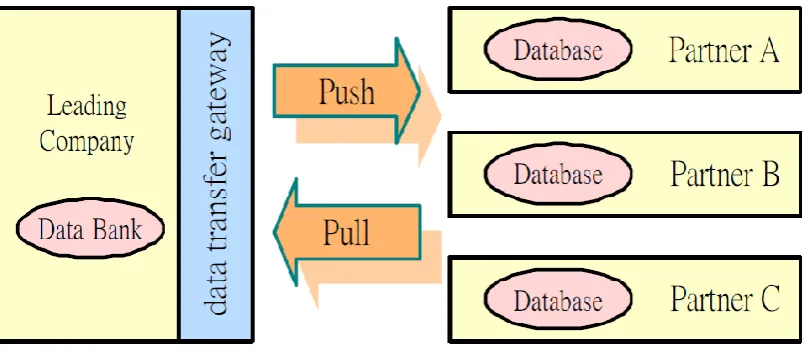
When adapting batch update periodically, we must use push and pull technology to complete the batch process. But the upstream and downstream company cannot share the information in real-time.
The push and pull in supply chain management is list as Figure 4.
Figure 4: Pull and push in SCM
Production decisions are based on long-term forecasts. Typically, the manufacturer uses orders received from the retailer’s warehouse to forecast customer demand. When an event occurs, the leading company push a notification to related partner, the partner pull the needed data to fulfill their process. In such a system, it takes much longer to react to the changing marketplace. This can lead to some problems as follows.
The inability to meet changing demand patterns.
The obsolescence of supply chain inventory as demand for certain products disappears.
The information for supporting the supply chain partners are not enough.
This is the same with the situation that enterprise focus had happened. So, it leads to inefficient resource utilization, because planning and managing is much more difficult. Thus, in a push and pull based supply chain we often find increased transportation cost, high inventory levels and/or high manufacturing costs, due to the need for emergency production changeovers.
2.4 Emerging (Direct focus)
Customers are very aware of their buying options, so the demands they place on suppliers often change from order to order. In response to the unpredictable customer order cycle, companies are looking to go even further in reducing superfluous inventory – actually cutting it out entirely in order to have zero-inventory model.
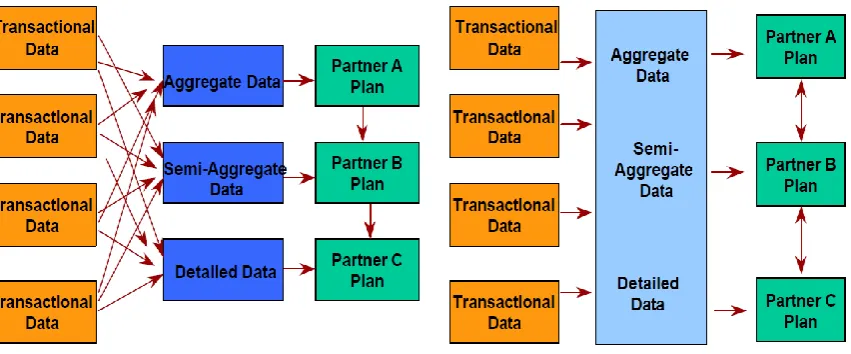
Some companies found build-to-order and configure-to-order is a great strategy. Integrate supply chain planning and supply chain execution is the most urgent in supply chain management. Planning can cut costs by streamlining the procurement and manufacturing processes, but that may not help satisfy customers. Current trends show that companies need more and more detailed execution information to coordinate the supply chain. The supply chain planning can use the data that is fed by supply chain execution constantly to make better operating decision. For most of their data, supply chain planning depends on the enterprise resource planning backbone. So, there is a need to combine planning and execution process, then all the important data in supply chain can integrate for the supply chain planning, the architecture in Figure 5 can be illustrated.
For this purpose, the supply chain uses fast information flow mechanism to transfer information about customer demand to the manufacturing facilities. These situations would leads to some problems as follows.
A decrease in lead times achieved through the ability to better anticipate incoming orders from retailers.
A decrease in variability in the system and, in particular, variability faced by manufacturers due to lead time reduction.
Decreased inventory at the manufacturer and retailer due to the reduction invariability.
Figure 5: AS-IS and TO-BE model for supply chain planning
3. THE ACCOMPLISHING OF PARTNER COLLABORATION USING WORKFLOW 3.1 The ability of workflow in flow control
Workflow process definitions (workflow schemas) are defined to specify which tasks need to be executed and in what order (i.e., the routing or control flow.). Control data are data introduced solely for workflow management purposes, e.g., variables introduced for routing purposes (van der Aalst, 2000).
3.2 Data query to realize workflow interoperability
language and database manipulation language constructs as used by the workflow management system to the underlying database system. The database system also provides query function to translate query result from the database system into the standard internal format used by the workflow system. Database system can provide active rule concept, it can trigger actions itself and cooperate with the workflow system or even control the actions of the workflow system (Grefen, P. & de Vries, 1998; Muth, Weissenfels, Gillmann, & Weikum, 1999).
The database management system stores all relevant workflow data sets. Workflow definition data set contains the information on the design and structure of workflow applications, like workflow specifications and task specifications. Workflow process data set contains information on the current status and history of workflow applications, e.g. the status of tasks being performed or having been performed. The management information data set contains aggregated workflow process data for management information and evaluation purposes. The data is periodically updated by extracting relevant data from the process data set. The data set is used as a data warehouse on which historical queries can be formulated. The application data set contains the workflow case data actually processed by the workflow application or descriptions thereof.
3.3 Workflow management system support business process collaboration
Workflow management system is mainly concerned with coordination aspects of business processes, workflow functionality can be divided into different coordination and control mechanisms (Becker, Uthmann, zur Muehlen, & Rosemann, 1999; Georgakopoulos, Hornick, & Sheth, 1995).
Coordination of activities: The workflow management system automates the transitions between single process activities. The implicit knowledge about the sequence of activities can be handed over to the workflow system entirely. This approach is regarded as transactional or production workflow. The workflow-based coordination of activities reduces non-valuable-activities like the search for organizational information and supports learning effects through the explication of the process model.
Coordination of actors: The workflow management system supports the assignment of actors to single process activities according to a set of rules. The coordination instruments used here are the notification and synchronization mechanisms of the work lists. This coordination aspect accelerates the identification of qualified staff members and eliminates related (search) activities.
Coordination of data and application systems: During the presentation of a workflow activity the workflow management system provides the relevant data necessary for the fulfillment of the given task and coordinates the appropriate application systems (e.g. a word processor or a form-based data entry program) via remote data, object and procedure calls respectively.
Monitoring and controlling of process instances: Workflow management systems foster the automation of the extraction, analysis and user-appropriate presentation historic data about workflow instances. This data is the main input for early warning mechanism and may additionally serve as a foundation for continuous process improvement (feedback engineering).
4. SUMMARY
In this article, we introduce the supply chain management information flow method and discuss the impact when use different strategy of data transfer mechanism. Then, we explain the reason we use workflow management system to enable the partner collaboration through information sharing. These efforts will be the bases of our research and starting points for future research directions.
REFERENCES
1. Becker, J., von Uthmann, C., zur Muehlen, M., & Rosemann, M. (1999). Identifying the workflow potential of business processes. In: Proceedings of the 32nd Hawaii International Conference on Systems Sciences IEEE.
2. Blackburn, J.D. (1991). The quick response movement in the apparel industry: A case study in time-compressing supply chains. Edited by J.D. Blackburn, Time-Based Competition: The Next Battleground in American Manufacturing, Irwin, Homewood, IL.
3. Georgakopoulos, D., Hornick, M., & Sheth, A. (1995). An overview of workflow management: From process modeling to workflow automation infrastructure. Distributed and Parallel Databases, 3, 119-153.
4. Grefen, P., & de Vries, R.R. (1998). A reference architecture for workflow management system. Data & Knowledge Engineering, 27(1), 31-35.
6. Muth, P., Weissenfels, J., Gillmann, M., & Weikum, G. (1999). Work-flow history management in virtual enterprises using a light-weight workflow management system. In: Proceedings of the Ninth International Workshop on Research Issues on Data Engineering: Information Technology for Virtual Enterprises, Sydney, Australia.
7. van der Aalst, W. (2000). Loosely coupled inter-organizational workflows: Modeling and analyzing workflows crossing organizational boundaries. Information & Management, 37(2), 67-75.
8. Yung, S.K., & Yang, C.C. (1999a). Intelligent multi-agents for supply chain management. , IEEE International Conference on Systems, Man, and Cybernetics, 2, 528 -533.