Original Research Article
Prevalence and factors associated with depression and anxiety among
students of backward community and minority girl’s
hostels of Mysuru city
Krishnaveni Y. S.*, Prakash B., Praveen Kulkarni, Narayanamurthy M. R.
INTRODUCTION
Mental health is one of the major concerns among Non-communicable diseases and 10-20% of children and adolescents suffer from mental disorders worldwide. If
untreated, this severely influences children’s
development, their education and their potential to live productive lives.1 Depression and anxiety are common among them. Globally mental and behavioural disorders
are one of the 20 leading cause for disability-adjusted life years (DALYs) accounting for 6% of DALYs with unipolar depressive disorder for 2% DALYs and anxiety disorder 1% DALYs.2 And it is more in high income countries.
Depression is a common mental disorder, characterized by persistent sadness and a loss of interest in activities that a person normally enjoys, accompanied by an
ABSTRACT
Background: Mental health is one of the major concerns among Non-communicable diseases with 10-20% of children and adolescents suffering mental disorders worldwide. If untreated, these conditions severely influence child’s development, education and their potential to live productive lives. This study is an effort to find out factors influencing mental health in hostel students, and its effects in their daily routine which will help hostel supervisors, parents and teachers to deal with students and help to achieve maximum progress in their academics.
Methods: This is a Cross sectional study done among 353 students in BCM (backward community and minority) girls hostels of Mysuru. Students above 18 yrs and willing to participate in study are included and those suffering from acute illness/recent trauma /injury are excluded. Data collected using validated questionnaire (PHQ 9 for depression and GAD7 for anxiety).
Results: Among 353 students included depression was observed in 245 (69.4%) of students and anxiety was found in 222 (62.8%) students. Depression and anxiety was associated with single parenting, socioeconomic class, masters degree courses, food habits, lifestyle and menstrual irregularities, multi logistic regression showed association of depression with premenstrual syndrome and anxiety with exercise, socioeconomic class, financial difficulties and premenstrual syndrome.
Conclusions: Depression and anxiety were more prevalent in adolescent students and are associated with sedentary lifestyle, socioeconomic condition of students and reproductive health. Depression and Anxiety has impact on comfortable stay in hostel and relation with peers. These factors can be addressed to mitigate the effects.
Keywords: Depression, Anxiety, Hostelites
Department ofCommunity Medicine, JSS Medical College, Mysuru, Karnataka, India
Received: 03 January 2018
Revised: 03 February 2018
Accepted: 05 February 2018
*Correspondence:
Dr. Krishnaveni Y. S.,
E-mail: [email protected]
Copyright: © the author(s), publisher and licensee Medip Academy. This is an open-access article distributed under the terms of the Creative Commons Attribution Non-Commercial License, which permits unrestricted non-commercial use, distribution, and reproduction in any medium, provided the original work is properly cited.
inability to carry out daily activities for at least 2 weeks. Globally 300 million people are suffering from depression. Depression is the leading cause of disability worldwide, and is a major contributor to the overall global burden of disease. More women are affected by depression than men and more in metropolitan cities.3 It can lead to suicide which is second leading cause of death in 15-29-year-olds.4,5 Close to 800000 people die due to suicide every year and 78% of global suicides occur in low- and middle-income countries. Anxiety is common in adolescent students and more in urban areas than rural areas.6 Hostel stay plays important role in students life and hostel students are more stressed than others.7,8
Although there are known, effective treatments and prevention options for depression and anxiety, it does not reach the affected persons. Barriers to effective care include a lack of resources, lack of trained health-care providers, and social stigma associated with mental disorders and inaccurate assessment.4 For a young person with symptoms of a mental disorder, the earlier treatment is started, the more effective it can be and prevent more severe, lasting problems as a child grows up.9 Every US$ 1 invested in scaling up treatment for depression and anxiety leads to a return of US$ 4 in better health and ability to work, according to a new WHO-led study which estimates both the health and economic benefits of investing in treatment of the most common forms of mental illness globally.10
According to the WHO, India is one of the most depressed countries in the world with a 36% of Indians likely to suffer from major depression at some point in their lives. This study is an effort to find out factors influencing depression and anxiety in hostel students, And also to find effects of this in their daily routine which will help hostel supervisors, parents and teachers to deal with students and help to achieve maximum progress in their academics. This study was done with objective to assess prevalence and factors associated with depression and anxiety among students of backward community and minority (BCM) girls hostels of Mysuru and to assess the influence of depression and anxiety on social and academic performance of students.
METHODS
This is a cross-sectional study was conducted in Backward community and minority girls hostels of Mysuru from 1st October 2016 to 30th November 2017. Considering the prevalence 29.9% α- 5%, β 20%, and non-response rate as 10%, sample size was calculated to be 353.11 Approval was taken from institutional ethical committee of JSS Medical College. Mysuru city has 11 post-metric girls hostels with total 1185 students residing. Hostels were listed and every alternate hostels were selected. Among 5 hostels selected, number of students needed for the study from each hostel was calculated by using population proportion to sample size (PPS) technique. These hostels were visited and students were briefed about objective of the study and explained about depression and anxiety. After taking informed consent,
students required for the study were randomly selected considering inclusion criteria that is, those above 18 years. Those suffering from acute illnesses like viral fevers, trauma and on any medications were excluded. Information regarding socio-demographic details was collected using prestructured questionnaire and self-administered, validated questionnaires-patient health questionnaire PHQ9 used for depression and general anxiety disorder (GAD 7) for anxiety. Data was entered in Microsoft excel and coded in SPSS 22 and analyzed. Descriptive statistics like percentage, mean and standard deviation were used to describe variables; and chi-square test was used to find association of depression with socio-economic and demographic factors. P<0.05 was taken as statistically significant. Multiple logistic regressions used to confirm association among significant variables and to adjust confounding variables.
Variables are defined as follows-exercise was taken as physical workouts or brisk walking that is >30 minutes for minimum 3 times in a week that cause sweating. Physical activities are defined as any continuous work in hostel like cleaning, washing or gardening that is done for >30 minutes at least 3 days in a week. Outside food consumption is considered as having those junk foods that are oil fried or containing cheese like chips, burgers, gobi-manchurian more than 2 times in a week.
RESULTS
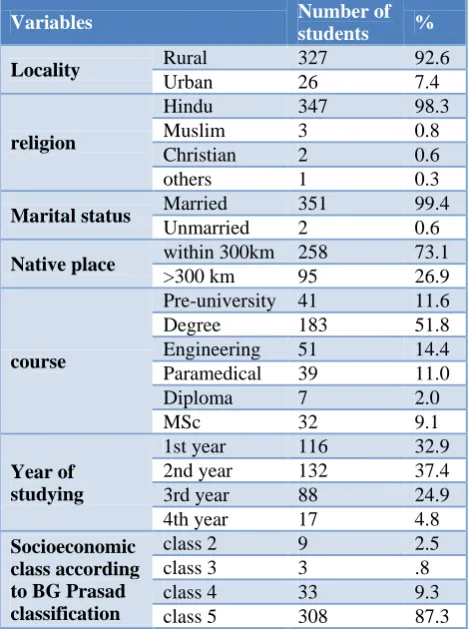
Table 1: Distribution of study participants based on socio-demographic features, course and year.
Variables Number of
students %
Locality Rural 327 92.6
Urban 26 7.4
religion
Hindu 347 98.3
Muslim 3 0.8
Christian 2 0.6
others 1 0.3
Marital status Married 351 99.4
Unmarried 2 0.6
Native place within 300km 258 73.1
>300 km 95 26.9
course
Pre-university 41 11.6
Degree 183 51.8
Engineering 51 14.4
Paramedical 39 11.0
Diploma 7 2.0
MSc 32 9.1
Year of studying
1st year 116 32.9
2nd year 132 37.4
3rd year 88 24.9
4th year 17 4.8
Socioeconomic class according to BG Prasad classification
class 2 9 2.5
class 3 3 .8
class 4 33 9.3
class 5 308 87.3
Table 2: Factors associated with depression.
Depression
Chi-square value
P value
Variables
Absent Present Total
Number of students
Percentage (%)
Number of students
Percentage
(%) Students
Locality Rural 102 31.2 225 68.8 327 0.747 0.39
Urban 6 23.1 20 76.9 26
Head of family
Father 99 31.5 215 68.5 314
5.829 0.04*
Mother 5 15.6 27 84.4 32
Grandparent 4 57.1 3 42.9 7
Total family members
<4 51 29.7 121 70.3 172
0.141 0.71
>4 57 31.5 124 68.5 181
Course
Puc 19 46.3 22 53.7 41
10.602 0.05*
Degree 56 30.6 127 69.4 183
Engineering 15 29.4 36 70.6 51
Paramedical 11 28.2 28 71.8 39
Diploma 3 42.9 4 57.1 7
Masters 4 12.5 28 87.5 32
Year of study
1st Year 33 28.4 83 71.6 116
3.740 0.29
2nd Year 37 28.0 95 72.0 132
3rd Year 34 38.6 54 61.4 88
4th Year 4 23.5 13 76.5 17
Diet Vegetarian 25 28.1 64 71.9 89 0.352 0.55
Mixed 83 31.4 181 68.6 264
Outside food No 25 42.4 34 57.6 59 4.628 0.03
Yes 83 28.2 211 71.8 294
Exercise Yes 88 34.0 171 66.0 259 5.239 0.02
No 20 21.3 74 78.7 94
Physical activities
Yes 67 37.2 113 62.8 180
7.597 <0.01
No 41 23.7 132 76.3 173
Beverages No 39 38.6 62 61.4 101 4.284 0.03
Yes 69 27.4 183 72.6 252
Bmi
Low Weight 53 31.9 113 68.1 166
0.621 0.91
Normal 49 30.2 113 69.8 162
Overweight 2 20.0 8 80.0 10
Obese 4 26.7 11 73.3 15
Menstrual cycle
Follicular
Phase 81 27.2 217 72.8 298 10.496 <0.01
Luteal Phase 27 49.1 28 50.9 55
Irregular Regular 92 33.6 182 66.4 274 5.126 0.02
Irregular 16 20.3 63 79.7 79
Duration of stay in months
<1yr 47 24.6 144 75.4 191
7.027 <0.01
>1yr 61 37.7 101 62.3 162
H/o hostel stay Absent 66 31.1 146 68.9 212 0.072 0.79
Present 42 29.8 99 70.2 141
Financial difficulties
Absent 68 36.4 119 63.6 187
6.232 0.01
Present 40 24.1 126 75.9 166
Socioeconomic class
2nd Class 7 77.8 2 22.2 9
8.899 0.02*
3rd Class 1 33.3 2 66.7 3
4th Class 10 30.3 23 69.7 33
5th Class 90 29.2 218 70.8 308
Pms Present 45 18.00 205 82.00 250
64 <0.01
Absent 63 61.20 40 38.80 103
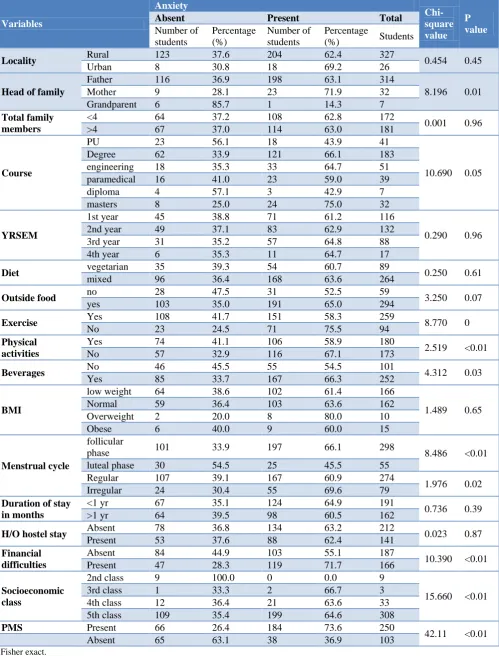
Table 3: Factors associated with anxiety.
Variables
Anxiety
Chi-square value
P value
Absent Present Total
Number of students
Percentage (%)
Number of students
Percentage
(%) Students
Locality Rural 123 37.6 204 62.4 327 0.454 0.45
Urban 8 30.8 18 69.2 26
Head of family
Father 116 36.9 198 63.1 314
8.196 0.01
Mother 9 28.1 23 71.9 32
Grandparent 6 85.7 1 14.3 7
Total family members
<4 64 37.2 108 62.8 172
0.001 0.96
>4 67 37.0 114 63.0 181
Course
PU 23 56.1 18 43.9 41
10.690 0.05
Degree 62 33.9 121 66.1 183
engineering 18 35.3 33 64.7 51
paramedical 16 41.0 23 59.0 39
diploma 4 57.1 3 42.9 7
masters 8 25.0 24 75.0 32
YRSEM
1st year 45 38.8 71 61.2 116
0.290 0.96
2nd year 49 37.1 83 62.9 132
3rd year 31 35.2 57 64.8 88
4th year 6 35.3 11 64.7 17
Diet vegetarian 35 39.3 54 60.7 89 0.250 0.61
mixed 96 36.4 168 63.6 264
Outside food no 28 47.5 31 52.5 59 3.250 0.07
yes 103 35.0 191 65.0 294
Exercise Yes 108 41.7 151 58.3 259 8.770 0
No 23 24.5 71 75.5 94
Physical activities
Yes 74 41.1 106 58.9 180
2.519 <0.01
No 57 32.9 116 67.1 173
Beverages No 46 45.5 55 54.5 101 4.312 0.03
Yes 85 33.7 167 66.3 252
BMI
low weight 64 38.6 102 61.4 166
1.489 0.65
Normal 59 36.4 103 63.6 162
Overweight 2 20.0 8 80.0 10
Obese 6 40.0 9 60.0 15
Menstrual cycle
follicular
phase 101 33.9 197 66.1 298 8.486 <0.01
luteal phase 30 54.5 25 45.5 55
Regular 107 39.1 167 60.9 274
1.976 0.02
Irregular 24 30.4 55 69.6 79
Duration of stay in months
<1 yr 67 35.1 124 64.9 191
0.736 0.39
>1 yr 64 39.5 98 60.5 162
H/O hostel stay Absent 78 36.8 134 63.2 212 0.023 0.87
Present 53 37.6 88 62.4 141
Financial difficulties
Absent 84 44.9 103 55.1 187
10.390 <0.01
Present 47 28.3 119 71.7 166
Socioeconomic class
2nd class 9 100.0 0 0.0 9
15.660 <0.01
3rd class 1 33.3 2 66.7 3
4th class 12 36.4 21 63.6 33
5th class 109 35.4 199 64.6 308
PMS Present 66 26.4 184 73.6 250
42.11 <0.01
Absent 65 63.1 38 36.9 103
*Fisher exact.
A total of 353 female students participated in the study. Majority of them were from rural (92.63%) areas perceiving different courses like pre-university (11.6%), degree (51.8%), engineer courses (14.4%), paramedical courses (11%), diplomas (2%), master degrees, (9.1%). They were of age group 18 to 27 with mean age 20±1.6 years. Majority of them belonged to socio-economic class five (87.3%) according to BG Prasad classification (Table 1).
Depression was observed in 245 (69.4%) students with most of them having mild form 140 (39.7%), moderate form in 71 (20.1%), moderately severe in 26 (7.4%) and severe depression in 8 (2.3%) of students.
Among 353 participants Anxiety was found in 222 (62.8%) students, with mild form in 110 (31.2%), moderate in 78 (22%) and severe form in 34 (9.6%) students.
Figure 1: Distribution of students based on severity of depression.
Figure 2: Distribution of students based on severity of anxiety.
Statistically significant association was found with socio economic, academic, and demographic and lifestyle factors (Table 2). Depression was found to be significantly associated with students who had families with mother as head of family (p=0.04), students in their 1st year of stay in hostels (p<0.01; OR 0.54, 95%CI
0.34-0.85), students perceiving masters degree and
paramedical degree (p=0.05), lifestyle habits like having outside junk foods (p=0.03;OR 1.86, 95%CI 1.05 -3.3), beverages (p=0.03; OR 1.66, 95%CI 1.02-2.71), and no
physical activities (p<0.01; OR=1.90, 95%CI 1.20-3.03) and lack of exercise (p=0.02; OR=1.90, 95%CI 1.09-3.3). Depression was also seen more significant in students in follicular phase of menstrual cycle (p<0.01; OR=38, 95%CI 0.21-0.69) and in irregular menstrual cycles (p=0.02; OR=1.99, 95%CI 1.08-3.63) and in those suffering from premenstrual syndrome (p<0.01; OR=0.13, 95% CI 0.08-0.232), students belonging to class five socioeconomic class (p=0.02)and those having financial difficulties (p=0.01;OR 1.8, 95%CI 1.13-2.86). (Table 2) In multiple logistic regression significant association was found with premenstrual syndrome.
Anxiety was associated significantly with depression. 80% of students having depression also had anxiety disorders (p<0.01; OR 13.62, 95%CI 7.88-23.55). Anxiety was found more in students belonging to class five socioeconomic class (p<0.01) and having financial difficulties (p<0.01;OR=2.06, 95%CI 1.32-3.21),students of single mothers (p=0.01), those doing master degrees(P 0.05), consuming beverages (p=-0.03; OR=1.64, 95%CI 1.02-2.63)) and with no exercise (p=<0.01;OR 2.2, 95%CI 1.29-3.75), students in follicular phase of menstrual cycles (p=<0.01;OR0.42, 95%CI 0.23-0.76) and those having premenstrual syndrome (p<0.01; OR0.21, 95%CI 0.12-0.34)) (Table 2). In multiple logistic regression statistically significant association was found with exercise, premenstrual syndrome, financial
difficulties and borderline association with
socioeconomic class.
Social and academic influence of depression and anxiety were assessed with its association with social factors like quarrels with roommates, participation in cultural programmes, marks obtained, sleep and feel of comfort in hostel stay. Though quarrels with roommates were found more in students with depression comparatively, it was not statistically significant. Even Marks obtained by students with depression was comparatively lower than others but was not significant statistically. Sleep variation was found more in depressed students but was not significant. Students with depression were not comfortable in hostel stay than those without depression (p=0.16, OR 3.49, 95%CI 1.19-10.18). Students without depression felt their subjects more easier than others. Among students with anxiety, quarrels with peers were found significantly more (p<0.01; OR 2.83, CI 1.58-5.09) and they felt their subjects more difficult than others but no association was found with marks obtained. Students with anxiety were significantly not comfortable in hostel stay (p<0.01; OR 4.77. 95%CI 1.63-13.89).
DISCUSSION
In a systematic review done by Ibrahim et al, depression among University students is between 10 to 80% with mean 30%.12 In Studies at Mangalore among pre-university students, prevalence of depression is 79.2% and in medical students it is 71.25% with majority 80% having mild and moderate depression.14 Significant
Normal 37%
Mild 31% Moderate
22%
association was there between higher semesters and depression.15 A similar findings were seen in this study also where prevalence was 69% and majority were with mild depression and more in master degrees that is comparable to present study. In study by Bansal et al depression is associated with economic difficulties and parental fights.12 Financial difficulties were associated with anxiety in our study. Single parenting also had significant association. Anxiety is seen in 87% of students with depression in study done by Sahoo and Kheeswhich is similar in this study also.16 In a study done in Alexandria University depression (57.9%) and anxiety (43.9%) among medical students is more than pharmacy students.17 In our study both depression and anxiety are associated with master degree course. In study at vidhrbha by Shidhaye et al, age, gender, education, poverty and indebtedness along with place of residence (taluka) retained significant association with current depression.18 Study by Jayanthi et al in Tamil Nadu showed association of academic stress with depression.19 In our study socioeconomic class was associated with anxiety. But there was no association of depression and anxiety with academic performance. In a study among medical students of Bhubaneswar it was found that depression and anxiety were more in females and lower semesters.20 But in our study it was found that depression seen in 1st year of hostel stay but not associated with year of study. In study done on nursing students in Wardha by Padhy et al, shows significant association of major depression with severity of premenstrual syndrome.21 Our study also shows significant association of depression and anxiety with premenstrual syndrome. A meta-analysis by Petruzzello et al shows exercise is associated with Anxiety.22 A similar finding was also found in our study where students without exercise were more depressed.
CONCLUSION
Depression and Anxiety are prevalent more in hostellites. Mild forms are more prevalent than sever form. Depression is associated with Pre-menstrual syndrome whereas Anxiety is associated with food habits and lifestyle, financial condition and reproductive health of students. Menstrual irregularities and premenstrual syndrome play vital role in mental health of students. Presence of depression and anxiety creates discomfort in hostel stay among students. Students with anxiety are involved in frequent quarrels with their peers and requires attention. Further longitudinal follow up studies are needed to confirm the causal factors of depression and anxiety and to assess their impact on performance of students. As mild form of depression and anxiety can be managed by creating awareness, encouraging active life style and nutritious diet among students, importance to be given to address this. Frequent examinations of physical, menstrual and psychological health can help in early diagnosis of irregularities in reproductive health which is significantly associated with depression and anxiety. Financial support with help of scholarships and education
to students to handle financial difficulties can mitigate risk of developing anxiety and depression. Encouraging Physical activities like yoga and sports as a part of hostel routine is useful to avoid anxiety. Psychological and academic counselling helps students in handling their subjects well, Recreational activities are also important for students both in hostel and their institutions. Encouraging team activities among students helps them to develop positive resilience relation with others.
ACKNOWLEDGEMENTS
I thank Department of Community Medicine for the support. I acknowledge all hostel supervisors and students for their support in this study.
Funding: No funding sources Conflict of interest: None declared
Ethical approval: The study was approved by the Institutional Ethics Committee
REFERENCES
1. WHO. Maternal and child mental health. WHO.
Available from:
http://www.who.int/mental_health/maternal-child/en/. Accessed 1 November 2017.
2. WHO. Global Health Estimates. Available from: http://www.who.int/healthinfo/global_burden_disea se/en/. Accessed 1 November 2017.
3. Kamat S. Depression in Corporate India: Statistics, Causes, Symptoms & Treatment. MBA Crystal Ball. 2015. Available at: http://www.mbacrystalball.com/ blog/2015/05/01/depression-causes-symptoms-treatment-india/ Accessed 17 October 2017.
4. WHO. Depression. WHO. Available at:
http://www.who.int/mediacentre/factsheets/fs369/en /. Accessed 14 June 2017.
5. WHO. Suicide. WHO. Available at:
http://www.who.int/mediacentre/factsheets/fs398/en / Accessed 1 November 2017.
6. Satyanarayana PT, Prakash B, Kulkarni P, Kishor M, Renuka M. A comparative study of prevalence of mental abnormalities among high school children in tribal, rural and urban Mysuru district, Karnataka, India. Int J Community Med Public Health 2017;4:809-13.
7. Iftikhar A, Ajmal A. A Qualitative Study
Investigating the Impact of Hostel Life. Int J Emerg Ment Health Hum Resil. 2015;17(2):511-5.
8. Prabhu M, Madan Mohan G. A study on stress among university students in india. Int J Business Admin Res Rev. 2014;1(5):21-33.
9. NIMH. Child and Adolescent Mental Health.
Available at: https://www.nimh.nih.gov/health/ topics/child-and-adolescent-mental-health/
index.shtml. Accessed 1 November 2017.
/depression-anxiety-treatment/en/. Accessed 1 November 2017.
11. Vashisht A, Ahmed Gadi N, Singh J, Purkayastha M, Pathak R, Mishra P. Prevalence of depression & assessment of risk factors among school going
adolescents. Indian J Community Health.
2014;26:196–9.
12. Ibrahim AK, Kelly SJ, Adams CE, Glazebrook C. A systematic review of studies of depression prevalence in university students. J Psychiatry Res. 2013;47(3):391–400.
13. Naushad S, Farooqui W, Sharma S, Rani M, Singh R, Verma S. Study of proportion and determinants of depression among college students in Mangalore city. Niger Med J J Niger Med Assoc. 2014;55(2):156–60.
14. Kumar GS, Jain A, Hegde S. Prevalence of depression and its associated factors using Beck Depression Inventory among students of a medical college in Karnataka. Indian J Psychiatry. 2012;54(3):223–6.
15. Bansal V, Goyal S, Srivastava K. Study of prevalence of depression in adolescent students of a public school. Ind Psychiatry J. 2009;18(1):43–6. 16. Sahoo S, Khess CRJ. Prevalence of depression,
anxiety, and stress among young male adults in India: a dimensional and categorical diagnoses-based study. J Nerv Ment Dis. 2010;198(12):901–4.
17. Ibrahim MB, Abdelreheem MH. Prevalence of
anxiety and depression among medical and
pharmaceutical students in Alexandria University. Alex J Med. 2015;51(2):167–73.
18. Shidhaye R, Gangale S, Patel V. Prevalence and treatment coverage for depression: a population-based survey in Vidarbha, India. Soc Psychiatry Psychiatr Epidemiol. 2016;51(7):993–1003. 19. Jayanthi P, Thirunavukarasu M, Rajkumar R.
Academic stress and depression among adolescents:
a cross-sectional study. Indian Pediatr.
2015;52(3):217–9.
20. Iqbal S, Gupta S, Venkatarao E. Stress, anxiety & depression among medical undergraduate students & their socio-demographic correlates. Indian J Med Res. 2015;141(3):354–7.
21. Padhy SK, Sarkar S, Beherre PB, Rathi R, Panigrahi M, Patil PS. Relationship of premenstrual syndrome and premenstrual dysphoric disorder with major depression: relevance to clinical practice. Indian J Psychol Med. 2015 ;37(2):159–64.
22. Petruzzello SJ, Landers DM, Hatfield BD, Kubitz KA, Salazar W. A meta-analysis on the anxiety-reducing effects of acute and chronic exercise. Outcomes and mechanisms. Sports Med Auckl NZ. 1991;11(3):143–82.