Original Research Article
Knowledge and attitude towards consanguineous marriage
among educated adults in Riyadh
Samira M. Mahboub*, Alanoud A. Alsaqabi, Noura A. Allwimi,
Dana N. Aleissa, Basmah A. Al-Mubarak
INTRODUCTION
Consanguineous marriage prevalence varies widely from one country to another, but its worldwide prevalence ranges from 20-50% of all marriages.1 In Australia the prevalence of consanguinity among couples who identify themselves as biological relatives is (0.23%) and most of them were first-cousins.2 This type of marriages is traditionally favored in most of Asian and African countries especially in the Muslim countries.3 One of the countries with high consanguinity marriage rate is
Pakistan with a percentage of (62%) of all marriages and first-cousin marriage represent (50%) of them.4
Many studies revealed an association between consanguinity and many common genetic diseases such as; sickle cell anaemia, thalassemia, hemophilia, congenital heart diseases, congenital malformations and hearing deficit.5–8
In many studies it was evident that the higher the level of education, the lower the consanguineous marriage rate. In
ABSTRACT
Background: In Saudi Arabia there is still a high prevalence of consanguineous marriage in spite of increased educational level. This may be attributed to the fact that this practice is more influenced by attitude towards this type of marriage rather than educational level. The Aim of this study was to determine knowledge and attitude towards consanguineous marriages among educated Saudi adults.
Methods: A cross sectional study was conducted using an online questionnaire. A total of 680 educated Saudi adults living in Riyadh were asked about their socio-demographic characteristics, their knowledge and attitude towards consanguineous marriage.
Results: Most of participants had poor knowledge and negative attitude (53.31% and 57.21% respectively). One third of participants had no idea about the possibility that consanguineous couples may have diseased offspring more than non-consanguineous couples. Those who had significantly higher attitude score towards consanguineous marriage were older age group, males, those who are married to their relatives, people who have frequent family history of consanguineous marriage and participants with parental consanguinity. Attitude towards consanguineous marriage can be predicted by age and knowledge.
Conclusions: Changing the attitude can be done by changing level of knowledge. So, educational programs are recommended and should be directed to groups with higher attitude score.
Keywords: Consanguineous marriage, Attitude, Adults, Knowledge
Department of Health Sciences, College of Health and Rehabilitation Sciences, Princess Nourah bint Abdulrahman University (PNU), KSA
Received: 27 October 2018 Accepted: 03 December 2018
*Correspondence: Dr. Samira M. Mahboub,
E-mail: [email protected]
Copyright: © the author(s), publisher and licensee Medip Academy. This is an open-access article distributed under the terms of the Creative Commons Attribution Non-Commercial License, which permits unrestricted non-commercial use, distribution, and reproduction in any medium, provided the original work is properly cited.
Jordan, it was reported that only (12%) of university educated females would marry their cousins.9 Another study in Pakistan reported that 52.5% of females married to their first-cousins were not educated.4 The same findings were reported in Turkey where an association between low educational level and being married to a relative was found.10
Kingdom of Saudi Arabia has recognized the ultimate importance of education delivered to all citizens (both males and females) for free since the last three decades. The total number of all Saudi students enrolled in universities either in KSA or worldwide was 800,000 students in 2013.11 According to the General Authority for Statistics in KSA, the percentage of illiterates aged 10 years and above was only 6.9% in 2016.12 With increasing educational level in a population, it is expected to have a positive impact on health behavior, however, prevalence of consanguineous marriage is still high in different regions in KSA.13,14
In Saudi Arabia the prevalence of consanguineous marriage in 1997 was 51.3%.15 In a more recent study included rural and urban Areas, the total prevalence of consanguineous marriages was found to be 56% of all marriages in The Kingdom.14
The high prevalence of consanguineous marriage in spite of increased educational level may be attributed to the fact that this practice is more influenced by attitude towards this type of marriage rather than educational level. Attitude towards consanguineous marriage was reported to be a significant predictor of current practice of consanguineous marriage.16 Social and traditional culture were found to be the predominant reasons for favoring consanguinity in Saudi Arabia.17 It is believed that consanguinity will help to strength family relationships and enforce family bonds, also it may be favorable for the women due to having better relationship with her in-laws who can help and support her when she needs to. In Pakistan they prefer consanguinity marriages to strength family relationships and to keep wealth within the family.18
Positive attitude towards consanguineous marriage in Saudi Arabian adults was reported to be 48.1%, however, none of previous studies investigated attitude towards consanguineous marriage among educated adults.17 Therefore, this study was conducted to investigate the attitude and knowledge about consanguineous marriage among educated adults in Riyadh and possible related factors.
METHODS
Study type: A cross-sectional study.
Study setting: Study was conducted in Riyadh, Saudi Arabia.
Study population
Educated Saudi adult’s male and female from the age (18-64) years old living in Riyadh.
Sample size
The total number of Saudi adult’s males and females from the age 18-64 years living in Riyadh is (2,782,983).(12) The sample size was calculated using OpenEpi program version 3.19 By entering total number of adults and 48.1% as expected positive attitude based on previous studies, the sample size was calculated to be 384 participants with 95% CI.17 The number of respondents to our questionnaire was 680 participants.
Materials and tools
Google documents were used as platform to create an online questionnaire. The subjects took a part of the questionnaire that has been distributed via various social media platforms. The questionnaire included three sections: the first was about socio-demographic characteristic of the participants.
The second section included 11 questions assessing level of knowledge about consanguineous marriage. Attitude was assessed using 5 questions coded according to Likert scale, the strong agreed question coded (5) and the strongly disagree coded (1). Negative statements were given reverse scoring.
Statistical analyze
Data was conducted, coded and tabulated using SPSS V. 23. Inferential statistics were performed by using t-Test, ANOVA, post hoc, correlation and simple linear regression tests to investigate factors affecting knowledge and attitude of the studied sample. P-value less than 0.05 was considered significant.
Reliability
Cronbach's α values of knowledge and attitude questions towards consanguineous marriage were 0.713 and 0.711, respectively.
RESULTS
studied sample; 36.8% of the participants lived in Eastern sector, 34.9% in Northern, 13.4% in Western, 9.3% in Southern and 5.7% in the Center sector of Riyadh. Regarding marital status of studied sample, 61.3% of participants were married and 36% were single. Different economic standards were represented as 35% of the respondents reported a family income of 20000sr or more (per month) and 6.9% respond less than 5000 sr (per month).
Table 1: Socio-demographics characteristics of studied sample.
Characteristics N (680) Percentage (%)
Age (in years)
18-25 220 32.4
26-35 158 23.2
36-45 168 24.7
46-64 134 19.7
Gender
Male 200 29.4
Female 480 70.6
Educational level
Primary 4 0.6
Preparatory 12 1.8
High school 93 13.7
College degree or above 571 84 Occupational status
Employed 370 54.4
Unemployed 139 20.4
Student 171 25.1
Residential area in Riyadh
East 250 36.8
West 91 13.4
North 237 34.9
South 63 9.3
Center 39 5.7
Marital status
Married 417 61.3
Single 245 36
Widow 2 0.3
Divorced 16 2.4
House hold income
Less than 5000 SR 47 6.9
5000-less than 10,000 132 19.4 10,000- less than 15,000 149 21.9 15,000-less than 20,000 114 16.8
20,000 or more 238 35
Regarding level of knowledge about consanguineous marriage, most of the sample had poor knowledge about consanguineous marriage (53.31%), and only 9.13% had good knowledge (Figure 1).
Table 2 demonstrates level of knowledge about consanguineous marriage among educated adults in Riyadh. 16.6% of them had no previous information about negative consequences of consanguineous marriage and one third of them had no idea about the possibility that consanguineous couples may have diseased offspring higher than non-consanguineous couples. It was found also that more than half of the participants responded with wrong answers to questions about association between consanguineous marriage and thalassemia, congenital heart diseases, hemophilia and congenital heart disease. It was also found that the most prevalent source of information among studied sample was social media followed by friends and relatives and the least prevalent source was medical staff as shown in Table 3.
Figure 1: Knowledge about consanguineous marriage among educated adults in Riyadh.
Figure 2: Attitude towards consanguineous marriage among educated adults in Riyadh.
Table 4 demonstrates factors affecting level of knowledge about consanguineous marriage among educated adult living in Riyadh. It was found that level of knowledge was significantly low among males (4.6±2.7), older age group aged 46 years or more (4.9±2.5), those who had consanguineous marriage (4.8±2.7), those with low educational level (3.4±1.8) and those who do not have siblings suffering from inherited diseases (5.07±2.6). All these differences are statistically significant.
poor 53% fair
38% good
9%
Negative 57% Neutral
39%
Table 2: Level of knowledge about consanguineous marriage among educated adults in Riyadh.
% No. Question
Do you have previous information about the
negative consequences of consanguineous marriage? 83.4 567 Yes 16.6 113 No
Possibility that consanguineous couples may have diseased offspring higher than non-consanguineous couples 68.9 468 Yes 31.1 211 No
There is an association between consanguineous marriage and certain diseases
81.3 552 Yes 18.7 127 No
There is a relationship between (sickle cell anemia) and consanguineous marriage
57.3 389 Yes 42.7 290 No
There is a relationship between (thalassemia) and consanguineous marriage 36.2 246 Yes 63.8 433 No
There is a relationship between (congenital heart diseases) and consanguineous marriage
45.8 311 Yes 54.2 368 No
There is a relationship between (congenital anomalies) and consanguineous marriage
57.6 391 Yes 42.4 288 No
There is a relationship between (Hemophilia) and consanguineous marriage 32.8 223 Yes 67.2 465 No
There is a relationship between (congenital heart disease) and consanguineous marriage
45.8 311 Yes 54.2 368 No
Table 3: Sources of information about consanguineous marriage among studied sample.
Sources of information Responses
No. Percentage (%)
Medical staff 57 6.8
School or college 209 24.9 Friends or relatives 211 25.1
Social media 312 37.2
others 50 6.0
On studying the attitude towards consanguineous marriage among educated adults in Riyadh, it was found that most of participants had negative attitude towards
consanguineous marriages (57.21%), and only (4.26%) have positive attitude (Figure 2).
Table 4: Factors affecting level of knowledge about consanguineous marriage among educated adult
living in Riyadh.
Characteristics ±SD Test of sig. P value
Gender
Male 4.62 2.67 T-test
0.001**
Female 5.34 2.55
Age groups (in years)
Less than 25 5.2 2.6
ANOVA 0.007**
26-35 4.7 2.8
36-45 5.6 2.5
46 or more 4.9 2.5
Presence of consanguineous marriage
Yes 4.80 2.72 T-test
0.018*
No 5.41 2.54
Educational level ANOVA
Primary 4.25 3.09
0.043*
Preparatory 3.41 1.83
High school 4.78 2.59
College or above 5.23 2.60 Presence of siblings suffering from inherited diseases
Yes 5.88 2.31 T-test
0.044*
No 5.07 2.62
*p<0.05; **p<0.01.
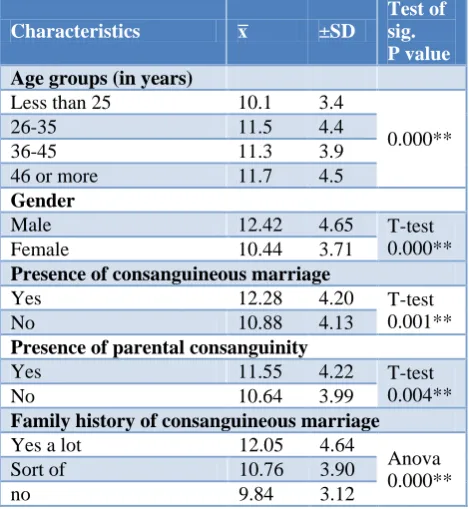
Table 5: Factors affecting attitude towards consanguineous marriage among educated adult
living in Riyadh.
Test of sig. P value ±SD Characteristics
Age groups (in years)
0.000** 3.4
10.1 Less than 25
4.4 11.5 26-35 3.9 11.3 36-45 4.5 11.7
46 or more Gender T-test 0.000** 4.65 12.42 Male 3.71 10.44 Female
Presence of consanguineous marriage
T-test 0.001** 4.20 12.28 Yes 4.13 10.88 No
Presence of parental consanguinity
T-test 0.004** 4.22 11.55 Yes 3.99 10.64 No
Family history of consanguineous marriage
Anova 0.000** 4.64
12.05 Yes a lot
Nearly half of the participants disagreed on the following statements: I support consanguineous marriage, I will plan to have kids if I had negative premarital screening test, I will plan to have more children after having a child with hereditary disease and I would advise my friend to marry from her/his cousin. The majority of educated adults (87%) disagreed on that statement” I would allow my daughter/son to marry from a relative with a known family history of genetic disease” (Figure ) t was found that those who had significantly higher attitude score towards consanguineous marriage were older age group aged years or more (x 7 ) males (x ) those who are married to their relatives (x ) people who have frequent family history of consanguineous marriage (x 7) and participants
with parental consanguinity (x ) ll these differences were statistically significant as shown in Table 5.
Figure 4 reveals perceived reasons of having consanguineous marriage despite negative pre-marital screening test. Love was the highest scored reason (x ) followed by family pressure (x ) and the lowest was fear or social stigma (x ) n Figure 5 perceived social reasons for preference of consanguineous marriage are presented Traditions were the highest scored reason with (x 9) followed by living near the family (x 8 8) and the lowest scored reason was financial reasons (x )
Figure 3: Educated adults’ responses to different items assessing attitude towards consanguineous marriage among educated adults living in Riyadh.
Table 6: Simple linear regression predicting attitude towards consanguineous marriage among educated adults in Riyadh.
Model Unstandardized Coefficients standardized Coefficients t Sig.
B Std. Error Beta
1 (constant) 11.391 0.564 20.204 0.000
Age 0.049 0.014 0.133 3.606 0.000
Total knowledge score -0.390 0.058 -0.251 -6.786 0.000
Table 6 demonstrates simple linear regression analysis that was used to predict attitude towards consanguineous marriage among educated adults in Riyadh. Total attitude score was entered to the equation as the dependent variable and variables that had significant correlation with attitude (age and total knowledge score) were
entered as independent variables. The model was highly significant (p=0.000). Both age and total knowledge score can be used to predict attitude towards consanguineous marriage among educated adults in Riyadh.
I support consanguineous
marriage
I will plan to have kids if I had negative
premarital screening test
I would allow my daughter/son to marry from a relative with a known family history of genetic disease
I will plan to have more children after having a child with hereditary disease
I would advice my friend to marry from
her/his cousin
9.3
22.4
5
24.6
11.2
36.5
26.5
8
29.7
34
54.2 51.1
87
45.7
54.8
disagree
neutral
Figure 4: Perceived reasons of having consanguineous marriage despite negative pre-marital screening test.
Figure 5: Perceived social reasons for preference of consanguineous marriage among educated adults in
Riyadh. DISCUSSION
Previous studies about consanguineous marriage reported that positive attitude towards it over weighted its negative health consequences.16 This study was conducted to investigate both knowledge and attitude towards consanguineous marriage among educated adults in Riyadh. Findings of the present study showed that most of participants (53.3%) had poor knowledge about consanguineous marriage. In spite of having 84% of participants in this study with at least college degree, nearly half of them responded with wrong answers to questions about hereditary diseases associated with consanguineous marriage. This implies the overall lack of information about negative consequences of consanguineous marriage even among educated individuals. Similar findings of poor knowledge about consanguineous marriage were reported in Iran, where 44.6% of youth couples had poor knowledge about genetic consequences of inbreeding.20
In the present study females were found to have better knowledge about consanguinity than males. This could be explained by the fact that females are more concerned
about birth and postnatal care, so they are more familiar with the consequences of consanguineous marriage. There was also a significant association between high educational level and good knowledge about consanguineous marriage. This study reported that individuals who have siblings suffering from inherited disease have more knowledge about consanguineous marriage and it might be because those individuals with suffering sibling get more knowledge from the hospital where their sibling are being treated in.
Regarding source of information to the majority of participants, social media was the most prevalent source. Same findings were reported in other studies which indicates the power of social media that can be used to spread accurate information especially to adults.21
The present study revealed that more than half of our sample (57.2%) had negative attitude towards consanguineous marriage. This suggests that the current attitude of Saudi adults towards consanguineous marriage is different from what is generally assumed. Even with the overall low level of knowledge about negative consequences of this marriage, the attitude is generally tends to be against it.
Family pressure was the main concern that was reported by adults in the present study as the main cause of completing this type of marriage in spite of negative premarital screening. Regarding perceived social reasons for preference of consanguineous marriage the main reason reported by adults in this study was traditions followed by living near family then family pressure. Similarly, previous studies documented that social and tradition culture to be predominant reasons for favoring this type of marriage in Saudi Arabia.17 Even in other countries, these two factors were reported to be closely related to consanguineous marriage.20
In the present study males were found to have significantly higher attitude score than females. This can be attributed to the overall lower knowledge about negative consequences of consanguineous marriage among males compared to females. Similar findings were reported by Buunk who studied the attitude towards consanguineous marriages among young people living in The Netherlands and he reported more positive attitude among males than females that was attributed to the fact that females are more concerned about hereditary diseases that may affect their children if they were married to their relatives.22
Positive attitude towards consanguineous marriage was found to be among those who have consanguineous marriage themselves or have a family history of consanguinity. In agreement with these findings, Ah-Harbi et al reported that positive attitude was about 4 times higher among those who have consanguineous marriage.17 This refers to the association between having
3.37 3.21
2.87
2.45
0 0.5 1 1.5 2 2.5 3 3.5 4
Love Family
pressure
Economic status
Fear or social stigma reasons
4.12
3.75 3.73 3.7
3.19
0 0.5 1 1.5 2 2.5 3 3.5 4 4.5
traditions To live near to family
Family pressure
To strength family bonds
Financial reasons
m
ea
a positive attitude towards consanguineous marriage and choosing to have this type of marriage.
Attitude towards consanguineous marriage in the present study could be predicted by the level of knowledge about this type of marriage. Similar correlation between attitude and knowledge about consanguineous marriage was reported by Sedehi et al who studied this relation among adults in Iran and he documented that there was a significant association between the knowledge of the youths and their attitudes towards consanguineous marriages.20 This implies that changing level of knowledge about consanguineous marriage will lead to change the attitude towards it.
Another important predictor of attitude towards consanguinity in this study beside knowledge was age. It was documented that older age group had a significant higher attitude score than younger age group. This refers to the fact that the power of tradition is more predominant among older adults than younger ones. That is why any attempt to change the attitude among Saudi adults towards this type of marriage should concentrate on increasing level of knowledge about it and be directed mainly to older adults aged 46 years or more.
CONCLUSION
Most of participant had poor knowledge about consanguineous marriage. Low knowledge score was found among males, those have consanguineous marriage, lower educational level and older adults aged 46 years or more. The most prevalent source of knowledge was social media. Nearly half of participants responded with wrong answers to questions about hereditary diseases associated with consanguineous marriage.
More than half of participants had negative attitude towards consanguineous marriage. Those with positive attitude were males, older age group, those with consanguineous marriage, those with family history of consanguineous marriage and participants with parental consanguinity.
Age and level of knowledge were the predictors of attitude towards consanguineous marriage among educated adults in Riyadh.
Recommendations
Changing attitude could be reached by changing level of knowledge about consanguineous marriage, so educational programs are necessary to increase level of knowledge. These programs should concentrate on areas that had the least percentage of correct answers in the present study which was the association between consanguineous marriage with hereditary diseases.
These programs should be directed to groups with significantly lower knowledge score and /or higher attitude score towards consanguineous marriage i.e. older adults aged 46 years or more, males, those with consanguineous marriage, those with lower educational level and those with family history of consanguineous marriage.
Social media should be used to spread the message of these programs since it was the most prevalent source of information for the studied sample.
Funding: No funding sources Conflict of interest: None declared
Ethical approval: The study was approved by the Institutional Ethics Committee in Princess Nourah bint Abdulrhman University and the IRB log number is: 17-0228
REFERENCES
1. Bittles AH. A Community Genetics Perspective on Consanguineous Marriage. Public Health Genomics. 2008;11(6):324–30.
2. Port K, Bittles AH. A Population-Based Estimate of the Prevalence of Consanguineous Marriage in Western Australia. Community Genetics. 2001;4(2):97–101.
3. Hamamy H. Consanguineous marriages Preconception consultation in primary health care settings. J Comm Genetics. 2012;3:185–92. 4. Jabeen N, Malik S. Consanguinity and its
sociodemographic differentials in Bhimber District, Azad Jammu and Kashmir, Pakistan. J health population nutrition. 2014;32(2):301–13.
5. Bildirici M, Ersin Ö, Kökdener M. An Investigation of Hemophilia, Consanguineous Marriages and Economic Growth: Panel MLP and Panel SVR Approach. Procedia Economics and Finance. 2016;38(16):294–307.
6. Saeed, U, Piracha, Z. Thalassemia: Impact of consanguineous marriages on most prevalent monogenic disorders of humans. Asian Pac J Trop Dis. 2016;6(10):837–40.
7. Becker SM, Al Halees Z, Molina C, Paterson RM. Consanguinity and congenital heart disease in Saudi Arabia. Am J Med Genetics. 2001;99(1):8–13. 8. Zaini RG. Sickle-cell Anemia and Consanguinity
among the Saudi Arabian Population. iMedPub J. 2016;8(3):2–4.
9. Khoury SA, Massad D. Consanguineous marriage in Jordan. Am J Med Genetics. 1992;43(5):769–75. 10. Çiçeklioǧlu M Ergin Demirelöz M Ceber E
Nazli A. Sociodemographic aspects of consanguineous marriage in an urban slum of a metropolitan area in İzmir Turkey nnals Human Biol. 2013;40(2):139–45.
12. General Authority for Statistics. Demographic Research Bulletin. 2016;204. Available from: https://www.stats.gov.sa/sites/default/files/ar-demographic-research-2016_5.pdf. Accessed on 21 July 2018.
13. Altenhöner T, Philippi M, Böcken J. Gesundheitsverhalten und Änderungen im Gesundheitsverhalten – welche Relevanz haben Bildung und Schicht? Das Gesundheitswesen. 2013;19;76(1):19–25.
14. El-Mouzan M, Al-Salloum A, Al-Herbish A, Qurachi M, Al-Omar A. Regional variations in the prevalence of consanguinity in Saudi Arabia. Saudi Med J. 2007;28(12):1881–4.
15. Husain MA, Bunyan MA. Consanguineous marriages in a Saudi population and the effect of inbreeding on prenatal and postnatal mortality. Annals Trop Paed. 1997;17(2):155–60.
16. Mazharul M. Consanguineous marriage in Oman: understanding the community awareness about congenital effects of and attitude towards consanguineous marriage. Annals Human Biol. 2017;44(3):273–86.
17. Alharbi OA, Shaia WA, Hamam AA, Al-Marzoug HM, Ahmed AE, Bagha M. Attitude of Saudi Arabian adults towards consanguineous marriage. Qatar Med J. 2015;2:1–8.
18. Afzal M, Ali SM, Siyal HB. Consanguineous marriages in Pakistan. Pak Dev Rev. 1994;33(4 Pt 2):663–74.
19. Sullivan K, Pezzullo J, Andrew G, Roger AM. OpenEpi - Toolkit Shell for Developing New Applications. 2009. p. 1–2. Available from: http://www.openepi.com/SampleSize/SSPropor.htm. Accessed on 21 July 2018.
20. Sedehi, M, Keshtkar, A.A, Golalipour, M.J. The knowledge and the attitude of youth couples on/towards consanguineous marriages in the north of Iran. J Clin Diagn Res. 2012;6(7 suppl.):1233–6. 21. Uz N, Khan Z, Rasheed S, Sharmin T, Siddique AK,
Dibley M. How can mobile phones be used to improve nutrition service delivery in rural Bangladesh ? BMC Health Services Res 2018;18:1–10.
22. Buunk AP. All in the family: Attitudes towards cousin marriages among young dutch people from various ethnic groups. Evol Mind Behaviour. 2017;15(1):1–15.