University of Pennsylvania
ScholarlyCommons
Publicly Accessible Penn Dissertations
2018
Strong Memory Consistency For Parallel
Programming
Christian Delozier
University of Pennsylvania, [email protected]
Follow this and additional works at:
https://repository.upenn.edu/edissertations
Part of the
Computer Engineering Commons
, and the
Computer Sciences Commons
This paper is posted at ScholarlyCommons.https://repository.upenn.edu/edissertations/2933 For more information, please [email protected].
Recommended Citation
Delozier, Christian, "Strong Memory Consistency For Parallel Programming" (2018).Publicly Accessible Penn Dissertations. 2933.
Strong Memory Consistency For Parallel Programming
Abstract
Correctly synchronizing multithreaded programs is challenging, and errors can lead to program failures (e.g.,
atomicity violations). Existing memory consistency models rule out some possible failures, but are limited by
depending on subtle programmer-defined locking code and by providing unintuitive semantics for incorrectly
synchronized code. Stronger memory consistency models assist programmers by providing them with
easier-to-understand semantics with regard to memory access interleavings in parallel code. This dissertation
proposes a new strong memory consistency model based on ordering-free regions (OFRs), which are spans of
dynamic instructions between consecutive ordering constructs (e.g. barriers). Atomicity over ordering-free
regions provides stronger atomicity than existing strong memory consistency models with competitive
performance. Ordering-free regions also simplify programmer reasoning by limiting the potential for
atomicity violations to fewer points in the program’s execution. This dissertation explores both software-only
and hardware-supported systems that provide OFR serializability.
Degree Type
Dissertation
Degree Name
Doctor of Philosophy (PhD)
Graduate Group
Computer and Information Science
First Advisor
Joseph Devietti
Second Advisor
Steve Zdancewic
Keywords
Atomicity, Memory Consistency, Parallel Programming
Subject Categories
Computer Engineering | Computer Sciences
STRONG MEMORY CONSISTENCY FOR PARALLEL PROGRAMMING
Christian DeLozier
A DISSERTATION
in
Computer and Information Science
Presented to the Faculties of the University of Pennsylvania
in
Partial Fulfillment of the Requirements for the
Degree of Doctor of Philosophy
2018
Supervisor of Dissertation
__________________________
Joseph Devietti
Assistant Professor of Computer and Information Science
Graduate Group Chairperson
__________________________
Lyle Ungar
Professor of Computer and Information Science
Dissertation Committee
Steve Zdancewic, Professor of Computer and Information Science
Boon Thau Loo, Professor of Computer and Information Science
Jonathan Smith, Olga and Alberico Pompa Professor of Engineering and Applied Science
ii
STRONG MEMORY CONSISTENCY FOR PARALLEL PROGRAMMING
COPYRIGHT
2018
Christian Robert DeLozier
This work is licensed under a Creative Commons Attribution 4.0 License.
To view a copy of this license, visit:
iii
iv
A
CKNOWLEDGMENTSI would like to thank my advisor, Joe Devietti, for his enthusiasm and support over the past five
years. Joe has been an excellent mentor, and I would not have been able to finish this thesis
without his help. Joe has constantly provided me with interesting problems to work on and helpful
insights on how to solve those problems. His enthusiasm for research in Computer Science is
unparalleled and has inspired me to continue performing research in my career. He has also
been understanding and supportive of my desire to teach and has allowed me to siphon a
significant amount of time from research in pursuit of teaching opportunities. I am proud to have
been Joe’s first PhD student.
I would also like to thank Milo Martin for advising me through the first three years of my
PhD. Milo mentored me through my first research project, and his advice has stuck with me
throughout the years and will continue to influence how I conduct research in the future.
I thank my dissertation committee chaired by Steve Zdancewic, and with Boon Thau Loo,
Jonathan Smith, and Brandon Lucia as members, for their comments and guidance on this
dissertation. I would especially like to thank Brandon Lucia for collaborating on this work for
many years and suffering through the countless rejections and rewrites. I would also like to thank
Steve Zdancewic for his help on my WPE II committee, for collaborating on my first research
project, and for his advice on teaching.
I owe a huge amount of thanks and gratitude to my parents for helping me to achieve this
goal. Without their love, support, and encouragement, I would not have been able to pursue a
PhD. They provided me with every opportunity to further my education and succeed. They have
both been patient in listening to me when I struggled and offering thoughtful advice on how to
proceed throughout the years. Thank you as well to my sister Laura for her love and for helping
me with my teaching materials and techniques over the past few years. I also need to thank all
v
I was lucky to collaborate with a fantastic group of people during my time at Penn. Thank
you to Peter-Michael Osera, Richard Eisenberg, Santosh Nagarakatte, Yuanfeng Peng, Ariel
Eizenberg, Kavya Lakshminarayanan, Shiliang Hu, and Gilles Pokam for their ideas, insights,
advice, and work over the many years I have been at Penn. The work in this thesis and outside
of it would not have been possible without such great collaborators.
In my time at Penn, I have also made a number of friends who have made campus a
friendly and fun environment. I would like to thank Abhishek Udupa, Arun Raghavan, Santosh
Nagarakatte, Laurel Emurian, Salar Moareff, Mukund Raghothaman, Ben Karel, Nikos Vasilakis,
Yuanfeng Peng, Nimit Sighania, Peter-Michael Osera, Jennifer Paykin, Katie Gibson, Omar
Navarro Leija, Kelly Shiptoski, Akshitha Sriraman, and Liang Luo for their friendship and advice. I
apologize if I missed anyone, and I hope to keep in touch in years to come.
Outside of Penn, I would also like to thank my extended family for their love and support.
I would like to thank my friends from Pitt and elsewhere for helping me to have fun and escape
from school. Thanks especially to Josh Picozzi, Dave Hynek, Emily DeLeo, and Holey Boley.
I would not have been interested in graduate school if not for the early research
experiences I had at the University of Pittsburgh. I would like to thank Brian Primack and Bruce
Childers for getting me started in research and encouraging me to continue. I would also like to
thank John Ramirez and John Aronis for helping me prepare for and apply to graduate school.
Last but certainly not least, I would like to thank my wife Allyson for her love, support,
encouragement, and patience over the past eight years. Allyson has tirelessly listened to my
out-loud thinking about research, paper reviews, rebuttals, rejections, and occasionally acceptances
over the time I have worked on my PhD. Without her emotional support, I would not have earned
this degree. She has also preserved my sanity by forcing me to occasionally step away from my
research to explore the world, both near and far. Allyson, I love you, and you probably deserve to
have your name on this work as much as I do.
vi
ABSTRACT
STRONG MEMORY CONSISTENCY FOR PARALLEL PROGRAMMING
Christian DeLozier
Joseph Devietti
Correctly synchronizing multithreaded programs is challenging, and errors can lead to program
failures (e.g., atomicity violations). Existing memory consistency models rule out some possible
failures, but are limited by depending on subtle programmer-defined locking code and by
providing unintuitive semantics for incorrectly synchronized code. Stronger memory consistency
models assist programmers by providing them with easier-to-understand semantics with regard to
memory access interleavings in parallel code. This dissertation proposes a new strong memory
consistency model based on ordering-free regions (OFRs), which are spans of dynamic
instructions between consecutive ordering constructs (e.g. barriers). Atomicity over ordering-free
regions provides stronger atomicity than existing strong memory consistency models with
competitive performance. Ordering-free regions also simplify programmer reasoning by limiting
the potential for atomicity violations to fewer points in the program’s execution. This dissertation
vii
TABLE OF CONTENTS
ABSTRACT
... VI
LIST OF TABLES
... X
LIST OF ILLUSTRATIONS
... XI
LIST OF ALGORITHMS
... XIII
1
INTRODUCTION... 1
2
BACKGROUND ... 6
2.1 MEMORY CONSISTENCY ... 6
2.2 DATA-RACES AND ATOMICITY VIOLATIONS ... 7
2.3 STRONG MEMORY CONSISTENCY MODELS ... 8
2.4 SERIALIZABILITY ... 11
3
ORDERING-FREE REGIONS ... 13
3.1 ORDERING-FREE REGIONS API ... 16
3.2 PROOF OF CORRECTNESS ... 18
3.3 QUANTIFYING ATOMICITY ... 21
viii
4.1 Overview ... 25
4.2 Locks ... 26
4.3 Shadowspace ... 33
4.4 Deadlock Detection ... 43
4.5 Allocator Support ... 45
4.6 Compiler Support ... 46
4.7 Working with Libraries ... 50
4.8 Summary ... 51
5
HARDWARE SUPPORT FOR ORDERING-FREE REGIONS ... 52
5.1 Address Translation ... 52
5.2 Caching ... 53
5.3 ISA Support ... 55
5.4 Extending ORCA Hardware to SOFRITAS ... 56
6
APPLYING ORDERING-FREE REGIONS TO APPLICATIONS ... 58
6.1 Annotations ... 59
6.2 Bug Detection ... 67
6.3 Case Studies ... 71
6.4 User Study... 74
7
PERFORMANCE OF ORDERING-FREE REGIONS ... 79
7.1 MAMA ... 79
7.2 SOFRITAS ... 83
7.3 Hardware Support ... 90
ix
8
RELATED WORK ... 97
9
CONCLUSIONS AND FUTURE WORK ... 99
9.1 Hardware Support for SOFRITAS ... 100
9.2 Further User Study ... 101
x
LIST OF TABLES
4.1 Characterization of memory accesses and lock acquires ……… 26
4.2 Characterization of lock acquires as reads or writes ……… 27
6.1 Lines of code and static synchronization in Java benchmarks ………... 59
6.2 Dynamic synchronization in Java benchmarks ……….. 60
6.3 Dynamic deadlock counts for Java applications ……… 61
6.4 Static annotations needed for Java benchmarks ……….. 62
6.5 Ordering and atomicity annotations for ORCA/SOFRITAS ………. 63
6.6 Qualitative ease of adding OFR annotations ………. 65
xi
LIST OF ILLUSTRATIONS
1.1 An atomicity violation that may occur in money transfers ……… 1
1.2 Comparison between OFR serializability and prior models ………. 4
2.1 An atomicity violation found in Firefox ………. 8
2.2 Code that demonstrates required atomicity ……… 9
2.3 Fail-on-conflict semantics and conflict serializability ………. 12
3.1 The ordering-free region for a variable ……… 13
3.2 Scenario in which an OFR exception will be raised ……….. 15
3.3 Number of breaks in atomicity for each model ……….. 21
3.4 CDF plot showing length and width of regions in blackscholes ……….. 22
3.5 CDF plot showing length and width of regions in ferret ……… 23
2 3.6 CDF plot showing length and width of regions in fluidanimate ……… 24
4.1 Pipeline staged locking ……….. 30
4.2 Barrier staged locking ……… 31
4.3 Coarse mapping leads to false OFR exceptions ………... 33
4.4 Lock shadowspace granularity ………. 35
4.5 Rigid mapping from data to locks ………. 36
4.6 Lock trie ……… 36
4.7 Design of ORCA’s reader-writer locks ……… 38
4.8 SOFRITAS distributed lock implementation ……….. 40
4.9 SOFRITAS lock state transitions ………. 42
4.10 Number of OFR exceptions generated after N runs ………. 44
4.11 Allocation via tcmalloc ……… 45
4.12 Subsequent access optimization for read-write upgrades ………... 48
5.1 Translation from data to lock with hardware support ……… 53
5.2 Lock cache design ……….. 54
5.3 Flow-chart of lock cache operations ……… 54
6.1 Workflow for applying OFRs to an application ………... 58
6.2 A “close” annotation suggestion ………... 66
6.3 Call chain for construction bug in bodytrack ……….. 68
6.4 Data-race found in fluidanimate ………... 69
6.5 Buggy interleaving in memcached-127 ………... 70
6.6 Example from dedup queue ……….. 72
7.1 Runtime performance of MAMA ………... 80
7.2 Performance breakdown for MAMA ……… 81
7.3 Memory usage for MAMA ………. 82
7.4 Runtime performance of SOFRITAS ………... 84
7.5 Scalability of SOFRITAS ………... ……… 85
7.6 Memory overheads for SOFRITAS with 1B and 4B mappings ………... 86
7.7 Comparison to SFR and RFR models ………. 87
xii
7.9 Overheads of not inlining lock checks ………. 90
7.10 Runtime performance of ORCA ………... 92
7.11 Performance breakdown for ORCA ………. 93
xiii
LIST OF ALGORITHMS
4.3.1 Distributed deadlock detection ………. 43
4.5.1 Inline ASM lock check ……… 47
4.5.3 Read-only arrays in streamcluster ………... 49
6.4.1 User Study Sample Code ………. 75
6.4.2 User Study Solution ………... 76
1
1
INTRODUCTION
Despite decades of research progress, writing correct and efficient multi-threaded programs
remains an open challenge. Multi-threaded applications are becoming increasingly common on
all execution platforms, including the cloud, mobile devices, and even embedded systems [30].
Given the pervasiveness of multi-threaded code and increasing complexity of systems,
programmers must be able to manage the complexity of developing parallel applications.
Writing a parallel program can be divided into two subtasks: identifying the parallelism in
a problem and properly expressing that parallelism in an implementation. Programmers are
creative and generally good at identifying parallelism in problems, but they frequently make
mistakes while trying to express that parallelism. This dissertation focuses on helping the
programmer properly express parallelism. Properly expressing parallelism requires both writing
code that implements a parallel task and coordinating the execution of that code so that the
parallel execution produces a correct result. Without proper coordination, parallel applications
can suffer from bugs such as data-races and atomicity violations that can lead to program
crashes or silent data corruption.
2
As an example, consider the problem of processing transfers of money from one bank
account to another. Processing one transfer at a time is safe but does not take advantage of
multi-core hardware. To improve performance, transfers can be processed concurrently in
multiple threads, but a multi-threaded implementation must ensure that transfers to or from the
same accounts are not processed concurrently. Figure 1.1 demonstrates how transferring money
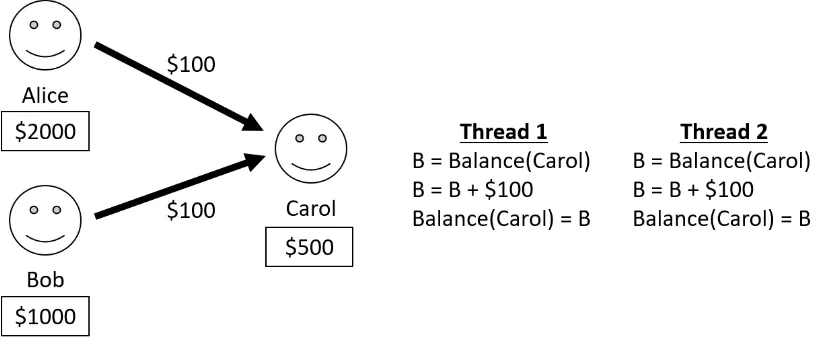
in parallel may lead to an error. If Alice and Bob each transfer $100 to Carol and those transfers
are processed concurrently, Carol could end up with less money than she expects. To process
each transfer, the machine would read Carol’s account balance, add $100 to that balance, and
then save the new balance. If the balance reads happen at the same time, Carol may end up
with $600 instead of $700. Parallel programming models must help the programmer reason
about concurrent executions in order to avoid bugs.
A system’s memory consistency model is a key factor in helping the programmer
understand how a parallel execution executes on a multi-core system. The memory models for
languages like Java [52], and C++ [11], and for various hardware architectures [51, 66, 68] permit
aggressive optimization, but tend to be complex and inaccessible to most programmers due to
the fact that they allow instructions to be interleaved in ways that a programmer may not expect.
Systems with a Sequentially Consistent model [10, 16, 53, 76] give parallel executions sequential
interleaving semantics, but do so at instruction granularity, which remains complex. Yet stronger
models have semantics that execute coarse-grained, parallel code regions atomically and as a
sequential interleaving [8, 28, 48, 67]. Reasoning about a system with region interleaving
semantics is much simpler than reasoning about instruction interleaving [61].
Region-based systems for enforcing strong memory consistency must decide how to
define the coarse-grained code regions that are interleaved during an execution. Some systems
define regions arbitrarily [53] or implicitly [67] according to program sub-structures. The size of
such regions is limited by architectural parameters and features of the program unrelated to
3
synchronization operations, such as synchronization-free regions [48, 61] (SFRs), release-free
regions [8] (RFRs), and interference-free regions [28]. The size of regions determines how safe
the execution will be and how easy it is for a programmer to reason about the parallel execution.
This work proposes a new region-based memory consistency model. The key insight is
to provide coarse regions by default that are not as dependent on the correctness of the
program’s synchronization as prior models. Thus, the need to trust programmer-defined locking
code, which can often be incorrect even in well-tested applications, is largely eliminated from the
process of writing a parallel application. The programmer defines a thread’s work and defines the
points when threads’ operations must explicitly form an order – at thread creation and completion,
condition wait, and barrier wait. The sequence of dynamically executed instructions between
ordering primitives is referred to as an ordering-free region (OFR). A program is OFR serializable
if a program’s behavior is equivalent to a serialization of atomically-executed ordering-free
regions. Although OFR serializability is defined as the serialization of regions, the implementation
does not necessarily need to serialize all ordering-free regions and can instead execute them
4
Figure 1.2: Comparison between OFR serializability and prior models
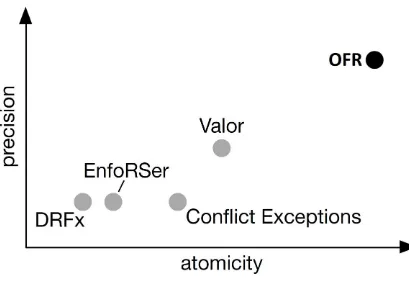
Figure 1.2 provides a visual comparison of the atomicity provided by various
region-based memory consistency models. EnfoRSer [67], DRFx [53], and Conflict Exceptions [48] are
all synchronization-free region (SFR) models, which enforce regions based on the acquisition and
release of locks. Valor [8] is based on release-free regions (RFRs), which enforce regions only at
lock release boundaries. OFRs provide more atomicity and precision than both SFR and RFR
models. Later sections provide both quantitative and qualitative evaluations to support this claim.
Ordering-free regions provide a number of benefits to the programmability of parallel
applications. The main benefit is that OFRs provide more atomicity than existing strong memory
consistency models by enforcing atomicity across larger regions of code and more memory
locations. Within an OFR, every memory location accessed by a thread is accessed atomically
(without conflicting interference from another thread). Runtime systems based on ordering-free
regions can help inform the necessary locking synchronization in a parallel application, and an
5
with the assistance of reports from an ordering-free region system than with the assistance of
reports from data-race detection systems.
The subsequent chapters of this dissertation are organized as follows. Chapter 2
discusses background and related work that informed the design and implementation of
ordering-free regions. Chapter 3 introduces ordering-ordering-free regions and formalizes the guarantees provided
by ordering-free regions. Chapter 4 describes and compares multiple implementations or
ordering-free regions, including the benefits and drawbacks of each implementation. Chapter 5
introduces hardware support for ordering-free regions. Chapter 6 provides examples and
experiences in applying ordering-free regions to existing parallel applications through multiple
case studies and experiments. Chapter 7 compares the performance of various implementations
of software-only and hardware-supported implementations of ordering-free regions. Chapter 8
describes possible avenues for future work, and chapter 9 concludes the dissertation.
This dissertation draws on multiple published works. The Java implementation of OFR
serializability, MAMA (Mostly Automatic Management of Atomicity), described in section 4 and
evaluated in sections 6 and 7, was originally presented at WoDet 2014 [20]. Hardware support
for OFR serializability included in sections 4 and 5 was originally proposed in the ORCA
(Ordering-Free Regions for Consistency and Atomicity) technical report [23]. The technical report
on ORCA also included an evaluation of the usability and performance of ordering-free region
serializability with hardware support, as discussed in sections 6 and 7. SOFRITAS (Serializable
Ordering-Free Regions for Increasing Thread Atomicity Scalably) was presented at ASPLOS
2018 [22]. Section 3 defines ordering-free regions and related terms as described by SOFRITAS,
and section 4 provides details on the implementation of SOFRITAS. Sections 6 and 7 include the
evaluation of SOFRITAS. The memory allocator described in section 4 was first introduced by
6
2
BACKGROUND
Strong memory consistency based on ordering-free regions is motivated by several areas of prior
work on multithreaded programmability. This section provides a brief overview of each of these
related areas of work and discusses recent works on each topic.
2.1
MEMORY CONSISTENCY
The memory consistency model of a system specifies how memory accesses in a parallel
system will behave, as observed by the programmer [2]. Strong memory consistency models
require memory accesses to behave as if they had been executed serially. Weak memory
consistency models permit memory accesses to be reordered with respect to the serial order.
Memory accesses can be reordered by compiler and hardware optimizations that can improve the
performance of both serial and parallel executions. However, reordering memory accesses can
be confusing to the programmer because an application may produce results that do not seem
like they should be possible.
One of the strongest memory consistency models is sequential consistency. Sequential
consistency requires that “the result of an execution is the same as if the operations of all the
processors were executed in some sequential order, and the operations of each individual
processor appear in this sequence in the order specified by its program” [42]. In general,
sequential consistency prevents loads and stores from being reordered with other loads and
stores. Weaker consistency models permit more reorderings of loads and stores because
reordering loads and stores can improve the overall performance of the system. x86
architectures implement total-store order, which allows loads to be reordered, but not stores.
More relaxed consistency models, such as those implemented by ARM processors, permit
7
Many approaches to providing strong atomicity focus on enforcing sequential
consistency. Several schemes have been proposed for detecting sequential-consistency
violations with custom hardware support [27, 55, 62]. These systems detect violations of
sequential consistency and halt the program. Enforcing sequential consistency forms a baseline
for other strong memory consistency models. Other systems provide sequential consistency for a
parallel execution [10, 16, 53, 76]. These systems require hardware modifications to existing
systems because current processors do not support sequential consistency.
2.2
DATA-RACES AND ATOMICITY VIOLATIONS
Although sequential consistency is a useful property, it only prevents incorrect results due to
memory reorderings. Parallel programs must still use synchronization to avoid data-races and
atomicity violations. A data-race occurs when two memory operations on different threads
access the same location, one of the accesses is a write, and there is no happens-before
ordering between the two memory operations. A happens-before ordering is a chronological
ordering between two threads due to some operation, such as a lock acquire or a barrier.
An atomicity violation occurs when a set of memory accesses on one thread does not
have a happens-before ordering with a set of memory accesses performed by another thread or
threads and at least one of the memory accesses in both sets is a write to the same location.
Data-races can be considered atomicity violations, but not all atomicity violations are data-races.
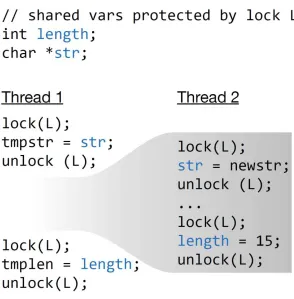
Figure 2.1 demonstrates an atomicity violation where each memory location (str and length) is
properly protected by a lock, but the set of memory accesses performed by both threads exhibit
an atomicity violation due to the lack of a happens-before ordering between the sets of accesses.
The reads of str and length by Thread 1 need to occur within the same critical section to be
ordered with the writes performed by Thread 2. No data-race will be detected in the code
because each access has a happens-before ordering with all other accesses due the acquisition
8 Figure 2.1: An atomicity violation found in Firefox
Many prior works have developed systems for detecting data-races and atomicity
violations [17, 18, 31, 33, 44–46, 49, 62, 77]. Data-race detectors generally use vector clock
algorithms to determine when a happens-before ordering does not exist between pairs of memory
accesses. Atomicity violation detectors use heuristics to decide where atomic regions should
start and end, allowing atomicity violations to be detected when the application’s synchronization
provides less atomicity than might be necessary.
2.3
STRONG MEMORY CONSISTENCY MODELS
There have been several proposals of strong memory consistency models that help catch bugs
and simplify program reasoning. Although sequential consistency can help the programmer to
understand a parallel execution, it still forces the programmer to reason about how individual
9
code and allow the programmer to reason about the interleaving of regions rather than the
interleaving of individual instructions. As Figure 1.2 shows, strong memory consistency models
can be characterized along two dimensions: the granularity of the code regions at which
serializability is guaranteed, and the precision with which serializability violations are detected.
Ordering-free regions improve upon prior work along both dimensions.
Figure 2.2: Code that demonstrates that programmer-defined acquires and releases may
not match the required atomicity of an application
Synchronization-free regions [48, 61] (SFRs) span a region of instructions from one
dynamic synchronization operation to the next. For example, a critical-section (between a lock
and unlock operation) forms a synchronization-free region. Synchronization operations
considered by synchronization-free regions include lock operations, barrier waits, condition
variable waits, thread joins, thread creates, and other such operations. Release-free regions [8]
(RFRs) strengthen the atomicity provided by synchronization-free regions by ending
regions on release operations only. Only a subset of synchronization operations are considered
to be release operations, including lock releases, barrier waits, condition variable waits, and
thread creates. More generally, a release operation forms a happens-before order with other
10
operations that are not considered release operations are acquire operations. Interference-free
regions [28] (IFRs) provide stronger atomicity than both synchronization-free regions and
release-free regions. The interference-release-free region for a memory location extends from the acquire
operation prior to the memory access to the first release operation that occurs
after that access. The IFR for a memory location can be extended in both directions (of the
execution trace) if it can be proven that the synchronization that formed a region should not affect
the memory location. For example, in Figure 2.2, the IFRs for str and length match the critical
regions that contain them. If the program used another variable x before, between, and after
these two critical sections, the IFR for x would extend through the entire listed program because x
should not be affected by the synchronization present in the program. Although IFRs offer
stronger atomicity than both SFRs and RFRs, using IFRs in practice can be difficult because
determining a memory location’s IFR requires a trace of the application’s execution, which is not
available at runtime.
2.3.1
LENGTH AND WIDTH OF REGIONS
Region-based parallel programming models like synchronization-free regions, release-free
regions, and ordering-free regions all provide atomicity over both instructions and memory
locations. The length of the region is the number of dynamic instructions between the start and
end of the region. In general, longer regions provide more atomicity but can lead to more
conflicts between regions. Ordering-free regions (OFRs), which will be defined in Section 3, tend
to be longer than SFRs and RFRs because ordering constructs tend to be used less frequently in
existing parallel applications than lock acquires and releases. The width of a region is the
number of memory locations that are atomic within the region, meaning that no other concurrent
region can access those memory locations in a way that conflicts with the atomicity required by
the region. For SFR, RFR, and OFR models, the width of the region is related to the length in
11
models, such as data-centric synchronization, may not protect all memory locations within each
region and have regions that are less wide.
2.4
SERIALIZABILITY
A parallel execution is serializable If it is equivalent to some serial execution.
Serializability is a desirable safety property for parallel applications because it is easier for
programmers to reason about serial code than to reason about parallel code. Strong memory
consistency models enforce region serializability. An execution is region serializable if the
parallel execution of its regions, as defined by the region-based memory consistency model, is
the same as some serial execution of its regions.
The concepts of atomicity and serializability are not only found in parallel programming.
Databases and distributed systems have similar notions of atomicity and serializability, and one
common implementation of serializability in these systems is conflict-serializability.
Conflict-serializability requires that the parallel schedule of transactions is equivalent to a serial schedule
with the same transactions such that all conflicting operations in the serial and parallel schedules
occur in the same chronological order.
Two-phase locking (2PL) enforces conflict-serializability [6]. In two-phase locking, locks
can only be acquired in a growing phase and released in a shrinking phase. With this approach,
locks cannot be acquired after any lock has been released. While there are more refined notions
of serializability than 2PL, they are expensive to maintain and do not offer much additional
flexibility [6]. Ordering-free regions employ an algorithm based on 2PL.
Conflicts that violate the serializability of a parallel execution can either be detected or
avoided. Prior work on strong memory consistency models [8,47,60] detects violations of region
serializability to report data races to the programmer. With this fail-on-conflict approach, the
application exits and reports the violation of serializability to the programmer when one occurs.
12
conflict occurs. Serializing the execution to avoid a conflict can automatically prevent a bug, but
too much serialization can decrease performance.
Figure 2.3: Demonstration of fail-on-conflict semantics and conflict serializability
Figure 2.3 demonstrates both a fail-on-conflict approach and conflict serializability. In the
on-conflict approach, an exception is raised when one region conflicts with another. The
fail-on-conflict approach brings the programmer into the loop by indicating that a conflict exists. With
conflict serializability, regions that would otherwise conflict can be serialized instead, preventing
the conflict at runtime. Conflict serializability requires knowing how long the threads must be
serialized to prevent the conflict from affecting the program’s required semantics. Ordering-free
regions rely on an algorithm based on 2PL to implement conflict serializability when possible. In
the event that conflict serializability fails, ordering-free regions fall back to the fail-on-conflict
13
3
ORDERING-FREE REGIONS
This dissertation introduces a new strong memory model based on ordering-free regions (OFRs).
Ordering-free regions function similarly to other strong memory consistency models such as
SFRs, RFRs, and IFRs. Ordering-free regions rely on conflict serializability as much as possible
and only fail-on-conflict when necessary. Unlike these prior models, ordering-free regions do not
rely on programmer-defined lock acquires and releases to define region boundaries.
DEFINITION 3.0.1: Ordering-Free Region
The ordering-free region for a memory access to a location extends from the previous ordering
construct to the next ordering construct, chronologically, in the dynamic execution of the program.
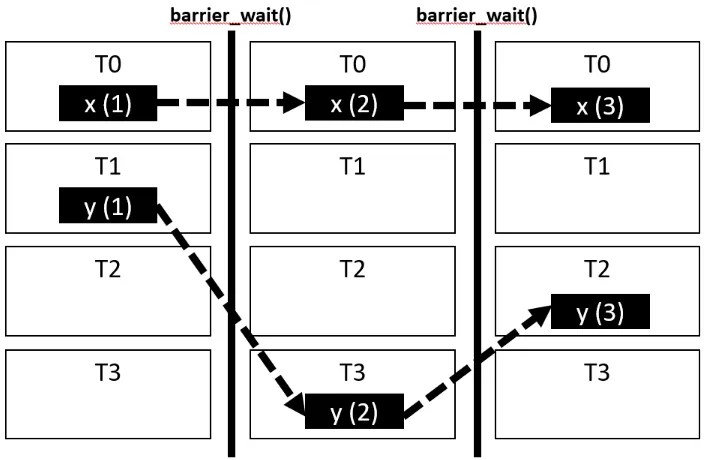
Figure 3.1: The ordering-free region for a variable
In the example above, the ordering-free region for x extends from the barrier wait before the write
to x until the barrier wait after the write to x.
DEFINITION 3.0.2: Ordering Constructs
Ordering constructs are defined as barrier waits, condition variable waits, thread exits, and
thread joins. These constructs all indicate that the waiting thread needs one or more other
threads to make progress before it continues its execution.
Ordering-free regions conservatively approximate the atomicity that a parallel program
might require. Although it is theoretically possible that a program could require atomicity that
14
An initial study of 780K lines of parallel code from the PARSEC benchmark suite [7], memcached,
apache, and pbzip2 found that none of the applications studied required atomicity over an
ordering construct on any of the tested inputs. More generally, requiring atomicity across an
ordering construct may lead to a deadlock in the case that thread T1 is waiting for thread T2 to
perform some action, but thread T1 also holds a lock that thread T2 requires. Thus, ordering
constructs seem to be a reasonable delimiter for the atomicity required by most parallel
programs.
DEFINITION 3.0.3: OFR Serializability
An execution is OFR serializable if the dynamic, parallel execution of ordering-free regions is
conflict serializable.
To enforce OFR serializability on a parallel execution, the accesses to all memory
locations must occur atomically between ordering constructs. To this end, each memory location
x is associated with a lock Lx. Before each memory access to x by a thread T, T acquires Lx if T
does not already hold Lx. At the end of an OFR, when T encounters an ordering construct – a
fork, join, wait, or barrier – T releases all the locks it holds. If T is ever unable to acquire a lock,
Lx, then some other thread U must have accessed x in U’s current OFR. T’s inability to acquire Lx
indicates a memory conflict between T and U. Prior consistency models raise an exception on
T’s access to x because of the memory conflict, but OFR serializability instead tracks a
dependence from T to U and waits until U releases Lx, avoiding unnecessary exceptions on
conflicts that do not compromise serializability.
This algorithm constructs the ordering-free region for each variable as shown in Figure
3.1. If the thread T is able to acquire the lock Lx within an OFR, no other thread has made a
conflicting access within that OFR. Otherwise, the lock acquire of Lx by T would fail. After T
acquires Lx, no other thread can acquire the lock until T releases it at the barrier_wait().
Therefore, T has atomicity over x between the two calls to barrier_wait(), which is what is required
15
This simple algorithm does not account for read-sharing, which is common in parallel
applications. In order to support read-sharing, the lock Lx that protects each memory location x is
a reader-writer lock. A reader-writer lock permits multiple threads to acquire a read lock
concurrently but only a single thread can hold an exclusive write lock. A reader-writer lock only
permits an exclusive writer if there are no concurrent readers. With reader-writer locks, a
dependence between threads only exists when the accesses by the threads to the location x
conflict, meaning that one of the accesses must be a write. This use of reader-writer locks
(instead of mutex locks) increases parallelism by allowing read-sharing of data, which is crucial
for performance and scalability.
DEFINITION 3.0.4: OFR Exceptions
An OFR exception occurs when a cyclic dependence exists between two threads within
concurrent OFRs. An OFR exception indicates that the two OFRs are not OFR serializable.
Figure 3.2: A scenario in which an OFR exception will be raised
OFR serializability triggers an OFR exception when executing OFRs have at least two
conflicts and the conflicts form a cycle in the conflict graph [6]. An OFR exception indicates that
the program permitted an unserializable execution of its regions and that its OFRs must be
divided into smaller atomic regions to permit additional region interleavings. An OFR exception
suggests how to avoid the same exception in future executions. Figure 3.2 demonstrates two
OFRs that are not OFR serializable and raise on OFR exception when executed concurrently. In
16
lock on Lx when it loads the value of x, causing Lx to be in a shared read state. T0 then acquires
a write lock on Ly and stores a new value to y. T1 attempts to acquire a write lock on Ly but is
unable to because T0 already holds a write lock on Ly. Finally, T0 attempts to acquire a write lock
on Lx but is unable to because Lx is in a shared read state, which conflicts with T0’s attempt to
acquire a write lock.
An OFR exception indicates that the atomicity enforced by OFR serializability is too
strong for the program. The atomicity must be relaxed to prevent the exception in future
executions. Examining the code in Figure 3.2, the exception can be prevented by either (1)
releasing the lock on y in T1, (2) releasing the lock on x in T0, (3) releasing both locks, or (4)
ensuring that x and y are updated together by changing x to use mutex locking or altering the
order of stores in T0. The choice of how to prevent the exception in future executions is made by
the programmer using a small annotation API described in the next section. The programmer
must examine the code that caused the exception and determine how much atomicity is required
for each of the memory locations involved.
3.1
ORDERING-FREE REGIONS API
Programming with ordering-free regions requires a small API that allows programmers to refine a
program’s region specification and optimize performance.
A Release() annotation refines a program’s region specification, sub-dividing a region into
smaller regions, e.g., to eliminate an exception. The basic Release() annotation explicitly releases
a specified location’s lock and we include “syntactic sugar” API calls that batch release locks on
objects and arrays. ReleaseObject() releases the locks on all fields of an object, and
ReleaseArray() releases the locks on all elements of an array.
A RequireMutex() annotation associates a mutex lock with a memory location, rather than
a reader-writer lock to avoid upgrade cycles. A post-dominator compiler analysis can often
17
RequireMutex() annotations. However, due to the need to be conservative, the programmer does
occasionally need to add these annotations manually.
An EndOFR() annotation ends an ordering-free region before execution reaches an
ordering operation. The EndOFR() annotation can be used when the atomicity requirements of
thread allow the bulk release of all locks held by that thread. For example, pipeline parallel
applications tend to perform operations on an object and then pass that object to the next stage
of the pipeline for further processing. When this hand-off between pipeline stages occurs,
ownership of the object transfers completely from the earlier pipeline stage to the later pipeline
stage. Therefore, the earlier pipeline stage can release all of its locks on the object to allow those
locks to be acquired by the later stages of the pipeline. These locks could be individually
released using Release() annotations, but the EndOFR() annotation can instead be used to batch
release all of the locks instead.
A ContinueOFR() annotation specifies that its containing region should not end at the
next ordering operation executed. ContinueOFR() would be useful when a program requires
atomicity coarser than an OFR (although we never encountered such a situation). ContinueOFR()
can also be useful to improve performance by avoiding frequent lock releases at region
boundaries. For example, in canneal, not releasing locks at a barrier does not affect correctness
18
3.2
PROOF OF CORRECTNESS
This section shows formally that OFR serializability enforces conflict serializability. The following
definitions are used to support the arguments and can be assumed from this implementation of
ordering-free regions.
DEFINITION 3.2.1: OFR Locking
Ordering-free regions associate a single reader-writer lock Lx with each memory location x.
DEFINITION 3.2.2: OFR Acquire
No access to a memory location x by a thread T proceeds without first holding the location’s lock
in the correct mode for the access (i.e., read vs. write mode).
DEFINITION 3.2.3: OFR Release
No lock Lx is released by a thread until the end of the thread’s current ordering-free region.
DEFINITION 3.2.4: OFR Deadlock Detection
OFR serializability performs precise cyclic lock waiting (i.e. deadlock) detection.
THEOREM 3.2.5: Exception-Free Serializability
If an execution of OFRs is free of OFR exceptions, then the execution is conflict serializable.
Proof by contradiction. Assume that an OFR exception-free execution was not conflict
serializable. This proof assumes two ordering-free regions, but the argument generalizes to
arbitrary-length conflict cycles.
If an execution is not conflict serializable, then the definition of conflict serializability for
OFRs implies that there is a set of conflicts between OFRs that form a cycle in the conflict graph.
Consider Oi and Oj, two OFRs from different threads that both access a location x leading to a
conflict. By (3.2.1) and (3.2.2), OFR serializability ensures Oi and Oj acquire the lock for x in the
correct mode before each access. By the definition of a conflict, one (or both) of Oi or Oj is writing
19
whichever region successfully acquired x’s lock continues executing, holding the lock until its
region ends. The region that did not acquire x’s lock waits until the lock is released.
By the assumption that the execution is not conflict serializable, there is another conflict
between Oi and Oj on another arbitrary location y. As with x, one region acquires y’s lock and
one waits. If the same region acquires y’s lock as acquired x’s lock, then that region completes
and releases both locks; in the absence of other conflicts, the regions serialize, violating the
assumption that the execution is not conflict serializable. If, instead, the region that acquires y’s
lock was not the one that acquired x’s lock, the regions deadlock, each waiting for the other to
release its lock. By (3.2.4), OFR serializability precisely detects this deadlock and reports an
exception, violating the assumption that the execution was exception-free. Thus, the assumption
leads to a contradiction, proving that an exception-free execution is conflict serializable.
THEOREM 3.2.6: Unserializability of OFR Exceptions
If an execution triggers an OFR exception, then the execution is not conflict serializable.
Proof. As above, this proof covers the two OFR case, but the argument generalizes to arbitrary
conflicts. Assume an OFR exception has been generated. By (3.2.4), an OFR exception
corresponds to OFR serializability detecting that two regions are mutually waiting for one another
to release locks: region Oi waits for Oj to release a lock on location x and Oj waits for Oi to release
a lock on location y. By (3.2.2), if a region proceeds it will next immediately access the location
protected by the lock it waits for. At least one region’s imminent access to each variable is a write,
because pairs of reads would be allowed to execute concurrently, by (3.2.1). Consequently, the
regions’ impending accesses form two conflicts, one on x and one on y. Furthermore, by (3.2.1)
and (3.2.4), because the regions cyclically wait to acquire locks, the corresponding access
conflicts are also cyclic. A case-based analysis shows that an OFR exception indicates a
violation of conflict serializability. By the definition of conflict serializability [6], a conflict graph
20
Case 1. In the single variable case, an OFR exception may be triggered by Oi and Oj acquiring a
lock on x in read-mode and then attempting to upgrade to write-mode. This violates conflict
serializability because both threads are attempting to both read and write to the same location x.
Case 2. With two variables, x and y, there are multiple, similar cases that may result in an OFR
exception. In all of these cases, Oi writes to either x or y, and Oj writes to the opposite location. If
both Oi and Oj write to the same location and do not incur an upgrade cycle, as in Case 1, the
OFRs will serialize on one of the writes. Therefore, the OFRs must write to opposite locations.
By the same logic, each OFR must read from the location that it does not write to because writing
to both locations would also cause the OFRs to serialize. These conflicting read-write pairs
violate conflict serializability.
Note that the correctness proof is sound and complete – an execution free of exceptions is
conflict serializable and an exception indicates that an execution is not conflict serializable. By
contrast, prior work [8, 47, 66] provided a weaker correctness argument – an exception-free
execution is serializable, but an exception corresponds only to a conflict, indicating a data-race,
21
3.3
QUANTIFYING ATOMICITY
While OFRs have intuitive benefits over finer-grained atomic regions, it may be the case that
these advantages do not materialize due to the structure of real programs. To quantify atomicity,
it is necessary to consider both the length and width of regions as described in Section 2.3.1.
Figure 3.3: Number of breaks in atomicity for each model
Figure 3.3 shows the number of times that atomicity is broken in each programming
model. Sequential consistency (SC) logically breaks atomicity after each memory access.
Conflict Exceptions (CE, representative of SFRs) breaks atomicity at each lock acquire and
release. Release-free regions (RFR) break atomicity at each lock release. IFRs extend CE and
RFR to not break atomicity if the memory location will be accessed in the next region. OFRs
break atomicity at each ordering construct. As shown, CE, RFR, IFR, and OFR break atomicity a
similar number of times when considering only the length of regions. Thus, it is necessary to
consider the width of regions to properly quantify the amount of atomicity provided by each of
these programming models.
By considering both the length and width of regions, the atomicity of each model can be
22
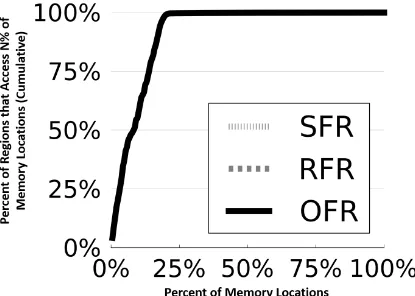
(length). The following CDF plots quantify the atomicity of three parallel applications:
blackscholes, ferret, and fluidanimate. The length and width of all regions R were recorded. The
length of the region R is the number of dynamic instructions included in that region. The width of
the region R is the number of memory locations accessed within that region. These plots detail
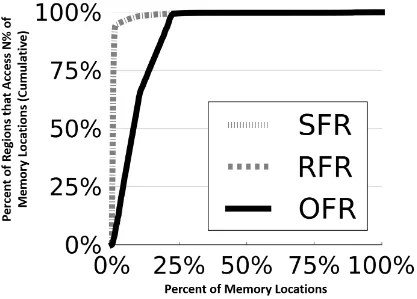
how many regions have a width of w as a fraction of all regions as a cumulative distribution
function. The width metric captures the ability of a consistency model to enforce atomicity across
memory locations, reducing the probability of multi-variable atomicity violations. In these CDFs,
curves that rise more gently indicate greater atomicity, as there are a substantial proportion of
wide regions and a small proportion of low-width (narrow) regions. Curves that rise steeply
indicate that most regions are narrow.
23
Figure 3.4 quantifies the amount of atomicity provided by SFRs, RFRs, and OFRs on
blackscholes. On this application, the amount of atomicity provided is the same for all three
models because blackscholes is an embarrassingly parallel application, meaning that it requires
no lock acquires or releases. Therefore, the three models use the same regions.
Figure 3.5: CDF plot showing the length and width of regions in ferret
Figure 3.5 quantifies the amount of atomicity provided by SFRs, RFRs, and OFRs on
ferret. ferret is a pipeline parallel application that passes objects from one stage of the pipeline to
the next. Each stage of the pipeline executes in parallel and performs disjoint work from all other
pipeline stages. Objects are passed from one stage to the next using a queue that employs
ordering constructs to prevent threads from dequeuing from an empty queue or enqueuing into a
full queue. Most regions applied by SFRs and RFRs are quite small in ferret. The regions used
24
Figure 3.6: CDF plot showing the length and width of regions in fluidanimate
Figure 3.6 quantifies the amount of atomicity provided by SFRs, RFRs, and OFRs in
fluidanimate. fluidanimate uses complex, fine-grained locking that causes frequent region
boundaries for SFRs and RFRs while OFRs are considerably wider due to infrequent barrier
synchronization.
Overall, the theoretical benefits of OFRs manifest more clearly in programs with more
complicated parallel structure, which are arguably the programs likeliest to suffer from
concurrency bugs. From this analysis, there appears to be no significant difference in atomicity
between SFRs and RFRs, suggesting that the practical benefits of moving from SFRs to
coarser-grained RFRs are limited. However, OFRs clearly provide longer and wider regions than both
25
4
IMPLEMENTING ORDERING-FREE REGIONS
The following section discusses the tradeoffs and decisions in implementing a system that
enforces atomicity based on ordering-free regions. These implementations feature a few
common components that are required to implement OFR serializability. Each implementation
requires a lock design that permits high-performance execution and a shadowspace design that
allows efficient retrieval of locks as needed. Similarly, each implementation requires the common
API of runtime functions for managing OFR serializability. A distributed deadlock detector is used
to detect and report OFR exceptions, and some amount of allocator and compiler support may be
required to identify allocations, loads, stores, and other functions of interest.
4.1
Overview
This section examines and discusses three runtime systems that implement OFR serializability.
MAMA [20] was implemented as part of our initial investigation into the applicability of OFR
serializability to parallel applications. This software-only runtime system leveraged the
RoadRunner [32] framework to associate locks with data and provided insights into how future
implementations could be made more efficient. From our experiences with the MAMA prototype,
we believed that hardware support would be necessary for a reasonably efficient implementation
of OFR serializability. We also decided to implement future systems in C and C++ instead of
Java due to our desire to use LLVM for compiler optimizations. ORCA [23] introduced hardware
support for OFR serializability. We used the Pin [50] dynamic binary instrumentation tool to apply
OFR serializability to C and C++ applications in a simulated environment. Although ORCA
enforces OFR serializability at low performance overheads, the need for new hardware support
was undesirable. SOFRITAS [22] provides OFR serializability using a software-only runtime
system and simple compiler instrumentation. SOFRITAS builds upon both MAMA and ORCA to
26
4.2
Locks
Implementing ordering-free regions using locks requires a highly efficient lock design. As
described in Section 3, the system that enforces OFR serializability requires that a thread holds a
lock in the correct mode on each access to a memory location protected by that lock. This
functionality does not necessarily have to be implemented using locks, but the systems designed
for this dissertation all rely on locks in their implementations. These locks must be efficient
enough to limit the overheads of associating a lock with every memory location and acquiring
those locks on every memory access.
Table 4.1: Characterization of memory accesses and lock acquires
Benchmark
Memory Accesses Reads (%)
Writes (%)
Acquires (%)
blackscholes7.1 Billion
85.13% 14.87% 2.81% bodytrack95.7 Billion
93.23% 6.77% 3.39% canneal21.6 Billion
96.07% 3.93% 23.49% dedup3.1 Billion
98.97% 1.03% 28.79% ferret187.9 Billion
89.43% 10.57% 5.91% fluidanimate228.7 Billion
88.00% 12.00% 20.17% streamcluster428.3 Billion
99.57% 0.43% 51.46% swaptions196.0 Billion
76.58% 23.42% 0.00% gups500 Million
40.00% 60.00% 80.00% kmeans3.2 Billion
91.73% 8.27% 15.12% pagerank1.2 Billion
93.61% 6.39% 25.30% histogram3.8 Billion
62.50% 37.50% 0.00% kmeans14.8 Billion
99.80% 0.20% 1.13% linear_regression4.9 Thousand
17.57% 82.43% 2.46% matrix_multiply2.0 Billion
99.95% 0.05% 0.05%pca
16.1 Billion
99.80% 0.20% 0.42%reverse_index
2.1 Billion
99.56% 0.44% 49.26% string_match1.4 Billion
34.55% 65.45% 0.00% word_count740.5 Million
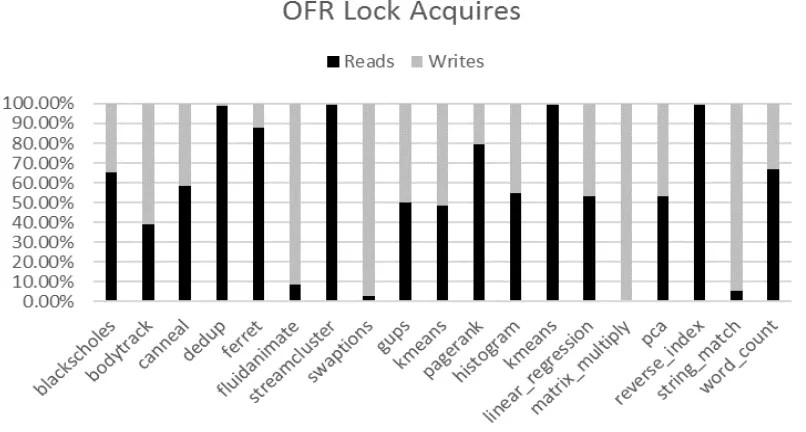
97.46% 2.54% 0.49%Table 4.1 characterizes the memory accesses performed by 19 parallel applications.
These access characteristics heavily influenced the lock designs used to implement OFR
27
performed by each application. The number of accesses is abnormally low for linear_regression
because most of the memory accesses performed by this application are to a read-only mapped
memory region holding file input, which can be safely ignored by the OFR algorithm considering
that all accesses must be reads. The accesses shown for gups are round numbers due to the
synthetic nature of the benchmark. The second two columns show the percentage of Reads and
Writes over all memory accesses. Reads tend to be more common, but some application like
gups and string_match do exhibit a larger number of writes than reads. For this reason, the locks
used to implement OFR serializability should be biased toward reads but still allow for efficient
writes. The final column (Acquires) shows the percentage of memory accesses that cause a lock
acquire under OFR serializability. The non-acquire memory accesses simply check to see if the
lock is currently held in the correct permission. Aside from a few outliers, the percentage of
acquires tends to be low compared to checks. Thus, the lock design should be biased toward
fast checks but still permit relatively fast acquires when possible.
Table 4.2: Characterization of lock acquires as reads or writes
Table 4.2 characterizes the modes that locks are acquired in to enforce OFR
28
acquires, there are many applications that instead favor write acquires over read acquires.
Therefore, the lock designs should not heavily bias to one type of acquire over the other. In
general, the locks used to implement OFR serializability attempt to optimize for common case
transitions between lock states. For example, threads may use the same variables in successive
ordering-free regions. In this case, the lock should be designed to allow the thread to efficiently
reacquire the locks that it held in the previous OFR.
Aside from being efficient, the locks used to implement OFR serializability must provide
the features necessary to interact with the rest of the OFR runtime system. First, both
reader-writer and mutex locks must be available, whether the same lock implements both or two
separate lock types are used. Neither reader-writer nor mutex locks avoid strictly more
deadlocks, so both types must be available to the runtime system. Second, the locks must
indicate the current owners and state to allow the system to detect cycles, which in turn are
forwarded to the user as exceptions. Unlike conventional locks used in multithreaded systems,
OFR locks cannot simply indicate whether the lock is currently held or not. OFR locks are similar
to re-entrant locks that track which thread currently holds the lock and allows a simple check
rather than an acquire if the current owner attempts to acquire the lock a second time.
4.2.1
Eager or Lazy Releases
The OFR execution model discussed thus far eagerly releases all locks at every ordering
construct, which is sufficient to guarantee 2PL serializability of OFRs but comes with a large
performance tax. Eagerly releasing locks at all ordering constructs can be accomplished in a
number of ways. In any implementation, logically, a list of locks held by each thread must be
maintained in some way, or the lock structures must be designed to make such a list
unnecessary. A naïve solution might simply maintain a per-thread list of every lock the thread
has acquired. This solution would require additional overhead on every lock acquire, and eagerly
per-29
thread version number could also be added to each lock to identify which locks have been
acquired in the current ordering-free region, but this solution would increase the size and
complexity of the locks substantially (similarly to maintaining a vector clock for data-race
detection.
Alternatively, locks can be released using a lazy policy that only releases locks when
another thread attempts to acquire them. This lazy release policy holds locks across ordering
constructs. Locks can still be released by threads waiting at an ordering construct: if a thread T0
holds a lock Lx and is blocked at a barrier, another thread T1 can steal Lx. T0’s OFR serializability
is preserved because the OFR in which T0 acquired Lx must have ended, as T0 is at an ordering
construct. Lazy releases do not compromise OFR atomicity, and in fact strengthen it – in the
absence of steals, a variable’s atomicity is preserved across multiple OFRs. A subtlety of lazy
releases is that a dependence cycle may not violate 2PL serializability. Consider the case in
which a thread T0 holds a lock Lx on some location x and does not release that lock at the end of
its ordering-free region O1. If another thread T1 similarly holds a lock Ly on location y and does
not release that lock at the end of its ordering free region O’1, T0 and T1 may deadlock if T0
attempts to acquire Ly in its new OFR O2 and T1 attempts to acquire Lx in its new OFR O’2. Both
threads have moved on to new ordering-free regions O2 and O’2, but the lazy release of locks has
caused a dependence cycle that would not have existed if locks had been eagerly released.
Precisely supporting lazy releases would require an implementation similar to a
vector-clock, which would be unlikely to provide improved performance. In practice, it is possible to use
a more targeted form of lazy releases that does not require a full vector clock. Both pipeline
parallelism and barrier-based synchronization can be supported by a scalar stage that enables
30
Figure 4.1: Pipeline stages using staged locking to lazily pass locks from one stage of the
pipeline to the next. Stage is shown in parentheses
Figure 4.1 demonstrates how stages can be used to lazily transfer locks from one stage
of a pipeline to the next. This pattern is found in applications like dedup and ferret which pass
objects through a parallel pipeline. Within the same stage, locks cannot be stolen. For example,
T0 and T1 would not be able to steal each other’s locks. If T0 and T1 produce an OFR exception, it
is a true exception and not generated due to the structure of the parallelism. T2 and T3 can steal
locks from T0 and T1 because they are part of a later stage of the pipeline and often receive data
that T0 and T1 are no longer using. Supporting pipeline parallelism with a scalar stage requires a
small stage due to the limited number of pipeline stages that will practically be used in most
parallel applications. The programmer must indicate via an annotation which threads belong to
which pipeline stages. Staging annotations are untrusted and are verified at runtime: an incorrect
staging annotation that contradicts the program’s sharing patterns will trigger an OFR exception
to support straightforward debugging. However, pipeline parallelism is not the only type of
31
Figure 4.2: Stages of a barrier-based application
Parallel applications often use barriers to delimit phases of the parallel algorithm. Such
applications also lend themselves to the use of a scalar stage for lazy lock releases. Figure 4.2
demonstrates how locks can be passed from one stage of a barrier-based application to the next.
As shown, some memory locations (e.g. x) may be locked by the same thread in subsequent
stages. In these cases, the stage is updated when the lock is tested for proper permissions. In a
barrier-based application, a thread may steal a lock from another thread if the current stage of
execution is greater than the scalar stage indicated by the lock. A thread can steal locks held by
a thread in a previous stage, but not from its own stage or future stages. This use of stages
assumes that all threads that are sharing data participate in the same barriers and therefore have
matching stages. Unlike pipeline stages, barrier stages can be automatically identified at runtime
32
4.2.2
Debugging Metadata and Annotation Suggestions
To apply OFR serializability to a parallel application, the programmer must properly apply
annotations from the OFR API to the code. A runtime system can assist the programmer with this
task by providing suggestions based on the behavior of locks. However, the runtime system must
use additional metadata to provide useful suggestions, and therefore this functionality is generally
used for debugging and not during production.
When a dependence cycle occurs, the execution of the two or more threads involved will
stop precisely at the lines of code that complete the cycle. Although the information found on
those lines of code may be useful to the programmer, it may not identify the root cause of the
dependence cycle. To locate the root cause, the programmer needs to know where the data
associated with each lock was last accessed by that lock’s owner. In debugging mode, locks
track the last read and last write source-code location for each memory location. This information
can be represented as an integer that maps to a source-code file and line number. This
information is updated on each read or write to a memory location. When a dependence cycle is
detected, the runtime system will suggest that the programmer place a Release() annotation at
either the last read or last write line of source-code, depending on structure of the dependence
cycle. The runtime system can also suggest RequireMutex() annotations in the case of
read-to-write upgrade dependence cycles.
The behavior of the runtime system can also provide useful suggestions to the
programmer to improve the performance of the application under OFR serializability. By
examining lock contention, the runtime system can identify instances in which the application
serializes on accesses to some memory location and suggest that the programmer add a
Release() annotation to avoid unnecessary serialization. The runtime system can also identify
frequent lock reacquires, which may indicate that a ContinueOFR() annotation can be applied.
These performance suggestions should be carefully considered by the programmer so to not
33
4.3
Shadowspace
Efficiently checking and acquiring locks in a system that provides OFR serializability requires an
efficient mapping from each memory location to its associated lock. Locks are stored in a
shadowspace that corresponds to the memory allocated by a parallel application. Multiple
design choices can influence the runtime and space overheads of retrieving locks, including the
granularity of mapping, the flexibility of mapping, and the use of a monolithic or distributed
mapping.
4.3.1
Mapping Granularity
The mapping granularity of the shadowspace affects both the efficiency and the usability of
ordering-free regions. A coarse mapping may provide better performance, but a coarse mapping
may also cause false OFR exceptions to be generated.
Figure 4.3: Example demonstrating how a coarse mapping leads to a false OFR exception
Figure 4.3 shows how a coarse mapping can lead to a false exception. The example
assumes a mapping from each set of 2 bytes to a lock. T0 accesses byte 0 and then byte 2 while
T1 accesses byte 3 and then byte 1. Due to the lock mapping, this access pattern causes T0 to
acquire LA and then attempt to acquire LB while T1 acquires LB and then attempts to acquire LA,
leading to a cycle. With a byte-to-lock mapping, there would be no cycle in the lock acquires