PLASTICITY-LED EVOLUTION IN NATURE
Nicholas A. Levis
A dissertation submitted to the faculty at the University of North Carolina at Chapel Hill in partial fulfillment of the requirements for the degree of Doctor of Philosophy in the Department
of Biology.
Chapel Hill 2020
iii ABSTRACT
Nicholas A. Levis: Plasticity-led evolution in nature (Under the direction of David W. Pfennig)
An enduring problem in evolutionary biology is to explain how novel, complex traits originate. A controversial solution to this problem is that environmentally induced phenotypic change––phenotypic plasticity––can play a leading role in the origins of novelty. This process of plasticity-led evolution (PLE) posits that a change in the environment triggers a change in development via plasticity, and this pre-existing plasticity is subsequently molded by selection into an adaptive trait. The significance of PLE is controversial because few tests have been conducted in natural populations. Here, I address that problem.
Conceptually, I provide an annotated bibliography of significant works relating to phenotypic plasticity’s role in evolution. I then define the PLE hypothesis, identify its key criteria, produce a framework for evaluating the criteria in natural populations, and describe study systems that have begun to test the hypothesis. Next, I focus on studies of PLE in
amphibians and identify mechanisms that are important to PLE. Together, these chapters (2-4) provide a foundation for assessing the broad relevance of PLE and enable tests of PLE in diverse systems.
Empirically, I use my analytical framework mentioned above to test the key criteria of PLE in spadefoot toad (genera Spea and Scaphiopus) tadpoles (chapters 5-7). Tadpoles in the genus Spea have evolved a novel, complex feeding strategy (a carnivore/cannibal morph). Using a combination of morphological and molecular approaches in diverse lineages, I provide
iv
environmentally-induced developmental variant that was subsequently refined into a
coordinated plastic response. Some populations have secondarily lost this plastic response and are becoming exclusively well-adapted carnivores.
v
vi
ACKNOWLEDGEMENTS
I have been blessed to have interacted with an amazing group of people during my time at UNC, and although my words will fail to express the depth of my gratitude, I will try
nonetheless.
To begin, I must give special thanks to my family. My parents provided me with all the tools I needed to reach my goals. Your lives showed me the value of hard work and the
importance of faith and family. I credit my brother Bryant for my passion for animals and interest in nature and the world around me. My brother Jim is credited with my choice to pursue this passion as a career. I am thankful for the joy, laughter, and love you all have brought to my life. I am especially grateful to my wife, Alice, and our children, Ryan and Melanie. Alice, your sacrifices and support made it possible for me to undertake this work, and I will always cherish your love and companionship no matter where life takes us. Ryan and Melanie, thank you for helping me grow more than anyone else on this list during these past few years. From you, I have learned more about life and love than I thought possible.
My lab mates and friends over the years hold a special place in my heart. This journey has been enriched greatly because of you, and you have made UNC and North Carolina feel like home. I must also thank the undergraduates with whom I had the privilege to work and mentor; I am confident you will all reach your goals.
vii
interactions and collaboration into the future. I also need to thank Karin Pfennig, who, in many respects, acted as a second advisor and whose input was invaluable throughout my dissertation. I will also carry pieces of my remaining committee members—Bill Kier, Daniel Matute, and Armin Moczek—with me as I continue to develop as a scientist. You have each given me more than you know, and I am sincerely grateful for all you have done to help my personal and professional development.
I want to also note that The Royster Society of Fellows at UNC afforded much-needed exposure to the interdisciplinary nature of the university, gave me an abundance of opportunities for professional development, and truly met its goal of fostering an environment in which fellows can thrive.
viii
TABLE OF CONTENTS
LIST OF TABLES……….……….……….….………....xiv
LIST OF FIGURES……….………....….…...…...…... xvi
CHAPTER I: INTRODUCTION AND RATIONALE…..…………....…...….…….………1
Works cited..……….………….………….………...….….5
CHAPTER II: AN ANNOTATED BIBLIOGRAPHY ON THE FIELD OF PHENOTYPIC PLASTICITY………...………..6
Introduction……….……….….……….……….. 6
General Overview………...……….……....….……….….. 7
Books………....………... 9
Journals……….….………....….……... 12
Historical Works………..……….….14
Proximate Mechanisms of Plasticity……….….….………...17
Costs of Plasticity……….. 20
Modeling Plasticity……….……….….….……….……...…… 22
Plasticity, Local Adaptation, and Gene Flow…………..………....….….….…... 26
Polyphenisms………..……….…..……….….……...…..…….…28
Evolution of Plasticity……….…..……….…....……….….……….……... 31
Experimental Evolution………. 32
Genetic Accommodation………... 36
ix
Canalization………... 42
Plasticity-first Evolution……… 45
Macroevolutionary Consequences of Plasticity....…….…….…….…….….……… 48
Speciation and Diversification……….….….….………... 49
Novelty………... 53
Ecological and Community-level Effects……….. 56
Transgenerational Plasticity………... 59
Behavioral Plasticity……….. 62
Learning as Plasticity………. 66
Bet-hedging……… 69
Applied Aspects of Plasticity………. 73
CHAPTER III: EVALUATING PLASTICITY-FIRST EVOLUTION IN NATURE: KEY CRITERIA AND EMPIRICAL APPROACHES……….. 77
Need for a predictive framework………...….……….…….………. 77
Key criteria of the plasticity-first hypothesis of adaptive evolution….……….… 79
Evaluating the plasticity-first hypothesis in nature: general framework……..…………. 83
Evaluating the plasticity-first hypothesis in nature: illustrative case studies……… 85
Spadefoot toads……….….85
Cavefish……….……….…….. 87
Evaluating the plasticity-first hypothesis in nature: general assessment of the evidence………. 88
Conclusions……….……….………….……….…… 89
Works cited……….….….…………. 91
x
Introduction……….……….…….….…….….….….…….. 106
Plasticity-first evolution……….…….…….….….….…. 107
Empirical approaches for evaluating PFE……….…….….….….….….……….109
Empirical tests of PFE in amphibians………….….….….….….….….….………. 112
Development time of spadefoot toads………..112
Alternative ecomorphs in spadefoot toads………...114
Salamander life history strategies………117
Tadpole insecticide tolerance………...119
Other potential systems………120
Plasticity and macroevolution………..120
Proximate mechanisms of PFE in amphibians……….122
Conclusions ………. 126
Works cited……….. 127
CHAPTER V: GENETIC ACCOMMODATION IN THE WILD: EVOLUTION OF GENE EXPRESSION DURING CHARACTER DISPLACEMENT………..………..….. 144
Introduction……….….….….……….….….….………….………144
Methods……….………….….….….….………..149
Study Subjects………..149
Experimental Design………150
RNA Extraction and cDNA Synthesis……….151
RT-qPCR………. 151
Statistical Analysis………...153
Results………..156
xi
Works Cited……….165
CHAPTER VI: MORPHOLOGICAL NOVELTY EMERGES FROM PRE-EXISTING PHENOTYPIC PLASTICITY………... 186
Introduction………..186
Results………..189
Evidence of pre-existing morphological and gene expression plasticity……….189
Evidence of adaptive refinement of morphological and gene expression plasticity……….…192
Evidence of extensive refinement in a canalized lineage……… 195
Evidence of reduction of heritable variation in carnivore traits……….. 196
Discussion………197
Methods………199
General approach………. 199
Evaluating whether there is ancestral plasticity of morphology in Sc. holbrookii………...200
Evaluating whether there is ancestral plasticity of gene expression in Sc. holbrookii………...201
Evaluating whether there is adaptive refinement of morphology in Sp. multiplicata………204
Evaluating whether there is adaptive refinement of gene expression in Sp. multiplicata………205
Evaluating whether there is adaptive refinement of morphology in sympatric Sp.bombifrons……….……… 207
Estimating the extent of heritable variation in plasticity and plastic traits…….. 210
Works cited………..212
xii
Introduction………..239
Materials and Methods……….241
Study subjects………... 242
Testing whether frequency of trait expression predicts its adaptive refinement………..243
Evaluating mechanisms of adaptive refinement………..246
Testing for genetic assimilation of trophic morphology………..246
Results………..247
Testing whether frequency of trait expression predicts its adaptive refinement………..247
Evaluating mechanisms of adaptive refinement………..248
Testing for genetic assimilation of trophic morphology………..249
Discussion………249
Works Cited……….256
CHAPTER VIII: PLASTICITY-LED EVOLUTION: A SURVEY OF DEVELOPMENTAL MECHANISMS AND EMPIRICAL TESTS……….. 277
Introduction………..277
How different developmental mechanisms might bias PLE………279
Flexible regulation………...280
Modularity………282
Exploratory mechanisms………..285
The plasticity mechanisms continuum……….287
Traits and taxa used to study PLE………291
Traits used in the study of PLE………291
xiii
Suggestions for future research………297
Conclusions………..300
Works Cited……….301
CHAPTER IX: CONCLUSION AND REFLECTION………... 318
xiv
LIST OF TABLES
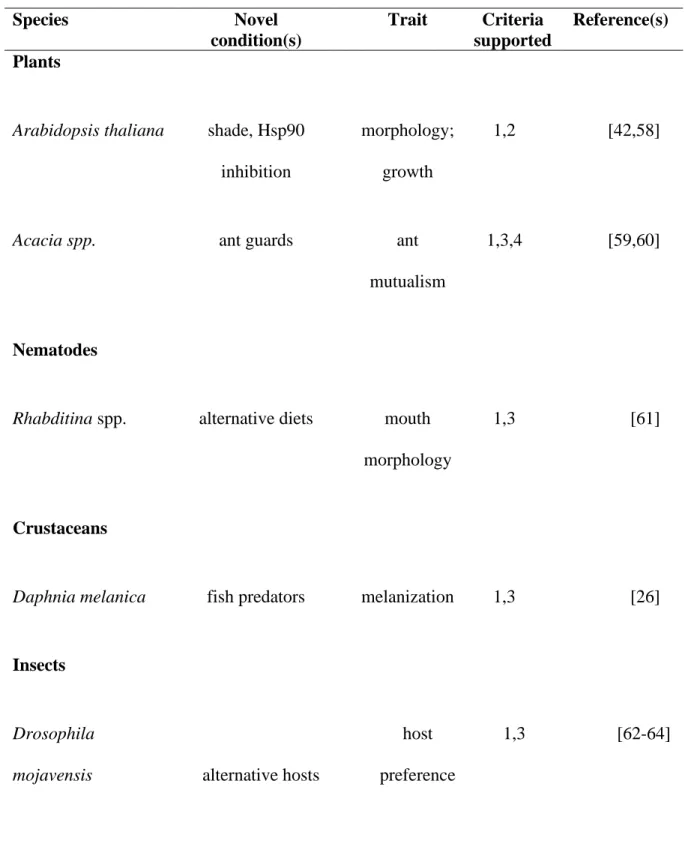
Table 3.1. Examples of species, conditions, and traits for which two or more key
criteria of the plasticity-first hypothesis are supported in naturally occurring systems………… 98
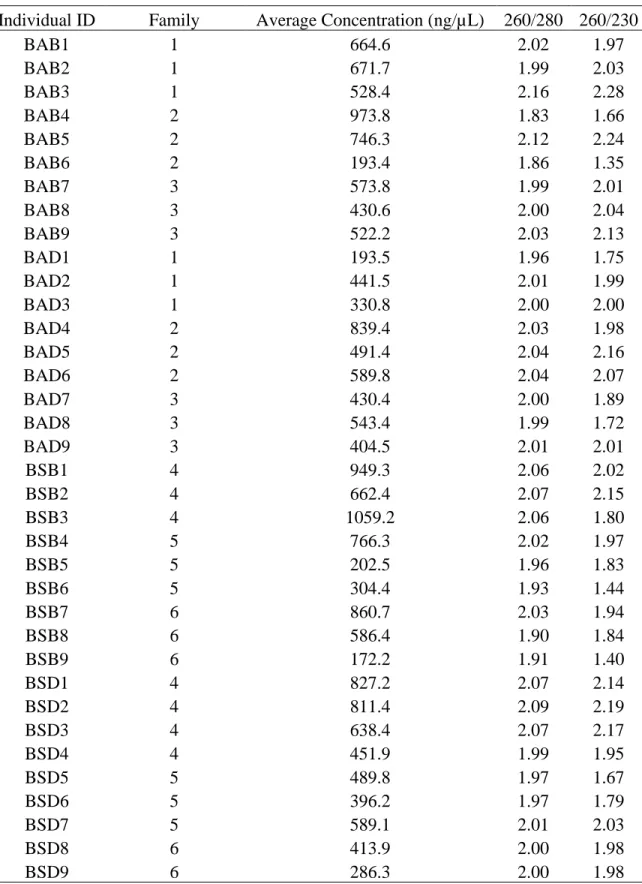
Table 5.1. Concentration and purity values from RNA extractions of each tadpole....….…….. 171
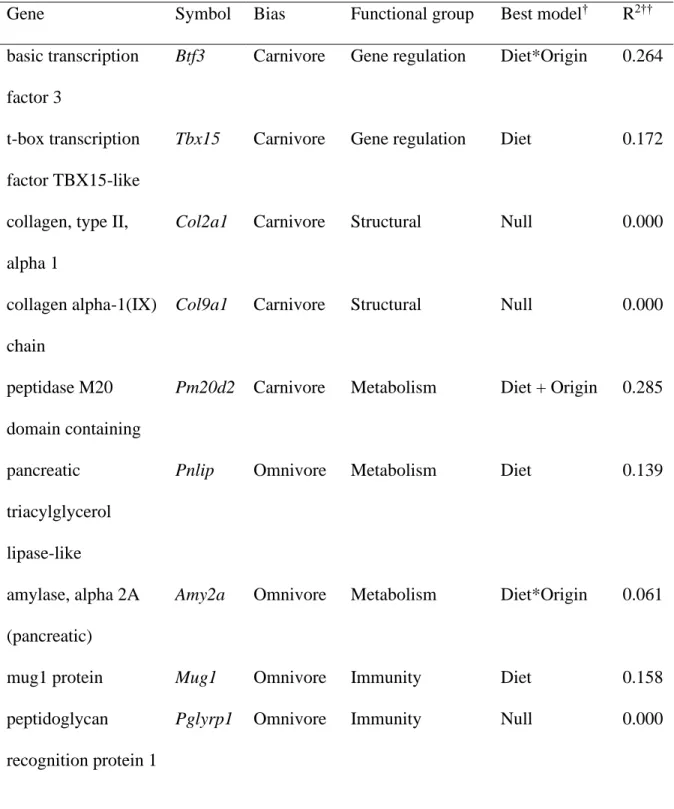
Table 5.2. The nine biased genes (plus a non-biased control gene) examined in this study, along with the model that best predicted each gene’s pattern of expression and that model’s effect size………..………... 172
Table 5.3. Reaction components for qPCR.………... 174
Table 5.4. Reaction conditions for qPCR.………... 175
Table 5.5. Genbank accessions, Gene ID, and qPCR primer sequences for each gene……... 176
Table 5.6.Results from our model selection procedure for each gene...………... 177
Table 5.7. Results from our comprehensive model selection procedure...……... 179
Table 5.8. Loadings of each gene’s expression onto PC1 and PC2 of the gene expression profile.……….…..………... 180
Table 6.1. Trophic traits associated with carnivore-omnivore polyphenism and their functions.……….. 216
Table 6.2. Results from morphological experiment using Sc. holbrookii reared on alternative diets………...………... 217
Table 6.3. Summary statistics from an ANOVA (with type III sum of squares) on various trophic traits in Sc. holbrookii reared on alternative diets.………... 218
Table 6.4. The genes whose expression was examined in this study………...…… 219
Table 6.5. Summary statistics from analysis of diet-dependent gene expression plasticity in Sc. holbrookii... 220
Table 6.6. Results from morphological experiment using Sp. multiplicata reared on alternative diets. ………...………... 221
Table 6.7. Results from Fisher’s exact test on the number of individuals with (‘Yes’) and without (‘No’) detectable levels of gene product for each gene…………...222
xv
Table 6.9. Summary statistics from our comparison of the palate spike
among wild-caught Spea and Scaphiopus.………...……224
Table 6.10. Estimated family variance (VAF) and total estimated variance (Vtotal) for fitness and morphological parameters...…………...…… 225
Table 6.11. Concentration and purity values from RNA extractions of Sc. holbrookii (left) and wild-caught Sp. multiplicata (right).…………...… 226
Table 6.12. Reaction components for qPCR……… 227
Table 6.13. Reaction conditions for qPCR……….. 228
Table 6.14. Genbank accessions and qPCR primer sequences for each gene………. 229
Table 6.15. Results for comparison of control gene expression between diets (for Sc. holbrookii) and morphs (for Sp. multiplicata). ...……….……… 230
Table 7.1. Collection information for pairs used in these experiments………... 262
Table 7.2. Results from competition experiment, including (A) summary statistics from our model selection procedure; (B) results from our ANOVA on the interaction model; and (C) distance between group means in growth and their associated P value following false discovery rate correction (in parentheses).………...…… 263
Table 7.3. Summary statistics comparing intrinsic growth rate between sympatric and allopatric tadpoles reared on alternative diets.………... 264
Table 7.4. Results from behavioral time budget assay comparison between tadpoles whose parents were derived allopatry versus sympatry………...…. 265
Table 7.5. Summary of results from comparison of trait integration between tadpoles whose parents were derived from sympatry or allopatry………...… 266
Table 7.6. Results of type III sum of squares ANOVA on trophic traits.………...….. 268
Table 7.7. A) Summary of type III sum of squares ANOVA of orbitohyoideus (OH) width from tadpoles reared in competition. (B) Results from post-hoc comparison among selective environment-diet groups. ………... 270
Table 7.8. Summary of type III sum of squares ANOVA of orbitohyoideus (OH) width from tadpoles reared as singletons.………... 271
xvi
LIST OF FIGURES
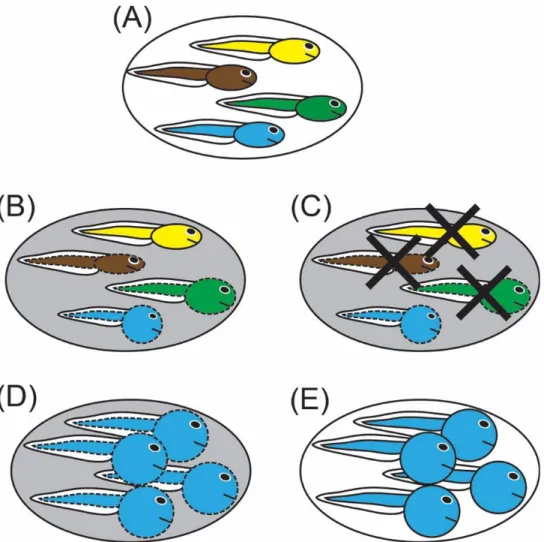
Fig. 3.1. An idealized representation of how plasticity-first evolution leads
to a novel, adaptive, complex trait..……….………...…………..…...…. 102
Fig. 3.2. Approaches for testing the key criteria of the plasticity-first hypothesis...………... 104
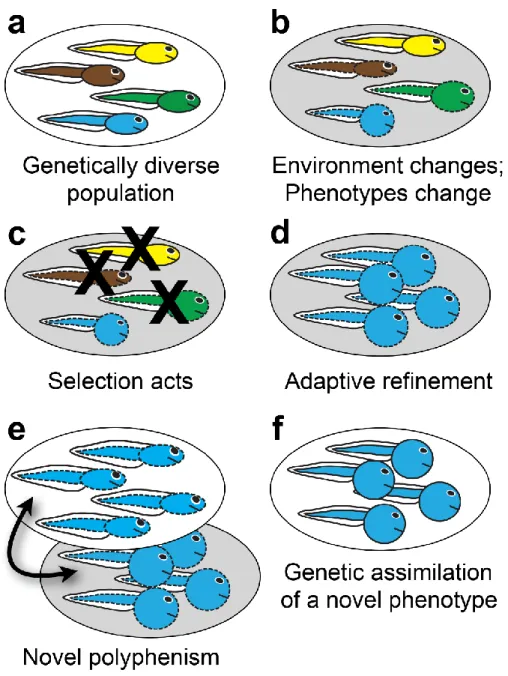
Fig. 4.1. How plasticity can facilitate the evolution of a novel, complex phenotype.………... 139
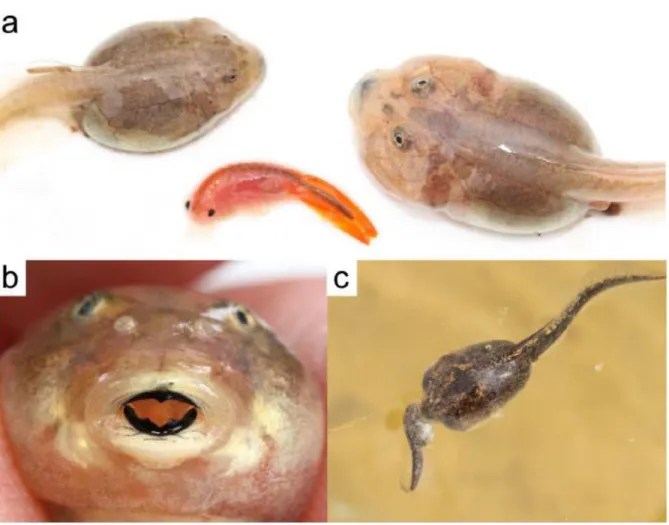
Fig. 4.2. A model amphibian for studying PFE………..………...….…... 141
Fig. 4.3. North American spadefoot toads of the genus Spea have evolved a unique resource polyphenism………...…. 142
Fig. 4.4. Plasticity can generate phenotypic divergence within species as great as that between species………... 143
Fig. 5.1. Alternative hypothesized patterns of evolved gene expression associated with genetic accommodation of an ancestrally plastic phenotype………... 181
Fig. 5.2. Reaction norm plots for two carnivore-biased genes showing evidence of genetic accommodation………... 182
Fig. 5.3 Diet-induced plasticity in gene expression for a carnivore-biased (Tbx15) and two omnivore-biased (Pnlip & Mug1) genes………...…….. 183
Fig. 5.4. Gene expression profiles and 99% confidence ellipses for individual tadpoles from allopatry (left) vs. sympatry (right) reared on a diet of detritus vs. shrimp + detritus….... 184
Fig. 5.5. Distribution of gene expression profiles for individuals (small shapes) and treatment groups (large shapes)………... 185
Fig. 6.1. How plasticity can facilitate the evolution of a novel, complex phenotype……....….. 231
Fig. 6.2. Ecology and evolution of the spadefoot toad resource-use polyphenism……....……. 233
Fig. 6.3. Diet-induced morphological plasticity of Sc. holbrookii and Sp. multiplicata……... 235
Fig. 6.4. Diet-induced gene expression plasticity in Sc. holbrookii and Sp. multiplicata... 236
xvii
morphological index in wild-caught Sp. multiplicata and Sp. bombifrons carnivores……....… 238
Fig. 7.1. Spadefoot toad polyphenism………...……. 272
Fig. 7.2. Geographical ranges of Spea bombifrons and S. multiplicata………... 273
Fig. 7.3. Evidence of frequency-dependent adaptation………...274
Fig. 7.4. A mechanism of frequency-dependent adaptation………...…………... 275
Fig. 7.5. Evidence of genetic assimilation of trophic morphology………....……….. 276
Fig. 8.1. How extremes along the continuum of plasticity mechanisms might affect different aspects of PLE………...……… 312
Fig. 8.2. Deterministic processes and DNA sequence variation………...…………. 314
Fig. 8.3. The proportion of various trait categories investigated by PLE studies.…... 315
Fig. 8.4. The taxonomic breadth at which PLE has been studied…...………...………… 317
1 CHAPTER I
INTRODUCTION AND RATIONALE
The year that I started my PhD program, an important paper came out in the journal Nature. It was a point-counterpoint piece on whether or not evolutionary theory needs a ‘rethink’, and it was written by a number of leading evolutionary biologists [1,2]. On the one hand, proponents of an extended evolutionary synthesis (EES) [1] argue that the roles phenotypic plasticity, inclusive inheritance, niche construction, and developmental bias (among others) play in evolution warrant an updated framework for exploring evolutionary theory. Indeed, this camp later formalized the key predictions of the EES and noted how its interpretation of these
processes during evolution differs from interpretation in standard evolutionary theory (SET) [3]. In their view, two key features that distinguish the EES from SET are the former’s organismal focus and its emphasis on the (often reciprocal) interaction of the environment with
developmental systems during phenotype construction. These features are meant to explicitly acknowledge that there is more to evolution, specifically adaptive evolution, than changes in gene frequencies driven by natural selection.
2
has not done an adequate job of the latter, but is likely sufficiently flexible for the former. Despite the disagreement, one key commonality between both sides of the EES debate has emerged: the desire for additional work on these questions. Indeed, the ‘Yes, urgently’ (i.e., pro EES) camp says, “We believe that a plurality of perspectives in science encourages
development of alternative hypotheses, and stimulates empirical work.” Similarly, the ‘No, all is well’ (anti-EES) side states, “The best way to elevate the prominence of genuinely interesting phenomena such as phenotypic plasticity…is to strengthen the evidence for their importance”. Thus, at the time I began my PhD, there was, in essence, an explicit call for more work
evaluating the role of phenotypic plasticity in evolution.
Although the study of phenotypic plasticity and its relevance to evolution has a rich history (Chapter II; [4]), the key theoretical foundation underpinning much of the current view of plasticity’s role in evolution is largely conceptualized in the book Developmental Plasticity and Evolution by Mary Jane West-Eberhard [5]. In this 800-page tome, West-Eberhard lays out a theory of how phenotypic plasticity plays a significant, and leading, role in the evolution of novelty, adaptation, and biodiversity. In her view, adaptive evolution proceeds through the following events. First, a qualitatively distinct developmental variant arises through a change in the environment (West-Eberhard argues that this could occur through mutation as well, but such cases would not constitute phenotypic plasticity in the typical sense) that causes a preexisting responsive phenotype to change or become reorganized (i.e., exhibit phenotypic plasticity). This new developmental variant is then immediately accommodated and stabilized by other flexible developmental processes (i.e., phenotypic accommodation occurs). If there is recurrence of the inducing stimulus (e.g., if the environmental change persists), then a subpopulation of
3
(sub)population exists, selection can act on variation in the form, regulation, or side effects of the novel trait and produce evolutionary change (i.e., genetic accommodation occurs). Selection can then favor persistence of the novel variant as an alternative phenotype or it can favor fixation (or deletion) of the novel variant. Regardless of whether or not the novel trait is maintained as an inducible alternative or becomes fixed, it should undergo modification to its form and/or regulation. In this way, novel adaptations begin as responses of developmental systems to
environmental perturbation that are subsequently molded by selection into well-formed, adaptive traits. Thus, in contrast with the prevailing historical view, West-Eberhard argued that “Most phenotypic evolution begins with environmentally initiated phenotypic change … Gene-frequency change follows, as a response to the developmental change … Genes are followers, not necessarily leaders, in phenotypic evolution.”
The call for additional empirical work on how phenotypic plasticity can influence evolution and West-Eberhard’s theory of adaptive evolution were critical in shaping my
dissertation. To begin, I combed through Developmental Plasticity and Evolution and extracted and synthesized key predictions and criteria that are needed to demonstrate West-Eberhard’s hypothesis of plasticity-led evolution. Then, because the field desired more empirical work (especially work from natural systems rather than artificial selection or experimental evolution experiments) on this topic, I provided a framework for evaluating these criteria in natural
4
doing, have found evidence for the importance of this process in generating novelty and adaptation.
In the chapters that follow, I identify and briefly describe key historical and
5
WORKS CITED
1 Laland, K.N. et al. (2014) Does evolutionary theory need a rethink? Yes, urgently. Nature 514, 161-164
2 Wray, G.A. et al. (2014) Does evolutionary theory need a rethink? No, all is well. Nature 514, 161-164
3 Laland, K.N. et al. (2015) The extended evolutionary synthesis: its structure, assumptions and predictions. Proc. R. Soc. B 282, 20151019
4 Levis, N.A. and Pfennig, D.W. (2017) Phenotypic Plasticity. Oxford Bibliographies in Evolutionary Biology, Oxford University Press
5 West-Eberhard, M.J. (2003) Developmental plasticity and evolution, Oxford University Press
6 Levis, N.A. and Pfennig, D.W. (2016) Evaluating 'plasticity-first' evolution in nature: key criteria and empirical approaches. Trends Ecol. Evol. 31, 563-574
7 Levis, N.A. et al. (2017) Genetic accommodation in the wild: evolution of gene expression plasticity during character displacement. J. Evol. Biol. 30, 1712-1723 8. Levis, N.A. et al. (2018) Morphological novelty emerges from pre-existing phenotypic
plasticity. Nat. Ecol. Evol. 2, 1289-1297
9 Levis, N.A. and Pfennig, D.W. (2019) Plasticity-led evolution: evaluating the key prediction of frequency-dependent adaptation. Proc. R. Soc. B 286, 20182754
10 Levis, N.A. and Pfennig, D.W. (2019) Phenotypic plasticity, canalization, and the origins of novelty: evidence and mechanisms from amphibians. Semin. Cell Dev. Biol. 88, 80-90 11 Levis, N.A. and Pfennig, D.W. (2020) Plasticity-led evolution: a survey of developmental
6 CHAPTER II
AN ANNOTATED BIBLIOGRAPHY ON THE FIELD OF PHENOTYPIC PLASTICITY
Co-author: David W. Pfennig
Introduction
Phenotypic plasticity (often termed “plasticity”) is generally defined as the capacity of an individual organism to alter its behavior, physiology/gene expression, and/or morphology (i.e., some aspect of its phenotype) in direct response to changing environmental conditions. Plasticity is ubiquitous and many have suggested that it can have important ecological and evolutionary implications. Among other things, plasticity may allow organisms to persist in otherwise unfavorable environments, produce novel, complex traits, and experience altered interactions with other members of their community. In recent decades, the evolutionary power of plasticity has received renewed interest. In particular, the process of genetic accommodation has
7 General Overview
Although interest in phenotypic plasticity has increased since the 1980s (Forsman 2014), the resulting proliferation of the literature can make it difficult to keep concepts organized. As a starting point, Whitman and Agrawal 2009 should be the first piece read in this entire
bibliography because of its accessibility. A common problem when sifting through literature on phenotypic plasticity is the terminology. The authors of Fusco and Minelli 2010 do a good job of defining and clarifying terms in their review. Stearns 1989 provides a historical perspective in terms of the writing, but also provides a brief history of the field (to that point). While a lot of plasticity research focuses on “higher-order” phenotypes, Callahan, et al. 1997 sets the stage for current work on phenotypic plasticity at the molecular level, which is complemented by Piersma and Drent 2003, which emphasizes how physiological processes are phenotypically plastic. Wund 2012 and Forsman 2014 are particularly useful as introductions to the types of questions being asked by plasticity researchers and how one can test hypotheses relating to plasticity. Finally, Nijhout 1990 provides an excellent introduction to the thinking that drives much of the current research being done on plasticity and evolution—particularly that development is completed by genes alone.
8
Forsman, A. 2014. Rethinking phenotypic plasticity and its consequences for individuals, populations, and species. Heredity 115:276-284. [doi:10.1038/hdy.2014.92]. The major strength of this review is its emphasis on how to study and test hypotheses relating to phenotypic
plasticity. It provides a “whole-organism” rather than “single-trait” perspective for understanding plasticity.
Fusco, G., and A. Minelli. 2010. Phenotypic plasticity in development and evolution: Facts and concepts. In Special issue: From polyphenism to complex metazoan life cycles. Edited by G. Fusco and A. Minelli. Philosophical Transactions of the Royal Society B 365:547-556. [doi:10.1098/rstb.2009.0267]. As an introduction to a special volume in the Philosophical Transactions of the Royal Society, this article provides one of the more succinct overviews of phenotypic plasticity, how it evolves, and its role in evolution. It is useful in trying to sort out the myriad of terminology associated with phenotypic plasticity.
Nijhout, H. F. 1990. Problems and paradigms: Metaphors and the role of genes in
development. BioEssays 12:441-446. [doi:10.1002/bies.950120908]. An excellent review of how a gene-driven view of development is flawed. Although it gets a bit technical in places, this generally accessible essay should be read by anyone interested in genetics, development, and/or evolution.
9
Stearns, S. C. 1989. The evolutionary significance of phenotypic plasticity. BioScience 39:436-445. [doi:10.2307/1311135]. As an introductory article to a special issue of BioScience, this work sets the stage for the rest of its volume, but also introduces readers to terms and concepts used throughout plasticity literature. Among other things, it gives a short, informative history of the reaction norm concept in evolutionary biology.
Whitman, D. W., and A. A. Agrawal. 2009. What is phenotypic plasticity and why is it important? In Phenotypic plasticity of insects: Mechanisms and consequences. Edited by D. W. Whitman and T. N. Ananthakrishna, 1-63. Boca Raton, FL: CRC. [ISBN: 9781578084234]. This book chapter should be the first piece read by anyone interested in phenotypic plasticity.
Although this chapter is in a book on insects, it provides one of the most accessible, comprehensive overviews of phenotypic plasticity available.
Wund, M. A. 2012. Assessing the impacts of phenotypic plasticity on evolution. Integrative and Comparative Biology 52:5-15. [doi:10.1093/icb/ics050]. This review (in particular Table 1) is a vital resource for those interested in testing hypotheses related to phenotypic plasticity. Almost acting as a “how-to” guide, it outlines approaches and empirical examples for testing eight key hypotheses of plasticity’s role in evolution.
Books
10
importance of plasticity in evolution in an accessible way. For those that are more theoretically and/or conceptually driven, DeWitt and Scheiner 2004 should be a useful resource. It covers similar topics as the others, but presents them from a slightly different perspective. Actual textbooks on plasticity are somewhat hard to come by. However, Gilbert and Epel 2015 is the closest thing available as a textbook for ecological evolutionary developmental biology. Sultan 2015 could be used as an advanced textbook that features how plasticity is important for ecological development and niche construction and how these processes interact to produce adaptation. Piersma and van Gils 2011 is a useful textbook for physiological ecology. Levins 1968 may be most useful for providing insight onto how plasticity was perceived around fifty years ago, because its major contributions are touched on in the other works of this section.
DeWitt, T. J., and S. M. Scheiner, eds. 2004. Phenotypic plasticity: Functional and conceptual approaches. Oxford: Oxford Univ. Press. [ISBN: 9780195138962]. DeWitt and Scheiner edit an excellent resource for understanding the breadth of ideas related to phenotypic plasticity using a historical and conceptual approach. More modeling and theory oriented than the other books on this list.
Gilbert, S. F., and D. Epel. 2015. Ecological developmental biology. 2d ed. Sunderland, MA: Sinauer Associates. [ISBN: 9781605353449]. This book comes the closest to being a textbook for eco-evo-devo. Plasticity is featured throughout. Utilizes both applied and basic research examples to highlight the significance of an eco-evo-devo perspective. Appropriate for upper-level undergraduates and above.
11
populations and communities. The first to note that the frequency of environmental encounter is important for evolution.
Piersma, T., and J. A. van Gils. 2011. The flexible phenotype: A body-centred integration of ecology, physiology, and behaviour. Oxford: Oxford Univ. Press. [ISBN: 9780199233724]. This book focuses primarily on physiological plasticity and pulls from the authors’ research program. It is useful for upper-level undergraduates and above.
Pigliucci, M. 2001. Phenotypic plasticity: Beyond nature and nurture. Baltimore: Johns Hopkins Univ. Press. [ISBN: 9780801867880]. This could be considered a sequel to Schlichting and Pigliucci 1998 in that it covers many similar topics and themes. It reviews the concept of phenotypic plasticity from the two prior decades and offers insight on potentially fruitful research directions. A good resource for anyone interested in plasticity and how it relates to various biological disciplines. Suitable for advanced undergraduates, graduate students, and professionals.
Schlichting, C. D., and M. Pigliucci. 1998. Phenotypic evolution: A reaction norm perspective. Sunderland, MA: Sinauer Associates. [ISBN: 9780878937998]. This book argues for the importance of considering phenotypic plasticity when thinking about phenotypic evolution. It provides an informative historical overview, assesses the current state of the field (as of 1998), and provides future directions. This work should appeal to graduate students and professionals studying evolutionary biology.
12
development and niche construction) might have greater ability to influence their evolutionary trajectories than has historically been appreciated.
West-Eberhard, M. J. 2003. Developmental plasticity and evolution. Oxford: Oxford Univ. Press. [ISBN: 9780195122350]. This example-rich and comprehensive book covers
essentially all aspects of evolutionary biology and how developmental plasticity can contribute to our understanding of them. It is a dense read with lots of information that is best suited for
advanced graduate students and professionals. An excellent source for research ideas.
Journals
Studies on phenotypic plasticity could potentially be found in any journal that publishes biological research. However, the four most common journals for plasticity and evolution are **Evolution**, **Proceedings of the Royal Society of London B**, **American Naturalist**, and the **Journal of Evolutionary Biology**. The **Biological Journal of the Linnean
Society** is also an important source for plasticity literature, but includes research that is
potentially more system specific than the others. **Trends in Ecology and Evolution** is a great resource for easily accessible reviews and opinions on topics at the forefront of the field.
**Molecular Ecology** has increased in importance because of the growing ease with which 1) non-model organisms can be studied and 2) the molecular underpinnings of plasticity and its evolution can be explored. Finally, **Ecology** is the leader for more ecologically based articles, but is important because of the ecological basis of phenotypic plasticity.
13
*Biological Journal of the Linnean Society*. 1969-. The descendent of the journal that published the seminal works of Darwin and Wallace in 1858, this journal publishes papers
broadly related to evolution. May be more likely to encounter system-specific phenomena than in Evolution or the Journal of Evolutionary Biology.
*Ecology*. 1920-. Published by the Ecological Society of America, this journal is the leader in its field and is focused on generalizable research articles and syntheses. Obviously, most articles are more ecological than evolutionary, but a mixture is certainly present.
*Evolution*. 1947-. Published by the Society for the Study of Evolution, this is the leading journal in the field and should be the first place to look for relevant articles. This journal primarily publishes research articles, but perspectives, commentaries, and book reviews are also published.
*Journal of Evolutionary Biology*. 1988-. Published by the European Society for
Evolutionary Biology, this journal is also a leader in publishing research articles on evolutionary biology. It also publishes review articles.
*Molecular Ecology*. 1992-. As the name suggests, this journal is focused on the molecular underpinnings of ecological, evolutionary, and behavioral processes. A useful resource for identifying molecular techniques being used in non-model systems.
*Proceedings of the Royal Society of London B*. 1905-. Publishes on topics across biological disciplines, but is often a source of high-impact papers in evolutionary biology and related fields.
14
an excellent journal for identifying current issues in the field and obtaining ideas for potentially fruitful research avenues.
Historical Works
15
Baldwin, J. M. 1896. A new factor in evolution. The American Naturalist 30:441-451. Baldwin can be considered one of the founders of phenotypic plasticity research. He proposes a mechanism of evolution in which an acquired character (i.e., a trait induced by the environment) can come under hereditary control via selection. This mechanism reconciles some aspects of Lamarckian and Darwinian ideas of evolution.
Bradshaw, A. 1965. Evolutionary significance of phenotypic plasticity in plants.
Advances in Genetics 13:115-155. [doi:10.1016/S0065-2660(08)60048-6]. This seminal review by Bradshaw brought phenotypic plasticity of plants “out in the open,” suggested that plasticity was under genetic control, and helped bridge the gap between the classical view of plasticity as developmental noise and the modern appreciation of its role in ecology and evolution. Despite being over fifty years old, Bradshaw’s comprehensive review remains relevant for those interested in plasticity today.
Haldane, J. B. S. 1946. The interaction of Nature and Nurture. Annals of Eugenics 13:197-205. [doi:10.1111/j.1469-1809.1946.tb02358]. This work provides an early and
influential argument for the significance of the gene-by-environment interaction (GxE). Haldane indirectly describes the significance of plasticity and patterns that reaction norms can take.
Johannsen, W. 1911. The genotype conception of heredity. The American Naturalist 45:129-159. [doi:10.1086/279202]. Johannsen introduces and discusses the terms “gene,” “genotype,” and “phenotype” as they relate to inheritance and organismal design. He briefly compares Woltereck’s “Reaktionsnorm” with his own description of “genotype.”
16
“plasticity” to describe environmentally induced phenotypes began with Nilsson-Ehle in this work. Written in Swedish; English translations may be difficult to find.
Sarkar, S. 2003. From the Reaktionsnorm to the evolution of adaptive plasticity: A historical sketch, 1909-1999. In Phenotypic plasticity: Functional and conceptual approaches. Edited by T. J. DeWitt and S. M. Scheiner, 10-30. Oxford: Oxford Univ. Press. [ISBN:
9780195138962]. Sarkar’s book chapter chronicles the evolution of the norm of reaction (or reaction norm) concept over one hundred years. An excellent resource for finding “classic” literature and the origins of ideas and concepts used today. This work places all the others in the section into their historical context.
Schmalhausen, I. I. 1949. Factors of evolution: The theory of stabilizing selection. Chicago: Univ. of Chicago Press. Schmalhausen solidified the distinction between adaptive and non-adaptive reaction norms (adaptive norms and morphoses, respectively, in his terminology) and described the process of developmental “autoregulation” in which an adaptive norm
becomes refined to produce a specific phenotypic outcome. Schmalhausen’s autoregulation and Waddington’s canalization both describe the same basic phenomenon—that some features of organisms are buffered against large phenotypic changes.
17
inherited. Waddington’s ideas were largely overlooked by his contemporaries and not included in the Modern Synthesis.
Woltereck, R. 1909. Weitere experimentelle Untersuchungen über Artveränderung, speziel über das Wesen quantitativer Artunterschiede bei Daphnien. Verhandlungen der Deutschen Zoologischen Gesellschaft 19:110-173. Woltereck is credited with creating the reaction norm concept, and in this work he describes the reaction norm as the sum of all the possible phenotypes an organism can express in all the environment’s it encounters. Written in German; English translations may be difficult to find.
Proximate Mechanisms of Plasticity
18
leverage these advances and demonstrates an integrative approach to uncovering the mechanistic details in a well-known example of phenotypic plasticity.
Aubin-Horth, N., and S. C. P. Renn. 2009. Genomic reaction norms: Using integrative biology to understand molecular mechanisms of phenotypic plasticity. Molecular Ecology 18:3763-3780. [doi:10.1111/j.1365-294X.2009.04313.x]. This is an invaluable resource for researchers interested in exploring the mechanistic basis of plastic traits. A variety of approaches are described and numerous examples of those approaches are included. Some of the methods described (e.g., microarrays) have become somewhat outdated, but the conceptual approaches still apply.
Beldade, P., A. R. A. Mateus, and R. A. Keller. 2011. Evolution and molecular mechanisms of adaptive developmental plasticity. Molecular Ecology 20:1347-1363.
[doi:10.1111/j.1365-294X.2011.05016.x]. This review is complementary to that of Aubin-Horth and Renn 2009 in this section because it describes cases where developmental plasticity has evolved and discusses current and future approaches for studying the mechanistic basis of plasticity. Another useful resource for potential ways of conducting developmental plasticity experiments.
Denver, R. J. 1997. Proximate mechanisms of phenotypic plasticity in amphibian metamorphosis. American Zoologist 37:172-184. [doi:10.1093/icb/37.2.172]. One of the best examples of phenotypic plasticity is the ability of organisms to modulate major developmental events. Here, the hormonal basis of one common example—timing of amphibian
metamorphosis—is discussed in detail.
[doi:10.1016/S0169-5347(02)02498-19
9]. As implied by the title, this concise, yet broad, review explores and emphasizes the role of hormones in generating environmentally induced phenotypes. This is an important resource for those interested in manipulating plastic phenotypes because hormonal alterations may be more feasible than direct genetic or gene expression manipulations in natural systems.
Patalano, S., A. Vlasova, C. Wyatt, et al. 2015. Molecular signatures of plastic phenotypes in two eusocial insect species with simple societies. Proceedings of the National Academy of Sciences 112:13970-13975. [doi:10.1073/pnas.1515937112]. Patalano and colleagues utilize a variety of “-omic” techniques to comprehensively explore a widely
appreciated example of phenotypic plasticity: eusocial insect castes. Their findings demonstrate that subtle differences in transcriptional network organization, rather than epigenetically
mediated (e.g., methylation or microRNA) changes in gene expression, may be responsible for production of alternative phenotypes. This study can serve as a model for advanced graduate students or professionals interested in exploring the mechanistic basis of other plastic
phenotypes.
Pigliucci, M. 1996. How organisms respond to environmental changes: From phenotypes to molecules (and vice versa). Trends in Ecology and Evolution 11:168-173. [doi:10.1016/0169-5347(96)10008-2]. This review utilizes four case studies to demonstrate the biased expression of genetic and physiological pathways for given environmental conditions. In addition, it calls for the unity of molecular and physiological biology with ecological and evolutionary biology that occurs in later works.
Schlichting, C. D., and H. Smith. 2002. Phenotypic plasticity: Linking molecular mechanisms with evolutionary outcomes. Evolutionary Ecology 16:189-211.
20
professionals, discusses phenotypic plasticity broadly and the general mechanisms of plasticity with a focus on cellular-level responses. Detailed examples from plants highlight some common themes for all plastic responses.
Costs of Plasticity
Starting with the five costs and four limits of plasticity in DeWitt, et al. 1998, the costs, limits, and trade-offs associated with phenotypic plasticity have been an important ongoing area of research. Prior to that, however, Van Tienderen was using models to explore costs associated with being a specialist or a generalist (plastic) (see Van Tienderen 1991). Relyea 2002
empirically demonstrates how such costs can be identified experimentally. Van Buskirk and Steiner 2009 and Auld, et al. 2010 provide meta-analyses and literature reviews of the costs and limits of plasticity and find that they are generally weak, as common as benefits, and hard to detect. Furthermore, Auld, et al. 2010 reduces the number of costs proposed by DeWitt, et al. 1998. The two papers led by Snell-Rood (Snell-Rood, et al. 2010; Snell-Rood 2012) discuss some of the cellular, developmental, and physiological mechanisms that can lead to apparent costs or limits on phenotypic plasticity. Finally, Murren, et al. 2015 highlights that it is probably costs and limits on phenotypes rather than plasticity itself that constrain plasticity’s evolution.
Auld, J. R., A. A. Agrawal, and R. A. Relyea. 2010. Re-evaluating the costs and limits of adaptive phenotypic plasticity. Proceedings of the Royal Society B 277:503-511.
21
cost types proposed by DeWitt, et al. 1998 and posit that the distinction between costs and limits of plasticity may not be as clear as other authors suggest.
DeWitt, T. J., A. Sih, and D. S. Wilson. 1998. Costs and limits of phenotypic plasticity. Trends in Ecology and Evolution 13:77-81. [doi:10.1016/S0169-5347(97)01274-3]. This classic work crystallized the concepts of the costs and limits of plasticity. A must-read for anyone interested in plasticity and its evolution.
Murren, C. J., J. R. Auld, H. Callahan, et al. 2015. Constraints on the evolution of phenotypic plasticity: Limits and costs of phenotype and plasticity. Heredity 115:293-301. [doi:10.1038/hdy.2015.8]. Argues that costs and limits of phenotypes are more important in the evolution of plasticity than costs of plasticity itself. Various types of constraints on plasticity are discussed, and considerations for moving forward are presented.
Relyea, R. A. 2002. Costs of phenotypic plasticity. The American Naturalist 159:272-282. [doi:10.1086/338540]. A good example of how to experimentally test for costs of producing a plastic phenotype.
Snell-Rood, E. C. 2012. Selective processes in development: Implications for the costs and benefits of phenotypic plasticity. Integrative and Comparative Biology 52:31-42.
[doi:10.1093/icb/ics067]. This review puts forth the view that developmental selection— phenotypic sampling and reinforcement during development—is a key mechanism influencing the costs, benefits, and consequences of plasticity. This mechanism is relevant from gene expression to behavior and learning, and it comes with specific, pronounced costs.
22
By focusing on relaxed selection, mutation accumulation, and the role of modularity in developmental genetic networks, Snell-Rood and colleagues provide valuable insight on the potential mechanisms leading to constraints on the evolution of plasticity.
Van Buskirk, J., and U. K. Steiner. 2009. The fitness costs of developmental canalization and plasticity. Journal of Evolutionary Biology 22:852-860.
[doi:10.1111/j.1420-9101.2009.01685.x]. This meta-analysis found that the costs of plasticity are generally mild or nonexistent, and that this may potentially be due to the difficulty in detecting them.
Van Tienderen, P. H. 1991. Evolution of generalists and specialists in spatially
heterogeneous environments. Evolution 45:1317-1331. [doi:10.2307/2409882]. Van Tienderen uses quantitative genetic models to explore the relative fitness of specialists or generalists
(plastic) under hard and soft selection when there is a cost associated with being a generalist. His models demonstrate that strength and type of selection and historical events (i.e., migration, mutation) influence the evolution of specialization and/or phenotypic plasticity.
Modeling Plasticity
Theoretical modeling of phenotypic plasticity has been an important avenue of research for many years because it provides insights that could be difficult to obtain empirically. Further, it helps generate predictions and expectations that can drive empirical research programs. The foundational paper for almost all contemporary models of plasticity is Via and Lande 1985, which uses models to describe how selection can influence the evolution of phenotypic plasticity and the shapes of reaction norms. Another effort at predicting reaction norms based on
23
identified and described the conditions in which an environmentally induced developmental switch should be favored over genetic polymorphism. Gomulkiewicz and Kirkpatrick 1992 expanded on the models of Via and Lande 1985 by considering continuous environments rather than discrete patches. Scheiner 1993 provides a review of phenotypic plasticity that is largely focused on modeling and should be the first piece read in this section. A few years later, another review provided a summary of the previous decade of plasticity theory (Via, et al. 1995). The author of De Jong 2005 comes to a conclusion counter to some of her contemporaries—that phenotypic plasticity is not an important factor in evolution (or at least macroevolution). More recently, Lande 2009 is a hallmark paper that showed how the process of *Genetic Assimilation* can theoretically proceed. This was an extremely important outcome because there has been ongoing skepticism of genetic assimilation as an important evolutionary process. Finally, Chevin, et al. 2010 demonstrates the importance of including phenotypic plasticity in models of extinction risk and population persistence. This work is timely as numerous species have
increased risk of extinction due to ongoing climate change.
Chevin, L. M., R. Lande, and G. M. Mace. 2010. Adaptation, plasticity, and extinction in a changing environment: Towards a predictive theory. PLoS Biology 8:e1000357.
[doi:10.1371/journal.pbio.1000357]. Chevin and Lande leverage evolutionary models to explore the determinants of extinction risk. They find that phenotypic plasticity and environmental sensitivity of selection are two important parameters that need to be incorporated into models of population persistence. Finally, they show how their approach can be used for predictive
purposes.
24
De Jong uses models to explore the role of plasticity in adapting to novel environments and generating ecotypes. Her conclusion is that *Genetic Assimilation* does not adequately explain observed patterns and that phenotypic plasticity does not have support as a major mechanism for evolution in terms of invading new niches or macroevolution.
Gomulkiewicz, R., and M. Kirkpatrick. 1992. Quantitative genetics and the evolution of reaction norms. Evolution 46:390-411. [doi:10.2307/2409860]. Whereas the models of Via and Lande in this section utilize discrete environments, Gomulkiewicz and Kirkpatrick consider environments that vary continuously. Genetic constraints can interact with environmental variation to produce a variety of evolutionary equilibria. This paper provides a framework in which empiricists can test the optimality of their observed reaction norms.
Lande, R. 2009. Adaptation to an extraordinary environment by evolution of phenotypic plasticity and genetic assimilation. Journal of Evolutionary Biology 22:1435-1446.
[doi:10.1111/j.1420-9101.2009.01754.x]. Lande showed how the process of *Genetic
Assimilation* can theoretically proceed. First, the mean fitness drops when a new environment is encountered and the mean phenotype jumps toward the new optimum via plasticity. Then rapid evolution increases plasticity and allows the mean phenotype to approach the new optimum. Slowly, plasticity is reduced and compensated by genetic evolution of reaction norm elevation in the ancestral environment.
25
environmentally induced polyphenism, a genetically determined polymorphism, or a mixture of the two—depending on the conditions.
Scheiner, S. M. 1993. Genetics and evolution of phenotypic plasticity. Annual Review of Ecology and Systematics 24:35-68. Scheiner is one of the leading figures in modeling plasticity and has produced many papers on the subject. This excellent paper describes three approaches taken when modeling plasticity—optimality models, quantitative genetic models, and gametic models. It should be the first piece read in this section.
Stearns, S. C., and J. C. Koella. 1986. The evolution of phenotypic plasticity in life-history traits: Predictions of reaction norms for age and size at maturity. Evolution 40:893-913. [doi:10.2307/2408752]. Stearns and Koella found that the reaction norms for maturation should take one of (at least) four shapes depending on the relationship between changes in growth rate and changes in adult mortality rate and/or juvenile mortality rate. In addition, their predictions are generally supported using nineteen populations of fish and various other species.
Via, S., R. Gomulkiewicz, G. de Jong, S. M. Scheiner, C. D. Schlichting, and P. van Tienderen. 1995. Adaptive phenotypic plasticity: Consensus and controversy. Trends in Ecology and Evolution 10:212-217. This review by Via and colleagues summarizes the previous decade of plasticity theory and provides an accessible synthesis of many of the other works in this section. This would be useful to read before delving more heavily into the strict modeling papers.
26
obtained in alternative environments and how quickly such optima are reached. Migration and hard and soft selection are both considered.
Plasticity, Local Adaptation, and Gene Flow
The works in this section explore the interaction among phenotypic plasticity, local adaptation, and gene flow. Understanding how these interactions play out is important because it can determine if a lineage will persist in a given environment. An excellent summary of these interactions is found in Crispo 2008 and makes this work the first one that should be read in this section. Sultan 1995 sets the stage for later work comparing the benefits of plasticity versus local adaptation. In particular, Sultan and Spencer 2002 demonstrated that when some gene flow occurs, plasticity should be favored over local adaptation. Alpert and Simms 2002 then discuss more generally under what conditions plasticity should be favored over fixity. Gotthard and Nylin 1995 is an interesting work because it gets into the semantics of what defines adaptive plasticity versus plasticity as an adaptation. This is an important point because plasticity can sometimes be locally adaptive (Lind, et al. 2010), but tracing its origins as an adaptation can be more difficult. Lind, et al. 2010 provides an empirical demonstration of how gene flow, local adaptation, and phenotypic plasticity interact in a natural system of Rana temporaria. Scheiner 2013 integrates the effects of gene flow, life history patterns, and spatial and temporal
heterogeneity into a comprehensive model of phenotypic plasticity evolution.
27
predictability of temporal and spatial environmental heterogeneity as well as the amount of available resources. As noted in the title, the focus is on plants.
Crispo, E. 2008. Modifying effects of phenotypic plasticity on interactions among natural selection, adaptation, and gene flow. Journal of Evolutionary Biology 21:1460-1469.
[doi:10.1111/j.1420-9101.2008.01592.x]. This review discusses how plasticity can impede and promote adaptive genetic divergence among populations. Figure 1 and Table 1 provide useful summaries of the potential interactions of phenotypic plasticity, adaptive genetic divergence, and gene flow while also noting the mechanism by which particular outcomes arise.
Gotthard, K., and S. Nylin. 1995. Adaptive plasticity and plasticity as an adaptation: A selective review of plasticity in animal morphology and life history. Oikos 74:3-17.
[doi:10.2307/3545669]. This review focuses primarily on terminology and distinguishes cases where plasticity is adaptive (beneficial function maintained by selection) and cases where the plasticity is an adaptation (its origin is linked to this function). It highlights that, until then, distinguishing between the two empirically had been difficult and infrequently done. It discusses examples in animals regarding the adaptive and adaptation status of various traits.
Lind, M. I., P. K. Ingvarsson, H. Johansson, D. Hall, and F. Johansson. 2010. Gene flow and selection on phenotypic plasticity in an island system of Rana temporaria. Evolution 65:684-697. [doi:10.1111/j.1558-5646.2010.01122.x]. Provided an empirical test of how gene flow, phenotypic plasticity, and local adaptation interact. It highlights the importance of migration and environmental heterogeneity for the evolution of phenotypic plasticity, and it shows that
plasticity itself can be locally adaptive.
28
that includes not just the effects of gene flow, but also interactions with life history patterns, and spatial and temporal heterogeneity.
Sultan, S. E. 1995. Phenotypic plasticity and plant adaptation. Acta Botanica Neerlandica 44:363-383. [doi:10.1111/j.1438-8677.1995.tb00793.x]. A thorough review of how phenotypic plasticity is adaptive in plants that was written about a decade after the revitalization of plasticity studies. Established a foundation for future work exploring local adaptation and plasticity in plants.
Sultan, S. E., and H. G. Spencer. 2002. Metapopulation structure favors plasticity over local adaptation. The American Naturalist 160:271-283. [doi:10.1086/341015]. By expanding upon Moran 1992 (cited under *Polyphenisms*), this study was the first to demonstrate (using a model) that plasticity should be favored over local adaptation in populations where some
migration occurs (e.g., metapopulations) and that, in such cases, the plastic response need not be perfect or without cost.
Polyphenisms
29
seasonal polyphenisms and demonstrated the pervasiveness and importance of the phenomenon. Years later, empirical work by the authors of Abouheif and Wray 2002 highlighted the
importance of understanding gene networks in the production of alternate phenotypes. Insects have been (and continue to be) a major resource for studying polyphenisms. Simpson, et al. 2011 surveyed some of the most well-known insect polyphenisms, explored their underlying
mechanisms, and discussed their adaptive significance to gain insight on their general features. Finally (and arguably unrelated to other works in this section), Charnov and Bull 1977 discussed the conditions in which an extreme polyphenism—environmental sex determination—should be favored over genetic sex determination (i.e., genetic polymorphism). The authors’ general approach could be applied to almost all forms of polyphenism in that costs and benefits to environmental versus genetic determination need to be weighed.
Abouheif, E., and G. A. Wray. 2002. Evolution of the gene network underlying wing polyphenism in ants. Science 297:249-252. [doi:10.1126/science.1071468]. This was the first study to look in-depth at the evolution of gene networks for the production of a plastic trait. It demonstrated that both evolutionary lability and conservation of the network underlying trait development may be important for the evolution of polyphenisms. This work highlights the importance of understanding developmental networks and their evolution in order to ultimately understand the evolution of plasticity.
Charnov, E. L., and J. Bull. 1977. When is sex environmentally determined. Nature 266:828-830. [doi:10.1038/266828a0]. This work formalized the conditions in which a major class of polyphenism, environmental sex determination (ESD), is selectively favored.
30
offspring will enter. This work is important because these ideas should apply more generally to other forms of polyphenism.
Mayr, E. 1963. Animal species and evolution. Cambridge, MA: Belknap Press of Harvard Univ. Press. In this important book, Mayr popularized the term “polyphenism” to cover cases where individuals within a population may exhibit a variety of phenotypes, but the differences are not the result of genetic differences. This term was slow to get traction, but is now commonly used to describe cases of phenotypic plasticity that produce discrete alternative phenotypes.
Michener, C. 1961. Social polymorphism in Hymenoptera. Symposium of the Royal Entomological Society of London 1:43-56. In this somewhat obscure work, Michener coins the term “polyphenic” to refer to environmentally determined alternative phenotypes.
Moran, N. A. 1992. The evolutionary maintenance of alternative phenotypes. The
American Naturalist 139:971-989. Moran’s highly influential framework showed that ecological, developmental, and genetic factors are all important for understanding the evolutionary
maintenance of polyphenisms. In particular, she noted the importance of temporal (compared to spatial) variation, intermediate frequencies of alternative selective environments, and
environmental predictability. A strength of this framework is its generalizability and agreement with models that preceded it.
Nijhout, H. F. 2003. Development and evolution of adaptive polyphenisms. Evolution and Development 5:9-18. [doi:10.1046/j.1525-142X.2003.03003.x] Nijhout gives a clear
31
Shapiro, A. M. 1976. Seasonal polyphenism. In Evolutionary biology. Vol. 9. Edited by M. K. Hect, W. C. Steere, and B. Wallace, 259-333. New York: Springer. Shapiro’s book chapter catalogues numerous examples of seasonal polyphenisms—primarily in insects. By demonstrating how common seasonal polyphenisms are, this chapter solidified the importance of polyphenisms in animal populations.
Simpson, S. J., G. A. Sword, and N. Lo. 2011. Polyphenism in insects. Current Biology 21:R738-R749. [doi:10.1016/j.cub.2011.06.006]. This review surveys some of the most well-known insect polyphenisms, explores their underlying mechanisms, and discusses their adaptive significance. In addition, commonalities among these polyphenisms are discussed to highlight general features of the phenomenon.
Evolution of Plasticity
The evolutionary implications of phenotypic plasticity have been discussed for over one hundred years. However, since ~1980s a resurgence in research on phenotypic plasticity has resulted in new appreciation for the role it might play in evolution. This renewed interest has been partially fueled by the acknowledgement that environmentally induced phenotypes may have greater evolutionary potential than mutationally induced ones. Specifically,
32 Experimental Evolution
As with all subfields within evolutionary biology, experimental evolution studies have provided some of the strongest support for plasticity’s role in evolution and how it itself evolves. Results from experimental evolution studies provided an important step in the recognition of plasticity as a significant evolutionary factor and paved the way for some of the later theoretical and empirical work seen in other sections of this bibliography. A major strength of these kinds of studies is the use of inbred or genetically identical lines (or genotypes) exposed to different environments. Such an approach directly mirrors the classical definition of phenotypic plasticity (i.e., a single genotype giving rise to multiple phenotypes depending on environmental
conditions). Although other works have used an experimental evolution approach, they are covered in other sections of this bibliography (e.g., see Waddington 1953 in *Genetic
33
trait. Spitze 1992 is included as a gateway into the use of Daphnia as a model organism for studying the evolution of plasticity and because it provides important insights for this system. Finally, Suzuki and Nijhout 2006 and Sikkink, et al. 2014 address questions related to genetic accommodation and assimilation (see *Genetic Accommodation* and *Genetic Assimilation*) in atypical (i.e., non-Drosophila and non-Daphnia) model organisms for studying plasticity.
Chippindale, A. K., A. M. Leroi, S. B. Kim, and M. R. Rose. 1993. Phenotypic plasticity and selection in Drosophila life-history evolution. I. Nutrition and cost of reproduction. Journal of Evolutionary Biology 6:171-193. [doi:10.1046/j.1420-9101.1993.6020171.x]. Chippindale and colleagues demonstrate, using experimental evolution, that dietary manipulation in Drosophila melanogaster can mimic evolutionary (e.g., dependent on alleles) and phenotypic (e.g.,
dependent on physiology/metabolism) trade-offs between survival and reproduction. Their results suggest that the evolutionary response and the plastic response might share a common physiological basis, but that some discrepancies do exist.
Garland, T., and S. A. Kelly. 2006. Phenotypic plasticity and experimental evolution. Journal of Experimental Biology 209:2344-2361. [doi:10.1242/jeb.02244]. Garland and Kelly provide a review of studies that used experimental evolution to investigate phenotypic plasticity. Somewhat uniquely, they devote a good amount of space to discussing an example from mice that were selected for wheel-running behavior. Their take-home message/advice was that any selection experiment in which the selective event is more than instantaneous should explore whether plasticity in the appropriate (adaptive) direction has increased as a component of the response to selection.
34
Evolution 45:1909-1923. [doi:10.2307/2409839]. This study is a classic example of how plasticity is studied in an experimental evolution context. Hillesheim and Stearns demonstrated that selection could act on traits in alternative environments, but also on plasticity itself. This work is probably most useful as a guide for how to perform a simple experimental evolution of plasticity study.
Kassen, R. 2002. The experimental evolution of specialists, generalists, and maintenance of diversity. Journal of Evolutionary Biology 15:173-190.
[doi:10.1046/j.1420-9101.2002.00377.x]. Although it is somewhat broader than other works included in this section, this is an excellent resource for finding discussion and references of experimental evolution studies on phenotypic plasticity. This should be the first work read in this section because it helps set the stage for the others and references many other classic pieces of experimental evolution.
Perkins, J. M., and J. L. Jinks. 1971. Specificity of the interaction of genotypes with contrasting environments. Heredity 26:463-474. [doi:10.1038/hdy.1971.57]. This work established that the genotype-environment interaction can be artificially selected upon to a desired level and that different genotypes harbor differences in sensitivity to environmental conditions. In addition, it demonstrated that selection for plasticity in different traits (e.g., height versus flowering time) in response to different environmental conditions (e.g., fertilizer versus seasonality) can occur relatively independently. Finally, this work also hints at the potentially significant role plasticity could play in agriculture.
Scheiner, S. M., and R. F. Lyman. 1991. The genetics of phenotypic plasticity. II. Response to selection. Journal of Evolutionary Biology 4:23-50.
35
trait (thorax size responding to temperature) is possible and that it is partially independent of selection on the mean of the trait. In addition, they found that they were able to select for no plasticity, but in these lines genetic variation for plasticity still remained. Finally, the authors suggest that the plasticity of a trait is determined by loci that are separate from those determining the trait mean itself.
Sikkink, K. L., R. M. Reynolds, C. M. Ituarte, W. A. Cresko, and P. C. Phillips. 2014. Rapid evolution of phenotypic plasticity and shifting thresholds of genetic assimilation in the nematode Caenorhabditis remanei. G3: Genes, Genomes, Genetics 4:1103-1112.
[doi:10.1534/g3.114.010553]. This experimental evolution study of heat shock resistance in nematodes revealed that apparent genetic assimilation (see *Genetic Accommodation* and *Genetic Assimilation*) is possible without global changes in gene regulation (e.g., gene expression), but could instead be due to a shift in induction threshold. Thus, before one concludes that genetic assimilation has occurred, a broader environmental context should be explored.
36
Suzuki, Y., and H. F. Nijhout. 2006. Evolution of a polyphenism by genetic
accommodation. Science 311:650-652. [doi:10.1126/science.1118888]. Suzuki and Nijhout used experimental evolution in the tobacco hornworm (Manduca sexta) to demonstrate that selection on a previously cryptic reaction norm (revealed through novel mutation) can lead to the
evolution of a polyphenism or loss of plasticity (genetic assimilation). In addition, they suggest that regulators of developmental hormone levels can mask genetic variation and that when they are disrupted they can act as evolutionary capacitors that facilitate the evolution of novelty.
Genetic Accommodation
Genetic accommodation is an important step in the *Plasticity-First Evolution* process and is the adaptive refinement or extension of an environmentally (or mutationally) induced phenotype. This term was introduced and described at length in West-Eberhard 2003. Three subcategories of genetic accommodation have been described. Crispo 2007 gives a nice description of genetic accommodation and helps clarify the subtleties among these different subcategories. The first—genetic assimilation—involves the loss of plasticity and production of the induced phenotype constitutively (Waddington 1953). Genetic compensation (Grether 2005) occurs when ancestral phenotypes are restored in the presence of phenotype-altering
environmental stimuli. The Baldwin effect (Baldwin 1896) is the oldest of the three and has come to be understood as selection favoring increased plasticity (Crispo 2007) and