FEELING “HANGRY”: WHEN HUNGER IS CONCEPTUALIZED AS EMOTION
Jennifer Kay MacCormack
A thesis submitted to the faculty at the University of North Carolina at Chapel Hill in partial fulfillment of the requirements for the degree of Master of Arts in the Department of Psychology and
Neuroscience (Social Psychology) in the College of Arts and Sciences.
Chapel Hill 2016
© 2016
ABSTRACT
Jennifer Kay MacCormack: Feeling “Hangry”: When Hunger is Conceptualized as Emotion (Under the direction of Kristen A. Lindquist)
ACKNOWLEDGEMENTS
TABLE OF CONTENTS
LIST OF TABLES ... vi
LIST OF FIGURES ... vii
CHAPTER 1: THE NATURE OF FEELING HANGRY ... 1
What is Hunger? Definitions and Neurobiology ... 3
Hunger, Emotion, and Behavior ... 6
Mechanisms of the Hunger-Emotion Link ... 9
The Regulatory Depletion Hypothesis ... 9
A Psychological Constructionist Hypothesis ... 11
The Present Studies ... 15
CHAPTER 2: HUNGER SHIFTS AFFECTIVE PERCEPTIONS IN CONTEXT ... 16
Study 1 Method ... 16
Participants ... 16
Procedure ... 17
Materials ... 17
Analyses ... 18
Study 1 Results ... 19
Study 1 Discussion ... 20
CHAPTER 3: HUNGER SHIFTS AFFECTIVE PERCEPTIONS IN A NEGATIVE CONTEXT ... 22
Study 2 Method ... 22
Participants ... 22
Procedure ... 23
Materials ... 23
Study 2 Results ... 24
Study 2 Discussion ... 26
CHAPTER 4: FEELING HANGRY AS A SITUATED CONCEPTUALIZATION ... 27
Study 3 Method ... 27
Participants ... 27
Procedure ... 28
Analyses ... 31
Study 3 Results ... 32
Study 3 Discussion ... 36
CHAPTER 5: THE AFFECTIVE POWER OF HUNGER ... 38
Broader Implications ... 40
Strengths and Limitations ... 45
Conclusion ... 47
APPENDIX 1: Tables ... 49
APPENDIX 2: Figures ... 56
LIST OF TABLES
Table 1 – Studies 1 and 2 descriptive comparisons ... 49
Table 2 – Study 1 models for hunger x context effects ... 50
Table 3 – Study 1 models for thirst x context and sleep x context effects ... 51
Table 4 – Study 2 models for hunger x context effects ... 52
Table 5 – Study 2 models for thirst x context and sleep x context effects ... 53
Table 6 – Study 1 and 2 simple slopes tests for Model 2 with neutral as reference ... 54
LIST OF FIGURES
Figure 1 – Conceptual model of a psychological constructionist theory of emotion ... 56
Figure 2 – Study 1 hunger x context interaction ... 57
Figure 3 – Study 2 hunger x context interactions ... 58
Figure 4 – Study 3 mean differences for time spent on the self-regulation task ... 59
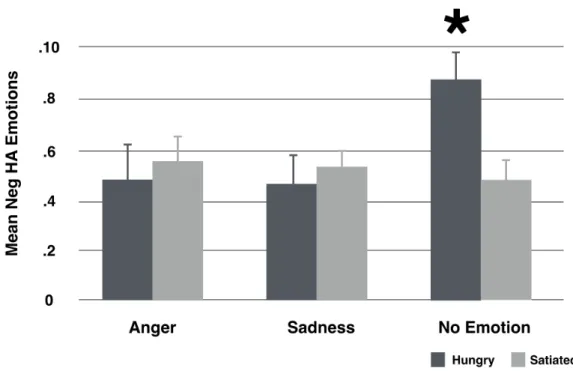
Figure 5 – Study 3 mean differences for negative, high arousal emotions ... 60
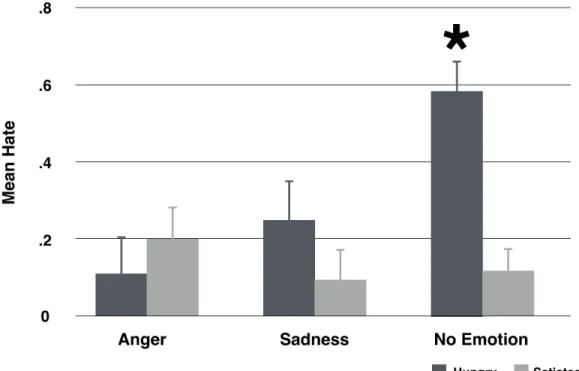
Figure 6 – Study 3 mean differences for hate ... 61
Figure 8 – Study 3 mean differences for stress ... 62
Figure 12 – Study 3 mean differences for experimenter as judgmental ... 63
CHAPTER ONE: THE NATURE OF FEELING HANGRY
“A hungry man is an angry one.” – Buchi Emecheta, 1994, p. 135
In 2015, the Oxford Dictionary added the word “hangry” to its entries, defined as “bad tempered or irritable as a result of hunger” (Hangry, 2015). The scientific literature agrees that “hanger” is real. Recent research shows that judges’ legal rulings are more severe prior to lunch than after(Danzinger, Levav, & Avnaim-Pesso, 2011), that low blood sugar induced by hunger can drive aggression towards one’s spouse (e.g., Bushman et al., 2014), and that hunger predicts impulsivity (Anderberg et al., 2015). Despite these preliminary findings, little work has tested the mechanisms underlying hunger’s impact on emotional experience, and more broadly, affect-based judgments and interpersonal behaviors.
One common assumption, both in folk and experimental psychology, is that hunger impairs self-regulation, thereby releasing the constraints that normally keep people from feeling unbridled emotions, making impulsive or harsh judgments, and aggressing against others (e.g., Bushman et al., 2014; DeWall, Deckman, Gailliot, & Bushman, 2011; DeWall, Pond, & Bushman, 2010). Much
research in social and health psychology is guided by the “regulation as muscle” analogy, where self-control can fail after too much exertion or depleted biological resources (Baumeister, 2003, 2014; Muraven & Baumeister, 2000; Vohs et al., 2014). Although self-regulation may be one route by which hunger impacts emotions, the psychological literature points to other yet unexplored mechanisms.
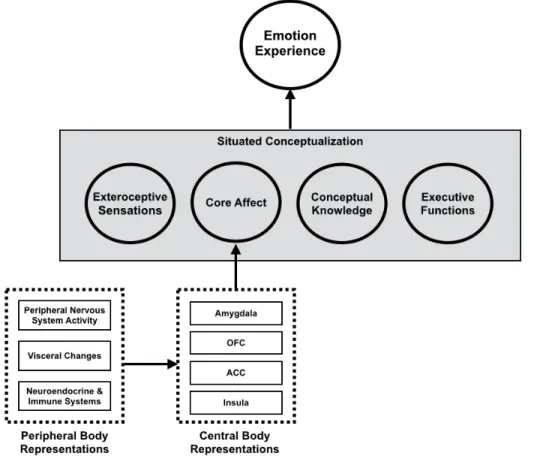
all mental states are constructed from more basic psychological components such as body-based affective representations, knowledge from prior experience and culture, and executive functions. Importantly, more recent constructionist views hypothesize that thoughts, feelings, and bodily sensations are ultimately rooted in the brain’s situated inferences and predictions about what an organism needs to maintain homeostasis in any given context (Barrett & Simmons, 2015; Chanes & Barrett, 2016). Thus, emotions are created when more basic pleasant-unpleasant and activated-deactivated affective representations from the body are made meaningful as instances of specific emotions (e.g., anger), depending on the context. This occurs when people use conceptual
knowledge about emotion categories to parse affective representations into categorical experiences. Key to this psychological constructionist view, affective representations from the body may arise from any number of causes, such as activation of the peripheral nervous system due to proximal environmental challenges (e.g., giving a public speech), but also due to less proximal causes such as hormone shifts, inflammation, or even hunger (see discussion in MacCormack & Lindquist, in press). For instance, assessment of the neurochemistry and neuroanatomy underlying hunger suggests that hunger induces unpleasant, highly arousing affective bodily changes. These bodily changes may, in the moment, push individuals to conceptualize their affective state in a manner that would be less likely when the person is satiated. However, according to a psychological constructionist view,
awareness of conceptualizing hunger as a specific emotion might also allow a person to regulate their emotions and behavior—a proposal that opposes traditional views of hunger as an overriding instinct that depletes regulatory resources.
In the present paper, I report three studies supporting a psychological constructionist account in which feeling “hangry” occurs when hunger is conceptualized in context as emotion (for example, but not limited to “anger”). I assess “hanger” as changes in the intensity of individuals’ self-reported emotional experiences and interpersonal judgments. Study 1 demonstrates that hunger increases the extent to which individuals experience an ambiguous stimulus as negative in a negative context. Study 2 replicates Study 1 and demonstrates the specificity of this effect, demonstrating that findings do not extend to positive, high arousal contexts. Finally, Study 3 extends these findings by
feelings of negative, high arousal emotions—but only when they are not aware of doing so. Study 3 furthermore provides preliminary evidence that when people are unaware of their conceptualizations, feeling hangry influences interpersonal perception. I conclude by discussing how these findings are consistent with not only psychological constructionist approaches to emotion, but also theories of affect misattribution and excitation transfer (Schachter & Singer, 1962; Schwarz & Clore, 1983; Zillman, 1971) and situated models of cognition (Barsalou, 2009; Loersch & Payne, 2011, 2014; Mesquita, Barrett, & Smith, 2010).
What is Hunger? Definitions and Neurobiology
In the psychological and neuroscience literature, “hunger” is variably defined as feeding behavior (i.e., the amount of food intake; e.g., de Castro & Elmore, 1988), as appetite or a perceived need for food (e.g., Friedman, Ulrich, & Mattes, 1999), as a physiological or neurobiological process (typically rooted in animal models; e.g., Anderberg et al., 2015; Dagher, 2009), or as a system of neural representations in the brain (e.g., Tataranni & Del Parigi, 2003). Despite differences in operationalization, hunger is at core defined as a complex biochemical interactions indicating when glucose levels dip in the body as well as the perceptual representation of the desire or need for food (Smith & Ferguson, 2008). In the present paper, I rely on this definition because it is consistent with the psychological constructionist view that mental states are derived from the situated perception of biochemical processes (Barrett, 2015; Barsalou, 2009; Lindquist, 2013; Wilson-Mendenhall, Barrett, Simmons, & Barsalou, 2011).
The biochemical changes that promote hunger are well-documented. Hunger’s major function is to maintain glucose levels for the purpose of allostasis. Allostasis is the active process by which the body sustains and re-establishes homeostasis, thus promoting an organism’s adaptation to the present situation. In contrast, homeostasis refers to the specific physiological processes that maintain life, such as body pH, hormone production, digestion, respiration, etc. (McEwen & Wingfield, 2007, 2010).
glucose to enter cells throughout the body and brain. When insulin levels drop, glucose slows down its entrance into cells, resulting in greater hunger (Pardal & Lopez-Barneo, 2002). The peptide hormone ghrelin is also secreted in the gastrointestinal tract when glucose levels fall; ghrelin triggers gastric wall contractions or “hunger pangs,” which are conveyed via the peripheral nervous system and represented by the brain as the sensation of a distended, empty, and sometimes growling
stomach (Cummings et al., 2001; Date et al., 2000; Gnanapavan et al., 2002; Kim et al., 2003; Kojima et al., 1999; Toshinai et al., 2001; Tschop et al., 2001).
In addition to ghrelin, the body releases a variety of other hormones in the glucose-depleted state. For example, cortisol which has often been called a “stress hormone,” is a glucocorticoid that is released when blood glucose is low, promoting the synthesis of new glucose (Baynes & Dominiczak, 2009). Besides cortisol, hormones such as catecholamines, glucagon, growth hormones, and other glucocorticoids are released to help raise blood glucose concentration. These hormones are associated with a variety of unpleasant somatic sensations such as shakiness, sweating, dizziness, heart palpitations, weakness, as well as nausea, confusion, and even visual hallucinations in extreme circumstances (Cryer, 1999; Marks & Rose, 1981). These subjective experiences of hunger are the product of autonomic and visceromotor activation driven by the hormonal cascades described above (Christensen, Alberti & Brandsborg, 1975; Corrall, Frier, Davidson, Hopkins & French, 1983; Heller, Herbert, Macdonald & Tattersall, 1987).
Subjective experiences of hunger are likely unpleasant and high arousal in nature because they motivate an organism to seek out food and to be less risk-averse in the face of potential starvation. For example, fasting wood frog tadpoles (Lithobates sylvaticus) are more active and less risk-averse when they hear alarm calls from other frogs than satiated wood frog tadpoles are (Carlson, Newman, & Langkilde, 2015). Similarly, when compared to satiated fish, food-deprived fish will forage for food further from home, even when in predator-laden waters (Damsgird & Dill, 1998; Godin & Crossman, 1994). Furthermore, schooling fish exhibit reduced group cohesion when hungry but maintain group cohesion when satiated, providing initial evidence that hunger impacts social behaviors in other species besides humans (Sogard & Olla, 1997).
represented in the brain. Based on research in rats, it was assumed that the neural representation of hunger was almost exclusively associated with function of the lateral and vertromedial hypothalamus, both which were associated with feeding and food avoidance behaviors. They were hence seen as the “seat of hunger” and the “seat of satiety” respectively (Anand & Brobeck, 1951; Hetherington & Ransom, 1940; Hoebel & Teitalbaum, 1962; Miller, 1957; Myers & McCaleb, 1980; Stellar, 1954).
Subsequent research confirmed that the hypothalamus is central to hunger and satiation; it is one of the few regions in the brain containing receptors for hunger-relevant peptides such as leptin, insulin, ghrelin, and cholecystokinin (Plata-Salaman, 1991; Woods et al., 1998; Schwartz et al., 2000; Leibowitz & Wortley, 2004). However, several other regions besides the hypothalamus are now understood to help represent hunger vs. satiation in the human brain—such as the thalamus, insula, anterior cingulate, and orbitofrontal cortices (Del Parigi et al., 2002; Porubska et al., 2006; Tatarrani et al., 1999; Tataranni & Del Parigi, 2003; Vandenbergh et al., 2005; for discussions, see Gautier et al., 2000; Gautier et al., 2001; Killgore & Yurgelun-Todd, 2005, 2006). Critically, many of these structures also help represent bodily arousal and pleasant-unpleasant affective states more generally (Lindquist et al., 2016).
For instance, meta-analyses demonstrate that the hypothalamus, thalamus, insula, anterior cingulate cortex, and orbitofrontal cortex show consistent increases in activation when individuals are experiencing unpleasant and pleasant affect as well as specific discrete emotions in contexts
unrelated to hunger (Lindquist et al., 2012; Lindquist et al., 2016; Kober et al., 2008; Vytal & Hamann, 2010; Wager et al., 2015). Other anatomical analyses suggest that together these sub-cortical and paralimbic regions are involved in the affective predictions that engage visceromotor control and represent on-going bodily changes in the service of allostasis (Barrett & Simmons, 2015; Chanes & Barrett, 2016). Taken together, these neurobiological findings are consistent with the idea that hunger itself induces affective changes as part of allostasis, opening the possibility that hunger and emotions may be less distinct than proposed by previous theories (e.g., Aunger & Curtis, 2013; Charnov, 1976; Panksepp, 1998; Woods, Schwartz, Baskin, & Seeley, 2000).
which can be conceptualized as either hunger or emotion depending on the context and where an individual’s attention is directed. The psychological constructionist view thus predicts that how hunger-induced affect is conceptualized in context will alter the subsequent emotions and behaviors that occur when the individual is still hungry.
Hunger, Emotion, and Behavior
There is growing interest in hunger as a neurobiological state (e.g., Dagher, 2009; Drazen & Woods, 2003) and in hunger management and eating behaviors (e.g., Batra et al., 2013; Blundell et al., 2010). However, only a small body of research has examined the psychological consequences of hunger: how hunger is related to emotions, perceptions, and behaviors1. It is typically assumed in introductory psychology textbooks (e.g., Bernstein, 2015; Myers & DeWall, 2015; Nairne, 2014; Reeve, 2015; Weiten, 2013) and numerous psychological theories (e.g., Charnov, 1976; Panksepp, 1998; Woods et al., 2000) that hunger is a “drive state” distinct from emotions. In this sense, hunger may trigger specific emotions or alterations in behaviors, but is fundamentally unique in kind from psychological states. This assumption can be seen in the existing literature, where it is assumed that hunger leads to regulatory depletion, which then mediates the effects of hunger on emotions (e.g., anger) and behaviors such as aggression and decision-making (Bushman et al., 2014; DeWall et al., 2011). However, this is the only pathway proposed to exist between hunger and emotion in the existing literature.
To date, there is scant evidence directly assessing people’s self-reported emotions when hungry. Consistent with the shared neurobiology between hunger and affect, there are a few studies that have specifically measured mood-related changes (not specific to any one emotion); these studies find that hunger tends to increase feelings of unpleasantness and high arousal. For example, one experiment compared self-reports of “hedonic tone” and “energetic arousal” in diabetic vs. non-diabetic individuals during induced hypoglycemia (low blood sugar) and found that both non-diabetics and diabetics reported feeling more tense, stressed, tired and less energetic than their
1Although there is little work on hunger’s impact on emotion, research that investigates the role of
hypoglycemic counterparts (Hepburn, Deary, Munoz, & Frier, 1994). Taylor and Rachman (1988) found that for subjects with borderline hypoglycemia, cognitive performance deteriorated and
negative mood increased as blood glucose levels fell. Similarly, experimentally-induced hypoglycemia in Type 1 diabetics led to significant increases in negative mood, decreases in positive mood, and higher arousal ratings of emotional images. However, hypoglycemia did not impact individuals’ ratings of the valence or dominance of the images (Hermanns, Kubiak, Kulzer, & Haak, 2003). Two other studies found that healthy individuals reported nervousness or anxiety during a glucose depleted state (Hepburn et al., 1992; Deary, Hepburn, MacLeod, & Frier, 1993). In contrast, glucose levels that are too high may also negatively impact mood, at least in individuals with Type 1 diabetes: by
experimentally inducing elevated glucose levels, individuals with diabetes reported feeling more tense and angry compared to diabetics at a typical level of glucose (Hermanns et al., 2007).
If studies measure “emotional” outcomes of hunger, most measure aggression rather than subjective emotion reports. These studies assume that aggression is the automatic output of emotions such as anger, frustration, or irritability. This assumption is consistent with basic emotion hypotheses (e.g., Ekman & Cordaro, 2011), but there is, in reality, little empirical support for the idea that specific emotions directly cause specific behaviors (see DeWall, Baumeister, Chester, &
Bushman, 2016). Nonetheless, there remains a strong belief that anger and aggression are causally linked, especially in the hunger literature.
In a more recent study, Bushman and colleagues (2014) tracked glucose levels in 107 married couples both before breakfast and before bedtime for twenty-one days. Participants were given a voodoo doll and instructed that the doll represented their spouse. At the end of the day, participants were instructed to stick the doll with anywhere from 0 to 51 pins to represent the angriest they felt with their spouse that day. Participants then recorded how many pins were used, which served as a behavioral index for how angry individuals felt. After twenty-one consecutive days of using the voodoo dolls, couples returned to the laboratory and performed a computer game in which they putatively competed against their spouse (in actuality, a computerized confederate). After participants lost the game to their “spouse” by a single point, the participant was then invited to blast their spouse with an extremely loud, unpleasant noise—where greater intensity and duration of the noise blast served as a measure of aggressive behavior. Results demonstrated that lower blood glucose across the twenty-one days of measurement significantly predicted the number of pins participants stuck into the voodoo doll and also predicted greater intensity and duration of the aggressive noise blast.
Almost all studies comparing glucose with aggression are correlational, but a small body of work provides preliminary support for a causal relation. In one study, researchers administered a glucose drink vs. a placebo drink to 6-year-old children at the end of the school day and found that the children who drank the glucose beverage were less likely to display irritable, frustrated behaviors during a difficult computer game compared with the children who drank the placebo (Benton, Brett, & Brain, 1987). A double-blind experiment with young adults replicated these results by showing that drinking a glucose-containing beverage significantly decreased reports of irritability and tension (Benton & Owens, 1993). More recently, Denson and colleagues (2011) found that adults who drank a glucose-containing beverage were less likely to aggress against others than those who drank a placebo.
impulsivity should not transfer to other domains of delayed gratification and decision-making (see Loewenstein, 1996, 2000 discussions of visceral influences). A majority of research has thus focused on hunger and impulsivity in the context of food and eating behaviors, such a binge eating (e.g., Nederkoorn et al., 2009; for review, see Schag et al., 2013) and healthy vs. unhealthy food choices (Read & van Leeuwen, 1998). However, contrary to Loewenstein’s original hypotheses, hungry individuals also make impulsive choices in other domains beyond eating behaviors. For example, fasted individuals with higher circulating ghrelin and diminished leptin made riskier lottery decisions in the laboratory compared to when those same individuals were satiated (Symmonds et al., 2010).
Taking these findings as a whole, hunger appears to induce affective changes and to correlate with unpleasant, high arousal self-reported emotions such as anger, frustration, tension, anxiety, and nervousness. Additionally, depleted glucose is causally linked with increased aggressive and impulsive behaviors. Despite these preliminary findings, the precise mechanisms underlying the link between hunger, emotional experiences, and behaviors remain unclear. I next discuss two possible mechanisms.
Mechanisms of the Hunger-Emotion Link The Regulatory Depletion Hypothesis
The majority of the existing literature linking hunger to emotion and behaviors such as aggression and impulsivity assumes that hunger depletes self-control, which in turn causes
However, there are several problems with the regulatory depletion hypothesis that limit its ability to serve as the only mechanism explaining hunger’s impact on emotions and behavior. First, not all findings are consistent with the idea that hunger depletes regulatory resources. For example, more recent evidence finds that hunger actually facilitates strategic decision-making (on the Iowa Gambling Task) and that in a delayed discounting task, hungry individuals were able to put off momentary gratification for bigger, long term rewards (de Ridder et al., 2014).
Second, the regulatory-depletion hypothesis is grounded in Baumeister and colleagues’ resource model of self-control (Baumeister, 2003, 2014; Muraven & Baumeister, 2000; Vohs et al., 2014), which has been critiqued in recent years (Carter & McCullough, 2014; Carter et al., 2015; Dvorak & Simons, 2009; Job et al., 2013; Kurzban, 2010; Miles et al., 2016; Molden et al., 2012; Niven et al., 2013; Vadillo et al., 2016) following failed replications and mixed findings (see review in Inzlicht et al., 2014). According to the resource model of self-control, exerting self-control is like a muscle that can be exercised but also depleted. Using self-control thus leads to a refractory period during which self-control is impossible. Seeking to ground the resource model within biological
constraints, Baumeister and others suggested that glucose may become depleted when self-control is exerted, leading to reduced biological resources for regulation (Gailliot et al., 2007; Gailliot &
Baumeister, 2007). However, this underlying biological premise is unfounded, as the brain’s glucose supply does not depend on the type of short term glucose fluctuations that could be caused by momentary exertion, but rather on longer term glucose stores in the liver (Coker & Kjaer, 2005; Peters et al., 2004).
reverse ego depletion (Tice, Baumeister, Shmueli, & Muraven, 2007). Additionally, individual difference findings suggest that depletion is more in the mind of the perceiver rather than a fixed biological response (Job, Dweck, & Walton, 2010; Job et al., 2013): for example, task fatigue can actually promote greater effortful self-control rather than deplete it—at least in individuals who are highly motivated to succeed (Wright, Patrick, Thomas, & Barreto, 2013).
Finally, to my knowledge, no studies linking hunger to emotion and aggression explicitly test differences in self-regulation between hungry vs. satiated individuals. This gap in the literature is a serious issue for clarifying whether hungry individuals are more likely to feel angry and then act on those feelings due to regulatory depletion. Instead, I forward an alternate mechanism: that individuals conceptualize the affect induced by hunger as emotions based on the context. This alternate
mechanism, that hunger can be conceptualized as emotional experiences, suggests a completely different model that is grounded in psychological constructionist theory.
A Psychological Constructionist Hypothesis
In contrast to the regulatory depletion hypothesis, I propose an alternate hypothesis in which individuals construct emotion out of the affective states induced by hunger. This hypothesis is inspired by a psychological constructionist approach to the mind (Barrett, in press; Clore & Ortony, 2013; Cunningham et al. 2013; Hackel et al., in press; Lindquist, 2013; Russell, 2003). Psychological constructionism hypothesizes that all mental states (including emotions, body states, thoughts, etc.) occur when affective sensations from the body are made meaningful in context. In this view, hunger and specific emotions such as anger are not different in essence from one another, but both involve the same underlying mechanisms. The first shared mechanism is called core affect.
unpleasant (valence) and activated vs. deactivated (arousal) an individual feels at any given moment (Barrett & Bliss-Moreau, 2009; Barrett & Russell, 2015; Lindquist, 2013; Russell, 2003). Arousal and valence, as properties of core affect, are widely considered dimensions of emotions and of conscious experiences more generally (Barrett, 2006; Barrett & Russell, 1998; Cacioppo et al. 2000; Duffy, 1957; Larsen & Diener, 1992; Mauss & Robinson, 2009; Reisenzein, 1994; Russell, 2003; Tellegen et al., 1994; Thayer, 1967, 1989; Watson & Tellegen, 1985; Wundt, 1897).
Through the ongoing generation of core affect, organisms can infer whether objects and situations are beneficial vs. harmful and whether they require action vs. not (Barrett & Bar, 2009; Barrett & Bliss-Moreau, 2009; Cabanac, 2002; Lindquist, 2013). The idea that core affect allows for basic evaluations of the world is consistent with other theories, such as Nauta’s idea that visceral representations can inform and guide decisions (1971), Damasio’s somatic marker hypothesis
(Damasio, 1999; 2004), affect-as-information theory (Clore et al., 2001; Schwarz & Clore, 1983, 1988; Storbeck & Clore, 2008), and embodied predictive coding models (Barrett & Simmons, 2015; Seth, 2013, 2015; Seth, Suzuki, & Critchley, 2012).
Thus, a psychological constructionist hypothesis suggests that hunger does not necessarily impact our emotions and reactions to the world through regulatory depletion alone (as suggested by Bushman and other traditional models), but through core affect. However, the psychological
constructionist approach also maintains that a shift in core affect is insufficient to experience hunger or an emotion—what differentiates the two is how a person makes meaning of his or her core affect in context.
Besides core affect, conceptual knowledge is also a necessary component for the
psychological construction of any mental state. Conceptual knowledge refers to a person’s knowledge about the world; it is at once both episodic and semantic because it is acquired from personal
experience and social observation but also from language and cultural norms (Lindquist,
MacCormack, & Shablack, 2015; Vigliocco et al., 2009; Wilson-Mendenhall et al., 2011). Conceptual knowledge is thought to exist as a population of instances of prior experiences rather than a set of prototypes for categories (Barrett, 2012; Barrett, Wilson-Mendenhall, & Barsalou, 2015). As such, each instance can be thought of as a stored “snapshot” of a prior experience that includes interoceptive representations and exteroceptive representations of what was happening in that situation (Barsalou, 2009; Borghi & Binkofski, 2014; Vigliocco et al., 2009). Thus, conceptual
knowledge about emotion categories or body state categories such as hunger is ultimately rooted in a context.
conceptualization is thus a probabilistic process, determining which “meaning” is more probable given the present situation. A present situation that shares statistical similarities with a prior situation makes related information more accessible and can be used to inform future predictions, promoting learning and adaptation. In social cognition, this increased accessibility is called “priming” (see Barsalou, 2016 for discussion of priming in relation to situated conceptualization).
Situated inferences may be especially important for making meaning of core affect, which likely reaches the brain as relatively ambiguous representations of the body’s state due to the noisy, unmyelinated pathways from the peripheral nervous system to the brain. The brain must therefore use prior experiences and the context to help disambiguate the meaning of afferent information in the moment (Barrett & Simmons, 2015). Depending on the context and the allocation of attention in any given instance, core affect may thus be experienced as a mood (e.g., feeling generally unpleasant and high arousal), a property of an external stimulus (e.g., evaluating a person as unpleasant), a symptom (e.g., feeling nauseas), a body state (e.g., feeling hungry), or an emotion (e.g., feeling angry).
More generally, what individuals know about the body, such as how the body feels when satiated, and rested vs. hungry and tired, or how the body feels during different illnesses, may be relevant and important conceptual knowledge that helps the brain determine when afferent affective information should be categorized as an emotion (“anger”) vs. a body state (“hunger”). In other words, feeling shaky, sweaty, and nauseas could be concomitants of several different states: they could be symptoms of “body states” such as hunger, food poisoning, caffeine overdose, or influenza. They could also be features of “emotional” states such as anger and anxiety. Individuals with alexithymia, characterized as a deficit in knowledge about emotions, tend to experience their core affect as somatic symptoms (see Lindquist & Barrett, 2008a) rather than moods or emotions. It is possible that such individuals tend to over-conceptualize core affect as body states and under-conceptualize it as moods or emotions. By contrast, individuals with anxiety and depression may over-conceptualize core affect as moods and emotions (e.g., anxiety, sadness) and under-conceptualize it as body states (e.g., the result of inflammation due to disorder).
per se, but from making meaning of hunger-induced core affect as emotional in context. Given the probabilistic predictions of situated conceptualization, someone who is hungry (in an unpleasant, high arousal state) may be more likely to use these feelings of hunger to categorize core affect as anger or stress than hunger if he or she is in a frustrating situation. As such, hunger should not always result in feeling “hangry”—but only in situations where the individual is both hungry and the situation affords certain emotional situated conceptualizations. Additionally, as conscious emotion knowledge may help implicitly regulate resultant emotion states (e.g., Lieberman, Inagaki, Tabibnia, & Crockett, 2011), individuals may be more likely to feel “hangry” when they are not consciously focused on their internal emotional state but are instead focused on external circumstances. The present studies serve as an initial step towards addressing whether people conceptualize the negative feelings of hunger as feelings of emotions such as anger and stress when they are not aware they are doing so. The Present Studies
CHAPTER TWO: HUNGER SHIFTS AFFECTIVE PERCEPTIONS IN CONTEXT
Study 1 sought to first demonstrate that hunger would increase the extent to which individuals experienced an ambiguous stimulus as negative in a negative context. To do so, I used the Affect Misattribution Procedure (Payne et al., 2005; Payne, Hall, Cameron, & Bishara, 2010). This task is commonly employed as a measure of implicit bias in the context of social judgments (e.g., race, politics) but more generally measures the implicit process whereby an individual perceives the affect induced by one source as caused by another. I hypothesized that participants’ hunger would interact with the negative context to further bias their affective ratings of ambiguous stimuli.
To test this hypothesis, participants first saw a negative, highly arousing or neutral image followed by an ambiguous Chinese pictograph. We operationalized this first image as the affective “context” in which the ambiguous Chinese pictograph was then experienced. Participants’ task was to ignore the first image and use their “gut” response to judge whether the pictograph was negative or positive in meaning. After the Affect Misattribution Procedure, all participants reported on how hungry, fatigued, and thirsty they felt during the task. I predicted that hunger (but not fatigue and thirst) would interact with context type, such that those individuals who were hungry would be more likely to judge Chinese pictographs as negative when seeing it in a negative, highly arousing context.
Study 1 Method Participants
In Study 1, 250 Mechanical Turk workers from the United States participated in the study for monetary compensation. As the task uses Chinese pictographs for ambiguous stimuli, four
Procedure
I used a mixed model design, where self-reported hunger was the continuous between-subjects factor and context (negative, high arousal vs. neutral) was the within-between-subjects factor. After consenting to participate in the study, participants were oriented to the computer-based Affect Misattribution Procedure via Qualtrics. Participants were instructed that they would see affective images before each Chinese pictograph, and that they should try their best to ignore the affective image and instead focus on their intuitive judgment of the pictograph. All participants completed a practice block of eight trials with four neutral and four negative, high arousal photos. For each trial, participants saw a fixation cross on the center of the screen for 125 ms, then a neutral or negative photo for 75 ms, followed by a grey noise mask for 125 ms and the randomly-assigned pictograph for 100 ms. Participants then saw another fixation cross prior to rating how positive vs. negative they found the pictograph to be. All ratings were provided on a likert scale where 1= Extremely Positive, 4= Neither Positive nor Negative, and 7= Extremely Negative.
The task consisted of 40 target trials total, not including the eight practice trials. After the practice block, participants completed two counterbalanced blocks: a neutral image trial block or a negative, high arousal image trial block, with 20 target images each. Following the rating task, participants rated their engagement and attention during the task, followed by demographics and retrospective likert ratings of hunger, fatigue, and thirst as felt during the task. Measures are described in more detail below.
Materials
Affective images.I used a total of 24 neutral and 24 negative images selected from the International Affective Picture System to serve as the affective contexts (Lang, Bradley, & Cuthbert, 1997). Based on the IAPS norms, I selected images that fell between 1-4 for negative images and 4-6 for neutral images. Thus, negative images had a mean valence of 3.17 and mean arousal of 5.37; neutral images had a mean valence of 4.78 and mean arousal of 2.99. It was impossible to match negative and neutral images on arousal as negative images tend to be higher arousal on average in the IAPS set.
validated pictograph set (Payne et al., 2010) and randomly assigned for pairing with the affective primes. Participants could rate each pictograph on a bipolar likert scale from 1= Extremely Positive to 4= Neither Positive nor Negative to 7= Extremely Negative. Participants’ trial-by-trial ratings of the ambiguous pictograph targets were our dependent measures.
Self-reported engagement. All participants responded to six questions assessing how engaged they were in the task, how easy it was to focus and stay on task, and how successful they thought they were at ignoring the affective primes using a likert scale from 1 to 5 (1= Strongly Disagree, 5= Strongly Agree). A mean score was created from these six items (Mengage= 4.42, SDengage= .53, range from 2.83 to 5.00, α= .75).
Self-reported body states.Participants reported on their degree of hunger, thirst, and fatigue. For example, participants responded to “How hungry were you during the rating task?” on a likert scale from 1 to 6 (1= Not At All Hungry, 4= Somewhat Hungry, 6= Extremely Hungry). This was our measure of participants’ hunger; participants’ self-reported hunger ranged from 1 to 5 (M= 2.15 or “Mostly Full”), with no participants reporting feeling “Extremely Hungry”. Participants also reported when they last ate something (a small snack, full meal, or protein shake), how long they can usually go between meals with no snacks, and how typical today’s eating had been compared to their usual eating habits. Participants further rated “How thirsty were you during the rating task?” on a likert scale from 1 to 5 (1= Not at all Thirsty; 3= Somewhat Thirsty; 5= Extremely Thirsty) and “How sleepy were you during the rating task?” (1= Extremely Wide Awake, 3= A Little Sleepy, 5= Extremely Sleepy) as potential bodily covariates that might influence participants’ pictograph ratings. Thirst and sleep were controls to demonstrate the specificity of our effects.
Analyses
Model 1: Random effects ANOVA with no predictors. To first determine the degree of dependence in the data with the pictograph ratings (denoted as “Ratings” in models) as the outcome, I fit a random effects ANOVA with no predictors.
Model 2: Random intercepts model. After examining the degree of dependency between and within participants’ pictograph ratings, I used a random intercepts model to examine the cross-level interaction between hunger at Level 2 x condition at Level 1. I also examined interactions between condition and both thirst and sleepiness to determine whether the effect was specific to hunger or any body state.
Study 1 Results
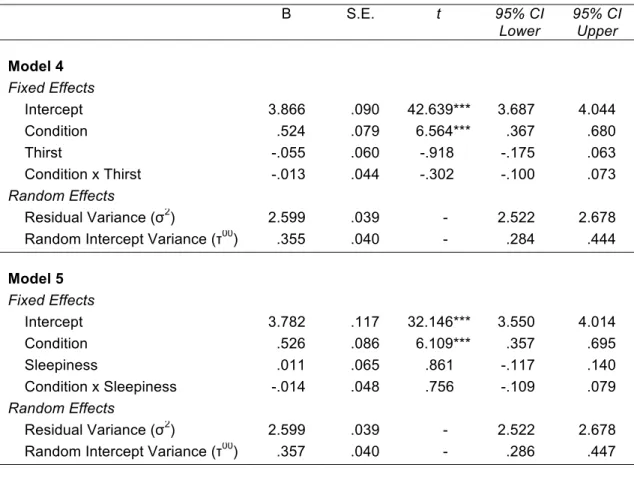
Model 1: Random effects ANOVA with no predictors. The only fixed effect estimate in Model 1 is Υ"" – that is, the model intercept or grand mean. Υ"" = 4.05, meaning that the overall grand mean estimate of pictograph ratings for all possible individualsis 4.05 on the valence likert scale (see Table 2). In other words, as predicted, the estimated population intercept for rating the all pictographs is neither positive nor negative on the valence likert scale. Model 1 also revealed that the within-subjects variance of participants’ pictograph ratings is 2.59 units, while the between-subjects variance of individuals’ effect on pictograph ratingsis .36 units.
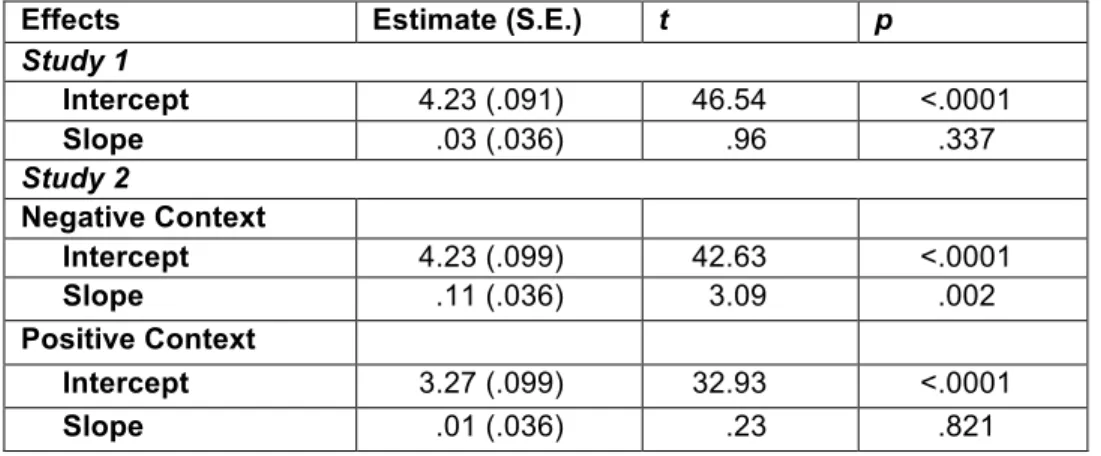
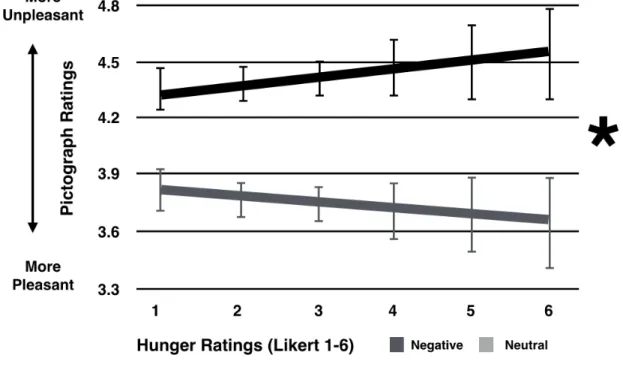
Figure 2).
Notably, individuals’ self-reported mean engagement was negatively correlated with Hunger (r= -.211, p=. 002) such that the hungrier individuals were, the more likely they were to report feeling like they struggled to concentrate on the task. On the one hand, this may be seen as a confound. On the other hand, it might be seen as part of the effect, insofar as hunger impacts perceptions of struggle. Regardless, when adding in mean engagement as a covariate (Model 3 in Table 2), the results from Model 2 still hold and there is no significant main effect of mean engagement nor a mean engagement x condition interaction on participants’ pictograph ratings.
Finally, to ensure the specificity of effects, I performed two follow-up models with thirst and sleepiness as predictors instead of hunger. As in Model 2, there was again a significant main effect of condition in both follow-up models, whereby participants rated pictographs more negatively in the context of a negative image. However, there were no main effects of thirst nor sleepiness, nor a condition x thirst or condition x sleepiness interaction (see Table 3). Our findings were hunger-specific and not a product of participants experiencing any body state.
Study 1 Discussion
In Study 1, I found hunger-specific effects whereby the hungrier an individual self-reported feeling, the more likely she or he was to rate ambiguous pictographs as negative in the presence of a negative, but not neutral context. This suggests that the feelings engendered by hunger vs. satiation are likely to be conceptualized as evidence that stimuli are negative when the context elicits such conceptualizations.
experience and the latter is referred to as “self-focused” experience (Lambie & Marcel, 2002; Lindquist & Barrett, 2008b). Participants engaged in world-focused experience because they were asked to judge the affective qualities of the pictograph rather than how the pictograph made them feel.
CHAPTER THREE: HUNGER SHIFTS AFFECTIVE PERCEPTIONS IN A NEGATIVE CONTEXT
Study 2 built upon Study 1 to rule out whether hunger was likely to be conceptualized as emotion in any high arousal context or whether this effect was specific to negative, high arousal contexts. Study 2 thus replicated Study 1 in every way except it included an additional image condition. Besides the negative, high arousal and neutral trial conditions where participants saw negative, high arousal and neutral affective images prior to rating the ambiguous Chinese pictographs, participants also saw positive, high arousal affective images that were arousal-matched with the negative images prior to rating the pictographs.
I predicted that the effects of hunger on pictograph ratings would be specific to the negative image trials, but not the positive or neutral image trials because people tend to report unpleasant, high arousal states with hunger: In the literature previously reviewed, no study reported individuals feeling positive emotions. Additionally, I predicted that hunger (but not fatigue and thirst) would again interact with picture type, such that those individuals who were hungry would be even more likely to judge Chinese pictographs as negative after experiencing it in a negative context, but not after experiencing it in a positive or neutral context.
Study 2 Method Participants
Procedure
As in Study 1, I used a mixed model design, where self-reported hunger was the continuous between-subjects factor and context (neutral vs. negative, high arousal vs. positive, high arousal) was the within-subjects factor. Study 2’s procedure identically replicated Study 1’s procedure, with the addition of the positive, high arousal images. After a practice block, participants completed three counterbalanced blocks: a negative, high arousal image trial block, a neutral image trial block, and a positive, high arousal image trial block. Each block had 20 target images.
Materials
I used a total of 24 negative, 24 neutral, and 24 positive images selected from the
International Affective Picture System to serve as our affective contexts with 20 target images each used in experimental blocks and 4 practice trials each that were intermixed in the practice block. In the IAPS, negative images range from 1-4, neutral images from 4-6, and positive images from 6-9. Based on the IAPS norms, I selected images that fell in the middle of each range for the negative, neutral, and positive images. These excluded highly graphic positive or negative images, which tend to be higher in positive and negative valence.
Thus, the chosen negative images ranged from 2.5-3.5 with a mean valence of 3.17 and mean arousal of 5.37, neutral images ranged from 4.5-5.5 with a mean valenceof 4.78 and mean arousal of 2.99, and positive images ranged from 6.5-7.5 with a mean valence of 6.93 and mean arousal of 5.29. Negative and positive images did not significantly differ in terms of arousal [t(38)=.52, p=.602], but negative [t(38)=12.24, p<.0001] and positives images [t(38)=11.96, p<.0001] each differed from neutral images on arousal.
Analyses
relevant variables and demographics are provided in Table 1. For the primary analyses (Hunger x Condition on pictograph ratings), I ran two models as part of standard model-building practices in multilevel modeling.
Model 1: Random effects ANOVA with no predictors. To first determine the degree of dependence in the data with the pictograph ratings (written as “Ratings” in models) as the outcome, I fit a random effects ANOVA with no predictors.
Model 2: Random intercepts model. After examining the degree of dependency between and within participants’ pictograph ratings, I used a random intercepts model to examine the cross-level interaction between hunger at Level 2 x dummy-coded conditions at Level 1. Neutral and its interaction with hunger were used as the reference category. I also examined interactions between condition and both thirst and sleepiness to determine whether the effect was specific to hunger or any body state.
Study 2 Results
Model 1: Random effects ANOVA with no predictors. The only fixed effect estimate in Model 1 is Υ"" – that is, the model intercept or grand mean. Υ"" = 3.80, meaning that the overall grand mean estimate of pictograph ratings for all possible individualsis 3.80 on the valence likert scale (see Table 3). In other words, as predicted, the estimated population intercept for rating the all pictographs is neither positive nor negative on the valence likert scale. Model 1 also revealed that the within-subjects variance of participants’ pictograph ratings is 3.14 units, while the between-subjects variance of individuals’ effect on pictograph ratingsis .22 units.
Model 2: Random intercepts model. In Model 2, the intercept was 3.56, suggesting that participants rated the pictographs as neutral across all trials. As predicted, there was a significant main effect of Negative Condition (B= .67, p<.0001), such that there was an estimated .67 unit increase in participants’ pictograph ratings on negative image trials compared to neutral image trials. However, there was also a significant main effect of Positive Condition (B= -.29, p<.0001), such that there was an estimated .29 unit decrease in participants’ pictograph ratings on positive image trials (e.g., pictographs rated more pleasant) compared to neutral image trials.
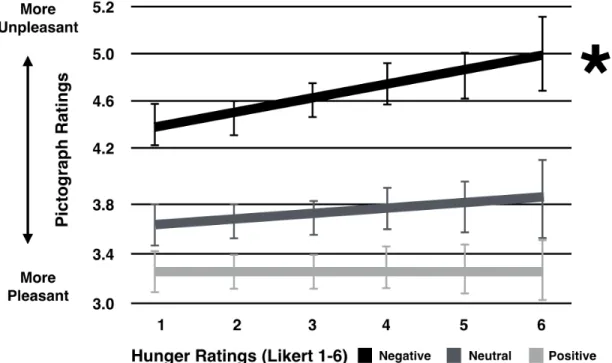
Condition x Hunger interaction (B= .06, p= .031), such that the hungrier an individual reported feeling, the more negatively that individual rated the ambiguous pictographs in the context of negative images. There was no significant interaction for Positive Condition x Hunger (B= -.04, p= .186). As in Study 1, there was no significant main effect for Hunger (B= .05, p= .165), suggesting that feeling hungry does not make pictograph ratings more negative in general. Consistent with this interpretation, a follow-up probe of the simple slopes found that negative pictograph ratings were greater for hungry individuals in the context of negative images, but not positive or neutral images (see Figure 3; Table 6).
Notably, as in Study 1, individuals’ self-reported mean engagement was again negatively correlated with Hunger (r= -.211, p=. 002) such that the hungrier individuals were, the more likely they were to report feeling like they struggled to concentrate on the task. However, when adding in mean engagement as a covariate (Model 3 in Table 4), the results from Model 2 still held: there was no significant main effect of mean engagement nor a mean engagement x condition interaction on participants’ pictograph ratings.
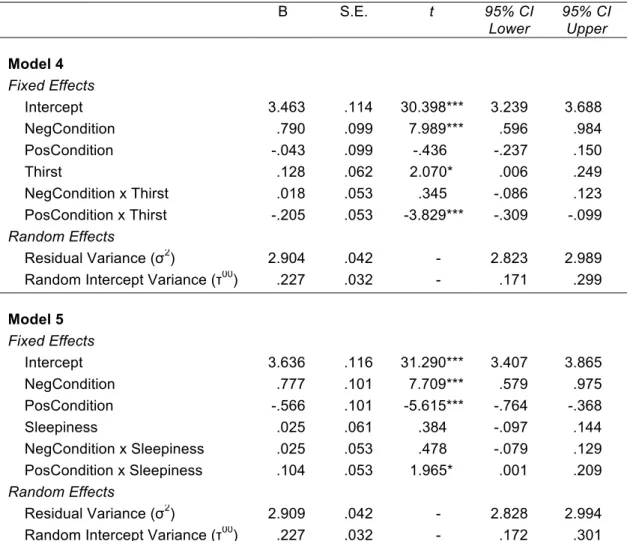
Finally, to ensure the specificity of effects, I performed two follow-up models with thirst and sleepiness as predictors instead of hunger (see Table 5). As in Model 2, there was again a significant main effect of condition in both follow-up models, whereby participants rated pictographs more negatively in the context of a negative image or more positively in the context of a positive image. There was a significant main effect of thirst on pictographs being rated more negatively (B=.13, p=.04) but no significant main effect of sleepiness (B=.02, p=.702). Additionally, there were no significant interactions for Negative Condition x Thirst or Negative Condition x Sleepy, as in Study 1.
However, adding in the positive stimuli, there was a significant interaction for Positive
Study 2 Discussion
CHAPTER FOUR: FEELING HANGRY AS A SITUATED CONCEPTUALIZATION
Studies 1 and 2 demonstrate that the feelings engendered by hunger can shape how negatively individuals perceive stimuli to be, but only when the context calls for such
conceptualizations. Study 3 thus builds upon Studies 1-2 in three ways. First, I explicitly manipulated hunger vs. satiation to allow for causal inference. Consistent with Studies 1 and 2, I hypothesized that hunger will induce negative, high arousal feelings that can become conceptualized as emotion in a negative context (in this study, a frustrating situation). Second, I examined if hunger depletes
individuals’ willpower, as a test of the regulatory depletion hypothesis. Third, I manipulated individuals’ attentional focus on emotional vs. nonemotional information as a way to direct their situated
conceptualizations.
Given the relatively automatic, unconscious nature of situated conceptualizations (Barrett, Ochsner, & Gross, 2007), it may be that individuals only conceptualize their hunger as emotion when they are not explicitly focused on the emotional nature of their internal feelings. Becoming aware of emotional situated conceptualizations could instead alter the situated conceptualization process, such that individuals have the opportunity to implicitly regulate their states. That is, becoming aware that one is feeling “hangry” because they are conceptualizing their hunger as anger could serve to reduce the intensity of hangry feelings, effectively halting the automatic situated conceptualization process.
Thus, I predicted that whether participants make meaning of their core affective state as emotion or not depends on whether their attention is specifically drawn to emotion conceptualizations (e.g., self-focused awareness) or drawn to the current context (e.g., world-focused awareness). Study 3 Method
Participants
Procedure
Upon signing up for the experiment, participants were prescreened so that any individuals with diabetes, an eating disorder, or a mood disorder were excluded from the study. Additionally, individuals unwilling or unable to change their normal eating schedule prior to lab arrival were excluded. After prescreening, participants were randomly assigned to a 2 (Body State: hungry vs. satiated) x 3 (Attentional Focus: anger vs. sadness vs. no emotion) between-subjects design.
Participants in the hunger condition fasted for five or more hours prior to participation and participants in the satiated condition ate a full meal or large snack less than one hour prior to participation. As a cover story, participants were told that the study was about “visual performance” and that they needed to fast vs. eat prior to arrival so that we could control for the impact of glucose on visual performance.
Fasting manipulation check.Upon arrival, participants completed informed consent and a “Blood Glucose Questionnaire” which served as our control to ensure that participants had actually fasted or eaten as instructed. The questionnaire consisted of three items indexing when the participant last ate or drank something other than water (7-point likert scale, 1=Less than one hour ago, 7=More than six hours ago), how hungry the participant felt (7-point likert scale, 1=Not at all hungry, 7= Extremely hungry), and what type of meal they had last eaten (a full meal, moderate snack, small snack, or caloric beverage such as a protein shake, coffee, juice, soda, etc.). After completing the questionnaire, the experimenter checked that the assigned hungry vs. satiated state condition had been met. Participants in the hunger condition who had eaten less than 5 hours prior to arrival or participants in the satiation condition who had eaten more than 1 hour prior to arrival and had not eaten a full meal or moderate snack were rescheduled and re-instructed according to their assigned condition.
Baseline measures of affect.Before beginning the session, all participants completed baseline measures of affect. First, participants received a standard affect grid where they marked their current feelings of valence and arousal; afterwards, they also completed an open-ended feelings report where they were instructed to provide a detailed summary of their current feelings.
participants completed a tedious Mental Rotation task that consisted of geometric shapes taken from Shepard and Metzler (1971). As per Williams & DeSteno, 2008, this task was used to assess
perseverance, which relies on self-regulation. Specifically, we examined whether individuals who were hungry were less able to engage in self-regulation to complete the tedious task than those who were satiated. On each trial, participants compared the images of two geometrical figures on a computer screen and determined if these figures were able to be rotated in space to match one another or not. Participants were told that the figure combinations were infinite and that the task would take longer than the experiment would allow. Thus, participants were shown how to exit out of the task when they felt they had completed as many trials as they could. Time (in minutes)
participants spent on this task thus served as our measure of self-regulation.
Storytelling prime task.Next, all participants completed a storytelling task meant to direct participants’ explicit focus to emotional vs. non-emotional content (adapted from Lindquist & Barrett, 2008b). For this task, participants were randomly assigned to view a single male face that was either a prototypically angry, sad, or neutral face. Participants were told that the individual was named Jon and that they should describe what he was feeling. In each condition, they were told “Jon feels angry (sad/neutral).” Please answer the following questions about what he is thinking, feeling, and what he’ll do next.” Participants were told that the task measured their “cognitive complexity” and were
encouraged to be as detailed as possible. Participants wrote down their responses and this task was later transcribed and coded for analysis using the Linguistic Inquiry and Word Count (LIWC2015; Pennebaker et al., 2015) program.
Frustrating situation.Next, all participants went through the same negative, frustrating situation to provide a believable context in which they could conceptualize their hunger-induced negative affect as emotion. Adapting Bushman and Baumeister’s well-validated and replicated displaced aggression paradigm (1998), participants completed a “Visual Dexterity” task on the computer. In this task, participants saw a series of concentric colored circles and were asked to decide as quickly and accurately as possible whether the number of circles was odd or even.
simulating a Windows computer crash. This prompted the participant to seek out the experimenter outside the testing room to inform him/her of the computer crash. All experimenters were trained to deliver the exact same performance in reaction to the computer crash. The experimenter entered the testing room, looking surprised, confused, and slightly annoyed. The experimenter then tried fixing the crash by typing on the keyboard and clicking the mouse. The experimenter said “This has never happened before”, then asked the participant: “What did you do? What keys did you press?” Next, the experimenter said: “I don’t know how to fix this, but I’m going to go contact my supervisor to find out. Once I get the task fixed, you’re going to have to do the whole task over again.” After this, the experimenter left the room for a brief period (2 minutes), allowing the participant to consider the situation alone.
Dependent measures.After the brief period was over, the experimenter re-entered the testing room with a manila envelope filled with questionnaires. S/he said s/he needed to go talk to the study supervisor about the computer crash but asked the participant to fill out the questionnaires in the meantime to save time. Inside the envelope were the two dependent measures: one
questionnaire rating the quality of the experimenter and the study; another questionnaire rating the participants’ emotions. The cover story was that our lab had been randomly selected by the
Psychology and Neuroscience Department for a routine quality control study on research within the department. Participants were informed that the questionnaires would be used to evaluate whether the experimenters were performing their jobs well. The participant was ensured that the
questionnaires were completely anonymous and that she or he should seal the envelope after finishing the questionnaires to ensure the confidentiality of the responses.
For the “Rate Your Experience” questionnaire, participants rated their personal impressions of the experimenter on a scale created by the lab—as aggressive, helpful, lacking empathy,
professional, and judgmental. All items were rated for agreement using a 7-point likert scale (0= Not At All to 6= Extremely). For the “Participant Satisfaction” questionnaire, I used the modified
questions, with each question containing 3 similar emotion terms that are fairly synonymous. In total, there were 10 positive emotion questions (e.g., “What is the most grateful, appreciative, or thankful you felt?”) and 10 negative emotion questions (e.g., “What is the most angry, irritated, or annoyed you felt?”).
Demographics and debriefing.After the participant completed the dependent measures, the experimenter re-entered the testing room and told the participant that the study supervisor had decided the participant did not need to redo the “Visual Dexterity” task after all. Participants then completed a standard demographics questionnaire before beginning a funneled debriefing. For funneled debriefing, participants were interviewed about their general thoughts and reactions to the experiment and also their impressions about what the experiment assessed. After participants provided their perspective, they were debriefed as to the true nature of the experiment. No
participants reported that they thought the study was about hunger’s influence on their emotions and interpersonal judgments.
Analyses
To prepare the data for analysis, I first created a mean score for participants’ self-reported Negative, High Arousal Affect (mean score included ratings for the anger, contempt, disgust, hate, fear, embarrassment, and stress items; α= .73). These items were chosen because the literature consistently shows that hunger induces unpleasant, highly aroused affect, as discussed in the previous literature review. As I was interested in participants’ interpersonal judgments of the experimenter, I also created a mean score for participants’ ratings of the experimenter consisting of ratings on how helpful, professional, empathetic, difficult, aggressive, and judgmental the
experimenter was. Positive items were reverse scored resulting in an index of unpleasant interpersonal judgments (α= .72). I also examined the manipulation check (Blood Glucose
were not hungry, they were re-assigned to the respective satiated condition, resulting in 72 hungry participants and 162 satiated participants. These re-assignments of hunger vs. satiation were used in the final analyses.
Additionally, as a manipulation check, I content-coded participants’ responses on the
storytelling task using the LIWC (2015 version; Pennebaker et al., 2015) to ensure that participants in the Anger-focused condition were using more anger words than those in the Sadness-focused and No Emotion focused conditions and vice versa in the Sadness-focused condition. In the No Emotion focused condition I ensured that participants were not explicitly focusing on emotion categories.
Finally, to test the primary hypotheses, I performed two steps. First, to rule out that hunger induces self-regulatory depletion, I used an independent-samples t-test to compare how long hungry vs. satiated participants persisted at the mental rotation task. Second, to test the primary hypothesis that hunger can become conceptualized as emotion, I examined main effects and interactions using a series of 2 body state (hunger vs. satiated) x 3 emotion-focus (anger vs. sadness vs. no emotion) between-subjects ANOVAs. The dependent variables in the ANOVAs were participants’ self-reported emotions and perceptions of the experiment and experimenter.
Study 3 Results
LIWC manipulation checks. A one-way ANOVA with counts of anger words as the outcome revealed significant differences between the Anger-focused conditions (M=5.39), Sadness-focused conditions (M=.835), and No Emotion-focused conditions (M= .319) [F(2,235)=200.32, p<.0001]. Post-hoc simple effects confirmed that individuals in the Anger-focused conditions were significantly more likely to write about anger than individuals in the Sadness-focused (p< .0001) and No Emotion-focused conditions (p< .0001), but there was no significant difference in use of anger words between Sadness-focused and No Emotion-focused conditions (p= .182).
Similarly, a one-way ANOVA with counts of sadness words as the outcome revealed
focused conditions (p< .0001), but there was no significant difference in use of sadness words between Anger-focused and No Emotion-focused conditions (p= .950).
To ensure that the No Emotion-focused conditions did not prime emotional information, I used a one-way ANOVA with counts of affective words as the outcome. This ANOVA revealed significant differences between the Anger-focused conditions (M=9.913), Sadness-focused conditions (M=10.457), and No Emotion-focused conditions (M=6.803) [F(2,235)=30.12, p<.0001]. Post-hoc simple effects confirmed that individuals in the No Emotion-focused conditions were significantly less likely to use affective words than individuals in the Anger-focused (p< .0001) or Sadness-focused conditions (p< .0001), but there was no significant difference in use of affective words between Anger-focused and Sadness-focused conditions (p= .627). This suggests that, as intended,
participants in the No Emotion-focused conditions wrote less about pleasantness and unpleasantness in general as compared to individuals in the Anger- and Sadness-focused conditions.
As an additional control, I wanted to ensure that hungry participants did not talk about food more than satiated participants and that there were no interactions with hunger and attention conditions in relation to food word use. Thus, I ran a 2 (Hunger vs. Satiation) x3 (Anger-focused, Sadness-focused, No Emotion-focused) ANOVA and examined the proportion of food-related word use as the dependent variable. There were no significant main effects or interactions for Body State or Attentional Focus on the use of food-related words. This supports the inference that being hungry did not lead individuals to talk about food more than satiated individuals and that hunger did not interact with Attentional Focus to influence participants’ discussion of food words.
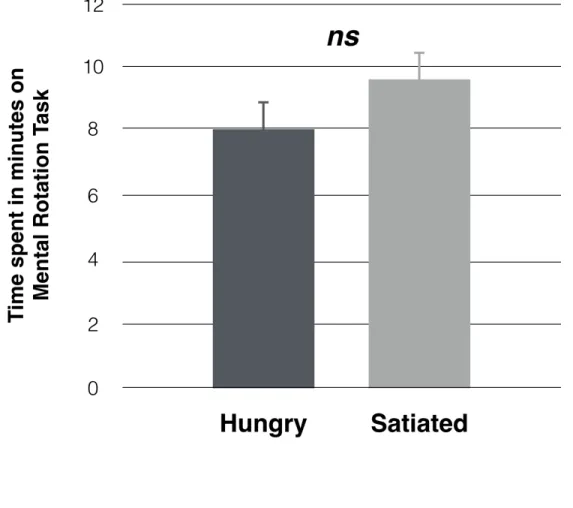
Regulatory depletion. Contrary to prior hypotheses (Bushman et al., 2014), hunger did not induce self-regulatory depletion: hungry participants persevered as long as satiated participants on the mental rotation task (mean time for hunger = 7.96 minutes vs. satiated = 9.48 minutes), t(197)= -1.64, p=.103. See Figure 4.
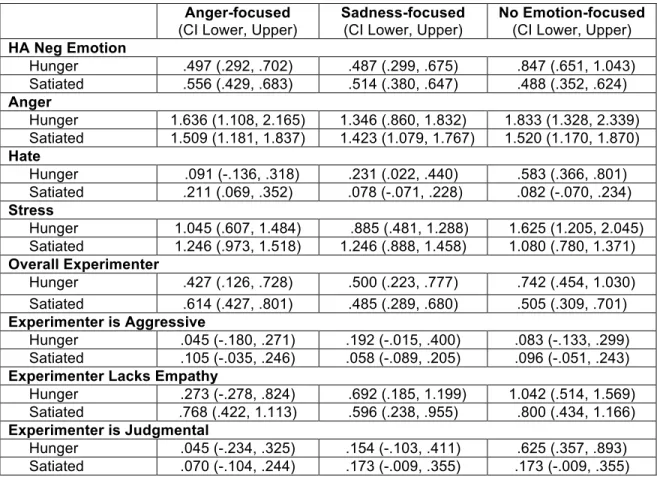
[F(2,225)=3.70, p=.026]. Table 7 shows these mean differences with reported confidence intervals (see Figure 5 for graph). A doubly centered interaction contrast (cf. Abelson & Prentice, 1997) confirmed my a priori predictions that hungry participants who did not focus on emotional information (M= .847) were more likely to report experiencing negative, high arousal emotions as compared to other hungry participants who focused on anger (M= .497) vs. sadness (M= .487), or as compared to satiated participants who focused on anger (M= .556), sadness (M= .514), or no emotional
information (M= .488) [F(1,225)=7.45, p=.006].
As a follow-up, I further probed participants’ self reports of the emotion categories that were a priori most relevant to the negative interpersonal situation that participants had just experienced: anger, hate, and stress. Again using a 2 (Hunger vs. Satiation) x 3 (Anger-focused, Sadness-focused, No Emotion-focused) ANOVA, I found significant effects for self-reports of hate and stress, but contrary to expectations, not for anger. See Table 7 for the non-significant Anger mean differences with reported confidence intervals.
For self-reports of “hate,” there was a significant main effect for Body State [F(1,223)=5.34, p=.022] such that individuals who fasted were more likely to report feeling hate compared to individuals who were satiated. I also observed a marginally significant main effect for Attentional Focus [F(2,223)=2.40, p=.093]. Simple effects revealed that within the Attentional Focus factor, participants in the No Emotion-focused condition were significantly more likely to report feeling hate than participants in the Anger-focused (p=.002) and Sadness-focused conditions (p=.022). Finally, there was a significant interaction between Body State x Attentional Focus [F(1,223)=5.32, p=.006]. Table 7 shows these mean differences with reported confidence intervals (see Figure 6 for graph). A doubly centered interaction contrast confirmed my a priori predictions that hungry participants who did not focus on emotional information (M= .583) were more likely to report experiencing hate as
compared to other hungry participants who focused on anger (M= .091) vs. sadness (M= .231), or as compared to satiated participants who focused on anger (M= .211), sadness (M= .078), or no emotional information (M= .082) [F(1,223)=8.78, p=.003].
interaction between Body State x Attentional Focus [F(2,225)=3.16, p=.044]. Table 7 shows these mean differences with reported confidence intervals (see Figure 7 for graph). A doubly centered interaction contrast confirmed my a priori predictions that hungry participants who did not focus on emotional information (M= 1.625) were more likely to report experiencing stress as compared to other hungry participants who focused on anger (M= 1.045) vs. sadness (M= .885), or as compared to satiated participants who focused on anger (M= 1.246), sadness (M= 1.173), or no emotional information (M= 1.080) [F(1,223)=6.28, p=.012].
Self-reported perceptions of the experimenter. Finally, to examine participants’ interpersonal judgments of the experimenter, I ran a 2 (Hunger vs. Satiation) x 3 (Anger-focused, Sadness-focused, No Emotion-focused) ANOVA using the mean experimenter ratings score as the dependent variable (i.e., how helpful, professional, empathetic, difficult, aggressive, and judgmental the experimenter was). This ANOVA did not reveal any significant main effects of the Body State or Attentional Focus factors nor a significant interaction. Table 7 shows these mean differences with reported confidence intervals.
As a follow-up, I examined the items that were a priori most likely to relate to the negative interpersonal situation participants had experienced (how aggressive, lacking empathy, and
judgmental the experimenter was) to ascertain whether hunger interacted with awareness to influence individuals’ interpersonal judgments. Again, I ran 2 (Hunger vs. Satiation) x 3 (Anger-focused,
Sadness-focused, No Emotion-focused) ANOVAs with experimenters’ rated aggressiveness, lack of empathy, and judgmentalness as the dependent variables. No models emerged as significant for participants’ ratings of aggressiveness or lack of empathy. See Table 7 for the non-significant aggressiveness and lack of empathy mean differences with reported confidence intervals.
interaction between Body State x Attentional Focus [F(2,225)=2.78, p=.064]. Table 7 shows these mean differences with reported confidence intervals (see Figure 8 for graph). A doubly centered interaction contrast confirmed my a priori prediction that hungry participants who did not focus on emotional information (M= .625) were more likely to rate the experimenter as more judgmental as compared to other hungry participants who focused on anger (M= .045) vs. sadness (M= .154), or as compared to satiated participants who focused on anger (M= .070), sadness (M= .173), or no emotional information (M= .173) [F(1,227)=5.59, p=.018].
Self-regulation as a covariate. To determine if self-regulation interacted with participants’ manipulated Body State or Attentional Focus to impact self-reported emotions or interpersonal judgments, I re-ran the ANOVA models above as ANCOVAs. Self-regulation did not bear any significant main effects on emotions or interpersonal judgments, nor did self-regulation significantly interact with Hunger vs. Satiation or participants being Anger-focused, Sadness-focused, or No Emotion-focused.
Study 3 Discussion
In Study 3, I found evidence that hunger can become conceptualized as emotion in a frustrating situation, but only when individuals are not focused on emotions. Consistent with my predictions, hungry individuals reported greater unpleasant, high arousal emotions when their attention was not specifically drawn to their self-focused emotional experiences. In an exploratory analysis, individuals were also more likely to view the research assistant as judgmental if they were hungry but were not focused specifically on their emotions. Critically, contrary to the regulatory depletion hypothesis, hungry vs. satiated individuals did not differ in regulation, nor did self-regulation impact participants’ self-reported emotions and interpersonal judgments when controlled for in analyses. This suggests that regulatory depletion, at least in the present study, did not play a powerful role in shaping individuals’ emotions and judgments.
Of course, it remains a possibility that our measure of perseverance did not adequately measure participants’ self-regulatory abilities. However, the fact that hunger interacted with