The First Potent, Selective and Cell-Active Allosteric Inhibitor of Protein Arginine Methyltransferase 3 (PRMT3)
Keith Schmidt
PharmD Candidate - Class of 2015
Mentor: Jian Jin, PhD
Contributing Mentors: Umit Kaniskan, PhD; Xin Chen, PhD
Honors Report
UNC Eshelman School of Pharmacy University of North Carolina at Chapel Hill
March 1st, 2015
Honors Student Signature: ________________________________
Abstract
PRMT3 is a type I arginine methyltransferase that catalyzes mono- and asymmetric dimethylation of arginine residues of various proteins. The protein has demonstrated through in vitro studies
functionality in the maturation of ribosomes, a possible role in lipogenesis, and has several implications in various diseases. The purpose of this project was to develop and characterize a chemical probe that potently and selectively inhibits PRMT3 for further use in cellular and animal studies. SGC707, formerly known as UNC3108, is the first chemical probe of PRMT3 and was developed via structure based optimization. This potent allosteric inhibitor has been thoroughly characterized in a number of
biochemical, biophysical, and cellular assays. The methods highlighted in this thesis describe synthesis of this chemical probe and characterization of this probe by an isothermal titration calorimetry assay. In addition to its high potency (IC50 = 31 ± 2 nM, KD = 53 ± 2 nM), SGC707 is selective for PRMT3 over >250 protein targets. It engages PRMT3 and potently inhibits its methyltransferase activity in cells. Initial pharmacokinetic studies also demonstrated that SGC707 is bioavailable and suitable for animal studies. Therefore, SGC707 is an excellent tool to further study the role of PRMT3 in health and disease.
Introduction
The development of a well-characterized chemical probes with high potency and selectivity for robust on-target activities for a protein of interest is valuable to elucidate biological function of proteins and to test therapeutic hypotheses20. In recent publications, an initial inhibitor of PRMT3
(1-(benzo[d][1,2,3]thiadiazol-6-yl)-3-(2-cyclohexenylethyl)urea, Compound 1 in Figure 1) was characterized with IC₅₀ value of 2.5 μM, highlighting a mechanism to inhibit the protein allosterically21,22. While this was a major discovery, the level of potency and a discernable level of activity within cells was not sufficient enough for classification as a chemical probe. The purposes of our research was to develop a more potent, selective, and, most importantly, cell-active chemical probe. Through continued
optimization of the left-hand side and right-hand side of this compound, the discovery of a chemical probe (SGC707) with an IC₅₀ value of 31 ± 2 nM by scintillation proximity assay (SPA) and 66 nM by LC-MS detection assay at balanced conditions.
The role of this thesis is to highlight a small portion of this project that includes chemical synthesis of SGC707 and the development of the Isothermal Titration Calorimetry (ITC) assay to test the
thermodynamic properties of the probe’s interactions with PRMT3. Further validation of the chemical probe’s activity was verified through assays performed at SGC in Toronto, and these findings will also be summarized. SGC707 is the result of years of work and this thesis captures the period of time during the final approval of this chemical probe.
Methods
Chemical Synthesis-
Chemistry General Procedures. Analytical thin-layer chromatography (TLC) was performed employing EMD Milipore 210-270 µm 60-F254 silica gel plates. The plates were visualized by exposure to UV light. Flash column chromatography was performed on a Teledyne ISCO CombiFlash Rf+ system equipped with a variable wavelength UV detector and a fraction collector using RediSep Rf normal phase silica columns. HRMS analysis was conducted on an Agilent Technologies G1969A high-resolution API-TOF mass
spectrometer attached to an Agilent Technologies 1200 HPLC system. Samples were ionized by electrospray ionization (ESI) in positive mode. Nuclear Magnetic Resonance (NMR) spectra were acquired on a Bruker DRX-600 spectrometer. Chemical shifts are reported in parts per million (ppm, δ) scale relative to solvent residual peak (chloroform-d, 1H: 7.26 ppm; 13C: 77.16 ppm; methanol-d4, 1H: 3.31 ppm; 13C: 49.0 ppm). 1H NMR data are reported as follows: chemical shift, multiplicity (s = singlet, d = doublet, t = triplet, q = quartet, p = pentet, m = multiplet, app = apparent), coupling constant, and integration.
Ethyl (isoquinolin-6-ylcarbamoyl)glycinate. To a stirring solution of 6-aminoisoquinoline (300 mg, 2.08 mmol, 1 eq.) in dichloromethane (100 mL) was added ethyl isocyanatoacetate (0.35 mL, 3.12 mmol, 1.5 eq.) and the resulting mixture was stirred overnight at room temperature. The progress of the reaction
was monitored by TLC. After removal of volatiles, the crude mixture was purified by flash column chromatography (gradient from 100% dichloromethane to 10% methanol in dichloromethane) to yield desired ethylester (460 mg, 81% yield) as pale yellow solid. 1H NMR (600 MHz, Chloroform-d) δ 8.94 (s, 1H), 8.31 (d, J = 5.8 Hz, 1H), 8.07 (s, 1H), 7.91 (s, 1H), 7.67 (d, J = 8.8 Hz, 1H), 7.35 (d, J = 5.8 Hz, 1H), 7.29 (d, J = 8.8 Hz, 1H), 6.13 (t, J = 5.6 Hz, 1H), 4.26 (q, J = 7.2 Hz, 2H), 4.13 (d, J = 5.5 Hz, 2H), 1.31 (t, J = 7.1 Hz, 3H). 13C NMR (151 MHz, CDCl3) δ 172.23, 155.37, 151.47, 142.91, 140.84, 137.05, 128.60, 125.06, 121.06, 120.34, 112.60, 62.07, 42.21, 14.30. HRMS (m/z) for C14H16N3O3+ [M + H]+ calculated 274.1186 found 274.1185.
1-(isoquinolin-6-yl)-3-(2-oxo-2-(pyrrolidin-1-yl)ethyl)urea (SGC707). To a stirring solution of ethylester (200 mg, 0.731 mmol, 1 eq.) in THF/H2O (10 mL/5 mL) was added LiOH (anhydrous, 35.0 mg, 2.0 eq.) and the resulting mixture was stirred overnight at room temperature. The disappearance of starting material was monitored by TLC. Crude mixture was then concentrated under reduced pressure and residue was re-suspended in dioxane (10 mL), followed by addition of thionyl chloride (0.50 mL, 6.89 mmol, 9.4 eq.) and heated to 80 °C for 30 minutes. Resulting crude mixture was again concentrated under reduced pressure and re-dissolved in dioxane (10 mL) followed by addition of pyrrolidine (0.30 mL, 3.65 mmol, 5.0 eq.) and allowed to stir at room temperature overnight. The progress of the reaction was again monitored by TLC. The crude product was then purified by flash column chromatography (gradient from 100% dichloromethane to 10% methanol in dichloromethane) to yield SGC707 (189 mg, 87% overall yield after 3 steps) as pale yellow solid. 1H NMR (600 MHz, Methanol-d4) δ 9.03 (s, 1H), 8.29 (d, J = 5.9 Hz, 1H), 8.10 (d, J = 2.1 Hz, 1H), 7.98 (d, J = 8.9 Hz, 1H), 7.65 (d, J = 6.0 Hz, 1H), 7.59 (dd, J = 8.9, 2.0 Hz, 1H), 4.06 (s, 2H), 3.53 (t, J = 6.8 Hz, 2H), 3.48 (t, J = 6.9 Hz, 2H), 2.03 (app p, J = 6.8 Hz, 2H), 1.91 (app p, J = 6.9 Hz, 2H).13C NMR (151 MHz, Methanol-d4) δ 169.64, 157.55, 152.18, 143.67, 142.90, 138.81, 129.87, 126.23, 122.27, 121.72, 112.41, 47.19, 46.72, 43.22, 26.94, 25.09. HRMS (m/z) for C16H19N4O2+ [M + H]+ calculated 299.1503 found 299.1500. 1H NMR and 13C NMR spectra are located in the Appendix section. Protein Purification-
A DNA plasmid with the PRMT3 DNA insert cloned into the T7 promoter region of the commercial pET28a-LIC Vector was obtained from SGC of Toronto. The DNA plasmid was transformed into DH5-alpha cells and the cultures were plated under kanamycin resistance (50 μg/mL). Several colonies were selected and grown in 2 mL LB cultures with 50 μg/mL. The resultant cell cultures were lysed and the DNA plasmid was purified via the QIAprep Spin Miniprep Kit. The plasmid was sequenced and verified to have an accurately in frame DNA insert.
The purified PRMT3-pET28a plasmid was transformed into BL21-V2R-pRARE-2 cells. One colony was inoculated into 50 mL of LB supplemented with 50 μg/mL kanamycin and 30 μg/mL chloramphenicol and incubated with shaking overnight at 37°C. The culture was then inoculated into 4 L of LB supplemented with 50 μg/mL kanamycin and 30 μg/mL chloramphenicol and grown to an OD₆₀₀ of about 1. Protein
N N H O N H O N N N H O N H O OEt
1. LiOH THF/H2O RT, overnight
2. SOCl2 , dioxane 80 °C, 30 min. 3. Pyrrolidine, dioxane RT, overnight
yield: 87% (over 3 steps)
expression was induced by the addition of 0.5 mM isopropyl-1-thio-D-galactopyranoside (IPTG) with shaking for 16 hours at 15°C. Cells were then harvested by centrifugation and the pellets were flash frozen at -80°C. The cells were then thawed and re-suspended in binding buffer (10 mM Tris, 500 mM NaCl, 5 mM imidazole, 5% glycerol, pH 7.5) with protease inhibitors (1 mM benzamidine HCl , 1 mM phneylmethanesulphonylfluoride (PMSF)). The thawed cells were lysed via sonication in the presence of protease inhibitors at a frequency of 8.5 for three cycles of 10 seconds on and 10 seconds off using a Misonix Sonicator 3000. Once the cell lysate was clarified by centrifugation, the supernatant was loaded onto a Ni-NTA Superflow column (Qiagen, CAT# 30450) pre-equilibrated with binding buffer. The column was washed with 60 CV of wash buffer (10 mM Tris, 100 mM NaCl, 30 mM imidazole, 5% glycerol, pH 7.5) and the protein was eluted with elution buffer (10 mM Tris, 100 mM NaCl, 250 mM imidazole, 5% glycerol, 1 mM EDTA, 1 mM DTT, pH 7.5). Eluted protein fractions were directly loaded onto a size exclusion column (Bio-Rad Enrich SEC 650 10 x 300 mm column (780-1650)) and eluted in a modified elution buffer (10 mM Tris, 100 mM NaCl, 5% glycerol, 1 mM EDTA, 1 mM DTT, pH 7.5). Accurate protein mass (~60 kDa) and purity was verified via SDS-PAGE analysis and Western blot analysis.
ITC Experiments-
All ITC measurements were performed at 25 °C using an AutoITC200 microcalorimeter (MicroCal/GE Healthcare). The calorimeter cell (volume 200 µL) was loaded with PRMT3 protein in the full salt dialysis buffer (100 mM NaCl, 10 mM Tris, 5% glycerol, 1 mM EDTA, 1 mM DTT) at a concentration of 100 µM. The syringe was loaded with SGC707 (dissolved in the same buffer) at a concentration of 1 mM. A typical injection protocol included a single 0.2 µL first injection followed by twenty-six 5.0 µL injections of the compound into the calorimeter cell. The spacing between injections was kept at 180 s and the reference power at 8 µcal/sec. A control experiment was performed by titrating SGC707 into buffer under identical settings to determine the heat signals that arose from compound dilution; these were subtracted from the heat signals of protein–compound interaction. The data were analyzed using Origin for ITC, ver. 7.0, software supplied by the manufacturer; and fitted well to a one-site binding model.
Additional Methods-
Other in vitro, in vivo, and animal based studies in addition to the synthesis of an inactive control were conducted to further demonstrate the capabilities of SGC707. Based on limited involvement in these procedures, these methods are more adequately described in the recently approved publication in by Kaniskan et al. in Angewandte Chemie23.
Results
helix to form a catalytically competent state. The alpha-helix is a dynamic secondary element that is conserved in class I PRMTs, thus it is thought the direct or water mediated interactions with the K392 residue near this structure increased its potency and contribute to the compound’s activity. The crystal structure of the PRMT3-SGC707 confirmed the compound’s activity in the PRMT3 allosteric site. The structural changes to the molecule are exhibited in Figure 1 and the interaction within the allosteric site is depicted in Figure 2.
Figure 1. The structure-based optimization of the novel allosteric inhibitor of PRMT3 from previous publication in Structure21. From compound 1 to SGC707, a near 100 fold increase in potency was
observed with conservation of the urea group and modification of both left hand and right sides of the compound. Inactive control, XY1, is also depicted, with the replacement of the isoquinoline group with a napthyl group.
To further test the importance of particular moieties in SGC707, several inactive controls were proposed. Initially, methyl groups were to be added to the nitrogen atoms of the urea group. Due to extensive issues synthesizing and purifying these compounds, removal of the isoquinoline group in favor of a naphthyl group was pursued, yielding compound XY1 (Figure 1). XY1 was completely inactive against PRMT3 at concentrations as high as 100 μM, confirming the importance of the key hydrogen bond with T466.
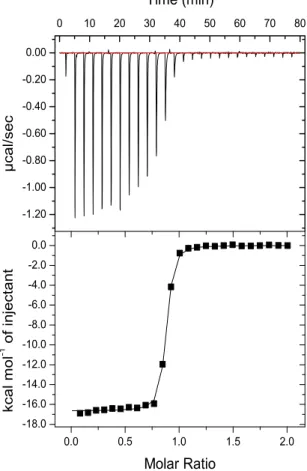
Binding of SGC707 was confirmed by isothermal calorimetry (ITC) with a KD value of 53 ± 2 nM (n = 3) (Figure 3) and surface plasmon resonance (SPR) with a KD value of 85 ± 1 nM (n = 3) (kon of 1.17 ± 0.05 x 10⁵ M-1 s-1 and koff of 0.99 ± 0.03 x 10⁻² s-1) (Figure 4). SGC707 also exhibited a long residence time, demonstrating great improvement over compound 1 (kon = 5.1 ± 0.57 x 10⁴ M-1 s-1 and koff = 0.76 ± 0.09 s-1)21. SGC707 was also selective for PRMT3 over 31 protein-, DNA-, RNA-methyltrasferases (Figure 5) and a broad range of non-epigenetic targets including >250 kinases, G protein coupled receptors (GPCRs), ion channels, and transporters. It showed modest inhibition at 10,000 nM for only 6 (5HT2B 69%, BRSK1 56%, DLK1 60%, MSK2 55%, PKG2 58%, and PRKX 61%) out of >250 targets. In mechanism of action studies, SGC707 suggested activity at the allosteric site by displaying a non-competitive inhibition pattern with respect to both the cofactor S-(5’-adnosyl)-L-methionine (SAM) and peptide substrate (Figure 6).
µL- injections of the compound into the calorimeter cell. Data were fitted with a one-binding site model using Origin7 software. Experiments were performed in triplicate with a KD value of 53 ± 2 nM.
Figure 4: SPR studies were preformed and full methods are described in Kaniskan U, et al23. The K D value
of 85 ± 1 nM, kon of 1.17 ± 0.05 x 10⁵ Mˉ¹ sˉ¹ and koff of 0.9953 ± 0.0292 x 10ˉ² sˉ¹ were calculated by
averaging values obtained from three independent runs.
Figure 5: Other epigenetic drug targets assessed, including 27 other protein methyltransferases, 3 DNA methyltransferases and on RNA methyltransferase. Level of protein activity was assessed at 1 (red), 5 (green), and 20 (purple) μM of SGC707 and no inhibition was observed.
Similar patterns were observed by conserving either SAM or peptide at saturation level while varying the concentration of the other molecule. In each case, there was no significant variation of the IC₅₀.
To demonstrate target engagement of SGC707 in cells, an InCELL Hunter Assay was used. The assay measures intracellular binding of SGC707 to the methyltransferase domain of PRMT3 in cell lines expressing the methyltransferase domain of PRMT3 tagged with a short fragment of β-galactosidase. SGC707 stabilized PRMT3 in both HEK293 and A549 cells with EC₅₀ values of 1.3 μM and 1.6 μM respectively (Figure 7A). Based on prior evidence of PRMT3 methylating histone peptides, SGC707 inhibition of PRMT3 catalytic activity on H4R3 asymmetric dimethylation was assessed in cells. Methylation of both endogenous H4 and exogenously introduced GFP-tagged H4 was observed by overexpressing human Flag-tagged PRMT3. Overexpressed PRMT3 increased the endogenous
Figure 7: (A) SGC707 concentration-response curves with the PRMT3 InCELL Hunter Assays. HEK293 or A549 cell lines expressing the methyltransferase domain of PRMT3 fused to the enhanced ProLabel (ePL) β-galactosidase fragment were incubated for 6 hours at 37C with increasing concentrations of SGC707. The abundance of the ePL-PRMT3 fusion protein was measured by lysing the cells in the presence of chemiluminescent enzyme substrate and the complementary EA β-galactosidase enzyme fragment. RLU, relative light units. (B) Western blot analysis of H4R3me2a levels. HEK293 cells were co-transfected with FLAG tagged PRMT3 (WT) or its catalytically dead mutant E335Q (Mut) and treated with different concentrations of SGC707, as indicated. Total cell lysates were collected 24 h post inhibitor treatment and analysed for H4R3me2a levels. The total levels of exogenous and endogenous histone H4 and overexpressed PRMT3 were determined with anti-GFP, anti-H4 and anti-FLAG antibodies, respectively. (C) Quantitation of SGC707 effect on the endogenous H4R3me2a. (D) Quantitation of SGC707 effect on the exogenous H4R3me2a. The graphs represent non-linear fits of H4R3me2a signal intensities
normalized to intensities of GFP or H4 for exogenous and endogenous H4, respectively and subtracted from the baseline signal from mutant PRMT3. The results are Mean ± SEM of three replicates.
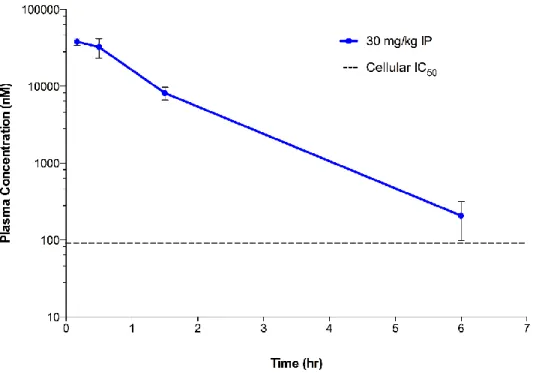
In vivo pharmacokinetic properties of SGC707 were also assessed (Figure 8). Intraperitoneal injection of SGC707 at 30 mg/kg yielded decent plasma exposure in CD-1 male mice over 6 hours with a peak plasma level of 38,000 nM. The plasma level of SGC707 at 6 hours post injection was 208 nM, more than 2-fold higher that its IC₅₀ value in the cellular assay. The dose was well tolerated by the test animals and suggest SGC707 is suitable for animal studies in addition to cell based assays.
Discussion
SGC707 is a first-in-class PRMT3 chemical probe which is a potent and cell-active allosteric inhibitor of PRMT3. Through several assays, it has been demonstrated to be remarkably selective for its PRMT3 target over 31 other similarly functioning proteins in addition to a wide range of other proteins. Multiple cell-based assays have demonstrated SGC707’s ability to potently inhibit PRMT3 methyltransferase activity. This is the first ever report suggesting H4 as a target for PRMT3 in cells. There is need for further studies to confirm if endogenous PRMT3 plays a major role in H4R3 asymmetric dimethylation. In addition, it has yet to be determined if this methylation occurs in the cytoplasm shortly after H4 translation and loading onto the chaperone complexes. The bioavailability and suitability for animal studies allows SGC707 to become a valuable tool for elucidating this potentially significant interactions. Epigenetic drug discovery is merely in its infancy, with only a few agents approved by the FDA currently and several others in clinical development. HDAC inhibitors are currently on the market, with the most recent, belinostat, being approved just last year for the treatment of relapsed or refractory peripheral T-cell lymphoma24. DNA methyltransferase inhibitors, such as azacitadine and decitabine, have been approved for the treatment of myelodysplastic syndromes25,26. With continued research, it has been demonstrated that these targets are only a small subset of the entire epigenome, leaving much left to be warranted and discovered. The success of these agents have led to the growing interest in chemical regulation of chromatin mediated signaling21.
Through research within the Jian Jin Laboratory alone, SGC707 became the third chemical probe discovered to potently inhibit protein methyltransferases. UNC1999 potently inhibits EZH2 and EZH1 which catalyze the methylation of histone H3 Lysine 27. The overexpression of EZH2 and the
hypertrimethylation of H3K27 have been implicated in a number of cancers, thus UNC1999 serves as a valuable tool to investigate the role of EZH2 and EZH1 in health and disease27. Similarly, UNC0642 was found to be a potent selective inhibitor of the lysine methyltransferases G9a and GLP, which catalyze mono- and dimethylation of H3 lysine 9 in addition to other non-histone proteins28. All three agents exhibited high cellular potency with limited cell toxicity, excellent selectivity and pharmacokinetic properties suitable for animal-based studies. The use of SGC707, in addition to UNC1999 and UNC0642, in further animal studies will not only further elucidate the utility of these agents as potential
treatments, but may also uncover many mysteries of the epigenome in the process.
PRMT3 has many proposed roles in the human cells, as outlined in the introduction of this thesis. The in vivo studies have demonstrated a clear role of SGC707 to impact PRMT3 activity at the H4R3 site. In addition to more work to fully understand the role of PRMT3-H4R3 interaction, other sites of interest should also be considered. These include PRMT3 mediated rpS2 methylation and 80S ribosome maturation, PABPN1 methylation in oculopharyngeal muscular dystrophy, and inhibited
methyltransferase activity via interaction with tumor suppressor DAL-1/4.1B. To further expand upon these potential implications of PRMT3, the development of future in vivo studies and animal studies could be greatly aided via the use of SGC707. Through collaboration of the multi-faceted resources of other laboratories around the world, it is hoped this chemical probe could aid in a great number of discoveries associated with PRMT3 in coming years.
References
1. Arrowsmith CH, Bountra C, Fish PV, Lee K, Schapira M. Epigenetic protein families: a new frontier for drug discovery. Nat Rev Drug Discovery. 2012;11:384–400.
2. Copeland RA, Solomon ME, Richon VM. Protein methyltransferases as a target class for drug discovery. Nat Rev Drug Discovery. 2009;8:724–732.
3. Di Lorenzo A, Bedford MT. Histone arginine methylation. FEBS Lett. 2011;585:2024–2031. 4. Yost JM, Korboukh I, Liu F, Gao C, Jin J. Targets in epigenetics: inhibiting the methyl writers of
the histone code. Curr Chem Genomics. 2011;5:72–84.
5. Zurita-Lopez CI, Sandberg T, Kelly R, Clarke SG. Human protein arginine methyltransferase 7 (PRMT7) is a type III enzyme forming omega-NG-monomethylated arginine residues. J Biol Chem. 2012;287:7859–7870.
6. Bedford MT. Arginine methylation at a glance. J Cell Sci. 2007;120:4243–4246
7. Cheng DH, Cote J, Shaaban S, Bedford MT. The arginine methyltransferase CARM1 regulates the coupling of transcription and mRNA processing. Mol Cell. 2007;25:71–83.
8. Bedford MT, Richard S. Arginine methylation an emerging regulator of protein function. Mol Cell. 2005;18:263–272.
9. Tang J, Gary JD, Clarke S, Herschman HR. PRMT 3, a type I protein arginine N-methyltransferase that differs from PRMT1 in its oligomerization, subcellular localization, substrate specificity, and regulation. J. Biol. Chem. 1998;273:16935-16945
10. Swiercz R, Person MD, Bedford MT. Ribosomal protein S2 is a substrate for mammalian PRMT3 (protein arginine methyltransferase 3). Biochem. J. 2005;386:85-91.
11. Kim DI, Park MJ, et al. PRMT3 regulates hepatic lipogenesis through direct interaction with LXRα. Diabetes. 2015 Jan;64(1):60-71.
12. Fronz K, Otto S, Kolbel K, et al. Promiscuous modification of the nuclear poly(A)-binding protein by multiple protein-arginine methyltransferases does not affect the aggregation behavior. J. Biol. Chem. 2008;283:20408-20420
13. Tavanez JP, Bengoechea R, Berciano MT, Lafarga M, Carmo-Fonseca M, Enguita FJ. Hsp70 chaperones and type I PRMTs are sequestered at intranuclear inclusions caused by polyalanine expansions in PABPN1. PloS One 2009, 4, e6418
14. Brais B, Bouchard JP, Xie YG, et al. Short GCG expansions in the PABP2 gene cause oculopharyngeal muscular dystrophy. Nat Genet. 1998 Feb;18(2):164-7.
15. Chen X, Niroomand F, Liu Z, Zankl A, Katus HA, Jahn L, Tiefenbacher CP. Expression of nitric oxide related enzymes in coronary heart disease. Basic Res Cardiol. 2006 Jul;101(4):346-53.
16. Allali-Hassani A, Wasney GA, Siarheyeva A, Hajian T, Arrowsmith CH, Vedadi M. Fluorescence-based methods for screening writers and readers of histone methyl marks. J Biomol Screen. 2012 Jan;17(1):71-84.
17. Herrmann F, Pably P, Eckerich C, Bedford MT, Fackelmayer FO. Human protein arginine
methyltransferases in vivo--distinct properties of eight canonical members of the PRMT family. J Cell Sci. 2009 Mar 1;122(Pt 5):667-77.
18. Wagner S, Weber S, Kleinschmidt MA, Nagata K, Bauer UM.SET-mediated promoter hypoacetylation is a prerequisite for coactivation of the estrogen-responsive pS2 gene by PRMT1. J Biol Chem. 2006 Sep 15;281(37):27242-50.
19. Singh V, Miranda TB, Jiang W, Frankel A, Roemer ME, Robb VA, Gutmann DH, Herschman HR, Clarke S, Newsham IF. DAL-1/4.1B tumor suppressor interacts with protein arginine
N-methyltransferase 3 (PRMT3) and inhibits its ability to methylate substrates in vitro and in vivo. Oncogene. 2004 Oct 14;23(47):7761-71.
21. Siarheyeva A, Senisterra G, Allali-Hassani A, et al. An allosteric inhibitor of protein arginine methyltransferase 3. Structure. 2012 Aug 8;20(8):1425-35.
22. Liu F, Li F, Ma A, et al. Exploiting an allosteric binding site of PRMT3 yields potent and selective inhibitors. J Med Chem. 2013 Mar 14;56(5):2110-24.
23. Kaniskan, et al, Angew. Chem. Intl. Ed. in press, DOI: 10.1002/anie.201412154
24. Beleodaq (belinostat) [package insert]. Irvine, California: Spectrum Pharmaceuticals, Inc.; 2014 25. Vidaza (azacitadine) [package insert]. Summit, New Jersey: Cellgene Coporation; 2004
26. Dacogen (decitabine) [package insert]. Bloomington, Minnesota: MGI Pharma, Inc.; 2006 27. Konze KD, et al. An orally bioavailable chemical probe of the Lysine Methyltransferases EZH2
and EZH1. ACS Chem Biol. 2013;8(6):1324-34.
Appendix: