Characterizing the epidemiology of acute, episodic care in a developing country
By
Rachel Morgan Little
A Master’s Paper submitted to the faculty of the University of North Carolina at Chapel Hill
in partial fulfillment of the requirements for the degree of Master of Public Health in
the Public Health Leadership Program
Chapel Hill 2012
Advisor:
Date
Second Reader:
Table of Contents
Abstract………...………3
Systematic Review Manuscript………..……….5
Search terms (Table 1)……….………..18
Study characteristics (Table 2)……….……..19
Flow diagram of search strategy (Figure 1)………..……20
Research Paper Manuscript……….21
Patient demographics (Table 1)……….………34
Documented diagnoses (Table 2)………..……….35
Distribution of chief complaints (Figure 1)………..…….36
Distribution of procedures (Figure 2)………...…….37
Abstract
Sub-Saharan Africa demonstrates a vast deficit in the capacity to provide emergency medical care. With the exclusion of South Africa, sub-Saharan African countries do not recognize Emergency Medicine (EM) as a specialty. In order to allocate resources to develop EM, countries must first have an understanding of the types of emergency cases and
demographic characteristics of patients presenting with acute medical and surgical needs.
This research paper includes a systematic review of current literature characterizing the epidemiology of acute and emergency care needs in underdeveloped sub-Saharan African countries. The review includes three studies. The first two studies, one conducted in Uganda and the other in Mozambique, examined types of trauma presentations among children. Overall, they showed falls, traffic injuries, and burns to be the leading causes of traumatic injury among children. Both studies were small, convenience samples from only a few medical facilities; these methodological weaknesses limit the generalizability of their results, but the fact that their results were similar offers some validation of their conclusions. The third study, which examined all types of acute presentations in patients of all age groups, demonstrated the most strength in study design and methodology. This evidence, which appeared generalizable due to randomization and selection of patients from a variety of facilities, suggested that trauma, respiratory illnesses, and malaria are leading diagnoses requiring acute care.
The research manuscript in this paper attempts to address the question, “What types of acute and emergency care needs are seen in health care facilities at the University of Arusha (UOA) Medical Center in Arusha, Tanzania?” We conducted a cross-sectional study to
Emergency Care Needs in Sub-Saharan Africa: A Systematic Review of the Literature
Abstract
Introduction: Sub-Saharan Africa demonstrates a vast deficit in health care professionals trained in Emergency Medicine (EM) and health care systems designed to handle emergency care. In order to allocate resources to develop EM as a specialty, countries must first have an
understanding of the types of emergency cases and demographic characteristics of patients presenting with acute medical needs. The goal of this systematic review was to identify existing literature on the epidemiology of acute and emergency care needs in underdeveloped countries in sub-Saharan Africa.
Methods: We conducted a PUBMED® literature search in February 2012 to identify observational studies from the past 10 years that answered the question, “Among
underdeveloped countries in sub-Saharan Africa, what types of acute and emergency care needs are seen in health care facilities?”
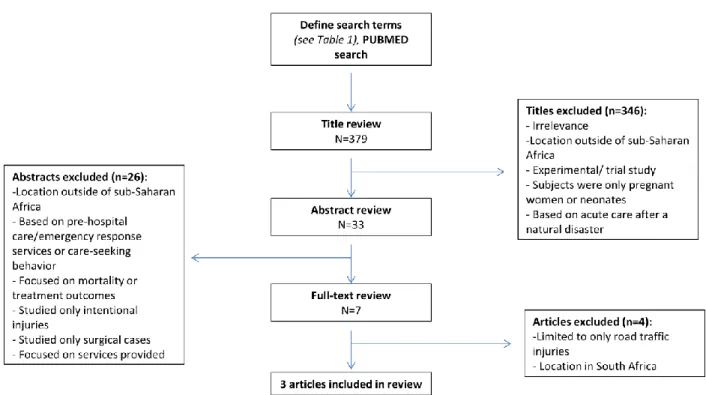
Results: The initial PUBMED® search yielded 379 results. Thirty-three articles were selected for abstract review, seven articles underwent full-text review, and three articles were selected for inclusion in the review. Two of the included studies focused on pediatric cases of acute injury, while one study captured all emergency cases of all age groups presenting during the study period. Only one study included a randomly selected group of hospitals of varying levels of care. All three studies demonstrated a significant burden of trauma, especially traffic-related injuries and burns among the pediatric population, in the acute care setting. In the third study, respiratory infections and malaria were the leading diagnoses among adult patients.
included in this review demonstrates a need for further research in quantifying the types of emergency presentations at health care facilities. In particular, there is a need for characterization of non-trauma emergency cases across all age groups. Implementation of initiatives to provide better emergency care in developing countries can occur only when the types and severity of problems are known.
Introduction
With limitations in basic primary care in resource-poor areas, emergency care is often among the lowest priorities in developing countries. The barriers to receiving emergency care are multiple. Logistical obstacles include lack of transportation to health care facilities, insufficient training of health workers in triage and trauma management, and limited availability of
appropriate diagnostic equipment and treatment.(1) Furthermore, most underdeveloped countries lack recognition of EM as a specialty requiring specific training programs, board certification, and academic development through research and specialty journals.(2,3)
Sub-Saharan Africa is a region that demonstrates a vast deficit in health care
professionals trained in EM and health care systems designed to handle emergency care. Unlike in developed countries where designated areas of hospitals offer initial treatment of medical and surgical emergencies, many sub-Saharan African countries have a pyramidal health care system, where village-level primary care facilities, government health centers, dispensaries, and
In order to allocate resources to develop EM as a specialty, countries must first characterize the burden of acute/emergency care needs and the cost-effectiveness of interventions.(4) The conventional approach to characterizing the burden of disease in underdeveloped countries is to focus on individual disease states, such as Human
Immunodeficiency Virus (HIV) infection or malaria, instead of examining the acute/emergency components of disease presentations.(4) In contrast, by focusing epidemiologic efforts on acute, episodic health care needs, researchers can identify the needs of a given people and tailor sustainable interventions to fit the existing health care system structure.(3) The goal of this systematic review is to identify existing literature on the epidemiology of acute and emergency care needs in underdeveloped countries in sub-Saharan Africa.
Methods
Search Strategy
Our question of interest was “Among underdeveloped countries in sub-Saharan Africa,
what types of acute and emergency care needs are seen in health care facilities?” We conducted the current literature search in February 2012 to identify studies published in the past 10 years. We used PUBMED® search engine and restricted our search to publications from 2002 to present, in the English language. Our search included the keywords “emergency care” or “acute care;” “cross-sectional” or “observational;” and multiple phrases to search for developing
Inclusion/Exclusion Criteria
We included observational studies that focused on the patterns and descriptive
characteristics of acute care visits in resource-poor countries in sub-Saharan Africa. We included studies that focused on trauma or unintentional injury cases such as road traffic injuries. Studies were excluded if they were conducted in areas outside of sub-Saharan Africa. Other exclusion criteria included studies focused on acute care needs after a specific disaster event such as a hurricane or earthquake, pre-hospital or emergency response services, outcomes of emergency treatment, services provided in care facilities, or controlled trials of a specific treatment or intervention. Studies were also excluded if they focused only on obstetrical patients, neonatal patients, surgical patients, or patients with intentional injuries.
After the literature search was completed, the authors decided that the unique
characteristics of South Africa’s health care system make it difficult to compare EM studies in
South Africa to those conducted in other sub-Saharan African countries. South Africa is located in sub-Saharan Africa and demonstrates some of the same disease burdens seen in neighboring countries such as malaria and HIV, but the country has made several national advancements that set it apart from the other countries in sub-Saharan Africa. Unlike most other developing
countries where EM has yet to be recognized as a medical specialty requiring a specialized training program, South Africa began registering EM physicians in 2005 and currently has four university EM departments.(5) Furthermore, the country has established organizations such as the Emergency Medicine Society of South Africa and the College of Emergency Medicine to support this specialty training.(5) In his description of characteristics of emergency care systems, Arnold distinguishes “underdeveloped” systems as those lacking EM specialty recognition, EM
describes “developing” systems as those that still lack trauma and transfer systems, databases,
and EM sub-specialty training but have official recognition of EM as a specialty, residency-trained EM physicians, some form of pre-hospital care such as Emergency Medical Services (EMS), and a national EM society and journals.(2) Under Arnold’s characterization, South Africa’s emergency care system would be classified as developing whereas the other countries of
sub-Saharan Africa would be considered underdeveloped. This distinction led us ultimately to exclude South African studies from the final literature analysis.
Article selection and quality assessment
Articles that met the inclusion criteria were examined both for their findings and the quality of the study conducted. Because we focused on the descriptive nature of the studies, we decided that a detailed discussion of selected articles’ findings, strengths, and limitations was more valuable than the application of a standardized qualitative evaluation tool or rubric.
Results
Search results
Excluded studies (n=4)
Three studies conducted in South Africa underwent full-text review but were excluded from the final systematic review.(6-8) One study examining road traffic injuries in the Republic of Kenya was also excluded from the review. The study population was restricted to road traffic victims and examined basic injury types and severity.(8) The study obtained demographical and mechanism of injury information from victims; regarding injuries, the study assessed only the anatomical location of injuries. Because the study did not contribute significant information answering our question of interest, it was excluded from the systematic review.
Included Studies (n=3)
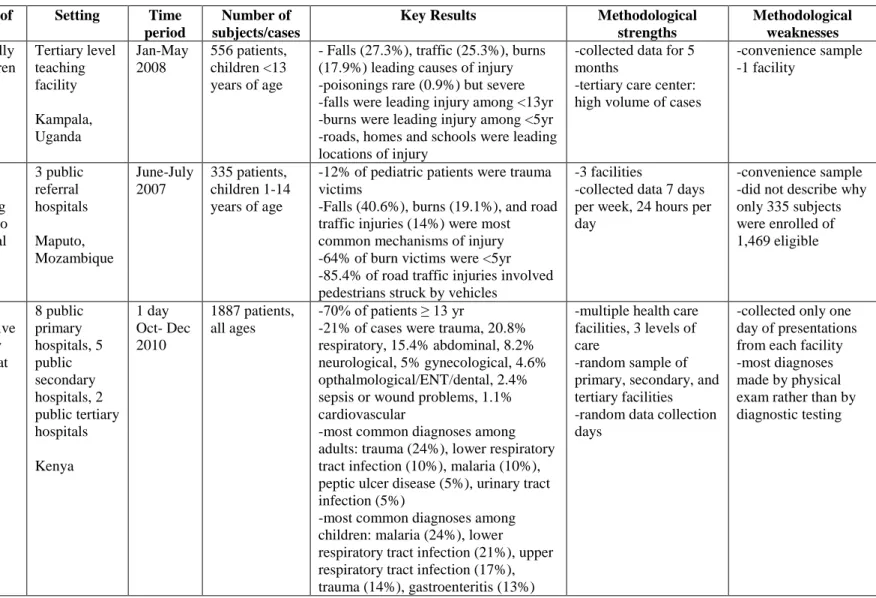
The characteristics of the three studies included in this systematic review are presented in Table 2. The first study by Mutto et al. (2011) was a cross-sectional study conducted in
Kampala, Uganda.(9) The target population was children less than 13 years of age seeking care at the National Pediatric Emergency Unit for unintentional injuries between January and May 2008. All children accessing care for unintentional injuries during this period were eligible; a trauma registry was established at the emergency unit to obtain the data. Authors reported that 556 cases were recorded during the study time period, but they did not describe the percentage of eligible children this case number represented. They found that males were 1.5 times more likely to be injured compared to females. Falls were the leading cause of unintentional injury,
multiple studies have found this type of injury to be prevalent in developing countries. This study captured only a small number of cases of poisoning (0.9%), but the authors noted that these cases were severe, as 20% of the poisoning cases required emergency surgery or intensive care unit (ICU) care.
The second study selected for this review was a prospective, observational study by de sousa Petersburgo et al. (2010) conducted at three public referral hospitals in Maputo,
Mozambique.(10) Eligibility criteria for inclusion in the study were children less than 15 years of age who presented with trauma at one of the three facilities from June to July 2007. Authors reported that 35,745 patients were seen in the emergency departments (EDs) of the three study hospitals during the study period, and 12,539 (35%) of the patients were children less than 15 years of age. Trauma represented 12% of these pediatric patients (n=1,469), and of these patients, four were excluded because of inadequate data, 11 refused participation, and 335 were enrolled in the study. Study results showed the most common mechanisms of injury to be falls (40.6%), burns (19.1%), and road traffic injuries (14%). Of burn victims, 64% were under the age of 5 years. Of road traffic injuries, 85.4% involved pedestrians being struck by vehicles. Males were 1.5 times more likely than females to be injured.
The final study examined in this review was a prospective observational study conducted in the Republic of Kenya.(11) A random sample of eight public primary hospitals, five public secondary hospitals, and two public tertiary hospitals were selected as data collection sites. A data collection day between October and December 2010 was randomly selected for each
Regarding the types of presentations, trauma accounted for 21% of cases. Non-trauma cases accounted for the majority of presentations: 20.8% were respiratory; 15.4% abdominal; 8.2% neurological; 5% gynecological; 4.6% ophthalmological, ear, nose, and throat, or dental; 2.4% sepsis and wound problems; and 1.1% cardiovascular. Authors also categorized the most common diagnoses documented among adults and children. For adults, the top five diagnoses were trauma (24%), lower respiratory tract infection (10%), malaria (10%), peptic ulcer disease (5%), and urinary tract infection (5%). For children, the top five diagnoses were malaria (24%), lower respiratory tract infection (21%), upper respiratory tract infection (17%), trauma (14%), and gastroenteritis (13%).
Study quality
The Mutto et al. study selected a convenience sample from one facility over a period of time (five months); if there is a “seasonality” to injuries, this length of time may have allowed the study to capture these fluctuations. Because the study was conducted in a tertiary level facility in the country’s capital, the results may overestimate the severity of injuries because
The de souse Petersburgo et al. study collected data from three facilities, and this broader pool of potential subjects provided strength for the study’s generalizability. Another strength of
the study was that authors reported the total number of patients seen at the hospitals during the study period, as well as the proportion of children seen who had trauma versus other reasons for their visit. These numbers provide a better understanding of the magnitude of the problem of trauma within the context of all emergency care in Maputo, Mozambique. Although the study period was short (one month), patients were enrolled seven days per week, 24 hours per day, which allowed for fluctuations in daily and hourly case loads to be considered in results. The short study period may have prevented researchers from capturing seasonal fluctuations in case load and type. Authors disclosed the number of patients excluded due to lack of data and refusal to participate (15 in total). These excluded patients could introduce some selection bias, but the fact that these numbers are small is reassuring. However, this study was a convenience sample and authors did not disclose the reasons for including only 335 patients of the 1,469 children presenting with trauma, allowing a much larger potential for selection bias. Authors also admit the potential for selection bias towards less serious cases, because dying patients or patients who were deceased upon arrival may have been excluded. Overall, the fact that three hospitals were used for data collection provides potential strength of external validity, but this strength may be negated by the questionable weakness of internal validity due to the small number of potential subjects who were actually enrolled.
selection bias to provide an accurate snapshot of emergency care in Kenya. Although data was collected on only one day at each facility, this day was also randomly selected, which minimized the potential fluctuation in case-load and type based on the day of the week. This study also enrolled more subjects than the other two studies. Although the “measurement” of case
presentation through the use of a questionnaire was similar to that of the other studies, Wachira et al. admit that the final diagnoses assigned to patients were often based on clinical findings rather than diagnostic proof. This fact may have led to inaccuracies in their estimations of most common diagnoses. Overall, the use of randomization and a variety of facilities in this study make the study’s claim of generalizability to the country of Kenya convincing.
Discussion
Strengths and limitations of current evidence
This systematic review sought to answer the question, “Among underdeveloped countries
in sub-Saharan Africa, what types acute and emergency care needs are seen in health care facilities?” Because of the major differences in health care access and structure, as well as
burns to be the leading causes of traumatic injury among children. The significant proportion of burn victims in each study suggests that health care professionals in these facilities would benefit from specialized training in burn care, and communities may greatly benefit from educational programs that target burn prevention in the home. As traffic injuries are a leading cause of
childhood trauma in the United States (12), it is not surprising that these studies found them to be leading problems in the developing world, too. Interestingly, though, de souse Petersburgo et al. found that the vast majority of cases (85.4%) involved pedestrians being struck by vehicles rather than victims being injured while riding in vehicles. This different mechanism of trauma, in contrast to the usual restrained passenger trauma in industrialized countries, may necessitate different emergency care needs for these victims in sub-Saharan African countries. Furthermore, these needs highlight public health interventions that may improve child pedestrian safety. Examples of such interventions include adding sidewalks for pedestrians and improving visibility for drivers with streetlights and reflective paint.(8)
In general, our systematic review demonstrates a deficit in research studying acute presentations in adults and non-traumatic acute presentations in children in sub-Saharan Africa. Because we found only one study that demonstrated strong internal and external validity, this review suggests that the amount of current evidence generalizable to most sub-Saharan African countries is very limited.
Limitations of current review
This systematic review utilized only one search engine, PUBMED®, to find articles published within the past 10 years. The search was also limited to the English language. Studies conducted prior to 2002 may still offer valuable information regarding the state of emergency medical needs in sub-Saharan Africa.
During the title review, multiple studies conducted in underdeveloped countries outside of Africa were excluded. However, some acute care needs may be similar across many resource-limited countries, and these studies may offer results that could be generalized to sub-Saharan Africa. This review also excluded studies that focused only on pregnant women or neonates, and these patient populations likely represent a large proportion of all ED visits in sub-Saharan African countries.
Conclusions and implications for future research
countries, this review demonstrates a need for further research in quantifying the types of
Table 1. Search terms for developing countries in sub-Saharan Africa.
"developing country" OR "developing countries" OR "developing nation" OR "developing nations" OR "developing population" OR "developing populations" OR "developing world" OR "less developed country" OR "less developed countries" OR "less developed nation" OR "less developed nations" OR "less developed population" OR "less developed populations" OR "less developed world" OR "lesser developed country" OR "lesser developed countries" OR "lesser developed nation" OR "lesser developed nations" OR "lesser developed population" OR "lesser developed populations" OR "lesser developed world" OR "under developed country" OR "under developed countries" OR "under developed nation" OR "under developed nations" OR "under developed population" OR "under developed populations" OR "under developed world" OR "underdeveloped country" OR "underdeveloped countries" OR
"underdeveloped nation" OR "underdeveloped nations" OR "underdeveloped population" OR
"underdeveloped populations" OR "underdeveloped world" OR "middle income country" OR "middle income countries" OR "middle income nation" OR "middle income nations" OR "middle income
population" OR "middle income populations" OR "low income country" OR "low income countries" OR "low income nation" OR "low income nations" OR "low income population" OR "low income
populations" OR "lower income country" OR "lower income countries" OR "lower income nation" OR "lower income nations" OR "lower income population" OR "lower income populations" OR "underserved country" OR "underserved countries" OR "underserved nation" OR "underserved nations" OR
"underserved population" OR "underserved populations" OR "underserved world" OR "under served country" OR "under served countries" OR "under served nation" OR "under served nations" OR "under served population" OR "under served populations" OR "under served world" OR "deprived country" OR "deprived countries" OR "deprived nation" OR "deprived nations" OR "deprived population" OR "deprived populations" OR "deprived world" OR "poor country" OR "poor countries" OR "poor nation" OR "poor nations" OR "poor population" OR "poor populations" OR "poor world" OR "poorer country" OR "poorer countries" OR "poorer nation" OR "poorer nations" OR "poorer population" OR "poorer populations" OR "poorer world" OR "developing economy" OR "developing economies" OR "less developed economy" OR "less developed economies" OR "lesser developed economy" OR "lesser developed economies" OR "under developed economy" OR "under developed economies" OR
"underdeveloped economy" OR "underdeveloped economies" OR "middle income economy" OR "middle income economies" OR "low income economy" OR "low income economies" OR "lower income
economy" OR "lower income economies" OR "low gdp" OR "low gnp" OR "low gross domestic" OR "low gross national" OR "lower gdp" OR "lower gnp" OR "lower gross domestic" OR "lower gross national" OR lmic OR lmics OR "third world" OR "lami country" OR "lami countries" OR "transitional country" OR "transitional countries" OR Africa OR Algeria OR Angola OR Benin OR Botswana OR Burkina Faso OR Burkina Fasso OR Upper Volta OR Burundi OR Urundi OR Cameroon OR Cameroons OR Cameron OR Camerons OR Cape Verde OR Central African Republic OR Chad OR Comoros OR Comoro Islands OR Comores OR Mayotte OR Congo OR Zaire OR Cote d'Ivoire OR Ivory Coast OR Djibouti OR French Somaliland OR Eritrea OR Ethiopia OR Gabon OR Gabonese Republic OR Gambia OR Ghana OR Gold Coast OR Guinea OR Guiana OR Guyana OR Maldives OR Kenya OR Lesotho OR Basutoland OR Liberia OR Malawi OR Nyasaland OR Mali OR Mauritania OR Mauritius OR
Mozambique OR Namibia OR Niger OR Nigeria OR Rwanda OR Ruanda OR Senegal OR Sierra Leone OR Somalia OR Sudan OR Swaziland OR Tanzania OR Uganda OR Zambia OR Zimbabwe OR
Table 2. Study characteristics.
Reference Population of Interest
Setting Time period
Number of subjects/cases
Key Results Methodological
strengths
Methodological weaknesses Mutto M et
al. (2011) Unintentionally injured children presenting to National Pediatric Emergency Unit Tertiary level teaching facility Kampala, Uganda Jan-May 2008 556 patients, children <13 years of age
- Falls (27.3%), traffic (25.3%), burns (17.9%) leading causes of injury -poisonings rare (0.9%) but severe -falls were leading injury among <13yr -burns were leading injury among <5yr -roads, homes and schools were leading locations of injury
-collected data for 5 months
-tertiary care center: high volume of cases
-convenience sample -1 facility
De souse Petersburgo D et al. (2010)
Children less than 15 years old presenting with trauma to 1 of 3 hospital emergency departments 3 public referral hospitals Maputo, Mozambique June-July 2007 335 patients, children 1-14 years of age
-12% of pediatric patients were trauma victims
-Falls (40.6%), burns (19.1%), and road traffic injuries (14%) were most common mechanisms of injury -64% of burn victims were <5yr -85.4% of road traffic injuries involved pedestrians struck by vehicles
-3 facilities
-collected data 7 days per week, 24 hours per day
-convenience sample -did not describe why only 335 subjects were enrolled of 1,469 eligible
Wachira BW et al. (2011) All patients presenting alive to emergency departments at 15 facilities 8 public primary hospitals, 5 public secondary hospitals, 2 public tertiary hospitals Kenya 1 day Oct- Dec 2010 1887 patients, all ages
-70% of patients ≥ 13 yr
-21% of cases were trauma, 20.8% respiratory, 15.4% abdominal, 8.2% neurological, 5% gynecological, 4.6% opthalmological/ENT/dental, 2.4% sepsis or wound problems, 1.1% cardiovascular
-most common diagnoses among adults: trauma (24%), lower respiratory tract infection (10%), malaria (10%), peptic ulcer disease (5%), urinary tract infection (5%)
-most common diagnoses among children: malaria (24%), lower respiratory tract infection (21%), upper respiratory tract infection (17%), trauma (14%), gastroenteritis (13%)
-multiple health care facilities, 3 levels of care
-random sample of primary, secondary, and tertiary facilities -random data collection days
Tanzanian Acute Care Registry:
Characterizing the epidemiology of acute, episodic care in a developing country
Abstract
Introduction: Without recognition of Emergency Medicine as a specialty in developing sub-Saharan African countries, data are limited on the epidemiology of emergency care needs. The purpose of this study was to characterize the burden of acute, episodic health care needs and patient population at a community health center in the Republic of Tanzania.
Methods: An observational study was conducted from March to June 2011 at the University of Arusha (UOA) Medical Center in Arusha, Tanzania. All consenting patients presenting with acute illness or injury were eligible for inclusion in the study. A standardized form was used to record demographical information, chief complaint, diagnosis/diagnoses, procedure(s),
treatment(s), and disposition.
Results: Data were collected on 719 patients, with an average age of 21.8 years (range neonate to 83 years.) The majority of chief complaints (94.9%) were non-traumatic. Fever (19.5%),
respiratory (17.5%), and gastrointestinal complaints (15.0%) were the top three chief complaints. The top five diagnoses included upper respiratory infection or pneumonia (22.1%); malaria (21.4%); skin, soft tissue, or bone infection (7.9%); genitourinary infection or gynecological problem (6.3%); and ear, nose, or throat pain or infection (5.9%). Forty-three percent of patients required no procedures or tests, and 42% (328 patients) required only one procedure or test. Blood smear was the most commonly performed procedure. Of treatments administered, 67.6% were analgesics, 51.3% were cough medications, and 47.6% were antipyretics.
1. Introduction
With limitations in basic primary care in resource-poor areas, emergency medical care is often among the lowest priorities in developing countries. The barriers to receiving emergency care are multiple. Logistical obstacles include lack of transportation to health care facilities, insufficient training of health workers in triage and trauma management, and limited availability of appropriate diagnostic equipment and treatment. (1) Furthermore, most underdeveloped countries lack recognition of Emergency Medicine (EM) as a specialty requiring specific training programs, board certification, and academic development through research and specialty
journals.(2)(3)
With the exclusion of South Africa, Sub-Saharan Africa is a region that demonstrates a vast deficit in health care professionals trained in EM and health care systems designed to handle acute care. Unlike in developed countries where designated areas of hospitals offer initial
treatment of medical and surgical emergencies, many sub-Saharan African countries have a pyramidal health care system, where village-level primary care facilities, government health centers, dispensaries, and community health centers serve as the location of initial presentation for the majority of medical emergencies.(13)(14) This reality of developing country health systems requires a reconsideration of emergency care as a set of services that need to be provided at all levels of the health care system, from community facilities to referral hospitals.
Health care in the Republic of Tanzania demonstrates several of the challenges in emergency medical care that many sub-Saharan African countries face. In the World Health Organization’s 2008 Health Profile of Tanzania, the leading causes of deaths in children under
obvious need for emergency care, even the third largest hospital in Tanzania, the Kilimanjaro Christian Medical Centre, has no pre-hospital care services, sparse trauma equipment for an overwhelming burden of trauma victims from road traffic accidents, and few health care providers trained in triage, basic fluid management, and cardiopulmonary resuscitation. (16)
In order to allocate resources to develop EM as a specialty, countries such as Tanzania must first characterize the burden of emergency care needs and the cost-effectiveness of interventions.(4) The conventional approach to characterizing the burden of disease in underdeveloped countries is to focus on individual disease states, such as Human Immunodeficiency Virus (HIV) infection or malaria, instead of examining the acute or
emergency components of disease presentations.(4) By focusing epidemiologic efforts on acute, episodic health care needs, researchers can identify the needs of a given people and search for sustainable interventions that are appropriate for the existing health care system structure.(3)
Improving epidemiologic data of acute care in Tanzania is a key initial step towards clinical training, health care system development, and future studies in emergency care. Thus, the purposes of this study are to better quantify the burden of acute, episodic health care needs and characterize the patient population in Tanzania.
2. Materials and Methods
This cross-sectional study used a standardized form to create a patient registry of
2.1 Study Site
Located in Arusha, one of Tanzania’s most populous cities, the UOA Medical Center is a
small community health center that provides acute and chronic care for university students and local residents from surrounding villages. The facility has one physician, several other clinical officers, and limited laboratory and medication capacity. The UOA Medical Center was selected as the site for this study as the result of ongoing collaborative efforts between the medical center and the Department of Emergency Medicine at UNC School of Medicine. As emergencies can present to this facility instead of a neighboring district hospital, we felt that the variety of medical and surgical conditions that present to the UOA Medical Center would reflect the disease burden in Tanzania.
2.2 Study Participants
2.3 Data Collection
A standardized form was used to obtain the following data elements: age, sex, residence, mode of transportation, time and date of presentation, chief complaint, HIV status (if known), diagnosis, procedures, treatment or intervention, and disposition. Patient data were collected using a three-step process. First, a trained triage officer obtained basic demographic information and the patient’s chief complaint. Next, a clinical officer, nurse, or physician recorded the
patient’s HIV status (if known), diagnosis, treatment or intervention, and disposition. Finally, the
study coordinator verified completion of the form. Participants in the study underwent routine clinical assessment and received standard care as determined by their providers.
2.4 Data Analysis
Descriptive data analysis was performed using SAS®. Data were stratified by gender and average ages for chief complaint and diagnosis categories were calculated.
3. Results
3.1 Patient Demographics
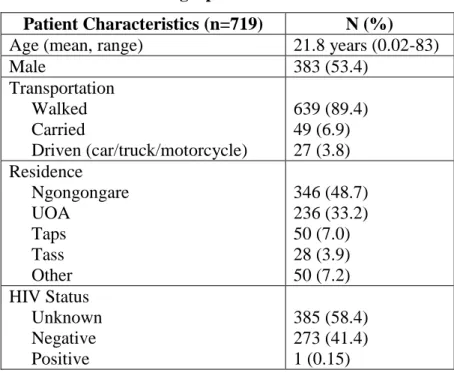
residence. Forty-nine percent of patients were from Ngongongare, a district in close proximity to UOA, and 33.2% were from UOA.
3.2 Patient Presentations
The distribution of patients’ chief complaints is shown in Figure 1. Non-traumatic
presentations comprised the majority of complaints, as trauma accounted for only 5.1% of the presentations. Of non-traumatic presentations, fever (19.5%), respiratory complaints (17.5%), and gastrointestinal complaints (15.0%) were the top three reasons for patient visits. Most chief complaints were roughly evenly distributed by gender. Of those presenting with trauma, 68.6% were male, and of those presenting with an “other” category of chief complaint, 71.4% were male.
3.3 Patient Diagnoses, Procedures and Treatments
The distribution of diagnoses among 20 different categories is shown in Table 2. The top five diagnoses included upper respiratory infection or pneumonia (22.1%); malaria (21.4%); skin, soft tissue, or bone infection (7.9%); genitourinary infection or gynecological problem (6.3%); and ear, nose, or throat pain or infection (5.9%). When stratified by gender, males accounted for 72.7% (8) of trauma/burn diagnoses and 77.8% (14) of lacerations/minor injuries diagnoses.
Overall, blood smear was the most frequently performed procedure, followed by urinalysis and stool cultures.
The distribution of treatments is shown in Figure 3. Most patients (95.3%) received at least one form of treatment for their conditions. Eighty-five percent of patients received one or two treatments. Thirty-five percent of patients received antibiotics, 19.5% received anti-malarial medications, and 16.2% received analgesics as their primary treatment. Overall, analgesics were the most commonly administered treatment, followed by cough medicine and antipyretics.
Most patients (96.9%) were discharged home after their visits. Sixteen patients (2.2%) were referred to another facility, usually the district level hospital. Six patients (0.8%) required admission to the UOA facility for treatment.
4. Discussion
This study presents the patient population and distribution of acute care cases in a small medical center in Arusha, Tanzania. Although this study was conducted at only one center, the results can be used to inform EM development efforts in the country.
The leading diagnoses in this study, upper respiratory infection/pneumonia, malaria, and skin/soft tissue/bone infections, highlight infectious disease as the primary reason for seeking acute care. We found that malaria alone represented 21.4% of all diagnoses. This high case load may reflect the fact that the study was conducted during Tanzania’s rainy season, when mosquito
data suggest that malaria is a major contributor of the burden of acute suffering in this region of sub-Saharan Africa.
This study captured only 11 cases of trauma or burns. Previous studies in sub-Saharan Africa have reported a much larger percentage of trauma diagnoses. Wachira et al. (2011) found that trauma accounted for 21% of adult presentations.(11) Several studies have described a substantial burden of acute injury in children in other sub-Saharan African countries. Mutto et al. (2011) attributed 25% of their cases of childhood injury to road traffic. (9) Another study,
conducted in Mozambique, found that 12% of all pediatric presentations were related to trauma, and of these cases, 14% were traffic-related. (10) The results of this study suggest a lower prevalence of trauma around Arusha, Tanzania. It is unclear whether differences in traffic flow or transportation methods in this area could account for the lower number of trauma cases captured by this study. Some trauma patients may have died at the scene of injury or were taken to a neighboring district hospital for care. Also, the average age of participants in this study was approximately 22 years, suggesting that the UOA Medical Center may not have a large
population of pediatric patients, from whom many cases of trauma and injury arise. Further research is needed to better characterize the types of trauma that occur in and around Arusha, Tanzania. Particularly, study is needed at larger, central facilities open 24 hours per day, where trauma cases and life-threatening illnesses may be more likely to present.
diagnoses. Analgesics, antipyretics, and cold medications were the most commonly administered treatments, suggesting that many patients may require only inexpensive treatments for adequate acute care. Very few patients required admission to the hospital or referral to another center. Thus, small medical centers such as the UOA Medical Center have the capacity to handle the majority of emergency cases seen. Shifting emergency care to these smaller facilities can benefit the entire medical system by decreasing the burden of patient loads at higher-level facilities.(17)
There are several limitations of this study. The patients in this study represent a
convenience sample from a small medical center. The facility is not open 24 hours per day, thus patients presenting with acute, severe problems after hours may have had to seek care at higher-level facilities. Furthermore, the vast majority of patients arrived to the facility on foot, and these patients may represent only those with mild medical problems. Patients too sick to travel to the center and patients who may have died en route to the facility were not recorded. Therefore, the results of this study may under-represent more severe presentations of trauma and illness, presentations that are captured in medical systems with emergency medical transport services.
Some diagnoses made during this study, such as malaria, were made based on clinical findings and not always confirmed with diagnostic testing. Therefore, some bias, particularly overestimation of disease burden, could have occurred with the clinical diagnosis of certain conditions without laboratory confirmation.
5. Conclusions
conditions. Even in this resource-limited setting, most acute care needs can be addressed (often out of necessity) using few procedures or tests to diagnose conditions and requiring inexpensive treatments. This study suggests that it is feasible to expand the provision of emergency medical care in lower-level medical facilities in order to decrease patient loads and reserve resources for more complex cases in higher-level facilities.
6. Acknowledgements
References
1. Levine AC, Presser DZ, Rosborough S, Ghebreyesus TA, Davis M. Understanding barriers to emergency care in low-income countries: View from the front line. Prehosp Disaster Med. 2007;22(5):467.
2. Arnold JL. International emergency medicine and the recent development of emergency medicine worldwide. Ann Emerg Med. 1999;33(1):97-103.
3. Arnold JL, Holliman CJ. Lessons learned from international emergency medicine development. Emerg Med Clin North Am. 2005;23(1):133-48.
4. Hsia R, Razzak J, Tsai AC, Hirshon JM. Placing emergency care on the global agenda. Ann Emerg Med. 2010;56(2):142-9.
5. Balfour C. Emergency medicine -- a new era in south african medicine. S Afr Med J. 2006 Jan;96(1):47-8.
6. Hanewinckel R, Jongman HP, Wallis LA, Mulligan TM. Emergency medicine in paarl, south africa: A cross-sectional descriptive study. International journal of emergency medicine.
2010;3:143-50.
7. Hodkinson PW, Wallis LA. Cross-sectional survey of patients presenting to a south african urban emergency centre. Emergency medicine journal : EMJ. 2009;26:635-40.
8. Mogaka EO, Ng'ang'a Z, Oundo J, Omolo J, Luman E. Factors associated with severity of road traffic injuries, thika, kenya. Pan Afr Med J. 2011;8:20.
9. Mutto M, Lawoko S, Nansamba C, Ovuga E, Svanstrom L. Unintentional childhood injury patterns, odds, and outcomes in kampala city: An analysis of surveillance data from the national pediatric emergency unit. J Inj Violence Res. 2011 Jan;3(1):13-8.
10. de Sousa Petersburgo D, Keyes CE, Wright DW, Click LA, Macleod JB, Sasser SM. The epidemiology of childhood injury in maputo, mozambique. Int J Emerg Med. 2010 Jul 30;3(3):157-63.
11. Wachira BW, Wallis LA, Geduld H. An analysis of the clinical practice of emergency medicine in public emergency departments in kenya. Emerg Med J. 2011 Apr 8.
12. Dowd MD, Keenan HT, Bratton SL. Epidemiology and prevention of childhood injuries. Critical Care Medicine. 2002;30(11):S385-92.
14. Simba DO, Mbembati N, Museru LM, Lema L. Referral pattern of patients received at the national referral hospital: Challenges in low income countries. East Afr J Public Health. 2008;5:6-9.
15. World Health Organization. United republic of tanzania: Health profile. 2011.
Table 1. Patient Demographics.
Patient Characteristics (n=719) N (%)
Age (mean, range) 21.8 years (0.02-83)
Male 383 (53.4)
Transportation Walked Carried
Driven (car/truck/motorcycle)
639 (89.4) 49 (6.9) 27 (3.8) Residence
Ngongongare UOA
Taps Tass Other
346 (48.7) 236 (33.2) 50 (7.0) 28 (3.9) 50 (7.2) HIV Status
Unknown Negative Positive
Table 2. Documented diagnoses. NOS=not otherwise specified; GYN= gynecological
Diagnosis (n=696) Males (%) Females (%) Total (%)
Upper respiratory infection/pneumonia 77 (11.10) 76 (10.95) 154 (22.13)
Malaria 82 (11.82) 67 (9.65) 149 (21.41)
Skin, soft tissue, bone infection 29 (4.18) 25 (3.60) 55 (7.9) Genitourinary infection/GYN 13 (1.87) 31 (4.47) 44 (6.32) Ear, eye, throat pain/infection 27 (3.89) 14 (2.02) 41 (5.89) Gastroenteritis/diarrhea, NOS 24 (3.46) 13 (1.87) 37 (5.32)
Other 23 (3.31) 13 (1.87) 36 (5.17)
Musculoskeletal pain (non-traumatic) 19 (2.74) 13 (1.87) 32 (4.60) Abdominal pain/dyspepsia/constipation 12 (1.73) 14 (2.02) 26 (3.74)
Intestinal parasite 15 (2.16) 6 (0.86) 21 (3.02)
Lacerations/minor injuries 14 (2.02) 4 (0.58) 18 (2.59) Allergies/sinusitis/rhinitis/asthma 5 (0.72) 12 (1.73) 17 (2.44) Pregnancy/pregnancy complications 0 12 (1.73) 12 (1.72)
Rash, NOS 6 (0.86) 6 (0.86) 12 (1.72)
Trauma/burn 8 (1.15) 3 (0.43) 11 (1.58)
Headache, NOS 2 (0.29) 6 (0.86) 8 (1.15)
Fever, NOS 3 (0.43) 4 (0.58) 7 (1.01)
Measles/mumps/varicella 4 (0.58) 2 (0.29) 6 (0.86) Oral infection/tooth/other oral 4 (0.58) 1 (0.14) 5 (0.72)