Summary:
Mindfulness-based approaches have become popular in recent years. This literature review and reflection explores mindful eating as an intervention for weight management, and compares this approach to other traditional behavioral approaches in the context of psychological research. In order to determine the effectiveness and potential impact of mindful eating approaches for weight management, this review was conducted to focus exclusively on studies of mindfulness-based interventions that include food related content, and target a general population of primarily overweight and obese adults. In addition, the review includes an in-depth discussion on the limitations of both the
research literature, and mindful eating as an intervention - followed by possible solutions and future directions.
Introduction:
Due to the current state of obesity in the United States, addressing healthy eating and weight management are of increasing importance. Obesity is considered the most significant public health problem in the United States, and according to the Centers for Disease Control and Prevention (CDC), 69% of US adults age twenty years and over are overweight (body mass index = BMI > 25 mg/m2) or obese (BMI > 30 mg/m2). Obesity is a multifaceted health issue that involves biological, behavioral, and environmental
sources, all of which affect dietary intake and physical activity (1).
The Social Ecological Model (SEM) provides an important foundation for assessing behavior and health problems at multiple levels, in order to make strategic and lasting changes. The SEM recognizes that individual and environmental factors interact and are not independent of each other. Nutrition therapy interventions typically target
as part of a comprehensive approach, mindful eating could potentially lead to sustained weight loss (35,36,37,38,39,40,41,42,43,44,45).
Definition:
Mindfulness is another word for awareness, and has been broadly defined as “paying attention on purpose in the present moment, and nonjudgmentally” (8). The application of this concept to eating is known as “mindful eating,” and is currently being used as a tool to improve eating behaviors, encourage weight control, prevent chronic disease and foster a healthier relationship with food. Mindful eating is simply “eating consciously,” in order to recognize sensations such as taste, physical hunger and satiety cues (9). Table 1
defines the common terms and core principles of mindfulness - all of which are applied to mindful eating interventions (8,9,10,15).
Table 1
Core Principles of Mindfulness:
Awareness - focused attention on the present moment rather than on the past or future. Observation - noticing internal and external experiences with curiosity and neutrality. Nonjudgement - taking a non-evaluative and nonjudgmental stance with regard to internal and external experiences.
Acceptance - allowing thoughts, images and feelings to come and go, without reacting to or identifying with them.
Self-compassion - treating oneself with kindness and appreciation.
History of Mindfulness in the Healthcare Setting:
In the last few years, mindfulness research has grown and studies continue to show that it is effective in treating a number of cognitive and physical conditions, from improving immune function and chronic pain to reducing stress, anxiety and depression (12). Mindfulness has a long history in Eastern spiritual traditions, primarily Buddhism. It was in the 1970s that Dr. Jon Kabat-Zinn, a professor of Medicine Emeritus at the University of Massachusetts Medical School, developed a program called Mindfulness Based Stress Reduction (MBSR), which translated these teachings into a secular context. In recent decades, Western health professionals and researchers have argued that MBSR can benefit individuals with a variety of acute and chronic health conditions (8). For this reason, mindfulness-based approaches have been adapted from traditional mindfulness meditation and developed into a set of skills and interventions that can be taught in both clinical and non-clinical settings. Some examples include psychotherapeutic approaches, such as mindfulness-based cognitive therapy (MBCT), dialectical behavior therapy (DBT) and acceptance and commitment therapy (ACT) (12).
The Mindful Eating Approach:
present moment awareness and cultivating an attitude of self-compassion (12).
Developed by Dr. Jean Kristeller, Mindfulness-Based Eating Awareness Training (MB-EAT) is a well-known mindful eating training program and supported by NIH-funded research. The program integrates elements from MBSR and Cognitive Behavioral
Therapy (CBT). Initially developed for binge eating disorder, the program has since been adapted for weight management (13). This literature review includes study interventions that implemented the MB-EAT program, or select components as part of a
comprehensive behavioral approach (38,42,43).
Mindful eating encompasses a variety of tips, tools, and exercises that are used to teach the principles of mindfulness so that they can be practiced and applied to real life scenarios. Table 2 describes some of the most commonly used strategies and exercises, and includes an evidenced-based explanation.
Table 2
Mindful Eating Tips and Exercises:
Body Scan:
Participants are asked to find a comfortable position either sitting or lying down. A guided meditation then focuses the individual on different body parts, usually beginning with the toes and moving slowly up through the legs, torso, arms, neck, and head. The body scan is different from a relaxation exercise in that participants are asked to notice and observe sensations nonjudgmentally, with interest and curiosity, regardless of how pleasant or unpleasant the sensation might be. Studies have found that the body scan can be an effective exercise for enhancing awareness of internal satiety cues (14).
Raisin Meditation:
Raisins (other foods can be used for this exercise) are passed out and participants are guided through a food meditation in which individuals are cued to observe specific aspects of the raisin, from the appearance, to the texture, smell, and taste (15). If thoughts or emotions arise during the exercise, participants are asked to notice these thoughts non-judgmentally and return attention to the raisin. Studies have found that increased food awareness at mealtime can lead to decreased intake (16).
Disengage from Distractions:
Eat alone when possible and remove all distractions. In order to ease into this behavioral change, it is often recommended to start gradually - eat silently and without distraction for five minutes at each meal, or eat silently for one meal a day. Multi-tasking while eating makes it hard to control intake. Studies have found that distractions such as watching TV, working at a computer, talking on the phone, or reading while eating lead to greater food intake at mealtime (17).
Create a Relaxing Environment:
restaurant cut calories by 18% and increased satisfaction (17).
Eat Slowly and Chew Thoroughly:
Eat slowly with heightened sensory awareness of internal signals and emotions. Take smaller bites and chew food thoroughly aiming for twenty to thirty chews per bite.
Studies have found that extra chewing results in less overall food consumption (18), since satiety is controlled by a number of factors. Hormonal signals are released as partially digested food enters the stomach and small intestine, and it can take twenty minutes after food is first eaten for these chemicals to reach the brain (19).
Stop-Breathe-Bite
This phrase is used to remind individuals to “check-in” during a meal. Putting the fork down, and taking a deep breath between bites is an opportunity to focus on internal hunger/fullness signals and emotions, so that a decision can be made as to whether the body physiologically needs more food (20).
Hunger Scale:
The hunger scale is used to help individuals identify and listen to hunger and fullness cues. Ranging from 0 (very hungry) to 10 (“Thanksgiving full”), individuals are taught to ask themselves how hungry they are, on a scale from 0 to 10. It is recommended that individuals keep a mindful eating journal for a few days in order to rate hunger before and after each meal, noting the physical and emotional sensations that led to that rating (21).
Mechanism of Mindful Eating:
The sight, smell and taste of hyperpalatable food can increase “bliss chemicals” in the brain, prompting a release of dopamine, which activates the limbic and reward areas of the brain and incites hedonic motivation (23). Research in social and cognitive
psychology indicates that automatic responses to appetitive stimuli play a role in the generation of automatic or habitual behaviors, like eating. Food decisions can thus happen unconsciously or “mindlessly.” A proposed mechanism for understanding
mindful eating focuses on specific forms of mental training (see Table 2) that activate the frontal control areas of the brain and develop self-awareness in order to self-regulate one’s response to appetitive stimuli (i.e. hyperpalatable food) (12). Not only do mindful processes engage one’s innate ability to detect and respond to biological hunger and satiety cues, but they train the individual to view thoughts, feelings and sensations of pleasure and reward as passing mental events. This can effectively lessen the
attractiveness of appetitive stimuli and decrease the motivation to respond to hedonic hunger, thus decreasing the behavioral effect (i.e. weight gain) (44).
Comparing Behavioral Change Techniques with Mindful Eating:
Interventions used to affect behavior change in weight loss management often draw on behavioral modifications. Cognitive Behavioral Therapy (CBT) is the most commonly used behavior change therapy and has the most evidence for efficacy (24). CBT focuses on understanding thoughts and feelings in order to identify triggers that influence
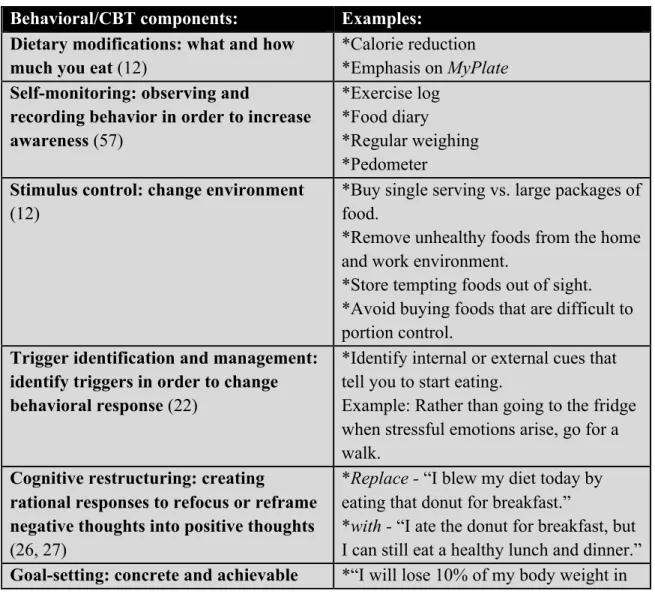
behavioral elements that rely on “self-management” processes, such as distraction, substitution, self-monitoring, reconditioning, or cognitive reframing (26,27). Strategies tend to involve a structured curriculum in order to achieve goals, and can include meal planning and/or arranging the environment to support the plan (i.e. stocking fridge with healthy snacks, avoiding snack aisle in grocery store, etc.). These strategies often yield calorie and physical activity prescriptions (26,27). Like CBT, mindfulness can also be used to interrupt automatic behaviors through trigger identification and self-management techniques (16,26,27). The difference however, as proposed by Dr. Jean Kristeller, founder of MB-EAT, is that “mindfulness approaches extend beyond self-management to encompass self-regulation processes which integrate physiological and psychological homeostasis in order to achieve flexible control” (16). Since humans have an innate ability to respond to biological signals, rather than relying on willpower or self-control techniques, self-regulation engages these naturally occurring internal processes (12). Table 3 and Table 4 serve as illustrations. Table 3 highlights some of the underlying behavior change techniques with regard to traditional approaches - namely CBT. Table 4 highlights components specific to mindful eating.
Table 3
Behavioral/CBT components: Examples: Dietary modifications: what and how
much you eat (12)
*Calorie reduction *Emphasis on MyPlate Self-monitoring: observing and
recording behavior in order to increase awareness (57)
*Exercise log *Food diary
*Regular weighing *Pedometer
Stimulus control: change environment (12)
*Buy single serving vs. large packages of food.
*Remove unhealthy foods from the home and work environment.
*Store tempting foods out of sight. *Avoid buying foods that are difficult to portion control.
Trigger identification and management: identify triggers in order to change behavioral response (22)
*Identify internal or external cues that tell you to start eating.
Example: Rather than going to the fridge when stressful emotions arise, go for a walk.
Cognitive restructuring: creating
rational responses to refocus or reframe negative thoughts into positive thoughts (26, 27)
*Replace - “I blew my diet today by eating that donut for breakfast.”
goals; SMART goals (26, 27) 2.5 months, by substituting 2 glasses of water for two cans of soda each day.”
Table 4
Mindfulness-based components: Examples: Eating modifications: how and why you
eat (14)
*Eat slowly
*Chew 20-30x per bite
*Use chopsticks or your non-dominant hand to encourage slower eating. *Stop-breathe-bite
Self-awareness: awareness of internal thoughts, emotions and feelings such as satiety cues (i.e. taste, hunger, eating and body awareness) (15)
*Guided meditations (i.e. sitting meditation, body scan and raisin meditation)
*Hunger scale
*Food journals that include satiety cues and connect emotions to eating patterns. External awareness: self-directed
attention towards environmental stimuli (13)
*Observational cues: observe the room, the food, and the place setting, with curiosity and a beginner’s mind (15).
Examples: Are there people around? Is there music, noise, or a scent in the room?
What is the temperature like?
*Remove distractions such as computers, books, TV or phone.
Self-regulation: an ability to modulate behavior with flexible control and little effort (12)
* Identify internal or external cues that tell you to start eating, and observe without judgment or commentary.
Example: Rather than going to the fridge when stressful emotions arise, take a few breaths and use the hunger scale to tune into bodily sensations.
De-centering: accepting thoughts as “just” thoughts rather than responding (20)
*Be conscious of positive, negative, and neutral thoughts.
*Observe the thought nonjudgmentally, rather than avoiding or pursuing the thought.
Self-acceptance: cultivate care, self-empathy and self-compassion (40)
*Memorize a set of compassionate phrases and set a time each day to recite.
Example: “May my body be at ease.” “May I be well.”
*Meditation emphasizing self-kindness *Food journal infused with
self-compassionate cues
Example: “What was I thinking about while eating, and were my thoughts compassionate, nonjudgmental, or critical?”
*Practice mind-relaxing methods, such as yoga, meditation, walking, and breathing. *Schedule activities that you enjoy such as reading, volunteering, or attending a concert.
Intention setting: defining values or intentions (desired qualities of action)
(27)
*“I want to be healthy so I have energy to be active with my grandchildren.”
Review of the Literature:
A systematic search was conducted to identify studies that describe a mindful eating paradigm to reduce calories or produce weight loss. Papers were identified from the databases Google Scholar, PubMed, PsycINFO, Academic Search Premier and Web of Science. The search strategy was based on using combinations of the following keywords in the aforementioned databases: mindfulness, mindful, mindful eating, obese, weight, weight management, weight loss, calories, caloric, reduction, intake. Mindful eating interventions were defined as those that employed mindfulness-based approaches and included content related to eating.
Inclusion and Exclusion Criteria:
To be considered for full review, papers were required to meet the following inclusion criteria: a) original articles published in peer-reviewed journals b) intervention studies with pre-post intervention data c) studies using a mindfulness-based intervention
employing food related content, as a treatment for weight management and/or reductions in caloric intake d) studies that included weight and/or reduction in caloric intake as an outcome.
intervention it would fall outside the scope of practice for a Registered Dietitian. Other exclusions included less generalizable study populations such as: a) samples including individuals with a diagnosed eating disorder (anorexia nervosa, bulimia nervosa, binge eating disorder) b) samples with participants undergoing chemotherapy c) samples with women that were pregnant and d) samples including individuals who had undergone bariatric surgery.
Results:
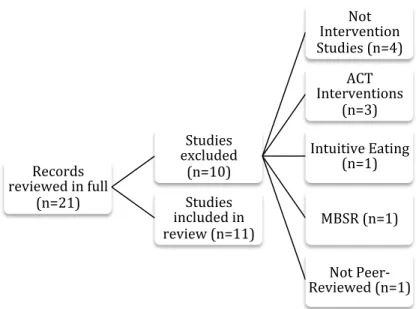
After initial review of paper titles and abstracts, twenty-one studies were reviewed in full for consideration of inclusion in this review. Four were excluded because they were not intervention studies. Three were excluded because they included ACT interventions. One was excluded because it described the intervention as intuitive eating rather than mindful eating - although both terms are related and often used interchangeably, intuitive eating identifies a broader philosophy of which mindful eating is a subset (34). One was excluded because although the intervention was mindfulness-based (i.e. MBSR), it did not include content related to eating. Another study was excluded because it was not published as a peer-reviewed paper. Finally, a total of eleven studies were included in this review (Figure 1).
Figure 1 Process of paper selection.
Study Design Characteristics:
Study characteristics included randomized controlled trials (73%),
(35,36,38,40,41,42,43,45) mixed method studies, (18%) (39,44) and one uncontrolled pilot study (9%) (37). Of the studies that featured a control group, three included non-treatment control groups (36,38,45). Weight-related outcomes were measured in nine out of eleven studies (35,36,37,38,39,40,41,43,45) and caloric intake was measured as an outcome in three studies (42,44,45).
Records reviewed in full
(n=21)
Studies excluded
(n=10)
Not Intervention Studies (n=4)
ACT Interventions
(n=3) Intuitive Eating
(n=1)
MBSR (n=1)
Not Peer-Reviewed (n=1) Studies
Sample Characteristics:
Samples were predominantly female, as seven of the studies (63%) included either all or a majority of female participants (35,36,38,39,42,43,45). Out of nine studies that
recorded ethnicity, eight had samples that were comprised of mostly Caucasian participants (37,38,40,41,42,43,44,45). Only one sample included an underserved population comprised of mostly African Americans (39). Two studies included a university population with a sample of undergraduate students (40,44), and one study included a sample of predominately male military employees, with an average age of twenty-two years old (41). Overall, the average age ranged from twenty-two to fifty-four years old, of which the majority included adults around forty-eight years of age.
Out of ten studies that reported the baseline BMI status of study participants, three included overweight and obese participants (35,38,42), three included only obese participants (37,39,43), two included normal and overweight participants (40,41), and two included normal, overweight and obese participants (36,45). In addition, sample sizes ranged from ten participants, to one hundred and ninety four.
Intervention Characteristics and Effects:
Interventions used a variety of mindfulness-based approaches, and the dose of mindfulness training varied greatly between studies, due to differences in both intervention length (ten minutes to five-and-a-half months) and curriculum. Three interventions were primarily taught using instructional materials, rather than in a class setting (40,41,44) and these interventions used computers, manuals, and food diaries. Group meeting interventions included mindful eating programs such as MB-EAT (36,37,42,43,45), and others included combinations of mindfulness exercises - from meditations to hunger scale applications. The majority of interventions (82%) incorporated both guided and unguided meditations (35,36,37,38,40,41,42,43,45), including the body scan, which was mentioned in four studies (35,36,38,42).
In addition to mindfulness-based approaches, seven out of eleven (35,37,38,41,42,43,45) study interventions included general nutrition and/or exercise information, which was sometimes taught using behavioral and/or CBT strategies. For example, the study by Timmerman et al. evaluated the effect of a Mindful Restaurant Intervention on Weight Management and equally included both mindful eating meditations and CBT strategies (i.e. goal setting and self-monitoring; see Table 3) at each weekly class. Compared to the control, there was a significant decrease in weight and caloric intake (45). It therefore becomes a challenge to discern the active ingredient (mindful eating vs. CBT vs.
comprehensive approach) with regard to weight and calorie outcomes. It should be noted that two of the three studies that exclusively used a mindfulness-based eating intervention (not including additional diet and/or exercise information) demonstrated improved calorie and weight outcomes compared to the control (40,44).
four interventions incorporating compassion, the two studies including self-compassion in addition to mindfulness meditation demonstrated a greater weight loss effect compared to both the control and general mindfulness meditation group (40,41). The remaining two study interventions including a self-compassion component
demonstrated maintenance of weight and calorie intake, in comparison to control
participants that showed statistically significant weight gain and increased calorie intake at follow-up (38,42).
Attrition rates were analyzed to test differences in intervention groups. Overall attrition rates did not significantly differ between treatment and control groups. Of the nine studies that reported retention/attrition rates, the average rate of retention for the treatment group was ~80% (36,37,38,39,40,41,42,43,45) with a range of 58% to 100% retention. It is important to note that the study by Kidd et al. which assessed a mindful eating group intervention for urban, underserved, and obese women, had the lowest rate of retention (58%) (39). Lower retention rates are challenges associated with studying low income, minority women (47).
Weight and Calorie Outcomes:
Nine studies included body weight outcomes (35,36,37,38,39,40,41,43,45) and three reported caloric intake outcomes (42,44,45). Of the nine studies that included body weight outcomes, five of the studies included significant decreases in weight or BMI in the experimental group (Table 5). In addition, four of the nine studies included significant decreases in weight or BMI in the control group (35,36,37,43), and three studies reported significant weight loss among the experimental group compared to the control group (40,41,45). In three of the nine studies, the observed effects on weight at
Table 5
Changes in BMI/weight in the mindfulness intervention groups.
Study BMI/wt. change
(SD) at post-intervention
BMI/wt. change at follow-up (weeks since baseline)
Effect size at post intervention (Cohen’s d)
Alberts et al. (2010)
-1.9 kg (1.7) (p<.01) Not available -0.12 (p<.01)
Alberts et al. (2012)
-.04 kg/m2 (p=.07) Not available -0.06 (p<.10)
**Dalen et al. (2010)
Not reported 12 wk. f/u: -4.0 kg
(p<.01)
Not reported
Daubenmier et al. (2011)
-.06 kg (3.1) (p=.45) Not available -0.02 (ns)
Kidd et al. (2013) -.3 kg/m2 (p=.47) Not available Not reported **Matzios et al.
(2013) –study 2
-1.33 kg (0.99) (p<.001)
Not available -2.0404 (p<.001)
**Matzios et al.* (2014)
MM: -2.7 kg (2.0) MLKM: -3.9 (p<.001)
24 wk. f/u: MM -2.1 kg (2.6)
24 wk. f/u: MLKM -6.4 kg (2.8)
(p<.001)
-1.2163
**Miller et al. (2012)
-1.8 kg (0.5) (p<.01)
-24 wk. f/u: 1.5 kg (0.5)
(p<.01)
-3.29 (p<.01)
**Timmerman and Brown (2012)
-1.7 kg (p<.05) Not available -0.09 (p<.05)
* Two experimental groups: MM - mindfulness meditation, MLKM - mindful loving kindness meditation BMI = body mass index; wt. = weight; ns = not significant; wk. = week; f/u = follow-up
** primary outcome was weight loss
Mindfulness Measures and Outcomes:
Of the seven studies that measured mindfulness pre and post intervention, six reported improved mindfulness (36,37,38,40,42,43). The study by Kidd et al. did not show
improvement in mindfulness using the Mindful Eating Questionnaire (MEQ), though this questionnaire had not been previously validated and might not have been a reliable measure of mindful eating in the underserved minority population (39). The MEQ was also used in the Mason et al. study that evaluated a mindfulness-based intervention on mindful eating, sweets consumption, and fasting glucose levels in obese adults and evidenced adequate internal reliability at each assessment (baseline α = 0.74; 6 months α = 0.77; 12 months α = 0.83) (43). In addition, the Kentucky Inventory of Mindfulness Skills (KIMS) was used in three studies (36,37,38), and the Mindful Awareness and Attention Scale (MAAS) was used in one (40). Both of these questionnaires have been validated for assessment of mindfulness (49,53). The Five Facet Mindfulness
Questionnaire (FFMQ) was developed after revisions were made to the KIMS assessment and thus has advantage over other mindful assessments (54). It has demonstrated
consistent changes with meditation training and symptom improvement with regard to all five subscales (52). Table 6 highlights the corresponding subscales of each mindfulness assessment.
Table 6
MEQ = Mindful Eating Questionnaire; KIMS = Kentucky Inventory of Mindfulness Skills; MAAS = Mindful Attention Awareness Scale; FFMQ = Five Facet Mindfulness Questionnaire
Mindfulness Assessment: Subscales:
MEQ (26) • Awareness
• Distraction • Disinhibition
• Emotional
• External
KIMS (27) • Awareness
• Observe
• Accept
• Describe
MAAS (28) • Receptivity
• Attention
• Sensitive Awareness
• Observe
FFMQ (54) • Observing
• Describing
• Acting with Awareness
Behavioral Measures and Outcomes: In several of the studies, eating behaviors were assessed pre and post intervention, and a
statistically significant decrease in emotional eating with medium and large effect size (Cohen’s d =.54 and .94, respectively) was measured in two out of three studies that assessed this outcome (36,38). The study by Daubenmier et al. demonstrated a non-significant decrease in emotional eating with small effect (Cohen’s d = .01), but it should be noted that it included a sample that reported very low baseline levels of emotional eating. This is significant because individuals identified as “emotional eaters” are more susceptible to weight gain compared to “non-emotional eaters” (38). The three studies that measured food cravings found significant reductions among the treatment group (35,36,44) and in two studies, significant increases in self-efficacy for weight loss increased (39,45). Other statistically significant treatment group outcomes included decreases in body image concern (35), stress, anxiety and depression (37,38), automatic thoughts and cognitive behavioral avoidance (40). Eating behaviors were assessed using a handful of self-report questionnaires. Some of which included: The Dutch Eating
Behavior Questionnaire (DEB-Q), which assesses three subscales of eating behaviors including dietary restraint, emotional eating, and external-based eating (30). The General Food-Cravings Questionnaire Trait (G-FCQ-T) consists of four subscales - preoccupation with food, loss of control, positive outcome expectancy and emotional craving (50). The Three-Factor Eating Questionnaire measures cognitive restraint of eating, disinhibition, and hunger (51). The Emotional Eating Scale (EES) measured the urge to eat in response to emotions with three subscales – anger, anxiety and depression (45).
Limitations:
While this review demonstrated significant and positive weight and calorie outcomes among 73% of the studies, with 36% of the studies showing positive outcomes compared to a control group, there are limitations to this review that should be addressed. Overall, the studies included samples that were relatively small and homogenous - primarily made up of Caucasian women. Only one study included a sample exclusively comprised of underserved and minority participants, which greatly limits the generalizability of the findings. Since overweight and obesity rates are significantly higher among minority and underserved populations (55), future studies should implement these interventions in more socioeconomically and demographically diverse populations.
Several limitations exist with regard to study design. Three of the reviewed studies featured no-treatment control groups and therefore failed to demonstrate effectiveness of the current intervention compared to other behavioral interventions. In addition, follow-up measures were relatively short ranging from three to twelve months, preventing further analysis of weight maintenance. Furthermore, all eleven studies used self-report questionnaires, which are known to limit findings since responses can produce bias and affect the validity of outcome measures.
are associated with weight and calorie outcomes, a measure of mindfulness should be included in all future studies, particularly those that incorporate comprehensive
interventions. At the same time, caution should be exercised in confirming the efficacy of these interventions when based solely on mindfulness self-report measures, due to the variability in mindfulness definitions, and the strong possibility for semantic differences in respondent comprehension (56).
Discussion:
This review suggests that the effectiveness of mindful eating interventions may be greater in populations particularly susceptible to problematic eating behaviors
(35,36,37,38,39,40,45). Several of the studies focused on outcomes related to eating behaviors, demonstrating positive results among emotional and external eating, food cravings, dichotomous thinking, body image dissatisfaction, disinhibition, stress, anxiety and depression. Though we often associate maladaptive eating behaviors with disordered eating such as binge eating disorder, it is not uncommon for individuals without eating disorders to acknowledge eating in response to emotions (i.e. stress), external cues (i.e. sight and smell), food cravings, etc. (12). In addition, research has demonstrated that problematic eating behaviors are more common among obese individuals, and are typically associated with an unhealthy diet, including greater intake of foods high in sugar and fat (39, 40). Existing behavioral interventions may not cultivate the self-awareness necessary to initiate and maintain weight-control behaviors, particularly in populations more susceptible to problematic eating behaviors.
Furthermore, 73% of the studies reviewed included additional nutrition and/or exercise education, sometimes taught using traditional behavioral approaches such as CBT. Each of those studies demonstrated positive outcomes either with weight loss, calorie
reduction, and/or eating behaviors. This suggests that a program with a combination of behavioral and mindful eating strategies in addition to nutrition and/or exercise
instruction may yield more positive effects for weight loss and/or calorie reduction. In addition, the results of this review indicate that mindful eating interventions may not produce greater weight loss effects than traditional behavioral interventions, but they may be more effective with regard to long-term weight maintenance (38,42), though more studies with longer-term follow-up are needed to substantiate this implication. Though not all eleven studies from this review assessed class attendance, reported attendance ranged from roughly one to four missed classes, which could underestimate conclusions about intervention efficacy. Mindfulness-based eating programs often require skills building, and are typically additive in nature. Teaching self-awareness and
trained to observe their thoughts as mental events in reaction to appetitive stimuli, led to a reduction in calories compared to the control (44). These findings confirm the need for more studies that involve less time-consuming mindful eating interventions in order to analyze the potential for less invasive strategies and the possibility for greater public health impact. Such research might explore tools, such as online platforms or phone apps. Mindfulness technology has become increasingly popular, which is not surprising given the current digital health revolution. Despite mindful eating’s emphasis on “presence” and disengagement from technological distractions, using technology to guide and encourage mindful eating could enhance the efficacy of already existing mindful eating programs and increase the total number of people reached (46).
Finally, in order to promote long-term sustainability and decrease attrition rates,
marketing mindful eating as a lifestyle change rather than a weight loss intervention may deter individuals from abandoning the approach once goals have been met (46). Among the reviewed studies that reported retention/attrition, the average retention rate was 80%, and is consistent with conventional weight loss programs (52), though in a natural setting, getting buy-in from a variety of different populations could be challenging, particularly from those who have had little exposure to mindfulness and meditation and who often dismiss mindfulness as a new-age fad or a religious practice. A possible solution could involve discussing this concern when introducing the concept of mindfulness, which might eliminate some of the fear surrounding class expectations and/or religious identity. Emphasizing that the concept of mindfulness is secular by framing the intervention from a scientific viewpoint, and advertising the intervention using common language, could increase buy-in and eliminate early drop-outs (40).
Conclusion:
In conclusion, this review provides evidence to support the use of mindful eating for weight management. In the reviewed studies, the mindful eating interventions contributed to positive outcomes with regard to weight, caloric intake, mindfulness and problematic eating behaviors. Research supporting mindful-eating interventions has grown
References:
1. Ogden, C., Carroll, M., Kit, B., & Flegal, K. (2014). Prevalence of Childhood and Adult Obesity in the United States, 2011–2012. Survey of Anesthesiology, 206-206.
2. Golden, S. (2013a). Overview of the Social Ecological Model. UNC SPH Lecture. (2013, October)
3. Wansink, B. (2007). Mindless eating: Why we eat more than we think. Random House LLC.
4. Wing, R. R., & Phelan, S. (2005). Long-term weight loss maintenance. American Journal ofClinical Nutrition, 82(1 Suppl), 222S-225S.
5. Turk, M. W., Yang, K., Kravnak, M., Sereika, S. M., Ewing, L.J., & Burke, L. E. (2009). Randomized Clinical Trials of Weight-Loss Maintenance: A Review. The Journal of Cardiovascular Nursing, 24(1), 58-80.
6. Wilson, G. T., & Brownell, K. D. (2002). Behavioral treatment for obesity. In C. G. Fairburn, & K. D. Brownell (Eds.), Eating disorders and obesity. New York: Guilford Press.
7. Franz, M., Vanwormer, J., Crain, A., Boucher, J., Histon, T., Caplan, W., Pronk, N. (2007) Weight-Loss Outcomes: A Systematic Review and Meta-Analysis of Weight-Loss Clinical Trials with a Minimum 1-Year Follow-Up. Journal of the American Dietetic Association, 1755-1767.
8. History of MBSR. (n.d.). Retrieved December 6, 2015, from http://www.umassmed.edu/cfm/stress-reduction/history-of-mbsr/
9. Cheung, L. (2010). Savor: Mindful eating, mindful life. New York: HarperOne. 10. Albers, S. (2008) Eat, drink and be mindful: how to end your struggle with
mindless eating and start savoring food with intention and joy. New Harbringer Publications, Oakland.
11. Baer, Ruth A., ed. Mindfulness-Based Treatment Approaches: Clinician's Guide to Evidence Base and Applications. (2005) Burlington, MA, USA: Academic Press. ProQuest ebrary.
12. Kristeller, J., & Epel, E. (2014). Mindful Eating and Mindless Eating: The Science and the Practice. The Wiley Blackwell Handbook of Mindfulness Ie/The Wiley, 913-933.
14. Alberts, H. J. E. M., Thewissen, R., & Raes, L. (2012). Dealing with problematic eating behaviour. The effects of a mindfulness-based intervention on eating behavior, food cravings, dichotomous thinking and body image concern. Appetite, 58, 847–851.
15. Kabat-Zinn, J. (1990). Full catastrophe living: Using the wisdom of your body and mind to face stress, pain, and illness. New York, NY: Delaeorte Press. 16. Robinson et al. (2013) Eating attentively: a systematic review and meta-analysis
of the effect of food intake memory and awareness on eating. Am J Clin Nutr. 97:728-42 .
17. Wansink, B., & Ittersum, K. (2012). Fast Food Restaurant Lighting And Music Can Reduce Calorie Intake And Increase Satisfaction 1,2. Psychological Reports, 228-232.
18. Tanihara, S., Imatoh, T., Miyazaki, M., Babazono, A., Momose, Y., Baba, M., et al. (2011). Retrospective longitudinal study on the relationship between 8-year weight change and current eating speed. Appetite, 179-183.
19. Why eating slowly may help you feel full faster - Harvard Health Blog. (2010, October 19). Retrieved December 6, 2015, from
http://www.health.harvard.edu/blog/why-eating-slowly-may-help-you-feel-full-faster-20101019605
20. Caldwell, K., Baime, M., & Wolever, R. Q. (2012). Mindfulness based approaches to obesity and weight loss maintenance. Journal of Mental Health Counseling, 34, 269–282.
21. Mindful Eating - Studies Show This Concept Can Help Clients Lose Weight and Better Manage Chronic Disease. (n.d.). Retrieved December 6, 2015, from http://www.todaysdietitian.com/newarchives/030413p42.shtml
22. Forman, E., & Butryn, M. (2014). A new look at the science of weight control: How acceptance and commitment strategies can address the challenge of self-regulation. Appetite, 171-180.
23. Hartley, A. (2013 - Spring). Adult Obesity. Lecture presented at UNC Gillings SPH, Chapel Hill.
24. Academy of Nutrition and Dietetics. (2013). ADA nutrition counseling evidence analysis project: Behavior change theories. Retrieved from
http://andevidencelibrary.com/topic.cfm?format_tables=0&cat=1397
25. Bahl, S., Milne, G., Ross, S., & Chan, K. (2012). Mindfulness: A Long-Term Solution for Mindless Eating by College Students. Journal of Public Policy & Marketing, 173-184.
27. Lillis, J., & Kendra, K. (2014). Acceptance and Commitment Therapy for weight control: Model, evidence, and future directions. Journal of Contextual Behavioral Science, 1-7.
28. Bahl, S., Milne, G., Ross, S., & Chan, K. (2012). Mindfulness: A Long-Term Solution for Mindless Eating by College Students. Journal of Public Policy & Marketing, 173-184.
29. Marchiori, D., & Papies, E. (2014). A brief mindfulness intervention reduces unhealthy eating when hungry, but not the portion size effect. Appetite, 75:40-45. 30. Strien, T., Frijters, J., Bergers, G., & Defares, P. (1986). The Dutch Eating
Behavior Questionnaire (DEBQ) for assessment of restrained, emotional, and external eating behavior. Int. J. Eat. Disord. International Journal of Eating Disorders, vol. 5, no. 2, pp. 295–315.
31. Tapper, K., Shaw, C., Ilsley, J., Hill, A., & Moore, L. (2009). Exploratory randomised controlled trial of a mindfulness-based weight loss intervention. Appetite, 52: 396–404.
32. Niemeier, H., Leahey, T., Reed, K., Brown, R., & Wing, R. (2012). An Acceptance-Based Behavioral Intervention for Weight Loss: A Pilot Study. Behavior Therapy, 43: 427–435.
33. Forman, E., Hoffman, K., McGrath, K., Herbert, J., Brandsma, L., & Lowe, M. (2007). A comparison of acceptance- and control-based strategies for coping with food cravings: An analog study. Behaviour Research and Therapy, 45, 2372– 2386.
34. Smith, M. (2014, March 19). Mindful Eating: Freedom from Dieting. Retrieved December 6, 2015, from
https://my.clevelandclinic.org/health/transcripts/1618_mindful-eating-freedom-from-dieting
35. Alberts, H., Mulkens, S., Smeets, M., & Thewissen, R. (2010). Coping with food cravings. Investigating the potential of a mindfulness-based intervention.
Appetite, 55:160-163.
36. Alberts, H., Thewissen, R., & Raes, L. (2012). Dealing with problematic eating behaviour. The effects of a mindfulness-based intervention on eating behaviour, food cravings, dichotomous thinking and body image concern. Appetite, 847-851. 37. Dalen, J., Smith, B., Shelley, B., Sloan, A., Leahigh, L., & Begay, D. (2010). Pilot
study: Mindful Eating and Living (MEAL): Weight, eating behavior, and psychological outcomes associated with a mindfulness-based intervention for people with obesity. Complementary Therapies in Medicine, 260-264.
39. Kidd, L., Graor, C., & Murrock, C. (2013). A Mindful Eating Group Intervention for Obese Women: A Mixed Methods Feasibility Study. Archives of Psychiatric Nursing, 27:211-218.
40. Mantzios, M., & Wilson, J. (2013). Making concrete construals mindful: A novel approach for developing mindfulness and self-compassion to assist weight loss. Psychology & Health, 422-441.
41. Mantzios, M., & Wilson, J. (2014). Exploring Mindfulness and Mindfulness with Self-Compassion-Centered Interventions to Assist Weight Loss: Theoretical Considerations and Preliminary Results of a Randomized Pilot Study. Mindfulness, 824-835.
42. Miller, C., Kristeller, J., Headings, A., & Nagaraja, H. (2013). Comparison of a Mindful Eating Intervention to a Diabetes Self-Management Intervention Among Adults With Type 2 Diabetes: A Randomized Controlled Trial. Health Education & Behavior, 145-154.
43. Mason, A., Epel, E., Kristeller, J., Moran, P., Dallman, M., Lustig, R., . . . Daubenmier, J. (2015). Effects of a mindfulness-based intervention on mindful eating, sweets consumption, and fasting glucose levels in obese adults: Data from the SHINE randomized controlled trial. J Behav Med Journal of Behavioral Medicine.
44. Papies, E., Pronk, T., Keesman, M., & Barsalou, L. (2015). The benefits of simply observing: Mindful attention modulates the link between motivation and behavior. Journal of Personality and Social Psychology, 148-170.
45. Timmerman, G., & Brown, A. (2012). The Effect of a Mindful Restaurant Eating Intervention on Weight Management in Women. Journal of Nutrition Education and Behavior, 22-28.
46. Mantzios, M., & Wilson, J. (2015). Mindfulness, Eating Behaviours, and Obesity: A Review and Reflection on Current Findings. Curr Obes Rep Current Obesity Reports, 141-146.
47. Barnett, J., Aguilar, S., Brittner, M., & Bonuck, K. (2012). Recruiting and retaining low-income, multi-ethnic women into randomized controlled trials: Successful strategies and staffing. Contemporary Clinical Trials, 925-932. 48. Baer RA, Smith GT, Allen KB. (2004). Assessment of mindfulness by self-report
the Kentucky inventory of mindfulness skills. Assessment. 11:191–206.
49. Brown, K.W. & Ryan, R.M. (2003). The benefits of being present: Mindfulness and its role in psychological well-being. Journal of Personality and Social Psychology, 84, 822-848.
51. Stunkard AJ, Messick S. (1985) The three-factor eating questionnaire to measure dietary restraint, disinhibition and hunger. Journal of Psychosomatic Research, 29(1):71-83.
52. Carmody, J., and Baer, R. A. (2008). Relationships between mindfulness practice and levels of mindfulness, medical and psychological symptoms and well-being in a mindfulness-based stress reduction program. J. Behav. Med. 31, 23–33. 53. Baum, C., Kuyken, W., Bohus, M., Heidenreich, T., Michalak, J., & Steil, R.
(2009). The Psychometric Properties of the Kentucky Inventory of Mindfulness Skills in Clinical Populations. Assessment, 220-229.
54. Baer, R. A., Smith, G. T., Lykins, E., et al. (2008). Construct validity of the five facet mindfulness questionnaire in meditating and no meditating samples. Assessment, 15(3), 329-42.
55. Maximizing The Impact of Obesity-Prevention Efforts In Black Communities: Key Findings and Strategic Recommendations. (2014, September 1). Retrieved December 6, 2015, from http://stateofobesity.org/disparities/blacks/
56. Vago, D., & Silbersweig, D. (2012). Self-awareness, regulation, and self-transcendence (S-ART): A framework for understanding the neurobiological mechanisms of mindfulness. Frontiers in Human Neuroscience Front. Hum. Neurosci.
57.Obesity Action Coalition » Self-Monitoring – The Way to Successful Weight Management. (n.d.). Retrieved December 8, 2015, from
http://www.obesityaction.org/educational-resources/resource-articles-2/weight-loss-surgery/self-monitoring-the-way-to-successful-weight-management