Abstract
Background: Obesity has become an increasing health problem in the US over the past several decades,
and is associated with health problems in all populations. Studies investigating the effects of obesity on
pregnancy have shown an increase in adverse perinatal outcomes.
Purpose: To review the literature on the effects of pre-‐pregnancy weight loss on perinatal outcomes
among overweight and obese mothers.
Data sources: PubMed and ISI Web of Knowledge were searched for relevant articles from 4/10/2011 to
5/23/2011; previous reference lists were reviewed to find other relevant studies.
Data extraction: The review of the literature included 1021 abstracts and 55 full-‐text articles. Ten studies
were included.
Study selection: Studies deemed to have “good” and “fair” internal validity were included in analysis.
Data synthesis: The evidence presents a mixed picture. Many studies were not significantly powered to
produce statistically significant differences in outcomes. Although it does appear that pre-‐pregnancy
weight loss may be associated with a decrease in preeclampsia and macrosomia, the effects on preterm
birth, cesarean section, intrauterine growth restriction, low birth weight, and perinatal mortality are
unclear. More high quality studies are needed to elucidate the effects of pre-‐pregnancy weight loss on
these perinatal outcomes.
Conclusion: While it appears that pre-‐pregnancy weight loss may be associated with a decrease in
preeclampsia and macrosomia, the evidence is ultimately insufficient to determine the effects of pre-‐
Overweight and obesity are increasing health problems in the US and around the world. Furthermore,
numerous health and birth problems are known to be associated with overweight and obese status. This
systematic review investigates the effects of pre-‐pregnancy weight loss on perinatal outcomes among
overweight and obese mothers.
Introduction
Over the past few decades, the startling trend of increasing weight and adiposity amongst the American
population has rapidly become an obesity epidemic. Obesity is a public health problem that has quickly
become one of the most common afflictions in the world. According to data from the National Health
and Nutrition Examination Study (NHANES) accumulated from 1971 to 2008, the prevalence of
overweight and obese populations has steadily increased over the last 30 years, to the point that the
age-‐adjusted prevalence of overweight and obesity among adults aged 20 or older was 68.0%.1 The
changes associated with an increasingly unhealthy diet and decreased activity levels are just a few of the
factors that account for the steady rise in weight and adiposity amongst almost all demographic groups
in the United States. Now, obesity can be considered a public health emergency in the United States, a
problem that is steadily increasing in severity without any immediate solution.
The health implications of obesity are widely known and have been heavily studied. Obesity is known to
be a risk factor for many chronic conditions including diabetes, hypertension, hypercholesterolemia,
stroke, heart disease, certain cancers, and arthritis.1 As the rates of obesity continue to increase year
after year, the incidence of these chronic diseases are projected to increase as well. If obesity continues
to increase at its current rates, it is expected that health care costs due to conditions arising from
obesity could range from 860.7 to 956.9 billion US dollars by the year 2030. This would be roughly
result of obesity as well as increases in health care costs stemming from obese and overweight
individuals, the issue of obesity has become a public health emergency.
In the area of women’s health, the obesity epidemic is even more alarming. 2008 NHANES data shows
that while a larger proportion of men than women are likely to be overweight or obese (72.3% vs.
64.1%, respectively), as individuals, women were still more likely than men to be obese (35.5% vs.
32.2%).1 An analysis of all accumulated NHANES data (beginning with NHANES I in 1971-‐1974) also
shows that the annual increase in weight as determined by Body Mass Index (BMI) has been
substantially greater for women compared to men. In fact, women have an annual increase in BMI of
0.911 percentage points as compared to men who have an annual increase in BMI of 0.653 percentage
points.2 The same analysis projects that by the year 2030, 87.2% of US women will be overweight or
obese. In some subgroups, the rates of overweight and obesity are alarmingly high; for example, the
prevalence of overweight and obesity amongst African American women is already 78%.2 Taken
togethere, these facts indicate that obesity rates are rising amongst women and that consequently,
women are at a greater risk for chronic conditions as a result of being overweight or obese.
In taking a closer look at the obese populations in women, NHANES data found that 59.5% of women of
childbearing age, ages 20-‐39, are overweight and obese.1 While this age range does not represent all
women who become pregnant in the United States, it does represent the majority. With a growing
number of women of reproductive age becoming obese and overweight, the number of overweight and
obese mothers is increasing as well. This represents a serious problem in health care, as there are
numerous health and birth problems known to be associated with obesity in pregnancy. These
problems include but are not limited to: increased risk of miscarriage, birth trauma, protracted labor,
complications, vaginal birth after cesarean (VBAC) failure, instrumental delivery, macrosomia, and
maternal death. 3, 4 In an effort to combat obesity, many women are electing to undergo various
interventions such as diet and exercise or even surgery; however, some of these interventions in women
of a reproductive age who are initiating pregnancy may have consequences on birth outcomes. The
focus of this paper will be to conduct a systematic review of the effects of pre-‐pregnancy weight loss on
perinatal outcomes among overweight and obese mothers.
Historical Perspective of Obesity
Obesity is defined by the World Health Organization (WHO) as abnormal or excessive fat accumulation
that may impair health. The National Institute of Health’s (NIH) definition of overweight and obesity is
based on a person’s Body Mass Index (BMI), a number obtained by combining a person’s height in
meters and weight in kilograms. Due to the ease with which it can be calculated and its relative
accuracy in estimating the amount of a person’s visceral fat, BMI has become the most widely used
measure in determining categories of bodyweight. This number is generally considered to be an
appropriate substitute for the actual measurement of a person’s adiposity, especially on population
levels. An adult with a BMI between 18.5 – 24.9 kg/m2 is considered to be of normal weight. An adult
with a BMI between 25.0 – 29.9 kg/m2 is considered to be overweight. Obesity is described as any BMI
over 30.0 kg/m2 with further subdivisions into classes of obesity. There are three defined classes of
obesity with class I being the least severe (BMI 30.0 – 34.9 kg/m2) and classes II (35.0 – 39.9 kg/m2) and
III (≥ 40.0 kg/m2) being successively greater in weight and severity.3 The obesity classes aid in
determining treatment options: therapeutic lifestyle changes such as increased physical activity and
forms of weight loss such as bariatric surgery or pharmacotherapy are indicated for people with more
extreme obesity (class II or III).5 These measures of BMI are illustrated in Table 1.
Table 1. Body mass index (BMI) and obesity
BMI (kg/m2)
Normal weight 18.5 – 24.9
Overweight 25.0 – 29.9
Obese ≥ 30.0
Class I obesity 30.0 – 34.9
Class II obesity 35.0 – 39.9
Class III obesity ≥ 40.0
The proportion of people who are obese has increased in the United States over the past 50 years, and
with the spread of Western diets and the effects of globalization, the proportion of people who are
obese has increased around the world.6 In 1962, just 13% of the US population was classified as obese;
today, over two-‐thirds of the country is either overweight or obese. Since 1980, obesity rates in adults
has doubled and children aged 12-‐19 have tripled their obesity rates.3 Obesity has become a chronic
health risk, contributing to greater than 100,000 deaths per year, and it has been recognized as a leading
cause of premature mortality in women in the US.7
Causes of Obesity
While the primary cause of While the primary cause of obesity is thought to be a “multifactorial milieu”
of environmental, behavioral, genetic, and socioeconomic factors3, more concrete reasons for the
recent obesity epidemic can be attributed to the rise in the availability and consumption of energy-‐
dense foods in conjunction with the lack of physical activity by modern society. Other factors associated
pharmaceutical iatrogenesis, as well as a reduction in the variability of ambient temperatures. Although
the aforementioned factors affect both men and women, there is a specific factor contributing to the
obesity epidemic which is exclusive to women: pregnancy. Both epigenetic and non-‐epigenetic factors
in pregnant women have been shown to contribute to the obesity of offspring. There is growing
evidence that maternal obesity can epigenetically impact offspring through intrauterine effects.
Additionally, the phenomenon of increasing maternal age in modern societies has been connected to
increased obesity in children.6
Obesity and Pregnancy
While pregnancy has been shown to affect obesity in offspring, the obesity epidemic has affected
pregnancy as well. Now, more than 40% of women who are initiating pregnancy are overweight or
obese. Eight percent of these pregnant women are classified as class III obese, with a BMI of ≥ 40.0
kg/m2.3 These kinds of excessive weight gain and obesity during pregnancy have been identified as
independent risk factors for maternal and fetal complications of pregnancy, often with significant
lifelong consequences.7 This fact is concerning because greater than 60% of previous gravidas, women
who have given birth previously, become overweight or obese with their subsequent pregnancies. The
compounded effects of obesity in multiparous women can adversely affect the gestational environment
of the fetus.39 Artal et al propose that excessive weight gain during pregnancy can cause an
intergenerational “vicious cycle” of obesity, causing overweight or obese mothers to give birth to
macrosomic daughters, who are then likely to become obese and give birth to macrosomic offspring
themselves.7
Although it has been clearly established that obesity has a negative impact on women and in particular,
are trying to lose weight prior to pregnancy is less clear. While there is much research and literature
available on the management of obese women during pregnancy and the maternal outcomes associated
with obesity, many of these studies do not discuss the effects of weight loss in obese women on birth
outcomes. Much of the research that has been conducted is very dated and does not have specific
recommendations for the various classes of obesity or the impact on birth outcomes. For example, the
Institute of Medicine (IOM) determined in 2009 that overweight women (BMI 25.0 – 29.9) should limit
their gestational weight gain (GWG) to 7-‐11.5 kg, while obese women (BMI ≥ 30) should limit their GWG
to 5-‐9 kg, compared to the suggested GWG of 11.5-‐16 kg for women of normal weight (BMI 18.5-‐24.9).
These recommendations from the IOM were based on evidence from studies such as Kiel et al. and
Bodnar,et al. that state that limits to weight gain in morbidly obese women may be beneficial for birth
outcomes.8, 9 However, the IOM was not able to provide specific recommendations for the three classes
of obesity due to lack of research.10 Recently published research suggests that moderate weight gain,
rather than weight loss, is most appropriate for obese mothers, but that the amount of suggested
weight gain should be tailored for mothers depending on their class of obesity.11
Obesity and Birth Outcomes
A main focus of this paper will be trying to discern the impact on birth outcomes in overweight or obese
women with pre-‐pregnancy weight loss. In trying to ascertain the effects of overweight and obesity on
birth outcomes, it is important to separate them from the effects of pre-‐existing conditions such as
diabetes. This is difficult, as most studies that study obesity and weight loss will include a significant
number of women with hyperglycemia. Furthermore, controversy has long existed as to whether the
adverse effects of overweight/obesity and hyperglycemia associated with birth outcomes are
independent.6 Early studies of nulliparous women proposed that hyperglycemia and obesity were not
independent risk factors for macrosomia and hypertensive disorder in pregnancy, and that
hyperglycemia was more significantly related to adverse outcomes.34 In contrast, other studies that
looked at women with gestational diabetes came to the conclusion that maternal obesity was the
stronger risk factor for macrosomia.35 To further confound things, several other studies that observed
women with and without gestational diabetes suggested that obesity was associated with higher rates
of hypertension and macrosomia, but that gestational hyperglycemia was associated with cesarean
section. Larger, more recent studies in the US and Spain have demonstrated an independent, increased
risk of cesarean section and macrosomia with maternal obesity, pre-‐existing diabetes, diet-‐treated
gestational diabetes, and insulin-‐treated gestational diabetes.36 37 38 Together, these studies suggest that
maternal obesity and maternal hyperglycemia do have an independent impact on several of the birth
outcomes listed above.6
Obesity Interventions
Clearly, as we begin to understand the adverse effects that overweight and obesity have on all aspects
of health, the importance of weight loss and weight loss interventions becomes paramount.
Interventions for the management of obesity have been broadly described as fitting into three
categories: behavioral, medical, and surgical.
Behavioral Interventions
Behavioral weight loss interventions include diet and exercise. These interventions are difficult for
patients to sustain on a long-‐term basis and require considerable support and motivation. Considerable
weight loss can occur but can be easily regained if there is not strict adherence to the behavioral
change.12
Medical Interventions
Medical interventions usually consist of weight loss medications used in conjunction with diet and
exercise such as orlistat, sympathomimetic drugs, and other commonly used over-‐the-‐counter
pharmaceuticals. Many of these medications have adverse side effects due to their mechanism of
action. Orlistat, for example, is a lipase inhibitor that reduces digestion and absorption of dietary fat.
Sympathomimetic drugs such as phentermine or diethylpropion are drugs that are used for short term
weight loss. They are amphetamine derived antisuppressants that centrally release dopamine and
noradrenaline.13 A systematic review by Neovius et al. showed that pharmacologic therapy can be an
effective method to achieve significant weight loss.14
Surgical Interventions
Surgical procedures for weight loss are encompassed in the field of bariatric surgery. This has been
shown to be the most effective method for long-‐term substantial weight loss; thus it is very effective at
improving or relieving obesity-‐related comorbidities, increasing quality of life, and decreasing mortality.
Bariatric surgery can be further classified into two sub-‐categories: restrictive procedures and
malabsorptive procedures. Restrictive procedures limit the volume of food the stomach can hold and
slow its release into the intestines. Today, the most commonly performed restrictive procedure is
adjustable gastric banding. In contrast, malabsorptive procedures restrict the absorption of nutrients to
the terminal ileum, where food and digestive enzymes are finally able to mix. Currently, this type of
procedure is only considered for individuals with a BMI greater than 50, as problems with protein
malnutrition, micronutrient deficiencies, and diarrhea are common.12
Another surgical intervention, the Roux-‐en-‐Y gastric bypass, is a hybrid restrictive/malabsorptive
procedure now frequently performed laparoscopically. In this procedure the stomach is divided into “a
small proximal pouch and a distal bypassed remnant. The proximal jejunum is anastomosed with this
pouch to form the gastric limb, whereas the end of the duodenum is anastomosed with the distal
jejunum to form the biliary limb. The remaining small bowel distal to the duodenal anastomosis forms a
common limb where food finally mixes with pancreatic and biliary secretions, with the result that
nutrients can be absorbed.”12
Together, Roux-‐en-‐Y gastric bypass and laparoscopically-‐placed adjustable gastric banding (LAGB) are
the most commonly performed surgical weight loss procedures. The National Institute for Health and
Clinical Excellence (NICE) guidelines recommend bariatric surgery as a weight loss treatment option only
with weight loss. Additionally, patients must have failed to achieve or sustain adequate weight loss for a
period of at least 6 months using all non-‐surgical methods, and should be receiving or be due to receive
intensive management in a specialist obesity service. They must also be physically fit for surgery and
able to commit to long-‐term follow-‐up care.12
Obesity Interventions and Pregnancy
Each of the aforementioned methods for weight loss is available for overweight and obese women of
childbearing age. This paper will focus on the effects of pre-‐pregnancy weight loss on birth outcomes
including premature delivery, macrosomia, shoulder dystocia, low birth weight, and perinatal mortality.
The ideal time for intervention (weight loss) is certainly before pregnancy, as weight loss during
pregnancy increases the risk of delivering an infant that is small-‐for-‐gestational age (SGA)10
Therefore, it is important to ascertain just how effective weight loss interventions can be for overweight
and obese women attempting to have children, and how this intervention will affect the outcome of
their pregnancies. Thus, we need a systematic review of the question: Among overweight and obese
women of childbearing age, does pre-‐pregnancy weight loss lower the incidence of adverse pregnancy
outcomes such premature delivery, intrauterine growth restriction, low birth weight, macrosomia,
shoulder dystocia, cesarean section, preeclampsia, and perinatal mortality?
Methods
The focused question that this paper will address is: “Among overweight and obese women of
childbearing age, does pre-‐pregnancy weight loss lower the incidence of adverse pregnancy outcomes
such as premature delivery, intrauterine growth restriction, low birth weight, macrosomia, cesarean
section, preeclampsia, and perinatal mortality?” For the purposes of this systematic review, premature
delivery is defined as birth before 37 weeks of gestation. Intrauterine growth restriction (IUGR) is
defined as a fetus whose weight is below the 10th percentile for its gestational age. Low birth weight is
defined as a newborn infant weighing less than 2500 grams at birth. Macrosomia is defined as a
newborn infant weighing greater than 4000 grams at birth.
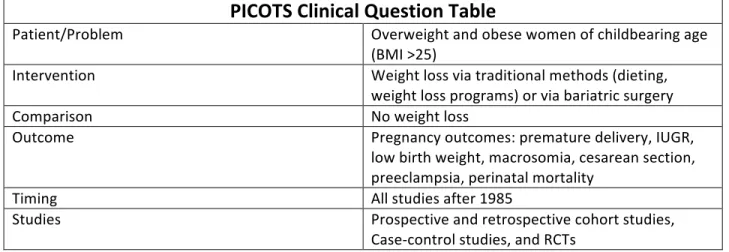
Table 2. Clinical question in PICOTS format
PICOTS Clinical Question Table
Patient/Problem Overweight and obese women of childbearing age
(BMI >25)
Intervention Weight loss via traditional methods (dieting,
weight loss programs) or via bariatric surgery
Comparison No weight loss
Outcome Pregnancy outcomes: premature delivery, IUGR,
low birth weight, macrosomia, cesarean section, preeclampsia, perinatal mortality
Timing All studies after 1985
Studies Prospective and retrospective cohort studies,
Case-‐control studies, and RCTs
In formulating my focused question, I decided to search for literature on studies on weight loss in the
pre-‐pregnancy or interpregnancy period. Studies looking at gestational weight management in obese
and overweight mothers have already been reviewed,11, 15 and guidelines on gestational weight gain
have already been established to optimize fetal and maternal outcomes. Therefore I will not be
will also not focus on the maternal outcomes of overweight and obesity on maternal outcomes. The
effects of overweight and obesity on maternal outcomes of pregnancy have also already been
reviewed.4 I will also not be looking at the effects of weight loss on conception and fertility. While this is
an interesting area of research, the goal of this paper is to focus on perinatal outcomes, specifically the
effects on the newborn. Studies that only attempted to compare different weight loss methods to each
other and did not focus on obese or non-‐obese populations were not included as they do not have much
utility in addressing the focused question of this paper. I also excluded case studies and studies that
included less than 20 participants in the study group. Furthermore, studies that looked at birth
outcomes specifically in patients with other comorbid conditions were excluded from this review. No
preference was given to studies regarding birth order and number of pregnancies (gravidity and parity)
of the subjects studied. I also chose not to search for articles on the downstream effects of weight loss
on later outcomes in the child’s life, instead choosing to focus specifically on the birth period.
Eligibility criteria
I included English language studies that stated a goal of determining the effects of weight loss on various
perinatal outcomes, in a population consisting of overweight and obese women. The amount of
acceptable weight loss before conception did not need to be specified a priori. No preference was given
to the method of weight loss before pregnancy in selecting studies, as studies concerning weight loss in
the pre-‐pregnancy period are scarce. Studies needed to have a defined focus on perinatal birth
outcomes that affected the fetus/newborn, with data that specifically examined the effects of maternal
weight loss on the fetus/newborn and the birth process. It was acceptable if the studies also examined
maternal outcomes and newborn outcomes after the birth process, although these outcomes were not
intervention before pregnancy in overweight/obese women and those women without the weight loss
intervention before pregnancy who were overweight/obese (BMI between 18.5 -‐24.9) were included.
Search Strategy
I searched PubMed for the terms “pregnancy outcomes” and “weight loss” and “obesity” in addition to
another search using the terms “pregnancy outcomes” AND “maternal weight loss.” These two searches
returned 151 and 477 search results respectively. From these searches, a total of 10 studies were found
that fulfilled the previous eligibility criteria. Noting that bariatric surgery was a frequent intervention for
weight loss found in the eligible studies, I performed another PubMed search using the search terms
“bariatric surgery” and “pregnancy outcomes.” This returned 112 search results, of which 8 were found
to fulfill criteria. I then searched the ISI Web of Knowledge database using the search terms “obesity”
and “weight loss” and “pregnancy outcomes”. This returned 87 search results, of which 5 were eligible.
Using literature reviews found during the preceding PubMed searches, I also searched the reference lists
of two other reviews. There were a total of 194 references between the two studies, of which 14 studies
(7+7 studies, with some overlap) were eligible for consideration in this paper. Table 3 illustrates the
specific search strategies used to obtain eligible studies. A total of 10 cohort and case-‐control studies
were found that satisfied the previously stated eligibility criteria.
Table 3. Search strategy for finding relevant studies pertaining to clinical question
Database
Date
Searched
Search
Terms
Number of
Results/Abstracts
Number of
Studies
Fitting Study
Criteria*
PubMed 4/10/2011 “Pregnancy
outcomes” AND “weight loss” AND “obesity”
151 4
PubMed 5/23/2011 “pregnancy
outcomes” AND “maternal weight loss”
477 6
PubMed 5/22/2011 “Bariatric
Surgery” AND “Pregnancy Outcomes”
112 8
ISI Web of
Knowledge 5/22/2011 Obesity AND weight loss AND pregnancy outcomes
87 6
Citations from review:
Maggard, et al. “Pregnancy and Fertility
Following Bariatric Surgery.”
5/22/2011 N/A 83 7
Citations from review:
Kominiarek, MA. “Pregnancy After Bariatric
Surgery.”
5/22/2011 N/A 111 7
*There was overlap in studies found obtained through different search strategies
Quality Criteria
I used the USPSTF Quality Rating Criteria to evaluate each of the studies in this systematic review. The
USPSTF first rates the hierarchy of research designs. It ranks the quality of well designed study types
from randomized controlled trials to case studies. The hierarchy is demonstrated below in table 4.
Table 4. Hierarch of research design16
I Evidence obtained from at least one properly randomized controlled trial. II-‐1 Evidence obtained from well-‐designed controlled trials without randomization.
II-‐2 Evidence obtained from well-‐designed cohort or case-‐control analytic studies, preferably from more than one center or research group.
II-‐3 Evidence obtained from multiple time series with or without the intervention. Dramatic results in uncontrolled experiments (such as the results of the introduction of penicillin treatment in the 1940s) could also be regarded as this type of evidence.
III Opinions of respected authorities, based on clinical experience, descriptive studies and case reports, or reports of expert committees.
The studies obtained for this systematic review consist of case-‐control and cohort studies. I assessed the
quality of these studies by rating the internal validity of each study using three categories: “good,”
“fair,” and “poor.” The USPSTF has created a set of operational parameters for evaluating the internal
validity of these designs. The criteria used to determine which of the three categories to assign to a
study are demonstrated below in table 5. I assigned a rating of “good” to a study which meets all
criteria, a rating of “fair” for a study that does not meet all criteria but has no flaw which invalidates its
results, and a rating of “poor” to a study found to have a flaw which does invalidate its results.16,17
Table 5. Criteria for grading the internal validity of individual studies16
Study Design Criteria Case-‐control
studies • • Accurate ascertainment of cases Nonbiased selection of cases/controls with exclusion criteria applied equally to both
• Response rate
• Diagnostic testing procedures applied equally to each group
• Appropriate attention to potential confounding variables
Cohort studies • Initial assembly of comparable groups: consideration of potential
confounders with either restriction or measurement for adjustment in the analysis; consideration of inception cohorts
• Maintenance of comparable groups (includes attrition, crossovers, adherence, contamination)
• Important differential loss to follow-‐up or overall high loss to follow-‐up
• Measurements: equal, reliable, and valid (includes masking of outcome
assessment)
• Clear definition of interventions
• All important outcomes considered
• Analysis: adjustment for potential confounders
Table 6. Ratings of internal validity for Case-‐control and Cohort studies16
Study Design Ratings Case-‐control
studies Good: Appropriate ascertainment of cases and nonbiased selection of case and control participants; exclusion criteria applied equally to cases and controls; response rate equal to or greater than 80 percent; diagnostic procedures and measurements accurate and applied equally to cases and controls; and appropriate attention to confounding variables.
Fair: Recent, relevant, without major apparent selection or diagnostic work-‐up bias but with response rates less than 80 percent or attention to some but not all important confounding variables.
Poor: Major section or diagnostic work-‐up biases, response rates less than 50 percent, or inattention to confounding variables.
Cohort studies
Good: Evaluates relevant available screening tests; uses a credible reference
standard; interprets reference standard independently of screening test; reliability of test assessed; has few or handles indeterminate results in a reasonable manner; includes large number (more than 100 broad-‐spectrum of patients).
Poor: Has fatal flaw such as: Uses inappropriate reference standard; screening test improperly administered; biased ascertainment of reference standard; very small sample size or very narrow selected spectrum of patients.
The external validity of each study was also determined using U.S. Preventive Services Task Force
(USPSTF) criteria. Studies were rated “good” if the study differed minimally from the US primary care
population/situation/providers; “fair” if the study differed from the US primary care
population/situation/providers in a few ways that had the potential to affect the outcome in a clinically
important way; or “poor” if the study differed from the US primary care population/situation/providers
in many ways that had a high likelihood of affecting the clinical outcomes.18 These criteria are illustrated
in table 7.
Table 7. Criteria for rating external validity18
External validity is rated "good" if: The study differs minimally from the US primary care
population/situation/providers and only in ways that are unlikely to affect the outcome; it is highly probable (>90%) that the clinical experience with the intervention observed in the study will be attained in the US primary care setting.
External validity is rated "fair" if: The study differs from the US primary care
population/situation/providers in a few ways that have the potential to affect the outcome in a clinically important way; it is only moderately probable (50%-‐89%) that the clinical experience with the intervention in the study will be attained in the US primary care setting.
External validity is rated "poor" if: The study differs from the US primary care population/ situation/ providers in many way that have a high likelihood of affecting the clinical outcomes; the probability is low (<50%) that the clinical experience with the intervention observed in the study will be attained in the US primary care setting.
Approach to finding and selecting articles
In total, I reviewed 1021 articles and abstracts, of which I thoroughly reviewed 55 full text articles.
Through this process I was able to narrow the number of studies which fulfilled all eligibility criteria to
10 studies. The search strategy and abstracts subsequently underwent review by another person
assisting with the search, who agreed with the results of the search.
Data Extraction
In this review, the author performed data extraction solely; later, a second person separately reviewed
the data extraction forms for accuracy and completeness. For each study, the following information was
extracted: general information (including date of data extraction, article title and author(s), country of
origin, source of funding); study question and study objective(s); research design; source population;
study population and general characteristics, eligibility (inclusion and exclusion criteria) and recruitment
procedures; initial comparability of groups; number of drop outs; potential for selection bias;
measurements of interventions and outcomes; description of intervention(s) and control(s); statistical
techniques used and reliability and validity of measurements; whether blinding was performed;
potential for measurement bias; potential confounders and overall potential for confounding; method
of outcome analysis (however this is likely not an issue in the study designs being evaluated);
results/outcomes; and a judgment of internal and external validity based on pre-‐specified USPSTF
methods; secondary outcome; adverse outcomes and potential conflicts of interest. A standardized
form was constructed and used to evaluate each study using these criteria.
Synthesizing Evidence
As this is a review of many non-‐randomized studies dealing with clinical heterogeneity of interventions
as well as many different pregnancy outcomes, a complete meta-‐analysis and pooling of data may not
be the most sensible approach at this time. The evidence abstracted from this analysis will be
synthesized in a table format detailing the study title, author(s), country, funding, intervention(s) and
comparison(s), inclusion and exclusion criteria, population characteristics, outcome assessment, results,
analysis, attrition/loss to follow-‐up, adverse effects, and quality rating. An example of the table to be
used is given below (Table 8). The evidence will also be described in a narrative format to fully interpret
the collected data. This process will include initial standardized textual descriptions of each study
included in the review. If necessary, every attempt will be made to transform the data into a common
measure to allow an accurate description of the range of effects. Finally, the overall evidence profile of
all studies included in this review will be performed, taking into account the number of studies/patients,
study designs, overall quality of studies, consistency of studies, directness of studies in answering the
clinical question, overall effect of the intervention, and the overall grade of the evidence (Table 8).
Table 8. Example data extraction table
Table 9. Evidence Profile Template
No. of
Studies/Patients Study Designs Study Quality Consistency Directness Overall effect of the intervention
Overall grade of the evidence
To minimize bias in interpreting results, the narrative framework established by Economic and Social
Research Council (ESRC) Methods Programme for narrative synthesis in systematic reviews will be
followed.
Study JAMA Citation:
Country: Study Question:
Date of extraction: Source of Funding: Source Population Study Population:
Exclusion criteria:
Design Study Design:
Setting: Sample size: Intervention
Potential for selection bias
Population characteristics Randomization? Groups similar at baseline? Outcome assessment Primary outcome measures:
Preterm birth? IUGR? Low birth weight? Macrosomia? Cesarean section? Preeclampsia? Perinatal morality?
Measurement Study Groups:
Exposure measures: Outcomes: Outcome measures: Potential for measurement
bias
Potential for confounding Analysis
Results Adverse Effects
Attrition Number of dropouts?
The framework consists of four elements.19, 20
1. Developing a theory of how the intervention works, why and for whom
2. Developing a preliminary synthesis of finding of included studies
3. Exploring relationships within and between studies
4. Assessing the robustness of the synthesis
The synthesis of the evidence will take into account the different methods of weight loss amongst
studies. Subgroups will be formed according to pre-‐intervention BMI, splitting up the data according to
groupings of overweight (BMI 25.0-‐ 29.9) and obese (BMI >30.0). The relationships within and between
studies will be explored via qualitative case descriptions, using quantitative data to explain similarities
and differences in study findings and to explain possible statistical outliers. At this point, more weight
will be given to studies that were performed with the highest quality and technical precision according
to the quality assessments performed earlier. Finally, an overall assessment on the strength of all
available evidence and any conclusions that can be made will be performed.
Results
Study Selection
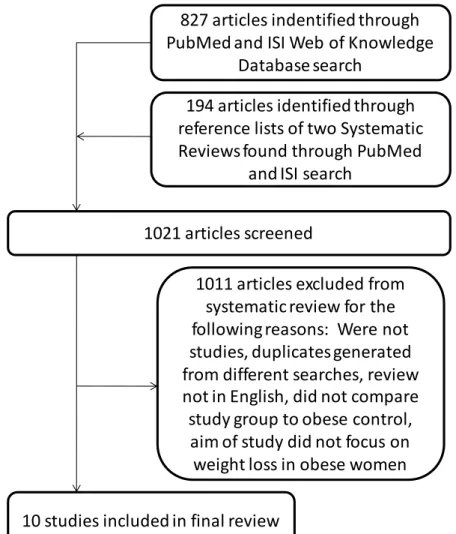
A total of 1021 abstracts from the literature search and reference lists were reviewed; of these, 55 full
text articles were further reviewed. Ten studies met the inclusion criteria; these consisted of six case-‐
control studies and four cohort studies. Figure 1 summarizes the flow of information through the
systematic review phases and explains reasons for exclusion of articles.
Figure 1. PRISMA diagram
827 articles indentified through
PubMed and ISI Web of Knowledge
Database search
194 articles identified through
reference lists of two Systematic
Reviews found through PubMed
and ISI search
1021 articles screened
10 studies included in final review
1011 articles excluded from
systematic review for the
following reasons: Were not
studies, duplicates generated
from different searches, review
not in English, did not compare
study group to obese control,
aim of study did not focus on
Studies were reviewed in alphabetical order by title. Full data extraction tables are shown in Appendix A.
Study 1
The Dixon et al. study, “Birth Outcomes in Obese Women After Laparoscopic Adjustable Gastric
Banding” is a case-‐control study published in Obstetrics and Gynecology in 2005. Seventy-‐nine women
were found to have given birth after laparoscopic adjustable gastric banding (LAGB) surgery were
selected from a group of 1,382 patients who had had the weight loss procedure performed between
January 1, 1995, and August 31, 2003. These cases were compared to seventy-‐nine “severely obese”
women matched for parity, maternal age, and BMI.21
The internal validity of the study was deemed to be “fair” based on the moderate amounts of selection
bias, measurement bias, and confounding. The external validity was deemed to be fair as the weight loss
intervention studied is usually only performed on very obese individuals. The study demonstrated that
the women who gave birth post-‐LAGB had lower rates of low birth weight (6.3% compared to 8.9%),
preeclampsia (5% compared to 25%). No p-‐values were given for low birth rate, high birth rate, or
preterm birth, but preeclampsia was significant with p <0.05.
Study 2
The Weintraub et al. study “Effect of Bariatric surgery on pregnancy outcome” is a retrospective cohort
study that compared the perinatal outcomes of women who delivered before with women who
delivered after bariatric surgery in a tertiary medical center between 1988 and 2006. Data used was
from 176 women that had 301 deliveries before bariatric surgery and 354 women who had 507
deliveries after bariatric surgery.22 While pregnancies following bariatric surgery were characterized by
advanced maternal age and greater parity and gravidity, these factors and other potential confounder
were controlled for through a multivariate logistic regression model.
The internal validity of the study was deemed “good” as there were low levels of selection bias,
measurement bias, and confounding. The external validity of the study was deemed fair, as the study
women. This study demonstrated that women who delivered after bariatric surgery had lower rates of
macrosomia (3.2% compared to 7.6%; p = 0.004) and perinatal mortality (1.0 compared to 2.3%; p =
0.11). However they also had higher rates of IUGR (3.9% compared to 2.3%; p = 0.15), cesarean section
(30.0% compared to 17.9%; p <0.0001), and low birth weight (11.8% compared to 9.0%; p = 0.12).
Study 3
The Dietel et al. study “Gynecologic-‐Obstetric Changes after Loss of Massive Excess Weight following
Bariatric Surgery is a prospective cohort study that compared obstetric features of nine women (sixteen
pregnancies) after bariatric surgery to eighty-‐six women who had pregnancies before bariatric surgery.
This study was performed in 1988, and was only two pages long.23
The internal validity of the study was deemed “poor” due to high levels of selection bias, measurement
bias, and confounding. The external validity of the study was also deemed “poor” due to the age of the
(40% compared to 25.2%; no p-‐value given), but lower rates of cesarean section (0% compared to
25.2%; no p-‐value given) and preeclampsia (0% compared to 12.8%; p <0.001).
Study 4
The Skull et al. study “Laparoscopic Adjustable Banding in Pregnancy: Safety, Patient Tolerance and
Effect on Obesity-‐Related Pregnancy Outcomes” is a retrospective case-‐control study comparing
outcomes of laparoscopic adjustable gastric banding (LAGB) pregnancies with previous non-‐LAGB
pregnancies. A total of forty-‐nine LAGB pregnancies were compared to a historical control of thirty-‐one
previous non-‐LAGB pregnancies.24
The study stated: “For outcomes where confounding could be responsible for the outcome rather than
LAGB, multiple regression was used.” The internal validity of the study was deemed “poor” due to a high
potential of selection bias and measurement bias as well as moderate potential for confounding. The
external validity of the study was deemed “fair.” The study demonstrated that women who had LAGB
higher rates of elective cesarean section (24.5% compared to 9.5%; p = 0.10), and emergency cesarean
section (4% compared to 3.2%; p = 0.10).
Study 5
The Ducarme et al. study “Obstetric outcome following laparoscopic adjustable gastric banding” is a
retrospective case-‐control study comparing the obstetric outcomes of thirteen obese women who
underwent LAGB with four hundred and fourteen obese women who did not undergo surgery.25
The internal validity of the study was deemed “fair” as there was a moderate potential for selection bias,
low to moderate potential for measurement bias, and moderate to high potential for confounding. The
external validity of the study was deemed “fair” as the LAGB procedure is recommended only for very
obese women. The study demonstrated that the while the LAGB pregnancy group had a slightly higher
rate of preterm birth than the obese non-‐LAGB group (7.7% compared to 7.1%; not significant), the
(7.7% compared to 14.6%; p<0.05), cesarean section (15.3% compared to 34.4%; p<0.01), preeclampsia
(0% compared to 3.1%; p<0.05).
Study 6
The Marceau et al. study “Outcome of Pregnancies after Biliopancreatic Diversion” is a retrospective
cohort study performed in 2004. The authors investigated the obstetric outcomes before and after
biliopancreatic diversion (BPD) in women who have undergone the procedure due to morbid obesity.
The study compared 251 post-‐BPD pregnancies to 1,577 pre-‐BPD pregnancies in the same group of
women.26
The internal validity of the study was deemed “poor” due to the moderate to high potential for selection
bias and the high potential for measurement bias and confounding. The external validity of the study
was deemed “fair” as the study did investigate a procedure indicated only for very obese women, but
The study demonstrated that post-‐BPD pregnancy group had higher rates of low birth weight (9.6%
compared to 3.1%) and miscarriages (26% compared to 21.6%) when compared to the pre-‐BPD obese
control group. However, the post-‐BPD pregnancy group was also found to have lower rates preterm
birth (13.6% compared to 16.7%), macrosomia (7.7% compared to 34.8%), and stillbirths (0.6%
compared to 1%). P-‐values were not given for any of these outcomes, so the significance of these
differences is unknown.
Study 7
The Wittgrove et al. study “Pregnancy Following Gastric Bypass for Morbid Obesity” is a retrospective
case-‐control study performed in 1998. The authors aim was to investigate “the risks and complications
after gastric bypass surgery” by comparing the pregnancy outcomes of 36 women in the patient
population who had given birth after Roux-‐en-‐Y gastric bypass (RYGB) procedures to the pregnancy
outcomes of 17 of the same women who had given birth pre-‐RYGB.27 Information was gathered via
The internal validity of the study was deemed “poor” due to a high potential for selection bias, a low to
moderate potential for measurement bias, and a high potential for confounding. The external validity of
the study was deemed “fair” as the study did investigate a procedure indicated only for very obese
women, but was also performed in the US and used a widely performed bariatric procedure.
The study demonstrated that the post-‐RYGB group had a slightly higher ratio of pregnancies resulting in
cesarean section (13/36 babies compared to 6/17 babies, or 36.1% compared to 35.3%) when compared
to the pre-‐RYGB group. However, the post-‐RYGB group was also found to have a lower ratio of
pregnancies resulting in preterm birth (4/36 compared to 3/23, or 11.1% compared to 13.0%) and
macrosomia (2/36 babies compared to 7/23 babies, or 5.5% compared to 30.4%).
Study 8
The Patel et al. study “Pregnancy outcomes after laparoscopic Roux-‐en-‐Y gastric bypass” is a
retrospective case-‐control study performed in 2008. The goal of the study was to investigate the safety
related perinatal complications. The outcomes of twenty-‐six female patients who delivered after LRYGB
were compared to the outcomes of 254 controls.28
The internal validity of the study was deemed “good” due to the low potential for selection bias and
measurement bias, and the low to moderate potential for confounding. The external validity of the
study was deemed “good” as the study was performed analyzing the most common form of bariatric
surgery performed in the US and was performed in a community-‐based, academic, tertiary care center
in the US.
The study demonstrated the women who gave birth after LRYGB surgery had a higher rate of cesarean
section (62.5% compared to 0%; no p-‐value given), preterm birth (26.9% compared to 17.9%; p = 0.390),
and low birth weight (11.5% compared to 2.6%; p = 0.140) when compared to obese controls. However,
women who gave birth after LRYGB had lower rates of macrosomia (0% compared to 7.7%; p = 0.147)
and preeclampsia (3.8% compared to 7.7%; p = 0.527). Neither group had any stillbirths/spontaneous
abortions. No p-‐values of any outcomes were significant.
Study 9
The Hoff et al. study “Pre-‐Pregnancy Overweight Status between Successive Pregnancies and Pregnancy
Outcomes” was a retrospective cohort study in 2009 which investigated pregnancy and newborn
outcomes associated with changes in pre-‐pregnancy BMI. The study used birth certificates from 1995-‐
2004 for resident of Kansas City, Missouri, to obtain data for 1,035 overweight women. The outcomes of
the second pregnancies were compared for women who had either maintained overweight status, lost
weight to become normal/underweight, or gained weight to become obese.29
The internal validity of the study was deemed to be “good” due to the minimal potential for selection
bias, measurement bias, and confounding. The external validity of the study was deemed “good” due to
the large number of women sampled and the fact that a specific weight loss intervention was not
investigated.
The study demonstrated that women who lost weight before their second pregnancy had a lower rate of
emergency cesarean section (2.5% compared to 2.4%; p<0.02), but a higher rate of premature birth