PREPARATION AND CHARACTERIZATION OF
UNSATURATED POLYESTER MATERIAL BLENDED WITH
CELLULOSE AND WITH ETHYL CELLULOSE.
Fadhel S. Matty, Jawad K. Al-Kafaji, Dhefaf H. Badri
Keywords: unsaturated polyester, resins, mechanical, dielectric constant; cellulose and ethyl cellulose blends
Modified unsaturated polyester (MUPE) was blended with Cellulose (Cls) and with ethyl cellulose (ECls) at ambient conditions in the presence of ethyl methyl ketone peroxide (EMKP) as hardener. The blends containing different weight percentages (5-25 %) of Cls or ECls. Mechanical properties (impact strength, hardness, and bending) and dielectric constant were determined. The results observed that Cls increases the impact strength, hardness, and dielectric constant and decreases the bending of the MUPS, while ECls causes an increase in the three mechanical behaviours and a decrease in the dielectric constant of the MU-PS.
* Corresponding Authors
E-Mail: [email protected]
[a] Chemistry Department, College of Education Ibn Al-Haithem, Baghdad University, Baghdad, Iraq.
INTRODUCTION
Unsaturated polyester resins are the group of polyester in which the acid component is part of the ester and partially composed of fumaric acid, maleic anhydride is the predominant source of this fumarate when this anhydride is incorporated in the polyester backbone and then isomerised to provide polyester1.
Cellulose is a biopolymer consisting of D-anhydro glucose repeating units joined by α-1,4-glycosidic linkages at C-1 and C-4 positions, and each repeating unit contains three primary OH groups have the ability of hydrogen bonding and that govern the physical properties of Cls.2 Ethyl
cellulose is a cellulose ether distinguished by its versatility, and its molecular structure is similar to the Cls molecular structure but with 55% ethoxyl substitution and the variation in this percentage depends on its application demands.3,4
Polymer blends are made by physical mixing of two or more different polymers or copolymers to produce a mixture of desirable mechanical and physical properties.5
Compatible polymer blends are immiscible mixtures but thy exhibiting macroscopically uniform physical properties and that due to the modification of the interfacial character of the blend by the compatibiliser (polymer or copolymer ) of the blend which stabilizes the morphology.6 Polymer blends
are heterogeneous which don’t form single phase system and their properties are largely dependent on the mechanical dispersion, ductility, and the degree of adhesion between the phases.7-9 The presence of cellulose OH groups and ethoxyl
groups of ECls in the blend can change the surface energy, polarity, wet ability, mechanical properties, and dielectric constant of the unsaturated polyester.10-11
The aim of this work is to study the effect of Cls and ECls on the mechanical properties (impact strength, hardness, and bending) and dielectric constant of MUPS.
Experimental
Materials
Cellulose and toluene were purchased from MERCK, ethyl cellulose from Riedel de Haen, MUPE from Enc International Corporation- South Korea, MEKP from Metric Engineering- India, and ZnO from BDH. All material were used without further purification.
Preparation of MUPE mold
The mold used for preparing the samples was a metallic plate of dimensions (20 x 15 x 1cm). The plate was cleaned by hot caustic alkali solution and later by distilled water, then treated with a thin layer of liquid paraffin that helps to peel the samples easily.
To 100 gm of MUPE, 2 ml of MEKP as hardener was added and mixed well. The mixture was then immediately poured into the mold and left in a dark not humid place at room temperature (~ 25 °C) for complete solidification after 24 h. The solid mold was peeled off and stored for further use.
Preparation of blended MUPE molds
The required weight present (5- 25 %) of Cls or ECls was mixed with 100 g of MUPE at room temperature for several hours to obtain a homogeneous mixture, followed by mixing 2 ml of MEKP with the mixture and then poured immediately into the mold and left in a dark not humid place at room temperature for complete solidification after 48 h. The solid blend mold was peeled off and stored for further use.
Impact strength test
and the impact strength (Is, in kJ m-2) was obtained from
equation 1:12,13
where
E energy of fraction A cross sectional area
Brinell hardness test
Hydraulic piston type LEYBOLD instrument was used for this test. The sample was prepared according to ISO-179 with fixed dimensions (5mm thickness and 20mm in diameter). The test consists of inducing the sample under test with a 5 mm diameter hardened steel ball subjected to a load of 100 and 500 N and full load was applied for 10 s.
The diameter of the indentation left in the tested material (D1) was measured, then the Brinell hardness number (BHN,
N mm-2) was calculated from equation 2 14 :
where
F is the load applied D is the indenter diameter.
Bending test
Three point-bending testers were used according to (ASTM-D790) test to determine the modulus of elasticity. The instrument type PHYWE was used to measure the deflection values. Loads ranging from 100 to 1100 gm were used for both MUPE/Cls and MUPE/ECls blend samples. The dimensions of each rectangular sample were (135 x 10 x10 mm). The sample was fixed between two points and a certain load (weight) was applied to the centre of the sample at room temperature. Equation 3 was used to calculate Young s modulus (E, in M Pa).15,16
where
g is the gravity acceleration (9.8 m/sec²), m is the mass
D is the deflection
L is the distance between two loaded points (m), and
I is the momentum of geometric bending which could be calculated from the equation (I = bd³/12). The mass/deflection ratio was calculated from the slop of the curve.
Dielectric constant
According to ASTM- D150 the instrument used was Type Leybold – Heraeus (Germany) which represents an electrical circuit (in series connection) consists of capacitor, resister, ammeter, coil, and frequency generator. The sample of dimensions (40 mm diameter and 5mm thickness) was placed between the capacitor plates followed by alternating the frequency of the power supplier till reaches the maxim- um current value which represents the resonance frequency value (fr). After that, the (fr) was determined with the existence of air only, i.e, without the presence of the sample.17
Dielectric constant (εr) was calculated from equation 4:
where
ε and ε0 are the permittivity of the medium and the free
space permittivity (8.8 x 10-¹² F m-1), respectively.
RESULTS AND DISCUSSION
Prepared blends
The use of natural polymers such as cellulose and its derivatives as reinforcements in matrix is to a chive composite or blend with improved mechanical properties and stability.18 All the prepared blends in this work were
100 % solids and homogenous with no phase separation, and they were all colourless and opaque. MUPE/ECls blends have more smooth surfaces than those for MUPE/Cls blends, that could be due to the differences of the adhesion of Cls with the hydrophobic polymer matrix and of ECls with the same matrix, that because Cls and ECls have different hydrophilic degree due to their different number of primary OH groups.
Impact strength test
Impact strength test is an attempt for measuring opposition to growth of craze and that depends on the mechanism of energy absorption if the material is solid.19
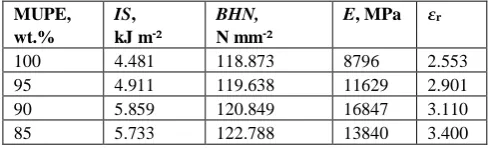
Table 1. Impact strength, hardness, Young’s modulus, and dielectric constant for MUPE/Cls blend at 25 °C.
MUPE, wt.%
IS,
kJ m-²
BHN,
N mm-²
E, MPa εr
100 4.481 118.873 8796 2.553
95 4.911 119.638 11629 2.901
90 5.859 120.849 16847 3.110
85 5.733 122.788 13840 3.400
(1) E
IS A
(2)1 2 2
1 2
F BHN
D D D D
80 5.225 124.646 13551 4.103
75 4.563 124.646 12663 3.802
Table 2. Impact strength, hardness, Young’s modulus, and dielectric Constant for MUPE/ECls blend at 25°C.
MUPE, wt.%
IS,
kJ m-²
BHN,
N mm-²
E, MPa εr
100 4.481 118.873 8796 2.553
95 4.822 120.397 4842 2.543
90 4.997 123.512 4570 2.521
85 5.426 126.846 4486 2.481
80 4.683 129.846 4141 2.409
75 4.468 129.391 4056 2.281
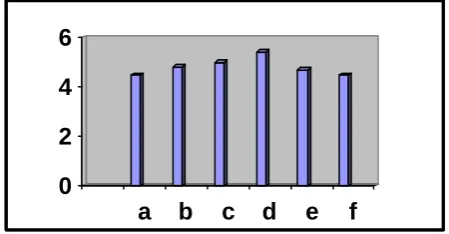
From the impact strength results (Tables 1 and 2) it was found that the impact strength values of MUPE/Cls and MUPE/ECls blends where higher than that of the unblended MUPE (Figures 1 and 2), because MUPE behaves as an elastic material in the presence of styrene in its structure, while the presence of Cls or ECls provides a large area for the distribution of impact forces and for same extent restricts the elasticity 20.
The results also observed that MUPE/Cls blends have higher impact strength than those of MUPE/ECls blends, that could be due to the weakness of the interfacial forces between MUPE and ECls of less free OH groups and less inter hydrogen bonds than Cls, also the bulky size of ethoxy group affects the dispersion of ECls particles.21
Brinell hardness test
Hardness means the measurement of the material resistance to a localized deformation, and the ductile material absorbs more quantity of energy, also, as the concentration of the filler is increased, the ability of the filler to form chain structure in the polymeric medium becomes increasingly important.22-24
Hardness results (Tables 1 and 2) showed that BHN values of MUPE/Cls and MUPE/ECls blends were higher than that of unblended MUPE, and also, blends of Cls and ECls have good resistance to indention (Figures 3 and 4) and that could be due to the existence of hydrogen bonds between Cls or ECls molecules and the MUPE matrix, that leads to transfer some of the applied stress to the filler particles to obtain isotropic blend. The hardness values of MUPE/Cls blends were lower than those of MUPL/ECls that could be due to the presence of the bulky ethoxy groups in the later.
Three points bending test
This test gives the information about the linear behaviour or Hookean behaviour when the blends are under the load influence of horizontal vector on their surfaces, and when the load is removed the material will recovers its natural shape in the range of deformation, that means the material obeys Hook s law.25,26 The relation between the mass and
deflection (Young modulus) that occurs for the samples are listed in Tables 1 and 2, and the mass against deflection was plotted in Figures 5 – 7 for pure MUPE, 25% Cls blend, and 20% ECls blend.
The results showed a decrease in the bending of MUPE/Cls blends, while bending were increased for MUPE/ECls blends, that may be attributed to the higher polarity and more crystallinity of MUPE/Cls blends than MUPE/ECls blends, because the later contains a nonpolar ethyl groups.
Dielectric constant
Dielectric constant is used to determine the ability of the insulator to store electrical energy, and this constant is the ratio of the capacitance induced by two metallic plates with sample between them to the capacitance of the same plates with air or vacuum between them.27
The results listed in Tables 1 an 2 observed that dielectric constants of MUPE/Cls blends were higher than those of MUPE/ ECls blends, that could be attributed to the increase in polarity which is due to the presence of the primary OH groups in the Cls molecules leading to the orientation of the segments and a some kinetic units will observed at definite relaxation time and that gives rise to a definite values of dielectric constant, while the presence of ECls molecules in the blend was slightly decreases the dielectric constant of unblended MUPE.28-30
CONCLUSION
Cellulose and ethyl cellulose were both compatible with the MUPE used in this study. The properties of MUPE was affected by the OH groups of Cls and ECls compounds, as
0
2
4
6
a
b
c
d
e
f
Figure 1. Impact strength for MUPE/Cls blends of Cls w% a) 0, b) 5 ,c) 10, d) 15, e) 20, f) 25
0
2
4
6
a
b
c
d
e
f
the number of these groups was increased, the intermolecular hydrogen bonds and the polarity of the blends were increased. The best impact strength results were obtained by the (90 % MUPE + 10 % Cls) and the (85 % MUPE + 15 % ECls) the optimum results of hardness were for (75 % blends. MUPE + 25 % Cls) and (80 % MUPE + 20 % ECls) blends. Young’s modulus of MUPE/Cls blends was higher than those of unblended MUPE and MUPE/ECls blends. The maximum value of dielectric constant was for (80 % MUPE+20 % Cls) blend.
REFERENCES
1Grayson, M., Eckroth, D., Encyclopedia of Chemical Technology,
1982, Vol. 18, John Wiley and sons. 3rd Ed., USA.
2Nevel, T. P., Zeronian, S. H., Cellulose Chemistry and its Application, 1987, Wiley and Sons Inc., New York, USA.
3Park, J., Hans, S., Lee, I., J. Ind. Eng. Chem., 2007, 13(6),
1002-1008.
4Dong, H. , Xu, Q., Mo, S., Cai, S., Liu, L., Colloids Surface B: Biointerface, 2008, 66(1), 26-33.
5Keenth, G., Senior, M., Engineering Materials Properties and Selection,1996, 5th Ed., New Jersey, Prentice-Hall Inc.
6Utracki, L., Polymer Blend Handbook., 2003, Netherlands:
Kluwer Academic Publisher.
7Paul, D., Barlow, J., Kesklula, H., Encyclopedia of Science and Engineering., 1988, 2nd Ed., Vol. 12, USA, Wiley and Sons Inc.
8Chung, H., Wang, H., Macromolecules, 2006, 39, 153-161.
9Sadiku, O., Sadiku, E., Adegboia, A., Biotiadora, O., Mater. Sci. Appl.., 2011, 3, 30-41.
10Chan, L., Ong, K., Heng, P., Pharm Res.2005, 22, 422-476. 11Nair, L., Laurein, C., Polym. Sci., 2007, 32, (8-9), 762-798. 12Rajput, R., Material Science, 2006, Delhi, India: Kateria and
Sons, NaiSarak.
13Bedezki, A., Mamun, A., Lucka, M., Gubowski, V., Sci. J. 2008, 32, 413-422.
14Chandramohan, D., Marimuthu, K., Int. J. Adv. Eng. Sci. Tech.,
2011, 6(1), 97-104.
15Hihher, R., Mechanics of Material, 2005, Singapore, London,
New York, Prentice-Hall Inc.
16Abdulkhalil, H., Bhat, I., Sartika, M., BioResource., 2010, 5(4),
2278-2298.
17Hameed, A. M., Ph.D. Thesis, Department of Appl. Sci.
University of Technology, 2006, Baghdad, Iraq.
18Marcovich, N., Reboredo, M., Aranguren, M., Chemical Modification of Lignocellulose Materials: The Utilization of Natural Fibers as Polymer Reinforcement, Sao Paulo: Lignocellulosic Plastic Composite USP and UNSEP, 1997, 223-240.
19Dinakaran, K., Alagar, M., Int. J. Polym. Mater., 2003, 52,
957-966.
20Al-Zubidy, G. M., M.Sc. Thesis, Chemistry Department College
of Education Ibn-Al-Haithem Baghdad University,Baghdad, Iraq, 2007.
21Al-Saadi, M. H., Ph.D. Thesis, Department of Appl. Sci.
University of Technology. Baghdad, Iraq, 2006.
22Foro, C. L., Cicals, G. L., The Energy Absorbing Properties of Composite Materials, Engineering Materials, 2000, UK.
23Aravind, I., Ahn, K., Ranganathaiah, C., Thomas, S., Ind. Eng. Chem. Res., 2009, 48, 9942-9951.
24Aruniit, A., Kers, J., Tall, K. Agronomy Res. Biosystem Eng., Special Issue, 2011, 1, 23-29.B
25Grayson, M., Encyclopedia of Composite Material Components,
John Wiley and Sons, New York, 1983.
26Escamilla, G., Laviada, J., Mendzabel, E., Puig, J., Composites Part A., 2002, 33(4), 529-549.
27McGrsamum, N., Read, B., Williams, G., Elastic and Dielectric Effects in Polymer Solids., London: Wiley, 1967.
28Baird, M. F., Electrical properties of Polymeric Materials.
London: Plastic Institute, 1973,
29Allcock, H., Lampe, F., Mark, J., Contemporary Polymer Chemistry, USA: Amazon Com., 2003.
30Schottky, W., Dielectric Constant, Strength, and Loss Tangent,
Cafe Forums, 2008.
Received: 16.01.2013.