The handle http://hdl.handle.net/1887/19031
holds various files of this Leiden University
dissertation.
Author
:
Reumer, Barbara Merel
Title
:
Co-evolution between parthenogenesis-inducing Wolbachia and its hosts
Co-evolution between
parthenogenesis-inducing
Wolbachia
Co-evolution between parthenogenesis-inducingWolbachia and its hosts
PhD thesis Leiden University
Printed by Ipskamp Drukkers, Enschede
ISBN 978-94-6191-270-1
Co-evolution between
parthenogenesis-inducing
Wolbachia
and its hosts
PROEFSCHRIFT
ter verkrijging van
de graad van Doctor aan de Universiteit Leiden,
op gezag van de Rector Magnificus Prof. Mr. P.F. van der Heijden, volgens besluit van het College voor Promoties
te verdedigen op woensdag 30 mei 2012 klokke 13:45 uur
door
Barbara Merel Reumer
Promotor:
Prof. Dr. Jacques J.M. van Alphen
Co-promotor:
Dr. Ken Kraaijeveld
Overige leden:
Prof. Dr. Carel J. ten Cate
Prof. Dr. Jacintha Ellers (Vrije Universiteit Amsterdam)
Prof. Dr. Richard Stouthamer (University of California, Riverside, USA) Dr. Fabrice Vavre (Universit´e Claude Bernard Lyon 1, France)
Dr. Klaas Vrieling
Contents
1 General Introduction 1
2 Ecology, Wolbachia infection frequency and mode of reproduction in the parasitoid waspTetrastichus coeruleus (Hymenoptera: Eulophidae) 11
3 Population genetics ofTetrastichus coeruleus (Hymenoptera: Eulophidae) reveals occasional sex during the spread of a parthenogenesis-inducing
Wol-bachia infection 29
4 Life history traits in populations ofTetrastichus coeruleus (Hymenoptera: Eulophidae) that differ in ecology,Wolbachiainfection frequency and mode
of reproduction 53
5 Sexual functionality of parthenogenetic Tetrastichus coeruleus
(Hy-menoptera: Eulophidae) 69
6 Occasional males in parthenogenetic populations ofAsobara japonica (Hy-menoptera: Braconidae): lowWolbachia titer or incomplete co-adaptation? 79
7 Does a parthenogenesis-inducing Wolbachia induce vestigial cytoplasmic
incompatibility? 95
8 General Discussion 105
References 109
Nederlandse samenvatting 123
Acknowledgements 135
Curriculum Vitae 137
Chapter 1
General Introduction
Sexual versus Asexual Reproduction
Sexual reproduction is the predominant mode of reproduction among eukaryotes. Therefore, it is generally thought that sexual reproduction is the optimal strategy for reproduction. There are many theories that explain the success of sexual repro-duction. These theories fall into two broad categories (Maynard Smith 1978, Bell 1982). Mutational theories argue that sexual recombination facilitates the shedding of deleterious mutations from the genome, while under asexual reproduction these mutations accumulate and cause a genetic load (Muller 1964, Kimura & Maruyama 1966, Maynard Smith 1978, Kondrashov 1988, Crow 1994). Ecological theories suggest that sexual reproduction allows faster adaptation during antagonistic co-evolution with other organisms, such as parasites, predators and competitors (Van Valen 1973, Glesener & Tilman 1978, Bell 1982, 1985, Hamiltonet al. 1990, Lively et al.1990, Scheu & Drossel 2007). All of these theories support the general thought that sexual reproduction allows faster adaptation to a complex environment than asexual reproduction. In addition, over a long period of time sexual reproduction will be more advantageous than asexual reproduction.
asexual females transmit all of their genome to each offspring, while a sexual female transmits only half of her genome to each offspring. Therefore, an asexual female has a higher fitness than a sexual female and a higher mother-offspring relatedness should favour asexual reproduction (Maynard Smith 1978).
Given the advantages and disadvantages of sexual and asexual reproduction, it can be predicted that asexual reproduction should be more advantageous in simpli-fied environments with few biotic interactions and/or over a short period of time, while sexual reproduction should be more advantageous in complex environments and/or over a long period of time. Although sexual reproduction is the predominant mode of reproduction, asexual reproduction may be relatively common in simplified environments (Glesener & Tilman 1978, B¨urger 1999, Haag & Ebert 2004, Scheu & Drossel 2007, Becks & Agrawal 2010). In support of this idea, recent studies on invertebrates have shown a prevalence of asexual species and populations in agricul-tural and human-disturbed (simplified) environments, but not in naagricul-tural (complex) environments (Haacket al.2000, Hoffmannet al.2008, Foucaudet al.2009, Gilabert et al.2009).
Asexual reproduction in invertebrates is often induced by infection with cytoplas-matically inherited microorganisms, for exampleWolbachia (Huigens & Stouthamer 2003), Cardinium (Zchori-Fein & Perlman 2004) and Rickettsia (Perlman et al. 2006). In this thesis, I will focus on the microorganismWolbachia.
Wolbachia
Wolbachia are intracellular, symbiotic bacteria belonging to the order Rickettsiales within theα-Proteobacteria. Wolbachiaare known to infect a wide range of arthro-pods, including insects, spiders, mites, scorpions and isoarthro-pods, and have also been found in nematodes (Roussetet al.1992, Werren 1997, Stouthameret al.1999, Wer-renet al.2008). The type species for the Wolbachia genus isWolbachia pipientis, which was first described in the mosquitoCulex pipiens (Hertig 1936). The genus Wolbachia can be divided into six, and possibly eight, major clades or supergroups (A-H) (Loet al. 2002, Casiraghiet al. 2005, Baldo & Werren 2007, Werren et al. 2008). Supergroup C and D are only found in filarial nematodes. The other super-groups are primarily found in arthropods, in which supergroup A and B are the most common. It has been estimated that 66% of all insect species is (partly) infected withWolbachia(Hilgenboeckeret al.2008). Various insect species harbour multiple Wolbachia strains, which may even belong to different supergroups (Werren et al. 1995, Vavreet al.1999, Werren & Windsor 2000).
General Introduction
al.1992, Rousset et al.1992, Werren et al.1995, Schilthuizen & Stouthamer 1997, Vavreet al. 1999). Horizontal transmission has been achieved experimentally both within and between species (Grenieret al. 1998, Heath et al. 1999, Huigens et al. 2000, 2004) and a recent field study (Kraaijeveldet al. 2011a, Kremer & Huigens 2011) found evidence for horizontal transmission during the early stages of Wol-bachia infection in a parasitoid wasp. This suggests that horizontal transmission not only plays a role in the spread ofWolbachia from one species to another, but also between individuals within newly infected species.
Because Wolbachia are maternally inherited, they benefit from female-biased sex ratios in its hosts. To enhance its own transmission, Wolbachia can induce various alterations of the reproduction mechanism of its host, such as cytoplasmic incompatibility, feminization, male-killing and parthenogenesis (Roussetet al.1992, Werren 1997, Stouthameret al. 1999, Werrenet al.2008).
Cytoplasmic incompatibility (CI) is the most widespread effect ofWolbachia in-fection and has been described in mites, isopods and many insect orders, such as Coleoptera, Diptera, Hemiptera, Hymenoptera, Lepidoptera and Orthoptera (Wer-ren 1997, Stouthameret al. 1999, Werren et al. 2008). CI is an alteration of the reproduction mechanism that causes incompatibility between sperm and egg cells. CI-Wolbachia modify the sperm of Wolbachia-infected males during spermatogen-esis. Eggs of CI-Wolbachia-infected females harbour a rescue mechanism for this sperm modification. However, when the right rescue mechanism is not present in the egg, because the female is not infected or infected with a different Wolbachia strain than the male, sperm and egg will be incompatible. When the sperm modifi-cation is not rescued, an asynchrony between the male and female pronuclei occurs during the first embryonic mitotic division. In diploid species this will result in embryonic death. In haplodiploid species only male offspring will develop (Werren 1997, Stouthameret al.1999, Werrenet al.2008). Two forms of CI exist. Unidirec-tional incompatibility occurs when the sperm of aWolbachia-infected male fertilizes an egg of an uninfected female. The egg of aWolbachia-infected female and sperm of an uninfected male are compatible. Bidirectional incompatibility occurs when a male and a female are infected with different strains ofWolbachia that are mutually incompatible. In this case, the sperm and egg cell are only compatible when a male and a female are infected with the sameWolbachiastrain (Werren 1997, Stouthamer et al.1999, Werrenet al.2008).
Feminization-inducingWolbachia have been found in isopods and the insect or-ders Hemiptera and Lepidoptera (Werren 1997, Bouchon et al. 1998, Stouthamer et al.1999, Hiroki et al. 2002, Negri et al. 2006, Werren et al. 2008). Wolbachia-induced feminization causes genetic males to be converted into functional females, for example by suppression of the androgenic glands (Werren 1997, Stouthameret al.1999, Werrenet al.2008).
insect orders Coleoptera, Diptera and Lepidoptera (Hurstet al.1999, Stouthamer et al.1999, Dyer & Jaenike 2004, Zehet al. 2005, Werrenet al. 2008). Wolbachia-infected males are killed during embryogenesis, possibly to provide more nutrients to the female offspring (Stouthameret al.1999, Werrenet al. 2008).
Parthenogenesis-inducing (PI) Wolbachia have so far only been found in hap-lodiploid organisms, such as hymenopterans, thrips and mites (Stouthamer et al. 1990a, Werren 1997, Stouthameret al.1999, Arakakiet al.2001, Weeks & Breeuwer 2001, Huigens & Stouthamer 2003, Werrenet al. 2008). In uninfected haplodiploid organisms, fertilized eggs develop into diploid daughters and unfertilized eggs de-velop into haploid sons (arrhenotoky). PI-Wolbachia cause diploidization of the haploid eggs by disrupting the segregation of the homologous chromosomes dur-ing the first mitotic division after meiosis (Stouthamer & Kazmer 1994, Huigens & Stouthamer 2003, Pannebakkeret al.2004a) resulting in the production of daughters from unfertilized eggs (thelytoky).
In this thesis, I will focus on PI-Wolbachiain hymenopterans. More specifically, I studied the dynamics, causes and consequences of Wolbachia-induced partheno-genesis in two parasitoid wasp species,Tetrastichus coeruleusandAsobara japonica.
Consequences ofWolbachia-induced parthenogenesis
In most cases ofWolbachia-induced parthenogenesis, the infection is fixed and the entire host population consists of females (Huigens & Stouthamer 2003). In the absence of males and sexual reproduction, genes involved in sexual reproduction are not actively maintained by selection. Accumulation of neutral mutations or selection against the maintenance of costly sexual traits may lead to their loss or deteriora-tion (Carsonet al.1982, Pijlset al.1996, Pannebakkeret al.2005, Kraaijeveldet al. 2009). Because male traits are not expressed in parthenogenetic populations, they are likely to degenerate due to neutral mutations. Female traits, which are expressed but not used, may also be selected against when they are costly to maintain (Pijls et al.1996). In addition, females may loose the ability to reproduce sexually due to ‘functional virginity mutations’ that may spread concomitantly with theWolbachia infection through a population (Stouthameret al.2010, King & Hurst 2010). Muta-tions that prevent females from fertilizing their eggs will have a selective advantage in the presence of PI-Wolbachia-infected females because they induce the bearer of these mutations to produce more sons which will have many mating opportunities. Virginity mutations arise during the early stages of PI-Wolbachia infection and af-fect traits in females involved in sexual reproduction, e.g. mating or egg fertilization. Accumulation of neutral mutations or selection against the maintenance of costly traits arise after a longer period of parthenogenetic reproduction and can poten-tially affect all traits involved in sexual reproduction, both in males and females, e.g. courtship behaviour or pheromone production.
General Introduction
females are different. Sexual conflict may result in sexually antagonistic coevolution, in which males evolve adaptations that manipulate female behaviour and females evolve resistance to male manipulation (Rice 1996, Chapmanet al.2003, Arnqvist & Rowe 2005). In the absence of males, selection on manipulative male traits and costly female resistance traits will be absent. Adaptations evolved under sexually antagonistic coevolution are released from selection and alleles that were favoured can be replaced by others due to accumulation of random mutations (Carsonet al. 1982, Pijls et al. 1996) or antagonistic pleiotropy (Pijls et al. 1996, Pannebakker et al. 2005). Therefore, parthenogenetic females may be either more receptive to mating when they have been selected in the absence of males or not receptive at all when they have been selected in the presence of a small number of males.
When deterioration or loss of genes involved in sexual reproduction can evolve over a long period of time, asexual species or populations may no longer be capable of sexual reproduction. Many insect species with female-only populations exhibit deterioration or loss of female sexual traits, as expected by theory (e.g. Carsonet al.1982, Pijlset al. 1996, Gottlieb & Zchori-Fein 2001, Kraaijeveldet al. 2009).
Tetrastichus coeruleus
Tetrastichus coeruleus (Hymenoptera: Eulophidae) is a gregarious egg-larval para-sitoid of the common asparagus beetle (Crioceris asparagi). T. coeruleus both feeds on and parasitizes the eggs ofC. asparagi(Capinera & Lilly 1975a, van Alphen 1980). This (and own observations) indicates thatT. coeruleusis synovigenic, meaning that it produces eggs during all or most of its adult life (Heimpel & Collier 1996).
Asobara japonica
Asobara japonica(Hymenoptera: Braconidae) is a solitary larval-pupal parasitoid of drosophilid flies (Ideoet al. 2008). A. japonica naturally occurs in Japan. Popula-tions ofA. japonica on the temperate main islands of Japan exhibit highly female-biased sex ratios (92.7% - 99.2% females), whereas population sex ratios on the smaller subtropical southern islands are not biased (Mitsuiet al. 2007). The pop-ulations on the main islands are infected with parthenogenesis-inducingWolbachia, while the populations on the smaller southern islands are not (Kremeret al.2009).
Wolbachia in T. coeruleus and A. japonica
Interestingly, bothT. coeruleus andA. japonica have populations that are infected withWolbachia, while they also have populations that are not infected (T. coeruleus: chapter 2, Reumeret al.2010;A. japonica: Mitsuiet al.2007, Kremeret al.2009). In both species,Wolbachia-infected populations reproduce through parthenogenesis, whereas uninfected populations reproduce sexually. Also, in both species a small number of male offspring is regularly produced in the otherwise parthenogenetically reproducing populations (T. coeruleus: chapter 2, Reumeret al.2010;A. japonica: Mitsuiet al.2007, chapter 6, Reumeret al.2012).
Only a few other parasitoid wasp species are known in which both sexual and parthenogenetic populations occur. In the parasitoid wasps Apoanagyrus diversi-cornis (Pijls et al. 1996), Telenomus nawai (Arakaki et al. 2000) and Leptopilina clavipes (Pannebakkeret al. 2004b) PI-Wolbachia-infected and uninfected popula-tions occur allopatrically. Mixed populapopula-tions of PI-Wolbachia-infected and unin-fected individuals are limited to a number of species of the genus Trichogramma (Stouthamer et al. 1990a, 1990b, 2001). In most cases of Wolbachia-induced parthenogenesis, the infection is fixed and the entire host population consists of females that reproduce parthenogenetically (Huigens & Stouthamer 2003).
In this thesis, I will investigate the dynamics of Wolbachia-infected and un-infected populations ofT. coeruleus andA. japonica. In addition, I will study the occasional male production in otherwise parthenogenetic populations ofA. japonica.
Thesis Overview
General Introduction
2 & 4). In addition, I studied the consequences of a PI-Wolbachia infection by investigating the sexual functionality in T. coeruleus females (chapter 5) and A. japonica males (chapter 7).
In chapter 2, I tested whether there is a correlation between ecology and mode of reproduction in populations ofT. coeruleus. Classical ecological theories for the maintenance of sexual reproduction state that sexual reproduction facilitates adap-tation to complex environments with many biotic interactions, whereas simplified environments are expected to favour asexual reproduction. Because T. coeruleus occurs both in natural (complex) and agricultural (simplified) environments, I in-vestigated whether different reproductive modes can be found in different habitats and whether the possible correlation followed the classical theories. In addition, I investigated whether Wolbachia infection caused parthenogenesis in female-biased populations.
I sampled 13 populations ofT. coeruleus in The Netherlands, France and Mas-sachusetts, USA. In contrast to the general pattern, in Dutch and French natural areas I foundWolbachia-infected, highly female-biased populations that reproduce parthenogenetically (thelytoky), while populations on Dutch agricultural fields were not infected with Wolbachia, showed higher frequencies of males and reproduced sexually (arrhenotoky). However, I also found a female-only, Wolbachia-infected population on agricultural fields in Massachusetts. AllWolbachia-infected popula-tions were infected with the sameWolbachia strain.
At this moment, I do not have a convincing explanation for the deviation of T. coeruleus populations in The Netherlands and France from the general association between ecology and mode of reproduction. The fixation of Wolbachia in the population from Massachusetts (where the species was introduced) may be due to founder effect and lack of uninfected, sexual source populations.
Inchapter 3, I studied the population genetics ofWolbachia-infected and uninfected populations ofT. coeruleus. Because Wolbachia are maternally inherited, vertical transmission is the main transmission mode within established hosts. However, horizontal transmission plays a major role in the spread ofWolbachia to novel hosts and within some newly infected host populations. I investigated the transmission mode with whichWolbachia has spread through the populations ofT. coeruleus. In addition, I looked for evidence of recent gene flow between populations.
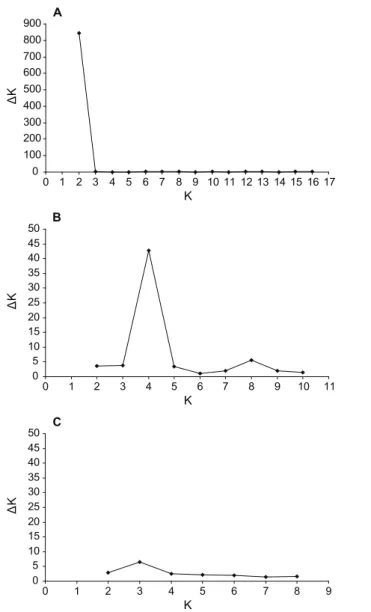
I studied the population genetics of 13 populations ofT. coeruleus, using nuclear microsatellite markers and mitochondrial DNA. Two major genetic clusters were evident: a thelytokous cluster containing all the Wolbachia-infected populations and an arrhenotokous cluster containing all the uninfected populations.
ver-tical transmission was the main transmission mode for Wolbachia spread within T. coeruleus. However, nuclear markers displayed considerable genetic variation, suggesting that infected females mated with males, which would introduce nuclear DNA variation into the mitochondrial lineage. Thelytokous populations showed sig-nificant genetic substructure. Within the arrhenotokous cluster, both nuclear and mitochondrial DNA variation was present, but no population structure was recog-nized.
Several females from otherwise thelytokous populations were uninfected and/or heterozygous for one or more microsatellite loci. No infected females were found in any of the arrhenotokous populations. This suggests occasional migration from arrhenotokous to thelytokous populations, but not vice versa. I conclude that Wolbachia has spread via vertical transmission through the popu-lations of T. coeruleus. The nuclear genetic variation in the Wolbachia-infected populations is due to occasional sex and not to horizontal transmission ofWolbachia.
In chapter 4, I studied the differences between two populations of T. coeruleus that differ in ecology, Wolbachia infection and mode of reproduction. Differences between populations may result in differences in life history traits and strategies in order to optimize reproduction and survival.
I quantified several life history traits in two populations ofT. coeruleus, one from a natural (Meijendel) and one from an agricultural (Brabant) environment: clutch size, life span, female weight and nutrient concentrations (proteins, lipids, sugars and glycogen).
Females from Brabant laid larger clutches, had longer life spans and were heavier than females from Meijendel. There was no difference in the relative amounts of proteins, lipids or sugars, but females from Meijendel had relatively more glycogen than females from Brabant.
The two populations therefore exhibit markedly different life history strategies. Females from Brabant invest relatively more in survival, body size and clutch size, whereas females from Meijendel seem to be more active or fly longer distances. Further studies are needed to determine if and how these life history differences are related to differences in ecology,Wolbachia infection or mode of reproduction.
Inchapter 5, I studied the consequences of a PI-Wolbachiainfection inT. coeruleus females. In most cases ofWolbachia-induced parthenogenesis, the infection is fixed and the entire host population consists of females. In the absence of males and sexual reproduction, genes involved in sexual reproduction are not actively maintained by selection. Accumulation of neutral mutations or selection against the maintenance of such traits may lead to their loss or deterioration. In addition, females may loose the ability to reproduce sexually due to ‘functional virginity mutations’.
sex-General Introduction
ual functionality of arrhenotokous and thelytokousT. coeruleusfemales. I measured their attractiveness and receptiveness to males and I compared the morphology of their spermathecae.
Mated females had a shorter life span than virgin females, showing that either mating or sperm storage was costly. Several sexual traits of thelytokous females have degraded compared to arrhenotokous females. Arrhenotokous and thelytokous females were equally attractive to males, but thelytokous females were unreceptive to males and there was a clear difference in spermathecal morphology between ar-rhenotokous and thelytokous females.
Selection against the maintenance of costly sexual traits appears to have resulted in the degradation of receptivity and spermathecal morphology of thelytokous females. However, I cannot exclude that these traits have degraded due to functional virginity mutations or accumulation of neutral mutations.
In chapter 6, I investigated the origin of male offspring production by PI-Wolbachia-infected females in A. japonica. Because all females in the field are infected and infectedA. japonica females are not capable of sexual reproduction, male production seems to be maladaptive in thelytokous populations. In addition, I studied the population genetics ofWolbachia-infected and uninfected populations ofA. japonica.
I tested three hypotheses for the origin of male production: high rearing temper-atures could result in higher offspring sex ratios (more males), lowWolbachia titer of the mother could lead to higher offspring sex ratios and/or theWolbachia infec-tion is of relatively recent origin and not enough time has passed to allow complete co-adaptation betweenWolbachia and host.
One third of theWolbachia-infected females produced males and more than half of these males were also infected withWolbachia. Neither offspring sex ratio nor male infection frequency were affected by rearing temperature orWolbachia concen-tration of the mother. The mitochondrial DNA sequence of one of the uninfected populations was identical to that of two of the infected populations. Therefore, the initialWolbachia infection ofA. japonica must have occurred recently. Mitochon-drial sequence variation among the infected populations suggests that the spread of Wolbachia through the host populations involved horizontal transmission.
I conclude that the occasional male production by Wolbachia-infected A. japonica females is most likely a maladaptive side-effect of incomplete co-evolution between symbiont and host in this relatively young infection.
have occurred frequently, raising the possibility that latent CI may be widespread amongWolbachia. I investigated whether a PI-Wolbachia strain also can induce CI. PI-Wolbachia-infected A. japonica females regularly produce male offspring, which may either be infected or not. First, I tested whether infected males and females harboured the same Wolbachia strain. Then, mating experiments were performed between uninfected arrhenotokous females and males that were either infected or uninfected. Uninfected males were obtained naturally from infected thelytokous populations and through removal of Wolbachia using antibiotics. In addition, males from a naturally uninfected arrhenotokousA. japonica population were used.
Infected males and females harboured the exact same Wolbachia strain, indi-cating that theWolbachia strain that induces parthenogenesis in females also was present in infected males. Uninfected arrhenotokous females that had mated with Wolbachia-infected males produced a slightly more male-biased sex ratio than fe-males that had mated with uninfected fe-males. This effect was strongest in fefe-males that had mated with males with a relatively highWolbachia concentration. Because Wolbachia-infected males did not show higher ratios of nuclear versus mitochondrial DNA content than uninfected males, I concluded that Wolbachia does not cause diploidization of cells in infected males.
I conclude that the Wolbachia strain that induced parthenogenesis in females induced CI in infected males. However, the effect was very small. This suggests that if CI is induced inA. japonica males by the PI-Wolbachia strain, the ability of CI-induction may have degenerated through the accumulation of mutations. Although the results are consistent with CI, other alternatives such as produc-tion of abnormal sperm byWolbachia-infected males cannot completely be ruled out.
Chapter 2
Ecology,
Wolbachia
infection frequency
and mode of reproduction in the
parasitoid wasp
Tetrastichus coeruleus
(Hymenoptera: Eulophidae)
Barbara M. Reumer, Jacques J.M. van Alphen & Ken Kraaijeveld Published in Molecular Ecology (2010) 19: 1733-1744
Whereas sexual reproduction may facilitate adaptation to complex environments with many biotic interactions, simplified environments are expected to favour asex-ual reproduction. In agreement with this, recent studies on invertebrates have shown a prevalence of asexual species in agricultural (simplified) but not in natural (com-plex) environments. We investigated whether the same correlation between repro-ductive mode and habitat can be found in different populations within one species. The parasitoid waspTetrastichus coeruleus forms an ideal model to test this ques-tion, since it occurs both in natural and agricultural environments. Further, we investigated whether Wolbachia infection caused parthenogenesis in female-biased populations.
In contrast to the general pattern, in Dutch and French natural areas we found Wolbachia-infected, highly female-biased populations that reproduce parthenogenet-ically. By contrast, populations on Dutch agricultural fields were not infected with Wolbachia, showed higher frequencies of males and reproduced sexually. However, we also found a female-only,Wolbachia-infected population on agricultural fields in northeastern USA. AllWolbachia-infected populations were infected with the same Wolbachia strain.
in the USA populations (where the species was introduced) may be due to founder effect and lack of uninfected, sexual source populations.
Introduction
Sexual reproduction is the predominant mode of reproduction among eukaryotes. This is remarkable given the large fitness disadvantage of sexual reproduction, known as the twofold cost of sex (Maynard Smith 1978). Because an asexual female only produces daughters, all of her offspring will contribute to the next generation, while only half of the offspring (with a 50/50 sex ratio) of a sexually reproducing female will contribute to the next generation. Therefore, an asexual population can grow faster than a sexual population and when they are in competition, the asexual population should outcompete the sexual one (Maynard Smith 1978). Also, asexual females transmit all of their genome to each offspring, while a sexual female transmits only half of her genome to each offspring. Thus, higher mother-offspring relatedness should favour asexual reproduction (Maynard Smith 1978).
Theories that explain the success of sexual reproduction fall into two broad cat-egories (Maynard Smith 1978, Bell 1982). Mutational theories argue that sexual recombination facilitates the shedding of deleterious mutations from the genome, while under asexual reproduction these mutations accumulate and cause a genetic load (Muller 1964, Kimura & Maruyama 1966, Maynard Smith 1978, Crow 1994). Ecological theories suggest that sexual reproduction allows faster adaptation during antagonistic coevolution with other organisms, in particular parasites, but also com-petitors or predators (Van Valen 1973, Glesener & Tilman 1978, Bell 1985, Hamilton et al.1990, Livelyet al. 1990). This predicts that the advantage of sex should be smaller in simplified environments with fewer biotic interactions. Asexual reproduc-tion may thus be relatively common in such environments (Glesener & Tilman 1978, B¨urger 1999, Haag & Ebert 2004). In support of this idea, recent studies on inver-tebrates have shown a prevalence of asexual species and populations in agricultural and human-disturbed (simplified) environments, but not in natural (complex) envi-ronments (Haacket al.2000, Hoffmannet al.2008, Foucaudet al.2009, Gilabertet al.2009). In order to understand the mechanisms behind this pattern, it is necessary to study populations within one species that occur in different environments. The parasitoid waspTetrastichus coeruleus (Hymenoptera: Eulophidae) forms an ideal model to test ecological theories for the maintenance of sexual reproduction, because it occurs both in natural (complex) and in agricultural (simplified) environments.
Ecology,Wolbachiaand reproductive mode inTetrastichus coeruleus
coeruleus can be used as a biological control agent against these beetles (Capinera & Lilly 1975b). A. officinalishas been introduced to the United States for culturing (Weedaet al.1991) and in 1859C. asparagiwas first noticed in northeastern United States (Capinera & Lilly 1975a). Later, probably already in 1863, but certainly in 1909, T. coeruleus also was recorded and was noticed to control the asparagus beetle population by feeding on and ovipositing in the eggs ofC. asparagi(Russell & Johnston 1912, Johnston 1915, Capinera & Lilly 1975a, 1975b). Russell & Johnston (1912) and Johnston (1915) only recorded females ofT. coeruleusin the population, both in the field and when they were reared in the lab for multiple generations, showing that T. coeruleus occurs in parthenogenetic populations on agricultural fields in northeastern United States.
Asexual reproduction in invertebrates is often induced by infection with cytoplas-matically inherited microorganisms, such asWolbachia. Wolbachiaare intracellular, symbiotic bacteria belonging to the order Rickettsiales within theα-Proteobacteria. Wolbachiais known to infect a wide range of arthropods, including insects, spiders, mites, scorpions and isopods, and has also been found in nematodes. A recent analy-sis estimated that 66% of all insect species is infected withWolbachia(Hilgenboecker et al.2008). Wolbachia is maternally inherited, because a sperm cell contains too little cytoplasm to harbour the bacteria. Therefore, they benefit from female-biased sex ratios in their hosts. To enhance its own transmission, Wolbachia can induce various alterations of the reproduction mechanism of its host, such as cytoplasmic incompatibility, feminization, male-killing and parthenogenesis. Wolbachia-induced parthenogenesis is most commonly found in haplodiploid organisms, such as Hy-menoptera (Werren 1997, Stouthameret al.1999, Werren et al.2008).
Like all Hymenoptera,T. coeruleus is haplodiploid. Fertilized eggs develop into diploid daughters, while unfertilized eggs develop into haploid sons. This form of sexual reproduction is called arrhenotoky. Haplodiploid organisms can relatively easily shift to asexual reproduction. All that is required is diploidization of the haploid eggs, for example by alteration of meiotic and/or mitotic processes. It has been shown thatWolbachiacan induce parthenogenesis in haplodiploid organisms by disrupting the segregation of the homologous chromosomes during the first mitotic division after meiosis in unfertilized eggs (Huigens & Stouthamer 2003, Pannebakker et al.2004a). This form of parthenogenetic reproduction in haplodiploids is called thelytoky. Technically speaking, in sexually reproducing haplodiploids sons are also produced parthenogenetically, because they develop from unfertilized haploid eggs. In thelytokous reproducing haplodiploids, daughters are produced parthenogeneti-cally from unfertilized diploid eggs. For convenience, in this paper we will use the terms sexual reproduction and parthenogenesis in stead of arrhenotoky and thely-toky.
populations of T. coeruleus should be found in agricultural environments, while sexual populations would be expected in natural environments. In support of this, Russell & Johnston (1912) and Johnston (1915) found parthenogenetic populations ofT. coeruleus on the agricultural fields in northeastern United States. Therefore, we predicted that European agricultural populations ofT. coeruleus would be simi-larly parthenogenetic. We further expected that natural populations ofT. coeruleus might reproduce sexually. In addition, we investigated whetherWolbachia infection is the cause of parthenogenetic reproduction inT. coeruleus.
We sampled different populations ofT. coeruleus. For each population, we deter-mined field sex ratio andWolbachia infection status. Parthenogenetic populations turned out to be infected withWolbachia. Because we found differences in sex ratio andWolbachiainfection frequency between populations, we sequencedWolbachiato see whether different populations were infected with different strains ofWolbachia.
Materials and Methods
Field sampling
In the spring and summer of 2007 and 2008, eleven populations of Tetrastichus coeruleuswere sampled throughout The Netherlands and Belgium (Fig. 2.1). Several locations were visited in both years and multiple times per year. Five populations were sampled in coastal dune areas, five populations were sampled from agricultural fields and one population was sampled in a private allotment garden. Because the sampled agricultural field population from Antwerpen, Belgium, lies very close to the Dutch border and for convenience in this paper, we will talk about five Dutch agricultural fields. T. coeruleus was not found in dune areas north of the Noord-Hollandse Duinen and south of Goeree Overflakkee. In the summer of 2006 a population of T. coeruleus was sampled in a natural area in the Camargue in southern France (between Albaron and Saintes Maries de la Mer, on Asparagus maritimus) and in the spring of 2008 T. coeruleus was sampled on agricultural fields in Massachusetts, USA. In all locations, except the Camargue, adult wasps were caught in the field, giving the operational sex ratio of the population. In the Camargue and some locations in The Netherlands (Noord-Hollandse Duinen, Kennemerduinen, Meijendel, Gelderland and Brabant), larvae ofC. asparagi were collected and reared in the lab. Some of these had been parasitized byT. coeruleus. Wasps emerging from the pupae of C. asparagi give the primary sex ratio of the population.
Ecology,Wolbachiaand reproductive mode inTetrastichus coeruleus
1 2
3
4 5
11
6
7
8
10
9
100 km
Figure 2.1: Map of collection sites ofTetrastichus coeruleus in The Netherlands. 1-5: Dune areas (1: Noord-Hollandse Duinen, 2: Kennemerduinen, 3: Meijendel, 4: Voornse Duinen, 5: Goeree Overflakkee), 6-10: Agricultural fields (6: Drenthe, 7: Gelderland, 8: Brabant, 9: Limburg, 10: Antwerpen), 11: Private allotment garden (Alphen aan den Rijn).
DNA extraction
Ecology,Wolbachiaand reproductive mode inTetrastichus coeruleus
Wolbachia detection
Wasps were tested for Wolbachia infection by amplifying the Wolbachia-specific wsp gene, with forward primer wsp-81F and reverse primer wsp-691R (Braig et al. 1998, Zhou et al. 1998; for primer sequences and annealing temperatures see Table 2.1). When amplification ofwsp was weak and infection status ambiguous, the Wolbachia-specific ftsZ gene was also amplified (Holden et al. 1993, Sinkins et al. 1995; for primer sequences and annealing temperatures see Table 2.1). Polymerase Chain Reactions (PCR) for both thewsp gene and theftsZ gene were performed in a total volume of 20.0 µl, containing 1x PCR-buffer (Qiagen), 62.5
µM dNTPs, 1 unit Taq polymerase, 250 nM forward primer, 250 nM reverse primer and 1.0µl DNA template. A PTC-200 DNA Engine Thermal Cycler PCR machine (MJ Research, Waltham, MA, USA) was used for all PCRs. PCR conditions for thewsp gene were as follows: 3 min at 94◦C, then 35 cycles of 1 min at 94◦C, 1 min at 55◦C and 1 min at 72◦C, and finally 5 min at 72◦C. PCR conditions for the ftsZ gene were as follows: 3 min at 94◦C, then 35 cycles of 45 sec at 94◦C, 1 min at 55◦C and 1 min at 72◦C and finally 5 min at 72◦C. All PCR products were run on a 2% agarose gel and visualized using ethidium bromide staining.
Wolbachia characterization
Wolbachiafrom three populations were characterized by sequencing six genes specific forWolbachia. Two infected females were used from each population: the dune area of Meijendel in The Netherlands, the natural area in the Camargue in France and the agricultural fields in Massachusetts, USA. For each female, all six genes were sequenced. Wolbachia was characterized by sequencing a set of five Multi Locus Sequence Typing (MLST) genes:gatB,coxA,hcpA,ftsZandfbpA(Baldoet al.2006; see also the MLST website: http://pubmlst.org/wolbachia/, Jolleyet al.2004). For these five genes, specific primers for both the A- and B-typeWolbachiaalleles were tested. In addition to these MLST genes, the Wolbachia-specific wsp gene was sequenced (Baldo et al. 2006). For primer sequences and annealing temperatures see Table 2.1. Note that for the geneswsp andftsZ different primers were used for sequencing than forWolbachia detection. PCRs for both the MLST genes and the wsp gene were performed in a total volume of 40.0 µl, containing 1x PCR-buffer (Qiagen), 200µM dNTPs, 0.5 unit Taq polymerase, 1.0µM forward primer, 1.0µM reverse primer and 2.0µl DNA template. A PTC-200 DNA Engine Thermal Cycler PCR machine (MJ Research) was used for all PCRs. PCR conditions for both the MLST genes and the wsp gene were as follows: 2 min at 94◦C, then 37 cycles of 30 sec at 94◦C, 45 sec at the specific annealing temperature and 90 sec at 72◦C, and finally 10 min at 72◦C. All PCR products were run on a 2% agarose gel and visualized using ethidium bromide staining.
and aligned with BioEdit software (version 7.0.9; Hall 2007). The resulting sequences were compared with each other and with other available sequences in theWolbachia MLST profiles database on the MLST website (http://pubmlst.org/wolbachia/, Jolleyet al.2004), using several query functions on the website. The Allelic Profile Query was used to compare the combination of our five MLST alleles with other available allele combinations. The Similarity and Compare functions were used to compare the sequences of single alleles with other available alleles of the same gene in Wolbachia. For the wsp gene similar comparisons could be made using the wsp database on the MLST website.
Statistical analysis
Statistical analyses were performed in R (version 2.8.0; R Development Core Team 2008). Generalized linear models (glm) with a binomial error distribution were used to test for differences in sex ratio and infection frequency between populations. In the sex ratio model, the number of males was used as the response variable and the total number of individuals as the binomial denominator. Location was nested within habitat as an explanatory variable. Five habitats were included: Dutch dune areas (with five locations), Dutch agricultural fields (with five locations), the allotment garden, the natural area in France and the agricultural fields in the USA. To test for differences in collection method (wasps or larvae), only two habitats were considered (Dutch dunes and Dutch fields) and collection method was nested within habitat. In the infection frequency model, the number of infected females was used as the response variable and the total number of females as the binomial denominator (males were never infected). Location was nested within habitat as an explanatory variable. The same five habitats as in the sex ratio model were included. Significance of explanatory variables was tested by dropping terms from the model or lumping levels within terms and comparing the resulting change in deviance to a χ2-distribution. This was done for each explanatory variable, until the simplest model remained, from which all non-significant terms and levels had been removed.
Results
Field sampling
-Sex ratio
In four of the five Dutch dune areas only females were caught. Only in the Voornse Duinen one male was collected (Table 2.2). On four of the five Dutch agricultural fields both males and females were found, although this operational sex ratio was highly female-biased on all four fields (Table 2.2). From the agricultural field in the province of Antwerpen only females were collected. Within the habitats Dutch dune areas and Dutch agricultural fields, there was no significant difference in sex ratio between locations (deviance = 10.29,df= 8, p= 0.25). Therefore, locations within these habitats were pooled for further analyses. In the Dutch allotment garden, both males and females were collected, with a highly female-biased sex ratio (Table 2.2). Both in the natural area in the Camargue (France) and on the agricultural fields in Massachusetts (USA) only females were found (Table 2.2). There was a significant difference in sex ratio between the five habitats (Dutch dunes, Dutch agricultural fields, the allotment garden, the Camargue and Massachusetts: deviance = 42.84,
df = 4, p < 0.0001; Fig. 2.2). The sex ratios within locations appeared constant between seasons and years.
0 20 40 60 80 100
Dunes 131
Fields 354
Garden Netherlands Netherlands
Netherlands
16
Natural area France
69
Fields USA
213
Population
S
e
x
ra
ti
o
(%
)
females males
Ecology,Wolbachiaand reproductive mode inTetrastichus coeruleus
The sex ratio in the Dutch dune population and the Dutch field population differed significantly from each other (deviance = 12.67, df = 1, p < 0.001). The sex ratio in the allotment garden did not differ significantly from that in the Dutch field population (deviance = 0.33, df = 1, p = 0.57), but did differ significantly from that in the Dutch dune population (deviance = 5.49,df = 1, p= 0.02). The sex ratios in France and the USA did not differ significantly from that in the Dutch dune population (France: deviance = 0.85,df= 1,p= 0.36; USA: deviance = 1.94,
df= 1, p= 0.16), but differed significantly from that in the Dutch field population (France: deviance = 10.74, df = 1, p = 0.001; USA: deviance = 28.26, df = 1,
p <0.0001). The sex ratios between France and the USA did not differ significantly from each other (deviance<0.0001,df= 1, p= 0.99).
When larvae of C. asparagi were collected and reared in the lab, a higher percentage of T. coeruleus males emerged from the pupae than when wasps were field caught. This was true for two dune areas (Kennemerduinen and Meijendel; Table 2.2 and for two agricultural fields (Gelderland and Brabant; Table 2.2). Within both habitats the sex ratios of lab-reared populations (the primary sex ratios) were significantly higher (more males) than the sex ratios of field-caught populations (the operational sex ratios) (deviance = 194.76, df = 2, p <0.0001). Within the two habitat categories there was no significant difference in primary sex ratio between locations (deviance = 3.55, df = 3, p = 0.31), but there was a significant difference in primary sex ratio between the dune areas and the agricultural fields (deviance = 108.99,df= 1, p <0.0001).
Wolbachia detection
Almost all females in the five Dutch dune areas were infected withWolbachia. In each of four dune areas a single uninfected female was found (Table 2.2). In the Ken-nemerduinen only infected females were found. Unexpectedly, none of the females collected on the Dutch agricultural fields were infected withWolbachia (Table 2.2). Within the habitats Dutch dune areas and Dutch agricultural fields, there was no sig-nificant difference in infection frequency between locations (deviance = 2.92,df= 8,
p= 0.94). Therefore, locations within these habitats were pooled for further analy-ses. None of the females in the Dutch allotment garden were infected withWolbachia, while both in the natural area in the Camargue (France) and on the agricultural fields in Massachusetts (USA) all females were infected (Table 2.2). There was a significant difference in infection frequency between the five habitats (Dutch dunes, Dutch agricultural fields, the allotment garden, the Camargue and Massachusetts; deviance = 927.51,df= 4, p <0.0001; Fig. 2.3).
The infection frequencies in the Dutch dune population and the Dutch field population differed significantly from each other (deviance = 470.90, df = 1,
0 20 40 60 80 100
Dunes 130
Fields 281
Garden Netherlands Netherlands
Netherlands
14
Natural area France
69
Fields USA
213
Population
W
o
lb
a
c
h
ia
(%
)
infected uninfected
Figure 2.3: Wolbachia infection frequency of females in five populations ofTetrastichus coeruleus: three field-caught populations from The Netherlands (one from five dune areas along the Dutch coast, one from five agricultural fields in the Dutch and Belgian inlands, and one from a private allotment garden), one lab-reared population from a natural area in the Camargue in southern France and one field-caught population from agricultural fields in Massachusetts (USA). White areas represent percentageWolbachia-infected females and black areas represent percentage uninfected females. Sample sizes for each population are indicated above the bars.
p = 1), but was significantly different from that in the Dutch dune population (deviance = 72.78, df = 1, p < 0.0001). The infection frequencies in France and the USA did not differ significantly from each other (deviance < 0.0001, df = 1,
Ecology,Wolbachiaand reproductive mode inTetrastichus coeruleus
Wolbachia characterization
Wolbachia from three infected populations (Dutch dunes, natural area in France and agricultural fields in USA) were characterized by sequencing six Wolbachia-specific genes. For the five MLST genes (gatB, coxA, hcpA, ftsZ and fbpA) all B-type Wolbachia-specific alleles were amplified, while for fbpA also the A-type specific allele was amplified. However, both sequences for the fbpA gene were ex-actly the same. It can thus be concluded thatT. coeruleus is infected with Wol-bachiabelonging toWolbachia-supergroup B and is infected with only oneWolbachia strain. Wolbachia from the three different populations of T. coeruleus were genet-ically identical (100% similarity). ThisWolbachia strain, which we name wTcoer has sequence type (ST) 37 with alleles gatB-9, coxA-9, hcpA-6, ftsZ-8 and fbpA-10, and wsp-63, with highly variable regions HVR1-19, HVR2-17, HVR3-24 and HVR4-33. The sequences belonging towTcoerhave been submitted to the GenBank database (accession numbers GU724211-GU724216) and to the MLST website (id 293; http://pubmlst.org/wolbachia/).
Discussion
We investigated whether the pattern found by Hoffmannet al.(2008) also is appli-cable within the speciesTetrastichus coeruleus. According to this pattern, partheno-genetic populations should be found in agricultural environments, while sexual pop-ulations would be expected in natural environments.
This population has probably been transported from the agricultural fields to this garden, most likely as eggs or pupae in the root stems of asparagus plants. Both the French natural population and the American agricultural field population con-sisted entirely of females, which were all infected withWolbachia. Given the perfect match betweenWolbachia infection status and sex ratio, we suggest thatWolbachia causesT. coeruleus to reproduce through parthenogenesis (Russell & Johnston 1912, Johnston 1915, B. Wielaard, pers. comm.).
In a recent study, Hoffmannet al.(2008) found a high incidence of parthenogene-sis in agricultural pest species. They found that in North America and Italy 45-48% of insect agricultural pest species reproduce through parthenogenesis compared to an overall incidence of only 10-16% parthenogenesis in these genera. This difference is thought to be due to the agricultural environments being simplified, uniform and rich in resources, such that the same genotype may be continuously favoured over other genotypes. Also, agricultural fields generally are regularly cleared of all vege-tation, offering an advantage to parthenogenetically reproducing species due to their greater colonization ability (Glesener & Tilman 1978, Maynard Smith 1978, Haag & Ebert 2004). The DutchT. coeruleuspopulations show the opposite of Hoffmannet al.’s (2008) pattern within one species: the agricultural field population reproduced sexually, whereas the natural dune population reproduced parthenogenetically. In the French natural population, only infected females were found, similar to the Dutch natural dune population. The similarity between the Dutch and French populations suggests that the presence or absence of Wolbachia is due to ecological selection on either the mode of reproduction or Wolbachia infection. At this moment, we do not have a convincing explanation for this deviation from the general pattern of ecology and reproductive mode. It is possible that the culture of asparagus plants differs from that of other crops in ways that offer an advantage to sexual reproduc-tion. Asparagus fields are typically used for 10 or 15 years without crop rotation, whereas other agricultural fields have a very high turn over rate of crop species. Al-ternatively, there may be important differences between phytophagous pest species and their natural enemies. Hoffmannet al.(2008) focused on phytophagous insect pests, while we studied a parasitoid. It is also possible thatWolbachia manipulates life history trade-offs in its host in ways that are beneficial in natural, but not in agricultural environments. Wolbachia has been shown to affect life history traits in several of its hosts (Alexandrovet al.2007, Brownlieet al.2009, Grosset al. 2009, Jiaet al.2009).
Ecology,Wolbachiaand reproductive mode inTetrastichus coeruleus
ofT. coeruleus were infected withWolbachia, giving rise to a founding population that was fixed forWolbachia. Although these parthenogenetic populations may have a disadvantage in the agricultural fields, no uninfected, sexual source populations were available to invade and outcompete the parthenogenetic populations. As a consequence, all of the populations ofT. coeruleus that arose from this founding population are completely infected with Wolbachia and reproduce parthenogeneti-cally. It seems likely that the asparagus plants that were introduced into America originated from agricultural fields in Europe. This suggests thatWolbachia used to be present inT. coeruleuspopulations on European agricultural fields, and now has disappeared. Alternatively, there may beWolbachia-infectedT. coeruleus popula-tions on European agricultural fields that we do not know of.
Only a few other parasitoid wasp species are known in which both sexual and parthenogenetic populations occur. In the parasitoid wasps Apoanagyrus diver-sicornis (Pijls et al. 1996), Telenomus nawai (Arakaki et al. 2000), Leptopilina clavipes (Pannebakker et al. 2004b) and Asobara japonica (Kremer et al. 2009) infected and uninfected populations occur allopatrically. Mixed populations of in-fected and uninin-fected individuals are limited to a number of species of the genus Trichogramma(Stouthameret al.1990a, 1990b, 2001). In most cases of Wolbachia-induced parthenogenesis, the infection is fixed and the whole population reproduces parthenogenetically (Huigens & Stouthamer 2003). In the sampled French and American populations ofT. coeruleus theWolbachia infection is indeed fixed. How-ever, theWolbachia infection is not fixed in the Dutch dune population. We found several males and uninfected females (Table 2.2). The origin of these individuals is currently unclear.
A reason for the difference between the Dutch dune population and the French and American populations could have been that they are infected with different strains of Wolbachia that have different effects on their hosts. However, all three populations harbour exactly the sameWolbachia strain. There were no differences in the sequences of the fiveWolbachia-specific MLST genes (gatB,coxA,hcpA,ftsZ andfbpA) or thewspgene.
Another explanation for the few uninfected females and males in the dune pop-ulation might be inefficient transmission of theWolbachia bacteria from mother to daughter. Infected females may loose theirWolbachia when they become older or because of high temperatures (Cabello & Vargas 1985, Legner 1985). Eggs laid in a later stage of life or at high temperatures would then be deprived ofWolbachia bacteria. The temperature in the dunes can become very high in certain areas. However, in the French and American populations of T. coeruleus we only found females that are all infected with Wolbachia, suggesting that there is a very effi-cient transmission ofWolbachia in these populations, even though the summers in southern France and Massachusetts can be very hot.
of a supernumerary B chromosome, called Paternal-Sex-Ratio (PSR) chromosome. This is a selfish genetic element that is only transmitted through males and its evolu-tionary interests are thus opposed to those of maternally-inheritedWolbachia (Wer-ren 1991, Beukeboom & Wer(Wer-ren 2000, Stouthameret al.2001, Werren & Stouthamer 2003). After fertilization of an egg with the sperm of a PSR-infected male, the whole paternal genome, except for PSR, forms a dense chromatin mass and is eventually lost (van Vugt et al. 2003). This results in a haploid egg, which develops into a male with the extra PSR chromosome (Werren 1991, Werren & Stouthamer 2003). Since the PSR chromosome only acts after fertilization of the egg andWolbachia is already transmitted to the egg via the cytoplasm during egg formation, the males that would develop from these eggs should be infected withWolbachia (Stouthamer et al.2001). However, none of theT. coeruleus males were infected withWolbachia. Also, the presence of a PSR chromosome in T. coeruleus would not explain the uninfected females in the dunes. We think it is unlikely that we will find a PSR chromosome inT. coeruleus.
We also discounted the possibility thatWolbachiainT. coeruleusfrom the Dutch dunes is infected with a bacteriophage (Gavotteet al.2004) that kills the bacterium or diminishes the effect on its hostT. coeruleus. No bacteriophage infections were found inWolbachia inT. coeruleus (data not shown).
Perhaps the simplest explanation whyWolbachiais not fixed in the Dutch dunes is that the males and uninfected females we found migrated from the agricultural fields to the dune areas. If so, then migration appears to be unidirectional. No infected females were found on the agricultural fields.
Since only the B-typeWolbachia-specific alleles were amplified, we conclude that T. coeruleus is infected with a single Wolbachia strain belonging to Wolbachia-supergroup B. We name this strain wTcoer. Interestingly, the molecular profile of this Wolbachia was an exact match to that of the Wolbachia strain found in Anthene emolus, a lycaenid butterfly species from Malaysia (Russell et al. 2009). The presence of the same or very similarWolbachiastrains in very distantly related species is still poorly understood. In addition to vertical transmission, horizontal transmission seems to play an important role in the dispersal of Wolbachia (e.g. Vavre et al. 1999, Huigens et al. 2000, Noda et al.2001, Kittayapong et al. 2003, Sintupacheeet al.2006, Raychoudhuryet al.2009).
Ecology,Wolbachiaand reproductive mode inTetrastichus coeruleus
Acknowledgements
Chapter 3
Population genetics of
Tetrastichus
coeruleus
(Hymenoptera: Eulophidae)
reveals occasional sex during the spread of
a parthenogenesis-inducing
Wolbachia
infection
Barbara M. Reumer, Jacques J.M. van Alphen & Ken Kraaijeveld Manuscript
Wolbachiaare endosymbiotic bacteria known to manipulate the reproduction of their hosts. Wolbachia are maternally inherited. Therefore, vertical transmission is the main transmission mode within established hosts. However, horizontal transmission plays a major role in the spread ofWolbachia to novel hosts and within some newly infected host populations. In this paper, we investigate the transmission mode with whichWolbachia has spread through the populations of the parasitoid wasp Tetrastichus coeruleus.
Several females from otherwise thelytokous populations were uninfected and/or heterozygous for one or more microsatellite loci. No infected females were found in any of the arrhenotokous population. This suggests occasional migration from arrhenotokous to thelytokous populations, but not vice versa.
This is the first example from the field in which nuclear genetic variation in a PI-Wolbachia-infected host is due to occasional sex and not horizontal transmission ofWolbachia.
Introduction
Wolbachia are intracellular, symbiotic bacteria belonging to the order Rickettsiales within the α-Proteobacteria. It has been estimated that 66% of all insect species is (partly) infected withWolbachia (Hilgenboeckeret al.2008). Wolbachia are ma-ternally inherited, because a sperm cell contains too little cytoplasm to harbour the bacteria. Therefore, Wolbachia benefits from female-biased sex ratios in its hosts. To enhance its own transmission,Wolbachiacan induce various alterations of the re-production mechanism of its host, such as cytoplasmic incompatibility, feminization, male-killing and parthenogenesis induction (PI).Wolbachia-induced parthenogenesis is most commonly found in haplodiploid organisms, such as Hymenoptera (Werren 1997, Stouthameret al.1999, Werrenet al.2008). In uninfected haplodiploid organ-isms, fertilized eggs develop into diploid daughters and unfertilized eggs develop into haploid sons (arrhenotoky). In haplodiploids, PI-Wolbachia cause diploidization of the haploid eggs by alteration of meiotic and/or mitotic processes (Stouthamer & Kazmer 1994, Huigens & Stouthamer 2003, Pannebakkeret al.2004a) resulting in the production of daughters from unfertilized eggs (thelytoky).
BecauseWolbachiaare maternally inherited, vertical transmission (from mother to daughter) is the main transmission mode ofWolbachia within established hosts. However, horizontal transmission plays a major role in the spread ofWolbachiain(to) novel hosts. Horizontal transmission has been achieved experimentally both within and between species (Grenieret al.1998, Heathet al.1999, Huigenset al.2000, 2004) and incongruence between the phylogenies of Wolbachia and their hosts (O’Neill et al. 1992, Rousset et al. 1992, Werren et al. 1995, Schilthuizen & Stouthamer 1997, Vavreet al. 1999) suggests widespread horizontal transmission of Wolbachia between hosts. Moreover, two recent field studies (Kraaijeveldet al.2011a, chapter 6, Reumeret al.2012) found evidence for horizontal transmission during the early stages ofWolbachia infection within the parasitoid wasps Leptopilina clavipes and Asobara japonica, respectively. This suggests that horizontal transmission not only plays a role in the spread ofWolbachiafrom one species to another, but also between individuals within a newly infected species. In this paper, we investigate whether horizontal transmission has played a role in the spread of a parthenogenesis-inducing-Wolbachia through populations of the parasitoid waspTetrastichus coeruleus.
Population genetics ofTetrastichus coeruleus
a novel host population are possible. Each scenario makes different predictions with regard to the patterns of genetic variation to be observed in various components of the host (meta)genome. When multiple females become infected independently by different strains ofWolbachia, variation inWolbachia DNA and in the nuclear and mitochondrial DNA of the host would be expected. When several females become infected with the same strain ofWolbachia through horizontal transmission, there will be no variation inWolbachiaDNA, but nuclear and mitochondrial DNA should show congruent patterns of genetic variance (Kraaijeveldet al. 2011a, Kremer & Huigens 2011). A third possibility is that one female becomes infected and transfers the infection to her daughters through vertical transmission. No variation in the mitochondrial DNA would be expected under this scenario. However, variation in the nuclear DNA could still be observed when infected daughters occasionally reproduce sexually, so that variation in the nuclear DNA is introduced into the mitochondrial clonal lineage. Alternatively, DNA variation can arise due to novel mutations. In this case, a long period of time is necessary to accumulate mutations to give rise to considerable genetic variation and both nuclear and mitochondrial DNA should show genetic variation.
The parasitoid wasp Tetrastichus coeruleus (Hymenoptera: Eulophidae) forms an ideal model to investigate the spread of a parthenogenesis-inducing-Wolbachia infection, because it has bothWolbachia-infected and uninfected populations (chap-ter 2, Reumeret al.2010). T. coeruleus is an egg-larval parasitoid of the common asparagus beetle (Crioceris asparagi). C. asparagi lives on the asparagus plant (As-paragus officinalis), which grows on sandy soils, such as coastal dune areas, and as a crop in monoculture on agricultural fields. Like all Hymenoptera, T. coeruleus is haplodiploid. Populations from the Dutch coastal dune areas are infected with Wolbachia and reproduce parthenogenetically (thelytoky), while populations from the Dutch agricultural fields are not infected and reproduce sexually (arrhenotoky) (chapter 2, Reumeret al. 2010). All infected populations harbour the same Wol-bachia strain; no variation is present inWolbachia DNA (chapter 2, Reumeret al. 2010). Infected and uninfected populations occur in close proximity, opening the possibility of inter-population dispersal and gene flow.
Materials and Methods
Sampling locations
In the spring and summer of 2007 and 2008, eleven populations of Tetrastichus coeruleus were sampled throughout The Netherlands and Belgium (chapter 2, Reumer et al. 2010). Five thelytokous populations were sampled in coastal dune areas: Noord-Hollandse Duinen (NHD), Kennemerduinen (KD), Meijendel (MD), Voornse Duinen (VD) and Goeree Overflakkee (GO); five arrhenotokous populations were sampled from agricultural fields: Drenthe (DR), Gelderland (GL), Brabant (BR), Limburg (LB) and Antwerpen (AW); and one arrhenotokous population was sampled in a private allotment garden in Alphen aan den Rijn (AR). In addition, in the summer of 2006 a thelytokous population ofT. coeruleus was sampled in a natural area in the Camargue, southern France (FR), and in the spring of 2008 a thelytokous population was sampled from agricultural fields and from road sides in Massachusetts, USA (MA) (chapter 2, Reumeret al.2010). More details about the sampled locations can be found in chapter 2, Reumeret al. (2010). Although most individuals from thelytokous populations were Wolbachia-infected females, four uninfected females were sampled from otherwise thelytokous populations: one from the Noord-Hollandse Duinen, one from Meijendel, one from the Voornse Duinen and one from Goeree Overflakkee (chapter 2, Reumer et al. 2010). Also, one (uninfected) male was sampled from the Voornse Duinen (chapter 2, Reumeret al.2010). From all arrhenotokous populations, except Antwerpen, both males and females were sampled, which were all uninfected (chapter 2, Reumer et al. 2010). All wasps were stored individually in 70% ethanol in a 1.5 ml Eppendorf tube and kept at -20◦C.
DNA extraction
Microsatellite analysis
ATetrastichus coeruleusgenomic library enriched for microsatellites was constructed by Genetic Identification Services (Chatsworth, California, USA). Sequences were obtained for 68 insert containing clones. Primers were designed for 45 of these microsatellite containing DNA fragments. We tested and optimized polymerase chain reactions (PCRs) for 22 of these primers. These primer sequences have been submitted to the GenBank database (accession numbers: JN226579-JN226600). We selected 12 polymorphic microsatellite loci for genotyping (Table 3.1).
PCRs were performed in a total volume of 20.0 µl, containing 1x PCR-buffer (Qiagen), 200µM dNTPs, 1 unit Taq polymerase, 150 nM forward primer with M13 extension, 150 nM reverse primer, 150 nM M13 primer with a fluorescent label and 2.0µl DNA template. Forward primers were extended with the M13 universal primer at the 5’-end and M13 primers were labeled with a fluorescent dye (FAM, TAMRA or HEX) at the 5’-end (Boutin-Ganache et al. 2001). For microsatellite primer sequences and annealing temperatures see Table 3.1. A PTC-200 DNA Engine Thermal Cycler PCR machine (MJ Research, Waltham, MA, USA) was used for all PCRs. PCR conditions for all loci were as follows: 5 min at 94◦C, then 40 cycles of 1 min at 94◦C, 1 min at specific annealing temperature and 1 min at 72◦C, and finally 10 min at 72◦C. PCR products were checked by running them on a 2% agarose gel and visualizing them using ethidium bromide staining.
PCR fragment sizes were visualized by electrophoresis on a MegaBACE 1000 DNA Analysis System (Amersham Biosciences, Uppsala, Sweden) and scored man-ually using MegaBACE Fragment Profiler software (version 1.2; Amersham Bio-sciences). To minimise scoring errors, scoring was performed at least twice.
Deviations from the Hardy-Weinberg equilibrium and linkage disequilibrium were tested using GENEPOP software (version 4.1; Raymond & Rousset 1995, Rousset 2008). To test for Hardy-Weinberg equilibrium, we performed a probability test for each locus and each population. Weir & Cockerham’s (1984)FIS is reported. To test for linkage disequilibrium, we analysed pairwise associations between all loci. This analysis was repeated for each population as well as for the overall dataset. For both tests we used 10000 dememorization steps, 100 batches and 5000 iterations per batch. Males are hemizygous for each microsatellite locus and almost all females from the thelytokous populations were homozygous for all microsatellite loci. Therefore, we only used the females from the six arrhenotokous populations for these two tests.
Data were organized using GenAlEx software (version 6.4.1; Peakall & Smouse 2006), from where they were exported to other file formats for downstream analyses. GenAlEx was used to determine allele frequencies for each microsatellite locus.