Savita Aggarwal, Shivangi Goswami, Tanvi Nayyar and Kritika Kumar Page 219 GENDER GAPS IN DIGITAL LITERACY: PERSPECTIVE OF URBAN RURAL SPACE
Savita Aggarwal
Associate Professor, Department of
Development Communication and Extension, Institute of Home Economics, University of Delhi, (India)
ShivangiGoswami Tanvi Nayyar Kritika Kumar
Research Fellows, WCD project, Department of Development Communication and
Extension, Institute of Home Economics, University of Delhi, (India)
Abstract
Information and Communication Technologies offer tremendous scope for putting development efforts of low and medium development countries on a fast track. However, digital divides in societies based on class, region and gender pose considerable challenge to realize the potential benefits of ICTs. The present study focuses on gender gaps in digital literacy and is based on amalgamative results of secondary as well as primary data based on a survey conducted in selectedurban slum communities in New Delhi, the capital city of India. It explores thegender differentiated participation, inclusiveness and acceptance of digital devices as well as skills and processes for their use and training. Our study explores the possible reasons for the under-representation of women in ownership and use of digital technologies. This study sketched a rather disturbing graph of gender gap between „digital haves‟-males and „digital have not‟s-females. The study also highlights the needs of digital training for women and setting up appropriate learning channels suited to the needs of women.
Keywords: Digital literacy, Digital technologies, Digital training, Gendergap, Information Communication Technology (ICT)
Introduction
Most developing countries are grappling with problems pertaining to high rates of poverty, population growth, lack of employment, inequitable access to health education and other opportunities, poor agricultural productivity and inadequate governance systems. To address these and several other issues, the significance of Information and Communication Technologies (ICTs) is increasingly being recognized since technology is one of the key drivers of social and economic change.The increased use and penetration of ICTs across the globe presents several new opportunities for development. During the last two decades, there has been lot of interest and experimentation in the potential of Information and Communication Technologies (ICTs) worldwide for achieving socio-economic development.
Savita Aggarwal, Shivangi Goswami, Tanvi Nayyar and Kritika Kumar Page 220 translate itself into increased usage. One of
the main reasons for this is poor digital literacy of people as well as huge differentials in literacy and digital literacy across different classes, castes, regions and gender. Evidence from different developing countries has shown that women are much less likely to own and operate digital devices due to gendered codes of behavior, socio-cultural practices and economic reasons [1]. Globally, the number of male internet users exceeds females by 12 percent but in India, women (29 percent) comprise only one third of the total internet users [2].The number of women users of digital technology in rural, slums and tribal communities is much lower than their urban counterparts[3]. The dual burden of lack of awareness and use of technology because of lack of access and control over economic resources as well their gender leads to marginalization of girls and women in society. Therefore, if India has to benefit by the digital revolution and meet its national and global Sustainable Development Goal of Gender Equality (Goal number 5), it is very important to pay special attention to the needs of women who comprise more than 48 percent population of the country [4].
The present study aims to analyze three major pillars of gender segregation. One of the objectives of the present study is to examine the gender differentiation in access and use of ICT related services especially among the poor socio-economic strata of society. The other objective is to examine and analyze the various socio-cultural, economic, physical and cognitive barriers faced by women in use of ICTs. The final objective of the study is to assess the willingness of poor women to undertake digital skills training , which can ultimately lead to their enhanced participation in development and consequently amelioration of their status in society.
Methodology
The study is based on both primary and secondary data. The primary data has been
collected from two slum settlements in Delhi on a sample of 60 respondents comprising equal number of males and females. The slums were a part of the list of slums under Delhi Urban Slum Improvement Board (DUSIB) and were purposively selected based on their accessibility and provision of entry point into the community through a local leader. The slum ShastriMarket(located at atMotiBagh)in South Delhi and G-block at Jahangirpuriin North Delhi were selected for the study. Data was collected using both qualitative and quantitative techniques. For the latter, an interview-administered questionnaire was designed based on an extensive review of literature, discussion with subject matter experts and visit to the study areas. The tool was revised several times to make it suitable to the needs of the urban poor, be comprehensive and crisp without repetitions. The qualitative data was collected through Focus group Discussions and in-depth interviews with the respondents. The secondary data on gender-differentiated use of ICTs and barriers faced by women across the globe was collated frompublished research papers, reports of national and international organizations in journals, other print media and websites.
Results and Discussions Profile of the respondents
Savita Aggarwal, Shivangi Goswami, Tanvi Nayyar and Kritika Kumar Page 221
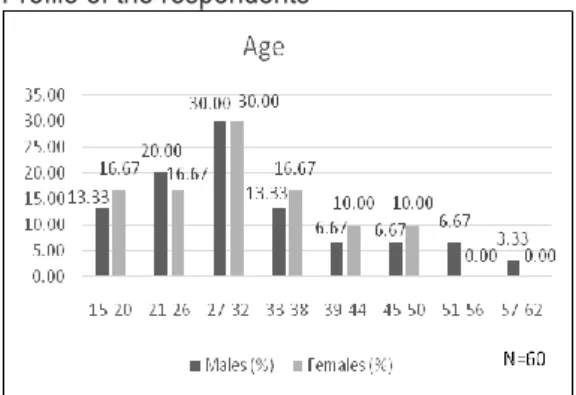
More than half of the respondents were young as 70 percent males and 80 percent females were below 38 years of age, the rest were in their 40s, 50s and 60s. This was because most of the slum dwellers had migrated from rural areas. It is a well-accepted fact that the young tend to migrate much more as compared to the older age groups.
Figure 2. age profile of the respondents (in percent)
Looking at the literacy profile of the respondents, it depicted very low levels of literacy. Literacy is one of the great challenges in the developing world and a primary cause of digital illiteracy. But universal education is still an unattainable dream for many of our rural and urban poor. The educational level of both males and females among the sampled respondents was very low with females lagging behind men in terms of their educational attainments. As many as 26 percent males and 30 percent females were illiterate, 20 percent males and 30 percent males had studied up to varying levels of primary education and had dropped out of school due to various reasons such as the need to work for the family in agricultural fields or for the household. Only 30 percent males and 23 percent males had completed primary school and progressed to middle or senior school. Further, only 6 percent females were graduates as compared to 20 percent males.
The NSSO data on rural and urban literacy taken from 36,479 households in rural areas and 29447 in urban areas in 2014 has estimated rural literacy at 71percent ascompared to 86 percent in urban areas, in the age group of seven years and above [5]. Though slums are a part of the urban areas, surveys carried out by different bodies have shown much lower literacy rates and other parameters of the slum population. Studies have also shown that about 94% of 168 million rural households in India are estimated to be digitally illiterate [6]. Digital literacy training, coupled with life skills training would help the rural and urban dwellers to participate in the development process.
Gender differentiated acceptance of Digital Services
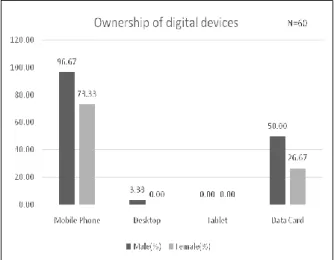
Figure 3.ownership of digital devices and internet usage (in percent)
Savita Aggarwal, Shivangi Goswami, Tanvi Nayyar and Kritika Kumar Page 222
phones for their personal and exclusive use and 50 percent of them had internet connectivity on their phones. By comparison, 74 percent females had their own mobile phones out of which only 27 percent hadinternet connectivity. Another significant point was that more menowned smart phones as compared to women who owned ordinary phones which were primarily meant for making and receiving calls.The ownership of computers was found to be very minimal as only 4 percent of men ownedadesktop or a laptop. None of the respondents had a tablet. The respondents said they did not have much use of computers, as they were not well versed in usage, moreover computers were very expensive. They also reported that they could do the needed tasks through their mobile phones only.
The findings are in consonance with research conducted by GSMA, a trade body of mobile operators which shows that woman in India are 36% less likely to own mobile than men. Some of the reasons for this werelack of address and ID proof among women, highcost of mobile phones and financial dependence of many women on the male-earning members of the household. Therefore, many women had to resort to borrowing handsets from other members of the family[7].
The comprehensive sex-disaggregated differentiation is witnessed internationally as well., A study conducted by surveying 11,000 men and women from low- and middle-income countries.inmobile access and usage has shown thatwomen are on an average, 14% less likely to own a mobile phone as compared to men. In South Asia, women are 38% less likely to own mobile phones than men. In addition, female mobile phone owners are also less likely to access mobile internet than their male counterparts in 9 out of the 11 surveyed countries. This gender gap varies significantly across countries, but is particularly wide in Kenya, India and Indonesia. GSMA‟s finding suggests that women are 12% less likely to use the internet (both mobile and fixed-line)
than men [8].Women‟s access gap to mobile and internet across countries ranges from 16-40% [9]. Women in decision making in ICT sector range from 10-15% [10]. This is also one of the contributory factors in lack of gender sensitive planning for realizing the full potential of use of ICTs.
In a 2014 Google survey of 5,000 women in Asia Pacific, 30% who had not used the internet said it was because they “didn‟t know how to do the things they would want to do online”, another 35% said it was because they “doubted it would be of use to them” due to lack of awareness or lack of skills [11].Another study revealed that 37percent of women who did not currently use the internet,said it was because they were not comfortable or familiar with the technology or there was no one to teach them about it [12]. A study on the usage of broadband phones by working women identified “smartphone complexity” as one of the top three barriers preventing women from acquiring internet enabled phones [13]. A research study by the Grameen Foundation in India, found that only 36% of women surveyed were able to use a mobile phone independently [14].
Savita Aggarwal, Shivangi Goswami, Tanvi Nayyar and Kritika Kumar Page 223
3.3.
Consumption of mobile phones
usage
Figure 4
.
pattern of usage of mobile
phones for different purposes (in percent)
Making phone calls, sending and receiving messages through SMS and Whatsapp as well as photography emerged as the chief usages of mobile phone both by men and women followed by social contacts and online shopping.The survey has shown that keeping apart handful of exceptions, the tendency of usage of phone by women was commendable. Though ownership of mobile phones and internet connectivity among women was comparatively lower than men, but this did not deter them from using the services. Many women reported that since many of them did not have internet on their own phones, they used their husband‟s or other members phones in the evening or night for the internet enabled services.Many women reported they liked to maintain social contacts through Facebook.Video calling was also used to converse with the families in villages. The families also reported that they did need to use online platforms on several occasions such as for making train reservations, admission of children etc. but in the absence of skills and digital equipment, they sought paid help of cyber café operators in their neighbourhood.
A review of studies on usage of mobile phones by girls and women have shown that women face many socio-cultural and gender based barriers in usage, more so in rural areas where women constitute only 2 percent of the internet users[15]. In many families, in both rural and urban areas, unmarried girls are not allowed to keep mobile phones lest they start friendship with males which, is not appreciated. Similarly, there may be restrictions on married women‟s use of mobile phones [16].In several rural and urban homes, a common family phone is available to all members including women for communication with kith and kin. Conversely, strong patriarchal norms allow male members to own personal phones secured with passwords and offering complete privacy for the iruse[17].
Mobile Applications downloads
Figure 5.use of popular mobile applications by the respondents (in percent)
Savita Aggarwal, Shivangi Goswami, Tanvi Nayyar and Kritika Kumar Page 224
downloaded by quarter of males but their
popularity among females were fairly low placed at 6-7 percent.
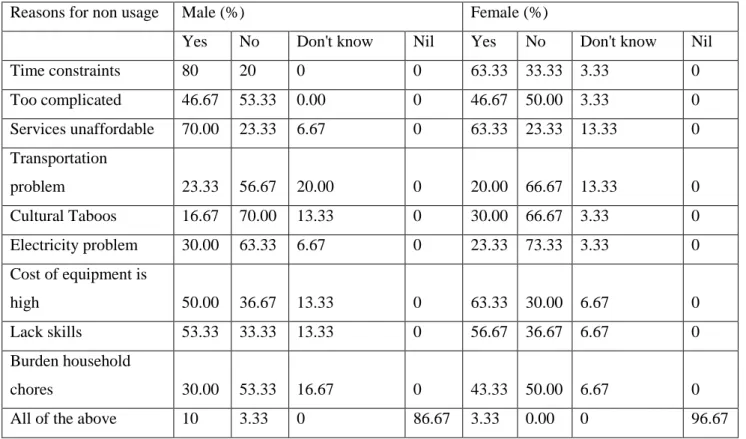
Table 1. Reasons for Non-Usage of Digital Devices (in percent) (N=60)
Reasons for non usage Male (%) Female (%)
Yes No Don't know Nil Yes No Don't know Nil
Time constraints 80 20 0 0 63.33 33.33 3.33 0
Too complicated 46.67 53.33 0.00 0 46.67 50.00 3.33 0
Services unaffordable 70.00 23.33 6.67 0 63.33 23.33 13.33 0
Transportation
problem 23.33 56.67 20.00 0 20.00 66.67 13.33 0
Cultural Taboos 16.67 70.00 13.33 0 30.00 66.67 3.33 0
Electricity problem 30.00 63.33 6.67 0 23.33 73.33 3.33 0
Cost of equipment is
high 50.00 36.67 13.33 0 63.33 30.00 6.67 0
Lack skills 53.33 33.33 13.33 0 56.67 36.67 6.67 0
Burden household
chores 30.00 53.33 16.67 0 43.33 50.00 6.67 0
All of the above 10 3.33 0 86.67 3.33 0.00 0 96.67
The respondents were further asked about the reasons for non-usage of digital devices and technology since most of them neither owned computers nor tablets. However, the respondents said that their children did need to use computers for school and college purposes, they had to go to the cybercafés in the neighborhood. The most common reasons cited by both males and females for non usage of digital devices were time constraints, unaffordable services, high cost of equipment, lack of skills and complicated technology of digital devices.More women (30 percent)cited cultural taboos against the use of digital devices as compared to only 16 percent men.
Similar findings have been shown by other studies in India and other developing countries
Savita Aggarwal, Shivangi Goswami, Tanvi Nayyar and Kritika Kumar Page 225 Willingness for Training
Figure 6.willingness of women to be a part of the training (in percent)
When the respondents were asked about their willingness to participate indigital literacy training,surprisingly, a large majority of women (97 percent) said they were willing to take part in such training programs as compared to lesser number of (77 percent) of men. Of the people who did not want to participate in training, the women (3 percent) said they had burden of performing household chores and no time for training, while 23 percent men reported being out of the house to work the whole day and the time constraint to undertaking training. Most parents especially mothers were insistent that they themselves were not educated and digitally literate, but would definitely want their daughters to be educated and be digitally literate. It is very clear for the observations scruted from all the above data mentioned that the awareness and usage of internet over phone has been high among females therefore, the readiness for the training was there proving their interest in digital technology. It was also found that there were no training programs in nearby areas and they are ready to bear the cost of training as well.
Conclusion
The present study has shown that the urban poor are not completely cutoff from digital technologies but are making efforts to use them in their own ways. The ownership of computers is almost negligible because of high cost, lack of training in its use and lack offelt need to own the same. There are gender gaps in ownership and use of digital devices but women are also coming forward to use several applications. There is lack of training and skills in both men and women in use of ICTs, but more so in women due to lower level of literacy and absence of suitable gender sensitive and gender friendly training facilities. To address these challenges, it is important to leverage women‟s social circles for learning, spending time in addressing fears and misconceptions about the use of digital technologies and at the same time it is important to provide opportunities for hands on training in digital technology.The study clearly outlines the importance of training and steps to be undertaken to keep women engaged in digital technologiesFor instance, the need for trainingprograms to ensure a cooperative and supportive environment where trainee women could communicate with women peers, instructors, and mentors. An educational atmosphere that makes real space for women‟s specific learning needs will have a better chance of keeping women of different age groups equipped with ICT. The tracking and monitoring of women‟s representation will help ensure the presence of female role models and mentors.
Savita Aggarwal, Shivangi Goswami, Tanvi Nayyar and Kritika Kumar Page 226
their lives and increase their income. ICTs have proved useful in health care delivery, distance education, enhancing rural productivity through access to market information and access to finance, promoting empowerment and participation in national and international policy processes and improving service delivery by governments. It is therefore important to mainstream a gender equality perspective and use of ICTs as a tool [19]. If the potential of ICTs has to be fully realized, it is very important to develop a clear understanding of not only gender and cultural differences but also the specific needs of women and other disadvantaged groups.
REFERENCES Reports:
G.Kannan, Indian Women in Technology Face Unique Cultural Obstacles, AnitaB.org,2016
UNICEF, annual report 2017, children in digital world
BCG CII digital influence study, 2016
UNSD summit 2015, the world‟s women
National Sample Survey Office (NSSO), Ministry of Statistics and programmeimplementation , 2015
Open gov, digital literacy scheme lunched in india to cover 60 million rural households,2017
GSMA,Accelerating affordable smartphone ownership in emerging markets, 2016
GSMA, Connected Women, Bridging the gender gap: Mobile access and usage in lowand middle-income countries, 2015
International Telecommunication Union, Intel, UN Women, 2014
International Telecommunication Union, Intel, UN Women, 2014
[11]Google, “Women Will: Closing Asia‟s Digital Gender Gap”, 2014
Intel, “Women and the Web”,2012
GSMA & Women, Qualcomm Wireless Reach, Vital Wave, 2012
Grameen Foundation, BW Women-Creating an equal world, 2014
IT for Change,TheGobal Information Technology report 2014.
The Hindu,address the gender divide, july, 2015
Books:
Doron, Assa Jeffrey, Robin, 2013
Hafkin 2000; McNamara 2000; Rathgeber 2000; Sharma 2003
Report: