Thyroid dysfunction and pregnancy outcomes
Sima Nazarpour1 Ph.D. Candidate, Fahimeh Ramezani Tehrani2 M.D., Masoumeh Simbar1 Ph.D., Fereidoun Azizi3 M.D.
1.Department of Reproductive Health, Faculty of Nursing and Midwifery, Shahid Beheshti University of Medical Sciences, Tehran, Iran.
2.Reproductive Endocrinology Research Center, Research Institute for Endocrine Sciences, Shahid Beheshti University of Medical Sciences, Tehran, Iran. 3.Endocrine Research Center,
Research Institute for Endocrine Sciences, Shahid Beheshti University of Medical Sciences, Tehran, Iran.
Corresponding Author: Fahimeh Ramezani Tehrani, Research Institute for Endocrine Sciences, 24 Parvaneh, Yaman St., Velenjak, Tehran, Iran. P.O.Box: 19395-4763.
Email: [email protected]; [email protected] Tel: (+98) 21-22409309 Received: 4 March 2014 Revised: 30 November 2014
Accepted: 18 March 2015
Abstract
Background: Pregnancy has a huge impact on the thyroid function in both healthy women and those that have thyroid dysfunction. The prevalence of thyroid dysfunction in pregnant women is relatively high.
Objective: The objective of this review was to increase awareness and to provide a review on adverse effect of thyroid dysfunction including hyperthyroidism, hypothyroidism and thyroid autoimmune positivity on pregnancy outcomes.
Materials and Methods: In this review, Medline, Embase and the Cochrane Library were searched with appropriate keywords for relevant English manuscript. We used a variety of studies, including randomized clinical trials, cohort (prospective and retrospective), case-control and case reports. Those studies on thyroid disorders among non-pregnant women and articles without adequate quality were excluded. Results: Overt hyperthyroidism and hypothyroidism has several adverse effects on pregnancy outcomes. Overt hyperthyroidism was associated with miscarriage, stillbirth, preterm delivery, intrauterine growth retardation, low birth weight, preeclampsia and fetal thyroid dysfunction. Overt hypothyroidism was associated with abortion, anemia, pregnancy-induced hypertension, preeclampsia, placental abruption, postpartum hemorrhage, premature birth, low birth weight, intrauterine fetal death, increased neonatal respiratory distress and infant neuro developmental dysfunction. However the adverse effect of subclinical hypothyroidism, and thyroid antibody positivity on pregnancy outcomes was not clear. While some studies demonstrated higher chance of placental abruption, preterm birth, miscarriage, gestational hypertension, fetal distress, severe preeclampsia and neonatal distress and diabetes in pregnant women with subclinical hypothyroidism or thyroid autoimmunity; the other ones have not reported these adverse effects.
Conclusion: While the impacts of overt thyroid dysfunction on feto-maternal morbidities have been clearly identified and its long term impact on childhood development is well known, data on the early and late complications of subclinical thyroid dysfunction during pregnancy or thyroid autoimmunity are controversial. Further studies on maternal and neonatal outcomes of subclinical thyroid dysfunction maternal are needed.
Key words: Thyroid disease, Pregnancy outcome, Hypothyroidism, Hyperthyroidism.
This article extracted from Ph.D. thesis. (Sima Nazarpour)
Introduction
hyroid hormones have profound
variation during the life span and are
associated with severe adverse
health impacts (1, 2). Pregnancy, as
an important reproductive event, has a
profound but reversible effect on the thyroid
gland and its functions. Pregnancy is actually
a state of excessive thyroid stimulation
leading to an increase in thyroid size by 10%
in iodide sufficient areas and 20-40% in iodide
deficient regions (3). Furthermore following
the physiological and hormonal changes
caused by pregnancy and human chorionic
gonadotropin (HCG) the production of thyroxin
(T4) and triiodothyronine (T3) increase up to
50% leading to 50% increase in a woman’s
daily iodide need, while
Thyroid-stimulatinghormone
(TSH)
levels
are
decreased,
especially in first trimester (4). In an iodide
sufficient area, these thyroid adaptations
during pregnancy are well tolerated, as stored
inner thyroid iodide is enough; however in
iodide deficient areas, these physiological
adaptations lead to significant changes during
pregnancy (5).
Furthermore in women who suffered from
thyroid dysfunction prior to pregnancy, the
hormonal changes mentioned are magnified,
leading to possibly adverse pregnancy
outcomes if not been treated appropriately.
Furthermore the mode of delivery may
T
additionally have adverse impact on fetal-
pituitary- thyroid axis (6). The prevalence of
thyroid dysfunction in pregnant women is
relatively high so that overt thyroid dysfunction
occurs in 2-3% of pregnancies, and subclinical
dysfunction in 10% of pregnancies (7) and
thyroid autoimmunity is even more prevalent
(8).
Given the high prevalence of thyroid
disturbances in pregnancy and lack of
adequate review article summarizing the
effect of thyroid dysfunction on pregnancy and
neonatal outcomes, we aimed to summarize
the adverse effects of thyroid dysfunction
including hyperthyroidism, hypothyroidism and
thyroid autoimmune positivity on pregnancy
outcomes. Research question was: "are
thyroid
disorders
in
pregnant
women
associated with adverse effects on pregnancy
outcomes"?
Evidence acquisition
This review study was conducted with a
prospective protocol. We searched Medline
(1985-2013), Embase (1985-2013) and the
Cochrane Library (2012) for relevant English
manuscripts.
Using
keywords
including
“thyroid”,
“thyroid
dysfunction”,
“thyroid
disorder”, “hyperthyroidism”, “hypothyroidism”,
“euthyroidism”, “subclinical hypothyroidism”,
“subclinical
hyperthyroidism”,
“thyroid
autoantibodies”,
“pregnancy
outcome”,
“miscarriage”, “abortion”, “pregnancy loss”,
“preterm”, “premature”, “early labor”, “Thyroid
peroxidase” and “cognitive” to generate a
subset of citations relevant to our research
question. Subclinical hypothyroidism (SCH) is
defined as a serum TSH level above the
upper limit of normal despite normal levels of
serum
free
thyroxine
and
subclinical
hyperthyroidism is defined as serum thyroid
hormone
levels
within
their
respective
reference ranges in the presence of
low-undetectable serum TSH levels (9). Overt
hypothyroidism is defined as a serum free T4
level lower than the upper limit of normal and
overt hyperthyroidism is defined as a serum
free T4 level above the upper limit of normal.
Thyroid autoimmunity is defined as increase in
thyroid auto antibodies above the upper limit
of normal with or without thyroid disturbances.
The full manuscripts of all citations that met
our study objective were selected and
obtained. In cases of duplicate publications,
we selected the most recent and complete
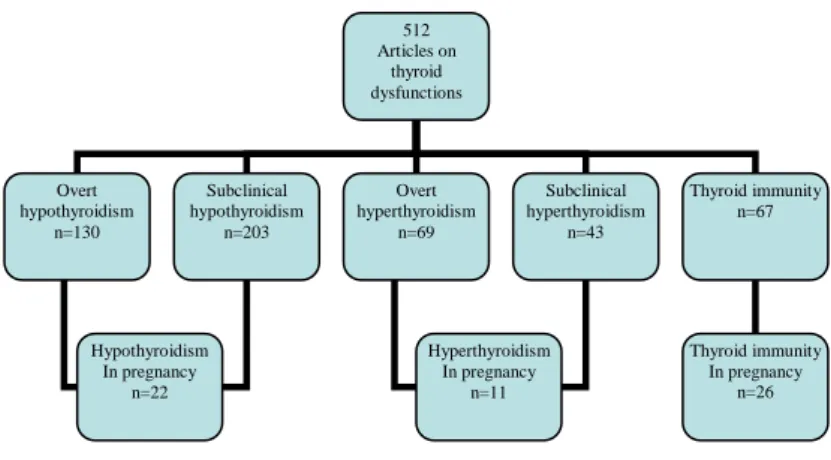
versions. From the 4480 citations identified
from electronic searches, at the beginning, we
found 512 related articles; 130 studies on
overt hypothyroidism, 203 on subclinical
hypothyroidism, 69 on overt hyperthyroidism,
43 on subclinical hyperthyroidism, and 67 on
thyroid immunity. Of these articles, 58 met our
study
objectives,
including
11
on
hyperthyroidism, 22 on hypothyroidism and 26
on thyroid immunity.
We included all qualified original articles on
our study subject; including randomized
clinical
trials,
cohort
(prospective
and
retrospective), case-control and case reports.
We excluded non-English manuscript, those
conducted on non-pregnant women and those
with poor quality methodology. The titles and
abstracts of all of the studies were evaluated
by two non-dependent persons and those met
inclusion criteria were appraised.
Figure 1.The number of articles that were reviewed in the study.
512 Articles on
thyroid dysfunctions
Overt hypothyroidism
n=130
Subclinical hypothyroidism
n=203
Overt hyperthyroidism
n=69
Subclinical hyperthyroidism
n=43
Thyroid immunity n=67
Thyroid immunity In pregnancy
n=26 Hyperthyroidism
In pregnancy n=11 Hypothyroidism
In pregnancy n=22
Iranian Journal of Reproductive Medicine Vol. 13. No. 7. pp: 387-396, July 2015 389
Results
Hyperthyroidism
and
its
adverse
pregnancy and neonatal outcomes
The natural physiological changes during
pregnancy can mimic some of the signs
observed
in
hyperthyroidism,
including
increased in basal metabolism, heart rate,
fatigue, anxiety, palpitations, heat intolerance,
warm and wet skin, hand tremors and systolic
murmur; as a result the diagnosis of
hyperthyroidism
during
pregnancy
could
cause clinical difficulties (9-11). Pregnant
women, who suffer from hyperthyroidism,
have
more
severe
tachycardia
and
thyromegaly, along with exophthalmia, and
lack of weight gain despite receiving adequate
food (10).
Overt hyperthyroidism during pregnancy
was not prevalent and was reported in 2 out of
1000 pregnancies (0.2%), while subclinical
hyperthyroidism was occurred in 1.7% of
pregnancies (11, 12). The most prevalent
reason for hyperthyroidism during pregnancy
was the transient hyperthyroidism resulting
from hyperemesis gravidarum (THHG) due to
the thyroid stimulation of beta-HCG (13); it
was more prevalent in Asian populations
compared to Europeans (14).
Except for THHG, the etiologies of
thyrotoxicosis during pregnancy are the same
as for non-pregnant women; it is most
prevalent in Grave’s Disease caused by
thyrotropin receptor antibodies stimulating the
thyroid (TRabs) (11, 15). It is well documented
that
overt
hyperthyroidism
has
several
adverse effects on pregnancy outcomes, e.g.
miscarriage,
stillbirth,
preterm
delivery,
intrauterine growth retardation, preeclampsia
(11, 16). Furthermore women with Graves'
disease have antibodies that can stop or
stimulate the fetal anti-TSH receptor of thyroid
gland (15, 17, 18).
There is no consensus regarding the
adverse effect of subclinical hypothyroidism
on pregnancy or neonatal outcomes. Casey et
al
.
reported no significant increase of placenta
abruption, preterm labor and low birth weight
in pregnancy complicated by subclinical
hyperthyroidism in comparison with euthyroid
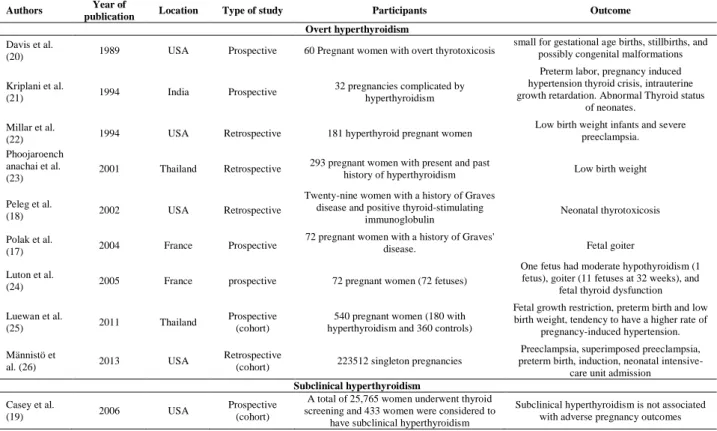
ones (19). Table I summarizes the results of
the most relevant studies on the impact of
overt and subclinical hyperthyroidism on
pregnancy and neonatal outcomes.
Hypothyroidism and its adverse pregnancy
and fetal outcomes
Pregnancy can imitate some of the signs
that are observed in hypothyroidism, including
fatigue, anxiety, constipation, muscle cramps,
and weight gain; as a result, the clinical
diagnosis of hypothyroidism during pregnancy
may be difficult (10, 27). Moreover, most signs
of hypothyroidism can be hidden by a
woman’s status following the increase in
metabolism in pregnancy. Furthermore the
thyroid hormonal profile in normal pregnancy
can be mis-interoperated as hypothyroidism
and as a result the interpretation of thyroid
function
tests
needs
trimester-specific
reference intervals for a specific population
(14, 15). Applying trimester-specific reference
ranges
of
thyroid
hormones
prevents
misclassification of thyroid dysfunction during
pregnancy. Compared to hyperthyroidism,
hypothyroidism is very common during
pregnancy; 2-3% of pregnant women suffer
from
hypothyroidism
(0.3-0.5%
overt
hypothyroidism
and
2-2.5%
subclinical
hypothyroidism) (11, 28).
While the main etiology for hypothyroidism
during
pregnancy
worldwide
is
iodide
insufficiency, however in iodide sufficient
areas its main cause is autoimmune thyroiditis
(8). SCH is the most common thyroid
dysfunction during pregnancy (11, 29). Its
prevalence varies between 1.5-5% based on
various definitions, different ethnicity, iodine
consumption and nutrition life style as well as
study designs (30). While the adverse effects
of SCH accompanied with positive TPO
antibodies
or
overt
hypothyroidism
on
pregnancy outcome are well known, however
there is controversy on negative impact of
SCH without autoimmunity on pregnancy
outcomes (27, 31-33). Pregnant women that
possess the TPO antibodies during the
initiation of their pregnancy are subjected to
subclinical
hypothyroidism
during
their
pregnancy
or
thyroid
dysfunction
after
childbirth (12).
Table II and III summarize the studies on
adverse outcomes of overt and subclinical
hypothyroidism, respectively. As it has been
shown the overt hypothyroidism is associated
with increase in prevalence of abortion,
anemia,
pregnancy-induced
hypertension,
preeclampsia, placental abruption, postpartum
hemorrhage, premature birth, low birth weight,
intrauterine
fetal
death
and
neonatal
respiratory distress (15, 27, 29, 32, 34-41).
There is no consensus on adverse impacts
of subclinical hypothyroidism on pregnancy
outcomes; while some studies demonstrated
higher chance of placental abruption, preterm
birth, miscarriage, gestational hypertension,
fetal distress, severe preeclampsia and
neonatal distress and diabetes, the other
study have not reported and adverse effect
(31, 33, 42, 43, 45, 46). The long term effect
of overt hypothyroidism on cognitive function
has been well documented; these children
have lower IQ and more developmental
dysfunction (8, 12, 15, 38-41, 46-48), however
there is no consensus on the long term
cognitive effects of subclinical hypothyroidism;
while some reported loss of motor function
and intelligence in infants and children the
other reported a normal motor and cognitive
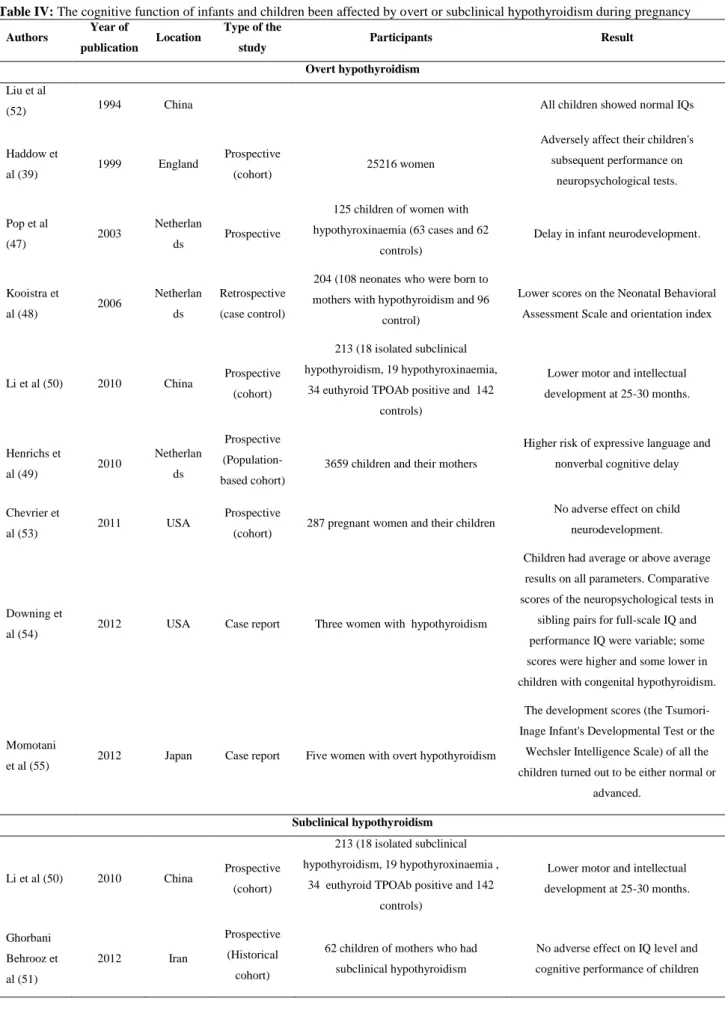
function (15, 45, 48, 50, 51). Table IV
summarizes the cognitive function of infants
and children been affected by overt or
subclinical hypothyroidism during pregnancy.
Autoimmune thyroid disorders
Anti-thyroid
antibodies
are
relatively
common
among
women
during
their
reproductive ages, 6-20% of all euthyroid
women are positive for anti-thyroid antibodies
(8). The presence of anti-thyroid antibodies
during a woman’s reproductive age is not
necessarily followed by a thyroid dysfunction
and 10-20% of all pregnant women who are
TPO antibody positive remain euthyroid in first
trimester (3, 56). Despite the high prevalence
of TPO antibody positive among reproductive
age women, there is no consensus on the
feto-maternal
complications
of
euthyroid
pregnant women who are TPO antibody
positive. As a result, routine screening of
pregnant women for thyroid antibodies is
controversial (57, 58).
Table 7 summarizes the results of the most
relevant studies regarding the feto-maternal
outcomes of thyroid autoimmune positivity in
euthyroid women. While adverse outcomes
such as abortion, preterm delivery, recurrent
miscarriage, hypertension, fetal dyspenea and
diabetes are reported in some of studies,
other studies report compatible pregnancy
outcomes (27, 40, 44, 45, 46, 59-66).
Furthermore
Ghassabian
and
Tiemeier
showed that the high titration of anti-thyroid
peroxidase
antibodies
(TPO-Ab)
during
pregnancy associated with an increased risk
of cognitive and behavioral problems in
preschool children (67).
Table I. The adverse effects of hyperthyroidism (overt/subclinical) on pregnancy and neonatal outcomes
Authors Year of
publication Location Type of study Participants Outcome
Overt hyperthyroidism
Davis et al.
(20) 1989 USA Prospective 60 Pregnant women with overt thyrotoxicosis
small for gestational age births, stillbirths, and possibly congenital malformations
Kriplani et al.
(21) 1994 India Prospective
32 pregnancies complicated by hyperthyroidism
Preterm labor, pregnancy induced hypertension thyroid crisis, intrauterine growth retardation. Abnormal Thyroid status
of neonates.
Millar et al.
(22) 1994 USA Retrospective 181 hyperthyroid pregnant women
Low birth weight infants and severe preeclampsia.
Phoojaroench anachai et al.
(23) 2001 Thailand Retrospective
293 pregnant women with present and past
history of hyperthyroidism Low birth weight
Peleg et al.
(18) 2002 USA Retrospective
Twenty-nine women with a history of Graves disease and positive thyroid-stimulating
immunoglobulin Neonatal thyrotoxicosis
Polak et al.
(17) 2004 France Prospective
72 pregnant women with a history of Graves'
disease. Fetal goiter
Luton et al.
(24) 2005 France prospective 72 pregnant women (72 fetuses)
One fetus had moderate hypothyroidism (1 fetus), goiter (11 fetuses at 32 weeks), and
fetal thyroid dysfunction
Luewan et al.
(25) 2011 Thailand
Prospective (cohort)
540 pregnant women (180 with hyperthyroidism and 360 controls)
Fetal growth restriction, preterm birth and low birth weight, tendency to have a higher rate of
pregnancy-induced hypertension.
Männistö et
al. (26) 2013 USA
Retrospective
(cohort) 223512 singleton pregnancies
Preeclampsia, superimposed preeclampsia,
preterm birth, induction,neonatal
intensive-care unit admission
Subclinical hyperthyroidism
Casey et al.
(19) 2006 USA
Prospective (cohort)
A total of 25,765 women underwent thyroid
screening and 433 women were considered to Subclinical hyperthyroidism is not associated
with adverse pregnancy outcomes
Iranian Journal of Reproductive Medicine Vol. 13. No. 7. pp: 387-396, July 2015 391
Table II. The adverse effects of overt hypothyroidism on pregnancy outcomes
Authors Year of
publication Location
Type of
study Participants Outcomes
Abalovich
et al (35) 2002 Argentina
Randomized Clinical Trial
114 women with primary hypothyroidism (16 overt
hypothyroidism) Abortion, premature delivery
Wolfberg et
al (37) 2005 USA Retrospective
19,969 women (482 with treated hypothyroid disease and 19,487 without
thyroid disease) Pre-eclampsia
Idris et al
(36) 2005 England Retrospective 167 pregnant women Low birth weight caesarean section
Cleary Goldman et
al (33) 2008 USA Prospective 10,990 pregnant women
Preterm labor , macrosomia, gestational diabetes
Sahu et al
(32) 2010 India Prospective 633 pregnant women
Pregnancy-induced hypertension, intrauterine growth restriction,
intrauterine demise, Neonatal complications, gestational diabetes
Hirsch et al
(38) 2013 Israel
Retrospective case series
306 pregnant women (101 with
hyperthyroidism and 205 euthyroid) Abortions and premature delivery
Männistö et
al (26) 2013 USA Retrospective 223512 singleton pregnancies
Primary hypothyroidism: Preeclampsia, superimposed preeclampsia, gestational diabetes, preterm birth, induction , cesarean section, intensive-care unit admission
Iatrogenic hypothyroidism: placental abruption , breech presentation, cesarean section after
spontaneous labor
Table III: The adverse effects of subclinical hypothyroidism (with/without thyroid autoimmunity) on pregnancy outcomes
Authors Year of
publication Location
Type of the
study Participants Outcomes
Subclinical hypothyroidism without control of TPOAb Abalovich
et al (35) 2002 Argentina Prospective
114 women with primary hypothyroidism (35 subclinical
hypothyroidism Abortion, premature delivery
Stagnaro-Green et al (42)
2005 USA
Prospective (nested-case
control) 953 women Very preterm delivery
Casey et al
(29) 2005 USA Prospective 25,756 women Placental abruption Preterm birth
Cleary-Goldman et
al (33) 2008 USA Prospective 10,990 patients
Subclinical hypothyroidism was not associated with adverse outcomes.
Sahu et al
(32) 2010 India Prospective 633 women Cesarean section rate for fetal distress
Wilson et al
(31) 2012 USA Prospective 24,883 women Severe preeclampsia
Subclinical hypothyroidism including negative and positive TPO Ab
Negro
et al (27) 2006 Italy
Randomized
Clinical Trial 984 pregnant women
Pregnant women who are positive for TPOAb develop impaired thyroid function, increased risk of miscarriage
and premature deliveries
Benhadi et
al (43) 2009
Netherlan ds
prospective
(cohort) 2497 women
Pregnant women without overt thyroid dysfunction, the risk of child loss increased with higher levels of maternal
TSH
Karakosta
et al (44) 2012 Greece prospective 1170 pregnant women
Increased gestational diabetes and low birth weight neonates among those with
of high TSH and spontaneous preterm among those without elevated TSH
levels
Table IV: The cognitive function of infants and children been affected by overt or subclinical hypothyroidism during pregnancy
Authors Year of
publication Location
Type of the
study Participants Result
Overt hypothyroidism Liu et al
(52) 1994 China All children showed normal IQs
Haddow et
al (39) 1999 England
Prospective
(cohort) 25216 women
Adversely affect their children's
subsequent performance on
neuropsychological tests.
Pop et al
(47) 2003
Netherlan
ds Prospective
125 children of women with
hypothyroxinaemia (63 cases and 62
controls)
Delay in infant neurodevelopment.
Kooistra et
al (48) 2006
Netherlan
ds
Retrospective
(case control)
204 (108 neonates who were born to
mothers with hypothyroidism and 96
control)
Lower scores on the Neonatal Behavioral
Assessment Scale and orientation index
Li et al (50) 2010 China Prospective (cohort)
213 (18 isolated subclinical
hypothyroidism, 19 hypothyroxinaemia,
34 euthyroid TPOAb positive and 142
controls)
Lower motor and intellectual
development at 25-30 months.
Henrichs et
al (49) 2010
Netherlan
ds
Prospective
(Population-based cohort)
3659 children and their mothers
Higher risk of expressive language and
nonverbal cognitive delay
Chevrier et
al (53) 2011 USA
Prospective
(cohort) 287 pregnant women and their children
No adverse effect on child
neurodevelopment.
Downing et
al (54) 2012 USA Case report Three women with hypothyroidism
Children had average or above average
results on all parameters. Comparative
scores of the neuropsychological tests in
sibling pairs for full-scale IQ and
performance IQ were variable; some
scores were higher and some lower in
children with congenital hypothyroidism.
Momotani
et al (55) 2012 Japan Case report Five women with overt hypothyroidism
The development scores (the
Tsumori-Inage Infant's Developmental Test or the
Wechsler Intelligence Scale) of all the
children turned out to be either normal or
advanced.
Subclinical hypothyroidism
Li et al (50) 2010 China Prospective (cohort)
213 (18 isolated subclinical
hypothyroidism, 19 hypothyroxinaemia ,
34 euthyroid TPOAb positive and 142
controls)
Lower motor and intellectual
development at 25-30 months.
Ghorbani
Behrooz et
al (51)
2012 Iran
Prospective
(Historical
cohort)
62 children of mothers who had
subclinical hypothyroidism
No adverse effect on IQ level and
cognitive performance of children
Iranian Journal of Reproductive Medicine Vol. 13. No. 7. pp: 387-396, July 2015 393
Table V.The feto-maternal outcomes of thyroid autoimmune positivity in euthyroid pregnant women
Authors Year of
publication Location Type of Study Participants Outcome
Stagnaro-Green et al (68)
1990 USA Prospective 552 pregnant women Increased miscarriage
Glinoer et al
(40) 1991 Belgium Prospective 120 euthyroid pregnant women Increased spontaneous abortion
Pratt et al
(64) 1993 USA
Retrospective (case control)
45 women and 100 apparently health blood
donors served as controls. Increased recurrent spontaneous abortions
Glinoer et al
(41) 1994 Belgium Prospective
87 healthy pregnant women with thyroid antibodies and normal thyroid function
Increased spontaneous miscarriage and premature deliveries
Bussen et al
(63) 1995 Germany Retrospective
66 women (22 euthyroid non-pregnant habitual aborters; 22 nulligravidae and 22
multigravidae without endocrine dysfunction as controls).
Increased habitual abortions
Singh et al
(69) 1995
USA
Retrospective
487 subfertile women who had undergone Assisted reproductive technology
Increased miscarriage
Iijima et al
(70) 1997 Japan Prospective
1, 179 healthy pregnant women including
228 cases of positive thyroid autoantibody Increased spontaneous abortion
Kutteh et al
(62) 1999 USA Retrospective.
1588 women (700 women with a history of pregnancy losses, 688 women with a history of infertility who were undergoing Assisted reproductive technology, and 200
healthy, reproductive-aged female controls)
Increased recurrent pregnancy loss
Muller et al (66)
1999 Netherlan
ds
Prospective (nested-case control)
173 subfertile women undergoing Invitro fertilization
No increase of miscarriage in women without a history of habitual abortion
Dendrinos et
al (60) 2000 Greece
Retrospective (case control)
45 women (30 euthyroid with Recurrent spontaneous miscarriage and 15 matched
controls)
Increased recurrent spontaneous miscarriage
Bagis et al
(59) 2001 Turkey Retrospective 876 women
Increased abortion
Poppe et al
(71) 2003
Belgium
Prospective,
234 subfertile
women undergoing Assisted reproductive technology
Increased miscarriage
Marai et al
(72) 2004 Israel
Retrospective (case control)
66 women (58 with impaired fertility and
28 control parous women) Increased recurrent miscarriages
Stagnaro-Green et al (42)
2005 USA
Prospective (nested-case control)
124 Cases and 124 Controls were randomly selected from among the 953
women who delivered at term
Increased very preterm delivery
Negro et al
(27) 2006 Italy
Randomized Clinical Trial
984 pregnant women (TPO Ab + & -, euthyroid & subclinical)
Increased miscarriage and premature deliveries
Ghafoor et
al (73) 2006 Pakistan Prospective 1, 500 pregnant women
Increased low-birth-weight of neonates and high abortion rate
Negro et al
(46) 2007 Italy Retrospective
416 euthyroid women (42 were positive TPOAb) undergoing Assisted reproductive
technology
Increased unsuccessful pregnancy or subsequent miscarriage
Iravani et al
(74) 2008 Iran
Retrospective (case-control)
641 women with a history of 3 or more consecutive pregnancy losses and 269
controls
Increased recurrent abortion
Cleary-Goldman et al (33)
2008 USA Prospective 10,990 pregnant women Increased preterm premature rupture of
membranes
Männistö et
al (75) 2009 Finland Prospective 9, 247 singleton pregnancies Increased perinatal death
Soltanghora
ee et al (76) 2010 Iran
Retrospective (case control)
95 cases as fertile controls and 70, 78 and 137 cases with infertility and recurrent
abortion respectively.
Increased recurrent abortion
Haddow et al (77)
2010
USA Prospective 10, 062 singleton pregnancies Increased preterm delivery,
premature rupture of membranes Negro et al
(78) 2011 Italy Prospective 3593 pregnant women
Increased very preterm delivery and respiratory distress Nambiar et
al (61) 2011 India Prospective 483 pregnant women Increased miscarriage
Ashoor et al
(65) 2011 Europe Prospective 4, 420 singleton pregnancies
No increase spontaneous early preterm delivery
Karakosta et
al (44) 2012 Greece Prospective
1170 pregnant women (TPO Ab + & - , euthyroid & subclinical)
Increased gestational diabetes and low birth weight neonates among those with of high TSH and spontaneous preterm among those
without elevated TSH levels
Conclusion
Although it is well documented that overt
hypothyroidism and overt hyperthyroidism
have deleterious impacts on pregnancy and
childhood outcomes, there is however no
consensus on the potential impact of
subclinical hypothyroidism and subclinical
hyperthyroidism on maternal and fetal health.
Furthermore
there
is
debate
on
the
association between miscarriage and preterm
delivery in euthyroid women positive for TPO
antibodies. As a result the universal screening
of
pregnant
women
has
not
been
recommended yet, as the benefits of
identification of those subclinical for of thyroid
disturbances has not been proved. There is
not adequate data on cost-benefit of treatment
of pregnant women suffer from subclinical
thyroid disorders. Studies are now focusing on
these controversial issues to produce critically
needed data on the impact of treating these
subclinical forms of thyroid disease on the
mother, fetus, and the future intellect of the
unborn child. The present review article is
limited by not including the non-English
articles. Summarizing the studies which have
been published, the following can be
concluded: 1) Overt hyperthyroidism and
hypothyroidism have several adverse effects
on pregnancy outcomes, 2) The long term
effect of overt hypothyroidism on cognitive
function has been well documented, 3) There
is debate on short and long term effect of
subclinical
hypothyroidism,
4)
Thyroid
antibody positivity is associated with adverse
pregnancy outcomes, but there is no
consensus on feto-maternal complication of
pregnant women with TPO antibody positive
and euthyroid status.
Future studies should include the following:
1) Studies of possible benefits of levo-T4
(L-T4)
in
euthyroid
and
subclinical
hypothyroidism women with positive TPO
antibody; 2) Larger randomized control trials
of patients with maternal hypothyroidism are
necessary to impact on neurocognitive
function; 3) More comprehensive studies with
controlled iodine intake checks (urinary tests,
for example) are suggested.
Acknowledgment
There
was
no
involvement
of
a
pharmaceutical or any other company in
funding of this manuscript. There is no one in
charge of medical writing or editorial
assistance with the preparation of this article.
Conflict of Interests
The authors report no declarations of
interest.
References
1. Ramezani Tehrani F, Aghaee M, Asefzadeh S. The comparison of thyroid function tests in cord blood
following cesarean section or vaginal delivery. Int J
Endocrinol Metab 2003; 1: 22-26.
2. Zadeh-Vakili A, Ramezani Tehrani F, Hashemi S, Amouzegar A, Azizi F. Relationship between Sex Hormone Binding Globulin, Thyroid Stimulating Hormone, Prolactin and Serum Androgens with Metabolic Syndrome Parameters in Iranian Women
of Reproductive Age. Diabetes Metabolism 2012:
S:2. Available at: http://dx.doi.org/10.4172/2155-6156.S2-008.
3. The American Thyroid Association Taskforce on Thyroid Disease During Pregnancy and Postpartum. Guidelines of the American Thyroid Association for the Diagnosis and Management of Thyroid Disease during Pregnancy and Postpartum. Thyroid 2011; 21: 1081-1125.
4. Yamamoto T, Amino N, Tanizawa O, Doi K, Ichihara K, Azukizawa M, et al. Longitudinal study of serum thyroid hormones, chorionic gonadotrophin and
thyrotrophin during and after normal pregnancy. Clin
Endocrinol (Oxf) 1979; 10: 459-468.
5. Glinoer D, de Nayer P, Bourdoux P, Lemone M, Robyn C, van Steirteghem A, et al. Regulation of
maternal thyroid function during pregnancy. J Clin
Endocrinol Metab 1990; 71: 276-287.
6. Ramezani Tehrani F, Tohidi M, Rostami Dovom M, Azizi F. A Population Based Study on the Association of Thyroid Status with Components of
the Metabolic Syndrome. Diabete Metab 2011; 2:
1-5.
7. Azizi F, Delshad H. Thyroid Derangements in Pregnancy. IJEM 2014; 15: 491-508.
8. Cignini p, Cafà EV, Giorlandino C, Capriglione S, Spata A, Dugo N. Thyroid physiology and common
diseases in pregnancy: review of literature. J Prenat
Med 2012; 6: 64-71.
9. Casey B, Leveno K. Thyroid disease in pregnancy. Obstet Gynecol 2006; 108: 1283-1292.
10. Cunningham F, Leveno KJ, Bloom SL, Hauth JC,
Rouse Dj, Spong CY. Williams Obstetrics. 23rd Ed.
McGrraw-Hill Companies; 2010.
11. Delshad, H, Azizi, F. Thyroid and pregnancy. J Med Council Iran 2008; 26: 392-408.
12. Banerjee S. Thyroid Disorders in Pregnancy. JAPI
2011; 59: 32-34.
13. Glinoer D, Spencer CA. Serum TSH determinations
in pregnancy: how, when and why? Nat Rev
Endocrinol 2010; 6: 526-529.
14. Lazarus JH. Thyroid function in pregnancy. Br Med
Bul 2011; 97: 137-148.
15. El Baba KA, Azar ST. Thyroid dysfunction in pregnancy. Int J Gen Med 2012; 5: 227-230. 16. Gaberšček S, Zaletel K. Thyroid physiology and
autoimmunity in pregnancy and after delivery. Expert Rev Clin Immunol 2011; 7: 697-706.
17. Polak M, Le Gac I, Vuillard E, Guibourdenche J, Leger J, Toubert ME, et al. Fetal and neonatal
Iranian Journal of Reproductive Medicine Vol. 13. No. 7. pp: 387-396, July 2015 395
thyroid function in relation to maternal Gravesʼ disease. Best Pract Res Clin Endocrinol Metab 2004; 18: 289-302.
18. Peleg D, Cada S, Peleg A, Ben-Ami M. The relationship between maternal serum Thyroid-stimulating immunoglobulin and fetal and neonatal thyrotoxicosis. Obstet Gynecol 2002; 99: 1040-1043. 19. Casey BM, Dashe JS, Wells CE, McIntire DD,
Leveno KJ, Cunningham FG. Subclinical
hyperthyroidism and pregnancy outcomes. Obstet
Gynecol 2006; 107: 337-341.
20. Davis LE, Lucas MJ, Hankins GD, Roark ML,
Cunningham FG. Thyrotoxicosis complicating
pregnancy. Am J Obstet Gynecol 1989; 160: 63-70. 21. Kriplani A, Buckshee K, Bhargava VL, Takkar D,
Ammini AC. Maternal and perinatal outcome in
thyrotoxicosis complicating pregnancy. Eur J Obstet
Gynecol Reprod Biol 1994; 54: 159-163.
22. Millar LK, Wing DA, Leung AS, Koonings PP, Montoro MN, Mestman JH. Low birth weight and
preeclampsia in pregnancies complicated by
hyperthyroidism. Obstet Gynecol 1994; 84: 946-949.
23. Phoojaroenchanachai M, Sriussadaporn S,
Peerapatdit T, Vannasaeng S, Nitiyanant W,
Boonnamsiri V, et al. Effect of maternal
hyperthyroidism during late pregnancy on the risk of neonatal low birth weight. Clin Endocrinol (Oxf) 2001; 54: 365-370.
24. Luton D, Le Gac I, Vuillard E, Castanet M, Guibourdenche J, Noel M, et al. Management of Graves' disease during pregnancy: the key role of
fetal thyroid gland monitoring. J Clin Endocrinol
Metab 2005; 90: 6093-6098.
25. Luewan S, Chakkabut P, Tongsong T. Outcomes of pregnancy complicated with hyperthyroidism: a
cohort study. Arch Gynecol Obstet 2011; 283:
243-247.
26. Männistö T, Mendola P, Grewal J, Xie Y, Chen Z, Laughon SK. Thyroid diseases and adverse pregnancy outcomes in a contemporary US cohort. J Clin Endocrinol Metab 2013; 98: 2725-2733.
27. Negro R, Formoso G, Mangieri T, Pezzarossa A, Dazzi D, Hassan H. Levothyroxine treatment in euthyroid pregnant women with autoimmune thyroid
disease: effects on obstetrical complications. J Clin
Endocrinol Metab 2006; 91: 2587-2591.
28. Negro R, Mestman JH. Thyroid disease in
pregnancy. Best Pract Res Clin Endocrinol Metab
2011; 25: 927-943.
29. Casey BM, Dashe JS, Wells CE, McIntire DD, Byrd W, Leveno KJ, et al. Subclinical hypothyroidism and
pregnancy outcomes. Obstet Gynecol 2005; 105:
239-245.
30. Vanderpump MPJ. The epidemiology of thyroid disease. Br Med Bulletin 2011; 99: 39-51.
31. Wilson KL, Casey BM, McIntire DD, Halvorson LM, Cunningham FG. Subclinical thyroid disease and the
incidence of hypertension in pregnancy. Obstet
Gynecol 2012; 119: 315-320.
32. Sahu MT, Das V, Mittal S, Agarwal A, Sahu M. Overt and subclinical thyroid dysfunction among Indian pregnant women and its effect on maternal and fetal outcome. Arch Gynecol Obstet 2010; 281: 215-220. 33. Cleary-Goldman J, Malone FD, Lambert-Messerlian
G, Sullivan L, Canick J, Porter TF, et al. Maternal
thyroid hypofunction and pregnancy outcome. Obstet Gynecol 2008; 112: 85-92.
34. Vissenberg R, Goddijn M, Mol BW, van der Post JA, Fliers E, Bisschop PH. Thyroid dysfunction in
pregnant women: clinical dilemmas. Ned Tijdschr
Geneeskd 2012; 56: A5163.
35. Abalovich M, Gutierrez S, Alcaraz G, Maccallini G, Garcia A, Levalle O. Overt and Subclinical
Hypothyroidism Complicating Pregnancy. Thyroid
2002; 12: 63-68.
36. Idris I, Srinivasan R, Simm A, Page RC. Maternal hypothyroidism in early and late gestation: effects on
neonatal and obstetric outcome. Clin Endocrinol
2005; 63: 560-565.
37. Wolfberg AJ, Lee-Parritz A, Peller AJ, Lieberman ES. Obstetric and neonatal outcomes associated with
maternal hypothyroid disease. J Matern Fetal
Neonatal Med 2005; 17: 35-38.
38. Hirsch D, Levy S, Nadler V, Kopel V, Shainberg B, Toledano Y. Pregnancy outcomes in women with
severe hypothyroidism. Eur J Endocrinol 2013; 169:
313-320.
39. Haddow JE, Palomaki GE, Allan WC, Williams JR, Knight GJ, Gagnon J, et al. Maternal thyroid
deficiency during pregnancy and subsequent
neuropsychological development of the child. N Engl
J Med 1999; 341: 549-555.
40. Glinoer D, Soto MF, Bourdoux P, Lejeune B, Delange F, Lemone M, et al. Pregnancy in patients with mild thyroid abnormalities: maternal and
neonatal repercussions. J Clin Endocrinol Metab
1991; 73: 421-427.
41. Glinoer D, Riahi M, Grün JP, Kinthaert J. Risk of subclinical hypothyroidism in pregnant women with
asymptomatic autoimmune thyroid disorders. J Clin
Endocrinol Metab 1994; 79: 197-204.
42. Stagnaro-Green A, Chen X, Bogden JD, Davies TF, Scholl TO. The thyroid and pregnancy: a novel risk
factor for very preterm delivery. Thyroid 2005; 15:
351-357.
43. Benhadi N, Wiersinga WM, Reitsma JB, Vrijkotte TG, Bonsel GJ. Higher maternal TSH levels in pregnancy are associated with increased risk for miscarriage, fetal or neonatal death. Eur J Endocrinol 2009; 160: 985-991.
44. Karakosta P, Alegakis D, Georgiou V, Roumeliotaki T, Fthenou E, Vassilaki M, et al. Thyroid dysfunction
and autoantibodies in early pregnancy are
associated with increased risk of gestational diabetes and adverse birth outcomes. J Clin Endocrinol Metab 2012; 97: 4464-4472.
45. Stagnaro-Green A. Thyroid antibodies and
miscarriage: where are we at a generation later? J
Thyroid Res 2011; ID 841949.
46. Negro R, Formoso G, Coppola L, Presicce G, Mangieri T, Pezzarossa A, et al. Euthyroid women with autoimmune disease undergoing assisted reproduction technologies: the role of autoimmunity and thyroid function. J Endocrinol Invest 2007; 30: 3-8.
47. Pop VJ, Brouwers EP, Vader HL, Vulsma T, van
Baar AL, Vijlder JJ. Maternal hypothyroxinaemia
during early pregnancy and subsequent child
development: a 3-year follow-up study. Clin
Endocrinol 2003; 59: 282-288.
48. Kooistra L, Crawford S, van Baar AL, Brouwers EP,
Pop VJ. Neonatal effects of maternal
hypothyroxinemia during early pregnancy. Pediatrics 2006; 117: 161-167.
49. Henrichs J, Bongers-Schokking JJ, Schenk JJ, Ghassabian A, Schmidt HG, Visser TJ, et al. Maternal Thyroid Function during Early Pregnancy and Cognitive Functioning in Early Childhood: The
Generation R Study. J Clin Endocrinol Metab 2010;
95: 4227-4234.
50. Li Y, Shan Z, Teng W, Yu X, Li Y, Fan Ch, et al. Abnormalities of maternal thyroid function during pregnancy affect neuropsychological development of their children at 25-30 months. Clin Endocrinol 2010; 72: 825-829.
51. Ghorbani Behrooz H, Tohidi M, Mehrabi Y, Ghorbani Behrooz E, Tehranidoost Mehdi, Azizi F. Subclinical
Hypothyroidism in Pregnancy: Intellectual
Development of Offspring. Thyroid 2012; 21;
1143-1147.
52. Liu H, Momotani N, Noh JY, Ishikawa N, Takebe K, Ito K. Maternal hypothyroidism during early pregnancy and intellectual development of the progeny. Arch Intern Med 1994; 154: 785-787. 53. Chevrier J, Harley KG, Kogut K, Holland N, Johnson
C, Eskenazi B. Maternal Thyroid Function during the
Second Half of Pregnancy and Child
Neurodevelopment at 6, 12, 24, and 60Months of Age. J Thyroid Res 2011; ID 426427.
54. Downing S, Halpern L, Carswell J, Brown RS. Neuropsychological Development in Children of Mothers with Hypothyroidism Is Normal When
Euthyroidism Is Achieved after Conception. Clin
Thyroid 2012; 24: 4-8.
55. Momotani N, Iwama S, Momotani K.
Neurodevelopment in children born to hypothyroid
mothers restored to normal thyroxine (T4)
concentration by late pregnancy in Japan: no
apparent influence of maternal T4 deficiency. J Clin
Endocrinol Metab 2012; 97: 1104-1108.
56. van den Boogaard E, Vissenberg R, Land JA, van Wely M, van der Post JA, Goddijn M, et al. Significance of (sub)clinical thyroid dysfunction and thyroid autoimmunity before conception and in early
pregnancy: a systematic review. Hum Reprod
Update 2011; 17: 605-619.
57. Stagnaro-Green A, Abalovich M, Alexander E, Azizi F, Mestman J, Negro R, et al. Guidelines of the American Thyroid Association for the diagnosis and management of thyroid disease during pregnancy and postpartum. Thyroid 2011; 21: 1081-1125. 58. Kahric-Janicic N, Soldin SJ, Soldin OP, West T, Gu
J, Jonklaas J. Tandem mass spectrometry improves the accuracy of free thyroxine measurements during pregnancy. Thyroid 2007; 17: 303-311.
59. Bagis T, Gokcel A, Saygili ES. Autoimmune thyroid disease in pregnancy and the postpartum period:
relationship to spontaneous abortion. Thyroid 2001;
11: 1049-1053.
60. Dendrinos S, Papasteriades C, Tarassi K,
Christodoulakos G, Prasinos G, Creatsas G. Thyroid autoimmunity in patients with recurrent spontaneous miscarriages. Gynecol Endocrinol 2000; 14: 270-274. 61. Nambiar V, Jagtap VS, Sarathi V, Lila AR, Kamalanathan S, Bandgar TR, et al. Prevalence and Impact of Thyroid Disorders on Maternal Outcome in
Asian-Indian PregnantWomen. J Thyroid Res 2011;
1: ID 429097.
62. Kutteh WH, Yetman DL, Carr AC, Beck LA, Scott RT Jr. Increased prevalence of antithyroid antibodies identified in women with recurrent pregnancy loss but
not in women undergoing assisted reproduction. Fertil Steril 1999; 71: 843-848.
63. Bussen S, Steck T. Thyroid autoantibodies in euthyroid non-pregnant women with recurrent
spontaneous abortions. Hum Reprod 1995; 10:
2938-2940.
64. Pratt D, Novotny M, Kaberlein G, Dudkiewicz A,
Gleicher N. Antithyroid antibodies and the
association with non-organ-specific antibodies in
recurrent pregnancy loss. Am J Obstet Gynecol
1993; 168: 837-884.
65. Ashoor G, Maiz N, Rotas M, Jawdat F, Nicolaides KH. Maternal thyroid function at 11-13 weeks of
gestation and spontaneous preterm delivery. Obstet
Gynecol 2011; 117: 293-298.
66. Muller AF, Verhoeff A, Mantel MJ, Berghout A. Thyroid autoimmunity and abortion: a prospective study in women undergoing in vitro fertilization. Fertil Steril 1999; 71: 30-34.
67. Ghassabian A, Tiemeier H. Is measurement of maternal serum TSH sufficient screening in early
pregnancy? A case for more randomized trials. Clin
Endocrinol (Oxf) 2012; 77: 802-805.
68. Stagnaro-Green A, Roman SH, Cobin RH, el-Harazy E, Alvarez-Marfany M, Davies TF. Detection of at-risk pregnancy by means of highly sensitive assays for thyroid autoantibodies. JAMA 1990; 264: 1422-1425. 69. Singh A, Dantas ZN, Stone SC, Asch RH. Presence
of thyroid antibodies in early reproductive failure:
biochemical versus clinical pregnancies. Fertil Steril
1995; 63: 277-281.
70. Iijima T, Tada H, Hidaka Y, Mitsuda N, Murata Y, Amino N. Effects of autoantibodies on the course of
pregnancy and fetal growth. Obstet Gynecol 1997;
90: 364-369.
71. Poppe K, Glinoer D, Tournaye H, Devroey P, van Steirteghem A, Kaufman L, et al. Assisted
reproduction and thyroid autoimmunity: an
unfortunate combination. J Clin Endocrinol Metab
2003; 88: 4149-4152.
72. Marai I, Carp H, Shai S, Shabo R, Fishman G, Shoenfeld Y. Autoantibody panel screening in recurrent miscarriages. Am J Reprod Immunol 2004; 51: 235-240.
73. Ghafoor F, Mansoor M, Malik T, Malik MS, Khan AU, Edwards R, et al. Role of thyroid peroxidase
antibodies in the outcome of pregnancy. J Coll
Physicians Surg Pak 2006; 16: 468-471.
74. Iravani AT, Saeedi MM, Pakravesh J, Hamidi S, Abbasi M. Thyroid autoimmunity and recurrent spontaneous abortion in Iran: a case-control study. Endocrine Practice 2008; 14: 458-464.
75. Männistö T, Vääräsmäki M, Pouta A, Hartikainen AL, Ruokonen A, Surcel HM, et al. Perinatal outcome of children born to mothers with thyroid dysfunction or antibodies: a prospective populationbased cohort study. J Clin Endocrinol Metab 2009; 94: 772-779 76. Soltanghoraee H, Arefi S, Mohammadzadeh A,
Taheri A, Zeraati H, Hashemi SB, et al. Thyroid autoantibodies in euthyroid women with recurrent abortions and infertility. Iran J Reprod Med 2010; 8: 153-156.
77. Haddow JE, Cleary-Goldman J, McClain MR, Palomaki GE, Neveux LM, Lambert-Messerlian G, et al. Thyroperoxidase and thyroglobulin antibodies in
early pregnancy and preterm delivery. Obstet
Gynecol 2010; 116: 58-62.
78. Negro R, Schwartz A, Gismondi R, Tinelli A, Mangieri T, Stagnaro-Green A. Thyroid antibody positivity in the first trimester of pregnancy is associated with
negative pregnancy outcomes. J Clin Endocrinol
Metab 2011; 96: 920-924.