lii
COMMISSION OF THE EUROPEAN COMMUNITIES
At
fte
ÎEEDIMENSIONAL PLOTTING PROGRAM
'PIS;
1
IPIilll
Central Bureau for Nuclear Measurements Joint Nuclear Research Center
iö : 'iff'ΓτΓ'TLitfifrS τι St.'
Geel Establishment Belgium
CBNM
Stili
L
htói«
l i
íifí?gí'
SSï
Pul
bli ' i ö t ' f r
'L'y'
^töri* vJwí 1.
m:
■ ' m » ιi »*Ti*»Bj ¡Hifi m\
'''llllshií^m'tí ■ •Ι**'
""rAL N O T I C E
This document was prepared under the sponsorship of the Commission of the European Communities.
Neither the Commission of the European Communities, its contractors nor any person acting on their behalf:
make any warranty or representation, express or implied, with respect to the accuracy, completeness or usefulness of the information contained in this document, or that the use of any information, apparatus, method or process disclosed in this document may not infringe privately owned
M riBhts; or
assume any liability with respect to the use of, or for damages resultingliÉBieeiSiii«
from the use of any information, apparatus, method or process discloiin this document.
m
,1
process disclosed9 Ν Η Μ Ρ
Ä S S
i i | p
This report is on sale at the addresses listed
tJm
■ J U ..L¿at the price of F F 6.65 FB 60. D M 4.40 Lit. 750 FL 4.30
■f-iL
fm
i3|i
måm
m
IP!
W h e n o r d e r i n g , p l e a s e q u o t e t h e E U R n u m b e r a n d t h e t i t l e h i c h a r e i n d i c a t e d o n t h e cover ot e a c h r e p o r t .
li
PI»
• i I
DWSå
r rsewinkel, Brussels..All
mm
j . ij.ui.v_vj. ijy v a u ivxlay a t ï v n Luxembourg, June 1970.'mm
was reproduced on the basis of the best available copy.
EUR 4484 e
THE THREE-DIMENSIONAL PLOTTING PROGRAM T R I C E , by G. NASTRI and C. CERVINI
Commission of the European Communities
Joint Nuclear Research Center — Geel Establishment (Belgium) Central Bureau for Nuclear Measurements — CBNM
Luxembourg, June 1970 — 46 Pages — 10 Figures — FB 60,—
The program TRICE (FORTRAN IV IBM 1800) projects a surface on a plane from a given observation point and plots the projected surface without hidden points.
EUR 4484e
THE THREE-DIMENSIONAL PLOTTING PROGRAM T R I C E , by G. NASTRI and C. CERVINI
Commission of the European Communities
Joint Nuclear Research Center — Geel Establishment (Belgium) Central Bureau for Nuclear Measurements — CBNM
Luxembourg, June 1970 — 46 Pages — 10 Figures — FB 60,—
The program TRICE (FORTRAN IV IBM 1800) projects a surface on a plane from a given observation point and plots the projected surface without hidden points.
EUR 4484 e
THE THREE-DIMENSIONAL PLOTTING PROGRAM T R I C E , by G. NASTRI and C. CERVINI
Commission of the European Communities
Joint Nuclear Research Center — Geel Establishment (Belgium) Central Bureau for Nuclear Measurements — CBNM
Luxembourg, June 1970 — 46 Pages — 10 Figures — FB 60,—
EUR 4 4 8 4 e
COMMISSION OF THE EUROPEAN COMMUNITIES
THE THREE-DIMENSIONAL PLOTTING PROGRAM
TRICE
by
G. NASTRI and C. CERVINI
1970
Joint Nuclear Research Center Geel Establishment - Belgium
ABSTRACT
The program TRICE (FORTRAN IV IBM 1800) projects a surface on a plane from a given observation point and plots the projected surface without hidden points.
KEYWORDS
FORTRAN IBM T-CODES DIAGRAMS
3
-C O N T E N T S
Introduction
P a
a
e1, 1. The algoritm of the projection
(Main P r o g r . TRICE and subroutine XRYR) 5 1. 2. Why the subroutine XRYR is called t h r e e t i m e s 6 2. Subroutine TRIFN for reading the coordinates
of the surface σ to be plotted 7
3. 1. The visibility t e s t p e r f o r m e d by TRIVJ 7
3. 2. The first visibility test θ 3. 3. The second visibility t e s t 9 3. 4. Interpolation formulas used in TRIVJ 10
4. How to use TRICE: time r e q u i r e m e n t s and
limitations 11 5. Input data 12 6. Block d i a g r a m s I4
7. Listing of the p r o g r a m TRICE 19 8. Example of plots done by TRICE 27 9. 1. Example of p r o g r a m writing the disk files
TRIXY, TRIZ ( P r o g r . USBES) 31 9. 2. Example of p r o g r a m writing the disk files
TRIXY, TRIZ ( P r o g r . TRI) 34 9. 3. Example of p r o g r a m writing a tape to be
r e a d by TRICE ( P r o g r . ELLIN) 39
10. Examples of input data 45 Acknowledgements 46
5
-Introduction *)
TRICE is a FORTRAN IV (IBM 1800) p r o g r a m performing the perspective t r a n s f o r m a t i o n of the coordinates of a surface σ viewed from a given observation point C and projected into a plane π . No line connecting C with a point of σ can be p a r a l l e l
t o n . The resulting projection is then plotted without hidden points. The set of routines under the name of TRICE includes a main p r o g r a m TRICE and t h r e e subroutines TRIFN, TRIVJ, XRYR. Addi tional subroutines used for the plot (MXMN, PLOT) a r e described in r e f e r e n c e [1] .
The main p r o g r a m TRICE r e a d s as input data c a r d s : a) the coordinates of the observation point C;
b) the angles (in degrees) made by the line of sight (normal from C to the projection plane π ) with the t h r e e c a r t e s i a n axes x, y, z; c) the distance of the projection plane π from the observation point C. Then TRICE plots the projected points which a r e visible from the observation point C.
Two points of the projected surface <j a r e connected by a continuous line only if they a r e both visible.
The p e r s p e c t i v e t r a n s f o r m a t i o n of the coordinates of the points of ο ίε executed by the subroutine XRYR.
The subroutine TRIFN r e a d s as input data the coordinates of the points of the s u r f a c e <j (to be projected and plotted) from c a r d s , tape or disk. The u s e r m u s t write the p r o g r a m to generate the
surface (jin a suitable form for TRIFN.
Examples follow in sections 9. 1. , 9. 2 . , 9. 3.
The subroutine TRIVJ d e t e r m i n e s whether a point is hidden or not and builds a m a t r i x where hidden points a r e m a r k e d by z e r o and visible point by 1.
If requested, this m a t r i x is printed out.
If ISEV = 0 no analysis of hidden points is done and all of the points a r e plotted.
1. 1. The Algorithm of the Projection (Main P r o g r a m TRICE and Subroutine XRYR)
In o r d e r to p e r f o r m the projection of a point Ρ = (χ, y, ζ) on the plane π we need the following data:
C , C , C , the coordinates of the observation point C;
χ y ζ
α , β , γ , the angles made by the line of sight (normal to π from C) with the axes x, y, z;
d, the distance of the projection plane π from C.
6
The f o r m u l a s u s e d a r e the following [ 2 ] :
q = C + d c o s a q = C + d cos β
Τ y
q = C + d c o s γ
^z z
K = d/r(x-C )cosa + (y - C )cosß + (z - C )cosy] (1. l)
x y z
ξ = C + K(x - C )
' X X
η = Cy + K(y - Cy)
ζ = Cz + K(z - Cz)
XR = [( ξ q ) cos β (η q ) c o s a ] / s i n y ( 1 . 2)
YR = ( ζ q ) / siny (1.3)
Ζ
XR, YR a r e the c o o r d i n a t e s of the p r o j e c t i o n of Ρ in the plane π . If siny = 0 the p e r s p e c t i v e t r a n s f o r m a t i o n i s
XR = [ (ξ c o l c o s γ + (ζ q ) cos α ] / sin β (1.4)
YR = (η qj / sin β (1.5)
The a n g l e s α> β» γ , m u s t satisfy the condition
2 2 2
cos a + cos β + cos γ = 1.
1.2. Why the Subroutine XRYR i s Called T h r e e T i m e s
In o r d e r to save m e m o r y s p a c e , the c o o r d i n a t e s of the p r o j e c t e d points a r e c a l c u l a t e d t h r e e t i m e s .
I. One for the s e a r c h of the m a x i m u m and m i n i m u m v a l u e s of XR, YR.
Such e x t r e m e v a l u e s a r e r e q u i r e d for the d e t e r m i n a t i o n of the s c a l e of the plot.
II. Then the v a l u e s of XR, YR a r e again evaluated to plot the c u r v e s containing points with the s a m e c o o r d i n a t e χ (in the o r i g i n a l c a r t e s i a n r e f e r e n c e ) . Each t i m e a new c u r v e (defined by the s a m e x) m u s t be drawn, the new v a l u e s forming the v e c t o r s (XR(l), YR(l) d e s t r o y the old o n e s .
III.We m u s t evaluate a t h i r d t i m e the whole set of v e c t o r s XR(l), YR(l) for t r a c i n g the c u r v e s defined by the s a m e value of y (in the o r i g i n a l c a r t e s i a n r e f e r e n c e ) .
2. Subroutine T R I F N for Reading the Coordinates of the Surface σ
to be P l o t t e d .
The s u r f a c e σ to be plotted i s given by p o i n t s . The c o o r d i n a t e s x, y of such points a r e defined by the m e s h points of a g r i d (see fig; l) and the c o o r d i n a t e s ζ c o r r e s p o n d to t h e m through the i n d i c e s I, J. The c o o r d i n a t e s X(l), Y(J) of the g r i d a s well a s the c o r r e s p o n d i n g Z(l, J) of the s u r f a c e σ to be plotted m a y be t a k e n f r o m one of the
following s o u r c e s : a) c a r d s
b) tape (unit specified by input data NTAPE) c) disk files TRIXY, TRIZ.
In the c a s e a) it i s even p o s s i b l e to r e a d only the c o o r d i n a t e s z(l, J) f r o m the c a r d s and to c a l c u l a t e in the p r o g r a m the g r i d e l e m e n t s s t a r t i n g f r o m the e x t r e m e v a l u e s XMIN, XMAX; YMIN, YMAX.
In the c a s e s b) and c) a p r e v i o u s p r o g r a m i s supposed to have p r e p a r e d the tape or disk.
E x a m p l e s a r e given in s e c t i o n s 9. 1. , 9. 2. , 9. 3.
The c o o r d i n a t e s defining the g r i d and σ can be optionally p r i n t e d out.
3. 1. The Visibility T e s t s P e r f o r m e d by TRIVJ
We develop our c r i t e r i o n of v i s i b i l i t y by studying the line s e g m e n t CP which joins the o b s e r v a t i o n point C with a v a r i a b l e point Ρ of the s u r f a c e σ to be plotted (cf. fig. 3).
If U P h a s no i n t e r s e c t i o n s with the s u r f a c e σ the point Ρ i s v i s i b l e ,
o t h e r w i s e it i s hidden.
In o r d e r to d e t e r m i n e the e x i s t e n c e of such i n t e r s e c t i o n s we s e l e c t suitable points Ρ of CP (k = 1, 2. . . . ) identified by the c o o r d i n a t e s χ, , y and c a l c u l a t e the c o r r e s p o n d i n g v a l u e s of ζ for C P and for the s u r f a c e σ 5 ζ, and ζ a r e such v a l u e s of the c o o r d i n a t e ζ at χ, ,
y, , r e s p e c t i v e l y l f o r C P and for the s u r f a c e σ .
If the sign of the difference
6k = zk z * (k = 1,2 ) (3. 1.)
does not change over the whole r a n g e of index k, no i n t e r s e c t i o n e x i s t s between C Ρ and σ: a s a consequence the point Ρ i s v i s i b l e .
The opposite conclusion i s r e a c h e d if δ, changes i t s sign.
TRIVJ e x a m i n â t e s all of the points Ρ of σ whose c o o r d i n a t e s a r e
defined by TRIFN. F o r each point Ρ TRIVJ c r e a t e s one or two s e t s of points P, depending on the index ISEV given a s input data.
1 1 Κ
T h e r e a r e one or two c o r r e s p o n d i n g v i s i b i l i t y t e s t s .
a) The f i r s t set of points Ρ i s defined by the a b s c i s s e s
Xk = X(K) ( 3 . 2 . )
r e c e i v e d from TRIFN: only the r a n g e i s l i m i t e d to the extension of the line s e g m e n t C P .
8
-b) The second set Ρ has the ordinates
Y(K) (3. 3 . )
as defined in TRIFN. While the visibility t e s t a s s o c i a t e d with the first choice of P, is performed always for ISEV > 0 the
second set P, as well
only if ISEV = 3,4. as the associated t e s t a r e considered The index ISEV, called severity degree, specifies the requested severity in doing the visibility test. To the severity c o r r e s p o n d s the time required. If ISEV = 3,4 the t i m e of execution is practically doubled.
3. 2. The F i r s t Visibility Test
F o r each point Ρ we a s s u m e at the beginning that it is visible by defining
JVIS(I, J) = 1 ( 3 . 4 . ) If the sequence δ, of eq. (3. 1. ) contains only one value of δ, t h e r e
is no possibility of modifying the condition (3. 4. ).
F o r making the best use of TRIVJ the coordinates CX and C Y of the observation point C and the coordinates of the grid should satisfy the conditions
CX< X ( l ) < X ( 2 ) < . . .X(IX)
CY< Y ( l ) < Y ( 2 ) < . . . Y(IY) (a's shown in fig. l).
( 3 . 5 . )
J = IY
J = 1
• c
1=1
i i y
[=1
χ
Χ
- 9
As a l r e a d y outlined the first test (Sect. 3. l.a)-based on evaluating δ, at different values of the a b s c i s s e s given by eq. (3. 2. )- is a l ways p e r f o r m e d for ISEV > 0.
When the conditions (3. 5. ) hold, the curve belonging to the surface σ
and defined by
χ = X(l)
is always visible, while the curve of σ for
χ = X(2)
gives r i s e to only one value L, which i s not sufficient for modifying the condition (3. 4. ). In this c a s e , the only way for improving the visibility check is to p e r f o r m the second test (Sect. 3. 1. b).
In the case sketched by fig. 2 t h e r e is the possibility of creating
J = 3 J = 2
J = 1 'Β
Ρ
Fig.2
besides the value of δ. corresponding to the point Β another δ, for the point A by extrapolating the surface σ out of the definition^area.
TRIVJ p e r f o r m s this task if the option ISEV = 2 is expressed.
3. 3. The Second Visibility Test
Assuming as points for evaluating δ, the set P, uefined according to the eq. (3. 3. ), the second test (3. 1. b) takes place if ISEV > 2.
1 0
-3. 4. Interpolation F o r m u l a s Used in TRIVJ
Let us consider the simple general formulas used for interpolation in the case of the first t e s t (Sect. 3. 1, a).
F o r the definition of the symbols refer to fig. 3.
£P ( x , y , z )
CsC(cx,cy,cz}
1-1
Fig.3
At the beginning a r e given:
a) the coordinates of the points C, P ;
b) the coordinates x, , y , y , , belonging to the grid; c) the coordinates ζ,, ζ, , which define the surface n
1 1 - 1 υ
Then we determine
<*k - Cx) + C
v
=
zk =
±
X - C
X
ζ - C
x . C <
Χ
ζ
ι -
ζι
-•h
1
κ -
C
J
+
(Vi ,) +
n
4. How to Use TRICE: Time Requirements and Limitations^
The part of TRICE that consumes more time is the visibility test: for one test on 4761 points the IBM 1800 computer takes more than one hour and a half. Therefore it is more advisable to use ISEV > 2 only in special cases where no satisfaction was reached with ISEV <. 2. Nevertheless when the number of points is reduced the time requested decreases more than proportionally. In case of troubles the user can get better results by arranging the problem according to the scheme of eq. (3. 5. ) (scheme of fig. l).
Peaks and edges defined by few points may still result "transparent" due to the adopted method of interpolation. The user will introduce more points in the definition of such features of the surface σ
If the denominator of the expression of K(eq. 1. 1. ) becomes zero, Κ itself loses its signification.
Reasons of such degeneration are:
ï) the line CP connecting the observation point C with some point Ρ of the surface σ is parallel to the plane π , that is perpendicular
to the line of sight;
II) the observation point C coincides with a point Ρ of the surface σ
where the surface itself is defined (coordinates χ and y in a mesh point of the grid). Therefore the user must be careful to avoid
such topics 'which will prevent the successful completion of the plot. The choice of the coordinates of C and of the direction of
sight may affect the results negatively, but not the choice of the distance d between C and the projection plane TTjnevertheless d must not be zero.
A cutting value RANG is foreseen for keeping the plot within suitable limits allowing definition of the scales and execution of a plot although curtailed.
12
Column 1 - 10 11 - 20 21 - 30 3 1 - 4 0 41 - 50 51 - 60
CX CY CZ SIZX SIZY I CALL
7 1 - 8 0 ISEV= 5. Input Data
F i r s t card FORMAT (5F 10. 0,110, F 10. 0, 110)
coordinate χ of the view point C coordinate y of the view point C coordinate ζ of the view point C length of the χ axis for the plot length of the y axis for the plot
0, TRIFN is called for reading a new surface α ϊ, TRIFN is not called and the old points a r e
t r e a t e d again (different views of the same surface σ) .
6 1 - 7 0 Dl distance between the view point C and the projection plane π .
- 1 , a s s u m e the l a s t visibility m a t r i x which has been calculated
0, complete plot including hidden points 1, simple test without extrapolation 2, simple test with extrapolation 3, double test without extrapolation 4, double test with extrapolation.
Ν. B. The l a r g e r i s the severity degree ISEV, the higher is the probability of deciding that a point i s not visible (see sections 3. 1. ,
3. 2. , 3. 3. for explanations).
Second card FORMAT (4F 10. 0)
1 - 1 0 ALFA angle (in degrees) formed by the view line with χ axis 1 1 - 2 0 BETA angle (in degrees) formed by the view line with y axis 2 1 - 3 0 GAMMA angle (in degrees) formed by lbs view line with ζ axis 3 1 - 4 0 RANG m a x i m u m absolute value of the coordinates XR(l),
YR(J) of the figure projected on the plane π .
Ν. Β. Avoid view lines which could be perpendicular to some CP direction: danger of aborting the plot. The value of RANG is intended to cut down excessive values of XR(l), YR(j) araising from a wrong choise of the view point and view line. Avoid values of RANG which cut away useful p a r t s of the plot or the whole plot itself. (See sect. 4).
If GAMMATO or RANG ί 0 no control is done on RANG.
Third card (optional) FORMAT (515), only if ICALL = 0
(0, v e c t o r s X(l), Y(l) a r e built by the p r o g r a m ; ( the m a t r i x Ζ (I, J) is read from c a r d s
1 - 5 IREAD=(l, whole input from c a r d s (2, input from tape
(3, input from disk files
6 - 1 0 IX number of points on χ axis (IX < 69) 1 1 - 1 5 IY number of points on y axis (IX ¿ 69)
13
-21 - 25 I PRI
- 1 , visibility m a t r i x is printed; v e c t o r s X(l), Y(J) and m a t r i x Z(l, J) a r e printed with FORMAT (35F4. 0)
0, visibility m a t r i x is printed; v e c t o r s X(l), Y(J) and m a t r i x Ζ (I, J) a r e printed with FORMAT (14E10. 3)
1, v e c t o r s X(l), Y(J) and m a t r i x Z(I, J) a r e printed with FORMAT (35F4. 0); no visibility m a t r i x
printed.
N. B. Vectors X(l), Y(J) and m a t r i x Z(l, J) a r e printed only if TRIFN is called. The visibility m a t r i x is printed only if TRIVJ i s called.
F o u r t h card (optional) FORMAT (4F 10. 0), only if I CALL = 0 and IREAD = 0
1 - 1 0 XMIN m i n i m u m value of X(l) 1 1 - 2 0 XMAX m a x i m u m value of X(l) 2 1 - 3 0 YMIN m i n i m u m value of Y(j) 3 1 - 4 0 YMAX m a x i m u m value of Y(J)
enter instead of the fourth card^data If I CALL = 0 and IREAD = 1,
X(I), Y(J) (separate sets of cards) with FORMAT (8E10. 3)
If ICALL = 0 and IREAD = 0, 1, enter data Z(I, J) (separate sets of c a r d s for each value of I) with FORMAT (8E10. 3).
L a s t card (to be introduced only for the first plot)
The l a s t card indicates on which unit I the plot i s expected to be. Columns 1-3 contain ±±I (I = 0, 1,2,3).
6. BLOCK DIAGRAMS
6.1 Main Program TRICE
999
r\
Read ΟΧ,ΟΥ, CZ, SIZX,SIZYJCALL, D1JSEV
600
W a d ALFA, BETA, GAMMA/
Evaluate OX QY QZ
800 YES
CALL TRIFN
900
1100
®
1000< ^ I S E
1
\ NO
» 5 U ^ ■
YES
r
Γ Λ I T D 1 W 1 1 / A L L i m u
Determination
of Scale Factors
®(
Plotting Lines ( w i t h varying Y ( J ) )X
defined by a given X ( I ), I = 1, IX0
Plotting lines ( w i t h varying X ( I ) )I
defined by a given Υ ( ϋ ) , ϋ * 1 , Ι ΥI
CALL FINIM (SIZX ♦ 1 5 . , 0 . )
Program TRICE (Conti nu a t jo r^ _1)_
Determination of Scale Factors
Θ.
1000CM LD
O Q
, DO 52 I = 1JX
CALL XRYR ( Ι , ϋ , Ο )
CALL MXMN ( X R J J , XMA1, XMI1) CALL MXMN (YR, J J , YMA1, YMI1 )
XMAX = XMA1 YMAX = YMA1 XMIN = XM11 YMIN = Y M I 1
YES
DX = ABS ( X M A X - X M I N 1/SIZX) DY=ABS ( Y M A X - Y M I N J / S I Z Y )
Program TRICE (Continuation 2)
Plotting lines defined by a given X ( I )
70
Θ.
DO 108 I = 1JX
A.
CALL XRYR ( I , J,0)
±
, » DO 105 J= 1,IY
JL
PLX ( J ) = XR ( J l / D X PLY ( J ) = YR ( J ) / D Y
105
L _ . CONTINUE !YY = I Y - 1
X
CALL PLOT (PLX(1)3 PLY (11,3)
CALL PLOT (PLX (J1), PLY (J1), 3)
73
±
DO 106 J = 1,IYY
X
y
J1 = J ♦ 1
CALL PLOT (PLX ( J * 2 ) , PLY ( J * 2 ) , 3) — J= J1
CALL PLOT (PLXU1), PLY(J1),2)
106
CONTINUE
è
106 1 CONTINUE
6.2 Subroutine TRIVJ
K S E V = I S E V / 2 LSEV= KSEV/2
DO 10 1= 1JX
o1
QI
sex
L_ CONTINUE
I N D X = I X + 1 11
I N D X = I
Write CX.INDX
~l·
* DO 110 J=1,IX
>CY
104
INDY= J
\ Write: "Visibility Matrix
1
tA
\ w r i t t JVIS (I.J) for J * 1 , I Y / ^ —
• DO 90 1=1.IX
Γ
χ
f—ι
o co O Q
I
Ί
DO 80 J« Ι,ΙΥ JVIS ( I , J ) = 1 DELTX * X ( I ) - C X DELTY = Y(J)-CY DELTZ = Z(LJ)-CZ
®l
TEST calculatedby interpolation at different values of X (K)
>10
TEST calculated by interpolation at different values of Y(L)
JVIS ( I J J r O 80 I
»cx
Subroutine TRIVJ (Contination )
TEST calculated by interpolation at different values of X (K)
- C X
32
1X1 HINDX 1X2- 1-1
34
33 ¡<CX
1X1 « 1*1 1X2 ■ INDX -1
KMAX - 1 X 1 COEFY. DELTY/DELTX COEFZ- DELTZ/DELTX
INOK-1
Jl
*a.
φ
c f r . the precedent
block diagram
DO 50 Κ ■ 1 X 1 , 1X2 DELTK- X ( K ) -CX Y K . COEFY »DELTK*CY
35
DELTM« DELTK Y M . YK KMIN«K*1
X
II
lo
i i i i
I N 0 K . 2 KMIN.K
ZK.COEFZ DELTM *CZ ·
DO 40 L . 2 . I Y
8ι «o
L_
37
K M I N . K - 1 M . K M I N Evaluation of ZM, of ZAST by extrapolation
and of ZTEST
iL·
Z A S T - Ζ Ι Κ Λ )
ZAST evaluated by interpolation
«a
CONTINUE50
I
ZTEST ( K ) . ZAST-ZK KMAX.K
CONTINUE
52
SUMN.0 SUMD.O
DO 60 Κ-ΚΜΙΝ,ΚΜΑΧ SUMN»SUMN*ZTEST(K) SUMO= SUMD* ABSÍZTEST (K)
cfr. the precedent block diagram
sa.
CONTINUE
χ
<
ι Σ Ι *
¡¿
!S
8
161
* TEST=ABS(1-ABS(SUMN/SUMD)) ~ \ * )
N.B. The same method is used - i f requested - to calculate TEST by interpolation at different values of Y(L). The only difference is t h a t , contrary to KSVEV = 1, the case LSEV=1
// FOR TRICE
♦LIST SOURCE PROGRAM *ONE WORD INTEGERS «NONPROCESS PROGRAM ♦IOCS(CARD,1443 PRINTER
' 4 8
D E F I N E F I L E 1 2 ( 4 8 0 0 , 2 , U , I M ) DEFINE F I L E , 1 1 < 1 6 0 , 2 , U , I M )
8
I M E N S I O N P L X Î 9 9 T , P L Y ( 9 9 )OMMON X R ( 6 9 ) , Y R ( 6 9 ) , A N G l t A N G 2 , A N G 3 , S A N G l , Q X , Q Y , Q Z , D l , G A M M A , S A N G 2 P f i r ø W X i ¿ ? > » X < 6 9 ) , Z ( 6 9 , 6 9 ) , J V l S ( 6 9 , 6 9 ) , I X , I Y , C X » C Y » C Z r l P R I » I S E V
99eifJÎ4ï*Vf(%ïMÎci
pïilH}sii?ÎIUtKH}lèEv
1 F O R M A T ( 5 F 1 0 . 0 , I 1 0 , F 1 0 . 0 , Í 1 0 ) I F ( S I Z X ) 6 0 0 , 7 0 0 , 6 0 0
600 READ(5,1) ALFA,BETA,GAMMA,RANG
WRITE(6, 2)CX,CY,CZ,ALFA,BETA,GAMMA,Dl
2 FORMATI IH ,8X,'CX·,8X,'CY·,8X,'CZ·, 6X,«ALFA·,6X,·BETA·,5X,·GAMMA 1',8Χ,·01· /1H0,7F10.0///)
FACT=3.14159/180.
RADIA=ALFA*FACT RADIB=BETA*FACT RADIC=GAMMA*FACT A N G 1 = C 0 S ( R A D I A )
ANG2 = C O S ( R A D I B ) A N G 3 = C 0 S ( R A D I C )
S A N G 1 = S I N ( R A D I C ) S A N G 2 = S I N ( R A D I B ) QX=ÇX+D1*ANG1 QY=CY+D1*ANG2 Q Z = C Z + A N G 3 * 0 1
I F ( I C A L L ) 9 0 0 , 8 0 0 , 9 0 0 8 0 0 CALL T R I F N
9 0 0 DO 52 1 = 1 , IX
CALL X R Y R U , J , 0 )
CALL M X M N ( X R , I Y , 1 , X M A 1 , X M I 1 ) CALL M X M N ( Y R . I Y , 1 , Y M A 1 , Y M I 1 ) I F ( I - l ) 9 1 , 9 1 , 9 2
9 1 XMAX=XMA1 YMAX=YMA1 X M I N = X M I 1 Y M I N = Y M I 1 GO TO 52
92 IF(XMAX-XMAl) 93,94,94 93 XMAX=XMA1
94 IF(XMIN-XMIl) 95,95,96 96 XMIN=XMI1
95 IF(YMAX-YMA1)97,97,98 97 YMAX=YMA1
98 IF(YMIN-YMIl) 52,52,100 100 YMIN=YMI1
52 CONTINUE
D X = A B S ( ( X M A X - X M I N ) / S I Z X ) D Y = A B S ( ( Y M A X - Y M I N ) / S I Z Y )
W R I T E ( 6 , 6 ) X M I N , X M A X , Y M I N , Y M A X 6 F 0 R M A T ( 1 H 0 , 4 E 1 2 . 5 / / )
,Λ I F ( I S E V ) 1 0 0 0 , 9 4 0 , 1 1 0 0
9 4 0 DO 9 6 0 1 = 1 , I X DO 9 5 0 J = 1 . 1 Y
J V I S ( I , J ) = 1 9 5 0 CONTINUE 9 6 0 CONTINUE
GO TO 1 0 0 0 1 1 0 0 CALL T R I V J
1 0 0 0 DO 108 1 = 1 , I X
CALL X R Y R U , J , 0 ) DO 105 J = 1 , I Y P L X ( J ) = X R ( J ) / D X P L Y < J ) = Y R ( J ) / D Y 105 CONTINUE
CALÏYPLOT W x ( 1 ) ,PLY < 1 ) , 3 )
D 0 1 0 6 J = 1 , I Y Y
iííjViSU,J))70,70,71
71 IF(JVIS(I,J1 M i ? »7? ' ? ^ , o»
73 CALL PL0T(PLX(J1),PLY(J1),2) GO TO 106
70 CALL PL0T(PLX(J1 ),PLY(J1 ),3) GO TO 106
72 CALL PL0T(PLX(J+2),PLY(J+2),3) J=J1
1 0 6 CONTINUE 108 CONTINUE
DO 60 J = 1 , I Y
CALL X R Y R d , J , 1 ) ■
DO 6 1 1 = 1 , I X . M
P L X Í I ) = X R ( I ) / D X °
P L Y ( I ) = Y R ( I ) / D Y '
6 1 CONTINUE
CALL P L 0 T ( P L X ( 1 ) , P L Y ( 1 ) , 3 )
I X X = I X - 1
DO 1 0 7 1 = 1 , I X X 1 1 = 1 + 1
I F ( J V I S ( I , J ) ) 8 0 , 8 0 , 8 1 8 1 I F ( J V I S ( I 1 , J ) ) 8 2 . 8 2 , 8 3
8 3 CALL P L O T ( P L X ( I ï ) , P L Y ( 1 1 ) , 2 ) GO TO 1 0 7
8 0 CALL P L 0 T ( P L X ( I 1 ) , P L Y ( I 1 ) , 3 )
GO TO 1 0 7
8 2 CALL P L 0 T ( P L X ( I 1 + 1 ) , P L Y ( I 1 + 1 ) , 3 ) 1 = 11
1 0 7 CONTINUE 60 CONTINUE
CALL F I N I M ( S I Z X + 1 5 . , 0 . ) GO TO 9 9 9
7 0 0 CALL FINTR CALL E X I T END
FEATURES SUPPORTED NONPROCESS
ONE WORD INTEGERS IOCS
CORE REQUIREMENTS FOR T R I C E
*LIST SOURCE PROGRAM
«NONPROCESS PROGRAM «ONE WORD INTEGERS
SUBROUTINE XRYRd,J,K)
COMMON XR(69),YR(691,ANG1,ANG2,ANG3,SANG1,QX,QY,QZ,Dl,GAMMA,SANG2
COMMON Y(69 ),X(69),Ζ(69,69),JVIS(69,69),IX,IY,CX,CY,CZ,I PRI,ISEV COMMON RANG
IF(K)2,49,2 49 DO 53J=1,IY
FK=Dl/((XII)-CX)*ANGl+(Y(J)-CY)*ANG2+(Z(I, J )-CZ)*ANG3) PX= ÇX+FK *(X(I)-CX)
m m&
iff'wiAïci)
IF(GAMMA) 299,300,299
300 XR(J)=((-QX+PX)*ANG3+(PZ-QZ)*ANG1)/SANG2 YR(J)=(PY-QY)/SANG2
GO TO 53
299 XR( J)=((PX -QX )*ANG2-(PY-QY)*ANG1)/SANG1 IF(RANG)54.54.51
51 AB =ABS(XR(J)) IF(AB-RANG)54,54,55 55 XR(J)=RANS*XR(J)/AB
54 YR( J)=(PZ -QZ)/SANG1
IF(RANG)53,53,57 57 AB=ABS(YR(J))
IF(AB-RANG)53,53,56
56 YR(J)= RANG*YR(J)/AB
53 CONTINUE
RETURN DO 52 1 = 1 . I X ι N
F K = D 1 / ( ( X ( I ) - C X ) * A N G l + ( Y ( J ) - C Y ) * A N G 2 + ( Z ( I , J ) - C Z ) * A N G 3 PX= CX+FK * ( X ( I ) - C X >
PY= CY+FK * ( Y ( J ) - C Y ) PZ= CZ+FK * ( Z ( I , J ) - C Z ) I F(GAMMA)288,28 7 , 2 8 8
287 X R d ) = ((-QX+PX)*ANG3 + (PZ-QZ»*ANG1)/SANG2 Y R ( I ) = (PY-QY)/SANG2
GO TO 52
288 X R d )=((PX -QX )*ANG2-( PY-QY) *ANG1 ) /SANG1
IF(RANG)64,64,61 61 AB =ABS(XR(I ))
IF(AB-RANG)64.64,65 65 XR(I)=RANG*XR(I)/AB
64 Y R d ) = (PZ -QZ)/SANG1
IF(RANG)52,52,67 67 AB=ABS(YR(I))
IF(AB-RANG)52,52,66 66 Y R d )=RANG*YR(n/AB 52 CONTINUE
RETURN END
FEATURES SUPPORTED NONPROCESS
ONE WORD INTEGERS
CORE REQUIREMENTS FOR XRYR
COMMON 14868 INSKEL COMMON 0 VARIABLES 18 PROGRAM 558
// FOR TRIFN
«LIST SOURCE PROGRAM «NONPROCESS PROGRAM «ONE WORD INTEGERS
SUBROUTINE TRIFN „A o
COMMON XR{69),YR(69),ANG1,ANG2,ANG3,SANG1,QX,QY,Q Ζ,D1,GAMMA,SANG2 COMMON Y(69),Χ(69),Ζ(69,69),JVI S(69,69),IX,IY,CX,CY,CZ,I PRI,ISEV READ(5,1) IREAD,IX,IY,NTAPE,IPRI
1 FORMAT(515)
I F ( I R E A D ) 2 0 , 2 0 , 2 4 24 GO T O ( 2 , 3 , 5 ) , I R E A D
2 N=5 3 N=NTÄPÉ
REWIND NTAPE
4 READ ( N t l O M X d ) , I = l t I X ) R E A D ( N , 1 0 M Y ( J ) , J = l t l Y ) 10 F0RMATÍ8E10.3)
GO TO 25
20 N=5
R E A D ( 5 , 2 1 ) XMIN,XMAX,ΥΜΙΝ,ΥΜΑΧ 21 FORMAT(8F10.0)
X I X = I X - 1
XSTEP=(XMAX-XMIN)/XIX X ( 1 ) = X M I N
DO 22 1=2,IX
22 X ( I ) = X ( I - 1 ) + X S T E P Y I Y = I Y - 1
YSTEP=(YMAX-YMIN)/YIY
Y ( 1 ) = Y M I N '
DO 23 J = 2 , I Y Κ
23 Y ( J ) = Y ( J - 1 ) + Y S T E P ,
25 DO 50 1=1,IX
50 READ(N,10) ( Z ( I , J ) , J = 1 , I Y ) GO TO 6
5 IM=1
READ < 1 1 * I M M X ( I > , I = 1 » I X ) , < Y ( J ) t J = l » I Y ) IM=1
READ ( 1 2 « I M ) ( ( Z ( I , J ) , 1 = 1 , 1 X ) , J = l , I Y ) C * * * * O U T P U T * * * * *
6 I F d P R I ) 8 2 , 9 9 , 8 2
99 W R I T E ( 6 , 2 2 1 M X ( I ) , I = 1 , I X )
221 FORMAT( 1 H 0 , » TABLE OF X ' / / ( 4 X , 1 4 E 1 0 . 3 ) ) W R I T E ( 6 , 2 2 2 ) ( Y ( J ) , J = 1 , I Y )
222 FORMATCIHO.'TABLE OF Υ · / / ( 4 X , 1 4 E 1 0 . 3 Π WRITE(6 9 1 ι
9 1 FORMATIÌHO 'MATRIX Z ' / 1 H 0 , ' I * * I IS THE INDEX OF X ( I ) * « FOR E 1ACH I,VALUES OF Z ( I , J ) ARE GIVEN WITH J RUNNING FROM 1 TO IY * « · )
DO 6 2 1 = 1 , I X L=I
W R I T E ( 6 , 1 2 2 ) L , ( Z ( I , J ) , J = 1 , I Y )
122 F 0 R M A T ( 1 H 0 , I 2 , 1 X , 1 4 E 1 0 . 3 / ( 4 X , 1 4 E 1 0 . 3 ) ) 62 CONTINUE
GO TO 84
82 W R I T E ( 6 , 3 2 1 M X ( I ) , 1 = 1 , 1 X)
3 2 1 FORMAT(ÍHO,'TABLE OF X · / / ( 4 X , 3 5 F 4 . 0 ) ) W R I T E ( 6 , 3 2 2 ) ( Y ( J ) , J = 1 , I Y )
322 FORMAT(1H0,'TABLE OF Y · / / ( 4 X , 3 5 F 4 . 0 ) ) W R I T E ( 6 , 9 1 )
123 F0RMAT(1H0,I2,1X,35F4.0/4X,35F4.0)
83 CONTINUE 84 RETURN
ENO
'SHÄScdsr*™
ONE MORD INTESERS
°8ωΒ*15Κ?ΊΝίΒΛθΒΙθ»Ι Ο VARIABLES 26 PROGRAM 686
// FOR TRIVJ
«LIST SOURCE PROGRAM «ONE WORD INTEGERS «NON PROCESS PROGRAM
SUBROUTINE TRIVJ DIMENSION ZTESTI90)
COMMON XR(69),YR(69).ANG1,ANG2,ANG3,SANG1,QX,0Y,QZ,D1,GAMMA,SANG2 COMMON Y ( 6 9 ) , X ( 6 9 ) , Z ( 6 9 , 6 9 ) , J V f S ( 6 9 ; 6 9 ) , I X , I Y , C X , C Y , C Z , I PRI , ISEV KSEV=ISEV/2
LSEV=KSEV/2
C TRIVJ DECIDES ABOUT THE V I S I B I L I T Y OF POINT Ρ ( Χ , Υ , Ζ ) FROM C(CX,CY,CZ)
iP
10»ΐέΐίίιιιι^,ιβ
4 ÎNDX=I
i o CONTINUE
INDX=IX+1
1 1 W R I T E ( 6 , 1 2 ) C X , I N D X
12 FORMATI IHO,'TO CX =',F10.2,· CORRESPONDS INDX =·,Ι6) DO 110 J=1,IY
IF(CY-Y(J))104,104,110 104 INDY=J
GO TO 111
110 CONTINUE INDY=IY+1
111 W R I T E ( 6 , 1 1 2 ) C Y , I N D Y
112 FORMAT(1H0,·TO CY =',F10.2,· CORRESPONDS INDY =',I6/) WRITE(6,72)
72 FORMATIÌHO, 'VISIBILITY MATRIX '//4H I/) ·
DO 90 1 = 1, IX '
00 80 J=1,IY
C * * * THE INDICES I,J IDENTIFY THE POINT P(X,Y,Z) TO BE EXAMINATED
JVISTI,J)=1 DELTX=X(I)-CX OELTY=Y(J)-CY DELTZ=Z(I,J)-CZ
I F ( C X - X ( I ) ) 3 2 , 6 4 , 3 3 3 2 IX1=IN0X
1 X 2 = 1 - 1 GO TO 3 4 3 3 1X1=1+1
IX2=INDX-1
34 KMAX =1X1
COEFY=DELTY/DELTX COEFZ=DELTZ/DELTX
INDK=1
I F ( I X 1 - I X 2 ) 3 1 , 6 4 , 6 4
31 CONTINUE
DO 50 K=IX1,IX2 DELTK=X(K)-CX
YK= COEFY*DELTK+CY IF(YK-Y(1))35,36,36 35 OELTM=DELTK
>g Ggrî
iDK=2 KMIN=K
I F ( K - I X 1 ) 7 , 7 , 8 8 I F ( K S E V - 1 ) 7 , 9 , 5 5 I F ( J - 2 ) 7 , 9 , 7
9 KMIN=K-1 M=KMIN
ZM=COEFZ«OELTM+CZ
ZAST=(YM-Y(2))*(Z(M,2)-Z(M,1))/(Y(2)-Y(1))+Z(M,2) ZTEST(M)=ZAST-ZM
C ***** C,P AND THE POINT OF COORDINATES (Χ(Κ),ΥΚ,ΖΚ) ARE ON THE SAME C STRAIGTH LINE
7 ZK=COEFZ*DELTK+CZ
DO 40 L=2.IY
IF(YK-Y(L))37,38,40
37 ZAST=(YK-Y(L-1))*(Z(K,L)-Z(K,L-1))/(Y(L)-Y(L-1))+Z(K,L-1) C * YK IS BETWEEN Y(L-l) AND Y(L)
GO TO 43 38 ZAST=Z(K,L)
GO TO 43 40 CONTINUE GO TO 50
43 ZTEST(K)=ZAST-ZK KMAX=K
50 CONTINUE
IF(KMIN-KMAX) 52,64,64
52 SUMN=0 '
SUMD=0 D.
DO 60 K=KMIN,KMAX ι
SUMN=SUMN+ZTEST(K)
SUMD=SUMD+ABS(ZTEST(K)) 60 CONTINUE
IF(SUMD-0.000001»64,64, 161 161 TEST=ABS(1.- ABS(SUMN /SUMD))
IF(TEST-0.001)64,64,63 64 IF(ISEV-2)80,80,65 65 IF(CY-YU) )132,80,133 132 IY1=INDY
IY2=J-1 GO TO 134 133 IY1=J+1
IY2=IN0Y-1 134 LMAX=IY1
COEFX=OELTX/DELTY COEFZ=DELTZ/DELTY
INDL=1
IF(IY1-IY2)131,80,80 131 CONTINUE
DO 1 5 0 L = I Y 1 , I Y 2
DELTL=Y(L)-CY XL=COEFX«DELTL+CX
XM=XL LMIN=L+1 GO TO 150
136 GO TO ( 1 0 6 , 1 0 7 ) , I N D L 106 INOL=2
I F 1 L - I Y 1 ) 1 0 7 , 1 0 7 . 1 0 8 .. 108 I R LS€V-1) 1 0 7 , 1 0 5 , 1 6 5 105 I F ( I - 2 ) 1 0 7 , 1 0 9 , 1 0 7 109 LMIN=L-1
M=LMIN
Z A S T = ( X M - X ( 2 ) ) « ( Z ( 2 , M ) - Z ( 1 , M ) ) / ( X ( 2 ) - X ( 1 ) ) + Z ( 2 , M )
ς * * * * *T^ P<A N ÕZÍ H E ~ Í 0 I N T OF COORDINATES (XL,Y(L),ZL) ARE ON THE SAME
C STRAIGTH LINE
107 ZL=COEFZ*DELTL+CZ DO 140 K=2,IX
IF(XL-X(K))137T138,140 , » » , . , .
137 ZAST=(XL-X(K-1))*(Z(K,L)-Z(K-l,L))/(X(Κ)-X(K-l))+Z(K~l,L)
C * XL IS BETWEEN X(K-l) AND X(K)
GO TO 143 138 ZAST=Z(K,L)
GO TO 143 140 CONTINUE
GO TO 150
143 ZTEST(L)=ZAST-ZL
LMAX=L ·
150 CONTINUE to
I F U M I N - L M A X ) 1 5 2 , 8 0 , 8 0 ' 152 SUMN=0
SUMD=0
DO 160 K=LMIN,LMAX SUMN=SUMN+ZTE$T(K)
SUMD=SUMD+ÃBS(ZTEST(K)) 160 CONTINUE
I F ( S U M D - 0 . 0 0 0 0 0 1 ) 8 0 , 8 0 , 6 1 61 T E S T = A B S ( 1 . - ABS(SUMN /SUMD))
I F ( T E S T - 0 . 0 0 0 1 ) 8 0 , 8 0 , 6 3 63 J V I S ( I , J ) = 0
80 CONTINUE
I F ( I P R I ) 4 8 , 4 8 , 9 0 48 CONTINUE
WRITE ( 6 , 8 1 ) 1 , ( J V I S d . J ) , J = 1 , I Y ) 8 1 F 0 R M A T ( 3 5 I 4 / ( 4 X , 3 4 I 4 ) )
90 CONTINUE RETURN END
FEATURES SUPPORTED NONPROCESS
ONE WORD INTEGERS
CORE REQUIREMENTS FOR TRIVJ
- 27
8. Example of Plots Done by TRICE
28
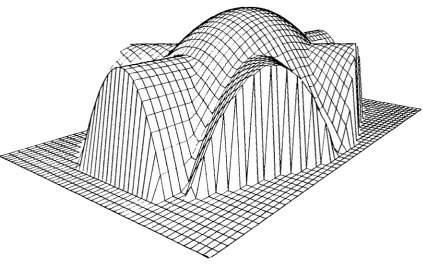
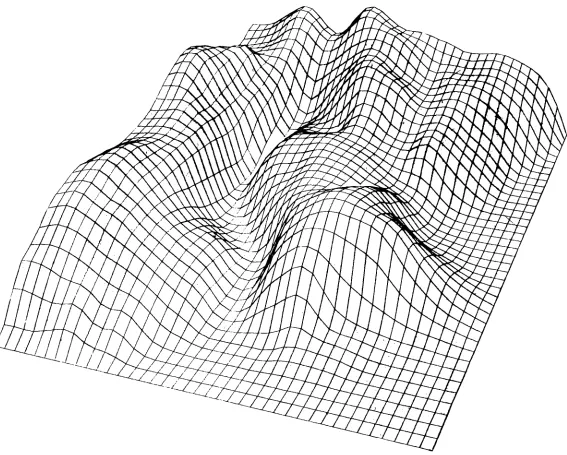
Fig. 6: Surface calculated by TRI (cf. Sect. 9. 2. )
[image:32.595.83.507.513.779.2]29
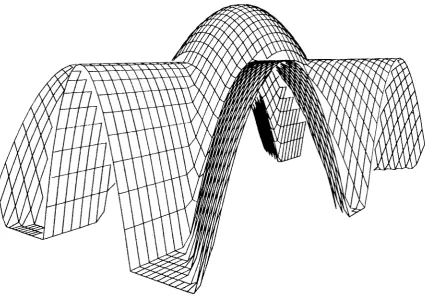
Fig. 8: P a r a b o l i c g a l e r i e s viewed inside.
[image:33.595.89.515.74.379.2] [image:33.595.81.506.480.777.2]I
CAI
O
[image:34.842.166.733.52.507.2]I
31
9. 1. E x a m p l e of P r o g r a m W r i t i n g the D i s k F i l e s TRIXY, TRIZ ( P r o g r a m USBES)
USBES ( c a l l i n g t h e s t a n d a r d I B M s u b r o u t i n e B E S J , [ 3 ] ) e v a l u a t e s a s z(x, y) t h e J B e s s e l function for g i v e n v a l u e s of χ and o r d e r s y. T h e t a b l e s of x, y, ζ a r e t h e n o p t i o n a l l y s a v e d on d i s k for l a t e r u s e in T R I C E .
One 1 11
21 31 41 51 61
-c a r d 10 20
30 40 50 60 70
o n l y S T E P X S T E P Y
Y MX XMX YMI XMI A C C R Y 71 - 75 I P R I
Input of USBES F O R M A T ( 7 F 1 0 . 0,15)
i n t e r v a l b e t w e e n two c o n s e c u t i v e v a l u e s of χ d i f f e r e n c e b e t w e e n t h e o r d e r y of two c o n s e c u t i v e B e s s e l f u n c t i o n s c a l c u l a t e d ( S T E P Y i n t e g e r but i n t r o d u c e d a s floating)
m a x i m u m o r d e r y of B e s s e l f u n c t i o n s m a x i m u m v a l u e of χ
m i n i m u m o r d e r y of B e s s e l f u n c t i o n s m i n i m u m v a l u e of χ
t h e r e q u e s t e d a c c u r a c y ( e . g . 0. 01) - 1 , p r i n t t h e v a l u e s of x, y, ζ
0, s a v e on d i s k x, y, ζ
1, p r i n t a n d s a v e on d i s k x, y, ζ
L i m i t a t i o n s for t h e C h o i c e of y y i n t e g e r
y > 0, a l w a y s y < 20+10· x - x2/3,
y < 9 0 + | ,
// J O B X X X // FOR U S B E S
* O N E W O R D I N T E G E R S « N O N P R O C E S S P R O G R A M
* I D C S ( C A R D , 1 4 4 3 P R I N T E R , D I S K ) « L I S T S O U R C E P R O G R A M
D E F I N E FILE 11( 1 6 0 , 2 , U , I M )
Sl.l!1ílfi;s?Epl!í«^A5?ÍMI.XHI,ACCRy.IP
RI
1 F O R M A T ( 7 F 1 0 . 0 , 2 I 5 )
IX=ABS(XMX-XMI)/STEPX IY=ABS(YMX-YMIÍ/STEPY
DÕY£I J=1,IY
XX=XMI
Z 0 ' I = 1 , I X
I ER
CALL BESJ(XX,N,BJ,ACCRY,1 ER) XX=XX+STEPX
Z ( I , J ) = B J 20 C O N T I N U E
Y ( J ) = N N = N + S T E P Y 21 CONTINUE
X(1)=XMI DO 22 1=2,IX
X d )=X(I-1) +STEPX ι
22 C O N T I N U E w
I F ( I P R I ) 2 4 , 2 3 , 2 4 N 2 4 W R I T E ( 6 , 7 1 M X ( I ) , I = 1 , I X ) ' 71 F O R M A T ( 1 H 0 , ' T A B L E OF X · / / ( 4 X , 2 8 F 5 . 1 ) )
W R I T E ( 6 , 7 2 ) ( Y ( J ) , J = 1 , I Y )
72 FORMAT(1H0,'TABLE OF Y·//(4X,28F5.1)) WRITE(6,91)
91 F O R M A T d H O 'MATRIX Z'/1H0,'I r U K M M I Ι Ι Π υ 'ΠΜ I M A ¿ V i n U t ' l * * I IS THE INDEX OF X(I) * « FOR E * f 1 I O i n c I IWCA u r Λ I 1 J ·»■ τ r\Jf\ c
lACH I,VALUES OF Z(I,J) ARE GIVEN WITH J RUNNING FROM 1 TO IY * *') DO 140 1=1,IX
WRITE(6,122) I , (Z ( I , J ) ,J = 1,IY) 122 F O R M A T d H O , I 3,14E10.3/(4X,14E10.3)) 140 CONTINUE
23 IF(IPRI)25,26,26 26 IM=1
WRITE (11'I M M X (I ) ,1 =1, I X) , ( Y( J ) , J = l, IY ) IM=1
WRI TE ( 12 · I M M ( Ζ (I , J ) , I = 1 , Ι Χ ) , J= 1,1Y ) 25 C A L L E X I T
E N D
F E A T U R E S S U P P O R T E D N O N P R O C E S S
O N E W O R D I N T E G E R S I O C S
C O R E R E Q U I R E M E N T S FOR U S B E S
C O M M O N 9 7 9 8 I N S K E L C O M M O N 0 V A R I A B L E S 4 4 P R O G R A M 4 6 8
/ / FOR
«ONE WORD INTEGERS «NONPROCESS PROGRAM «LIST SOURCE PROGRAM
SUBROUTINE B E S J ( X , N , B J , D , I E R ) BJ=.0
I F ( N ) 1 0 , 2 0 , 2 0 10 IER=1
RETURN
20 I F ( X ) 3 0 , 3 0 , 3 1 30 IER=2
RETURN
31 I F ( X - 1 5 . ) 3 2 , 3 2 . 3 4
32 N T E S T = 2 0 . + 1 0 . * X - X * * 2 / 3 GO TO 36
34 NTEST = 9 0 . + X / 2 .
36 IF(N-NTEST) 4 0 , 3 8 , 3 8 38 I ER =4
RETURN 40 IER=0 N1=N+1 BPREV=.0
I F ( X - 5 . ) 5 0 , 6 0 , 6 0 50 MA=X+6.
GO TO 70
60 MA=1.4*X+60./X 70 MB=N+IFIX(X)/4+2
MZERO=MA
IF(MA-MB)80,90,90 ι
80 MZERO=MB w
90 MMAX=NTEST w
DO 190 M=MZER0,MMAXf3 '
FMl=1.0E-28 FM=.0
ALPHA=.0
IF(M-(M/2)*2)120,110,120 110 JT=-1
GO TO 130 120 JT=1
130 M2=M-2
DO 160 K=1,M2 MK=M-K BMK=2.«FL0AT(MK)*FM1/X-FM FM=FM1 FM1=BMK IF(MK-N-1)150, 140,150 140 BJ=BMK 150 JT=-JT S=1+JT 160 ALPHA=ALPHA+BMK*S BMK=2.*FM1/X-FM IF(NT180,I70,180 170 BJ=BMK 180 ALPHA=ALPHA+BMK BJ=BJ/ALPHA IF(ABS(BJ-BPREV)-ABS(D*BJ))200,200,190 190 BPREV=BJ
I ER =3 200 RETURN
3 4
-9 . 2 . Example of P r o g r a m Writing the Disk F i l e s TRIXY, TRIZ ( P r o g r a m TRI)
TRI (FORTRAN 4, IBM 1800) builds two sets of coordinates χ and y defining points on a grid (cf. fig. l) having as s y m m e t r y axes the axes χ and y.
A function z(x, y) describing a surface σ is then calculated in such
points under the same conditions of s y m m e t r y (cf. fig. l).
The surface σ consists of a dome obtained by rotation of a parabola
around the axis z: non cylindrical g a l e r i e s enter into the dome. Each galery is s y m m e t r i c a l with r e s p e c t to a different v e r t i c a l plane τ containing the axis z. The sections of a' single galery n o r m a l to its s y m m e t r y plane τ a r e hyperbolic cosinus. Let us call axis of a galery the intersection of the plane τ with the plane x, y.
F i r s t card
1 11 21 31 41 51 56 61 66 71 - 10 - 20 - 30 - 40 - 50 - 55 - 60 - 65 - 70 - 75 RMAX HCUP STEPX STEPY DENS NX NY NB I PRI IESP Second card
Input of TRI
FORMAT(5F10. 0, 515)
the m a x i m u m radius of the dome (for z = 0) the height of the dome
the interval between two values of χ the interval between two values of y = 1
number of χ values in the first quadrant
(that is the number of positive values of x; NXs34) number of y values in the first quadrant (NY^34) number of g a l e r i e s to be calculated in the first quadrant
not used
the exponent of 0. 1 for checking z e r o values ( e . g . IESP=4)
FORMAT(3F10. 0)
th
1 - 1 0 ANG(L) the angle between the axis of the L " galery and the axis χ
1 1 - 2 0 AMPL(L) half the angle (on the plane x, y and with the v e r t e x in the origin of the coordinates) occupied by the L galery
2 1 - 3 0 LTJNG(L) the length of this g a l e r y from the origin of the coordinates
// FOR TRI
«LIST SOURCE PROGRAM *ONE WORD INTEGERS «NONPROCESS PROGRAM
«IOCS(CARD,1443 PRINTER,DISK) DEFINE FILE 11( 160,2,U,IM) DEFINE FILE 12(4800,2,U,IM) REAL MARG,LUNG(6)
DIMENSION M(7),ANG(6),AMfL(6),TANG(6),ΖΜ(7),Ρ(6),Q(6)
COMMON Cl(69)»COEFl(69),RCUP(69),RAXIS(69)
^ Ë ê M
)l ? Î 5 Î ? 8
A|
,6 ? è ?
, S T E P X , S T E P Y ? D E N S , N X , N Y , N B , I P R I ,IESPA=HCUP/(RMAX*RMAX) AM=Ä+A
C0EFF=DENS/(3.*AM) EPSI=1./(10.**IESP) WRITE(6,16)RMAX
16 FORMATI1H0,'RMAX =',F8.2)
C OCCORRE UNA TAVOLA CHE D I A I DUE PARAMETRI COEFl E C I I N FUNZIONE D I RAXIS NR= NX+NY
DELTR=RMAX/NR R C U P ( 1 ) = 0 DO 1 2 0 1 = 1 , N R
R C U P ( I + 1 ) = R C U P ( I ) + D E L T R 120 CONTINUE
NR=NR+1
DO 68 1 = 1 , N R ,',
R = R C U P ( I ) £
SQRR=R*R ,
ZCUP=HCUP-A*SQRR RAM =R«AM
FACT=1.+RAM*RAM ROOT=SQRT(FACT) X X = A B S ( R A M ) - E P S I
I F ( X X ) 5 4 , 5 4 , 5 5 5 4 CONTINUE
TMUZ= 0
TMUR=-DENS/(AM+AM) C 0 I V A = 1 . 6 1 8 0 3 3 9 8 8 S I V A = 1 . 2 7 2 0 1 9 6 5 0 GO TO 5 6
55 TMUZ = C O E F F / R A M * ( FACT«ROOT- 1 . ) TMUR =-TMUZ /RAM
5 6 DTMZX= 3 * C 0 E F F * R 0 0 T + T M U R DTMZR=DTMZX*AM
TPAR=DTMZX/ROOT
GAMMA=1,-DENS*ROOT/DTMZR GAMMA=-GAMMA
DELTA=SQRT(GAMMA*GAMMA+4.) C0EFY=GAMMA*SQRR/2.
ID=1
YY=-COEFY*(DELTA+GAMMA) I F ( Y Y ) 6 3 , 6 4 , 6 4
6 3 YY=COEFY*(-GAMMA+DELTA) I D = 2
I F ( Y Y ) 6 8 , 6 4 , 6 4 64 DEQ1=SQRT(YY)
S ? V X = R ^ D E Q {
S Q R T ( S Q R R-
Y Y )74 CONTINUE
ΡYTAN =-TPAR*ROOT*COIVA PZVER =TMUZ*SIVA
A L P H A = A T A N ( C O I V A / S I V A )
B=PZVER/PYTAN B = B+B
DIrSCR=SQRT(B*B+4.)
IF(DISCR+B 66,66.65 66 WRITE(6,67)B,DISCR 67 FORMAT(2E12.2)
GO TO 68 65 CONTINUE
VAV=PYTAN/DEQ1
DENSI =VAV*ALOG((B+ DISCR)/2.) ARGE1=DENS1 /VAV
E1=EXP(ARGE1)
COEFMI )=PYTAN/DENS1
C1(I)=ZCUP-(E1+1./E1)/2.*C0EF1(I) RAXISd )=R/COIVA
68 CONTINUE
R E A D ( 5 , 2 ) ( A N G ( L ) , A M P L ( L ) , L U N G ( L ) , L = 1 , N B ) 2 FORMATI3F10.O)
DO 5 L=1,NB ANGOL=ANG(L)
ANGOL=ANGOL*3.1415927/180.
P(L)=SIN(ANGOL) ' Q(L)=COS(ANGOL) £ AMP=AMPL(L) ? AMP=AMP « 3 . 1 4 1 5 9 2 7 / 1 8 0 . '
TANG(L)=SIN(AMP)/COS(AMP)
WRITE(6,1) ANG(L),ANGOL,P(L),Q(L),TANG(L) 5 CONTINUE
IX1=NX+1 IX0=NY+2 IX2=NX+NX+1 IY1=NY+1 IY0=NY+2 IY2=NY+NY+1 X ( I X 1 ) = 0 Y ( I Y 1 ) =0
DO 10 1 = 1 X 0 , 1 X 2 X d ) = X ( I - 1 ) + S T E P X 10 CONTINUE
00 20 J = I Y 0 , I Y 2 Y ( J ) = Y ( J-D+STEPY 20 CONTINUE
DO 8 0 1=1X1,1X2 DO 70 J = I Y 1 , I Y 2 M(NB+1)=0
ZM(NB+1)=0 Z ( I , J ) = 0
SQRR = X ( I ) * X ( I ) + Y ( J ) * Y ( J )
32 M(NB+1)=1
ZCUP=HCUP-A*SQRR ZM(NB+1)=ZCUP 3 6 DO 40 L=1,NB
M ( L ) =0 ZM(L)=0
Τ=θΓί)«Χ(Ι)+P(L)*Y(J) IF(T-LUNG(L))37,37,40 37 D=P(L)*X(I)-Q(L)*Y(J)
D=ABS(D)
MARG=T«TANG(L)
IF(D-MARG-EPSI)39,40,40 39 M(L)=1
RICERCA NELLA TAVOLA DI RAXIS E DEI CORRISPONDENTI PARAMETRI CI E C0EF1 I F ( T - R A X I S T Í I )] ) ) 1 2 5 , 1 2 4 , 1 3 0
124 11=11 GO TO 131 125 11=11
GO TO 135
130 CONTINUE I 1 = NR
131 C O E F F = C O E F l d l ) CC=C1(I1)
GO TO 136
135 DELTT=(T-rRAXISdl-l))/(RAXIS(Il)-RAXIS( 11-1)) C0EFF=C0EF1(I1-1)+(C0EF1(I1)-C0EF1(Il-l))*DELTT ,„, ÇÇ =C1 (I1-1)+(C1 (Il)-Cl (I1-1))«DELTT
136 E1=EXP(D/C0EFF) ' ZM(L)=C0EFF*(El+l./El)/2.+CC 3
40 CONTINUE , C CONFRONTO TRA LA CALOTTA E LE GALLERIE
NBR=NB+1
DO 60 L=1,NBR IF(M(L) )60,60,7575
7575 IF(ZM(L)-Z(I,J))60,60,76 76 Z(I,J)=ZM(L)
60 CONTINUE 70 CONTINUE 80 CONTINUE
C COSTRUZIONE DELLA PARTE SIMMETRICA RISPETTO ALL'ASSE Y DO 110 1=1,NX
11=1X2+1-1 X ( I ) =-X ( 11 ) DO 100 J=IY1,IY2 Z(I,J)=Z(II,J) 100 CONTINUE
110 CONTINUE
C COSTRUZIONE DELLA PARTE SIMMETRICA RISPETTO ALL'ASSE X JJ=IY2+1-J*
Y(J)=-Y(JJ) DO 133 1=1,1X2 Z(I,J)=Z(I,JJ) 133 CONTINUE
pTO^T-íno!
ITÁBLE'GH*}21 FORMÄTT IRO;· TABLÉ* Gr TS'//(4X,28F5.1))
WRITE(6,22)(Y(J),J=1,IY)
22 F O R M A T d H O , «TABLE OF Y · / / ( 4 X , 2 8 F 5 . 1 ) ) W R I T E ( 6 , 9 1 )
9 1 FORMATdHO ' M A T R I X Ζ · / 1 Η 0 , · Ι * « I I S THE INDEX OF X ( I ) * * FOR E
1ACH I , V A L U E S OF Z ( I , J ) ARE GIVEN WITH J RUNNING FROM 1 TO IY * * · )
DO 140 1 = 1 , I X
W R I T E ( 6 , 1 2 2 ) I , ( Z ( I , J ) , J = l , I Y )
1 2 2 F 0 R M A T ( 1 H 0 , I 3 , 1 4 E 1 0 . 3 / ( 4 X , 1 4 E 1 0 . 3 ) ) 140 CONTINUE
I M = 1
W R I T E ( 1 1 · I M ) ( X ( I ) , I = 1 , I X ) , ( Y ( J ) , J = l , I Y )
W R I T E ! 1 2 ' I M ) ( ( Z ( I , J ) , I = 1 , I X ) , J = 1 , I Y ) CALL E X I T
END
FEATURES SUPPORTED NONPROCESS
ONE WORD INTEGERS IOCS
CORE REQUIREMENTS FOR T R I
COMMON 1 0 3 5 0 INSKEL COMMON 0 VARIABLES 2 1 2 PROGRAM 1 6 7 4
END OF C O M P I L A T I O N
- 39
9. 3 . Example of P r o g r a m Writing a Tape to be Read by TRICE ( P r o g r a m ELLIN)
ELLIN (FORTRAN 4, IBM 1800) evaluates in the first quadrant of the complex plane defined by t = (x(l), y(J)) the n o r m a l elliptic i n t e g r a l of the first kind
dt
u(t)= f
«L U , .2, ,. , 2.2,
J
0
fu
) (1-kV)
The r e a l value of k built in is k = 0 . 8 .
Therefore both the singularities belong to the r e a l axis in the points x=l, x = 1 . 2 5 . Only one branch of the function u(t) is considered, c o r responding to the operation
,, 2, ,, , 2 2, icp ( 1 -t ) ( 1 -k t ) = ρ e ψ
.. .2, ,. , 2 2 1/2 ί ψ / 2 (1-t ) (1-k t ) = ρ e
The subroutines r e q u i r e d for the complex operations a r e CXSUB, CXMPY, CXDIV, CXRPW, CXABS, CXPOL, CXCRT [4] .
Input of ELLIN
Only one c a r d FORMAT(6I10)
1 11 21 31
- 10 - 20 - 30 - 40
IO = 1 JO = 1 IX
IY total number of points along the r e a l axis (1X^28) total number of points along the i m m a g i n a r y axis (IY<:28)
/ / JOB X X X
/ / FOR E L L I N
* I 0 C S ( C A R D . 1 4 4 3 P R I N T E R , M A G N E T I C TAPE) * L I S T SOURCE PROGRAM
*ONE WORD INTEGERS
«NONPROCESS PROGRAM ^ „ „
DIMENSION Z 2 ( 2 ) , Ο Ν Ε ( 2 ) , F I R S T ( 2 ) , S E C O N ( 2 ) , S T O ( 2 ) , F ( 2 8 ) , G ( 2 8 ) , S ( 2 ) l , Û ( 2 8 , 2 8 ) i V ( 2 8 , 2 é , Z ( 5 5 , 5 5 ) , R E A L ( 5 5 ) , A I M M ( 5 5 ) , X ( 5 5 ) , Y ( 5 5 ) , A K ( 2 ) ,
R E A D ( 5 , 1 ) I O , J O , I X , I Y , I N D , N T A P E 1 F O R M A T ( 8 I 1 0 )
10 = 1 J 0 = 1
M = I X - I 0 + 1 N = I Y - J 0 + 1 A K ( 1 ) = 0 . 6 4 A K ( 2 ) = 0 . 0 N E ( 1 ) = 1 . 0 N E ( 2 ) = 0 . HALF = 0 . 5
GO T 0 ( 6 , 7 . 8 ) , I N D
STEP = 0 . 1 2 5
GO TO 9
7 STEP = 0 . 0 6 2 5
GO TO 9
8 STEP = 0 . 0 3 1 2 5
9 X ( l ) = S T E P / 2 . X ( 2 ) = S T E P DO 10 K = 3 , M
10 X ( K ) = X ( K - 1 ) + STEP ■
Y ( l ) = S T E P / 2 . js.
Y ( 2 ) = S T E P °
DO 11 L = 3 , N '
1 1 Y ( L ) = Y ( L - 1 )+STEP . . .
EVALUATE THE FUNCTION TO BE INTEGRATED ALONG THE IMMAGINARY A X I S Τ ( 1 ) = 0 .
DO 12 L = 1 , N
Τ ( 2 ) =Y ( L )
CALL C X M P Y ( T , T , Z 2 )
CALL C X S U B ( 0 N E , Z 2 , F I R S T ) CALL C X M P Y ( A K , Z 2 , A 2 ) CALL C X S U B ( 0 N E , A 2 , S E C 0 N ) CALL C X M P Y ( F I R S T , S E C O N , S ) CALL C X R P W ( S , D E N , H A L F ) C A L L C X D I V ( O N E , D E N , S T O ) F ( L ) = S T 0 ( 1 )
G ( L ) = S T 0 ( 2 ) 12 CONTINUE
E V A L U A T I O N OF T H E F U N C T I O N T O B E I N T E G R A T E D O U T O F T H E A X E S D 0 1 4 K = 1 , M
DO 15 L = 1 , N Τ ( 1 ) =X ( Κ )
T(2)=Y(L)
CALL CXMPY(T,T,Z2)
CALL CXSUB(0NE,Z2,FIRST) CALL CXMPY(AK,Z2,A2) CALL CXSUB(0NE,A2,SEC0N) CALL C X M P Y ( F I R S T , S E C O N , S ) CALL CXRPW(S,DEN,HALF) CALLCXDIV(ONE,DEN,STO) U (K.L)=-STQ(1)
WRITE(6,19)Τ,Ζ2,FIRST,A2,SECÓN,S,DEN 14 CONTINUE
D X l = S T E P / 6 .
DY=DX
THE FIRST INTEGRATION TAKES PLACE ALONG THE IMMAGINARY AXIS REAL(JO)=0
AIMM (JO)=0
INTEGRATION FOR THE FIRST POINT OF IMMAGINARY AXIS (Jl=l) * HALF STEP J1=J0+1
ίψ
REAL(J)=(0.+4*G(L)+G(L+1))*(-DYl) AIMM(J)=(1.+4*F(L)+F(L+1))*DY1
INTEGRATION CONTINUES WITH NORMAL STEP * DEFINE AGAIN F(1),G(1),Y(1) WRITE(6,19)F(1),G(1)
19 F0RMAT(4X,14E10.3) Y(L)=0.
F(L)=1. G(L)=0.
WRITE(6.21)(F(L),L=1,N)
21 FORMATdHO,'VECTOR F * REAL PART OF THE INTEGRAND * AXIS Y·/ 1(4X,14E10.3) )
WRITE(6,22)(G(L),L=1,N)
22 FORMAT«IHO,'VECTOR G * IMMAGINARY PART OF THE INTEGRAND * AXIS Y·/
1(4X,14E10.3)) 1 TWO INTERVALS DY ARE COVERED BY INTEGRATION EACH TIME £
J2=J1+1 ι L = l
DO 40 J=J2,IY
REAL(J)=REAL(J-2)-(G(L)+4.*G(L+l)+G(L+2))*DY AIMM(J)=AIMM(J-2)+(F(L)+4.*F(L+l)+F(L+2))«DY L = L+1
40 CONTINUE
INTERPOLATION FOR SMOOTHING VALUES OF REAL,AIMM IY1=IY-1
DO 50 J=J1,IY1
REAL(J)=(REAL(J-1)+2.*REAL(J)+REAL(J+1))/4.
AIMM(J)=ÍAIMM {J-l)+2.«AI MM (J)+AIMM(J+l))/4.
Z(IO,J)=SQRT( REAL(J ) «REAL ( J )+ÁIMM ( J ) «A I MM ( J )) 50 CONTINUE
J = IY
Ζ(10,J)=SQRT(R EAL(J)*R EA L(J)+AI MM(J)«A I MM(J) ) WRITE(6,41MREAL(J),J = 1,IY)
41 FORMAT«ÍH0,'VECTOR REAL * INTEGRAL ALONG AXIS Υ·/(4Χ »14E10.3)) WRITE(6,42)(AIMM(J).J=1,IY)
42 FORMAT(1H0,'VECTOR ÀIMM * INTEGRAL ALONG AXIS Y'/(4X ,14E10.3)) GO T0(51,52,53),IND
51 ISINl=I0+8 ISIN2=I0+10 GO TO 54 52 ISIN1=I0+16
ISIN2=I0+20 GO TO 54 53 ISINl=I0+32
ISIN2=10+40 54 Z(I0,J0)=0
56
immt>Wfm*'m
im ^M^HPrnmhmhVA"*
VALUES INTK = 1
WRITE(6,93)K,(U(K,L),L=1,N) WRITE(6,93)K,(V(K,L),L=1,N)
EVALUATE THE ELLIPTIC INTEGRAL IN THE FIRST QUADRANT 11=10+1
12=11+1_
I N T E G R Á ' T I O V F O R THE FIRST VALUE OF X(I) IN THE QUADRANT UNDER CONSIDERAT K = l
L=J-Jl+2
R=REAL(J)+(F(L)+4.*U(K.L)+U(K+1,L))*DX1 AIM=AIMM(J) + (G(L)+4.*V(K.UL)+V(K+1,L))*DX1
-NÖ Ζ CALCULATED HERE * IT WILL BE DONE WHEN BEGINNING LOOP 60 ROLD=REAL(J)
AIOLD=AIMM(J) RNEW=R
AINEW=AIM
C DEFINE AGAIN U(1,L),V(1, L) TO BE USED AS FUNCTION TO BE INTEGRATED C DEFINED IN THE POINTS OF AXIS Y (1=10)
U(K,L)=F(J) V(K,L)=G(J)
IF(J-J1)99,59,68 59 L=2
DO 67 1=11,IX ,
FACT=1. ^
IF(I-I1)99,62,61 w
C INTEGRATION ALONG THE AXIS DEFINED BY J=J1 ι
61 K = I - I 1 R=ROLD AIM=AIOLD
R=R +(U(K,L)+4.*U(K+1,L)+U(K+2.L))*DX AIM=AIM +(V(K,L)+4.*V(K+1,L)+V(K+2,L))*DX
C INTERPOLATION FOR SMOOTHING THE INTEGRAL ALONG THE AXIS DEFINED BY J=J1 RR=(ROLD+RNEW+RNEW+R)/4.
AA=(AI0LD+AINEW+AINEW+AIM)/4. Z(I-1,J)=SQRT(RR*RR+AA*AA) ROLD=RNEW
AIOLD=AINEW RNEW=R
AINEW=AIM 62 K=l-I0+1
IF(I-ISIN1)66,63,64 63 Z(I ,J0) = 2.
U(K,L-1)=0 V(K,L-1)=0 GO TO 67
64 IF(I-ISIN2)66,65,655 65 Z(I,J0)=2.66
U(K,L-1)=0 V(K,L-1)=0 GO TO 67
C INTEGRATION FOR THE VALUES OF X AXIS 655 FACT=-1.
67
CALL CXSUB(0NE,Z2,FIRST) CALL CXMPY(AK,Z2,A2) CALL CXSUB(ONE,A2,SEC0N) CALL CXMPY(FIRST,SECON,S) CALL CXRPWÍS,DEN,HALF)
V E R M = - S T 0 ( 2 )
X R = R + ( V ( K , L ) + 4 . * V « K , L - 1 ) + V E R M ) «DY1 X A I M = A I M - ( U ( K , L ) + 4 . * U « K , L - 1 ) + T E R M ) * D Y 1 V ( K , L - 1 ) = V E R M
U ( K , L - 1 ) = T E R M
Z Ì I , J O ) = S Q R T ( X R * X R + X A I M * X A I M ) CONTINUE
z T l , J ) = S Q R T ( R*R + A I M * A I M ) GO TO 70
68 L = J - J 0 + 1
C INTEGRATION FOR THE OTHER POINTS OF THE FIRST QUADRANT C THE INTEGRATION PROCEEDS ALONG AXES DEFINED BY J=J2,IY
K = l
DO 69 I=12,IX R=ROLD
AIM=AIOLD
R=R+(U(K,L)+4.*U(K+1,L)+U(K+2,L))*DX AIM=AIM+(V(K,L)+4.*V(K+1,L)+V(K+2,L))*DX RR= (ROLD+RNEW+RNEW+R )/4.
AA=(AI0LD+AINEW+AINEW+AIM)/4.
Z ( I - 1 , J ) = S Q R T ( R R * R R + A A * A A ) '
ROLD=RNEW &
A I O L D = A I N E W ,
RNEW=R A I N E W = A I M K = K + 1 6 9 CONTINUE
I = I X
Z ( I , J ) = S Q R T ( R*R + A I M * A I M ) 70 CONTINUE
K = l X ( K ) = 0 .
U ( l , l ) = l . V ( 1 , 1 ) = 0 .
Î3)
* ARRAYS U AND V CONTAIN THE REAL AND THE IMMA FUNCTION TO BE INTEGRATED * * *·//)
W R I T E Í 6 . 7 3 ) 73 F O R M A T « 1 H 0 , 2 0 X ,
1GINARY P A R T OF R E W I N D N T A P E
K=M
11 =IX
DO 75 1=11.IX X(II )= X ( K ) K = K-1
75 1 1 = 1 1 - 1
L=N
JJ = IY
DO 76 J = J 1 , I Y Y ( J J ) = Y ( L )
L = L-1 76 J J = J J - 1
UD T T P f A . 7 7 ι ... . ^ . v , I . .
7 7
6 8
R?
A TK = Ï ? A
, M A T R I X υ , )WRITE(6,93) Κ,(U«K,L),L=l,Ν) 78 CONTINUE
WRITE(6,79)
79 FORMATdHO,'MATRIX V') DO 80 K=1.M
WRITE(6,93) K,(V(K,L),L=1,N) 80 CONTINUE
W R I T E ( N T A P E , 8 1 ) ( X ( I ) , I = 1 , I X )
WRITE(NTAPE,81) ( Y ( J ) , J = 1 , I Y ) 8 1 F0RMAT(8E10.3)
W R I T E « 6 , 8 2 ) ( X ( I ) , I = 1 , I X )
82 F0RMAT(1H0,'VECTOR X * / ( 4 X , 1 4 E 1 0 . 3 ) ) W R I T E ( 6 , 8 3 ) « Y ( I Ì , I = 1 , I Y )
83 F0RMAT(1H0,'VECTOR Y ■ / < 4 X , 1 4 E 1 0 . 3 ) ) W R I T E ( 6 , 9 1 )
91 FORMATdHO,'MATRIX Z ' )
DO 95 I=1*IX
WRITE(NTAPE,81) (Ζ (I , J ),J = l,I Y)
WRITE(6,93)1,(Ζ(I,J),J = l, I Y) 93 F0RMAT«I4/(4X,14E10.3))
95 CONTINUE
END FILE NTAPE REWIND NTAPE 99 CALL EXIT
END
FEATURES SUPPORTED £
NONPROCESS *
ONE WORD INTEGERS '
IOCS
CORE REQUIREMENTS FOR ELLIN
COMMON 0 INSKEL COMMON 0 VARIABLES 9850 PROGRAM 2552
'ή
AB.
*STOREDATAD 2 FX2 T R I Z «STOREDATAD 2 FX2 TRIXY «DUMPLET
/ / JOB X X X
* F I L E S ( 1 2 ? T R I Z , 2 ) , ( 1 1 , T R I X Y , 2 )
*C C0EJ !D 1 . 2 0 .
Uf*
χ- χ
30
1 9 6 0 0 3 2 0
2 4 . 0 . 5
itvtm
«CCEND 3 3 . 6 0 .
3 * * 0 2 4 . 9 0 .
2 ) , ( 1 1 , T R I X Y , 2 )
tfiSWW*
47
47 3 3 . 3 0 .
20 3 3 .
20 X
9 0 . - 1
9 0 .
5 .
5 .
100 1 5 . 1 5 .
1 0 .
1 0 .
0 . 0 1
8 0 .
8 0 .
- 1
/ / JOB X
* F I L E S ( 1 2 Î T R I Z » 2 ) t ( l l f T R I X Y t 2 )
*CCEND _ , _
1 0 . 7 . 5 . 3 4 5
0 . 5 2 . 8 . 7
6 0
·
i ? ·
S"?
1 2 0 . 5 2 . 8 . 7
/ / JOB X X X
* F I L E S ( 1 2 ! T R I Z , 2 ) , « 1 1 , T R I X Y , 2 )
* L 0 C A L T R I F N , T R I V J , X R Y R
«CCEND o n _ _
- 2 0 . - 2 0 . 7 . 5
3 5 . 5 5 . 9 0 .
. 3 4 5 1 . 34 3 4 3 1
15 1 0 . 2 0 .
* * 1
69 69
28
/ / JOB X X X
/ / XEQ E L L I N
«CCEND
// JOB X X X
*FILES(12¡ÍRIZ,2),(11,TRIXY,2) «LOCALTRIFN,TRIVJ,XRYR
♦CCEND
2· 3 · 5 4·
45. 45. 9 0 . 2 28 28 9 -1 *#3
28
15.
1000. 10.
2. M X ï"
3
-ó t—· 0> en O κ,I — I
46
-A c k n o w l e d g e m e n t s
T h e a u t h o r s t h a n k M r . H o r s t m a n n for h i s i n t e r e s t i n g d i s c u s s i o n s w h i c h m a d e it p o s s i b l e to p e r f o r m t h i s j o b .
R e f e r e n c e s
f i ] H . S C H M I D , An I B M 1800 P r o g r a m P a c k a g e for O n - L i n e a n d O f f - L i n e O p e r a t i o n of a C a l c o m p D i g i t a l I n c r e m e n t a l P l o t t e r , EUR 4 2 2 5 . e (1969).
Γ2] B . K U B E R T , J. S Z A B O a n d S. G I U L I E R I , T h e P e r s p e c t i v e R e p r e s e n t a t i o n of F u n c t i o n s of Two V a r i a b l e s , J. A C M 15, 2
( A p r . 1968) 1 9 3 - 2 0 4 .
f3] I B M A p p l i c a t i o n P r o g r a m , 1130 S c i e n t i f i c S u b r o u t i n e P a c k a g e , H 2 0 - 0 2 5 2 - 2 .