English Dissertations Department of English
Fall 12-7-2012
Composing on the Screen: Student Perceptions of Traditional and
Composing on the Screen: Student Perceptions of Traditional and
Multimodal Composition
Multimodal Composition
Jeannie C. Parker Beard Ph.D.Georgia State University
Follow this and additional works at: https://scholarworks.gsu.edu/english_diss
Recommended Citation Recommended Citation
Parker Beard, Jeannie C. Ph.D., "Composing on the Screen: Student Perceptions of Traditional and Multimodal Composition." Dissertation, Georgia State University, 2012.
https://scholarworks.gsu.edu/english_diss/98
COMPOSING ON THE SCREEN:
STUDENT PERCEPTIONS OF TRADITIONAL AND MULTIMODAL COMPOSITION
by
JEANNIE PARKER BEARD
Under the Direction of Mary Hocks
ABSTRACT
When college composition teachers carefully consider the role and function of multimodal
composition in their classrooms, they can enhance the teaching of writing and
communication, engage and empower students, and better prepare students for the
challenges and possibilities of life in our rapidly changing digital age. To meet this teaching
challenge and study the impact of multimedia on student writers, I designed this mixed‐
methods case study to examine how video documentary essays function as a form of
multimodal composition in first‐year composition courses and how these types of texts
may enhance the teaching of traditional composition skills, as well as contribute to the
academic and professional communication skills of students. The study was designed to
determine how students react to multimodal composition and how they view the benefits
as well as pitfalls of composing new kinds of texts in their first‐year writing courses. This
teacher research was conducted at a mid‐sized, urban community college located in
southern Tennessee. I used surveys, interviews and reflection essays to collect the data
conclusions are that students learn valuable skills in the multimodal composition process,
such as organization and time management, in addition to learning how to use movie‐
making software. Students also develop a keener sense of audience and purpose when they
compose video documentary essays. Multimodal composition can be used to teach
traditional writing and rhetoric. Multimodal composition can be used to enhance the
teaching of writing and communication, engage and empower students to participate in
convergence culture, and better prepare them for the challenges and possibilities of life in
our rapidly changing digital age.
INDEX WORDS: Multimodal composition, Composition pedagogy, Composition and rhetoric, Teacher research, Educational technology, Multimedia
COMPOSING ON THE SCREEN:
STUDENT PERCEPTIONS OF TRADITIONAL AND MULTIMODAL COMPOSITION
by
JEANNIE PARKER BEARD
A Dissertation Submitted in Partial Fulfillment of the Requirements for the Degree of
Doctor of Philosophy
2012 COMPOSING ON THE SCREEN: STUDENT PERCEPTIONS OF TRADITIOINAL AND MULTIMODAL COMPOSITION by JEANNIE PARKER BEARD
Committee Chair: Mary Hocks
Committee: Beth Burmester
George Pullman
Georgia State University
DEDICATION
This dissertation is dedicated to all the teachers who have the courage to stand for change.
It is also dedicated to my students.
ACKNOWLEDGEMENTS
I am grateful to my committee members for their knowledge, expertise and encouragement
throughout this process. I’d like to thank Mary Hocks for taking me on when I was in a
difficult situation, for keeping me focused, and for always providing me with exactly the
kind of feedback I needed to keep going even when times were tough. I’d like to thank Beth
Burmester for her contagious love and enthusiasm for our discipline and the profession of
teaching. And I’d like to thank George Pullman for his reliable support and responsiveness,
and more specifically, for always, always responding to emails, usually with an incredibly
direct and cheerful quickness. I hope he knows how many people he makes happy by doing
this.
I would be remiss if I didn’t acknowledge some other folks that have helped me get through
this entire process. I could absolutely never have finished this onerous task without the
help and support of my parents, Carlton and Jean Parker. The list of the things they have
done is too long to include here. I’m so grateful to all of my family members for always
believing in me and encouraging me. My husband, Matt Beard, just makes life worth living
and that goes a long way when writing a dissertation. This would not have been possible
without his love and support. So many of my dearest friends have encouraged and
supported me along the way, and I am thankful for each and every one of them because
they make my life complete. If I’m showing you this, I’m referring to you. I’d also like to
acknowledge my son, Brodie Parker Beard who has had to sacrifice a lot of his mommy
time in the past two years. Every day I’m thankful for his sweet smile and his even sweeter
TABLE OF CONTENTS
ACKNOWLEDGEMENTS...v
LIST OF TABLES...x
LIST OF FIGURES... xi
CHAPTER 1: COMPOSING IN THE 21ST CENTURY ... 1
Introduction ... 1
Definition of Terms ... 4
Significance of Study... 7
Purpose of the Study...11
Research Questions...12
Methods of Inquiry...13
The Journey Here...15
Conclusion...28
CHAPTER 2: MULTIMODAL COMPOSITION, MULTILITERACIES AND THE EVOLUTION OF COMPOSITION ...31
Introduction ...31
The Time is Now: Multimodal Composition...32
Remediation and “The Late Age of Print” ...47
Hybridity and Composition ...49
Semiotics and Meaning Making in a Sensory World ...54
Multimodality and Evolution of Literacy ...56
Multiliteracies, Critical “Prosumers” and The “Design of Social Futures”...59
Preparing Students for “Lifeworlds”...70
Convergence Culture and Social Change...77
DesignCentered Pedagogies ...80
Visual Rhetoric and Multimodal Composition...82
Video as Text in Composition Studies...87
Video as Pedagogy in the Teaching of Composition...97
Conclusion... 108
CHAPTER 3: TEACHER RESEARCH THROUGH MIXED METHODS CASE STUDY... 110
Introduction ... 110
A Contextualist Paradigm and Pragmatist Worldview ... 110
Teacher Research ... 116
Case Study Method of Inquiry... 118
Rationale for Mixed Methods Case Study ... 122
Convergent Mixed Method Design ... 124
Selection of Participants ... 126
Instrumentation: Surveys, Interviews and Textual Analysis... 128
Analysis of Survey Data ... 132
Interviews ... 138
Interview Analysis... 139
Final Reflection Essays... 140
Textual Analysis of Reflection Essays ... 140
Pilot Study ... 143
IRB Approval ... 143
Limitations of Study... 145
CHAPTER 4: DISCUSSION AND ANALYSIS OF KEY FINDINGS... 149
Introduction ... 149
Concerns & Interest Levels... 149
Comparing Traditional & Multimodal Composition ... 156
Value of Traditional and Multimodal Composition... 163
Putting Multimodal First... 168
Overview: Attitudes & Perspectives on Traditional and Multimodal Composition... 169
Access... 172
Audience Awareness ... 174
Deeply Exploring Topics ... 177
Enjoyment & Expression ... 178
Empowerment & Activism ... 180
Skills Learned... 181
Problems and Frustrations ... 184
Technical Difficulties... 188
Overview: Positive & Negative Aspects of Multimodal Composition ... 192
Conclusion... 194
CHAPTER 5: TRADITIONAL AND MULTIMODAL COMPOSITION AT WORK FOR TEACHERS, STUDENTS AND FIRSTYEAR PROGRAMS ... 196
Introduction ... 196
Summary and Conclusions ... 197
Suggestions for Future Research... 202
WORKS CITED... 204
Appendix A... 211
Appendix B... 213
Appendix C ... 214
Appendix D... 215
Appendix E ... 225
Appendix F ... 232
Appendix G... 233
Appendix H... 234
Appendix I ... 238
Appendix J ... 245
Appendix K... 248
Appendix L ... 253
Appendix M ... 254
Appendix N... 258
Appendix O... 259
Appendix P ... 261
Appendix Q... 262
Appendix R... 263
Appendix S ... 266
Appendix T... 270
Appendix U... 271
Appendix V... 272
LIST OF TABLES
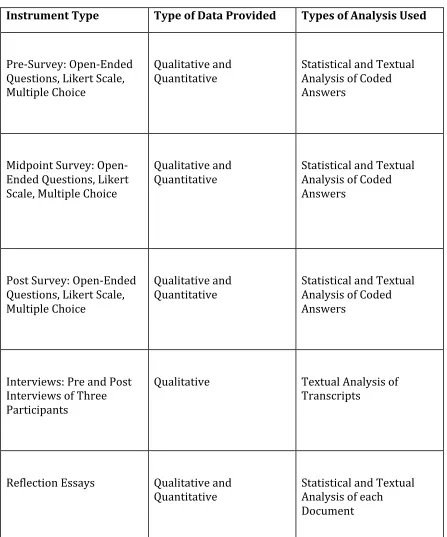
Table 1: Instruments Used, Data Provided... 125
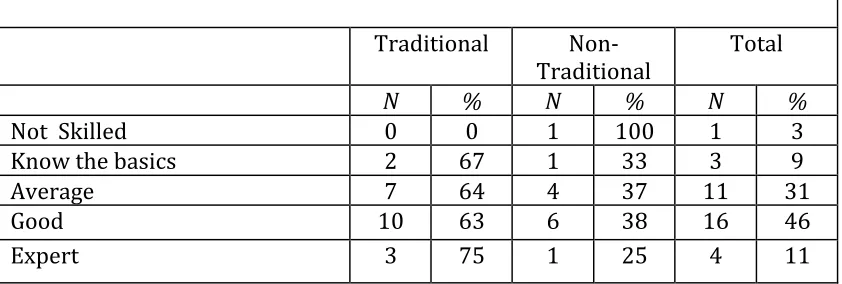
Table 2: Example of Survey Table... 133
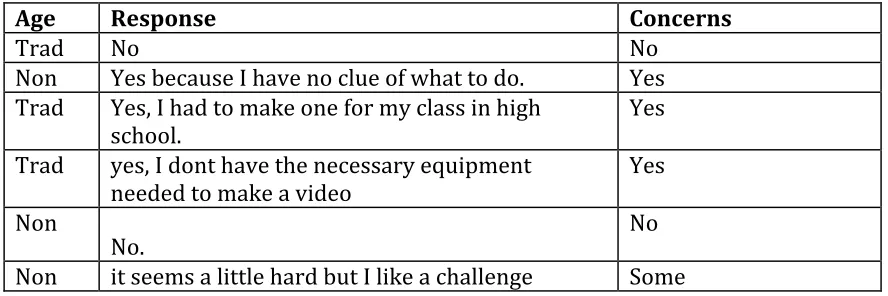
Table 3: Example of Table Coding OpenEnded Survey Questions... 134
Table 4: Example of Code Sheet... 135
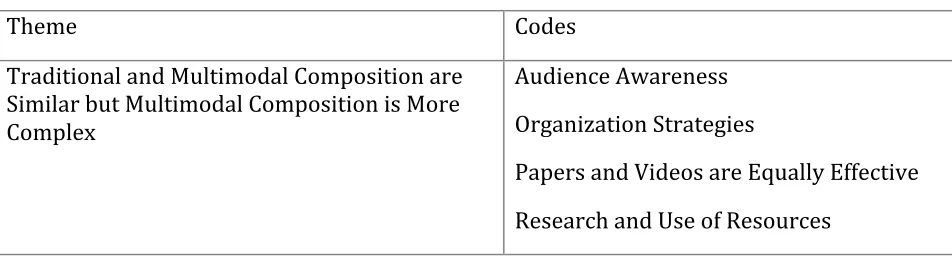
Table 5: Sample of Code Table Used for Reflection Essays ... 142
Table 6: Sample Tables of Reflection Essays and Assigned Codes... 142
LIST OF FIGURES
Figure 1: Print PreSurvey Questions from Survey Monkey... 130
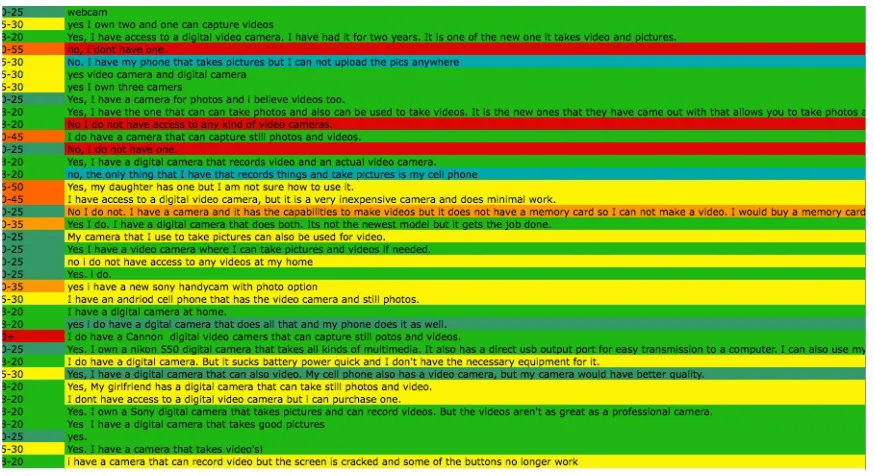
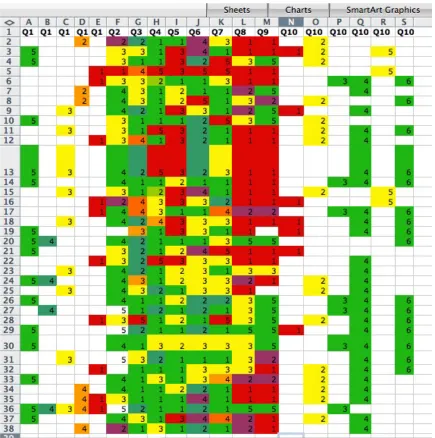
Figure 2: Example of ColorCoded Survey Responses... 136
Figure 3: Example of ColorCoded Survey Responses Using Numbers... 137
Figure 4: Coded Reflection Essay in Dedoose ... 141
CHAPTER 1: COMPOSING IN THE 21ST CENTURY
Introduction
In the twenty‐first century, media saturates every aspect of the average college
student’s life. Because digital technologies are readily available via personal laptops, smart
phones and the Internet, students can now be active producers rather than passive
consumers of the digital texts that encompass their lives. In their introduction to Passions,
Pedagogies and 21st Century Technologies, the pioneers of computers and composition,
Cynthia Selfe and Gail Hawisher, contend that society is changing so rapidly that we must
prepare students for experiences that we ourselves have never had. Selfe and Hawisher,
Gunther Kress and the members of The New London Group, among others, argue that
literacy has evolved to include multimodal avenues of communication. In the past ten
years, scholars within rhetoric and composition’s subfield of computers and composition
have successfully established that there is a place for new media productions in
composition studies. Daniel Anderson, Cheryl Ball, Jody Shipka, and Diana George, Kathleen
Yancey, among others, have been at the forefront of the push to integrate multimodal
composition into the curriculum of traditional writing programs.
In a webtext published in the online journal Kairos, Daniel Anderson argues for
“prosumer approaches to new media composition” (2003). By introducing multimedia
texts into the writing curriculum, Anderson recalls how his students become active
producers of media as part of the composition process. His term “prosumer” embodies the
concept of a shift to production and conscious consumption when students become
Benefits: Entry‐Level Multimedia, Literacies, and Motivation,” Anderson argues that
“Unknown technical things create ideal situations in which literacy‐enriching problem
solving activities might play out” (43). According to Anderson, the new technologies that
are readily available to students allow compositionists to expand the notion of literacies
and create a motivational learning environment for our students.
Today, first‐year composition students are able to compose in ways that were
unimaginable to students only two decades ago. As such, the landscape of composition
studies has been opened to new media, as discussed by Anne Wysocki and the contributors
of Writing New Media (2003). In her “Openings and Justifications” to the collection,
Wysocki writes, “Writing teachers can thus fill a large gap in current scholarship on new
media; they can bring to new media texts a human and thoughtful attention to materiality,
production, and consumption, which is currently missing” (7). As a composition scholar
and a college writing teacher with six years of experience on three different campuses, I
designed my research to collect and analyze data directly from student writers to provide
other instructors and faculty with practical insight into how students react to, struggle
with, and succeed in composing new media within the requirements of a first‐year writing
course.
If compositionists are to successfully integrate multimedia into the curriculum of
first‐year composition programs, it is important to understand how students respond to
the challenges of multimodal composition. Although I have much enthusiasm for assigning
video documentary essays in my classes, in the past six years that I have done so, I have
found that I am not always met with equal enthusiasm. In fact, often students express
of composing a multimodal text. On the other hand, I have also found that many students
are interested and engaged with the project, excited by the opportunity to do something
different in their writing class, and many express a sense of satisfaction and
accomplishment when they complete the project. Many students have also indicated that
they will use their multimodal skills in the future and that they appreciate the skills they
acquired through the duration of the project, while others complain that they would rather
write a paper and that they did not benefit much from the experience of composing a video
documentary essay. The range of emotions that my students express when they go through
the process of multimodal composition has been the inspiration for this empirical research
study. These various emotions are warranted and instigated by a variety of circumstances,
and they are worthy of further inquiry and investigation. I have taken this opportunity to
explore more thoroughly what my students go through, their thoughts, reactions and
overall impressions of multimodal and traditional composition in order to enhance my own
teaching practices and also contribute to the pedagogy of multimodal composition in the
process. In this dissertation, I will add to the scholarship of computers and composition by
assessing student attitudes and perceptions of multimodal composition and revealing how
students compare traditional composition to multimodal composition.
Through this project, I have concluded that students encounter many challenges and
obstacles when they are asked to produce digital texts; however, the experiences of my
students reveal that the process of multimodal composition is a rewarding enterprise that
allows undergraduates to develop new competencies and an increased sense of rhetorical
purpose in the texts that they produce. My research demonstrates that multimodal
develop organizational strategies, time management, and develop an enhanced sense of
audience and purpose in the composing process. Students value multimodal skills as
professional whereas they value traditional writing skills as more academic in nature.
Finally, multimodal composition has the potential to empower students to take part in
participatory culture and use multimodal compositions to become agents of social change.
This dissertation will contribute to the conversation of how student‐produced multimodal
compositions may play an important role in the development of a pedagogy of
multiliteracies that, according to members of The New London Group, is essential to 21st
century educational practices. By understanding the challenges and obstacles students face,
the value they place in multimodal composition, and investigating how traditional
composition intersects with multimodal composition, compositionists may better
understand how to successfully navigate the current shift in literacy practices that is
indicative of our digital age. My hope is that my research will contribute some
understanding to how students feel about creating new kinds of texts and the rhetorical
value the students themselves place on multimodal texts in the context of traditional first‐
year writing courses.
Definition of Terms
There are several key terms that are essential to the discourse of my research study.
Though the term new media is imprecise in that what is considered “new” in 2012 will
likely be outdated in the not‐so‐distant future, the term has been adequately defined by
scholars in the field (Wysocki 2004, Selfe 2008). In Writing New Media, Wysocki defines
. . . those that have been made by composers who are aware of the range of materialities of texts and who then highlight the materiality: such composers design texts that help readers/consumers/viewers stay alert to how any text—like its composers and readers—doesn’t function independently of how it is made and in what contexts. Such composers design texts that make as overtly visible as possible the values they embody. (15)
In the framework of my role as a teacher of composition and researcher within the field of
computers and composition, Wysocki’s definition is valuable in that it highlights the
importance of considering how these new media texts are created and composed and the
relationship the producer has with the multimodal composing process itself as well as the
context in which these productions take place. For the purpose of this study, the term new
media refers to the digital technologies that allow for text, audio, and visual images to
coexist, generally through the medium of the screen, though others would argue that new
media could extend into three‐dimensional spaces as well (Selfe 2007, Shipka 2005).
However, in my study, new media refers to digital technologies that allow for the
production of multimedia texts. As such, the terms perceptions, attitudes, multimedia and
multimodal should also be defined for the purpose of my research.
I define the term perceptions to describe the cognitive reactions students have to the
multimodal assignment; the term is used to describe how students perceive the demands
or expectations of the project before, during and after its completion. I use the term
attitudes to describe students’ emotional responses before, during and after the
assignments, as well as their feelings about the work of the project throughout the
composing process and after the project’s completion. Multimedia and multimodal texts are
those that incorporate textual, visual and aural elements to communicate meaning, usually
through the vehicle of computer technology. Websites, blogs, podcasts, and videos are all
and multimodal can be used interchangeably, but that often the context in which the terms
are used determines which term is most appropriate. She notes that multimedia is most
often used in industry settings, whereas multimodal has become the preferred term in the
theoretical and practical discourse of composition studies. However, she warns that:
If instructors want to make sure they are able to communicate the importance of this work to their students, to others in their departments, to university administrators, to journalists, to grant‐finding agencies, and to business and government leaders, they would do well to keep the term multimedia in play as a gateway term because that is the term members of those communities are already familiar with and that describe the kinds of texts they value. (Lauer 238)
Because the terms are interchangeable, I often use the term multimedia when referring to
the video projects my students create. I also use the term video documentary essay to
describe these projects, and this term emphasizes not only the informative and
argumentative structure of this type of text, but also the research and organizational
aspects of this type of video that are similar to traditional academic essays. I more often use
the term multimodal in reference to the process of composing in multiple modes in order
“to describe the cognitive and socially situated work students do in the classroom” (Lauer
238). In her scholarship on the subject, Cynthia Selfe has established that the term
“multimodal” is the most appropriate term to use in relation to the use of new media and
digital technologies from a pedagogical perspective.
I use the term traditional composition to describe composition practices that are
focused solely on alphabetic literacy and the process of writing linear, print‐based texts in a
standardized format, which is most likely MLA or APA styles within the context of first‐year
composition courses. Similarly, the term traditional academic essay is used to describe this
multimodal composition to describe the process of composing new media texts such as
video documentaries within the context of the composition curriculum, specifically within
the first‐year composition courses where I have taught for the past six years.
Significance of Study
Each year the journal Research in the Teaching of English publishes an annotated
bibliography of the recent research published in areas related to the theory and practice of
teaching English. A review of the annotated bibliographies published from 2005‐2010
demonstrates how new media studies is gradually becoming the subject of research in the
teaching of English; however, it should be noted that within the past five years there has
been very little empirical research in the area of student attitudes or perceptions on the
creation of video as compositions or the process of multimodal composition in first‐year
composition. A review of the three major journals related to the field of computers and
composition, Computers and Composition (print and online), Kairos, and College
Composition and Communication, reveals that there has been some published research
studies that explore the function of video production in composition courses and they are
as follows:
• “Big Questions, Small Works, Lots of Layers: Documenting Video Production and the
Teaching of Academic Research and Writing” by Bump Halbritter
Kairos 16.1 (2011)
• “Interaction of Author, Audience, and Purpose in Multimodal Texts: Students’
Discovery of Their Role as Composer” by Beth Powell, Kara Poe Alexander, and Sonya Borton Kairos: Praxis Wiki 15.2 (2010)
• “A Break in the Transaction: Examining Students’ Responses to Digital Texts” by
Ellen Evans and Jeanne Po Computers and Composition 24.1 (2007)
• “Picturing Work: Visual Projects in the Writing Classroom” by Virginia Kuhn, Kairos,
These publications are similar to my own work in that they specifically address the use of
video in the teaching of composition, and I will examine some of the more recent
publications in the following chapter’s literature review. The research study most similar
to my own is “Interaction of Author, Audience, and Purpose in Multimodal Texts,” in which
the authors come to some similar conclusions about students’ sense of audience and
purpose in the production of multimodal texts. However, my own research adds to the
discussion in that I examined the anxieties and frustrations experienced by students and
asked them to compare traditional composition with their newfound multimodal skills in
order to better ascertain the attitudes and perceptions students have about multimodal
composition before, during and after the process. I also asked students to compare
traditional composition with multimodal composition, and this is a valuable element of my
research that contributes to the overall discussion about the use of multimedia in first‐year
writing classes. As such, my research will help fill a gap in the lack of classroom‐based
research on the use of new media assignments, how students react to the challenges of
such projects, and their perceptions of the downfalls and benefits of multimodal
composition. Although the theoretical principles for the evolution of our concepts of
literacy to include the terms digital, visual and multiliteracies are evident, the practical
application of these theories in the classroom setting is now in the hands of the instructors
willing to forge new territory in the writing programs of their institutions. The research
presented in the following chapters allows us to take a pragmatic look at how students feel
The field of composition and rhetoric has been opened to the digital technologies
that allow for students to create multimedia texts at the most basic levels of composition
(Anderson 2008; Wysocki et al 2004). Within the subfield of computers and composition,
scholars have established that there is a valid place for new media texts in the study of
composition and rhetoric (George 2002; Meeks & Ilyasova 2003;Ball 2004; Shipka 2005,
Sheppard 2009). The theories of semiotics and design‐centered pedagogies have led the
field of composition studies into the realm of multimodal texts (Kress 1999, 2003; Hocks
2003; George 2002). However, there is still much to learn about how these new texts can be
successfully integrated alongside traditional academic essays in first‐year composition
courses.
A recent online article in The Chronicle of Higher Education declares, “Across More
Classes, Videos Make the Grade.” In this article, Jeffrey Young writes:
Now a few colleges and universities are considering adding video‐making to a list of core skills required for graduation. Recording may take its place among the age‐old R’s of education: reading, writing, and ‘rithmatic. (May 2011)
If the production of video documentary essays is being integrated into the general
education curriculum, particularly within first‐year composition courses, it is important to
consider how students respond to the demands of composing in multiple modes in order to
best prepare them and support them through an often unfamiliar practice.
While studies have been done to gage the effect of electronic literacy practices on
digital natives and non‐natives (Hawisher & Selfe 2004; DeVoss et. al. 2003), and an
investigation has been made into “Integrating Multimodality Into Composition Curricula”
from the perspective of teachers of composition (Anderson et. al. 2006), little empirical
when asked to create multimedia texts or to gain a more in‐depth understanding of how
students view the place of multimodal composition in their traditional first‐year
composition courses. In order to better facilitate the process of integrating new media texts
into the curriculum of first‐year writing courses, it is important that teachers understand
the hurdles students must overcome, the technical skills and knowledge they bring to and
develop within their composition courses, and the ways traditional and multimodal
composition may enhance the communication skills of students in their academic and
professional lives.
Though the integration of new media into composition studies has been touted as a
logical progression in the field, there is still a need to understand the difficulties many
students face when they are asked to compose multimedia texts. There is a gap between
the theories of computers and composition scholars and classroom‐based research that
adequately demonstrates what students experience when they are introduced to the
challenges of new media. In this dissertation, I will address how students navigate the
challenges inherent in multimodal composition and make suggestions as to how
multimodal composition may be successfully integrated into the curriculum of first‐year
composition programs without displacing the necessary components of traditional
composition in the process.
Through my research, I will address the demands of multimodal composition on
students with a varying range of technical skills and examine what value students place in
both traditional and multimodal composition, and I will explore how students view the
similarities and differences of traditional and multimodal composition in the context of a
and best practices in first‐year composition.
Purpose of the Study
The purpose of my research study is to gain an in‐depth perspective of student
experiences with multimodal composition, specifically the composing of an argument‐
based documentary within a first‐year writing course. Though the technologies to produce
multimedia texts are readily available, often students have not been asked to compose
these types of texts in the setting of a higher education course. As such, when students are
asked to compose new media texts, often they face a new set of challenges unlike those
they have experienced in the past, and it is worthwhile to investigate student reactions at
the onset of a multimedia project as well as how their attitudes and perceptions change and
develop throughout the process of composing in multiple modes. I have designed this
mixed methods case study in order to address the following gaps in the scholarship of new
media:
• The lack of empirical research examining student attitudes and perceptions about
traditional and multimodal composition
• The lack of empirical research investigating student learning outcomes in multimodal
composition and how students see the similarities and differences between
traditional essays and multimodal texts in the form of video documentary essays
Through this empirical study, I will provide insight into the place of the video documentary
essay in the teaching of composition, and at the same time, I will explore some of the
Research Questions
Several questions motivated the inquiry of my research study. I wanted to know the
initial technical skills students had before they composed their multimedia video project in
order to determine some of the skills they developed in the process of creating an
argumentative video project from a traditional research paper. I also wanted to determine
student interest levels in composing new media texts as part of their first‐year composition
course, and I wanted to know how students compared the process of composing a
traditional research essay with the process of composing a multimodal text in the form of
an argumentative video documentary essay. I was also interested in the value students
placed on both traditional and multimodal composition for their future academic and
professional lives. Finally, I wanted to understand how the integration of video
documentary essays into a first‐year composition courses may complement the teaching of
traditional academic essays and further enhance the literacy skills of students enrolled in
first‐year composition. The research questions that my study will address are as follows:
1) What are student attitudes and perceptions of multimodal composition, and how do
they compare traditional composition with multimodal composition?
2) What do students convey as the positive and negative aspects of multimodal
composition?
There are multiple components of each of these research questions all of which helped to
establish the foundation for my study and provided an in‐depth understanding of student
attitudes and perceptions when faced with the task of composing a multimedia text in the
surveys, interviews, and final reflection essays, I am able to present a view of student
experiences with creating a video project beginning with its earliest stages and continuing
through the duration of the project up until its completion.
If students understand the similarities and differences between composing traditional
academic essays and video documentary essays, then perhaps teachers can utilize the
process of multimodal composition to enhance students’ understanding of the rhetorical
aspects of communicating in various circumstances across various modes. As Lester Faigley
suggests in “The Challenge of the Multimedia Essay,” multimodal composition should not
replace the traditional academic essay; however, my study will contribute to a greater
understanding of ways in which multimodal composition can contribute to the teaching of
composition in the 21st century.
By addressing my research questions, I will present information that will give insight
into ways in which teachers of composition can adequately prepare their students for the
challenge of multimodal composition. I will also contribute to the discussion of what the
function of multimodal composition is in relation to traditional composition in first‐year
composition courses.
Methods of Inquiry
In order to investigate how students deal with the challenges of multimodal
composition and gain a better understanding of how new media texts compare to
traditional academic essays, I conducted teacher research in two sections of my first‐year
composition courses using a mixed methods case study approach. According to Creswell,
mixed methods research “ . . . combines or associates both qualitative and quantitative
study is greater than either qualitative or quantitative research” (4). In this case study, I
have used a pragmatic worldview as the philosophical underpinnings for this mixed
methods approach. Creswell explains that:
Pragmatism is not committed to any one system of philosophy and reality. This applies to mixed methods research in that inquirers draw liberally from both quantitative and qualitative assumptions when they engage in their research. (10)
Creswell notes that the pragmatic worldview allows researchers to “choose the methods,
techniques, and procedures of research that best suits their needs and purposes” (11). In
line with the pragmatic worldview Creswell describes, in the strategies of inquiry for this
mixed methods study, I incorporated the use of surveys, interviews, as well as the textual
analysis of student reflection essays. I administered a pre‐survey, midpoint survey and final
survey in order to collect qualitative and quantitative data that would indicate student skill
levels, as well as attitudes and perceptions about multimodal composition before, during
and after their completion of the video project. The final survey also served as a tool to
collect data on the value students place on traditional and multimodal composition and
determine how students compared their traditional research essays to their final video
documentary essays.
I also coded reflection essays that students completed after submitting their video
projects in order to determine their attitudes and perceptions of their overall experience
with multimodal composition and as a means of gaining insight into the academic and
professional value students place on traditional and multimodal texts. The reflection essays
also provided information about the skills students adapted and acquired in the process of
Now that I have presented an overview of my research, I am compelled to reveal the
circumstances that brought me to the subject of this dissertation. Of course, any research
project of this magnitude is driven by personal motivations and insights, and while those
are always there in every stage of the project’s development, it can often seem that the
formality of the dissertation as a genre limits one’s ability to convey the more personal
aspects behind one’s drive and inspiration as a researcher. However, there is value in
knowing the narrative behind how a teacher‐researcher comes to her research and seeing
some of the challenges and obstacles that have led her to a sense of purpose and urgency to
conduct a study that is ultimately designed to improve teaching practices. If nothing else,
knowing this narrative can help others feel less isolated as we are faced with the challenge
of incorporating multimodal composition into our writing programs and into our future
research endeavors. This is my story.
The Journey Here
In 2003, I began working on my master’s degree in professional writing and quickly
realized my passion for the field of composition and rhetoric. My first semester I
discovered the online journal Kairos, and specifically became enamored with Daniel
Anderson’s work, “Prosumer Approaches to New Media Composition.” After interacting
with Anderson’s text through the course of the next couple of semesters, I knew that I
wanted to someday experiment with using student‐produced videos as texts in my own
composition courses. I was very excited by the prospect of using multimedia in this way in
freshman composition, and I had all the enthusiasm and idealism that comes along with
finding one’s chosen field of interest and high hopes of eventually doing something new
Spaces early in my graduate studies, and the tenants of the remediation of text would be a
foundation of my inquiries throughout my graduate career. I would eventually return to
both of these texts numerous times throughout my graduate experience. I was fascinated
by the idea of transforming the traditional academic essay into something different,
something more, but I wasn’t sure exactly what that meant or how to go about doing it.
In 2005, I put together my portfolio for my master’s and entitled it, Discovering 21st
Century Composition Studies. I have been fortunate in that since early in my graduate
studies, I have always had a focus on implementing non‐traditional, specifically multimodal
texts, into first‐year composition classes. In short, all of my graduate work has led me to my
research.
I completed my master’s in professional writing and two weeks later began teaching
at the same university where I had completed my degree. The following spring, I was given
the opportunity to incorporate an optional video assignment into a freshman composition
course. To put it simply, the project was a complete disaster. I wrote about the
shortcomings of the assignment and all that I had learned in the process in an article that
was eventually published in Computers and Composition Online in spring of 2010.
In the years since that first disastrous attempt at incorporating video as student text
in freshman composition, I have refined the assignment, asking students to grapple with
the rhetorical elements of creating compelling arguments in video format. I have done this
by establishing a framework that such an assignment requires in order to be successful.
Students do in‐class freewrites, research their topics, and write a formal research paper on
their chosen subject before moving on to the various written assignments related to the
objective is of the assignment if for students to propose viable solutions to local, national or
even global problems. They must propose solutions that can be implemented by their
audience: average citizens, students, faculty and staff members in their communities.
Eventually, their arguments are broadcast to the world via YouTube, giving them a
heightened sense of creating a purposeful message that will be seen by a wider audience.
The proposal argument transfers well to a video presentation. Students often choose
topics that are significant to them, like crime in their community, the pollution of a local
river, or the homeless population in their metropolitan area. Many students take the
opportunity to address a local problem so that they can use their own video and pictures,
or interview someone they know who can speak as an expert on the subject.
As the semesters have gone by, I have become convinced that this project is helping
my students become better communicators, or in the very least, teaching them practical
technology, research and information literacy skills. For example, students learn how to
acquire digital media under the Creative Commons license, learn how to convert files to
different formats, and how to organize their media effectively for ease of use. They also
adapt to complications and troubleshoot technical difficulties through various outlets,
whether it is through entering terms in a search engine or visiting a librarian for assistance.
Each semester the final productions convince me that students can effectively
construct meaningful arguments through the venue of multimodal composition. In many
instances, they seem to effortlessly harness the rhetorical power of image and sound.
Likewise, after completing their video documentary essays, many students demonstrate a
thorough understanding of their topics and successfully adapt their thesis‐driven
But my confidence in the project has not always been met with equal enthusiasm
within the departments where I have taught. To be frank, I have been met with subtle if not
outright opposition in nearly every teaching location where I have implemented the project
within the past six years.
Regardless of the time and effort I have put into organizing and refining the
assignment, ensuring the rigor of the work (translate “ample writing”) and the success of
my students, it seems that I am constantly faced with the question, “But what does making
movies have to do with writing?” It is this question that has led me to the subject of this
dissertation. I wanted to know what skills students acquired in the production of
multimedia texts, how these texts are both similar to and different than traditional
academic essays, and what attitudes students have about composing such texts before and
after the process. I wanted to know if there is a place for the emerging genre of video
documentary essays in the context of first‐year writing courses.
On the one hand, the resistance from the various departments where I have taught
has not quelled my enthusiasm for the multimedia project I assign in all of my classes.
Somehow, I instinctively know that these multimodal projects are doing something more in
composition, something needed, and something good. At the end of the semester, the work
my students produce always leaves me excited and reinvigorated, leading me to believe
that there is value in allowing students to compose their arguments through not only text,
but image, video and sound. I see the intrinsic value of including these types of involved
multimodal projects at the basic level of freshman composition.
As I have progressed through my graduate studies, I have found a wealth of support
composition scholars have demonstrated the successful use of multimedia as student text
within their composition classes (Selfe 2007, Hocks & Comstock 2006, Wysocki 2004,
Anderson 2003 & 2008, George 2002). Recent theorists advise that the 21st century has
ushered in the age of multiliteracies, an age in which the dominance of the screen has
created a shift to a focus on design (The New London Group 1996; Kress 2000 & 2003,
Hocks 2003). As the literature reveals, it has been substantiated that teachers in the field
of composition should embrace the multimodal shift to a design‐centered practice (George
2002, Hocks 2003, Kress 2000). Although a shift to pedagogies which focus on multiliteracy
and design is evident in the titles of conference presentations, articles in the most current
journals, and in recent titles of book‐length publications in the field, there is a disparity
between what the leading scholars in the field are reporting and theorizing and the
reception of multimodal composition as a viable exercise in freshman composition courses
in traditional English departments.
As recently as May of 2011, an online article in The Chronicle of Higher Education
generated a response that perfectly demonstrates the debate between the proponents of
using new media and those who think these types of activities fall short of the critical
standards that should be reserved for the serious academic work of writing. As the article’s
title suggests, “Across More Classes, Videos Make the Grade: In Some Science and Writing
Courses, Final Papers are Giving Way to Multimedia,” the author, Jeffrey Young, touts the
benefits of adding multimedia projects to courses across the disciplines, stating that some
colleges and universities are even “considering adding video‐making to a list of core skills
required for graduation.” He goes as far as to say that “Recording may take its place among
While the article puts a positive spin on this innovative practice “among tech‐savvy
professors,” Young does point out that problems can exist when professors are
uncomfortable with the technology or uncertain about where video projects fit
appropriately into the curriculum. The article itself is notable, but the real interest lies in
the reader responses left as comments at the end of the article. While the discussion
initially included enthusiastic accounts of professors using video projects in their own
classes, it quickly manifested the ongoing debate about using multimedia as academic text.
Though the user name is telling, curmudgeon58 has this to say:
What may be a dated concept is the belief that one of the major
responsibilities of educators is to train their students to be able to create an intelligible and logical WRITTEN essay. We seem to be retreating into an image driven expression of intellectual thought. A resurrection of, albeit sophisticated, era of cave drawings . . . I am concerned that our tech directed academics outside of the media disciplines are relatively illiterate
themselves.
Curmudgeon58 first accuses the tech‐savvy professors of being illiterate themselves and
then goes further to suggest that assigning videos is just lazy, arguing that “Sitting at a
computer or TV is not the most rigorous intellectual activity.” But the self‐professed
curmudgeon is not the only one who had something similar to say about using video as
student text. Vlynn43 writes:
Most of today’s students have woefully low writing skills. Instead of
addressing that problem with the hard work it would take (from professors and students), now we’re eliminating it altogether and substituting “video arguments.” . . . Creating videos has value, too, but it does not yield the same type of discovery process that writing does. Also, creating video arguments will not help students develop their language skills.
Of course, curmudgeon58 and vlynn43 elicited vehement retorts rejecting the notion that
presence of video means the absence of writing is just plain wrong” (gossettphd). Perhaps
even more telling than the online debate surrounding the article is the fact that nine
readers “Liked” curmudgeon58’s comment, whereas only one or two people “Liked” the
responses in favor of using multimedia in this way. This recent public demonstration of this
debate is what I see as the problem of multimodal composition that I hope this dissertation
will help to address.
The fact remains that making videos is still a suspect activity within the first‐year
writing curriculum. It has yet to be determined what place, if any, the new genre of video
documentary essay has in basic composition courses. It is particularly relevant that this
dissertation addresses the place of multimodal texts in first‐year writing courses because
the reality is that many composition programs are still operated under stringent
curriculum guidelines in which assigned topics and mandated end‐of‐term, timed writing
assessments are still very much the reality. I know this from experience. Generally
speaking, there is a feeling within most freshman composition programs that there is
already too much to do, the students are already too far behind, and that we need to focus
on the basics. Having taught composition for six years, I can attest that many of us feel a
sense of accomplishment (and rightly so) at the end of the semester if our students can use
a semicolon correctly or write a four‐page paper with no fragments.
On the one hand, the resistance to the use of multimedia has not quelled my
enthusiasm for the video project I assign in all of my classes. Somehow, I instinctively know
that these multimodal projects are doing something more in composition, something
and I am excited and reinvigorated, and always convinced, that the business of multimodal
composition at the basic levels of composition is a worthy enterprise.
And yet, on the other hand, I am challenged by the inevitable question, “But what
does making videos have to do with writing?” Questions like this are often issued from a
chair of the department or peer committee member, and they are valid and warranted
concerns. I am discouraged, and to be honest worried, by comments that appear in
teaching portfolios such as, “ . . . she has a creative approach to integrating film and writing
that can and should be improved to ensure that the film scripts have strong written content
so that writing rather than film making is the prime activity.” This quote is lifted directly
from my own recent peer committee recommendation, and it is pertinent to mention the
insecurity that such recommendations instill in me as I navigate the debate of what place
multimodal composition has in freshman composition courses. It is worth mentioning that I
elected to quit my tenure‐track job at the institution where my study took place in part
because of their lack of support and outright disdain of my use of video as student text.
Based on their response to my work with multimodal composition, it is unlikely I would
have had the opportunity to advance in the department.
To put it simply, the theory that supports my practice is ample, but if my superiors
at the teaching institution where I earn my pay do not understand or recognize the value in
such endeavors, then not only is my practice in jeopardy, but so is my position within the
department. I suspect other composition teachers are facing similar challenges at their own
institutions, and some of the literature I’ve encountered does validate the tension between
theory and practice when it comes to teaching multimodal composition. I have therefore
dissertation and come to some conclusions about the place of the emerging genre in
writing studies, the video documentary essay.
Based on my personal experience teaching at a large university, a small, rural state
college, and a mid‐sized, urban community college, there is a huge inconsistency between
the ample theories of new media and the actual practices within the English departments in
which we teach. Judging by the current the theories in the field (Bolter 2001; Bolter &
Grusin 1999, Kress 1999, 2000; The New London Group 1996; Cope & Kalantzis 2000), the
time has come for composition studies to change. But as Todd Taylor speculates in his,
“Dozens of scholars and researchers have speculated about this moment, but no one has yet
articulated a specific pedagogy of multimedia composition” (150). Though Taylor made this
assertion in 2001, and there have been a few studies published on the use of video in the
teaching of composition since that time, as I discussed in Chapter 2, there is still a need for
more empirical research that explores the function of video as student text in composition.
The research of this dissertation will serve as a needed addition to the scholarship of
multimodal composition as we begin to develop a more efficient, sustainable and
comprehensive pedagogy for the use of video as academic text in first‐year composition
programs.
It is important to note the distinct line in the sand between the theories which
support multimodal approaches to composition and the entrenched belief that the first‐
year composition instructor’s position and responsibility is only to teach writing, which
translates grammar, paragraph structure and organization, perhaps critical thinking
through writing, but most definitely the standardized, MLA formatted, 12‐point font,