V
ERMICOMPOSTING:
E
CO-
FRIENDLY APPROACH FOR THE MANAGEMENT OF ORGANIC SOLID WASTE INTO VALUABLE BIO FERTILIZERPoornima Shukla1 and R. K. Srivastava2
1,2
Environmental Research Laboratory, P.G. Deptt.O f Botany and Environmental Science,Govt. Science College (Autonomous), (NAAC Re-Accredited „A‟ Grade),College with Potential for
Excellence (UGC), Jabalpur (M.P.), India
ABSTRACT
In India due to increasing population, industrialization, urbanization and economic development
leads the generation of municipal solid waste. Management and handling of solid waste has
become one of the biggest problems that we are facing today. India produces around 3000
million tones of organic waste per year. Unscientific management of organic solid waste caused
a serious threat to the environment. Vermicomposting is effective and environmentally
sustainable process for reduction of organic solid waste. The vermicompost improves the soil
structure and health, enhancing soil fertility, water holding capacity and in term increase the
crop yield. This technology would serve as a potential ecofriendly alternative for solid waste
management.
KEY WORDS:Alternative,Environment,Municipal solid waste,Sustainable development,Vermicomposting.
INTRODUCTION
Around the world the problem of so lid waste increasing day by day . Management and handling
of municipal solid waste in scientific manner is gigantic task for cities and local authority. Rapid Inte rnational Research Journal of Natural and Applied Sciences
ISSN: (2349-4077) Impact Factor- 5.46, Volume 4, Issue 7, July 2017 Website- www.aarf.asia, Email : [email protected] , [email protected]
industrialization and population explosion in India has led to the migration of people from
villages to cities, which generate tho usands of tons of MSW daily (Brintha et al. 2015;Brintha
and Manimegala, 2015;Kumaresan et al. 2016). Municipal Solid Waste (MSW) commonly
known as refuse, trash or garbage consists of everyday items we use and then throw away, such
as product packaging, grass clippings, furniture, clothing, bottles, food scraps, newspapers,
appliances, paint, etc. This comes from our homes, schools, hospitals, and businesses (Hemalatha
et al. 2013; Manyuchi and Phiri, 2013; Dasgupta, 2013). Organic waste materials contribute
negative impact on the environment. Based on the region‟s people lifestyle and the population of
the city, waste production rate ranges from 2000 to 5000 tons/day. The per capita waste
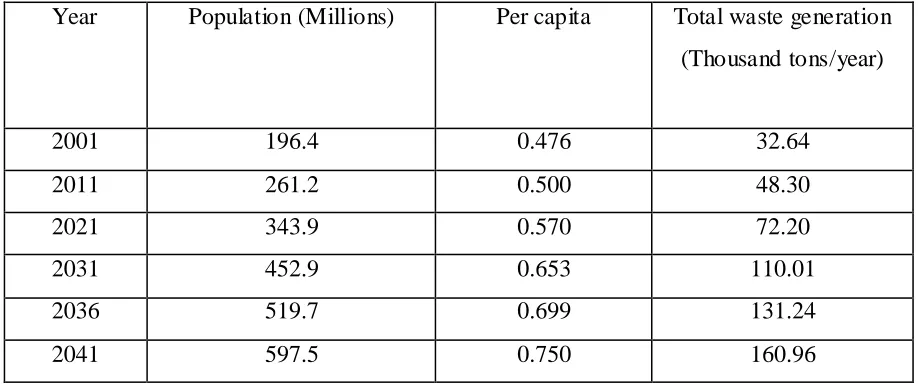
[image:2.612.74.533.283.477.2]generation is growing by about 1.3% per year in India table 1 (Udhaya et al. 2015).
Table 1: Per capita urban MSW generation
Year Population (Millions) Per capita Total waste generation
(Thousand tons/year)
2001 196.4 0.476 32.64
2011 261.2 0.500 48.30
2021 343.9 0.570 72.20
2031 452.9 0.653 110.01
2036 519.7 0.699 131.24
2041 597.5 0.750 160.96
This table shows that population in 2001 dramatically increases by 26% in 2041 . Based on the
population, per capita solid wastes also get increases.
Use of chemical fertilizers resulted in pollution of land, water and air environment. There have
been harmful effects on the living organisms due to the residues of these agrochemicals in food
products. Adverse effects of chemical based fertilizers have shifted the interests of researchers
towards organic biofertilizer like vermicompost which can increase the production of crops and
prevent them from harmful pests without polluting the environment (Joshi et al. 2014; Chanda et
converts wastes to wealth. vermicompost enhances the crop yield and lessens dependence on
chemical fertilizers thus mitigating climate change. Earthworms have dynamic potentials and can
do wonderful job for human and biosphere. Worms are also known as “natural cleaners”
(Albasha et al. 2015; Dalal, 2012; Subbulakshmi and Lakandan, 2015 ).
Vermicomposting or vermiculture is an eco- friendly process whereby earthworms are used to
breakdown the biodegradable solid waste into soil and humus known as vermicast,
vermicompost or earthworm compost (Nidoni and Math, 2015). A large number of bacteria of
different species have been reported by researchers in vermicomposts produced by different
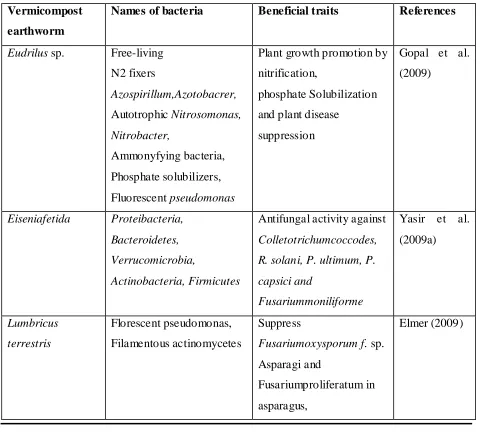
[image:3.612.70.550.270.703.2]species of earthworm table 2 (Joshi et al. 2014).
Table 2: Different types of bacteria in different species of earthworms
Vermicompost earthworm
Names of bacteria Beneficial traits References
Eudrilus sp. Free-living
N2 fixers
Azospirillum,Azotobacrer,
Autotrophic Nitrosomonas,
Nitrobacter,
Ammonyfying bacteria,
Phosphate solubilizers,
Fluorescent pseudomonas
Plant growth promotion by
nitrification,
phosphate Solubilization
and plant disease
suppression
Gopal et al.
(2009)
Eiseniafetida Proteibacteria,
Bacteroidetes,
Verrucomicrobia,
Actinobacteria, Firmicutes
Antifungal activity against
Colletotrichumcoccodes,
R. solani, P. ultimum, P.
capsici and
Fusariummoniliforme
Yasir et al.
(2009a) Lumbricus terrestris Florescent pseudomonas, Filamentous actinomycetes Suppress
Fusariumoxysporum f. sp.
Asparagi and
Fusariumproliferatum in
asparagus,
Verticilliumdahliae in
eggplant and Fusarium.
oxysporum f. sp.
Lycopersici Race 1 in
tomato
Unspecified Eiseniicolacomposti
YC06271
Antagonistic activity
against F. moniliforme
Yasir et al.
(2009b)
E. fetida Bacillus spp. Bacillus.
megaterium, Bacillus
pumillus,
Bacillus subtilis
Antimicrobial activity
against Enterococcus
faecalis DSM 2570,
Staphylococcus aureus
DSM 1104
Vaz-Moreira
et al. (2008)
Aporrectodea trapezoids Aporrectodearosea Pseudomonas corrugata214OR Suppress Gaeumannomycesgraminis
var. Tritd in wheat
Doube et al.
(1994)
A. trapezoides
Microscolexdubius
Rhizobium meliloti L5-30R Increased root nodulation
and nitrogen fixation in
legumes
Stephens et al.
(1994)
L. terrestris Brodyrhizobiumjaponicum Improved distribution of
nodules on soyabean roots
Rouelle
(1983)
Unspecified Rhizobium trifolii Nitrogen fixation and
growth of leguminous
plants
Buckalew et
al. (1982)
Lumbricus
rubellus
Rhizobium japonicum,
Pseudomonas putida
Plant growth promotion Madsen and
Alexander
(1982)
Pheretima sp. Pseudomonas oxalaticus Oxalate degradation Khambata and
Bhat (1953)
Source: Pathma and Sakthivel (2012)
The composting process and compost quality can be improved by adding inoculating agent like
Bharadwaj, 2010; Punde and Ganorkar, 2012). Vermicompost has been shown to be richer in a
number of nutrients than compost produced by other composting methods (Kumari, 2013;
Moorthi et al. 2016; Alidadi et al. 2014).
THE SELECTION OF WORMS
There are an estimated 1800 species of earthworm worldwide (Mehta and Karnwal, 2013). In
vermicomposting worms are used as primary agent for decomposition of organic solid waste.
Worms that are used for the conversion of biodegradable wastes into vermicompost like
Megascolexmauritii, Eiseniafoetida, Eudriluseugeniae, Perionnyxexcav atus, Lampitomauritii,
Eiseniaandrei, Lampitorubellus and Drawidawillis. Among these Eiseniafoetidaand
Eudriluseugeniae are the widely used varieties of worms (Sequeira and Chandrashekar,
2015).Eiseniafoetida, commonly known as the “compost worm”, “manure worm”, “red worm”,
“tiger worm”, “brandling worm” and “red wiggler” (Parekh and Mehta, 2015).
ENVIRONMENTAL FACTORS AFFECTING VERMICOMPOSTING PROCESS
Vermicomposting is greatly affected by the fluctuation of ecological factors. Environmental
factors such as temperature, moisture, pH, EC and weight reduction required for successful
vermicomposting of the organic solid waste (Amaravathi and Reddy, 2016). Earthworms are
very sensitive to pH, several researchers have stated that most species of earthworms prefer a pH
of about 7.0 (Pandit et al. 2012). Moisture level is a significant factor in vermicomposting
process. The environmental factors regulate process in various ways and change the nutritiona l
quality of vermicompost.
GENERAL PROCESS OF VERMI-COMPOSTING
It promotes environmental sustainability by transforming garbage into gold that improves our
environment (Londhe and Bhosale, 2015; Aalok et al. 2009; Nagavallemma et al. 2006).
Following steps are involved in vermicompost
preparation:-1. Vermicomposting unit should be in a cool, moist and shady site.
2. The raw material used is cow dung, chopped dried leafy material together with these raw
material municipal solid wastes (biodegradable) will be used for vermi-composting.
3. Cow dung, chopped dried leafy materials and MSW are mixed and kept for partial
decomposition for 15 – 20 days.
4. A layer of 15-20cm of chopped dried leaves/grasses should be kept as bedding material at the
bottom of the bed.
5. Beds of partially decomposed material of size 6x2x2 feet should be made.
6. Each bed should contain 1.5-2.0q of raw material and the number of beds can be increased as
per raw material availability and requirement.
7. Red earthworm (1500-2000) should be released on the upper layer of bed.
8. Water should be sprinkled with can immediately after the release of worms.
9. Beds should be kept moist by sprinkling of water (daily) and by covering with gunny
bags/polythene.
10.Bed should be turned once after 30 days for maintaining aeration and for proper
11.Compost gets ready in 45-50 days.
12.The finished product is 3/4th of the raw materials used.
CONCLUSION
The increased production of biodegradable solid waste and its safe disposal becomes the current
global problem. Vermicomposting is cost-effective pollution abatement technology which
increases soil productivity through improved soil quality. A variety of organic solid wastes viz.
domestic, animal, agro-industrial, human wastes etc. can be vermicomposted and converted in to
useful product. Vermicomposting plays vital role in organic farming. This technology promotes
environmental sustainability by converting a organic waste to a value-added product that
improves our environment.
REFERENCES
1) Brintha N, Srijayam M, Elamparithi V, and Manimegala G, “Utilization of municipal solid
waste mixed with horse dung by using earthworm Perionyx excavates” International journal
of advanced research in biological sciences, 2015, vol. 2(3), pp. 295–300.
2) Brintha N and Manimegala G, “Vermicomposting of municipal solid waste using an
earthworm Perionyxexcavatus” International journal of modern research and reviews, 2015,
vol. 3 Issue 6, pp. 711-715.
3) Kumaresan K, Balan R, Sridhar A, Aravind J, Kanmani P, “An integrated approach of
composting methodologies for solid waste management” Global J. Environ. Sci. Manage.,
2016, vol. 2(2), pp. 157-162.
4) Hemalatha B, “Application of vermicomposting for the biodegradation of msw and crop
improvement” International journal of advanced engineering technology, 2013, vol. 4 issue 1,
pp. 27-30.
5) Manyuchi MM and Phiri A, “Vermicomposting in solid waste management: a review”
International journal of scientific engineering and technology, 2013, vol. 2, Issue 12, pp.
6) Dasgupta T, “Waste management in Bhopal municipal corporation issues and perspectives”
International journal of scientific engineering and technology, 2013, vol. 2 Issue 9, pp.
807-810.
7) Udhaya KK, Henock, Tsegay, “Conversion of solid waste into bio fe rtilizer by
vermicomposting a case study of Padmanadapuram” International journal of innovative
research in science, engineering and technology, 2015, Vol. 4, Issue 6, pp. 3801-3808.
8) Joshi R, Singh J, Vig AP, “Vermicompost as an effective organic fertilizer and biocontrol
agent: effect on growth, yield and quality of plants” Reviews in environmental science and
bio/technology, 2014, vol. 13 no. 3, pp. 1-26.
9) Chanda GK, Bhunia G and Chakraborty SK, “The effect of vermicompost and other
fertilizers on cultivation of tomato plants” Journal of horticulture and forestry, 2011, Vol.
3(2), pp. 42-45.
10)Sinha, Rajiv, Herat, Sunil, Valani, Dalsukhbhai, Chauhan, Krunalkumar, “Earthworms
vermicompost: a powerful crop nutrient over the conventional compost & protective so il conditioner against the destructive chemical fertilizers for food safety and security”
American-Eurasian journal of agricultural & environmental sciences, 2009, vol. 5 (S), pp.
01-55.
11)Albasha MO, Gupta P, and Ramteke PW, “Management of kitchen waste by vermicomposting
using earthworm, EudrilusEugeniae” International Conference on Advances in Agricultural,
Biological & Environmental Sciences (AABES-2015) July 22-23, 2015 London(UK), pp.
81-84.
12)DalalP,“Municipal solid waste management by vermicomposting” International journal of
science and nature, 2012, vol. 3(4), pp. 883-885.
13)Subbulakshmi G, lakandan RT, “Promotion of organic farming using vermicomposting technology in TamilNadu” Global journal for research analysis, 2015, vol, 4 issue 6, pp.
26-27.
14)Nidoni P and Math P,“Solid waste management by vermicomposting process” Indian
J.Sci.Res., 2015, vol. 12(1), pp.192-196.
15)Pathma J, Sakthivel N “Microbial diversity of vermicompost bacteria that exhibit useful
16)Alexandar R, Lingan BA and Poyyamoli G, “Sustainable solid waste management with
special reference to controlled composting in Puducherry and Cuddalore towns, India”
European journal of applied sciences, 2010, vol. 2 (3), pp. 116-121.
17)Bharadwaj A, “Management of kitchen waste material through vermicomposting” Asian j.
exp. biol. sci., 2010, vol. 1 (1), pp. 175-177.
18)Punde BD, Ganorkar RA, “Vermicomposting- recycling waste into valuable organic
fertilizer” International journal of engineering research and applications (IJERA), 2012, Vol. 2
Issue 3, pp. 2342-2347.
19)Kumari S, “Solid waste management by vermicomposting” International journal of scientific
& engineering research, 2013, Vol. 4 Issue 2, pp. 1-5.
20)Moorthi M, Nagarajan K, Senthilkumar A, “Vermi-technology of organic solid waste with
using earthworm EudrilusEugeniae” The Journal of Zoology Studies, 2016, vol. 3(4), pp.
48-51.
21)Alidadi H, Saffari AR, Ketabi D, Peiravi R, Hosseinzadeh A, “Comparison of vermicompost and cow manure efficiency on the growth and yield of tomato plant” Health Scope, 2014, vol.
3(4), pp. 1-5.
22)Mehta N, Karnwal A, “Solid waste management with the help of vermicomposting and its
applications in crop improvement” Journal of biology and earth sciences, 201 3, vol. 3, Issue
1, pp. B8-B16.
23)Sequeira V and Chandrashekar JS, “Vermicomposting of biodegradable municipal solid waste
using indigenous Eudrilus sp. earthworms” International journal current microbiology and
applied science, 2015, vol. 4(4), pp. 356-365.
24)Parekh SA, Mehta MJ, “Vermicomposting as sustainable option for organic waste
management” International journal of innovative and emerging research in engineering, 2015,
Vol. 2 Issue 1, pp. 13-20.
25)https://www.fix.com/blog/composting-with-worms/
26)Amaravathi G and Reddy RM, “Vermicomposting of municipal solid waste using different
types of earthworm species – a comparative study” International journal of pharma and bio
sciences, 2016, vol. 7(3), pp. B724 – B733.
27)Pandit NP, Ahmad N and Maheshwari SK, “Vermicomposting biotechnology: an eco- loving
approach for recycling of solid organic wastes into valuable biofertilizers ” Journal of
28)Londhe PB, Bhosale SM, “Recycling of solid wastes into organic fertilizers using low cost
treatment: vermicomposting” International journal of innovations in engineering research and
technology, 2015, vol. 2 issue 6, pp. 1-11.
29)Aalok A, Soni P, Tripathi AK, “Role of earthworms in breakdown of different organic wastes
into manure: a review” Dynamic soil, dynamic plant, 2009, vol. 3 issue 2, pp. 13-20.
30)Nagavallemma KP, Wani SP, Lacroix S, Padmaja VV, Vineela C, BabuRao M and Sahrawat
KL, “Vermicomposting: recycling wastes into valuable organic fertilizer” An open access
journal published by ICRISAT (International crops research institute for the semi- arid