C o r e 2 4 m u l ti p r of e s si o n al li ai s o n
‐
m e n t a l h e a l t h t r a i ni n g
p r o g r a m m e : d e v el o p m e n t ,
i m pl e m e n t a ti o n a n d e v al u a ti o n
Bl uff, L, B r e t tl e , AJ, B ull e n-F o s t er, C, Fo s t er, C a n d L a m p h , G
T i t l e
C o r e 2 4 m u l ti p r of e s si o n al li ai s o n m e n t a l h e a l t h t r ai ni n g
‐
p r o g r a m m e : d e v el o p m e n t , i m pl e m e n t a ti o n a n d e v al u a ti o n
A u t h o r s
Bl uff, L, B r e t tl e, AJ, B ull e n-Fo s t er, C, F o s t er, C a n d L a m p h ,
G
Typ e
M o n o g r a p h
U RL
T hi s v e r si o n is a v ail a bl e a t :
h t t p :// u sir. s alfo r d . a c . u k /i d/ e p ri n t/ 5 2 4 4 7 /
P u b l i s h e d D a t e
2 0 1 9
U S IR is a d i gi t al c oll e c ti o n of t h e r e s e a r c h o u t p u t of t h e U n iv e r si ty of S alfo r d .
W h e r e c o p y ri g h t p e r m i t s , f ull t e x t m a t e r i al h el d i n t h e r e p o si t o r y is m a d e
f r e ely a v ail a bl e o nli n e a n d c a n b e r e a d , d o w nl o a d e d a n d c o pi e d fo r n o
n-c o m m e r n-ci al p r iv a t e s t u d y o r r e s e a r n-c h p u r p o s e s . Pl e a s e n-c h e n-c k t h e m a n u s n-c ri p t
fo r a n y f u r t h e r c o p y ri g h t r e s t r i c ti o n s .
Core24
Multi
‐
professional
Liaison
Mental
Health
Training
Programme
Development,
implementation
and
evaluation
7/31/2019
University of Salford, School of Health and Society and North West Boroughs Healthcare NHS
Foundation Trust
1
Acknowledgements
We would like to thank and acknowledge first and foremost all the Liaison Practitioners who took part in the early listening events and the contributors to the online Twitter event; this early contribution assisted us in shaping the programme. Additionally, we would like to thank the Clinical Reference Group and those who provided lived experience insights into the development and review of training materials. As a unique collaboration those from both North West Boroughs Partnership NHS Foundation Trust and the University of Salford who provided leadership and project management into this project should be recognised in the development of the effective partnership that has been developed and continues in other projects. The academic team at the University of Salford are thanked for their energy in developing this programme and the quality of its delivery and the Business Development Team at North West Boroughs Partnership NHS Foundation Trust, led by Angela Greslow, who have overseen the project management are acknowledged also for their support and oversight of the project and tender milestones.
Finally, a key acknowledgement goes to North West HEE who innovatively commissioned this project and supported the collaborative throughout.
Team contributions:
The Collaborative was first formed and the application led by Dr Gary Lamph (formerly University of Salford) and Dr Claire Bullen Foster (North West Boroughs Partnership NHS Foundation Trust).
The project in its delivery has been expertly led by Lisa Bluff and strategically by Celeste Foster and the evaluation has been led independently by Professor Alison Brettle, all of the University of Salford.
2
Table of Contents
Acknowledgements ... 0
List of Tables and Figures ... 4
Introduction ... 5
Background to Core24 Multi-professional Liaison Mental Health Training Programme... 5
Programme Development ... 5
Objectives ... 6
Programme Team ... 6
Programme Design ... 7
Delivery ... 8
Programme Evaluation ... 11
Data collection and analysis methods ... 11
Demographic, attendance and engagement data ... 12
Pre and post course evaluation ... 12
Follow-up data ... 13
Data synthesis ... 14
Ethics and governance ... 14
Programme Evaluation Results ... 15
Demographics ... 15
Student, engagement, attendance and attrition ... 16
Face to Face learning ... 16
Virtual Learning Environment ... 17
Participant evaluation of the programme ... 17
Effect on perceived confidence and competence ... 18
Impact of learning on practice ... 21
Strengths and weaknesses of the course ... 22
The Setting for Learning ... 22
3
The experience of clinical simulation ... 23
The resources and teaching experience ... 23
Subject specific comments ... 24
The impact upon the Practitioner ... 24
Future training needs ... 25
Follow-up data ... 27
Table 8: Follow-up Data Sample ... 27
Strengths and areas for improvement ... 27
Networking ... 27
Simulation ... 28
Subject area and teaching method improvements ... 28
Impact of Learning ... 28
Barriers to learning ... 28
Facilitators of learning ... 29
Future learning needs ... 29
Lessons learned from the training implementation ... 29
Delegate management and recruitment ... 30
Partnership approach has been a cornerstone of the success of the project ... 30
Changes to the structure of the programme and the learning day ... 30
Discussion ... 31
Conclusions and Recommendations ... 34
References ... 36
4
List of Tables and Figures
Table 1: Staff involved in Programme Development ... 7
Table 2: Education Programme ... 10
Table 3: Data collection and analysis ... 12
Table 4: Geographical Spread of Delegates Invited to Participate ... 15
Table 5: Occupation ... 15
Table 6: Time Working in LMH ... 15
Table 7: Participants Perceived Competence Across the Course (Means and Ranges) ... 17
Table 8: Follow-up Data Sample ... 27
Figure 1: Improvement by Cohort ... 18
Figure 2: Matched Improvement ... 19
Figure 3: Matched Improvement by Module ... 19
Figure 4: Matched Improvement by Tenure ... 20
Figure 5: Matched improvement by Discipline ... 20
5
Introduction
Background to Core24 Multi-professional Liaison Mental
Health Training Programme
The Five Year Forward View for Mental Health (FYFV MH) highlighted the need for Liaison
Mental Health Services (LMH) and pledged a commitment to invest in order to achieve
CORE-24 models of care:
“By 2020/21, NHS England should invest to ensure that no acute hospital is
without all-age mental health liaison services in emergency departments and
inpatient wards, and at least 50 per cent of acute hospitals are meeting the ‘core
24’ service standard as a minimum” (NHS England, 2016 page 34).
Whilst the standardised model and fiscal investment would address the national variation in
services, it was acknowledged that this would not meet the needs of this workforce. Through
growth and investment, the LMH multidisciplinary team was poised to expand to include
professional groups that were unlikely to have gained exposure to the specialism within core
training (e.g. Psychology, Occupational Therapy), in addition to the substantial recruitment of
nurse practitioners required in order to staff the 24-hour service model.
Prior to national investment, where LMH services did exist, they had largely been established
in the absence of a specific model or framework and consequently variation was vast. A
review of LMH services across Cheshire and Mersey conducted by the North West Coast
Strategic Clinical Network (Verma et al, 2016) identified a lack of compliance with national
guidance regarding the minimum service specification across multiple areas including LMH
specific supervision and training. Through this intelligence regarding local provision and in
anticipation of the growth in services and workforce, Bullen-Foster and Verma (2016)
developed a concept training matrix, specific to the needs of the multidisciplinary CORE-24
workforce.
Programme Development
The LMH Education Programme was established as an innovative project and partnership
between clinical and academic partners; North West Boroughs Healthcare NHS Foundation
Trust (NWBH) and The University of Salford to address the specific needs of the LMH
clinical workforce. The project built upon the work of Bullen-Foster and Verma (2016) and
6 workforce were equipped with core competencies, skills and confidence to deliver safe and
effective care and ensuring standardisation and sustainability.
Objectives
Key objectives for development and delivery included:
Develop training modules that reflect the core competencies required for the LMH workforce, in conjunction with national policy and guidance;
Develop training modules that are relevant and transferable to clinical practice;
Refine training modules via engagement of multidisciplinary LMH clinical staff and people with lived experience;
Develop and deliver a training programme to meet the needs of the existing and emerging workforce to achieve the vision of the FYFV MH in respect of LMH and ensure the
sustainability of services beyond 2020;
Development and deliver a training programme to ensure a safe, compassionate, confident, competent and sustainable multidisciplinary LMH workforce;
To facilitate learning outcomes with a wide reach; outside of the North West and across the national LMH workforce.
Programme Team
The project was developed as a North West-wide initiative that would transcend all regional
Mental Health Trusts that provide LMH services; Mersey Care, Cheshire and Wirral
Partnership, North West Boroughs Healthcare, Lancashire Care, Cumbria Partnership,
Manchester Mental Health and Social Care Trust, Greater Manchester Mental Health Trust
and Pennine Care. Whilst the primary aim of the training programme was to target the LMH
workforce, the ambition was for this to have a wider impact upon the multiple Acute Trusts
that host these services via the dissemination of skills and knowledge.
The programme team was established to reflect the collaborative clinical and academic
partnership and involve multiple stakeholders. It comprised of clinical and academic leaders,
academic developers and clinical and expert oversight groups that included multidisciplinary
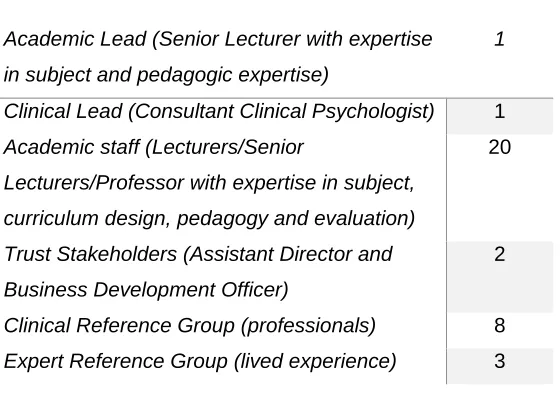
LMH clinicians and people with lived experience. The table below outlines the range of staff
7
Table 1: Staff involved in Programme Development
Academic Lead (Senior Lecturer with expertise
in subject and pedagogic expertise)
1
Clinical Lead (Consultant Clinical Psychologist) 1
Academic staff (Lecturers/Senior
Lecturers/Professor with expertise in subject,
curriculum design, pedagogy and evaluation)
20
Trust Stakeholders (Assistant Director and
Business Development Officer)
2
Clinical Reference Group (professionals) 8
Expert Reference Group (lived experience) 3
Programme Design
The programme was co-produced with academic stakeholders, multidisciplinary clinicians and
people with lived experience, representing the backgrounds of those involved in the delivery,
commissioning and recipients of the training. The development phase incorporated multiple
levels of scrutiny to ensure that the modules were relevant and transferable to both clinical
practice and the users of MHL services.
This involved:
1. Developing a preliminary module/session matrix via discussion between the Clinical
and Academic Leads. The core competencies for the LMH workforce within clinical
and academic frameworks were examined to develop a preliminary session matrix.
The preliminary matrix ensured that sessions and content were mapped against key
policy directives relevant to LMH; Liaison Mental Health Nursing Competency
Framework (Eales et Al., 2014), Liaison Mental Health Service Guidance (NICE, 2016),
PLAN Standards 4th Edition (Palmer et al 2014) and Mental Health Core Skills
Education and Training Framework (DH, 2016). Session learning outcomes and
detailed specification mapped to competency frameworks, are outlined in Appendix 1.
2. Reviewing the module matrix by the academic team
3. Incorporating frontline practitioner views. Two half-day face-to-face listening events
were held across the North West Region. These comprised presentation of the matrix,
a presentation by the commissioner (HEE) and table top discussions amongst the
delegates. The qualitative data captured as part of the discussions was used to refine
8 4. Incorporating views of the wider LMH workforce, service users, carers and Acute Trust
practitioners. An online Twitter event was conducted via @WeMHNurses, a regular
online discussion forum of mental health nurses with a national reach of over 1.6
million users. The discussion was held in an evening, at a time known to be popular
with the forum users. During the discussion 47 participants engaged, generating 345
tweets. Others posted in relation to the topic before and after the event. Prior to the
chat, an explanation of the project was posted and the discussion asked questions
(and generated feedback) on proposed content, audience, impact and name.
5. Forming a Clinical Reference Group (comprising Liaison Clinicians who expressed an
interest in participation following listening events) and Expert Reference Group (of
service users) to provide feedback on each module.
6. Module preparation by academic team.
7. Reviewing modules by CRG, ERG and clinical lead to ensure clinical and user
relevance.
8. Academic team Incorporating feedback into modules.
The programme overview was shared with NHSE North Region Liaison Mental Health Special
Interest Group, the Greater Manchester and North West Coast NHSE Strategic Clinical
Networks, the Psychiatric Liaison Accreditation Network (PLAN) and at the 2018 PLAN annual
forum. An initial paper that provided the outline and rationale for the training programme,
including design and development was submitted to The Journal of Mental Health Education,
Training and Practice is currently under review.
Delivery
The LMH Education Programme delivery was designed to facilitate a blended learning
approach that included both face-to-face and distance learning sessions to maximise
engagement and learning across a wide geographical spread of delegates. Five days distance
learning sessions were hosted by The University of Salford’s Virtual Learning Environment
(Blackboard) and the five days face-to-face sessions were delivered on-site at the University
of Salford’s purpose-built counselling and psychotherapy training facilities and clinical
simulation suite. Face to face sessions comprised master lectures, small group skills
development and the use of clinical simulation suites to deliver the environmental experience
relevant to the specialism. VLE content was written by a subject expert for each session.
Content was structured into a series of pre-reading, self-assessment activities, followed by a
narrated lecture (using office mix or screen cast-o-matic) and supplementary interactive
9 The programme was made available to the North West LMH multidisciplinary clinical
workforce, with 150 training places available to the eight NHS Trusts that span three
Sustainability and Transformation Partnerships/Integrated Care Systems across the
geographical footprint; Cheshire and Mersey, Lancashire and South Cumbria and Greater
Manchester. Three cohorts each comprising 50 delegates were offered. Delegates within
each cohort were mixed across the geographical footprint in order to encourage opportunities
for professional networking, in addition to ensuring efficiencies for clinical services to release
their staffing resource to attend via three opportunities for entry over a six-month period;
Cohort 1 September 2018-November 2018, Cohort 2 November 2018-January 2019, Cohort
3 January 2019-March 2019.
The table below outlines the structure, delivery and content of the education programme. Full
10
Table 2: Education Programme Overview
Session Session Title Delivery
Method Content Pre-session Introduction DL Introduction
Session 1 Assessment FF Bio-psychosocial assessment and care planning, standards and outcome measures
Session 2
Part 1 Common mental health
presentations
DL Identification, assessment and understanding
Part 2 Liaison specific
interventions & formulation
DL Introduction to liaison mental health specific interventions and formulation
Session 3 Dementia & Delirium FF Detection, assessment and management of dementia and delirium within a physically ill population
Session 4
Part 1 Self-harm & suicide DL Introduction to self-harm and suicide
Part 2 Psychosis & Personality
Disorder
D Introduction to psychosis & Personality Disorder
Session 5
Part 1 Self-harm & suicide FF Differences between self-harm and suicidal
intent, impact of attitudes upon patient experience
Part 2 Psychosis/ Personality
Disorder
FF Detection, assessment and management of psychosis within a physically ill population. Personality disorder assessment/ interactions and challenging stigma and misunderstandings
Session 6 Legal Frameworks DL Legal frameworks relevant to liaison mental health including MHA, MCA and DoLs
Session 7 Complex physical and psychological
presentations
FF Interface between complex physical and psychological conditions, working across the physical and mental health interface and using liaison specific interventions and formulation
Session 8
Part 1 Substance misuse DL Presentations within an acute setting, physical
and psychological effects of substance misuse
Part 2 Learning disability DL Specific needs of learning-disabled patients,
reasonable adjustments and challenging behaviour
Session 9 Leadership, supervision, training and education skills
DL Clinical leadership skills for MDT and acute colleague support, skills to develop and facilitate training, presentation topic preparation
Session 10 Clinical Simulation Day – Presentation,
Interventions & reflections
FF Presentation delivery, reflections on
collaboration and supporting acute colleagues, next steps
11
Programme Evaluation
The evaluation and its analysis were developed, overseen and drawn together by a senior
academic (Professor) who was independent of the programme development and delivery
team.
The evaluation incorporated multiple methods including:
Routinely collected cohort demographic and metric data
Bespoke questionnaires to assess impact on confidence, competence, student satisfaction and training impact – using repeated measures design (pre post)
Qualitative follow-up data collection from end of programme stakeholder event and online feedback
Collation of learning from attending practitioners re: repeated key issues in practice
Reflective learning logs from programme implementation to inform future roll-out and recommendations
Data collection and analysis methods
Table 3 outlines the methods of data collection and analysis mapped to each key outcome
12
Table 3: Data collection and analysis
Outcome Measure Data Collection Method Data Analysis Method
Cohort information Recruitment data and demographic data from questionnaires
Descriptive, with use of data for inferential statistical analysis of any identified differences between sub groups (e.g. length of experience)
Student, engagement, attendance and attrition
Attendance monitoring, VLE/Blackboard engagement data
Descriptive statistics
Changes in self-reported confidence and competence
Pre, post questionnaire (quantitative)
Descriptive and inferential statistical analysis
Impact on practice Pre-post questionnaire Quantitative and qualitative statements
Qualitative data collection from stake holder events
Descriptive statistical analysis
Thematic analysis
Strengths and weaknesses of programme
Post questionnaires - Qualitative
Qualitative data collection from stake holder events
Reflective learning log from course managers
Thematic analysis
Use action research cycle to structure reflective analysis
Barriers/facilitators to learning and future learning needs
Qualitative data collection from stake holder events
Soft intelligence/learning from delegates during programme delivery
Thematic analysis
Practice issues and priorities
Soft intelligence/learning from delegates during programme delivery
Anonymised data organised into repeated key themes
Demographic, attendance and engagement data
Data was collected from recruitment spreadsheet provided prior to registration, demographic
data provided on the pre and post evaluation questionnaires, attendance registers and
metric engagement data from the Blackboard Virtual Learning Environment. Data was
collated and is presented using descriptive statistics below.
Pre and post course evaluation
Questionnaires (Appendices 2 & 5) were distributed at the first session immediately prior to
the course at the last session immediately following training. The questionnaires were
developed for the purpose of the evaluation and are based on the competencies and
learning outcomes of the course, standard elements of University of Salford teaching
evaluations and questions to assess the impact of knowledge on practice adapted from a
13 The questionnaire comprised Likert scales (1-10) assessing perceptions of knowledge,
confidence and competence in 12 domains, reflecting the course learning outcomes and
curriculum.
1. Biopsychosocial assessment and care planning including risk assessment, crisis
plans, formulation
2. Identification, assessment and understanding of common mental health disorders
3. Liaison specific brief interventions
4. Dementia and delirium
5. Self-harm and suicidal intent
6. Psychosis
7. Personality disorder assessment and skills in working effectively
8. Legal frameworks relevant to liaison mental health
9. Complex physical and psychological conditions
10. Substance misuse (identification and management)
11. Learning Disability
12. Clinical leadership skills for educating
To gain an understanding of the programme’s impact, delegates were invited to select
impact statements that reflected how the programme had changed (or not changed) their
knowledge or elements of their practice. To provide feedback for future programme
development, free text feedback was sought on areas of the programme that they felt
worked well and areas for improvement.
Quantitative data was analysed using descriptive statistics in Excel. Pre and post data were
compared by the whole group, individual cohorts and by matched pair analysis where
possible.
Qualitative responses were, categorised, providing frequency counts and ranked. They were
then analysed using thematic analysis (Braun and Clarke, 2006).
Follow-up data
Qualitative data was also collected at follow up (at least 6 weeks after each cohort) using a
range of methods to maximise delegate and stakeholder engagement. This included a
follow up survey, with the initial intention of matching to previous survey responses
(Appendix 6) and face to face methods (stakeholder events). Unsolicited email feedback
was also received which followed the same themes as the above methods, so this was also
14 not be matched, stakeholder event attendance was low and all responses covered the same
themes, the data has been analysed and presented as one set of qualitative data.
Two face-to-face consultation events were held. All delegates, members of the clinical and
expert reference group, managers and members of the academic delivery team were invited.
Events were held in two different geographical locations within the Northwest region, lunch
was provided and a drop drop-in attendance method was adopted to increase the likelihood
of staff on shift in clinical services being able to attend.
The main focus of the event was a celebration of the project. A summary report of the
project was presented to by project staff (members of the academic team). This included a
summary of the questionnaire results (below), followed by a café style round table
discussion with a member of the project team facilitating the discussion or circulating
between tables. The discussion at each table centred around four topics: Impact of training,
barriers regarding the training, facilitating factors and future learning needs. Notes were
collated on flip chart paper on each table, then fed back to the wider group by the facilitator.
Data synthesis
The findings from all the methods are synthesised below to provide integrated findings,
learning, implications and recommendations for practice. Consultation meetings were held
with Northwest Clinical Lead for Liaison Mental Health and the Health Education England
programme Manager to contextualise the findings.
Ethics and governance
The evaluation strategy was scrutinised and approved via Salford University Research
15
Programme Evaluation Results
Demographics
Available data regarding occupation for each employing organisation was requested for MHL
staff put forward to register for the course (N=145), however a complete data set was not
[image:17.612.96.482.211.321.2]provided. Across three cohorts 123 participants attended the programme (Table 4).
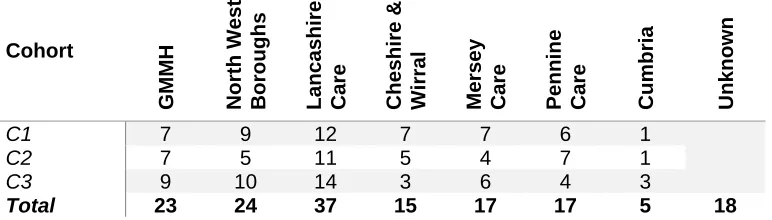
Table 4: Geographical Spread of Delegates Invited to Participate
Cohort
GM
MH
North West Boro
ugh
s
Lancashire Care Cheshir
e &
Wir
ral
Mersey Care Pennin
e Care Cum b ria Unkn own
C1 7 9 12 7 7 6 1
C2 7 5 11 5 4 7 1
C3 9 10 14 3 6 4 3
Total 23 24 37 15 17 17 5 18
In Appendix 3, data regarding length of experience, age gender and ethnicity is presented
from delegates who consented to take part in the evaluation (N=99), however there is also
missing data within this set of responses, as some participants did not respond to every
question even within the pre-test). The majority of those who completed were white British
females of a mixed age range. Participating staff had a range of professional backgrounds
with the largest group being Registered Mental Health Nurses (N=39) and the smallest
social workers (n=1) and Psychiatrists (n=3). The largest group of participants were those
fairly new to Liaison having worked in this area for less than 3 years (n=31), however a
significant number of participants had worked in Liaison for between 3-6 years (n=19). It is
not clear how representative these demographics are, either of the participants as a whole or
[image:17.612.98.519.567.621.2]the MHL workforce.
Table 5: Occupation
RNM Social
Worker Psychiatrist Psychologist
Mental Health Practitioner
Support
worker Missing Total
39 1 3 6 11 1 38 99
Table 6: Time Working in LMH
Under 3 years 3-6 years 7-10 years 10+ years Missing Total
[image:17.612.96.521.684.722.2]16
Student, engagement, attendance and attrition
A total of 145 delegates applied and were offered places, across three cohorts, running from
September 2018 until April 2019; this is 97% of the training capacity available. Over the
three cohorts, 123 delegates registered and attended, representing an 85% occupancy of
the available capacity. Anecdotal feedback suggests places were not taken up due to
service need changes, including staff changing jobs or an inability to release staff due to
changes.
Face to Face learning
The face to face sessions were well attended, with an average 77% attendance per session.
Across all three cohorts:
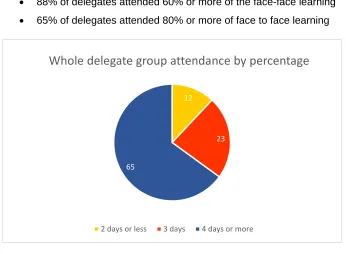
88% of delegates attended 60% or more of the face-face learning
[image:18.612.91.437.273.527.2] 65% of delegates attended 80% or more of face to face learning
Figure 1: Delegate attendance
Breakdown by individual cohort mirrored the patterns seen across the whole group of
delegates (+/- 5% variation).
Reasons for non-attendance were recorded as annual leave, maternity leave and clinical
need meaning that a delegate could not be released on a particular day. The annual leave
was particularly apparent within cohort one, where two days of teaching fell within school
half term holidays (spread across different weeks throughout the region). This meant that for
two dates in cohort one, there was below average attendance compared to the rest of the
course.
12
23
65
Whole
delegate
group
attendance
by
percentage
17 High fidelity simulation days had the lowest rate of attendance across all three cohorts –
range 56-62%. This reflects qualitative feedback from delegates: whilst many delegates
found this element of the programme to be the most beneficial to them, other delegates
identified clinical simulation as a training method in which they did not want to participate or
that they did not enjoy.
Virtual Learning Environment
The majority of participants (n=107) engaged with the VLE materials and the distance
learning training days. A small number of delegates (n=16) did not interact with virtual
learning resources at all, whilst n=2 only interacted with the VLE resources around the first
day of the course. Again, this reflects some of the qualitative feedback (see below).
Participant evaluation of the programme
Evaluation data (immediately prior to and immediately post) was completed by 99
participants (80% of all delegates), although not all completed the post test data. Matched
pre-and post-data was available for 50 participants (40%). A full set of data tables are
provided in Appendix 4. Participant’s perceived confidence regarding their competence in
the topic areas covered by the programme modules were assessed using a 10-point Likert
scale (1= not confident, 10= extremely confident) immediately prior to the course and at the
end of the last session. Overall confidence across each topic was relatively high prior to
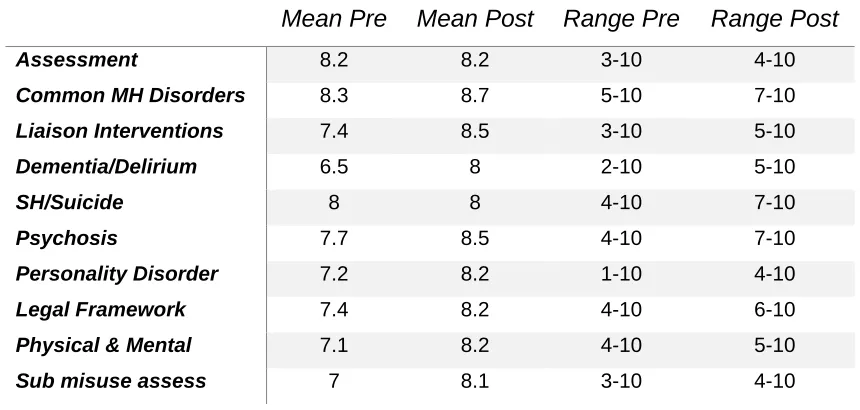
commencing the course; with means and range provided in Table 7 below. A small number
of participants were extremely confident prior to the course, one self-assessed as 10 across
all module content in the pre-test but failed to provide any matched follow up data. At the
[image:19.612.91.521.513.718.2]opposite end of the scale very few rated themselves as not confident across all modules.
Table 7: Participants Perceived Competence Across the Course (Means and Ranges)
Mean Pre
Mean Post Range Pre
Range Post
Assessment 8.2 8.2 3-10 4-10
Common MH Disorders 8.3 8.7 5-10 7-10
Liaison Interventions 7.4 8.5 3-10 5-10
Dementia/Delirium 6.5 8 2-10 5-10
SH/Suicide 8 8 4-10 7-10
Psychosis 7.7 8.5 4-10 7-10
Personality Disorder 7.2 8.2 1-10 4-10
Legal Framework 7.4 8.2 4-10 6-10
Physical & Mental 7.1 8.2 4-10 5-10
18
Sub misuse treat 7.2 8.1 2-10 4-10
Learning Disability 5.5 6.9 1-10 1-10
Leadership & Education 7.3 8.2 3-10 1-10
Effect on perceived confidence and competence
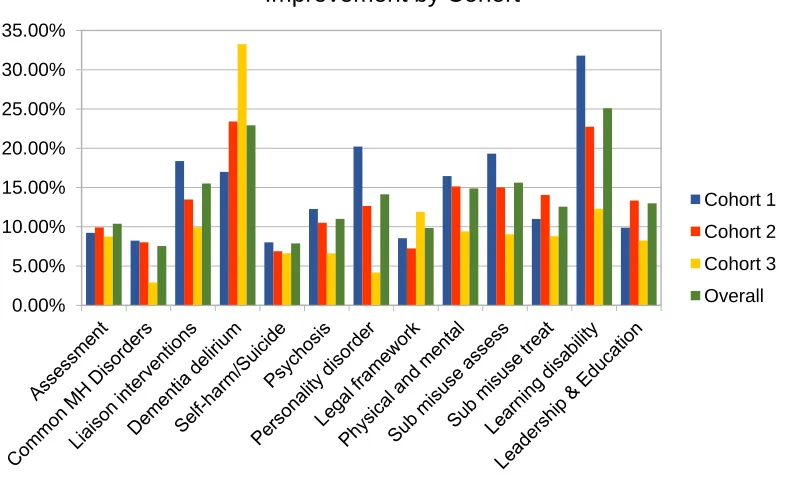
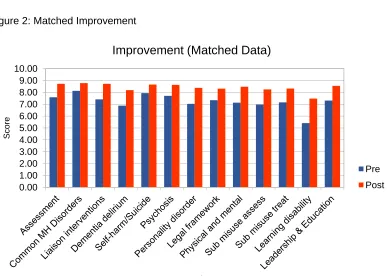
On examining improvements by topic area, the results show a general improvement across
all topic areas. However, the improvement per cohort was mixed, across modules and
cohorts, with no cohort standing out as better or worse in terms of improvement; and no
modules which saw similar or more improvements than others. When looking at tenure,
those working in Liaison for less than three years or more than 10 years saw the most
improvement; except for the modules on dementia and learning disabilities which saw similar
improvements regardless of how long staff had been working in Liaison. The matched data
also shows the largest improvement for the module on learning disabilities (over 38%
[image:20.612.99.492.352.595.2]improvement between the pre and post-tests).
Figure 1: Improvement by Cohort
0.00% 5.00% 10.00% 15.00% 20.00% 25.00% 30.00% 35.00%
Improvement by Cohort
Cohort 1
Cohort 2
Cohort 3
19 Figure 2: Matched Improvement
Figure 3: Matched Improvement by Module
0.00% 5.00% 10.00% 15.00% 20.00% 25.00% 30.00% 35.00% 40.00% 45.00%
Improvement % (Matched Data)
%
0.00 1.00 2.00 3.00 4.00 5.00 6.00 7.00 8.00 9.00 10.00
Score
Question
Improvement (Matched Data)
Pre
[image:21.612.104.491.294.570.2]20 Figure 4: Matched Improvement by Tenure
Figure 5: Matched improvement by Discipline
0.00% 5.00% 10.00% 15.00% 20.00% 25.00% 30.00% 35.00% 40.00% 45.00%
Improvement by Tenure
Under 3 Years
3 – 6 Years
7 – 10 Years
10+ Years
‐20.00%
‐10.00% 0.00% 10.00% 20.00% 30.00% 40.00% 50.00% 60.00% 70.00% 80.00%
%
Improvement
by
Discipline
RMN
MHP
Psychiatry
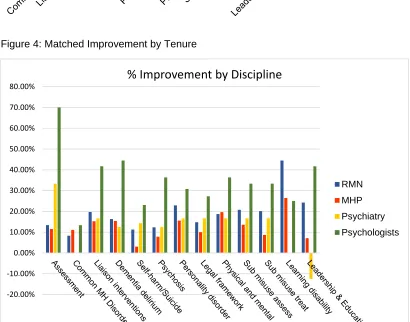
[image:22.612.93.503.305.627.2]21 When the matched data was broken down by discipline some interesting variations
appeared, although it must be noted that for some disciplines, such as psychiatry the
numbers were extremely small (e.g. n=1, for matched data). Psychologists made the
largest improvements across the board, whereas the spread across the other professions
was more even, or only pronounced in line with what would be expected with the
professional background. For example, it is not surprising that a registered mental health
nurse or mental health professional would achieve small improvements in relation to
common mental health disorders or self-harm as they would be more familiar with this topic
due to their professional background and prior experience.
Impact of learning on practice
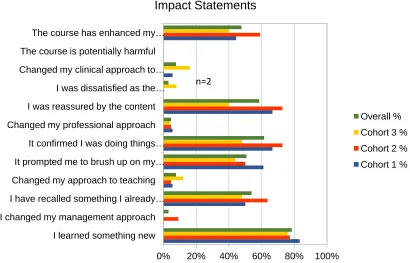
To gain an understanding of how the course had impacted (or made a difference) to the
participants individual knowledge or practice, they were asked to complete a series of impact
statements. Almost all participants learned something new; and for the vast majority of
participants the course provided additional insights, reassurance and updated their
knowledge or skills. A small number in each cohort changed their professional approach,
approach to teaching, management or clinical approach as a result of attending the course.
Only a small number (n=2) were dissatisfied by the course and none perceived that the
[image:23.612.100.510.415.678.2]course was “harmful”.
Figure 6: Impact on Knowledge and Practice
0% 20% 40% 60% 80% 100%
I learned something new I changed my management approach
I have recalled something I already … Changed my approach to teaching
It prompted me to brush up on my … It confirmed I was doing things … Changed my professional approach
I was reassured by the content I was dissatisfied as the … Changed my clinical approach to … The course is potentially harmful
The course has enhanced my …
Impact Statements
Overall %
Cohort 3 %
Cohort 2 %
22 Strengths and weaknesses of the course
As part of the survey, delegates were asked to indicate ‘three things they enjoyed’ and ‘three
things that could be improved’. This generated six themes, which are highlighted in the figure
[image:24.612.118.380.153.257.2]below.
Figure 8: Strengths and weaknesses of the course
The setting for learning
A small number of participants reported how having time to step away from the clinical
environment to learn was of benefit, with a couple making reference to stepping away from
the stress of the job and time to learn ‘Time away from stress of job’ (Participant
65866).
Within the areas for improvement data, the venue and location of the face to face training
days was highlighted as difficult, later start times were suggested as an area for
improvement, delegates walking into sessions late was highlighted as disruptive and the cost
of face to face attendance for some participants was felt to be excessive due to the location.
Other areas highlighted were heating issues and free sandwiches.
The opportunity to network with other liaison practitioners.
This was one of the strongest themes to emerge and was driven by comments relating to the
benefit of networking with other practitioners from other areas and trusts. Some of the
comments were related to confirmation of good practice with statements such as a strength
of the programme being that it allowed for ‘Confirmation of areas of good practice within my
area’ (Participant 67389) and also learning of shared difficulties in practice ‘lovely group of
people in class and it appears all have similar problems’ (Participant 67010). Whilst others
identified how this opportunity to network, provided space to also learn from each other
‘Meeting new friends, sharing experience and knowledge’ (Participant.67008). The
opportunity to meet up with other liaison practitioners from across a wider geographical
footprint and outside of their own Trusts appeared both via this data and from the
experiences of lecturers to be something that was commonly reported as a real benefit of
this training programme.
1. The Setting for learning
2. The opportunity to network with other liaison practitioners
3. The experience of clinical simulation 4. The resources and teaching experience 5. Subject Specific comments
23 Within the areas for improvement data one participant suggested the need for the group
work time not to become a moan fest and another highlighted the need for more
boundaries to set the scene for group work. Others however highlighted the need for more
time to discuss and network with colleagues. One participant felt that the networking should
continue with the following suggestion ‘Opportunity for all to return together to give collective
feedback and to keep in touch via NW MHLT forum’ (Participant 67380), this was considered
with this evaluation proposal however the follow up events were poorly attended.
The experience of clinical simulation
Of all the different learning approaches the clinical simulation sessions and particularly the
final day was most frequently highlighted as a strength, with words describing it as
‘excellent’, ‘realistic to real life practice’ ‘interesting’ and ‘fun’ described ‘Simulation good fun
and scenarios realistic (well done guys :)’ Participant 67010). The anxiety that proceed
simulation was described by a couple of participants ‘I wasn't looking forward to the
simulation day but I enjoyed this and it has made me look at things differently’ (Participant
67394).
However, in contrast several participants also highlighted simulation within the could be
improved section of the evaluation, some of the participants did not enjoy this teaching
method, describing it as unrealistic, ‘Role Play is not helpful, false environment’ (Participant
Unknown).
It seems that whilst a majority were in favour of simulation-based learning and there were
several requests for more of it, that for a small minority of others this was found to be difficult
and unhelpful to engage with.
The resources and teaching experience
The wide variety of teaching resources, teaching methods and lecturer approach and
knowledge were all described within the data relating to the parts of training participant
enjoyed. Many referred to the blended learning style and the blackboard distance learning.
The delivery team were also mentioned as having a positive impact with personal mentions
of lecturers and their content knowledge and mentions of lecturers being engaging and
informative, ‘Teaching style was relaxed but informative’ (Participant 65874).
Within the areas for improvement data, suggestions were made for lectures with the
inclusion of people with lived experience, inclusion of acute trust colleagues alongside as
delegates with one participant suggesting a session delivered by them and their work.
Lecturers with Liaison experience was also a suggestion for improvement. The level of the
24 critiqued by several as being too low level. However, there was significant variation in
participant views about this, with other participants rating the same sessions as very good.
This may reflect the composition of the group, with a large number of experienced
practitioners, including some who had specific expertise with the later life age-group, as well
as those relatively new to liaison. Some of the sessions were also criticised for having too
much group time and others for not being sufficiently interactive which may be due to
individual learning preferences and styles rather than the actual session content.
Subject specific comments
A variety of subject specific comments were made, with different participants enjoying
different areas of training and conversely others not enjoying the same session. Although
the comments are limited in the depth they provide it is possible that the areas identified as
strengths were highlighted either dependant on the lecturer and delivery of the session or
the participant’s existing knowledge. More general comments about the content focussed on
the benefits of this being pitched across the lifespan and particular benefit of also discussing
younger persons approaches with many liaison services now covering a much broader age
group, ‘The first session there appeared to be a focus on CAMHS within discussions
generated. This was helpful in a new all age liaison team’ (Participant 00075). All sessions
taught face to face were mentioned by at least one participant as being enjoyable and those
delivered via distance learning which received an enjoyable mention were the perinatal and
drug and alcohol sessions.
Within the areas for improvements, there was a strong consensus that more attention, time
and detail could be given to the following areas, dementia and delirium, personality disorder,
psychosis and young people, learning disability, medications, and suicide prevention.
The impact upon the Practitioner
The main areas of impact were reported as refreshing knowledge and experience, with a
particular focus on the theoretical knowledge, ‘Learning new literature that's out there on
liaison’ (Participant 67349). Reassuring best practice and skills development was also noted
as was service improvement ideas, ‘Ideas for enhancing practice’ (Participant 67389).
Areas for improvement included the need to make this a more accessible course for new
liaison practitioners with one participant also valuing its worth for acute colleagues. Several
25
Future training needs
During the delivery of the course, discussions amongst the participants provided suggestions
for to future training needs of the MHL workforce which fall outside the agreed specification
of the programme. This includes:
The need for training on physiological investigations and laboratory results that can impact
upon decision making regarding mental health assessment
This was highlighted by the Clinical Reference Group, prior to the course, and some directed
learning materials were provided in response. However, feedback from practitioners
attending cohorts one and two confirmed that this is a particular deficit for staff without a
mental health nursing background.
The need for good practice principles and service level understanding of the mental health
act and robust systems for implementation within medical wards (5:2 in particular)
Discussions suggested that this was being used increasingly to manage the tension between
ward-based referrals and A&E based referrals, initiated by the acute trust medical staff,
without full access to required documentation or understanding of the legal process. There is
evidence of hospital-by-hospital variations but currently the problems are being mitigated by
mental health liaison staff on a case by case basis.
The need to provide opportunities for shared learning between mental health liaison staff
and acute care colleagues
Significant elements of delivery regarding best practice were well received by the delegates,
but raised issues about implementation due to a lack of knowledge around medical
admission processes, or when a mental health liaison practitioner has limited powers of
escalation as overall responsibility for the episode of care belongs to the acute care trust
(particularly in relation to complex physical and psychological presentations). Particular
issues which also arose relate to the use of language and different attributions that are held
by the acute care and mental health liaison staff to particular terms (e.g. medically-fit;
meaning no further medical intervention required for medical staff versus physically
recovered enough to be able to consent and participate in a full biopsychosocial
assessment, for MHL staff). Shared learning opportunities amongst MHL and acute care
colleagues was viewed as a means of overcoming these issues.
The need for ongoing supervision/action learning set- type activities across the region
Reflecting the qualitative survey results, anecdotally delegates overwhelmingly reported
26 and experience of the role with other practitioners. MHLs are often making complex
decisions in isolation or in pairs and valued the experience of sharing and learning with
likeminded colleagues. At times, this presented opportunities for shared problem solving
rather than simply sharing experiences, which was a particularly positive feature of the
27
Follow-up data
Following the course, a number of methods of gathering data were used to solicit feedback,
and initially to ascertain the impact of the course over the longer term. Due to the small
numbers received (see table 8 below), the data has been analysed as one data set.
Feedback from the small number of follow up surveys from participants, was broadly in line
with the comments received from the previous survey completed immediately following the
course. This included a varied range of modules which were enjoyed by participants.
Feedback from managers whose staff attended the course was broadly positive, with
suggestions for future ways forward, whereas academic staff delivering the course reflected
on some of the practical aspects that related to delivery and provide a response to some of
[image:29.612.98.521.299.428.2]the comments where participants have suggested improvements could be made.
Table 8: Follow-up Data Sample
Stakeholder Number Source
Course Delegate 12 Survey, email
Liaison mental health service manager 2 Email, face-to-face
Practice-based project manager 1 Face-to-face
Academics delivering the programme 3 Face-to-face
Clinical and expert reference group members 0 Invited to face to face events
Total 18
Strengths and areas for improvement
Feedback from both delegates and their managers was largely positive, with positive student
comments echoing feedback from the earlier survey and managers wanting to send
additional staff on future iterations of the course and use coursework in internal teaching
events. Particular areas mentioned several times were networking and simulation.
Networking was only seen as a strength, but simulation was seen as both a strength and an
area which could be improved.
Networking
The most commonly cited strength of the course was the opportunity to network with
colleagues from different services and professions. One participant summed the experiences
when they said “I particularly enjoyed the networking aspect of the course, it’s easy to think
you work in isolation and no-one faces the same issues as you do!” This view was echoed
by others with respondents stating “I found the course to be enjoyable, particularly meeting
other liaison practitioners”. Similarly, a service manager whose staff had attended the course
28 Simulation
As in the post-test survey, the views on simulation were mixed. Some delegates enjoyed the
Clinical simulation on the final day but some found the skills sessions on taught study days
difficult to engage with and would have preferred less role play.
Subject area and teaching method improvements
Subject areas where more information was requested echoed the feedback from the earlier
survey and highlighted autism, dementia and learning disabilities as topics that needed
further development. In terms of methods of teaching feedback was also mixed, probably
based on participants preferred styles of learning. One participant wanted more practical
and more knowledge-based information, others wanted more structure and sessions whilst
others wanted more opportunities to talk and do group work.
Impact of Learning
As in the post test, most of the participants who completed the follow up survey indicated
that they had learned new things, recalled something they knew already or were reassured
by the content. This was further reinforced by one participant who suggested the course had
“highlighted the importance of the academic and evidence base underpinning of the work we
are doing” and another who suggested “I think the course is currently more relevant for
newly appointed Liaison practitioners who… would come away feeling more equipped and
therefore confident to deal with some of the challenges that come our way on a daily basis!”
One of the aims of repeating the survey after 6 weeks was to gain an understanding of
whether changes had been maintained or had happened over the longer term. Small
numbers (similar to the post test) confirmed that they had changed their management
approach, teaching, professional approach or clinical approach. However, it is not known
whether these are the same participants who completed the post-test.
Barriers to learning
The barriers to learning included technology, in particular the VLE. It was noted that this
was difficult for those not used to online learning, and time needed to be built in by the
programme team to help some learners use this resource. Another participant suggested
that the VLE was good for a refresher but not a good substitute for face to face learning.
Time was another barrier, it was hard to ring fence time in an urgent care setting to
undertake online learning days, and for those attending face to face sessions, the time taken
29 Finally meeting the needs of all delegates all of the time was a challenge, as previous
experience, discipline and learning style mean that everyone needs something slightly
different
Facilitators of learning
Participants highlighted a number of facilitators to learning. This included the knowledge,
interest and friendliness of the staff and content of the course which was noted in comments
such as “very enjoyable and useful from a non-nurse perspective” and “I felt that given I was
part of the first cohort for this course it covered the basics of liaison psychiatry well” and
“Sequence of subjects and build-up of content was coherent and facilitative of learning (both
face-to face and VLE)”. Simulation was also highlighted as a facilitator - especially the
simulation day at the end for consolidating learning and in relation to time and content it was
felt that “shorter days, days when there was greater discussion, problem-based learning or
skills practice were the most effective”
Future learning needs
The future learning needs highlighted as part of the follow up data collection, echoed
comments collected from feedback earlier in the course. In particular this related to the need
for acute Trusts or nurses and other disciplines in acute medical settings and A&E to attend
the course as well as the course providing opportunities for MHL and acute colleagues to
work together on shared problems and challenges. In terms of modules or topics that also
need to be addressed, eating disorder management in acute/urgent care was highlighted as
well as more in depth and longer training for children and adolescent topics and dementia.
Lessons learned from the training implementation
Three key areas of learning from the process of delivering and managing the programme
were identified by the academic and practice leads for delivery:
The need to design strategies to maximise attendance for a workforce who are located in
urgent care services that must be covered no matter what and working shift patterns.
Strategies that were effective within this programme included:
Using reserve lists when cohort capacity was technically reached (expecting that a proportion would not be able to attend due to changes)
30 Delegate management and recruitment
Need to leave sufficient time prior to the programme to to meet university GDPR and UK BA requirements for programme registration and communicate this to managers
and staff who will be attending.
Build in time to support delegates to register and familiarise themselves with using the VLE host services
Awareness of the impact and speed of staff turnover within the urgent/acute care footprint on recruitment to training and communication with delegates
Partnership approach has been a cornerstone of the success of the project
Partnership development between NWBH NHS Trust and the University has been a real benefit and enjoyable to be part of. HEE support and enthusiasm for the project
is really appreciated
Changes to the structure of the programme and the learning day
Streamline content to allow greater room for peer discussion, supervision and networking
Shorter learning days
31
Discussion
The Core24Multi-professional Liaison Mental Health training programme was established
with the aim of ensuring all-age mental health liaison services in emergency wards are
meeting the core 24 service standard as a minimum (in line with the FYFCMH). Its
objectives were to develop training modules that reflected core competencies in line with
national guidance, that were relevant and transferable to clinical practice, engaged a wide
range of stakeholders and met the needs of the existing and emerging LMH workforce.
This was achieved by a strong partnership between academics and clinical practice who
co-created an evidence based, comprehensive training programme in a rigorous and iterative
manner which involved a wide range of stakeholders to ensure that it met the needs of LMH
staff, commissioners, service managers and those with the lived experience of using the
service.
The programme was successfully delivered across the LMH workforce in the North West
using blended learning methods (face to face and online delivery) to meet the needs of staff
who are working in a difficult environment, who are time pressed for attending training, are
dispersed throughout a wide geographical region, are from a range of professional
backgrounds with different levels of experience and skills.
Evidence that these objectives have been realised was taken from an evaluation which
incorporated a range of methods taken at various intervals throughout the delivery of the
course and incorporated feedback from all stakeholders (programme designers, deliverers,
participants and managers). Although the evaluation is limited, in that it relies on
perceptions, and some of the data provided is based on small sample sizes, it was
conducted independently to the programme development and delivery and uses multiple
sources of data to provide a more balanced viewpoint.
The programme was offered across the region, across three cohorts, and it can be seen that
there was a good uptake across the whole region and across professional groupings. The
programme reached an 85% occupancy of the available capacity with an average 77%
attendance per session. As well as good attendance at face to face sessions, engagement
with the distance learning materials, via the VLE was also high suggesting that this blended
approach to learning, was on the whole successful.
Multiple sources and methods of data collection were used to ascertain whether the
programme met participant needs, when examining the data across the sources many of the
32 triangulation. Across all methods of data collection, feedback was on the whole positive,
although some suggestions for further improvements were also made.
Participants were asked to rate their perceived confidence and competence with the
modules covered on the programme. The responses reflect the varied backgrounds of the
cohorts and the differing length of tenure. When looking at the data as a whole, there was a
general improvement across all domains, suggesting that the programme is fit for purpose,
however there were no large increases in scores between pre and post-tests. This could be
seen as a positive, in that prior to the introduction of the training programme, MHL staff
perceived they were already pretty confident about the areas covered by the modules.This
creates a ceiling effect, where any changes as a result of programme attendance are
therefore likely to be of small magnitude (Svensson and Hansson, 2014). The qualitative
data showed a wide variation in modules that participants liked or valued, reflecting the
varied nature and experience of the sample as a whole.
However, there were differences when the sample was broken down and examined by
tenure and professional background. Those who appeared to benefit the most from the
programme content were those who had been in post less than three years, comments
echoed in the qualitative feedback from participants and service managers. For the modules
on dementia and learning disabilities, the improvement was much more similar regardless of
tenure. This was also reflected in the qualitative comments where larger numbers of
participants expressed an interest in receiving more training in these areas. When breaking
the data down by discipline, differences were also seen, with psychologists improving more
than other professions. Psychiatrists appeared to become less confident in the area of
clinical leadership, on further analysis this result was on the basis of one newly qualified
psychiatrist and therefore too small a sample to draw any conclusions. It is also worth noting
that this data is based on perceived competency rather than an objective measure of
competency, so some differences may be due to confidence or expectations rather than
actual differences between the professions.
Participants were also asked to rate how the programme had made a difference (or impact)
on both their knowledge and practice, by responding to a series of statements. The majority
of participants learned something new and also the programme provided additional insights,
reassurance and an update of knowledge or skills, reflecting the overall small changes in
scores provided in the confidence and competence questions. As a result of attending the
programme a small number of individuals changed their professional approach, approach to
teaching, management or clinical practice, but details of how they did this were not supplied.
33 harmful. Unfortunately, the number of participants who responded to the same questions at
longer term follow up was too small to understand whether this was simply sustained over
time or changed the practice of an additional number of participants. When using the tool in
future it may be useful to ask for details on how any changes to practice have been made, or
to follow up with a brief interview.
Attending face to face training was particularly valued by participants. This was not simply
for course content, but more for the opportunity to step away from the job to learn.
Participants valued the staff and the teaching style but above all valued the opportunity to
learn from others by discussion and shared experience; so learning together across
organisations rather than in-house training was particularly beneficial. There was room for
improvement with the face to face delivery, but this was mainly of a practical nature such as
start times (to allow for travel across the region) or building in time to learn how to use the
VLE technology to access the distance element of the course. Some of the practical issues
encountered by staff were mitigated during the programme by discussion and a flexible
approach, such as using reserve lists to facilitate attendance. The use of clinical simulation
provoked the most reactions in terms of methods of teaching. This was really enjoyed by
most but hated by others, with several also saying they didn’t like the idea of simulation but
enjoyed it in the end.
A number of suggestions for future developments were put forward by a range of
stakeholders; this included ideas for additional course content, expansion of the programme
to include acute staff and a need for the creation of a network or opportunities to network
and share experiences within the future. These suggestions have been considered in the
34
Conclusions and Recommendations
The Core24 Multi-professional Liaison Mental Health Training Programme developed and
delivered by North West Boroughs Healthcare NHS Foundation Trust and the University of
Salford, offers a potential training model that will meet the needs of the LMH workforce as
outlined in NHS England’s FYFV MH (2016). Developed in a rigorous manner using
evidence-based content, refined by multiple stakeholders, and delivered across the region,
the programme provided content that met the CORE-24 standards that was relevant and
beneficial to those in clinical practice. The programme as it stands appeared to particularly
benefit those new to Liaison and those with a psychology background, but this may be due
to perceptions at the beginning of the programme.
The programme could be extended to include:
Modules to allow shared learning with acute Trust staff or an extension of the remit of the course to include acute course staff and provide
o Shared understanding of the spirit and principles of a holistic needs-led
biopsychosocial assessment and formulation process, outlined in the Core-24
Standard policy framework
o Content on physiological investigations and laboratory results that can impact
upon decision making regarding mental health assessment
o Content on good practice principles and service level understanding of the
mental health act and robust systems for implementation within medical
wards (5:2 in particular), for acute care medical colleagues.
One strategy to address the two previous points would be to develop forums for Acute Trust medical staff and mental health liaison staff to teach each other – as a
trade of expertise.
A supervision and community of practice forum where practitioners can share experiences and work together to solve mutual problems. This could also be
extended to acute practitioners.
Future models of delivery which should be considered include:
The use of pre-course assessment and modular organisation to allow bespoke training packages for experienced staff or individuals. This method of assessment
would need to be carefully considered to ensure it truly captured learning needs. One
strategy would be to develop the course curriculum document (Appendix 1) which
specifies learning outcomes mapped to national policy documents and competency
35 personal development reviews. Development of appropriate training resources to
support managers with understanding Core-24 workforce expectations would help to
underpin and ensure the quality of any process of this kind.
A Train the Trainer model, where experienced staff are trained to deliver the programme at a more local level as this would optimise the scale and pace of
dissemination of training.
A community of practice that, with the support of employers, could provide a network for MHL local trainers and support peer to peer training and skills sharing – enabled
by using webinar and technologically supported communication.
The development of a blended learning approach – supported by digital teaching resources. This would improve access and flexibility of teaching and learning and
provide a quality assured resource to support the Train the Trainer model described