International Journal of Emerging Technology and Advanced Engineering
Website: www.ijetae.com (ISSN 2250-2459,ISO 9001:2008 Certified Journal, Volume 3, Issue 9, September 2013)
Design of A Gearless Drive System for Cotton Processing
Using an Induction Motor with Arc-Shaped Primary Element
Jihad Alkhalaf Bani-Younis
Colleges of Applied Sciences, Ibri, Sultanate of Oman
Abstract—The need to produce a better cotton quality for sale to the textile mills and to reduce labor costs during processing has led to considerable interest in machinery optimization concepts for cotton module builders and gins. Commercial cotton processing systems which include different types of module builders are bulky and require regular maintenance [1, 2]. In addition, a human operator is required to closely monitor these systems. This paper presents a high performance cotton processing system, using a gearless electrical drive based on an induction motor with disconnected magnetic conductor.
Keywords—module builder, cotton module building,
induction motor, cotton processing.
I. INTRODUCTION
Cotton is grown in over 80 countries, and the activities associated with growing, handling and ginning cotton provides a significant source of income for approximately one billion people each year. Exports of cotton lint represent a significant portion of the foreign exchange earnings of countries as diverse as Burkina Faso and Uzbekistan. Among the Least Developed Countries, Benin, Burkina Faso, Chad, Ethiopia, Gambia, Guinea, Malawi, Mali, Niger, Sudan, Tanzania, Togo, Uganda, and Zambia are cotton producers [3].
The cotton industry continues to look toward the future at further improving their product while providing employment opportunities for millions of people in a variety of related areas. The gross dollar value of cotton and its extensive system of production, harvesting and ginning provides countless jobs for mechanics, distributors of farm machinery, consultants, crop processors and people in other support services. Other allied industries such as banking, transportation, warehousing and merchandising also benefit from a viable cotton production system.
The cotton industry as a whole creates more than 340,000 jobs and generates over $60 billion of business in the United States—the greatest of any U.S. crop. The United States cotton industry exports up to 9 million bales of raw cotton every year. The annual value of the cotton exceeds $3billions [4]. Over ten million people are dependent on cotton grown in French speaking Benin and Mali [4].
By 1933 Japan had introduced 24 hour cotton production and became the world's largest cotton manufacturer [5]. Despite of the expansion in the cotton industry, demand is generally increasing at a faster rate than production, and that, at current production rates, to keep up with current demand projections; new cotton production of 20 million bales will be required [6].
As of 2007, the ten largest producers of cotton in the world are (1) China, (2) India, (3) the United States, (4) Pakistan, (5) Brazil, (6) Uzbekistan, (7) Turkey, (8) Greece, (9) Turkmenistan, and (10) Syria [1].
The five leading exporters of cotton are (1) the United States, (2) Uzbekistan, (3) India, (4) Brazil, and (5) Burkina Faso. The largest non-producing importers are Bangladesh, Indonesia, Thailand, Russia, and Taiwan. In the United States, the state of Texas leads in total production while the state of California has the highest yield per acre in the world.
II. COTTON PROCESSING
Traditionally, the process of harvesting cotton included several steps. First, the cotton is gathered by a cotton harvester (picker) that traveled through the agricultural field separating the cotton bolls from the stalk and leaves of the cotton plant. The cotton bolls are then blown into a basket on the harvester. Once the basket is full of loose cotton bolls, the picker either travels to a "module builder" which receives the loose cotton bolls, and compacts them to form a matted, compressed block or module" of cotton, or alternatively loads the collected cotton bolls into a wagon, that is configured to receive cotton bolls from the picker and transport them to the module builder. These modules are typically left in the field until a third vehicle can take them to a cotton gin for further processing [7].
International Journal of Emerging Technology and Advanced Engineering
Website: www.ijetae.com (ISSN 2250-2459,ISO 9001:2008 Certified Journal, Volume 3, Issue 9, September 2013)
Cotton varieties with shorter staple or fiber length are ginned with saw gins. This process involves the use of circular saws that grip the fibers and pull them through narrow slots.
The raw fiber makes its way through another series of pipes to a press where it is compressed into bales, banded with steel straps, sampled for classing, wrapped for protection then loaded onto trucks for shipment to storage yards, textile mills and foreign countries.
III. COMMERCIAL MODULE BUILDERS
The module builder distributes and compresses the cotton to build a large freestanding module that contains about 13 tones. A standard module may be 11-12m long, 2.5m wide and 2.5m high [2].
Commercial cotton module builders have a hydraulic cylinder which extends far above the top of the builder in operating position. The cylinder is latched in the upper position so that it may be lowered when the module builder is moved. A hook on the cylinder is engaged by bails upon a toggle lever so that the latch will not release the cylinder unless th cylinder is in a relaxed condition.
[image:2.612.343.547.144.251.2]Basic module maker was invented in the United States under patents No. 3.749.003 and 3.941.047. The modules are moved by equipment originally designed to move haystacks. A typical hydraulic module builder [1] is shown in Figure 1. Its geometrical dimensions are shown in Figure 2.
[image:2.612.339.567.476.677.2]This typical module builder uses 4 hydraulic motors mounted directly to 4 drive wheels. An oil reservoir of 280 liters is used to supply the hydraulic system. Hydraulic module builder systems occasionally leak fluid. This raises environmental issues. A high number of customers are concerned with this issue and have expressed a willingness to pay a little more for an electro-mechanical module builder system.
Fig.1: Hydraulic module builder
Fig.2: External geometrical dimensions
IV. ELECTROMECHANICAL MODULE BUILDER BASED ON CONVENTIONAL INDUCTION MOTOR
The electromechanical module builder, shown in Figure 3, is based on conventional induction motor [8]. This Module builder is used to distribute the seed cotton material on an open area or container for forming cotton modules. This will circumvent the need for expensive standardized steel boxes.
The module builder shown in Figure 3, employs an electromechanical system (3) which consists of a squirrel-cage induction motor coupled to a gearbox [8], in order to reduce the rotational speed from 1450 rev/min to an optimal speed of about 450 rev/min, which is required for the rotating cylinder of such module builder. The module builder is fixed on a rotating stand (stage). This arrangement enables throwing the output of the builder in the required directions and module zones (places).
[image:2.612.91.246.566.685.2]International Journal of Emerging Technology and Advanced Engineering
Website: www.ijetae.com (ISSN 2250-2459,ISO 9001:2008 Certified Journal, Volume 3, Issue 9, September 2013)
Maximum throwing distance of the present prototype module builder is about 18 m, which enables forming modules of different sizes. The main advantages of the electromechanical module builder compared to hydraulic module builder are summarized as follows:
- Compactness and light weight.
- Size of seed cotton stack is independent of module builder size.
- Flexibility: easy to transport and to operate. - Low maintenance.
- Low construction and operating cost.
- Versatility: it allows building of stacks of various sizes and it can be used for other purposes.
V. GEARLESS DRIVE BASED ON INDUCTION MOTOR WITH DISCONNECTED MAGNETIC CONDUCTOR
In the present work, a novel type of cotton processing unit was built. The proposed system is based on a gearless drive using electrical machines with disconnected magnetic conductor. In the last few decades, these machines are gaining popularity and finding more applications in industry. Electrical machines with disconnected magnetic conductor include different kinds of special motors such as, linear motors, motors with segment stators, and multi-rotors machines.
The proposed new gearless drive for cotton module builder is based on induction motor with segment stator shown in Figure 4.
Fig.4: A prototype of a arc-shaped stator
Induction motor with a primary element in a form of segment stator can be designed and manufactured by cutting a predefined segment of the stator of a conventional induction motor. The rotor will be kept intact and will represent the secondary element of the motor [8].
Having cut the stator, the primary element of the motor will be disconnected, and the magnetic field will no longer be rotating but traveling [8]. The synchronous speed of the motor with segment stator is now given by:
p
f
n
s
60
(1)
Where f is the supply frequency, p is the number of pole pairs and α is the central angle made by the stator segment, taken as a ratio of the complete angle 360º. In our prototype α was taken equal to 1/3. This means that our stator segment represents only a third of a conventional stator, as shown in Figure 4.
The advantages of the motors with segment stator compared with other types of motors:
- It’s design is so flexible. It can be configured to meet the requirements of the load is going to drive.
- Motors with segment stator are suitable for applications require compact and inexpensive low-speed drives.
- Motors with segment stator are more suitable for systems where reduced weight and free cooling are of a paramount importance.
- Quantity of materials used is reduced by about 55% (only 1/3 of the stator is required).
- No need for service of mechanical elements (gear box, belts, …..)
- Low construction and operating cost.
- It is not always necessary to have a rotor for motors with segment stator (the rotating part of the mechanism itself can be used as a rotor of these motors).
International Journal of Emerging Technology and Advanced Engineering
[image:4.612.109.222.146.313.2]Website: www.ijetae.com (ISSN 2250-2459,ISO 9001:2008 Certified Journal, Volume 3, Issue 9, September 2013)
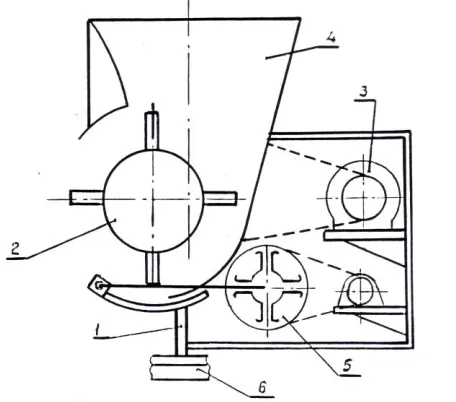
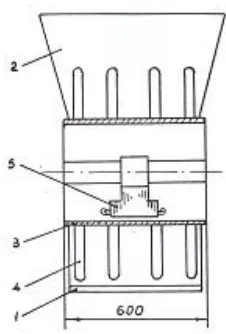
Fig.5: Detailed drawing of the novel module builder based on a gearless drive using induction motor with arc-shaped stator.
A. Technical Specifications:
In order to support the use of a gearless drive based on motors with segment stator in real applications, a comparison of the technical specifications for electro-mechanical, shown in Figure 3, and novel cotton module builder shown in Figure 5 is provided in Table 1.
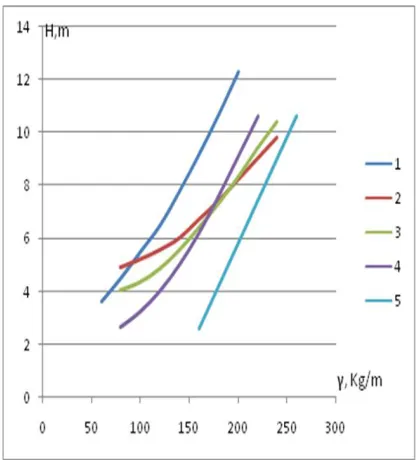
These data demonstrate the optimality of using the induction motors with a segment stator for such applications. Electromechanical cotton processing units, including their drive, have a weight of around 400 kg, whereas our modified thrower based on gearless drive using the induction motors with a segment stator has a weight of 183 kg. This means that weight is reduced by 55%, which is very important, taking into account that this module builder has to be mobile. Figure 6 shows the height of the module builders for different drum speeds; line 1 indicates the minimum drum speed which results in the maximum possible height, whereas line 5 indicates the maximum drum speed which results in minimum possible height for the cotton module.
Table 1
Technical specifications of electromechanical and novel module builders
General Specifications Commercial module builder
Novel module builder
Productivity ( by the cotton material) , T/h
35-40 35-40
Maximum throwing distance, m 16-18 18-20
Diameter of the rotating cylinder with the vertical cleaning rods, mm
800 800
Length of the rotating cylinder, mm 600 600
The height of vertical cleaning rods, mm
194 194
Pitch between vertical cleaning rods, mm
70 70
Number of groups(rows) of vertical cleaning rods, mm
4 4
Speed of the rotating speed, rev/sec 6.6 7.5
Diameter of the receiving end, mm 900 900
IM power, kW 5 4
Motor speed, rev/min 1500 500
System efficiency 0.61 0.54
Power factor 0.78 0.62
Overall length, mm 1200 1200
Overall width, mm 800 800
Overall height, mm 1200 1200
[image:4.612.316.577.163.562.2]International Journal of Emerging Technology and Advanced Engineering
Website: www.ijetae.com (ISSN 2250-2459,ISO 9001:2008 Certified Journal, Volume 3, Issue 9, September 2013)
Fig.6: Possible heights of the modules for different drum speeds
VI. FEASIBILTY OF USING THE GEARLESS DRIVE FOR THE NOVEL MODULE BUILDER
[image:5.612.64.274.133.364.2]The analysis of the results improved the feasibility of using the proposed system for a cotton module builder. From Table1, it is shown that the input power for the experimental model has been reduced by 20%, while the other parameters (rotational speed and developed torque) are kept constant. Table 2, shows the weights of individual elements used for the electromechanical cotton module builder.
Table 2
Weights of individual elements used for the electromechanical module builder
Element Weight, kg
External frame 130
Induction motor with squirrel cage rotor, 5 kW 125
Gearbox 80
Belts 2
Fixing base and elements 63
Motor for controlling the throwing direction, 0.6 kW 24
Total 400
For the improved gearless drive, using induction motor with segment stator inside the cotton module builder, the external frame is kept as it is, whereas all other parts and elements (weigh 270 kg) were replaced by an internal stator segment which weighs 21 kg only, and fixing elements with the drum axes which weigh 32 kg. As a result the total weight has been reduced from 400 kg to 183 kg.
A. Comparison of Arc-Shaped Stator Motors with Conventional Motors
To satisfy the condition of the gearless drive, other motors equipped with speed control systems can be used. But, in this case, these motors:
- Should be manufactured with a huge number of poles, which is practically very difficult, especially for small motors.
- Should be equipped with a voltage regulator. Using this method of speed control is not preferable because:
The maximum torque produced will be rapidly reduced (T α V2).
Nominal slip will be, so much, increased. Consequently the efficiency will be reduced.
Operating temperature will be increased which require using an intensive cooling system.
- Should be equipped with electronic inverters, this have the following disadvantages:
Complicate the system construction
Additional cost for the inverter.
Higher harmonics will be injected in the system, and consequently the power quality is affected. On the other hand, using any other motor will not reduce the total weight of the mechanism, which is of paramount importance in some real applications, such as cotton module builder.
B. Advantages of the New Module Builder
Compared to hydraulic module builder, the new
proposed one has all advantages listed for
electromechanical module builder such as Compactness, flexibility, low maintenance, low construction and operating cost, versatility. Compared to electromechanical module builder the new one has less weight by 55%, consumes less power by 20%, less construction and maintenance costs, more reliability and safety.
VII. CONCLUSION
International Journal of Emerging Technology and Advanced Engineering
Website: www.ijetae.com (ISSN 2250-2459,ISO 9001:2008 Certified Journal, Volume 3, Issue 9, September 2013)
The cotton industry continues to look toward the future at further improving their product while providing employment opportunities for millions of people in a variety of related areas.
The invention of cotton module builder has literally changed the face of the cotton landscape, resulting in a chain of improvements and cost savings throughout the entire farm-to-warehouse process. In this paper, a new module builder was presented and tested. This module builder is based on a gearless drive using induction motor with segment stator. A comparison of performance and
technical specifications of commercial and
electromechanical module builders with newly proposed one is presented. A feasibility analysis of replacement the existing cotton module builders by the proposed one based on gearless drive is done. Less energy consumption, low cost, compactness, lightweight, flexibility and easiness of operation were demonstrated as just a few of the many features of the novel module builder.
REFERENCES
[1] Web Site: www.cottonsjourney.com
[2] Britton, Karen G., Bale O’Cotton, College Station: Texas A&M University Press, 1992.
[3] http://www.fao.org/docrep/006/Y4344E/y4344e0c.htm [4] http://www.isis.org.uk/Picking_Cotton_Carefully.php [5] Agriculture in The Classroom-Web Site: www.agclassroom.org [6] http://www.monsanto.co.uk/news/ukshowlib.phtml?uid=10603. [7] Haney, Robert L. Marking Ten Decades of Research. College
Station: Texas