IJPSR (2017), Volume 8, Issue 7 (Research Article)
Received on 06 December, 2016; received in revised form, 10 June, 2017; accepted, 21 June, 2017; published 01 July, 2017
FORMULATION AND EVALUATION OF DILTIAZEM HCl FAST DISSOLVING TABLETS USING DIFFERENT CO-PROCESSED EXCIPIENTS BY DIRECT COMPRESSION METHOD M. Sunitha Reddy*, Niveditha Kore and S. Muhammad Fazal Ul Haq
Centre for Pharmaceutical Sciences, Institute of Science and Technology, Jawaharlal Nehru Technological University, Kukatpally, Hyderabad - 500085, Telangana, India.
ABSTRACT: The aim of present work was to prepare Diltiazem HCl Fast Dissolving tablets by Direct compression method because of their convenience in administration and suitability for patients having
dysphagia using Co-processed excipients-Disintequik MCC25,
Disintequik MCC, Lubritose MCC, Lubritose SD, Lubritose AN, NF Fast flowLactose Monohydrate modified spray dried. The Prepared powdered blend and tablets were evaluated for Pre compression parameters such as Angle of repose, Bulk density, Tapped density, Compressibility index, Hausners ratio and Post compression parameters such as weight variation, thickness, hardness, disintegration time, content uniformity, in-vitro dissolution studies and stability studies. All the parameters were within the limits. IR and DSC study showed that drug and excipients were compatible with each other. Twelve formulations were prepared by direct compression method in which F10 was the best formulation using Disintequik MCC25 at a concentration of 4% as it was disintegrated with in 30 sec and drug release was 99.88% over a period of 15 min. The wetting time and disintegration time decreases considerably with the increase in co-processed excipients.
INTRODUCTION: US FDA defined fast dissolving
or disintegrating tablets (FDT) as “A solid dosage form containing medicinal substances, which disintegrates rapidly, usually within a matter of seconds, when placed upon the tongue”. Fast disintegrating tablets (FDT) are also known as „Fast Dissolving‟, „Mouth Dissolving‟, „Rapid
Dissolving‟, „Quick Dissolving‟, „Orally
Disintegrating‟, „Rapid melt‟, Oro Dispersible‟, „Porous Tablets‟.
QUICK RESPONSE CODE
DOI:
10.13040/IJPSR.0975-8232.8(7).2853-61
Article can be accessed online on:
www.ijpsr.com
DOI link: http://dx.doi.org/10.13040/IJPSR.0975-8232.8 (7).2853-61
Salient Features of Fast Dissolving Tablets: Ease of administration to patients who refuse to
swallow tablets such as pediatric, geriatric and psychiatric patients
No need of water to swallow the dosage form, which is highly convenient feature for patients who are travelling and do not have access to water.
Rapid dissolution and absorption of drug, which will produce quick onset of action. Some drugs are absorbed from the mouth,
pharynx and oesophagus as the saliva passes down into the stomach; in such cases bioavailability of drug is increased.
Pre-gastric absorption can result in improved bioavailability.
Keywords:
Fast dissolving tablets, Diltiazem HCl, Co-processed excipients, Direct compression method Correspondence to Author: Dr. M. Sunitha Reddy
Head/Assistant Professor,
Centre for Pharmaceutical Institute of Science and Technology, Jawaharlal Nehru Technological University, Kukatpally, Hyderabad - 500085, Telangana, India.
MATERIAL AND METHODS:
Equipment: Bruker Alpha FTIR Spectrophotometer;
Shimadzu U.V Spectrophotometer; Tablet
Compression machine, USP type II Dissolution apparatus; Mansanto hardness tester, vernier calipers, Sonicator, Roche friabilator.
Chemicals and Reagents: Diltiazem Hydrochloride,
pH 6.8 Phosphate buffer, Disintequik MCC25, Disintequik MCC, Lubritose MCC, Lubritose SD, Lubritose AN, NF Fast flo lactose monohydrate modified spray dried, Magnesium stearate as lubricant, Mannitol was used as diluent, Talc as a glidant.
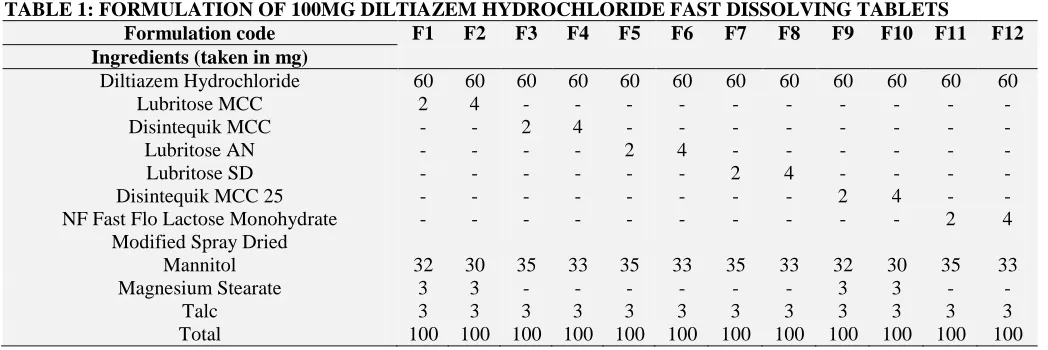
[image:2.612.46.570.274.449.2]Preparation of Diltiazem HCl fast dissolving tablets: Diltiazem HCl Fast dissolving tablets are prepared for F1 to F12 batches by using different concentration (mentioned in Table 1) of co-processed excipients like Disintequik MCC 25, Disintequik MCC, Lactose monohydrate NF spray dried, Lubritose anhydrous AN, Lubritose MCC, Lubritose SD by direct compression method. Keeping total weight (100mg) of tablet constant in all the formulations. All the ingredients are passed through sieve no. 40 to ensure better mixing. All ingredients were mixed in motar and pestle then magnesium stearate and talc were added. The resulting mixture is compressed into tablet and then tablets were evaluated.
TABLE 1: FORMULATION OF 100MG DILTIAZEM HYDROCHLORIDE FAST DISSOLVING TABLETS
Formulation code F1 F2 F3 F4 F5 F6 F7 F8 F9 F10 F11 F12 Ingredients (taken in mg)
Diltiazem Hydrochloride 60 60 60 60 60 60 60 60 60 60 60 60
Lubritose MCC 2 4 - - - -
Disintequik MCC - - 2 4 - - - -
Lubritose AN - - - - 2 4 - - - -
Lubritose SD - - - 2 4 - - - -
Disintequik MCC 25 - - - 2 4 - -
NF Fast Flo Lactose Monohydrate Modified Spray Dried
- - - 2 4
Mannitol 32 30 35 33 35 33 35 33 32 30 35 33
Magnesium Stearate 3 3 - - - 3 3 - -
Talc 3 3 3 3 3 3 3 3 3 3 3 3
Total 100 100 100 100 100 100 100 100 100 100 100 100
Analytical methods:
Preparation of pH 6.8 phosphate buffer: Dissolve 28.80 g of disodium hydrogen phosphate and 11.45 g of potassium dihydrogen phosphate in sufficient water to produce 1000 ml.
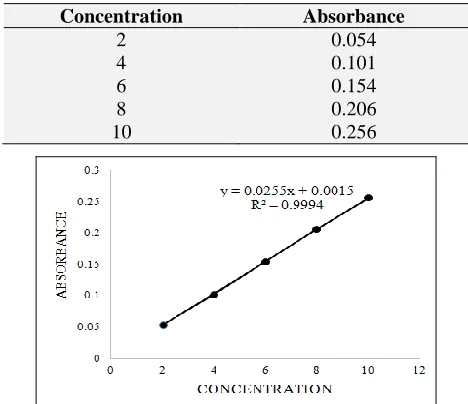
Preparation of Calibration Curve of Diltiazem HCl in pH 6.8 phosphate buffer: 100mg of Diltiazem HCl was weighed accurately and dissolved in pH 6.8 phosphate buffer, which resulted in 1000 µg/ml. Then from the stock
solution 100 µg/ml solution was prepared from this 2, 4, 6, 8, 10 µg/ml were prepared.
The absorbance of the above dilutions were measured using UV-spectrophotometer at 236nm using 6.8 pH phosphate buffer as blank. The conc. of corresponding absorbance was given below table. standard curve was plotted by taking concentration on x-axis and absorbance on y-axis.
Preformulation studies:
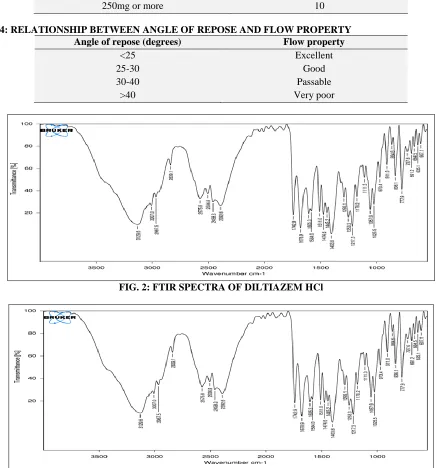
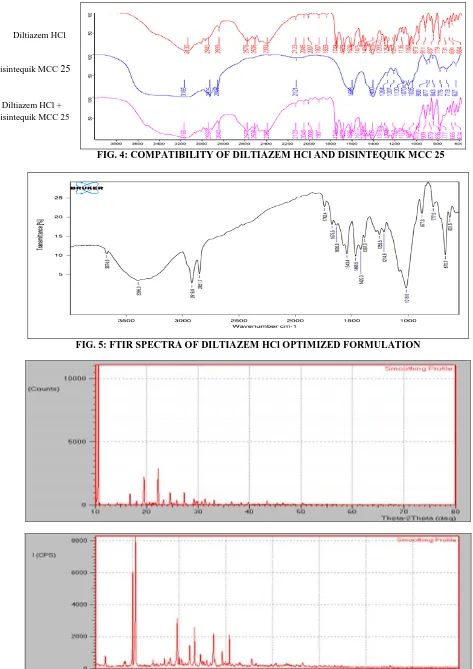
Drug-Excipient Compatibility study (FTIR): The study was designed to determine compatibility of drug with different co-processed excipients. Completely dried KBR and samples (drug and excipients) taken in 9:1 ratio and grinded for proper mixing. Sample was filled into the holes of stainless steel disk and sandwiched in the hydraulic press until pressure reaches 20,000 psi. After few seconds, pressure was released and pellet was collected. Then the pellet was inserted into the sample holder and run for the spectrum. FTIR spectra of pure drug and excipients separately done to determine the compatibility. FTIR spectra of drug and excipients were obtained on alpha-Bruker FTIR (Tokyo, Japan). The spectra were scanned over the wave number range of4000-400 cm-1.
primarily used for phase identification of a crystalline material and can provide information on unit cell dimensions. The analyzed material is finely ground, homogenized, and average bulk composition is determined.
Differential Scanning Calorimetry: DSC is a thermoanalytical technique carried to know compatability between drug and excipient.
In which the difference in the amount of heat required to increase the temperature of a sample and reference is measured as a function of temperature. All the samples were run at a scanning rate of 10 ºC/min from 50-350 ºC.
Evaluation of mixed powder blend of drug and excipients:
Angle of Repose (θ): Angle of repose was determined by the fixed funnel and free standing cone method. This is the maximum angle possible between the surface of a pile of powder and the horizontal plane.
Formula: Tan θ = (h/r) θ = tan-1 (h/r)
Where ‟ h‟ is the height of the cone „r‟ is the radius of the cone.
Different ranges of flowability in terms of angle of repose was shown in Table 4.
Bulk density (g/ml): The bulk density of Precompressional blend was determined by three tap method. Weighed quantity of Precompressional blend was transferred into 100ml graduated cylinder and the cylinder was dropped onto a hard wooden surface 3times from a height of 2.5cm at an interval of 2sec.
Bulk density = weight of the sample/bulk volume of the sample
Tapped density (g/ml): The weighed quantity of dry Precompressional blend was taken in a graduated cylinder and the cylinder was allowed to tap for 100 times onto a hard wooden surface from a height of 2.5cm.
Tapped density = weight of the sample/Tapped volume of the sample
Carr’s Index or Compressibility: It is directly related to flow rate, cohesiveness and particle size.
Carr‟s index = Tapped density-Bulk density/ Tapped density
Hausner’s Ratio: It is the ratio of tapped density to bulk density and was related to interparticle friction.
Hausner‟s ratio = Tapped density/Bulk density.
Porosity (%): Ratio of total volume of void spaces to the bulk volume of material is referred to as porosity. It was calculated by using the formula:
Percentage porosity = 100 [1 – Vt/ Vb]
Where, Vt = true volume of powder Vb = bulk volume of powder
Evaluation of Tablets:
Weight variation test: To find out weight variation, 20 tablets of each type of formulation were weighed individually using an electronic balance, average weight was calculated and individual tablet weight was then compared with average value to find the deviation in weight.
Thickness: The thickness of the tablets was determined using a Micrometer screw gauge. Five tablets from each type of formulation were used and average values were calculated. It is expressed in mm.
Hardness: It was determined using the Monsanto hardness tester. The tablet was held along its oblong axis in between the two jaws of the tester. At this point, reading should be zero kg/cm2. Then constant force was applied by rotating the knob until the tablet fractured.
Friability: Friability is the measure of tablet strength. Roche Friabilator was used for testing the friability. A sample of preweighed 6 tablets was placed in Roche friabilator which was then operated for 100 revolutions i.e. 4 minutes. The tablets were then dusted and reweighed. A loss of less than 1% in weight is generally considered acceptable.
for formation of pink color was measured as wetting time. The study was performed in triplicate.
Drug Content Uniformity: Five tablets were weighed and crushed with pestle in a motar. The fine powder was weighed to get a100mg (equivalent to 60mg Diltiazem HCl) and transferred to 250 ml conical flask containing 100 ml of 6.8 pH phosphate buffer stirred for 45 min in an sonicator then the solution was filtered and it was analyzed by UV spectrophotometrically at 236 nm and drug content was determined.
Disintegration Time: Disintegration time is the time required for a tablet to break into granules of specified size (or smaller), under carefully specified test conditions. Six tablets were placed in each of the tubes and run the apparatus using phosphate buffer 6.8 pH which is maintained at 37±2ºC. The time required for complete passage of tablet fragments through the sieve #10 was considered as the disintegration time of the tablet.
In-vitro dissolution Studies: The release rate of
Diltiazem HCl tablets was determined using USP Dissolution type II testing apparatus (paddle type). One tablet was placed in each of the six dissolution flasks containing 900 ml of dissolution medium previously maintained at 37 ± 0.5ºC and at 50 rpm. After completion of each specified time interval, aliquots of 5ml was withdrawn from the dissolution media and the samples were replaced with fresh dissolution medium. After filtration and samples are diluted and absorbance was noted at 236 nm using UV visible spectrophotometer and percentage of drug release was calculated.
RESULTS AND DISCUSSSION:
UV Absorbance Maxima of Diltiazem HCl: Standard calibration curve obeyed Beer`s law in the concentration range of 2-10 µg/ml and the value of regression coefficient was found to be 0.99948 which showed a linear relationship between concentration and absorbance as shown in the Fig.1 FTIR Compatibility studies FTIR spectra of Diltiazem HCl alone and with Co-processed excipients Disintequik MCC25, Disintequik MCC, Monohydrate NF spray dried, Lubritose MCC, Lubritose SD, Lubritose AN, Magnesium Stearate,
Mannitol, Talc was done. Hence there was No Interaction between Diltazem HCl and Excipients.
XRD: The X- RAY diffraction studies of Diltiazem HCl show a characteristic sharp intensity peak at 2θ values of 10.1˚, 19˚, 22˚, which reflected the crystalline nature of drug. Both the formulations showed diffraction peaks at respective 2θ values of pure Diltiazem HCl although their relative intensities were reduced or there was a slight shift in their peaks, suggesting reduced degree of crystallinity of drug in Optimized formulation.
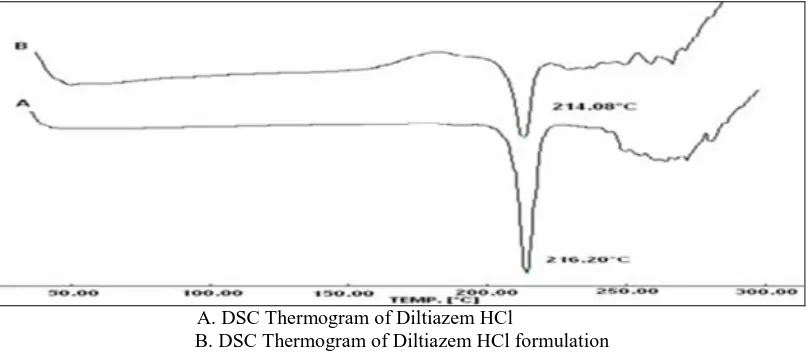
DSC: Melting point of Diltiazem HCl was found to be 216˚C and optimized formulation melting point was found to be 214˚C.
Concentration Absorbance
2 0.054
4 0.101
6 0.154
8 0.206
[image:4.612.321.555.280.482.2]10 0.256
FIG. 1:CONCENTRATION VS ABSORBANCE
Micromeritic Properties of Powder Blend: The powder mixtures of all the batches (F1-F12) were evaluated for Bulk density, Tapped density, Carr‟s index, Porosity, Hausners ratio, Angle of repose and showed in the Table 6. Bulk density ranged from 0.45 to 0.52g/ml, Tapped density ranged from 0.55 to 0.69 g/ml, Angle of repose ranged from 180 17‟ to 200 42‟, Hausners ratio ranged from 1.12 to 1.25 %. All these results indicated that the powder
mixture possess Good flow property and
compressibility index.
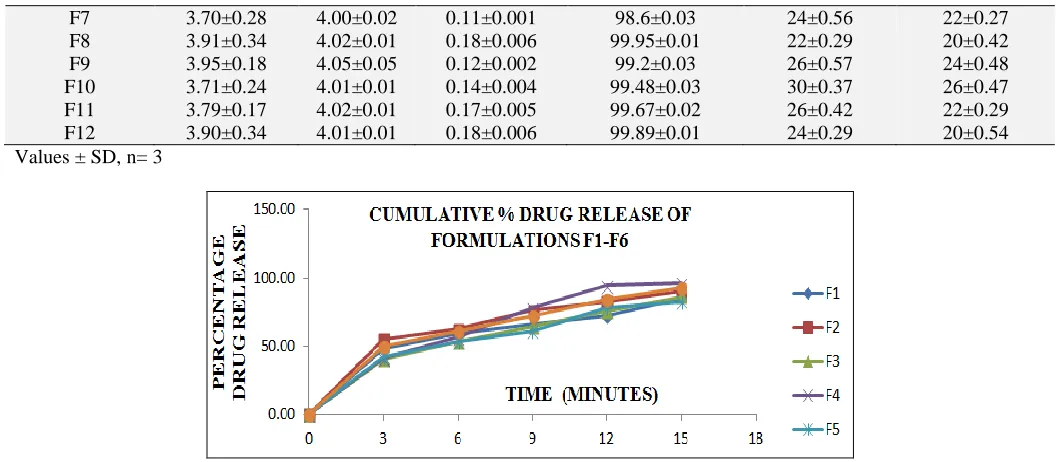
In vitro Drug Release Studies: In vitro dissolution
release and it is more suitable for Fast dissolving tablets by direct compression technique.
Stability studies: The results of stability was given in Table 5. After analysis it was found that there
was no substantial changes in all parameter of optimized batch F10. The results revealed the product is stable for the period of one month at 40ºC±2ºC/RH75±5%.
TABLE 2: STABILITY STUDIES OF OPTIMIZED FORMULATION
Study Storage Condition Duration
Long term 25±2oC,RH 60±5% 12 months
Intermediate 30±2oC, RH 65±5% 6 months
Accelerated temperature 40±2oC, RH 75±5% 6 months
TABLE 3: LIMITS FOR WEIGHT VARIATION ACC TO IP
Average Tablet Weight (mg) Percentage Deviation (%)
Up to 80 mg 5
> 80mg,<250 mg 7.5
[image:5.612.85.522.258.726.2]250mg or more 10
TABLE 4: RELATIONSHIP BETWEEN ANGLE OF REPOSE AND FLOW PROPERTY Angle of repose (degrees) Flow property
<25 Excellent
25-30 Good
30-40 Passable
>40 Very poor
FIG. 2: FTIR SPECTRA OF DILTIAZEM HCl
[image:6.612.58.531.52.721.2]
FIG. 4: COMPATIBILITY OF DILTIAZEM HCl AND DISINTEQUIK MCC 25
FIG. 5: FTIR SPECTRA OF DILTIAZEM HCl OPTIMIZED FORMULATION
FIG. 6: X-RAY DIFFRACTION PATTERN OF DILTIAZEM HCl AND DILTIAZEM HCl FORMULATION
Diltiazem HCl
Disintequik MCC 25
A. DSC Thermogram of Diltiazem HCl
[image:7.612.105.510.54.231.2]B. DSC Thermogram of Diltiazem HCl formulation
FIG. 7: DSC THERMOGRAM OF DILTIAZEM HCl AND DILTIAZEM HCl FORMULATION
TABLE 5: CUMULATIVE PERCENTAGE DRUG RELEASE OF DILTIAZEM HYDROCHLORIDE F1 TO F12
[image:7.612.45.570.262.419.2]Values ± SD, n = 3
TABLE 6: EVALUATION PARAMETERS OF PRECOMPRESSIONAL POWDER BLEND S.no Formulation
Code Bulk Density (Gm/Ml) Tapped Density (G/Ml) Compressibilty Index (%) Hausner’s Ratio Angle of Repose (°)
1 F1 0.50±0.041 0.63±0.028 20.00±0.65 1.25±0.42 18.17±0.52
2 F2 0.52±0.025 0.55±0.019 15.45±0.54 1.05±0.32 19.24±0.65
3 F3 0.45±0.027 0.62±0.032 18.18±0.43 1.22±0.41 20.42±0.61
4 F4 0.50±0.032 0.62±0.029 19.35±0.62 1.24±0.27 19.17±0.64
5 F5 0.46±0.026 0.55±0.028 16.36±0.8 1.19±0.36 20.24±0.66
6 F6 0.56±0.017 0.69±0.036 18.84±0.45 1.23±0.32 19.18±0.69
7 F7 0.53±0.028 0.59±0.034 12.02±0.32 1.11±0.36 18.24±0.58
8 F8 0.52±0.031 0.62±0.028 16.12±0.43 1.19±0.32 22.26±0.76
9 F9 0.50±0.028 0.62±0.037 19.35±0.65 1.25±0.29 20.34±0.61
10 F10 0.55±0.026 0.55±0.031 11.29±0.21 1.13±0.21 18.36±0.55
11 F11 0.45±0.019 0.56±0.035 19.64±0.62 1.12±0.34 20.36±0.65
12 F12 0.50±0.025 0.60±0.026 16.66±0.59 1.20±0.26 19.85±0.63
[image:7.612.43.571.442.616.2]Values ± SD, n = 3
TABLE 7: EVALUATION PARAMETERS OF FORMULATED TABLETS Formulation
code
Hardness (Kg/cm2)
Thickness (mm) Friability (%) Content Uniformity (%) Disintegration time(sec) Wetting time (sec) Parameters
F1 3.95±0.18 4.01±0.01 0.12±0.002 99.92±0.02 30±0.52 26 ±0.45
F2 3.91±0.34 4.00±0.02 0.15±0.003 98.3±0.04 28±0.46 24±0.28
F3 3.70±0.28 4.01±0.01 0.14±0.004 99.90±0.01 24±0.42 20±0.42
F4 3.95±0.18 4.05±0.05 0.12±0.002 98.5±0.03 20±0.19 16±0.36
F5 3.71±0.24 4.05±0.05 0.10±0.001 98.9±0.02 30±0.28 26±0.67
F6 3.79±0.17 4.01±0.01 0.14±0.004 99.93±0.02 25±0.38 23±0.29 Time
(min)
Cumulative percentage drug release (%)
F1 F2 F3 F4 F5 F6 F7 F8 F9 F10 F11 F12
0 0 0 0 0 0 0 0 0 0 0 0 0
3 48.36± 0.12 55.42± 0.167 40.85± 0.13 41.25± 0.132 42.54± 0.145 50.23± 0.143 46.57± 0.103 51.52± 0.154 56.42± 0.165 41.66± 0.132 60.21± 0.123 66.26± 0.143 6 59.54±
0.166 62.57± 0.145 53.85± 0.143 56.54± 0.154 53.65± 0.142 61.25± 0.148 55.61± 0.99 60.52± 0.153 61.53± 0.17 68.91± 0.143 68.90± 0.135 70.19± 0.138 9 66.65±
0.112 76.24± 0.160 64.52± 0.124 78.18± 0.179 61.54± 0.138 72.40± 0.153 63.24± 0.108 68.70± 0.143 70.82± 0.143 85.48± 0.154 75.17± 0.165 82.83± 0.167 12 72.54±
0.151 82.76± 0.165 75.82± 0.18 94.45± 0.124 78.25± 0.179 84.50± 0.165 79.25± 0.198 74.50± 0.117 84.90± 0.132 96.45± 0.140 73.58± 0.122 88.65± 0.976 15 85.56±
F7 3.70±0.28 4.00±0.02 0.11±0.001 98.6±0.03 24±0.56 22±0.27 F8 3.91±0.34 4.02±0.01 0.18±0.006 99.95±0.01 22±0.29 20±0.42
F9 3.95±0.18 4.05±0.05 0.12±0.002 99.2±0.03 26±0.57 24±0.48
F10 3.71±0.24 4.01±0.01 0.14±0.004 99.48±0.03 30±0.37 26±0.47 F11 3.79±0.17 4.02±0.01 0.17±0.005 99.67±0.02 26±0.42 22±0.29 F12 3.90±0.34 4.01±0.01 0.18±0.006 99.89±0.01 24±0.29 20±0.54 Values ± SD, n= 3
FIG. 8: CUMULATIVE PERCENTAGE DRUG RELEASE PROFILES OF DILTIAZEM HCl FAST DISSOLVING TABLET FORMULATIONS (F1-F6)
FIG. 9: CUMULATIVE PERCENTAGE DRUG RELEASE PROFILES OF DILTIAZEM HCl FAST DISSOLVING TABLETS FORMULATIONS (F7-F12)
CONCLUSION: Diltiazem HCl Fast Dissolving tablets were prepared by direct compression method using Disintequik MCC25, Disintequik MCC, Lactose monohydrate NF spray dried,
Lubritose anhydrous AN, Lubritose MCC,
Lubritose SD. The tablets disintegrated rapidly and had acceptable hardness and friability. In-vitro drug release from the tablets shows significantly improved drug dissolution. Hence it could be concluded that the Co-processed excipient based Diltiazem HCl Fast Dissolving tablets would be quite effective in providing quick onset of action without need for water for swallowing or administration.
ACKNOWLEDGEMENT: Sincere Thanks to Dr. M. Sunitha Reddy for her valuable guidance throughout the tenure of the project and It is my privilege to express my gratitude to Centre for Pharmaceutical Sciences, Institute of Science and
Technology, Jawaharlal Nehru Technological University, for providing appropriate facilities to carry on the above research.
REFERENCES:
1. Liberman HA, Lachmann L and Shwartz JB (editors), Pharmaceutical Dosage Forms: Tablets, 4th Edition; 449-458.
2. Drug Bank [Online]. Available from: URL: http:// www.drugbank.ca/drugs/DB00343
3. Kerry pharmaceuticals: Excipients URL: http://www. Shef fieldbioscience.com/
4. Sharma Deepak et al., Fast disintegrating tablets: a new era in novel drug delivery system and new market opportunities, Journal of Drug Delivery & Therapeutics; 2012; 2(3): 74-86.
5. A chapter in USP30-NF25: Dissolution 711, pg.no 277 6. Alay Prashanth Kumar: Formulation and evaluation of or
dispersible tablets of Lamivudine, International Journal of Universal Pharmacy and Bio Science, 2014; 3(1):30-44. 7. Mahadevappa V. Rampure, Basawaraj Bendegumble. S.
Appala Raju, Raghunandan D. and P.V. Swamy:
Formulation Design of Rapidly Disintegrating
[image:8.612.41.572.52.283.2]International Journal of Pharma and BioScience.2010; 1(4): 62-8.
8. Abed KK, Hussein AA, Ghareeb MM, A Abdul Rasool AA. Formulation and optimization of Orodispersible Tablets of Diazepam, 2010; 11 (1): 356-61.
9. Jacob S, Shirwaikar A.A, Joseph A, K.K. Srinivasan “
Novel Co-processed excipients of Mannitol and
Microcrystalline cellulose for preparing Fast Dissolving Tablets of Glipizide”. Indian Journal of Pharmaceutical sciences. 2007; 69(5): 633-9.
10. Kameswararao Sankula, Geethika Priscilla M, Formulation and Dissolution Study of Diltiazem hydrochloride Immediate Release Tablets: The Pharma Innovation Journal 2014; 3(5): 05-10
11. Mehul Dekivadia, Avinash Gudigennavar, Chandrashekar Patil, Bhaskar Umarj; Development & optimization of fast Dissolving tablet of levocetirizine HCl: International journal of drug development and research 2012.
All © 2013 are reserved by International Journal of Pharmaceutical Sciences and Research. This Journal licensed under a Creative Commons Attribution-NonCommercial-ShareAlike 3.0 Unported License.
This article can be downloaded to ANDROID OS based mobile. Scan QR Code using Code/Bar Scanner from your mobile. (Scanners are available on Google Playstore)
How to cite this article: