2718
MULTIPOINT RELAYS SELECTION THROUGH STABILITY
OF ESTIMATED SPATIAL RELATION IN MOBILE AD HOC
NETWORKS
1AYOUB ABDELLAOUI, 2JAMAL ELMHAMDI, 3 HALIM BERRADI
1,2Research Laboratory in Electrical Engineering, Team ERIT, Mohammed V University, ENSET, Morocco
3Laboratory Computer & Telecommunication, Team M3S, Mohammed V University, ENSIAS, Morocco
E-mail: 1[email protected], 2[email protected], 3[email protected]
ABSTRACT
In Mobile Ad hoc Networks (MANETs), the mobility concept is an essential element of network performances. MANETs has a scalability constraint in terms of reachability and stability. Optimized Link State Routing (OLSR) protocol is a proactive routing protocol for wireless mobile ad hoc networks and the key idea behind it is to improve Multi-Point Relays (MPRs) selection algorithm. This paper proposed a new mechanism based on, a spatial mobility which speed, acceleration and direction Prediction-based Localization are included; named, Stability of Estimated Spatial Relation MPR. Furthermore, this mobility value will be exchanged between nodes using HELLO message and it will be used as a condition when a node selects its MPRs set. In addition, simulation results by Network Simulator 3 (NS3) have revealed that the improved algorithm could improve network performances in terms of throughput, delay and lost packets. Similarly, the proposed algorithm can be used as a functional mobility mechanism to improve MANETs.
Keywords: MANETs, OLSR, MPRs, Estimated Spatial Relation, Stability, NS3 Simulator
1. INTRODUCTION
Nodes in Mobile Ad hoc Networks (MANETs) being self-organizing and self-administering, this allows communications without any preexisting infrastructure. Moreover, each node can move with different speed and direction which may not be constant and may change rapidly and unpredictably over time. Hence, MANETs can be considered as an infrastructure-less network, where one node can relay packets to another node without using any base stations. In MANETs, each node has a transmission range within which signals emitted are strong enough to enable other nodes to extract meaningful information. Two nodes can communicate directly, when they happen to be within the transmission range of each other. If not, they use a number of links involving one or more intermediate nodes to communicate with each other. This mode of communication is called multi-hop communication and this is the reason why MANETs are called as multi-hop wireless networks. MANETs are highly suitable for uses related to special outdoor events, communications in regions with no wireless infrastructure, emergencies or natural disasters and military
operations. Therefore, routing is one of the key problems, since individual devices in MANETs are free to move in any direction and frequently devices links changes occur, due to their highly dynamic and distributed nature. Many routing protocols have been proposed for MANETs over the recent years and they can be categorized into three different groups: proactive, reactive and hybrid.
In proactive routing protocols such as Destination-Sequenced Distance-Vector (DSDV) [1] and Optimized Link State Routing Protocol (OLSR) [2], routes to all the destination or parts of the network are determined at the start up and maintained by using a periodic route update process. In reactive protocols such as Ad hoc On Demand Distance Vector (AODV) [3] and Dynamic Source Routing (DSR) [4], routes are determined when they are required by the source using a route discovery process. Hybrid routing protocols combine the basic properties of the first two classes of protocols into one.
2719 [5],[6]. However, MANETs consist generally of mobile devices which makes routing more complicated as it must be performed in a mobility-adaptive and real time. Having stable nodes in MANETs makes dynamic topology appear less dynamic and large networks seem smaller.
Definitely, minimizing number of hops does not guarantee the quality of the selected links. Therefore, several strategies have been proposed to enhance the stability, routing performance, scalability, reachability in OLSR. While some of these strategies tried to offer the greatest paths in relation of a selected metric as distance and signal power, etc. or a combination of metrics like speed and angle of movement of nodes, other methods focus on reservation of resources.
Mobility is considered as an essential phenomenon of MANETs and so, discussing mobility schemes by assuming low mobility becomes necessary [7]. Apart from this, it has been revealed that in various application scenarios, such as military operations [8] and rescue or searching operation, mobile nodes are moving in a similar design in a number of groups, it’s called, group mobility[9]. For this mobility, the node group membership does not change regularly and thus it is more efficient to elect that node to be part of our routing and to represent our mobility pattern in the network, to maintain a reasonably stable network even if that topology changes may still happen with group partitions. OLSR is one of the routing protocols that offers a better performance in the network by using MPRs nodes that can characterize the mobility pattern considering its functionality [10],[11] . This functionality can be make this node as a leader among several nodes or groups, that is the reason why our algorithm goes to capture the group mobility pattern and use this information to choose stable MPRs. To resolve the insufficiency in current MPRs Selection schemes, this paper proposes a new probability-based mechanism allowing a correct estimation of the node's stability. In fact, the author considers the mobility function variation as a key indicator of the nodes' mobility. It should be noted that the use of such metric tolerates to successfully select best MPRs in terms of stability and reachability.
In this paper, MPRs Selection algorithm was modified and the predicted position of nodes was added in Hello message with the predicted speed, the predicted acceleration, the predicted direction and the stability value. The motivation in our study is to modify and to improve MPRs selection in OLSR using a mechanism of mobility for more
stability, reachability and performance in the network [7],[12],[13]. Furthermore, the author attempts to make the network adaptable to variable environments (slow speed, medium speed, high speed) with a better performance in terms of delivered packets, delay and lost packets. The speed is no longer a limitation on the utility of the algorithm because it is a mobility technique based algorithm that can be adjusted to high speed environment. There have been many existing routing protocols for ad hoc networks emphasizing different implementation scenarios. However, the basic goals have always been to devise a routing protocol that minimizes control overhead, packet loss ratio, energy usage and maximizing the throughput [14],[15]. These goals are subject to different issues concerning the improvement of protocols, their adaptation with the environment and their perfection in this adapted environment.
[image:2.612.331.504.455.584.2]Note that the impact of these modifications on the network performance under Random Waypoint Model has been evaluated and that the performance of this work has been evaluated by NS-3 simulator. The rest of the paper is organized as follows. Previous works done in the area of OLSR and improving MPRs Selection are reviewed in Section 2, while Section 3 reveals and describes the approach adopted. The modified OLSR and its comparison with OLSR Standard is given in Section 4. Finally, Section 5 concludes this paper.
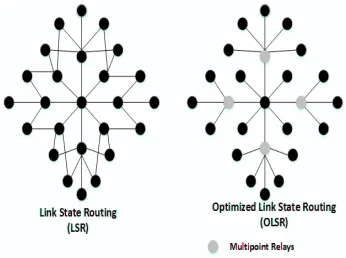
Figure 1: Multipoint Relay Representation
2. RELATED WORK
2720 in detail. Certainly, a revision of OLSR protocol, especially MPRs selection algorithm concluded that performance of paths can be improved by adopting additional conditions. Most of the literature relating to routing optimization in OLSR targets to find other efficient schemes rather than the default one. These protocols in MANETs are classified according to the distance and the mobility of nodes. Distance-based protocols attempts to reduce the distance between a node and its successor in the established path. In the other hand, protocols try to measure and to evaluate links between nodes of the network based on their mobility. This category presented two types of protocols: protocols based on speed, direction of movement, coordinates of nodes, etc. like parameters of nodes' mobility and the second category which is based on probabilistic methods or the degree of mobility.
Ticket- Based Probing with Stability Estimation (TBP-SE) proposed in [17] is an amelioration of Ticket-Based Probing protocol (TBP) [18]. This last, installed paths based on QoS requirements but without considering their stability and their durability. For this, authors of TBP-SE have added to this protocol another metric for stable and durable paths selection. This metric of link stability, based on the distance between nodes, is calculated by the information provided by the GPS or the signal quality. Nityananda Sarma and Sukumar Nandi have proposed a protocol based on the signal strength to estimate the stability of the link [19]. Authors considered the link stability with other QoS metrics to obtain a QoS routing protocol based on the link stability. The path that has the largest product of links' stability values compared to other paths will be elected as the most stable. In [20], authors proposed a protocol where the choice of the path is done based on two metrics: the residual energy and the mobility of nodes. For this, authors have proposed a formula to calculate the weighted sum of the two metrics. Authors calculated the residual energy metric as the remaining energy of a node divided by the rate of the traffic that passes through this node. The second metric is calculated as the difference of the number of the node's neighbors in time T and time T−δ (T) divided by the number of its neighbors in time T. This paper [21], offered a new method to assess the quality of the link in terms of link duration. For that, authors adopted a variable sized sampling window and proposed a probabilistic method, based on Markov chain, to estimate the link transition rates i.e. the probability that a link changes the state from the connected to unconnected state and vice versa. To confirm the effectiveness of this method,
authors proposed a routing method which adjusts its operating based on the estimated link stability.
2721 does not consider any information about the direction of nodes and assumes that all nodes move with the same maximum speed. The method proposed in [30] used a mobile robot to predict the position of nodes in an indoor environment. The method is based on a Probabilistic Graphical Model (PGM) that estimates the sensor node position using range-only measurements of the received signal strength indicator (RSSI). Even if the method was validated by real-world experiments attesting that the probabilistic model is suitable, but the method do not consider the mobility of nodes. Authors in [31] proposed a method called Speed and Direction Prediction-based Localization to predict the real speed and the direction of the mobile nodes to increase the accuracy of the localization estimations.
In routing protocols for mobile networks, the necessity of reachability and high stability is a problematic related to limits imposed by dynamic environment caused by mobile nodes. In this way, numerous studies were proposed, which taking into consideration the degree of mobility effect to systematically examine the impact of mobility on the performance of routing protocols for ad hoc networks.
Wei Fan and Yan Shi [32] extended the definition of the mobility scheme, Spatial Dependency (SD) and used it as the key in clustering algorithm design. The scheme captures the similarity of the mobility features between two nodes that are within their communication range. Authors used this scheme to extract characteristics of group mobility in VANETs. In the same context, Zhang in [33] extended and developed the concept of a very similar spatial mobility scheme (spatial dependence (SD)) called linear distance based spatial dependency (LDSD). The author employed SD on the design of a distributed group mobility adaptive clustering algorithm. On the other hand, in order to provide a better understanding of spatial dependence, authors in [34] proposed a more comprehensive mobility scheme, Degree of Node Proximity (DNP), based on the average distance among mobile nodes. Through simulation, authors compared their scheme with other well-known spatial scheme over an extensive set of mobility models. DNP is revealed able to capture spatial dependence in scenarios with different levels of node pause time.
The main limitation of some works is that they don’t consider spatial dependence (i.e., correlation) during periods of no node movement. While any two nodes i and j are pausing, their
correlation is always zero, what is not necessarily true, because this tow nodes might have paused (i.e., switched to velocity zero) just because there is some dependence between them. Other techniques as presented in [13] object to make them able to capture both movement and pause correlation among mobile nodes and to distinguish between temporal and timeless mobility models.
Diverse mobility models can be used to evaluate MANETs routing protocols performance. They can be ordered into two categories: entity and group mobility models. Detailed analysis of these models can be found in [35],[36]. This paper is based on Random Waypoints model [37],[38].
3. PROPOSED MECHANISM
In Mobile Ad hoc Networks, there is no completely stable nodes due to a randomly movement at any time. The mechanism of stability that the paper proposes is based on spatial dependency and statistics.
[image:4.612.317.517.410.737.2]3.1 Terminology and Introduction of the Mechanism
Table 1: Terminology of the Mechanism.
Terminology Description Unit of measure
D Linear
distance [m]
S Speed [m/s]
θ Node’s
direction [°]
V Node’s
velocity [m/s] A Acceleration [m/s2] PD Predicted
linear distance
[m]
PS Predicted speed
[m/s] Pθ Predicted
node’s direction
[°]
PV Predicted node’s velocity
[m/s]
PA Predicted acceleration
[m/s2]
∆T Time
interval
[s] t Current time [s] PRS(i,j) Predicted
2722
Relative acceleration PRD(i,j) Predicted
Relative direction PSD Predicted Spatial dependency PTSD Predicted
Total Spatial dependency ESRMPR Estimated
Spatial Relation SESRMPR Stability of
Estimetd Spatial Relation ∆xT,∆yT Increment of
linear distance xit0,yit0,xti,yti,xTi,yTi Coordinates
of node i at different
time
Network mobility is mainly characterized by the degree of dependence of movement between nodes. Schemes that measure this property are called spatial mobility as in [10]. For instance, Degree of Spatial Dependence (DSD) is a familiar mobility scheme, it measures the spatial correlation between the movement of users and it is based on the cosine correspondence between node’s velocities. However, in some case scenarios including battlefield communication, certain specific leader nodes influenced the movement pattern of a mobile node in its neighborhood. In our case, MPRs plays that role which leads the conclusion that there is a correlation of mobility between a numbers of nodes. The acceleration acts as a random variable and depends on velocity variation over the time. With the acceleration, the mechanism can signify more exact correlation between nodes to extract their mobility features. Depending on the interval of time, this mechanism is based on the calculation of the probability that a node will remain stable for a long time with its neighbors. The method, measures the stability value depending on the variance of ESRMPR of the node calculated in relation with its neighbors.
3.2 Description of the Proposed Mechanism
In probability theory, Bienaymé-Chebyshev inequality [39] guarantees that in any data sample or probability distributions whatever be the discrete variable X, the strictly positive
expectation E(X) and the variance V(X) we have the following inequality:
2
var( )
{| ( ) | } 1 X
P X E X
The probability {|P XE X( ) | } is always true if the variance tends to 0.
2
var( )
1 X
tends to 1 V X( ) tends to 0
This also reflects the probability that the value of the random variable X is always close or equal to its expectation (little change in the future):
Little change in the future
{| ( ) | }
P X E X By definition
2 2
( ) ( ) ( )
V X E X E X
And
( ) i
i
X E X
n
2 2
( ) i i
i i
X X
V X
n n
(1)Let MPR(S), N(S) and N2(S) as the MPR, N and N2 of the node S which are selected as the original OLSR protocol. The default algorithm of MPRs selection is used to keep the original algorithm of OLSR and after studying all steps in this algorithm, the place to add our mechanism without changing OLSR algorithm is founded.
Let’s considering a network of a mobile ad hoc network consisting of a set of nodes among which a dynamic establishment of links such as ܩ
(U, ܧ) is a direct graph, (U ) is the set nodes and ܧ is the set of links ݈ = (i, j), where the node j is within the transmission range of (i).
Author supposes that nodes follow a rectilinear movement where they have a constant speed, acceleration and direction during certain time periods (Δt). This reflects the reality where nodes as human beings keep their speed, acceleration and direction, at least, for a moment which allows nodes to predict positions. Therefore, the linear distance (D) can be calculated by:
2 2
2723 Where (t0) and (t) are times corresponding to the last position and to the current position respectively.
Accordingly, S can be calculated as:
D
S =
i Δt (3)
If the calculated speed is equal to zero, the node deduces that it is static during (Δt).
The value of the node’s direction (θ) can be defined as:
φ.sin((y (t )-y (t)) (x (t )-x (t) 0i 0 i i 0 i π
θ =i .sin((y (t )-y (t)) (x (t )-x (t)=0i 0 i i 0 i 2
(π-φ).sin((y (t )-y (t)) (x (t )-x (t) 0i 0 i i 0 i
(4)
(y (t )- y (t)i 0 i
w h ere tan φ = an d θi -π, π
(x (t )- x (t)i 0 i
Based on the velocity (V), the node computes the acceleration (A) as:
ΔVi A =i
t-t0 Where ΔPVi = (PV - PV )0 (5)
The velocity (V) is based on the speed (S) and the direction (θ).
After the speed, the acceleration and the direction, a node predicts its coordinates Xi (T) and Yi (T) as follows:
Xi(T)= S * cos(θ ) * A * ΔT + xi i i i
Y (T) = S * sin(θ ) * A * ΔT + yi i i i i
(t) (t) (6)
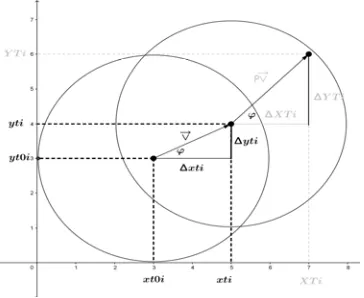
[image:6.612.105.287.555.704.2]Where xi(t) and yi(t) is the current position and (ΔT) is the time between current time and time of the previous estimation.
Figure 2: The Predicted Location Illustration
Let (∆XT) and (∆YT) be the increment of the predicted linear distance:
ΔXT = (xi i(t)- Xi(T))
ΔYT = (yi i(t)- Yi(T)) (7)
Therefore, PD can be calculated by:
P D =i Δ X Ti2 + Δ Y Ti2 (8)
Accordingly, PS can be calculated as:
D
PS = ΔTi (9)
If the calculated PS is equal to zero, the node deduces that it is static during the interval (ΔT).
The value of Pθ can be defined as:
φ.sin(ΔYT ) ΔXT 0i i π
Pθ =i .sin(ΔYT ) ΔXT =0i i 2
(π-φ).sin(ΔYT ) ΔXT 0i i
(10)
Δ Y Ti
w h e re ta n φ = a n d θi -π , π
Δ X Ti
Based on PV, the node can compute PA as:
PV is based on PS and Pθ.
ΔPV PA =
ΔTi
i Where ΔPVi = (PV (T) - PV (t))i i (11)
Based on this values, a node calculates its TPSD and its ESRMPR with the following steps:
First step: Node exchanges its mobility information, PS, PA and Pθ with its directly connected neighbors through Hello packets (Figure.3).
Reserved Htime Willingness Link
Code
Reserved Link Message Size
Predicted Speed
Predicted Acceleration
Predicted Direction
SESRMPR
Neighbor Interface Address Neighbor Interface Address
2724 Second step: A node calculates its PRS, PRA and PRD with its directly connected neighbors. For example, for nodes (i) and (j), PRS of these two nodes is defined as:
PS -PSi j
PRS(i, j,T) = log(1 - )
Smax (12)
Where Smax is the node’s maximum speed and PRD of these two nodes is the cosine of the angle between (i) and (j) at time (T) and it can be calculated as:
PRD(i, j,T)= cos(Pθ (T) - Pθ (T))i j (13)
PRA between two nodes (i) and (j) is given by:
PA -PAi j
PRA(i, j,T) = log(1 - )
Amax (14)
Where Amax is the node’s maximum acceleration.
Third step: PSD between node (i) and node (j) can be calculated as:
PSD(i, j,T)= PRS(i, j,T)* PRA(i, j,T)* PRD(i, j,T)
(15)
Fourth step: the node takes the summation of all PSD it has and calculates TPSD by the following equation:
n
TPSD(i,T) = PSD(i,j,T)
j=1 (16)
Where n is the direct neighbors of the node (i).
Fifth step: ESRMPR of a node is defined as:
1
ESRMPR(i,T) = TPSD(i,T)
n (17)
A higher ESRMPR value implies that node (i) has a larger neighbors set and it has a similar mobility pattern with its neighbors. The speed, the acceleration and the direction may be powerfully associated together. Accordingly, a node with a higher ESRMPR value is eligible to represent and reflect the mobility features of the group (neighbors connected).
Our mechanism based on Bienaymé– Chebyshev inequality will take values of ESRMPR in different intervals of time. The mechanism of stability proposed is as follows:
(
)
M P R
S E S R
V
X
i
(18)
According to (1) and (18)
2 2
Bi Bi MPR
i i
X X
SESR
n n
2 2
i i
MPR
i i
ESRMPR ESRMPR
SESR
n n
(19) [image:7.612.335.499.389.488.2]The node is stable if values of ESRMPR are very close to their expected value. In a specific case, if the mathematical variance of these ESRMPR values is equal to zero, it can say that the node is strictly stable with its neighbors and it can be selected as stable MPR.
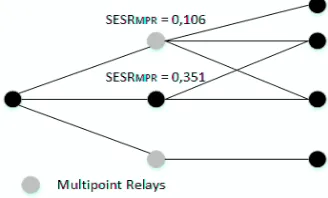
Figure 4: The modified MPRs Selection Representation
In context of previous works, our proposal helps MANETs to predict necessary information that can improve their functionalities considering the performance of the network. In many cases, due to high dynamic mobility, the link between the nodes should be variable, which affects path stability. This affects the stability of the entire network. Thus, providing a rapid response to changes in the network, may reduce the excess of network resources and may produce a significant improvement in the data transmission rate with decreasing the control overhead for the reconstruction of a routing path.
2725 error. Besides, based on this prediction, routes are reconfigured before they disconnect.
4. RESULTS AND ANALYSIS
4.1 Simulation Mobility Model
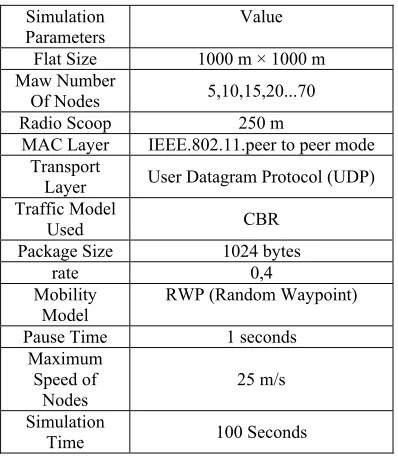
[image:8.612.315.521.109.246.2]Diverse studies has been done in modeling mobility for MANETs but Random Waypoint stills the greatest used. Our experiment is configured in a C++ environment which is created by ourselves under the NS3 simulator.
Table 2: Parameters of the simulation
Simulation Parameters
Value Flat Size 1000 m × 1000 m Maw Number
Of Nodes 5,10,15,20...70 Radio Scoop 250 m
MAC Layer IEEE.802.11.peer to peer mode Transport
Layer User Datagram Protocol (UDP) Traffic Model
Used CBR
Package Size 1024 bytes
rate 0,4
Mobility
Model RWP (Random Waypoint) Pause Time 1 seconds
Maximum Speed of
Nodes
25 m/s Simulation
Time 100 Seconds
4.2 Analysis Results
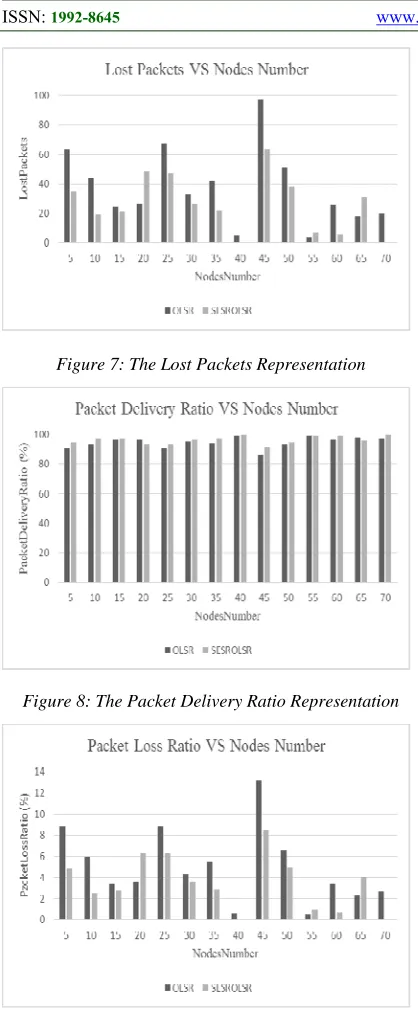
[image:8.612.96.295.229.457.2]It can observe the effect of node number on Delay, Jitter, Packet Delivery Ratio, Packet Loss Ratio, Throughput and Lost Packets. The comparison of both protocols is exposed in graphs below. It is observed that SESROLSR revealed improvement as compared with OLSR when the network contains more number of nodes. This confirms the effective use of SESROLSR for dense networks. The impact of node number on performances of the protocol can be observed in the comparison result. Compared to OLSR, SESROLSR minimizes the delay using the estimated spatial dependency and the predicted relativity between nodes. Generally, SESROLSR has a minimum delay and jitter among all (Figure5 and Figure6). Therefore, this mechanism minimizes the delay and the jitter, which attests that our version gives a change in transmission delays and particularly in environments that are categorized by more agitation nodes.
Figure 5: The Mean Delay Representation
Figure 6: The Mean Jitter Representation
[image:8.612.313.521.278.415.2]2726 Figure 7: The Lost Packets Representation
Figure 8: The Packet Delivery Ratio Representation
[image:9.612.89.298.70.582.2]Figure 9: The Packet Loss Ratio Representation
Figure 10: The Throughput Representation
5. CONCLUSION
[image:9.612.90.296.434.574.2]2727
REFRENCES:
[1] C. E. Perkins, and P. Bhagwat, “Highly dynamic Destination-Sequenced Distance-Vector routing (DSDV) for mobile
computers,” SIGCOMM Comput.
Commun. Rev., vol. 24, no. 4, pp. 234-244,
1994.
[2] Optimized Link State Routing Protocol (OLSR): RFC Editor, 2003.
[3] C. Perkins, E. Belding-Royer, and S. Das,
Ad hoc On-Demand Distance Vector (AODV) Routing: RFC Editor, 2003.
[4] D. B. Johnson, D. Maltz, and J. Broch,
DSR: The Dynamic Source Routing Protocol for Multi-Hop Wireless Ad Hoc Networks, 2002.
[5] A. Busson, N. Mitton, and É. Fleury, "Analysis of the Multi-Point Relay Selection in Olsr and Implications,"
Challenges in Ad Hoc Networking: Fourth Annual Mediterranean Ad Hoc Networking Workshop, June 21–24, 2005, Île de Porquerolles, France, K. Al Agha,
I. Guérin Lassous and G. Pujolle, eds., pp. 387-396, Boston, MA: Springer US, 2006. [6] J. Härri, C. Bonnet, and F. Filali, "OLSR
and MPR: Mutual Dependences and Performances," Challenges in Ad Hoc Networking: Fourth Annual Mediterranean Ad Hoc Networking Workshop, June 21–24, 2005, Île de Porquerolles, France, K. Al Agha, I.
Guérin Lassous and G. Pujolle, eds., pp. 67-71, Boston, MA: Springer US, 2006. [7] A. K. Abed, G. Oz, and I. Aybay,
“Influence of mobility models on the performance of data dissemination and routing in wireless mobile ad hoc networks,” Computers & Electrical Engineering, vol. 40, no. 2, pp. 319-329,
2//, 2014.
[8] T. Plesse, C. Adjih, P. Minet, A. Laouiti, A. Plakoo, M. Badel, P. Muhlethaler, P. Jacquet, and J. Lecomte, “OLSR performance measurement in a military mobile ad hoc network,” Ad Hoc Networks, vol. 3, no. 5, pp. 575-588,
2005/09/01/, 2005.
[9] X. Hong, M. Gerla, G. Pei, and C.-C. Chiang, “A group mobility model for ad hoc wireless networks,” in Proceedings of the 2nd ACM international workshop on Modeling, analysis and simulation of
wireless and mobile systems, Seattle, Washington, USA, 1999, pp. 53-60. [10] A. Boushaba, A. Benabbou, R. Benabbou,
A. Zahi, and M. Oumsis, “Multi-point relay selection strategies to reduce topology control traffic for OLSR protocol in MANETs,” Journal of Network and Computer Applications, vol. 53, pp.
91-102, 7//, 2015.
[11] T. Kitasuka, and S. Tagashira, "Finding more efficient multipoint relay set to reduce topology control traffic of OLSR." pp. 1-9.
[12] F. Bai, S. Narayanan, and A. Helmy, "IMPORTANT: a framework to systematically analyze the Impact of Mobility on Performance of Routing Protocols for Adhoc Networks." pp. 825-835 vol.2.
[13] E. R. Cavalcanti, and M. A. Spohn, "Enhancing OLSR protocol performance through improved detection of Spatial Dependence." pp. 1-6.
[14] H. Nishiyama, T. Ngo, N. Ansari, and N. Kato, “On Minimizing the Impact of Mobility on Topology Control in Mobile Ad Hoc Networks,” IEEE Transactions on Wireless Communications, vol. 11, no. 3,
pp. 1158-1166, 2012.
[15] N. Sarmah, Y. Yang, H. Sharif, and Y. Qian, "Performance analysis of MANET routing protocols by varying mobility, speed and network load." pp. 1-6.
[16] K. Qureshi, H. Abdullah, A. Mirza, and R.
Anwar, Geographical Forwarding
Methods in Vehicular Ad hoc Networks:
International Journal of Information and Network Security (IJINS), 2015.
[17] W. Zhu, M. Song, and S. Olariu, "Integrating Stability Estimation into Quality of Service Routing in Mobile Ad-hoc Networks." pp. 122-129.
[18] C. Shigang, and K. Nahrstedt, “Distributed quality-of-service routing in ad hoc networks,” IEEE Journal on Selected Areas in Communications, vol. 17, no. 8,
pp. 1488-1505, 1999.
[19] N. Sarma, and S. Nandi, “Route Stability Based QoS Routing in Mobile Ad Hoc
Networks,” Wireless Personal
Communications, vol. 54, no. 1, pp.
203-224, July 01, 2010.
2728 energy and stability for mobile Ad Hoc networks." pp. 329-332.
[21] Q. Song, Z. Ning, S. Wang, and A. Jamalipour, “Link stability estimation based on link connectivity changes in mobile ad-hoc networks,” Journal of Network and Computer Applications, vol.
35, no. 6, pp. 2051-2058, 2012/11/01/, 2012.
[22] S. Marwaha, D. Srinivasan, T. Chen Khong, and A. Vasilakos, "Evolutionary fuzzy multi-objective routing for wireless mobile ad hoc networks." pp. 1964-1971 Vol.2.
[23] W. Su, S.-J. Lee, and M. Gerla, “Mobility prediction and routing in ad hoc wireless networks,” International Journal of Network Management, vol. 11, no. 1, pp.
3-30, 2001.
[24] S. William, and M. Gerla, "IPv6 flow handoff in ad hoc wireless networks using mobility prediction." pp. 271-275 vol.1a. [25] J. Shengming, “An enhanced
prediction-based link availability estimation for
MANETs,” IEEE Transactions on
Communications, vol. 52, no. 2, pp.
183-186, 2004.
[26] N. Dashbyamba, C. Wu, S. Ohzahata, and T. Kato, "An improvement of OLSR using fuzzy logic based MPR selection." pp. 1-6. [27] Y. Bai, Y. Liu, and D. Yuan, "An Optimized Method for Minimum MPRs Selection Based on Node Density." pp. 1-4.
[28] A. Wang, and B. Zhu, Improving MPR Selection Algorithm in OLSR Protocol Based on Node Localization Technology,
2014.
[29] A. Baggio, and K. Langendoen, “Monte Carlo localization for mobile wireless sensor networks,” Ad Hoc Networks, vol.
6, no. 5, pp. 718-733, 2008/07/01/, 2008. [30] F. Carvalho, E. Santos, A. Iabrudi Tavares,
L. Chaimowicz, and M. Campos, Indoor wireless sensor localization using mobile robot and RSSI, 2012.
[31] I. Benkhelifa, and S. Moussaoui, Speed and direction Prediction-based Localization for mobile wireless sensor networks, 2012.
[32] F. Wei, S. Yan, C. Shanzhi, and Z. Longhao, "A mobility metrics based dynamic clustering algorithm for VANETs." pp. 752-756.
[33] Y. Zhang, and J. M. Ng, "A Distributed Group Mobility Adaptive Clustering Algorithm for Mobile Ad Hoc Networks." pp. 3161-3165.
[34] E. R. Cavalcanti, M. Aur, #233, and l. Spohn, “Degree of node proximity: a spatial mobility metric for manets,” in Proceedings of the 9th ACM international symposium on Mobility management and wireless access, Miami, Florida, USA, 2011, pp. 61-68.
[35] T. Camp, J. Boleng, and V. Davies, “A survey of mobility models for ad hoc network research,” Wireless Communications and Mobile Computing,
vol. 2, no. 5, pp. 483-502, 2002.
[36] N. Sadagopan, F. Bai, B. Krishnamachari, and A. Helmy, “PATHS: analysis of PATH duration statistics and their impact on reactive MANET routing protocols,” in Proceedings of the 4th ACM international symposium on Mobile ad hoc networking & computing, Annapolis, Maryland, USA, 2003, pp. 245-256.
[37] R. R. Roy, "Mobility Model Characteristics," Handbook of Mobile Ad Hoc Networks for Mobility Models, pp.
23-32, Boston, MA: Springer US, 2011. [38] J. Kumar, Broadcasting Traffic Load
Performance Analysis of 802.11 MAC in Mobile Ad hoc Networks (MANET) Using Random Waypoint Model (RWM):
International Journal of Information and Network Security (IJINS), 2012.