AFRIHERO
April 2011
Authored by:
Patrick Oseloka Ezepue
Adegbola Ojo
Report Title:
Pathways and Case Studies for Effective Whole-System
Intervention in Higher Education Institutional Development
AFRICAN HIGHER EDUCATION AND RESEARCH OBSERVATORY
(AFRIHERO)
SHEFFIELD, UNITED KINGDOM
Research Report
1
Pa th w ay s a nd C ase S tu die s f or E ffe ctive Wh ole -S ystem Int er ve nt ion in H ig he r Educa tio n Insti tu tio na l D ev elopm entAbstract
This report argues that to have a whole-system impact on HEIs in such areas as staff development, curriculum reinvigoration, research excellence and civil society linkages, interventions should be designed as broad programmes, not just projects. Within the programmes, specific projects should be instituted to address distinct stakeholder needs, at individual staff, students and entire HEI levels. For the latter, the programmes should leave a lasting legacy in form of innovative and enabling cultures, attitudes and skills on which future programmes must be built e.g. effort to make them more entrepreneurial. The report illustrates how to achieve these results using a British Council sponsored partnership development programme (NIMSERC) which involves theoretical and applied research in mathematics, statistics, economics, finance and related fields.
AFRIHERO Mission Statement
The mission of the African Higher Education and Research Observatory is to recreate Africa through curriculum innovations, skills-based training, and best practices in education and research. This will enable African countries to achieve and sustain key Millennium Development Goals (MDGs) such as poverty alleviation, wealth creation, gender and youth empowerment, and to institute effective leadership in educational, economic and political systems.
For enquiries and information, please contact:
The African Higher Education and Research Observatory (AFRIHERO), Sheffield, United Kingdom Website: www.afrihero.org.uk | Email: [email protected]
Strategic partners within our consortium include:
Global Strategic Services and Training Limited (GlossTra), Sheffield, United Kingdom Website: www.glosstra.org.uk | Email: [email protected]
The Nigerian LGA Geodemographic Classification System and Profiler (NIGECS) Website: www.nigerianlgaclassification.com | Email: [email protected]
Copyright © 2011
The contents of this report are the copyright of the authors and may not be unlawfully reproduced or used without their permission. This extends to those data files and digital resources distributed with this report.
2
Table of Contents
1ABSTRACT ... 1
2INTRODUCTION:RATIONALE FOR THE REPORT ... 3
3OBJECTIVES OF THE REPORT ... 4
4EXPERIENCES AND MISTAKES IN HIGHER EDUCATIONAL INSTITUTIONS INTERVENTIONS ... 4
4.1THINKING OF INTERVENTIONS WITH LIMITED OR SYSTEMIC IMPACTS ... 5
4.2AN ILLUSTRATIVE EXAMPLE ... 5
5ASPECTS OF A BRITISH COUNCIL –SPONSORED CASE STUDY INTERVENTION ILLUSTRATING THE ABOVE PATHWAYS –THE NIMSERCRESEARCH PROGRAMME ... 7
5.1TOWARDS A DEEPER APPRECIATION OF STAKEHOLDER NEEDS ... 7
5.2DETAILED STAKEHOLDER NEEDS ANALYSES AND SYSTEMIC SOLUTIONS AROUND THE NIMSERCPROGRAMME ... 8
5.3STUDENTS NEEDS ... 8
5.4NUC AND HIGHER EDUCATION INSTITUTIONAL NEEDS ... 9
5.5CONFIRMATORY ACADEMIC STAFF NEEDS ... 9
5.6INDUSTRY PERSPECTIVES ON THE ABOVE NEEDS ... 10
5.7SUMMATIVE CHARACTER OF THE NIMSERCSOLUTION TO THE ABOVE SYSTEMIC NEEDS ... 10
5.8NATIONAL ROLL-OUT OF THE PROGRAMME:ANY LESSONS AND APPROACHES? ... 12
6OTHER PROJECTS TO WHICH THE NATURE OF SCULPTING OF RESEARCH SOLUTIONS APPLY, ESPECIALLY THOSE TO WHICH SHUSTAFF LED BY DR EZEPUE ARE INTERESTED IN RUNNING IN NIGERIA ... 12
7DIFFERENT ROLES OF PARTNERS IN DIFFERENT INTERVENTIONS AND HOW DO WE ENSURE NIGERIAN OWNERSHIP? ... 12
8CONCLUSION ... 13
APPENDICES ... 14
List of Figures
FIGURE 1:AMODEL FOR EFFECTIVE WHOLE-SYSTEM INTERVENTION IN HEISTAFF AND ACADEMIC DEVELOPMENT... 63
Pa th w ay s a nd C ase S tu die s f or E ffe ctive Wh ole -S ystem Int er ve nt ion in H ig he r Educa tio n Insti tu tio na l D ev elopm ent2 Introduction: Rationale for the Report
Most interventions in Higher Education Institution (HEI) academic development adopt a top-down approach; this approach involves national and international organizations staging capacity building workshops in selected cities. The main objective is to train champions who will ultimately continue to transmit the projected benefits to end users in stakeholder institutions. Similarly, some bottom-up interventions are limited in scope to say pairs of local and international institutions collaborating in learning and research in particular departments.
Unfortunately the academic cultures in most developing countries’ HEIs are so disenabling and traditional that the interventions do not succeed in transforming the HEIs significantly. For example, when academics have not been honed on ways to effectively disseminate novel ideas from their research and professional development, beyond academic publications, interventions involving them as champions are more likely to have limited impact. Hence, there is need for whole-system intervention programmes which specify systematic projects through which the needs of particular stakeholder groups should be catered for, including staff, students, whole university and external civil society partners, as appropriate.
It is expected that within such specifications opportunities are created for all stakeholders to co-learn vital skills covered in the programmes, albeit from their special perspectives.
Also, mounting interventions on the basis of some presenting HEIs' needs in a country, without detailed investigation of stakeholders' real problems, and without careful consideration of possible constraints to effectively resolving the problems, is a royal road to disaster in such interventions. Suppose for example that an intervention is planned on the basis of an identified need to train staff on university-industry application of their skills, which will inform the way they blend theory and practice in their teaching. For this intervention to have whole-system impact within a faculty, for instance, it requires:
An audit of current staff capabilities in university-industry linkages, their consulting activities for business and industry, for example, and the nature of problems involved;
Further articulation of other problems for which the accumulated knowledge in a department or faculty could provide valuable solutions, and;
How, as part of a well-designed university-industry research-teaching improvement programme, all stakeholders could benefit from related skills development - students, staff, faculties and university, and business and industry staff.
4
If these considerations for systemic impact of interventions across multiple stakeholders and their needs are not made, an institution may start with easy, but not really successful approaches, such as convening a one-day seminar on university-industry collaboration. Typically, a few staff may drive such collaborations, only to later make it their personal projects with very low systemic impact. Indeed, a crystal testament of such approaches to getting things done in most developing countries, we are afraid to note, is a seminar/conference syndrome whereby national organs spend so much time and money just talking instead of creatively designing our way out of key national problems, through whole-system interventions of the likes discussed in this report.
3 Objectives of the Report
To explore different pathways for change-focused interventions in HEIs and why they have limited or systemic impact
To demonstrate, in light of a detailed British Council-sponsored audit of HEI capacities, staff-student expectations and industry needs for graduate skills, a robust pathway for effective whole-system intervention in academic development; this intervention should simultaneously transform institutional cultures, develop staff remarkably, impact the student's learning experiences profoundly, and catalyse innovative HEI-industry linkages in mathematical sciences, business and finance, for example
To explain how this model of intervention is adapted to other fields of study and related industry sectors and problems thereby energizing a pervasive transformation of the research culture in an HEI in so many different fields.
4 Experiences and Mistakes in Higher Educational Institutions
Interventions
We have foreshadowed some of the (miss)-steps in HEI interventions in the introduction to this report. There are other examples at different levels of engagement - local, national and international. We note that not all interventions are unsuccessful as to be termed miss-steps; we are saying that even when some interventions are successful, within specified purview of activities and outcomes, they often fail to leave permanent high-impact transformations on the HEIs, because they are not conceived of as whole-system interventions.
5
Pa th w ay s a nd C ase S tu die s f or E ffe ctive Wh ole -S ystem Int er ve nt ion in H ig he r Educa tio n Insti tu tio na l D ev elopm ent4.1 Thinking of Interventions with Limited or Systemic Impacts
We now consider examples of HEI interventions and their impacts. For this, we may select one HEI intervention from such areas as:
staff development and research capacity building; staff development and curriculum reinvigoration; entrepreneurship, enterprise education and employability; international linkages in support of the above; any other combination of areas.
We then consider the following perspectives on the interventions:
a. Summary of the indicators of success of the intervention and how systemic (originally intended or incidental) in terms of key stakeholder involvement/needs e.g. students, staff, whole university, business and industry linkages
b. Similarly, as in a) above, summary of any shortcomings, albeit by hindsight c. What you could have done better to make it more systemic in overall impact
d. Any designed follow-on change setting interventions, opportunities for full ownership of skills and plans for self-sustainability of the interventions
e. Other considerations.
4.2 An Illustrative Example
As an illustration, a staff development programme that trains academic staff locally or internationally on their specialist research programme up to PhD levels naturally expects benefits in the form of higher quality engagement with research, teaching and consulting duties on the part of the academics. However, this alone may produce limited impact if the staff members do not engage as expected and just concentrate more on producing academic papers vital to their career advancement.
To correct this impairment in value of the programme to stakeholders (students, departments, faculties and whole university and may be wider community), the staff members may be required to expressly satisfy some structured success criteria such as presentation of main results of the research to these audiences, stating areas of graduate research the work has opened up for prospective students, how the research informs better teaching and learning of the core discipline in which it is enmeshed, and what nature of university-industry collaborations it engenders, say, by way of consultancies, contract research and policy guidance.
6
Additional criteria could be an articulation of steps, other than academic publications, which could be taken to disseminate and boost the impact of the research training. This could be by publishing related textbooks and research monographs for students and professionals, staging training seminars for professionals, if appropriate, television appearances to discuss novel aspects of the research and project the university positively, and procurement of research grants to develop related research directions.
The point to note is that if this kind of systemic thinking is not applied, even to seemingly personal research development programmes, then the HEI and communities of learners and practitioners stand to lose a lot of potential value from the intervention.
In summary, a good enough pathway for achieving whole-system impact in an educational intervention should consider programme effects across multiple stakeholders; the capacity building programme should encompass tailored projects and roles for particular stakeholders.
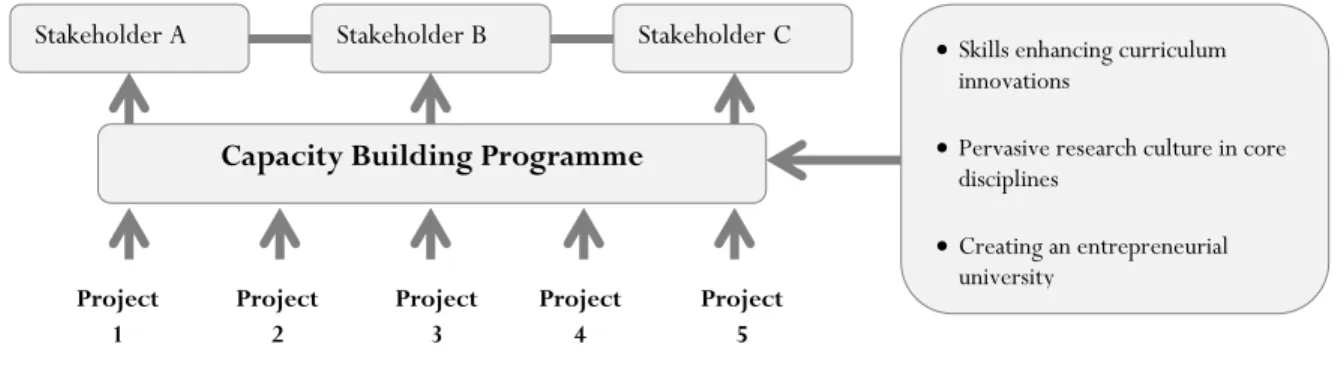
Figure 1: A Model for Effective Whole-system Intervention in HEI Staff and Academic Development
In Figure 1, we illustrate a conceptual model for effectively deploying a whole-system intervention for staff and overall academic development at HEIs. Central to our model is a broad capacity building programme which encapsulates groups of related projects. The aim is for the different projects to be managed in a coordinated way so as to derive full benefits and control not available when managing them individually. For the different stakeholders the Programme will focus on achieving specific and measurable outcomes.
Interestingly, the intervention should be underpinned by cross-cutting disciplinary and societal problems in an HEI area. Examples include producing skills-enhancing curriculum innovations, enshrining a pervasive research culture in core disciplines and faculties, and creating an entrepreneurial university, among other goals.
Stakeholder A Stakeholder B Stakeholder C
Capacity Building Programme
Project 1 Project 2 Project 3 Project 4 Project 5
Skills enhancing curriculum innovations
Pervasive research culture in core disciplines
Creating an entrepreneurial university
7
Pa th w ay s a nd C ase S tu die s f or E ffe ctive Wh ole -S ystem Int er ve nt ion in H ig he r Educa tio n Insti tu tio na l D ev elopm ent5 Aspects of a British Council – Sponsored Case Study Intervention
Illustrating the Above Pathways – The NIMSERC Research
Programme
In 2010 we secured a British Council Connect Prime Minister’s Initiative 2 (PMI2) travel grant for a UK-Nigeria-Ghana Partnership Development in Higher Education. We selected a cross-cutting theme beamed on a key Millennium Development Goal (MDG) – poverty alleviation through new graduate outcomes in mathematical sciences, finance and economics education and research. The focus is on getting a blend of quantitative disciplines to address key problems in the financial services industry such that students, academic staff of a network of partner universities and financial services industry staff will be involved.
5.1 Towards a Deeper Appreciation of Stakeholder Needs
Whilst we had some initial understanding of needs from these stakeholders, we needed a deeper appreciation of how exactly they ‘feel the pain’, what capacities exist within universities to resolve what problems, among other considerations. For example, we wanted the new graduate outcomes to be rounded professional skills via curriculum structures enabling them to creatively apply their learning to cogent problems in industry; similarly for staff. We wanted the programme to create distinct opportunities for effective HEI-industry linkages, particularly delivering vital skills in so doing, to staff, and enabling high-level research to be directed to sometimes difficult topics in financial engineering and their wider business support. We also wanted the programme to sculpt continuing competences in multi-disciplinary research amongst mathematicians, statisticians, economics and finance academics and professionals; this is required for African countries to competently deal with similar problems encountered during the 2008 global financial crisis.
Above all, we wanted to see universities come together in consortia to address these issues, such that an ecology of academic and professional knowledge is generated over time. It is within this ecology that participants immerse themselves in theory and disciplined practice.
Qualitatively, the programme is envisioned to change the character of learning and research engagements in these subject areas and to provide ways to apply resulting insights to other groups of disciplines with their own MDGs. With this background in mind we summarise the key features of the collaborative partnership currently being structured among some Nigerian universities.
8
5.2 Detailed Stakeholder Needs Analyses and Systemic Solutions
Around the NIMSERC Programme
Meetings and discussions were held with a representative set of HEI and industry institutions reinforced by desk research. These institutions include:
the National University Commission (NUC, Abuja); African University of Science & Technology (AUST, Abuja); University of Uyo, Nnamdi Azikiwe University (NAU, Awka);the University of Nigeria, Nsukka (UNN); University of Agriculture, Abeokuta (UNAAB); Zenith Bank plc; Intercontinental Bank plc; Choice Insurance Brokers; Treasure Coast Stock Brokers; and individual staff of these organizations.
5.3 Student’s Needs
The students' needs were mainly lack of requisite graduate skills; inadequate understanding of problem solving in the real world; disconnect between the core concepts they learn theoretically in their disciplines and knowledge of real world systems, particularly of the challenges posed by problems in related world systems. It was therefore felt that the NIMSERC Programme should develop graduate skills sets such as:
Creative problem solving; applying core concepts of a discipline to case studies; understanding modern and innovative research methods, beyond the traditional discipline-based approaches; critical thinking and decision making skills; effective team working on solutions to messy real-life problems; ICT-enabled presentation and communication skills and general digital literacy; project and time management skills; general self-understanding, personal effectiveness and motivation; performance management; and career-focused skills e.g. producing effective CVs for job hunts and understanding the inner game of selling themselves.
A typical challenge is that these skills are better developed through extended curricula involving core learning and research as well as external civil society experiences, which the programme provides.
9
Pa th w ay s a nd C ase S tu die s f or E ffe ctive Wh ole -S ystem Int er ve nt ion in H ig he r Educa tio n Insti tu tio na l D ev elopm ent5.4 NUC and Higher Education Institutional Nee ds
Similar discussions with NUC staff led by the Director of Research and Innovation, Professor Val Ekechukwu, emphasised the need for:
Curriculum innovations aimed at the above skills sets. The curriculum should rebalance assessments among examinations, problem-based learning, with individual and group course works, presentations and critical reflections. This creates the need for training academics in innovative LTA practices, such that motivates lecturers to see the direct impact of the training on their teaching strategies and student learning experiences. The training should also be linked to career progression to fortify the gains and change practices dramatically. There is a need for workshops on how academics can link outcomes across LTA, research and income generation activities. There is also a need to build capacities for multi-disciplinary research in related disciplines and to deploy more effective models of entrepreneurship education in HEIs.
5.5 Confirmatory Academic Staff Needs
Confirmatory ideas around the above points were provided by discussions with academic staff. These include:
Need for interdisciplinary research in mathematical sciences relevant to industry and organised in Mathematical Sciences Research Groups (such a group was facilitated by this author at the Nnamdi Azikiwe University, Nigeria); need to train students and staff on key software required academically and professionally in the study of specific disciplines; and corresponding need for curriculum innovations to support better graduate outcomes, coach students on the links between disciplinary knowledge and world systems, and develop staff capacities in high-impact research, innovative LTA practices and value-adding HEI-industry collaboration.
There was a special plea for creative interventions in research infrastructure and capacity building particularly:
top quality PhD supervision of both theoretical and applied flavours in many disciplines;
home-based modified split-site PhDs in which significant part of the work entailment is carried out through emails, occasional visits by the international supervisors and students across the divides;
10
5.6 Industry Perspectives on the Above Needs
Using the 2008 global financial crisis and related problems as prompts, discussions with financial services industry staff ranged over wider professional competences and academic research required to repair the labour force base in the financial services industry. The summary was a need to use a well-designed HEI-Industry Programme of projects such as NIMSERC to conduct:
systematic market-led and sectoral stock and capital market analyses; firm-level equity analysis which inform clients’ investment decisions; develop links between the analyses, financial policy and stock market development; support the analyses with high-level mathematical modelling of financial products and their implications for profitability of the firms; and use academic research to examine the relationship among stock market, capital market performance and key financial and economic policies in Nigeria e.g. Financial Services Strategy 2020 (FSS 2020), CBN monetary and fiscal policies, financial regulation and corporate governance.
It is easy to say that all these ideas are not new, but what we have developed is a robust schema for getting them addressed within NIMSERC, using distributed expertise in a consortium of universities and financial institutions.
5.7 Summative Character of the NIMSERC Solution to the Above
Systemic Needs
It addresses staff development in cooperative learning contexts among diverse academic and professional groups. It enhances modern work, research, learning teaching and assessment (LTA) as well as entrepreneurial skills. It particularly reinvigorates both undergraduate and graduate curricula, thereby cascading suck skills to students using intelligent course works and case studies, which require students to present their findings using modern ICTs.
It rebalances assessments in related disciplines, with examinations which test students' understanding of core concepts of a discipline.
It uses practical problems in a key economy sector as hooks for embedding entrepreneurial principles and skills within disciplinary curricula, including perspectives on business start up skills, entrepreneurial mindsets, skills for adding value to (own) organizations, and related employability skills listed above.
It can be used as a springboard to develop academic entrepreneurship skills among staff including structuring empowering academic career models, creating spin outs from core research, developing consultancies that solve industry problems, understanding models of social enterprise, proof of concept research, engaging with business and industry, and developing high-impact research and proposals.
11
Pa th w ay s a nd C ase S tu die s f or E ffe ctive Wh ole -S ystem Int er ve nt ion in H ig he r Educa tio n Insti tu tio na l D ev elopm entIt radically transforms research practice in an HEI, including the formation of multi-disciplinary research groups as impetus for accelerated research development. It agglomerates expertise across academia and industry and facilitates the funding of high-level learning studios in contributing disciplines.
These studios are fully kitted with modern software; for example, a learning studio for statistics and mathematics will encompass all software for implementing specific types of modelling and simulation using core concepts studied in the different topics. It will also contain case studies that demonstrate the applications and illustrative small versus large data sets which students will use in close to real-life learning of the techniques.
In effect, the programme should initiate pilot projects in research and teaching via mathematical sciences learning studios which drive modern ICT-enabled curricula and intensive project-based laboratories on which staff and students hone vital skills.
The HEI-industry collaboration aspect of the programme facilitates use of industry experts as guest speakers to show students the links between their learning and potential applications.
Also the programme encourages joint publications among academics and professionals, hence breaking individual research silos, without sacrificing the intellectual identities of contributing authors. It imbues the entire academic effort with relevance and impacts all stakeholders.
The NMSERC programme particularly produces creative spaghetti of projects and constructs such as:
intensive pre-PhD workshops in foundational topics in the contributing disciplines;
continual staff development through seminars and conferences around the main research themes;
complimentary and wider training of industry staff through applied seminars, workshops and HEI-industry exchanges; the training should be of a practical flavour but informed by research;
an emphasis on advanced quantitative modelling e.g. econometrics, financial engineering, financial economics, investment analyses, financial risk management, stock and capital market analyses;
use of field studies to expose staff and students to real challenges to address their training to; and
a system of MSc-MPhil-PhD and Post-Doctoral research on high-impact topics.
Core to the programme is joint authorships of not only leading academic papers but also specialist textbooks and research monographs – based on trained syndicated author teams – and focused on enhancing student learning and research experiences.
12
Finally, germane to the internationalization of the programme and the whole HEI, a web-enabled repository of resources and linkages to both home- and Diaspora-based expertise is being established to host the programme.
5.8 National Roll-out of the Programme: Any Lessons and
Approaches?
A crisp lesson here is that it takes deep needs awareness and structuring to deliver the above kinds of gains. It requires action setting on the grounds in departments and faculties through focused projects, with a blend of theoretical and practical work as well as cross-disciplinary HEI-Industry collaborations. It requires a coordinated range of local, zonal and national dissemination plans within Nigeria, to enable continual training to happen in the core areas of need. It requires practitioners with hybrid skills sets and specializations to direct the programme overall and allocate appropriate roles.
6 Other Projects to Which This Nature of Sculpting of Research
Solutions Apply, Especially Those Which SHU Staff Led by
Dr Ezepue are Interested in Running in Nigeria
For completeness of this report, we provide in Appendix 1 an indicative list of corporate programmes which SHU is interested in running in Nigeria, particularly under the aegis of the Statistics and Information Modelling Research Group, which the author leads.
7 Different roles of Partners in Different Interventions and How Do
We Ensure Effective Nigerian Ownership ?
We feel that it is only when this level of structuring has been brought to bear on staff development interventions of this nature that clarity settles in on what roles should be played by partners, how frequently and how long. For example, the NIMSERC intervention programme sketched here is best run as a deep research capacity building effort and managed within the research directions of consortium members and disciplines, coordinated by Dr Ezepue. This way, it represents a focused piece of relationship building amongst interested co-researchers, without the encumbrances of wider university approvals and resourcing from the UK.
Expectedly, therefore, the programme will generate its own funds through joint proposals and joined up funding by partner institutions. Through the industry interface it will also generate self-sustaining revenue which benefits all partner institutions directly through research grant income and third-stream income flow. This is only an indicative illustration. Flexibilities exist to devise custom-built set of roles and funding expectations for each programme on a case-by-case basis.
13
Pa th w ay s a nd C ase S tu die s f or E ffe ctive Wh ole -S ystem Int er ve nt ion in H ig he r Educa tio n Insti tu tio na l D ev elopm ent8 Conclusion
In this report we have set out the imperatives of programme design for high-impact, culture-shifting staff development covering key areas of the core HEI business – learning, teaching and assessment (LTA), research and consulting, and engaging business and industry. We have illustrated the dynamics of such interventions using a research consortium (NIMSERC) which brings together academics, students and industry practitioners from related disciplines relevant to formulating and solving challenging problems in the financial services industry.
Such programmes could easily be developed among other disciplinary clusters e.g. social sciences and biological sciences, as long as robust cross-cutting themes are originated as a signal focus of the programmes.
The distinguishing feature of such high-impact programmes consists in the fact that they are literally programmes, not just projects, so that within their purview satellite projects are structured to address carefully studied needs and expectations of multiple stakeholders.
Finally, we provide in the appendices to the report a list of: corporate projects which Sheffield Hallam University would like to develop and run with interested Nigerian HEIs in the areas of Dr Ezepue’s expertise: an institutional profile of the university; summaries of the main research directions in the Statistical and Information Modelling Research Group led by Dr Ezepue; and a brief profile of Dr Ezepue.
14
Appendices
Appendix 1: UKTI Nigerian Mission: Outline of Corporate Programmes which Sheffield Hallam University Staff led by Dr Patrick Oseloka EZEPUE are interested in Running in Nigeria
Drawing ideas from:
the UKTI Brief Institutional Profile for Sheffield Hallam University (UK) provided for the March 2011 UKTI-NUC HEI mission to Nigeria;
the workshop paper on Pathways for Effective Whole-System Intervention in HEI Staff Development with Detailed Case Illustrations presented during the mission by Dr Ezepue
an underpinning report of a British Council Connect Prime Minister's Grant (PMI2) in Aid of a University-Industry Audit of Capacities and Needs for Collaborative HEI-Financial Services Provision of Mathematical Sciences-Business and Finance MSc-PhD Programmes in Nigeria and Ghana, led by Dr Patrick Ezepue; and
a pre-intervention agreement on the above report between Dr Ezepue and the Nigerian Universities Commission, we are fully prepared to formulate, develop and run the following indicative programmes in partnership with Nigerian HEI system and institutions.
1. Strategic partnerships on curriculum innovations in various subject areas e.g. mathematical sciences, science engineering and technology, social sciences and humanities. The emphases of such curriculum innovations should be on realizing better graduate skills and competencies within and across curricula and linking the curricula to national economic development goals e.g. MDGs
2. Developing staff CPD skills in innovative LTA practices; this will expose staff to knowledge of core elements of a standard PGCE training but with particular relevance to disciplinary nuances in different subject areas. The core elements of the proposed training are curriculum structuring and delivery, theories of learning, and assessments for learning. Deployed through interactive workshop sessions and online additional support, the training will enhance both lecturers' teaching strategies and students' learning experiences.
3. Help with instituting departmental/faculty workshops and practical projects which enhance students' research and work skills via ICT-enabled learning studios and university-industry collaborations
4. Workshops and CPD training programmes on personal academic career planning and development; these will explore the success strategies and models of star performers in research, teaching and consulting, for the benefit of young and older faculty
5. Strategic partnership in running an African Colloquium on Entrepreneurship Education, Curriculum Innovation and Socio-Economic Development
15
Pa th w ay s a nd C ase S tu die s f or E ffe ctive Wh ole -S ystem Int er ve nt ion in H ig he r Educa tio n Insti tu tio na l D ev elopm ent6. Mounting a national programme of capacity improvement in research training and supervision covering all key areas of the research process e.g. formulating researchable topics, designing a rich research proposal with high-impact contributions, using a well-argued multi-methodology to implement the research, doing effective literature reviews, managing the supervision process, writing up and publishing leading papers from the thesis
7. Developing and NUC-accrediting Specialist MSc-MBA-PhD Programmes in some emerging cutting-edge topics vital to some industry sectors e.g. statistical data mining and financial analytics, quantitative finance and financial risk management
8. Joint development of international conferences, seminars and workshops at the boundaries of related disciplines
9. Fostering excellence thinking, institutional best practices and cultural re-orientation in the behaviours of staff, teams, faculties, students, research and administrative centres
10.Other projects related to staff development, research capacity building, curriculum innovations, university-industry linkages and civil society impact which HEIs are interested in. Appendix 2 UKTI Nigerian Mission: Brief Institutional Profile for Sheffield Hallam
University, UK (provided by Dr Patrick Oseloka EZEPUE)
Sheffield Hallam University is one of the most innovative and research-intensive post 1991 universities in the UK. In the last two Research Assessment Exercises (RAEs) the university placed joint first in research excellence amongst this group of new universities. This capacity combines with its leading position in learning, teaching and assessment to make the university achieve wholesome excellence in all key areas of core university business namely teaching/learning, research, university-industry linkages and civil society impact. For example, the university won a highly competitive bid to serve as one of few universities in the UK recognised as Centres for Excellence in Learning and Teaching (CELTs). This is a three-year multi-million pound concentration of internationally leading resources and expertise in key areas of pedagogical research and work-focused learning, including curriculum structuring, employability, student learning experiences, innovation, creativity and entrepreneurship.
It is apposite that the university's entrepreneurial culture is multi-disciplinary so that students are coached on core enterprise skills, knowledge and attitudes within specific curricula. This makes them highly employable following graduation from their studies. For examples, students are taught using case studies, problem-based learning schemes, intense group works and presentations and critical personal reflections on their learning in individual assignments. They are accustomed to using Personal Development Plans (PDPs) to deepen their reflections and, when appropriate, present their summative experiences on a learning programme in form of learning portfolios.
16
Consequently, impressive numbers of Sheffield Hallam University students secure jobs in key industry sectors after graduation.
Continuing the above focus on deep and student-led learning in the main fields of study, Sheffield Hallam University is best known for innovative university-industry linkages and knowledge transfer work. It has developed high-profile joint Masters Degree programmes with leading software houses e.g. Microsoft, IBM SPSS, Cisco, and Oracle. The university leverages these capabilities in profoundly beneficial learning, research and project-based partnerships with universities across the globe, in China, Africa, Asia, Middle East, for instance, and in such areas as:
multidisciplinary PhD research projects; related collaborations in international academic development with emphases on pedagogic innovations, staff development and producing skills-strong employable and entrepreneurial graduates;
collaborative delivery of innovative and industry-facing taught/distance learning-based MSc programmes;
joint development of international conferences, seminars and workshops at the boundaries of related disciplines; and
overall institutional excellence based on results developed in the University's Centre for Integral Excellence, this will help partner institutions to foster excellence thinking, institutional best practices and cultural re-orientation in the behaviours of individual staff, teams, faculties, central administrative and research organs; and teacher quality development.
17
Pa th w ay s a nd C ase S tu die s f or E ffe ctive Wh ole -S ystem Int er ve nt ion in H ig he r Educa tio n Insti tu tio na l D ev elopm entAppendix 3 UKTI Nigerian Mission: Summary of Research Directions in the Statistical and Information Modelling Research Group
Statistical Modelling Research Programme
The Statistical Modelling Research Programme is a multidisciplinary hub that drives research in stochastic modelling, applied statistics, and their applications in key industry sectors such as business, finance, economics, and management consulting. Activities within the programme focus on researching, understanding and integrating the theory and practice of statistics in socio-economic development. The programme develops comprehensive resources for specialist and applied MSc, PhD and post-doctoral research and externally funded fellowship schemes in the above areas. It has an international reputation in providing model-based solutions to real world problems.
Current themes around which research within the Statistical Modelling Research Programme are organised include:
Research directions in stochastic processes, applied statistics and data mining; specialist research in applied stochastic processes and branching population processes;
Collaborative HEI-industry MSc-PhD research in statistics, mathematics and economics, including integrated risk analysis/communication; stochastic analysis and mathematical finance; statistical aspects of data mining; credit and interest rate analytics; extreme value theory (EVT) and Copula methods in quantitative finance; studies in quantitative finance, investment and financial risk management;
Empirical finance with applications in stock and capital market analyses and financial policy making;
Model-based career development and guidance using a Corporate Academic Knowledge Management Model (CAKoMM): interfacing individual and organization excellence and performance management; model-based academic entrepreneurship, innovation and creativity;
Multidisciplinary pedagogical research with a special focus on: knowledge transfer, transnational education and curriculum innovations;
High-impact research synthesis involving systematic reviews of major developments in pedagogics and its links with philosophy of science and theories of learning;
Emerging perspectives.
There are 3 PhD students under supervision in this area. Opportunities exist for admitting more students to the programme.
18
Business and Finance Research Programme
The Business and Finance Research Programme complements work in the Statistical Modelling Research Programme with focus on relevant business and finance disciplines. The programme is coordinated by Dr Patrick Oseloka EZEPUE and draws from the expertise of business and finance specialists around the globe. Further themes around which research within the programme are organised include:
Strategic marketing research including quantitative modelling and customer relationship modelling
Pedagogical innovations in learning, teaching and assessment of business and finance disciplines. 2 PhD students are currently being supervised by Dr Ezepue and a co-supervisor on the topics:
Stochastic Models in Stock Market Analyses: A Case Study of the Nigerian Stock Market
Strategic Customer Relationship Marketing and Re-intermediation Models in the Insurance Industry
Education and Entrepreneurship Research Programme
The Education and Entrepreneurship Research Programme is a multidisciplinary research hub supports learning, teaching and assessment (LTA) innovations, entrepreneurship education and enterprise development initiatives of higher educational institutions (HEIs). Activities within the programme focus on researching, understanding and integrating the theory and practices of learning and entrepreneurship in socio-economic development. The research programme is fully engaged in the development of comprehensive resources for MSc-PhD and post-doctoral research and externally funded fellowship schemes in the above areas.
A primary emphasis of the programme is researching the pathways for embedding entrepreneurship education within the curricula of specific disciplines. This will develop entrepreneurial intent, skills, attitudes and behaviours among HEI graduates from any field, not just business-oriented disciplines. Hence, for example, we aim to bring mathematical sciences graduates into enterprise based on fundamental business start up skills and wider recognition of opportunities to add value using scientific knowledge. Consequently, we are currently supervising a ground-breaking PhD research entitled
19
Pa th w ay s a nd C ase S tu die s f or E ffe ctive Wh ole -S ystem Int er ve nt ion in H ig he r Educa tio n Insti tu tio na l D ev elopm entThe Education and Entrepreneurship Research Programme is led by Dr Patrick Oseloka EZEPUE and Professor Godfrey UDO (University of Uyo, Nigeria) together with other world renowned entrepreneurship scholars. It has an international reputation in providing entrepreneurship education guidance and policy solutions to HEIs and governments. The main themes around which entrepreneurship research within the Education and Entrepreneurship Research Programme are organised include:
Research directions in entrepreneurship and comparative global perspectives;
Collaborative HEI-industry MSc-PhD research programmes and enterprise development;
Entrepreneurship in higher education: contexts, content and driving forces;
Multi-stakeholder approaches to developing entrepreneurial HEIs;
Models for facilitating person-centred entrepreneurship: entrepreneurial mindset, intent, skills, attitudes and opportunity recognition;
Business start-ups: key skills, advanced perspectives and growth-focused strategic planning;
Academic entrepreneurship: frameworks, models and success criteria;
Entrepreneurship, scientific innovation, creativity, national innovation systems, competitiveness, high-growth and creation of born-global firms;
Entrepreneurial praxis: entrepreneurship and (M)SMEs, mainstreaming youth and women entrepreneurship;
Emerging perspectives.
Innovation and Creativity Research Programme
The Innovation and Creativity Research Programme complements work in the Education and Entrepreneurship Research Programme and is particularly focused on HEI learning, teaching and assessment (LTA) innovations and innovations in technologies and business models of private sector organisations. Emphasis is duly laid on researching, understanding and integrating the theory and practices of innovation and creativity in socio-economic development, particularly in creating and maintaining a national innovation system fit for the 21st Century. The link between a national innovation system and elements of a high knowledge economy index (KEI) is also studied.
The programme develops in graduates an innovation mindset and a mastery of innovation and creativity tools such as: creative problem solving; critical thinking and decision making; scenario analysis; strategic problem solving; strategic intelligence and related higher order skills; multiple intelligences and their enactment in Gardner's 5 Minds to the Future; theory of constraints; heuristics and decision making under uncertainty, conflict and complexity; behavioural economics and finance; and problem structuring methods (PSMs).
20
The main themes around which research within the programme is organised include:
Research directions in innovation and creativity;
Research on the Corporate Academic Knowledge Management Model (CA Model) that enhances excellence and hyper-productivity among the workforce in high-knowledge intensive careers e.g. academia, banks, etc;
Using the model to develop cohesive individual, organizational and national innovation systems
Exploring the links between model and academic entrepreneurship;
Using the model to enhance competitiveness, high-growth and create born-global firms;
Creating enabling technologies from the model e.g. a career enhancing software (CareerSoft) and an agile research structuring and supervision tool, the Corporate Academic Research Structuring System (CARESS);
Teaching innovation and creativity in higher education: mastering and embedding appropriate innovation tools in HEI curricula;
Multi-stakeholder approaches to fostering innovation and creativity;
Emerging perspectives
Appendix 4 UKTI Nigerian Mission: Brief Profile of Dr Patrick Oseloka EZEPUE Dr. Patrick Oseloka EZEPUE is an academic statistician, business strategist, educational innovator and public intellectual. His educational qualifications include: BSc, MSc in Statistics from the University of Nigeria, Nsukka; PhD in Probability Modelling from the University of Sheffield, UK; a Postgraduate Certificate in Business Administration from Manchester Business School, UK; and a Postgraduate Certificate for Learning and Teaching in Higher Education from Sheffield Hallam University, UK.
Dr Ezepue has a wide educational and corporate work experience as a professional statistician in such capacities as the Founding Director of Sigma-X-Statistical Consulting in Nigeria and Consultant Statistician at Prudential Insurance Company, UK, on Customer Retention and Relationship Modelling.
Dr Ezepue is a Senior Lecturer in Applied Statistics and the Research Leader, Statistical and Information Modelling Research Group, Sheffield Hallam University, UK. He served as a Visiting Professor of Stochastic Modelling in Business and Finance, National Mathematical Centre, Abuja, Nigeria (2009).
21
Pa th w ay s a nd C ase S tu die s f or E ffe ctive Wh ole -S ystem Int er ve nt ion in H ig he r Educa tio n Insti tu tio na l D ev elopm entDr Ezepue's primary research interests are stochastic modelling, data mining and applied statistics in finance and business. Related research interests include education, entrepreneurship, innovation and creativity. Patrick has supervised well over thirty MSc research projects and currently supervises five PhD students in various topics linking statistical modelling, marketing, business and finance.
Over the last 25 years of active academic research and professional consulting, Dr Ezepue has supervised graduate research topics and implemented projects that generate significant value-added for such clients as: Construction Markets Intelligence Unit, UK Department for Trade and Industry (UK DTI), UK DTI Knowledge Transfer Programme, Lloyds Bank, Cooperative Insurance PLC, Barclays Bank PLC, University College Admission Services (UCAS), and UK Department for Innovation, Universities and Skills.
For enquiries and information, please contact:
The African Higher Education and Research Observatory (AFRIHERO) Sheffield, United Kingdom
Website: www.afrihero.org.uk
Email: [email protected]
Strategic partners within our consortium include:
Global Strategic Services and Training Limited (GlossTra) Sheffield, United Kingdom
Website: www.glosstra.org.uk
Email: [email protected]
The Nigerian LGA Geodemographic Classification System and Profiler (NIGECS) Website: www.nigerianlgaclassification.com