A STUDY TO ASSESS THE EFFECTIVENESS OF VIDEO
ASSISTED TEACHING ON KNOWLEDGE REGARDING
PREVENTION OF HOME ACCIDENTS AMONG THE
MOTHERS OF UNDER FIVE CHILDREN SELECTED
HOSPITAL AT DINDIGUL
Reg.No : 301418203
A DISSERTATION SUBMITTED TO THE TAMILNADU DR. M.G.R
MEDICAL UNIVERSITY, CHENNAI, IN PARTIAL FULFILMENT
OF THE REQUIREMENT FOR THE AWARD OF THE DEGREE OF
MASTER SCIENCE IN NURSING.
A STUDY TO ASSESS THE EFFECTIVENESS OF VIDEO
ASSISTED TEACHING ON KNOWLEDGE REGARDING
PREVENTION OF HOME ACCIDENTS AMONG THE
MOTHERS OF UNDER FIVE CHILDREN SELECTED
HOSPITAL AT DINDIGUL
EXTERNAL EXAMINER INTERNAL EXAMINER
A DISSERTATION SUBMITTED TO THE TAMILNADU DR. M.G.R
MEDICAL UNIVERSITY, CHENNAI, IN PARTIAL FULFILMENT
OF THE REQUIREMENT FOR THE AWARD OF THE DEGREE OF
MASTER SCIENCE IN NURSING.
A STUDY TO ASSESS THE EFFECTIVENESS OF VIDEO
ASSISTED TEACHING ON KNOWLEDGE REGARDING
PREVENTION OF HOME ACCIDENTS AMONG THE
MOTHERS OF UNDER FIVE CHILDREN SELECTED
HOSPITAL AT DINDIGUL
APPROVED BY DISSERTATION COMMITTEE ON:
PROFESSOR IN NURSING
RESEARCH :________________________________
Prof. Mrs. K. THILAGAVATHY, M.Sc (Nsg), Ph.D.,
Principal & HOD, Department Psychiatric Nursing,
Jainee College of nursing,
Dindigul.
CLINICAL SPECIALITY EXPERT :___________________________
Mrs. JEYA SUNDARI M. Sc Nursing,
HOD, Department of Pediatric Nurshing,
Jainee College of Nursing,
Dindigul.
MEDICAL EXPERT :______________________________
Dr. P. VELUSHAMY, MD., DCH.,
Karthick Nursing Home
Dindigul
A DISSERTATION SUBMITTED TO THE TAMILNADU DR. M. G. R MEDICAL UNIVERSITY, CHENNAI, IN PARTIAL FULFILMENT OF
THE REQUIREMENT FOR THE AWARD OF THE DEGREE OF MASTER SCIENCE IN NURSING
CERTIFICATE
This is the bonafide work of
Mrs.P. PANDI MEENA, M.Sc.,
Nursing II
ndYear student from Jainee college of Nursing, Dindigul,
submitted in partial fulfillment for the degree of Master of science in
Nursing, under the Tamilnadu Dr. M.G.R medical university, Chennai.
Prof. Mrs. K. THILAGAVATHY, M.Sc (Nsg), Ph.D.,
Principal, Department Psychiatric Nursing,
Jainee College of Nursing,
Dindigul.
ABSTRACT
Title: Effectiveness of video assisted teaching on knowledge regarding effects of home accidents and its preventive measures among mother’s of under five children at selected hospital dindigul. Objectives: To assess the level of knowledge regarding effects of home accidents and its preventive measures among mother’s of under five children at selected hospital dindigul. To Evaluate the effectiveness of video assisted teaching on knowledge regarding effects of home accidents and its preventive measures among mother’s of under five children at selected hospital dindigul. To associate the level of knowledge regarding effects of home accidents and its preventive measures among mother’s of under five children with their selected socio demographic variables.
Hypothesis: There is a significant difference between pre test and post test level of knowledge regarding effects of home accidents and its preventive measures among the mother’s of under five children at selected hospital dindigul. There is a significant association between the level of knowledge regarding effects of home accidents and its preventive measures among the mother’s of under children with their selected socio demographic variable.
Conceptual Framework: Modified Kennys open system model.
Methodology: Quantitative approach True Experimental - pretest posttest control group design was used. 60 subjects were selected by simple random sampling., Pretest was conducted by using a self structured questionnaire to both group. The video assisted teaching on effects of home accidents and its preventive measures shown in various aspects to children of experimental group about 20 minutes for 5 consecutive days. Children of control group were not received the intervention. The post test was conducted on7th day for both group.
(((χ2=2.82) and there is no significant association between the posttest level of knowledge and other socio demographic variables such as Residence, educational status of father, educational status of mother, occupation of father, occupation of mother, income of the family.
TABLE OF CONTENTS
CHAPTER
NO TITLE PAGE NO
1. INTRODUCTION
1.1 Need for the study 1.2 Statement of the problem 1.3 Objectives
1.4 Hypothesis
1.5 Operational definition 1.6. Assumption
1.7 Delimitations 1.8 Projected outcome
1 4 5 5 6 6 6 6 6 2.
REVIEW OF LITERATURE PART I Review of Literature
2.1 Literature related to knowledge and prevalence of home accidents.
2.2 Literature related to prevention of home accidentss. 2.3 Literature related to preventive measures effects home
accidents.
2.4 Literature related to effectiveness of video assisted teaching programme.
PART II Conceptual frame work
8 10
17
18
20
3. RESEARCH METHODOLOGY
3.1 Research approach 3.2 Research design 3.3 Variables
3.4 Setting of the study 3.5 Population
3.6 Sample 3.7 Sample size
3.8 Sampling technique
3.9 Criteria for sample selection
3.10 Development of the tool 3.11 Scoring Procedure 3.12 Content Validity 3.13 Reliability 3.14 Pilot Study
3.15 Data Collection Procedure 3.16 Plan for Data analysis
3.17 Protection of Human subjects
27 28 28 28 28 29 29 30
4. ANALYSIS AND INTERPRETATION OF DATA 33
5. DISCUSSION 57
6. SUMMARY AND CONCLUSION 6.1 Summary
6.2 Findings of the study 6.3 Conclusion
6. 4 Implication of the study 6. 5 Recommendations 6. 6 Limitations
63 64 67 67 69 69
REFERENCES 70
LIST OF TABLES
TABLENO TITLE PAGE NO
1 Description of socio demographic variables of mother’s of under
five children. 34
2
Distribution of pre test level of knowledge regarding effects of
and its preventive measures both experimental and control group 48
3
Effectiveness of video assisted teaching regarding ill effects of
prevention of home accidents among mother of under five children 50
4
distribution of post test level of knowledge regarding effects of and
its preventive measures both in experimental and control group 52
5
Comparison of pre and posttest level of knowledge regarding
effects of and its preventive measures 53
6
Associate the posttest level of knowledge regarding effects of and its preventive measures with their selected demographic variables in experimental group
LIST OF FIGURES
FIGURE
NO TITLE
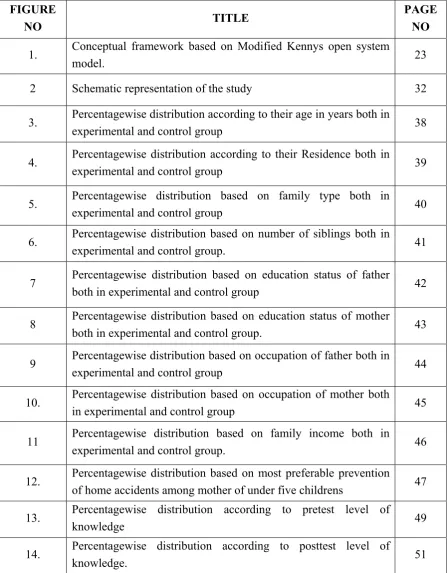
PAGE NO 1. Conceptual framework based on Modified Kennys open system
model. 23
2 Schematic representation of the study 32
3. Percentagewise distribution according to their age in years both in
experimental and control group 38
4. Percentagewise distribution according to their Residence both in
experimental and control group 39
5. Percentagewise distribution based on family type both in
experimental and control group 40
6. Percentagewise distribution based on number of siblings both in
experimental and control group. 41
7 Percentagewise distribution based on education status of father
both in experimental and control group 42
8 Percentagewise distribution based on education status of mother
both in experimental and control group. 43
9 Percentagewise distribution based on occupation of father both in
experimental and control group 44
10. Percentagewise distribution based on occupation of mother both
in experimental and control group 45
11 Percentagewise distribution based on family income both in
experimental and control group. 46
12. Percentagewise distribution based on most preferable prevention
of home accidents among mother of under five childrens 47 13. Percentagewise distribution according to pretest level of
knowledge 49
14. Percentagewise distribution according to posttest level of
LIST OF APPENDICES
APPENDIX
NO TITLE
I Letter seeking and granting permission to conduct the study at selected hospital dindigul.
II Permission Letter
III Content Validated Certificate
IV Certificate for English editing
V Certificate for Tamil editing
VI Research Tool – English, Tamil
VII Lesson plan in English, Tamil
ACKNOWLEDGEMENT
I thank and praise the lord all mighty for giving me all the wisdom, knowledge strength and guidance to complete this study successfully. “Things do not turn up in this world until somebody turn them up”.
First and foremost, I would like to express my sincere and heartfelt gratitude to Mr. SUKUMAR, Director, Jainee College of Nursing, Dindigul, for all facilities he had provided me in his esteemed institution and enabled to do my research.
I extent my thanks to our most honoured personality Prof.Mrs.K.THILAGAVATHI,M.Sc.,(Nursing),Ph.D., Principal, Jainee College of Nursing for her acceptance and approval of the study.
I am extremely thankful to Mrs. Meera, Vice principal & HOD & my guide Department of OBG, Jainee college of Nursing, for her contribution, support, Interest and valuable hints she rendered during the course of this study
I extend my Special thanks to Prof. JAYA SUNDARI M.Sc Nursing professor & HOD department of Pediatrics nursing, for all the support encouragement and valuable guidance she has rendered during the course of this study.
I express my gratitude and sincere thanks to Mrs. KAVITHA M.Sc Nursing resource person of Jainee College of nursing for her excellent guidance and encouragement throughout the study period.
I extend my sincere thanks to Dr.A.Mani, M.A,M.Sc, M.A, M.Phil, Ph.D, (Sociology & Phycology), Assistant professor in sociology in Gandhigram University, for valuable guidance and support to carry out the dissertation work successfully. “The impossible becomes, to endowed with resource fullness”.
It is my pleasure and heartful thanks to Mr.BRIGHT SIGH jainee College of Nursing for the suggestion to carry out the study successfully.
It is my pleasure and heartful thanks to Mrs.RAMYA, M.Sc (Nursing), Nursing Tutor, Jainee College of Nursing for the timely help with suggestions.
It is my pleasure and heartful thanks to express our deep sense of gratitude Consultant Dr.P. Velusamy MD. DCH Karthick Nursing Home, Dindigul. For giving me the permission to conduct the study among the laughter therapy.
It extend my sincere thanks to Mr.C.SIVA GURUNADHAN,M.Sc (Statition),The Popular Research Centre, Gandhigram University, Dindigul.
My sincere gratitude to Mr.MANIMOZHI SELVAN, M.A(Eng), M.Ed, Ph.D, Professor, Jainee College of Nursing, for editing the tool in English and content for manuscript.
I am thankful to the librarian Mr.R.SARAVAN KUMAR for helping us with literature work and for extending library facilities throughout the study.
My special thanks to all the subject experts whose spent their valuable time for validating my tool and intervention.
I extend my heartful thanks to my parents, my husband, friends and my classmates for providing guidance.
1
CHAPTER – I
INTRODUCTION
“CHILDREN ARE THE WEALTH OF TOMORROW TAKE CARE OF THEM”
- Pandit Jawaharlal Nehru
Today’s Children are the citizens of tomorrow. They deserve to inherit a safer, fairer and healthier world. There is no task more important than safe guarding their environment.
In today’s world, in the developed as well as developing countries, danger prevails not only on the roads but it also exists in the home and playgrounds. Every year thousands of children die or permanently disabled as a result of accidental injuries. In many developing countries, injuries are one of the major causes of death in children in the age group of 1-5 years.
The future development of our children depends on their enjoying good health today. A house is an exciting place for infants and small children, who love to explore but aren’t aware of the potential dangers. Life can’t be risk-free, but most household accidents can be prevented by utilizing a household safety list. The incidence of accidental injuries is increasing in India, especially home accidents in children. Hence the knowledge of mothers is essential for undertaking measures to prevent them.
World Health Organization defines accident as an unexpected and an unintended event causing physical and mental injuries. Children being less aware of danger are one of the most vulnerable groups, which can be explicated with the ongoing development of neuromotor, cognitive, physical, social, psychological and sensory skills.
2
Children are at an increased risk of accidents and drowning and positing because of their inherent curiosity, careless attitude and innocence, during their process of learning the child is at increased risk of hurt himself. The common pediatric emergencies are drowning, accidents, foreign body aspiration, poisoning, bits and stings etc.
An accident can be defined as an unexpected, unplanned occurrence of an event which usually produces unintended injury, death or property damage. Accidents are an important health problem throughout the world and are a major cause for morbidity and mortality in children. In today’s world, in the developed as well as the developing countries, danger prevails not only on the roads, but it also exists in the home and playgrounds. Accidental death in children particularly occurs during playing, while flying kites, fall from the terrace, injury from sharp objects, and injury from fire crackers particularly during the festive seasons, improper use of electrically operated toys, sharp toys, scissors, knives and blades.
Home accidents rank highly among all accidents and occur in or around the house. The home is the place where children spend most of their time. Most home injuries occurs especially among children of 4-5 years because they are not aware of the hazards and are more susceptible to environmental risks and are curious and desire to master new s kills.
Injury in home is extremely common, accounting for approximately 1/3 rd of all injuries in the united states and children under the age of 5 years are in the highest risk groups for home injuries. As home accident becoming important cause of death in children world over ,it can be minimized or prevented through measures that can be taken by parents at home so Parents should control and supervise the environmental conditions, elimination of hazardous condition from the areas where children play and live which can minimize the frequency of home accidents. So training should be given to parents especially mothers on risk factors and ways to prevent home accidents so as to protect the 0-6 age group children from accidents.
3
elimination of hazardous condition from the areas where children play and live which can minimize the frequency of home accidents. So training should be given to parents especially mothers on risk factors and ways to prevent home accidents so as to protect the 0-6 age group children from accidents.
Worldwide surveys have shown about the pediatric emergency varies from country to country. The 5 million children died from injuries with a global mortality rate of 83.7 per 1,00,000 per annum. A total of 2,83,000 death was reported due to falls. In the year 2004 an estimated 3,76,000 children drowned approximately 97% of drowning deaths occurred in low and middle income countries.
In India is accounts for an estimated of 12,75,000 children are grievously injured. A total of 22,000 deaths was reported due to drowning. In Karnataka at least 30,000 children’s are dying annually due to accidents, drowning and poisoning. In developing countries pediatric emergency are shown to be as numerous as in developed countries.
In Tamilnadu the number of neonatal injuries would be much higher as date from those children seen in other hospitals, general practioners managed at home have not been included thus it is estimated that the city of Chennai would witness on an average 250 deaths an early ten thousand children hospitalized every year. In round tamilnadu yearly 22000 death was report annually.
4
1.1 NEED FOR THE STUDY:
In the developed world, accidents have become a relatively more important child health problem. In developing countries accidents are show to be as numerous as in developed countries.
Accidents are the leading cause of death of children of any age after the newborn period and infancy. Children 2 and 3 years and 5 and 6 years of age have the greatest number of accidental injuries of all children below 10-12 years of age. Younger children are most frequently injured in or around their own homes. Many accidents can be prevented by parents who are aware that young children want to explore every nook and cranny in their rapidly expanding world.
According to 2013 Worldwide surveys have shown about the pediatric emergency varies from country to country. The 5 million children died from injuries with a global mortality rate of 83.7 per 1,00,000 per annum. A total of 2,83,000 death was reported due to falls. In the year 2004 an estimated 3,76,000 children drowned approximately 97% of drowning deaths occurred in low and middle income countries.
According to 2012 in India is accounts for an estimated of 12,75,000 children are grievously injured. A total of 22,000 deaths was reported due to drowning. In Karnataka at least 30,000 children’s are dying annually due to accidents, drowning and poisoning. In developing countries pediatric emergency are shown to be as numerous as in developed countries.
According to 2009 WHO report says that in the age group of 1-4 years, the second year is the period when the young child runs the highest risk of dying. In the developing countries, death in the second year of life commonly accounts for 50% of all deaths between 1-4 years of age.
According to 2002 UNICEF report says that globally average of under five mortality in 2002 was 82 per 1000 live births in the developing world it was 90 per 1000 live births.
5
children spend much time at home than any other place, they may be exposed to numerous hazards, which usually take place in kitchens, living rooms and bathrooms.
The mother should know about the home safety needs of under five children because mothers are usually the caregivers and who will be at home with the child. A study was conducted to assess mother’s knowledge and practice towards home accidents among children under 6 years. The above study revealed that the incidence of home accidents was (50.3%) and shows highly statistical difference between mother’s knowledge and age and between mother’s knowledge and education. About three-quarters (74.5%) of mothers had incomplete knowledge regarding home accidents among their children.
Accidents all over the world are one of the leading health problems. Therefore various programs have been developed to prevent accidents. The most important way to protect against accidents in the primary prevention is to educate society, especially parents is to be educated about prevention of accidents and first aid to reduce accidents. Researchers identified that the parents had inadequate knowledge about home environment inters of accidents were found to be unsafe. Education that prepared for protection from accidents are carried out mostly by nurses. It was found that education about accidents given by public health nurses was successful and parents increased their security measures after the stated education.
This review makes the researcher to do the present study to assess the knowledge of the mothers regarding prevention of home accidents among preschool children by giving this educational programmers.
1.2 STATEMENT OF THE PROBLEM
“A STUDY TO EVALUATE THE EFFECTIVENESS OF VIDEO ASSISTED TEACHING ON KNOWLEDGE REGARDING PREVENTION OF HOME ACCIDENT AMONG MOTHER’S OF UNDER FIVE CHILDREN.
1.3 OBJECTIVES OF THE STUDY
6
2. To evaluate the effectiveness of video assisted teaching on knowledge regarding effects of home accident among the mother’s of under five children at selected hospital dindigul.
3. To associate the level of knowledge regarding prevention of home accidents of home accident and its preventive measures among mother’s of under five children with their selected socio demographic variables.
1.4 HYPOTHESIS
H1 - There is a significant difference between pre test and post test level of knowledge regarding prevention of home accidents of home accident and its preventive measures among the mother’s under five children at selected hospital dindigul. H2- There is a significant association between the level of knowledge regarding
prevention of home accidents home accident and its preventive measures among mother’s of under five children with their selected socio demographic variable.
1.5 OPERATIONAL DEFINITIONS
EFFECTIVENESIn this study effectiveness refers to significant of gaining knowledge regarding prevention of home accidents of home accident and its preventive measures among mother of under five children.
VIDEO ASSISTED TEACHING
In this study video assisted teaching refers to audio and video method of information that is arranged and designed on knowledge regarding advantages of home accident and the effects home accident and how to prevent effects of among the mother’s of under five children. video assisted teaching was given 20 minutes daily in the afternoon for six consecutive days.
KNOWLEDGE
7
PREVENTION OF HOME ACCIDENTS OF HOME ACCIDENT
In this study prevention of home accidents of home accident refers to disturbance in academic performance, obesity, sleep, attention, eye strain, lack of physical activity, and urinary tract infection etc.PREVENTIVE MEASURES
In this study preventive measures refers to action taken to control the effects of home accident and by 1+15 beneficial programme such as debate, Quize, news, avoid medicine on the floor on more than two hours, avoid to play road side.
SELECTED HOSPITAL
In this study hospital refers to mothers among under five children dindigul.
1.6 ASSUMPTIONS:
High school children may have varying level of knowledge regarding prevention of home accidents and its preventive measures.
Among the mother’s of under five children shows interest to see video assisted teaching.
1.7 DELIMITATIONS:
The study is limited among the mother’s Study is limited to 4-6 weeks of data collection. Study is limited to 60 samples.
1.8 PROJECTED OUTCOME:
8
CHAPTER II
REVIEW OF LITERATURE
Literature review is standard requisition of scientific research. It means reading and writing the pertinent information of the attempt in research topic. It also support and explain why the proposed topic is taken for research and avoids unnecessary duplication explore the feasibility and illuminate the way of new research.
Review of literature is a key step in research process. Nursing research may be considered as a continuing process in which knowledge gained from earlier studies is an integral part of research in general. In review of literature a researcher analysis existing knowledge before delivering into a new study and when making judgment about application of a new knowledge in nursing practice. The literature is an extensive, systemic and critical review of the most important published scholarly literature on particular topic.
Part I –Review of literature Part II -Conceptual frame work Part I -Review of Literature
1. Literature related to knowledge and prevalence of home accident among under five children.
2. Literature related to prevention of home accidents of home accident. 3. Literature related to preventive measures effects of home accident. 4. Literature related to effectiveness of video assisted teaching programme.
1. LITRATURE RELATED TO KNOWLEDGE AND PREVALANCE OF
HOME ACCIDENT
9
in playing It is found that 15% of the mother’s spend 2 to 4 hours and remaining 85% spend3 to 6 hours viewing television All mother’s spend 2 to 3 hours in their children, 1 to 2 hours playing, and more than 6 hours viewing video during holiday From the study, it clearly shows that the study time and play time has drastically reduced now-a-days and majority of the time is spent for viewing television and computer games.. Thus the study concludes that “Television Food Advertisements” strongly influence on the ‘Health Issues’ of Children.
Angeliana. S. Jennifer Peterson., (2013) conducted a controlled experimental study on the immediate impact of different types of among preschool aged children executive function an 60 children 4year olds were randomly assigned to watch a fast paced cartoon or an educational cartoon .They were then given 4 tasks tapping executive function, including the classic delay of gratification and tower of Hanoi tasks. Parents completed surveys regarding television viewing and child’s attention. The results showed that children who watched the fast-paced cartoon performed significantly worse on the executive function tasks than children in the other 2 groups ,when controlling for child attention, age, and television exposure. They concluded that just 9 minutes of viewing a fast-paced television cartoon had immediate negative effects on 4yr olds executive function, parents should be aware that fast-paced television shows could at least temporarily impair young children’s executive function.
Muhammad Nawaz Mahsud, Bakht rawan.,(2012) An experimental study was conducted to assess the effects of home accident to work on the aggressive behaviour of school going children, Data were collected from 192 (96boys and 96 girls) school going children.
10
I. Information Related to Incidence of Home Accidents among
mothers of under five children.
Dr.Birate Strucinkiene (2011) conducted a Prospective Epidemiological study to assess the frequency and type of domestic accidents in Punjab, India. Study involved 2825 individuals. Frequency of domestic accidents was studied in the participants and study shows incidence rate about 106.2 per thousand people. In which more accidents occurred in females (173) as compared to males (127). There 53.2 % Trivial, 27.3% Minor & 11.7% serious accidents and No Fatal accident was reported. Study concluded that 44.3% of accident was reported to be fall at level and fall from height and Maximum (53.3%) accidents occurred in the courtyard.
Bablog (2011) conducted a study to describe the epidemiology and trends of traumatic deaths among children and adolescents in Manipal, Southern India. Study involved Analysis of all trauma deaths in children and adolescents aged between 1 and 19 years, information collected based on autopsy records, information furnished by the police, and chemical analysis report. Study shows Road traffic injuries were responsible for maximum mortalities (38.4%), followed by burns (24.9%) and poisoning (15.9%). Males predominantly died of traffic injuries (45.2%), whereas females as a result of burns (37.4%). The Study implies that among children and adolescents, traffic injuries and burns are responsible for maximum injury-related mortalities and more injury reducing measures are required for effective reduction in traumatic deaths.
II. Information Regarding Knowledge about Home Accidents among
mothers of under five children.
Dr. Dinesh sethi (2011) A study conducted to assess mothers’ knowledge and practice toward home accidents among children under six years in Assiut Governorate. The study included 200 mothers from Alwan village and 400 mothers from El-Masra village who had children under six years.
11
Paul Hawker ETD (2011) A descriptive study conducted to investigate parents' knowledge and practice of preventive measures concerning children's home accidents, as well as the factors affecting adherence in Greece. Study involved 900 parents of children aged 0–6 years. Study found that half of the parents had inadequate adherence to the application of preventive measures for children's accidents at home, while nearly half claimed an information deficit. Higher adherence had fathers of low educational level, as well as families who had a child with chronic illness. Study revealed that Parental adherence is of primary importance for decreasing home-accident incidence. Parental education and the adherence gap needs further investigation so as to improve parental application of preventive measures.
III. Studies Related to Prevention of Home Accidents among mothers of under five children.
Anne C.Gill, Nancy, R.Kelly (2010) A cross-sectional study was conducted to identify the pattern of household unsafe behavior in different socioeconomic strata, in Pune city, India. Study included 200 randomly selected households .study found that Nearly 28% of the households did not have a separate kitchen, 37.5% cooked at the ground level, 33.5% used a kerosene pressure stove, 12% used unprotected open fire as a source of warmth in winter, and 34.5% stored inflammable substances at home. Ninety one percent of the households reported storing poisonous chemicals in places that could not be locked. In 35.5% of the households, children used streets as playgrounds. Socioeconomic status was strongly associated with the unsafe behaviors related to burns, drowning, and road traffic injuries. Study implies that socio-cultural and behavioral factors leading to unsafe behaviors, placing individuals at risk of unintentional injuries, which can be used as a first step toward prevention.
12
found that following education, accident rates showed a dramatic decrease from 63.3% to 28.3% .Study concluded that mothers who were trained and given a guide booklet tended to increase in house safety measures and their children were subject to fewer accidents.
Community health nurse with update knowledge of preventive concepts has a major role in reducing the home accidents and prevent death of under five children. Being a member of health team, main responsibility of community health nurse is to encourage and educate individual family and the community to participate in the health education programmed which will increase the knowledge and adopting standard life styles that contributes the reduction in incidence of home accidents and its complication.
Mock (2009-2010) conducted a study on childhood injury prevention practices by parents in Mexico. The objective is scientifically based injury prevention efforts have not been widely implemented in Latin America. It concluded that considerable differences in the knowledge and especially the practice of childhood safety exist among parents in different socio-economic levels in Mexico.
A study on Parent's adherence to children's home-accident preventive measures. A sample of 900 parents of children aged 0-6 years, who were guests of kindergartens and day nurseries of the Prefecture of Attica, Greece, and that were randomized geographically by region. Data were collected with an anonymous questionnaire between September 2006 and July 2007. Half of the parents had inadequate adherence to the application of preventive measures for children's accidents at home, while nearly half claimed an information deficit. Accident incidence was 36% lower than when parents claimed to adhere to preventive measures. Higher adherence had fathers of low educational level , families who had < or =2 bedroom residences ,families who remained in block of flats as well as families who had a child with chronic illness .
13
adherence gap needs further investigation so as to improve parental application of preventive measures.
Winte mute (2010) An experimental study was conducted to enhance anticipatory guidance for injury prevention in selected as experimental group and control group. A quasi experimental design was used in collecting data results recommended that frequency and impact of pediatric counseling on anticipatory guidance can be enhanced because low income families face many barriers to carryout recommended safety practice.
A study was conducted to an evaluation of the effectiveness of a baby walker safety standard to prevent stair fall injuries annually 25,000 children are treated in Emergency Department about 80% resulted from falls down stairs. A multivariate negative bionomical regression model was used to estimate the effectiveness of the stair fall requirements in reducing the injury rate.
Neelam verma., (2010) An experimental study was conducted to assess the perceived impact of cartoon films on children to study the perception of the parents about the same on their children. The sample size contained 120 individuals- 60 children 30 male 60 females parents selected randomly from the population of Indore. The findings stated that the children had favourable perception towards cartoon films (thinking, feeling) while non-favourable towards cartoon films (behaviour). The perception of males and females children did not differ but perception of male children was significantly higher than that of female children towards behaviour. Parents had favourable perception towards cartoon films (thinking, feeling) and non favourable towards behaviour.
14
perception score of male and female school children and their parents with respect to impact of their teenagers’ social behaviour.
SJ Marshall , SJH Biddle et al., (2009) A meta analysis study was conducted on Relationship between media use ,body fatness and physical activity in children , and youth aged 2 – 18 years .Based on data from 52 independent samples , the mean sample –weighted effect size between viewing and body fatness was 0.066 (95% CI= 0.056 -0.078;total N=44 707).The sample weighted fully corrected effect size was 0.084.Based on data from six independent samples, the mean sample weighted effect size between video / computer game use and body fatness was 0.070(95% CI=-0.48 to 0.188;total N=1722).A statistically significant relationship exists between and body fatness among children and youth. While the total amount of time per day engaged in sedentary behavior is inevitably prohibitive of physical activity, media based inactivity may be unfairly implicated in recent epidemiologic trends of overweight and obesity among mothers
Patric K, Norman GJ et al., (2009)A cross sectional study was conducted on Diet , physical activity ,and sedentary behaviors as risk factors for overweight in adolescence to examine how diet ,physical activity, and sedentary behaviors relate to overweight status in adolescents. Base line data from the Patient- Centered Assessment and Counseling for Exercise plus Nutrition Project , a randomized controlled trial of adolescents to determine the effects of a clinic – based intervention on physical activity and dietary behaviors. A total of 878 adolescents aged 11 to 15 years, 42% of whom were minority backgrounds. Centers for Disease Control and Prevention on physical body mass index – for – percentiles divided into 2 categories :normal weight (<85th percentile) and at risk for overweight (AR+O )(> or =85th percentile).Overall , 45.7% of the sample was classified as AR+O with a body mass index for age at the 85th percentile or higher .7 dietary and physical activity variables examined in this cross – sectional study , insufficient vigorous physical activity was the only risk factor for higher body mass index for adolescent boys and girls.
15
questionnaire. Overall, 35.3% of students had a body mass index at or above the 85thpercentile , and these students (17.4%) had a BMI at or above the 95th percentile. Rates were higher among Latino and lower among Asian than non Hispanic white students .
The mean (SE) BMI z score for those watching less than 2 hours per night (0.34[0.09]) was lower than for those watching 2 or more hours per night (0.82[0.08].Time spent n and the number of soft drinks consumed were significantly associated with obesity.
Journal of applied developmental psychology.,(2008) An experimental study was conducted to find out the effectiveness of interactive programmes among children from 2-5years of age with the objective to analyze the interactive content of mother like poisiong sharp instruments out the effectiveness of these programs among children from 2-5years of age. Children whileplaying, do they discuss the programme after watching, are they enjoy and also parents of 2-5years old children’s, teachers of primary school or class and experts in child psychology is been interviewed. The children were showed pre-recorded interactive programme from these channels, the researcher also conducted in depth interview from parents, teachers, and experts in the field related to mother find the need for interactive programme content in mother.
16
Tanya Batra.,(2012) A cohort study was conducted to assess the effect of home accident among 100 mothers age 41-50 years and their parents in Chandigarh, India. The researcher found that a prevalence of overweight (70%) as well as obesity (74.5%) in effluent school children and 60% of children will eat their meals by home accident. The researcher concludes that an presence of association between time on mothers behavior, thus with same parental guidance and interaction, children can be use an to make better choice.
Robinson TN.,(2010)A longidutional study was conducted to assess the effects of reducing home accident on changes in adiposity, physical activity and dietary intake on a sample 188 among mothers of under five children with their parental consent to participate at Sanjose, California. The researcher found that a statistically relative decrease in body mass index and increased physical activities. A researcher concludes that reducing and other mass media use may be a promising, population based approach to prevent childhood obesity.
Dana D Winiewioz, et al., (2009) A experimental study was conducted to assess the effects of reducing television viewing on children’s body mass index as a risk factor for development of overweight on 70 school children aged 4 to 7 years. The researcher found that a great reductions in targeted sedentary behaviors (P< .001), and total BMI (P< .05) and energy intake (P< .05) compared with the monitoring control group. The researcher concludes that the reducing television viewing may have an important role in preventing obesity and in lowering body mass index in school children.
Degnan, Donald A, Gold mann et al., (2009) A cross sectional study was conducted on 240 parents of children’s ages 2-6 years to assess the knowledge of parents regarding their children’s television viewing is associated with a consumption of fast foods by structured questionnaire.
17
J.S. Panwar, Milan., (2008) A cohort study was conducted to assess the knowledge of cognitive processing of advertising messages on 250 children aged between 7-12 years from the 5 major towns of the western state of Gujarat, India .The result shows that children’s ability to decode and process advertising messages and to understand their cognitive abilities but also by their social and personal environments. The researcher concludes that the study would contribute towards better understanding of children’s processing abilities and designing of effective communication strategies.
Villani S.,(2008)A experimental study was conducted to assess the effectiveness on knowledge regarding harmful effects of watching television and its preventive measures among high school children in selected school at Bangalore. Pre experimental one group pretest posttest design was used in this study. 60 samples were selected using simple random technique. A structured questionnaire was used to collect the data from subjects. Pretest was conducted on first day. Video teaching was shown after conducting pretest. Posttest was done on the 7th day after intervention. The study findings showed that there was significant association found like age
(χ2=4.32* table value = 3.84 with df at 0.05 level of significance), religion (χ2=3.95* table value = 3.84 with df at 0.05 level of significance), type of family (χ2=5.48* table value = 3.84 with df at 0.05 level of significance). Other variables like gender, educational and occupational status of parents, food habits were not associated with level of knowledge.
3. LITRATURE RELATED TO PREVENTIVE MEASURES
Jstor logo, and Ithaka.,(2010)A experimental study was conducted to assess the effectiveness and attitude of mother regarding prevention of home accident among the mother’s of under five children. A study was carried out an Ninety-three preschool children, enrolled in a nine week nursery school session, were shown one of three types of television programs each day during the middle four weeks of the session.
18
of aggressive and prosocial interpersonal behaviour, and self-regulation in free play were carried out during the entire nursery school session.
The effects of the programs were assessed by the changes that occurred from the baseline period to the periods during and after exposure to the programs. Those mother, the group who saw the aggressive programs showed more interpersonal aggression than those who saw the neutral programs.
Weker H .,(2009)A cross sectional study was conducted on simple obesity in children to examine the effectiveness of dietary treatment in children with simple obesity on the basis of thorough analysis of their state of nutrition ,method of nutrition and eating habits and the impact of other environmental factors. The research concerned 236 children living in the Mazowsze region with diagnosed simple obesity (relative body mass index rel BMI =20%) ,directed to Gastroenterological and Endo- crinological Unit of the Institute of Mother and Child , after the children and / or their mothers / parents had accepted participating in a ten week long research programme. The main risk factors for simple obesity in examined children (n=236) aged 3-15 years were familial and environmental conditions. A significant correlation was found between the children’s obesity expressed by a normalized body mass index BMI z-score, unrelated to age , sex, and mother’s level of education and father’s obesity.(Chi(2) test , p<0.05).
4. LITRATURE RELATED TO EFFECTIVENESS OF VIDEO
ASSISTED TEACHING PROGRAME
Sarjeet Sanga.,(2011))Conducted a quasi experimental study to evaluate the effectiveness of video assisted teaching on knowledge regarding harmful effects of home accident among the mother’s of under five children at selected hospital dindigul. 200 selected by simple random sampling technique. quasi experimental one group pre test ,post test design was used. self structured questionnaire was used for data collection. Pre test conducted on first day, same day video teaching given for six consecutive days and seventh day post test conducted. The result showed that in pre test 80% had poor knowledge, In post test 70%
19
effects home accident among mother of under five children at hospital dindigul. experimental one group pre test and post test design was used.60 parents of school children selected by purposive sampling technique.
Structured questionnaire on knowledge was used for data collection. Result showed that Parents of school children had inadequate knowledge on effects of home accident after structured teaching programmeparents of school children knowledge improved and no one had less adequate knowledge.
Umesh Mishra., (2008) An experimental study to assess the effectiveness of video spots in the terms of sensitizing the teenagers, With the objectives to produce a video spot on obesity and poly packs and compare the mean sensitivity scores of the experimental group with that of the control group towards obesity and poly packs taking pretest as covariate and measuring its effectiveness in terms of sensitizing the teenagers. A sample group of 50 students of seventh and eighth standard of University Innovative School was selected. The tool used in this research was AVRC sensitivity scale. This researcher used ANCOVA analysis. The major finding of this research was that home accident has profound impact on the kids and they are aware of topics related to their body and appearance. But on the topics concerning society, science and environment the teenagers need to be propagated.
20 2.4 CONCEPTUAL FRAMEWORK
A framework is a brief explanation of theory or those portions of a theory which are to be tested in a quantitative study. A conceptual framework is one that presents logically constructed concepts to provide general explanation of relationship between the concepts of the research study; they are usually constructed by using researcher’s own experiences, previous research findings, or concepts of several theories or models. Conceptual framework facilitates communication and provides for a systemic approach to nursing research, education, administration and practice.
The conceptual framework selected for this research study was based on J.W Kenny’s Open System Model. All living organisms are open that, there is a continual exchange of matter, energy and information. Open system has varying degrees of interaction with environment, from which the system receives the input and gives feed back output in the form of matter, energy and information. Conceptual framework provides the investigator the guidelines to proceed in attending the objectives of the study based on theory. It is a scientific representation of the steps, activities and outcome of the study the main concepts of the Open System Model are input, throughput, output and feedback. The Open System theory input refers to energy, matter and information, throughput refers to processing, where the system transforms the energy, matter and information and output refers to the energy, matter and information that are processed. Feedback refers to the environmental responses to the system output used by the system. This study is aimed at evaluate the level of knowledge regarding prevention of home accidents of home accident and its preventive measures.
Input
Through put Out put
Input
21
In this study the input includes demographic variables such as age, residence, type of family, educational status of father, educational status of mother, occupation of father, occupation of mother, income of the family, most preferable programme and also pre assessment of knowledge by administering self structured questionnaire regarding prevention of home accidents watching television and its preventive measures among high school children.
Throughput
According to theorist through put refers to any information of knowledge transfers through preferred materials.
In this study the investigator preferred video assisted teaching that includes audio and video method of information that is arranged and designed on knowledge regarding good of effects of home accident on such as eye strain, head ache, obesity, sleep disturbances etc, preventive measurers of home accident includes hours of home accident, at what distance should be maintained while home accident etc.
Output
According to theorist is the information that leave the system, enters the environment through the system.
In this study it refers to improve the knowledge regarding effects of home accident and its preventive measures. In this study, output is measured with amount of knowledge gained by mothers with self structured questionnaire.
FEED BACK
22
In the present study the feed back will consider as a process of maintaining the effectiveness of video assisted teaching programme in which the comparison of pretest and post test score by “t” test.
24
CHAPTER-III
RESEARCH METHODOLOGY
Research methodology provides a brief description of the method adopted by the investigator in present study. The methodology of research refers to the principles and ideas on which the researchers base their procedure and strategies.
It is the systematic way of doing a research to solve a problem. It comprises of the research approach, research design, statistical methods used for analyzing the data and the logic behind it. (Kothari CR, 2003). On the whole it gives a general pattern of gathering and processing the research data.
3.1 RESEARCH APPROCH
A Research approach tells the researcher about the collection of data that is, what to collect, how to collect, and how to analyze. It also helps the researcher with suggestion of possible conclusions to be drawn from the data.
Quantitative Approach was adopted in the present study as the investigation is aimed at evaluating the effectiveness of video assisted teaching
3.2 RESEARCH DESIGN
The research design is the plan, structure and strategy of investigations of answering the research question. It is the over all plan or the blue print the researcher select to carry out the study true experimental research design with pre test and post test, control group design was used.
Randomization Group Pre test Intervention Post test
R Exp group O1 X O2
R
25
Key:
R – Randomization
O1 – Pre -test level of knowledge regarding effects of home accident and its preventive measures.
X – Intervention [Video Assisted Teaching 20minutes for 6 consecutive days at afternoon)
O2 – Post –test level of knowledge regarding effects of home accident and its preventive measures.
3.3 RESEARCH VARIABLES
INDEPENDENT VARIABLE
The Independent variable in this study is Video assisted teaching on knowledge regarding prevention of home accidents of home accident and its preventive measures.
DEPENDENT VARIABLE
The dependent variable in this study is level of knowledge regarding prevention of home accidents of home accident and its preventive measures of among the mother’s of under five children.
DEMOGRAPHIC VARIABLES
This section deals with demographic data of the clients. Demographic variables including age, residence, type of family, number of siblings, educational status of the mother, educational status of the father, occupation of father, occupation of mother, monthly income of the family, most preferable programme home accident.
3.4 SETTING OF THE STUDY
The setting was selected based on acquaintance of the investigator with the institution, feasibility of conducting the study, availability of the sample, permission and proximity of the setting for investigation
26
3.5 POPULATION
TARGET POPULATION
The target population of this study was mother’s of under five children.
ACCESSIBLE POPULATION
The accessible population of this study was among the mother’s of under five children at selected hospital dindigul.
3.6 SAMPLE
Sample in this study was at selected hospital, dindigul and those who met inclusion criteria
3.7 SAMPLE SIZE
Sample size was 60.(30 Experimental group,30Control group)
3.8 SAMPLING TECHNIQUE
Probability sampling method-(Simple random sampling-Lottery Method) was used. In lottery method all the sampling in the sampling frame are numbered and the numbers written in equal square and rolled, each bearing only one number. Rolled slips are put in a global container and thoroughly shuffled. Desired number of slips is taken from the container one after another. Each time before drawing the slip container is mixed thoroughly. The bearing the number of slips drawn constitute the random sample.
3.9 SAMPLING CRITERIA
The study sample was selected by the following inclusion and exclusion criteria.
INCLUSION CRITEREIA
Mother’s of under five children27
EXCLUSION CRITERIA
Who have participated in the pilot study.
Who were not available at the time data collection.
3.10 DESCRIPTION OF TOOL AND TECHNIQUE
The tool used for the study was Self administered questionnaire.
The tool consists of two sections.
Section A: Deals with socio demographic data of the samples Section B: Consist of Self administered questionnaire.
Section A:
This section deals with socio demographic data of the samples. Demographic variables including age, residence, type of family, number of siblings, educational status of the mother, educational status of the father, occupation of father, occupation of mother, monthly income of the family, most preferable programe home accident.
Section B:
Consist of 25 self administered questionnaire regarding effects of home accident and its preventive measures.
SCORING PROCEDURE:
Section –A: There was no score given for socio demographic variables.
Section-B:In the knowledge assessment questionnaire, each correct answer carries one mark and no mark for wrong answer.
LEVEL OF KNOWLEDGE SCORE
Very low 0-20%
Low 21-40%
Average 41-60%
High 61-80%
28
TESTING OF THE TOOL
CONTENT VALIDITY:
Content Validity refers to the degree to which an instrument measures what it is supposed to measure. The content validity of the present tool along with the evaluation criteria checklist was submitted to 5 experts in the field of Child Health Nursing, for the opinion on the items in the tool. There was 100% agreement by experts and minimal modifications were made in clinical and socio demographic variable based on the given suggestion
3.12 RELIABILITY
The reliability of the tool was using interrater method. Reliability correlation and coefficient value is r= 0.84. This correlation and coefficient is very high and it is good for assessing the effectiveness of video assisted teaching on effects of home accident and its preventive measures among the mother’s of under five children.
3.13 PILOT STUDY:
A pilot study is a small scale version or a trial run for the major study. The function of this pilot study was to obtain information for improving the project or for assessing its feasibility.
29
ETHICAL CONSIDERATION
This study was conducted after the approval from the ethical committee dindigul. respondents were carefully informed about the purpose of the study and their part during the study and how the privacy was guarded. Ensured confidentiality of the study result. Thus the investigator followed the ethical guidelines which were issued by the research committee. Written permission was obtained from all participants.
3.14 DATA COLLECTION PROCDURES:
After obtaining permission from dissertation committee and principal of Jainee college of nursing, to conduct the study. The investigator introduced herself to the mother’s and explained the purpose of the study and ascertained the willingness of the participants. The respondent will be assured anonymity and confidentiality. Through lottery method samples were collected. Period of study was 4-6 weeks. Total sample size was 60. Thirty considered as experimental group and other Thirty considered as a control group. The researcher divided the samples into five groups in both the group, each group consists of six samples. On first day pre-test were conducted for both the group by self administered questionnaire, on the same day video assisted teaching regarding effects of home accident and its preventive measures was given 20minutes to the experimental group at afternoon for six consecutive days and post test was done on seventh day for both the groups with same self administered questionnaire. The same procedure were followed to remaining groups respectively. The investigator started the study among mother’s of under children in the hospital9 03.06.2016 to 13.07.2016 ).
3.15 PLAN FOR DATA ANALYSIS
The data were planned to be analyzed in terms of the objectives of the study using descriptive and inferential statistics.
DESCRIPTIVE STATISTICS
30
2. Mean and standard deviation used to analyze the level of knowledge among the mother’s of under five children. CONFERENTIAL STATISTICS
3. Paired t-test ,Unpaired “t” test was used to find out the effectiveness of video assisted teaching on knowledge regarding effects of home accident and its preventive measures among the mother’s of under five children.
4. Chi-square test was used to determine the association between the level of knowledge and selected socio demographic variables among the mother’s of under five children at selected hospital dindigul.
3.16 PROTECTION OF HUMAN RIGHTS:
31
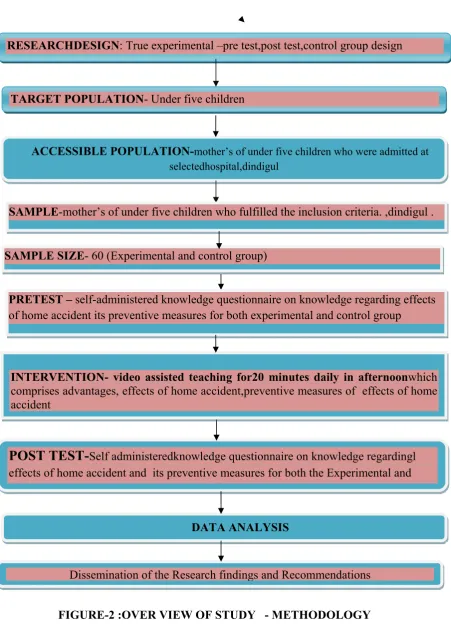
FIGURE-2 :OVER VIEW OF STUDY - METHODOLOGY RESEARCHDESIGN: True experimental –pre test,post test,control group design
TARGET POPULATION- Under five children
ACCESSIBLE POPULATION-mother’s of under five children who were admitted at selectedhospital,dindigul
POST TEST-
Self administeredknowledge questionnaire on knowledge regardingl effects of home accident and its preventive measures for both the Experimental andDATA ANALYSIS
Dissemination of the Research findings and Recommendations
INTERVENTION- video assisted teaching for20 minutes daily in afternoonwhich comprises advantages, effects of home accident,preventive measures of effects of home accident
SAMPLE-mother’s of under five children who fulfilled the inclusion criteria. ,dindigul .
SAMPLE SIZE- 60 (Experimental and control group)
32
SCHEMATIC REPRESENTATIION OF RESEARCH METHODOLOGY
Experimental group:
Video assisted teaching for 20 minutes Control group:
No video assisted teaching Research design: True experimental –pre test,post test,control group design
Study setting: karthick nursing homel, dindigul
Sample size: 60 subjects (30 Experimental group, 30 control group
Sampling technique: Simple Randam sampling
Pre assessment of knowledge level (semi structured questionnaire) Research approach – Quantitative approach
Data Analysis and interpretation of the findings
Dissemination of the Research findings and Recommendations Post assessment of knowledge level
Target population Mother’s of under five children
Accessible population
DATA ANALYSIS AND
33
CHAPTER IV
DATA ANALYSIS AND INTERPRETATION
This chapter explains the statistical analysis performed on the collected data and to evaluate the effectiveness of puppet show on knowledge regarding effects of home accident and its preventive measures among mother’s of under five children at selected hospital dindigul. Analysis is a method for reading quantitative data meaningful and intelligible information, so that the research problem can be studied and tested, including relationships between the socio demographic variables.
The data was collected from 60 samples, assembled, analyzed and tested for their significance. The findings based on the statistical analysis are presented in this chapter. Descriptive statistics was used for analyzing data in the light of objective of the study.
Organization of data : The study findings of the samples are presented in the following sections
Section-I: Description of socio demographic variables of among mother’s of under five children.
Section-II: Distribution of Pre test level of knowledge regarding effects of home accident and its preventive measures.
Section-III: Effectiveness of video assisted teaching on knowledge regarding effects of home accident and its preventive measures in experimental group
34
SECTION-I
[image:51.595.99.535.214.682.2]DISTRIBUTION AMONG MOTHER’S OF UNDER FIVECHILDREN, WITH THEIR SOCIO DEMOGRAPHIC VARIABLES
Table - 1
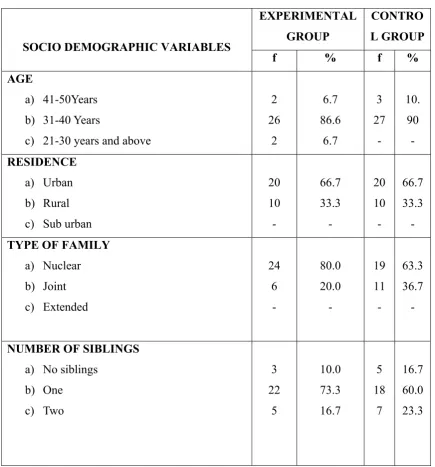
Frequency and percentage distribution of socio demographic variables among mother’s of under five children
n=60
SOCIO DEMOGRAPHIC VARIABLES
EXPERIMENTAL GROUP
CONTRO L GROUP
f % f %
AGE
a) 41-50Years b) 31-40 Years
c) 21-30 years and above
2 26 2 6.7 86.6 6.7 3 27 - 10. 90 - RESIDENCE
a) Urban b) Rural c) Sub urban
20 10 - 66.7 33.3 - 20 10 - 66.7 33.3 - TYPE OF FAMILY
a) Nuclear b) Joint c) Extended
24 6 - 80.0 20.0 - 19 11 - 63.3 36.7 -
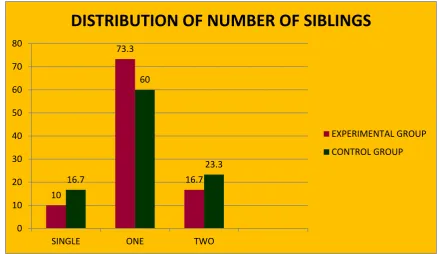
NUMBER OF SIBLINGS a) No siblings
b) One c) Two
35
EDUCATION OF FATHER a) No formal education b) Primary
c)Middle c) High
d) Degree and above
- 9 - 9 12 - 30.0 - 30.0 40.0 - 17 - 6 7 - 56.7 - 20.0 23.3
EDUCATION OF MOTHER a) No formal education b) Primary
c) Middle d) High e) Degree
- 13 - 11 6 - 43.3 - 36.7 20.0 - 10 - 12 8 - 33.3 - 40.0 26.7 OCCUPATION OF FATHER
a) Cooly
b) Private employee c) Government employee
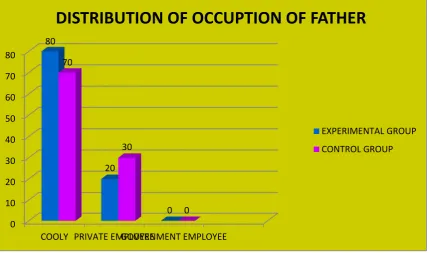
24 6 - 80.0 20.0 - 21 9 - 70.0 30.0 - OCCUPATION OF MOTHER
a) Home maker b) cooly
c) Private
d) Government employee
20 10 - - 66.7 33.3 - - 17 13 - - 56.7 43.3 - -
FAMILY MONTHLY INCOME a) <3000
b) Rs.3001-5000 c) Rs.5001-8000 d) >8000
18 7 5 - 60.0 23.3 16.7 - 22 4 4 - 73.3 13.3 13.3 - MOST PREFERABLE PROGRAME SOURCE OF
KNOWLEDGE
1) Health leave professional 2) media 3) Neighbour
36
- In the aspect of age, most of the subjects 26 (86.6%) were belongs to the age of 41-50 years; the least were 2 (6.7%) belongs to the age of 31-40 years and21-30 years and above in experimental group and in the control group 27(90.0%) were in 41-50 years and 3(10%) subjects between 31-40 years of age group.
- In regards to Residence, most of the subjects 20(66.7%) residing in urban area,10 subjects(33.3%)were residing at rural area in experimental group, in control group 20 subjects(66.7%)living in urban and10 subjects(33.3%)living in rural area.
- Regarding the type of family, most of the subjects 24 (80%) were from nuclear family and remaining 6(20%) were from joint family in experimental group. Similarly in control group, most of the subjects 19(63.3%) were from nuclear family and remaining 11(36.7%) were from joint family
- Related to the number of children, most of the families had two children both in experimental and control group.
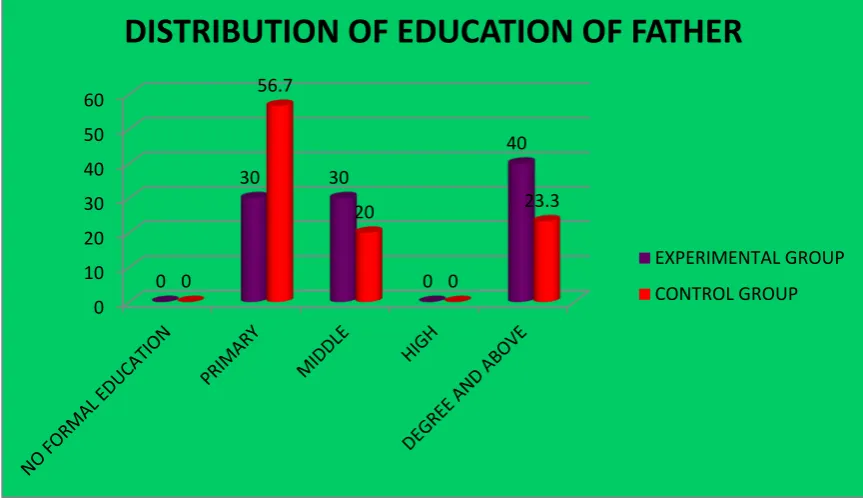
- Based on educational status of father, 12 (40%) were had degree education, 9(30%) had primary education, Higher secondary education, none of them (0%) were no formal education in experimental group. In control group, 17(56.7%) of the fathers had primary education, 6 (20.0%) had secondary education, 7(23.3%) were studied up to degree education.
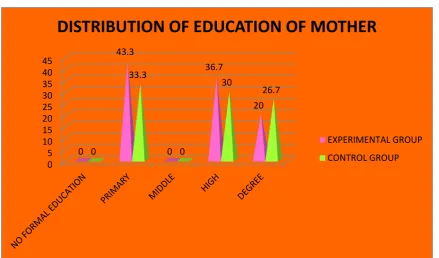
- Related to mother’s education, none of them were had no formal education, and 13(43.3.%) had primary education,11(36.7%) had secondary education,6(20%)had degree education in experimental group, and control group 10(33.3%) were studied up to primary education and 12(40%) were completed secondary education.
37
- According to mother occupation 20(66.7) were home maker,10(33.3%)working as a cooly in experimental group, in control group 17(56.7%)were home maker and 13(43.3%)were cooly.
- About family income of the subjects, most of their salary in experimental group 18(60%) fall below Rs. 3000 and 7(23.3%) earned above Rs.5000,5(16.7%) earned above Rs. 8000 In experimental group, 22 (73.37%) families were earning Rs. 3000 - in control group, 4 (13.3%) families were earning between Rs.3000-Rs.5000 and 4(13.3%) were earning Rs.8000 per month.
38
Figure 1: Percentagewise distribution according to their age in years both in experimental and control group
The above bar diagram shows that in experimental group the higher percentage of subjects 26(86.6%) was in between 31-40 years of age group and 2( 6.7%) was in the age of 41-50 years,2(6.7%) between the age of21-30 years and above,in control group most of the subjects 27(90%)was in between 31-40 years of age group,3 subjects(10%)in between age group of 21-30 years.no subjects falls between the age group of41-50years and above.
6.7
86.6
6.7 10
90
0 0
10 20 30 40 50 60 70 80 90 100
DISTRIBUTION OF AGE
39
Figure 2: Percentagewise distribution according to their Residence both in experimental and control group
- The above cylindrical bar diagram shows that in experimental group most of the subjects 20(66.7%)residing in urban area,10 subjects(33.3%)were residing at rural area,in control group 20 subjects(66.7%)living in urban and10 subjects(33.3%)living in rural area.none of the subjects residing in sub urban area.
0 10 20 30 40 50 60 70
URBAN RURAL SUB URBAN 66.7
33.3
0 66.7
33.3
0
DISTRIBUTION OF RESIDENCE
40
Figure 3: Percentagewise distribution based on family type both in experimental and control group
The above cone diagram illustrates that most of the subjects24 (80%) belongs to nuclear family and6 (20%) were belongs to jointfamily in experimental group and in control group19 (63.3%)belongs to nuclear family and11 (36.7%)belongs to joint family,none of the family belongs to extended family.
EXPERIMENTAL GROUP CONTROL GROUP 0
10 20 30 40 50 60 70 80
NUCLEAR JOINT
EXTENDED 80
20
0 63.3
36.7
0