EFFECTIVENESS OF VIDEO ASSISTED TEACHING PROGRAMME ON KNOWLEDGE AND ATTITUDE REGARDING THE PREVENTION OF SELECTED OCCUPATIONAL HEALTH HAZARDS AMONG COTTON
INDUSTRY WORKERS AT SELECTED COTTON INDUSTRY IN DINDIGUL.
A DISSERTATION SUBMITTED TOTHE TAMILNADU DR.M.G.R. MEDICAL UNIVERSITY, CHENNAI, IN PARTIAL FULFILLMENT
OF THE REQUIREMENTS FOR THE DEGREE OF MASTER OF SCIENCE IN NURSING.
A STUDY TO EVALUATE THE EFFECTIVENESS OF VIDEO ASSISTED
TEACHING PROGRAMME ON KNOWLEDGE AND ATTITUDE
REGARDING THE PREVENTION OF SELECTED OCCUPATIONAL HEALTH HAZARDS AMONG COTTON INDUSTRY WORKERS AT SELECTED COTTON INDUSTRY IN DINDIGUL.
CHINTHAMANI.A
A DISSERTATION SUBMITTED TOTHE TAMILNADU DR.M.G.R. MEDICAL UNIVERSITY,CHENNAIIN PARTIAL FULFILLMENT OF THE
REQUIREMENTSFOR THE DEGREE OFMASTER OF SCIENCE IN NURSING.
CERTIFICATE
This is a bonafide work of A.CHINTHAMANIM.Sc (N) from
SakthiCollege of Nursing, Dindigul, Tamilnadu, India,submitted in partial
fulfillment for the Degree of Master of Science in Nursing under the Tamil
NaduDr.M.G.R Medical University, Chennai.
Signature of the Principal
MRS.V.JANAHI DEVI M.Sc (N).,
A STUDY TO EVAUATE THE EFFECTIVENESS OF VIDEO ASSISTED
TEACHING PROGRAMME ON KNOWLEDGE AND ATTITUDE
REGARDING THE PREVENTION OF SELECTED OCCUPATIONAL HEALTH HAZARDS AMONG COTTON INDUSTRY WORKERS AT SELECTED COTTON INDUSTRYIN DINDIGUL
APPROVED BY DISSERTATION COMMITTEE ON__________________ 1. PROFESSOR IN RESEARCH:
MRS.V.JANAHI DEVI M.Sc (N)., Principal,
Sakthi College Of Nursing, Oddanchatram,
Dindigul. (DT)
2. CLINICAL EXPERT:
Mrs. N.ReenaM.Sc (N), RNRM, Associate Professor,
Sakthi College Of Nursing, Oddanchatram,
Dindigul. (DT)
3. MEDICAL EXPERT :
Dr.Jamessundarsingh M.B.B.S.,D.Ortho Governmenthospital,
ACKNOWLEDGEMENT
“Life isn’t about finding yourself. Life is about creating yourself.” ― George Bernard Shaw
I praise and thank the God Almighty who has been my source of strength in every step of my life and foundation of my knowledge and wisdom.
It is my greatest privilege to recalls many persons to whom I am indebted for their contribution in various ways directly and indirectly with profound sentiments of heartfelt gratitude; I offer my sincere thanks to all those who have contributed to the successful completion of this work.
I would like to express my deep and sincere gratitude to our Chairman Dr.K.Vembanan M.B.B.S.,M.S., and I express my deep gratitude and heartfelt thanks to our Vice-Chairman Dr.K.GokilaVembanan M.B.B.S.,D.G.O.,for their support and encouragement for successful completion of the study.
I express my deep gratitude and sincere heartfelt thanks to the awesome personality Mrs.V.Janahidevi ,M.Sc.,(N)., Principal, Sakthi college of nursing for laying the strong foundation for my study by excellent guidance, valuable suggestions, support and encouragement which have been very valuable for the successful completion of thse task.
Excellent teacher is a complex matrix of builder, Molders, artist, leader, and harvest. Mrs.N.ReenaM.Sc (N)., for her guidance, inspiring discussion, kind encouragement, painstaking corrections and valuable suggestion throughout my task.
I record my thankful to Mrs.UmaMaheswari ,M.Sc (N),for her insisting support, inspiring guidance, constructive suggestions and immense encouragement which enabled me to reach my object. I consider it as a great honour and privilege to have completed under his supervision.
I offer my special heartfelt thanks toMrs.ArulsiliM.Sc(N)., Mrs.HemaM.Sc(N)., Mrs.GangaEswariM.Sc(N)., Mrs.NithyaveniM.Sc(N)., Mrs.ShobanaM.Sc(N)., Sakthi college of Nursing.I thank them all for their continuous encouragement and guidance.
I extended my sincere thanks to all Faculty members of Sakthi College of Nursing for their suggestion for this study.
I express my deep gratitude and heartfelt thanks toDr.JulietM.Sc(N).,Ph.D., Dr.Navaneetha,Ph.D.,Mrs.Sheeba,M.Sc(N)., Dr.JohnSamArunPrabhuM.Sc(N).,
Ph.D.,Mrs.Muthulakshi,M.Sc(N)., Mrs.GomathiM.Sc
(N).Mrs.P.VishalapandianM.Sc(N).,for their invaluable suggestions for to do this study.
I express my heartfelt thanks to Dr.Swaminathan, statistician, seniormanager.Who spend his invaluable time, continuous enthusiastic encouragement for his share in the arduous task of this study.
I feel a deep sense of gratitude to Ms.Chellammal, Librarian, Sakthi College of Nursing for the sources of Books, journals references.
I extended my warmest thanks to Mrs.S.Jansirani M.A.,M.Phil and Mrs.MaheswariM.A.,English for doing Tamil and English editing.
I am grateful thanks to Mr.K.Veerashanmugaraj, BCA M.BA., and B.Ed., Ms.Brindha B.Com (CA).,for providing strong support, excellent contribution and encouragement for to create Audio visual aids successfully.
Hearty thanks to my class mates especially Mrs.K.Maheswariand Mrs.S.Kalaiyarasi for their co-operation and help they rendered during this study.
I have no words to express my gratitude and thanks to my beloved Husband Mr.E.Manikandan, for his constant support, help, encouragement and fervent prayers during this study period. I extend my warmest gratitude to my lovable daughter Baby Kanishkawho missed my love and care during the course of the study above all. I am greatly indebted to my father R.Arumugam and my mother Mrs.A.Parasakthiand my mother in law, Mrs. Nallammaland my inspiring brother Mr.S.Sasi Kumar M.Com.,MBA., and my beloved sisters for their constant support and encouragement.
ABSTRACT
The present study entitled “To evaluate the effectiveness of Video assisted teachingprogramme regarding knowledge and attitude on selected occupational health hazards among cotton industry workers in selected cotton industry at Dindigul District was done by Mrs.A.Chinthamani as a partial fulfillment of the requirement for the degree of Master of Science in Nursing to the TamilnaduDr.M.G.R. Medical University, Chennai during the year 2012-2014.
TABLE OF CONTENTS
CHAPTER
CONTENTS
PAGE NO
I INTRODUCTION 1-15
SIGNIFICANCE AND NEED FOR THE STUDY 4
STATEMENT OF THE PROBLEM 9
OBJECTIVES OF THE STUDY 10
HYPOTHESIS 10
OPERATIONAL DEFINITIONS 11
ASSUMPTIONS 11
DELIMITATION 12
PROJECTED OUTCOME 12
CONCEPTUAL FRAMEWORK 13-15
II REVIEW OF LITERATURE
Studies Related To Respiratory Problem Studies Related To Noise Induced Problem Studies Related To Occupational Accident Studies Related To Intervention
16-27
III METHODOLOGY 28-35
RESEARCH APPROACH 28
RESEARCH DESIGN 28
VARIABLES UNDER THE STUDY 29
SETTING OF THE STUDY 29
POPULATION 29
SAMPLE 29
SAMPLE SIZE 29
SAMPLING TECHNIQUE 29
CRITERIA FOR SAMPLE SELECTION 30 DESCRIPTION OF THE INSTRUMENT 30
SCORING PROCEDURE 31
VALIDITY AND RELIABILITY OF THE TOOL 32 DEVELOPMENT OF VIDEO ASSISTED TEACHING
PROGRAMME
33
PILOT STUDY 33
PLAN FOR DATA ANALYSIS 35
PROTECTION OF HUMAN RIGHTS 35
IV DATA ANALYSIS AND INTERPRETATION 36-52
V DISCUSSION 53-56
VI SUMMARY, CONCLUSION, IMPLICATIONS , LIMITATIONS AND RECOMMENDATIONS
57-63
REFERENCES 64-70
LIST OF TABLES
Table
No
Title
Page
No
1
Distribution of cotton industry workers based on their
demographic data
37
2
Distribution of cotton industry workers based on health
history
41
3
Distribution of pre test and post test knowledge level of
selected occupational health hazards among cotton
industry workers
42
4
Distribution of pre test and post test attitude level of
selected occupational health hazards among cotton
industry workers
44
5
Comparison of cotton industry workers based on level of
Knowledge regarding prevention of selected occupational
health hazards in the pre and post test.
46
6
Comparison of cotton industry workers based on level of
attitude regarding prevention of selected occupational
health hazards in pre and post test.
48
7
Correlation between knowledge and attitude of cotton
industry workers regarding prevention of selected
occupational health hazards.
50
8
Association of knowledge with selected demographic
variables on prevention of selected occupational health
hazards among cotton industry worker
51
9
Association of Attitude level with selected demographic
variables on prevention of selected occupational health
hazards among cotton industry workers.
LIST OF FIGURES
FIGURE TITLE
PAGE NO
1 Conceptual Frame Work Based On Imogene King’s Goal Attainment Theory(1981)
15
2 Distribution of Subjects According To Age 39 3 Distribution of Subjects According To Sex 39
4 Distribution of Subjects According To Educational Status
40
5 Distribution of Subjects According To Years of Experience
40
6 Distribution of Pre Test And Post Test Knowledge Level of Cotton Industry Workers.
43
7 Distribution of Pre Test And Post Test Attitude Level of Cotton Industry Workers.
45
8 Comparison of Mean Pre Test And Post Test Knowledge of Cotton Industry Workers
47
9 Comparison of Mean Pre Test And Post Test Attitude of Cotton Industry Workers
LIST OF APPENDICES
APPENDIX
TITLE
I
Copy of Permission Letter For Conducting The Study
II
Copy of Letter Seeking Content Validity
III
List of Experts
IV
Certificate For English Editing
V
Certificate For Tamil Editing
VI
Consent Form in English and Tamil
VII
Questionnaire (English)
VIII
Questionnaire (Tamil)
IX
Key Notes
X
Content of video assisted teaching programme (English)
XI
Content of video assisted teaching programme (Tamil)
CHAPTER-I
“Do good to yourself
By doing good to others”-Frathula
INTRODUCTION
‘‘Health is a state of complete physical, mental and social well being and not
merely an absence of disease or infirmity’’ -WHO (1948)
God said to Adam, “you will have to work hard all your life to produce enough food for you”. So even now, human being is struggling to earn for their lively hood. These earning sources vary from one individual to another.
But often people take health for granted and do not fully appreciates until it lost the meaning of health is misunderstood and misinterpreted by many people. This is because of lack of complete scientific information and poor instructions. It is subjective and abstract.
Health promotion and maintenance enables individual’s families and communities to develop their full health potential.
has increased from an estimated 0.87 million units in the year 1980-81 to over 3 million in the year 2000 This would lead to roping in of 4.2 million people to the spinning industry. This is in addition to nearly 6.5 million people that are already involved in the sector, which is the second largest employer after agriculture.
Apparel Export Promotion Council data shows that there are 1,761 cotton-spinning mills in India, total of 460 mills in the State of Tamilnadu, including 160 mills in the dindigul district out of which maximum units are concentrated in Tamil Nadu, Andhra Pradesh, Gujarat and Maharashtra.
The health of the industrial workers, in a large measures, will also be influenced by conditions prevailing in their working place one of the declared aims of occupational health is to provide a safe ‘Occupational environment”, in order to safeguard the health of workers.
According to WHO, healthy workers are productive and raise healthy families and healthy workers are a key strategy for overcoming poverty. Occupation health is related to human work, human place and work environment. Occupation health is entirely preventive medicine. The main objective of occupational health is the safety of workers in all occupations from injuries and disease and to improve their health status.
“Working safety is like breathing – if you don’t, you die” -Deepak Chopra. According to ILO estimation, out of 2.34 million occupational related deaths occur every year.
According to NCOH Respiratory problem is one of the major health threats to cotton industry Workers. It leads to some systemic symptoms in exposed Workers, along with a number of other physical problem like, hearing loss or noise problem, low back pain, Respiratory symptoms occur. Byssinosis is a respiratory diseases of workers of cotton, flax, soft hemp and is classically characterized as shortness of breath; cough and tightness of chest occur on the first day itself. Then it will develop bronchial asthma.
It is noted that the maximum permissible noise level in work place for 8 hours shift is 90 dB, as recommended by the Government of India, Ministry of Labour, Model Rules under Factories Act, 1948 (corrected up to 31-03-1987), Occupational Safety and Health Administration (OSHA) and International Organization of Standardization (ISO).
The cotton spinning mill workers were exposed to continuous noise levels between 89 and 106 dBA. It results in mild, moderate, moderately severe degree of hearing impairment. Every year approximately more than 30 million people across the world are occupationally exposure to hazardous noise and most of the people undergone for accident. Occupational accidents result from the joint action of both environmental and human factors, and are therefore dealt with separately
The interaction between man and his working environment may lead to betterment of health, when work is fully adapted to human needs and factors, or to ill health, if work stresses are beyond human tolerance. Occupational diseases and injuries result from specific exposures at work. In addition, work exposures may aggravate certain illnesses or be a factor of varying importance in causing diseases of multiple etiologies.
According to WHO The main aims of occupational health services are.
The Promotion and maintenance of the highest degree of physical, mental and social well-being of workers in all occupations.
The prevention among workers of departures from health caused by their working conditions.
The protection of workers in their employment.
Industrialization is necessary for prosperity and at times for the survival of a nation. The production is the real wealth of a Nation. Only industrialization is not enough, real benefit is brought by continuous top performance of the worker which is only possible by their good health. Industrial workers constitute only a segment of general population and the factors that influence the health of the population also apply equally to industrial workers. Occupational health is undoubtedly an issue that calls for more research by experts and activists.
on the epidemic and make good progress on this dimension of decent work,”–Ryder (2013)
SIGNIFICANCE OF THE STUDY
According to International Labour Organization (2013), 2.34 million people suffered due to occupational hazards. In this 2.02 million people die each year from work-related diseases ,321,000 people die each year from occupational accidents,160 million non-fatal work-related diseases per year,317 million non –fatal occupational accidents per year. These report reveals that Every 15 seconds, a worker dies from a work-related accident or disease. Every 15 seconds, 151 workers have a work-related accident.
Health and safety executive (2010) estimate the health and safety statistics 148 workers killed at work ,78,000 other injuries to employees were reported ,1,75,000 over 7 day absence injuries occurred 1.1 million people suffered from work related illness ,27 million working days were lost due to work related illness and workplace injury.
Sharan Burrow (2013), General Secretary of the International Trade Union Confederation (ITUC), said: “Our societies must not accept that workers can lose their health to make a living. And we must not forget that occupational diseases put a huge burden on families and the public purse – a burden that is preventable. Harnessing the knowledge of workers is crucial for preventing death and illness”.
Diseases Include Silicosis, Asbestosis (Total 47, Maharashtra-36, W.Bengal-10), Byssinosis, other lung Diseases (70), Noise-induced hearing loss (total 471, Gujarat 39, Maharashtra 432) and few Cases of mercury, lead and chromium poisoning (97 altogether), Dermatitis (7), COPD (6).
WHO (2007), work on occupational health is governed by the Global Plan of Action on Workers’ Health 2008-2017, endorsed by the World Health Assembly in 2007. Encouraging industrialization in the developing countries has occurred rapidly without adequate provision for the production of the workers. Every year work related injuries and disease kill an approximately 1.1 million people worldwide, which is equal to global annual deaths from malaria.
Cotton industry workers are exposed to various hazards in the different departments of textile factories (Hafez et al., 1998). Especially in the spinning and weaving sections which play a role in the high incidence of industrial health hazards (Allan, 1981). The major health problems associated with cotton dust are respiratory problems, which include (byssinosis, bronchitis and bronchial asthma). The problems are highly prevalent in mills of developing countries(Fantahum and Abebe, 1999).
WHO (2012), India has had legislation on occupational safety and health for 50 years. But regulatory authorities are limited to 1,400 safety officers, 1,154 factory inspectors, and 27 medical inspectors. These numbers are grossly inadequate even for the inspection of formal units that only employ about 10% of India's total workforce (around 26 million), let alone the millions who work in the informal sector with absolutely no safeguards.
According to International Labour Organization (2013) estimation occupational accidents and diseases result in an annual 4 percent loss in global gross domestic product (GDP) in direct and indirect cost of injuries and diseases.
Raj Narayan (2010) that revealed that among 462 cotton industry workers (25.3%) workers had chronic respiratory morbidities. The morbidities included Byssinosis (11.7 %), chronic bronchitis (5.8%), Bronchial asthma (4.5%), Tuberculosis (1.5%), other obstructive pulmonary diseases (1.7 %).. The present study showed that 151 (32.7%) had cotton dust exposure for more than 20 years. Only masks were provided as protective devices and 191 (41.3%) of the workers were using it. Total 160 (34.7 %) workers were smokers. The result reveals that Among cotton textile workers more common morbid conditions include amoebiasis (4.1%), byssinosis (2.3%),chronic bronchitis (4.5%), dental stain(5.6%),iron deficiency anemia(54%)and URI(7.2%) .
is one of the leading causes of death. Health education to the cotton industry workers is minimal and the result is great and it is in the hands of community health nurse.
The work environment is a very conductive environment to provide health education either on a one to one basis or through a group process. The health education on preventive aspects will help the workers to have awareness about the risks on their work, safe practice and ways of preventing the hazards.
Most of the occupational hazards at work are preventable and the primary prevention approach is the most effective strategy for eliminating and control of these hazards. The primary prevention strategy greatly relied on health education and creating awareness on safe practices available. Prevention would play an important role in dealing with this problem since these diseases are mainly the result of inhalation of hazardous substances with most often workers are unaware off. Often occupational health is not given priority because very little research has been undertaken to study exposure to such hazards and its impact on health.
A quasi-experimental experimental study conducted in2007 by Jessica S.Kale in Belgaum, Karnataka, with an objective to assess the knowledge and practice of preventing occupational health hazards among textile weavers with a sample size of 55 through implementing planned teaching program. Result showed that 11% (6) had good knowledge during pre test, has improved to 100% (55) during post test. The researcher further recommended that same study can be conducted in other setting.
The investigator felt that in and around the Dindigul district many of the adolescent boys and girls working in cotton industry. Following years of investigator experience with the family and neibourhood cotton industry workers founded that most of them suffered from occupational health hazards such as respiratory problem; noise induced hearing loss and accidents. Based on their own life experience, the investigator light of this aspect of study topic for their research work.
The communication of awareness among the people regarding the various occupational health hazards is necessary. To achieve this, using the effective teaching methods are mandatory.
STATEMENT OF THE PROBLM
A study to evaluate the effectiveness of video assisted teaching programme on knowledge and attitude regarding the prevention of selected occupational health hazards among cotton industry workers at selected cotton Industry in Dindigul. OBJECTIVES
2. To determine the effectiveness of video assisted teaching programme on knowledge and attitude regarding prevention of selected occupational health hazards among cotton industry workers.
3. To correlate between the knowledge and attitude regarding prevention of selected Occupational health Hazards among cotton industry workers.
4. To associate the knowledge and attitude of prevention of selected Occupational health Hazards among cotton industry workers with selected demographic variables.
HYPOTHESIS
H1- There will be a significant difference in the pre test and post test knowledge regarding prevention of selected occupational health hazards among cotton industry workers.
H2 - There will be a significant difference in the pre test and post test attitude regarding prevention of selected occupational health hazards among cotton industry workers.
H3- There will be a significant correlation between the post test knowledge and attitude regarding prevention of selected occupational health hazards among the cotton industry workers.
OPERATIONAL DEFINITIONS
1. Knowledge:
It refers to the understanding and awareness of cotton industry workers regarding health hazards due to their occupation and its prevention.
2. Attitude:
It refers to the way of thinking and beliefs opinion or feelings of cotton industry workers regarding prevention of Occupational health hazards.
3. Effectiveness:
In this study it refers to the outcome of the teaching Programme measured in the terms of knowledge and attitude scores gained. The effectiveness will be determined by using statistical analysis of pre and post test scores.
4. Cotton industry Workers:
A person who is working in selected cotton industry. 5. Occupational health hazards:
Occupational diseases and injuries result from exposure to pollution, noise and vibrations in the working environment at work. In addition, work exposures may aggravate certain illnesses or be a factor of varying importance in causing diseases of multiple etiologies.
6. Video assisted teaching programme
It is an audio visual teaching device, which exhibits the image recorded on video tape regarding prevention of occupational health hazards among cotton industry workers.
It refers to the measures taken at primary level through video assisted teaching programme to avert the occurrence of occupational health hazards.
ASSUMPTIONS
I. Cotton industry workers will have some basic knowledge on occupational health hazards.
II. The knowledge and attitude of the cotton industry workers will influence the prevention of Occupational health hazards.
III. Health education at regular intervals will improve knowledge and promote the positive attitude among cotton industry workers regarding prevention of Occupational health hazards.
IV. Demographic variables may or may not influence the prevention of Occupational health hazards.
DELIMITATIONS
1. The data will entirely be dependent on the verbalized response of the respondent
2. This study includes the industry workers those who know to converse Tamil
3. This study is confined to selected industry at Dindigul
PROJECTED OUTCOMES
2. The development of the video assisted teaching programme would be helpful to improve knowledge and attitude among the cotton industry workers thus it helps to improve their practice in prevention of selected occupational health hazards
3. The use of an audio visual aid will enable the learners to grasp the information more easily and it remains in their mind for longer.
CONCEPTUAL FRAME WORK
Conceptual framework is theoretical approaches to study the problems that are scientifically based on emphasize the selection, arrangement and classification of its concepts. The conceptual framework formalizes the thinking process, so that others may read or know the frame of references basic to research problem. It provides frame work of references for clinical practice, research and education.
nurse and client whereby each perceives the other and the situation, and through communication, they set goals explore means and agree on means to achieve goals.
At The basic assumption of the theory of goal attainment that nurses and clients communicate information, set multigoals, and then act to attain those goals is also the basic assumption of this study. Individuals have rights to participate to decision that influence their life, and the community health professionals have a responsibility to share information that help individuals make informed decisions about their health care.
The present study aims at evaluating the efficacy of health promotion interventions on prevention of selected occupational health hazards among cotton industry workers. The conceptual framework was based on Imogene King’s goal attainment model (1981).
In this study the King’s models has been modified and it involves perception, judgments, and action on both the part of the nurses and the client. Multigoal setting is to develop knowledge and to improve the attitude of cotton industry workers regarding occupational health hazards. This leads to interaction and transaction to determine the effectiveness of video assisted teaching programme.
occupational health hazards through a structured questionnaire. Investigator judge that the cotton industry worker are having poor knowledge and attitude regarding the occupational health hazards and then takes action (i.e.) Investigator plans for video assisted teaching programme.
The cotton industry workers perceive that they are just aware about the health hazards but not having a clear idea about the preventive aspects of it. The cotton industry workers judge that learning regarding prevention of occupational health hazards minimizes occupational health problems and the action taken by the cotton industry workers is to be ready for getting information and acquiring knowledge. Both the action (i.e.) by the nurse and cotton industry workers leads to reaction.
FEED BACK
FEED BACK PERCEPTION-Cotton industry
workers are prone to expose
JUDGEMENT-To provide intervention to improve the knowledge and attitude regarding prevention of selected
occupational health hazards. ACTION-Plan the video teaching programme regarding prevention of selected occupational health
JUDGEMENT-Need to learn video teaching programme.(Respiratory, Noise induced hazards and
ACTION-Consent and readiness for receiving information REACTION Arrange for video teaching programme sessions INTERACTIO N To assess knowledge and attitude and execution of video teaching TRANSACTION Improved the knowledge and attitude regarding prevention of selected occupational health hazards MULTIGOAL SETTING
PERCEPTION-Need for health education on prevention of occupational health hazards of C
cotton industry workers
Figure 1: Conceptual Frame Work Based On King’s Goal attainment theory (1981) FEEDBA
CHAPTER II
“Take care of your body. It’s the only place you have to live.” – Jim Rohn
REVIEW OF LITERATURE
The review of literature is a broad, comprehensive, in depth, systematic & critical review of scholarly publication, unpublished materials, AV materials & personal communications. Literature review can serve a number of important functions in the research process. It helps to lay the foundation for a study & can also inspire new research ideas. It helps to assess what is already known, what is still unknown & untested, justify the need for its replication& throw some light on the feasibility of the study problems that may be encountered.
It also helps to uncover a promising methodology of data collection of obtaining useful information on how to increase the effectiveness of data analysis. “Review of literature is a critical summary of research on topic of interest, often prepared to put a research problem in contact as the basis for an implementation project”.
According to polit and hungler(1999) a review of related literature is an essential aspect of scientific research. It broadens the understanding of the researcher and helps to gain an insight necessary for the development of a broad conceptual context into which the problem fits.
helps to establish a comprehensive body of scientific knowledge in a professional discipline
Morgan PG (1981) conducted a study to first report of byssinosis in Hong Kong .There has been no report of byssinosis in Hong Kong although the textile industry has been one of the leading industries for many years. There workers with a long history of exposure to cotton dust had chronic obstructive airways disease precipitated by their work environment. One had irreversible airways obstruction but none had chronic bronchitis, emphysema, or Asthma. Only one gave a history of “Monday morning tightness”, and this was attributed to the fact that most of the textile workers in Hong Kong work seven days a week. It was suggested that a survey be carried out to ascertain the importance of byssinosis in the textile workers of Hong Kong and tha byssinosis should there be added to the list of notifiable occupational diseases.
STUDIES RELATED TO RESPIRATORY PROBLEM
cotton workers is consistent with previous reports of adverse respiratory effects of cotton dust. The higher rate of COPD deaths among silk workers was unexpected
Saoji Ajeet (2008-2009) did a cross sectional study was conducted among 462 cotton textile workers in babashaheb kedar sut girni ppt ltd of central india present study revealed that among 462 workers (25.3%) workers had chronic respiratory morbidities .The morbidities include byssinosis(11.7%).chronic bronchitis(5.8%).Bronchial asthma(4.5%),Tuberculosis(1.5%) other obstructive pulmonary diseases(1.7%).The present study showed that 151(32.7%) had cotton dust exposure for more than 20 years. Only mask were provide as productive devices and 191(41.3%) of the workers were using it .Total 160(34.7%) workers were smokers.
Saleema et al (2007) conducted a study in a textile mill in Gujarat among 6500 workers with standard interview questionnaire. It reveals that 14.42 %(29) workers had started showing the symptoms of Byssinosis.
suffer from chest symptoms and also in Ethiopia by Fantahum and Abebe (1999) who reported that respiratory symptoms increase in spinning department (59.7%).
Osibogun A (2005) conducted a study to prevalence of byssinosis and other respiratory problems among textile mill workers in Asada, Nigeria A total of 735 workers were interviewed and 437 workers had respiratory examinations carried out on them. Byssinisis was diagnosed in 8 out of 405 workers (prevalence of 6.36%) who were directly exposed to cotton dust. The difference was found to be statistically significant (chi2 =9.25 ; df=1; 0.01 <p<0.001). The spinning department had the highest prevalence of 11.5%. The prevalence of respiratory abnormalities which did not necessarily meet the criteria for a diagnosis of byssinosis was 4.9% for persistent cough and persistent phlegm; 8.0% for dyspnoea grade 2+; 3.3% for dyspnoea grade 4 and 2.59% for dyspnoea grade 5. Smoking was not found to be associated with the disease as none of the byssinosis were current smokers .byssinosis and other respiratory problems were found to be more prevalent in sections of the textile mill industry that were directly exposed to cotton dust.
The study was conducted on health appraisal of garment workers and suggested that among 3858 workers were examined, 571 (14.8%) were males and the remaining 3287 (84.2%) were females in that 79 cases (96.8%) being musculoskeletal problems, (19.3%) were Gastrointestinal tract disorder (10.9%) gynaecological disorder, respiratory disorder asthma, Bronchitis (81%) allergies urticara (21%).Among 1440 workers from the data elucidated total articles chosen in the acute exposure verses other categories was 42.9% (chronic exposure) 15.3% (acute toxicity) & 31.6% (Chronic toxicity) comparison with the other categories giving differences of 22.2% (acute exposure), 50% (Chronic exposure) & 44.4% acute toxicity.
R Altin (2002) conducted a prevalence of byssinosis and a respiratory symptom among cotton mill workers a questionnaire was used to inquire about respiratory symptoms was chest tightness (20.3%). The prevalence of byssinosis was 14.25% in cotton- processing workers. Among these cases, 28.6% had symptoms on the 1st day of the week, and 71.4% had symptoms on all days of the week. An acute effect was seen in 53.6% of the workers with byssinosis . Mean respirable dust concentrations are still above the permissible limits and thus the risk of byssinosis remains . workers in the cotton industry where obsolete technology is used and standardized protection measures are not applied should be followed for byssinosis.
Dr. Nirmalya Manna MD1 Dr. Gandhari Basu MD(2012) conducted An In-depth Cross-Sectional Study in West Bengal, India for to find out the prevalence of occupational deafness and the association between occupational noise exposures, socio-demographic and other risk factors with deafness of the employees. Among a total of 278 employees under this study, 235 employees were exposed to more than the permissible occupational noise level (90dB), out of whom 82 (34.90%) employees were deaf; which was significantly (χ2 = 17.97, df = 2, p = 0.0001) much more than deafness among the non-exposed workers who were 3 (6.98%). Hearing impairment increased as exposure level increased and this trend was statistically significant (χ2 = 17.97, df = 2, p = 0.0001). Hearing impairment also increased as duration of exposure to occupational noise increased and the relationship was found to be statistically significant (χ2 = 7.12, ).Pre-placement & periodic medical examination is vital before putting up any employee in an industry with high noise exposure .Regular use of personal protective devices by the employees is to be ensured.
phases 1 and 2 who had worked for four different job history. Therefore these findings verify meaningful difference between hearing loss of the workers in relevant frequencies.
Yildirim et.al (2007) conducted an experimental study observed that mean pure tone audiometric thresholds in textile workers were significantly higher than in control subjects at frequencies 2,000, 4000 an 6000Hz(p<0.05).hearing loss more evident at high frequencies (4-6kHz)than at low frequencies in worker group (p<0.05).also textile workers with longer employment duration had poorer hearing thresholds and the hearing loss had started on those who had worke for 5-8 y .
Thoria Mohamed and hosnia S.abd (2004) conducted a study on occupational health hazards among spinning factory workers. 550 workers were participated in study, findings revealed that workers were expose to various hazards like cough, dyspnoea; ear diseases; hearing loss; chronic bronchitis and various minor and major accidents, the findings also reveals that there was shortage of health services to workers to nursing services in the factory were not present. There was shortage of safety equipment mask only was provided for the exposed workers. Training and health education programs about occupational health hazards and prevention are not available. And if possible the factory should look into the possibility of replacing the old machines with new ones ,which is less noisy.
categories according to hearing thresholds at 125 to 8000 Hz with klockhoffs classification. The prevalence of yhe grade -3 hearing loss was 47.92% and grade 4-5 was9.21% on exposed subjects in both factories. There was significant difference between exposed an unexposed control subjects working in the same factories (p<0.001).
STUDIES RELATED TO OCCUPATIONAL ACCIDENTS
HorwitZ IB, McCall BP, (2007) conducted a study of Adolescents occupational injuries and work place risks with the objectives of to quantify Adolescent injury Rates ,analyzed risk factors, and measure the severity of injuries in occupational work area .it reveals that continued safety intervention and increased training are needed for to prevent occupational injury.
Mohammed Irfan farooq (2006) at landhi, Karachi, Pakistan cross sectional study to identify Byssinosis in cotton spinning mill workers, probable associations of disease with factors such as different work areas, safety gadget usage and overtime and to ascertain proportions of byssinosis to accidental injuries with a conventional sample of 83and pulmonary function test was done. Mean age of the sample was 30 ± 6.9 years, of all the workers 72%, used safety gadgets (masks) while working and 50% availed overtime. Smokers amounted to 31% of the total subjects. Around 35% workers complained of having respiratory ailments of which 19% (16 workers) closely matched byssinotic symptoms. Pulmonary Function Tests (PFTs) confirmed 13 of 16 workers to be byssinotics, with the remaining being labeled as Probables. The overall proportion of Byssinotics in the mill was 19.28% and that of accidental injuries was 22.9. Results indicate a very high probability of association of disease to non-usage .of safety gadgets and overtime working. Studies comprising of a greater sample size would show precisely the overall prevalence of the disease.
blood pressure.36 women (60%)had injuries at work place,18 women (30%)were affected by asthma,11 women(18%)had respiratory problem and 6 women (10%)had congestion in the chest and breathlessness . And long standing cause back pain for 42 women (70%).The medical expenses were a big burden for these women. Therefore as long as they can try to put up with all difficult situation and manage. This is a peculiar and unique feature we see in women.
STUDIES RELATED TO INTERVENTION
The above finding are consistent with the findings of Iftikhar ahmad, Muhammed, Samina, (et.al) 2012 conducted a study among 50 textile workers by age in years, age group, residence and language with the purpose of to determine the knowledge ,attitude and practice of workers about occupational health. Result indicate the correlation between the knowledge, attitude and practice of workers were statistically significant.
Shermila stella jeyaraja(2009) conducted Experimental study with the objectives of to assess the knowledge and attitude of weavers regarding the prevention of selected occupational health hazards in Madurai. In this study 60 sample are included 30 experimental and 30 control groups. The study reveal that pre test of experimental and control was 50% had inadequate. This may be due to lack of education, unawareness regarding the prevention of occupational health hazards. After the structured video assisted teaching programme the experimental group knowledge and attitude score was higher than the pre test value. It was 86.46 % and 63.26% respectively. It reveals that the health education programmes play an important role in improving the knowledge and attitude of weavers. And also moderate positive correlation also present between the knowledge and attitude.
Paramasivam Parimalam and Narayani Kamalamma (2007) A cross sectional study conducted to assess the level of occurrences of health problems among garment workers and their attitudes and practices to prevent occupational health problems. In this study a total of 216 workers were included. Among them 93% of workers has experienced in one or other type of occupational health hazards. All workers had some knowledge of personal protection measures to prevent health problems who are working in the garment manufacturing units, but only few workers (4%) in the cutting section were using personal protection equipment.
that 4% had high 36% average and 60% had low knowledge regarding health problems and its prevention. In the conclusion researcher recommended that the same study can be replicated on large sample, same study can be done at other setting and generalize the finding.
Jessica S Kale (2007) in Belgaum, Karnataka conducted quasi-experimental experimental study, with an objective to assess the knowledge and practice of preventing occupational health hazards among textile weavers with a sample size of 55 through implementing planned teaching program. Result showed that 11% (6) had good knowledge during pre test, has improved to 100% (55) during post test. The researcher further recommended that same study can be conducted in other setting
gadgets and overtime working. Studies comprising of a greater sample size would show precisely the overall prevalence of the disease.
Raja gopal (2002) conducted a descriptive study to identify the existing health problems among cotton mill workers and their knowledge on all aspect of safety measures .majority o cotton mill workers had one or the other health problems like throat irritaton, pain in lower extrimities, frequent, common cold ,back pain and nasal irritation. there was a gross inadequacy of knowledge
CHAPTER III
“Every human being is the author of his own health or disease.”-Sandy
This chapter deals with research approach, research design, setting of the study, population, sampling technique, sample, sample size, criteria for sample selection, description of the instruments, scoring procedure, validity and reliability of tool, description of the intervention, pilot study, data collection procedure, and plan for data analysis.
RESEARCH APPROACH
The investigator adopted an evaluative approach because the aim of the investigator was to determine the efficacy of video assisted teaching programme on prevention of selected occupational health hazards among cotton industry workers.
RESEARCH DESIGN
The research design was quasi experimental, one group pre test, manipulation and post test was adopted in this study.
O1 X O2
O1 → Observation (pre test)
X →video assisted teaching programme
O2 → Observation (post test)
In this study knowledge and attitude of cotton industry workers were the dependent variables and the independent variables was video assisted teaching programme.
SETTING OF THE STUDY
The study was conducted among cotton industry workers at selected cotton industry in Dindigul. Chola cotton industry was selected as the setting of the study. The cotton industry was situated at Vadasandur in Dindigul district since 1999. It include 799 cotton industry workers. It was situated 18 kms away from sakthi college of nursing, Dindigul .
POPULATION OF THE STUDY
The target population was Cotton industry workers. Accessible population was the cotton industry workers working in selected industry at dindigul
SAMPLE
Cotton industry workers working in selected cotton industry.
SAMPLE SIZE
Cotton industry workers who fulfill the inclusion criteria will be considered as samples and sample size was 60.
SAMPLING TECHNIQUE
CRITERIA FOR SAMPLE SELECTION
INCLUSION CRITERIA
Cotton industry workers those who know to converse Tamil
The selected cotton industry workers working at selected industries.
EXCLUSION CRITERIA
Cotton industry workers who were not willing to participate.
Cotton industry workers who were working in other than the selected industry
DESCRIPTION OF THE INSTRUMENT
After an intensive library, internet search and consultation with experts a structured interview schedule was developed to measure the knowledge and Likert type attitude scale was developed to measure the attitude of cotton industry workers regarding the prevention of selected occupational health hazards.
The tool consists of three categories.
Part I
It consists of demographic variables such as age, sex, educational status, marital status, and type of family, income, duration of work and year of work experience.
It consists of a questionnaires on knowledge related to health problems of cotton industry workers which consists of 21 structured interview questionnaire’s in the following areas,
1. General aspects -5 2. Respiratory problem -6 3. Noise induced disorder-4 4. Occupational Accidents-6
Part III
It consists of Likert type attitude scale to assess the attitude regarding occupational health hazards among cotton industry workers. It consists of 15 statements, with 5 point scale
SCORING PROCEDURE
Part II
The correct response to items in parts II was respectively knowledge related to prevention health problems of cotton industry workers was given a numerical score. The knowledge was measured in terms of knowledge score. The maximum possible knowledge score was 100.A score of 1 (one) was given to every correct response and a score of 0 (zero) was given to every wrong or no response. All questions had more than one correct response. For the purposes of the study, the knowledge score was classified as follows,
51-75% -Moderate 76-100% -Adequate
Part III
The correct response to items in parts II was respectively Attitude related to prevention health problems of cotton industry workers was given a numerical score There are totally 15 statements; the item will be measured on a 5 point scale from strongly agree, agree, uncertain, disagree, to strongly disagree.
For attitude the possible, Minimum score -75 Minimum score-15
Attitude score will be interpreted as follows. >80 % -Positive attitude
60-80% -Neutral attitude 0 -59% -Negative attitude
VALIDITY AND RELIABILITY OF TOOL:
items in the interview schedule. Based on their valid suggestions a few items were modified and final tool was prepared as per the suggestion given by the experts. The tool of Tamil translation was validated by Tamil experts.
Reliability of the tool was established through test retest method. The tool was administered to 6 cotton mill workers (10% of sample population). After a gap of 1 week, the retest was given. The Karl Pearsion`s coefficient of correlation was computed and the reliability of 0.87 for knowledge and 0.83 for Attitude was found.
DEVELOPMENT OF VIDEO ASSISTED TEACHING PROGRAMME:
The investigator made video assisted teaching programme with review of literature and with the expert opinion .the content of video assisted teaching programme includes the definition ,causes ,signs and symptoms, management ,prevention and complications of various occupational health problems like respiratory problem, noise induced disorder and occupational accidents among cotton industry worker .The average time taken for the programme was around 30 minutes.
PILOT STUDY
availability of sample, cooperation of respondents, and accessibility of setting and financial requirement was established. The result of pilot study showed that the study was feasible. Pilot study helped the investigator to confirm the feasibility of carry out the main study.
DATA COLLECTION PROCEDURE
The data collection was done for a period of 6 weeks except on Sundays. Before commencing the present project the permission to conduct the study was obtained from the Manager of selected cotton industry. With the guidance of the concern manager of the organization, the investigator met cotton industry workers. The investigator established rapport with study subjects and purposes of the study was explained to each subject. Written consent was received from each participant.
The list of cotton industry workers were obtained from the industries and were short listed based on sample selection criteria. Using simple random sampling without replacement, a sample of 60 cotton industry workers was selected.
SCHEDULE FOR DATA COLLECTION
DURATION ACTIVITY NO OF CLIENTS/ SHIFT
13.05.2013 Pre Test 20
27.05.2013 Video Assisted Teaching
20
10.06.2013 Post Test 20
PLAN FOR DATA ANALYSIS
The data was analyzed in terms of the objectives of the study using descriptive and inferential statistics. The plan of data analysis was follows
1. Organize the data in a master data sheet
2. Frequency and percentage distribution were used to analyze the demographic data for cotton industry workers regarding prevention of occupational health hazards
3. Frequency and percentage distribution were used to assess the level of knowledge and attitude of cotton industry workers regarding prevention of selected occupational health hazards
4. Mean, Mean Percentage, Standard deviation and inferential measures were used to assess and compare the pretest and post test knowledge and attitude regarding prevention of selected occupational health hazards
PROTECTION OF HUMAN RIGHTS
of the present study to the cotton industry manager and also to the samples in order to get their maximum cooperation.
CHAPTER IV
DATA ANALYSIS AND INTERPRETATION
“Data is only meaningful when grouped and analyzed”
This chapter deals with the analysis and interpretation of the data. The data were collected through structured interview questionnaire among cotton industry workers regarding the prevention of selected occupational health hazards. This result was computed using descriptive and inferential statistics based on the objectives of the study. The data were collected from 60 samples.
OBJECTIVES OF THE STUDY
SECTION A :- Distribution of subjects based on demographic variables.
SECTION B : - Distribution of pretest and posttest level of knowledge and attitude regarding prevention of selected Occupational health Hazards among cotton industry workers.
regarding prevention of selected Occupational health Hazards among cotton industry workers.
SECTION D: - Correlation of knowledge and attitude of cotton industry workers regarding prevention of selected Occupational health Hazards.
SECTION E :- Association of knowledge and attitude cotton industry workers regarding prevention of selected Occupational health Hazards with selected demographic variables
[image:53.612.107.552.397.712.2]SECTION A :- Distribution of subjects based on demographic variables.
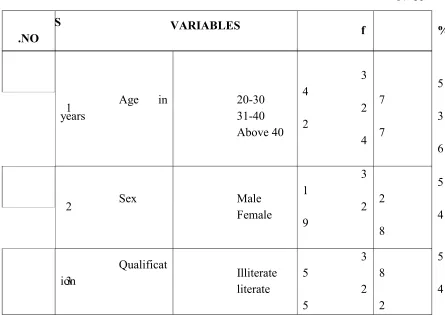
Table 1: Distribution of cotton industry workers based on their demographic data
N=60 S
.NO VARIABLES f %
1 Age in
years 20-30 31-40 Above 40 3 4 2 2 4 5 7 3 7 6
2 Sex Male
4 M a r i t a l Status Unmarried Married Widow Divorced Separated 2 5 3 2 1 1 1 4 1 5 3 2 2 2
5 Type of family
Joint Nuclear Ex te nd e d family
B r o k e n family 2 0 3 1 7 2 3 3 5 2 1 2 3 6 Income/m onth
B e l o w Rs.4, 000
Rs.4001 to 6,000
Rs.6001 to 8000
Above Rs .8000 1 3 5 2 3 1 2 5 8 3 8 2 7
Year of experience
<1 year 1-5 years Above 5 years 1 0 4 9 1 1 7 8 2 2
8 Duration of work per day
1-5 hours 5-8 hours >8 hours -5 1 9 -8 5 1 5
Regarding Qualification majority 35(58%) of the cotton industry workers were illiterate. In relation marital status of the respondents, majority 32(53%) of the cotton industry workers were married.
With regards to type of family majority 31 (52%) of cotton industry workers belongs to nuclear family. In relation to income majority 35(58%) of the cotton industry workers were under the income group of Rs.4001 to 6000 per month.
Figure 5: Distribution of subjects according to year of experience
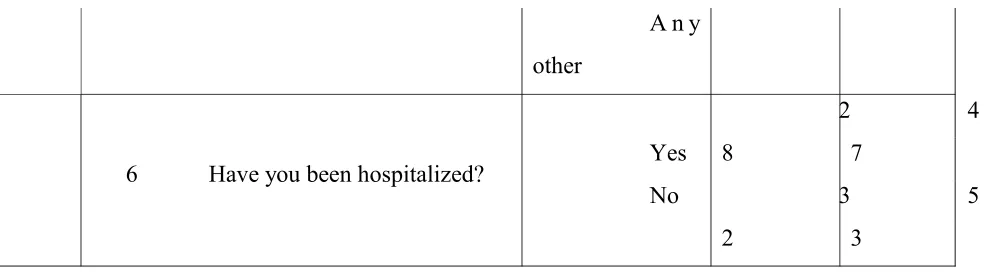
Table 2: Distribution of cotton industry workers based on health history
N=60
1
Have you been Prolong suffering
from any of these health problem
Joint pain Asthma
B r e a t h i n g difficulty Hearing problem 4 0 2 2 4 5 3 6 6 6 3 6 7 5 6 0 2
Do you undergone any injury in the working place? Yes No 2 3 3 7 3 8 6 2 3
If yes state the parts of body injured
H a n d Legs Face Back 3 1 6 7 -5 1 1 0 1 1
-4 Are you doing any exercise? Yes No -6 0 -1 00 5
If yes state the type of exercise regularly
W a l king
B r e a t h i n g exercise
Y o g
-A n y other
6 Have you been hospitalized? Yes No
2 8
3 2
4 7
5 3
The table 2 describes that majority 45(75%) of cotton industry workers had breathing difficulty problem .Regarding injury 23(38%) of cotton industry workers were had injury in this Majority 31(51%) had injury in hand. Regarding exercise majority 60(100%) of cotton industry workers are not doing any regular exercise. Regarding hospitalization majority 32(53%) of cotton industry workers were hospitalized.
SECTION B : - Distribution of pretest and posttest level of knowledge and attitude regarding prevention of selected Occupational health Hazards
among cotton industry workers.
Table 3: Distribution of pre test and post test knowledge level of selected occupational health hazards among cotton industry workers
N=60
T EST
LEVEL OF KNOWLEDGE
Inadeq uate
Modera te
[image:61.612.109.601.68.204.2]Pr e test
60 0 0
P ost test
0 19 41
Figure 6: Distribution of pre test and post test knowledge level of cotton industry workers
Table: 4 Distribution of pre test and post test attitude level of selected occupational health hazards among cotton industry workers
N=60
T EST
LEVEL OF ATTITUDE
Negati ve
Neutr al
Positiv e
Pr e test
15 45 0
P ost test
0 3 57
Figure 7: Distribution of pre test and post test attitude level cotton industry workers
SECTION C :- Comparison of pretest and posttest level of knowledge and attitude
regarding prevention of selected Occupational health Hazards
among cotton industry workers.
Table 5: Comparison of cotton industry workers based on level of knowledge regarding prevention of selected occupational health hazards in the pre and post test.
Group n Mean SD Paired‘t’ Value
Pre Test 60 21.91 5.16
52.02
Post Test 60 73.98 6.94
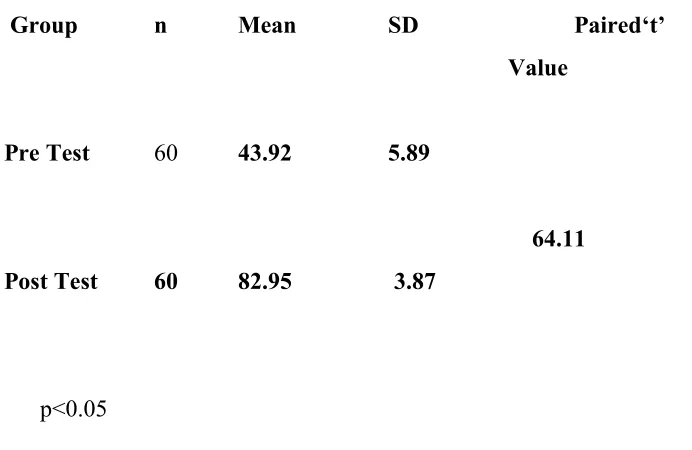
Table 6: Comparison of cotton industry workers based on level of attitude regarding prevention of selected occupational health hazards in pre and post test.
Group n Mean SD Paired‘t’ Value
Pre Test 60 43.92 5.89
64.11 Post Test 60 82.95 3.87
p<0.05
[image:70.612.106.452.387.612.2]Figure 9: Comparison of mean pre and post test level of Attitude of cotton industry worker
SECTION D: - Correlation of knowledge and attitude of cotton industry workers
regarding prevention of selected Occupational health Hazards.
Table 7: Correlation between knowledge and attitude of cotton industry workers regarding prevention of selected occupational health hazards.
Variables N Mean SD ‘r’ Value
Knowledge 60 73.98 6.94
0.51
Attitude 60 82.95 3.86
Correlation value (r=0.51) implies that there is a positive correlation between knowledge and attitude .It means that there is a moderate positive relationship between the knowledge and attitude of cotton industry workers regarding prevention of selected occupational health Hazards
SECTION E :- Association of knowledge and attitude cotton industry workers regarding prevention of selected Occupational health Hazards with
selected demographic variables
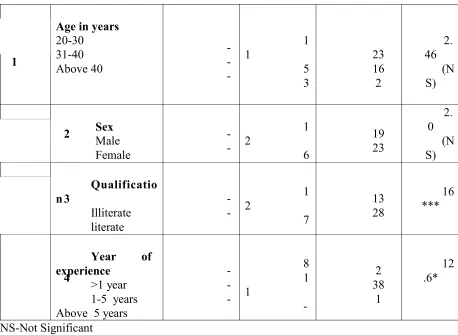
Table 8: Association of knowledge with selected demographic variables on prevention of selected occupational health hazards among cotton
industry workers.
N=60
S .No
Variabl
es Inadequate
Mod erately
A d e quate
Adequ ate
1
Age in years 20-30 31-40 Above 40 -1 1 5 3 23 16 2 2. 46 (N S) 2 Sex Male Female -1 2 6 19 23 2. 0 (N S) 3 Qualificatio n Illiterate literate -1 2 7 13 28 16 *** 4
Year of experience
>1 year 1-5 years Above 5 years
[image:74.612.108.566.68.403.2]-8 1 1 -2 38 1 12 .6* NS-Not Significant * - P<0 *** P<0.001
Table 8 shows that the obtained chi square values for age 2.46, sex 2.0 which are not significant at any level. Chi square value for qualification is 16 and it is significant at 0.001 level. The obtained chi square value for year of experience 12.6 and it is significant at 0.05 level. This means that there is significant association between qualification and year of experience of the cotton industry workers and their knowledge level on prevention of selected occupational health hazards.
N=60 S .No Variable s N egative N eutral P ositive X2
1 Age in years 20-30 31-40 Above 40 -7 3 1 2 7 1 9 3 0.5 ( NS) 2 Sex Male Female -4 7 2 7 2 2 1.6 (NS) 3 Qualificatio n Illiterate literate -1 0 1 1 3 3 6 15. 72*** 4
Year of experience >1 year
1-5 years Above 5 years -6 4 -4 4 5 1 16. 16** NS-Not Significant
Table 6 reveals that the obtained chi square value for Age 0.5, Sex which are not significant at any level. For Qualification 15.72 it is significant at 0.001 level. For Year of Experience 16.16 and it is significant at 0.01 level. It shows that there is a significant association between educational status and year of experience of the cotton industry workers and their Attitude level on prevention of selected occupational health hazards.
CHAPTER V
Start where you are. Use what you have. Do what you can. –Arthur Ashe
DISCUSSION
This study was conducted to evaluate the effectiveness of video assisted teaching programme on knowledge and attitude regarding the prevention of selected occupational health hazards among cotton industry workers at selected cotton Industries in Dindigul
The discussion was based on the objectives specified in this study.
The first objective of this study was to assess the knowledge and attitude regarding
prevention of Occupational health Hazards among cotton industry workers.
had negative attitude and 45(75%) and a neutral attitude of prevention of selected occupational health hazards among cotton industry workers.
The above findings consistent with the finding of a cross sectional study conducted by Paramasivan et.al.(2007) regarding assess the level of occurrences of health problems among garment workers and their attitudes and practices to prevent occupational health problems. All workers had some knowledge of personal protection measures to prevent health problems who are working in the garment manufacturing units, but only few workers (4%) in the cutting section were using personal protection equipment.
The second objectives of this study to determine the effectiveness of video assisted
teaching programme on knowledge and attitude regarding prevention of selected
occupational health hazards among cotton industry workers
The ‘t’ value 52.02P (<0.05) shows that there is a statistical difference between the pre and post test knowledge level of the cotton industry workers regarding prevention of occupational health hazards. For attitude the ‘t’ value of 64.11P (<0.05) showed that there is statistically significant difference between the pre test and post test attitude of the cotton industry worker regarding prevention of occupational health hazards.
had good knowledge during pre test, has improved to 100% (55) during post test. The researcher further recommended that same study can be conducted in other setting.
The above finding consistent with Akash H.A (2010) conducted pre-experimental study among 60 textile industries workers at Bangalore with the objectives of to assess the knowledge of textile weavers regarding existing health problems in textile industry. During the pre test the workers had inadequate knowledge regarding health problems in textile industry .The investigator used audio visual teaching device, and puppet as a teaching devices for to create awareness among textile workers regarding prevention of occupational health illness in textile industry. After the intervention of the knowledge of textile workers level was increased.
The third objective of this study is to correlate between the knowledge and attitude
regarding Occupational Hazards among cotton industry workers.
The post test knowledge mean value is 73.98 and SD was 6.94 the post test attitude mean value was 82.95 and SD is 3.87. The relationship between post test knowledge and attitude ‘r’ value was 0.51. It implies that there is a positive moderate relationship between post level of knowledge and attitude of cotton industry workers on prevention of selected occupational health hazards. This indicates that the attitude of the cotton industry workers can be influenced by knowledge to some extent.
health hazards in Madurai. In this study 60 sample are included 30 experimental and 30 control groups. The study revealed that pre test of experimental and control was 50% had inadequate. This may be due to lack of education, unawareness regarding the prevention of occupational health hazards. After the structured video assisted teaching programme the experimental group knowledge and attitude score was higher than the pre test value. It was 86.46 % and 63.26% respectively. It reveals that the health education programmes play an important role in improving the knowledge and attitude of weavers. And also moderate positive correlation also present between the knowledge and attitude.
The above finding are consistent with the findings of Iftikhar ahmad, Muhammed, Samina, (et.al) 2012 conducted a study among 50 textile workers by age in years, age group, residence and language with the purpose of to determine the knowledge ,attitude and practice of workers about occupational health. Result indicate the correlation between the knowledge, attitude and practice of workers were statistically significant.
The fourth objective of this study is to associate the knowledge and attitude of
prevention of Occupational health Hazards among cotton industry workers with
selected demographic variables