Research and Information Service
Research Paper
Research and Information Service briefings are compiled for the benefit of MLAs and their support staff. Authors are available to
26
thApril 2013
Caroline Perry
Early years provision
NIAR 68-13
This research paper considers early years provision in Northern Ireland and
internationally. It discusses the integration of education and care and briefly
considers issues around the school starting age. It also considers Learning to Learn,
the draft early years framework, identifying areas of potential overlap with OFMdFM’s
Towards a Childcare Strategy.
Key Points
Within the Pre-School Education Programme requirements differ for statutory and private/ voluntary settings around qualifications, staff: child ratios and inspection; Staff qualifications and training are strongly linked to children’s outcomes;
Most European countries offer at least two years of free pre-school education;
Research in NI suggests that attending pre-school for more than a year is no more beneficial than attending for a single year - in contrast to international findings; The Department’s Learning to Learn framework states that early education is not
‘day care’ - however, there is strong international evidence to support the integration of education and care for this phase of provision;
The evidence suggests that where responsibility for early education and childcare is held by different ministries, varying standards tend to be established;
There are two broad approaches to early years provision internationally:
o A school readiness approach focusing on early cognitive development;
o A social pedagogy approach acting as a broad preparation for life;
A comparison of Learning to Learn with OFMdFM’s Towards a Childcare Strategy
highlights a number of areas of potential overlap, particularly around quality; There is a well-established ‘Birthdate effect’ for young-for-year children; in addition
NI has the lowest compulsory school starting age in Europe;
Introducing flexibility in the starting age has been suggested to address this (there is no flexibility in NI), however evidence on this practice is not conclusive;
A number of areas could be given further consideration, including:
o The fragmentation of responsibility for early years provision and childcare;
o Areas of overlap in Learning to Learn and Towards a Childcare Strategy and the extent of joint working on these policies;
o The strong emphasis of Learning to Learn on education;
o The variation in requirements around qualifications, ratios, regulation and funding for DE-funded pre-school provision;
o Initial education and continuing professional development for staff;
o International approaches such as the social pedagogy model in Nordic countries and the French model;
Executive Summary
Introduction
There is robust evidence in Northern Ireland and internationally that access to high quality early years education and care has significant positive and lasting effects for children.
This research paper discusses early years provision here and internationally, and considers the evidence on effective pre-school provision. It considers whether education and care should be separate or integrated, and briefly considers issues around the school starting age. It also identifies some potential areas of overlap between Learning to Learn and OFMdFM’s Towards a Childcare Strategy.
Northern Ireland context
Early years provision includes Sure Start, the Pre-School Education Programme (PSEP) and Reception. Within the PSEP there is a mixture of statutory and private/ voluntary provision, each of which has different requirements around staff
qualifications, staff: child ratios, inspection and different levels of funding.
Responsibility for early years and childcare provision is spread across a number of departments and arm’s-length bodies. Some stakeholders have criticised this fragmentation, suggesting that a more strategic approach is required.
Evidence on effective pre-school provision
The quality of early years provision is strongly linked to outcomes for children. The evidence highlights the key role of staff, and there is a strong correlation between higher staff qualifications and improved outcomes.
With regard to duration of provision, a recent study based on the results of PISA 2009 found that attending pre-school in Northern Ireland for more than one year is no more beneficial than attending for a single year. This is in contrast to international evidence from PISA which finds that students enrolled for longer durations enjoy better
outcomes.
A study in England has also found longer duration of attendance at pre-school to be beneficial. However a linked study here did not find similar effects, attributing this finding to less variation in duration of pre-school than is found in England.
Should it be education and/ or care?
The Department’s draft framework for early years, Learning to Learn, states that early education “is not, however, day care”. However, the international evidence supports the integration of education and childcare. Indeed, early years provision is generally
NIAR 68-13 Research Paper
Northern Ireland Assembly, Research and Information Service 4 Many countries tend to consider children under three as requiring childcare – primarily the responsibility of parents, with children aged three to six needing early education. OECD notes that this two-tier system leads to fragmentation in services and a lack of coherence for families, with variations in funding, regulation and staff requirements. In terms of governance, in countries where responsibility for early education and
childcare is held by different ministries, varying standards tend to be established across different settings. The evidence points to integration of services under a ministry with a key focus on children’s education. The benefits of a single ministry include:
Greater coherence and consistency in regulation, funding and staffing;
Enhanced continuity for children;
Improved management leading to better quality and access.
Approaches to early years provision internationally
In most European countries children receive at least two years of free pre-school education. The literature identifies two broad approaches to provision internationally:
School readiness approach: found in France and English-speaking countries, this approach has a strong focus on cognitive development and early literacy and numeracy, with a structured approach to learning;
Social pedagogy approach: found in Nordic and Central European countries, early years provision is viewed as a broad preparation for life with the objective that children gain a desire for learning, rather than pre-specified knowledge. The emphasis is on supporting children in their own tasks and interests. A recent international study ranking pre-school systems in terms of availability, quality and affordability ranked Nordic countries in four of the top six positions, with the UK ranked 4th and France ranked 7th. The high status, qualifications and wages of pre- teachers in the Nordic countries are identified as an important factor in their success.
Learning to Learn and Towards a Childcare Strategy
Launched on 4th December 2012, Learning to Learn is the Department’s draft
framework for early years provision. In addition, Towards a Childcare Strategy, a consultation aiming to support the development of a childcare strategy, was launched by OFMdFM in December 2012.
Learning to Learn covers Sure Start, the Pre-School Education Programme; Reception and the Foundation Stage of the Curriculum. OFMdFM’s strategy will deal with
‘childcare’, which is defined as:
While it is difficult to directly compare these documents, an analysis of the actions in
Learning to Learn and the principles of the childcare consultation highlights a number
of areas of potential overlap. The main area of overlap centres on quality of provision, with both documents highlighting a series of areas for consideration or action in this regard. Other areas of overlap include the integration of services and accessibility. School starting age
Northern Ireland has the lowest compulsory school starting age in Europe, and questions have been raised around the appropriate provision for children aged four. Overall, the evidence does not advocate an ideal age for children starting school. There is a well-known ‘Birthdate effect’ whereby the youngest children within a school year tend to perform less well than their older peers. This effect is most pronounced during pre-school and primary, but is thought to remain even through higher education. A number of policies have been suggested to help address this effect, including
introducing flexibility in the school starting age. In Northern Ireland the legislation does not allow any flexibility for the minimum school starting age, and there is no appeals process. Exceptions are children with a statement of Special Educational Need. In the US it is fairly common for children to have their entry to school delayed, most often among young-for-year children, boys and children from ethnic minority
backgrounds. The evidence on this practice is mixed and is not conclusive. Conclusion
This paper highlights a number of areas that could be given further consideration. These include:
The fragmentation of responsibility for early years provision and childcare across departments and arm’s-length bodies;
Areas of overlap in Learning to Learn and Towards a Childcare Strategy and the extent of joint working on these policies;
The strong emphasis of Learning to Learn on education in light of the evidence on the importance of integrating education and care;
The variation in requirements around qualifications, ratios, regulation and funding for DE-funded pre-school provision;
Initial education and continuing professional development for early years staff;
International approaches such as the social pedagogy model in Nordic countries and the French model;
Contents
Key Points ... 1
Executive Summary ... 3
Contents 1 Introduction ... 9
2 Northern Ireland context ... 9
3 Evidence on effective pre-school provision ... 11
4 Should it be education and/ or care? ... 13
5 Approaches to early years provision internationally ... 15
6 Learning to Learn: Early years framework ... 21
7 School starting age ... 27
8 Conclusion ... 30
1
Introduction
There is clear evidence that access to high quality early years education and care has a significant impact on student outcomes. Indeed, evidence shows that internationally, students aged 15 who attended pre-school for more than one year perform better than their counterparts who did not attend at all. This difference was equivalent to more than one year of formal schooling.1
Research in Northern Ireland has produced similar findings, with children who did not attend pre-school showing poorer cognitive and behaviour outcomes than their peers who attended pre-school.2
This research paper considers the Northern Ireland context; wider evidence on effective pre-school provision; the extent to which education and care should be integrated; international approaches and issues around the school starting age. It also considers Learning to Learn, the draft early years framework, identifying areas of potential overlap with OFMdFM’s Towards a Childcare Strategy.
2
Northern Ireland context
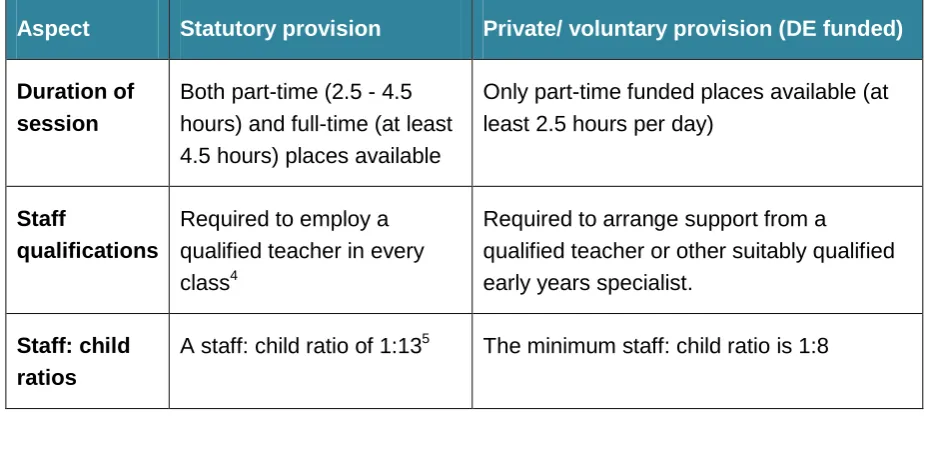
[image:11.595.68.531.472.697.2]Pre-school education is not statutory; provision includes Sure Start, the Pre-School Education Programme and Reception. The following table provides an overview of the key features of provision under the Pre-School Education Programme.3
Table 1: Key features of pre-school provision in NI
Aspect Statutory provision Private/ voluntary provision (DE funded)
Duration of session
Both part-time (2.5 - 4.5 hours) and full-time (at least 4.5 hours) places available
Only part-time funded places available (at least 2.5 hours per day)
Staff
qualifications
Required to employ a qualified teacher in every class4
Required to arrange support from a
qualified teacher or other suitably qualified early years specialist.
Staff: child ratios
A staff: child ratio of 1:135 The minimum staff: child ratio is 1:8
1
OECD (2012) Education Today 2013 OECD Publishing
2
Sylva, K., Melhuish, E., Sammons, P. et al. (2010) Early Childhood Matters: Evidence from the Effective Pre-school and Primary Education Project Oxon: Routledge
3
Department of Education (2012) Learning to Learn: A Framework for Early Years Education and Learning Bangor: DE
4 Department of Education: Qualifications for early years specialists [online] Available at:
NIAR 68-13 Research Paper
Northern Ireland Assembly, Research and Information Service 10 Aspect Statutory provision Private/ voluntary provision (DE funded)
Curriculum No centrally-prescribed curriculum
However, providers in receipt of public funding are expected to follow curriculum guidance issued by CCEA6
Regulation Education and Training Inspectorate
Settings within the Pre-school Education Expansion Programme regulated by ETI and under the health and social care
framework.7
Early Years Teams from DHSSPS inspect day nurseries and playgroups at least annually8
Funding Recurrent funding provided under the Common Funding Scheme
Funding per pupil for part-time provision is £1,934 (£2,941 for full-time)9
Funding is provided as a flat rate per pupil for part-time provision only. The allocation for part-time provision is £1,755 per pupil.10
The 2010-2012 Chief Inspector’s Report found that in over three-quarters (76%) of provision inspected, the overall effectiveness was found to be good or better. However, the report highlighted a need to improve the quality of leadership and management in 30% of the settings inspected.11
Governance
Currently responsibility for early years provision is spread across a number of departments and arm’s-length bodies. Employers for Childcare has pointed to a fragmented policy approach, highlighting a ‘lack of leadership and ownership’ in terms of no one Government Department having sole responsibility for provision.12 The Equality Commission has also identified a need for a strategic approach to childcare.13
5
Nursery Schools, Day Nurseries and Classes [online] Available at: http://www.nidirect.gov.uk/nursery-schools-day-nurseries-and-classes
6
Pre-school guidance [online] Available at: http://www.rewardinglearning.org.uk/curriculum/pre_school/index.asp
7
Department of Education (2012) Review of the Pre-School Admissions Arrangements Bangor: DE
8
Early years teams [online] Available at: http://www.nidirect.gov.uk/early-years-teams
9
Minister for Education answer to an Assembly Question by Mr Alex Easton MLA, 12th April 2013
10
As above
11
Education and Training Inspectorate (2012) Chief Inspector’s Report 2010-2012 Bangor: Department of Education
12
Education and Training Inspectorate (2012) Chief Inspector’s Report 2010-2012 Bangor: Department of Education
13 McQuaid, R., Graham, H., Shapira, M. (2013) An expert paper on the type, extent and delivery of childcare provision
3
Evidence on effective pre-school provision
The evidence is clear that the quality of early years education and care is strongly associated with student outcomes. Research shows that children who attend high-quality provision enjoy a broad range of benefits, improving their performance in school and leading to better economic and social outcomes in later life.14
Curriculum
The OECD advocates broad guidelines and curricular standards for early years provision. It states that such an approach can promote consistency in quality; support staff; and facilitate communication between staff and families.15 A report from the European Commission advocates a play-based approach, using age-appropriate curricula.16
Duration – is more than one year beneficial?
Across OECD countries, on average, 72% of 15 year old pupils attended more than one year of pre-primary education.17
Recent research by NFER in Northern Ireland found that attending pre-school for more than one year is no more beneficial (and possibly less beneficial) than attending for a single year, based on results from the Programme for International Student
Assessment (PISA) 2009 study (and taking background factors into account).18 However, the international evidence (including within the UK) on PISA suggests that student outcomes are better where students are enrolled in pre-school programmes of longer duration. These results took students’ socio-economic background into account. In particular, international evidence from PISA indicates that extending early years provision by one year leads to an increase in scores at age 15.19
The NFER research notes the differences between the findings on duration of pre-school in NI and internationally. It suggests that the differences in outcomes between students who attend pre-school and those who do not may be largely attributable to students’ background characteristics (for example, the number of books in the home). It nonetheless concludes that there is a clear advantage for pupils who have attended pre-school in comparison to those who have not (including those who attended for longer than a year).20
14
EU High Level Group of Experts on Literacy (2012) Final Report Luxembourg: European Commission
15
OECD (2012) Education Today 2013 OECD Publishing
16
EU High Level Group of Experts on Literacy (2012) Final Report Luxembourg: European Commission
17
OECD (2012) Education at a Glance 2012: OECD Indicators OECD Publishing
18
Benton, T., Cunningham, R., Wheater, R. (2012) PISA 2009: Modelling achievement and resilience in Northern Ireland
Slough: NFER
19
OECD (2012) Starting Strong III: A Quality Toolbox for Early Childhood Education and Care OECD Publishing
20 Benton, T., Cunningham, R., Wheater, R. (2012) PISA 2009: Modelling achievement and resilience in Northern Ireland
NIAR 68-13 Research Paper
Northern Ireland Assembly, Research and Information Service 12 The Effective Pre-school and Primary Education Project in England has found duration of attendance to be linked to outcomes, with every month of pre-school provision after the age of two linked to better development. However, the linked study in Northern Ireland did not find similar effects, suggesting that this was mostly due to less variation in duration of pre-school than was found in England.21
Staff
OECD research highlights the key role of staff in early years provision. It highlights a number of common challenges faced by countries internationally, including:22
Raising staff qualification levels;
Recruiting, retaining and diversifying a qualified workforce;
Ongoing professional development for the workforce; and
Ensuring quality of the workforce in the private sector.
Qualifications
There is a strong correlation between higher staff qualifications and better outcomes for children. Staff that have undergone more specialised education and training are found to be associated with stable and stimulating interactions in early years settings.23 The European Commission notes that it is crucial that staff receive effective initial education as well as continuing professional development.24
Nonetheless, it has been highlighted that higher qualifications may lead to increased expectations around salary, raising the costs of provision. OECD research has found that governments often choose not to invest in raising qualifications or training.25 There is variation in qualification requirements internationally, ranging from no formal education required to a specialised bachelor’s or a master’s degree. OECD indicates that not all early years staff must be highly qualified, however it recommends that those with lower levels of education should work with those with high qualification levels.26
Working conditions
The early years sector internationally tends to be linked to relatively poor working conditions and remuneration, leading to high rates of staff turnover (often exceeding 40%).27
21
Benton, T., Cunningham, R., Wheater, R. (2012) PISA 2009: Modelling achievement and resilience in Northern Ireland
Slough: NFER
22
OECD (2012) Education Today 2013 OECD Publishing
23
OECD (2012) Starting Strong III: A Quality Toolbox for Early Childhood Education and Care OECD Publishing
24
EU High Level Group of Experts on Literacy (2012) Final Report Luxembourg: European Commission
25
OECD (2012) Starting Strong III: A Quality Toolbox for Early Childhood Education and Care OECD Publishing
26 OECD (2012) Starting Strong III: A Quality Toolbox for Early Childhood Education and Care OECD Publishing 27
The importance of ensuring positive working conditions for early years providers is highlighted in the literature, which notes that better conditions can lead to improved job satisfaction and retention. In turn, this can contribute to improved quality of provision.28 Staff: child ratios
Internationally across OECD countries there is an average of 14 children for every teacher in pre-primary education.29 OECD reports that staff: pupil ratios are important at this stage of education, and act as an important indicator of the resources devoted to pre-primary education.30
Other research notes that lower staff: child ratios allow children more opportunities to have meaningful interactions.31 Indeed, analysis of PISA results suggests that the relationship between pre-primary attendance and performance is often stronger in systems with smaller pupil-to-teacher ratios in pre-school provision.32
Governance
The importance of effective governance arrangements is also highlighted in the literature. OECD notes that such arrangements should include strong expert policy units; data collection and monitoring; and evaluation and inspection arrangements.33 In Finland, Norway and Sweden providers of private early years provision are required to meet the same quality standards as public provision. These requirements are set out within legislation and financing mechanisms.34
4
Should it be education and/ or care?
Learning to Learn, the Department’s Framework for early years, emphasises that early
years education “is not, however, day care”.35 Background
Historically, policies of ‘education’ and ‘care’ for young children have evolved separately, with fragmented systems of governance. Internationally, many countries have a two-tier system of early years provision, with ‘child care’ for younger children and ‘pre-primary education’ for children aged between three and six.36
28
As above
29
OECD (2012) Education at a Glance 2012: OECD Indicators OECD Publishing
30
As above
31 Pianta, R.C., Barnett, W.S., Burchinal, M. and Thornburg, K.R. (2009) “The Effects of Preschool Education”
Psychological Science in the Public Interest Vol 10, No. 2 pp. 49-88
32
OECD (2012) Education at a Glance 2012: OECD Indicators OECD Publishing
33
OECD (2012) Education Today 2013 OECD Publishing
34
OECD (2012) Starting Strong III: A Quality Toolbox for Early Childhood Education and Care OECD Publishing
35
Department of Education (2012) Learning to Learn: A Framework for Early Years Education and Learning Bangor: DE
36
NIAR 68-13 Research Paper
Northern Ireland Assembly, Research and Information Service 14 OECD suggests that many countries consider children aged under three to need child care rather than early education, and view this as primarily the responsibility of parents. A consequence of this fragmentation in services can be a lack of coherence for
families, with variations in funding, procedures, regulation and staff requirements. In general, child care services face more challenges in this regard.37
Other commentaries note that while early education tends to be viewed as an entitlement, childcare is often treated as a commodity for parents to purchase. This dichotomy can contribute to inequalities in access to services and to levels of child poverty, as childcare can be too costly for many, and it may discourage employment.38 Integration or separation?
The evidence internationally supports the integration of education and childcare. For example, the European Commission reports that high quality provision does not focus only on basic health, safety and care needs, but also offers intellectual and social simulation.39
This is in line with recommendations from the OECD which promote children’s learning and well-being as central to early childhood education and care. OECD also highlights the importance of other factors such as supporting parents and in facilitating women into work.40
Indeed, much of the international discourse on early years provision uses the term: Early Childhood Education and Care (ECEC). For example, this is used at European level and by organisations such as the OECD.
Other evidence finds that pre-school settings that consider cognitive and social development as complementary – and do not prioritise one over the other - tend to achieve the best outcomes for children.41
Current trends – Integration under one ministry
OECD notes that in countries where responsibility for early education and childcare is held by different ministries, different standards tend to be established across varied settings.42
The evidence suggests that policy-making for early childhood education and care should be placed under a ministry with a strong focus on children’s education and
37
OECD (2006) Starting Strong II: Early childhood education and care Paris: OECD Publishing
38
Children in Scotland (2011) Early Childhood Education and Care: Developing a fully integrated early years system
39
EU High Level Group of Experts on Literacy (2012) Final Report Luxembourg: European Commission
40
OECD (2012) Education Today 2013 OECD Publishing
41
Sylva, K., Melhuish, E., Sammons, P. et al. (2010) Early Childhood Matters: Evidence from the Effective Pre-school and Primary Education Project Oxon: Routledge
42
development. International analysis highlights a number of benefits of provision led by a single ministry, including:43
Greater coherence and consistency in regulation, funding and staffing;
Enhanced continuity for children: variations in access and quality tend to be reduced under one ministry;
Improved management: which can lead to improved quality and access.
The Nordic countries pioneered the single ministry approach in the 1960s and 1970s, bringing early years provision under social welfare. Since the 1980s there has been a movement towards integration under the education ministry (including England, Scotland and New Zealand).44
5
Approaches to early years provision internationally
Most European countries provide children with at least two years of pre-school
education free of charge to parents prior to their admission to primary school. This is a statutory right from the age of three in most jurisdictions (except for the Republic of Ireland and the Netherlands).45
OECD identifies two broad approaches to early years provision internationally: a school readiness approach and a social pedagogy approach.46
43
OECD (2006) Starting Strong II: Early childhood education and care Paris: OECD Publishing
44
Kaga, Y., Bennett, J., Moss, P. (2010) Caring and Learning Together: A cross-national study on the integration of early childcare and education within education Paris: UNESCO
45 OECD (2012) Education Today 2013 OECD Publishing 46
OECD (2006) Starting Strong II: Early childhood education and care Paris: OECD Publishing
School readiness approach
Found in France and English-speaking countries (including the UK, the US, Australia and Canada)
Focus is on readiness for school, emphasising cognitive development and the acquisition of knowledge
The contents and approaches of primary education are introduced
NIAR 68-13 Research Paper
[image:18.595.71.535.324.762.2]Northern Ireland Assembly, Research and Information Service 16 The following table provides a comparison of these two approaches.
Table 2: Comparison of the social pedagogy and readiness for school approaches
Social pedagogy approach School readiness approach
Emphasis Viewed as a broad preparation for life
Objective is that children gain a desire for and confidence in learning, rather than achieving a pre-specified level of knowledge
Readiness for school is key
Strong focus on cognitive development and early literacy and numeracy
Approach Emphasis on supporting children in their own interests and tasks Focus on play, interaction,
activity and personal investigation Parental role important
Structured approach to learning
Mainly teacher-directed
Teacher manages a mix of
instruction, child-initiated activities and thematic work
Curriculum Frameworks are broad national guidelines
Each centre has autonomy to develop its own curriculum guided by the framework
Tends to be a prescribed curriculum detailing goals and outcomes
Quality control
Participatory approach based on educator and team responsibility, with external inspection
Inspection aims to ensure quality, often based on pre-determined learning outcomes
Social pedagogy approach
Found in Nordic and Central European countries
Emphasis is on supporting families and children’s broad developmental needs
Combines care, upbringing and learning, without prioritising any of these
OECD comments that this approach gives “excellent results” in terms of school readiness, helping children to acquire knowledge including reading and writing
Research points to the long-term benefits of a curriculum with a high level of child-initiated activities, as well as the advantages of teacher-child-initiated learning. The evidence therefore indicates that a mixture of child- and teacher-initiated activities are most effective.47
Best performing systems
The Economist Intelligence Unit has compiled an Index ranking the pre-school systems of 45 countries. It assesses the extent to which systems are available to all children, affordable for all families, and of high quality. In this Index the Nordic countries take four of the six top positions, with the UK ranked 4th and France ranked 7th.48 The report notes that while the contexts of Nordic countries are conducive to good performance (relatively high incomes, mostly homogenous populations and a well-defined state’s role), their actions also play a role. An example is the status given to teachers, which tends to match other professions, as well as similar qualifications and wages.49
The following paragraphs consider provision within France, England, the Republic of Ireland and Finland, giving examples of the different approaches in use.
France
In France children aged under three can avail of a range of provision, including crèches, playgroups and childminders (not controlled by Department of Education). Two year olds may be admitted to pre-school, although priority is given to three year-olds.50
At least 40% of staff within a setting must hold a diploma, gained after taking a year-long, post-18 course.51 Key features of provision for children aged three and over include:52
Children spend three years at nursery school;
Children are grouped into age groups in three sections, ‘reception’, ‘middle’, and ‘final’ year;
47
OECD (2012) Starting Strong III: A Quality Toolbox for Early Childhood Education and Care OECD Publishing and Sylva, K., Melhuish, E., Sammons, P. et al. (2010) Early Childhood Matters: Evidence from the Effective Pre-school and Primary Education Project Oxon: Routledge
48
Economist Intelligence Unit (2012) Starting Well: Benchmarking early education across the world London and New York
49
As above
50
European Commission (2012) Organisation of Programmes for Children under 2-3 years [online] Available at:
https://webgate.ec.europa.eu/fpfis/mwikis/eurydice/index.php/France:Organisation_of_Programmes_for_Children_under_2-3_years
51
Department for Education (2013) More great childcare: Raising quality and giving parents more choice
52
European Commission (2012) Organisation of Programmes for Children over2-3 years [online] Available at:
NIAR 68-13 Research Paper
Northern Ireland Assembly, Research and Information Service 18 The final year is part of a learning cycle that corresponds to the first two years
of primary school, to provide continuity;
There is flexibility for teaching staff (in agreement with parents) to allocate children to the stage that best suits their needs, regardless of age;
There are no national rules on staff: child ratios.
Classes for the final year of pre-school tend to share a building with the primary. Teachers teaching in the pre-school and primary schools undertake common training and may move freely between the sections.53
Pre-school involves 24 hours of provision per week. Curricula are defined nationally, with teachers free to choose teaching methods. Curriculum topics include appropriation of language, discovering writing and ‘becoming a pupil’.54
Republic of Ireland
The Republic of Ireland differs to other European countries in that it does not have a long-standing tradition of young children attending pre-school. However, in recent years ‘significant progress’ has been made in providing high quality services.55
In 2004 the OECD criticised the lack of a clear departmental lead in relation to early years provision in the Republic of Ireland. As a result, in 2006 a new department was established, now the Department of Children and Youth Affairs bringing together a range of policy issues including childcare and early education.56
However, the Department includes separate units for childcare and early education, which one author notes is “evidence of the continued conceptual and structural
separation of case and education in Irish policy”.57
53
OECD (2006) Starting Strong II: Early childhood education and care Paris: OECD Publishing
54
European Commission (2012) Teaching and Learning in Programmes for Children over 2-3 years [online] Available at: https://webgate.ec.europa.eu/fpfis/mwikis/eurydice/index.php/France:Teaching_and_Learning_in_Programmes_for_Children_ over_2-3_years
55
European Commission (2011) Ireland: Early Childhood Education and Care [online] Available at:
https://webgate.ec.europa.eu/fpfis/mwikis/eurydice/index.php/Ireland:Early_Childhood_Education_and_Care
56 Hayes, N. (2010) Childcare? Early childhood education and care? “Towards an integrated early years policy for young
children in Ireland” Early Years Vol. 30, No. 1, March 2010 pp.67-78
57
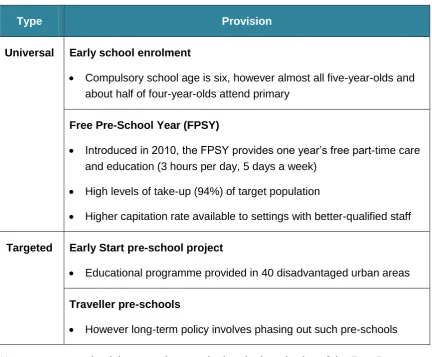
Table 3: Overview of early years provision in the Republic of Ireland58
Type Provision
Universal Early school enrolment
Compulsory school age is six, however almost all five-year-olds and about half of four-year-olds attend primary
Free Pre-School Year (FPSY)
Introduced in 2010, the FPSY provides one year’s free part-time care and education (3 hours per day, 5 days a week)
High levels of take-up (94%) of target population
Higher capitation rate available to settings with better-qualified staff
Targeted Early Start pre-school project
Educational programme provided in 40 disadvantaged urban areas
Traveller pre-schools
However long-term policy involves phasing out such pre-schools
Hayes comments that it is not yet known whether the introduction of the Free Pre-School Year will close or widen the gap between education and care, although there are some indications that it may widen the divide.59
Finland
All children in Finland have a legal right to childcare and to local pre-schools. The school starting age is seven years, and almost all Finnish children attend one year of free pre-school from the age of six. This involves half-day classes with day care for the remainder of the day. Prior to this – from birth to the age of six – parents have access to full-day childcare at a capped cost (often in daycare centres).60
The model of provision in place in Finland is described as ‘educare’, due to the combination of care, education and teaching. National curriculum guidelines are set with the aim of guiding content and activities, although settings have the freedom to design their own curriculum within the parameters. Areas of learning include the
58
Oireachtas Library & Research Service (2012) Early Childhood Education and Care
59 Hayes, N. (2010) Childcare? Early childhood education and care? “Towards an integrated early years policy for young
children in Ireland” Early Years Vol. 30, No. 1, March 2010 pp.67-78
60
NIAR 68-13 Research Paper
Northern Ireland Assembly, Research and Information Service 20 difference between right and wrong, how to cope in everyday situations and
familiarisation with culture and nature.61
Finland’s successful efforts in ensuring quality include the systematic development of teaching as a professional career. The key features include:62
Teachers must have a bachelor’s degree in education, and many have a master’s degree;
Studies tend to be academic-based courses at top universities;
Teachers are afforded the same respect and similar working conditions as other professionals, such as lawyers.
England
In England three and four year olds are entitled to 15 hours of pre-school each week, generally offered as three-hour slots, five days a week. This is offered by the
maintained (nursery schools and classes), private and voluntary sectors. Most four-year olds are in free full day educational provision, which is usually provided in the reception class of a primary school.63
There is no general entitlement for children aged under three, although parents may choose to pay for childcare through privately-run day nurseries, childminders or nannies. Some disadvantaged two-year olds can avail of free part-time places.64
The Early Years Foundation Stage Framework in place from September 2012 provides learning goals, with teachers free to choose teaching methods. Key areas include communication and language, personal, social and emotional development and mathematics.65
Reforms
A recent independent review of early education and childcare qualifications in England highlighted a number of issues, including a lack of rigour and depth across some qualifications, and a lack of consistency in terms of quality. It recommended implementation of a rigorous set of qualifications for early years professionals.66
61
European Commission (2011) Finland: Early Childhood Education and Care [online] Available at:
https://webgate.ec.europa.eu/fpfis/mwikis/eurydice/index.php/Finland:Early_Childhood_Education_and_Care
62
Economist Intelligence Unit (2012) Starting Well: Benchmarking early education across the world London and New York
63
As above
64
European Commission (2012) England: Early Childhood Education and Care [online] Available at:
https://webgate.ec.europa.eu/fpfis/mwikis/eurydice/index.php/United-Kingdom-England:Early_Childhood_Education_and_Care
65
European Commission (2012) England: Teaching and Learning in Programmes for Children over 2-3 years [online] Available at:
https://webgate.ec.europa.eu/fpfis/mwikis/eurydice/index.php/United-Kingdom-England:Teaching_and_Learning_in_Programmes_for_Children_over_2-3_years
66
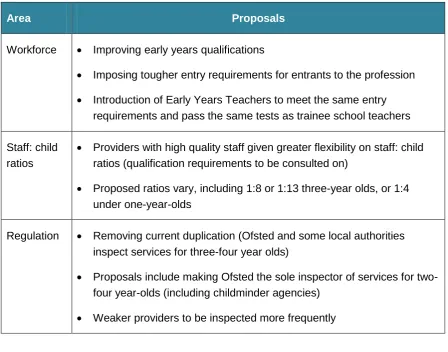
Subsequently, the Department for Education published proposals to improve professionalism and quality within the early years workforce.67
Table 4: Key proposals for childcare reform in England
Area Proposals
Workforce Improving early years qualifications
Imposing tougher entry requirements for entrants to the profession
Introduction of Early Years Teachers to meet the same entry requirements and pass the same tests as trainee school teachers Staff: child
ratios
Providers with high quality staff given greater flexibility on staff: child ratios (qualification requirements to be consulted on)
Proposed ratios vary, including 1:8 or 1:13 three-year olds, or 1:4 under one-year-olds
Regulation Removing current duplication (Ofsted and some local authorities inspect services for three-four year olds)
Proposals include making Ofsted the sole inspector of services for two-four year-olds (including childminder agencies)
Weaker providers to be inspected more frequently
6
Learning to Learn: Early years framework
Background
In June 2010 the former Minister for Education, Caitríona Ruane, launched a consultation on a draft Early Years (0-6) Strategy. The summary of responses was published in July 2012, highlighting largely negative views. For example, 90% of respondents did not think the strategy was appropriate and 95% disagreed with the actions proposed. Examples of the issues identified include:68
Insufficient actions for children aged 0-2 and 4-6;
Inadequate attention within the strategy for children with special educational needs, disabilities and Travellers;
Lack of reference to pregnancy and to the role of health professionals;
67 Department for Education (2013) More great childcare: raising quality and giving parents more choice DfE 68
NIAR 68-13 Research Paper
Northern Ireland Assembly, Research and Information Service 22 No attempt to address the dual systems of ratios, qualifications, session times
and salaries in pre-school provision. Revised strategy: Learning to Learn
Learning to Learn, launched on the 4th December 2012, aims to provide a way forward
for early years education and to complement the Department’s other key policies.69
The document sets out an overall policy aim for Early Years Education and Learning:70
“All children have opportunities to achieve their potential through high quality early years education and learning experiences.”
The Annex to this paper sets out the actions detailed within the strategy, together with their aims and proposed timescales.
The consultation on the strategy ended on the 31st January 2013, and the Department states that it hopes to achieve full implementation by 2014/15 (many individual actions are to begin in 2013).
OFMdFM Childcare Strategy
NI’s childcare strategy, Children First, was published in 1999. Although it was reviewed in 2005, the review’s recommendations have not been implemented.71 The
recommendations included assigning lead responsibility for the strategy to one department and minister.72
69
Department of Education (2012) Statement to the Assembly: Learning to Learn: A Framework for Early Years Education and Learning 4th December 2012 [online] Available at: http://www.deni.gov.uk/minister_s_statement_pdf_148kb.pdf
70
Department of Education (2012) Learning to Learn: A Framework for Early Years Education and Learning Bangor: DE
71 Employers for Childcare (2010) Sizing up: A comparative study of childcare policies within the four regions of the UK 72
Capita (2005) Review of Children First: Final Report Department of Health, Social Services and Public Safety
Policy Objectives of Learning to Learn
Provide equitable access to high quality early years education and learning services
Support personal, social and emotional development, promote positive learning dispositions and enhance language, cognitive and physical development in young children
Provide a positive and nurturing early learning experience, as well as a foundation for improved educational attainment and life-long learning
Identify and help address barriers to learning, and reduce the risk and impact of social exclusion and the need for later interventions
The Programme for Government 2011-15 included a commitment to “publish and
implement a Childcare Strategy with key actions to provide integrated and affordable childcare.”
The Office for the First Minister and deputy First Minister is leading the development of the childcare strategy. The Executive has set aside £12m (on top of departmental funding) for its development.73
Towards a Childcare Strategy, a consultation document setting out a vision and
principles for a future childcare strategy, was published in December 2012.
Consultation on the document closed on 5th March 2013, and OFMdFM planned to analyse the responses and develop a final report and high level actions.74
Vision and aims
The Strategy highlights the role of childcare in helping parents into work, reducing poverty and breaking the cycle of inter-generational deprivation. It also recognises the importance of a ‘good quality childcare sector’. The stated aim is to “promote the availability of good quality, accessible, integrated and affordable childcare provision
that is sustainable in the long-term.”75
The Strategy is to be underpinned by six key principles: an integrated approach; informed parental choice; quality; accessibility; affordability; and sustainability.
Learning to Learn and Towards a Childcare Strategy
In an answer to an Assembly Question on 28th January 2013, the Minister for
Education stated that departmental officials had ‘engaged’ with OFMdFM officials on the development of the childcare strategy.76 The Minister has noted that the
Department’s work on early years will ‘feed into’ the Childcare Strategy, while
73
OFMdFM (2012) Towards a Childcare Strategy OFMdFM
74
As above
75 OFMdFM (2012) Towards a Childcare Strategy OFMdFM 76
Minister for Education response to an Assembly Question by Mr Danny Kinahan MLA, 28th January 2013
Aims of the Childcare Strategy
Support the development of children and young people and enable children and young people from the most deprived backgrounds to avail of life opportunities
Support increased parental participation in the workforce, thereby making a significant impact on the economy, families and communities
NIAR 68-13 Research Paper
Northern Ireland Assembly, Research and Information Service 24 emphasising that the focus of the Department’s pre-school provision is on education and not childcare.77
It is difficult to directly compare the Department of Education’s ‘Learning to Learn’
framework with OFMdFM’s consultation document ‘Towards a Childcare Strategy’, as
no clear actions are set out within OFMdFM’s consultation, and due to the differing emphases of the documents. However, the consultation document anticipates that a number of actions will be required to deal with:
Increasing the flexibility and accessibility of childcare provision;
Encouraging sustainable affordable models of childcare provision to be rolled out across NI;
Identifying a range of potential support mechanisms to aid parents to afford and access childcare;
Examining the potential to introduce options from an educare and child development approach, allowing for enhanced integration in targeting of childcare interventions for some of our most deprived and vulnerable children as well as wider integrated options such as wraparound childcare in schools; Raise awareness of help available towards the cost of childcare such as
childcare vouchers and benefit uptake schemes.
Comparing the actions set out in Learning to Learn with these areas and the strategy’s
principles, areas of potential overlap can be identified. These are outlined in Table 5.
77
NI Assembly Official Report (2013) Committee for Education. Early years policy: Ministerial briefing [online] Available at: http://www.niassembly.gov.uk/Assembly-Business/Official-Report/Committee-Minutes-of-Evidence/Session-2012-2013/January-2013/Early-Years-Policy-Ministerial-Briefing/
Areas covered by the strategies
Learning to Learn covers Sure Start, the Pre-School Education Programme; Reception and the Foundation Stage of the Curriculum.
OFMdFM’s strategy will deal with ‘childcare’, which is defined as ‘the safe
Table 5: Areas of potential overlap between Learning to Learn and Towards a Childcare Strategy
Area of overlap Actions within Learning to Learn Areas within Towards a Childcare Strategy
Flexibility Introduce flexibility in enrolment for nursery schools and units Increase flexibility and accessibility of provision
Integration of
services
Commission review of Sure Start to assess effectiveness
Refocus use of nursery extended schools (ES) funding to help identify and address underdeveloped skills of young children
Establish criteria (similar to ES) for voluntary and private settings to access additional resources
Examine potential for educare options, allowing for enhanced integration in targeting interventions for deprived children
Wider options such as wraparound childcare in schools to be considered
Joint working Identify opportunities for joint investment under DSC Framework
Improve coordination of service delivery to families
Work with DHSSPS to develop protocols for delivery bodies to enhance services
Strategy to be aligned with other PfG commitments and build on work of other departments and
agencies
Quality Legislate to define the age range
Ensure all DE services 0-6 are subject to area-based inspection
Develop protocols for support and intervention
Review adequacy of governance and accountability arrangements
Review Sure Start
NIAR 68-13 Research Paper
Northern Ireland Assembly, Research and Information Service 26
Area of overlap Actions within Learning to Learn Areas within Towards a Childcare Strategy
Liaise with DHSSPS on qualifications
Develop programme of continuous professional development for staff
Create 11 pilot Education Support Clusters to raise standards
Develop an ‘Excellence in Early Education Fund’ to provide additional funding to the Clusters to incentivise collaboration
Introduce flexibility in enrolment for nursery schools and units
Pilot deployment of additional nursery assistants to increase staff: child ratios
Review Building Handbook for Nursery Schools
Accessibility Retain a power for nursery schools and units to provide for 2 year olds
Develop potential options for expansion of a 2 year old programme
Monitor uptake and completion of education and learning
opportunities by children at risk of exclusion, including children with SEN
Extend pilots in early years settings initiated by the review of SEN and Inclusion to help improve access to specialist support
Consider developing providers to address
7
School starting age
Northern Ireland has the lowest compulsory school starting age in Europe and there are some concerns regarding this here and throughout the UK. For example, a number of commentators suggest that children aged four and five may not be ready for formal primary school or reception class, and that attending school at an early age may cause stress among young pupils.78
The literature indicates that there is general consensus across many countries in terms of appropriate provision for children aged from three years. This tends to involve an active, play-based approach, encouraging independence among young children.79 However, overall, the evidence does not advocate an ideal age for children starting school. For further information please see Paper 97/11: Arguments on the school starting age.
International approaches
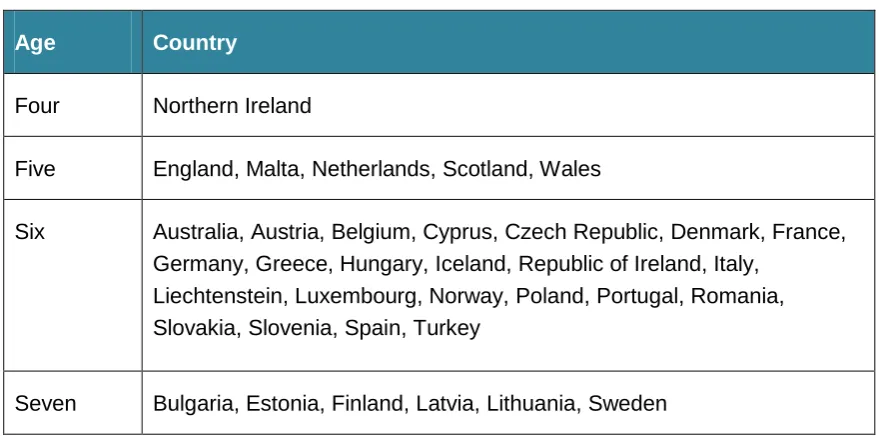
[image:29.595.92.532.443.661.2]In Europe and internationally age six is the most common school starting age. Table 6 illustrates compulsory school starting ages in Europe. However, it should be noted that this is often the latest age at which children must start school, and in some European countries (including England and the Republic of Ireland), most children enter school below the compulsory age.
Table 6: Compulsory school starting ages internationally
Age Country
Four Northern Ireland
Five England, Malta, Netherlands, Scotland, Wales
Six Australia, Austria, Belgium, Cyprus, Czech Republic, Denmark, France, Germany, Greece, Hungary, Iceland, Republic of Ireland, Italy,
Liechtenstein, Luxembourg, Norway, Poland, Portugal, Romania, Slovakia, Slovenia, Spain, Turkey
Seven Bulgaria, Estonia, Finland, Latvia, Lithuania, Sweden Source: Compulsory age of starting school in European countries [online] Available at
http://www.nfer.ac.uk/nfer/index.cfm?9B1C0068-C29E-AD4D-0AEC-8B4F43F54A28
78
Sykes, E. et al. (2009) Birthdate Effects: A Review of the Literature from 1990-on. Cambridge: Cambridge Assessment
79
NIAR 68-13 Research Paper
Northern Ireland Assembly, Research and Information Service 28 The evidence highlights a trend in Europe towards requiring children to start education younger. Indeed, a number of countries have lowered their school starting ages, for example, Poland and Denmark have lowered their starting age from seven to six.80 The “Birthdate effect”
It is well established in educational research that the youngest children within a school year group tend to perform less well than their older peers.This ‘birthdate effect’ is most pronounced during pre-school and primary school, gradually decreasing throughout post-primary school.81
However, the effect remains significant at GCSE, A level and possibly during higher education. Indeed, recent evidence found that autumn-born children were 25% more likely to gain a place at Oxford or Cambridge than those born in the summer.82 The evidence also suggests that a disproportionately high percentage of relatively young children in the school year are referred for special educational needs, and many of them appear to be misdiagnosed. A suggested reason for this is that teachers may have unrealistic expectations of younger pupils, and, as such, may not make sufficient allowances for their level of attainment.83
Causes
The relative age differences of pupils are thought to account for these differences, with the gap between the youngest and oldest pupils in a class being almost a year in some cases. The evidence indicates that the youngest in the year group tend to be less mature cognitively, socially and emotionally than their older classmates.84
Age-related disadvantages may lead to lower self-esteem, which may in turn have further impacts on behaviour and achievement.85 For example, younger children may compare themselves with older classmates, leading to feelings of inadequacy, whereas older pupils may receive more positive feedback and assume a ‘leadership position’.86
A recently published study has found that streaming pupils by ability in primary school can reinforce the disadvantage faced by summer-born children. It found that by the age of seven, September-born children in England were almost three times more likely to
80
Compulsory age of starting school in European countries [online] Available at http://www.nfer.ac.uk/nfer/index.cfm?9B1C0068-C29E-AD4D-0AEC-8B4F43F54A28
81
Sykes, E. et al. (2009) Birthdate Effects: A Review of the Literature from 1990-on. Cambridge: Cambridge Assessment
82
BBC News (2013) Month of birth affects chance of attending Oxbridge [online] Available at http://www.bbc.co.uk/news/uk-politics-21579484 and Sykes, E. et al. (2009) Birthdate Effects: A Review of the Literature from 1990-on. Cambridge: Cambridge Assessment
83
Sykes, E. et al. (2009) Birthdate Effects: A Review of the Literature from 1990-on. Cambridge: Cambridge Assessment
84
Sykes, E. et al. (2009) Birthdate Effects: A Review of the Literature from 1990-on. Cambridge: Cambridge Assessment
85 Polizzi, N. et al. (2007) “Season of birth of students receiving education services under a diagnosis of emotional and
behavioural disorder” School Pyschology Quarterly Vol. 22 (1) pp.44-57
86
be in the top stream as those born in the following August. It is thought that ability grouping can affect children's self-perceptions and limit their opportunities.87
Flexibility in the school starting age
A number of policy options are suggested in the literature to address the gap in attainment between summer-born and other children. These include testing children when they are ready; monitoring SEN referral rates to explore relative age effects; and including the issue in teacher training.88
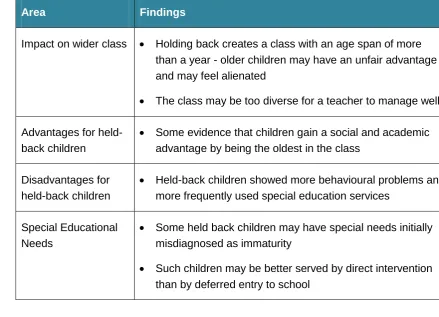
Flexibility over school starting age has also been suggested as a possible means of addressing the ‘birthdate effect’. However, the evidence on this approach is not conclusive, with an international literature review stating that the evidence does not support the effectiveness of deferred entry to school.89
[image:31.595.78.518.369.686.2]In the US delayed entry to school is fairly common. US children whose entry to school is delayed tend to be younger in the year-group, boys and children from ethnic minority backgrounds. Research on the effectiveness of this approach is not conclusive. 90
Table 7: Findings around flexibility in school starting age in the US
Area Findings
Impact on wider class Holding back creates a class with an age span of more than a year - older children may have an unfair advantage and may feel alienated
The class may be too diverse for a teacher to manage well
Advantages for held-back children
Some evidence that children gain a social and academic advantage by being the oldest in the class
Disadvantages for held-back children
Held-back children showed more behavioural problems and more frequently used special education services
Special Educational Needs
Some held back children may have special needs initially misdiagnosed as immaturity
Such children may be better served by direct intervention than by deferred entry to school
87 Hallam, S., Parsons, S. (2013) “Prevalence of streaming in UK primary schools: evidence from the Millennium Cohort Study”
British Educational Research Journal
88
Crawford, C. et al. (2007) When You Are Born Matters: The Impact of Date of Birth on Child Cognitive Outcomes in England.
London: Institute for Fiscal Studies and Sharp, C. (2009) International thematic probe: The influence of relative age on learner attainment and development NFER
89 Sharp, C. (2009) International thematic probe: The influence of relative age on learner attainment and development NFER 90
NIAR 68-13 Research Paper
Northern Ireland Assembly, Research and Information Service 30 The US research also highlights concerns around who should decide whether children should have their entry to school deferred. If parents have a key role, it is more likely that better-off families would avail of the flexibility, as less well-off families may rely more on the extra hours of childcare that school provides in order to make work affordable. 91
Deferring entry to primary school in NI
There is no flexibility within the legislation for the minimum school starting age.
Children of compulsory school age must attend primary unless there is a statement of Special Educational Need, or where children are to be educated at home. There is no appeals process.92
Article 46 of the 1986 Education and Libraries (Northern Ireland) Order, substituted by Article 156 of the Education Reform (NI) 1989 Order, sets out the requirements around the school starting age:93
Where a child reaches the age of four on or between 1st September and 1st July
in the same school year, the child must start school at the beginning of the following school year (when the child is four but not yet five);
Where a child reaches the age of four between 2nd July and 31st August in the
same calendar year, the child must start school in September of the next calendar year (when the child is five).
Statement of Special Educational Need
Entry to primary school may only be deferred if the child has a Statement of Special Educational Need. Under Article 16 of the Education (NI) Order 1996 a Board may name a nursery school in a statement when determining provision for a child with SEN, even if the child is of primary school age.94
Information provided by the ELBs show that between 2008 and 2012 a total of 73 boys and 30 girls had their entry to primary school deferred as a result of a pre-school setting being named in a statement.95
8
Conclusion
This paper highlights a number of areas that could be given further consideration. These include:
91
Crawford, C. et al. (2007) When You Are Born Matters: The Impact of Date of Birth on Child Cognitive Outcomes in England.
London: Institute for Fiscal Studies
92
Information provided by the Department of Education, March 2013
93
Legislation.gov.uk Education Reform (NI) 1989 Order [online] Available at: http://www.legislation.gov.uk/nisi/1989/2406/article/156
94 Information provided by the Department of Education, March 2013 95
The fragmentation of responsibility for early years provision and childcare across departments and arm’s-length bodies;
Areas of overlap in Learning to Learn and Towards a Childcare Strategy and the extent of joint working on these policies;
The strong emphasis of Learning to Learn on education in light of the evidence on the importance of integrating education and care;
The variation in requirements around qualifications, ratios, regulation and funding for DE-funded pre-school provision;
Initial education and continuing professional development for early years staff;
International approaches such as the social pedagogy model in Nordic countries and the French model;
NIAR 68-13 Research Paper
Northern Ireland Assembly, Research and Information Service 32
Annex: Actions set out within Learning to Learn
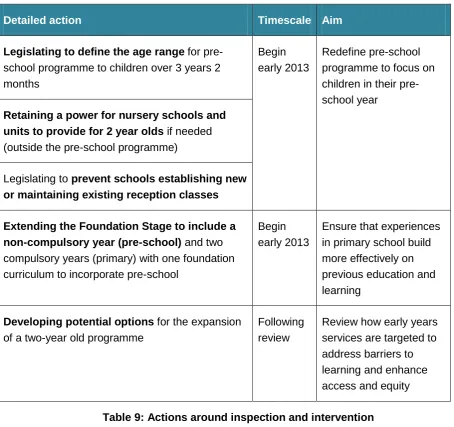
[image:34.595.73.528.159.586.2]The Strategy sets out a number of actions. The following tables outline these actions and the timescales provided.
Table 8: Actions around scope of provision
Detailed action Timescale Aim
Legislating to define the age range for pre-school programme to children over 3 years 2 months
Begin early 2013
Redefine pre-school programme to focus on children in their pre-school year
Retaining a power for nursery schools and units to provide for 2 year olds if needed (outside the pre-school programme)
Legislating to prevent schools establishing new or maintaining existing reception classes
Extending the Foundation Stage to include a
non-compulsory year (pre-school) and two compulsory years (primary) with one foundation curriculum to incorporate pre-school
Begin early 2013
Ensure that experiences in primary school build more effectively on previous education and learning
Developing potential options for the expansion of a two-year old programme
Following review
Review how early years services are targeted to address barriers to learning and enhance access and equity Table 9: Actions around inspection and intervention
Action Timescale Aim
Ensuring all DE funded services for 0-6 are subject to a thorough area-based inspection process, including
the Sure Start Developmental Programme and
Foundation Stage (not separating foundation from the overall primary stage)
Begin early 2013
Apply the principles of ESaGS to all DE funded early years provision
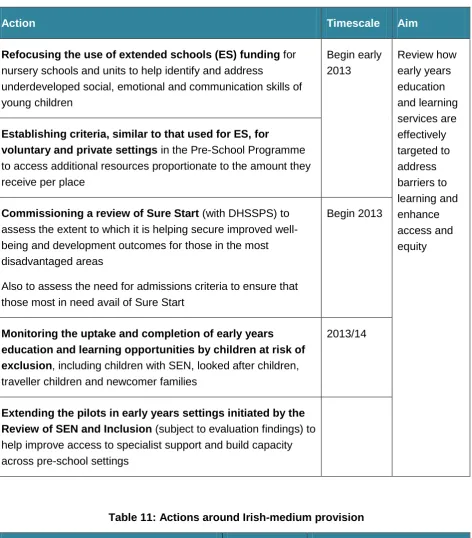
[image:34.595.96.531.592.767.2]Table 10: Actions around supporting children from disadvantaged backgrounds and children with SEN
Action Timescale Aim
Refocusing the use of extended schools (ES) funding for nursery schools and units to help identify and address
underdeveloped social, emotional and communication skills of young children Begin early 2013 Review how early years education and learning services are effectively targeted to address barriers to learning and enhance access and equity Establishing criteria, similar to that used for ES, for
voluntary and private settings in the Pre-School Programme
to access additional resources proportionate to the amount they receive per place
Commissioning a review of Sure Start (with DHSSPS) to assess the extent to which it is helping secure improved well-being and development outcomes for those in the most disadvantaged areas
Also to assess the need for admissions criteria to ensure that those most in need avail of Sure Start
Begin 2013
Monitoring the uptake and completion of early years
education and learning opportunities by children at risk of exclusion, including children with SEN, looked after children,
traveller children and newcomer families
2013/14
[image:35.595.75.548.105.644.2]Extending the pilots in early years settings initiated by the Review of SEN and Inclusion (subject to evaluation findings) to help improve access to specialist support and build capacity across pre-school settings
Table 11: Actions around Irish-medium provision
Action Timescale Aim
Commissioning research on the outcomes of pre-school Irish-medium Education as outlined in the Review of Irish-Medium Education
Begin early 2013
NIAR 68-13 Research Paper
[image:36.595.81.550.92.445.2]Northern Ireland Assembly, Research and Information Service 34 Table 12: Actions around joint working
Action Timescale Aim
Identifying opportunities for investing jointly with DHSSPS, DSD, DoJ and OFMdFM under the DSC framework in evidence-based family intervention/ parenting programmes planned, commissioned and evaluated through the Children and Young People’s Strategic Partnership
Begin early 2013
Collaborate with other departments to work towards a common goal of improving outcomes for children
Improving the coordination of service delivery to individual families by ensuring that early years services/
workforce are integrated into the DHSSPS Family Support Hubs and the HSCT Early Years teams’ family support structures
Working with DHSSPS to develop protocols for delivery bodies to enhance information sharing, early identification and intervention services for children and families at risk, and review joint training requirements across disciplines as well as improving inter-personal communication
Over-arching goal is ‘developing the education workforce’
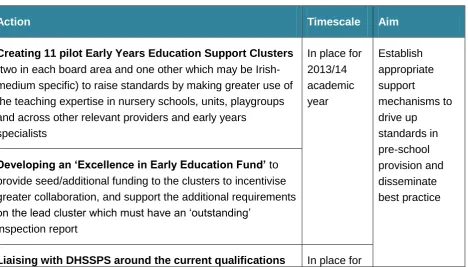
Table 13: Actions around early years workforce
Action Timescale Aim
Creating 11 pilot Early Years Education Support Clusters (two in each board area and one other which may be Irish-medium specific) to raise standards by making greater use of the teaching expertise in nursery schools, units, playgroups and across other relevant providers and early years
specialists
In place for 2013/14 academic year Establish appropriate support mechanisms to drive up standards in pre-school provision and disseminate best practice Developing an ‘Excellence in Early Education Fund’ to
provide seed/additional funding to the clusters to incentivise greater collaboration, and support the additional requirements on the lead cluster which must have an ‘outstanding’
inspection report
[image:36.595.80.549.497.764.2]