A COMPARATIVE STUDY TO ASSESS THE EFFECTIVENESS OF STRUCTURED TEACHING PROGRAMME ON KNOWLEDGE, ATTITTUDE AND PRACTICE
REGARDING MENARCHE AND MENSTRUAL MANAGEMENT AMONG SCHOOL GIRLS IN SELECTED URBAN AND RURAL SCHOOLS
AT COIMBATORE.
Reg. No. 301420452
A DISSERTATIONSUBMITTED TO THE TAMILNADU
Dr. M. G. R. MEDICAL UNIVERSITY, CHENNAI,IN
PARTIAL FULFILLMENT OF REQUIREMENT
FOR THE DEGREE OF MASTER OF
CERTIFICATE
This is to certify that the Dissertation entitled “A COMPARATIVE STUDY TO ASSESS THE EFFECTIVENESS OF STRUCTURED TEACHING PROGRAMME ON KNOWLEDGE, ATTITTUDE AND PRACTICE REGARDING MENARCHE AND MENSTRUAL MANAGEMENT AMONG SCHOOL GIRLS IN SELECTED URBAN AND RURAL SCHOOLS AT COIMBATORE.
”
is submitted to the faculty of nursing, THE TAMILNADU Dr.M.G.R. MEDICAL UNIVERSITY, CHENNAI by Reg. No. 301420452 in partial fulfillment of requirement for the degree of Master of Science in Nursing. It is the bonafide work done by her and the conclusions are her own. It is further certified that this dissertation or any part thereof has not formed the basis for award of any degree, diploma or similar titles.Prof. DR. S. Madhavi, M.Sc. (N), Ph.D., Principal,
KMCH College of Nursing,
Coimbatore – 641014
A COMPARATIVE STUDY TO ASSESS THE EFFECTIVENESS OF STRUCTURED TEACHING PROGRAMME ON KNOWLEDGE, ATTITTUDE AND PRACTICE
REGARDING MENARCHE AND MENSTRUAL MANAGEMENT AMONG SCHOOL GIRLS IN SELECTED URBAN AND RURAL SCHOOLS
AT COIMBATORE.
APPROVED BY DISSERTATION COMMITTEE DECEMBER 2015
1.
RESEARCHGUIDE:Prof.DR. S. Madhavi, M.Sc. (N), Ph.D.,
Principal,KMCH College of Nursing, Coimbatore – 641014
2. CLINICAL GUIDE:
Mrs.P.Padma M.Sc. (N),
Associate Professor,
KMCH College Of Nursing. Coimbatore-641014.
3. MEDICAL GUIDE :
Dr. Jayanthi Veerappan M.D., D.G.O.,
Consultant Obstetrics & GynaecologyKovaiMedical Center and Hospital Coimbatore- 641014
A DISSERTATIONSUBMITTED TO THE TAMILNADU
Dr. M. G. R. MEDICAL UNIVERSITY, CHENNAI,IN
PARTIAL FULFILLMENT OF REQUIREMENT
FOR THE DEGREE OF MASTER OF
ACKNOWLEDGEMENT
The chain of my gratitude begins with GOD Almighty for refinement, blessingsand direction which strengthened me to do the work and sustained me throughout thisendeavour.
I am immensely thankful to Dr. Nalla.G. Palaniswamy, M.D., AB (USA), Chairman and Managing Director, Kovai Medical Center and Hospital and toDr. Thavamani D Palaniswamy M.D., AB (USA), Managing trustee, Kovai Medical Centre and Educational Trust for granting me the opportunity to undertake this study in their esteemed institution.
I express my deep gratitude from bottom of my heart to Prof. DR. S. Madhavi, M.Sc (N),Ph.D., Principal, KMCH College of Nursing, who was my research guide for her valuable suggestions, timely support and constant moral support, which contributed to enrich the strength to complete this study successfully.
I convey my special thanks to Prof.Sivagami.R. M.Sc. (N), vice Principal, KMCH College of Nursing for her generous support, encouragement and timely advice to fulfil this work. I am exceedingly thankful to my medical guide, Dr. Jayanthi Veerappan M.D., D.G.O., Consultant Obstetrics &Gynaecology, Kovai Medical Centre and Hospital for his
advocacy, generosity, guidance and readiness to spend his time even in his engaged schedule.
It is my proud privilege to express my deep sense of thanks to Prof. S. Renuka, MSc (N), Head of the department obstetrics and Gynaecological nursing, andProf.R.Indumathi M.Sc. (N), Associate Professor, Department of Obstetrics and Gynaecological nursingfor their extensive guidance, consultation and continued help.
With sincere heart I express extensive sense of gratitude to my clinical Guide Mrs.P.Padma, M.Sc. (N), Associate Professor Department of Obstetrics and Gynaecologicalnursing, for her enthusiasm and interest that provided me with strength and encouragement to complete the study.I express my sincere thanks for her valuable guidance and timely suggestions throughout my study.
I am exceeding my thanks to Mr.Pradeep Kumar., Statistician, KMCH College of Pharmacy,andMrs.Vennila. Statistician, KMCH College of Pharmacy,for his guidance in statistical analysis and interpretation of data during the study.
I am exceedingly thankful to Mrs. A. Bhuvaneswari, M.A., and M.phil. Assistant professor, KMCH College of Nursing, for her guidance in English language and Grammar check for my study.
I express my sincere thanks to our chief librarianMr.Dhamodharan and all assistant librarians for permitting and facilitating me to make use of the reservoir of knowledge. Parents are the first teachers in each one’s life and they are the first and foremost representatives of God on earth. I would like to thank my loving father Mr. Rajan without whom I cannot climb the steps of my life. Words are not enough to express my gratitude to my beloved mother Mrs.Rugmini for herconstant love and support. I extend my love to my angel sister Mrs. Nisha for her support and encouragement always keep my spirits high. I would like to thank my brother in law Mr. Jayaprasad for his integrity, morals and thoughtfullness will always make me strive to be a better person.
My special thanks to my classmates Mrs.Jesslin, Ms.Sowmya, Ms.Chachu,Mr.Chandiran, Ms.Chinnu,Mrs.Benita, Ms.Sharoon, who directly and indirectly encouraged and helped me throughout this study.
TABLE OF CONTENT
CHAPTER CONTENTS PAGE NO.
I INTRODUCTION 1-11
NEED FOR THE STUDY 4
STATEMENT OF THE PROBLEM 7
OBJECTIVES OF THE STUDY 7
OPERATIONAL DEFINITIONS 7
HYPOTHESIS 8
ASSUMPTIONS 8
CONCEPTUAL FRAMEWORK 9-11
II REVIEW OF LITERATURE 12-24
III METHODOLOGY 25-29
RESEARCH DESIGN 25
VARIABLES UNDER THE STUDY 25
SETTING OF THE STUDY 25
POPULATION OF THE STUDY 26
SAMPLE SIZE 26
SAMPLING TECHNIQUE 26
CRITERIA FOR SAMPLE SELECTION 26
DEVELOPMENT AND DESCRIPTION OF THE TOOL 27
VALIDDITY AND RELIABILITY 28
PILOT STUDY 29
PROCEDURE FOR DATA COLLECTION 29
STATISTICAL ANALYSIS 29
IV DATA ANALYSIS AND INTERPRETATION 30-45
V DISCUSSION, SUMMARY, CONCLUSION, IMPLICATIONS, LIMITATIONS AND RECOMMENDATIONS
46-55
ABSTRACT 56
REFERENCES 57-63
LIST OF TABLES
TABLENO TITLE
PAGE NO 1. Distribution of respondents based on Demographic variables 31
2. Distribution of respondents according to age at menarche of rural and
urban schools. 35
3. Distribution of respondents according to mean pre test knowledge, attitude and practice score of rural and urban school on menstrual management.
36
4. Distribution of respondents according to mean post test knowledge, attitude and practice score of rural and urban school on menstrual management.
38
5. Comparison of mean pre and post-test knowledge, attitude and practice scores of rural and urban school respondents regarding menstrual management.
40
6. Comparison of mean pre test and post test knowledge, attitude and practice scores between rural and urban school respondents regarding menstrual management.
42
7. Association of pre test knowledge scores with selected demographic
variables of rural school. 44
8. Association of pre test knowledge scores with selected demographic
LIST OF FIGURES
TABLENO
TITLE PAGE
NO
1
Conceptual framework on Modified Weidebach’s of helping art ofclinical nursing theory (1969).
11
2
Distribution of respondents according to food habits. 333
Distribution of respondents according to BMI 334
Distribution of respondents according to preparedness 345
Distribution of respondents according to information. 346
Distribution of respondents according to age at menarche of rural andurban schools.
35
7
Distribution of respondents according to mean pre test knowledge, attitude and practice score of rural and urban school on menstrual management.37
8
Distribution of respondents according to mean post test knowledge, attitude and practice score of rural and urban school on menstrual managementLIST OF APPENDICES
APPENDIX TITTLE
A Demographic data (English) B Questionnaire (English) C Score key (English) D Attitude scale(English) E Practice checklist(English) F Lesson plan (English) G Demographic data (Tamil) H Questionnaire (Tamil)
I Attitude scale(Tamil) J Practice checklist(Tamil) K Lesson plan (Tamil)
L Letter for requisition to be the medical expert M Letter for ethical clearance
N Copy of permission letter to conduct study from rural school O Copy of permission letter to conduct study from urban school P Copy of certificates of content validity
APPENDIX - S
LIST OF EXPERTS
1.
Dr. Jayanthi Veerappan M.D., D.G.O.,
Consultant Obstetrics & GynaecologyKovaiMedical Centre and Hospital Coimbatore- 641014
2. Dr. R.Renukadevi, MD., (O&G) DNB. Consultant Obstetrician & Gynaecologist Kovai Medical Center and Hospital Coimbatore – 14.
3. Dr. C.S.Dhevasena , DGO., DNB., Consultant Obstetrician & Gynaecologist Kovai Medical Center and Hospital Coimbatore – 14.
4. Dr. Velam Thennavan M.B.B.S, DFFP, MRCOG (London) Consultant Obstetrician & Gynaecologist
Kovai Medical Center and Hospital Coimbatore – 14.
5. Prof. DR. S. Madhavi, M.Sc. (N), Ph.D. Principal,
KMCH College of Nursing, Coimbatore – 641014.
6. Pro.Mrs. S. Renuka M.Sc(N) HOD, OBG department KMCH College Of Nursing Coimbatore – 14.
7. Pro.Mrs. R. Indumathi M.Sc(N) Associate professor
Department of Obstetrical and Gynaecological Nursing KMCH College Of Nursing
1
CHAPTER I
INTRODUCTION
Adolescence is a changeover period from childhood to adulthood. This complex passage from childhood to adulthood is particularly hectic for girls. The healthy adolescent population is considered as a social agent of change toward a population with a healthier way of life. The period of adolescence for a girl is a time of physical and psychological preparation for secure maternity. One of the major physiological change that take place in adolescent girls is onset of menarche which is generally connected with a number of troubles. With the developmental milestone associated with the adolescence the onset of initial menstrual phase is a qualitative episode of main consequence in women’s life. Menstruation is still regarded as something unclean or dirty in India. The reaction of girls towards the menstruation depends upon the manners in which she learns. Although the menstruation is a natural process with several misconception and practice. This results lots of health problem (Anice.G.J 2005).
WHO has defined adolescence as the age range of 10 – 19 years. It is the period between babyhood and adulthood, noticeable by improved food necessity and basal metabolic activities and biochemical behavior endogenous processes include hormonal secretion with their influence on the various organ systems (WHO 2001). In India, adolescent population is nearly 21% which is maximum among 6 populous countries that is china, United States of America, Russian federation, Indonesia, Brazil and japan. The proportion of adolescent population is around 21% while the proportion has increased from 18.3% to 19.2% (Census 2011). From the beginning of their lives, girls are groomed to carry out male dominance and pay no attention to their own needs. Discrimination against the girl child in health, nutrition and education is relatively heightened in adolescence. Onset of puberty decreases autonomy and mobility, with increasing limitations on communication, look conduct and relations with the opposite sex. Girls inherit their mother’s domestic chores and adopt stereotypical gender roles. In alignment with
2
health and services, and strengthened women’s ability to become leaders in their communities and nations (CEDPA 2012).
Menarche or menstruation is a major stage of puberty in girls, it is one of the many physical symbol that a teenager going through, to turn into a women. Like lot of other changes associated with puberty, menstruation can be mystifying for a lot of girls. Some girls can't stay to start their periods, whereas others may feel afraid or anxious. Several girls don't have a whole thoughtful of a woman's reproductive system or what actually happens during the menstrual phase, building the process seem even extra strange Menarche marks the beginning of women’s menstrual and reproductive living and occur during early on puberty. When teenage girls are beginning to emotionally separate themselves from their family, as well as to grapple with their unfolding feminine sexuality. Thus, it is pertinent to examine various influencing factor of adolescent girls’ outlook of menarche to make easy the
understanding of their transition to womanhood, which may have significant implications for the overall promotion of their health (Chaturvedi 2001).
Menstruation has dual implication for women. Menstrual disorder not only India but millions of women in the United States and represent a major health problem. The most general menstrual disorder is dysmenorrhea and headache; these conditions are leading cause of work or school absence and considerably impact quality of life. This study is an approach to evaluation and managing of dysmenorrhoea and menorrhagia that consider the cultural, social and personal significance of symptoms and managing choice. Cultural influences, for example a woman's status within society, her life stage, religion, education and employment, conclude whether a woman seek medical assist for menstrual problems, and the personal significance of dysmenorrhoea. Evaluation involves concern of pain, associated symptoms, effect on lifestyle and activities of on a daily basis living, and a psychosocial and cultural assessment. Management involves specific treatment of underlying pathology, psychosocial hold and individualizing action according to impact of the pain, associated symptoms, reproductive phase, price, and the woman's personal morals and attitude (Reddish.S, 2006).
3
at home and in schools results in millions of women and girls have very small awareness about what is happening to their bodies when they menstruate and how to contract with it. A study from UNICEF exposed that 1 out of 3 girls in South Asia knew nothing about menstruation previous to receiving it while 48% of girls in Iran and 10% of girls in India believe that menstruation is a disease (Water Aid 2013, Menstrual Hygiene Matters).
A study on, providing for pre-adolescent girls in India- in Insights Education. Menstruation is measured a pollute aspect between Hindus. In many places menstruating girls and women are considered vulnerable girls learn from early on teenage years that through their monthly cycle they may not touch anything in the kitchen or visit a holy place as an further instance, it is usually believed that pickles made by a menstruating girl woman will not. Some of such taboo are also widespread among non-Hindu. Such attitudes and practices are doubtful to create a constructive person-image within girls (Shukla.S., et al 2004).
Myths and taboos about menstruating women such as the need to abstain during sex or being prohibited to prepare foodstuff while not having disappeared entirely, have generally diminished in western setting This likely serve to strengthen misunderstanding about natural bodily processes, and to perpetuate the stigma that is emotionally involved to menstruating women and girls. Girls explain that menstruation is a forbidden subject even within their own family telling a ‘traditions of silence’ with regard to their menstruation. They feel not capable to talk about
physiological alter throughout puberty including menstrual issues with their mothers and surely not with their fathers. Not being able to talk about their experience and having inadequate information means that these issue becomes something disgraceful and a little to secrete, and is consequently unseen in families, schools and communities ( Kirk.j., 2004).
According the survey being conducted by the group of Obstetrics’ and Gynecologists’ Society of India 7 Sep 2006, the age of attain sexual development
4
centers together urban and rural from corner to corner four regions. So the investigator feels the need to provide knowledge and practice to the pre-adolescent girls previous to attaining puberty (FOGSI 2006).
Reducing stress, increasing exercise, and building nutritional change around the moment of menstruation be able to prevent PMS symptoms from worsening. Women should be encouraged to have usual well-reasonable meals. A diet low down in salt and sugar, adequate in protein, moderate in fat, and high in compound carbohydrates (fruit, vegetables, and whole grains, good value protein, nuts and seeds) will all help rebalance and continue hormones. While experience PMS, Shashankasana & a easy breathing exercise called Anulome Vilome can be perform at any occasion of the day to calm down the muscles and nerves, which are under constant stress, strain and irritation (yogashhasthra).
A recent analysis of menstrual disorders in developing countries in journal revealed high rates of menstrual morbidity in people based studyby late adolescence, 75% of girls experience some problem linked with menstruation. Late, irregular, throbbing, and heavy menstrual bleeding are most important reason for physician office visit by young people and dysmenorrhoea is the foremost reason for school absenteeism among girls(Lee L K, et.al. 2001).
The true incidence and prevalence of dysmenorrhea are not obviously recognized in India. In recent times, George and Bhaduri concluded that (87.87%) dysmenorrhea is a common problem in India. In Sweden the prevalence was >2–4%. Similar conclusion had been report by Jayashree and Jayalakshmi, in rural wedded women of Andhra Pradesh. Dysmenorrhea has been predictable to be the most cause of time lost from work and school in the United States. (Aggarwal.A.K. et al 2010).
NEED FOR THE STUDY
5
At 2005 world summit reproductive health as a target millennium development goals framework is fully dedicated to mobilizing hold up and scale up hard work to make reproductive health for all by (UNFPA 2015).
A descriptive cross sectional study conducted to assess the Menstrual Attitude and knowledge among Egyptian female adolescence in 3 public schools. 200 randomly chosen students were complete the self administer tool. More than half of the participants reported that menstruation is event happens to the girl during the puberty. 50% of the participants reported that the girl must look for medical advice when menstruation is irregular and associated with severe pain (21%). As regard to participant’s attitude towards menstruation the participant somewhat agree that
menstruation is a debilitating (4.22±0.83) natural event (4.95±1.32) and a bothersome (4.35±1.20) furthermore they slightly agree that they can anticipate their menstruation (4.25±1.32) and they denial the effect of it. Results shows that participants who have informed about menarche before its onset they have more positive attitudes before menstruation (Eswi.A et, al.2012).
A cross sectionl study conducted regarding the relationship between dysmenorrhoea and and menstrual attitudes among 1000 adolescent school girls between the age group of 11-28 yrs in Urban area south India. A purposeful sampling was done to select the candidates. Menstrual attitude questionnaire and numerical pain scale as used as a tool for data collection. The results of this study shows that 70.2% of participants were dysmenorrhoeic and nearly 705 experienced moderate to severe dysmenorrhoea. There was a significant association between attitude towards menstruation and dysmenorrhoea was found. (Omidvar.S. et.al.2015).
6
menstruation in the south African context, as well as informing intervention which focus on cultivating women regarding menstruation, so as to promote positive attitudes & prevent form of societal control forced on women because of menstruation. (Gesselleen.M.V. 2014).
A cross sectional study conducted on menstrual pattern among 745 adolescent school girls at Govt.Higher secondary school Bhavnagar Gujarat. The aim of the study was to find out the age of menarche, menstrual pattern, hygienic practices, prevalence, and type of menstrual troubles. Questionnaire was use as a means of data compilation tool. The result shows 88% of girls had the information before they achieved the menarche remaining the girls were not informed about the menstruation. The main source of information was mother (57.2%). The girls got information from teacher was (1.7%). Other sources were elder sister, relatives, friends, and book. The study concludes that girls should be knowledgeable well in advance about the menstruation, physiological development, and its impotence. (Dr.P.B. Varma, et al. 2012).
A study conducted on menstruation and menarche and sexuality in the public school curriculum. Convenience sample method was adopted for 39 school nurses attending a yearly state wide continuing education workshop. Questionnaire was used as a tool. Items included like content of nurses role in school health nursing, involvement in teaching and consult with teachers related to menstruation, menarche, and reproductive health. The study suggests that the nurse in this population are significantly involved in education concerning menstruation and related topics of reproductive wellbeing and sexuality. It also appears that the way of information was presented is in accordance with recommendation in the future. (Swenson.IE., et, al. 2009).
7
note that many girls are missing schools because they lack appropriate products and facilities within the school do not cater for their needs. (Guerry.E. 2013).
Girls need more information regarding menstrual management in their early age. Most of them are attaining menarche early that time they are getting physical and psychological stress. To overcome these structured planned teaching is essential to inculcate their knowledge, attitude and practice. There is a need to be sensitive to the environment in which it is specified and to the sensibility of female students who at least initially may feel shy and embarrassed to speak in relation to menstruation and teenage changes at school. Strategies to address this include, for example, dividing girls and boys into take apart discussions, and give them appropriate knowledge and healthy practices regarding attaining puberty.
STATEMENT OF THE PROBLEM
A comparative study to assess the effectiveness of structured teaching programme on knowledge, attitude and practice regarding menarche and menstrual management among school girls in selected urban and rural schools at Coimbatore.
OBJECTIVES
To assess the average age at menarche among rural and urban schools girls.
To assess the knowledge, attitude and practice on menarche and menstrual
management among school girls in selected urban and rural schools at Coimbatore.
To determine the effectiveness of structured teaching programme on knowledge,
attitude and practice regarding menarche and menstrual management among school girls in selected rural and urban schools at Coimbatore.
To compare the effectiveness of structured teaching programme between the rural
and urban school girls in terms of knowledge, attitude and practice.
To associate the pretest knowledge score with selected demographic variables of
rural and urban school.
OPERETIONAL DEFINITION Structured teaching programme
8
Knowledge
It refers to understanding about menarche and menstrual management as measured through self administered questionnaire.
Attitude
It refers to individual person’s innermost perception about menarche and menstrual
management as measured through self administered attitude scale.
Practice
It refers to ability to maintain monthly menstruation hygienically and comfortably as measured through self administered practice checklist.
Menarche
It refers to attaining first menstrual cycle by the school girls.
School girls:
It refers to girls belongs to the age group of 12-13 yrs. HYPOTHESIS
H1- There will be a significant increase in knowledge scores regarding menarche and menstrual management among school girls in selected urban and rural schools.
H2- There will be a significant change in attitude scores regarding menarche and menstrual management among school girls in selected urban and rural schools.
H1- There will be a significant improvement in practice scores regarding menarche and menstrual management among school girls in selected urban and rural schools.
ASSUMPTION
9
CONCEPTUAL FRAMEWORK
Nursing is a complex field of study with a need for practical and hands- on training as well as knowledge of the theoretical and the historical basis. Conceptual framework for this study was developed on the basis of an important theory called prescriptive theory of nursing, formulated by Ernestine Weidenbach who was an early leader in the field of nursing, who proposed her theory in 1969 as a prescriptive theory that directs action towards an explicit goal.
Elements of nursing
According to weidenbach there are four components to the field of nursing
1. Philosophy of nursing
Philosophy of nursing includes the attitudes and beliefs about life the nurse maintains and how these beliefs affect the reality. Philosophy leads the nurse to act in a certain way.
2. Nursing purpose
The purpose of nursing includes what a particular nurse wishes to accomplish through the profession and the activities which are directed to the overall good of the patient.
3. Nursing practice
The practice of nursing involves identifying and administering the required needs of a patient and determining whether or not the actions were helpful to the patient.
4. Art of nursing
Weidenbach encouraged nurses to see nursing as an art which includes understanding the patient concerns and needs and addressing them accordingly.
The five realities identified by Weidenbach are agent, recipient, goal, means and framework.
Weidenbach’s view of nursing as an art based on goal directed care
Weidenbach’s vision of nursing practice closely parallels the
10
According to her factual and speculative knowledge, judgment and
skills are necessary for effective nursing practice.
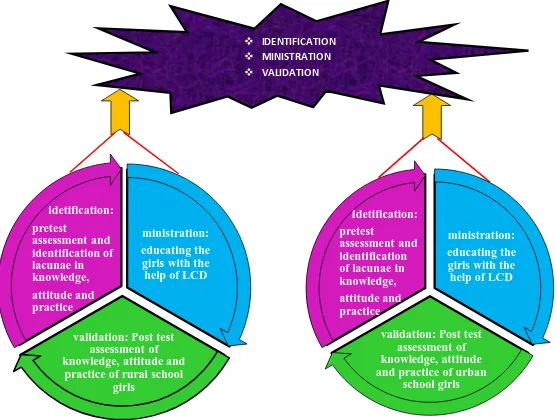
According to Weidenbach, nursing practice consists of identifying a
patients need for help, ministering the need help and validating that the need for help was met.
The attributes adopted in this study are:
Central purpose
The central purpose of the study is to assess the effectiveness of structured teaching programme on knowledge, attitude and practice regarding menarche and menstrual management among school girls.
Prescription:
The investigator plans the prescription that will fulfill the central purpose (increasing knowledge, attitude and practice) by identifying the various needs to achieve the goal.
Realities:
1. Agent-investigator 2. Recipient-school girls
3. Goal-increasing knowledge, attitude and practice 4. Means-structured teaching programme
5. Framework-rural and urban school
Identification:
This includes the identification of the present knowledge, attitude and practice regarding menstrual management.
Ministration:
Refers to structural teaching programme with the help of LCD teaching among school girls.
Validation:
11
[image:21.842.130.687.70.490.2]
Figure No: 1 conceptual frame work of modified Weidenbach’s theory of helping art of clinical nursing (1969) IDENTIFICATION
MINISTRATION VALIDATION
ministration: educating the girls with the help of LCD
validation: Post test assessment of knowledge, attitude and
practice of rural school girls
idetification: pretest
assessment and identification of lacunae in knowledge, attitude and practice
ministration: educating the girls with the help of LCD
validation: Post test assessment of knowledge, attitude and practice of urban
school girls Idetification:
pretest
12
CHAPTER II
REVIEW OF LITERATURE
A review of literature will give thorough background support to the study. A familiarization well before with previous studies can be useful in suggesting research topic in identifying aspects of problems about more research is needed. It gives new knowledge insight to the researchers.
The related literature is reviewed for the present study in order to determine the knowledge, attitude, and practice regarding different aspects of menstrual management.
.
Literature related to age at menarche
Literature related to menstrual hygiene
Literature related to menstrual problems
Literature related to home remedies for menstrual problems
Literature related to knowledge, attitude and practice regarding menarche and menstruation
LITERATURE RELATED TO AGE AT MENARCHE
13
A descriptive study was conducted on menstrual patterns among 30 adolescent girls age between 10 to 19 yrs with different types of disabilities on residents of a residential institution caring for a abandoned children. Here they have studied the clinical history and medical records of the students and carried out detailed clinical examination of all girls. Based on these findings the disabilities were diagnosed and categorized. The variables include diagnosis, type of disability, secondary sexual characteristics, menarche, menstrual pattern, menstrual hygiene, and menstrual problems. The study conclude that onset of menarche is towards the extremes of normal age range in girls with intellectual disabilities or visual impairment but not in the girls with hearing and loco motor disabilities. Girls with disabilities have probable for independent menstrual be concerned. Menstrual disorders were managed conservatively. (Joshi.G.A., et al. 2015).
A study conducted on onset of menstrual cycle and menses features among secondary school girls in Italy. The aim of the study was to provide an updated picture of age at menarche, and main menstrual characteristics and complaints in Italian population. They were selected 3,783 adolescent secondary school girls by randomly selected 13 cities in northern Italy. Self administered anonymous questionnaire was used which includes anthropometry, smoking, drinking habit, use of contraceptive, socioeconomic status, age at menarche, menstrual pattern, physical/psychological menstrual complaint. The result shows that the mean age was 17.1yrs and the mean BMI was 20.3 kg/m2, 5.0% girls belongs to the families with small societal score, strong physical motion was declared by 9.7% of the girls, smoking habit by 30.3% and drinking alcoholic beverage by 54.0%. pills was used as a method for contraception by 8.5%0f girls, while 4.8% consumed pills to regular menses. The study provides an overview of epidemiological data on frequency of menstrual abnormality to assist reproductive health professional in managing adolescent gynecology. (Sanctis.V.D. et al.2014).
14
onsets of menstrual cycle, irregularity have been added. The study reveals that age at menarche of Japanese women born between 1930’s and 1980’s decreased. And the interval from the menarche to the onset of regular menstrual cycle extended for the younger generations. The distribution of high risk group of estrogen dependent disease has been increasing significantly among younger generations of Japanese women’s. (Hosokawa.M.,et, al. 2012).
A study conducted on delayed menarche in young German women with type 1 diabetes mellitus. Cumulative anonym zed data for 643 young women’s out of 11,629 young women’s under 20 years old were selected. Which is based on availability of
menarche data, age < 20 yrs at the last visit prior to 1january 2006. The aim of this study is to investigate in young German women with TIDM menarcheal age and factors potentially affecting menarche, including glycemic control, BMI, relative TIDM duration, insulin dose and insulin therapy & intensity. Mean age at menarche (±SD) was 13.22 ± 1.31 yrs representing a delay of 0.52 yrs (P <0.001) relative to the general population. Signs delay (P <0.05) was also found for relative TIDM duration, BMI SD score, insulin dose, and HbA1C with a 1% increase in HbA1c resulting in a delay in menarche by 0.07% years. The study pointed that age at menarche is delayed with relative T1DM & poor quality of glycemic control. (Rohrer.T., et,al.2007).
A qualitative study conducted to explore lived experience of getting ready for menarche from the perspectives of young adolescent girls and also to describe the influence of information of preparation for this event. Phenomenological approach was chosen. The purposive sampling of 4 premenarcheal participants selected between the age group of 10-14 yrs. The four essential themes of personal meanings of menarche, trust, and support and privacy, and advice to other girls be a symbol of the core of the experience getting ready for menarche. Mothers, female health teachers, books are identified as common source of information learning for the participants. Two of the participants who attended a private girl’s school said they
were comfortable talking with and asking questions to health teacher. The participants clearly shown learning about pads, and tampons, and how to use this equipment were had from their mothers or school health educators. (Graham.C.A 2002).
15
LITERATURE RELATED TO MENSTRUAL HYGIENE
The effective, hygienic management of menstruation is essential for women and girls to contribute in society with self-respect and comfort. Effective menstrual hygiene management (MHM)includes access to clean absorbents, with facilities to change, hygienic or dispose of these as wanted and access to soap and water for cleaning the body and absorbents needed (sommer M et al 2013).
A systemic review and Meta analysis conducted on menstrual hygiene management interventions improve education and psychosocial outcomes for women’s and girls in low and middle profits countries. Ordered systematic searches
were conducted in peer reviewed and grey literature to identify the studies evaluating education and resource provision interventions for menstruation management. Individual and cluster randomized controlled trial were qualified for inclusion. Eight studies described in ten citations were eligible for inclusion. Study was extremely heterogeneous in design and context. 6 included for assessment of education intervention, 3 provided assessment of the provision of the different types of sanitary products (menstrual cups, disposable sanitary pads, reusable sanitary pads) A moderate but non-significant standardized mean difference was found for the two studies review the impact of clean pad provision on school attendance: 0.49 (95%CI -0.13, 1.11). Included studies were heterogeneous with significant danger of bias. Trials of education interventions reported positive impacts on menstrual knowledge and practices, though, lots of studies unsuccessful to assess other relevant outcomes. No trials assessed or reported harms. The review suggest that further more results studies needed exhibit the role of menstrual hygiene management. (Hennegan.J., et,al. 2016).
16
were co-education. A self-administered ordered close-ended questionnaire survey, Observation (inspection visits), checklist (quantitative), focus group discussions (FGD) and half-structured in-depth interviews (qualitative) were applied to collect the information. 149 participated in the survey, 84 participated in FGD, 23 head/deputy head of schools and matrons participated in semi structured in depth interview. The results show that all surveyed schools are having some sort of menstrual hygiene management education. A larger group girls still need more information, The major problems are Lack of soap, hand wash services privacy in restroom and free pads to attend emergency needs. The study highlights the urgent need of toilet, disposal facilities, teaching programme related to menstrual hygiene management. (Guya.E., et,al. 2014).
A cross sectional observational study was conducted on menstrual hygiene and Reproductive Morbidity in adolescent girls in Dehradun, India. Multistage random sampling was used with total 453 girls between 9th to 12th std girls. Girls were individually interweaved for the information about awareness about menstruation, source of information, practices to keep menstrual cleanliness, troubles related to menstruation, and symptoms related to reproductive tract infections by using a pre designed and pretest schedule. Education was given in every aspect after the pretest. The results show that during menstruation, 38.4% and 34.9% girls were using sanitary napkins, cloth/rags respectively. Among sanitary napkin users, the use was significantly higher among rural girls as compared to the urban girls. The practice of reuse of cloth after wash was considerably more among rural girls. The practice of daily bathing was significantly higher among urban girls (p<0.05). A physically and mentally healthy adolescent girl can become a healthy adult female in her possible living. The studies ending that girl should be conscious about menstrual hygiene before they attaining menarche. (Juyal R,et,al. 2014).
17
menstrual hygiene materials and knowledge, use of sanitary pads. The present study revealed that the mean age of menarche was found to be 14.
± 1.4 years. The study find out that students are having adequate knowledge regarding menstrual hygiene. School teachers and mothers are the primary source of information. From among the risk factors, place of residence and their mother are instructive rating were found to be independent predictors of menstrual hygiene management. The study recommends that knowledge influences attitude and practice over, parents should be made to acknowledge the need to support their children at school with hygienic menstrual resources in addition to other basic hygienic products. (Gultie.T, et,al. 2013).
A study regarding India moves towards menstrual hygiene: subsidized sanitary napkins for rural adolescent girls- issues and challenges. In this study reveals the sanitary napkin scheme. In June 2010, the Government of India proposed a new scheme towards menstrual hygiene by provision low rate sanitary napkins. But there were lots of issues like alertness, availability and excellence of napkins, regular supply, privacy, and water supply, disposal of napkins, reproductive health education, and family support. The study reveals that menstrual hygiene education is very important part in each adolescent girl to escalate their healthy life. (Garj.R., et,al. 2012)
18
A cross sectional study was conducted on knowledge, practice regarding menstrual hygiene among adolescent girls at Nagpur district. The objective of the study is to assess the knowledge and the practices of menstrual hygiene among rural and urban school going adolescent girls, to assess the restriction which were practiced by adolescent school girls during menstruation. Totally 387 girls were selected for this study purposively between 8th and 9th std. the data collection tool was by using pre designed pretested structured questionnaire which consists of awareness about menstruation, resource of information concerning menstruation, hygienic practices during menstruation, restricted activities practices during menstruation. The demographic information including family details, parent’s education, occupation,
housing condition, house type, toilet facility, water supply in the toilet were enquired and documented. The result shows that only 36.95% of the girls were aware about menstruation before menarche. The major source of information was their mothers, the mean age at menarche was 12.85 ± 0.867 years, 49.35% were used sanitary pads, and the practice of the use of the old cloth was account in 45.74% of the respondents. Satisfactory cleaning of the genitalia was practiced by 33.85%. The study bring to a close that wakefulness regarding the necessitate of menstrual practices have the vital role to reduce reproductive health problems. (Subhash B. Thakre, et,al. 2012)
A cross sectional study was conducted on menstruation and menstrual cleanliness amongst teenager school girls in kano, Northwestern Nigeria. 400 students between the age group of 10-19 yrs by multistage sampling from a list of all secondary schools The mean age of the students was 14.4 ± 1.2 years; The students attained menarche at 12.9 ± 0.8 years. Most of them used sanitary pads as a hygienic material, changed menstrual dressing concerning 1-5 times per day; and increased the times of bath. And improving access of the adolescents to youth friendly services by way of meeting the adolescent reproductive health requirements in Nigeria. (Lawan UM, et,al. 2010)
LITERATURE RELATED TO MENSTRUAL PROBLEMS
19
dysmenorrhoea, as their uterus is at rest growing, and yet they may get it numerous years later than their first episode begin. Symptoms may start one to two days prior to menses, peak on the first day of flow, and subside during that day or over numerous days. The pain is usually described as boring, aching, and cramping and often radiates to the lower back. Dysmenorrhea [Online Accessed December 2011]
A descriptive study conducted on Assessment and Evaluation of Knowledge and Impact of Dysmenorrhea among Nursing Students in Punjab. The study was conducted in Swift Institute of Nursing, Ghaggar Sarai, Rajpura and a sample of 100 nursing students was chosen by Proportionate stratified random sampling. The too ls developed and used for data collection were Performa for recognition and demographic information. Performa for structured knowledge questionnaire and a Performa of three point scale include 15 items to review the collision of dysmenorrhea. The results shows that out of total 100 subjects in this study, more than half (52%) respondents were in the age group of 16-20 years. (56%) of students were moderately affected from dysmenorrhoea where as (39%) and (05%) of participants were affected mildly and severely from dysmenorrhoea respectively. The study shows significant association of knowledge of dysmenorrhoea and its treatment with course of Nursing. The study completed that not any of the students was unaffected from dysmenorrhoea (Kanika, et,al. 2015).
A cross sectional survey conducted on menstrual patterns and disorders among secondary school adolescents in Egypt. The girl’s among11-19yrs were selected for
the study. Well administered pretested questionnaire, rating scale were used as a tool for data collection. Totally 412 questionnaire were properly filled. The mean age of the girls was 14.67 ± 1.7 years. 12.49 ± 1.20 was the mean age at menarche. 382 respondents reported various menstrual disorders, giving a prevalence rate of 95 %. Dysmenorrhea was the most prevalent (93 %) menstrual disorder in our sample, followed by PMS (65 %), and abnormal cycle lengths (43 %). Menstrual disorders interfered with social and academic life of 33 and 7.7 % of respondents correspondingly. Most participant lack menstrual wellbeing knowledge and only 8.9 % of girls reported consulting a physician. The study recommends the further education to inculcate their knowledge. (Hatem I, et,al. 2015).
20
A descriptive cross sectional study was conducted on exploring dysmenorrhoea and menstrual experiences among Lebanese female adolescents. A descriptive cross sectional study was used, cluster random sampling adopted to select schools. Self administered questionnaire was used as a tool for data collection. Which consists socio demographic data, menstrual experience and behavior questionnaire. 389 overall schoolgirls completed the questionnaire. The mean age of menarche was 12.5 (SD 1.0) years (range 9–15years), with 85.9% of girls experiencing menarche between ages 11–13 years. Dysmenorrhoea was significantly associated with missing school days (P =0.03) and with negative menstrual experience scores (P < 0.001) . There were also significant relationships with dysmenorrhoea and younger age (P < 0.001), lengthy cycle (P < 0.001), duration of menses (P <0.001) and suffer mood change (P< 0.001). Though, there were no important associations between dysmenorrhoea and schoolgirls’ family earnings, cycle regularity or amount of
menstrual flow. (Santina.T., et,al. 2012).
A descriptive study was conducted regarding Assessment of Dysmenorrhea and Menstrual Hygiene Practices among Adolescent Girls in a few Nursing Schools at EL-Minia Governorate, Egypt. Totally 160 eligible female students selected in this study.. This study conducted in a few nursing school at EL-Minia governorate (Mallawy, Abu- korkas) nursing schools. Interview and questionnaire was worn as a tool for data compilation. The study exposed that dysmenorrhoea is highly prevalent among adolescent nursing schools. The students present good menstrual cleanliness practice as regard physical exercise, change their perineal pads often, take hot bath and just one-fourth of them take rest at home during menstruation. However, the necessity to accept a well behavior, which include: correct nutrition, and appropriate use of medications based on a physician's prescription was very important issue the study recommends that school based programmers must be reconstructed to improve the students knowledge.( Neamat A., et,al. 2011).
LITERATURE RELATED TO HOME REMEDIES FOR MENSTRUAL PROBLEM
21
remedy in future for the ailment. This knowledge on home remedies will be poured on from generation to generation(Griffiths V.2000).
A randomized cross-over study was perform on the effect of moxibustion on alleviating menstrual ache in a people of young nursing students. The aim of the study is to investigate the effect of moxibustation on alleviate menstrual ache and relieve the symptom of dysmenorrhoea in a cohort of young nursing students in china. A total 56 nursing students with menstrual pain were randomly allocated in two groups. The result shows that after the first treatment phase, the score of BRS-6 has important difference among two groups at the first menstrual cycle (p < 0.05).After three months’ wash phase, the keep count of VAS, BRS-6, affective of PR, sensory of
PRI, total score of PRI and VRS had significant differences involving two groups following the second treatment period (p < 0.01). And the frequency rating of leg ache, faintness, anxiety and the total gain had major difference between two groups after the second treatment phase (p < 0.05). And the harshness score of abdominal ache fault, leg aches, faintness, anxiety and the whole score had important difference among two groups gone the second treatment phase (p < 0.05). ( Jinga.G., et,al. 2015).
A descriptive study was performing to assess the knowledge regarding home remedies to relieve dysmenorrhoea among adolescent’s girls in selected schools in Ludhiana Punjab. Non experimental design was used in this study, totally 60 adolescents were selected purposively. Self administered questionnaire was used as a tool for data collection. Which consists of age, religion, class, area of residence, age at menarche, duration of menstrual cycle ,duration of menstrual period, education of parenthood, flow of menstruation and foundation of in rank findings revealed that maximum (83.3%) adolescent girls had average knowledge follow by (10%) excellent and (6.67%) had slightest below average score. There was a considerable connection with belief, education of blood relations, flow of menstruation, source of information. (Deepika David2014).
22
LITERATURE RELATED TO KNOWLEDGE, ATTITTUDE AND
PRACTICE REGARDING MENARCHE AND MENSTRUATION.
An attitude towards menstruation is mental condition of women that is exhibited as overt appearance concerning the somatic discomfort. Since menstruation is a natural biological development of womanhood, it is main that it is recognized as a natural event and develops tolerance. In a few females there is a want for behavioral transform so as to develop the right attitude for safeguarding menstrual wellbeing. It may also aid in obtain ability for proper managing of symptoms and to lead a normal active life.( Moron kola, O.2007)
A descriptive cross sectional study conducted on coping strategies of menstrual disturbance among adolescent school girls between the age group of 13-17 years at selected urban and rural schools of Coimbatore. Multi stage sampling was adopted. Checklist was the tool. The study concluded that mean age of menarche was 13 years. Source of information showing only limited percentage go information from the teachers, mothers, elders, sisters and friends. Bulk of the girls had sufficient knowledge regarding characteristics of normal menstruation and hygienic practices. 78% girls reported health problem related to menstruation like abdominal pain, back pain, mood change were the most problems. The health care provider should be highly equipped with coping strategies of menstrual problem. Mothers and teachers have the major role in this aspect. Hence the education to these groups will enhance the reproductive health (Umadevi 2014).
A qualitative study conducted to explore young school girls between the age group of 12-16 years on attitudes and experience with menstruation in rural Western Kenya. In this study they have included information from six FGDs with parenthood and the public members. The study reveals that girls were poorly prepared for menarche and them unable to share it and felt alone. Secrecy around menstruation limits their ability to share experience leaving them to cope alone. Intervention to address these issues as a package of measure are required to improve the quality of girl’s life. At community level strategies needed to improve the communication between the girl’s parents, guardians, and at school with teachers. Certain lands of
23
schools, facilitate safe place for girls to clean and change, access to better, low cost sustainable sanitary products would improve he girls well life’s and diminish the
barrier with engagement of school work, reduce school abscentism. (Masona.L., et,al. 2013).
A epidemiological cross sectional study was conducted on knowledge and practices regarding menstrual sanitation along with urban and rural teenager girls in Udupi Taluk, Manipal, India. Total 550 school going adolescent girls in the age assembly of 13-16 years were elected from both urban and rural settings. Stratified cluster sampling was adopted in this study. Pre tested questionnaire was adopted as a method of data collection tool. Result shows that approximately 34% participant were attentive regarding menstruation prior to the menarche, mothers are the score of information in both groups. Overall, 70.4% of adolescent girls were using sanitary napkins as menstrual spongy while 25.6% were by means of both cloth and sanitary napkins. The studies conclude that there is a vital necessitates preparing the teenager girls with knowledge as regards safe, hygienic practices to enable them to maintain a reproductive health. (Kamath R, et, al. 2013).
A cross sectional study on perceptions regarding menstruation and practices during menstruation cycles among 506 adolescent girls between 8th- 10th std in rural areas. Pre designed structured self administered questionnaire was the tool. The average age was14.08 with standard deviation of 1.06 and range between 12-16 years. 99.6% of the student had heard of menstruation & 57.9% had acquired this even knowledge before attaining menarche. Only 44.1% used sanitary pad during the menstrual cycle. Among those who used cloth 31.3%. Used soap and water to clean them 56.8% and used soap and water to clean their genitalia. 88.8% of the girls took daily bath during menstruation. The most common source of information was mother. Personal hygiene practices were founded to be unsatisfactory. The conclusion strengthen the necessitate to push safe and germ-free practices among the youngster girls and carry them out of traditional judge, misconceptions, restrictions regarding menstruation. (Shanbhag D, 2012)
24
which consist of demographic Performa, menstrual believes, practices, source of information, restricted activities. The study highlights that the age of menstruating girls ranged from 12 to 15 yrs, 84% of girls being between 13 and 14 yrs of age group. Among 166 girls 143(86.1%) were Hindus, where as only 17(10.2%) girls were Muslim and 6(3.6%) were Christian girls. It shows that education is a essential piece of health education. It is known that outlook to menstruation and menstrual follow developed at menarche may be in the end of life. The way of getting education has a positive impact over girl’s reproductive health. (Karkada.E.C, et, al.2012).
25
CHAPTER III
METHODOLOGY
Methodology gives up the blue print of the study. This chapter explains the methodology adopted by the researcher to determine the effectiveness of structured teaching programme on knowledge, attitude and practice among adolescent girls at urban and rural schools. The chapter deals with the research design, setting, population, sample size, sampling technique, criteria for sample selection, variables, description of the intervention, development and description of the tool, testing of the tool, procedure for data collection and statistical analysis.
RESEARCH DESIGN
The Quasi experimental pretest and posttest design is adopted for this study. Schematic representation as follows
O1 X O2
O1 –Pretest on knowledge attitude and practice about menarche and menstrual management among school girls in selected urban and rural schools.
X – Structured teaching programme regarding menarche and menstrual management. O2 –Post test on knowledge attitude and practice about menarche and menstrual management among school girls in selected urban and rural schools.
VARIABLES UNDER STUDY
DEPENDENT VARIABLE: In this study knowledge, attitude and practice are the dependent variable.
INDEPENDENT VARIABLE: Structured teaching programme is the independent variable.
SETTINGS OF THE STUDY
26
The rural school was GRD- CPF Higher Secondary School, Which is located 5 km away from KMCH College of Nursing. The total school children were 1250. The total girls studying in 7th std were 115 girls in four sections.
The urban school was PSGG- Kanya Gurukulam Higher Secondary School. Which is located 3 km away from the KMCH College of Nursing. The total school children. The total school strength was 2300. Out of this 2300, 200 girls studying 7th std in five sections were chosen for the study.
POPULATION OF THE STUDY
The study population includes school girls on the age group of 12- 13 yrs in rural and urban schools at Coimbatore.
SAMPLE SIZE
The sample size of this study consists of 200 adolescent school girls. Among this 100 girls are from urban school and 100 girls are from rural school.
SAMPLING TECHNIQUE
Non Probability Purposive Sampling technique was adopted for this study.
CRITERIA FOR SAMPLE COLLECTION Inclusion criteria
The girls who belong to the age group of 12- 13 yrs studying in selected urban and rural schools.
The school girls who attained and not attained menarche.
Exclusion criteria
The girls who are absent from the urban and rural school during data collection period.
DESCRIPTION OF INTERVENTION
27
cycle, premenstrual syndrome, menstrual signs and symptoms, menstrual problems, home remedies for menstrual problems, hygienic practices, personal hygiene, ovulation calendar, menstrual myths and facts and diet during menstruation were clearly explained to the school girls. The post test was conducted after 2 weeks of teaching
DEVELOPMENT AND DESCRIPTION OF TOOL The tool consists of four sections.
Section I: Demographic variables.
Section II: Self administered knowledge questionnaire. Section III: Self administered attitude scale.
Section IV: Self administered practice Checklist.
Section I: Demographic variables. The socio demographic characteristics of the student include type of family, food habits, age at menarche, weight, height, BMI, family income, menstrual preparedness, source of information.
Section II: Self administered knowledge questionnaire to assess the knowledge of students on menarche and menstrual management.
It consists of questionnaire regarding knowledge on menarche and menstrual management prepared by the investigator after reviewing literatures and various books. A sum of 30 questions was prepared to assess the knowledge of students. Each question was given with four options with one correct option. The subjects have to write the correct option in the answer sheet. Using the scoring key prepared by the investigator. The correct answer was given as score 1 and wrong answers as 0. The total score earned by the subject reveals the knowledge about menarche and menstrual management. The minimum score was 0 and maximum score was 30. The total score was classified into
0-10: poor knowledge
11-20: average knowledge
28
Section III: Self administered attitude scale to assess the student’s attitude on menarche and menstrual management.
It consists of statement regarding the myths and facts on menarche and menstrual management prepared by investigator after reviewing literatures and various books. A sum of 15 statements was prepared to assess the student’s attitude towards menarche and menstrual management. Each statement consists of four options like strongly agree, agree, disagree, and strongly disagree. The subject had to record their correct option by writing it in the answer sheet. The total score earned by the subject reflect their attitude on menarche and menstrual management.
15-30: Negative attitude
31-45: neutral attitude
46-60: positive attitude
Section IV: Self administered practice Checklist to assess the students practice on menarche and menstrual management.
It consists question regarding menstrual practice prepared by investigator after reviewing literatures and various books. A sum of 15 questions was prepared to assess the students practice towards menstruation. Each question consists two options like yes or no. The subject had to record their correct option by writing it in an answer sheet. The score earned by the subject reveals their practice during menstruation.
0-5: poor practice
6-10: average practice
11-15 good practice
VALIDITY AND RELIABILIY
29
questionnaire was identified as 0.8, Attitude likert scale was 0.9, and Practice checklist was 0.9. Reliability shows that it is feasible.
PILOT STUDY
Pilot study was conducted among 10 urban and 10 rural students studying 7th std from both urban and rural area. The result of the pilot study revealed that the study was feasible. The pilot study sample was not included in the original study.
PROCEDURE FOR DATA COLLECCTION
The study was conducted in urban and rural schools Coimbatore .The formal permission was obtained from the Principal KMCH college of Nursing then from the concerned school principals. The study was conducted for a period of four weeks. The investigator informed the students about the study and maintained good rapport. The investigator introduced self. The purpose and the benefits of the study were explained to the students to ensure their cooperation. Assurance was given to the subjects regarding the confidentiality of the data collected from them. The first week of the data collection the self- structured questionnaire, practice checklist, attitude scale was administered to assess the pre- test knowledge, attitude and practice score in two schools for 200 samples. The second week structured teaching Programme was given to the 6th,7th,8th std students with the help of power point presentation regarding menarche and menstrual management. After two weeks of intervention post test knowledge, attitude and practice was conducted with the same tool among same students.
STATISTICAL ANALYSIS
Collected data were analyzed by descriptive and inferential statistics. The descriptive statistics included mean, and percentage. Inferential statistics included paired t - test used to analyze the effectiveness of structured teaching programme. Independent‘t’ test was used to compare the two school girls. Chi-Square test was
30
CHAPTER IV
DATA ANALYSIS AND INTERPRETATION
This chapter deals with the analysis and interpretation of data collected to determine the effectiveness of structured teaching programme regarding menarche and
menstrual management among school girls in selected urban and rural schools at Coimbatore.
ORGANIZATION OF FINDINGS
The collected data are grouped and analyzed using descriptive and inferential statistics as follows:
SECTION A: Distribution of respondents according to demographic variables.
SECTION B: Distribution of respondents according to age at menarche of rural and urban schools.
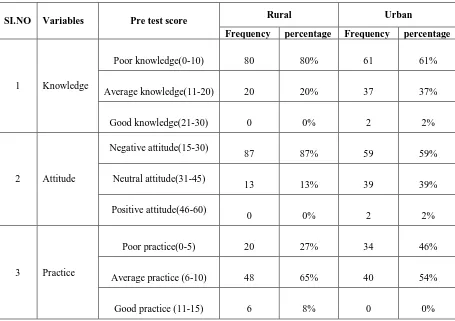
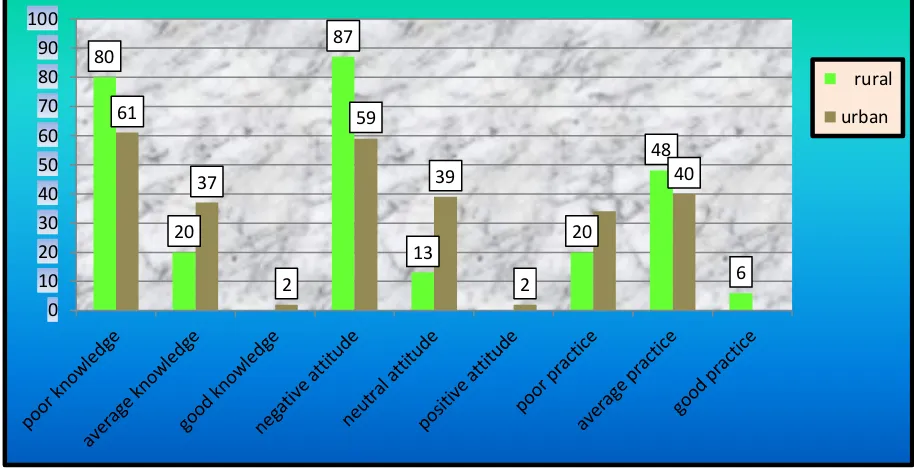
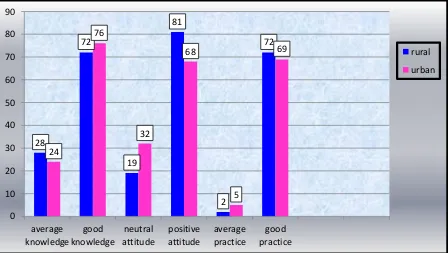
SECTION C: Distribution of respondents according to mean pretest knowledge, attitude and practice score of rural and urban school on menstrual management.
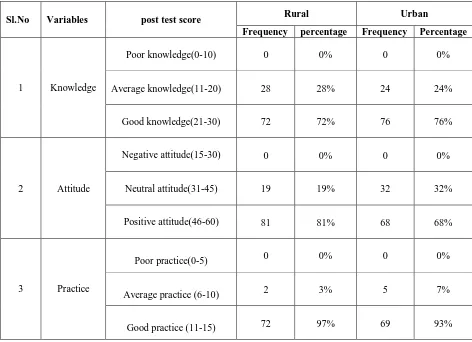
SECTION D: Distribution of respondents according to mean posttest knowledge, attitude and practice score of rural and urban school on menstrual management.
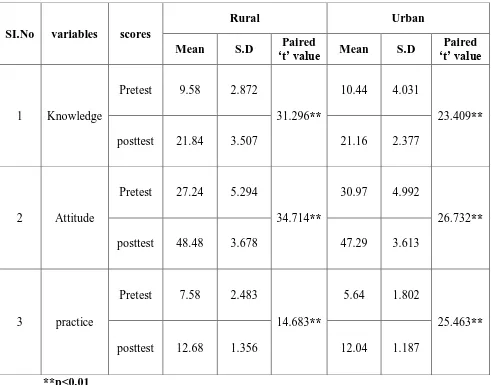
SECTION E: Comparison of mean pre and post-test knowledge, attitude and practice scores of rural and urban school respondents regarding menstrual management.
SECTION F: Comparison of mean pretest and posttest knowledge, attitude and practice scores between rural and urban school respondents regarding menstrual management.
SECTION G: Association of pretest knowledge scores with selected demographic variables of rural school.
31
[image:41.595.102.564.126.544.2]SECTION A
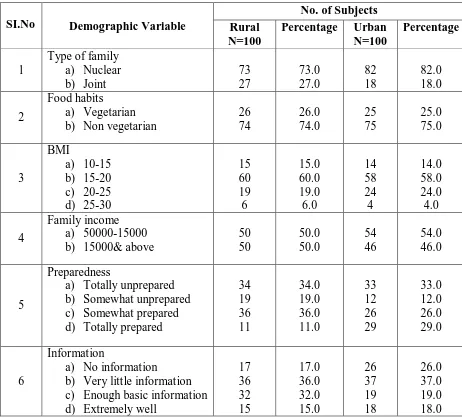
Table No.1: Distribution of respondents according to demographic variables. N=200
SI.No Demographic Variable
No. of Subjects Rural
N=100
Percentage Urban N=100
Percentage
1
Type of family a) Nuclear b) Joint 73 27 73.0 27.0 82 18 82.0 18.0 2 Food habits a) Vegetarian b) Non vegetarian
26 74 26.0 74.0 25 75 25.0 75.0 3 BMI a) 10-15 b) 15-20 c) 20-25 d) 25-30 15 60 19 6 15.0 60.0 19.0 6.0 14 58 24 4 14.0 58.0 24.0 4.0 4 Family income a) 50000-15000 b) 15000& above
50 50 50.0 50.0 54 46 54.0 46.0 5 Preparedness
a) Totally unprepared b) Somewhat unprepared c) Somewhat prepared d) Totally prepared
34 19 36 11 34.0 19.0 36.0 11.0 33 12 26 29 33.0 12.0 26.0 29.0 6 Information
a) No information
b) Very little information c) Enough basic information d) Extremely well
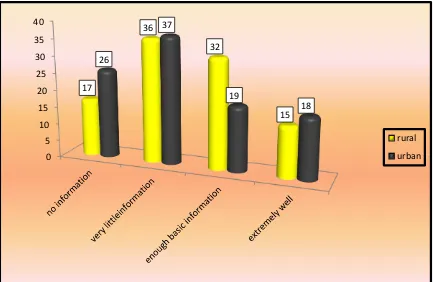
17 36 32 15 17.0 36.0 32.0 15.0 26 37 19 18 26.0 37.0 19.0 18.0
The table no: 1 shows the demographic variables of 100 respondents of rural school and 100 respondents of urban school.
Rural school
32
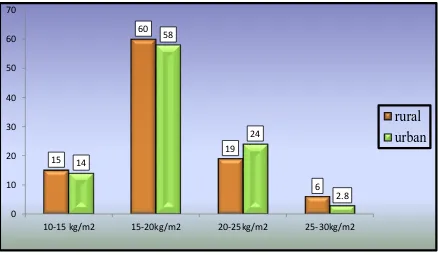
Considering the BMI 15 respondent (15%) were 10-15, 60 respondents (60%) were between 15-20, 19 respondents (19%) were between 20-25, 6 respondents (6%) were belongs to 25-30.
With regard of family income 50 respondents (50%) were between the income of 5000-15000, 50 respondents (50%) were belongs to the income of 15000 & above.
Regarding the preparedness 34 respondents (34%) were totally unprepared, 19 respondents (19%) were somewhat unprepared, 36 respondents (36%) were somewhat prepared, 11 respondents (11%) were totally prepared.
Considering the information 17 respondents (17%) were not obtained any information, 36 respondents (36%) were obtained very little information, 32 respondents (32%) were obtained enough basic information, 15 respondents (15%) were obtained extremely well information.
Urban school:
Regarding the type of family 82 respondents (82%) were belongs to nuclear family, and 18 (18%) respondents belongs to joint family. According to their food habits 25(25%) respondents were vegetarian and 75(75%) respondents were non vegetarian.
Considering the BMI 14 respondent (14%) were 10-15, 58 respondents (58%) were between 15-20, 24 respondents (24%) were between 20-25, 4 respondents (4%) were belongs to 25-30.
With regard of family income 54 respondents (54%) were between the income of 5000-15000, 46 respondents (46%) were belongs to the income of 15000 & above.
Regarding the preparedness 33 respondents (33%) were totally unprepared, 12 respondents (12%) were somewhat unprepared, 26 respondents (26%) were somewhat prepared, 29 respondents (29%) were totally prepared.
33
Fig 1: Distribution of respondents according to food habits.
Fig 2: Distribution of respondents according to BMI 0
10 20 30 40 50 60 70 80
vegetarian nonvegetarian
26
74
25
75
rural
urban
15
60
19
6 14
58
24
2.8
0 10 20 30 40 50 60 70
10-15 kg/m2 15-20kg/m2 20-25kg/m2 25-30kg/m2
[image:43.595.111.549.436.691.2]34
Fig 3: Distribution of respondents according to preparedness
[image:44.595.111.544.374.656.2]35
[image:45.595.89.569.155.275.2]SECTION B
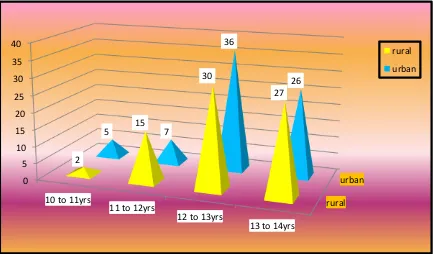
Table No.2: Distribution of respondents according to age at menarche of rural and urban schools.
Sl.
No
Age at
menarche
Rural Urban
Frequency Percentage Mean SD Frequency Percentage Mean SD
1 10-11yrs 2 3%
12.11 .820
5 7%
12.12 .843
2 11-12yrs 15 20% 7 9%