Developing a socio-ecological model of
dietary behaviour for people living with
diabetes or high blood glucose levels in urban
Nepal: A qualitative investigation
Lizzie CaperonID1*, Abriti Arjyal2, Puja K. C.2, Jyoti Kuikel2, James Newell1,
Remco Peters1, Andrew Prestwich3, Rebecca King1
1 Nuffield Centre for International Health and Development, Leeds Institute of Health Sciences, University of Leeds, Leeds, United Kingdom, 2 HERD International, Prasuti Griha Marg, Kathmandu, Nepal, 3 School of Psychology, University of Leeds, Leeds, United Kingdom
Abstract
Instances of non-communicable diseases such as diabetes are on the rise globally leading to greater morbidity and mortality, with the greatest burden in low and middle income coun-tries [LMIC]. A major contributing factor to diabetes is unhealthy dietary behaviour. We con-ducted 38 semi structured interviews with patients, health professionals, policy-makers and researchers in Kathmandu, Nepal, to better understand the determinants of dietary behav-iour amongst patients with diabetes and high blood glucose levels. We created a social eco-logical model which is specific to socio-cultural context with our findings with the aim of informing culturally appropriate dietary behaviour interventions for improving dietary behav-iour. Our findings show that the most influential determinants of dietary behaviour include cultural practices (gender roles relating to cooking), social support (from family and friends), the political and physical environment (political will, healthy food availability) and individuals’ motivations and capabilities. Using these most influential determinants, we suggest poten-tially effective dietary interventions that could be implemented by policy makers. Our find-ings emphasise the importance of considering socio-cultural context in developing interventions and challenges one-size-fits-all approaches which are often encouraged by global guidelines. We demonstrate how multifaceted and multi layered models of beha-vioural influence can be used to develop policy and practice with the aim of reducing mortal-ity and morbidmortal-ity from diabetes.
Introduction
Non-communicable diseases [NCDs] are a leading cause of death globally with 70% of global deaths due to NCDs in 2015. This figure is projected to increase significantly [1]. The burden of NCDs is highest in low- and middle-income countries [LMICs] where over three quarters of global NCD deaths [30.7 million] occurred in 2015 [1]. Diabetes is the fourth most common
a1111111111 a1111111111 a1111111111 a1111111111 a1111111111
OPEN ACCESS
Citation: Caperon L, Arjyal A, K. C. P, Kuikel J, Newell J, Peters R, et al. (2019) Developing a socio-ecological model of dietary behaviour for people living with diabetes or high blood glucose levels in urban Nepal: A qualitative investigation. PLoS ONE 14(3): e0214142.https://doi.org/ 10.1371/journal.pone.0214142
Editor: Kannan Navaneetham, University of Botswana, BOTSWANA
Received: October 3, 2018
Accepted: March 7, 2019
Published: March 25, 2019
Copyright:©2019 Caperon et al. This is an open access article distributed under the terms of the
Creative Commons Attribution License, which permits unrestricted use, distribution, and reproduction in any medium, provided the original author and source are credited.
Data Availability Statement: All relevant data are within the manuscript and its Supporting Information files.
Funding: The authors received no specific funding for this work.
NCD after cardiovascular disease, cancer and respiratory diseases and is responsible for 1.6 million deaths globally [1]. As 80% of global diabetes deaths occur in low income countries [2] it is a disease which needs tackling in these settings. Low income South Asian countries, such as Nepal, have seen a particularly rapid increase in the prevalence of diabetes in the past two decades. South Asians are at increased risk of diabetes compared with other populations such as Caucasians [3–5].
Unhealthy diet (high in salt, sugar and fat and low fibre, fruits and vegetables) is a cause of diabetes [3,6,7]. A healthy lifestyle consisting of regular exercise, limited alcohol and no tobacco use and a healthy diet consisting of fruit and vegetables, less sugar, salt and saturated fats can contribute to the prevention of NCDs such as diabetes [8]. However, with the increas-ing availability and demand for unhealthy foods [9–13], encouraging healthy dietary behaviour is a growing global challenge. When we refer to healthy or unhealthy diet or eating we do so in relation to a healthy diet for everyone, not just for people with diabetes. We use the WHO advice for healthy diet but account for socio-cultural variation within this generic advice, for example, allowing adapting a generic recommendation for the consumption of pulses to be made specific to the lentils and dahl commonly consumed in Nepal [14]. Dietary behaviour can include not only the consumption of, but the preparation or acquisition of healthy food which affects the ability to eat healthily. Numerous interventions have been trialled in both LMICs and high income countries [HICs] to improve dietary behaviour. A recent review found that of 76 randomised controlled trials [RCTs], which aimed to improve dietary behav-iour in LMICs, only 7 of these addressed diabetes. Very few studies [15–17] have considered the determinants of dietary behaviour in diabetes patients specifically and none have been con-ducted in LMICs. This study fills the gap in existing evidence by considering the determinants of dietary behaviour amongst people with diabetes or high blood glucose levels [HBGLs] in a specific LMIC context.
This study focuses on diabetes in Kathmandu, Nepal. Increasing urbanisation has been linked with increased incidence of diabetes in Nepal [18,19]. Urban and rural prevalence of the disease are 8.1% and 1% respectively [20]. NCDs in general are a substantial problem in Nepal; they are estimated to account for 60% of deaths [21]. Determinants of NCDs have been found to be multiple and varied [22–25]. In Nepal specifically, the rates of diabetes are increas-ing; in 2015 there were 526,000 reported cases of diabetes, and many more reported cases of HBGLs. By 2017 this had risen to 657,200 reported cases [26]. The number of cases of diabetes in adults which are undiagnosed is predicted to be 323.7 per 1000 people [27].
Nepal, like many other LMICs, has great problems meeting the World Health Organisation [WHO] target of fruit and vegetable intake; 99% of the Nepalese population do not meet the recommended daily allocation of fruit and vegetable intake [28]. Policy is currently failing to effectively tackle the causes of NCDs such as unhealthy diet [29]. However, some government attempts have been made to address the problems of unhealthy diet such as the multi-sectoral action plan for the prevention of NCDs [2015–2020] [28]. Additionally, the package of essen-tial non-communicable diseases [PEN] first trialled in several districts in in Nepal in 2015 attempts to improve diagnosis and prevention of NCDs such as diabetes by improving screen-ing processes in primary health centres [30], though the evaluation of PEN is yet to be con-ducted on a large scale. A recent study of barriers to diabetes services for patients in Nepal concluded that additional financial and human resources were needed in the health sector in addition to initiatives to improve diabetes awareness and management [31]. Despite some recent policy developments by the Nepalese government, there is a need to develop new inter-ventions designed to prevent the increase of diabetes.
multiple determinants into different levels of influence on behaviour (intrapersonal, interper-sonal, organisational, community and public policy) and consider the interaction of behav-iours across these different levels of influence, which leads to multi-level suggestions for interventions to effectively change behaviour [32–36]. Levels of influence used in models pre-viously include individuals, groups and organisations, whereas this study considers dimen-sions of influence in the form of environments, such as the physical environment, and socio-cultural context [37]. We define culture as a shared system of meaning which is adaptive and always changing. Culture includes conscious and unconscious assumptions and helps individ-uals interpret their experiences[38]. Embedding cultural understanding in global health has been shown to be important in developing effective health strategies [39,40]. However, culture has often been used as if it is static and a barrier to health improvement, often conflated with related concepts such as race and gender. To better consider the influence of culture on health, we do not treat it as an independent and time-independent categorical construct. Instead, because culture is also affected by, and affects, social contexts, we consider social and cultural context together. We consider social contexts to include environments made up of conditions which include socially acceptable standards and customs. These conditions are influenced by groups or social circles with whom individuals interact within the context. Therefore we have chosen to categorisesocio-cultural context, drawing on elements of the socio-cultural psycho-logical approach [41]. This approach emphasises that cultural factors such as language, art, social norms and social structures can play a significant role in the development of cognitive abilities and defining behaviours. We draw on this approach to consider factors such as social norms (informal understandings that govern the behaviour of members of society [42]), social structures (e.g. family, communities) and cultural practices/traditions (e.g. fasting, feasting) as playing an important role in behaviours. Socio-cultural context incorporates social factors (social relationships, social support) with cultural aspects (shared systems of meaning) to reflect values, norms, customs, influences and traditions. We use the term socio-cultural con-text as interchangeable with the term socio-cultural environment, the former forming an important part of our ecological model.
Environmental influences on dietary behaviour are increasingly discussed in the literature [43–45], one recent paper making clear different features of the environment which can influ-ence dietary choices [46]. However, many studies focus on the obesity epidemic rather than dietary behaviour more generally, our focus being the latter. Some social ecological models in particular, see culture as important in interventions [47,48]. We use our ecological model to better understand the research context in-depth and argue that one-size-fits-all thinking about intervention design is not appropriate. Though there is a plethora of global advice about healthy eating and diet, it is rarely contextually tailored to context [14,49,50]. We hope that our model can be used to aid the development of effective interventions to tackle risk factors associated with diabetes and other health challenges Our objectives are first, to develop an eco-logical model to expose the importance of broader influences on the dietary behaviour of peo-ple with diabetes and HBGLs in urban Nepal by understanding a research context in-depth, and second to investigate how thinking ecologically can lead to the development of a more tai-lored, contextually-appropriate and effective intervention design.
Methods
Qualitative study
Study design. Qualitative research was conducted in this study. A range of methods
research has used semi-structured interviews [SSIs] to establish dietary determinants in either HIC or LMIC settings. We used SSIs which is a method involving the compilation of a semi-structured interview guide which provided a clear set of instructions for interviewers, but with the opportunity for interviewers to explore emerging themes from the data in a flexible way. Our intention with using SSIs was to provide reliable, comparable qualitative data. Using SSIs, we aimed to produce socially useful knowledge using a pragmatic approach [54] whereby we oriented our study to address the problem of unhealthy diet to impact policy and practice. Conducting SSIs with patients and their families or partners allowed us to investigate the behaviours of people with diabetes and HBGLs at least three months after they were diagnosed with this condition so that there was enough time since diagnosis to explore changes in dietary behaviour. We were interested in understanding any behaviour change which patients had undertaken since diagnosis and in what form this change (or lack of change) had taken and why. To encourage discussion with patients we used participatory methods such as mapping their daily eating habits according to time of day [55–57], and mapping their access to people and places from their homes [58,59], such as to health facilities or friends’ houses. We also used a Nepali calendar which listed cultural festivals and events as a prompt to encourage dis-cussion of eating practices at different times of the year. In addition to patients and their part-ners, we interviewed health workers, researchers, policy makers and senior clinicians to better understand the context surrounding patients which influenced their dietary behaviours including an exploration of the existing dietary support available.
HERD International allowing us to select individuals we thought most appropriate to inter-view under the projects aims and objectives.
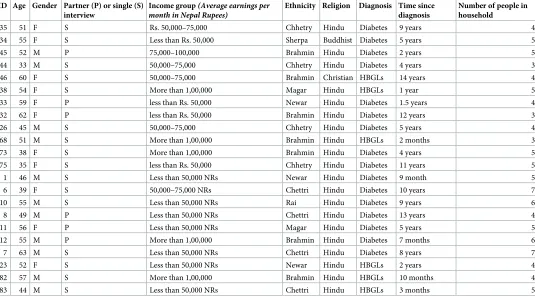
[image:5.612.38.573.87.384.2]An iterative approach was taken when developing the SSI guides which consisted of open questions structured around topics derived from literature reviews of previous research about Table 1. Characteristics of patients who participated in individual patient interviews (May–June 2017).
ID Age Gender Partner (P) or single (S) interview
Income group(Average earnings per month in Nepal Rupees)
Ethnicity Religion Diagnosis Time since diagnosis
Number of people in household
35 51 F S Rs. 50,000–75,000 Chhetry Hindu Diabetes 9 years 4
34 55 F S Less than Rs. 50,000 Sherpa Buddhist Diabetes 5 years 5
45 52 M P 75,000–100,000 Brahmin Hindu Diabetes 2 years 5
44 33 M S 50,000–75,000 Chhetry Hindu Diabetes 4 years 3
46 60 F S 50,000–75,000 Brahmin Christian HBGLs 14 years 4
38 54 F S More than 1,00,000 Magar Hindu HBGLs 1 year 5
33 59 F P less than Rs. 50,000 Newar Hindu Diabetes 1.5 years 4
32 62 F P less than Rs. 50,000 Brahmin Hindu Diabetes 12 years 3
26 45 M S 50,000–75,000 Chhetry Hindu Diabetes 5 years 4
68 51 M S More than 1,00,000 Brahmin Hindu HBGLs 2 months 3
73 38 F S More than 1,00,000 Brahmin Hindu Diabetes 4 years 5
75 35 F S less than Rs. 50,000 Chhetry Hindu Diabetes 11 years 5
1 46 M S Less than 50,000 NRs Newar Hindu Diabetes 9 month 5
6 39 F S 50,000–75,000 NRs Chettri Hindu Diabetes 10 years 7
10 55 M S Less than 50,000 NRs Rai Hindu Diabetes 9 years 6
8 49 M P Less than 50,000 NRs Chettri Hindu Diabetes 13 years 4
11 56 F P Less than 50,000 NRs Magar Hindu Diabetes 5 years 5
12 55 M P More than 1,00,000 Brahmin Hindu Diabetes 7 months 6
7 63 M S Less than 50,000 NRs Chettri Hindu Diabetes 8 years 7
23 52 F S Less than 50,000 NRs Newar Hindu HBGLs 2 years 4
82 57 M S More than 1,00,000 Brahmin Hindu HBGLs 10 months 4
83 44 M S Less than 50,000 NRs Chettri Hindu HBGLs 3 months 5
https://doi.org/10.1371/journal.pone.0214142.t001
Table 2. Characteristics of health workers, researchers, senior clinicians and policy makers who participated in individual interviews (May–June 2017).
ID Type of Interviewee Gender Occupation
01HW Health worker Female Dietician
02HW Health worker Female Dietician
03HW Health worker Female Dietician
04HW Health worker Female Community health centre worker
05HW Health worker Female Community health centre worker 06HW Health worker Female Community health centre worker
07HW Health worker Female Clinician
08HW Health worker Male Clinician
09HW Health worker Male Community health leader
01SH Senior clinician Male Clinician
02SH Researcher Female Researcher
03SH Senior clinician Female Clinician
04SH Policy-maker Male Government official 05SH Policy-maker Female Government official
06SH Researcher Male Researcher
07SH Researcher Male Researcher
[image:5.612.200.575.497.711.2]dietary behaviour amongst people with diabetes and using the COM-B framework [72]. The themes used for patients included: dietary change since diagnosis, current and previous eating habits, social aspects of eating (who does participant eat with), purchase of food (who makes these decisions in the household), mapping dietary habits to annual calendar and discussion of festivals, support received since diagnosis (including mapping of support activity) and support desired. The themes for health workers included: description of service provided for people with diabetes/HBGLs, communication with patients, dietary patterns observed amongst patients, perceptions of patient’s capacity to change their dietary behaviour, what motivates patients’ dietary behaviour, capacity of health workers to provide better support for patients and factors affecting health workers abilities to do this. The themes used to interview policy-makers/researchers included: aspects of their work which encourage healthy eating in people with diabetes/HBGLs, what has been effective in providing dietary support, barriers and obsta-cles to improve dietary behaviour amongst people with HBGLs/diabetes. Embedding COM-B in our themes allowed us to consider the factors affecting the Capability of the target popula-tion to eat healthily such as cooking skills or knowledge, factors affecting their Opportunity to enact such behaviours (affected by environmental influences) such as social or cultural pres-sures encouraging them to adopt particular dietary behaviours, and factors that influence their individual Motivation to have a healthy diet. COM-B was chosen to allow for the consideration of multiple components which may act on an individual and influence their behaviour and has been successfully applied in other contexts [73–75]. Two patient interviews were undertaken as pilots. These were transcribed from audio recordings first in Nepali, and then they were translated into English. Next, the research team reflected on the pilot interviews and revised and improved the interview guides (seeS1 FileandS2 Filefor examples of the interview guides used).
Data collection. Data collection was coordinated by HERD International in Kathmandu
which specialises in health research and has worked on the topic of diabetes before, meaning they had awareness of the issues around diabetes care in Kathmandu. Interviews were con-ducted in the homes of patients (n = 22), in health care facilities (n = 9), government offices (n = 2) schools (n = 1) or in the HERD International offices in Kathmandu (n = 4). All loca-tions provided privacy and quiet space to allow participants the opportunity to speak calmly and openly. Patient interviews were conducted by two Nepalese researchers from HERD Inter-national undertaking postgraduate training in health research methods [JK &PK]. Health worker and policy-maker interviews were undertaken by the lead researcher [LC], a PhD researcher with experience in qualitative research collection. When it was not possible to con-duct health worker interviews in English, the lead researcher [LC] was assisted by Nepali researcher [JK &PK] acting as a translator. Interviews lasted for approximately one hour each. Health workers were not present during patient interviews to allow patients to speak freely. Reflective field notes were taken by researchers straight after the interviews in English to inform the subsequent interview. All interviews in Nepali were transcribed from audio record-ings first in Nepali, and then they were translated into English. All interviews in English were transcribed from the audio recordings in English. In line with both UK and Nepali ethical requirements, information sheets and consent forms were provided to all participants. We conducted 38 interviews in total which was the maximum number we could pragmatically conduct in the time and budget constraints of the project.
Data analysis. Like the sampling and data collection process, the data analysis took an
objectives to lead to deductive analysis [54]. The interviews were first coded according to the main themes explored in the SSI interview guide [COM-B]. Following this it became clear that key themes were emerging from the data around environmental influences on behaviour (e.g. physical environment shown by access to particular food, socio-cultural environment shown by cultural influences on dietary behaviour). Therefore, a second round of coding took place which developed these emergent themes further and moved away from the COM-B framework and towards the themes we propose in our ecological model. In line with these emergent themes, three members of the research team (LC, RK, RP) independently coded a sample of three interviews and then through discussion reached a consensus on a coding frame including a priori and emergent codes. LC then coded the other interviews, discussing any amendments to the coding framework with RK and RP. The major themes appeared repeatedly in inter-views and carried importance in the interview discussions. The ecological model we propose emerged from the classification and discussion of the key themes.
This study received ethical approval from:
1. Nepal Health Research Council, RamShah Path, Kathmandu, PO Box 7626, Nepal 2. Faculty of Medicine and Health Research Ethics Committee, University of Leeds, Worsley
Building, Leeds, LS2 9LJ
Results and discussion
Characteristics of the respondents
SSIs were held with 22 patients—11 males and 11 females, aged 33 to 63 (seeTable 1). Of these 22, 6 were patients with HBGLs but not diabetes. The majority were Hindu, and some were Buddhist or Christian. The majority of patients were in the low income (n = 11) or low-middle income (n = 5) brackets, with 1 patient earning middle income and five with high income. Seven patients were interviewed with their partners. We tried conducting an interview with each partner separately, however found that the rapport and recall was noticeably better when both partners were interviewed together and were able to respond to comments the other made and this also showed the dynamics between them. SSIs were also conducted with 9 health workers and 7 policy makers/researchers/senior clinicians. We defined senior clinicians in this group as distinct from the health worker group as they were clinically trained individu-als who had close links with policy makers and were active in government policy implementa-tion or formaimplementa-tion. They therefore offered a more overarching view on policy. Of the health workers, 7 were female and 2 were male, 2 were clinicians and 3 were dieticians. The majority of health workers were from the public sector (n = 7) with two from the private sector. Of the policy makers, 1 was female and 2 were male, of the researchers, 1 was female and 2 were male and of the clinicians 1 was male and 1 was female.
Key themes emerging from the analysis
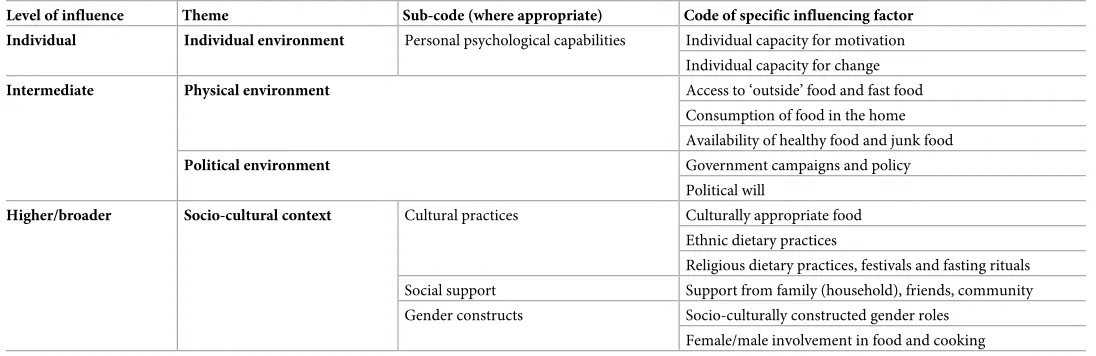
Our data analysis grouping of key codes into important themes revealed three levels of influ-ence according to the scope and broad nature of their influinflu-ence. The first theme was those fac-tors which related to the environment around the individual; second were intermediate environments—political and physical; and finally the environment with the broadest influence was the socio-cultural environment. We discuss these four different themes; individual charac-teristics and behaviour, physical, political and socio-cultural. These are displayed inTable 3.
C and M of the COM-B framework [72]. Our data indicates a lack ofmotivationto eat more healthily:
‘I even have things like sweets that I am not supposed to have.It does make an impact on me.’ Female Diabetic
Predominantly we found that patients had not known about healthy eating before they were diagnosed with diabetes or HBGLs. Some patients found it hard to change their dietary habits even after receiving advice to eat a healthy diet following their diagnosis. Often control-ling diet was hardest during festival periods, showing that their socio-cultural environment affected on personal behaviour:
‘I can eat what I want for 1–2 days.After all Dashain [annual festival in Nepal] is a festival of only 4–5 days so I eat everything during Dashain.’ Male diabetic
Those who did resist cultural norms were aware that they were not participating in these practices, and of the possible social consequences of not participating. Understanding such cultural nuances appears to be vital when considering individual motivations and abilities to change behaviours. There is tension between cultural determination and individual agency in relation to dietary behaviour as has been found in other research [77,78]. Further research is needed into this tension, and the determinants within socio-cultural context and individual agency which affect ultimate decision-making. Our findings also corroborate other research as they suggest that knowledge and awareness alone is not sufficient to action behaviour change. Michie, van Stralen (72)’s behaviour change wheel attempts to tackle the problems associated with only providing dietary advice to patients by suggesting that interventions should trigger action (which effect opportunities, motivations and capabilities) rather than simply imparting knowledge about how to behave. Our findings suggest that such interventions should trigger action by incorporating socio-cultural context which influences behavioural decision-making. These are important considerations for developing an effective intervention.
Physical environment. The physical environment presented challenges regarding the
[image:8.612.33.581.88.266.2]acquisition andavailability of healthy foods. Some patients who were aware of the impact of unhealthy junk foodson their health, stated that they found it difficult to eat outside due to the Table 3. Levels of themes emerging from the analysis.
Level of influence Theme Sub-code (where appropriate) Code of specific influencing factor Individual Individual environment Personal psychological capabilities Individual capacity for motivation
Individual capacity for change
Intermediate Physical environment Access to ‘outside’ food and fast food
Consumption of food in the home Availability of healthy food and junk food
Political environment Government campaigns and policy
Political will
Higher/broader Socio-cultural context Cultural practices Culturally appropriate food
Ethnic dietary practices
Religious dietary practices, festivals and fasting rituals
Social support Support from family (household), friends, community Gender constructs Socio-culturally constructed gender roles
Female/male involvement in food and cooking
oily nature of ‘outside’ food, and the lack of healthy options for diabetic or HBGL patients. Sev-eral patients stated that they ate fast foods such as momos and chow mein outside of the home:
‘I eat this [momo’s and chow mein] outside.No one can make this in home.’ Male diabetic
This finding suggests that unhealthy fast foods are often notserved in the homeand therefore ‘outside’ and ‘inside’ eating represent different spheres of influence on dietary behaviour; the home being traditional, and outside it being a new and potentially exciting space for consuming unhealthy junk food. Such new and fashionable outside spaces, and a fashion around inhabiting them, is likely to be a reason why many people are now choosing to consume these tasty foods high in saturated fat and salt. This is corroborated by other research findings that eating ‘outside food’ in restaurants and outlets is a relatively recent phenomenon in Kathmandu, supporting evi-dence of a nutrition transition in Nepal [79–81]. These findings are consistent with other research which has shown that junk food availability and consumption has been increasing in Nepal [79–
84]. Also, as junk food becomes more affordable, there have been recent increases in vegetable prices, making healthy foods harder for poorer households in Nepal to afford [85].
Political environment. The political environment had the potential to influence
behav-iour withgovernment campaigns or policiesand legislative moves. An example of this was the government campaign ‘My Year’ or ‘Mero Barsha’, launched after Nepalese new year 2017 which aimed to encourage self-motivation adherence to five commitments; stopping con-sumption of alcohol, tobacco or tobacco-related products; exercising regularly; eating healthy and nutritious foods; having routine check-ups; and watching the health of family members. One heath worker stated that the ‘Mero Barsha’ campaign had the potential to influence her patients, but until then had not been effectively disseminated:
‘Mero Barsha has a lot of potential to encourage my patients to eat more healthy foods but so far my patients have not heard of it and I have not been told to promote it to them.’ Health worker
Health workers we interviewed were not familiar with the government campaign to pro-mote healthy lifestyle, though government officials stated that the campaign was active and should be widely known about. Here discrepancies were evident between the presence of and dissemination of campaigns to improve dietary behaviour. One government official, when asked about policies which could improve dietary behaviour in Nepal, showed willingness to implement a sugar tax in the country:
‘We have been through series of discussions with other stakeholders and we have received posi-tive feedback from them and most probably the government will do something about increas-ing the tax on the sugar and sugar-related products.’ Policy-maker
Socio-Cultural context. As outlined in the introduction we see socio-cultural context as
incorporating social factors (social relationships, social support) with cultural aspects (ethnic-ity, religion) to reflect society’s values, customs, influences and traditions. Cultural practices greatly influenced patients’ views on whether they should adopt healthy eating practices. The cultural consumption of certain foods was central to dietary behaviours. White rice was evi-dently vital to Nepali identity and eating practices:
‘We are Nepali and we should eat rice. I do not care if you give me that list [from the doctor of foods which diabetic patients should/should not eat] or not but I will not follow it.’ Male diabetic
Here it is important to consider why the participant feels he should eat rice. It was a com-monly held cultural belief amongst participants that rice is a necessary part of every meal and it made them feel full. A meal without rice was seen as no meal at all. Rice is a filling food and therefore made participants feel full after eating it. It was clear that rice is heavily laden with cultural significance in Nepal, and consumption of it is central to being part of Nepali culture. The tern ‘bhat’ for rice, was used by many participants to mean ‘meal’, and ‘mam’ was a term used by participants for the rice that is fed to a baby, illustrating its embedded nature in culture from infancy. Patients found it difficult to break the cultural code of eating white rice and replace it with alternative carbohydrates such as roti. White rice ranks very high in the glyce-mic index which means it can cause a spike in blood sugar levels and consumption of it has been linked to diabetes [86]. For these reasons patients with diabetes or HBGLs are warned against consuming large amounts of white rice.
Despite the challenge involved in eating meals without rice, many patients told us they had managed to reduce their white rice intake to improve their health:
‘I eat less rice now because I know it will make me sick.I try to eat roti instead.’ Female diabetic
To aid this transition, some dieticians advised their patients that they could still eat small amounts of white rice as part of their diet. This allowed them to retain some of the cultural prac-tice which was so central to their identity, whilst still maintaining a healthy diet. These findings are supported by the literature which has found that white rice is predominantly seen as the most filling and healthiest food to consume, an essential component to the Nepalese diet [83,87]. Meals without rice are often seen as incomplete and a large helping of rice is seen as essential for health and well-being. Wholegrains like millet and buckwheat are not seen as good enough compared with rice [88]. The cultural significance ofculturally appropriate foodssuch as rice and its complex meaning must be explored within the context of diabetes and healthy eating behaviour.
In addition to the importance of rice in Nepalese diets, in certainethnic groups different eat-ing practices were importantdue to varying ethnic and cultural traditions and rituals. Fasting for long periods is harmful to people with diabetes and HBGLs who need to eat regularly to regulate their blood sugar levels [89], however fasting can be a vitally important cultural prac-tice in Nepal. Eating pracprac-tices around festival times were particularly challenging. One patient described areligious festivalwhich was observed by Hindu women called Teej, in which she did not eat food to honour her husband. She described how she felt like something was wrong when she tried fasting:
Religious festivals and closely linked to ethnic dietary traditions. Our patients reflected the rich diversity of ethnicities in Kathmandu. Patients from the ethnic groups Newari and Chet-tri, both of which follow the Hindu religion, demonstrated particularly distinct ethnic dietary traditions throughout the year, often linked to festivals. Newari are the second largest ethnic group in Kathmandu (after Brahmin), making up approximately 22% of the population and Chettri make up 20% of the population [90]. During discussion of one of many festivals the Newari people celebrate, one patient stated:
‘There was Sithi [Newari festival].Then we cook bara [spiced lentil patties], varieties of potato and black eye bean curry. The lentils are soaked in water a day before and the next day the covers are peeled off, the lentils are ground and breads are made out of them. They are cooked in oil. . .The potato is boiled and then deep fried. . .I eat little bit of everything.’ Female dia-betic [Newar]
This discussion indicates the dietary practices followed by members of the Newari group. These include food preparation in a particular way for certain Newar festivals, including deep frying food which is an unhealthy dietary behaviour and could worsen her diabetes. However, the participant was compelled to eat this food due to it being part of an important ethnic prac-tice. These traditions differed from patients from other groups such as Chettri, who have dif-ferent dietary traditions surrounding their ethnic festivals. For example, even common foods, such as chapatti, were made differently by different ethnic groups:
‘Our [chettri] chapatti is made up of Gyan chakki atta [all-purpose type of flour used to make chapatti].The doctor has suggested me not to eat anything made from all-purpose flour, which is why I eat only wheat flour now.’ Male diabetic [Chettri]’
This patient has demonstrated that he has been able to change an ethnic dietary practice to eat healthier flour as his doctor has recommended. However, as demonstrated by our Newari patient, and others interviewed, many found it difficult to make such changes, cultural pres-sures around ethnic practices being strong. Interventions could strongly benefit from being sensitive to cultural pressures to adopt certain dietary behaviours and could consider transmit-ting messages about healthy dietary behaviour through prominent cultural leaders. These find-ings are consistent with other research which suggests that culturally defined eating patterns affected behaviours [91]. Other research has found that patients still take part in fasting due to cultural pressure to do so [92–97] and religion has been explored as a determinant of dietary behaviour in other research [92–97]. Religious festivals often lead to eating large amounts of unhealthy, culturally defined foods in celebration [92–97]. This illustrates the importance of understanding the varied religious and ethnic cultures in Kathmandu and how they create, form and reinforce culture. Such cultures vary between communities and households making it important to tailor interventions to incorporate this understanding. Furthermore, acknowl-edging the importance of these traditions does not mean that they cannot be adapted to improve health outcomes to ensure they still meet the same goals, in the case of Teej, honour-ing the husband, though not to the detriment of the wife. Such cultural adaptation has been demonstrated in LMIC contexts previously. An example of this was changing a cultural prac-tice which had negative health effects on babies in Kenya to find an alternative way of fulfilling this cultural tradition so that it had much better health outcomes [98].
of caring for their families as well as their own health; with some patients, this acted as a moti-vating factor in ensuring adherence to control their diet and limit the intake of foods such as deep fried or oily foods. One dietician asked patients to act as role models for their children, explaining that now the patient was diabetic, their children were already at risk. One patient indicated he was consciousness of taking care of his family now he had diabetes. He demon-strated this by ensuring they all eat healthy food:
‘Moderator:That means you all eat the same food?
Participant: Yes it will be the same because I am conscious that maybe my children will also have sugar [south Asian term for diabetes] because I have it.So I have given them knowledge so that they will not suffer from sugar for a long time and they are also aware of their eating habits.’ Male Diabetic
This supportive behaviour shows the powerful positive influencesocial support from family in the social environment surrounding patients to bring about behaviour change. Patients appeared to receive a lot of support from their social relationships. These relationships were found with family and friends and within communities. Our findings are corroborated by other research which has found that family responsibilities are culturally very important in Nepal [83]. Family bonds and responsibilities, often multi-generational in nature are vastly important in Nepal, and these traditional structures often act as key drivers in behaviours [99]. The connection between showing love through presenting loved ones with food has been previously explored [100]. The power of social influences on eating behaviours have been found in high income country contexts [101–105], particularly the influence of family and friends [106]. Evidently social factors in the socio-cultural environment can affect dietary behaviours.
Gender constructs and roles. Socio-culturally constructed gender roleswere another important influence on determining dietary behaviours and were discussed amongst all partic-ipants interviewed. We found gender roles to be entrenched in Nepalese society. Patients we interviewed told us thatmale/female involvement in food and cookingvaried. One example of female involvement in food and cooking, referred to by several participants, was the role the daughter-in-law played in providing food for the household. Daughters-in-law played an important role in households by cooking and providing food for their husband and his family, showing a continuation of cultural traditions even in a modernised urban environment. How-ever, daughters-in-law did not always prepare healthy food:
‘Our daughter-in-law cooks all types of meat like a roast and we eat that.I just eat a little because I get scared because that is very oily.’ Female Diabetic
The role of preparing healthy food, that is for example, vegetables cooked with small amounts of oil, often sits in the hands of specific female members of the household. There was evidence in some households that women had been made aware of the importance of cooking healthy food for diabetic family members, and that this had a positive effect on the dietary behaviour of the diabetes patient. Sometimes the male in the home helped to cook, particularly during times when the female cook was menstruating (usually if there was no other female who could cook in the home, which there often was not):
This links to the Nepalese cultural practice of ensuring menstruating women do not enter the kitchen so as not to pollute or dirty the food. This poses a real challenge for diabetic women who are not permitted to enter the kitchen when they are menstruating, yet they do not feel that they can ask for special food which is suitable for them. Traditional cultural prac-tices are influential pracprac-tices in daily life. Other studies into household behaviour corroborate our findings as they have shown that women are key gatekeepers in influencing household die-tary behaviour and educating them about healthy eating practices has great potential to improve the dietary behaviour of entire households [83,94,107]. This is particularly the case because men are often found to have less healthy dietary practices than women in Nepal and elsewhere [108,109]. Additionally, daughters-in-law were often tasked with cooking for the entire household, and take the last position in household serving order [88,107,110–112] with women often eating only once men have finished [88]. This can be down to a range of factors including power dynamics with their mother-in-law [113] This has implications for both men and women with diabetes, for example women in the household may consume unhealthier food, or carry a burden of caring for other members of the household, potentially causing higher levels of strain both physically and mentally. Understanding gender roles within Nepali households is therefore vital to assessing how interventions might effectively influence behav-iours within the household.
An ecological model for dietary behaviour
Our findings uncover several layers of influence which determine dietary behaviours of people living with diabetes or HBGLs. Our ecological model (Fig 1) demonstrates these multiple lay-ers. Though influenced by previous ecological models [34,114,115], our model’s value is in its ability to categorise the determinants of dietary behaviour amongst a population with a specific NCD and placing the socio-cultural context as the dominant influencing environment on behaviour. These findings align with other research which has shown cultural specificity and sensitivity to be key in implementing health interventions [116–118]. Our findings corroborate the need for more culturally sensitive and adapted approaches to health interventions. Existing ecological models from HIC contexts do not consider socio-cultural context as such an impor-tant determinant of behaviour [34,115,119–121], and would therefore struggle to account for findings from our study which indicate the importance of the socio-cultural context on influ-encing dietary behaviour.
regional differences. Underneath the overarching socio-cultural environment there are two environments at the same level of influence as each other because our findings suggest they exert similar amounts of influence on behaviours; political and physical. These environments were not at prevalent in affecting behaviours are socio-cultural context, however they were of overarching influence over the individual. These two environments (physical and political) determined individual behaviour in varying and interacting ways. The physical environment defined aspects such as a patient’s distance to health services and opportunity to acquire desired foods. At the central level of influence in our model is the individual environment. This involves behaviours attached to the individual. Within the individual environment are personal psychological capabilities such as the internal capacity for, and motivation to change one’s behaviour. These are the C and M of the COM-B framework [123]. When classifying opportunities for the individuals to change their behaviours (the O of the COM-B framework), these span the entire ecological model, with many forces working on the individual to influ-ence their behaviours. Here limitations lie with the way that the COM-B framework marries up with our ecological model. Though we started with COM-B when designing our interview guides, the data showed that COM-B was not adequate to fully structure our findings. Whilst it was useful to some extent, to classify individual behaviours within the ‘personal environment’ using COM-B (capabilities and motivations) as discussed, involved placing all external forces on the individual into the broad category of ‘opportunities’. This over-simplified the multi-fac-eted nature of these opportunities which the ecological model splits into multiple environ-ments of influence (e.g. physical, socio-cultural). By thinking about these factors within their Fig 1. Ecological Model of determinants of dietary behaviour in patients with diabetes and HBGLs in Kathmandu.
environmental contexts, we can begin to understand the collective influence of the environ-ment on the individual’s capability, opportunity and motivation together. Our data therefore suggests interventions may be effective if they are collective, and potentially community-based (allowing for contextual variability between communities) and combine socio-cultural, physi-cal, political and individual environments.
Our model differs from other ecological models as it places the socio-cultural environment around all other environments as the overarching influencing environment on dietary behav-iour. Other models place less emphasis on the socio-cultural environment, for example, some place macro forces [34,119] or government and industry policies [115,120] as the overarching (outer) influence. Others acknowledge the influence of culture but see it as secondary to com-munity and policy [121]. Furthermore, other models of behaviour have not proposed the socio-cultural environment as the overarching environment, as ours does; they instead see social, intrapersonal and physical environments as equally influential on behaviours [114]. Alternatively, modelling by Short and Mollborn [124] stress the importance of looking at social determinants within the complex systems which operate around an individual. Sallis, Cervero [115] come closest to our model by acknowledging the intersecting nature of the social cultural environment on others in relation to determinants of active living in the USA; however, they place policy as the overarching influence on behaviour and do not treat the social cultural envi-ronment as the most powerful envienvi-ronment as our model does. The questioning of individual-focused interventions and exploration of the role of structures outside the individual on influ-encing behaviour has been well established previously [125]. Our model stresses the impor-tance of gender within socio-cultural context, another model by Cislaghi and Heise [126] places gender and power as the most influential factors over individual, social, material and institutional environments. Whilst this is a valuable interpretation, and our findings concur that gender is an important influencer, we prefer to place gender as a key part of the wider socio-cultural context as socio-cultural context dictates the manner in which gender manifests as an influence. Our model builds on this thinking further to advance socio-ecological think-ing by proposthink-ing that the socio-cultural environment is the most overarchthink-ing influence on die-tary behaviours in an LMIC context and interventions should consider this influence on behaviour rather than developing interventions which only consider the individual without the influence of wider environments on their behaviour. However, often cultural consider-ations are not prioritised in public health interventions in LMICs where western or HIC con-structed theories and methodologies have often been seen as easily transferable [127]. We believe that as our model differs from other existing models adds to the existing literature by providing a valuable insight which cannot be gleaned from models based on HICs (for exam-ple [34]).
Our study is not without limitations. We only recruited patients who attended one public hospital in Kathmandu and who were diagnosed and receiving treatment for their condition. Patients who attended other health facilities, and those who were not actively seeking ment, would also have been valuable to interview to gather a broader understanding of treat-ment at different health facilities, and the challenges facing those patients who have had limited treatment. We were only able to interview a limited number of policy-makers,
the most important hypothesised influences or provide enough information about how the broader levels of influence interact or the interaction of variables across levels, such as Matsudo, Matsudo [114] who do not consider an overarching environmental influence and the interactions between variables. One way this could be addressed is with further research using our model on a multi-level analysis to evaluate and examine the impact of interventions on outcomes at multiple levels [33]. Considering in more detail the different levels, such as for example culture within the health care system, is also important for more in depth understand-ing on how these components play a part in the whole multi-level model. Our model is also not exhaustive, it would be difficult to capture all determinants of behaviour within the envi-ronments, and we are aware others which were not discussed by our participants, for example body image or the impact of advertising [128] which can also influence dietary behaviours. Also, we are aware of limitations with the way we categorised our sample according to socio-economic position. We are aware that social positions in south Asian settings can be complex and income levels are only one of many several markers of socio-economic position (other non-income markers include caste groupings and influence positions). However, given the dif-ficulties of measuring socio-economic position, we have limited our focus to income group-ings. Similarly, we are aware that the use of the terms ‘healthy’ and ‘unhealthy’ diet are terms which can be open to cultural interpretation. Though as this study indicates, culturally appro-priate foods are contextually specific and vary with socio-cultural context, we have defined healthy/unhealthy diet in alignment with WHO advice on healthy diet while accounting for socio-cultural variation within this generic advice (e.g. the importance of rice—ideally brown rice for people with or at risk of diabetes—as a carbohydrate staple food in Nepal) [14]. Finally, we are aware that we have discussed the political environment impact on behaviours only from the perspective of policy-makers and researchers as there was no mention of the impact of policy by the patients themselves. We acknowledge this as a limitation because policy was not discussed from a patient perspective. We believe, however, that given the constraints of this study, reflections from policy-makers and health workers on political issues (e.g. about sugar tax and government campaigns) were valuable in identifying policies which held the potential to improve dietary behaviour.
Incorporating key determinants into interventions
Socio-culturally appropriate and compelling interventions which draw on social bonds and cultural nuances and aim to equally distribute responsibility for healthy food preparation in the home hold the potential to improve dietary behaviour in households.
An alternative multi-layered approach which considers the physical, political, socio-cultural environments may be to harness the power of community spaces such as community health centres and the promised health promotion centres, as well as other spaces which act as hubs for the community, such as recreation facilities or parks. The power of the communities, which are themselves laden with multiple and intersecting cultural, ethnic and religious ele-ments, has great potential for the development of effective interventions. For this to happen communities must be understood, listened to and then harnessed and utilised effectively to bring about change. Further examples of community-led interventions have been community camps discussed by our participants which disseminate healthy dietary advice to the commu-nity by using the structures in communities, such as mothers groups or Ward committees to implement contextually-appropriate change [83,133,134]. Interventions should not only be contextually-appropriate but also culturally compelling [48], by fully engaging people in inter-active behaviours which link to cultural practices and beliefs which are entrenched within their identities and therefore are deeply meaningful to them. For this to happen, context and culture and their relationship to the individual must be deeply understood. If patients had more and regular contact points with advice-givers in a community setting accessible to them, where they could receive regular reminders about healthy eating habits, they might be more able to consistently change their behaviour long term, rather than relying on short term quick fix measures which do not properly consider the communities or the importance of long-term sustainable health care interventions.
Our data illustrated the importance of many ethnic and cultural practices to people in Nepal. The core of these cultural traditions, that is, the message they focus upon, such as in the case of Teej, honouring the husband, can be preserved but the way of conducting these tradi-tions changed so they are not harmful to the woman if she is diabetic. This can also be
addressed considering the practice of excluding menstruating women from the kitchen. Exam-ples of how these practices could be adapted must be developed by the communities and indi-viduals themselves. As explored, these might involve teaching the husband or other family members healthy cooking skills so that they are able to prepare healthy foods for his diabetic wife without her needing to enter the kitchen. Such cultural adaptation has been demonstrated in LMIC contexts previously [98] and holds great potential for improving health outcomes whilst ensuring the preservation of core cultural beliefs and rituals.
Our model provides the basis to develop, test and evaluate interventions. Whether interven-tions based on our model are effective or not would provide further validation to the model. To provide a valid intervention test, however, interventions would need to be developed in close alignment with our model. Often interventions are not developed with close alignment to models despite purporting to do so [135–137]. Awareness of these issues should be consid-ered when taking our model forward for testing interventions.
Conclusion
overarching understanding of the socio-cultural nuances and multiple socio-ecological envi-ronments can be used to propose interventions which are culturally compelling by engaging communities, households and individuals in an adaptable way which are flexible to the context and protect cultural beliefs whilst leading to positive health outcomes. The possibility of adapt-ing cultural traditions through consultation with communities about compelladapt-ing ways to maintain core beliefs and rituals yet improve health outcomes by altering aspects of rituals is clear and should be further explored. This study has challenged the one-size-fits-all approach to tackling NCDs, and instead highlights the value of investigating contexts in-depth to gather a detailed understanding of the determinants of specific behaviours. Our ecological model the first one of its kind to understand dietary behaviour in people with diabetes or HBGLs in an LMIC with a focus on socio-cultural context. We believe that our model has applicability to other contexts and other conditions (such as other NCDs like cancer and cardiovascular dis-ease). We propose tailored, contextually-appropriate intervention design which adapts global guidance to a specific context. Our model’s robustness and transferability requires testing in other contexts taking into account the fluidity of changing environments. Our model provides the basis to develop, test and evaluate interventions. Whether interventions based on the model are effective or not would provide further validation to the model. In this study we have demonstrated the potential of investigating research contexts ecologically to improve interven-tion design to effectively tackle health problems such as NCDs.
Supporting information
S1 File. Interview guide: Patients (and their partners).
(PDF)
S2 File. Interview guide: Health workers.
(PDF)
Acknowledgments
We would like to thank our colleagues at HERD International including Dr Sushil Baral and Pravin Paudel for their input in this study.
Author Contributions
Conceptualization: Lizzie Caperon, James Newell, Rebecca King.
Data curation: Lizzie Caperon, Abriti Arjyal, Puja K. C., Jyoti Kuikel.
Formal analysis: Lizzie Caperon, Remco Peters, Rebecca King.
Investigation: Lizzie Caperon.
Methodology: Lizzie Caperon, James Newell, Andrew Prestwich, Rebecca King.
Project administration: Lizzie Caperon.
Supervision: James Newell, Andrew Prestwich, Rebecca King.
Visualization: Lizzie Caperon.
Writing – original draft: Lizzie Caperon.
Writing – review & editing: Lizzie Caperon, James Newell, Remco Peters, Andrew Prestwich,
References
1. WHO. NCD mortality and morbidity 2017 [cited 2017 20 July]. Available from:http://www.who.int/gho/ ncd/mortality_morbidity/en/.
2. WHO. Global status report on non communicable diseases 2014. Geneva: WHO; 2014.
3. Jayawardena R, Ranasinghe P, Byrne NM, Soares MJ, Katulanda P, Hills AP. Prevalence and trends of the diabetes epidemic in South Asia: a systematic review and meta-analysis. BMC Public Health. 2012; 12(1):380.https://doi.org/10.1186/1471-2458-12-380PMID:22630043
4. Kanaya AM, Herrington D, Vittinghoff E, Ewing SK, Liu K, Blaha MJ, et al. Understanding the high prevalence of diabetes in US south Asians compared with four racial/ethnic groups: the MASALA and MESA studies. Diabetes care. 2014; 37(6):1621–8.https://doi.org/10.2337/dc13-2656PMID:
24705613
5. Yajnik CS. Nutrient-mediated teratogenesis and fuel-mediated teratogenesis: Two pathways of intra-uterine programming of diabetes. International Journal of Gynecology & Obstetrics. 2009; 104 (Supplement).
6. Malik VS, Popkin BM, Bray GA, Despre´ s J-P, Willett WC, Hu FB. Sugar-Sweetened Beverages and Risk of Metabolic Syndrome and Type 2 Diabetes. Diabetes Care. 2010; 33(11):2477–83.https://doi. org/10.2337/dc10-1079PMID:20693348
7. WHO. 10 facts on obesity 2014. Available from:http://www.who.int/features/factfiles/obesity/en/
8. WHO. Noncommunicable diseases: Fact sheet 2015 [cited 2017 1 February]. Available from:http:// www.who.int/mediacentre/factsheets/fs355/en/.
9. Leonhardt D. The Battle Over Taxing Soda. New York Times. 2010 18 May.
10. Milesi O. 360 Million of 625 Million People Are Overweight in Latin America and Caribbean. Inter Press Service New Agency. 2017 24 January.
11. Mole B. In fight for Americans’ health, Big Soda is winning. ars Technica. 2017 26 January. 12. O’Connor A. How the Sugar Industry Shifted Blame to Fat. New York Times. 2016 12 Sep.
13. Phillips D. Once underfed, Brazil’s poor have a new problem: obesity. The Washington Post. 2016 26 November.
14. WHO. Healthy Diet. 2018.
15. Kaiser B, Razurel C. Determinants of postpartum physical activity, dietary habits and weight loss after gestational diabetes mellitus. Journal of Nursing Management. 2013; 21(1):58–69.https://doi.org/10. 1111/jonm.12006PMID:23339495.
16. Ouyang CM, Dwyer JT, Jacques PF, Chuang LM, Haas CF, Weinger K. Determinants of dietary self-care behaviours among Taiwanese patients with type 2 diabetes. Asia Pacific Journal of Clinical Nutri-tion. 2015; 24(3):430–7.https://doi.org/10.6133/apjcn.2015.24.3.02PMID:26420183.
17. Marcy TR, Britton ML, Harrison D. Identification of barriers to appropriate dietary behavior in low-income patients with type 2 diabetes mellitus. Diabetes Therapy. 2011; 2(1):9–19.https://doi.org/10. 1007/s13300-010-0012-6PMC3124642. PMID:22127765
18. Ramachandran A, Snehalatha C, Shetty AS, Nanditha A. Trends in prevalence of diabetes in Asian countries. World journal of diabetes. 2012; 3(6):110–7. Epub 06/15.https://doi.org/10.4239/wjd.v3.i6. 110PMID:22737281.
19. Hills AP, Arena R, Khunti K, Yajnik CS, Jayawardena R, Henry CJ, et al. Epidemiology and determi-nants of type 2 diabetes in south Asia. The Lancet Diabetes & Endocrinology. 2018.https://doi.org/10. 1016/S2213-8587(18)30204-3.
20. Gywali B, Sharma R, Neupane D, Mishra SR, Teijlingen E, Kallestrup P. Prevalence of type 2 diabetes in Nepal: a systematic review and meta-analysis from 2000 to 2014. Global Health Action. 2015; 8. 21. WHO. Noncommunicable Diseases (NCD) Country Profiles: Nepal. 2014.
22. Pandey AR, Karki KB, Mehata S, Aryal KK, Thapa P, Pandit A, et al. Prevalence and Determinants of Comorbid Diabetes and Hypertension in Nepal: Evidence from Non Communicable Disease Risk Fac-tors STEPS Survey Nepal 2013. Journal of Nepal Health Research Council. 2015; 13(29):20–5. PMID:26411708.
23. Aryal KK, Mehata S, Neupane S, Vaidya A, Dhimal M, Dhakal P, et al. The Burden and Determinants of Non Communicable Diseases Risk Factors in Nepal: Findings from a Nationwide STEPS Survey. PLoS ONE [Electronic Resource]. 2015; 10(8):e0134834.https://doi.org/10.1371/journal.pone. 0134834PMID:26244512.
24. Chhetri MR, Chapman RS. Prevalence and determinants of diabetes among the elderly population in the Kathmandu Valley of Nepal. Nepal Medical College Journal: NMCJ. 2009; 11(1):34–8. PMID:
25. Vaidya A. Is ethnicity an important determinant of high blood pressure in Nepalese population? A com-munity-based cross sectional study in Duwakot, Nepal. Kathmandu University Medical Journal. 2012; 10(37):20–3. PMID:22971856.
26. International Diabetes Federation. IDF SEA Members: Nepal 2018 [cited 2018 10 May]. Available from:https://www.idf.org/our-network/regions-members/south-east-asia/members/97-nepal.html. 27. International Diabetes Federation South East-Asia. IDF Nepal Statistics 2016 [cited 2016 16
Decem-ber]. Available from:http://www.idf.org/membership/sea/nepal.
28. World Health Organisation Country Office for Nepal. Multisectoral Action Plan for the Prevention and Control of Non Communicable Diseases (2014–2020): Government of Nepal. 2014 2014. Report No. 29. Ono K, Limbu YR, Rai SK, Kurokawa M, Yanagida J, Rai G, et al. The prevalence of type 2 diabetes
mellitus and impaired fasting glucose in semi-urban population of Nepal. Nepal Medical College jour-nal: NMCJ. 2007; 9(3):154–6. Epub 2007/12/21. PMID:18092429.
30. WHO. Package of Essential Noncommunicable (PEN) Disease Interventions for Primary Health Care in Low-Resource Settings. 2010.
31. Ide N, LoGerfo J, Karmacharya BM. Barriers and facilitators of diabetes services in Nepal: a qualitative evaluation. Health Policy and Planning. 2018:czy011-czy.https://doi.org/10.1093/heapol/czy011
PMID:29447397
32. Biddle SJ. Psychology of Physical Activity Determinants, Well-being and Interventions. New York: Routledge; 2008. Available from:https://www.researchgate.net/profile/Nanette_Mutrie/publication/ 43525194_Psychology_of_Physical_Activity_Determinants_Well-being_and_Interventions/links/ 0fcfd50adeb0b32af0000000/Psychology-of-Physical-Activity-Determinants-Well-being-and-Interventions.pdf.
33. Sallis JF, Owen N, Fisher EB. Ecological models of health behavior. 2008. In: Health behavior and Health Education: theory, research and practice [Internet]. San Francisco: Jossey-Bass. 4th. [43–64]. 34. Story M, Kaphingst KM, Robinson-O’Brien R, Glanz K. Creating Healthy Food and Eating
Environ-ments: Policy and Environmental Approaches. Annual Review of Public Health. 2008; 29(1):253–72.
https://doi.org/10.1146/annurev.publhealth.29.020907.090926PMID:18031223
35. Stokols D. Establishing and Maintaining Healthy Environments: Toward a Social Ecology of Health Promotion. American Psychologist. 1992; 47(1):6–22. PMID:1539925
36. Lang T, Rayner G. Ecological public health: the 21st century’s big idea? An essay by Tim Lang and Geof Rayner. BMJ: British Medical Journal. 2012; 345.https://doi.org/10.1136/bmj.e5466PMID:
22915666
37. McLaren L, Hawe P. Ecological perspectives in health research. Journal of Epidemiology and Commu-nity Health. 2005; 59(1):6–14.https://doi.org/10.1136/jech.2003.018044PMID:15598720
38. McMullin J. Culture and Public Health: Oxford Bibliographies; 2017 [cited 2018 16 April]. Available from:
http://www.oxfordbibliographies.com/view/document/obo-9780199756797/obo-9780199756797-0009.xml#firstMatch.
39. Nichter M. Global health: Why cultural perceptions, social representations, and biopolitics matter. Tuc-son: Univ. of Arizona Press; 2008.
40. Edberg Mark C. Essentials of health, culture, and diversity: Understanding people, reducing dispari-ties. Burlington, MA: Jones & Bartlett; 2013.
41. Vygotsky LS. Mind in society: The development of higher psychological processes: Harvard university press; 1980.
42. Scott J, Marshall G. A dictionary of sociology: Oxford University Press, USA; 2009.
43. Egger G, Swinburn B. An “ecological” approach to the obesity pandemic. BMJ. 1997; 315(7106):477– 80.https://doi.org/10.1136/bmj.315.7106.477PMID:9284671
44. French S, Story M, Jeffery R. Environmental Influences on Eating and Physical Activity. Annual Review of Public Health. 2001; 22(1):309–35.https://doi.org/10.1146/annurev.publhealth.22.1.309
PMID:11274524.
45. Giles-Corti B, Macintyre S, Clarkson JP, Pikora T, Donovan RJ. Environmental and lifestyle factors associated with overweight and obesity in Perth, Australia. Am J Health Promot. 2003; 18(1):93–102. Epub 2003/09/19.https://doi.org/10.4278/0890-1171-18.1.93PMID:13677967.
46. Hollands GJ, Bignardi G, Johnston M, Kelly MP, Ogilvie D, Petticrew M, et al. The TIPPME interven-tion typology for changing environments to change behaviour. Nature Human Behaviour. 2017; 1:0140.https://doi.org/10.1038/s41562-017-0140 https://www.nature.com/articles/s41562-017-0140#supplementary-information.
48. Panter-Brick C, Clarke SE, Lomas H, Pinder M, Lindsay SW. Culturally compelling strategies for behaviour change: A social ecology model and case study in malaria prevention. Social Science & Medicine. 2006; 62(11):2810–25.https://doi.org/10.1016/j.socscimed.2005.10.009.
49. WHO. Interventions on diet and physical activity: what works: summary report. 2009.
50. WHO. Reducing consumption of sugar-sweetened beverages to reduce the risk of unhealthy weight gain in adults 2016 [cited 2017 27 March]. Available from:http://www.who.int/elena/titles/ssbs_adult_ weight/en/.
51. Deliens T, Clarys P, De Bourdeaudhuij I, Deforche B. Determinants of eating behaviour in university students: a qualitative study using focus group discussions. BMC Public Health. 2014; 14:53–.https:// doi.org/10.1186/1471-2458-14-53PMC3905922. PMID:24438555
52. Marques-Vidal P, Waeber G, Vollenweider P, Bochud M, Stringhini S, Guessous I. Sociodemographic and behavioural determinants of a healthy diet in Switzerland. Annals of Nutrition and Metabolism. 2015; 67(2):87–95.https://doi.org/10.1159/000437393PMID:26340344.
53. Ouyang C, Dwyer JT, Jacques PF, Chuang L, Haas CF, Weinger K. Determinants of dietary self-care behaviours among Taiwanese patients with type 2 diabetes. Asia Pacific Journal of Clinical Nutrition. 2015; 24(3):430–7.https://doi.org/10.6133/apjcn.2015.24.3.02PMID:26420183.
54. Feilzer MY. Doing Mixed Methods Research Pragmatically: Implications for the Rediscovery of Prag-matism as a Research Paradigm. Journal of Mixed Methods Research. 2010; 4(1):6–16.https://doi. org/10.1177/1558689809349691
55. Sheridan J, Chamberlain K, Dupuis D. Timelining: visualizing experience. Qualitative Research. 2011; 11(5):552–69.https://doi.org/10.1177/1468794111413235
56. Kolar K, Ahmad F, Chan L, Erickson P. Timeline Mapping in Qualitative Interviews: A Study of Resil-ience With Marginalized Groups. International Journal of Qualitative Methods. 2015; 14(3). 57. Berends L. Embracing the Visual: Using Timelines with In-depth Interviews on Substance Use and
Treatment. The Qualitative Report. 2011; 16(1):1–9.
58. Umoquit MJ, Dobrow MJ, Lemieux-Charles L, Ritvo PG, Urbach DR, Wodchis WP. The efficiency and effectiveness of utilizing diagrams in interviews: an assessment of participatory diagramming and graphic elicitation. BMC Medical Research Methodology. 2008; 8(1):53. https://doi.org/10.1186/1471-2288-8-53PMID:18691410
59. Kesby M. Participatory diagramming: deploying qualitative methods through an action research episte-mology. Area. 2000; 32(4):423–35.
60. World health Organisation. Deaths from NCDs 2008 [cited 2018 20.09.18]. Available from:http://www. who.int/gho/ncd/mortality_morbidity/ncd_total_text/en/.
61. World Bank. Moving up the ladder: poverty reduction and social mobility in Nepal. Kathmandu: 2016. 62. Nepal Rasta Bank. Fifth Household Budget Survey. 2016.
63. Bruce E, Lilja C, Sundin K. Mothers’ lived experiences of support when living with young children with congenital heart defects. Journal for Specialists in Pediatric Nursing. 2014; 19(1):54–67.https://doi. org/10.1111/jspn.12049PMC4286009. PMID:24124764
64. Haahr A, Norlyk A, Hall EO. Ethical challenges embedded in qualitative research interviews with close rel-atives. Nursing ethics. 2014; 21(1):6–15.https://doi.org/10.1177/0969733013486370PMID:23774032. 65. Kendall M, Murray SA, Carduff E, Worth A, Harris F, Lloyd A, et al. Use of multiperspective qualitative
interviews to understand patients’ and carers’ beliefs, experiences, and needs. BMJ. 2009; 339.
https://doi.org/10.1136/bmj.b4122PMID:19828645
66. Matheson L, Harcourt D, Hewlett S. ‘Your whole life, your whole world, it changes’: partners’ experi-ences of living with rheumatoid arthritis. Musculoskeletal Care. 2010; 8(1):46–54.https://doi.org/10. 1002/msc.165PMID:20077577
67. Mellor RM, Slaymaker E, Cleland J. Recognizing and overcoming challenges of couple interview research. Qualitative health research. 2013; 23(10):1399–407.https://doi.org/10.1177/ 1049732313506963PMID:24062417.
68. Miller LE, Caughlin JP. "We’re Going to be Survivors": Couples’ Identity Challenges During and After Cancer Treatment. Communication Monographs. 2013; 80(1):63–82.https://doi.org/10.1080/ 03637751.2012.739703
69. Morgan DL, Ataie J, Carder P, Hoffman K. Introducing dyadic interviews as a method for collecting qualitative data. Qualitative health research. 2013; 23(9):1276–84.https://doi.org/10.1177/ 1049732313501889PMID:23925406.
70. Sakellariou D, Boniface G, Brown P. Using joint interviews in a narrative-based study on illness experi-ences. Qualitative health research. 2013; 23(11):1563–70.https://doi.org/10.1177/