Evaluation of the UK
Futures Programme:
conclusions and
Evaluation of the UK Futures
Programme:
conclusions and guidance
Author
Graham Thom, Maya Agur, Susan Mackay, Farai Chipato, Katie MacLeod
SQW
Hannah Hope, Carol Stanfield
UK Commission for Employment and Skills
Table of Contents
Executive Summary ... viii
1
Introduction to the UK Futures Programme ... 1
1.1 The objectives of the UK Futures Programme ... 1
1.2 The model of the UK Futures Programme ... 2
1.3 The key features of the UK Futures Programme ... 2
1.4 Evaluation of the UK Futures Programme ... 3
1.5 Methodology ... 5
1.6 Structure of the report ... 6
2
The Productivity Challenges ... 7
2.1 Introduction ... 7
2.2 Productivity Challenge 1: Offsite Construction ... 7
2.3 Productivity Challenge 2: Management and Leadership in Supply Chains and Networked Organisations ... 8
2.4 Productivity Challenge 3: Progression Pathways in the Retail and Hospitality Industries ... 9
2.5 Productivity Challenge 4: Enhancing Skills for Innovation Management and Commercialisation ... 10
2.6 Productivity Challenge 5: Developing leadership and entrepreneurship skills in small firms ... 11
3
Approach of the UK Futures Programme ... 13
3.1 Introduction ... 13
3.2 Designing the UK Futures Programme ... 13
3.3 The UK Futures Programme Delivery team ... 14
3.4 UKFP Delivery process ... 15
3.4.1 Stage 1 - Develop and test the hypothesis ... 15
3.4.2 Stage 2 - Launch and Making the Market ... 17
3.4.3 Stage 3 - Assessment ... 19
3.4.4 Stage 4 - Co-creation and Evaluation ... 21
4
Learning from the UK Futures Programme ... 24
Key learning ... 24
4.1 Introduction ... 26
4.2 Highly specified and targeted productivity Challenges... 26
4.3 Strong employer leadership and engagement ... 28
4.4 Collaborative solutions ... 30
4.6 A strong learning component - testing what works ... 36
4.7 Small scale and short term investments ... 40
4.8 Balance between public and private expenditure, and between cash and in-kind ... 42
5
Learning from the Productivity Challenges: What works in
relation to policy and practice ... 44
Key Learning... 44
5.1 Learning from the Productivity Challenges ... 45
5.2 Distance travelled – enhancing skills/capabilities ... 46
5.2.1 What works? ... 46
5.2.2 What does not work? ... 50
5.3 Engaging employers and employees ... 51
5.3.1 What works for securing initial engagement? ... 51
5.3.2 What works for maintaining engagement? ... 55
5.3.3 What does not work on initial and maintaining engagement? ... 56
5.4 Engaging wider stakeholders ... 57
5.4.1 What works? ... 57
5.4.2 What does not work? ... 58
5.5 Promoting collaboration ... 59
5.5.1 What works? ... 59
5.5.2 What does not work? ... 62
5.6 Stimulating Innovation ... 63
5.6.1 What works ... 63
5.6.2 What does not work? ... 65
5.7 Sustainability and scalability ... 67
5.7.1 What works? ... 67
5.7.2 What does not work in sustainability and scalability? ... 69
6
Lessons for Future Policy and Programme Delivery... 71
7
Further research ... 75
7.1 Compulsory approaches to encourage employers to train on a collective basis ... 75
7.2 Impact of the National Living Wage on Career Progression in low-pay sectors 76 7.3 Innovations in good job design for lower paid women workers ... 76
7.4 Testing a broader range of anchor institutions and a sectoral focus ... 77
7.5 Adopting the methodology – testing at the local level? ... 78
8
UK Futures Programme reports ... 79
8.2 Productivity Challenge 1: Offsite Construction ... 79
8.3 Productivity Challenge 2: Management and Leadership in Supply
Chains and Networked Organisations ... 80
8.4 Productivity Challenge 3: Progression Pathways in the Retail and
Hospitality Industries ... 80
8.5 Productivity Challenge 4: Enhancing Skills for Innovation
Management and Commercialisation ... 81
8.6 Productivity Challenge 5: Developing leadership and
entrepreneurship skills in small firms: how can anchor institutions support
the development of small firms in their local economy? ... 81
Tables and figures
Figure 1.1: UK Future Programme stages ... 2
Figure 3.3 Evaluation structure ... 4
Figure 3.1 UKFP Challenge delivery process ... 15
Figure 3.2 High level assessment process for the UK Futures Programme Challenges . 19
Executive Summary
Introduction
This evaluation report presents the learning from the evaluation of the UK Futures Programme (UKFP). The UKFP ran between April 2014 and June 2016, and was funded by the UK Commission for Employment and Skills’ (UKCES). The UKFP provided an innovative approach to tackling workforce development issues, offering small scale public co-investment to employers and industry, to design and test their own solutions to emerging or long-standing skills and productivity challenges. The UKFP’s four key objectives were to:
• Support collaborative approaches to workforce development issues amongst employers and, where applicable, wider social partners
• Encourage innovative approaches to addressing workforce development issues • Identify ways to address new or persistent market or system failures which act as a
brake on UK workforce competitiveness
• Identify ‘what works’ when addressing market failures in relation to workforce development, for adoption in policy development and wider business practice.
Evaluation of the UK Futures Programme
UKCES commissioned SQW to carry out a real-time evaluation of the Programme. The purpose of the programme level evaluation is two-fold: to build on the learning from across the individual Productivity Challenges to identify thematic learning about ‘what works’; and to investigate the design and delivery of the programme to evaluate the extent to which the investment approach met its objectives, above.
Conducted between October 2014 and July 2016, the evaluation methodology of the Programme consisted of three key elements:
• desk based review of programme documents • consultations with key stakeholders
• participation at Co-creation Labs (which drew on wider experience of delivery of ‘Innovation Lab’1 style investments).
1 This refers to a mode of policy development which facilitates risk-taking to encourage innovation to tackle complex social
Approach of the UK Futures Programme
The UKFP was designed on the basis of learning from previous UKCES investments and from the ‘Innovation Lab’ approaches being adopted in policy development. Key features included highly specified and targeted Productivity Challenges, employer leadership and engagement, collaborative solutions, a strong emphasis on testing new (and ideally innovative) approaches with an appetite for risk and co-creation between public and private investors.
The Productivity Challenges
The UKFP funded five Productivity Challenges. Each Challenge was focused around a specific skills and workplace productivity challenge:
• Productivity Challenge 1 focused on designing solutions to the workforce challenges in the offsite construction industry, an example of issues faced in ‘sunrise’ industries • Productivity Challenge 2 focused on improving leadership and management through
supply chains and networked organisations
• Productivity Challenge 3 focused on improving progression pathways in the retail and hospitality industries
• Productivity Challenge 4 focused on enhancing skills for innovation management and commercialisation in the manufacturing sector
• Productivity Challenge 5 focused on developing leadership and entrepreneurship skills in small firms and the role of anchor institutes in supporting the development of small firms.
Each Challenge comprised a number of distinct projects (between 5 and 7), most of which were employer led and based on partnerships between different organisations or companies. Each Productivity Challenge was evaluated and links to the respective evaluation reports can be found in Chapter 9.
Learning from the Productivity Challenges
Generating solutions:
• Identifying the right problem was an important first step in developing solutions and making the case for change with businesses. Testing and learning is an important part of developing solutions, allowing end-users to identify elements that do not work, as well as highlighting gaps that need to be addressed
• The solutions need to be high quality and tailored to address the specific problem identified. These conditions apply, both for engaging end-users and employers, and in delivering solutions.
Engaging employers and end-users:
• Utilising existing networks and relationships, usually through face-to-face conversations, is a more efficient and effective means of engaging employers and wider stakeholders than ‘cold’ approaches
• Intermediaries and sector bodies can facilitate access to networks. Their non-commercial status can be useful for engaging employers as they are viewed as independent, non-competitive and operating on behalf of the sector or for social good • Small firms face significant information and resource barriers to engagement. For
practical reasons, sector initiatives also tended to be geographically focussed
• It is easier to engage employers and stakeholders, especially those with whom there is little previous relationship, with a product or solution that is tangible (e.g. a demo or prototype), rather than an idea
• The employers targeted by the UKFP are often not sure of their needs or the benefits to be gained from training, due to their lack of previous engagement. Therefore, they are more likely to engage if the initial offer is at low or no cost to employers, to enable them to participate with minimal risk or commitment
• Senior teams within employer organisations need to be engaged to ensure organisational buy-in and commitment to change, and middle managers need to be on board for effective implementation.
Promoting collaboration:
• Managers within organisations are critical in driving change and collaboration. They are able to put learning into action and cascade knowledge to other staff
Sustainability and scalability:
• Securing sustainability and scalability of solutions requires a lead person or organisation to drive this and engage stakeholders across the wider industry
• The value of high profile employers and well-connected intermediaries in supporting projects and solutions to be sustainable was highlighted across all five Challenges • There are a wide range of factors that impact on the sustainability of a project, including
setting in place all of the right conditions cited above alongside strong project management
• Demonstrating the value of taking action is important to overcome barriers. Measuring baselines, tracking and assessing progress and reporting on this will support ‘human stories’ to garner wider engagement
• In part because they are not fully aware of their needs, businesses will underinvest or resist paying for skill development. Therefore, it is beneficial to attract participants by asking for a low level investment (or making the first stage free) for a fairly limited amount of support. Then, once participants experience the benefits of the solutions, they are more willing to increase their investment to gain further support. Public co-investment helped manage risk in the testing of pricing and marketing strategies for some projects.
Learning from the UK Futures Programme
The key learning from the delivery model and process of the UKFP are summarised below: • The UKFP was successful in attracting new partners (stakeholders and employers) that UKCES did not engage previously. However, those who were less experienced in writing applications for funding may have benefitted from additional support from UKCES in the application process. They were also not helped by the tight timescale for the market making phase and for submitting applications
• The objective of collaboration and co-creation was generally met. Evidence from the different Productivity Challenges showed that projects were collaborating with each other to some level through sharing information and joining resources. But collaboration and co-creation required a great deal of stimuli from the UKFP team. UKCES Relationship Managers were key to spotting opportunities, which often the projects alone would not have seen
• The UKFP achieved high levels of engagement from UKCES staff, project teams and participants in the projects. Furthermore, the programme has been successful in engaging contributions from partners (both cash and in-kind), which demonstrated the commitment from the companies and other organisations that were engaged in the projects. That said, the time invested from UKCES staff was an under-estimated cost of the programme. Any future similar investment should take into consideration the time that is required to support this type of model.
Lessons for future policy and programme delivery
As set out above there has been a great deal of learning generated through the UKFP and messages for a variety of audiences: funders, policy makers, businesses, individuals and delivery organisations on how to implement such a programme and / or how to tackle some difficult barriers which contribute to skills and workplace productivity challenges.
1
1
Introduction to the UK Futures Programme
Productivity growth in the UK is currently sluggish. Matching productivity in the US would make each family in the UK £21,000 better off. To boost productivity, the UK needs to pay due attention to improving the skills of our workforce and to putting them to better use. Productivity relies on a dynamic economy where good ideas spread rapidly, workers are well matched to jobs, firms can scale up, and where people move into jobs that use their skills.2
The UK Futures Programme (UKFP) sought to provide an innovative approach to tackling workforce development issues. The initiative was funded by the UK Commission for Employment and Skills (UKCES) and was run between April 2014 and June 2016. The UKFP was not intended as an extension of what went before, but instead was adopting a different approach by offering smaller scale investments, targeting particular issues and sectors, and seeking greater levels of innovation.
The programme took a Research and Development (R&D) approach to devising and testing skills solutions. It sought innovation and was tolerant to risk taking to promote greater levels of learning about what works, what does not, and how to apply that learning. The aim was to influence the application and implications of this learning in both strategic and policy decisions, and the action taken by employers and intermediaries.
The UKFP saw UKCES and industry co-creating projects to research, develop, pilot and / or scale innovative solutions to identified current and emerging workforce development issues that restrain business performance.
1.1
The objectives of the UK Futures Programme
Through the Programme, UKCES aimed to:
• Support collaborative approaches to workforce development issues amongst employers and, where applicable, wider social partners
• Encourage innovative approaches to addressing workforce development issues • Identify ways to address emerging or persistent market or system failures which act as
a brake on UK workforce competitiveness
• Identify ‘what works’ when addressing market failures in relation to workforce development, for adoption in policy development and wider business practice.
2
1.2
The model of the UK Futures Programme
The UKFP identified a series of ’Productivity Challenges’ which, if solved, had the potential to increase the skills of the workforce and ensure that they are put to good use. Five Challenges were launched and completed by mid-2016. Each Productivity Challenge co-invested in a number of projects, identified through a competitive process, and explored different aspects of the Productivity Challenge theme or workforce development challenge(s). Further detail is provided in Chapter 2.
[image:15.595.98.471.477.626.2]Each round of investment followed a staged process through which UKCES first identified the workforce development challenge from a combination of research, the knowledge of its Commissioners and staff, and then engaged in market testing activities and consultations with employers and intermediaries to refine that Challenge. UKCES then carried out a market making stage to encourage project development and applications that demonstrated shared risk and active cash and / or in-kind investment by employers to the benefit of the design, delivery, reach and / or communication of the proposed solution. These applications were then assessed. The successful projects were funded and received co-creation support to nurture learning, collaboration and innovation within and across the projects. This process is shown in Figure 1.1 and is described in further detail in Chapter 3.
Figure 1.1: UK Future Programme stages
Source: UKCES
1.3
The key features of the UK Futures Programme
3
• Highly specified and targeted Productivity Challenges • Strong / effective employer leadership and engagement • Collaborative solutions
• Small scale and short term investments (between six and twelve months)
• A strong emphasis on testing new (and ideally innovative) approaches with a great appetite for risk
• A strong learning component, willingness to learn from others and share learning • An appropriate balance between public and private expenditure; and between cash and
in-kind.
1.4
Evaluation of the UK Futures Programme
The ethos of testing and learning was integral to the UKFP. Evaluation was therefore core to the UKFP meeting its aims and objectives as well as reviewing how they had been met, supporting and complementing the management and monitoring information. To ensure objective learning was collected and fed back in to the Programme, UKCES commissioned SQW to carry out a real-time, independent evaluation of the UK Futures Programme. Continuous improvement based on testing and evaluation was expected of the projects and the delivery of UKFP itself.
The evaluation was focused in two broad areas. Firstly, it was concerned with learning what works, what doesn’t work, under what circumstances and why in relation to the solutions that were being tested in addressing workforce development issues. And to do this tailored research questions were developed for each Productivity Challenge. These were reported at Productivity Challenge level and in two thematic reports, collating findings on specific topics from across Challenges.
Secondly, it was concerned with exploring the operation of the UKFP and its implications on UKCES delivery. This level of the evaluation investigated the following:
• How effective was the programme design in stimulating collaboration, innovation and learning what works? How could it be improved?
• How effective were the Co-creation Labs? How have they been received and used? How could they be improved?
• How effective was the co-creation offer 3? How has this been received and used? How could it be improved?
4
• What were the conditions or approaches that stimulated innovation?
• What were the conditions or approaches that stimulated collaborative approaches to workforce development issues?
• What was the appetite for testing and continuous learning? How well has testing and learning been applied and used? What has been the outcome of this? What has helped / hindered this?
• What helped to stimulate cross-fertilisation of learning? What has been the outcome of this? What has helped / hindered this?
• What were the conditions or approaches that helped to develop an understanding of ‘what works’?
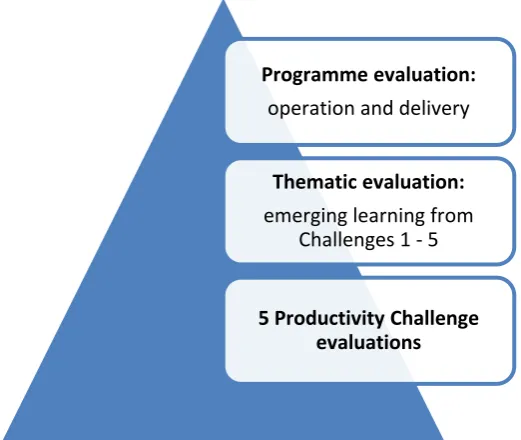
[image:17.595.169.430.427.647.2]The three levels of evaluation are shown in Fig 1.2 below: (1) each Productivity Challenge was evaluated to extract the learning for the ‘question’ set in each Challenge Brief; (2) emerging learning from across Challenges were drawn together whilst the Programme was ongoing, in a series of thematic reports; and (3) learning from Challenges was aggregated together to create a summative evaluation of the UKFP as a whole, which is detailed in this report4.
Figure 1.2 Evaluation structure
4 See Chapter 8 for links to each Productivity Challenge evaluation report and thematic reports
Programme evaluation:
operation and delivery
Thematic evaluation:
emerging learning from Challenges 1 - 5
5
1.5
Methodology
This final evaluation report summarises the emerging learning from the evaluation, gathered between October 2014 and July 2016. The research was designed in discussion with the UKFP team and consisted of three key elements:
• Desk based review of programme documents. The document review covered the following: programme background documentation (e.g. programme introduction document5, various programme guidance documents6); Productivity Challenges guidance documents and summaries of the market testing phase; and application forms, logic chains and Stage End Reports7 of the projects in the five Productivity Challenges
• Consultations with key stakeholders. Consultations were conducted with UKCES senior staff (3), UKCES Commissioners (6), Productivity Challenge Leads (8), and project leads (32). These were conducted at different milestone points during the lifetime of the programme
• Participation at Co-creation Labs. The evaluation team attended and observed 12 Co-creation Labs, one of which was a programme level event directed at the UKFP staff and 11 of which were for the five Productivity Challenges. In the final Lab in each of the Productivity Challenges (5 in total) the evaluation team took a leading role in designing and facilitating key sessions. In addition, the evaluation team circulated a post-Lab questionnaire to all Lab attendees asking about their reflections and learning from the day, and any affects these might have on their role / project going forward. After each Lab, the evaluation team carried out a debrief with the UKFP staff, who attended, to reflect on the success of the day and any learning that could be taken away. After each debrief, a note summarising the feedback on the Lab and highlighting the key learning points was circulated amongst projects and the UKFP staff.
5
https://www.gov.uk/government/uploads/system/uploads/attachment_data/file/418213/15.03.11._UKFP_Introduction_updat ed_-_V2.pdf
6
1.6
Structure of the report
This report was drafted based on these findings, with an emphasis placed on developing a ‘readable’ and pragmatic document, drawing on a range of experiences, that would be useful to different organisations who may wish to undertake a similar initiative and to policy stakeholders going forwards. The next chapter (Chapter 2) of the report provides a brief review of the different Productivity Challenges. Chapter 3 provides a review of the approach of the UKFP. Chapter 4 provides a summary of the learning from the UKFP model and delivery approach and Chapter 5 provides a summary of the learning in relation to policy and practice. Chapter 6 looks at the implications that the findings have with regards to future policy and programme delivery, and includes key messages and recommendations to different audiences of interest. Chapter of the report (Chapter 7) considers topics for further research.
7
2
The Productivity Challenges
2.1
Introduction
The UKFP funded and delivered five different Productivity Challenges. Each Challenge was focused around a specific market sector or issue. The Challenges included a number of distinct projects (between 5 and 7), most of which were employer led and based on partnerships between different organisations or companies. This chapter provides a brief summary of the five Productivity Challenges, the rationale behind them and their structure.
2.2
Productivity Challenge 1: Offsite Construction
Productivity Challenge 1 (PC1) focussed on designing solutions to the workforce challenges in the offsite construction (OSC) industry. The UK has one of the largest construction sectors in Europe and has the opportunity to benefit from the forecast growth in the global construction market to 2025.
Offsite construction, as one of a number of modern methods of construction, has the potential to change the way the construction industry builds and operates. If the UK construction industry is to exploit the potential of offsite construction, multi-skilling, interdisciplinary collaboration and greater flexibility within a number of job roles is crucial. UKCES research revealed that the current training and qualification offer for offsite construction was considered to be largely inadequate by employers. The sector itself was also fragmented with companies generally creating their own, bespoke, in-house training based on their identified needs8. As such, offsite construction provided ideal territory to explore what works in addressing the skills challenges of a ‘sunrise sector’9.
UKCES selected five projects for PC1 to co-invest in. The projects were led by BuildOffSite, Skanska, Edinburgh Napier University, Laing O’Rourke and the Steel Construction Institute. PC1 ran between September 2014 and March 2015, with a total UKCES investment of £616,029, and total co-investment of £439,243 (including cash and in kind).
8 UKCES (2014), The UK Futures Programme Competition Brief: Addressing skills deficiencies in the Offsite Construction
Sector. Available online:
https://www.gov.uk/government/uploads/system/uploads/attachment_data/file/307153/UK_Futures_Programme_Competiti on_brief.pdf
8
2.3
Productivity Challenge 2: Management and Leadership in Supply
Chains
and Networked Organisations
Productivity Challenge 2 (PC2) focussed on improving leadership and management in supply chains and networked organisations. This was in recognition that the UK does not measure up to the likes of the US on management capability. Recent international studies have revealed large variation in management quality across firms within all countries. What accounts for the difference between countries is the absence (e.g. US) or presence (e.g. India; UK) of a long tail of poorly managed firms. Even though the UK’s best firms are often world leading, the presence of a large number of poorly managed firms is a barrier to growth in the UK economy10.
The Productivity Challenge sought to test the hypothesis that supply chains, or other types of networked organisations, could be an effective means of developing management and leadership through the sharing of skills, ideas and values through existing business relationships. The hypothesis was that the influence of the prime organisations at the head of supply chains or sector bodies could stimulate activity from firms in their supply chains or networks.
PC2 was open only to primes11 with UK based supply chains or those who were looking to expand their UK supply chains within the manufacturing, construction, legal and accounting services and financial services sectors. UKCES evidence suggested that the case to act was strongest in these sectors.
UKCES selected seven projects for PC2. The projects were led by Action Sustainability, Black Country Consortium, the Civil Engineering Contractors Association, Jaguar Land Rover, the Legal Aid Practitioners Group, Robert Woodhead, and the University of Chester. While two of these leads were primes in their own right, the others were networked organisations which then sought to engage and work through firms (including primes) in the respective sectors. PC2 ran between October 2014 and November 201512, with a total UKCES investment of £1,064,422 and total co-investment of £1,049,155 (including cash and in kind).
10 Bloom, N, et al. (2012) Management Practices Across Firms and Countries, Working Paper 17850. National Bureau of
Economic Research, Cambridge, MA. within UKCES (2014). UK Futures Programme Competition Brief: Management and Leadership in Supply Chains and Networked Organisations.
11 A prime is a business that sits at the head of a supply chain.
9
2.4
Productivity Challenge 3: Progression Pathways in the Retail and
Hospitality Industries
Productivity Challenge 3 (PC3) focused on progression pathways in the retail and hospitality industries. The retail and hospitality industries are two of the most important employing sectors of the UK economy, accounting for 20 per cent of all jobs, or around 6.9 million employees across the country. Whilst these sectors are predicted to see an increase in employment over the coming years, they continue to experience high turnover in labour, leading to significant recruitment costs for businesses. Moreover, company outlays on recruitment and induction draw investment away from developing existing employees through training and progression, leading to pressure on existing staff and reductions in sales. In addition, the sectors are heavily reliant on low paid workers, who are often either part-time or seasonal13.
These issues have been recognised by employers for some time and are related to distinct features of the retail and hospitality sectors. These include relatively low margins and high levels of competitiveness, which lead businesses to focus on minimising costs, rather than investing heavily in staff. Moreover, these businesses tend to have large numbers of part-time workers, who are low paid and often seasonal. However, research reviewed by UKCES has shown that helping these workers progress and receive higher pay can lead to improved customer service, reduced staff turnover, better morale and increased customer spending14.
UKCES selected seven projects to work with, and invest in, through PC3. Four of these focused on the hospitality sector and the remaining three were in retail. The projects were led by Fifteen Cornwall, People 1st, Rocco Forte Hotels, National Coastal Tourism Academy, Realm, The Living Wage Foundation and Timewise Foundation. PC3 projects ran between 1 April 2015 and 30 June 2016, with a total UKCES investment of £1, 204,264 and co-investment of £1,045,706 (including cash and in kind contributions). PC3 was run in partnership and with a co-investment from the Department for Work and Pensions (DWP).
13 UK Futures Programme Competition brief: Progression Pathways in the Retail and Hospitality Industries. Available online https://www.gov.uk/government/uploads/system/uploads/attachment_data/file/363798/14.10.14._UKFP_Comp_3_Brief_V6. pdf
14 Devins, D et al (2014) Improving Progression in Low Paid Low Skilled Retails, Catering and Care Jobs. Joseph Rowntree
10
2.5
Productivity Challenge 4: Enhancing Skills for Innovation
Management and Commercialisation
Productivity Challenge 4 (PC4) focused on enhancing skills for innovation management and commercialisation in the manufacturing sector. Innovation is vital for UK prosperity because, as the basis for economic growth, it is critical for job creation and improving productivity. Broadly speaking, for this Productivity Challenge, UKCES defined innovation as the introduction of new or significantly improved products, processes and services or as entirely new ways of doing business within the organisation itself or within the markets they compete in.
An international benchmarking assessment of the UK’s science and innovation system, by the Department for Business, Innovation and Skills, identified deficiencies around management skills, which limit business’ ability to capture economic value from innovation15. To successfully innovate requires a diversity of skills. UKCES’ research and consultation with stakeholders suggested that there was less of a focus amongst businesses on the skills required to support the management and commercial exploitation of innovation. For this reason, this Productivity Challenge has focused on supporting the ‘human factor’ in these areas of innovation. PC4 focused on developing the workplace practices that were required for staff to manage and commercialise innovative projects in manufacturing.
UKCES selected five projects to work with, and invest in, through PC4. The projects were led by BAE Systems Maritime Naval Ships, BAE Systems (Operations Ltd), Cardiff Metropolitan University, Northern Ireland Polymers Association (NIPA) and Swansea University. PC4 ran between August 2015 and July 2016 with a total UKCES investment of £424,941, and a total co-investment of £351,172 (including cash and in kind contribution).
11
2.6
Productivity Challenge 5: Developing leadership and
entrepreneurship skills in small firms
Productivity Challenge 5 (PC5) was focused on developing leadership and entrepreneurship skills in small firms and the role of anchor institutes in supporting the development of small firms. Evidence suggest that one of the fundamental problems holding back the growth of smaller organisations is a lack of leadership and management capability to drive performance and enable them to succeed. Small firms make up the vast majority of UK business, 99.3 per cent of UK businesses employ fewer than 50 people. As these businesses grow, the owners face pressures to create management structures that help them to delegate some degree of decision making to their staff. A lack of appropriate management and leadership skills within these firms holds back their performance16.
The latest Employers Skills Survey17, carried out by UKCES, found that small firms were significantly less likely to provide management training than their larger counterparts. Across the UK, 33 per cent of firms with less than 50 staff provided management training, whilst 72 per cent of those with more than 50 staff did. Leadership and entrepreneurship skills were the focus of this Challenge as they are the skills most strongly associated with good management practice and small firm performance. Research conducted by the Department for Business, Innovation and Skills (2015)18 argued that these skills have the greatest positive impact on staff management practices which then lead to greater turnover, growth or productivity.
Many approaches have been adopted to improve the leadership and entrepreneurship skills and performance of small businesses. The specific approach tested through PC5 was to work through Anchor Institutions (AIs). AI is a description for organisations that have an important presence in the local community and are tied to specific locations by a combination of factors, including invested capital, mission and relationship to customers and employees. These institutions may also have high levels of employment and significant purchasing power. Being an AI involves making a strategic contribution to the local economy, and is likely to be a secondary aim rather than the main focus for the institution.
This Challenge sought to test how far AIs could and would be willing to use their role and status within the local economy to engage with small firms and then to support them to develop improved leadership and entrepreneurship skills.
16 Department for Business, Innovation and Skills. (2015) Leadership and Management Skills in SMEs: Measuring Associations with Management Practices and Performance. Department for Business, Innovation and Skills, Research Paper 211. London
17 UKCES (2014). Employer Skills Survey 2013
12
UKCES selected eight projects to co-invest in and work with in PC5. Projects were led by AIs of varying type: universities - Inverness College UHI, Newcastle University, University of Sunderland and the University of Teesside; business support organisations - Causeway Enterprise Agency and St Helens Chamber of Commerce; a skills development organisation - Regional Learning Partnership South West & Central Wales; and a local authority - Doncaster Metropolitan Borough Council. PC5 ran between August 2015 and June 201619, with a total UKCES investment of £1,048,984 and total co-investment of £627,023 (including cash and in kind).
19 Projects originally intended to run until August 2016 but the UK Government’s decision to dissolve UKCES meant that
13
3
Approach of the UK Futures Programme
3.1
Introduction
In this Chapter we outline how the UKFP and the Productivity Challenges were designed, delivered and managed. The detail is intended to inform implementation of the UKFP approach in future and to enable others to benefit from the experience gained by UKCES in delivering the Programme.
3.2
Designing the UK Futures Programme
The design of the UKFP was entirely evidence based. It was informed by UKCES research and previous experience delivering other investment programmes. In particular, the UKFP built on the learning from UKCES management and evaluation of Employer Investment Fund (EIF) and Growth and Innovation Fund (GIF)20. The learning from the evaluation of these earlier programmes identified what was effective in employer led skills initiatives and influenced the following: the targeted nature of UKFP Challenges to bring out more learning; the greater emphasis on learning as an outcome; the application process and assessment criteria (including, for example, the value placed on in-kind contributions); and the management of the projects. Additionally, UKCES team drew on wider experience of delivery of ‘Innovation Lab’21 style investments, which corroborated learning from EIF and GIF, particularly from NESTA (e.g. ‘Impact Measurement in Impact Investing’22) and, for example, the What Works Lab process developed by the Canadian Government’s Department of Employment and Social Development23.
UKCES did consider the design of a range of small scale randomised control trials (RCT). However, this would have required a radically different approach. The UKFP was focussed on flexibility and adaptation in response to immediate learning, whereas an RCT would have imposed a more fixed set of projects. RCT would have also represented a risk in terms of the important UKFP objectives of employer engagement and innovation. It was difficult to envisage an RCT design to truly compare like with like, across sectors or even different groups of employers.
20 Launched in 2011, the purpose of EIF and GIF was to stimulate a step change in employer leadership and investment in
economically valuable skills through co-investment between employers and the UK Commission. The evaluation report can be found here: https://www.gov.uk/government/collections/ukces-investment-in-skills-solutions-evaluation
21 This refers to a mode of policy development which facilitates risk-taking to encourage innovation to tackle complex social
issues, e.g., see http://blogs.worldbank.org/voices/what-are-innovation-labs-and-how-can-they-improve-development-0
14
3.3
The UK Futures Programme Delivery team
A UKCES team was formed for each Productivity Challenge, tailored to the needs of each, in terms of the number of individuals on the team, their skills and the time they allocated to working on the Challenge.
That said, each Challenge broadly comprised the following roles: • Lead UKCES Commissioner
• Challenge Lead
• (Additional) Relationship Manager(s) • Testing, Evaluation and Learning Support • Communications and other support.
The Lead UKCES Commissioner volunteered or was approached based on their specific experience or interest in the Challenge area. They provided oversight and ensured that the projects would add to the learning to be derived from the UKFP were taken forward.
UKCES Challenge Lead (who was also a Relationship Manager for at least some of the projects) had overall responsibility for the projects and for extracting learning from them through management, monitoring and linking to the evaluation. They were also responsible for engaging stakeholders and the dissemination of the findings to maximise impact. The Challenge Lead Essential Guide (see Appendix 1) sets out the Challenge Leads’ role and responsibilities in full.
The Challenge Lead/Relationship Manager worked closely with the projects to support their delivery. They had regular contact with projects and also attended Steering Groups or observed project events/training activities. The Relationship Manager role was complex and multi-faceted. To support their development and the recruitment of future Relationship Managers. A Relationship Manager Skills Check (see Appendix 2) was developed after a year or so of operating the UKFP.
The Testing, Evaluation and Learning Support’s role was to support projects to develop Testing and Learning Plans for their projects and tailored to their innovation and main learning areas (see Appendix 9 for an example Testing and Learning Plan). This also involved identifying co-creation support (see Stage 4 – Co-creation and Evaluation, below).
15
3.4
UKFP Delivery process
[image:28.595.80.524.137.194.2]Each round of investment followed a staged process. This process is shown in Figure .
Figure 3.1 UKFP Challenge delivery process
It is worth noting that the timing of each Productivity Challenge was largely dictated by the way in which UKCES funding was managed. In practice, the budget for the UKFP was not clear until a few weeks before the commencement of the financial year in April, with all allocated funding required to be spent by the end of the following March. This meant less time was allocated to each stage in the process than was ideal. It also meant that ideas for Challenges ‘closer to market’ were selected first (i.e. there was a good understanding of the problem, potential solution and knowledge of the influential stakeholders).
3.4.1 Stage 1 - Develop and test the hypothesis
Stage duration: between 6-12 weeks
UKCES identified issues to be explored through the UKFP. They draw on wider research and intelligence, knowledge of business and government priorities and the insight of UKCES Commissioners. Based on a clear understanding of the issue, a problem was specified along with a hypothesis of what might help resolve the problem.
Testing the Market
Stakeholders with an interest in the issue were consulted on a draft specification, to test: the definition of the problem; the strength of the hypothesis; whether any initiatives already existed covering the same issue in the same way (to avoid overlap); and whether there was potential interest in the topic from employers (i.e. was it a problem they recognised and were they already developing ideas and solutions to address it?).
1. Develop
and test
hypothesis
2. Launch
and Making
the Market
3.
Assessment
4.
Co-creation and
16
The Productivity Challenge stakeholders were mapped and then prioritised:
• Tier 1 stakeholders were classified as the core group of people / organisations who were fundamentally important to UKCES. These stakeholders were likely also to be key Challenge-level stakeholders for all of the challenges run through the UKFP
• Tier 2 stakeholders were those people / organisations who were Challenge-level stakeholders for more than one of the Challenges running through the UKFP
• Tier 3 stakeholders were Challenge-level stakeholders for at least one of the Challenges run through the programme.
A variety of methods were used to contact stakeholders and test the market for the proposed Challenge. The stakeholder prioritisation informed the method by which they were contacted: broadly, tier 1 stakeholders were interviewed one-to-one, tier 2 were consulted via email and tier 3 were invited to fill in an on-line survey. (See Appendix 3 Tier 1 Stakeholders Market Testing Collection Template for an example from PC4.)
Example: Management and Leadership through Supply Chains or Networked Organisations.
17
During this stage, the scope of the Productivity Challenge was refined, for example through selecting sectors in which the Challenge would be issued. This was to ensure successful projects were (as far as possible) focussed on the same underlying problem and so had more commonalities. Ensuring commonalities amongst projects was important to allow cross-fertilisation of ideas across projects, enhance collaboration across projects and allow more learning to be drawn out through broad comparisons, as the contextual factors were the same for each project. Feedback on the draft specification was used to produce a final Productivity Challenge Brief.
3.4.2 Stage 2 - Launch and Making the Market
Stage duration: Challenges were usually ‘open’ for 6 weeks
The launch of a Productivity Challenge typically involved a press notice, publication of the Challenge Brief, publication of the accompanying application documents and guidance and wide promotion within the target market to gain interest (see Section 9 for links all Challenge Briefs). To accompany the Brief, an Introduction to the UKFP document (see Appendix 4) was issued (this document included information on the principles of the UKFP, such as the types of projects it was looking to invest in and UKCES’ expectations in relation to innovation, testing and shared learning). In addition, the UKFP Guidance (see Appendix 5) was published to support potential applicants in developing their submissions by detailing what UKCES was seeking in each of the six selection criteria in the application form (see 3.4.3 Stage 3 Assessment, below).
18
At least one webinar was held per Challenge, explaining the Brief and offering an opportunity to ask questions. Webinars as opposed to face-to-face events were chosen due to the scale of the fund and the potential wide geographical spread of interested parties. In later Challenges, a further webinar explaining the financial element of the application form was added due to applicants experiencing difficulty in completing this part of the application form. The financial statement was later simplified to make the process easier for applicants, while still ensuring that UKCES received the appropriate information to make an assessment judgement. UKCES also drew on support from external Associates to follow up leads and discuss potential applications. Training and briefing was provided to all those providing external support to ensure they understood UKCES requirements.
19
3.4.3 Stage 3 - Assessment
Stage duration: 10 - 12 weeks
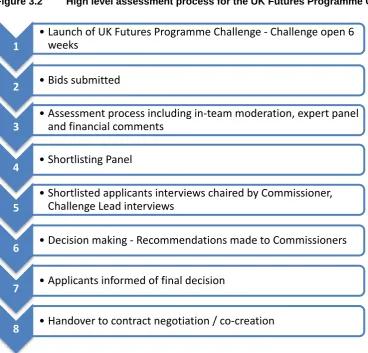
[image:32.595.84.453.136.489.2]For each Productivity Challenge, the following assessment process was followed.
Figure 3.2 High level assessment process for the UK Futures Programme Challenges
Once the application window closed, each application was rigorously assessed against the following criteria:
• Potential for impact (will the solution resolve the problem it is seeking to address?) • Innovation (how innovative is the solution, or aspects of the solution?)
• Employer leadership and engagement (what is the level and nature of employer leadership and engagement?)
• Balance of contributions (does the proposal suggest an appropriate balance of public and private contributions and of cash and in-kind investment?)
• Testing and shared learning (are there plans to adequately test the developing solution?).
1
• Launch of UK Futures Programme Challenge - Challenge open 6
weeks
2
• Bids submitted
3
• Assessment process including in-team moderation, expert panel
and financial comments
4
• Shortlisting Panel
5
• Shortlisted applicants interviews chaired by Commissioner,
Challenge Lead interviews
6
• Decision making - Recommendations made to Commissioners
7
• Applicants informed of final decision
20
Each application was assessed by a minimum of two assessors who provided a recommendation. The team usually comprised a lead assessor from UKCES and an external assessor. A full day of training was provided for all assessors which covered: the assessment process, assessment criteria, and details of the Challenge and the learning sought. The assessors provided a moderated recommendation for each application reviewed. In the event of dispute over certain criteria, someone from the central UKCES assessment team, who worked across all Challenges and were familiar with the assessment criteria, was called in to review.
Recommendations were then reviewed by a moderating panel of UKFP core management, with input from Lead assessors and moderated across all assessment teams to ensure consistent scoring and approach. A separate Panel then shortlisted the applications that had reached the quality benchmark to an appropriate number of applicants to interview, ensuring a potential spread of learning across the Challenge portfolio.
UKCES Commissioners (and DWP senior management for Productivity Challenge 3) and UKCES management team interviewed the shortlisted applicants. The purpose of the interview was two-fold: firstly, to allow more in depth exploration of the paper application; and secondly, to ensure applicants had bought in to the UKFP ethos as topics such as ‘testing’ and ‘co-creation’ were new to the majority of applicants.
In later Challenges, these topics were emphasised more at the interview stage as learning from early projects showed that they were not familiar with these concepts. For earlier Challenges, due to the complexity and novelty of testing, more leniency had been allowed around these criteria.
Interviews for later Challenges were also observed by UKCES Relationship Managers. This first-hand experience of the interview and particular nature of Commissioner interest aided their ability to implement any recommendations made by the interview panel and to manage the projects.
The recommendations were then reviewed by the Commissioner group responsible for steering the UKFP. This part of the process offered a further opportunity for oversight and ensured that the projects that would add to the learning to be derived from the UKFP were taken forward.
21
3.4.4 Stage 4 - Co-creation and Evaluation
Stage duration: project delivery period preferably around 12 months
Contract negotiation and testing
UKCES Relationship Managers undertook contract negotiations with successful applicants. Over the course of the Challenges, the specification of outputs was refined to ensure that they fully encapsulated the notion of learning during the project and to seek to avoid ‘output driven behaviour’. For example, where the employer recruitment process was in some way experimental and / or part of what was innovative about the project, rather than an output being articulated as ‘Recruit 20 new employers’, as might be typical, the contracted output would instead reflect the expected learning: ‘Identify effectiveness of methods used during recruitment of the 20 new small employers’.
Project level testing was a critical component of the UKFP. Projects needed to ensure they were testing what was innovative about their project and were able to gather learning about what worked in order to fine-tune their innovation and have a successful product/service. In negotiating contracts, projects were asked to identify key themes or questions to test during the course of the project and approaches to do that. This informed a Testing & Learning Plan (see Appendix 9) which was created, with support from UKCES Testing and Learning Support, for each project. Two pieces of Guidance on testing and learning were also developed for projects. The first covered what UKCES expected from projects in terms of testing and learning (See Appendix 11 for UKFP Guidance – What do we mean by testing and shared learning?). The second covered how to reach and test with end users, and the Kirkpatrick model24 was developed to fit to training programmes and the UKFP, moving from a four stage to a five stage process (see Appendix 11.1 for UKFP Guidance – How do we test a training solution?). UKCES Testing and Learning Support actively and regularly supported applicants in the planning of their testing and learning activity through one-to-one support covering a range of testing activities, including: testing the design/ideas/prototype of the solution before implementation; testing the product during implementation; and / or evaluation – collating evidence and presenting a longer term reflection.
Projects were required to report on the progress made on the Testing and Learning Plan through the Stage End Report (a UKFP Stage End Report Template is included at Appendix 10).
22
Testing Plans were initiated at the contract negotiation stage to prevent projects from being purely focused on outputs. For later Challenges, the Testing Plan was developed in parallel with the output schedule to enable better integration of the two. The Testing and Learning Plan was used as a flexible document allowing projects to implement learning and refine their approach as often as they needed. The amount of resource expended on testing was expected to be proportionate to the investment made and ensure the critical questions for the project were addressed.
Projects in later Productivity Challenges were encouraged to focus more on setting baselines for participating businesses and individuals as earlier projects who had not done this had reflected that they would have found this useful, but had not been able to remedy this retrospectively. Baselining is important to track progress, measure success and, if appropriate, to be able to make a stronger business case for any further investment as harder measures of success were more effective at demonstrating the impact made by a solution.
Management, Monitoring and Co-creation
The Relationship Managers took responsibility for the management of projects, whilst monitoring was undertaken via the Stage End Reports which projects were required to submit on a (usually) quarterly basis. (A template Stage End Report is included at Appendix 10). Stage End Reports sought information on progress against each of the assessment criteria and against contracted outputs. These learnings were collated and reported to Commissioners throughout and formed an essential input to the learning process of the UKFP.
In addition to receiving support with testing and learning, the projects in each Challenge benefitted from co-creation support which comprised the experience and expertise, research, and connections of UKCES and UKCES Commissioners.
Each project received a bespoke Co-Creation Plan which outlined what support UKCES would give to each project. (An example Co-creation plan from PC1 is included at Appendix 12).
23
Finally, co-creation and learning was sought through the creation Labs. The Co-creation Labs convened projects and gave them time and space to share progress and learning, challenge each other and identify commonalities and opportunities to work together.
24
4
Learning from the UK Futures Programme
Key learning
• The UKFP process of basing the Productivity Challenges topics on research and market testing activities has been effective in achieving highly targeted and specified Productivity Challenges
• The R&D approach of the UKFP and the focus on collaborative solutions required a large team to manage and support the work of the projects; consideration needed to be given to the staff skill-sets to provide the best support in relation to the Challenge topic • The feature of highly targeted and specified Productivity Challenges had the benefit of linking projects’ activities and outputs to policy agendas, which helped in engaging external stakeholders and securing funding for the continuation of specific projects • The UKFP has been successful in attracting new partners (companies and employers)
that UKCES did not engage previously
• The timeframe that was allocated for the market making stage and for submitting the applications was too tight and may have meant that a number of bidders missed the window of submitting an application
• Companies and employers who were less experienced in writing applications for funding may have benefitted from additional support from UKCES in the application process
• Evidence from the different Productivity Challenges suggested that projects were collaborating with each other to some level through sharing information and joining resources; co-creation mostly took place between UKCES and the projects rather than between projects and each other
• Collaboration and co-creation required a great deal of stimuli from the UKFP team. The Challenge Leads and Relationship Managers were key to spotting opportunities, which often the projects alone would not have seen. The main challenge that the team faced was the resourcing of this role
• Similarly, the objectives of innovation and testing and learning required a great deal of support and input from the UKFP team, and was very resource intensive
25
• The model of the UKFP and the processes that were developed to implement it (e.g. promoting collaboration, the co-creation offer and risk taking) form a new approach that has not been tried before in investments for addressing workforce development. In that respect the UKFP can be considered innovative
• The testing and learning feature of the programme was not fully implemented in the first two Challenges. The UKFP team learnt from experience and increased the emphasis of this feature as a key element of the projects plans in the later Challenges
• The speed at which the programme was delivered meant that there were limited opportunities for UKCES to learn and adapt as they went along (including learning from the evaluation findings)
• The design of the evaluation could have been improved by delivering workshops to the UKFP team (based on the model of the Co-creation Labs) to provide more timely feedback and recommendations
• The nature of the programme of small scale investment increased UKCES’ confidence in taking risks and investing in solutions that may not work
• The cash investment in the UKFP was relatively small, however there was a greater investment of staff time, from both UKCES staff and projects teams. The time invested was considerable and an under-estimated cost of the programme. Any future similar investment should take into consideration the time that is required to support this type of model
• The UKFP achieved high levels of engagement from UKCES staff, project teams and participants in the projects. In that respect the UKFP has been effective in making a small investment go a long way
• The UKFP has been successful in engaging contributions from partners (both cash and in-kind), which demonstrated the commitment from the companies and other organisations that were engaged in the projects
26
4.1
Introduction
In this Chapter we review each of the key elements around the design and delivery of the UKFP, to report on what worked well and what worked less well in relation to the different features of the model. In addition, we have considered whether and to what extent these features have been effective in achieving the key objectives of the programme: innovation, collaboration, co-creation and testing and learning.
4.2
Highly specified and targeted productivity Challenges
UKCES launched five Productivity Challenges as part of the UKFP. The topics of the five Challenges show some level of diversity, with two focusing on sectoral (PC1 and PC3) and three on broader cross-sectoral issues (PC2, PC4 and PC5). The topics for the different Productivity Challenges were decided by UKCES senior staff in consultation with the Commissioners. During the consultations in the early stages of the programme, stakeholders at different levels of the programme stated that the identification of the topics for the Challenges and ‘getting them right’ was important in ensuring a successful outcome.
The programme team developed and implemented several different methods for the selection of the Challenges topics. These included the use of research, consultations with potential partners, consultations with stakeholders in the industry, and the use of ‘decision trees’ to ensure the topics were clear and evidence based. It was apparent from the consultations with UKCES staff that the topics of the Challenges were well considered and thought through.
27
In the first Challenge the UKFP team felt that the market testing stage was not fully developed and lacked focus. The topic for the first Challenge had been selected because it was tightly defined around a specific sector and followed on from previous research which detailed the deficiencies in the sector25. In addition, UKCES felt that they had sufficient links with stakeholders in the sector in order to get started relatively quickly. However, as the market testing stage progressed, it became apparent to the UKFP team that while UKCES had good links with various stakeholders in the sector (e.g. the Construction Industry Training Board and sector membership organisations) these links were not sufficient to raise UKCES’ profile amongst a large number of employers in the sector. The UKFP team found it challenging to engage with a sufficient number of employers and interest them in submitting a bid. In addition, the time that was allocated for the market making stage in the first Challenge, was not enough to allow the UKFP team to research further and identify additional stakeholders to engage with the Challenge. This resulted in a low number of quality applications in the first Challenge, resulting in a budget underspend.
As the programme progressed and the UKFP team gained experience they learned to allow more time for the market testing stage, to enable more research to be conducted if needed, and more importantly for consultations to take place with potential stakeholders outside of the circle of stakeholders that were known to UKCES. In the later Challenges, UKCES thought that allocating more time and resource for completing the market testing stage helped them reach a larger and wider circle of employers. In addition, the UKFP team conducted consultations with the stakeholders that they had engaged to collate feedback from them about the different issues relating to the topic of the Challenge. This feedback provided insight into the challenges that the sector was facing from different points of view, and the activities that were already taking place. This feedback was then used to refine and improve the brief of the Challenge. The success of this process was demonstrated in the growing number of quality applications from the third Challenge onwards, increasing UKCES’s ability to select different types of project as well as the providers and employers with which UKCES could engage.
One of the benefits of running targeted and specified Challenges was that it helped to highlight commonalities between projects, which in turn assisted in bringing projects together to work jointly on the same issues. In addition, in a number of the Challenges UKCES brought together organisations of different nature and from different places in a sector, who ran very different projects (in particular in PC4). The targeted nature of the Challenges provided a common focus for the projects and enabled shared learning across the Challenge.
25 UKCES (2013) Technology and Skills in the Construction Industry, Evidence Report 74. Available online on
28
The focused and highly specified nature of the Challenges enabled UKCES to link the activities of the projects to specific policy agendas. Throughout the work of the UKFP, UKCES approached stakeholders in different government bodies with the aim of supporting the sustainability and scaling up the work of the projects. UKCES senior staff commented that when they were able to link outputs of the projects to specific policy agenda (for example in PC3 – linking the work of the projects to the policy agenda of tackling job inequalities and in-work poverty), they were successful in gaining wider interest in the work and securing external funding for the continuation of the work of specific projects. Where they were not able to link the topic of the Challenge to policy agenda, or where the policy stakeholders were less receptive to the idea (as in the case of PC4) discussion around sustainability and scalability were a great deal more challenging and less successful.
4.3
Strong employer leadership and engagement
One of the key requirements of the projects that were funded through the UKFP was that they were employer-led. This was because the UKCES’ evidence base suggested that lack of employer leadership in the skills agenda has led to some of the difficulties faced by the sectors that the UKFP was looking to address.
The market making stage was designed to engage the different organisations, businesses and employers with the Productivity Challenges and encourage them to submit an application for funding under the programme. It was hoped that the market making stage would identify the right partners to work with UKCES in each of the Challenges. It was important to UKCES to ensure that they engaged with those employers and companies that were identified (through research and the market testing stage) as most suitable for the topic of the Challenge. In addition, UKCES wanted to ensure that they did not miss any employers and companies that were not known to them or identified in the early stages, but that might express interest and could be effectively engaged with the programme. UKCES senior staff and Commissioners commented that through the work of the UKFP, they were hoping to engage with new partners, stakeholders and organisations that they had not worked with before.
29
One of the challenges that UKCES faced at the start of the programme, was that it became apparent that UKCES did not have a high profile amongst a wide range of employers, and this limited their reach. In order to address this, UKCES began reaching out to stakeholders in the wider networks of the stakeholders known to them, making use of these links to widen their reach. In addition, UKCES deployed a number of their Associates to assist the UKFP team during the market making stage in identifying and contacting stakeholders outside their circle of known organisations.
UKCES senior staff and the UKFP team commented that as they learned from their experience in the early Challenges, they had got better in using the market making stage to effectively identify different employers and organisations to engage in the programme. UKCES senior staff commented that rather than looking to contact a large number of employers and stakeholders, they were aiming to reach employers who would be a good fit for the Challenge, even if it meant engaging with a smaller number. Indeed, UKCES were successful in engaging employers, companies and organisations of different types, including primes, large companies, SMEs, universities and other education institutions and intermediaries.
That said, the UKFP team and UKCES senior staff commented that the market making stage, and in particular the application process did not work as well as it could. The main issue that was mentioned by all of the consultees was the tight timeframe that was allocated to each step. On average the market making stage in each Challenge ran for between six to seven weeks, and this included the initial contact with the potential bidders as well as the time to write and submit the bids. All the people that we consulted with commented that this was not enough time and some expressed concerns that the tight timeframe might have meant that they missed the opportunity to engage some new partners simply because they missed the window for submitting a bid.
30
UKCES senior staff commented that in hindsight they would have liked to have made the market making stage longer. However, while in the process of delivering the programme, they were focused on delivering the outputs and meeting budget deadlines. In addition, as noted in Chapter 3 above, the timing of each Productivity Challenge was largely dictated by the way that public funding is managed, which posed a considerable constraint on the UKFP team with regards to the timeframe for each Challenge. One senior staff member commented that if they were to continue, they would conduct the consultations with the stakeholders in a focus-group format (a method they used in the set-up of a sixth Challenge that did not proceed due to the withdrawal of Whitehall funding for UKCES announced in November 2015). This approach saved time and stimulated a discussion between the stakeholders, which in turn produced helpful information for refining and re-focusing the Challenge brief.
In addition, a number of the people we consulted with commented that a few of the employers and companies that were engaged in the market making stage, would have benefitted from additional support during the writing of the application process. Because UKCES was engaging new partners in the programme, this meant that many did not have experience of writing applications for funding. In some cases, the employers decided to drop out before writing a bid, and in others the bids that were submitted were not as good as they