1
Title of Thesis: Combined free-range piglets and energy
crop production: Impact on nitrate leaching
Master's Thesis by; Emanuel Joel Lao
Student number: 201302233
Total ECTS: 45
Supervised by:
Main Supervisor: Uffe Jørgensen, (Senior Scientist)
Co-Supervisor; Anne Grete Kongsted, (Senior Scientist)i
Keeping sows in the outdoor pasture conveys high risk on environmental pollution through nitrate leaching which might be tremendously high in autumn and winter. Integrating grassland based free-range pigs with selected energy crops has been proposed as one possible approach to reduce nutrient leaching; however the effect has never been quantified. The eco-efficient pig farming that takes care of pig’s animal welfare and possible reduction of nitrate loss into environment may be achieved which will contribute to the Danish Green Growth Agreement of reducing up to 19,000 tons of NO3-N between 2010 and 2015.
Apart from the main focus on NO3-N leaching potential, this experiment also investigated Nmin
and phosphorus distributions at various soil depths and distances from willow plus estimating farm N balance from a commercial organic pig farm. In the experimental paddocks, two willow rows each from one side of the paddock are separated by 18.5 m distance covered by grass. In each of the four measurement rows established, the ceramic suction cups were installed at 1.45 m depth at 0.5, 2.5, 4.5, 6.5 and 9.5 m from willow while the two soil samples were taken at each cup at three soil layers, 0-25 cm, 25-50 cm and 50-100 cm. Through a 1 m soil column, the factorial ANOVA found significant highest (p<0.001) Nmin close to sow’s
huts with 149 Kg N/ha followed by 101 and 100 Kg N/ha adjacent to feeders. The Nmin content
however differed with distance with NH4-N of up to 90% near feeders while up to 84% of Nmin
was NO3-N close the huts. The phosphorus near feeders had the highest level with 53 Kg P/ha
when considering 1 m soil depth. In both Nmin and P, the lowest levels were found closest to
the willow (0.5 m) with 41 Kg N/ha and 39 Kg P/ha through 1 m soil depth. In addition, the N balance estimation of the farm where the total input was 404 Kg N/ha, about 104 Kg N/ha (26%) was converted into piglets while 39 Kg N/ha (10%) was estimated for willow N uptake. Nitrate-N leaching as expected was the highest near the huts with an average of 37 mg NO3
-N/litre followed by 28 Mg NO3-N/litre at 6.5 m. Of all the distance points, the leaching at only
4.5 and 6.5 were significantly to 0.5 m (p<0.01). Since excretory behaviour of pigs was not part of the experiment, the lower NO3-N leaching closest to willow could be due to both lower
excretion and also high water and nutrients uptake by trees. However, even though the NO3
-N from soil samples at 2.5 m was the second highest, the leaching wasn’t as high as expected, which was attributed to high uptake by the trees whose significant uptake by roots may extend as far as 3.5 m away from willow. The 9.5 m close to feeders had the low leaching which could be due to low NO3-N as NH4-N dominated with about 90 % of the total Nmin with 79% of this
being in top soil. With their long growing season and deep root system, willow could substantially reduce N loss through nitrate leaching.
The results from this study suggest that, paddocks should be designed so as to maximize the potential nutrients uptake by willow as pigs are known to have high excretion activities near shelter zones such as trees. In addition to that, analysis of pig excretory behaviour will enable the findings to establish a clear-cut relationship of whether lower nitrate leaching close to willow is due to low excretion or high nutrients demand by trees. The hotspot areas on the other hand as observed in our experiment could still be carrying high N loss potential and therefore in addition to perennial crops, frequent reallocation of feeders & huts, rotation of pigs into new paddocks and regulate stocking density could be done together. These measures could both improve grass cover and reduce nutrient losses into the environment.
ii ACKNOWLEDGEMENTS
This Master’s Thesis would not have been possible without the help of so many people in so many ways. First and foremost, I would like to express my deepest gratitude to Aarhus University for granting me the admission and scholarship under BSU programme to pursue my 2 year masters studies in Agro-Environmental Management from August 2013 to June 2015. This particular Thesis would have been not possible without the financial support that linked this study with the project “pEcosystem - Pig production in eco-efficient organic systems” led by Agroecology Department in cooperation with Centre of development for outdoor livestock production, Knowledge Centre for Agriculture, Danish Pig Research Centre and Organic Denmark.
iii DEDICATION
iv DECLARATION
I hereby declare that this thesis “Combined free-range piglets and energy crop production –
impact on nitrate leaching” is my own work and is submitted as a partial fulfilment for Master
of Science in Agro-Environmental Management and delivered to Aarhus University. This work is the original material and all sources I have used or quoted have been indicated or acknowledged by means of completed references.
v
Table of Contents
ABSTRACT ...i
ACKNOWLEDGEMENTS ... ii
DEDICATION ... iii
DECLARATION ... iv
TABLE OF CONTENTS……….v
LIST OF ABBREVIATIONS ... vii
CHAPTER I: INTRODUCTION ... 1
1.1. Background Information………...1
1.2. Research Objectives and Hypotheses………3
Developmental Objective……….3
Overall Scientific Objective………3
Specific Scientific Objectives………3
Research Hypothesis………4
CHAPTER II: LITERATURE REVIEW………..5
2.1. Outdoor organic pig farming system………5
2.2. Animal welfare and other benefits offered by free-range pig farming……….6
2.3. Concerns and possible production challenges in outdoor pigs……….8
2.4. Nutrient flow and dynamics in organic pig farming……….…9
2.4.1. Nitrogen balance……….…9
2.4.2. Nitrate leaching potential………13
2.4.3. Ammonia volatilization………15
2.4.4. The fate of dissolved Phosphorus in outdoor pig systems………16
2.5. Willow trees in free-range pig production………..19
Conclusions on Literature review………..22
CHAPTER III: MATERIALS AND METHODS……….…………..24
3.1. Site description and experiment layout……….………..24
3.2. Soil Sampling……….……….27
3.3. Laboratory mineral N (Nitrate-N and Ammonium-N) analysis……….……….28
3.4. Soil water sampling……….……28
3.5. Laboratory Olsen P test……….……..29
3.6. Statistical Analysis……….…….29
3.6.1. Mineral Nitrogen and Olsen P distributions……….……….29
vi
4.1. Nitrate-N distribution at various soils depths and distances from willow………..33
4.2. Ammonium-N distribution with soil depths and distances variations………....34
4.3. Total mineral-N distribution at different soil depths and distance from the willow…………...35
4.4. Olsen P variations in the paddock………...…39
4.5. Nitrate-N concentration in the soil water……….…..….40
4.6. The result for soil properties……….………..43
4.7. Estimation of Nitrogen balance for organic free-range pig paddocks……….…..….45
CHAPTER V: DISCUSSION……….………….48
5.1. Spatial Mineral N distribution in sow’s paddocks……….……….48
5.2. Phosphorus distribution and transport potential in the sows paddock ... ………51
5.3. Estimated Nitrogen balance ... 54
5.4. Nitrate leaching and Water balance ... 57
CHAPTER VI: Conclusions and Perspectives……….61
6.1. Conclusions ... 61
6.2. Perspectives ... 64
CHAPTER VII: References and Appendices………..….……66
7.1. References……….…..66
vii LIST OF ABBREVIATIONS
ANOVA – Analysis Of Variance
EC – European Commission
EU – European Union
EUROSTAT – EC European Statistics
GMO – Genetically Modified Organisms
Ha – Hectare
Kg – Kilogram
LU – Livestock Unit
Mg – Milligram
Mm – Millimeter
N – Nitrogen
NH4-N – Ammonium Nitrogen
NO3-N – Nitrate Nitrogen
P – Phosphorus
UK – United Kingdom
1 CHAPTER I: INTRODUCTION
1.1. Background Information
Free-range organic pig production is typically comprised of pregnant and lactating sows with piglets being grazing outside, roaming and resting around the pasture in the day and sleep in small huts during night time (Horsted et al,. 2012: Webb et al, 2014). The EU regulation requires organic free range pigs to have permanent access to pasture during summer for at least 150 days a year even though some farmers tend keep the pigs even longer. Weaning for piglets according to regulation is done at 40 days as (EC, 2008) even though there are country specific conditions which elongate the weaning age. With the indoors systems for weaners, which include a small outdoor running space, they will be fed until reaching the slaughter weight (Hermansen, 2005). In some farming systems, depending on national standards, farm specific objectives and local environment, different combinations of both outdoor and indoor settings can be practised (Vieuille et al., 2003).
Like in other EU countries, the presence of grazing area in Danish free range pig production have raised concerns about possible environmental impacts including increased ammonia volatilization (Sommer et al., 2001), denitrification (Petersen et al., 2001) and high nitrate leaching (Eriksen et al., 2006). The high N and P surplus from the urine and defecations have environmental implication of increased leaching rate which may lead to contamination of ground water. This has negative health effects to human (Williams et al., 2000) and also affects the aquatic ecosystems through eutrophication (Quintern & Sundrum, 2006: Honeyman, 2005). The N loss in free range system is not distributed equally over the grassland as high N loss rates are more pronounced in hotspot areas such as near the huts, shelters and feeders compared to the rest of the field (Andesen, 2000).
2
(Vieuille et al, 2003). The combination of high nutrient loss plus higher piglet mortality rates in organic pig farming have let to lower N and P efficiencies (Nielsen and Kristensen, 2005) Integrating free-range pig farming with some selected energy crops particularly willow, poplar and mischanthus has been one proposed approach to improve animal welfare by providing shelter and protection in adverse weather conditions (Horsted et al,. 2012: Sorensen, 2012). Also the trees with their high water and N uptake may reduce nutrients losses to the environment as well as improving agricultural diversity important for ecosystem services. With the average nitrate leaching in Danish agricultural land being about 70 kg N/ha, perennial energy crops such as willow and mischanthus have shown promising results of reducing between 40 - 65 kg N/ha (Jorgensen et al, 2005). There are several reasons for reduced leaching when perennial crops are established. Important is the deep and permanent root system, and the root zone for willow can be as deep as 1.3 m when well established even though the root depth could vary with soil type, willow clone type, nitrogen source and management (Mortensen et al,. 1998).
A recent related study by Horsted et al., (2012) that investigated the influence of perennial crops on defecation behaviour, preferential sites for excretion and possible damage to the crops found that the defecation for pigs is significantly higher in areas with energy crops (willow & poplar and mischanthus) compared with the rest of the paddock. The pig excretory behaviour didn’t seem to be significantly affected in big paddocks with 367 m2 per sow as
3 1.2. Research Objectives and Hypotheses Developmental Objective
This master project will contribute towards eco-efficient organic pig farming that doesn't only aim at improving animal welfare but also reduce environmental impacts caused by nutrient leaching into environment. Also being a relatively new production approach with its knowledge and experience still sparse, the implementation of free-range pig farming with energy crops through research is important for key stakeholders particularly farmers and policy makers. With their high water and nutrient uptakes, willow trees in organic free-range pigs may contribute reducing NO3-N leaching and this will be in line with Danish Green
Growth Agreement which aimed for a reduction of about 19,000 tons of NO3-N into aquatic
environment from 2010 to 2015. In addition, this will also contribute to the National target of having 15,000 ha by 2015 and about 30,000 ha of energy crops by 2020 (EC, 2010).
Overall Scientific Objective
The overall scientific objective of this study was to investigate which benefits integration of willow trees into free-range farming system may have on animal welfare and environment. This involved sampling of both soil and soil water from the sow’s paddocks plus critically reviewing the literature on free-range pig production systems, animal welfare and nutrients dynamics.
Specific Scientific Objectives
1. To quantify the mineral Nitrogen distribution (Nitrate-N and Ammonium-N) and Phosphorus at different soil depths (0-25, 25-50 and 50-100 cm) and distances from the willow trees (0.5, 2.5, 4.5, 6.5 and 9.5 m).
2. To quantify the Nitrate-N leaching at distances 0.5, 2.5, 4.5, 6.5 and 9.5 m from willow row using ceramic suction cups which were installed and replicated into four measurement rows. From the experimental paddocks, the distance from a willow row in one side of a paddock to the other was separated by 18.5 m grassland.
4 Research Hypothesis
The working hypotheses for this research project are as follows;
1. The Nmin and phosphorus contents close to willow will be higher due to expected high
urination and defecation activities by sows in this shelter zone.
2. With their deep root structure and high water and nutrients demand, the nitrate leaching close to the willow trees will be lower compared to leaching at increasing distance away from trees.
3. Unlike NO3-N that is soluble to water and can easily be leached, NH4-N can bound
5 CHAPTER II: LITERATURE REVIEW
2.1. Outdoor organic pig farming system
In recent decades, there has been an increased number of pigs raised in outdoor settings in Europe and parts of Northern America (USDA, 2007). In UK for instance, the frequency of outdoor pigs was 20% in 1995 compared to only 6% in 1975 (Edwards, 1995). In the case of US, 15% of farms with gestating sows, the sows are kept outdoor while in addition 45% of US farms with sows, the sows are being kept indoor but with a permanent outdoor running access (USDA, 2007). Free range pig farming is characterized by pregnant and lactating sows being roaming and grazing in the pasture while they spend night time in the small huts within the paddock (Webb et al, 2014). The sows are supposed to be kept in outdoor groups except in their late stages of pregnancy and during suckling (EC, 1999).
Weaning age for outdoor piglets according to EU legislation should not be less than 40 days even though there are country specific regulations that are stricter. For Danish organic pig production, the Friland A/S which is the biggest meat exporting company has cooperated with Danish Animal Welfare Society to set what is so called Code of Practise. The Code of Practise are a set of rules and regulations that a farmer has to meet in order for their pork to be sold at Friland A/S. These practises include weaning age of piglets, housing requirements in outdoor settings, disease and health control, water and animal feed, transport of animals and overall farm management. For instance the weaning age of piglets in Danish free-range organic pigs is more strictly with 7 weeks since farrowing compared to only 40 days under EU (Kongsted and Hermansen, 2005). The area required per pig for finishers in the indoor facilities should be 1.0 and 1.3 m2 for outdoor running access and indoor space respectively (EC, 1999). A typical outdoor pig farming is composed of the optimum number of 20 to 30 pigs per hectare with the pigs being moved into other paddocks in autumn or spring after 1 to 2 years (Williams at al., 2000).
6
meets animal demands. In addition, the stocking density and housing conditions of the livestock should give pigs the opportunity to express their natural behaviour that enable them to fulfil their developmental, physiological and ethological needs (EC, 2007). For instance, pigs raised organically need access to outdoor pasture not less than 150 days in the summer even though some farmers tend to keep the pigs on the pasture all year around (Kongsted and Hermansen, 2005).
In some countries, the combinations of both indoor and outdoor housing are being practised in which the pig farming settings take advantages of both housing systems. In some outdoor systems, weaners and finishers, regardless of having access to outdoor run in their indoor housing, they are being taken out for couple of weeks in summer (FiBL, 2011). In other combinations, the sows are being penned in indoor facilities prior and up to four weeks after parturition in individual farrowing pens. In this system, piglets can be able to move between pens while also high chance for supervision prior and after parturition can be achieved. Therefore the practicability and combination of both outdoor and indoor settings in pig production system will depend on local environment, national standards and farm specific facilities and standards (Vieuille et al., 2003). For example, with regards to the local conditions, some countries along the Gulf Stream experience wide range of weather variation compared to East European countries (i.e. more cold winter and hot summer seasons) and this may pose some challenges in outdoor sows (Akos and Bilkei, 2004). Among other advantages the free-range pig rearing offers, animal welfare has been considered as a major benefit (Eriksen and Kristensen 2001; Kongsted and Hermansen, 2005).
2.2. Animal welfare and other benefits offered by free-range pig farming
7
behaviour. Also, this article number 14 of EC organic farming regulation recommend minimization of suffering to animals, reduced duration of transportation, upgraded housing conditions that will improve the demands of animals. In addition to that, the personnel responsible for taking care of animals should possess the basic required knowledge on husbandry, health and welfare needs for animals (EC, 2007).
The naturalness has also been mentioned in a third IFOAM principle for organic farming (principle of fairness) which states "animals should be provided with the conditions and opportunities of life that accord with their physiology, natural behaviour and well-being" (IFOAM, 2005). Therefore coupled with continual care given by a farmer, according to production conditions, the animal welfare is attained by provision to an animal with conditions to express their natural behaviour (Edwards et al., 2014). In EU regulation, high animal welfare standards that meet animals' specific behavioural needs is a result of housing conditions, husbandry practises and stocking density (EC, 2007). In addition to that, the use of antibiotics is restricted and natural immunity and disease prevention should be based on selection animal breeds that suit the local conditions.
With the outdoor pig system, studies have come with consistent findings on higher activity rates of outdoor pigs compared to confided pigs (Cronin and Amerongen, 1991; Jarvis et al., 2002). With more ability to carry out locomotion, the outdoor lactating sows and piglets have shown extensive behavioural inventory by exploring the environment and spent more time standing and feeding (Jarvis et al., 2001, 2002: Hötzel et al,. 2004). With exploration of complex environments offered by outdoor system, studies have shown relatively low aggression rates of piglets (Beattie et al., 1995; Hötzel et al,. 2004). Also significant reduction of undesirable social behaviour including belly nosing and agonistic interactions (Webster and Dawkins, 2000), nibbling and tail biting (Lindgren et al., 2014), before and after weaning were observed. The best explanation for this is the reduced piglet oral activities towards each other (Lindgren et al., 2014) which was associated by presence of diverse physical/environmental and social environment provided by outdoor settings (Cox and Cooper, 2001; Beattie et al., 2001; de Jong et al., 1998). In addition to that, outdoor reared pigs have shown less aggression behaviour during pre-slaughter mixing (Terlouw et al., 2009).
8
also prepares the piglets for weaning as through the outdoor active life which reduces their contact with the sows, there has been higher solid food consumption rates before and after weaning for piglets (Cox and Cooper, 2001; Horrell and Ortega, 2001). In relation to improved food consumption, Spooner et al., (2014) acknowledged that when animals are "happy", it might possibly have positive implication to productivity of the farm. Therefore, in order to make sure that animal welfare is being considered in free-range system, the farmer needs to have strong commitment.
2.3. Concerns and possible production challenges in outdoor pigs
With a wide range of weather conditions throughout the year, there might be lower control of outdoor environment compared to pigs in confined settings (Honeyman, 2005). In Denmark, heat stress has been proposed to increase the risk for high piglet mortality (Pedersen, 2015) and sudden death of lactating sows related to the disease complex called ‘summer-sows’ is also expected to be related to heat stress (Jakobsen & Kongsted, 2015). All pigs of over 20 kg are required to have access a wallow or sprinkling facilities when environmental temperature is above 15 ̊C according to Danish regulations (Kongsted and Hermansen, 2005). This is in particular important for sows in late pregnancy and lactation due to a high production of body heat. However, this is very time-consuming in large herds with individual paddocks for lactating sows.
With regards to production, the pre-weaning piglet survival in outdoor settings has been among main welfare and economic challenges (Bilkei, 1995; Baxter et al,. 2009). The pre-weaning mortality rates has been recorded to be between 15 - 20% (Leenhouwers et al., 2002). The birth weight which is associated with size and shape as well as thermoregulation have been studied to be among key survival indicators (Arango et al., 2005). The survival rate also depend on extent of weather fluctuations (Bilkei, 1995), frequency of changes in sows posture, infrequent nursing, diseases and longevity of farrowing (Baxter et al., 2009). Studies done by Edwards et al. (1994) reported that mortality rate in the first 72 hours since farrowing accounts for 75% of total mortality before weaning. Therefore the severity of morbidity and mortality of piglets in outdoor is highly depending on management and hence poor management increase chances of financial losses to a farmer (Akos and Bilkei, 2004).
9
diminishing piglet survival (Akos and Bilkei, 2004). With the main cause of piglet’s mortality being sows lying down on piglets, the extent of stockman supervision will highly determine mortality rate on the herd (Bilkei, 1995). Lastly, another concern in free range pigs is the maintenance of pasture stand throughout the year, and this has a lot to do with stocking densities and rotational of animals between paddocks. Keeping high the level of grass helps to reduce piglet’s mortality and this can be explained by having dry and clean, mud free pig hut (Kongsted and Hermansen, 2005). In addition, having enough pasture will increase roughage availability for pigs as their daily feed requirement (Kongsted and Hermansen, 2005).
The presence of grazing area in outdoor settings increase the risk of environmental pollution particularly through excess nutrient loading, mainly Nitrogen and Phosphorus (Staufferet et al., 1999; Petersen et al., 2001; Sommer et al., 2001). However, the extent of environmental impacts will depend on intensity of outdoor production particularly stocking rate (Baxter et al., 2009), management and suitability of location for production (Quintern and Sundrum, 2006). Nitrate leaching and ammonia volatilization potential in outdoor systems is higher due to impossibilities of controlling excretes and urine in outdoor pasture and larger area required (Kumm, 2002; Salomon et al. 2007, 2012). Also, uneven excretion and urination in grazing area creates hotspots which results into heterogeneity in soil nutrient distribution (Watson et al., 2003). Stauffer et al., (1999) reported 20 times higher leaching potential in front of the huts compared to the rest of the pasture area. Similar results were found by other studies done by Stolba & Wood-Gush (1989) and Andresen (2000) where there were higher excretion frequency close to dwelling areas compared to other parts of the paddocks. The nitrate leaching potential is increased with higher stocking density due to increased net nutrients surplus in the system (Eriksen and Kristensen 2001).
2.4. Nutrient flow and dynamics in organic pig farming 2.4.1. Nitrogen balance
10
paddock (Andresen, 2000; Eriksen and Kristensen, 2001). NH4+ and NO3-N from urine are plant
readily available forms of nitrogen with the latter being of highly ecological and environmental relevance through leaching (Quintern and Sundrum, 2006). NH4+ could also be produced after
mineralization of excretes and fodder even though these two sources possess relatively moderate to lower leaching potential.
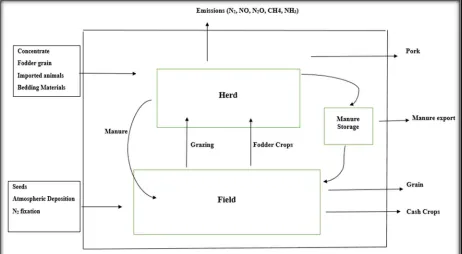
In determining nitrogen efficiency and potential losses in a farming system, nutrient surplus has been widely used as an indicator (Watson et al., 2003; Nielsen and Kristensen, 2005). The efficiency is expressed as how much of the input is converted into desired products (and co-products) with the remaining being excreted and deposited on the soil. The N deposited as ammonium-N (as ammonia and nitrous oxide compounds) will be lost to the atmosphere while organically bound N will be mineralized into ammonium-N and then nitrate-N that will be added into soil mineral N pool (Watson et al., 2003). The nitrate-N can be available for plant uptake, leached and some of it anaerobically denitrified into atmospheric as nitrogen gas (N2) in which
potent greenhouse gas nitrous oxide (N2O) and NO are produced in the process (Williams et al.,
11
Figure 1: Flows accounted in nutrients balance calculation balance at farm level in organic pig settings
[image:19.595.86.548.148.402.2]12
together with lower feed efficiency that might not fulfil pig nutritional demand (Nielsen and Kristensen, 2005).
Apart from manure, atmospheric deposition is another input source which in Denmark is between 10 and 15 kg N/ha/year with the main source being combustion and agriculture from outside Denmark that accounts for 41 and 20% respectively (Hertel et al,. 2013). Danish agricultural activities contribute 36% while combustion that comes within Denmark accounts for only 2% of the total N deposition (Hertel et al., 2013). The N2 fixation for leguminous crops
also contribute to N input and it depends on the composition of the forage for example in grass/clover pasture where clover covers over 25% the N fixation can be as high as 150 kg N/ha/year while around 20 kg N/ha/year can be obtained with low clover content (Daalgard et al,. 2012). The seed for growing pastures and crops as well as straws for bedding materials add another N in the system also. The grown crops as a source of feed for pigs, are the output in the field component of the farm so mostly they are utilized by the pigs in the herd component. It might happen that a farmer may sell some of the crop yield in order to buy some concentrate or other cheaper and available animal feed, even though this is not that common (Nielsen and Kristensen, 2005).
The main farm output is meat (pork) which is calculated as how much N is present in one kilogram of pork to obtain how much N is being exported out of the farm. The estimated amount of N and P in one kilogram of pork is 26 g N/kg and 5.5 g P/kg respectively (Olsson et al, 2014). Also for the case of a new farm, one of the input as seen in figure 1 above is imported live animals. Therefore with inputs and output, the surplus can be computed and the difference is the N that is left in the soil through urine and faeces which can either be taken by plants, retained in soil mineral pool or being lost. All the emissions, either through NO3-N leaching,
13
concerns while negative balance impacts the agronomic status of a system as much N is being taken of the farming system.
In estimating the N balance at field level, the difference between N input and N output which is expressed into percentage (i.e. Field N balance (%) = Field N input/ Field N output* 100%) where the same expression is also used for herd balance (i.e. Herd N balance (%) = Herd N input/ Herd N balance * 100%). The farm N efficiency expresses the percentage of how much of the incurred input have been converted into desired output, pork. N from urine and faeces from the grassland isn’t accounted in the estimating since it remains in the system. The same is true for the home grown feed since is being used by pigs within the farm system. A lot of studies have quantified a relatively lower N efficiency in organic pig farming and the explanation could be due to two reasons. Firstly, the high piglet mortality rate which could be as high as 20 % from birth to weaning and this affect the efficiency since it lowers the N output percentage. Also lower feed efficiency in outdoor settings is another reason as there is high risk of feed waste and also difficulties in controlling excretes on the pasture (Eriksen et al., 2002; Sommer et al., 2001). Lastly the lower yield of home-grown organic feeds as compared to conventional feed means the increased need for importing the more feed which could increase the risk of both feed waste and surpluses.
2.4.2. Nitrate leaching potential
The excess surplus of nutrients in the outdoor pig farming is prone to be lost through leaching which enters underground water that could lead into increased eutrophication and reduced drinking water quality (Watson et al., 2003; Akos and Bilkei, 2004; Quinter and Sundrum, 2006; Edwards et al., 2014). The loss of NO3-, which is highly mobile in water is also associated
with indirect emissions of nitrous oxide (N2O) when NO3- is being anaerobically reduced into
diatomic nitrogen (H2) which is an inert gas (Bolan et al,. 2004). Apart from NO3-, ammonium
(NH4+) and dissolved organic N (DON) may also be lost through leaching even though NH4+ is
less prone for leaching due to its ability to bound with soil particles (Webb et al., 2014). The NO3- leaching potential in outdoor pig farming depends on soil type and condition, subsequent
14
of leaching is more pronounced with higher stocking density which has implication of increasing urine and excretes deposition together with soil disturbances through overgrazing and reduced grass cover (Webb et al,. 2014).
Under Danish outdoor pig farming conditions, the N surplus per hectare as reported by Eriksen et al., (2002) could be as high as between 300 to 600 kg N/ha with NO3-N leaching potential
was estimated to be around 150 kg N/ha. However the distribution of mineral N within the paddock is not always uniform due to hotspot areas as well as excretory behaviour of pigs. Eriksen and Kristensen (2001) found higher inorganic N concentration close to the feeding troughs which was 454 kg N/ha and only 10 metres away from the troughs the mineral N decreased to the half. The same findings were reported by Eriksen (2001) where mineral N were quite higher (500 kg N/ha) around 10 metres from feeding troughs and the concentration were decreasing to 330 and 200 kg N/ha at 22 and 28 metres away from the feeding troughs respectively. A similar two years study done by Webb et al., (2014) in a sandy soil with 12 sows per hectare quantified the lower first-year nitrate-N concentration that was even below EC limit for water quality which is 11.3 mg NO3-N /L. However in two years’ time, the mineral
N levels from a system was estimated to be between 184 to 316 kg N/ha which was in three fold levels compared to the arable controlling measurements. With such high surplus the nitrate leaching potential was between 126 to 192 kg N/ha compared to only 52 kg N/ha in control measurements. The increased N surplus in these two years according to Webb et al (2014) was be explained by lower feed efficiency, increased urine and excretes in the pasture as well as ongoing mineralization.
Williams et al., (2000) also support the argument that the first winter leaching could occur from N residues which were present in the soil from the previous crop. Also there are some contrast findings on higher NO3- close to the feeding area as (Quintern and Sundrum, 2006) reported
15 2.4.3. Ammonia volatilization
According to FAO, (2006), ammonia emission from agriculture accounts for 94% of global anthropogenic NH3 emission with livestock sector having the biggest share of 68% of the
emissions. There is however well research documentation that most of these emissions are being produced from the buildings rather than in outdoor systems (Galloway et al., 2004; Philippe et al., 2011). NH3 is of environmental importance as it contributes directly to acidification and
eutrophication of sensitive ecosystems and indirectly have impact on ozone pollution (Webb et al., 2014). With controlling the N emission (and other pollution sources apart from agriculture) in Europe, EC National Emissions Ceilings Directive and The Gothenburg Protocol which is under UNECE (United Nations Economic Commission for Europe) are among the specific measures that have been taken to regulate emissions among member states (Bolan et al,. 2004, Ivanova-Peneva et al,. 2006). For example, compared to 1980 NH3 emissions, with the
reference being Dutch ammonia legislation, there have been a significant reduction of ammonia emission of 40% in Netherlands (Ivanova-Peneva et al., 2006). With reference to pig production, ammonia is produced primarily from urea (and little also faeces) which is the main form of urine through hydrolysis process under the influence of an enzyme urease (Ivanova-Peneva et al., 2008; Olsson et al., 2014).
There is an established equilibrium between ammonium (in aqueous form) and ammonia (in gaseous form) in the deposited urine and excretes, and the partial pressure difference between the soil surface and atmosphere will influence the extent of NH3 volatilization from the aqueous
form (Philippe et al., 2011). The NH3 production is affected by the temperature, pH, moisture
content, ammonical N concentration, air velocity and time (Sommer et al, 2006: Philippe et al., 2011).
The relationship between solar radiation and increasing ammonia emission has been explained by several studies. Sommer and Hutchings (2001) explained increased atmospheric turbulence due to solar radiation could transport NH3 away from the atmosphere-ammonical N phase. Also
with the radiation, there is an increase of water evaporation which increases the ammonical N concentration that triggers the emission. With turbulence transport due to solar radiation being mainly responsible for NH3 upwardly, the horizontal NH3 loss will highly depend on wind
16
especially in summer periods compared to cold months (Philippe et al,. 2011). Apart from solar radiation, the ammonical N infiltration rate is another important factor that may affect NH3 loss.
High rainfall may dilute the ammonical N concentration which reduces the NH3 emission even
through the emission might increase as the water evaporates (Sommer and Hutchings, 2001). Also increased infiltration rate means some of NH4- will be adsorbed with soil particles, which
technically reduces ammonical N concentration and hence low NH3 emission. The NH4
-sorption capacity will however strongly depend on soil type, soil moisture and pH. With the pH, where by the optimum level for urease is slightly alkaline (7.5- 9), the activity rate is high while decreasing as the pH becoming more acidic (Bolan et al., 2004).
The dissociation of ammonia from ammonium is highly favoured under alkaline conditions and this is the reason that slurry acidification have been used as a means to inhibit ammonia emission in agricultural production. The contact area as well can be another influence on volatilization rate as the bigger the area exposed, the higher the chance of NH3 subjected to
emission factors including wind and temperature (Bolan et al,. 2004). As the pasture-covered area being 80% or more of the total land area in most of outdoor settings (Williams et al., 2000), urine and faeces usually spread in most of the soil within the paddock and this might favour temperature and wind as emitting factors. This is true in organic settings as synthetic amino acids are not allowed which requires an additional supply of dietary protein that ends up with lower N efficiency (Daalgard et al., 1998). The lower N efficiency makes excess N excretion in which about 50% is given out through urine and approximately 20% in the faeces which may increase the loss via ammonia volatilization (Ivanova-Peneva et al,. 2008; Olsson et al,. 2014).
2.4.4. The fate of dissolved Phosphorus in outdoor pig systems
17
include aquaculture, sewage treatment, industries, natural background losses and atmospheric deposition (Bomans et al., 2005).
With pigs being non-ruminant mean they lack the ability of extracting P in the cereals which is in form of phytate (Nielsen and Kristensen, 2005). In non-organic farming there is addition of synthetic phytase, an enzyme responsible for digesting the phytate and make the P being available in pig’s diet (Poulsen et al. 2000). However with EU regulation, where feed additives are not allowed in organic farming, hence there is an increase of dietary P which result into higher P excretion. For instance, in a survey from 63 Danish farms between 1997 and 2003, the P in concentrate for outdoor sows was higher (73 +/- 21 kg P/ha) as compared to indoor pigs (52 +/- 47 Kg P/ha) (Nielsen and Kristensen, 2005). However, even with higher total input in outdoor sows, the P herd efficiency has been as low as 28.3+/-4.6 % which is according to a survey under Danish pig farming (Nielsen and Kristensen, 2005). The low P efficiency in organic sows have also been pointed out by Olsson et al., (2014) where P body retention in pigs range from only 37 to 40 % of the total P input while about 50 % is being passed out through faeces. Also with low P extraction from the feed, about 9% of P in the diet is being excreted via urine (Poulsen et al. 2000). There is high variation for a number of factors including farm specific conditions, seasonality and dietary P used.
In analysis of P dynamics in the soil, water extractable P is important to provide information on P availability for grass stand uptake as well as possible environmental impacts (Svanback et al., 2013). In soil water analysis, water samples are used to analyse the total P and dissolved P and the difference between the two makes the particulate P (Matula, 2011). In general, a typical total P in the soil varies from 0.2 to 2.0 g P/kg of soil even though most of this P is not in a form readily for grass uptake (Bomans et al,. 2005). With particulate P being a dominant form, the dissolved P is in very small quantities (usually less than 0.1% of total P) even though when reaching water it supports rapid algae growth as it is in readily available form (Svanback et al., 2013).
18
where there is little effect of surface runoff and soil erosion (Heathwaite and Dils, 2000), and the same is true to where the landscape terrain is flat (Svanback et al, 2013). In the outdoor grassland, depending on various factors such as management, stocking density, soil characteristics and precipitation, the dissolved P leaching for example can vary from very low levels that are not detected to several mg per litre (Svanback et al., 2013). With the influence of landscape flatness, countries like Sweden and Finland with flat landscapes and where the soil is well drained, the major P loss pathway is usually the subsurface transport through channels created by worms and roots (Svanback et al, 2013). The preferential P loss differs with soil characteristics particularly the soil texture. The soils with high clay content are in most cases dominated by preferential P pathway due to lack of connectivity of flow path and (absence of hydraulic conductivity) (Nimmo, 2012).The risk for dissolved P loss is however high in sandy soil due to its lower adsorption capacity as due to early saturation with soil particles. In addition, some farming practises such as no till and permanent forage stand might help in preserving the soil structure and maintaining the macropore channels responsible for preferential P loss
With an outdoor grassland in free-range pigs, excess nutrient can be associated with increased P loss through both matrix and preferential pathways as the surface run-off and soil erosion are minimal. In a comparative study by Nielsen and Kristensen (2005), P surpluses per hectare in four different farm types were being examined. Compared to conventional dairy, organic dairy and indoor pigs, the outdoor raised pigs produced significantly higher P surpluses 42+/-7.7 kg P/ha and this was three times more compared to indoor pigs (table 1). However, the possible reasons for highest P surpluses for outdoor sows in the above study might be differences in farming systems e.g. stocking rates, ability to control manure and among others these two factors may question the relevancy of comparisons. With harmony rules, manure exported differs with farming system, for example, little or no can be exported from outdoor sows while any excess from 1.4 and 1.7 LU should be exported in indoor pigs and dairy cows respectively (Nielsen and Kristensen, 2005).
19
Table 1. The average surplus levels for N and P in four different types of farms with 95% confidence interval (Nielsen and Kristensen (2005).
2.5. Willow trees in free-range pig production
Even though free range pig farming performs better in relation to animal welfare (Salomon et al., 2007), various improvement possibilities to cope with weather variations and managing nutrient loss have been carried out. Introduction of perennial energy trees into this farming system seems to be a promising and sustainable way of producing renewable energy while improving animal welfare, agricultural diversity and environmental benefits (Horsted et al,. 2012). In Danish free-range organic pig farms, only few farmers have already established willows and poplar trees even though limited studies have been done to come out with concrete findings on prospects and challenges on integrating these crops in the paddocks.
Integrating trees into the pasture, also known as silvopasture or silvopastoral farming, has been done since 1600s with diversification of agricultural income through wood production and improving shelter and fodder for livestock being the focal objectives (Garrett et al,. 2004). Most of the approaches used in these agro-ecosystems are less intensive approaches and with less potential for undesirable consequences to the environment (USDA, 2012). By increasing agricultural diversity, these systems offer a number of ecosystem services including wind control, soil erosion management, improved pollination, source of food materials, decorative floral and biofuel. The presence of woody perennials in the system also offers opportunity to mitigate the impacts of global warming through sequestration of atmospheric carbon dioxide (Montagnini and Nair 2004).
20
transpiration as well as extensive and diffuse root system of willows enables the trees to have wide range of tolerance to water logging conditions (Volka et al,. 2006) as well as being potential for other applications including reduction of nutrient loss to environment (Mortensen et al,. 1998). In a free range pig system combined with willow crops, the pigs should be introduced in paddocks with willow when the trees are well established so as to avoid the aggressive rooting behaviour the pigs may execute on the willows (Horsted et al., 2012). This is because with the rooting and manipulating behaviour of pigs, the young willow trees might be destroyed. Garrett et al., (2004) reported browsing of terminal shoots by the animals might result into deformity or disrupt tree growth and this might threat sustainability of integrating trees in grazing areas. However, whenever there was a constant supply of nutritional fodder in grazing area, Garrett et al., (2004) reported that animals were less keen to browse the tree shoots.
In relation to animal welfare, the well-established trees provide shelter against wind, and the microclimate created by trees is important for pigs particularly for temperature regulation during hot days (Horsted et al., 2012). A study by Sallvik and Walberg (1984) to investigate effect of wind velocity and temperature on outdoor pigs found pigs prefer areas with lower velocity regardless of the temperature. The same study reported frequent cases of shelter seeking when the temperature was 5o C which was below their lower critical temperature. Shade
has been reported by Garrett et al. (2004) to improve animal performance, with primary emphasis placed upon heat stress amelioration. In addition to the behavioural shelter seeking, previous related study by Horsted et al. (2012) showed that in presence of willow trees in the paddocks, pigs excrete most of the time close to the willows compared to other areas. Also willow trees away from the feed and water troughs were found to experience lower excretory behaviour compared to willows close to the troughs. In free range pigs without energy crops, studies reported areas close to huts and feedes having higher leaching potential compared to the rest of the paddock. Stauffer et al., (1999) found 20 times higher leaching potential close to feeding and pigs hut. The higher leaching potential close to feeding troughs and huts have also been reported by Eriksen and Kristensen, (2001) and Salomon et al., (2007).
21
phytoremediation (Ebbs et al,. 2003). Also willows have shown some preliminary prospect on regulating ground water and this could be explained by its perenniality, fast above and below biomass growth, high transpiration rate and tolerance in wet conditions (Volka et al., 2006). Nair and Graetz, (2004) reported higher nutrient uptake by the soil and vegetation in the woody perennials ecosystem with grazing animals whereby the loss of nutrients into streams channels were minimised. The potential nitrate leaching will however depend on one or combinations of factors which include soil texture, water percolation and moisture content of the soil.
22 Conclusions on Literature review
• With EU regulation and country specific production standards, free-range organic pig farming have been operated on a basis that conform with animal welfare, product quality and environmental protection. Outdoor pigs are able to express their natural behaviour and the restricted use of antibiotics, hormones and pesticides have been among major reasons for the growth of organic pig farming globally. A good example of country specific standards is by Danish Friland A/S that works together with Danish Animal Welfare Society where a farmer is required to oblige the Code of Practise in order for them to sell their pork to this largest exporting meat company in Denmark. While EU regulations apply for all European States, the country-specific standards might be different due to some factors including production conditions and climate variability.
• Being faced with some production challenges particularly for high piglet mortality rate, some practises in outdoor organic farming could put into emphasis and/or introduced. Farrowing hut, being the primary structure in reducing crushing, protecting piglets and principal modifier of the environment, it has to be provided with sufficient amount of straws without forgetting sufficient grass on the paddock. With regard to higher mortality rates in outdoor settings, close supervision prior and after farrowing should be improved. The above proposed improvement strategies should put consideration on improvement of farm breeding goals i.e. careful genetic selection of pigs in order to improve piglet survival rates. The maternal genetic traits including maternal behaviour and lactation output might have positive influence in survival rate of piglets. However in most cases pigs are being bred for increasing growth rates and not improving maternal traits for piglet survival.
• Usually, with free range pigs there is an inevitable risk of excess nutrient loading from excretions in outdoor grassland. The relatively larger land resources need for home-grown feed, lower yield and poor feed conversion by pigs compared to conventional farms may question the sustainability of organic pig production. Therefore some practises including frequent rotation of pigs into new paddocks, having proper paddock design, improved measures on pig’s diet and integration of the perennial energy crops into paddocks are likely to reduce the excess nutrients losses.
23
ability, deep rooting system and high nutrient demand, studies have reported the potential of these trees to act as buffers for ground water pollution while at the same time produce bioenergy. With the leaching especially with sandy soil which in Denmark being as high as 70 Kg N/ha, these trees have been reported to have a potential to reduce NO3- leaching between
24 CHAPTER III: MATERIALS AND METHODS
3.1. Site description and experiment layout
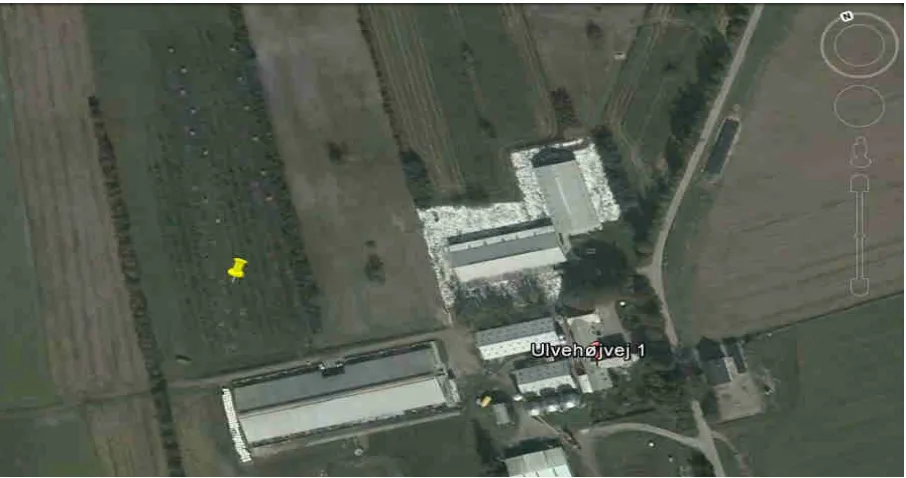
[image:32.595.89.542.418.657.2]The experimental part of this master project was carried out in a free-range organic pig farm at Hovborgvej Brorup, Region of Southern Denmark (Ulvehøjvej 1, 6650 Brørup) located at 55° 34' 35'' N, 8° 59' 30'' E. This farm is among the two biggest organic pig farms in Denmark with established energy crops in the pig paddocks (AGFORWARD, 2014). The lactating sows in this particular farm which are approximately 180 are kept in individual paddocks for all year long. The weaning age is 8 weeks where the piglets are moved in the indoor stables with access to outdoor run until they reach slaughter weight. All the weaned piglets are finished on the farm (AGFOWARD, 2014). The willow together with poplar trees have been established back in 2009 in a 1 hectare area of grassland that is used for lactating sows with the willow not have been harvested at least by the time this study was carried out. In order to investigate the nitrate leaching which in Denmark normally occurs between September and March (Blicher-Mathiesen et al., 2014), ceramic suction cups were installed in autumn of 2014 (late October) in the paddocks where the pigs had been removed 4 weeks before installation started.
Figure 2: The Google Earth map showing the Holm Brian’s farm where experiment have been
25
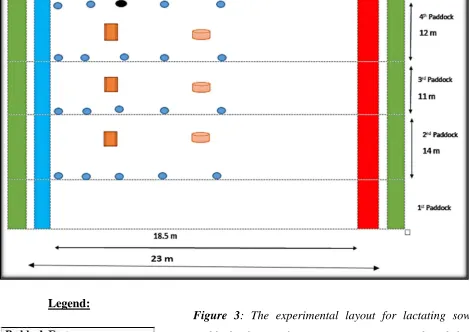
The individual paddock’s length dimension with only grazing area is 18.5 m while with willow inclusion at both ends of the paddock makes it 23 m length and one paddock from another was demarcated by an electric fence. Unlike the constant length of the paddock, there is however small variation in paddock width as seen in figure 3 where the average width value for the paddocks used in this experiment was 12.3 m. Therefore the paddock size for an individual sow is 282, 9 m2 (12.3 m x 23 m) which makes the stoking density for the lactating sows to be 35 sows per hectare. There were three willow clone types that were included in the paddocks used in this experiment. Tordis clone in particular was included in both sides of the paddock while there was also Inger and Tora clones as seen in figure 3. The electric fence that marks the end of the paddock was between the two willows rows located on each side of the paddock. However, the suction cups were installed in the paddock side with a row of willow clone which was Inger.
26 Legend:
Figure 3: The experimental layout for lactating sow
paddocks showing four measurement rows, each with five
suction cups (except in row 1 which had a defect suction
cup) established against the two rows of willow trees in
each side. The grazing area in the paddock was having
insignificant grass cover during autumn and winter. The
hut is located at nearly 4.5 m while the feeders are between
6.5 and 9.5 m as seen also in figure 12. The first paddock
was not used in the experiment while paddock 2 to 4 are
where suctions cups were installed and soil samples were
taken. Note that 18.5 m is the distance covered by grazing
area while with willow the length becomes 23 m. Also a
paddock ends in the middle of the two willow rows in each
[image:34.595.85.554.94.426.2]27 3.2. Soil Sampling
At 1.5 m on each side of suction cup installed, the soil drill was used to take soil samples at three depth levels of 0-25 cm, 25 - 50 cm and 50 - 100 cm from the soil surface. The samples were used to characterize both physical and chemical soil properties including soil texture, total Carbon, Olsen P test for Phosphorus, mineral-N distribution (NO3- and NH4+) and soil pH.
Therefore for all the soil sampling units and at all depth levels there were a total of 60 samples which were deep frozen until the analyses were made. The first analysis with soil was done to quantify the Nitrate-N, ammonium-N and Olsen P at each distance and soil depths with the remained soil samples being kept for further analysis on texture and pH.
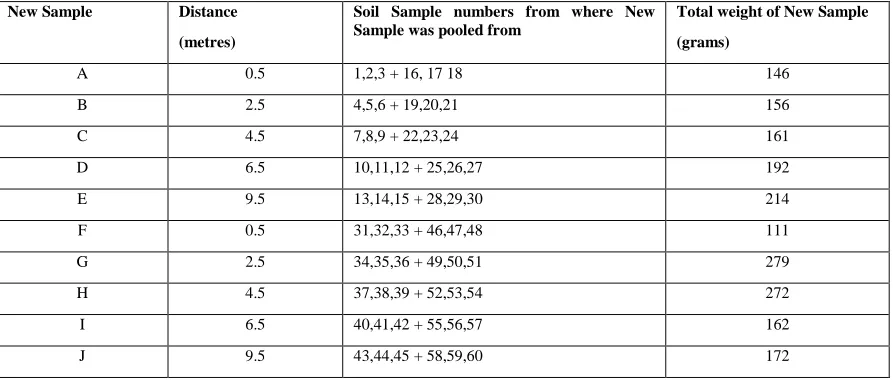
[image:35.595.87.534.532.722.2]With the deficiency of enough soil to carry out soil texture and pH analysis at each soil depth and distance, the decision was made to pool the soils of similar distances from the willow (a total from 0 to 100 cm). By doing so it was therefore not possible to investigate the variation of soil texture and pH with depth, and the analysis was only focused on a distance variation perspective. The soil texture analysis alone needed 100 g, while for total Carbon about 10 to 15 g of soil was required. As shown in table 2 below, the new sample A for instance, was a result of pooled original samples which were sample 1, 2 and 3 together with samples 16, 17 and 18. All of the pooled samples came from the same distance of 0.5 m from willow and the same was true for the other distances. As a result of pooling similar distances, the number of replication for new samples became two unlike the original samples which had four replications.
Table 2: The pooled new soil samples at similar distances from the willow for soil texture and soil content analysis
New Sample Distance
(metres)
Soil Sample numbers from where New Sample was pooled from
Total weight of New Sample
(grams)
A 0.5 1,2,3 + 16, 17 18 146
B 2.5 4,5,6 + 19,20,21 156
C 4.5 7,8,9 + 22,23,24 161
D 6.5 10,11,12 + 25,26,27 192
E 9.5 13,14,15 + 28,29,30 214
F 0.5 31,32,33 + 46,47,48 111
G 2.5 34,35,36 + 49,50,51 279
H 4.5 37,38,39 + 52,53,54 272
I 6.5 40,41,42 + 55,56,57 162
28
3.3. Laboratory mineral N (Nitrate-N and Ammonium-N) analysis
For mineral N analysis (NO3- and NH4+), samples collected from the field were being kept in
plastic bottles at the freezer with temperature -200 C in order to avoid volatilization of ammonium which is triggered as the temperature increases. One day before the analysis started, the samples were taken off the freezer into a room temperature in order to defreeze them. The next process was weighing them and then mix with Potassium Chloride (1 M KCl) before being taken to a shaker in order for the solution and soil particles to thoroughly mix. When shake well, the soil samples were filled in test tubes ready for centrifugation that took place for approximately 5 minutes at 3000 rpm (rounds per minute). With the test tubes, the samples were taken for analysing the quantities of Ammonium-N and Nitrate-N using Spectrophotometry method as used by Best (1976), whereby autoanalyser was connected to the sampler and spectrophotometer by using the tubes (see appendix 4). In Autoanalyser machine there were separate tubes for both nitrate and ammonium that pass through the pre-mounted analyser membrane. Hydrazin was used to convert nitrate into nitrite under Copper catalyst (CuSO42-). The nitrite was then reacted with sulphur amide and ethylenediamine (C2H4(NH2)2)
to an azo dye (which can be range from brown-orange-pink colour depending on the NO3-
concentration) while the actual concentration was determined using spectrophotometer at 520 nm. For analysis of ammonium-N concentration, the ammonium reacts with salicylate (C7H6O3)
and sodium dichloroisocyanurate under the catalyst Sodium nitroprusside Na2[Fe(CN)5NO], to
form a pale green or emerald solution before being determined by the spectrophotometer at 660 nm. The separate concentration readings for nitrate and ammonium from the spectrophotometer were eventually being displayed in the connected computer.
3.4. Soil water sampling
29
the spectrophotometer with glass cuvette. The cuvette has two opposite sides which are opaque and transparent with the later sides being able to transmit Ultra Violet light (UV). The soil water samples were kept in the refrigerator at 4 oC before the analysis began. In laboratory analysis, the wavelength of 220 nm was applied to obtain the nitrate levels in the sample. However with presence of dissolved organic matter in the sample which could also be absorbed at 220 nm, the UV of 275 nm was used where only nitrate cannot be absorbed and the difference between the two wavelengths gives the approximate nitrate levels in the soil water. In order to avoid or minimize the interference effect of some suspended materials such as hydroxide and carbonates, simple filtration together with additional of hydrochloric acid was used
3.5. Laboratory Olsen P test
The method used for Olsen P determination was the standard method developed by Olsen et al., (1954). The 10 g of dry soil was weighed into 50 ml test tubes and filled with 20 ml NaHCO3
aqueous solution of pH 8.5. The temperature of the solution was recorded and adjusted to the range of 20 o C. The NaHCO3 stock solution was prepared by dissolving eighty four grams (84
g) of NaHCO3 crystals in deionized water in a 2L volumetric flask. 10 ml of polyacrylamide
was added to the solution ad stirred thoroughly. The pH was adjusted to 8.5 with 2M NaOH and the solution filled with deionized water to 2 litre on the volumetric flask. Each dry soil in test tube was then filled with 20 ml aqueous NaHCO3 solution. After samples were shaken in a rotator for 30 minutes and centrifuged at 3000 rpm for 5 minutes. One (1 ml) millilitre of supernatant was taken with vacuum pipette and diluted in 9 ml deionized water for staining. 3.6. Statistical Analysis
Before sorting the data and conducted statistical analysis, both soil mineral N (NH4-N and NO3
-N) and P concentrations were converted from mg/Kg TS into Kg/ha as seen in appendix 6.
3.6.1. Mineral Nitrogen and Olsen P distributions
30
were kept. Whenever there was significant difference (when the F-test (P≤0.05) was significant) the Tukey test was used to point out which pair of concentration means differed significantly. The model for this two-way ANOVA factorial design is as elaborated below. Yijk = μ +αi + βj + (αβ)ij +eijk whereby;
• Yijk - the observed concentration at depth i and distance j • μ mean of the concentrations
• αi - effect of depth i • βj - effect due to distance j
• (αβ)ij - interaction of depth i and distance j • eijk - error term. Also i =1, 2,3 while j,1,2,3,4,5
[image:38.595.139.457.470.619.2]The (3x5) factorial design can be presented in a simple matrix table 3 below where by A, B and C are concentrations that might or might not have interactive effects of both depth and distance e.g. A3 is the concentration that is determined by the interactive effect of distance 4.5 m and depth 0-25 cm.
Table 3: The 3 x 5 factorial matrix to investigate the distribution of Mineral-N and Olsen P
at different soil depths and distance from the willow
Depths
Distances (m) 0-25 cm 25-50 cm 50-100 cm
0.5 A1 B1 C1
2.5 A2 B2 C2
4.5 A3 B3 C3
6.5 A4 B4 C4
31
3.6.2. The analysis of Nitrate-N in soil water
A factorial design with two way Analysis of Variance (ANOVA) was used with the main effect with this analysis being distance from willow and time of sampling. The effect of time is due to the fact that the soil water sampling has been carried out from autumn (early November) to late winter (early March). The soil water was collected 9 times after every two weeks between the whole sampling periods mentioned. This pattern was replicated with four measurement rows. Unlike nutrient distribution where soil were taken at different depths, the effect of depth in nitrate leaching is not considered since all the suction cups were installed at an average depth of 1.45 m from the soil surface. The ANOVA was used to test whether there was an interaction of time of sampling and distance from willow on the nitrate leaching potential or whether the nitrate concentrations were affected by time of sampling or the distance from willow trees. Tukey test was conducted when the F-test (P≤0.05) was significant. The statistical model for this analysis is as follows;
Yijk = μ +αi + βj + (αβ)ij +eijk where by
• Yijk - the observed Nitrate concentration at sampling time i and distance j • μ mean of the concentrations
• αi - effect of sampling time i • βj - effect due to distance j
• (αβ)ij - interaction of sampling time i and distance j • eijk - error term Also i =1, 2, 3 while j,1,2,3,4,5
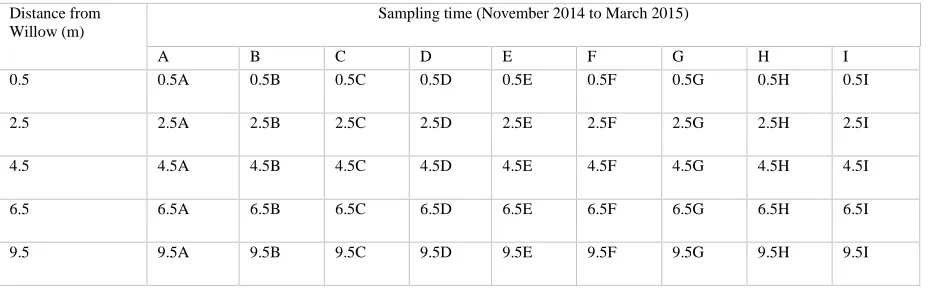
The (5x9) factorial design can be presented in a simple matrix table as follows where by letter A - I represent the first to the last soil water sampling period at various distances.
32
Table 4: The 5 x 9 factorial matrix for investigating the NO3-N concentration in soil water
at different distances from the willow from November from 2014 to March 2015
Distance from Willow (m)
Sampling time (November 2014 to March 2015)
A B C D E F G H I
0.5 0.5A 0.5B 0.5C 0.5D 0.5E 0.5F 0.5G 0.5H 0.5I
2.5 2.5A 2.5B 2.5C 2.5D 2.5E 2.5F 2.5G 2.5H 2.5I
4.5 4.5A 4.5B 4.5C 4.5D 4.5E 4.5F 4.5G 4.5H 4.5I
6.5 6.5A 6.5B 6.5C 6.5D 6.5E 6.5F 6.5G 6.5H 6.5I
33 CHAPTER IV: RESULTS
4.1. Nitrate-N distribution at various soils depths and distances from willow
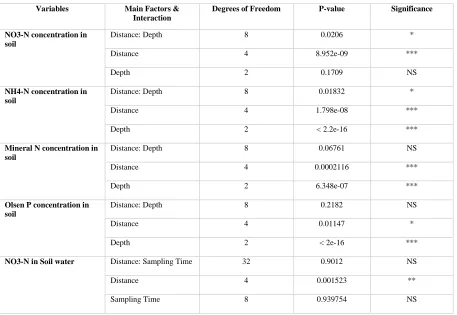
In relation to NO3-N distribution in the lactating sow paddocks, statistical analysis found a
significant interaction effect of the depth and distance (DF=8, p<0.05). There was also a strong significant difference in NO3-N distribution due to distance at various points away from the
willow trees (DF = 4, p<0.001) while analysis found no main effect due depth variations (DF=2, p>0.05) as seen in Figure 4 below.
Figure 4. Nitrate-N distribution at different soil depths and distance from the willow
The NO3-N distribution tended to increase from 0.5 m before reached peak levels at 4.5 m and
then sharply decreased to the last distance point. At distance 4.5 m from the willow, NO3-N
concentration was significantly higher at all the soil depths compared to other distance points (Figure 4). When considering the total average NO3-N through the whole soil column (0 - 100
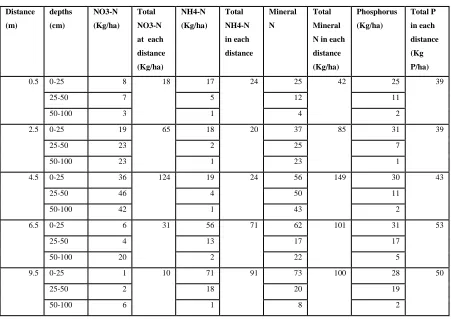
cm), the NO3-N at 4.5 m was 124 Kg N/ha which was about 2, 4, 6 and 11 times more of the
total average at 2.5, 6.5, 0.5 and 9.5 m distances respectively. In the lower soil profile (50 - 100 0
5 10 15 20 25 30 35 40 45 50
0,5 2,5 4,5 6,5
N
O
3
-N
d
is
tr
ib
u
ti
o
n
(
K
g
N
/h
a
)
Distances from willow (m)
0-25 cm
25-50 cm
34
cm) that is susceptible for leaching, the NO3-N at 4.5 m was as high as 42 Kg/ha with the closest
levels came from 2.5 and 6.5 meters with 23 and 20 Kg N/ha respectively (table 5 below). With NO3-N variation with depths, the major significant difference in depth levels was at 6.5 m
[image:42.595.90.541.244.563.2]distance where the lower soil level (50-100 cm) had 20 Kg N/ha which was more than three times compared to topsoil.
Table 5. The average and total Mineral Nitrogen and Phosphorus (Kg/ha) at each soil depth
and distance from the willow trees
Distance (m) depths (cm) NO3-N (Kg/ha) Total NO3-N
at each
distance (Kg/ha) NH4-N (Kg/ha) Total NH4-N in each distance Mineral N Total Mineral
N in each
distance (Kg/ha) Phosphorus (Kg/ha) Total P in each distance (Kg P/ha)
0.5 0-25 8 18 17 24 25 42 25 39
25-50 7 5 12 11
50-100 3 1 4 2
2.5 0-25 19 65 18 20 37 85 31 39
25-50 23 2 25 7
50-100 23 1 23 1
4.5 0-25 36 124 19 24 56 149 30 43
25-50 46 4 50 11
50-100 42 1 43 2
6.5 0-25 6 31 56 71 62 101 31 53
25-50 4 13 17 17
50-100 20 2 22 5
9.5 0-25 1 10 71 91 73 100 28 50
25-50 2 18 20 19
50-100 6 1 8 2
4.2. Ammonium-N distribution with soil depths and distances variations
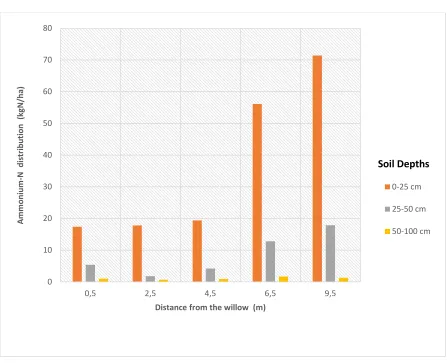
The statistical analysis also showed the interaction effect of depth and distance on distribution of NH4-N in the lactating sow paddocks (DF= 8, p< 0.05). There were also a strong significant
influence of both distance (DF=4, p<0.001) and depth (DF=2, p<0.001) on the distribution of NH4-N. The NH4-N from willow to 4.5 m was similar at all the three soil depths even though
large proportion of NH4-N was found in top soil. NH4-N was however significantly higher at
35
compared to the NH4-N in the first 4.5 m from the willow trees (Figure 5). In all the distance
points from willow, the top soil (0 - 25 cm) contributed between 73 to 87% of the total NH4-N
[image:43.595.85.532.196.559.2]in the whole soil profile. The distances 6.5 and 9.5 m are where the feeders were located in the summer and early autumn before the experiment commence.
Figure 5. Ammonium-N distribution at different soil depths and distance from the willow
4.3. Total mineral-N distribution at different soil depths and distance from the willow
When considering the total average of the four measurement rows for mineral N, the statistical analysis did not find the interactive effect of the two main factors (depth and distance) on Nmin
distribution (df=8, p>0.05). There was however strong significance due to the main factors depth variations (DF=2, p<0.001) and distance (DF=4, p<0.001), see figure 6 below.
0 10 20 30 40 50 60 70 80
0,5 2,5 4,5 6,5 9,5
A
m
m
o
n
iu
m
-N
d
is
tr
ib
u
ti
o
n
(kg
N
/h
a
)
Distance from the willow (m)
0-25 cm
25-50 cm