Po
ve
rty
EVALUATION OF THE WORKING
FOR FAMILIES FUND (2004-2008)
Professor Ronald McQuaid, Sue Bond, Vanesa Fuertes
and the Working for Families Evaluation Team
Employment Research Institute
Napier University
It should be noted that since this research was commissioned a new Scottish government has been formed, which means that the report reflects commitments and strategic
objectives conceived under the previous administration. The policies, strategies, objectives and commitments referred to in this report should not therefore be treated as
current Government policy.
© Crown Copyright 2009
Limited extracts from the text may be produced provided the source is acknowledged. For more extensive reproduction, please write to
the Chief Researcher at Office of Chief Researcher, 4th Floor West Rear, St Andrew's House, Edinburgh EH1 3DG
ACKNOWLEDGEMENTS
CONTENTS
EXECUTIVE SUMMARY 1
CHAPTER ONE INTRODUCTION AND BACKGROUND 21
1.1 What is the Working for Families Fund? 21
1.2 Structure of the Report and Methodology 24
CHAPTER TWO ABOUT WFF CLIENTS 25
2.0 Introduction 25
2.1 WFF Clients 25
2.1.1 Numbers of clients 25
2.1.2 Who referred clients to WFF? 28
2.2 Who Were Working for Families Clients? 29
2.2.1 Personal characteristics 29
2.2.2 Household circumstances 30
2.2.3 Qualifications, economic activity 32
2.2.4 SIMD 33
2.2.5 Clients in employment 34
2.2.6 Clients not in employment 35
2.2.7 Client aims 35
2.2.8 Barriers faced by clients 36
2.2.9. Barriers by aims 38
2.2.10 Overall analysis of client characteristics 41
2.3 Were They the Right Target Groups and did WFF Reach Them? 43
2.4 The Overall Approach to Support Given by WFF 44
2.5 Summary 46
CHAPTER THREE CLIENTS’ OUTCOMES 47
3. Introduction 47
3.1 General Client Outcomes 48
3.2 Clients who achieved “Hard” Outcomes/Transitions 49
3.2.1 Measurement of ‘Hard’ Outcomes/Transitions 49 3.2.2 Type of ‘Hard’ Outcomes/transitions 50 3.2.3 Economic activity by ‘Hard’ Outcome/Transition 50 3.2.4 Further details of clients moving into full-time or part-time employment 52
3.3 Who Achieved ‘Hard’ Outcomes? 53
3.3.1 Descriptive analysis of clients who achieved a ‘Hard’ Outcome 53 3.3.2 Regression analysis of clients who achieved a ‘Hard’ Outcome 57 3.3.3 Transitions into full-time employment 61 3.3.4 Transitions into part-time employment 61 3.3.5 Transitions into training or education 61 3.3.6 Sustaining previous employment or education 61 3.3.7 Major cities (Glasgow, Edinburgh, Aberdeen, Dundee) 62 3.3.8 Non-major city local authorities 62
3.4 Clients who achieved ‘Soft’ Outcomes/ Intermediate Activities 63
3.4.1 Measurement of intermediate activities 63 3.4.2 Type and numbers of ‘soft’ intermediate activities 63 3.4.3 ‘Soft’ intermediate activities outcomes 64 3.4.4 Descriptive analysis of characteristics of clients who achieved intermediate activities outcomes 64
3.5 Clients who improved their Employability: Distance Travelled – Employability Measures 65
3.5.1 Measurement of employability measures 65 3.5.2 Descriptive analysis of characteristics of clients who improved employability 66
3.6 Clients Who Did Not Achieve an Outcome 68
3.6.1 Descriptive analysis of characteristics of clients who exited with no outcome 69
3.7 Outcomes by Projects 70
3.7.1 Comparisons between WFF projects 70
3.8 Sustainability of Transitions 75
3.8.2 Sustainability of latest major Transition at six month follow-up 77 3.8.3 Sustainability of latest major Transition at twelve month follow-up 78
3.8.4 Technical background 78
3.8.5 Characteristics of clients not sustaining an outcome at three months 79 3.8.6 Reasons why a positive Transition was not sustained 80
3.9 Summary 81
CHAPTER FOUR COST-BENEFIT ANALYSIS 82
4. Introduction 82
4.1 Key Figures on Cost of WFF 82
4.2 Costs 83
4.2.1 Costs per client 83
4.2.2 Cost per ‘Hard’ Outcome / Transition 84 4.2.3 Cost per client who experienced a ‘Hard’ Outcome / Transition 85
4.3 Comparator Studies – Control Groups 87
4.4 Public Expenditure 91
4.5 Summary 92
CHAPTER FIVE IMPLEMENTATION AND OTHER ISSUES 93
5. Introduction 93
5.1 Summary of Key Implementation Issues 93
5.1.1 Management through development/economic development departments 93
5.1.2 Partnership working 93
5.1.3 Key worker programmes 94
5.1.4 Other types of support projects 94
5.1.5 Flexibility and learning 95
5.1.6 Views of local authorities on what worked 96
5.2 Rural-Urban Issues 97
5.2.1 Characteristics of clients 98
5.2.2 Client outcomes 99
5.2.3 Referrals 99
5.3 Use of Childcare 100
5.3.1 Childcare questionnaire 100
5.3.2 Comments on childcare services 102
5.3.3 Overall comments about childcare and WFF 102
5.4 Summary 102
CHAPTER SIX CONCLUSION AND RECOMMENDATIONS 104
6.1 The Overall Impacts of the Funding 104
6.2 Were They the Right Target Groups and did WFF Reach Them? 105
6.3 Cost-Benefit Analysis 106
6.4 Implementation 107
6.5 Recommendations 108
EXECUTIVE SUMMARY
1. INTRODUCTION AND BACKGROUND
This report summarises the Final Evaluation Report of the Working for Families Fund (WFF) programme from 2004-08. It was carried out by the Employment Research Institute, Napier University, Edinburgh, for the Scottish Government over this period. Over the four years the budget for WFF was £50 million, a total of 25,508 clients were registered, 53% of all clients (13,594) achieved ‗hard‘ outcomes, such as employment, and a further 13% (3,283) achieved other significant outcomes.
WFF was established to invest in new initiatives to improve the employability of parents who have barriers to participating in the labour market, specifically to help them move towards, into, or continue in employment, education or training. It was a voluntary scheme on the part of clients. It supported the parents through helping them find sustainable childcare solutions and through providing or accessing other relevant employability-related support and services. In rural areas, support also combated barriers created by poor transport, limited services and the lack of a critical mass of clients. The programme was administered by 20 local authorities (LAs), operating through 226 locally based public, private and third sector projects1.
WFF contributed to the Scottish Government‘s commitment to: tackling poverty and disadvantage, by improving rates of employment and economic activity and; eradicating child poverty within a generation. In April 2008 WFF funding was streamlined into the Fairer Scotland Fund (FSF), which replaced WFF and six previous funds as part of the Government‘s budget concordat with local government.
In Phase 1 (2004-06) of the WFF programme, ten local authorities were awarded funding for two years. They covered 37% of the total Scottish population. The budget for Phase 1 was £10 million pa (£20m in total) although actual expenditure was under £13 million due to the considerable start up time for such a programme. In 2005 a further £15 million pa (£30m in total for two years) was announced for Phase 2 (2006-08). This was allocated to 20 local authorities (including the ten Phase 1 local authorities) from the 1st April 2006 which covered 79% of Scotland's population. So the overall WFF budget was £50m. The actual spend was £46 million.
Further details about this report can be found in the WFF Evaluation Final Report (2004-08) and other reports available at: http://www2.napier.ac.uk/WFFE/ and
http://www.scotland.gov.uk/Topics/People/Social-Inclusion/17414/WFF/Intro
This Executive Summary mirrors the Main Report and has six main sections: Section 1 Introduction;
Section 2 Description of WFF Clients; Section 3 Client Outcomes;
Section 4 Cost-Benefit Analysis;
Section 5 Implementation and Other Issues;
1
2 Section 6 Conclusions and Recommendations.
2. ABOUT WFF CLIENTS
Numbers of clients
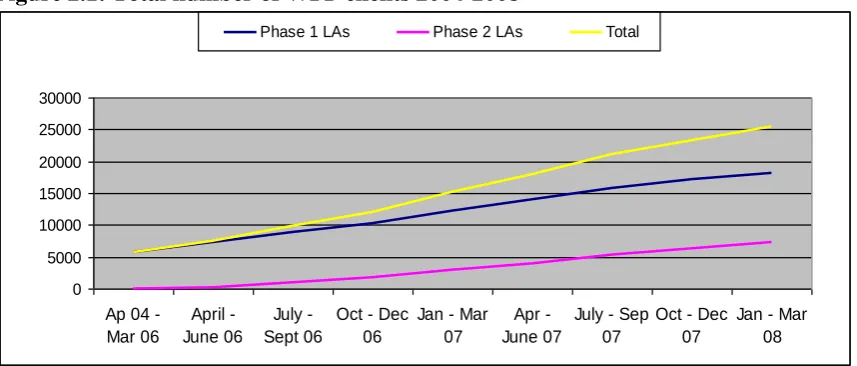
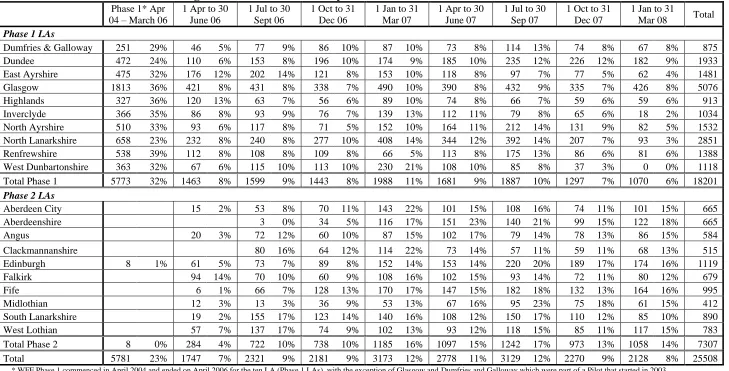
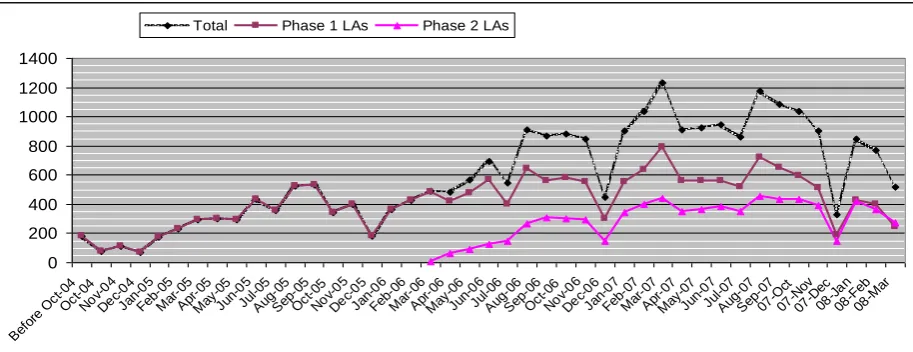
The term WFF ‗client‘ is used to denote a disadvantaged parent who registered and participated in WFF. Overall, WFF had a significant initial impact in 2004-2008 in terms of recruiting 25,508 clients in the twenty local authorities. Of these, 18,201 were registered with the ten Phase 1 Local Authorities and 7,307 with the ten Phase 2 local authorities. The numbers of new clients reduced during the final six months, mainly due to uncertainty as to the continuation of funding.
Figure 1: Total Number of WFF Clients Registered April 2004 to 31 March 2008
0 5000 10000 15000 20000 25000 30000
Ap 04 -Mar 06
April -June 06
July -Sept 06
Oct - Dec 06
Jan - Mar 07
Apr -June 07
July - Sep 07
Oct - Dec 07
Jan - Mar 08
Phase 1 LAs Phase 2 LAs Total
Who Referred Clients to WFF?
Participation in WFF by clients was voluntary, so local partnership working was extremely important to the recruitment of clients. Referrals to WFF were generated from a wide range of agencies. In particular, 26% of referrals came from Job Centre Plus, indicating good joint working and also the presence of potential gaps in the availability of specific support for many of the WFF client group. Self-referrals (25%) were also important indicating effective local marketing and possibly a high level of self-motivation among many clients as they independently sought WFF support. As WFF developed, ‗word-of-mouth‘ became more prominent in recruitment as clients told their family, friends and neighbours about the service.
Who are WFF clients, were they the right target groups and did WFF reach them?
The WFF programme focused on disadvantaged parents, specifically:
lone parents (who were pre-New Deal);
parents on low incomes;
disadvantaged parents with other stresses in the household that made it difficult to access and sustain employment, education or training, including disability, mental health and substance abuse problems.
As such, WFF has been successful in reaching a wide variety of clients, in different circumstances and with different individual aims and resources. Some key characteristics of the client groups were:
Lone parents -
The majority of WFF clients were female (89%) and lone parents (71%).
Low incomes -
65% of clients lived in households where nobody was in paid employment, i.e. workless households.
Many clients lived on a very low household income with 66% either claiming Income Support or having a partner/spouse claiming Income Support.
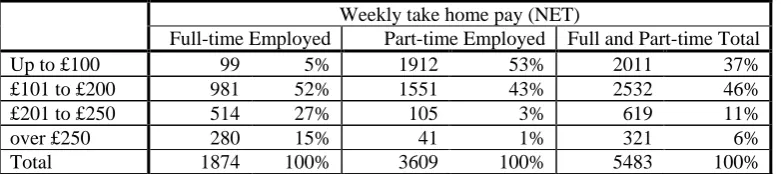
The income of those in employment was low with 83% earning £200 or less per week take home pay and 37% of clients earning £100 or less per week.
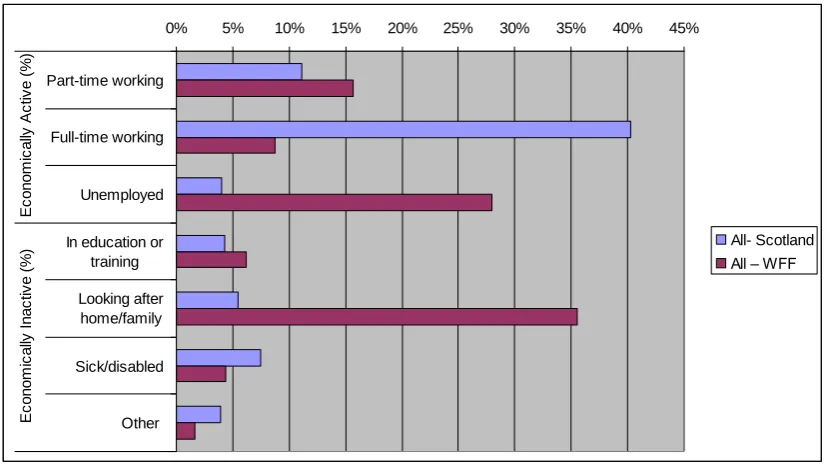
Clients‘ economic activity, when they first registered with WFF, varied with 36% of clients ‗at home, caring for children‘, 24% in employment (either full-time or part-time), 28% registered unemployed, and 6% in training or education.
Parents with other stresses in the household -
The children of clients were relatively young with 63% having one or more children aged under 5 years living in the household, compared to just 26% of households with children in Scotland, and 93% having a child under 12 years. Neither of these was, at the time, prime targets for New Deal for Lone parents.
WFF clients had low levels of qualifications compared to the Scottish average with 69% of clients having qualifications equivalent to SVQ Level 2 or lower and 34% having either no qualifications or qualifications below SVQ Level 1 (compared to 15% with no or below SVQ level 1 qualifications in Scotland).
Of the 76% not currently in paid employment, at the time of their registration with WFF, most had been unemployed for a considerable time, with 54% not having worked for over two years compared to the Scottish average of 34%.
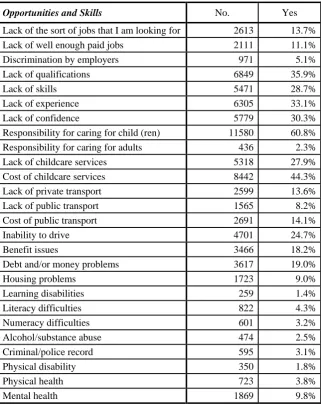
A significant proportion (43% of those who received sustained support from WFF) indicated at least one additional stress, e.g. mental or physical health problems, debt or money issues, housing problems, criminal record, etc.
4
allowed disadvantaged parents in most local authorities to be supported regardless of where they live.
‗Active‘ WFF clients represent around 20% of all people with children on Income Support or Job Seekers Allowance (JSA) in Scotland – a sizable contribution. However, the evidence suggests that while nearly all WFF clients were relatively disadvantaged compared to Scotland as a whole, within the spectrum of the WFF client group those with the poorest qualifications, lowest employability skills and greatest number of barriers were less likely to move into employment. Such particularly disadvantaged families require long-term support.
What support was given by WFF?
The WFF programme provided client-focused support tailored to each individual‘s needs. WFF had its origins in a small pilot in Glasgow and Dumfries and Galloway in 2003-04, which explored ways of addressing childcare barriers to employment. A key finding of the pilot was that a programme of this sort should provide parents with one-to-one mentoring and support to address the range of barriers clients experienced, as well as addressing childcare needs. WFF initially focused on helping to remove childcare barriers to employment, but early on, in response to the needs of parents, developed a holistic approach in order to deliver flexible employability-related services (e.g. confidence building, training etc.)2.
The main support provided by WFF was based around ‗Key Workers‘ who supported clients wishing to move into work, education or training by:
helping them to improve their employability; and
addressing childcare and other barriers standing in their way.
Clients were helped to improve their employability by establishing goals and producing a personal action plan that linked them to the various types of employability support available locally. Support included: personal development courses to boost confidence and self-esteem; education and training to improve skills and qualifications, including help in obtaining driving licences in rural areas; careers advice; money advice; and work experience – all helping the client to progress towards or into work. A second key element of WFF support was helping clients to identify and access the childcare they needed at each stage. Often this took the form of information and advice, linking them to an existing childcare place, but it also might have involved setting up additional, more flexible support, or providing financial assistance (e.g. paying one-off, ‗upfront‘ nursery Registration fees, paying for childcare while a parent attended education or training, or for a short time until tax credits came through).
Support from WFF centred around three key stages:
Pre-employment - supporting parents to improve their basic employability skills, confidence and attitudes;
At Transition points - helping parents to make a Transition into employment, education, substantial training or volunteering (of at least 16 hours per week);
Post-employment – providing support to sustain employment, for instance through a period of crisis (e.g. breakdown of childcare), and/or to improve their existing
2
position (to move between jobs, to a more senior job, etc.). This was offered both to parents who engaged with WFF at the pre-employment stage and had successfully moved into employment, and to parents who were already in work when they first approached WFF.
WFF was designed to complement, not duplicate or replace, existing services and to work with local childcare partnerships and employment and employability focused partnerships to fill gaps in provision for the WFF client groups. The wide range of additional projects used or supported by WFF varied between different local authority areas (see WFF Phase One 2004-2006 Evaluation Report). The local authorities led and controlled WFF funding and strategy in their respective areas, contracting some Key Worker support for clients to relevant local organisations (including the local authorities themselves).
Example
Emma is a lone parent of four children. She was referred to WFF by her local Job Centre Plus adviser in Midlothian. Emma wanted to set up her own childminding business but there were many barriers in her way. She needed support and guidance in the right direction. Emma and the Keyworker sent out registration forms to the Scottish Commission for Care. Emma went to her local Business Gateway and after discussing her business plan she got a “Start up” grant of £250. She also undertook a childminding training course, which offered professional training, advice and support and also allowed her to gain confidence and mix socially.
Six months on Emma is now running her own business as a registered childminder. She currently has several children in her care. Emma stated that without the support and help from the Keyworker she knew she would not be where she is today. There were many times she just wanted to give up but after a friendly chat with her Keyworker she gained the strength and motivation to keep going. (Name changed).
(From WFF Quarterly Newsletter, December 2007, edited, not written, by authors)
3. CLIENT OUTCOMES
General outcomes
In total, 66% (16,877) of all clients registered up to 31 March 2008 had achieved an identified outcome, improving their employability and making progress towards sustained employment, training or education (Figure 2 below) by 31 March 2008. These included ‗hard‘ Transitions into work etc., as well as verifiable significant progression towards improved employability. WFF had an overall target to increase the number of parents from disadvantaged areas and groups entering or moving towards employment by 15,000 for the two Phases combined by March 2008. This target set by the Scottish Government is a reasonable level for such a programme starting from scratch with a largely new set of client groups, and a new combination of economic development and childcare support workers and specialists. The success of the programme is reflected in its exceeding this target. This progress was tracked using three ‗levels‘ of indicators for each client:
6
significant training etc.3 4 Clients can have more than one such Transition (e.g. moving into part-time work and then later into full-time work) and the main report analyses the highest Transition a client has achieved5.
b) „Soft‟ Outcomes, i.e. Intermediate Activities Outcomes - these were important activities that contribute towards progress to employment etc., but which were not significant enough to be counted as a Key Transition. An example is the completion of a total of 20 hours or more accumulated personal development6. Only one outcome per client is reported here, so an Intermediate Activity Outcome is counted only if the client had not achieved a Transition.
c) Other „Soft‟ Outcomes, i.e. Distance Travelled/Improved Employability - these included the distance travelled towards entering employment, education or training, through improving a client‘s employability (e.g. increased confidence or other movement towards entering employment, education or training). This was measured through changes in a set of qualitative employability Likert scales (i.e. a 1 to 10 scale where 10 is the highest level7), which reflected a client‘s view of their confidence, for example. Lack of confidence is a major problem for disadvantaged parents, such as WFF clients, in returning to work. This information was collected in the Registration and Six-month Review forms, which sustained contact clients filled out. Only those who made improvements through this measure and had not achieved a Key Transition or an Intermediate Activity Outcome are included in this report.
“My goal at the end of all this is to get into support work and what I find with [Project Worker] is she actually supports me … in what I need to do, what I need to get. I‟ve not got the qualifications, but I‟ve lots of life skills and in-house training and other training I‟ve been on, but I need [a qualification] in Social Care. That‟s what this three year training course is going to allow me to do.” (Bernadette, 40.
3
Transitions include: entered full-time employment; entered part-time employment; entered self-employment; being able to take up a job offer; sustained activity (employment, education or training); improved current employment (gain promotion, change hours or pay, etc); moved into different employment (changed jobs, moved to a better paid job, etc); entered or completed education or training course of at least Six-Months duration; entered voluntary work of 16 hours or more a week.
4
There are two types of Transitions: Key Transitions and Alternative Transitions. The latter included: ceased voluntary work; reduced employment (moved out of paid employment, decreased hours or take home pay or demotion) unwillingly; left education or training early; other; or left WFF/lost contact with client. Only Key Transitions are cited here and count towards the WFF overall target.
5
The order of priority of Transitions follows the order in footnote 4. For example, if a client has experienced two Transitions, entered part-time employment and entered education, only entered part-time employment will be counted. Figures are slightly different form the Quarterly reports as they use the latest not highest Transition.
6
Intermediate Activities Outcomes include: completion of structured work placement of 30 hours or more (equivalent of approximately at least one week full-time or two weeks part-time); completion of a total of 20 hours or more accumulated personal development, pre-vocational training, vocational training, educational activities, or development and skills training activities; and undertaking voluntary activity of 3 hours or more per week.
7
Lone Parent. Situation before WFF: Unemployed/ Situation after WFF: Doing an SVQ. Children: two 15 years old. Qualifications: No qualifications, now working towards an SVQ. (Glasgow, Guidance Project Mental Health))
Note: quotes are from the qualitative research carried out under Evaluation of Phase 1.
Figure 2 shows the numbers and percentages of clients in each of these three ‗levels‘ of progress, as well: as clients who registered with WFF during the previous six months but who have not had an outcome yet, and; clients who have exited WFF with no outcome recorded.
53% of all clients (13,594) achieved ‗Hard‘ Outcomes/Transitions, e.g. a Transition for the client of moving into full-time or part-time employment; improving or sustaining employment; entering or completing education or training of at least 6 months duration; entering voluntary work of 16 hours or more a week.
A further 10% (2,466) achieved progress through participating in ‗Intermediate Activities‘, although they had not (yet) achieve a ‗hard‘ Transition8
.
Figure 2: Outcomes of all clients registered to 31 March 2008
Transition, 53% (13594)
Active, no outcome yet, 10%
(2631)
Improved Employability, 3%
(817)
Intermediate Activity, 10%
(2466)
Exit no outcome, 24% (6000)
A further 3% (817) of clients recorded progress by making improvements in their employability skills, such as confidence, measured on a series of Likert Scales, at their six-month review, although they had not achieved a ‗Hard‘ Outcome/ Transition or an Intermediate Activities outcome.
10% (2631) of clients were still active with WFF, but had not yet achieved an outcome. 63% (1662) of these clients had registered with WFF during the previous six months and in many cases little or no progress would be expected within this timescale, especially as many clients were far from work ready and therefore a longer period of support would be needed.
24% (6000) of clients had exited or become inactive from WFF (i.e. were no longer receiving support) without achieving any of the above outcomes.
8
8
“I wanted help in getting back to work. After having my children I was going through post natal depression, and she [the Parent Champion] helped me… it was her who helped me to go back into work. She has been a great encouragement. You know after being at home looking after your kids your confidence goes a bit… and she gave me the insight for going back in to work.” (Emma, 42. Living with Partner/Spouse. Situation before WFF: Caring for her children. Situation after WFF: Relief work. Children: 19, 14, 12 and 3 years old. Left school at 16 with 2 O Grades. (Highlands, Parent Champion, Easter Ross))
Characteristics of clients achieving different outcomes
The characteristics of clients who achieved different outcomes were examined, based upon the highest Transition they experienced (the Quarterly Reports used the latest Transition).
Descriptive statistics
Individual Characteristics
- Women were significantly more likely to achieve a Hard Outcome/ Transition than men with 54% of women on the programme moving into or sustaining employment, education, training or voluntary work (over 16 hours) compared to 48% of men.
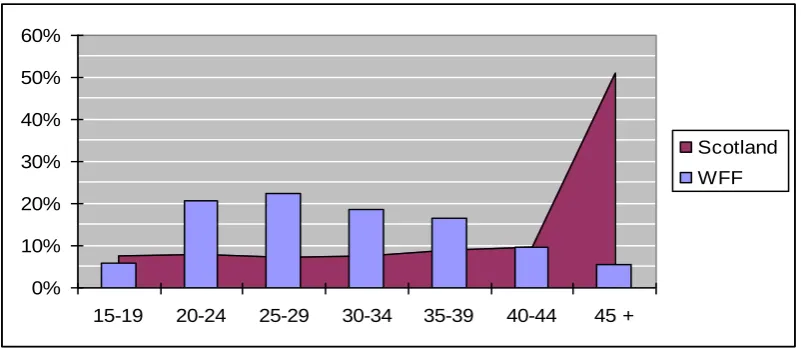
- The youngest (under 20 years) and oldest (those over 45 years old) age groups were significantly less likely to achieve a Transition than those aged 20 to 29 years (47% and 45% compared to 56%).
- A higher proportion of black clients, white British clients and those of Pakistani or Mixed Origin made a Transition compared to other groups (56%, 54%, 52% and 51% respectively), while Chinese people were less likely to make a Transition (26%).
- Significantly fewer clients with no qualifications made a Transition (46%) compared to 54% overall. Those with qualifications below or at SVQ1 were just below the average (51% and 52% respectively). Those with SVQ2 level qualifications had significantly more Transitions (59%), which was similar to those with higher SVQ levels (60%, 61% and 57% for those with their highest SVQ levels at 3, 4 and 5/degree respectively). This corresponds with much other literature indicating links between qualifications and employability. Note that when a full regression analysis (see below) accounting for the effects of other variables (such as age etc.) was undertaken, then a client having any qualification was again shown to be more likely to have a Transition.
Personal Circumstances
- A higher proportion of clients with children aged under 12 years old made Transitions (54%) compared to those with secondary school aged children (46%). Unsurprisingly, only just over a quarter (26%) of clients who were pregnant made a Transition. Having fewer children was also associated with being more likely to make a Transition.
- A lower proportion of clients who had children with a ‗Record of Needs‘, disabilities or health problems made a Transition (43% and 47% respectively, compared to 54% for clients whose children did not have either of these).
- A higher proportion of lone parents achieved a Transition (56%) compared to those in other types of households (49% of those with partner/spouse and 40% of those in ‗other‘ households). In particular, those in lone parent working households or dual earner households were more likely to make a Transition (72% in a working lone parent household and 58% for dual earner household). This compared to 50% of those in households with one working, 42% of those in none working households and 51% of non-working lone parent households making a Transition.
Clients who achieved an Intermediate Activities outcome, improved employability or exited with no outcome, shared many characteristics. It would seem that these groups find it harder to move into employment, education or training. WFF seems to have had success with some of these clients (hence those who achieved an Intermediate Activity or improved employability, and indeed many who had achieved a Transition), but others have proved harder to keep engaged with the programme.
Characteristics of clients achieving different outcomes – Logistic Regression
More in-depth analysis was carried out using logistic regressions. This is a technique which controls for the many characteristics of WFF clients, for instance young clients may have a lower likelihood of making a Transition, but this may be because they have young children and not because of their age, so the analysis accounts for this. Hence these more fully reflect which characteristics of the clients, or the characteristics of where they live, are most associated with having a Transition.
Those characteristics differ slightly between different types of Transition. To further identify the most important of these characteristics indicating the likelihood of someone having a Transition, three measures were used. First is whether we are confident that there really is a link between the characteristic and having a Transition (the significance level is 95% so we are confident that the relationship is not just chance); second we consider the strength of the effect (here we use an odds ratio of over 1.25 or under 0.75, so this characteristic at least increases or decreases the likelihood of having a Transition by at least a quarter (25%)); third, the relative reach of the impact, i.e. the characteristic is relevant for a large number of people (here the characteristic must be shared by at least 5% of the client population). Those that meet all three criteria and appear particularly important are marked *.
The main characteristics positively linked to making a Transition of any sort include:
having a qualification, of any sort (especially at least SVQ level 2*);
10
having English as your mother tongue*;
being in any education at the point of registration (this is linked to having a Transition of completing education/training)*;
having a nationality other than that of a UK or EU citizen (such as asylum seekers or refugees);
those living in living in Glasgow or North Ayrshire.
Key characteristics that are associated with a reduction in a client‘s likelihood of having a Transition are:
being in rented, council, hostel or supported accommodation (i.e. non-owner occupier);
having been out of employment for 2 months or more (and especially over 6 months*);
being aged under 20 year old;
being over 45 years old*;
being self identified as disabled;
having other household stresses (such as drug misuse)*;
being pregnant*;
having more than 2 children;
having a disabled child.
Links between WFF projects
Clients joining the WFF programme were allocated a main project at the time of, or shortly after, registration. In most cases, this was a ‗Key Worker‘ project (80%). In addition to the main WFF project, 60% of clients also accessed other projects: with 45% accessing other WFF projects and 15% accessing non-WFF projects (external agency services). Of those who accessed other projects, 35% were referred to one additional service, 39% to two or three, and 26% to four or more services.
Clients who accessed one or more additional projects were significantly more likely to achieve a Transition than clients who did not access any other projects (62% of clients who accessed WFF projects and 53% who accessed other agencies compared to 44% who did not access any additional services achieved a Transition). They were also less likely to exit WFF without an outcome (only 17% of clients who accessed WFF project/s and 23% who accessed other agencies exited with no outcome compared to 31% for those who did not accessed additional projects). This indicates that clients who received a ‗package‘ of support (of at least a main project plus support from one or more other WFF projects) were much more likely to have a positive outcome.
Sustainability of Transitions
moving or improving employment9 (‗into employment‘) were followed up to ascertain if the Transition was maintained three, six and twelve months after it was achieved.
The follow-up of a sample of clients moving into employment showed that three months after the Transition was achieved the majority of clients (92%) had sustained it (from 1,476 responses). Six months after the Transition into employment was achieved, 90% of clients were still in employment (346 responses) and 89% of clients were still in employment twelve months after the Transition was achieved (263 responses)10.
Hence, for clients moving into employment, Transitions appeared to be sustained over twelve months, meaning that client‘s involvement with WFF has a long-term impact. It should be noted that WFF continued to support clients after they had moved into work and this is likely to have helped these clients to sustain their outcomes.
9
The data covers clients with a Transition into employment up to 31 March 2007 (with a 12 months follow up to 31 March 2008). Transitions analysed in this report are: entered full-time employment; entered part-time employment (16 to 29 hrs/wk); entered part-time employment (less than 16 hrs/wk); entered self-employment; being able to take up a job offer; moved into different employment; improved current employment.
10
12
Characteristics of clients not sustaining an outcome at 3 months
Further descriptive analysis was carried out on the relatively small number of clients who did not sustain an employment or training outcome after three months. The following groups of clients appeared to be less likely to sustain their Transition:
young people (under 29 years);
non-white ethnicity;
those with very young children (under 3 years);
those living in non-working households;
sick/disabled people;
those who had never worked;
those with lower levels of qualifications;
those with particular employability, childcare, transport and other barriers.
Sustaining long-term outcomes among these groups therefore may present particular challenges. A higher level of resources may be required in order to provide sustained support over a longer term post-Transition period for these groups, so that their chances of sustaining their outcomes are maximised.
4. COST BENEFIT ANALYSIS
Figure 3 shows total WFF spending by Phase 1 and Phase 2 local authorities. These indicate that a considerable lead-in time is required for a programme such as this, as the budget was greatly under spent in 2004/05 (Year 1), but almost fully spent (92%) in Year 2 and over spent in Years 3 (105%) and 4 (118%).
Figure 3: Actual Spend by Phase 1 and 2 local authorities Actual Spend in
2004/05 @ 31.03.2005
Actual Spend in 2005/06 @ 31.03.2006
Actual Spend in 2006/07 @ 31.03.2007
Actual Spend in 2007/08 @
31.03.08
Total Actual Spend in 2004-08
@ 31.03.08
Phase 1 LAs £3,286,767 £9,173,121 £12,464,584 £12,541,760 £37,466,232
Phase 2 LAs £3,260,960 £5,240,959 £8,501,919
Total £3,286,767 £9,173,121 £15,725,544 £17,782,720 £45,968,152
For Phase 1 local authorities there was considerable under spend in their first year, followed by achieving their budget in year 2 and a 125% overspend in years 3 and 4 (note that this was permitted overspend as it represented a carry-over from Year 1). This indicates that the long-term budget might be reconsidered at a higher level than original, in long-terms of capacity to spend appropriately. Phase 2 local authorities followed a similar pattern with a large under spend in Year 1 and matching the budget in year 2. However, learning from Phase 1 local authorities and a longer lead in time meant that the relative under spend (they had a £5m budget compared to £10m for Phase 1) of Phase 2 local authorities was much lower.
Cost per ‘Hard’ Outcome / Transition
average £2,546 over 2004-08. Some clients had more than one Transition. During 2007-2008 the cost per Transition was £2,022 (Figure 4).
There is a clear decrease in costs per Transitions as projects have improved efficiency and effectiveness, while there may be economies of scale coming into effect. In early years there can be quite high levels of fixed costs, particularly staffing, (plus start-up costs) and relatively few clients. It also suggests that support over a long period (over three years) may lead to greater cost efficiency and effectiveness than changing or launching programmes continually. It should be noted that over time clients will have, on average, increasing numbers of Transitions so this may slightly reduce the figures on costs in later years.
Cost per client who experienced a ‘Hard’ Outcome / Transition
If we consider just those clients who achieved a Transition (rather than the number of Transitions themselves) then the costs per client who had a Transition was £3,382 over the four years. These costs exclude the training and other costs provided by non-WFF support, and also were single year costs (clients may get support for more than one year, so the distribution of costs may not fully reflect the exact period of support received by a client). The costs fell each year, this strongly suggests that stable, longer term funding is likely to be much more efficient and cost effective for this type of programme.
Figure 4: Cost per client who achieved a Transition by Phase 1 and 2 local authorities Cost per Trans. in
2004/05 @ 31.03.2005
Cost per Trans. in 2005/06 @ 31.03.2006
Cost per Trans. in 2006/07 @ 31.03.2007
Cost per Trans. in 2007/08 @
31.03.08
Phase 1 LAs £18,465 £4,231 £3,652 £2,882
Phase 2 LAs £3,390 £2,079
Aggregated £18,465 £4,231 £3,594 £2,587
Effects of additionality, deadweight, displacement and substitution
When considering the effect of WFF we need to deduct what might have happened anyway. In other words we should look at the ‗additional‘ net impacts of the policy after you have taken away ‗deadweight,‘ and ‗displacement‘ and ‗substitution.‘ ‗Deadweight‘ refers to those outcomes that would have happened anyway, even without WFF, ‗displacement‘ and ‗substitution‘ together measure the extent to which the benefits of a project are offset by reductions of output or employment elsewhere. The figures in the previous section assume zero ‗deadweight,‘ so the results may overstate the impact of WFF as some parents would have gained, or moved towards, employment anyway.
In order to estimate what might have happened if there had been no WFF programme, other comparisons were made. First, 219 randomly chosen parents across the 20 WFF LA areas were interviewed. Second, propensity score matching was used to compare the outcomes of WFF results for similar people in the national British Household Panel Survey database (up to 30th April 2006 as later data were not available at the time of writing). Third, WFF results were compared to studies of other, generally similar clients, and national statistics.
14
evidence, it was considered that 50% of clients may have had a Transition anyway (‗deadweight‘) even if they had not participated in WFF. This increases the average cost to £6,764 per client having a transition, over the four years, falling to £5,174 by the final year. However, this may be an over estimate as the ‗deadweight‘ was calculated for those going from unemployment into work, and deadweight might be lower for some other Transitions (e.g. moving into education), although clear evidence on this is not available.
National statistics
Considering national statistics, the number of lone parent benefit claimants in Phase 1 WFF areas fell at slightly greater rates than in the rest of Scotland, and Great Britain, from (February) 2004 to 2007 (-12.8% compared to -12.5% in the rest of Scotland and -7.1% in GB), although in year 3 (2006-07) when Phase 1 local authorities were well established in WFF, the number fell in Phase 1 local authorities by -3.2% compared to only -2.4% in the rest of Scotland and -0.7% in GB (NOMIS, 2008). The figures for Phase 2 local authorities are not very meaningful as during 2006-07 they were still setting up and had relatively few clients and few people making Transitions (indeed in 2006-07 Phase 2 local authorities experienced a fall in claimants of only -2.3% compared to -2.7% in non-WFF Local authorities).
Using data from the Inland Revenue (2008) on Child and Working Tax Credits11 there appears to be a larger increase in parents in work and a larger decrease in parents out of work in WFF areas, and Scotland, compared to the rest of Great Britain12. Considering ‗Recipient families receiving CTC and WTC in each local authority,‘ then in the years 2005-06 to 2007-08 (to April 202007-08) the percentages of families (with children) who were not working fell from 28.96% to 27.31% in Phase 1 WFF LAs, compared to a fall from 20.27% to 19.51% in the rest of Scotland (falling in both Phase 2 and the small non-WFF LAs) and nearly no change in the rest of Great Britain (24.81% to 24.41%, while Scotland as a whole fell from 23.99% to 22.87%). The converse of families with children in work, rose from 71.03% to 72.74% in Phase 1 LAs and 79.74% to 80.35% in the rest of Scotland and hardly any change in the rest of Great Britain. These figures also suggest that the Phase 1 LAs were correctly chosen for their far higher rates of workless families13.
Other factors in costs and benefits
It is worth noting that these figures do not incorporate the considerable future positive outcomes that are likely to be achieved by WFF clients (which are expected to be high due to the nature of the clients), life time earnings of clients, and other benefits due to getting or changing employment, and education. The main financial benefits of those getting work were
11
Child Tax Credit (CTC) and Working Tax Credit (WTC) replaced Working Families' Tax Credit, Disabled Person's Tax Credit and Children's Tax Credit in April 2003. CTC is available to families with children aged up to 16, or up to 20 and in full-time non-advanced education or certain forms of training. WTC is available to people working for at least 16 hours a week if they have children, or have an illness or disability which puts them at a disadvantage in getting a job. Certain other adults also qualify - for example, if they are aged at least 25 and work for at least 30 hours a week.
12
HM Revenue & Customs (2008) Child and Working Tax Credits Statistics, Geographical analyses, April 2008, HMRC, London http://www.hmrc.gov.uk/stats/personal-tax-credits/menu.htm
13
their increased incomes (life time earnings, as well as short-term wages and Working Tax Credit etc.). In the longer term people may get pay rises and/or improve their jobs and careers, so income is likely to grow over time for many of these clients compared to their starting wages.
The substantial ‗soft‘ outcomes (e.g. short term training, greater employability skills, and more confidence) were not included in these calculations. These are also likely to lead to better lifelong earnings and to non-money costs and benefits (as some parents achieve improved mental health, suffer less depression, or feel better, as do their children). Further, those parents that are better educated will have associated benefits for their children and have more prosperous careers (and arguably better careers so helping to cut inter-generational disadvantage). Each soft outcome will lead to long-term benefits that are likely to be large. There may be some positive soft outcome effects from this on reducing spending on health and other social services etc. Of course, there may also be some costs due to the negative effects of working, for example, stress for working parents and less parent child interaction time.
The net Exchequer position in terms of benefit transfers suggests that the quantifiable gain to the Exchequer from WFF is modest, especially as the majority of those moving to employment will continue to receive benefits such as Housing Benefit and Council Tax Benefit, plus in-work benefits such as Child Tax Credit. This largely negates any savings made through reduced Income Support and JSA payments in the short-term. So overall the effect of the initiative in terms or taxes and benefits, excluding the cost of WFF, may be relatively neutral.
Summary
16 5. IMPLEMENTATION AND OTHER ISSUES
The key features of WFF implementation included:
LAs involved in WFF had a clear focus on moving disadvantaged parents towards, into, or continuing in employment, education or training in a significant way and on measuring the progress clients made at individual and aggregate levels.
WFF funding and implementation was channelled through Economic Development departments in all but one local authority and this strategy clearly and successfully focused the remit upon employability and getting people into appropriate work, training and education.
Projects and services in each local authority area were developed in partnership with a range of existing public, private and third sector service providers. Partnerships were essential in order to: develop projects and services efficiently and effectively, avoid duplication; provide appropriate services for clients with multiple, specialised support needs (e.g. for whom support for skill development, substance abuse and childcare issues could each be provided by a different agency); attract the referral of clients from other agencies to WFF.
Development of Key Worker‘s programmes (dedicated link workers offering ‗outreach‘ or peripatetic service to clients within a community) was central across all but one local authority area forming the ‗hub‘ of local WFF delivery.
Additional projects were developed by WFF to fill gaps in existing services and offer important services to clients in helping them move into or closer to employment, education or training that would not be available otherwise, thereby making WFF more effective.
Flexible implementation allowed local authorities to adapt their proposals in the light of experience. WFF fostered continuous learning and sharing of information, experience and ideas between local authorities and the Scottish Government.
Rural-urban issues
The majority of clients were identified as living in large urban areas (51%), with many of the remainder living in other urban areas (32%). Only 9% of clients lived in rural areas (5% in accessible rural and 4% in remote rural), 7% in accessible small towns and 2% in remote small towns. However, there were huge variations depending on local authority area, with a very high level of correlation between local authority area and the rural-urban location of clients. There were some noticeable differences in the types of clients depending on type of rural-urban location. Key differences included:
Higher proportions of male clients outside large urban areas.
Higher proportions of ethnic minority clients in large urban areas.
Clients tended to be younger in large urban areas.
Higher proportions of lone parents lived in large urban areas.
Higher proportions of clients indicated that they had children with either a ‗Record of Needs‘ or with disabilities or health problems in more rural areas.
Clients in accessible rural and remote rural tended to have slightly higher levels of qualifications.
A lower proportion of clients in large urban areas reported facing all but one (caring) of the general barriers: employability and skills; transport or other.
A larger proportion of clients in large urban areas recorded a Transition (56%), with the lowest recorded in remote small towns (45%). However, a fairly high proportion of clients in large urban areas also recorded ‗inactive/exit no outcome‘ (24%), the same as those in other urban areas, whereas only 16% of those in remote small towns were recorded as such.
Childcare
When asked about their views in a survey carried out in March 2008, Co-ordinators within WFF local authorities felt that registered childminders, pre-school education, nurseries and registered after-school care were the most cost-effective and most useful in terms of helping clients into employment, education or training and sustaining these outcomes, although some, e.g. pre-school education is not important for full-time working due to its limited hours.
A lack of capacity and gaps in provision (over evenings and weekends, for children with additional needs and location) were mentioned as the most common problems in terms of accessing childcare and creating barriers that lead to jobs and other opportunities not being taken up. The price of childcare was also stated as a main barrier for parents (e.g. deposits/ registration fees). Also stressed was a mismatch between clients starting work and having to pay for childcare, and receiving their first wages. It was highlighted that WFF had been very successful in helping parents with childcare costs for the first month. Also mentioned as challenging for parents were hours of work and finishing-time, use of public transport, and closing times for nurseries and registered after-school clubs. Consistent statistical data on the types and numbers of childcare places were not available over the period of WFF due to changing national survey methods and questions.
6. CONCLUSIONS AND RECOMMENDATIONS
Summary of overall impacts of the funding
Overall WFF had a significant impact over the whole WFF period (2004-08) and during Phase 2 (2006-08) in terms of:
recruiting 25,508 clients in the twenty local authorities and;
assisting 66% (16,877) of all clients registered to achieve an identified ‗Hard‘ Outcome/ Transition, improving their employability or to progress towards employment, training or education by 31 March 2008.
18
WFF successfully targeted support to improve the employability of specific disadvantaged parental groups: those who have difficulty entering or progressing in employment, education or training, due to a variety of stresses (disability, drug and alcohol misuse, mental health problems, etc.); those on low incomes and; lone parents pre-New Deal. It supported these parents by helping them find sustainable childcare solutions and providing access to other relevant employability-related services, across diverse geographical and economic areas covering much of Scotland.
WFF was innovative and effective in terms of: its particular target groups; the linking of childcare and support to improve the employability of clients; the activities of local projects; and flexibility in funding shown by the Scottish Government. It was a voluntary scheme on the part of clients, which showed that effective support of the right type, albeit in relatively good economic conditions, can result in a significant improvement in the employment and employability of disadvantaged parents.
A total of 42,214 children (up to 18 years) had parents/guardians taking part in WFF. Two thirds of these children (66%, 27,669) had parents/guardians that achieved a measurable Outcome. For 6%, their parents/guardians had registered in the previous 6 months, and were still active but had not yet recorded an outcome. For 28% of children their parents/guardians did not achieve an outcome. So a significant portion of children (27,669 in total) have benefited indirectly from WFF.
An important feature of the implementation of WFF was the continuous learning and sharing of information, experience and ideas. The evaluation process collected in-depth data that could be used to help monitor progress and to identify some of the relevant support needed by clients. Quarterly reports summarizing the main information across LAs were produced, roughly two months in arrears, so as to allow mutual comparison and learning. A Quarterly Newsletter, regular meetings between LA co-ordinators and between them and the Scottish Government as well as specific dissemination events were also carried out.
Recommendations
What should be supported?
1. The effective combination of tackling both childcare and employability is an essential, successful, aspect of the WFF programme. Consideration should be given to extending this basic model into other initiatives that focus solely upon employability or childcare issues.
3. Support should be extended to those parts of Scotland not currently covered by WFF (the 12 other Local Authority areas). In cases with an extension of WFF type programmes certain factors should be considered, in particular: lead-in time should be carefully considered when budgets are set, with the expectation that only a few staff may be employed and relatively few clients assisted in the first few months. Secondly, if extending WFF type support, training of project and local authority staff should be carefully considered and the issues of employability, childcare and partnership included. Thirdly, mechanisms need to be in place to ensure good practice is disseminated to both new local authorities and projects joining WFF, and for existing local authorities and projects.
4. Careful consideration should be given to providing stable, longer term funding for such programmes as the evidence suggests that this is much more efficient and cost effective. Initial set-up costs, together with more limited learning and experience, and relatively low numbers of clients in the early years, greatly reduces efficiency and raises costs per client and per outcome. This will have implications for support for policies in general and when interpreting the results of pilot studies. It also suggests that uncertainty about future funding can hinder efficiency and cost effectiveness.
Who and what should be targeted?
5. The targeting of this client group seems appropriate and should be continued. However, particular support is needed for those with major barriers including a lack of employability skills, as well as childcare provision. Additional help is needed for those in the greatest disadvantage due to low qualifications, disability among children. While WFF focused on disadvantaged parents in Scotland, within the WFF client groups there remained some who achieved less and may have required further support over a longer period. Assistance should continue to be given to clients after they have made a Transition for at least a year, so as to improve the sustainability of Transitions into work.
6. A prime focus of WFF type policies should be on ‗hard‘ outcomes leading to major improvements in the position of clients (such as moves into or maintaining sustainable work, substantial training and education). This would provide a clear focus for staff working in the projects, other agencies and the clients themselves. However, ‗soft‘ outcomes are also very important and should be recognised and supported for all participants, especially where they are part of a clear support package for those requiring long-term support in moving towards
20 How should services be delivered?
7. WFF flexibility in terms of funding and implementation (at Scottish Government, local authority and project levels), is important and contributed to the provision of client-focused support, tailored to each individual‘s needs which lead to effectiveness in dealing with individual circumstances. Projects varied between different local authority areas and were designed to fill gaps in existing service provision in each area. Building in this type of flexible approach should be considered in future initiatives. As discussed earlier, the Key Worker model to support clients ‗on the ground‘ was very effective in helping clients to make real progress through individualised holistic advice, support and motivation.
How can lessons be learned and disseminated?
8. Important policies within the WFF that could usefully be supported and information on them more widely disseminated include: funding for childcare subsidy (financial support immediately after the return to work); the Key Worker model; the need for peripatetic and/or community-based interventions (especially in remote areas); appropriate support for specific types of clients (those with drug/alcohol issues). It is important that the lessons of the WFF are widely disseminated.
9. Community Planning Partnerships should be strongly encouraged to continue to collect a minimal level of common information on the successors of WFF in each area so as to allow continued comparisons and learning about what policies are effective.
CHAPTER ONE
INTRODUCTION AND BACKGROUND
1.0.1 This report presents the Final Evaluation Report of the Working for Families Fund (WFF) programme up to the 31 March 2008 (Phase 1 was from April 2004 – March 2006 and Phase 2 from April 2006 - March 2008). It was carried out by the Employment Research Institute, Napier University, Edinburgh, for the Scottish Government.
1.0.2 Over the four years the budget for WFF was £50 million (the actual spend was £46 million), a total of 25,508 clients were registered, 53% of all clients (13,594) achieved ‗Hard‘ Outcomes and a further 13% (3,283) achieved other significant outcomes.
1.0.3 WFF was established to invest in new initiatives to improve the employability of parents who have barriers to participating in the labour market. Specifically it was to help them move towards, into, or continue in employment, education or training. WFF was a totally voluntary scheme on the part of clients. The programme was administered through 20 local authorities and supported these parents through helping them find sustainable childcare solutions and through providing or accessing other relevant employability-related support and services. In rural areas, support sought to combat barriers created by poor transport, limited services and a lack of a critical mass of clients.
1.0.4 WFF contributed to: the Scottish Government‘s ‗Closing the Opportunity Gap‘ approach to tackling poverty and disadvantage, by improving rates of employment and economic activity and; to its commitment to eradicating child poverty within a generation. WFF funding was streamlined on 1 April 2008 in the Fairer Scotland Fund (FSF). The FSF replaced seven previous funding streams as part of the Government‘s budget concordat with local government. The Scottish Government aims through the FSF to: support Community Planning Partnerships (CPPs) to work together to tackle area based and individual poverty and; reduce bureaucracy and administration, allowing CPPs to get on with tackling poverty and deprivation. Further details about WFF are available in the Phase 1 Evaluation Report, Quarterly reports and the WFF websites: http://www2.napier.ac.uk/WFFE/ and
http://www.scotland.gov.uk/Topics/People/Social-Inclusion/17414/WFF/Intro
1.1 What is the Working for Families Fund?
1.1.1 From the start of WFF it was recognised that clients needed support in terms of both sustainable childcare solutions and the provision and access to other relevant support and services to improve their employability. Initially in Phase 1 WFF focused particularly on helping to remove childcare barriers, but quickly developed a holistic employability approach to provide continuous support to parents14.
14
22
1.1.2 The WFF programme focused on disadvantaged parents, specifically:
lone parents (who were pre-New Deal);
parents on low incomes;
disadvantaged parents with other stresses in the household that made it difficult to access and sustain employment, education or training, including disability, mental health and substance abuse problems.
1.1.3 The main WFF support was based around ‗Key Workers,‘15 who supported clients who wished to move towards, into, or continue in work, education or training through:
helping them to improve their employability; and
addressing childcare and other barriers standing in their way.
1.1.4 Clients were helped to improve their employability by establishing goals and producing a personal action plan that linked them to the various types of employability support available locally. These included: personal development courses to boost confidence and self-esteem; education and training to improve skills and qualifications; careers advice; money advice; and work experience – all helping the client to progress towards or into work. A second key element of WFF support was helping clients to identify and access the childcare they needed at each stage. Often this took the form of information and advice, linking them to an existing childcare place, but it also might have involved financial assistance (e.g. paying one-off, ‗upfront‘ nursery Registration fees, paying for childcare while a parent attended education or until tax credits came through).
1.1.5 Support from WFF centred around three key stages:
Pre-employment - supporting parents to improve their basic employability skills, confidence and attitudes;
At Transition points - helping parents to make the Transition into employment, education, substantial training or volunteering;
Post-employment – providing support to sustain employment, for instance through a period of crisis such as having a sick child shortly after the parent started work. This was offered both to parents who engaged with WFF at the pre-employment stage and had successfully moved into employment, and to parents who were already in work when they first approached WFF.
1.1.6 The local authorities led and controlled WFF funding and strategy in their areas, but the actual support for clients was provided by a variety of locally determined organisations (including the local authorities themselves) in each local authority area.
1.1.7 WFF was designed to complement, not duplicate or replace, existing services and to work with local childcare partnerships and employment and employability focused partnerships to fill gaps in provision for the WFF client groups. In some areas this meant developing employability related services, including short pre-vocational training, or helping clients to obtain driving licences, while elsewhere it involved setting up additional, often more flexible, childcare services such as childminding and sitter services.
1.1.8 Overall £50m of funding was available for WFF in Phases 1 and 2 (2004-08). In Phase 1 (2004/5-2005/6), ten local authorities (including the pilot authorities) were awarded funding for two years to develop services and projects often building upon the key lessons from the
15
pilot stage. They covered 37% of the total Scottish population. The budget for Phase 1 was £10 million pa (£20m in total) allocated as below, although actual expenditure was under £13 million due to the slow start up time for such a programme.
1.1.9 On 23 August 2005 a further £15 million pa for two years was announced for Phase 2 (2006/7-2007/8), allocated to 20 local authorities from the 1st April, including the ten Phase 1 local Authorities, and which covered 79% of Scotland's population. See details of the annual funding allocations for 2004 - 2008 below.
Table 1.1 Annual budgets for Working for Families by local authority
Local Authority Area Budget 2004/5-2005/6 Budget 2006/7-2007/8
Glasgow City £2.5 million per annum £2.5 million per annum
North Lanarkshire £1.5 million £1.5 million
Renfrewshire £1 million £1 million
Dundee City £1 million £1 million
North Ayrshire £1 million £1 million
East Ayrshire £600,000 £600,000
Dumfries and Galloway £600,000 £600,000
Highlands £600,000 £600,000
Inverclyde £600,000 £600,000
West Dunbartonshire £600,000 £600,000
Edinburgh - £750,000
Fife - £750,000
South Lanarkshire - £750,000
West Lothian - £450,000
Aberdeen City - £450,000
Falkirk - £450,000
Aberdeenshire - £350,000
Angus - £350,000
Midlothian - £350,000
Clackmannanshire - £350,000
1.1.11 Budget allocations were based largely on the number and proportion of children living in households dependent on key benefits (Income Support and Income Based Jobseekers Allowance), while the incidences of multiple deprivation and rurality were also taken into account.
1.1.12 WFF had an overall target for the two Phases which encompassed increasing the number of parents from disadvantaged areas, and groups entering or moving towards employment, through removing childcare barriers by 15,000, by March 2008.
1.1.13 This report relates to the WFF programme overall. It focuses primarily on the main quantitative information at the Scottish level. Other detailed and qualitative information is available in the Phase 1 Evaluation Report, Quarterly Reports and in local evaluations carried out for local authorities by various other organisations.