Teaching and learning writing:
a review of research and practice
Susanna Kelly, Luxshmi Soundranayagam, Sue Grief
June 2004
This report may be downloaded as a PDF document from the NRDC website at www.nrdc.org.uk
We welcome feedback on the content and accessibility of this publication. This should be sent to:
Publications NRDC
Institute of Education 20 Bedford Way London WC1H 0AL.
Telephone: +44 (0)20 7612 6476 Fax: +44 (0)20 7612 6671 email: [email protected]
ISBN 0 954727428
© Crown Copyright 2004
Extracts from this publication may be used or reproduced for non-commercial, research, teaching or training purposes on condition that the source is acknowledged.
NRDC is a consortium of partners led by the Institute of Education, University of London based in the Bedford Group for Lifecourse and Statistical Studies at the IoE. www.ioe.ac.uk/bedfordgroup
a review of research and practice
Susanna Kelly, Luxshmi Soundranayagam, Sue Grief
CONTENTS
FOREWORD 5
AUTHORS’ ACKNOWLEDGEMENTS 5
SUMMARY 6
1. INTRODUCTION 8
The project as a whole 8
Phase 1 8
Background to the project. Why focus on writing? 10
The structure of the report 11
2. LITERATURE REVIEW QUESTION 1 12
How do relevant studies, which conceptualise writing and writing development, contribute to an understanding of how adult literacy
learners develop as writers? 12
Introduction 12
Methodology 12
Conceptualisations of writing and writing development 13
Relationship between reading and writing 15
Adult versus child learners 16
Implications for practice 17
Conclusion 22
3. LITERATURE REVIEW QUESTION 2 24
What factors in adult literacy programmes enable learners to develop
effective writing skills? 24
Introduction 24
Methodology 24
Definition of terms 24
Summary of item selection, keywording and descriptive map 25
Data extraction and quality assessment 26
The need for further research 33
4. REVIEW OF PRACTICE REPORT 35
What range of approaches to the teaching, learning and assessment of
writing do practitioners and learners in adult literacy currently use? 35
Purpose and methodology 35
Results 37
knowledge in the theoretical literature? 51 How do the findings from the review of practice relate to the literature
(research and theory) on writing development in adults? 53 Further research on the teaching and learning of writing in adult literacy 55 The ways in which the reviews undertaken in phase 1 have informed
the design of phase 2 56
Implications for policy and practice 58
Conclusion 59
References 60
APPENDICES 70
Appendix A: Review 2: search results 71
Appendix B: Review 2: item selection, keywording and descriptive map 75 Appendix C: Review 2: summary of information extracted from the nine
studies reviewed (in alphabetical order) 79
Appendix D: Review 2: summary of information extracted from the eleven
excluded studies (in alphabetical order) 97
Appendix E: Review of practice: learner interview questions 113 Appendix F: Review of practice: teacher interview questions 113 Appendix G: Review of practice: summary of report on focus groups
provided by research consultants Cragg, Ross, Dawson 114 Appendix H Review of practice: summary of coding of observed sessions 118 Appendix I Review of practice: feedback from consultation meetings 120
Foreword
Writing is a vital skill. Gaining skills and confidence in writing can open up opportunities at work and empower learners to take on new roles as citizens within the community. It provides a powerful means of self-expression as well as a support for further learning.
Adults are more likely to need help with writing than with reading. However, compared to reading, the teaching and learning of writing for adults has received very little attention from researchers. The Learning and Skills Development Agency (LSDA) is therefore pleased to be undertaking a major research study on writing as a key partner in the National Research and Development Centre for Adult Literacy and Numeracy.
This report brings together the findings of the first phase of the project. It includes two literature reviews, which will be of interest to teachers of adult literacy as well as to researchers and will provide a valuable resource for teacher trainers leading courses for new qualifications for Skills for Lifeteachers. Together with a review of current practice these reviews provide a picture of the current state of knowledge about the development of writing skills for adult learners and a strong basis for the second stage of the project.
LSDA would like to thank the project advisory group for their expert advice and support on all aspects of the study. Thanks are also due to the organisations that kindly allowed us to collect data from their classes and the practitioner researchers who engaged on the project with such enthusiasm.
Kate Anderson Director of Research, Learning and Skills Development Agency
Authors’ acknowledgements
The authors would like to thank the following for their contributions to the project:
Dr Ursula Howard whose interest in writing inspired the original project proposal.
Professor Greg Brooks, Dr Roz Ivaniç and Jane Mace as members of the advisory group for the project, have provided support and advice to the project team.
The managers, teachers and learners who took part in the case studies.
The practitioner researchers who undertook the fieldwork:
Alison Bacon; Laura Bond; Ros Brown; Eulene David-Coriette; Elaine Fisher; Sue Flawn; Susanna Lee; and Trudy Sellers.
Amy Burgess who undertook work on the literature reviews
All the practitioners and researchers who contributed to the consultation process.
Independent peer review
Summary
Synopsis
This research is the first phase of a project that aims to identify principles of effective
teaching and learning of writing for adult literacy learners. The report presents the findings of three reviews designed to provide a basis for the research to be undertaken in phase 2 of the project:
1. a narrative review that looks at the ways in which, studies, which conceptualise writing and writing development, contribute to an understanding of how adult learners develop as writers. 2. a systematic review of primary research that addresses the question, "What factors in adult
literacy programmes enable learners to develop effective writing skills?" 3. a review of current practice.
Key Points
■ The review of this literature suggests that writing should be viewed as a process in which the writer interacts with what he/she has written. Planning and revising a text are as much part of this process as physically writing it.
■ It also suggests that writing is intimately connected to the writer’s processes of thinking as well as his/her feelings and self identity and cannot be separated from its social, cultural and political contexts.
■ There is very little sound research evidence on the factors in adult literacy programmes that enable learners to develop effective writing skills. There is a particular need for research that will help to identify the variables that impact on adult learners’ development as writers. This would make it possible to provide an empirical basis for recommendations on the teaching and learning of writing for adult literacy learners.
■ Most of the primary research studies were outcome evaluations, but few reported specific causal factors. Use of authentic literacy practices in the classroom was the only variable found to be significantly and positively related to changes in learners’ literacy skills and practices.
■ Responsiveness to the needs of individual learners and the use of a variety of tasks and approaches are held to be important by the teachers interviewed as part of the review of practice.
■ Learners placed value on the mastery of spelling and punctuation and identified these as aspects of writing that caused them the most difficulty. The teachers valued the expression of ideas above, or in addition to, correctness in the surface aspects of writing.
■ Findings from the three reviews suggest a number of variables that may be significant in the teaching and/or learning of writing. In order to test whether these factors can be identified as predictors of learner progress, they have been developed as dimensions of teacher and learner practice that will be used in phase 2 of the project. The dimensions include the degree to which practice involves:
■authenticity of materials and communication
■collaborative approaches to writing
■making the process of writing explicit to learners
■contextualisation of writing tasks and relevance of teaching and materials to learners’ lives.
Implications for policy and practice are set out on page 58
Background and rationale of research
Writing is a vital skill in modern society and in work. It is a skill that adult learners value highly. Far less research has been undertaken on the teaching and learning of writing for adult learners than on reading. As a member of the consortium that makes up the NRDC, the Learning and Skills Development Agency (LSDA) proposed a major study that had writing as its primary focus. Phase one of the project aimed to inform both the research questions and the methodology for phase 2 which commenced in January 2004.
Main elements of research
In reviewing what was known about the teaching and learning of writing that might be relevant to adult literacy learners it was important to include insights from research from a range of sectors. To make the task manageable, two separate literature reviews were undertaken. The first was a narrative review, which drew on a wide range of sources and included studies written in the context of schools or higher education. The second was a systematic review, which looked specifically at primary research in the field of adult literacy and addressed the question; ‘What factors in adult literacy programmes enable learners to develop effective writing skills?’
Phase 1 also included a review of current practice. This involved four focus groups with teachers and one with learners in addition to nine case studies across a range of provision in eight of the nine English regions and one penal establishment. Observation of 2 classes in each of the nine organisations, interviews with teachers and group interviews with learners were undertaken by trained practitioner researchers. The small scale of the review requires that any generalisations drawn from it must be treated with caution. The findings have informed the design of research tools for phase 2 which will provide more authoritative evidence.
1.
Introduction
This report draws together the outcomes of the first phase of a four-year project on "Effective approaches to the teaching and learning of writing" which is being undertaken by the
Learning and Skills Development Agency, a partner organisation in the National Research and Development Centre for Adult Literacy and Numeracy (NRDC). Phase 1 commenced in July 2002 and was completed in December 2003.
1.1 The project as a whole
The aim of the overall project is to identify features of effective practice in the teaching and learning of writing for adult literacy learners.
The Government’s Skills for Lifestrategy has set ambitious targets for the reduction in the number of adults with low levels of literacy and numeracy in England. To achieve these targets the Adult Basic Skills Strategy Unit has identified the need, not only for a substantial increase in the quantity of provision but also for an improvement in the quality of the learning opportunities on offer. Practitioners who took part in the consultation events on the findings of phase 1 were agreed that teachers and teacher trainers would welcome sound evidence of effective practice in the teaching of all aspects of adult literacy. It is planned that the findings of the project should contribute to a resource for teachers on the teaching of both reading and writing.
The aim of phase 1 was to lay a foundation for the research project by reviewing what is known about the teaching and learning of writing in relation to adult literacy learners and by putting together a picture of current practice. The findings from these activities have informed the design of the second phase of the project and an evaluation of the review of practice has been of great value in the development of the research instruments to be used in this phase.
Phase 2 will investigate the correlations between classroom practice in relation to the teaching and learning of writing used in adult literacy provision and the progress of learners in the development of the skills of writing and their confidence as writers. The data collected will be both quantitative and qualitative. Statistical analysis will be used to correlate
pedagogical approaches with learners’ progress and their attitudes to writing.
1.2 Phase 1
The outcomes of phase 1 take the form of three reviews. Each will be of interest in its own right. However, by bringing the three together this report attempts to highlight the inter-connectivity of the three and to draw out the questions they raise in terms of policy, practice and further research.
(i) A review of relevant theory
The first review focused on theoretical studies that arose from work in other sectors of education as well as from work in adult literacy. It addressed the question:
How do relevant studies, which conceptualise writing and writing development, contribute to an understanding of how adult literacy learners develop as writers?
(ii) A systematic review of empirical research
The second review focused on reports of research and was restricted to studies relating to adult literacy learners. It addressed the question:
What factors in adult literacy programmes enable learners to develop effective writing skills?
This review was undertaken as a systematic review using an approach developed at the Learning and Skills Development Agency and closely modelled on the methodology used by the Evidence for Policy and Practice Information and Co-ordinating Centre (the EPPI-Centre), which is part of the Social Science Research Unit at the Institute of Education, University of London.
(iii) A review of current practice
The final review was the review of current practice. This was a relatively small study, the aim of which was to examine in some detail practice in a number of classes, across a
representative range of organisations providing literacy for adults and young people. It addressed the question:
What range of approaches to the teaching, learning and assessment of writing do practitioners and learners in adult literacy currently use?
Detail about the methodology used for each review can be found at the beginning of the appropriate section.
1.2.1 Practitioner researchers
Practitioner researchers were used to undertake the fieldwork for the review of practice. This reflected the policy of the NRDC and the practice of LSDA. The role played by the researchers, the nature of their contracts and conditions of service were influenced by the Human
Resources policy of LSDA and represented one model of practitioner involvement evaluated in the NRDC project, ‘Varieties of practitioner involvement’ (Hamilton and James 2004).
1.2.2 Consultation
Drafts of all three reviews were shared with practitioners at four consultation meetings between October and December 2003. The discussions at these meetings were of great value and have informed both the writing of this report and thinking about the methodology for phase 2.
1.3 Background to the project. Why focus on writing?
The decision to make writing the focus of the project arose from a belief that writing is a vital skill in modern society together with a concern that writing has received much less attention than reading, from both researchers and policy makers.
Completing reports and forms for quality assurance at work, presenting personal credentials for officials, employers and financial institutions and supporting children in their education all require confidence in writing. In addition the rapid development of information and
communication technology, far from diminishing the need to write, has made writing more essential. Accessing information or goods on the Internet and keeping in contact with friends and family by text or email are increasingly part of everyday life.
Underpinning the study is a belief that gaining the skills and confidence to write, not only has a significant impact on a learners’ sense of self-esteem and identity, but can also empower individuals. Writing can provide a new and powerful means of self-expression, open up new roles, at work, in the home and as citizens in the wider community and support the process of learning.
Writing is understood to include the skills and processes of creating and composing text and the use of writing to organise and communicate meanings appropriate for a range of purposes in a range of contexts. Competent writers are able to use the rules of syntax, to spell and to use punctuation. Writing also involves the mechanical skills of handwriting or word-processing. It is however recognised that it is possible to communicate ideas in writing without mastery of the sub-skills of writing through the use of a scribe or with the help of a teacher or technological aids such as spell checks. It is also recognised that all writing is undertaken within a social, cultural and political context and that this must be taken into account when writing is taught.
As part of the Government’s Skills for Lifestrategy in England core curricula for literacy, numeracy and English for Speakers of Other Languages (ESOL) have been introduced. The core curriculum for adult literacy provides clear guidance in relation to the teaching of grammar, punctuation and spelling, separating out skills at word, sentence and text level. The guidance for teachers provided in the curriculum document stresses the importance of integrating of these skills. However, use of diagnostic assessment materials linked to the curriculum and the need for practitioners to demonstrate that learners’ goals are based on the curriculum, can encourage an approach to the teaching and learning of writing that involves the acquisition of a set of discrete skills in a set sequence. There is a strong tradition in adult literacy that places emphasis on writing as a means of communication and personal expression and on the empowerment of learners. This project will explore how practitioners balance the two and whether the introduction of the core curricula is influencing the way in which the teaching of writing is approached.
An understanding of the nature and purposes of writing and how it is learned can help practitioners in building writing into their programmes. It is hoped that the reviews presented in this report will be of value to trainers and teachers involved in both initial training and continuing professional development programmes.
learning to write is a complex one. Both require similar knowledge and cognitive processes but writing requires the learner, not only to engage with the thoughts of others, but also to have the confidence to commit thoughts to paper. It is often assumed that reading precedes writing but engaging in writing can also support learners in their understanding of the reading process.
Writing has sometimes been presented as a skill that adults need to a lesser extent than reading. However, experience of interviewing adults enrolling for literacy classes suggests writing is frequently their main concern. Hamilton (2001) notes that studies of need, such as those based on the National Child Development Study data, indicate that adults are more likely to need help with writing than with reading.
A review of research on Adult Basic Skills (Brooks et al., 2001b) notes the greater volume of research on literacy and numeracy in the United States and, in particular, the number of impact studies. However, summarising two separate reviews of such studies, Brooks concludes that ‘There was no evidence at all on writing.’
One reason why writing has not featured more strongly in research is the difficulty of
assessing writing and learners’ progress in writing, particularly in large-scale projects where volume of marking is a consideration. A British study of progress in adult literacy (Brooks 2001a) did include assessment of writing gain. However, only very small improvements were registered, as measured by the number of words and the quality of the handwriting. A recent survey found no assessment tools readily available that were suitable for research. (Brooks et al., 2003) As a result the NRDC has commissioned a new assessment for reading and writing for research purposes and this will be used to assess learners’ progress in phase 2 of the project.
Research instruments and assessment tools that rely on multiple choice questions can only measure a limited range of the sub-skills of writing such as spelling and punctuation. Use of such tools for summative assessment may impact on the way writing is taught. The research for phase 2 is commencing at a time when increasing emphasis is being placed on learners achieving national qualifications. At Levels 1 and 2 achievement of these qualifications currently requires no demonstration of extended writing. The observation data for phase 2 will reflect any impact these assessments are having on the range of writing skills being taught.
1.4 The structure of the report
This report includes each of the three reviews in full, including references and appendices. One exception is the annotated bibliography created for the first review. This will be available on the NRDC website. In this format it will be possible to add any further relevant studies that come to light and to update it if new studies need to be included.
2.
Literature Review Question 1
How do relevant studies, which conceptualise writing and writing development, contribute to
an understanding of how adult literacy learners develop as writers?
2.1 Introduction
The aim of this section is to review what is known about how adult learners develop as writers. The literature sourced is focused on adult basic literacy learners, but studies that relate to the development of writing in children and learners in higher education have been included where they have been judged to provide insight into the development of writing in adult basic literacy.
2.2 Methodology
Literature was obtained from a variety of sources, including available reviews of literature, bibliographies of known texts, electronic databases, websites and where necessary, hand searches of journals. The search strategy was developed using the following definitions:
■ ‘Writing’ includes the skills of composition, organising and creating meaning for a range of contexts, the ability to spell and use rules of syntax and the mechanical skills of handwriting and word-processing.
■ Adult learners are defined as learners in post-compulsory education.
■ Adult literacy is understood to focus on those learners whose skills are below the equivalent of Level Two of the National Standards for Adult Literacy (England).
The following inclusion criteria were defined:
■ The focus of the study is the processes of learning and teaching of writing (including the inter-relationship of reading and writing, and the use of new ICT).
■ They were published in the period 1973 – present. This date marks the launch of the ‘Right to Read’ campaign in England and Wales.
■ Studies written in English.
■ They are published works (with the exception of unpublished doctoral theses).
It was decided that the following would be excluded: teaching handbooks or manuals, unless they include a theoretical justification of the methods used, texts produced by adult literacy learners and studies that focused exclusively on ESOL literacy learners.
The following review will first examine various conceptualisations of writing and writing development, including writing as a process and its relationship with cognition, followed by its more recent conceptualisation as a social and political activity and its relationship with the writer’s identity. The special relationship between reading and writing will then be looked at, followed by a discussion of the degree to which conclusions from studies with children can be applied to adult learners.
writing curriculum, as well as specific classroom activities. The use of ICT and writing in the workplace will also be considered in special sections.
2.3 Conceptualisations of writing and writing development
2.3.1 Writing as a process
By the late 1970s, the idea of ‘writing as a process’ was finally displacing the traditional conceptualisation of ‘writing as a product’ (Dyson & Freedman 1990). The finished
essay/poem/letter was becoming less interesting than the activities that had to be carried out to produce the end product. Teachers and researchers started to focus on activities such as planning and editing of both beginning and accomplished writers in an attempt to explain the processes going on, and to also reflect on the development of the novice into the expert.
A significant early model of the writing process was that of Flower and Hayes (1981), who presented an essentially cognitive view of writing. In this model, writers are engaged in the three processes of planning their work (which includes the generation and organisation of information), physically writing down some text, and revising the produced text. Flower and Hayes saw these processes as both recursive and interactive, occurring in no fixed order. While these basic activities have not been disputed, later theorists have broadened the writing process to include important social and political dimensions (see below).
Process approaches may also suggest how writers develop. Flower (1979) described the shift from the ‘writer-based’ (self-directed or egocentric) efforts of the novice to the ‘reader-based’ (reader-oriented) prose of the expert. According to Smith (1982), the need to attend to both transcribing (the mechanics of writing) and composing are often too demanding for the inexperienced writer to address simultaneously. In the cognitive view, extensive practice would result in the transcribing processes becoming more automatic and the increasingly expert writer could then allocate more cognitive resources to the composing processes. According to Bereiter and Scardamalia (1987), the beginning writer focuses on ‘knowledge telling’ or text generation, which gradually develops into a ‘knowledge transforming’ orientation where planning processes modify knowledgetelling according to the demands of the task. This view also saw novices as practising less revision, with attention to local or surface changes, while experienced writers did a lot more revision, with a focus on high-level, global changes. Interestingly, Smith (1983) saw both the writer and what is written in a ‘dynamic interaction’, where each element influences and changes the other.
While ‘writing as a process’ is now accepted as the mainstream approach in literacy education, writers such as Arrington caution that the product and process views are not necessarily opposed and argue that effective writing pedagogy needs to be based on a dialogue between both theories (Arrington 1986).
2.3.2 Writing and cognition
Written language has been considered an intellectual aid as well as a stimulus for intellectual development (Stubbs 1980) and these benefits had been noted even in the 19th century (Street 1997). Goody (1977) discussed how historical developments in the use of writing (e.g., in lists or tables) may have influenced developments in ways of thinking (e.g., about the relationship or classification of units). Similarly, Bereiter and Scardamalia’s (1987) model viewed writing as ‘a way of processing and developing knowledge’. Ong (1987) suggested that writing is necessary for analytically sequential thought, while Smith (1982) perceived writing as a creative process that ‘liberates and develops’ thought. In a series of studies on the effect of writing on thinking in school students, Langer and Applebee (1987) found that writing activities, especially those that encourage a complex manipulation of information, lead to better learning and reasoning. The reverse influence, of cognition on language, has also been discussed. Smith (1983) argued that language is learnable only if it makes sense to the learner. Also, Hartwell (1987) suggested that beginning writers ultimately learned ‘codes of writing’ in a top-down rather than bottom-up fashion.
An important line of research relating writing and cognition deals with the link between writing development and cognitive maturation (e.g., Carlin 1986, Taylor 1984), although this is more relevant to writing development for children than in adults. Britton (1970) has written about language and cognitive development in children. He viewed language primarily as the means whereby human beings construct their own mental representation of their world. He proposed several functional categories of language which illustrate the relationship between language and the cognitive processes involved in its use. These categories could provide a useful means of classifying and describing various types of writing for adults.
2.3.3 Writing as a social and political activity
The idea that writing (and reading) necessarily produces certain universal cognitive effects has been challenged, notably by Street (1984). Bernardo (1998) and Scribner and Cole (1981) have pointed out that it is important to distinguish the effects of literacy from the effects of schooling. A number of researchers (Street 1984, Barton 1994, Clark and Ivanic 1997, Ivanic 1998) have argued that writing is strongly influenced by and itself influences the social situation in which it takes place. The relationship between writing and the social purposes it serves has been considered by Coe (1999), Barton (1994) and Barton and Hamilton (1998), amongst others. Hayes (1996) described an updated version of the Flower and Hayes (1981) model that included effects of the social environment. Apart from the social context of the immediate situation, a broader view would also need to encompass factors of genre, culture and power relations (Clark & Ivanic 1997, Ivanic 2003, Street 1984, Street 1995). These factors might be considered especially significant in the adult education classroom, where learners tend to be particularly diverse and non-homogenous (Hamilton and Stasinopoulos 1987).
Writing development has been linked to social and political empowerment. While Steedman (1982) explained how writing in children could lead to social empowerment, Hall and
‘genre’ approach to writing is concerned with extracting the underlying generic features of texts (that have been written for the same or similar purposes), which can then be explicitly taught to allow learners to manipulate and participate in the genres important in a particular society (Spiegel & Sunderland 1999, Cope & Kalantzis 1993). The introduction of new
technologies in the teaching of literacy has raised further issues of inequity of access, expertise and instruction (Cochran-Smith 1991, C. Luke 2000), although the former notes that these issues have thus far been largely neglected in the writing classroom.
Reading and writing have also been described as political activities, with literacy development closely linked to political empowerment (Freire, 1973, 1981; Goody, 2000). According to De Lattre (1987), becoming literate requires more than the acquisition of literacy; it also involves the ability to avoid being conned. Hoyles (1977), however, observed that literacy may also be used for repression and control, a point also reflected by Brandt (2001). Similar issues are important in Luke’s (2000) critical literacy approach and in Critical Language Awareness (Clark and Ivanic 1999), both of which are based on the belief that language is always implicated in power relations and that it can contribute to social change.
Conventional definitions of writing often downplay the significance of writing outside the educational context (Barton et al., 1993; Barton et al., 2000; Street & Street, 1991. Also see Hull & Schultz (2001) for a review of research on writing and literacy in the ‘out-of-school’ context). Barton (1991) identified two other social domains, work and everyday life, where reading and writing also take place. Not only do writing practices vary across all the three domains, but also within each domain over time and by society. The concerns and issues of adults learning to write may be most often located in the everyday domain (Barton). These contextual issues need to be acknowledged, explored and exploited for the benefit of the learners, as suggested by A. Luke’s (2000) critical literacy approach.
2.3.4 Writing and identity
Recent discussions have made a connection between writing and the writer’s sense of identity. In a general sense, writing development may be fostered if the learners are identified, by others and themselves, as writers (Frank 2001). According to Ivanic (1998), issues of identity are at the heart of learning to write. When people write in certain ways, they align themselves with other people who typically write in those ways, and may feel enabled or constrained by these identities. Writing might also allow writers to explore issues of identity and different alternatives for understanding and acting (Luce-Kapler 1999). Writing has also been linked to issues of personal transformation (Garland 1999, Gillespie 2001; Fingeret and Drennon 1997).
2.4 Relationship between reading and writing
The interconnectedness of writing and reading is supported by an extensive literature. In fact, some theorists treat them as essentially inseparable (Greene & Ackerman 1995, Jelinek 1988, Kazemek 1984). In their review of research on the ‘reading–writing’ connection in children, Shanahan and Tierney (1990) noted three different theoretical perspectives on the relationship between reading and writing. One is based on the assumption that reading and writing require similar knowledge and cognitive processes. The second perspective focuses on the
to connect new information to what is already known, underlie both reading and writing.
Several studies point to the primary role played by reading in the development of writing (Troyka 1987, Lunsford 1987). Hayes (1996) included reading in his model of writing, noting that reading is critical to the revision and evaluation processes in writing. He also pointed out that reading is important to gather accurate information from source material, and also to fully understand the writing task. Salvatori (1987) described a student’s writing development following the reading of assigned texts.
The differences between speaking and writing and the implications of these for learners are highlighted by Halliday (1994) and Stubbs (1980). Smith (1982) explained that reading is an essential source of knowledge about writing, especially about the complex conventions of writing. Dutt (1996) also acknowledged reading as a source of information for writing in unfamiliar contexts. The reverse influence, of writing on reading, has also been noted. According to Friedman (1992), writing down comments and personal associations after reading can facilitate comprehension and the ability to think critically and interpretatively about the text.
2.5 Adult versus child learners
Much of the research on writing development has been related to the acquisition and
development of writing skills in children. Gillespie (2001) warns that little is known about how adult learners develop as writers, compared with children. An important issue therefore is to determine to what extent the findings from this area can be applied to the case of the adult beginning writer and to specify in what ways the development of writing in children and adults might differ.
Models that link writing development to cognitive maturation in the child are clearly less applicable to the adult learner, although concepts such as decentration (becoming more aware of others, e.g., the reader) may be relevant to the adult if applied specifically to the case of writing (Gardener, 1991). Models that specify novice-expert differences, with
development linked to practice (Smith, 1982) rather than to maturation, are more likely to be applicable for learners of all ages.
Important differences between adult and child learners include the fact that most, though not all, adults may be presumed to have well-developed language and cognitive abilities, which can be used advantageously in teaching (Shaughnessy 1977). Adults also bring with them a wealth of experience, which again can be exploited to enhance learning. Adult learners are also motivated to attain specific educational outcomes, especially those that are immediately applicable to their lives (Kerr 1995).
2.6 Implications for practice
2.6.1 To what extent can the ideas discussed above be applied in adult literacy classes?
It is also essential to examine the practical value of the theoretical positions on writing and writing development in adult literacy learners. In other words, to what extent can these ideas be applied in the writing classroom? What recommendations can be made for the teacher of adults learning to write? What benefits might be expected to accrue for the learners? Below, we consider the implications of the approaches discussed above for the writing curriculum and for teaching and learning activities in the writing classroom. Grabe and Kaplan (1996) provide a comprehensive overview of recent theory and suggest teaching methods based on it, whilst Gillespie (2001) summarises research on writing from the 1970s to the end of the 1990s and considers its implications specifically for adult literacy education.
2.6.2 .The writing curriculum
A number of researchers have detailed the inadequacies of literacy and writing curricula. According to Kazemek (1983), too much policy and programme development assume that literacy is something to be acquired rather than developed over time, leading to a narrow, utilitarian view of literacy learning. Curricula will be ineffective if they are based on a view of learning as a linear process (Gillespie 2001), as it has been made clear that writing is non-linear, recursive, and interactive. Curricula will also fail the adult learner if they fragment teaching and learning activities into text, sentence and word levels (Frater 2000), or downplay the significance of writing outside the educational context (Barton et al., 1993). Healy (1995) also criticised generic writing programmes that present writing instruction as a tidy hierarchy of discrete skills to be imparted in a systematic progression, a point reflected by Connors (1987). In these programmes, the teacher acts as a manager, with little flexibility, and the learners lose motivation as writing becomes decontextualised.
Mace (1992) argued that authorship (e.g., via publication) is the central principle in adult literary education, strengthening reading as well as writing and increasing the learner’s confidence. She advocates Language Experience as a teaching strategy based on this principle (Mace 2002. See also Moss 1995). The New London Group (2000) advised that literacy curricula need to incorporate cultural and linguistic diversity, and multimodal communication. According to them, the curricula should also engender a pedagogy based on situated practice (the ‘immersion’ of learners in a learning situation that includes other learners of all skill levels, and practices that have personal meaning for them), overt instruction (sensitive guidance from the teacher in the form of ‘scaffolding’), critical framing (critical reflection on the various contexts, e.g., sociocultural, of practices being learned) and transformed practice (revised practices informed by critical framing, as well as re-framing in terms of the learner’s own purposes). A. Luke (2000) reiterated the point that literacy
education should have a critical dimension regarding power and the use of texts, which should include questioning as to whose interests are represented/excluded by any given text. The ‘whole language approach’ to literacy for adults (White & Norton 1991) suggested a framework that includes the integration of language in all its forms (speaking, reading and writing), the use of language in context and for a purpose, in a learner-centred and collaborative environment. Kress (2000), too, argued for a curriculum of communication, where writing is one element among many.
2.6.2 Recommended activities for the teaching and learning of writing
2.6.2.1 Implications from writing as a process
Bruffee 1987), shifting the teacher’s focus from ‘what students have written to the way they write’ (Bruffee 1987). Reflecting process models that emphasise the importance of practice for the novice writer to gain expertise, it is apparent that classroom activities need to, above all else, present learners with more opportunities for writing (DeAngelis1997).
Giving students an understanding of writing in the process framework is also important for student progress (Clark & Ivanic 1997). Adult beginner writers are likely to have a limited grasp of the more complex processes, such as planning and revision (Gillespie 2001). It is only through an understanding of the ongoing processes of reviewing and revising that students can gain real independence in writing and become their own teachers and editors (Gardener 1991). Teachers and students should also become aware of and discuss assumptions in learners that could possibly block development (Greenberg 1987). For example, some beginners feel that one’s writing is either right or wrong (Phillips 1992) and that they need to be perfect the first time (Russell 1999). It is important to note that, unlike in traditional models of teaching, teacher interventions occur during rather than at the end of the writing process. However, Zellermayer (1989) cautions that inappropriate teacher feedback could have a negative effect on student motivation.
Following process models of writing, the teacher needs to encourage fluency rather than competence (Bartholomae 1987, Greenberg 1987). Elbow (1998) suggested the use of free-writing exercises, where writers could initially write quickly without censoring in any way, to help develop the writer’s ‘voice’. Austin-Ward (1988) even argued for the inclusion of communication skills in other subject courses (in the context of Further Education), to encourage better planning, organisation, style and tone in student writing.
An important element of the writing process is revision (Farrington 1999). Moran (1997) develops this further by drawing a distinction between revising and editing and notes that it is important for learners to become aware of the difference between these activities. She also suggested that learners be encouraged to read aloud during revision to help pick up on stylistic problems. Error analysis should also be recognised as part of the writing process, and as part of the ongoing conversation about writing (Bartholomae, 1987; Shaughnessy 1977). Lunsford (1987) suggested additionally that errors should always be analysed in context for maximum effect, while Clark and Ivanic (1997) recommended a ‘critical discussion’ of the conventions of correctness in writing.
Certain aspects of the writing processes, such as spelling and handwriting, have received less attention from researchers. Adult learners, however, are often found to focus on spelling correctly and writing neatly (Schweterman & Corey 1989). Wallis (1994) discusses the beliefs about spelling, grammar and punctuation which many adults bring to their classes, and suggests how best to approach the teaching of the formal aspects of English. Clark and Ivanic’s (1997) discussion of issues of standardisation and correctness in writing challenges some common assumptions and considers the matter in relation to the sociopolitical aspects of writing. According to Gillespie (2001), research shows that spelling is more than
technologies. It is recommended (Gillespie 2001) that beginning writers regularly receive brief sessions in spelling and handwriting instruction, along with opportunities to apply what they have learned in the context of their regular assignments. With practice, less conscious attention will need to be paid to handwriting and spelling, making them more automatic (Humes 1983).
Berninger et al., (2002) tested the efficacy of a particular method for teaching spelling and investigated the results of teaching spelling alone compared with teaching spelling and composition together. However, it must be noted that this study, like many others on spelling, was conducted with children, so it is not safe to assume that its findings would necessarily apply to adults.
2.6.2.2 Implications from writing and cognition
Rose (1987) argued for a holistic approach in remedial writing, where students are shown the link between writing and thinking. Cognitive activities can be used in the classroom to improve writing. Ward (1988) recommended the use of ‘semantic mapping’ as a pre-writing activity for generating and organising ideas. It is recommended for group and one-to-one teaching and is based on a notion of writing as a collaborative activity.
2.6.2.3 Implications from writing as a social and political activity
Reflecting the approach to writing as a social and political activity, it has been noted that there is a need to use authentic materials and to engage in authentic activities in the adult writing classroom. For example, Ivanic and Moss (1991) emphasised the importance of taking context into account, along with socio-cultural variations in literacy practices. They also stressed the importance of writing for real-life purposes for a real audience, as opposed to writing out exercises for the teacher. These points have also found to be valid in the teaching of children (Heath 1983). The importance of using material familiar to the learner has also been noted by various authors (Gardener 1991, Watson 1996).
Authentic activities include student publishing (Mace 2002, Martin 1989, O’Rourke & Mace 1992, Fitzpatrick 1995). Mace (1996) adopted a broad definition of publishing that includes books, wall displays, reading evenings, magazines, publishing events, reports, leaflets and newsletters. Benefits of publishing include the opportunity for adult learners to write for a real audience on subjects of interest to them and to provide a meaningful context for skill development. Gregory (1991) also stressed the value of community publishing for self-education. According to Mace (2002), writing for publication helps to democratise learning by giving a voice to people who are often marginalised and silenced, to enhance self-esteem and to counter isolation. More broadly, Morley and Worpole (1982) pointed out that the publication of ‘working class’ writing could challenge established definitions of ‘literature’.
writers need to be given guidelines, to fully realise the potential benefits of journal writing.
Narratives and personal writing are also thought to play an important role in writing development, (see Britton 1970 for a discussion of this in relation to children and
adolescents), as does ‘creative’ writing. However, Wallis (1995) cautions against drawing a simple distinction between ‘creative’ and ‘functional’ kinds of writing. According to the US Department of Education (1988), adults may need to begin with narrative and personal writing before they move to other kinds of writing. Soliday (1994) advocated the writing of ‘literacy narratives’, in which students relate their own experiences with literacy and compare them with other peoples’ accounts. Personal narratives may also be subjected to critical framing (Kamler 1998) to disengage them from the personal and locate them in the broader socio-political context. Mace (1992) pointed out that the conventional distinction between functional and creative writing is in fact false and suggested that students should be encouraged to write stories as this affirms that they have something worthwhile to say.
Lastly, classroom activities that involve researching and writing projects serve to contextualise writing for the learners, and are based on theories of whole language development and empowerment (Hutchings, 1986).
Activities that require writers to collaborate and interact in groups are also seen to enhance writing development (Bruffee 1987, Bryan 1996, Clark & Ivanic 1997, Lunsford 1987), and encourage the empowerment of learners (Robinson 2001). The positive effects of writing in the social context of peer response groups have been described in terms of Vygotskian theory (DiPardo and Freedman, 1988). Collaboration appears to help learners combine their
strengths, in contrast to the individual learning situation where the focus is on the student’s weaknesses (Bishop 1995). Collaboration also provides an immediate audience and feedback from peers, which helps beginning writers become aware of the need for a clear message (Porto 2002). The safe audience of a co-operative and supportive group also gives learners the security to take risks with their writing (Phillips 1992). Hodges (2002) pointed out that
collaboration can actually promote autonomy and can make the process of revision more meaningful. In individual writing there is tension between the writer’s thoughts and how to express them. In collaborative writing the tension is between what individuals want to say and the needs of the group, but this tension can be shared and discussed.
The teacher’s role has also been seen as ideally a collaborative one (Smith, 1982). Hall and Robinson, (1994) showed that when teachers consciously withdrew from a dominant role, the fluency of children’s writing increased as a result of their empowerment. The basic skills writing classroom might also benefit from a redress in the balance of power. The role of the teacher should be more of that of a facilitator (Smith 1983), who encourages and develops discussion while not taking control of the group, and who provides feedback positively to ensure progress, without becoming the source of knowledge. The genre approach to writing also suggests that generic models be taught within a collaborative teacher–learners relationship (Spiegel & Sunderland 1999). According to Lillis (2001), tutors can provide feedback through a collaborative dialogue of participation. This can even be carried out through the medium of class letter-writing (DeAngelis 1997, Medley 1999). Himley et al., (1996) mentioned that ‘a close, respectful, textually-driven collaboration and co-authoring’ is the best that can be done to achieve a power-sharing teaching dynamic.
ideas without the intervention and distraction of having to transcribe these into written words. However, these authors also point out that the interaction between scribe and student has certain dangers such as imposing new meaning and erasing the student’s words and redirecting the student’s original intent.
Collaboration can also be extended into research activities. Gillespie (1989) examined the value of writing within participatory action research as a tool for collective (social and political) analysis and action. This approach promotes equality between tutors and students, allows students to write for real purposes and audiences and empowers students by enabling them to use writing as a means of changing some of the aspects of their lives which may previously have impeded their development as writers.
Several writers discuss the relationship between teaching and research in writing, suggesting that the areas where the two activities overlap are particularly fruitful sites for writing development to take place. Ivanic (1998) proposed an approach to adult literacy education that ‘turns tuition into research’ by requiring tutors to suspend their preconceptions about the "correctness" or otherwise of students’ writing in order to explore with them why they write as they do. Such an approach has the advantage that it is not based on a deficit view of learners, but recognises the understandings the learners already possess and uses these as a starting-point for teaching. Mace (1992) proposed that students as well as tutors should be encouraged to see themselves as researchers. She defines research as ‘planned learning’ and suggests that teaching activities can usefully be based on the idea of ‘researching words’.
2.6.2.4 Implications from writing and identity
Beginning writers may be encouraged to identify themselves as writers through activities to reflect on their own and others’ behaviour as writers (Bartholomae, 1987). According to Frank (2001), taking on the identity of a writer involves participating in the social practices of writers. Gallaher (1999) recommends that learners be given the opportunity to write about what really interests them, and to be taught about the ‘writer’s mind’, for example, how established writers handle distractions. DeAngelis (1997) described ‘audit’ letter writing and anonymous class sharing to increase students’ self-confidence and motivation and to help them identify themselves as members of a ‘community of active learners and thinkers’. Dobie et al., (2002) point out that working collaboratively in a group encourages shared practices or ‘rituals’ that help learners identify themselves as writers in a group of writers.
2.6.2.5 Implications from the relationship between reading and writing
2.6.3 Use of ICT
The use of ICT for teaching writing to adult learners has more commonly been through the use of basic word-processing programmes rather than dedicated software packages. Word-processing programmes have been found to be helpful mainly in aiding revision and editing, as well as enabling collaboration amongst learners (Hansman-Ferguson & Wilson 1995, Moeller 1993). Cochran-Smith (1991) cautioned that collaboration may not happen
automatically, but might require teacher intervention. Further, the increase in revisions when using word-processing seems to refer more to the type of revisions the students already practise rather than to an improvement in revision strategies. Sophisticated tools such as speech synthesis programmes have also been used, to allow students to listen to the text they have composed (Minas et al., 1995). This type of approach holds potential, but the practical problems of software development mean that any expectation of widespread classroom implementation is premature.
The use of IT and computer-mediated communication can be helpful in finding ideas for text generation (Moeller 1993, Southwell 1987) and can also aid writing for ‘genuine purposes and real audiences’ (Maring et al., 1997), opening up to adult learners learning options such as email partnerships and collaborative learning (C. Luke 2000).
However, according to Hartley et al., (2001), while the use of word-processing has facilitated writing, it has not necessarily led to improvements in the end product. Kellogg (1993) explained this through a cognitive model, suggesting that the word processor does not improve access to knowledge, so there is no gain in writing performance. It has also been noted that the use of word processors may cause less planning and hinder recursive processes because of the screen limit (Cochran-Smith 1991). Marcus (1999) also discussed the confusion in some classrooms between ‘teaching word-processing’ and ‘teaching writing using word-processing’.
2.6.4 Writing in the workplace
The workplace of today places increasing demands for at least basic levels of writing skills from all workers (Branot 2001). In addition to general skills, workers also need to meet the writing demands of their specific duties. This has implications for literacy teachers preparing adults for the workplace, and those training adults in the workplace.
Mikulecky and others (sic) (1987) recommended using process models such as Flower and Hayes’ ‘Cognitive Process Theory of Writing’ (1981) as a basis for training adults for workplace writing, along with the use of realistic, job-related materials. Additionally, Dixon-Krauss and Jennings (1990) emphasised the importance of social context in their workplace literacy curriculum.
In a call for further research in this area, Davies and Birbili (2000) also propose that, in addition to general ‘foundation knowledge’, workers need ‘conceptual knowledge’ to facilitate the transfer of general skills to the demands of the job situation and the development of job-related writing skills.
2.7 Conclusion
contexts. It is intimately connected to both cognitive and affective processes in the writer and it may be most helpful to think of both the writer and what is written as changing and developing in interaction.
These conceptualisations have also been seen to have important implications for curricula and teaching practice in the adult writing classroom. Making the writing process explicit, using authentic materials and activities and implementing a collaborative environment have all been recommended as making significant contributions to the development of writing in adult learners.
The next step is to determine whether there is any empirical evidence to support the contentions and recommendations made with respect to writing and writing development in adults. This will be covered in the next section of this report.
3.
Literature Review Question 2
What factors in adult literacy programmes enable learners to develop effective writing skills?
3.1 Introduction
The following section will review primary research in the field of adult literacy learners acquiring writing skills. The main characteristics of these studies will be analysed in terms of nine keywords to produce a ‘descriptive map’ of current research. Relevant research studies were selected by means of a systematic review modelled on the EPPI-Centre system.2 (EPPI-centre 2001). A systematic review requires the methods used to search for relevant studies and to select the studies included in the final review to be fully transparent and capable of replication.
3.2 Methodology
Studies were sourced from electronic databases and library catalogues. The search strategy was developed using the following definitions:
■ ‘Writing’ includes the skills of composition, organising and creating meaning for a range of contexts, the ability to spell and use rules of syntax and the mechanical skills of handwriting and word-processing.
■ Adult learners are defined as learners in post-compulsory education.
■ Adult literacy is understood to focus on those learners whose skills are at or below the equivalent of Level Two of the National Standards for Adult Literacy (England).
As part of the EPPI review process, strict criteria were set for the inclusion or exclusion of studies. The following inclusion criteria were defined:
■ The focus of the study is the processes of learning and teaching of writing (including the inter-relationship of reading and writing, and the use of ICT).
■ The study reports primary research.
■ The study was published in the period 1973-present. This date marks the launch of the ‘Right to Read’ campaign in the United Kingdom.
■ The study is written in English.
■ They arise from work undertaken with adult learners whose literacy skills are assessed to be below the standard expected for entry to further education.
Studies that focused exclusively on ESOL literacy learners were excluded.
Following EPPI-Centre guidelines, a standard procedure is used to assess the quality of the evidence presented in relevant studies. An in-depth quality assessment and review of the included research studies follows the discussion of the descriptive map. The data extraction and quality assessment allows the identification of empirically supported factors that enable adult learners to develop effective writing skills.
3.3 Definition of terms
The protocol of the literature review defines the elements of the question as follows:
Adult literacy: The focus of the review is on learners whose skills are at or below the
equivalent of Level Two of the National Standards for Adult Literacy (England). The review will include the development of writing for bilingual learners who take part in literacy
programmes but will not address the development of writing skills in ESOL programmes. Nor will it include studies for which the primary focus is a specific learning disability, e.g.,
dyslexia. These topics need to be addressed in detail in separate reviews.
Programmes: This term is used to include the full range of approaches to delivery of adult literacy. These will include not only direct teaching but also opportunity for independent learning and the facilitation of activities that support the development of skills, for example, the involvement of learners in the editing and publication of writing.
Develop: This term is used to focus on the ways in which writing is learned, which may or may not be the result of activity initiated by teachers.
Effective: This is used to place emphasis on skills that the learner can transfer from the learning context to the demands of everyday life at work, at home and in the community, and to the use of writing for adults’ own purposes.
Writing: This includes the skills and processes of creating and composing text (composition); the use of writing to organise and communicate meanings for a range of purposes in a range of contexts; the ability to spell and use rules of syntax to transmit meaning; and the
mechanical skills of presentation such as handwriting or word-processing.
3.4 Summary of item selection, keywording and descriptive map3
A total of 20 reports were selected in two stages – first a group of 12 on the basis of a systematic search, and then a group of eight on the basis of a non-systematic search. The following inclusion criteria was applied to studies: include if primary research on the teaching and learning of writing in Adult Basic Education, reported in English and is after 1973. Studies that focused exclusively on ESOL learners were excluded.
Nine keywords were developed to describe the main characteristics of the 20 studies selected. The first four of these were generic while the remaining five were specific to this review:
Study type Source Status
Educational setting Programme approach Teacher orientation Learner level Use of ICT Success factors
The keywording of the studies revealed that few studies have been undertaken to investigate the development of writing skills in adult learners: in the selected group, only five dealt exclusively or primarily with writing. Most of the studies were evaluative rather than purely
descriptive and pre and post measures were frequently included. It is recommended that due to the small sample size, all 20 studies are used for the next step of in-depth data extraction and evaluation of methodological soundness.
3.5 Data extraction and quality assessment
3.5.1 The process
The data extraction process was carried out on 20 primary research studies (selected as described above) that investigated the development of writing skills in adults. These studies are listed below:
■ Askov and Forlizzi (1990)
■ Brooks, Gorman, Harman, Hutchison, and Wilkin (1996)*
■ Brooks, Davies, Duckett, Hutchison, Kendall and Wilkin (2001)*
■ Cooper and Garside (1996)*
■ Fahy and Morgan (1999)
■ Fingeret and Danin (1991)*
■ Forrester (1988)
■ Hansman-Ferguson (1994)
■ Mlynarczyk (1996)
■ Moulton (1997)
■ Nurss (1989)
■ Paratore (1992)
■ Parrish (1997)
■ Perin (1994)*
■ Pomerance (1990)
■ Posey (1993)*
■ Purcell-Gates, Degener, Jacobson and Soler (2002)*
■ Scane (1990)
■ Stino and Palmer (1999)*
■ Thistlethwaite (1989)*
The data extraction process followed the LSDA quality assessment guidelines for systematic reviews and involved selecting and describing details related to the aim of the study, the study type and design, sampling and recruitment of participants, data collection and data analysis, and principal findings. It also entailed highlighting any attempts to address reliability and validity, the extent of original data provided, and the match between the findings and the research questions – all leading to an assessment of the overall methodological quality of the study.
Of the 20 studies, only nine were rated to have at least a moderately sound methodology. (Marked * in the list above.) These nine studies will form the basis for further discussion of the question ‘what factors in adult literacy programmes enable learners to develop effective writing skills’. (Please see Appendix C for methodological details of these nine studies.)
The remaining 11 studies were excluded due to one or more of the following reasons: small sample, lack of control group, unstructured/informal data collection, haphazard administration of tests, inadequate or ambiguous reporting, errors in reporting, inappropriate use or
3.5.2 The nine selected studies
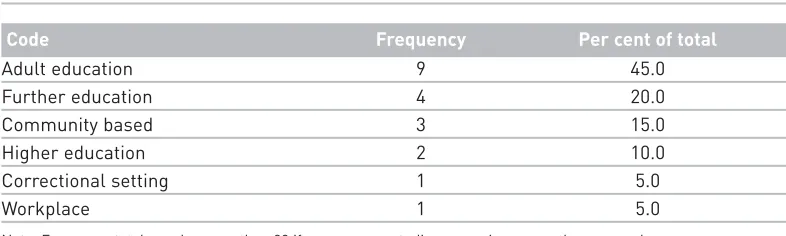
In all cases, writing was investigated alongside reading. The studies covered a variety of settings, including Adult Education, Further Education, the workplace, family literacy, community and correctional settings.
Two of the nine studies were large-scale, cross-programme investigations, five dealt with the impact of individual literacy programmes (two well established, two short-term), while the last was a small study evaluating an intervention designed for a single class.
3.5.3 The large-scale studies
■ Purcell-Gates, Degener, Jacobson and Soler (2002). (Note: This study was termed large-scale due to its wide geographical coverage.)
■ Brooks, Davies, Duckett, Hutchison, Kendall and Wilkin (2001a)
Both these studies were judged to have highly sound methodologies.
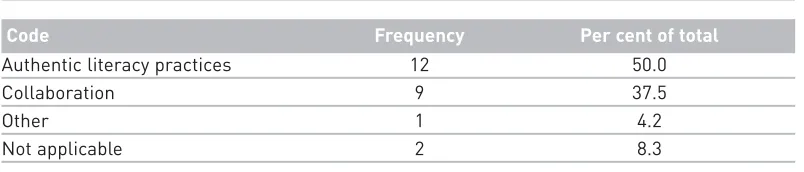
Purcell-Gates et al., (2002) looked at the effect of two dimensions of classroom instruction on change in the frequency and/or type of real-life literacy practices. The two dimensions of interest were ‘authenticity in the classroom’ and ‘student-teacher collaboration’. The authors tested 159 adult literacy students from 77 classes selected from 22 states across the USA.
Writing was included in the questionnaire on real-life literacy practices (17 out of 50 questions). An example of a writing question would be, ‘In the past week, did you write a cheque?’ The two dimensions of instruction were not, however, related to individual literacy practices, but to an aggregate of all items. Thus writing was subsumed under ‘literacy practices’.
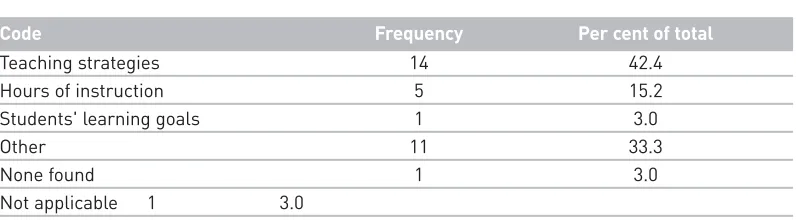
Findings revealed that of the two classroom dimensions, only authenticity was significantly and positively related to change in literacy practices. While this was a correlational study, tentative causality was also suggested by the authors, based on appropriate analyses. Other significant predictors of change in literacy practices included the level of the learner at the start of the class (the lower the initial level of the learner, the more likely they were to report change), and hours of instruction completed (the more hours completed, the more likely they were to report change).
Brooks et al., (2001a) looked at ongoing basic skills provision to measure student progress in literacy skills (both reading and writing) and to identify student and tutor factors related to progress. For writing, the authors pre-tested 1724 adult literacy students in 49 Colleges of Further Education and 22 local education authorities across England and Wales. The number post-tested was 937, or 54 per cent of those pre-tested. For reasons which were never uncovered, no writing post-tests at all were received from Wales, and the findings
summarised here therefore refer only to the 36 Colleges of Further Education and 15 local education authorities involved in England (G. Brooks, personal communication, 2003). Two writing samples, separated by up to 20 weeks and 60 or more hours of instruction, were gathered in response to the prompt, ‘Please write a bit about what you hope to learn (or have learnt) here’.
3.5.4 Individual literacy programmes
■ Fingeret and Danin (1991)
■ Brooks, Gorman, Harman, Hutchison, and Wilkin (1996)
■ Cooper and Garside (1996)
■ Perin (1994)
■ Posey (1993)
■ Thistlethwaite (1989)
The Fingeret and Danin (1991) and Perin (1994) studies were judged to have highly sound methodologies, while the Cooper and Garside (1996) and Thislethwaite (1989) studies were judged to have moderately sound methodologies. The Posey (1993) study was also found to be moderately sound although very small, involving only 13 learners. The Brooks et al.,. (1996) evaluation was judged to be moderately to highly sound.
Brooks, Gorman, Harman, Hutchison, and Wilkin (1996) aimed to evaluate the impact of the Basic Skills Agency (United Kingdom) Family Literacy Demonstration Programmes. Impact was measured through a combination of qualitative and quantitative data on parents and children’s reading and writing attainment, employment and education history and literacy activity at home. 353 parents participated along with 371 children. The evaluation was successful in finding evidence of the programmes positive impact. Certain of the factors identified as contributing to programme success can clearly be seen to also contribute to learner progress. These included: the strong motivation and clear objectives that parents brought to the programme, the joint purpose and group cohesion achieved by parents, the individualised and reflective teaching, the genuinely inter-generational nature of the teaching, clear and open planning in parents’ sessions contributed strongly to the success of the joint parent-children sessions.
Fingeret and Danin (1991) aimed to evaluate the impact of an established literacy programme called Literacy Volunteers of New York City (LVNYC). Impact was measured through progress and changes in the students’ literacy skills, their attitudes and self-concept, and their out-of-school literacy practices. The authors tested 102 adult literacy students at seven centres in New York that were running the programme.
Writing was included as part of ‘literacy skills’ in the student focus groups and other
interviews. In addition, two writing samples (as generated in the programme), separated by 50 hours of instruction, were collected.
The study found progress in students’ literacy skills (e.g., some students could now write stories), improvement in their attitudes and self-concept (e.g., growing feelings of confidence and competence), and changes in their out-of-school literacy practices (e.g., formal
correspondence). An analysis of the writing samples showed gains in overall scores between the first and second pieces of work and the largest gains were seen in the early stages of instruction, i.e., for the newest students. (Note that differences in scores were not tested statistically.)
Features of the LVNYC programme that could underlie these improvements included general characteristics such as student-centred learning and small group instruction, as well as specific characteristics of writing instruction such as emphasis on meaning and