Is European democracy promotion
on the wane?
CEPS Working Document No. 292/May 2008
Richard Youngs
Abstract
The EU routinely asserts that the promotion of democracy and human rights is central to its international identity. However, while in some places the EU has a relatively strong record as a supporter of democratic values, it is failing to respond effectively to the emergence of a vastly more challenging environment for democracy promotion. This paper reveals serious limits across three strands of democracy policy – the magnitude of incentives offered in return for democratic change, the degree of critical pressure exerted for democratic reform and the scale of European democracy funding. Even where the EU is building on the initiatives it has pursued for the last two decades, the paper demonstrates that these policies fail to measure up to the challenges posed by the new international context.
CEPS Working Documents are intended to give an indication of work being conducted within CEPS research programmes and to stimulate reactions from other experts in the field. Unless otherwise indicated, the views expressed are attributable only to the author in a personal capacity and not to any institution with which s/he is associated.
ISBN-13: 978-92-9079-790-6
Contents
Introduction ... 1
Incentives for political reform? ... 2
Sanctioning political repression? ... 5
Democracy assistance ... 10
Policy Suggestions ... 12
| 1
I
S
E
UROPEAN DEMOCRACY PROMOTION
ON THE WANE
?
R
ICHARDY
OUNGS*Introduction
The EU helped foster democratisation in Southern and Eastern Europe, and assisted its development in Latin America. The EU’s model of democratic reconciliation and development has international appeal. Its foreign policy instruments have given the EU a network of values-based partnerships around the world. The EU claims to have developed an approach to democracy promotion based on patience, a long-term perspective and sensitivity to the primary role of local actors. The United States’ loss of credibility as a promoter of democratic values could enhance the role of the European Union as a global leader in supporting political liberalisation in autocratic states.
EU democracy strategy has hitherto been based on three pillars: the use of positive incentives (in particular, where applicable, the offer of EU membership) to stimulate reform; the selective use of punitive measures and diplomatic pressure; and the funding of democracy programmes. Outside the framework of enlargement, each of these policy strands has been pursued in moderation, sometimes with significant resolve and resources but rarely eclipsing other European policy objectives.
It is now widely accepted that the broad context for democracy promotion has undergone fundamental change. The incremental expansion in the number of democracies witnessed since the beginning of the ‘third wave’ has ceased. The failures of the Bush administration’s ‘neo-conservative’ policy of forceful democratisation have led many commentators and practitioners to question the broader legitimacy of democracy promotion. Autocrats are learning to defend themselves from democracy promotion efforts, often cooperating amongst themselves to do so. Many ‘hybrid’ regimes – combining aspects of democracy and autocracy – seem firmly entrenched rather than mere staging posts on the way to more fully democratic systems. More broadly, the rise of non-democratic powers and the transition to a more multipolar world fundamentally change the democracy promotion calculus. With many non-democracies apparently generating strong economic growth and national-cultural identities, it seems that democracy’s post-Cold War honeymoon period of easily-assumed normative superiority may be at an end. And compounding all this, the dramatic rise in energy prices since 2003 has brought about a return to competitive geopolitics that, according to some arguments, leaves little room for democracy support.1
How is European democracy promotion policy reacting to this new context? Have the EU and its member states adopted new approaches and enhanced efforts to support democratic change? Are European democracy policies meeting the scale of the challenge presented by the reconfiguration of international power and norms?
Addressing these questions requires an in-depth assessment of what Europe is – and is not – doing to support democracy in different countries around the world. Analysis of this area of
*
Richard Youngs is Coordinator of the Democratisation programme at FRIDE, Madrid; Senior Associate Research Fellow at CEPS and lecturer at the University of Warwick.
1
policy often gets stuck at a rather abstract level, involving the description of a ‘European approach’ that is said to be gradual, development-oriented and based on positive engagement and partnership. There has been too little work on how these broad tenets play out in different political contexts. In light of this, the paper presents some of the key facts of European democracy promotion.
The detailed facts and examples lead to a clear conclusion. Most European governments do not now have a strategy for democracy promotion that is consistent, effective and based on a clear vision of the relationship between democratisation and other political objectives.
The absence of an effective strategy is evident across all three pillars of European democracy promotion policies (as pursued both by the EU and by individual member states):
First, the EU’s proclaimed policy of offering incentives for democratic reform is not being carried forward in any meaningful way. While European governments and the Commission argue that such ‘democratic rewards’ are integral to the EU’s non-coercive approach to encouraging political reform, in practice their deployment is patchy and of increasingly limited impact. The gravitational pull of enlargement appears to be weakening; some of the most generous European aid increases in recent years have gone to authoritarian or semi-autocratic governments; and European governments have not put in place sufficiently rigorous criteria to tie aid allocations to democratic progress.
Second, European governments are increasingly failing to respond critically to democratic abuses. Some examples exist of coercive pressure being exerted for democratic change, and there is variation between European member states on the use of sanctions. But overall, as the international context has changed, the EU now seems even more reluctant to sacrifice engagement with non-democratic regimes.
While the sweeping use of sanctions is neither desirable nor practicable, current policy decisions do not reflect consideration of where critical measures might have a positive impact. There needs to be careful analysis of where pressure can be effective, based on a review of how external policies play into domestic politics in non-democratic states.
Third, the scale of European democracy assistance remains extremely limited. In most cases, such assistance remains a minor appendage to development cooperation, targeting relatively soft social and governance reforms that are tangential to the core determinants of democratisation. The EU urgently needs to reassess how it can best ‘incentivise’ democratisation in the current international context. If the model of enlargement-based influence over political reform is reaching its limits, it is essential to evaluate the capability for European leverage through other and new types of rewards.
The EU should not only increase political aid, but also agree tighter criteria to determine which political initiatives in recipient states should qualify for democracy assistance. This will help member states to increase the reform-orientation of their governance programmes. The EU must also make democracy assistance more coherent with developments at the broader political and geo-strategic levels if such aid is to retain relevance in the new international context.
Incentives for political reform?
IS EUROPEAN DEMOCRACY PROMOTION ON THE WANE?|3
approach to democracy promotion. Most European governments and institutions set governance criteria that are supposed to be met as a condition of aid given to recipients around the world. While some instances of ‘democratic reward’ can indeed be identified, the positive, rewards logic has not been implemented to any significant degree. Some of the most generous European aid increases in recent years have gone to authoritarian or semi-autocratic governments, and European governments have resisted the establishment of firmer democracy-related conditions for aid allocations.
While Turkey’s democratic progress has led to the opening of accession negotiations, Turks now see themselves kept at bay by rising opposition to Turkish membership from EU member states, rather than rewarded for democratisation. Apart from the accession question, leverage is also reduced by the strikingly low level of member states’ bilateral aid programmes in Turkey. Similarly, while Croatia has been rewarded with the opening of accession talks, in recent years it has received far less European aid than Serbia and Montenegro. Moreover, the opening of negotiations with Croatia was a classic case of trade-off bargaining between member states promoting their own ‘clients’ – Austria in this case insisting on Croatian in return for Turkish accession talks – rather than the reflection of a consistent and uniform standard of democracy support.
A number of European donors forwarded new aid to Ukraine after the 2004 ‘Orange Revolution.’ This included Germany – by some margin the largest bilateral funder in Ukraine – France, the UK, Denmark and Sweden. Commission aid to Ukraine for 2007-2010 is due to be double that disbursed in 2003-2006. Ukraine has also been allocated €22 million from the Neighbourhood Policy Governance Facility in reward for democratic reform and is additionally benefitting from new European military cooperation. The Commission similarly doubled its aid package to Georgia immediately after the latter’s ‘Rose Revolution’ and the country was admitted into the European Neighbourhood Policy.
But even in the case of these two relative success stories, local reformers continue to see European assistance as half-hearted. Many Georgians complain at having been abandoned by the EU; only Germany runs a significant bilateral programme in the country. It is well known that several member states have opposed supporting Ukraine’s desire for EU membership. Indeed, even Poland says it is now pulling back from its previous role as a strong sponsor of Ukraine within the EU. And despite the new post-2004 initiatives, member states’ aid flows to Ukraine are still modest in comparative terms.
Overall funding to Morocco has increased significantly. Like Ukraine, Morocco was offered a €28 million reward from the Commission’s Governance Facility. Member states have offered Morocco sizeable assistance bilaterally, including France (€200 million in 2005), Germany (€62 million) and Italy (€40 million), while the country has become the largest recipient of Spanish aid.2 But the Moroccan regime could better be described as a slightly liberalised authoritarian one, not a democracy. The Governance Facility’s relatively even split between Morocco and Ukraine was, moreover, negotiated between member states as an old-style east-south division of resources, not based on objective and consistent democratic criteria across different partner countries. Spain, France and Italy wrested back control of this Facility in order to stop the Commission diverting funds away from ‘bad democracy performers’ in the southern Mediterranean.
2
Moreover, other Middle Eastern aid increases have gone to decidedly non-reforming states. While rewarding Morocco, in 2004-2005 the Commission also provided Syria with €100 million, Egypt with €360 million and Tunisia with €185 million. Egypt still receives large allocations from Germany (110 million for 2005), France (80 million) and Spain (30 million). Spain recently signed a bilateral cooperation treaty with Egypt offering €250 million in tied aid.3 French aid to Syria has increased year on year since 2002, reaching €26 million in 2005. Italy has allocated increased funds to Syria, Tunisia and Egypt since 2005. Spanish aid to Tunisia has increased, including through the direct provision of new security equipment.
The EU’s role in Kyrgyzstan’s 2005 ‘Tulip Revolution’ was conspicuously limited. Indeed the EU had supported president Akayev’s cosmetic ‘reform’ commitments as a way of heading off any destabilising democratic rupture.4 Limited assistance has been forthcoming to Kyrgyzstan’s beleaguered post-transition government since 2005, with only Germany offering any significant level of funding (€30 million for 2005).
Examples of the rewards logic exist in Africa. Several member states – including Sweden, Denmark, the UK and the Netherlands – significantly increased aid to Kenya after Daniel Arap Moi was defeated in elections in 2002. The Commission awarded the Democratic Republic of Congo (DRC) an initial €250 million after the 2002 peace-cum-democratisation deal, before investing heavily in the country’s 2006 elections. Mali, Mozambique and Ghana have attracted sizeable increases in aid from major European donors on the basis of commitments to political reform. A €200 million aid package to Sierra Leone for 2004-2007, following the 2002 elections, represented the UK’s most generous per capita aid allocation anywhere in Africa. Three billion euro of the 10th European Development Fund budget (out of a total €22 billion for 2008-2013) have been set aside to reward those ACP states cooperating with the EU on governance reforms.
But the overall correlation between European aid and recipients’ democratic quality remains low in Africa. The UK’s Department for International Development (DfID) remains committed to allocating resources with the goal of poverty reduction, not in response to political changes. The Commission is dividing the €3 billion governance reward amongst a large number of recipients, in order not to leave non-reformers feeling ‘victimised’: recipients are encouraged to present more ambitious ‘governance plans’, but diplomats acknowledge that the most potent criterion in deciding aid allocations in Africa is governments’ respective macro-economic policy commitments.
Despite evidence of deterioration in its democratic processes, Nigeria received a debt relief package worth over €5 billion from European governments in 2005. The UK government has increased its annual ODA allocation to Nigeria to over €100 million, and France and Germany to over €30 million.
The list of the principal recipients of French aid remains a familiar collection of historic client states, whose record on democracy can most charitably be described as variable: Cameroon, Chad, Gabon, Niger, Senegal, Ivory Coast and, with a striking hike in funds in 2005, Congo-Brazzaville. The brutally repressive regime of president Obiang in Equatorial Guinea has become one of Spain’s largest aid recipients, and has benefited from a new €30 million Spanish aid package since 2005 – despite the country’s recent oil bonanza. Spain is also nearly tripling its aid to Angola, despite delays to elections and increased political repression on the part of the Eduardo dos Santos regime.
3
El País, 5 February 2008.
4
IS EUROPEAN DEMOCRACY PROMOTION ON THE WANE?|5
Despite increased repression against opposition figures, the Ethiopian government has received aid donations of over €50 million annually from the Commission, Italy, the UK, Sweden, the Netherlands and Germany. The combined aid flows from EU DAC members to Sudan increased 500% between 2003 and 2005. Uganda remains one of the largest recipients of British, German, Dutch and Swedish aid, though its progress toward democracy has stalled.
Similar trends can also be witnessed in Asia. In the wake of its 1998 democratic transition, Indonesia received significant European aid only from the Netherlands, Germany and, to a much lesser extent, the Commission. Conversely, despite president Musharraf’s resistance to democratisation, Pakistan has recently been the fastest rising recipient of European aid in Asia. Aid to Pakistan from EU DAC members increased from €75 million in 2000 to €223 million in 2005. China is now the biggest recipient of German aid (€255 million in 2005); it is also one of France’s biggest targets (€153 million in the same year), and it received another €70 million channelled through the Commission in 2005. The French, German, British, Dutch and Swedish governments all allocate high and increasing amounts of money for Vietnam. And in spring 2007, the EU agreed aid increases to Cambodia, as the increasingly authoritarian Hun Sen regime dug itself into power ahead of elections in 2008.
These data suggest that most EU member states do not currently have any considered view on the importance they attach to democracy as a condition for aid distribution. The rewards offered for democratic reform may now have declining impact as other powers such as China and Russia offer relations and benefits based on alternative systems of norms. Europe’s policy of rewarding extremely modest political reform as a supposed transmission belt to full democratisation is not supported by a track record of success; there is often little evidence that such marginal steps lead to greater momentum for genuine democratisation.
Sanctioning political repression?
Europe’s preference for positive rather than punitive strategies is well known. But in the last few years European governments have appeared more reluctant than ever to respond critically to democratic abuses. Beyond its own enlargement, the EU has not been strongly wedded to the use of punitive democratic conditionality. Some examples exist of countries being penalised for anti-democratic steps, and there is variation between European member states on the use of sanctions. But overall, as the international context has changed, the EU now seems ever more unwilling to sacrifice engagement with non-democratic regimes.
The Balkans are increasingly locked into the rigours of pre-accession conditionalities. But one high-profile change of policy was the decision to re-open negotiations for a Stabilisation and Association Agreement with Serbia without General Mladic having been handed to the ICTY in The Hague. Diplomats argue that conditionality has failed in the case of Serbia, and that the fragility of this country’s fledging democracy – buffeted by the persistent strength of anti-reform nationalists – requires more engagement than external pressure, (some also appear to accept the Serb argument that Mladic’s whereabouts is genuinely unknown). At the time of writing, the ‘toughness’ of EU policy towards Serbia is still dictated by the latter’s position towards Kosovo, not Serbian democratic shortfalls. While greater pressure was exerted in Bosnia under the broader umbrella of the international community/EU High Representative, the US has recently pushed harder than the EU for ‘beyond Dayton’ constitutional reform in Bosnia.5
5
Perhaps most conspicuously, democracy-related conditionality has not been a part of the European policy mix in the Middle East. Where pressure has been exerted, it has not been in relation to democracy.Punitive measures against Libya were used only in relation to terrorism and WMD development. The EU collectively, as well as states such as France on an individual basis, moved to offer Libya a new trade and cooperation agreement after the release in the summer of 2007 of the Bulgarian nurses detained in Libyan jails, without any improvements in human or political rights. The EU’s association agreement with Syria was blocked first by the UK because of concerns about weapons of mass destruction and then by France in relation to the Hariri killing in Lebanon. A similar picture pertains in Iran: new trade and aid provisions have been promised if Iran cooperates in relation to its nuclear programme – this despite a progressive clampdown against journalists and academics since president Ahmadinejad assumed power. In none of these cases have EU engagement, aid, trade or investment been made conditional on democratic reform.
European criticism of President Mubarak has been all but inaudible as Egypt has slid back toward something resembling a police state. After the decidedly unfree 2005 presidential and parliamentary elections, Gerhard Schröder congratulated his “good friend Mubarak” with “all his heart”, declaring that the Egyptian leader had been given “a convincing mandate”.6 In contrast, in 2004 the Danish government finally decided to phase out assistance to Egypt, due to a “lack of momentum in the economic and political reform process.”7
In 2003 and 2004 France signed new bilateral partnership agreements with Algeria and Tunisia. Defence co-operation was intensified with the powerful Algerian military. During his 2003 visit to Tunis, President Chirac declared that “the first human right is the right to eat and from this point of view, Tunisia is far ahead of other countries in the region”. This statement coincided with a noted opposition leader’s fiftieth day on hunger strike.8 In December 2005, the Spanish government blocked the European Parliament’s attempt to insert a strengthened democracy clause in the new financial instrument guiding EU aid to the Neighbourhood partner states. Poland and Lithuania blocked negotiations for a new EU-Russia agreement. But they were painfully isolated from their European partners for doing so. Indeed, the Polish government was subject to stronger European criticism than president Putin. Moreover, the vetoes were ostensibly related to meat exports in Poland’s case and interruptions to energy supplies in Lithuania’s case. Polish diplomats themselves acknowledged that their hard-line position towards Russia (at least until the recent change in government) was more about an identity legacy of the Cold War than a democracy-related decision. The diplomatic sanctions adopted by the UK in July 2007 were significant, and supported by European partners; but they were carefully ring-fenced to one specific legal dispute over the extradition of a chief suspect in the Litvenenko murder case.
In contrast, pressure has been applied against Belarus, with targeted sanctions imposed against members of the Lukashenka regime. Here even France has been unrestrained in condemning widespread human rights abuses; indeed, before the 2005 elections, then-foreign minister Philippe Douste-Blazy received opposition leader Milinkivich in Paris in what an official described as the government’s “first instance of democratic ingérence”. The EU removed GSP trade preferences in June 2007 – making Belarus only the second country to suffer this move,
6
Quoted by U. Speck, (2006) “Kosmoblog – Anmerkungen zur Aussenpolitik” (www.zeit.de/kosmoblog)
7
Danida, (Danish Ministry of Foreign Affairs) Annual Report 2004,
8
IS EUROPEAN DEMOCRACY PROMOTION ON THE WANE?|7
after Burma – although this measure only just won a qualified majority, with Poland, Lithuania and Slovakia in particular pushing for more positive engagement.9
In Central Asia, the EU imposed sanctions only in response to the 2005 Andijan massacre in Uzbekistan, although the Karimov regime had been waging a brutal campaign against its political opponents for several years. Germany adopted a softer line in order to retain its military base in the country, in contrast to the US, which left its bases. One year on from the massacre in November 2006 the EU diluted its sanctions, leaving in place only an arms embargo and a visa ban on 12 officials. Germany offered Tashkent strengthened engagement within its proposed revamp of the European Neighbourhood Policy. This proposal was strongly criticised by activists in Uzbekistan. During its 2007 presidency, Berlin continued to push for a complete lifting of sanctions. In November 2007 sanctions were diluted, leaving only the arms embargo in operation (with the visa restrictions in effect suspended).
The OSCE declared that elections in Azerbaijan in November 2005 were neither free nor fair, but the EU did not respond punitively. All European ambassadors in Kazakhstan signed a letter opposing the OSCE chair being offered to president Nazarbayev; many were ignored by their own capitals. At the December 2006 European Council summit Germany, France, the Netherlands and Poland supported the Kazakh bid, while the UK, the Czech Republic, Slovakia, Slovenia and Hungary insisted that democratic reforms be implemented first. In the wake of another round of unfree elections in August 2007, the UK was the only state still arguing forcefully for such democratic conditionality (as a compromise Kazakhstan was offered the chair in 2010 instead of 2009).
A Partnership and Cooperation Agreement was signed with Turkmenistan in 1998, but was not ratified by a number of member states or the European Parliament. The Commission proposed separating out those elements related to human rights and democracy so that Turkmenistan could agree to a new, purely commercial and economic agreement. A majority of member states supported this proposal, but the EP blocked the option of dropping the EU’s democracy clause. European leaders were silent about the undemocratic nature of the transition after president Niyazov’s death in December 2006, openly hoping that the new regime would be more amenable to cooperating with the EU. A series of ministers and officials travelled to Ashgabat and the Commission suggested immediately unblocking the PCA.
In Africa, Article 96 of the Cotonou accord has been used to impose sanctions on eight occasions since 2000, in: Ivory Coast, Liberia, Zimbabwe, Central Africa Republic, Guinea-Bissau, Togo, the Republic of Guinea and Mauritania (as well as in Haiti and Fiji, of the EU’s non-African ACP partners). Most of these cases were conflict- rather than democracy-related and some saw aid resumed without democratic rights being fully guaranteed. In the 2004 Cotonou mid-term review the EU agreed to attempt even more ‘intensive dialogue’ with authoritarian regimes in the future before considering sanctions. Even in the select number of cases where mainstream Commission aid has been suspended on human rights grounds, full coherence between donors has been elusive. France increased aid to Guinea after EU sanctions were imposed. Paris has sought to circumvent sanctions against Zimbabwe and defy the UK by fostering political contacts with Xanu-PF leaders; and the Commission has extended the scope of its nominally humanitarian aid in Zimbabwe beyond a strict definition of that term.10
9
Rosa Balfour, “Promoting democracy and human rights in the EU’s Neighbourhood: Tools, strategies and dilemmas”, European Policy Centre, Issue paper No. 54, June 2007, p. 13.
10
Conditionality applied at the national level has been sporadic and ad hoc. Denmark withdrew aid from Zimbabwe well before EU sanctions were agreed; removed support for Eritrea after 2002; and held back one tranche of aid to Tanzania in 2007 on corruption grounds. In Uganda, as president Museveni stalled on ushering in multiparty politics, the Dutch and UK governments reduced direct budget support in 2006 and re-channelled assistance to relief efforts in northern Uganda. The UK slightly reduced budget support to Sierra Leone in 2006 in response to lack of progress on governance indicators.
After election-related violence in Ethiopia in 2005, in which more than 80 people were killed by Ethiopian government forces and hundreds of opposition activists were arrested and detained, European states responded in an uncoordinated and inconsistent way. A number of donors suspended or cut back aid going directly to the Ethiopian government: this included Sweden, the Netherlands and the UK. But others did not. The Commission wanted to keep aid programmes going and resumed full funding as soon as the government agreed to (a non-committal) dialogue with the opposition. Italy increased aid threefold in 2006. Even much UK aid was in practice soon being spent in much the same way as before the elections.
In 2006 the UK suspended a third phase of its aid package to Sudan, but a majority of EU member states have been reluctant to extend sanctions against the Sudanese government. France and other states blocked a Commission proposal to reinstate sanctions against Ivory Coast in 2004 and have backed president Gbagbo’s postponement of elections since 2005.
When in 2005 the Togolese Army interrupted constitutional provisions and appointed as president Faure Gnassingbé, son of the recently deceased President Gnassingbé Eyadema, France and other EU member states pushed for new democratic elections to be held; but the flawed elections that simply returned Gnassingbe to power paved the way for a normalisation of relations between Togo and the European Union. Since 2006 direct French military backing has been provided to autocratic regimes in Chad and the Central African Republic.
The EU’s response to the recent manipulated elections in Kenya has lacked clarity. The UK and Germany have criticised Kibaki most strongly and intimated at aid cuts. The EU as a whole has threatened visa bans and the suspension of new aid projects. But, at least at the time of writing, no member state has called categorically for the holding of new elections as a precondition for continuing aid and trade cooperation. The preference appears to be to back mediation efforts between the government and opposition. Indeed, on his visit, development commissioner Louis Michel criticised the opposition more strongly than the government!
The Zapatero government has since 2004 opposed any consideration of sanctions against Spain’s former colony, Equatorial Guinea, as one of the world’s most authoritarian regimes has tightened its grip and growing corruption has been linked to oil contracts with Spanish enterprises.11 Foreign minister Miguel Angel Moratinos pledged not to “destabilise Obiang from Spain”.12
In Rwanda, France was critical of the Paul Kagamé government and reduced aid formally on governance grounds; diplomatic relations were cut in 2006 over a French court’s sentencing of a Tutsi commander in relation to the 1994 genocide. In contrast, the UK and the Netherlands have generously supported Kagamé. Sceptics suspected that this rare case of France taking the lead in coercive pressure was more anti-Tutsi than pro-democracy; certainly it seemed too much of a coincidence that the one place in Africa where the French have been unashamedly tough is where their traditional Hutu clients lost power.
11
“Madrid préfère le pétrole aux droits de l’homme”, Courrier International, 15 November 2006.
12
IS EUROPEAN DEMOCRACY PROMOTION ON THE WANE?|9
In Asia the trend has also been away from critical strategies. After the military coup that brought Pervez Musharraf to power in October 1999, the UK agreed a freeze on arms exports to Pakistan and pushed to have the country suspended from the Commonwealth. But after 2001 Britain restored full relations with Pakistan, the two countries agreed new defence co-operation and Pakistan’s Commonwealth membership was reinstated in 2004. While not providing Musharraf the same degree of support as the US, the EU did not threaten punitive measures in the summer of 2007 as the president removed the head of the Supreme Court, increased restrictions against opposition parties and then prevented the return of Nawaz Sharif, declaring a de facto state of emergency. The Commission delegation loosely implied that aid might be reduced if Musharraf did not shed his army uniform. European (and especially, British) diplomats proactively supported the power sharing deal between Musharraf and Benhazir Bhutto, prior to the latter’s assassination – this pressure could claim some success after opposition parties won (and were allowed to win) elections in February 2008, although the cost was of course that Musharraf himself remained, at the time of writing, as president.
When in 2005 the Nepalese King declared a state of emergency and took over direct power, citing the need to defeat Maoist rebels, the Danish and British governments decided to phase out assistance for Nepal. They soon restarted assistance, but through civil society organisations. In 2006 the UK cut Sri Lanka’s core aid by 50% over human rights concerns.
The EU ejected Burma from its GSP trade preferences, but did not impose a trade or investment embargo. Prior to the Buddhist-led uprising in September 2007, a majority of states had been advocating more engagement with the Burmese junta, arguing that isolation had not worked. Only after the violent suppression of the uprising did the EU move to curtail trade in a few additional sectors dominated by the Burmese military – affecting a small percentage of an already limited amount of EU-Burma trade.
While the EU arms embargo on China was retained after a long internal debate between member states – more than half of whom wanted to remove the embargo – this is the only punitive measure remaining in force against China from the EU’s post-Tiananmen Square package of sanctions. At the time of writing, European criticism has hardened of China’s actions in Tibet; but it remains to be seen whether there is any follow-through in terms of concrete policies.
Spain insisted in 2004 on the removal of limited diplomatic sanctions against Cuba. In early 2007 the Spanish government blocked a Czech proposal for a new EU strategy paper on Cuba that would prompt support for Cuban opposition groups; this proposal had won support from Poland, the Netherlands, Sweden, Denmark, Ireland and Portugal.13 In September 2007, Spain’s government restarted mainstream development aid that had been cut in 2003, allocating €20 million a year to the Castro regime.
The evidence presented here indicates that European governments have not often sanctioned regimes that engage in political repression or curtail human rights. If anything, heightened concerns about security and energy supplies have led to a greater willingness to engage with autocratic regimes in recent years. In addition, the rising influence of Russia in Central Asia, of China in Africa and of India, as well as China, across Asia, has complicated the international environment for pressuring non-democratic states to reform. In many cases, the punitive measures that European governments have adopted have failed to gain the wider international support necessary for them to have a significant impact.
Against this background, European policies toward non-democratic states appear to be improvised and inconsistent. European leaders need to develop a systematic view of the role of
13
diplomatic and financial pressure in persuading non-democratic regimes to liberalise, and of the way this objective relates to other foreign policy concerns. A considered strategy that maximises the leverage that Europe can exert in the new global environment is essential, as is a clear narrative that can explain the basis for the policies the EU undertakes.
Democracy assistance
With punitive measures limited and if anything weakening even further, and the rewards offered to democratising states not yet significant, the direct funding of democracy-related projects has assumed greater importance within European strategies. Resources allocated for democracy assistance projects have increased, but with variation across member states.
Crucially, the results expected of political aid appear increasingly unrealistic in the changed context of democracy promotion described above. A belief still prevails in the EU that low scale and low key democracy projects can shift political reform in a liberalising direction, without engendering too much geopolitical tension with autocratic regimes. But if these regimes have learned how to deflect the impact of democracy assistance, as analysts now suggest, the scale of EU efforts outlined here must be seen as woefully inadequate.
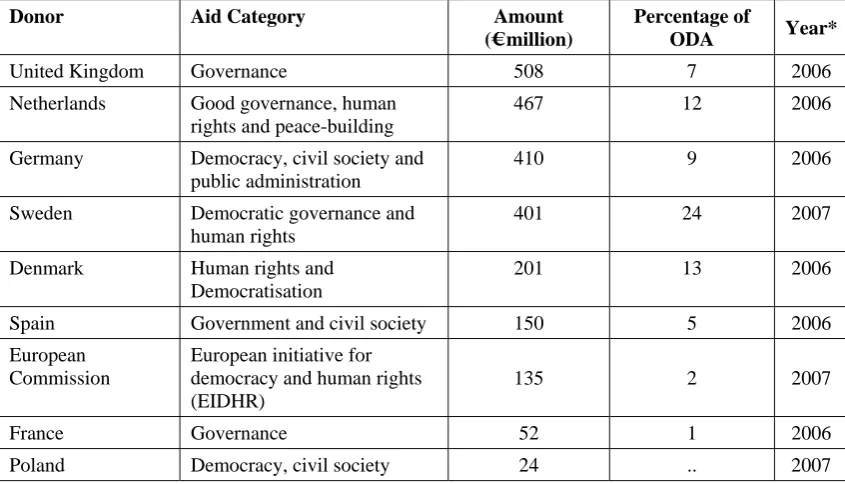
[image:14.595.86.509.373.615.2]Table 1 shows member states’ allocations of aid under their most relevant aid categories.
Table 1. Member states’ aid allocations with shares of total development aid
Donor Aid Category Amount (€ million)
Percentage of
ODA Year*
United Kingdom Governance 508 7 2006
Netherlands Good governance, human rights and peace-building
467 12 2006
Germany Democracy, civil society and public administration
410 9 2006
Sweden Democratic governance and human rights
401 24 2007
Denmark Human rights and Democratisation
201 13 2006
Spain Government and civil society 150 5 2006
European Commission
European initiative for democracy and human rights (EIDHR)
135 2 2007
France Governance 52 1 2006
Poland Democracy, civil society 24 .. 2007
* The most recent year of available data.
It should be noted that:
IS EUROPEAN DEMOCRACY PROMOTION ON THE WANE?|11
only a very small percentage of overall Commission aid is allocated for good governance, including in Afghanistan, Pakistan, Cambodia, Russia, China and Vietnam. Funding available under the Stability Instrument (and previously the Rapid Reaction Mechanism) has increased but funds only a small number of projects related to democracy support (including electoral support in Georgia, Iraq and Ukraine, along with state capacity-building in Afghanistan).14
• Using a broad definition of political aid, the UK makes the largest allocation of €508 million for ‘Governance’ (2005-2006 data), or 7% of total aid. The Governance budget was almost in its entirety divided between Africa and Asia. In addition, DfID’s new Governance and Transparency Fund was launched in February 2007, making available 100 million pounds over 5 years, to go to civil society, media, unions and parliamentarians. A small amount of reform work has been funded out of the Foreign and Commonwealth Office’s Global Opportunities Fund, including in some difficult democracy promotion cases such as Belarus, Iran, Russia, Saudi Arabia and Vietnam – but money from this fund has been gradually redirected since the July 2005 terrorist attacks in London towards issues of ‘radicalisation’ within the UK.
• Dutch funding for democracy-related activities amounted to approximately €127 million in 2004, just under 4% of development co-operation funds. Large increases were forthcoming in 2006, such that a broad category of Dutch political aid amounted to €467 million, 12% of total aid.
• Germany has traditionally been the largest funder in absolute terms. German development ministry funding for ‘Democracy, Civil Society and Public Administration’ increased from €180 million (6.2% of bilateral ODA) in 2000 to €360 million (11.8% of bilateral ODA) in 2004, and then further to €410 million for 2006. Africa got a third of this, Asia another third, Latin America 20% and Europe 17%.
• Sweden has consolidated its position as the most generous relative democracy supporter. Swedish assistance for ‘democratic governance and human rights’ increased in absolute terms by nearly 23% between 2005 and 2006 and will increase another 18% in 2007, rising to €401 million, 24% of total ODA.
• Danish aid dedicated to human rights and democratisation doubled in absolute terms between 2000 and 2004, even though the overall Danish aid budget was cut by 10%. Danish political aid increased again to €201 million in 2006. The government boosted to 160 million kroner a democracy fund that allowed funding to go to states where no mainstream Danish development programme existed. The government also launched an Arab reform initiative, in frustration at the ENP’s failure to focus on democracy promotion – an initiative other states criticised as unduly mimicking the US’s new Middle East reform funding.
• Spanish funding for a broad category of ‘democratic governance, civic participation and institutional development’ increased from €117 million in 2001 to €150 million in 2006. A crucial difference between Spanish and most other European aid has been the former’s orientation towards middle income countries – although Spain has in the last two years increased funding to Africa notably.
• French ‘Governance’ aid decreased from €86 million in 2002 to €52 million in 2006, the latter representing only 0.7% of ODA. Very little of this funding was offered outside Africa and French-speaking developing countries. These areas received 86% of French governance
14
aid in 2004; 8% went to Europe; only 1% to the Middle East and North Africa. Bilateral French development aid to North Africa and the Middle East amounted to €365 million, in 2003; less than €5 million of this went to governance projects. The BMENA Foundation for the Future does not benefit from French funding.
• Poland has recently begun to offer democracy funding, through a civil society budget that has increased from €394,000 in 2004 to €7.9 million in 2006 and significantly ratcheted up to €23.6 million for 2007. The government has established a Democracy Support Unit and proposed a Polish democracy foundation, with highly flexible rules to get money to reformers, bypassing EU procedures.
• Other Central and Eastern European states have become firm advocates of democracy promotion but do not yet have any significant funds themselves for this purpose. The Czech Republic funds only small scale allocations (€0.5 to 1 million a year) to a small number of countries, such as Cuba and Belarus. Most of the initiatives undertaken by the new member states are predicated on the ‘transfer of democratic know-how’ rather than large scale financial support for civil society organisations.15
• Italy does not have an aid category for democracy assistance.
Policy Suggestions
The above account disaggregates overall European Union policy and sets out the policies and positions of different governments and institutions. It demonstrates that EU member states have diverged on democracy promotion strategies. European democracy support is increasingly a ‘tale of two Europes’, with some states retaining a strong commitment, while others’ pro-democracy rhetoric is increasingly hollow.
However, in the face of a set of new challenges that has arisen to democracy promotion, some policy considerations apply to EU member state governments in general. The purpose here is not to offer a detailed and comprehensive list of policy recommendations, but rather a select set of policy-relevant suggestions that flow specifically from each of the three strands of policy examined above:
• Incentives for democracy. The more challenging context for democracy promotion requires a reassessment of how the EU can best ‘incentivise’ democratisation. The rewards-based logic is often espoused and policy-makers claim strong commitment to this principle. At present, its realisation is patchy and of increasingly limited impact. Balance is, of course, required between aid as a reward for democratic progress and aid directed at other objectives such as poverty reduction. But, within a fundamentally altered international context, it is necessary to assess how much more potential there really is for democracy-based variation in EU trade, political and aid cooperation in different countries. If it is true that the model of enlargement-based influence over political reform is reaching its outer limits, it will be increasingly important to understand the capability for European leverage through other types of rewards. The EU needs to assess in greater depth how variation in aid and trade offers can have more impact on the calculations of recipient-country actors. At present the EU risks over-selling its adherence to this positive, ‘rewards’ commitment, in a way that is likely to breed resentment among reformers who then feel short-changed.
15
IS EUROPEAN DEMOCRACY PROMOTION ON THE WANE?|13
In some cases such analysis might produce the conclusion that tying more generous aid and trade rewards more tightly to democratic reform could indeed have greater impact: examples here could include countries such as Syria, Georgia, Nepal and many African states. In other cases, the analysis might suggest that what the EU needs to offer is not more aid but arrangements that offer third countries stronger geo-strategic status: examples here might include Russia, Nigeria, Iran and Egypt. In still other cases the most influential carrot might be related more to countries’ search for the symbolism of European identity: examples of this might include the likes of Ukraine and Kazakhstan. And finally the analysis should work to ascertain in more precise terms why the seemingly generous rewards that have indeed been offered to some smaller states have not so far had effect: for example, in the case of Belarus.
• Sanctions. The EU has faced criticism in recent years for having become too ‘pushy’ or neo-imperial in its support for democracy. The facts do not support this critique. Instead, even greater caution has taken root. The EU has increasingly held states to account for their international behaviour, but decreasingly for their domestic actions. European policy-makers commonly admit that improvement is needed here but insist that the EU is gradually moving in the right direction; indeed the unspectacular and incremental manner of European foreign policy development is habitually presented as a virtue. This paper shows that in some areas the European commitment to democracy is clearly weakening not, as claimed, increasing. The EU’s often-lauded ‘democracy promotion lite’ is in danger of becoming ‘democracy promotion liter and liter’, and in some places even ‘democracy promotion undetectable’.
In outlining the lack of European pressure on non-democratic states, this paper is not meant to imply that a sweeping use of sanctions is either desirable or practicable. But current policy decisions do not reflect consideration of where critical measures might have a positive impact. Rather, the eschewal of critical positions seems increasingly to be the default position of European policies.
Given the restructuring of international power relations, there needs to be careful analysis of where pressure can and cannot play a role. There is no easy, generally applicable conclusion on whether sanctions work; context determines whether they are helpful or counterproductive to reformers. Better analysis of this question is needed to avoid punitive measures being imposed simply where states are weak and strategically unimportant – that is, where the EU can ‘get away’ with such measures – not where they are necessarily most likely to help. This would reduce the risk of missing opportunities to assist reformers in situations where particular types of carefully-designed pressure might achieve a positive impact. Such analysis should help assess where the threat of sanctions being imposed has encouraged countries to adopt democratic reform, without them actually having to be used. And it would ensure greater transparency in the use of sanctions, defusing the charge of self-interested selectivity that is frequently levelled against the EU by its partners.
made to work they need to be articulated and harnessed in a far more specific and purposeful manner.
Hence, such a review of policy instruments should demonstrate and justify exactly why sanctions offer the prospect of assisting reform in Belarus, but engagement is deemed more helpful in Azerbaijan; why sanctions in the case of Zimbabwe but continued cooperation in the case of Kenya or Equatorial Guinea; why punitive measures against Burma, while deepened engagement with Vietnam.
• Democracy aid. Despite the new obstacles to democratisation conjured up by authoritarian regimes, European democracy assistance remains relatively limited in scale. Uncertainty persists in how such resources can best be spent. In some countries it is still doubtful that such democracy aid is anything more than a minor appendage to development cooperation. Much aid labelled as democracy assistance, or said to be contributory to democratic deepening, clearly isn’t. Much promising thinking is underway, especially within European development ministries, on refining governance funding. But at present European initiatives appear comprehensively defeated by the much-commented-on ‘backlash’ against democracy promotion from authoritarian and semi-authoritarian regimes. The EU should work towards a tightened categorisation of what qualifies as democracy aid as a step towards pressuring member states to increase the reform-orientation of their initiatives. This should adopt the most genuine and tightest of member state definitions, not a looser middle ground categorisation.
So, for example, the EU would clarify that funding for, for example, border controls in the southern Mediterranean, reconstruction in the Balkans or religious dialogue with Muslim states can no longer be passed off as direct support for democracy. If such a tightening exposed just how limited governments’ genuine democracy aid really is, this might shame them into increasing directly reform-oriented assistance.
| 15
References
Balfour, Rosa (2007), Promoting democracy and human rights in the EU’s Neighbourhood: Tools, strategies and dilemmas, European Policy Centre, Issue paper No. 54, June, p. 13. Carothers, Thomas and Larry Diamond (2007), “A Quarter-Century of Promoting Democracy”,
Journal of Democracy, 18/4, October, pp. 112-115 and pp. 118-120.
Chirac, Jacques (2003), press release on President Chirac’s visit to Tunis, 3 December (available at http://www.elysee.fr/elysee/elysee.fr/francais/interventions/ conferences_et_points_de_presse/2003/decembre/point_de_presse_de_m_jacques_chirac _president_de_la_republique_lors_de_sa_visite_d_etat_en_tunisie-tunis.1527.html).
Danida (2005), Annual Report 2004, Danish Ministry of Foreign Affairs.
El País, 25 February 2005.
El País, 5 February 2008.
Euobserver.com, 11 May 2007.
Jonavicius, Laurynas (2008), The democracy promotion policies of Central and Eastern European states, FRIDE Working Paper No. 55, March.
Laakso, L., T. Kivimäki and M. Seppänen (2007), Evaluation of Coordination and Coherence in the Application of Article 96 of the Cotonou Partnership Agreement, Conflict Transformation Service, Inkoo, Finland, p. 11, p. 27 and p. 41.
“Madrid préfère le pétrole aux droits de l’homme”, Courrier International, 15 November 2006. Sebastian, Sofia (2007), Beyond Dayton? Constitutional Reform in Bosnia and Herzogovina,
FRIDE Working Paper No. 44, December.
Speck, U. (2006), “Kosmoblog – Anmerkungen zur Aussenpolitik” (www.zeit.de/kosmoblog). Warkotsch, Alexander (2006), “The European Union and Democracy Promotion in Bad
Neighbourhoods: The Case of Central Asia”, European Foreign Affairs Review, 11/3, pp. 509-524.
Youngs, Richard (ed.) (2006), Survey of European Democracy Promotion Strategies
About CEPS
Place du Congrès 1 • B-1000 Brussels Tel : 32(0)2.229.39.11 • Fax : 32(0)2.219.41.51
E-mail: [email protected]
Website : http://www.ceps.be Bookshop : http://shop.ceps.be Founded in Brussels in 1983, the Centre for
European Policy Studies (CEPS) is among the most experienced and authoritative think tanks operating in the European Union today. CEPS serves as a leading forum for debate on EU affairs, but its most distinguishing feature lies in its strong in-house research capacity, complemented by an extensive network of partner institutes throughout the world.
Goals
• To carry out state-of-the-art policy research leading to solutions to the challenges facing Europe today. • To achieve high standards of academic excellence
and maintain unqualified independence. • To provide a forum for discussion among all
stakeholders in the European policy process. • To build collaborative networks of researchers,
policy-makers and business representatives across the whole of Europe.
• To disseminate our findings and views through a regular flow of publications and public events.
Assets
• Complete independence to set its own research priorities and freedom from any outside influence. • Formation of nine different research networks,
comprising research institutes from throughout Europe and beyond, to complement and
consolidate CEPS research expertise and to greatly extend its outreach.
• An extensive membership base of some 120 Corporate Members and 130 Institutional Members, which provide expertise and practical experience and act as a sounding board for the utility and feasability of CEPS policy proposals.
Programme Structure
CEPS carries out its research via its own in-house research programmes and through collaborative research networks involving the active participation of other highly reputable institutes and specialists.
Research Programmes
Economic & Social Welfare Policies
Energy, Climate Change & Sustainable Development EU Neighbourhood, Foreign & Security Policy Financial Markets & Taxation
Justice & Home Affairs
Politics & European Institutions Regulatory Affairs
Trade, Development & Agricultural Policy
Research Networks/Joint Initiatives
Changing Landscape of Security & Liberty (CHALLENGE) European Capital Markets Institute (ECMI)
European Climate Platform (ECP)
European Credit Research Institute (ECRI)
European Network of Agricultural & Rural Policy Research Institutes (ENARPRI)
European Network for Better Regulation (ENBR)
European Network of Economic Policy Research Institutes (ENEPRI)
European Policy Institutes Network (EPIN) European Security Forum (ESF)