City, University of London Institutional Repository
Citation: Nkansa-Dwamena, O. (2010). Reflections on Sameness and Difference:
Implications for Counselling Psychology and Professional Practice. (Unpublished Doctoral thesis, City, University of London)This is the accepted version of the paper.
This version of the publication may differ from the final published
version.
Permanent repository link: http://openaccess.city.ac.uk/19657/
Link to published version:
Copyright and reuse: City Research Online aims to make research
outputs of City, University of London available to a wider audience.
Copyright and Moral Rights remain with the author(s) and/or copyright
holders. URLs from City Research Online may be freely distributed and
linked to.
Reflections on Sameness and Difference:
Implications for Counselling Psychology and
Professional Practice
Ohemaa Nkansa-Dwamena
Professional Doctorate in Psychology (Dpsych)
City University
Department of Psychology
Table of contents
List of tables and illustrations ... 6
Acknowledgements ... 7
Declaration... 8
Abstract ... 9
Section A ... 10
Preface ... 10
Intertwining themes of Sameness and Difference ... 12
Critical Literature review ... 12
Case study ... 13
Empirical piece... 13
Personal Reflection ... 14
Section B ... 15
Negotiating racial sexual and gender identities: An exploration of the experiences of Black British Lesbians ... 15
Abstract ... 15
Introduction ... 16
Identity ... 19
Racial Identity ... 21
Black British Culture and History: The Slave Trade ... 22
Black British Culture and History: Immigration ... 26
Characteristics of Black British Culture: African and Caribbean influences ... 28
Racial identity theory ... 30
Gender Identity ... 35
Gender Identity Theory ... 35
Black cultural influences in the construction of the female identity ... 40
Lesbian Identity ... 42
General models of sexual identity ... 42
Sexual identity development: Black British Lesbians and Multiple identities ... 46
Multiple identity negotiation:Psychological Functioning ... 52
Methodology ... 59
Why A Qualitative Method? ... 59
Why IPA? ... 60
What is IPA? ... 61
Intellectual origins of IPA ... 62
IPA’s idiographic approach ... 64
IPA as an interrogative tool ... 65
IPA and counselling psychology ... 68
Epistemology Reflexivity ... 69
Lived experience as a criterion of meaning ... 73
The use of dialogue in assessing knowledge claims ... 73
The ethics of caring ... 74
The ethics of personal accountability ... 75
Personal Reflexivity ... 75
Procedure ... 78
Sampling and Participants ... 78
Ethics ... 81
Analytical Procedure ... 84
Methodological Reflexivity ... 85
Analysis ... 88
Overview of Analysis ... 88
Demographics ... 88
Analysis ... 91
Developing a Black identity ... 91
Socialisation in the Black Family ... 92
Developing a sense of Blackness ... 92
Sharing Black values and expectations ... 95
Socialisation in non-Black families ... 97
Socialisation in the Black community ... 99
Expectations of representing the Black community ... 100
Sameness and Belonging ... 101
Being different in the wider society ... 102
Intra-racial discrimination ... 104
Experience of growing up as a Black female ... 106
Transition into womanhood: Constructs of Black female identity ... 106
Importance of mental strength and responsibility ... 106
Feminine values: Roles and Skills ... 110
Expectations ... 112
Femininity ... 112
The need to fulfil the role of motherhood ... 113
Marriage ... 115
Representing the Black race ... 118
Construction of identity in wider society (Double Jeopardy) ... 119
Experiences of Lesbian Identity Development ... 121
Developing a lesbian identity ... 121
Initial Identification/Awareness ... 121
Messages (Black Community and Wider Society) ... 125
Embracing a lesbian identity ... 127
Experience of Disclosure ... 127
Experience of Sameness/Difference ... 131
Difference ... 131
Sameness ... 132
Exploration of Sexual Behaviours and relationships ... 134
Sexual Behaviours ... 134
Racial preference of partner ... 135
Triple Jeopardy: Identity Conflict ... 137
Impact of triple jeopardy ... 138
Psychological ... 138
On relationships with community/others ... 142
Homophobia ... 144
On other identity components ... 147
Black identity ... 147
Female identity ... 150
Motherhood ... 151
Managing Identity Conflict ... 153
Graded Disclosure ... 155
Support Systems ... 157
Reconciling Black/Female/Lesbian identity ... 159
Overview ... 163
Transferability ... 170
Substantive Findings ... 174
Impact of conflict ... 174
Evolving Journey ... 176
Psychological Implications ... 178
Heterogeneity of populations: The UK and the US ... 180
Difference within population: Black British community ... 181
Implications of Heterogeneity ... 182
Section C ... 184
Professional Practice ... 184
Case study ... 184
Introduction/Implicit Rationale for presentation of cases ... 184
Therapeutic Experiences: Yasmin, Claire and Michael ... 187
Michael ... 187
Context/Brief Biography ... 187
Presenting Issues ... 187
Initial Meeting ... 188
Content and process of sessions ... 190
Outcome ... 191
Yasmin ... 192
Brief context/Biography ... 192
Presenting Issues ... 193
Initial meeting ... 193
Content and process of sessions ... 194
Outcome ... 195
Claire ... 196
Brief context/Biography ... 196
Presenting Issues ... 197
Initial Meeting ... 197
Content and Process of sessions... 198
The role of supervision ... 200
Learning experiences ... 202
Section D ... 206
Intra-racial Discrimination in the Black Community: Psychological Implications ... 206
A Brief History ... 210
Colourism and Self concept ... 213
Colourism and self esteem ... 217
Intra-Racism, Physical Attractiveness, Beauty and Psychological Implications. ... 222
Colourism and the therapeutic relationship ... 227
References ... 234
Appendix A ... 269
Advertisment Flyer ... 269
Appendix B ... 270
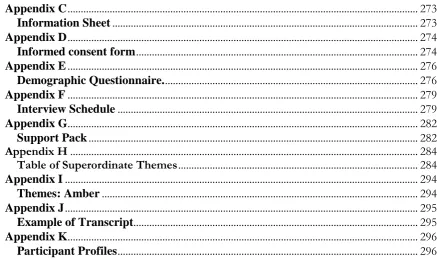
Appendix C ... 273
Information Sheet ... 273
Appendix D ... 274
Informed consent form ... 274
Appendix E ... 276
Demographic Questionnaire. ... 276
Appendix F ... 279
Interview Schedule ... 279
Appendix G ... 282
Support Pack ... 282
[image:6.595.67.505.71.333.2]Appendix H ... 284
Table of Superordinate Themes ... 284
Appendix I ... 294
Themes: Amber ... 294
Appendix J ... 295
Example of Transcript... 295
Appendix K ... 296
List of tables and illustrations
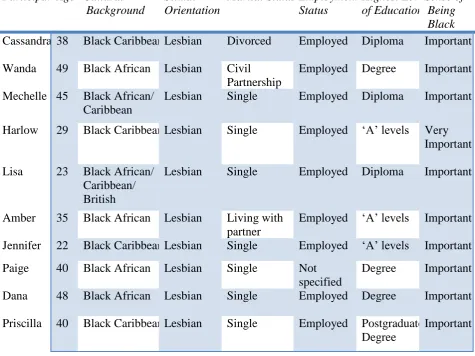
Table One 89
City, University of London Northampton Square London EC1V 0HB United Kingdom
T +44 (0)20 7040 5060
THE FOLLOWING PARTS OF THIS THESIS HAVE BEEN REDACTED
FOR DATA PROTECTION REASONS:
Acknowledgements
I would like to thank my supervisor, Dr. Deborah Rafalin, for her constant guidance,
patience and support. I would also like to thank all the organisations who allowed me to
advertise on their websites and mailing lists. I cannot possibly overlook the contribution
of my family and friends who kept me going through this process with their love, strength
and good humour.
Finally, and most importantly, a huge thank you to the women of this study who took the
time to share their experiences with me; thank you for trusting me to present your
Declaration
Abstract
Section A
Preface
This portfolio covers the overarching theme of ‘sameness and difference’ and consists of a an empirical piece, a case study and a critical literature review which have all examined this theme in their presentation of issues which have implications for the field of counselling psychology and professional practice.
The concept of sameness and difference is one that has been explored extensively in many different areas of psychology. Researchers have explored how the concept pertains to gender identity and gender difference (Egan and Perry, 2001). It has also been explored in relation to sexual identity (Clarke, 2002) and racial identity (Gillem, Chon and Throne, 2001), research processes (Bhopal, 2001), insider-outsider status (Wilkinson and Kitzenger, 1996) and the role it plays in therapeutic encounters (Farsimadan, Lorenz and Ellis, 2007). Sameness and difference extends across many different areas in psychology and in the wider context of society, through equality, discrimination, human process, the way in which people think, exist and interact. In professional practice, the concept of sameness and difference can manifest in the relationship between client and therapist, the differences between client and therapist. It can have implications for therapeutic practice and for the advancement of a successful therapeutic relationship, but also plays a large role in determining the course of therapeutic interventions and outcomes (Sterling, Gottheil, Weinstein and Serota, 2001).
negotiation and conflict in a group which is underrepresented in the psychological literature. The qualitative research piece explores the experiences of Black British lesbians in negotiating their racial, sexual and gender identities. Research (e.g. Parks, Hughes and Matthews, 2004, Greene, 2000) has suggested that this population may experience difficulty in negotiating multiple identities because of confrontation with societal and community norms, conflicting racial, gender and sexual orientation values, and homophobia from their own community. As a result of these difficulties, this population may face psychological issues such as depression, low self esteem and substance abuse (Bridges, Selvidge and Matthews, 2003). However, there is a lack of research pertaining to Black British lesbians. This empirical piece attempts to address this imbalance by exploring the experiences of this unique group of women in the context of a Black British/British culture
The case study in section C consists of a representation of professional practice. Three cases which explore the impact of sameness and difference in a therapeutic session are presented. Literature in the area of therapist matching has suggested that patients may benefit from engaging in therapy with professionals who have a similar racial or cultural background, or are of the same gender (Atkinson, 1983). Contrasting research suggests that therapist matching does not have an effect on the outcome or progress of therapy, or can have a negative effect. Similarity and difference in the form of race, gender and sexuality were explored in this case study in an attempt to illustrate the way in which the concept can either adversely affect or aid the process and progress in a therapeutic relationship (Maramba and Hall, 2002).
colour and such difference has been shown to impact on Black individuals’ sense of self worth, self esteem and perception of beauty and attractiveness. The critical literature review aims to present a review of the existing literature and critically assess the validity of the empirical research that has examined the phenomenon of intra-racial discrimination and its psychological implications.
Intertwining themes of Sameness and Difference
Critical Literature review
Case study
Similarity and difference in therapeutic encounters are well demonstrated in the psychological literature, with several researchers suggesting that individuals benefit from engaging in therapy with a therapist from a similar background, race, sexual orientation or gender. The underlying premise for this suggests that sameness between client and therapist may encourage comfort and a sense of understanding for the client (Sterling, Gotheil, Weinstein and Serota, 2001). There is also research to refute this stance, with researchers suggesting that equally, potential clients might benefit from a therapeutic encounter with practitioners of a different background as this might facilitate client disclosure (Maramba and Hall, 2002). One reason for this might be the perception that a therapist from a different background might be able to help the client develop a fresh perspective because of the lack of sameness with the client. Clients also cited fear of judgment and over-familiarity as some of the reasons that might compel them to seek therapy with therapists of a different background (Bryan et al 2004). The implications of similarity and difference on the therapeutic relationship are important to explore given the diversity of society and the increasing number of diverse clients who access therapy.
Empirical piece
orientation, which may be considered as a violation of cultural norms and similarities. They may also be subjected to racism within the gay community because of a difference in skin colour. Finally, the lack of visibility of Black British lesbians within the wider society can also foster a sense of difference for a Black British lesbian who is trying to seek validation of their sexual identity (Greene, 1994).
Personal Reflection
Section B
Negotiating racial sexual and gender identities: An exploration of the experiences of
Black British Lesbians
Abstract
Introduction
Individuals are rarely defined by one aspect of their identity. In different stages of their lives, each unique aspect of their self identity is highlighted, prominent, or sometimes underlying. Put simply, identity is ever-changing, fluid and complex. The ways and means by which self identity comes to a point where all components have equal eminence may be gradual, or may not even happen for some. Taking this stance into consideration, it seems that the process of consolidating a Black female lesbian identity can be both complex and simple, however, the journey that these women embark on, albeit - a very individual one - highlights the complexity of ‘identity’.
in charge competence was quiet and effective’ and who carried herself with ‘physical substance, presence and self-possession” (Lorde, 1982, p.226). The power that Lorde’s (1982) mother exuded influenced Lorde’s (1982) concept of herself as a woman, but this influence was strangely unhelpful when Lorde (1982) began to develop a lesbian identity. Whilst her mother instilled a sense of pride in being a woman and a strong sense of being Black, she did not instil the tools needed to assimilate a lesbian identity. Lorde’s (1982) sexuality was a journey of self-discovery, largely devoid of any support from a community who did not understand or did not want to know about a Black woman who was Gay.
Lorde’s (1982) struggle to consolidate her personal identity by assimilating a stigmatised sexual identity illustrates the premise that within a fluid identity structure, different components interact with each other, and sometimes this interaction can be problematic. In her case, the interaction of a dominant racial and gender identity with a developing sexual identity proved to be difficult because certain aspects of her racial identity conflicted with the stigmatised lesbian identity.
which in turn spawns issues of racism, sexism and attitudes toward sexual orientation and sexual preference - and the way in which Black women develop a gender identity. Equally important is the unique role that family and community play in the formation and establishment of a sexual identity. These may include perception of gender roles, family perceptions and attitudes, and the experience of being a Black woman. Additionally, racial identity development must also be examined because of its contribution to the makeup of the multiple identities that Black British lesbians hold.
Considering the complexity of consolidating a Black female lesbian identity, it is surprising the psychological literature which examines the experiences of ethnic minority lesbians - particularly Black lesbians - is sparse. Most of the academic literature explores issues surrounding ethnic minority lesbians and gay men concurrently, and that which does cover issues related to lesbians rarely includes Black lesbians as a dominant group. This is startling, considering the reported psychological issues that Black lesbians encounter, such as depression and alcoholism, (Greene, 1994) and the identity issues they face in their triple minority status as Black, lesbian and female.
Identity
Identity is a concept which has been studied at various levels and from different perspectives over the years in the psychology field (Phinney, 1990; Cross, 2001; Diamond, 2000; Butler, 1993). The vast cannon of literature on identity examine many different components, theories and knowledge. It can therefore be purported identity is a complex, variable and fluid concept comprising multiple components which continuously interact to form an individual’s self-definition and contributes to their self-concept (McAdams, 1995). Although widely studied, identity has proved to be a problematic due to its complexity. Research in modern years has explored and debated ‘identity’ from different standpoints. Theories, methods and priorities in each of these areas differ. Whilst of major value it is important to note that the exploration of identity is an ongoing process as few studies have been able to capture the theoretical concepts of maintenance and change.
Breakwell’s (2001) Identity Process Theory might be applicable in attempting to explain the process individuals undertake in negotiating multiple identities, as it takes into consideration the dynamics and fluidity of the identity process.
Breakwell’s Identity Process Theory (2000) suggests that the structure of identity is a “dynamic social product of the interaction of the capacities for memory, consciousness and organised with the physical and societal structure” and these “influence process which constitute the social contexts” (p.355). She goes on to emphasise that identity is “a subjective concept of oneself as a person and is therefore a form of representation” (p.340). However it is not constructed solely within the individual but emerges via the interaction of several processes. She suggests that the structure of identity should be described in terms of the content and the value/affect dimensions; the content dimension consists of the characteristics which define identity, i.e. those which define the individual as unique. It encompasses group membership, roles, social category labels as well as values, attitudes and cognitive style, but this is not an exhaustive list. Each element of this content dimension has a positive or negative affect attached to it; collectively, these values constitute the value/affect dimension of identity. This dimension of identity is consistently subject to revision, change and fluidity.
Essentially, identity is nether simplistic or stagnant - it is created, modified, and assimilated over different social contexts in specific time periods. Its complexity means that any one social identity does not necessarily function in isolation from other identities in the overall identity structure. Rather, it exists in a definite position relative to other aspects of identity as well as the overall identity structure (Pittinsky et al, 1998). Thus, fluidity in identity is related to these interactions in the identity structure, and dependent on social context, environment and time. Certain components may take precedence in the identity structure. Furthermore, changes in social context, environment, interactions will initiate changes in the identity structure according to “their personal relevance, the immediacy of involvement in them, the amount of change demanded and how negative the change is deemed to be” (Breakwell, 2001, p. 357). Breakwell’s (2001) ideas are important to consider when exploring the multiple identities of Black lesbians as it is possible that over the course of their sexual identity development, other social identities in the overall identity structure may be prominent or may regress. This may be due to the clash of content dimensions in each of these social identities.
Racial identity
perspectives, cultural roots, community, ethnicity or environment. Therefore, the development of a racial identity is not linear and ‘race’ does not hold a stagnant position within the identity structure. Racialisation takes into consideration the psychological and social processes which may influence the fluid nature of racial identity construction (Murji and Solomos, 2005), and further highlights the notion that race becomes significant through cultural, psychological, social processes (Phoenix, 2005) and the interaction with other identity components.
The Black British community is made up of several different cultures, languages, ethnicities and is underpinned by a rich and diverse history which transcends decades. In order to best explain this diversity and the ways in which it contributes to the development of a Black identity, an examination of roots and history, and underlying racial identity theory will need to be examined.
Black British Culture and History: The Slave Trade
An examination of the experiences of Black British lesbians requires a careful consideration of the history and roots which may have contributed to the development of their converging identities. Black British individuals have their roots in Africa and the Caribbean, and so while they may share the legacy of the transatlantic slave trade and the experience of immigration to Britain, their common origins do not result in homogeneity.
and how these in turn affect ideals and values. Wekker (1993) and Greene (1994) observe that prior to their departure from the African coast and Caribbean islands as slaves; Caribbean and African women were a heterogeneous group. Mixed pre-slavery lineages of African women and Caribbean women meant that they had “their membership in various tribes that spoke languages as well as having different systems of family values, family relations and tribal customs” (p. 242).
The presence of Black individuals in Britain dates back to the Roman occupation when they held positions of prominence in the Roman army (Walvin, 1994). The Black populace grew in Britain in the 17th and 18th centuries as Britain was establishing itself as a major world
player through its involvement in international trade, the enslavement of Africans, and other historical activities. Black individuals arrived at British ports such as London, Bristol and Liverpool as enslaved property to be bought and sold at auctions (Christian, 1998). Some of these slaves remained in Britain as domestic servants while others were taken to British slave colonies in the Caribbean where they worked on plantations. These plantations were a great source of income for Britain, and in fact, the slave trade in itself became a very profitable venture for the British Empire until its abolition in 1807. The transatlantic slave trade also created the conditions for subsequent colonial conquest in Africa (Morgan 2007).
Caribbean, Walvin (2000) postulates that mothers and fathers passed on cultural attributes and values to their children. In the wider slave community, people met, shared stories and expressed their experiences through music. Family relations also took place within a much broader framework of ties within the slave community, as extended families became the framework for these communities. Walvin (2000) tells of occasions when older, established slaves took in and adopted newly arrived ones and kinsfolk rallied around in all life’s trials and tribulations. The community (neighbours, friends and family) cared for the old, disabled, sick and young. Victims of the slave trade thrived in this family network and the broader network of kinfolk, a concept that exists today within the Black community, regardless of origin (Bush, 1990).
their families and communities developed a sense of collective strength and unity which fortified them against the tribulations of enslavement through the significant events of marriage, death and bereavement and offered companionship through the insignificant events such as cooking, nursing and relaxing after a day’s work (Fryer, 1993; Horton& Horton, 2009). This is echoed by Walvin (2000) who suggests “despite everything, despite the slave trade, despite the brutality of slave labour...the slave family became the source of strength and resilience to slaves...In essence it was to form the basis for the structure of black life and society long after the process which had brought it into being-chattel slavery-had melted away” (Walvin, 2000, p. 184).
The slave trade was abolished in Britain in 1807 and in its colonies between 1834 and 1838, and from then onwards, a different pattern of Black settlement emerged. Trading links were established between British ports with West African seamen employed as cheap labour (Fryer, 1993). This contributed to the growth and development of Black populations in Britain which later increased with the immigration of Black individuals from Africa and the Caribbean. However, their struggle with social oppression did not end with slavery but continued through racial discrimination following the influx of immigrants from Africa and the Caribbean (Morgan, 2007).
The values, ideals, experiences and identities of these individuals influenced Black communities who existed in Britain largely due to immigration, and helped to shape the creation of Black British identities. For some Black communities in Britain, a development of such an identity was affected by racism and discrimination, but also enriched by differences and idiosyncrasies of past generations who had endured the slave trade and whose identities carried the effects of this.
Black British Culture and History: Immigration
racism and identity conflict as they strove to establish a Black British Identity. Racism was deeply rooted in slavery and colonisation and continued as the Black population in Britain began to grow. According to Fryer (1993) immigration was racialised in order to curb the influx of Black individuals of African and Caribbean descent to Britain. Furthermore, Jones (1985) argues that Black immigrants also faced racism in the form of poor housing options, economic instability and unemployment, even though their roles as nurses, carpenters, seamen, etc, contributed greatly to the British economy. Fryer (1993) suggests that Black immigrants were deemed lazy and belligerent and a drain on the nation’s resources. As such, they were denied places on training schemes, dismissed as unemployable and when in employment, they were overlooked for promotion. There was also a racialised view that shortage of housing and urban decay could be attributed to the growing Black population in Britain (Carter, Harris and Yoshi, 1993). Carter et al (1993) suggest that although racism was a product of imperial legacy, immigration perpetuated it, and even before immigrants had begun to arrive in Britain, immigration was racialised. Even though the Black community was not homogenous and the experience of immigration affected each individual differently, there was a shared bond of racism which unified Black immigrants and stimulated the development and formation of Black organisations (Bush, 1999). Additionally, Black immigrants insulated themselves from a seemingly hostile society by retreating into their communities and forming strong attachments to other Black individuals (Bush, 1999). Essentially, Black British racial identity was forged by the experience of slavery, immigration, racism, African cultural influences, Caribbean cultural influences (Alleyne, 2002).
Characteristics of Black British Culture: African and Caribbean influences
Many studies which have explored the experiences of Black British individuals have not made distinctions between Africans and Caribbeans (Reynolds 2001, 2002; Goulbourne and Solomos 2004; Reynolds 2006a). However, it is important to note that whilst Black individuals of Caribbean or African descent may share the experiences of slavery and colonisation, and appear to have similar spatial patterns to their Caribbean counterparts, they differ in terms of economic, social and cultural factors (Daley, 1998; Lam and Smith, 2008). This is reflected in a comment made by Reynolds (2004): “Similarly, in other official classification systems considering the question of Black people’s ethnic origin, Africans and Caribbeans tend to be collapsed into one ethnic group. Yet, although they share the same racial characteristics and phenotype, each of these groups are culturally and ethnically distinctive” (p.4).
time, a sense of respect for authority and the elders and a sense of language and proverbs (Gyekye, 1996).
Caribbean communities may differ from other African populations in terms of language, diet, customs, beliefs, and migration history (Agyemang, Bhopal and Bruijnzeels, 2005). Defining characteristics of Caribbean culture include respect for law and order, respect for the preservation of family life and for authority and property, respect for tradition and national heritage, the recognition and belief of the family unit as an integral part of society, tolerance and understanding, belief in a man’s word as his bond and in the basic human rights of an individual (Agyemang, Bhopal and Bruijnzeels, 2005). However, this is not an exhaustive list and it is important to highlight that individuals of African and Caribbean descent represent thousands of different languages, ethnicities, cultural values, histories, sub-cultures which cannot all be explored here.
to the Caribbean homeland” (Reynolds, 2008, p.5). These include food prepared at family occasions such as ackee and salt fish, breadfruit, pepper pot, curried goat, garlic pork, and fried plantain (Reynolds, 2008). However, these broad differences are based largely on specific examples in cultural literature, and as mentioned before, African and Caribbean cultures represent a myriad of different languages, ideals and values. Thus, in addition to the differences between these two communities, it must be noted that intra-group differences also exist within both African and Caribbean communities.
The range of characteristics belonging to these two cultures affect the lives of many Black British lesbians, with many viewing their racial identity as an important, if not the primary, factor in their identity structure (Greene, 2000). The history of slavery and immigration, cultural ideals and roots, and the past and current experiences of racism all play a role in the socialisation of Black individuals. These factors have a great influence on the development of a Black British racial identity as they form part of the content dimensions which make up Black identity. This identity is one that emerges and develops long before the development of a sexual identity or a particular sexual orientation (Greene, 1994) but may be developed concurrently with a Black female identity, again emphasising the idea that social identities function in tandem with each other (Breakwell, 2001). Furthermore, racial identity exists in a definite position relative to sexual or gender identity. As such, its influence or interaction with these structures may or may not be favourable depending on the compatibility of the content dimensions of each of these social identities.
Racial identity theory
identity which proposes a five stage sequence in the development of a Black identity. His research yielded one of the first theories in academic literature that conceptualised the process that an individual undertakes in forming and consolidating a Black racial identity and is therefore important to consider in developing an understanding of the racial identity formation in Black British lesbians.
When an individual has successfully progressed through Cross’s (1971) proposed stages, a positive racial identity is incorporated into the identity structure, which may include the underlying components of community expectations, cultural norms and rules. These components are often reinforced by the Black community and family. A positive Black identity is also reinforced by the shared experience of racism in the wider community, and thus the Black community becomes the primary reference group because of this shared experience. However, Helms (1990) points out that theoretically, an individual can progress from the least developed stage in this model to the most developed, and vice versa. It is also possible that not every individual will enter the developmental cycle at the same place, and furthermore, recycling through the stages may occur as the person advances through their lifespan (Helms, 1995). This thinking reflects the idea that identity is a dynamic and fluid concept, so Cross’s model may be seen to be restrictive as it assumes that development of a racial identity is a neat, structured process which requires sequential stages in order for the individual to develop a healthy racial attitude or racialised position.
for handling racial and ethnic information. These statuses permit the complex management of racial material. The more statuses an individual has, the more likely they are to engage in complex race-related behaviour. This is because they are able to utilise specific information-processing mechanisms (Helms, 1995). Cross (2001) himself has since revised his model following research in this area which has refuted his original stage sequence and has incorporated the influence of other external factors and placed emphasis on the dynamics of racial identity, in the process validating Helm’s (2006) critique.
'what we have become’. We cannot speak for very long, with any exactness, about 'one experience, one identity', without acknowledging its other side -- the ruptures and discontinuities” (p.224). By this, Hall is referring to the unique aspects of Black British identities which may have been formed from historical beds, but alter with the presence of migration and a new environment.
This perspective was further explored and expanded by Gilroy (1993). In his book
dynamic process. She mirrors Breakwell’s (2001) idea that identity is not stagnant. Just as multiplicity of subjectivity affects the development of a racial identity, in the same way, the interaction of several processes - e.g. subjectivity and socialisation - affects the development of a self identity. Breakwell’s (2001) model is further applicable when considering the role of gender identity in the identity negotiation process for Black British lesbians.
Gender Identity
Gender Identity Theory
recipients of an inexorable cultural law” (p.11). She sees this as problematic as it positions gender as a determined, fixed construct, when in effect it is an identity which is complex, never fully what it is at any given juncture in time. Additionally, it is important to consider the fluidity and other contributing factors to the development of gender identity per individual, instead of insisting upon “a coherent, unified model which denies the multiplicity of cultural, social and political intersections in which the array of women are constructed” (p.19). Uniformed coherent models (e.g. Cass, 1979; Troiden, 1989) have been used to explain the identity development processes from different standpoints for a long time, hence the dearth of knowledge present in the psychological literature pertaining to Black British lesbians. Butler’s assertion further adds credence to the diversity and fluidity underlying the identity process theory; particularly in its applicability to Black British lesbians.
This criticism is perhaps addressed at some level by Egan and Perry (2001) who advance past theories of gender identity which support the proposition that gender identity is multi-dimensional and can have an effect on psychosocial adjustment. Their model suggests gender identity comprises five components: (a) membership knowledge (knowledge of one’s gender);
(b) gendertypicality (perceived similarity to others of one’s gender); (c) gender contentedness
(satisfaction with one’s gender assignment); (d) felt pressure for gender conformity (pressure felt from parents, peers, and the self for conforming to gender stereotypes); and (e) intergroup bias (the belief that one’s own sex is superior to the other). Corby, Hodges and Perry (2007)
extend this model by incorporating an ethnicity component, arguing that Egan et al’s (2001) model has limited applicability to Black and Hispanic individuals. Corby et al (2007) attempt to account for variations between groups through the incorporation of an additional cognitive construct in which “conceptions of gender identities and conceptions of gender roles become two interacting components of a causal cognitive system, with the effects of gender identity on adjustment moderated by the specific content (and adaptivity) of individual conceptions of gender roles” (p.265). They suggest that these gender roles and constructs are influenced by culture and environment, thus the cognitive construct might allude to individuals’ conceptions of the attributes that are important for person of each sex to possess based on the knowledge they attain from external cultural resources.
sexual minority (Greene, 2000a). Phoenix (1998) posits that these stereotypes usually have political implications and can provide a window to how different groups are perceived in society. She suggests that women are stereotyped as being the complementary opposite of men. They are supposed to be “nurturing, passive, weak, and non-competitive, while men are supposed to be aggressive, active, powerful and competitive - qualities which have frequently been used to justify male dominance of society” (p.63). She further suggests that it is possible that this is the perception that boys and girls develop on the process of becoming gendered (Phoenix, 1998).
of subjugation only applicable to women (King, 1988). King (1988) points out that “the institutionalised exploitation as the concubines, mistresses, and sexual slaves of White males distinguished Black women’s experience from that of White females' sexual oppression because it could only have existed in relation to racist and classist forms of domination” (King, 1988, p. 47).
Black cultural influences in the construction of the female identity
As well as from their wider society, individuals internalise conceptions of masculinity and femininity from their cultures, so it follows that characteristics considered to be masculine or feminine depend on one's race or culture (Pettigrew, 1964; Wade, 1996). Studies of Black British female and African American female identities (Collins, 2000; Bush, 2000; Wade, 1996; Oliver & Shapiro, 1997) acknowledge that Black women's definitions of womanhood have expanded beyond traditional notions of femininity to include hard work, perseverance, self-reliance, tenacity, resistance, and sexual equality (Collins, 1991, 2000). As such, Black girls have been socialised with both traditional gender roles (e.g., carer and nurturer) and non-traditional gender ones (e.g., worker, financial provider) (Ward, 1996).
Historically, the concept of motherhood has been of central importance in the philosophies of people of African and Caribbean descent, particularly because it is seen to be a partial definition of what a Black woman should be (Forna, 2000). Black British female identity is informed by the reverence which is accorded to motherhood. Black communities reflect the strong family ties which invoke both the nuclear and extended family, and as such, high emphasis is placed on family, marriage and procreation (Forna, 2000). Collins (2000) suggests that motherhood in the Black community is seen as an experience where Black women can “learn the power of self definition as a woman, the importance of value and respect and the necessity of self reliance and independence and the belief in a Black woman’s empowerment…it provides a basis for self actualisation ” (p. 200 ).
Lesbian Identity
General models of sexual identity development
Diamond (2008) suggests lesbian/gay sexual identity development can be conventionally defined as “the process by which sexual minority (i.e.) non-heterosexual individuals come to acknowledge and accept their same sex sexual orientation and to develop a positive interaction between their non-heterosexual identity and other aspects of selfhood” (p.279).
Kinsey, Pomeroy and Martin (1948) have been widely cited as some of the first to recognise that sexual orientation varies along a continuum, with relatively few people falling on either side of it. These ideas highlighted the presence of fluidity in the development of a sexual orientation. With regards to sexual identity, Kinsey et al (1948) seemingly highlighted the notion that a variety of factors could be seen to have an effect on the ever-changing nature of sexual orientation, most notably, the culture and environment in which they are raised. He suggested that an individual’s sexual identity history is not an all or one proposition, and indeed, just as the living world is a continuum in each of its aspects, so it the concept of sexual identity (Kinsey et al 1948).
backgrounds. Most of the data from which these models were derived were based on predominantly male subject pools. Applications of these models to women have been argued to show them to be outside of normal patterns and seemingly behind in their identity development transitions. Diamond (2000) and Miller and Schoknick (2000) suggest that these models were also “inexorable linear development trajectories” (p.472) which began with individuals in a confused state, progressing towards healthy ego integration. Furthermore, the lack of acknowledgement for the other roles and influential external and internal factors (culture, race community, relationships) play in sexual identity development could be said to limit it’s applicability to persons of different cultural descents and genders, particularly Black Lesbians (Green, 2004). These models also seem to suggest that disclosure equals an absolute adoption of a Gay/Lesbian identity; it could be suggested that this does not account for individuals who may not disclose their identity, or even see their sexual identity as paramount in comparison to their other identity components.
Subsequent models/theories/ research of sexual identity development seem to be more reflective of the processes individual experience in their journey of sexual identity development(e.g. Kitzinger, 1996; Peele, 2002; Diamond, 2003; Greene, 2004; Butler, 2007). These ideas could be seen to have more emphasis on variation, fluidity, difference and the influences of external factors and is a modern extension of the ideas of Kinsey et al (1948).
would have previously been referred to as the ‘other’ and who would previously have been assimilated, ostracized, or placed within the confines of limited theoretical models. Plummer’s (1995) ideas were further echoed by Weeks (1998) who also advocates the development of narrative sexual stories in order to allow for the emergence of the emergence of new sexual subjectivities. These new approaches allow for sense to be made of past, present and future living. Identities in this cultural context are understood as stories, or discourses, which both allow for sexual expression and exploration of the differences in sexual identity development (Landrgidge, 2009). However, whilst both views are important in highlighting the complexity and fluidity pertaining to sexual identity development, there again seems to be an absence with regards to the explicit applicability of these theories to the experiences of Black gay men and lesbian women, and more explicitly Black British lesbians.
ideas of individuals needing to experience certain stages in order to adopt a ‘healthy’ sexual identity. Even so, it is the acknowledgement of the effect that external factors and other identity components have on the sexual identity process which may allow their theory to be slightly more applicable to Black lesbians.
Further exploring these ideas, and steering away from stage conceptions, research by
For Black British lesbians, this may include interpreting their gender and racial identities in the light of a developing sexual identity.
Sexual identity development: Black British Lesbians and Multiple identities.
Given the vast amount of research and theory which exists in the field of sexual identity development as demonstrated in the previous section, it is surprising that more research and thinking has not been applied to the experiences of Black lesbians. It can be suggested, on review of past research, thatthe influence of social interaction, social environment and cultures underlie the concept of fluidity in identity formation, and more specifically, sexual identity development (Breakwell, 2001; Greene, 2004). Current theories of lesbian identity have placed more emphasis on the ways in which sexual identity, especially in transition, can interact with other components of the identity structure, albeit successfully or unsuccessfully. In the case of Black British lesbians, components of race, sexual and gender identities could be said to interact in different ways to form a personal identity. However, each of these identities are fluid within themselves, and at any point, the prominence of one or another identity may take precedence or conflict with one of the other identities. This is especially true in the case of race, gender and sexual orientation as they are overlapping identities which are heavily influenced by external factors such culture, family and the environment (Greene, 2000).
gender identity in the Black community (which is directly influenced by gender roles), the perception of gender identity in wider community as a whole (which often incurs experiences of sexism) and the attitudes that both the wider community and the Black community
Furthermore, Hill (2006) argues that for Black lesbians who constantly face conflicting cultures, there is a constant negotiation where the self may struggle to project a consolidated personal identity when ostracised by the conflicting communities. The lesbian identity may be marginalised within the ethnic and wider community, the racial identity may be marginalised by the gay and lesbian community and the wider community, and gender identity may be marginalised within the wider society. Hill (2006) suggests that this struggle may influence and hinder the sexual identity development of Black lesbians.
and Peterson, 2004). Studies conducted by Greene (2000) and Bowleg Craig and Burkholder (2004) found that the issue of race is amplified when Black lesbians are confronted with the pressure of remaining in the Black community which shares experience of racism and Black pride. They must often make a choice to conceal their sexuality, or be open about it and face possible rejection by the community with which they most identify (Greene, 2000). Whilst Black families and the Black community may teach individuals to negotiate racial and sexual barriers, and aid in the development of a racial and gender identity, they may be unable to teach individuals to navigate the assimilation of a lesbian identity or how to deal with homophobia (Greene, 2004). Whilst it could be said that this struggle may be applicable to lesbians of any race, Black lesbians may have a unique challenge due to the complexity and the prominent influence of environment and culture on the development of their self identities. As such, many Black lesbians may seek validation or for the development of a lesbian identity outside of the familial or community system, which in itself is costly when there is no one outside of their families to turn to, something that is quite common for Black lesbians (Greene, 2004; Hill, 2006). Greene (2004) suggests that outside of the Black community, Black lesbians may have to grapple with racism in the gay community from which they may also seek acceptance, and may also feel misunderstood by community outlets or other professionals who may not have knowledge of their unique experiences.
and norms (Bush, 2000). As discussed earlier, Black culture, regardless of the differences between African and Caribbean communities, places particular emphasis on family, marriage and motherhood / procreation. Motherhood, in particular, has held importance in the Black community and generally for women for centuries. Often in the Black community, a lesbian identity is seen as a contradiction of the cultural norms. It is seen as a threat to the continuation of the culture and as a violation of the very important concept of motherhood which is seen as a central tenet to the definition of a Black woman (Hooks, 1989).
a sense of belonging and acceptance within their racial community, rather than being isolated because of their sexual orientation” (Ferguson, 1995, p. 288). This research seems to reflect findings by Peplau and Garnets (2000) whose participants (White lesbians) also reported engagement with heterosexual relationships prior to the embracement of a lesbian identity. It is unknown whether this is more prevalent in either race; perhaps this is due in part to the paucity of research for Black British lesbians.
Although research in this area may be sparse, reports of heightened homophobia against Black gay men and women are present in mainstream press, and may be an identifiable factor which may influence the negotiation of a sexual identity in the Black community. Homophobia is the “illogical fear, hatred, and intolerance of people who are gay, lesbian or bisexual” (Craig, 2002, p. 40). Documented studies (e.g. Harris, 2004) and research (e.g. Herek and Capitanio, 1995; Ward, 2005; Fenton et al 1999) suggest that there are substantial negative attitudes towards homosexuality, particularly within Black communities. These attitudes seem to be largely based on cultural and racial expectations, religious objections and historical community attitudes. There appears to be a direct contrast between feelings toward Black identity and culture (which are positive) and negative feelings toward homosexuality within the Black community. Qualitative research carried out in the United Kingdom by Fenton et al (1999) found that there were significant negative attitudes towards homosexuality particularly among Jamaican communities. However this research also found that negative attitudes were less evident amongst second and third generation immigrants and those who had increased interaction with the majority culture. This suggests that negative attitudes to homosexuality may be more prevalent amongst older generations in the Black British community.
views seemed to have developed from messages they had received about homosexuality while growing up. Caitlin (2001) suggests that whilst individuals of the Black community regularly promote positive Black values, they are also likely to discourage ideas or actions which do not support these values. She suggests “while racial stereotypes are refrained by the family and ethnic community, negative cultural perceptions of homosexuality are reinforced” (Caitlin, 2000, p.6).
Research (e.g. Greene, 2004; Bridges, Selvige and Matthews, 2003) also suggests that there may be several underlying factors which have contributed to the development and sustained presence of these negative attitudes which include strict gender roles and views of sexuality. As discussed previously, there may be a belief that individuals who do not adhere to gender roles are weakening the Black community and violating cultural norms (Greene, 2004; Bridges, Selvige and Matthews, 2003). Another perpetuating factor of homophobic attitudes is the presence of the Black Church (e.g. Crishlow, 2004; Woodyard, Peterson and Stokes, 2000). Ward (2005) defines the Black Church “as the central, oldest and most influential institution in the black community” (p.494). He further suggests that the Black Church has been the “organisational and cultural matrix from which many Black social institutions and forms of artistic expression emerged and have been sustained over the past 250 years” (p.494).
this passage in defending their stance on homosexuality. Since the Church is often seen as a point of reference and guidance for many individuals in the Black community, this may contribute to the perception of homophobia amongst Black individuals (Stokes and Peterson, 1998). This premise is supported by a study (Lemelle and Battle, 2004), which found that the attitudes of Black men are likely to be shaped by the repeated, impassioned Church-inspired homophobic messages. Furthermore, regular Church attendance was significantly associated with homophobic attitudes toward gay males amongst heterosexual individuals. The church historically plays a huge role in the Black community, and “selective scriptures are used to reinforce homophobic attitudes” (Greene, 1994, p.246).
Multiple identity negotiation: Psychological Functioning
depression and lower self esteem than male counterparts in the same racial/ethnic group. These and other studies (Cochran & Mays, 1988; Mays, Cochran, & Rhue, 1993) suggest that Black lesbians may be more vulnerable to developing psychological problems.
Research conducted by Parks, Hughes and Matthews (2004) examined the effect of race and ethnicity on sexual identity development in African American, Latina and White lesbians. Their sample consisted of 450 participants, with findings indicating that African American and Latina respondents did not significantly differ in their disclosure of their lesbian identities. On the other hand there was substantial variation between women of colour and White women. Generally, women of colour began to question their sexual orientation at a much younger age, had a slower process of realisation of their lesbian status and eventually disclosed their identity more quickly than White women. They were also less likely to disclose their sexual identity to non-familial groups. They attribute these differences to cultural expectations of silence within racial communities and difficulties with bicultural competency and lack of anticipated support from their own communities.
these findings to the perceived risk that Black youth may face regarding disclosure to their families, and the racism they may experience in the gay and lesbian community. Their findings also indicated that Black youths initially endorsed fewer positive attitudes towards homosexuality, which may indicate inherent internalised homophobia. However, examination of these attitudes over time revealed a growth in positive attitudes which may indicate an ability to resolve negative attitudes through increased comfort with their sexuality and increased involvement in gay and lesbian organisations (Rosario et al 2004). They concluded that whilst culture has a significant influence on sexual identity development, it does not impede identity formation, but instead may delay identity integration.
A criticism of these studies is the issue of multiple identity negotiation being overlooked in favour of examining the development and negotiation of dual identities (such as race and sexuality). One could suggest that this could lead to the omission of the varied experiences of Black lesbians by instead repeatedly focusing on race and sexuality, and does not account for other identity components e.g. gender, class which may play a significant role in the sexual identity process.
Fewer studies have addressed multiple identity formation and negotiation, but those studies which have done have helped to identify the possible factors which affect this experience and some of the management strategies that may be employed by individuals who experience it (e.g. see Cochran and Mays, 1998; Bowleg, Craig and Burkholder, 2004; Greene, 2004; Bowleg, Brooks, Huang, Black and Burkholder, 2004; Gibson, Schossler and Brook-Murray, 2007; Selvidge, Matthews and Bridges, 2008).
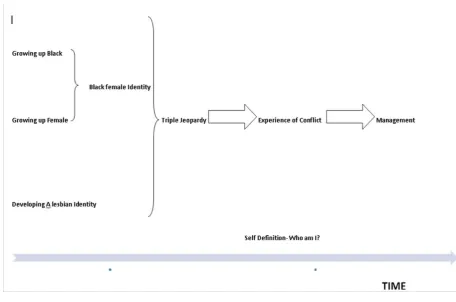
sexism and heterosexism. Their findings provide empirical support for the triple jeopardy experience of Black lesbians. Participants in their study were able to demonstrate levels of resilience despite their multiple identity negotiation and their triple minority status, and may have developed such resilience because of their unique resiliencies and resources honed from earlier experiences of oppression (such as racism and sexism). Participants cited family, the Black community, involvement in the gay and lesbian community and internal characteristics (e.g. self esteem, happiness, humour) as some of the resilience resources they employed to overcome identity conflict. The participant pool in this study comprised of Black lesbians who were not randomly selected, but instead were self-selected at a Black lesbian women’s retreat. It could be suggested that these participants may have been active in their coping and resilience mechanisms considering their attendance at a retreat which promoted a celebration of Black lesbian identity. Additionally, the researchers also described their participants as “affluent, highly educated and middle class” (p.237) which may also have had an effect on their coping skills. Limited generalisation notwithstanding, the study was also important in addressing the notion of homogeneity of experience amongst Black lesbians as their findings suggest that in spite of minority stress, the participants were able to exist as Black lesbians and utilise resources to address identity conflict and minority stress.
and religion or spirituality, were used as a means of managing identity conflict more effectively. The researchers discuss the implications of their findings for counselling psychology, and stress the need for practitioners to be aware of the issues affecting lesbians of colour since they are less likely to seek psychological help (Cochran and Mays, 1994). They also suggest that practitioners might benefit from an increased awareness of the coming-out experiences, coping strategies, and support systems for African-ancestral lesbians.
Models by Reynolds and Pope (1991) and Jones and McEwan (2000) have attempted to illustrate the difficulty that may be faced by individuals having to negotiate multiple identities. They suggest that individuals who have to negotiate multiple identities may identify with one aspect of themselves passively or fragment the different aspects of their self identity. Alternatively, they may identify with all aspects of themselves by integrating all identities into their sense of self. These models are important in demonstrating the ongoing construction of identities of individuals and the influence of changing contexts on the experience of identity development.
Breakwell’s (1993, 2001) model of threatened identity and identity process theory,
component of sexuality which needs to be assimilated into the identity structure is likely to be incompatible with the pre-existing components of identity (i.e. race and gender) and this may in turn pose a threat to the individual’s self perception. When an individual experiences this threat, she may adopt strategies will move her into a social position which is less threatening, or adopt strategies to revise identity structure in accordance with the principals which guide the identity framework.
Methodology
Why A Qualitative Method?
The research approach employed in this study was qualitative, based on the premise that “the aim of qualitative research is to understand and represent the experiences and actions of people as they encounter, engage, and live through situations ”(Elliot, Fischer and Rennie, 1999, p.216). In light of the paucity of research on Black British lesbians, the researcher believed that a qualitative approach would provide an effective and informative method for exploring the experiences and identity negotiation strategies of these women without hindering their responses. Qualitative research attempts to develop an understanding of a particular phenomenon based on lived experiences and from the perspective of those being studied. The central purpose of qualitative research is to contribute to a process of revision and enrichment of understanding, rather than to verify earlier conclusions or theory (Thorne, Kirkham and O’Flynn-Magee, 2004).
knowledge to the fore (Creswell, 1998; Marshall & Rossman, 1999). Black British lesbians are poorly represented within psychological literature, which is surprising given the rich nature of their identities and experiences which may sometimes trigger psychological implications and identity conflict (Greene, 2004). A qualitative approach gives a voice to this underrepresented population by utilising their lived experiences and discourse gain an increased understanding about the challenges they face, the way in which they exist and the positive ways in which they embrace their multiple identities. Quantitative methods in this area have been instrumental in enabling a broad understanding of issues related to Black Lesbians, in that they are “able to delve into complex processes and illustrate the multifaceted nature of human phenomena”(Morrow, 2007 p.212). Additionally, qualitative inquiry is congruent with the narrative perspectives of therapeutic work, and can be used to facilitate interventions which may be prevalent in therapy (Hoshmand, 1989). This is particularly important as one of the aims of this piece of research is to inform the counselling psychology field of a population which are underrepresented in the psychological literature. For this piece of research, the researcher chose to use a qualitative method-interpretative phenomenological analysis-- which would allow an in-depth exploration of the experiences of an underrepresented group. It was hoped that this approach, which uses words as data, would lend itself to rich narratives which cannot be obtained through quantitative methodologies.
Why IPA?
is interested in complexity or process or where an issue is personal and is able to contribute to understanding an area of interest through a deeper, more personal, individualised analysis” (Kay & Kingston, 2002, p. 171). Other methods of inquiry were considered in the adoption of a qualitative method (e.g. Grounded Theory) but these were abandoned in favour of an IPA which seemed to fit more with the epistemological stance of the researcher and would be most beneficial in attaining the information needed to explore this topic. The choice to adopt IPA and an explanation of its theoretical underpinnings will be explored in the subsequent sections.
What is IPA?
produces is reflexive in so much as it acknowledges its dependence on the researcher’s own standpoint, and therefore requires a high degree of self-reflexivity (Willig, 2008). Finlay (2002) suggests reflexivity can be a valuable tool in IPA research as it can examine “the impact, position and perspective and presence of the researcher and “promote rich insight by examining personal responses” (Finlay, 2002 p. 532). Finlay (2002) also suggests that another advantage of reflexivity in qualitative research is that it can be used as a tool to evaluate the research process, method and outcomes.
Intellectual origins of IPA
perspective. A non-human perspective does not posit a “real existing subjectivity at the source of its acts” (Giorgi et al, 2003, p. 171) and would not fully encompass or relay the individual experiences explored in the research. Other phenomenological thinkers (e.g. Merlau-Ponty, 1962; Giorgi, 1997, Heidegger, 2004) went on to explore and emphasise different aspects of phenomenological theory, and developed analytical research perspectives based on ideas from phenomenology. IPA, however, partially draws on the work of Martin Heidegger (2004). As a student of Husserl’s (1931), Heidegger (2004) adopted an ontological approach to reinterpreting the phenomenological method. He argued that the phenomenological method was interpretative, and its descriptive component is a special type of interpretation. He advocated an interpretative methodology which converges with the tradition of hermeneutics -- thus placing an emphasis on what he called ‘dasein’ (loosely translated to mean ‘being there’). Dasien “is the place where the question of being arises, its task is to interpret the meaning of being” (Giorgi and Giorgi, 2003).