Paranoia in an Attachment Theory Framework
Thesis submitted in accordance with the requirements of the University of Liverpool for the degree of Doctor in Philosophy
By
Katarzyna Sitko
Primary Supervisor: Professor Richard Bentall Secondary Supervisor: Professor William Sellwood
I ABSTRACT
Over the past decade evidence has consistently shown a relationship between adverse experiences in childhood and psychosis in adulthood. Recently, specific associations between attachment-disrupting life experiences and paranoia have been reported, leading to attempts to understand the psychological mechanisms involved in this association, and how these might interact with mechanisms previously found to be important in psychoticexperiences. The three empirical studies included in this doctoral thesis used cross-sectional and longitudinal designs to examine whether
experiences of paranoia could be understood within an attachment theory framework.
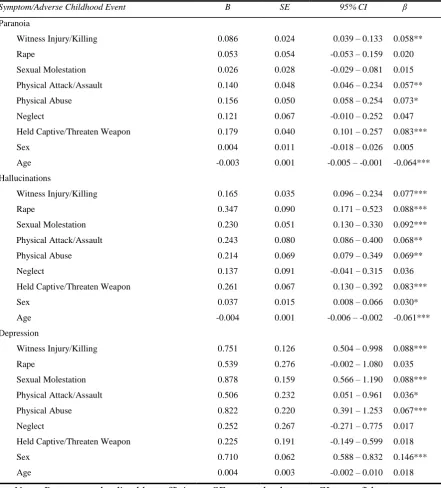
Using an epidemiological dataset the study in Chapter 2 examined the effect of adverse childhood experiences on psychotic symptoms in adulthood. The findings demonstrated that, when co-occurring symptoms were controlled for, experiences of neglect were specifically associated with paranoia, while experiences of sexual abuse (rape, sexual molestation) were specifically associated with hallucinations.
Furthermore, the association between neglect and paranoia was fully mediated by insecure attachment, but a similar association was not observed for the association between sexual abuse and hallucinations.
II
The final study in Chapter 4 used a clinical sample to examine whether the association between insecure attachment (avoidant and anxious attachment
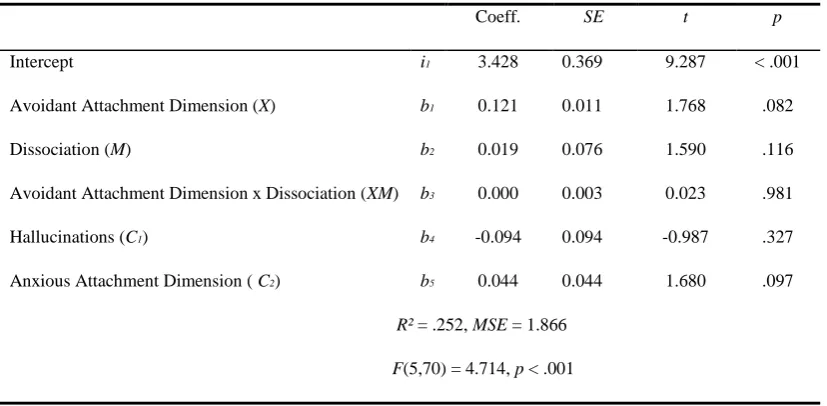
dimensions) and paranoia was moderated by dissociation. The findings demonstrated that dissociation moderated the association between the anxious attachment
dimension (increased negative view of the self) and paranoia. Conditional effects further showed that, at low levels of dissociation, the association between the anxious attachment dimension and paranoia was present, but that, at medium and high levels of dissociation the association did not exist. A similar effect was not observed for the avoidant attachment dimension (increased negative view of others).
Findings from these studies suggest that adverse experiences in childhood, especially experiences of neglect, may be a risk factor for developing paranoia. Furthermore, this association, and experiences of paranoia in the flow of daily life can be understood within an attachment framework. Finally, the findings show that increased levels of dissociation can dampen the association between insecure attachment and paranoia.
III
UNIVERSITY OF LIVERPOOL
INSTITUTE OF PSYCHOLOGY, HEALTH AND SOCIETY PSYCHOLOGICAL SCIENCES (CLINICAL)
DECLARATION IN HIGHER DEGREE THESES
DECLARATION
This thesis is the result of my own work. The material contained in the thesis has not been presented, nor is currently being presented, either wholly or in part for any other degree or qualification.
Signed ……… ………(candidate)
IV
ACKNOWLEDGEMENTS
I would first like to acknowledge the mentorship that I received from my supervisors Professor Richard Bentall and Professor William Sellwood. I am grateful for your continual guidance, encouragement, and support in my development as a researcher.
I would like thank all past and present members of the Psychosis Lab, especially Victoria Vass, Dr Maria Haarmans, Dr Sophie Wickham, Dr Paulo de Sousa, Dr Filippo Varese, Dr Eleanor Longdon, Dr Noreen O’Sullivan, Rosie Mansfield, and Kate Allsop for their advice, support, and inspiring discussions. I count myself very fortunate to have worked alongside you.
I would like to thank Mersey Care NHS Trust and Cheshire and Wirral NHS Trust for approving and supporting my research projects. A sincere thank you is extended to the participants who took part in the research studies, without you this thesis would not be possible. I would also like to thank you and your families for welcoming me into your homes, and for offering me endless ‘cuppas’.
V
TABLE OF CONTENTS
Chapter 1 ... 1
Paranoia in an attachment theory framework ... 1
1.1 Abstract ... 2
1.2 Introduction to schizophrenia and symptom specificity ... 3
1.2.1 Historical context of schizophrenia ... 3
1.2.2 Development of schizophrenia within the DSM ... 4
1.2.3 Reliability and validity of schizophrenia ... 6
1.2.4 Comorbidity of diagnoses ... 8
1.2.5 Heterogeneity within schizophrenia ... 9
1.2.6 A continuum of psychotic experiences ... 10
1.2.7 Bio-genetic determinants of psychosis... 11
1.2.8 Trauma as a psychosocial determinant of psychosis... 14
1.2.9 Other psychosocial determinants of psychosis ... 16
1.2.10 Specificity Research ... 17
1.2.11 Theories of paranoid delusions ... 19
1.3 Introduction to attachment theory ... 21
1.3.1 Historical context of attachment theory ... 21
1.3.2 Attachment theory in childhood ... 22
1.3.3 Attachment theory in adulthood ... 24
1.3.4 Stability of attachment ... 25
1.3.5 Assessment of attachment ... 26
1.3.6 Insecure attachment and psychopathology... 28
1.4 Attachment and psychosis ... 29
1.4.1 Insecure attachment as a risk factor for developing psychosis ... 29
1.4.2 Theories of the role of attachment in psychosis ... 30
1.4.3 Research linking attachment to psychosis... 31
1.5 Attachment and paranoia ... 32
1.5.1 Theories of the role of attachment in paranoia... 32
1.5.2 Research linking attachment specifically to paranoia ... 32
1.6 Aims and outline of the present thesis ... 33
1.6.1 Co-author roles ... 35
VI
Chapter 2 ... 52
Associations between specific psychotic symptoms and specific childhood adversities are mediated by attachment styles: An analysis of the National Comorbidity Survey ... 52
2.1 Abstract ... 53
2.2 Introduction ... 54
2.3 Method ... 59
2.3.1 Participants and Procedure ... 59
2.3.2 Measures ... 59
2.3.3 Data Analytic Plan ... 62
2.4 Results ... 64
2.4.1 Direct Effects ... 65
2.4.2 Mediating and Indirect Effects (c’, see Table 2.4) ... 66
2.4.3 Depression as a Mediator ... 69
2.5 Discussion ... 70
2.6 References ... 77
Chapter 3 ... 83
Insecure attachment predicts the occurrence of paranoia but not auditory hallucinations: An experience sampling study ... 83
3.1 Abstract ... 84
3.2 Introduction ... 85
3.3 Method ... 88
3.3.1 Participants and Procedure ... 88
3.3.2 Measures ... 91
3.4 Analyses ... 93
3.4.1 Statistical Analyses ... 93
3.5 Results ... 94
3.5.1 Validating ESM attachment insecurity measure ... 94
3.5.2 Associations between ESM attachment insecurity and RQ attachment styles (Table 3.2)... 94
3.5.3 Between-group differences on the ESM measure ... 95
3.5.4 Between-group differences on attachment fluctuations ... 96
VII
3.5.6 Does attachment insecurity predict paranoia while controlling for
self-esteem?... 97
3.5.7 Does attachment insecurity predict auditory hallucinations?... 97
3.6 Discussion ... 98
3.7 References ... 104
Chapter 4 ... 108
Dissociation moderates the association between attachment and paranoia. .... 108
4.1 Abstract ... 109
4.2 Introduction ... 110
4.2.1 Dissociation and Psychosis ... 110
4.2.2 Attachment and Psychosis ... 112
4.2.3 Purpose of the Present Study ... 113
4.3 Method ... 115
4.3.1 Participants and Procedure ... 115
4.3.2 Measures ... 115
4.4 Results ... 117
4.4.1 Statistical Analyses ... 117
4.4.2 Correlation Analysis... 118
4.4.3 Regression Analyses ... 119
4.4.4 Moderation Models (Table 4.2 and Table 4.3) ... 120
4.5 Discussion ... 122
4.5.1 Clinical Implications ... 124
4.6 References ... 126
Chapter 5 ... 131
Discussion ... 131
5.1 General Discussion ... 132
5.2 Specific findings ... 132
5.3 Integrative summary ... 135
5.4 Limitations ... 141
5.4.1 Theoretical issues in measuring attachment representations ... 141
5.4.2 Other limitations ... 142
5.5 Clinical implications ... 146
VIII
5.7 Future research designs ... 149 5.8 References ... 152 Appendix A: Supplementary material from Chapter 2 ... 157
IX
LIST OF TABLES
Table 2.1: Results of direct effects (c paths) between adverse events and
symptoms……….65
Table 2.2: Results of direct effects (a paths) between adverse events and attachment
styles………66
Table 2.3: Results of direct effects (b paths) between attachment styles and
symptoms……….…………66
Table 2.4: Results of direct effects (c’ paths) between adverse events and symptoms
while controlling for mediators and confounding variables………...68
Table 3.1: Means, standard deviations, and between-group differences…………...89
Table 3.2: Pearson correlations between RQ attachment styles and ESM attachment
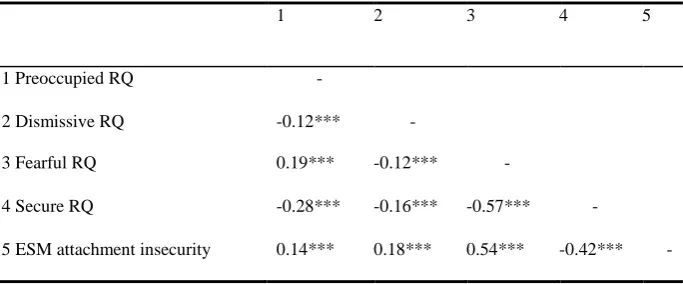
insecurity……….95
Table 4.1: Demographic and clinical information based on means and standard
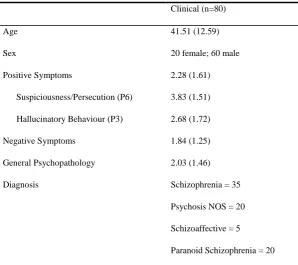
deviations………..117
Table 4.2: Regression analysis examining the moderated effect of dissociation on the association between the anxious attachment dimension and paranoia, while
controlling for hallucinations, and the avoidant attachment dimension………..…121
Table 4.3: Regression analysis examining the moderated effect of dissociation on the association between the avoidant attachment dimension and paranoia, while
X
LIST OF FIGURES
Figure 2.1: Illustration of the multiple-mediator model………63
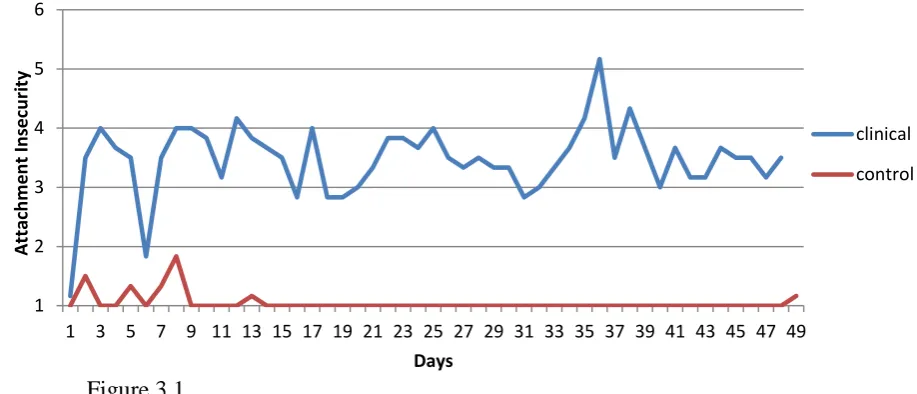
Figure 3.1: Illustration of attachment fluctuations between one clinical and one
1 Chapter 1
Paranoia in an attachment theory framework1
2 1.1 Abstract
3
1.2 Introduction to schizophrenia and symptom specificity
1.2.1 Historical context of schizophrenia
Paranoid symptoms are a common feature of diagnoses in the schizophrenia spectrum, as defined by modern diagnostic manuals such as the Diagnostic and Statistical Manual (DSM) and the International Classification of Diseases. Emil Kraepelin (1856-1926) first described schizophrenia as `dementia praecox’, which he understood to be a progressive neurodegenerative disease that occurred in young adults and resulted in dementia (Ebert & Bär, 2010). Although at the time the leading theories proposed that particular symptoms were characteristic of specific types of illness (Ebert & Bär, 2010), Kraepelin suggested that clusters of symptoms, in relation to the course of the illness, can provide clues to a diagnostic classification (Decker, 2004). Through this system Kraepelin successfully differentiated between ‘dementia praecox’ and ‘manic depression’, suggesting that the latter does not lead to a loss of cognitive functions and is associated with better prognosis, essentially making the first distinction between affective disorders and psychoses (Ebert & Bär, 2010). The term ‘dementia praecox’ was revised to ‘schizophrenia’ in 1911 by Eugene Bleuler (1857-1939), who conceptualised the disorder as an inherited illness (Ashok, Baugh, & Yeragani, 2012), which could at least be partially understood in terms of psychological mechanisms. Bleuler derived the term from a Greek word
schizein indicating ‘splitting’, and phren meaning ‘soul, spirit, mind’ (Fusar-Poli & Politi, 2008).
4
‘mentally ill’, claimed that Kraepelin’s nosology was diagnostically and
prognostically unsatisfactory, and had indistinct borders (Palm & Möller, 2011). August Homburger, a child psychiatrist, argued that the system lacked causal links between the onset, development, and outcome of illness (Palm & Möller, 2011). These arguments however discontinued during the First World War, and shortly after, Kraepelin’s classification system became accepted (Palm & Möller, 2011). Since that time the system has substantially contributed to current classification systems such as the American Psychiatric Association (APA) DSM which still rely on Kraepelin’s concept (Ebert & Bär, 2010).
1.2.2 Development of schizophrenia within the DSM
By the end of the Second World War the APA formed a group to develop a diagnostic system, and the first DSM of Mental Disorders was published in 1952. The diagnostic categories for both the DSM-I (APA, 1952) and the DSM-II (APA, 1968) were based on consensus agreement. Since the diagnostic definitions were vague, reliability was poor and the diagnostic system was viewed as inadequate (Beck, Ward, Mendelson, Mock, & Erbaugh, 1962). With the introduction of the DSM-III (APA, 1980) the diagnostic classification appeared to have clearer boundaries for a schizophrenia diagnosis (Morey & Blashfield, 1981). In order to now make a diagnosis, certain signs and symptoms had to be present. The basic assumption of the DSM-III was that since the symptoms were clearly defined, the diagnostic system would be reliable, a claim that was made by its authors (e.g. Spitzer, 2001). In an attempt to improve the manual further, a revised version, the DSM-III-R (APA, 1987), was created which narrowed the definition of
5
have received a schizophrenia diagnosis (Fenton, McGlashan, & Heinssen, 1988). Although narrowing the criteria may be associated with increased homogeneity and a subsequent improvement in validity, research suggests that this was not the case (Fenton et al., 1988). Since that time the DSM has undergone several updates DSM-IV (APA, 1994), DSM-DSM-IV-TR (APA, 2000), with modest changes to aspects of the criteria needed for a schizophrenia diagnosis, such as removing the requirement that the onset should occur before age 45, and by including negative symptoms (Tandon et al., 2013).
The most recent edition, the DSM-5 (APA, 2013a), has retained its core criteria for a schizophrenia diagnosis from the DSM-IV. One of the main differences between these two editions is the removal of the schizophrenia subtypes, (i.e.
paranoid, disorganized, catatonic) due to limited stability, low reliability, and poor validity (APA, 2013b). To receive a schizophrenia diagnosis on the basis of the DSM-5, one must have two of five symptoms: delusions, hallucinations, disorganised speech, negative symptoms, and/or disorganised behaviours; one of which must be delusions, hallucinations, or disorganised speech. Although this definition may be viewed as a slight improvement to the criteria in DSM-IV, there are 12 different ways two individuals can meet the criteria for a diagnosis without having any symptoms in common, suggesting high heterogeneity within diagnoses (Read, 2013a).
6
who experiences paranoid delusions” (p.166), making a reasonable argument for examining psychosis at the symptom level. Bentall (2004, 2009) further proposed that studying psychosis in this way may be more meaningful in understanding the psychological mechanisms involved.
1.2.3 Reliability and validity of schizophrenia
Spitzer and Fleiss (1974) suggested two important criteria pertaining to diagnoses, first that they must be reliable and second they must be valid. They defined the terms as “reliability refers to the consistency with which subjects are classified; validity, to the utility of the system for its various purposes…” such as “clinical features, aetiology, course of illness and treatment” (p. 341). It is important to make the distinction that although diagnoses can be reliable without being valid, they cannot be valid without being reliable. Spitzer and Fleiss (1974) developed guidelines which suggested that if the kappa coefficient of the clinical agreement between two or more raters was above .70, reliability was considered satisfactory. Hyler, Williams, and Spitzer (1982) argued that the interrater reliability of DSM-III was extremely good, however Kirk and Kutchins (1997) found that when reviewing DSM-III field trials, kappa coefficients failed to exceed the .70 cut-off.
Ciccheti and Sparrow (1981) proposed that when the kappa statistic is below .40 the level of clinical agreement is poor, when it is between .40 and .59 the level of clinical agreement is fair, when it is between .60 and .74 the level of clinical
7
however propose that in the DSM-5 the kappa coefficients should be interpreted as follows: .20 and below as unacceptable, .20 to .39 as questionable, .40 to .59 as good, .60 to .79 as very good and .80 and above as excellent. According to these criteria then, the reliability for schizophrenia is considered good (Regier et al., 2013).
According to Spitzer and Fleiss (1974) diagnoses cannot be valid without first being reliable. Since schizophrenia cannot be diagnosed in a reliable manner, it could be argued that there is no value in investigating construct validity (Read, 2013a). It has however been suggested that in such cases, predictive validity is most often used to compare and evaluate diagnostic criteria (Fenton, Mosher, & Matthews, 1981).
8
be shared by the diagnosed individual. Several studies have subsequently aimed to compare the clients’ subjective recovery versus clinician-rated symptoms, and found that these ratings correlated poorly (Morrison et al., 2013). Since recovery is a personal journey defined by the individual (Anthony, 1993) there may be even more variability in recovery depending on how the outcome is defined.
1.2.4 Comorbidity of diagnoses
The aim of diagnostic categories is to classify people into unique and distinct diagnostic categories on the basis of presenting clusters of symptoms. Symptoms of schizophrenia have however been shown to be present with other diagnoses.
9
understood in terms of clusters of symptoms, or symptom-dimensions that cross traditional diagnostic boundaries.
1.2.5 Heterogeneity within schizophrenia
In an attempt to explore patterns of comorbidity between 11 diagnostic categories (schizophrenia syndrome, schizotypal personality, obsessive-compulsive symptoms, alcohol use disorder, major depressive episode, cannabis use disorder, other drug use disorder, social anxiety, panic attack, antisocial personality, and conduct disorder), Kotov et al. (2010) found that the best model divided disorders into three main spectra: the internalising spectrum (mood problems), the
externalising spectrum (behaviour problems), and schizophrenia.
Other researchers have attempted to study sub-dimensions of psychosis by factor analysing symptom data. In his research, Liddle (1987) found that there are three clusters of schizophrenia symptoms: positive symptoms, negative symptoms and cognitive disorganisation, which do not correlate with each other. van Os and Kapur (2009) however argued that schizophrenia, schizoaffective disorder, and bipolar could be explained on a profile of five dimensions: psychosis symptoms (e.g. hallucinations, delusions); negative symptoms (e.g. social and emotional withdrawal, blunted affect); cognitive impairment (e.g. difficulties in executive functioning); mania (e.g. elated mood); and depression.
10
meaningful to study schizophrenia at the symptom level (Bentall, 2004), suggesting that there may be specific psychological mechanisms associated with specific symptoms (e.g. Bentall, Wickham, Shevlin, & Varese, 2012; Bentall et al., 2014). This view has been supported by others who argue that studying definable constructs, like delusions and hallucinations, which can be reliably measured, could be more helpful (Read, 2013a). It has been proposed however that controlling for co-occurring symptoms may be important when examining specific symptoms, as comorbid symptoms may confound predictors (Pickering, Simpson, & Bentall, 2008).
1.2.6 A continuum of psychotic experiences
Although the DSM adopts a categorical approach to schizophrenia diagnoses, early research has suggested that these symptoms may exist on a continuum.
11
1.2.7 Bio-genetic determinants of psychosis
Traditionally, it has been thought that schizophrenia was a disease of the brain, and research has mainly focused on examining brain structures, heredity, and the idea of a chemical imbalance as accounts of the cause of schizophrenia. One of the pitfalls already mentioned in a previous section is that if diagnoses are not
reliable and are heterogeneous, how do researchers know that the individuals they are studying are even comparable (Read, 2013b)?
Research has found several structural abnormalities in individuals with a schizophrenia diagnosis such as ventricular enlargement (Reveley, 1985), reduced hippocampal volume (Nelson, Saykin, Flashman, & Riordan, 1998), reduced collosal thickness (Downhill et al., 2000), reduced volume of anterior cingulate (Job et al., 2002), and reduced brain size (Ward, Friedman, Wise, & Schulz, 1996). It could be proposed that this evidence builds the case that schizophrenia is a disease of the brain by showing that the brains of those with a diagnosis are structurally different.
Several studies have however found similar structural abnormalities in individuals with other diagnoses and in the general population. A study by Copolov and Crook (2000) for example found overlap in ventricle enlargement between those with a schizophrenia diagnosis and the general population. Reduced hippocampal volume (Nemeroff et al., 2006), reduced collosal thickness (Teicher, Tomoda, & Andersen, 2006), and reduced volume of anterior cingulate (Kitayama, Quinn, & Bremner, 2006) have similarly been observed in individuals with post-traumatic stress disorder (PTSD).
12
least some of these changes result from taking prescribed anti-psychotic medication. Ho, Andreasen, Ziebell, Pierson, and Magnotta (2011) demonstrated that a general reduction in overall brain tissue was associated with greater lifetime dose of treatment with antipsychotic mediation, which could account for the observed
enlarged ventricles. Others still have suggested a ‘Traumagenic Neurodevelopmental Model’, which proposes that these structural abnormalities are a result of the brain responding to environmental stressors (Read, Perry, Moskowitz, & Connolly, 2001). Hence, although structural brain abnormalities are observed in individuals with a schizophrenia diagnosis, this should not necessarily be viewed as the ultimate cause of schizophrenia.
There is a view that individuals with schizophrenia have a ‘chemical
imbalance’ in the brain that is associated with dopaminergic hyperactivity (van Os & Kapur, 2009). This imbalance is allegedly related to experiencing psychotic
13
Within the diathesis stress framework it is suggested that schizophrenia is genetically inherited, and that environmental stressors ‘awaken’ the schizophrenia gene (Joseph, 2013). Evidence to support that schizophrenia is genetically inherited comes from family (Gottesman, McGuffin, & Farmer, 1987), adoptive (Tienari et al., 1985) and twin (Cardno & Gottesman, 2000) studies. Cardno and Gottesman (2000), for example suggested 80-85% heritability, while Sullivan, Kendler, and Neale (2003) showed 81% heritabiliy. Joseph (2004) suggested there were methodological flaws in the family, adoptive, and twin studies proposing that these studies do not provide convincing evidence of a causal role of genes in schizophrenia. In his re-analysis of the data using strict methodological criteria Joseph (2004) found considerably lower pairwise concordance rates of 4.5% for dizygotic twins and 22.4% for monozygotic twins.
Although heritability estimates have been found to be both low (Joseph, 2004) and high (Cardno & Gottesman, 2000; Sullivan, Kendler, & Neale, 2003), there is generally a misconception as to what heritability statistics mean. Heritability can be defined as “the percentage of variation in a trait or illness…that can be attributed to genes” (Bentall, 2009; p.126). Bentall (2009) points out that heritability statistics are partial correlation coefficients from which causation cannot be inferred. He further shows that estimates from heritability calculations do not only depend on genes, but also on the degree of variation in the environment and also gene x
environment interactions, which may mask substantial environmental effects. Hence, there may be substantial environmental effects even if heritability approaches 100%. More research examining epigenetics suggests that gene expression can be
14
turning genes ‘on’ or ‘off’, implying that genetic and environmental effects cannot be neatly separated (Read, Bentall, & Fosse, 2009; Rutten & Mill, 2009).
1.2.8 Trauma as a psychosocial determinant of psychosis
Although the earliest conceptualisations of psychosis were dominated by a bio-genetic model, with Karl Jaspers (1883-1960) arguing that psychotic symptoms cannot be understood in terms of a person’s experience (Stanghellini & Fuchs, 2013), this view did not go unchallenged. Laing (1967) in one of his influential writings proposed that ‘insanity’ is a rational response to an ‘insane’ world. Laing was a sceptic of the traditional Kraepelinian approach and argued that psychosis was meaningful. In one of his later works Laing claimed that family victimisation played a causal role in psychosis (Laing & Esterson, 1970). Maher (1974) similarly
proposed that psychosis can be understood in terms of a person’s experience, and argued that odd experiences lead people to have odd ideas. This view was also shared by others who suggested that traumatic experiences in childhood, especially those involving attachment figures, facilitate the development and maintenance of psychotic symptoms through the belief that others are threatening, and the self is vulnerable (Penn, Corrigan, Bentall, Racenstein, & Newman, 1997).
Over the past decade an abundance of research has been published
demonstrating that experiences of childhood trauma and victimisation are associated with psychosis. Early experiences of sexual abuse (Bebbington et al., 2004;
15
to domestic violence (Kelleher et al., 2008), are a few of the experiences that have been associated with psychosis. A recent meta-analysis of retrospective, prospective, and case-control studies supported these findings by demonstrating that childhood traumatic experiences are a strong risk factor to developing psychosis, with an
overall odds ratio of 2.78 (Varese et al., 2012). A dose-response relationship between severity of trauma and risk has also been shown (Shevlin et al., 2007a; Shevlin et al., 2007b; Varese et al., 2012).
Some of these traumatic childhood experiences may disrupt the development of optimal attachment relationships, and may also lead some to re-evaluate their attachment relationships. In a prospective cohort study for example, the risk for psychosis was increased for individuals who were raised by mothers who during pregnancy reported them as unwanted (Myhrman, Rantakallio, Isohanni, Jones, & Partanen, 1996). In two case control studies the loss of a parent through separation or death at an early age was associated with an increased risk for psychosis (Agid et al., 1999; Morgan et al., 2007). In a retrospective study, when compared with the general population, individuals with schizophrenia diagnoses were significantly more likely to have a history of being placed in children’s homes (Cannon et al., 2001). In another study, 35% those who had a history of being removed from their family home due to neglect later had experiences of psychosis (Robins, 1966).
16
seven years after initial baseline measures (Fisher et al., 2011). A meta-analysis which included, prospective, case-control, and epidemiological studies found similar odds ratios of exposure to early traumatic experiences for both retrospective and prospective studies (Varese et al., 2012), providing reassurance that retrospective data from individuals with psychosis is credible.
The association between early life traumatic experiences and adulthood psychopathology is not direct, and a significant number of individuals who
experience trauma do not develop psychopathology (Gumley & Schwannauer, 2006). There are a variety of factors that could influence the development of
psychopathology, for example how such experiences are interpreted and processed (Gumley & Schwannauer, 2006). In light of the evidence linking childhood trauma to psychosis, it becomes extremely important to develop a better understanding of psychological mechanisms to inform therapeutic interventions. This becomes especially important as research shows that service users who report a history of childhood traumatic experiences do not respond well to pharmacological treatments (Nemeroff et al., 2005).
1.2.9 Other psychosocial determinants of psychosis
17
Another meta-analysis examined urbanicity (the impact of living in urban areas), and found that the risk for schizophrenia was estimated at 2.37 times higher for those living in urban compared to rural environments (Vassos, Pedersen, Murray, Collier, & Lewis, 2012). In a separate study a dose-response relationship was also found between the amount of time spent living in an urban environment and schizophrenia (Pedersen & Mortensen, 2001).
A recent systematic-review has shown higher incident rates of schizophrenia in countries with higher levels of income inequality (Burns, Tomita, & Kapadia, 2014). Another study has shown that income inequality and poverty, at the
neighbourhood level, were associated with increased risk of nonaffective psychosis; a relative risk of 1.25 was shown for income inequality, and a relative risk of 1.28 was shown for poverty (Kirkbride, Jones, Ullrich, & Coid, 2012).
Finally, a meta-analysis examined parental communication deviance (abnormal speech style) and thought disorder in offspring. This study showed that within the context of family relationships, communication deviance of caregivers was associated with increased risk of psychosis in offspring (de Sousa, Varese, Sellwood, & Bentall, 2013).
1.2.10 Specificity Research
Bentall (2004) has proposed that examining specific symptoms of schizophrenia could be more meaningful than examining schizophrenia as a
18
symptoms do not reveal anything about the cause of the ‘illness’. However, a recent study which examined a large epidemiological dataset observed specific associations between childhood traumatic experiences and psychotic symptoms (Bentall et al., 2012). The findings revealed that experiences of childhood sexual abuse (rape) were specifically associated with hallucinations, while experiences of being brought up in institutional care were specifically association with paranoia. Research suggests that 22%-62% of adult in-patients have reported childhood neglect (Read, Goodman, Morrison, Ross, & Aderhold, 2004). In light of this evidence, it becomes extremely important to examine the psychological mechanisms that are involved in paranoid beliefs.
19
may remain unintegrated into conscious memory (Bernstein & Putnam, 1986). It has been suggested that source monitoring bias and dissociation may both contribute to experiencing AVH. The association between being brought up in institutional care and paranoia has been considered within an attachment theory framework (described in section on attachment). It has been proposed that the ability to trust others
develops from early relationships with primary caregivers. If early relationships with caregivers are disrupted, this may subsequently impact on how individuals view later relationships, and may have a potent effect on developing paranoid beliefs.
1.2.11 Theories of paranoid delusions
The DSM-5 (APA, 2013a) defines delusions as:
“Fixed beliefs that are not amenable to change in light of conflicting evidence. Their content may include a variety of themes (e.g., persecutory, referential, somatic, religious, grandiose). Persecutory delusions (i.e., belief that one is going to be harmed, harassed and so forth by an individual, organization, or other group) are most common. […] Delusions are deemed bizarre if they are clearly implausible and not understandable to same-culture peers and do not derive from ordinary life experiences. […] The distinction between a delusion and a strongly held idea is sometimes difficult to make and depends in part on the degree of conviction with which the belief is held despite clear or reasonable contradictory evidence regarding its veracity.”
20
Over the years several theories have attempted to gain an understanding of paranoid experiences, as they are the most commonly reported delusion (Moutoussis, Williams, Dayan, & Bentall, 2007). As mentioned in the section on continuum models of psychosis, psychotic experiences appear to exist on a continuum with normal functioning, and this seems to be true for paranoid beliefs, which extend from ordinary suspiciousness and feelings of mistrust to extreme beliefs about the ill intentions of others (Freeman et al., 2005). It has been suggested that paranoia is an adaptive process acting as a strategy to circumvent threatening events (Morrison et al., 2011). Collip et al. (2011) differentiated between clinical and sub-clinical paranoia, showing that sub-clinical paranoia is affected by social context, and is exacerbated around unfamiliar people and during stress, while clinical paranoia fluctuates independently of these factors.
21
beliefs about threat. Similarly to Maher (1974), Freeman et al. (2002) propose that these beliefs arise from anomalous experiences which result in the person searching for meaning. Freeman et al. (2002) further suggest that this occurs in combination with cognitive biases, which reflect pre-existing beliefs about the self, others, and world. A recent study investigated all of these psychological processes in a complex path analysis to explore which best explained paranoid beliefs. The evidence showed that all processes were important, with the exception of the externalising attributional style, which could not be measured reliably in the study (paranoia was nonetheless associated with excessively global and stable attributions for negative events). It was concluded that these process can be grouped into an emotional domain (low self-esteem, negative mood and pessimistic attributions) and a domain of cognitive impairments (JTC bias, impaired ToM and impaired executive functioning) (Bentall et al., 2009). Importantly these influences were independent of each other.
1.3 Introduction to attachment theory
1.3.1 Historical context of attachment theory
John Bowlby, the father of attachment theory embarked on a career as a child psychiatrist after having volunteered at a school for maladjusted children where he observed two children in particular, one who was isolated and affectionless, and the other who was considered not to have a stable attachment figure (Bretherton, 1992). Through his early writings about affectionless children, and through closely
observing the mental health of institutionalised, hospitalised, and homeless children in post war Europe, Bowlby went on to revolutionise our understanding of
22
need warm, close, intimate, and continuous caregiving environments, and that when deprived of these essentials, mental health difficulties may develop (Bowlby, 1951).
Mary Ainsworth who is also considered a prominent figure in the early attachment literature developed Bowlby’s ideas by suggesting the concept of a ‘secure base’. Ainsworth proposed that children gradually begin to explore novel environments when they feel a secure dependence on their caregivers. Bowlby subsequently developed a theoretical model to explain these kinds of observations, which Ainsworth began to test using the Strange Situation, which allowed her to observe how infants and their caregivers interact using separation episodes (Ainsworth & Bell, 1970).
1.3.2 Attachment theory in childhood
23
secure attachment style and optimal functioning in later life (Main & Solomon, 1990).
Insecure attachment styles are considered to develop in suboptimal early-life caregiving environments, where attempts for proximity seeking have often failed and primary caregivers are considered to be unavailable, unpredictable, inconsistent, and unresponsive (Main & Solomon, 1990). As a result the child may develop
hyperactivating/deactivating attachment strategies (Main, 1990). An anxious attachment style, characterised by a negative model of the self and a positive model of others, develops when the primary caregiver is viewed as inconsistent, sometimes presenting as sensitive and responsive yet other times as insensitive and
unresponsive. This parental response leads to the development of feelings of unworthiness and worry about future rejection, along with a strong desire for
closeness by hyperactivating strategies to achieve proximity. An avoidant attachment style, characterised by a positive model of the self and a negative model of others, develops when a primary caregiver is viewed as unresponsive and unavailable. These children develop to be self-reliant, and prefer to remain distant from others while deactivating their attachment needs. A disorganised attachment style similarly develops in sub-optimal caregiving environments where the parent is viewed as confusing and contradictory, often through frightening and frightened behaviours, and is often the source of the child’s distress (Main & Solomon, 1990). These parental responses create confusion for the child about the self and others, and facilitate the development of negative models about both (Main & Solomon, 1990).
24
attachment (Gillath, Shaver, Baek, & Chun, 2008). Another study proposed that a polymorphism of the DRD7 7-repeat was associated with risk for developing disorganised attachment. This study examined gene x environment interactions and found that those who had the polymorphism and who were raised in sub-optimal environments developed disorganised attachment, while those at genetic risk who were raised in optimal environments had positive developmental outcomes (Bakermans-Kranenburg & van Ijzendoorn, 2007).
1.3.3 Attachment theory in adulthood
Attachment theory continues to have a significant influence on the way human relationships are understood across the lifespan. Adult attachment theory postulates that internal working models in early-life provide a framework containing basic assumptions about the self and others which help anticipate and interpret behaviour and guide future attachment related interactions (Bartholomew &
Horowitz, 1991). Bartholomew and Horowitz (1991) conceptualise adult attachment similarly to the childhood attachment styles of secure, preoccupied (anxious), dismissive (avoidant), and fearful (disorganised). In adulthood, an individual with a fearful style exhibits a strong desire to get close to other people, but avoids getting involved with others because of fear of rejection. A preoccupied style reflects individuals who become overinvolved in relationships, and have a tendency to
idolise others, like to rely on others, and strive to be accepted by others. A dismissing style reflects individuals who avoid close relationships and downplay their
25
strategies that are utilised in adulthood interactions in an attempt to manage attachment related threats.
1.3.4 Stability of attachment
Bowlby conceptualised attachment as a result of past attachment experiences and contextual factors (Bowlby, 1973). Despite support for the stability of
attachment (Howes & Hamilton, 1992; Kirkpatrick & Hazan, 1994), there is evidence that attachment styles can be unstable over the long-term (Cozzarelli, Karafa, Collins, & Tagler, 2003; Weinfield, Whaley, & Egeland, 2004). The loss of a parent, physical or sexual abuse, parental psychiatric difficulties, parental divorce, and life threatening illness have all shown to be factors that impact on attachment (Cozzarelli et al., 2003; Weinfield et al., 2004), and demonstrate that attachment models are adaptable to significant life events. Studies by Aikins, Howes, and
Hamilton (2009) and Sroufe (2005) have reported that there is more stability between infancy and adulthood than between infancy and adolescence, although a study by Weinfield, Sroufe, and Egeland (2000) showed more instability between infancy and adolescence. The most recent meta-analysis exploring attachment stability across the life-span, however, found moderate overall levels of stability (Pinquart, Feußner, & Ahnert, 2013). Stability was observed when intervals were less than 5 years, a reduction in stability was observed for intervals between 5 -14 years, and a lack of stability was observed for intervals larger than 15 years. Furthermore it was
suggested that individuals with secure attachments showed more stability compared to those with insecure attachments.
26
shorter periods of time. Scharfe and Bartholomew (1994) showed that 40% changed in their attachment stability over an eight month period, and proposed that these changes were not consistently related to significant life events. Baldwin and Fehr (1995) showed that 30% changed their attachment style ranging from a week to several months. Although it could be argued that such fluctuations may result from unreliable assessment tools, Baldwin and Fehr (1995) have made the case that attachment fluctuations reflect meaningful variability that is impacted by contextual cues.
1.3.5 Assessment of attachment
Attachment can be measured using self-report and interview methods. The most commonly used measure of self-reported adulthood attachment is the
27
In comparison to the cognitive approach, the Adult Attachment Interview (AAI; George, Kaplan, & Main, 1985) is grounded in a process-oriented approach. The AAI examines states of mind of adult attachment representations through narratives of childhood experiences to classify individuals into three categories: secure/autonomous, avoidant/dismissing, anxious/preoccupied, and the unclassifiable or the unresolved category (de Haas, Bakermans-Kranenburg, & van Ijzendroon, 1994).
Various factors are taken into account when coding the interviews, such as capacity for reflection and the coherence of the narrative. The AAI is regarded as an established measure of attachment representations, however its utility is limited by the amount of time it takes to train to administer the measure, to code, and to transcribe the interviews (Ravitz et al., 2010).
Although the RQ and the AAI are both grounded in Bowlby’s theory of attachment, it has been suggested that they may tap into different aspects of adult attachment representations (Jacobvitz, Curran, & Moller, 2002). Although Shaver, Belsky, and Brennan (2000) found modest associations between the RQ and the AAI, Crowell, Treboux, and Waters (1999) and Holtzworth-Munroe, Stuart, and
Hutchinson (1997) found no association between the two types of assessment. This suggests that these differing approaches used to measure adult attachment may be capturing different constructs.
In addition to the RQ and the AAI, there are several other attachment
measures: for a full review see Ravitz et al. (2010). There is one attachment measure that has been designed specifically for psychotic populations, the Psychosis
28
The PAM has been developed on the basis of the RQ and the Experiences in Close Relationships measure (Brennan, Clark, & Shaver, 1998). It is a 16 item self-report measure that is rated on a 4-point Likert scale and the scores are used to calculate two attachment dimensions (attachment avoidance and anxiety). The PAM shows concurrent validity with the RQ (Berry et al., 2006), which is used in this thesis because of its ease of completion.
It has been suggested that attachment strategies may limit an individual’s awareness of their insecurity, and explicit measures of attachment may therefore not represent valid attachment representations (Read & Gumley, 2008). Research however suggests convergent validity between explicit and implicit measures of attachment representations when comparing self-reported with implicit priming techniques (Bartholomew & Shaver, 1998; Brennan et al., 1998; Shaver & Mikulincer, 2004).
1.3.6 Insecure attachment and psychopathology
Research has shown that insecure attachment is associated with a range of different psychopathologies such as attention deficit hyperactivity disorder (Clarke, Ungerer, Chahoud, Johnson, & Stiefel, 2002), obsessive-compulsive disorder (Myhr, Sookman, & Pinard, 2004), post-traumatic stress disorder (Muller, Sicoli, &
29
however that although insecure attachment may be thought to increase the risk of developing mental health difficulties, it should not be regarded as pathological or as inevitably leading to psychopathology (Sroufe, 2005). This is similar for secure attachment, although it may protect against psychopathology, it should not be regarded as insurance for mental health (Sroufe, 2005). The association between insecure attachment and psychosis will be discussed in the following sections.
1.4 Attachment and psychosis
1.4.1 Insecure attachment as a risk factor for developing psychosis
30
1.4.2 Theories of the role of attachment in psychosis
Several theories have specifically attempted to explain the role of attachment in psychosis. Gumley and Schwannauer (2006) propose that psychosis is an affect dysregulation disorder that can be understood within an attachment theory
framework. They suggest that early attachment experiences will have an impact on the way individuals modulate affect, so that individuals with a secure attachment figure will develop a range of strategies that they can use to adapt to various situations; for example they will be able to tolerate negative affect. In comparison, individuals with a frightening and/or frightened attachment figure will develop limited strategies, and will subsequently have a deregulated and disorganised regulation of affect.
Liotti (2006) suggests that disorganised attachment is essentially a
dissociative process, and argues that this attachment style increases vulnerability to develop fragmented states of mind in the face of traumatic experiences (Liotti, 1992). Liotti and Gumley (2008) further propose that mentalisation may be an important factor in determining whether disorganised attachment and traumatic experiences lead to developing psychosis. They propose that dissociative responses to traumatic experiences mediate the association between disorganised attachment and psychosis, but that such dissociative responses are complicated by impaired mentalisation, so that, in the face of stressful life events the reduced self-reflective capacity leaves the individual vulnerable to psychotic experiences.
31
symptoms was associated with increased insecure attachment, proposing that a meaningful relationship exists between the two phenomena. In a separate study Berry, Band, Corcoran, Barrowclough, and Wearden (2007) suggest that insecure attachment can increase sensitivity to negative responses from others, criticism, and future stress. It is possible that the link observed between attachment and symptoms may exist through these cognitive and affective domains.
1.4.3 Research linking attachment to psychosis
Research has consistently demonstrated an association between insecure attachment and psychosis. In a large epidemiological study, Mickelson, Kessler, and Shaver (1997) showed that insecure adult attachment was associated with
schizophrenia. Similar associations have since been replicated in both clinical (Berry et al., 2008; Dozier & Lee, 1995; Korver-Nieberg, Meijer, de Haan, Berry, &
32
Although these studies are useful in outlining the associations between insecure attachment and psychosis Gumley and Read (2008) propose that exploring attachment in relation to schizophrenia may not be that informative. As discussed in a previous section on insecure attachment and psychopathology, Gumley and Read (2008) argue that insecure attachment is associated with most diagnostic categories, and they further suggest that investigating associations between attachment and symptoms of psychosis may be more informative. Berry et al. (2006) similarly propose that this approach is beneficial and suggest that it may increase understanding of the psychological mechanisms involved in those specific relationships.
1.5 Attachment and paranoia
1.5.1 Theories of the role of attachment in paranoia
Several theories specifically linking insecure attachment to paranoia have been proposed. Bentall and Fernyhough (2008) propose that, in individuals who have an insecure attachment style, repeated number and chronic victimising experiences will exacerbate negative feelings of the self and provoke an externalising
attributional style, where negative events are assumed to be caused by others, leading to paranoid thinking. Similarly, Garety et al. (2001) propose that traumatic
experiences in childhood can lead to developing negative beliefs about the self and others, which can facilitate low self-esteem and external attributions, and in doing so, contribute to developing paranoid thinking.
1.5.2 Research linking attachment specifically to paranoia
33
anxious attachment was associated with paranoia, and Berry et al. (2006) found that attachment anxiety and attachment avoidance were both associated with paranoia and hallucinations. In clinical samples, Dozier, Stevenson, Lee, and Velligan (1991), and Dozier and Lee (1995) found that individuals with a schizophrenia diagnosis, who experience paranoia, had a dismissing-avoidant attachment style. Ponizovsky, Vitenberg, Baumgarten‐Katz, and Grinshpoon (2011) found that paranoia is associated with preoccupied attachment, while hallucinations was associated with fearful attachment. Korver-Nieberg et al. (2015) showed that attachment anxiety and avoidance were both associated with severity of hallucinations and paranoia. Berry, Wearden, Barrowclough, Oakland, & Bradley (2012) found that avoidant attachment was associated with auditory hallucinations. It has been suggested that comorbid symptoms of psychosis may confound predictors (Pickering et al., 2008), and an important limitation of all of these studies is that they did not appropriately control for comorbidity.
So far only two studies have shown that insecure attachment is specifically
associated with paranoia and not hallucinations. In a non-clinical study Pickering et al. (2008) showed that, once the occurrence of hallucinations and paranoia was controlled for, attachment anxiety and attachment avoidance predicted paranoia but not hallucinations. In a clinical study Wickham, Sitko, and Bentall (2015) similarly found that both attachment dimensions were specifically associated with paranoia and not hallucinations, once comorbid symptoms were controlled for.
1.6 Aims and outline of the present thesis
34
have limited our understanding of this association. This is achieved by examining insecure attachment as a possible risk factor in developing paranoia following adverse childhood experiences; as a factor that may trigger paranoia in the flow of daily life; and as a factor that may be dampened in its effect on paranoia by interacting with other psychological mechanisms. All the studies in this thesis controlled for co-occuring symptoms which have been suggested to confound predictors of psychosis, especially predictors of paranoia (Pickering et al., 2008). Symptom specificity research is in its early stages, but the psychological mechanisms identified through this approach may be invaluable to informing therapeutic work.
The following chapters consist of published papers (Chapter 2), manuscripts which are under review (Chapter 3), and recently submitted manuscripts (Chapter 4).
The study presented in Chapter 2, used a large epidemiological (n=5877) dataset from the US National Comorbidity Survey. The first objective of the study was to examine whether there were associations between specific adverse childhood experiences and psychotic symptoms, as previously reported by Bentall et al. (2012). The second objective was to examine the degree to which adulthood attachment styles mediated these associations. Since it could be argued that depression plays a role in the occurrence of psychotic symptoms, depression was also included as a mediating variable in some of the analyses.
In Chapter 3, clinical (n=20) and non-clinical (n=20) participants were compared in a longitudinal study using the experience sampling method to assess various psychological phenomena, and psychotic symptoms in the flow of daily life. The objectives of the study were, first, to assess whether there are short-term
35
of insecure attachment predicted subsequent paranoia; third, to determine the role of self-esteem in the association between attachment insecurity of paranoia.
The study in Chapter 4, utilised a cross-sectional design on a clinical sample (n=80). The objective of the study was, first, to assess whether the anxious and avoidant attachment dimensions are specifically associated with paranoia and, second, to determine whether the association between attachment dimensions and paranoia are affected (moderated) by a second psychological process thought to be important in psychosis, dissociation.
Chapter 5, summarizes the findings, attempts to integrate them, discusses the study limitations, and then goes on to consider clinical and policy implications, and future research directions.
1.6.1 Co-author roles
The co-authors are identified with a footnote in each Chapter. Professor Mark Shevlin was a co-author in Chapter 2. Professor Shevlin provided the
36
Bentall. Professor Richard Bentall and Professor William Sellwood provided guidance with the manuscript write up. All of the co-authors proofread this chapter for publication. Professor Richard Bentall and Professor William Sellwood provided guidance with the manuscript in Chapter 4. The clinical data was collected by myself, and the statistical analysis was also completed by myself under the
supervision of Professor Richard Bentall. All of the co-authors proofread this chapter for publication.
37 1.7 References
Agid, O., Shapira, B., Zislin, J., Ritsner, M., Hanin, B., Murad, H., . . . Lerer, B. (1999). Environment and vulnerability to major psychiatric illness: A case control study of early parental loss in major depression, bipolar disorder and schizophrenia. Molecular Psychiatry, 4(2), 163-172.
Aikins, J. W., Howes, C., & Hamilton, C. (2009). Attachment stability and the emergence of unresolved representations during adolescence. Attachment and Human Development, 11(5), 491-512. doi:10.1080/14616730903017019 Ainsworth, M. D. S., & Bell, S. M. (1970). Attachment, exploration, and separation:
Illustrated by the behavior of one-year-olds in a strange situation. Child Development, 41(1), 49-67. doi:10.2307/1127388
American Psychiatric Association. (1952). Diagnostic and statistical manual of mental disorders (1st ed.). Washington, DC: American Psychiatric Association.
American Psychiatric Association. (1968). Diagnostic and statistical manual of mental disorders (2nd ed.). Washington, DC: American Psychiatric Association.
American Psychiatric Association. (1980). Diagnostic and statistical manual of mental disorders (3rd ed.). Washington, DC: American Psychiatric Association.
American Psychiatric Association. (1987). Diagnostic and statistical manual of mental disorders (3rd ed., rev.). Washington, DC: American Psychiatric Association.
American Psychiatric Association. (1994). Diagnostic and statistical manual of mental disorders (4th ed.). Washington, DC: American Psychiatric Association.
American Psychiatric Association. (2000). Diagnostic and statistical manual of mental disorders (4th ed., rev.). Washington, DC: American Psychiatric Association.
American Psychiatric Association. (2013a). Diagnostic and statistical manual of mental disorders (5th ed.). Washington, DC: American Psychiatric Association.
American Psychiatric Association. (2013b). Highlights of changes from DSM-IV-TR to DSM-5. Arlington, VA: American Psychiatric Association.
Anthony, W. A. (1993). Recovery from mental illness: The guiding vision of the mental health service system in the 1990s. Psychosocial Rehabilitation Journal, 16(4), 11-23. doi:10.1037/h0095655
38
Cluster-C, Paranoid, and Borderline Personality Disorders. Journal of Personality Disorders, 23(6), 606-628. doi:10.1521/pedi.2009.23.6.606 Ashok, A. H., Baugh, J., & Yeragani, V. K. (2012). Paul Eugen Bleuler and the
origin of the term schizophrenia. Indian Journal of Psychiatry, 54(1), 95-96. doi:10.4103/0019-5545.94660
Bakermans‐Kranenburg, M. J., & van Ijzendoorn, M. H. (2007). Research review: Genetic vulnerability or differential susceptibility in child development: The case of attachment. Journal of Child Psychology and Psychiatry, 48(12), 1160-1173. doi:10.1111/j.1469-7610.2007.01801.x
Baldwin, M. W., & Fehr, B. (1995). On the instability of attachment style ratings. Personal Relationships, 2(3), 247-261. doi:10.1111/j.1475-6811.1995.tb00090.x
Bartholomew, K., & Horowitz, L. M. (1991). Attachment styles among young adults: A test of a four-category model. Journal of Personality and Social
Psychology, 61(2), 226-244. doi:10.1037/0022-3514.61.2.226
Bartholomew, K., & Shaver, P. R. (1998). Methods of assessing adult attachment: Do they converge? In J. A. Simpson & W. S. Rholes (Eds.), Attachment theory and close relationships (25-45). New York: Guilford Press.
Bebbington, P. E., Bhugra, D., Brugha, T., Singleton, N., Farrell, M., Jenkins, R., . . . Meltzer, H. (2004). Psychosis, victimisation and childhood disadvantage: Evidence from the second British National Survey of Psychiatric Morbidity.
The British Journal of Psychiatry, 185(3), 220-226. doi:10.1192/bjp.185.3.220
Bebbington, P. E, Jonas, S., Kuipers, E., King, M., Cooper, C., Brugha, T., . . . Jenkins, R. (2011). Childhood sexual abuse and psychosis: Data from a cross-sectional national psychiatric survey in England. The British Journal of Psychiatry 199(1), 29-37. doi:10.1192/bjp.bp.110.083642
Beck, A. T., Ward, C. H., Mendelson, M., Mock, J. E., & Erbaugh, J. K. (1962). Reliability of psychiatric diagnoses: 2. A study of consistency of clinical judgments and ratings. American Journal of Psychiatry, 119(4), 351-357. doi:10.1176/ajp.119.4.351
Bentall, R. P. (2004). Madness explained: Psychosis and human nature: London: Penguin Books.
Bentall, R. P. (2009). Doctoring the mind: Is our current treatment of mental illness really any good? London: Penguin.
Bentall, R. P., de Sousa, P., Varese, F., Wickham, S., Sitko, K., Haarmans, M., & Read, J. (2014). From adversity to psychosis: Pathways and mechanisms from specific adversities to specific symptoms. Social Psychiatry and
39
Bentall, R. P., Corcoran, R., Howard, R., Blackwood, N., & Kinderman, P. (2001). Persecutory Delusions: A review and theoretical Integration. Clinical
Psychology Review, 21(8), 1143-1192. doi:10.1016/S0272-7358(01)00106-4 Bentall, R. P., Rowse, G., Shryane, N., Kinderman, P., Howard, R., Blackwood, N., .
. . Corcoran, R. (2009). The cognitive and affective structure of paranoid delusions: A transdiagnostic investigation of patients with schizophrenia spectrum disorders and depression. Archives of General Psychiatry, 66, 236-247. doi:10.1001/archgenpsychiatry.2009.1
Bentall, R. P., & Fernyhough, C. (2008). Social predictors of psychotic experiences: Specificity and psychological mechanisms. Schizophrenia Bulletin, 34(6), 1012-1020. doi:10.1093/schbul/sbn103
Bentall, R. P., & Kaney, S. (1996). Abnormalities of self-representation and
persecutory delusions: A test of a cognitive model of paranoia. Psychological Medicine, 26(6), 1231-1237. doi:10.1017/S0033291700035959
Bentall, R. P., Wickham, S., Shevlin, M., & Varese, F. (2012). Do specific early-life adversities lead to specific symptoms of psychosis? A study from the 2007 the Adult Psychiatric Morbidity Survey. Schizophrenia Bulletin, 38(4), 734-740. doi:10.1093/schbul/sbs049
Bernstein, E. M., & Putnam, F. W. (1986). Development, reliability, and validity of a dissociation scale. Journal of Nervous and Mental Disease, 174, 727-735. Berry, K., Band, R., Corcoran, R., Barrowclough, C., & Wearden, A. (2007).
Attachment styles, earlier interpersonal relationships and schizotypy in a non-clinical sample. Psychology & Psychotherapy: Theory, Research, and
Practice, 80(4), 563-576. doi:10.1348/147608307X188368
Berry, K., Barrowclough, C., & Wearden, A. (2008). Attachment theory: A framework for understanding symptoms and interpersonal relationships in psychosis. Behaviour Research and Therapy, 46(12), 1275-1282.
doi:10.1016/j.brat.2008.08.009
Berry, K., Wearden, A., Barrowclough, C., & Liversidge, T. (2006). Attachment styles, interpersonal relationships and psychotic phenomena in a non-clinical student sample. Personality and Individual Differences, 41(4), 707-718. doi:10.1016/j.paid.2006.03.009
Berry, K., Wearden, A., Barrowclough, C., Oakland, L., & Bradley, J. (2012). An investigation of adult attachment and the nature of relationships with voices. British Journal of Clinical Psychology, 51(3), 280-291. doi:10.1111/j.2044-8260.2011.02027.x
Borsboom, D., & Cramer, A. O. J. (2013). Network analysis: An integrative approach to the structure of psychopathology. Annual Review of Clinical Psychology, 9, 91-121. doi:10.1146/annurev-clinpsy-050212-185608
40
Bowlby, J. (1951). World Health Organization Monograph, 2. World Health Organization. Geneva: Maternal care and mental health
Bowlby, J. (1973). Separation: Anxiety and anger, London: Hogarth Press. Bowlby, J. (1988). Attachment, communication, and the therapeutic process. J.,
Bowlby (Ed.), A secure base: Parent-child attachment and healthy human development, (137-157). New York, US: Basic Books.
Brennan, K. A., Clark, C. L., & Shaver, P. R. (1998). Self-report measurement of adult attachment: An integrative overview. Attachment Theory and Close Relationships, () 46-76.
Bretherton, I. (1992). The origins of attachment theory: John Bowlby and Mary Ainsworth. Developmental Psychology, 28(5), 759-775. doi:10.1037/0012-1649.28.5.759
Buckley, P. F., Miller, B. J., Lehrer, D. S., & Castle, D. J. (2009). Psychiatric comorbidities and schizophrenia. Schizophrenia Bulletin, 35(2), 383-402. doi:10.1093/schbul/sbn135
Burns, J. K., Tomita, A., & Kapadia, A. S. (2014). Income inequality and schizophrenia: Increased schizophrenia incidence in countries with high levels of income inequality. International Journal of Social Psychiatry, 60(2), 185-196. doi:10.1177/0020764013481426
Campbell, M. L., & Morrison, A. P. (2007). The relationship between bullying, psychotic-like experiences and appraisals in 14–16-year olds. Behaviour Research and Therapy, 45(7), 1579-1591. doi:10.1016/j.brat.2006.11.009 Cannon, M., Walsh, E., Hollis, C., Kargin, M., Taylor, E., Murray, R. M., & Jones,
P. B. (2001). Predictors of later schizophrenia and affective psychosis among attendees at a child psychiatry department. The British Journal of Psychiatry, 178(5), 420-426. doi:10.1192/bjp.178.5.420
Cantazaro, A., & Wei, M. (2010). Adult attachment, dependence, self-criticism, and depressive symptoms: A test of a mediational model. Journal of Personality, 78(4), 1135-1162. doi:10.1111/j.1467-6494.2010.00645.x
Cantor-Graae, E., & Selten, J. P. (2005). Schizophrenia and migration: A meta-analysis and review. The American Journal of Psychiatry, 162(1), 12-24. doi:10.1176/appi.ajp.162.1.12
Cardno, A. G., & Gottesman, I. I. (2000). Twin studies of schizophrenia: from bow-and-arrow concordances to star wars Mx and functional genomics. American Journal Of Medical Genetics, 97(1), 12-17.
doi:10.1002/(SICI)1096-8628(200021)97
Cassidy, J., & Kobak, R. R. (1988). Avoidance and its relationship with other defensive processes. In J. Belsky & T. Nezworski (Eds.), Clinical implications of attachment (300–323). Hillsdale, NJ: Erlbaum.
41
Cicchetti, D. V., & Sparrow, S. A. (1981). Developing criteria for establishing interrater reliability of specific items: Applications to assessment of adaptive behavior. American Journal of Mental Deficiency, 86(2), 127-137.
Ciompi, L. (1980). The natural history of schizophrenia in the long term. British Journal of Psychiatry, 136(4), 413-420. doi:10.1192/bjp.136.5.413 Claridge, G. S. (1990). Can a disease model of schizophrenia survive? In R. P.
Bentall (Ed.), Reconstructing Schizophrenia, (157-183). London: Routledge. Claridge, G. S., & Hewitt, J. K. (1987). A biometrical study of schizotypy in a
normal population. Personality and Individual Differences, 8(3), 303-312. doi:10.1016/0191-8869(87)90030-4
Clarke, L., Ungerer, J., Chahoud, K., Johnson, S., & Stiefel, I. (2002). Attention deficit hyperactivity disorder is associated with attachment insecurity.
Clinical Child Psychology and Psychiatry, 7(2), 179-198. doi:10.1177/1359104502007002006
Collip, D., Oorschot, M., Thewissen, V., van Os, J., Bentall, R., & Myin-Germeys, I. (2011). Social world interactions: How company connects to
paranoia. Psychological Medicine, 41(05), 911-921. doi:10.1017/S0033291710001558
Copolov, D., & Crook, J. (2000). Biological markers and schizophrenia. Australian and New Zealand Journal of Psychiatry, 34(sup2), S108-S112.
doi:10.1080/000486700230
Cozzarelli, C., Karafa, J. A., Collins, N. L., & Tagler, M. J. (2003). Stability and change in adult attachment styles: Associations with personal vulnerabilities, life events, and global construals of self and others. Journal of Social and Clinical Psychology, 22(3), 315-346. doi:10.1521/jscp.22.3.315.22888
Crowell, J. A., Treboux, D., & Waters, E. (1999). The Adult Attachment Interview and the Relationship Questionnaire: Relations to reports of mothers and partners. Personal Relationships, 6(1), 1-18. doi:
10.1111/j.1475-6811.1999.tb00208.x
de Haas, M. A, Bakermans-Kranenburg, M. J, & van Ijzendroon, M. H. (1994). The Adult Attachment Interview and questionnaires for attachment style,
temperament, and memories of parental behavior. The Journal of Genetic Psychology, 155(4), 471-486. doi:10.1080/00221325.1994.9914795 de Sousa, P., Varese, F., Sellwood, W., & Bentall, R. P. (2013). Parental
communication and psychosis: A meta-analysis. Schizophrenia Bulletin, 1-13. doi:10.1093/ schbul/sbt088
Decker, H. S. (2004). The psychiatric works of Emil Kraepelin: A many-faceted story of modern medicine. Journal of the History of the Neurosciences, 13(3), 248-276. doi:10.1080/09647040490510470