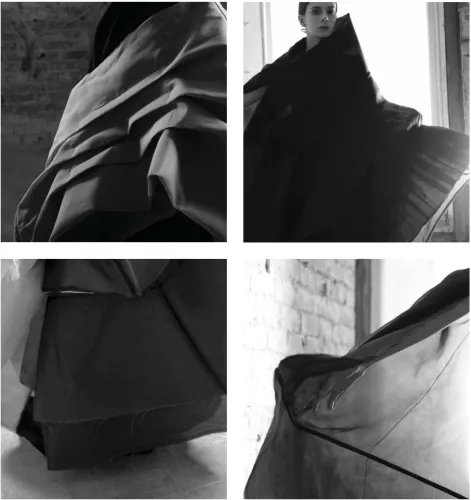
A M E L I A H O P E
SHAPE
ON
SHAPE
C O N T E N T S
A B S T R A C T
1 1A C K N O W L E D G E M E N T S 1 3
I N T R O D U C T I O N
1 5L I T E R A T U R E R E V I E W
1 8BODY SHAPE and CATEGORISATION: Elusive Ideals 18
FASHION FIT, WELLBEING and SELF EXPRESSION 21
CHANGING PERCEPTIONS 23
D E S I G N P R O C E S S
3 0INTERVIEWS with WOMEN 3 0
INTERVIEW FINDINGS Body Shape Categorisation 3 2
Body Ideals / Individual Body Image, Fit, Expression, Wellbeing 3 3
CONTINUING the DESIGN PROCESS 3 5
CHALLENGING PATTERN METHODS 3 6
SCALED 3-D SAMPLING and DRAWING 3 7
SHAPE MAPPING and OVERLAY BLOCKING 4 6
FINAL STAGES OF PROCESS: Selection and Sampling 5 1
CONSTRUCTING THE CONCEPT From 2-Dimensional Flat Objects to 3-Dimensional Forms 5 3
SHAPE ON SHAPE ON SHAPE: Interaction 5 6
F I N A L D E S I G N S A N D R E F L E C T I O N
6 0SHIFTING GEOMETRIC SHAPES 6 0
COUNTER BALANCE 6 5
NON-CONTOURING and NON-ASSIGNING 6 7
ALTERED SCALES 7 0
REDUCING BODY ANCHOR POINTS 7 3
FABRIC INTERACTION and SHADOWING 7 7
MALLEABILITY for the INDIVIDUAL 8 4
FEELINGS and EXPRESSION 8 9
C O N C L U S I O N
9 1BIBLIOGRAPHY 9 2
LIST OF FIGURES 9 4
T
his practice based design research questions the inf luence of body ideals and body categorisation methods on women’s body shape, individual dress expression and wellbeing. Historical and current body type categorisation methods are conventions prevalent within the fashion industry. This research project questions whether these conventions of categorising women’s bodies into simplified shapes and assumed fit and aesthetic preferences is problematic and even redundant in terms of women’s wellbeing in light of changing attitudes towards dress, body ideals and gender. New understandings of wellbeing and identity, self-awareness and body confidence for the individual impacts fashion expression now and in the future. It is highly relevant for designers to understand body shape and the importance of fit preferences in all respects, both physical and psychological throughout the design process.For this practice based research project two experimental design pieces are created that consider the diversity of women’s body shapes and self-ref lection of dress. In addition to relevant literature, this research includes design analysis of inf luential designers who explore the boundaries of the body and garment. My own investigation analyses responses from a small group of ten diverse women to gain insight to the relevance of defined body types and their own perceptions and choices of garment shape and design for personal fit satisfaction. This project informs a reiterative and integrative design process of mindful ref lection, drawing, draping, cutting and construction to create new volume, shapes and silhouette to ref lect the subjective perceptions of body and dress. This innovative design practice looks to new ways of design and pattern development processes to create new expressions of apparel outside of expected norms.
This research challenges preconceived ideas about body ideals and dress, in an attempt to open minds to the diversity and uniqueness of body shape and external projection of self.
I would like to thank and acknowledge my supervisors Deb Cumming, Catherine Bagnall and Holly McQuillan for their encouragement, guidance and positivity. Thank you to my family, friends and colleagues for the unconditional support and help throughout.
I N T R O D U C T I O N
I
am currently working in the New Zealand fashion industry in design and production and have done so for over 10 years. Prior to this I worked in the health and fitness industry. I feel that the topic I am researching is relevant to these industries as both have a primary focus on enhancing and modifying the body. Both use different body modification methods to obtain similar desired outcomes, to improve individual self-confidence and to create a more positive sense of wellbeing. There are however, downsides to what these industries endorse. Unrealistic portrayals of ideal bodies (Mackinney-Valentin, 2013) and lifestyles are widespread in media and advertising, saturation of these images can have detrimental effects on women’s self-esteem and body satisfaction (Pisut & Connell, 2007). This topic is of importance and I see these issues on an everyday basis working within the fashion industry so understand the impact on women. My motivation for doing this research is that I wish to emphasise and inform industry and individuals of the positive aspects of body and garment, by “transforming ‘negative’ ideas into critical and questioning designs” (C. Evans, 2003, p. 7). This design-led research is specifically about body and garment. It looks at the impact of social ideals on women’s body shape and the inf luence this has on our perception of body and how we dress.Through design practice research, I create two conceptual pieces to interrogate the relationship between women’s body shape and ideals, and the role this plays in dictating perceptions of body within garments. These designs will explore expression of body and garment through volume, shape and silhouette by experimenting with the space between garment and skin. Japanese fashion designer Yohji Yamamoto creates a ‘second skin’ to provide confidence, psychological freedom, and freedom of the body (Holborn & Miyake, 1995). Jones suggests “fashion design is not about revealing or accentuating the shape of a woman’s body, its purpose is to allow a person to be what they are” (as cited in English, 2011, p. 72). We use dress as an expression of our identity (Apeagyei, Otieno, & Tyler, 2007; Belk, 1988; Crane, 2000; Davis, 1994) projecting cues of how we feel and how we want to be interpreted by others. This form of visible external expression is inf luenced by the way we feel about ourselves, and our perceptions of body (Fiore & Kimle, 1997), shaped by social attitudes and cultural values (Apeagyei et al., 2007).
The female body has a long lineage of being modified and categorised in an attempt to conform to an ideal. This project questions the notion of ideal body shape, the associated methods used to achieve an ideal, and its relativity to dress in a current context. Throughout history women’s body shape has been modified to fit to ideals of the time. Garments have been used as a method to modify the body, for example the corset reshaped the figure to the desirable shape of the late 1800s (Almond, 2013; Fiore & Kimle, 1997; Thesander, 1997). In more recent times “the artificial mechanisms for creating the fashionable form have become obsolete, greater emphasis has fallen on the transformation of the body through exercise, diet, or surgical intervention” (Koda, 2001, p. 95).
Geometric shapes have been aligned to the body and used to categorise and compare
women’s body shapes (Istook, C. L., Simmons, K. P., & Devarajan, P., 2004; Liechty, Rasband, & Pottberg, 2010; Rasband, 1994). These reductive shapes have been assigned to women’s bodies, and used as a tool to help simplify the female body shape. The promotion of this type of information on how women should dress for specified body shapes has become more prevalent (Liechty et al., 2010; Rasband, 1994; Woodall & Constantine, 2014), for example the popular television series ‘Trinny and Susannah’. This information emphasizes dressing to camouf lage aspects of the body that are not considered ideal, or emphasize and define those considered desirable by social and cultural norms (Liechty et al., 2010; Rasband, 1994). Associated pressure on women to conform to an ideal can affect psychological wellbeing (H.-R. Lee, Lee, Choi, Kim, & Han, 2014) and impact negatively on body image and self esteem (Pisut & Connell, 2007).
This research aims to challenge and shift our thinking, to remove the pressure of fitting to these ideals, to change ways of thinking of the body and therefore rethinking how we dress. The pieces created will attempt to challenge and offer new modes of perception of self and design interaction. For the past 10 years I have been involved in designing and producing two seasonal collections a year, which are commercially oriented to the company’s ethos and market sectors. In this project the two conceptual pieces created will be exhibited. This is so the viewer themselves decides how long they wish to look at the pieces (Chalayan, 2015), enabling time to understand and process the focus and meaning behind the designs, rather than a conventional fast paced runway show. The viewer can also wear the pieces. Once on they can be played with, manipulated and arranged around the body.
For the purpose of this research women are the focus, as women are identified as a group greatly inf luenced by body ideals (Almond, 2013; Fiore & Kimle, 1997; Thesander, 1997). I wanted to talk to women to hear their own responses of dressing to a specified body type. A small group of women were interviewed and asked a series of open-ended questions based on their ‘go to’1 garments. They were
also asked to identify with a body shape(s) represented by 2-dimensional geometric shapes2.
Key responses and elements from interviews triggered the design process.
In this project I have literally and metaphorically overturned categorisation methods of body shape and conformity to a body ideal. The 2-dimensional shapes were experimented with by making them larger, externalising and moving them away from the body in an attempt to shift away from individual and social conforms of reducing the female body to simple forms. The designs created express the co-existence of body and garment, highlighting the space between skin and fabric and accentuating volume and silhouette through modified methods of drape in a contemporary context.
This research hopes to use dress as another expression of the body. The design pieces created modify body shape in an extreme manner, while still keeping the body inclusive. These pieces hope to distract from the body ideal and disrupt social and cultural paradigms of dress and body. As a result these designs act as a starting point for individuals to rethink about how they feel about their bodies and what they wear and to begin a positive process of modification of self-awareness of one’s own body and garment.
1 ‘Go to’ garment refers to favourite clothes in wardrobe, pieces that are always returned to and cherished for different reasons. Garments that would be worn everyday if they could be or, garments that one is especially attached to and not worn that often but would never be given away.
T
here is immense pressure for women to conform to and maintain an ideal figure type (Walker, 2010). Ideal body and femininity are created by individual cultures and societies (Almond, 2013; Fiore & Kimle, 1997; Thesander, 1997). Women are expected to conform to these physical and behavioural ideals becoming a somewhat aesthetic object (Thesander, 1997), continually comparing and moulding themselves to an ideal (Fiore & Kimle, 1997; Thesander, 1997). At an early age females are exposed to the sociocultural emphasis of ideals and appearance (Dohnt & Tiggemann, 2006). The moulded plastic ‘Barbie’ doll (Thesander, 1997) may be used as a tool of social comparison (Hayes & Tantleff-Dunn, 2010) subconsciously feeding children information on ideal figure types. Dohnt & Tiggemann (2006) found that children as young as 6 years “desired a thinner ideal figure” (p.141) with awareness of body image3 and dieting inf luenced by both peers and media.Western costume history illustrates the continuously changing ideal body shape and the use of natural and artificial constructs of dress to meet the cultural ideals of each period. Corsets and foundation garments served to accentuate, manipulate and recreate the figure for over 400 years, by enhancing and disguising, shaping and re-shaping the body to create optical illusions (Almond, 2013; Fiore &
3 Body image: Mental picture of ones body, clothes perceived differently by individuals in relation to body image (Fiore & Kimle, 1997; Kaiser & Kaiser, 1997).
L I T E R A T U R E R E V I E W
BODY SHAPE
and
CATEGORISATION:
Elusive Ideals
Within the fashion and apparel industry the interaction of body and garment can affect design aesthetics, fit and subsequently the wearer’s perception of self either positively or negatively. This literature review will investigate body ideals and body shape categorisation methods in both historical and current contexts. It addresses the interrelationship of fashion and body shape, its affect on individual physical and psychological fit preferences, self-expression and wellbeing. Examples of relevant fashion designers who have rejected body ideals and who design to explore the space between body and garment will also be highlighted.
Kimle, 1997; Thesander, 1997; Walker, 2010).
Throughout history, it is evident that defining and accentuating the female hips, waist and bust has been prevalent, with body ideals and body shapes constantly changing and varying among different cultures and societies (Almond, 2013). Pisut & Connell (2007) state that the ‘hourglass’ body shape is no longer the norm with individuals now having a wide range of body shapes and sizes, and the multiple conf licting results from body scanning studies reinforce this notion (Istook, C. L. et al., 2004; J. Y. Lee, Istook, Nam, & Park, 2007; Pisut & Connell, 2007; Vuruskan & Bulgun, 2011). Yet the fashion industry has a profound inf luence on continuing to create and reinforce defined body ideals through imagery (LaBat & DeLong, 1990).
Media and magazines guide one “how to look, feel and behave” (Mackinney-Valentin, 2013, p. 17), simultaneously creating impossible ideals for most (Mackinney-Valentin, 2013). The reinforcement of ideals affects women’s attitudes towards their bodies and distorts perceptions of body image (H.-R. Lee et al., 2014; Mackinney-Valentin, 2013; Walker, 2010). Constant exposure to media images of idealistic body shapes can cause individuals to compare themselves to these (Walker, 2010) which can negatively affect perception of self, body image and psychological wellbeing4 (H.-R. Lee
et al., 2014). Other psychological factors such as physical attractiveness, body satisfaction and self esteem (Johnson & Wardle, 2005; Pisut & Connell, 2007) can also be damaged, sometimes leading to depression and eating disorders (Johnson & Wardle, 2005; Walker, 2010). For this project I am specifically focussing on the female body and its relationship to clothing. Although there is less research and emphasis on male body ideals, body shape still impacts men and has increased through advertising and film media over the last two decades (McNeill & Firman, 2014). Similar to females, younger males are affected by exposure to male body ideals in media, however throughout adulthood this becomes less important (McCabe & Ricciardelli, 2004; McNeill & Firman, 2014).
There is much evidence to show that individuals are heavily inf luenced by societal pressures to conform through methods of body modification (Fiore & Kimle, 1997; Koda, 2001; LaBat & DeLong, 1990; Thesander, 1997). Body shape has been artificially re-created in history by Western culture (Thesander, 1997) by using garments to modify the body. Women who are dissatisfied with their bodies and who strive to conform to the ideal, undertake many forms of body modification methods (LaBat & DeLong, 1990). For most women, ideals are unrealistic and unnatural. Koda (2001) suggests that body modifying garments are used less frequently “greater emphasis...on the transformation of the body through exercise, diet, or surgical intervention” (p. 95). This was exemplified in the mid 1970s where muscle tone, fitness and a slim physique (Fiore & Kimle, 1997) was emphasised. Associated body modification industries grew rapidly, promoting and providing methods of weight loss, fitness and health (LaBat & DeLong, 1990), cosmetic surgery (LaBat & DeLong, 1990; Thesander, 1997) hair dying and teeth whitening (Thesander, 1997).
It is important to understand that body shape varies between individuals in many different ways. Our anatomical differences such as, height, bone structure and weight effect our body shape (Rasband, 1994). Body shapes are culturally specific (Faust & Carrier, 2014) and are continually changing due to our multidimensional lifestyles, fashions of the time and sociocultural values. It is these cultural inf luences that effect individual perception of body shape (Devarajan, P. & Istook, C. L., 2004; Pisut & Connell, 2007).
[image:20.595.152.449.461.721.2]To help understand the diversity of body shape, different methods of categorising the body have been developed throughout history. The body has been analysed and categorised for different aesthetic, physiological and psychological purposes based on its shape. These systems inevitably coerce individuals to align their own body to a similar shape, which is commonly framed by a cultural body ideal. The different shapes have been acknowledged, but simplified as a method for standardisation. The fashion industry commonly uses body categorization methods and systems for ease of design and for production of large quantities of garments. These shape categorisations guide the wearer to specified sizes and fit, aligned to an ideal figure type of the time. Early examples of categorisation are shown in the 1900s, whereby the increased popularity of women’s corsets spurred corset companies to rethink manufacturing processes. Categorising women’s bodies into specific shapes helped to refine corset production methods (Fields, 1999, 2007). Companies created picture charts, which categorised women into body types. Women identified with these types and were sold the correct fitting corset specific for that particular shape (Fields, 1999, 2007) shown in Figure 1.
Many body shape categorisations vary in complexity but all reduce the female body to formulaic simple shapes.
In the 1950s researcher Helen Douty categorised the body from front and side views, developing the Douty 5-point body build and postural scale (Sidberry, 2011). This scale assessed silhouette, posture and proportion and helped to understand the affect of body within garments (Mahajan, 2009). In 1981 Bonnie August categorised the body into front and side view and front length (Fiore & Kimle, 1997; Sidberry, 2011), likening them to letters of the alphabet (Mahajan, 2009), this method like Douty’s considers different views of the body and it’s interaction with dress. Judith Rasband (1994) distinguished 8 figure types, represented by f lat 2-dimensional geometric shapes, which were used to help pattern making and guide women in their choices of clothing (Liechty et al., 2010; Rasband, 1994). Recent media celebrities ‘Trinny and Susannah’ popularised 12 body shapes (Woodall & Constantine, 2014) for styling and dress purposes, helping women to gain a better understanding of their body to what suits their shape. These systems all outline the differences in body shape, however it is hard to ignore the emphasis they place on moulding a specific body shape through dress to align to a culturally preferred figure type of the period. As categorisation methods developed, the classification of the female body became even more simplified, reducing the complexities of the 3-dimensional female figure to basic 2-dimensional forms.
The categorisation of body shape for dressing purposes, allows the body to be evaluated against a specified ideal body and dressed to balance accordingly (Liechty et al., 2010; Rasband, 1994; Woodall & Constantine, 2014). Clothing can be used to de-emphasise negative areas of the body by masking (Liechty et al., 2010; Sidberry, 2011) and attention drawn towards positive areas (Liechty et al., 2010). These methods attempt to create the ideal body shape and arouse positive feelings, increasing individual body cathexis5,
esteem and self-confidence (Liechty et al., 2010; Rasband, 1994; Sidberry, 2011). According to Liechty et al. (2010), Rasband (1994) and Woodall & Constantine (2014) the clothes chosen should be shapes used to balance the body and sculpt body shape closer to the ideal. Clothes should be used to draw attention away from certain parts of the body and to focus on other areas, to create optical illusions by adding or taking away fullness, length, detail or colour (Liechty et al., 2010; Rasband, 1994) as outlined in the example below (Figure 2).
This focus on dressing to align to an ideal is questionable considering a very small number of women have the ideal figure type (Sidberry, 2011). Would it not be more beneficial to encourage individuality through design, promoting expression and freedom of body shape through choice of design shape, rather than adhering to these prescribed physical and dress body modification methods?
5 Body cathexis: Level of satisfaction with body, positive and negative feelings towards body (closely linked to self image and self esteem), related to and interacts with fit satisfaction (Kaiser & Kaiser, 1997; LaBat & DeLong, 1990).
STRAIGHT UP AND DOWN (BALANCED/UNBALANCED)
NARROW TOP/WIDE LOWER (UNBALANCED)
EQUAL TOP AND LOWER (BALANCED)
WIDE TOP/NARROW LOWER (UNBALANCED)
ROUND MIDSECTION (BALANCED/UNBALANCED) RECTANGLE TRIANGLE HOURGLASS INVERTED TRIANGLE ROUNDED
SUMMARY SUMMARY SUMMARY
(*conflicting)
SUMMARY SUMMARY KEY POINT Attention towards centre of body.
Create curves
Attention away from lower. Focus on top half
Reducing difference between bust and hip. Attention upwards to face
*Accentuate curves
Attention away from upper Focus on inward and downward
Illusion of waist
Create illusion of wider hips & shoulders Drawing attention inwards/upwards
WHAT TO WEAR
Illusion of waist, adding fullness above and below waist, break up body
Detail at neckline, Width or fullness above waist, shoulders, colour on upper
body
Garments to flow easily over bust, keeping waist, balance top and bottom
*wear figure hugging clothes
Detail below waist at hemline, width fullness, colour
Add fullness above and below waist. Adding length, flow over body. Empire
line
WHAT TO AVOID
Low rise pants, tubular styles, oversized loose fitting
Tight pants, short jackets Tight fitting top and bottoms, don’t accentuate curves *avoid loose fitting
Bulk on top half - bulky tops, shoulder pads. Tight leggings, tight skirts
Don’t cinch at waist, gaping necklines, tight fitting, adding bulk
FASHION FIT, WELLBEING
and
SELF EXPRESSION
A
cknowledging that all women have unique and varying body shapes is fundamental to understanding fashion design responses to the body. The body is central to fashion design and the relationship this has with garment can affect the wearer’s perception of their body positively or negatively. It is important to encourage a positive interaction of body shape and garment shape and to satisfy individual preferences relating to fit. The fit of a garment is subjective and can be defined differently from different individual perspectives (Alexander, Connell, & Presley, 2005; Devarajan, P. & Istook, C. L., 2004; Pisut & Connell, 2007; Rasband, 1994). It is suggested that fit in relationship to the figure is how the garment interacts with the 3-D physical form (Istook, C. L. et al., 2004), it should provide comfort and allow freedom of movement (Liechty et al., 2010), while f lattering the figure (Istook, C. L. et al., 2004).There are many factors that affect fit, these can inf luence fit preference and physiological and psychological comfort (Devarajan, P. & Istook, C. L., 2004; Faust & Carrier, 2014; Kasambala, 2013; Kinley, 2010; LaBat & DeLong, 1990; Pisut & Connell, 2007). Fit can be affected by cultural inf luences (Alexander et al., 2005; Kinley, 2010; Pisut & Connell, 2007), social ideals (LaBat & DeLong, 1990), and lifestyle (Alexander et al., 2005; Kinley, 2010; Liechty et al., 2010; Pisut & Connell, 2007), moulding individual preferences specifically within a society.
Literature highlights that a good fitting garment has a natural relationship and interaction (Fiore & Kimle, 1997; Liechty et al., 2010), while conforming with the body (LaBat & DeLong, 1990). It will have successfully satisfied all fit preferences (Alexander et al., 2005; LaBat & DeLong, 1990) an individual requires, creating increased psychological and physiological comfort (LaBat & DeLong, 1990). This too contributes to the social wellbeing of the wearer (Alexander et al., 2005), therefore creating confidence (Alexander et al., 2005) and positive responses to their body. I question this literature in relation to what good fit means and the emphasis of a garment’s natural relationship and conformity to the body.
How an individual thinks, feels and acts in response to physical fit is important to the wearer’s state of mind (Rasband, 1994), inf luencing how they perceive themselves in a garment. Physical factors that inf luence fit preference include body shape (Alexander et al., 2005; Faust & Carrier, 2014; Kasambala, 2013; Kinley, 2010; Pisut & Connell, 2007), body size (Faust & Carrier, 2014; Kinley, 2010), physical features (Azuma & Fernie, 2003), appearance (Devarajan, P. & Istook, C. L., 2004; Kasambala, 2013),
age, sex (Alexander et al., 2005; Kinley, 2010; Liechty et al., 2010; Pisut & Connell, 2007) and ethnicity (Kinley, 2010; Liechty et al., 2010).
Individual perception of fit is inf luenced by psychological aspects such as perceived body cathexis (Pisut & Connell, 2007), self-perception, body image (Faust & Carrier, 2014), comfort and personal attitudes towards body size and shape (Apeagyei et al., 2007; Faust & Carrier, 2014; Kinley, 2010; Pisut & Connell, 2007).
If fit satisfaction is met by satisfying individual wants and needs (Pisut & Connell, 2007; Workman & Lee, 2011), then they will experience positive feelings and increased self-confidence (Liechty et al., 2010). Research relating to fit and women’s body shape shows that those least satisfied with garment fit are women who have fit issues mostly with their lower body, resulting in a lower body cathexis in that area (LaBat & DeLong, 1990). Pisut & Connell’s (2007) study of female fit preferences concluded that 80% of reported fit problems were at the waist, hip and bust, with the most common fit problems being tightness and length.
The fashion designer’s perception of fit is similar to that of individuals (Kasambala, 2013) however, they have more control over different design aesthetic preferences (Pisut & Connell, 2007) in relation to fit, such as shape, silhouette, design ease (Rasband, 1994), current trends (Kinley, 2010; Liechty et al., 2010; Pisut & Connell, 2007; Rasband, 1994) and function (Kasambala, 2013; Kinley, 2010). Smaller boutique designers tend to design and fit garments to their own body shape (Rasband, 1994) or those within their design team, which in turn makes fit more specific for a certain body shape. Mass produced garments align closer to industry sizing standards, also creating garments that are specific for a set of average body shapes and cannot be expected to suit all individual body types. When these base sizes are graded up or down to other sizes, they are modelled on a generic system formed around bodies growing proportionally (Devarajan, P. & Istook, C. L., 2004). It needs to be noted that industry sizing systems do not necessarily ref lect all body shapes (Connell, Ulrich, Brannon, Presley, & Alexander, 2006), so when individuals use a specific sizing system and expect to fit a garment, it is not taking into consideration contours and proportions resulting in fitting issues.
technologies is utilising new retail approaches with body scanning and fit visualisation (Jevsnik, Pilar, St Jepanovic, & Rudolf, 2012), focusing on a shift catering to individual needs. However at this stage, this is not a predominant current industry practice.
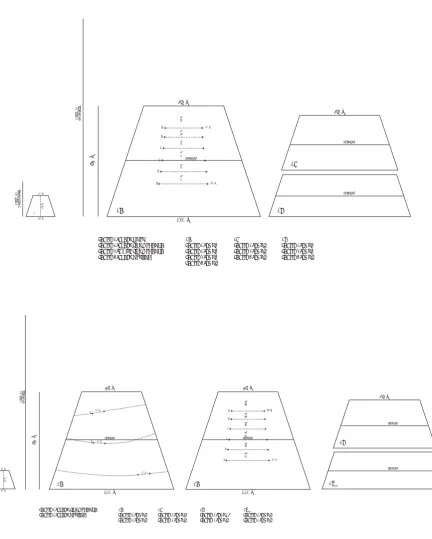
To understand the sizing systems of the New Zealand fashion industry better, I analysed sizing chart measurements to see if they correlated to a specific body type (see Appendix A for details). Size 12 bust, waist and hip measurements from 11 New Zealand women’s fashion brands were used to determine ratios between the 3 different measuring points, a formula determining different body types was used to identify these (J. Y. Lee et al., 2007). My analysis showed that the majority of size charts are based on two different body shapes, the top hourglass (hourglass with broader shoulders) and bottom hourglass (hourglass with broader hips). The measurements between the designers bust, waist and hip also varied greatly, with the difference in minimum and maximum bust = 4.5cm, waist = 14cm and hip = 12.5cm. The results show that the large variances between waist and hip measurements can lead to greater fit issues within these areas as already observed by Pisut & Connell (2007). They also highlight that body shape and sizing systems within the New Zealand fashion industry can be categorised as a specific shape but, the individual designers use their own sizing systems specific for their garments which creates great variance in fit among brands. When an individual does not fit the particular clothing brand’s fit and sizing system, this can create negative feelings and perception towards their body, instead of blaming the garment itself (Alexander et al., 2005; Kasambala, 2013; Pisut & Connell, 2007). Kasambala (2013) found that women’s perceived body shape affected what they could wear, with 86% of women conscious of their bodies and how garments fit them. Research by Almond (2013) suggests that a woman who fits into a smaller size feels more confident, with clothing size impacting on self worth, attractiveness, career and social life.
The way we feel in our clothing affects our mood and wellbeing in relation to how we feel about ourselves. Wellbeing is becoming increasingly sought after in today’s society, with perceptions and experiences of wellbeing constantly differing and shifting (Sointu, 2005). Wellbeing includes physiological health and emotional, social and spiritual aspects of an individual (Painter, Fuller, & Atkinson, 2012). Enhancing positive experiences and feelings associated with body and garment interaction remains crucial to fashion design and individual wellbeing. “Body image has strong implications for the overall wellbeing of a person” (H.-R. Lee et al., 2014, p. 1343) which is inf luenced either positively or negatively by aspects of design and the actions of the fashion industry.
We are surrounded by information portraying ideals of how we should look and feel. When considering body and garment, it becomes hard to distinguish the difference between what we think we feel and see, or if this is swayed by the idealist views fed to us. Mindfulness is an attribute of consciousness, believed to promote wellbeing (Brown & Ryan, 2003), it is important to be mindful of surroundings and decision processes when considering the body with garment. If individuals are preoccupied, what is present
becomes blurred (Brown & Ryan, 2003). A focus is required without def lection with the individual refraining from compulsive, automatic thoughts, habits and unhealthy behaviour patterns (Brown & Ryan, 2003). Brown & Ryan (2003) found that those that are more mindful of their behaviour and able to alter emotional states, are less likely to be self conscious and socially anxious. It is important to promote awareness of mindfulness for individuals to make conscious decisions towards their body with garment. Taking the time to analyse our bodies and what we wear with an unbiased opinion, in an effort to remove the subconscious ideals from mind and be able to express one’s body to dress freely, is a positive shift. Clothing has the capacity to promote different emotions in the wearer. If conscious decisions are made to return to the benefits sought from clothing that promote positive feelings and emotions, this may enhance the wearer’s level of wellbeing (Kinley, 2010).
Fashion provides individuality and social acceptance (Azuma & Fernie, 2003) and is used to express personality and differentiation, playing on emotional needs and external symbols (Niinimäki, 2010). Within each society there are many cultural factors that are continually evolving and shaping individuality and clothing choice such as current trends, body shape, lifestyle and geographic location (Devarajan, P. & Istook, C. L., 2004; Kinley, 2010; Pisut & Connell, 2007). Our possessions are part of our extended self, visually expressing our self-identity6 and ref lecting
who we are (Apeagyei et al., 2007; Belk, 1988; Crane, 2000; Davis, 1994; Kaiser & Kaiser, 1997).
How we see ourselves matches either our actual or ideal self (Goldsmith, Flynn, & Moore, 1996) which is linked to perceived self-image, self-concept and self-esteem (Otieno, Harrow, & Lea-Greenwood, 2005), which can be expressed through clothing. How we express ourselves can be displayed through the clothes we wear, “clothes are activated by the wearing of them just as bodies are actualised by the clothes they wear” (Craik, 1993, p. 16). Clothing can be used as a form of communication, or a type of visual text which expresses perception of oneself to others (Crane & Bovone, 2006; Kaiser & Kaiser, 1997). One’s projection of appearance can carry and transmit messages about personal identity, including values, attitudes (M. Evans, 1989), cultural and social affiliation (Thesander, 1997), personality, sociability and mood (Apeagyei et al., 2007; Kaiser & Kaiser, 1997).
Individuals require different things from clothing (Devarajan, P. & Istook, C. L., 2004) choosing to wear clothing for certain beneficial reasons, such as self-improvement, social status/prestige, sex appeal/ femininity, fashion image, function/comfort and figure f law compensation (Kinley, 2010; Shim & Bickle, 1994). Individuals choose certain brands they feel best match their personality, forming self expression (M. Evans, 1989) and giving the wearer a sense of identity to define themselves in relationship to others (Davis, 1994). Strong emotional attachment can be the result of the design satisfying the symbolic needs and values of the individual, developing meaning and emotions (Thomson, MacInnis, & Whan Park, 2005), which can sometimes span the lifespan of an item (Niinimäki & Hassi, 2011).
F
ashion design elements such as silhouette, shape, proportion, balance and appearance interact with the body. Liechty et al. (2010), Rasband (1994) and Sidberry (2011) discuss dressing the body, emphasising that these design elements should create a natural relationship between body and garment with this modifying perceptions of self positively or negatively. Koda (2001) suggests that “fashions great seduction is its mutability” (p. 8), clothing has the ability to camouf lage perceived faults and enhance certain characteristics, in an effort to “bring the body closer to an elusive transient ideal” (p. 12). These researchers imply that particular parts of the body and individual perceptions of body that do not conform to the ideal are modified by defining, emphasizing or camouf laging through dress. This design-led research project questions these approaches that modify the body through dress, by exploring the garment and body relationship and subverting conventional body modifications and standardisation through design and dress.As a reaction to these methods of dress in opposition to the conformity of body to ideals, several fashion designers have used “dress to disguise the body’s contours altogether, masking the body in architectural proportions that encase the entire body within a superstructure” (Quinn, 2003, p. 234). Japanese designers Issey Miyake, Yohji Yamamoto and Rei Kawakubo have rejected western ideals of dress to focus on the body’s shape and instead blur the boundaries between dress and body. This puts focus on the sensations of the wearer with the garment, and garment as shape, rather than the dressed body mirroring the stereotypical ideal body. Through fashion, Japanese designers “deconstruct European aesthetics and… encourage people to reconsider their Western ideals of beauty” (Fukai, 2010, p. 18). Yamamoto and Miyake commonly use design to test these ideals and shape the body into a form rather than following the natural shape of the body (Quinn, 2003) (Figure 3 & Figure 4).
Rei Kawakubo founder of Comme Des Garçons questions “stereotypical images and perceptions of women through fashion” (English, 2011, p. 69) increasing freedom from the stereotypical Western ideal body image with its social constraints and conventions (English, 2011). Kawakubo’s design direction offers new and challenging shapes and silhouettes that modify the figure. Her designs provoke a shift in a direction against all norms, challenging historical, current and future ideals.
Some methods of dress have focused on balancing the body with varying design elements to be more aesthetically pleasing (Liechty et al., 2010; Rasband, 1994; Woodall & Constantine, 2014). In doing so, the body tends to be divided horizontally into upper and lower halves. Japanese designers Yamamoto and Kawakubo interrupt this by merging proportions of the body, seeing beauty in asymmetry of design. Yamamoto “has consistently found beauty in a garment which drapes and wraps the body in an asymmetrical way…he became renowned for the long, loose shapes,
Figure 3 (top) Yohji Yamamoto Wedding dress (Hodge & Mears, 2006, pp. 250–251) .
[image:25.595.136.453.399.621.2]Figure 5 Comme Des Garcons, Fall 2017 Ready-to-Wear Show (Vogue, 2017a).
the antithesis of the Western concept of the female shape” (English, 2011, p. 62). Kawakubo introduces asymmetry of the body (Koda, 2001) and “challenges fashion convention by producing…designs that are radical in structure and form, extending beyond the realms of normative fashion” (Crewe, 2010, p. 2101).
Figure 6 Cristobal Balenciaga ‘Le Chou Noir’, 1967 (Koda, 2001, p. 89).
Figure 7 (top) Issey Miyake Fall 2017 Ready-to-Wear Show (Vogue, 2017b) .
Changes in body ideals over time show trends with shifts in economic, social and cultural factors, impacting and inf luencing the body ideals of the era. The perception of the ideal body is continuously changing (Apeagyei et al., 2007), this is created by societies (LaBat & DeLong, 1990) and differs between cultures (Fiore & Kimle, 1997; Kaiser & Kaiser, 1997). The unpredictability and changeability of body shape, suggests that the future of ideals needs to shift, especially with the increase in exposure of the diversity of body.
Mackinney-Valentin (2013) suggests that
with current sociocultural shifts of body, gender, sexuality, ethnicity and age, and the rise in consumer independence, it is more important than ever for fashion marketing to adopt and ref lect consumer practice when considering fashion faces for campaigns and the runway (p.25).
The fashion industry’s use of imagery and media to promote beauty and body ideals, suggests something that may not be obtainable to most, especially when many of these images have been digitally modified to remove imperfections. Researchers Harmon & Rudd (2016) acknowledge the psychological impact that these images have on individuals, so looked at adding warning labels or disclaimers on fashion advertisements to inform readers of touched-up images, to help improve body satisfaction (Harmon & Rudd, 2016; Slater, Tiggemann, Firth, & Hawkins, 2012).
The increase of designers publicly showcasing their awareness of these shifts is slowly on the rise, with many fashion weeks around the world exhibiting a greater acceptance of differences in body and gender. In 2001 Alexander McQueen showcased Michelle Olley posing naked amongst models, “turning conventional ideas of beauty upside down” (C. Evans, 2003, p. 98)(Figure 9), and “trying to trap something that wasn’t conventionally beautiful to show that beauty comes from within” (Bolton, Frankel, Blanks, & Sundsbø, 2011, p. 140). Jean-Paul Gaultier’s SS 2011 show included Beth Ditto (who was a size 28) to model, representing a move to work against clichés of body and beauty (Mackinney-Valentin, 2013)(Figure 10). The inclusiveness of human diversity of body and gender is a current sociocultural focus and although small changes are happening, still stereotypical figures and ideals of beauty are predominant throughout fashion images, media and shows.
Societies have historically and continue to categorise individuals into gender stereotypical groups (Rasmussen, 2015), this has been the role of fashion specifically in the Western world, where fit has assisted in defining gender through dress. However, in todays society the interpretation of gender and gender identity is changing rapidly (Rawsthorn, 2016). Yamamoto and Kawakubo use “fashion as their medium…and…consistently explore issues surrounding body shape, sensuality, sexuality and the satirical gender-binary” (Wilcox, 2001, p. 31). More recently, at the 2016 New York Fashion Week designer Christian Siriano made a point of dressing women of all shapes and sizes, using plus sized models, which showed a statement of inclusivity and diversity (Moran, 2016), disrupting the industry norms. Gender identity is an important issue in design today, with design needing to be more f luid to keep up with the changing expressions of gender (Rawsthorn, 2016). Aspects and elements of design can be genderless, or at least gender neutral, through the use of non-gender specific shape and colour such as black or white (Rawsthorn, 2016). Adam Geczy and Vicki Karaminas (2017) suggest that “authentic androgyny would involve a muting, or a melding, of gender-specific garments, accessories and styling methods to obliterate any biological reading of sex.” (p. 105).
Miyake and Chalayan sometimes hide the contours of the body underneath and “sexuality often becomes ambiguous”(English, 2011, p. 29), the shape of the design blurs the space between body and garment and the shape within becomes obscured. Chalayan’s sculpted pink tulle dress “muted the potential sexual impact of the female body by blending its contours into an undefined and asexual form” (Koda, 2001, p. 89)(Figure 8). Yamamoto’s designs are frequently black, loose, asymmetrical with enveloping drapes, showing tensions between sexuality and androgyny, freedom and restriction (Wenders, 2013).
Body is representative of a state of mind or state of being (Clark, Chalayan, & Violette, 2011). Design and gender identity is affected by sociocultural systems, with media playing a large role in this stereotyping of genders and which group one belongs to (Rawsthorn, 2016).
This practice based design research questions the influence of body ideals and body categorisation methods on women’s body shape, individual dress expression and wellbeing. For this project, experimental pieces of clothing are created that consider the diversity of women’s body shapes and self-reflection of dress.
My investigation started with in-depth discussions with a small group of diverse women to gain insight to the relevance of defined body types, and their own perceptions and choices of garment design for personal identity and expression. This research along with other design literature informs a reiterative design process of draping, drawing and cutting to create new volume, shapes and silhouette illusions to reflect the subjective perceptions of body and dress.
D E S I G N P R O C E S S
INTERVIEWS
with
WOMEN
T
his research project explores the complexities of body shape and design and the impact body ideals have on an individual’s sense of self and choice of clothing. To understand this interrelationship better, a series of initial interviews were conducted with women of varying body shapes. The interviews aimed to find out what women wear and why, if they dressed to modify their shape to an ideal and the effect this has on self-expression and wellbeing. I wanted to talk to women to find out their perception and responses to their own body shape and choice of designs they wear. Ten New Zealand women were selected to partake in the interview. Initially I wanted a larger sample group of women to participate in the interviews as this would give a broader range of information. However, the number of participants was reduced, as the amount of information gathered from the open-ended questions would be too large for this particular project and timeframe. Only women were selected for the focus group, as this project is focussed specifically on women and their relationship to clothing. The women chosen were of a range of different ages, social and cultural backgrounds and with varying body shapes.Ethics approval was sought from Massey University to carry out this aspect of the research.
The interviewees were asked to select 2-3 ‘go to’ garments from their wardrobe to bring and discuss at the interview. They were asked a series of open-ended questions focussing on their selected choices (see Appendix B for details). The questions facilitated in-depth discussions on the participant’s relationship to their clothing and body shape. They were also asked to self-select a body shape (Figure 11) that was perceived to match their own, this could be one shape or a combination of the shapes.
Figure 11 (top) Body shapes used for interviewee self-selection a summation from Devarajan, P. & Istook, C. L., 2004; Faust & Carrier, 2014; Liechty et al., 2010; Rasband, 1994; Sidberry, 2011; Woodall & Constantine, 2014.
The analysis of information gathered from the interviews revealed interesting results. The garments the women discussed disclosed information about the elements of design that satisfied the wearer both physically and psychologically. I found the information gathered relevant to myself as an industry practitioner as well as useful for initiating key starting points in this design process. I won’t be detailing all findings of the responses, which were more relevant to market research or a commercial outcome (see Appendix D for details), as I am focussing only on the exploratory aims of this design project.
Body Shape Categorisation
INTERVIEW FINDINGS
A
review of relevant literature identified up to 12 different body types used to categorise women’s body shape, with various names assigned to these (Faust & Carrier, 2014; Istook, C. L. et al., 2004; Liechty et al., 2010; Rasband, 1994; Sidberry, 2011; Woodall & Constantine, 2014). This information was analysed and in alignment with this reductionist practice of categorisation, I simplified the number of body types down to five and allocated a geometric shape to each (refer to Appendix E). The geometric shapes assigned to the body types are frequently mentioned throughout writing and similarly used by Devarajan & Istook (2004) for their research also.The identified shapes were ‘straight up and down’ (Rectangle),’narrow top/wide lower’ (Triangle), ‘equal top and lower’ (Hourglass), ‘wide top/narrow lower’ (Inverted triangle) and ‘round midsection’ (Rounded)(Figure 12). It is interesting to note that the use of 2-dimensional geometric shapes aligns to the basic system of f lat pattern making predominant in the fashion industry. These simple shapes approximate the body similar to the tailoring matrix (Lindqvist, 2013), whereby measurements, lines and shapes are used 2-dimensionally to average the measurements of multiple bodies, forming simplified pattern shapes prior to creating 3-dimensional garments.
The body shapes selected by interviewees were grouped from most to least common. Overall, the findings from the
interviews revealed the complexity and diversity of women’s body types. Possibly due to the popularised body shape categorisations, the women were able to identify their body to a geometric shape, but in most cases they identified with a combination of body shapes rather than a single shape (see Appendix F for details). The three most common body types identified were ‘hourglass’ (41%), ‘rectangle’ (24%) and ‘triangle’ (18%), these are also consistent with research findings (Istook, C. L. et al., 2004; J. Y. Lee et al., 2007; Pisut & Connell, 2007; Vuruskan & Bulgun, 2011). However, in most cases these shapes were selected in combination with another body type (Figure 12), and half the women also commented on other proportions of their body that did not align to the geometric shapes, such as bust size. It was these responses that reinforced the notion that simplification of shapes is both unrealistic and irrelevant to the individual.
“I don’t know, because perception its so hard” (Anonymous,
personal communication, March 2, 2016b).
Another respondent suggested her body was a “real mix, broad shoulders, hips aren’t wider than my shoulders, but I
would normally say I was more of a pear shape” (Anonymous,
personal communication, March 10, 2016).
Body Ideals
Individual Body Image, Fit, Expression, Wellbeing
T
he body types the women identified themselves withplayed a role in how they perceived their shape in relationship to dress. All women were aware of the particular areas of their body they perceived as positive and/or negative. When considering dress and their shape, they all wore clothes with the purpose to modify their body in accordance to an ideal shape by either enhancing or disguising to a certain degree. The women’s chosen items of clothing were compared to their body shape, to see if methods for dressing a specific body type (Liechty et al., 2010; Rasband, 1994; Woodall & Constantine, 2014) were represented. Half of the women interviewed had consciously or subconsciously used dress to balance areas of their body. These women through dress enhanced, disguised and balanced perceived problem areas of their body, to closer align to an ideal body shape (see Appendix G for details).
“I’m really long through the upper torso, so a high waisted pant would look better than a low rise…my legs look short”
(Anonymous, personal communication, March 1, 2016e). This suggests that her awareness of proportions guide her dress, balancing her body portions by shortening her torso length to elongate legs to be more like a perceived ideal shape.
“I don’t want to feature my bum” so uses methods to disguise
it such as tunics and “patterns to blend my body”. ”Comes
T
he women’s ‘go to’ garments were grouped into types with the most common identified as being the dress (Figure 13). Garment aspects such as shape, silhouette, fabric, physical and psychological fit preferences, were analysed to get a better understanding of why these pieces were chosen. Fit preferences varied among the women interviewed, especially with regard to physical fit. Comments regarding fit were quite general with most women stating that their garments were ‘comfortable’, ‘easy’, ‘effortless’ and that they felt ‘good’ wearing them. These descriptor comments aligned fit with the notion of wellbeing, for example one woman talked about her jacket, stating that “I feel good in it…I just don’t have to worry about if I’m feeling good or bad”(Anonymous, personal communication, February 27, 2016), suggesting the style accommodated her mood and feelings towards self, whether positive or negative. Another comment about how a garment made one woman feel, was “I feel good,
and I consistently feel good in it” (Anonymous, personal
communication, March 1, 2016e). These comments also support how positive feelings towards self can be created by the nature of the garment.
It was this information I was most interested in; the women’s feelings associated with the pieces when wearing them, ref lecting a mood conveyed or expression of the individual. Some of the most commonly mentioned words
down to how you feel about your body” (Anonymous,
personal communication, February 27, 2016).
“I think when I’m slimmer not so much, more adventurous, definitely go for the garment…when I’m bigger, I will go for what I’m comfortable in and what will hide the areas I’m not comfortable in…once I go over a size 12…I’ d feel more self-conscious in certain clothes so therefore I avoid them…size 12 and up its the way it fits on me, body type, then the opposite…
when a size 10” (Anonymous, personal communication,
March 8, 2016a).
This shows that the size this woman fits into determines how she feels about herself in certain clothes and also impacts on fit preferences and expression through dressing.
The remaining five women did consider their body shape, but didn’t use dress to the same extent to align the body closer to an ideal. All women thought of their body shape when considering dress and design elements of garments however, there were a range of variances in this. For example some chose a style to best express themselves rather than a choice based on their body shape. These responses acknowledge the degree of differentiation of how body shape is considered, how the body inf luences ones sense of self and ones choice of dress.
used to describe feelings were ‘ feminine’, ‘empowerment’,
‘confidence’, ‘tough’, ‘strong’, ‘edgy’, ‘protected’ and ‘secure’
(see Appendix H for details).
These descriptive words convey strong messages on how the individuals feel in their garments, they also suggest that this is how the women want to convey themselves to the external environment.
For example, one interviewee stated “I feel secure in
it, relaxed, feel myself in it” (Anonymous, personal
communication, March 10, 2016) describing the garment like a ‘security blanket’, suggesting she seeks protection in the piece to feel confident and positive towards self.
While body shape seems to be important for most when considering dress, one woman talked about how she primarily uses dress to express mood and identity and body was considered subconsciously. She spoke freely about using her clothing to make her feel ‘powerful’ saying
“that’s how I choose to dress…I like a certain amount of attitude in how I dress…I like to feel good, good isn’t necessarily about covering or accentuating the best things about my figure its about projecting a certain part of my personality…when I choose to put clothes on in the morning I do have a mood in mind…I don’t wear this to cover anything
up” (Anonymous, personal communication, March 8,
T
hrough dress we may consciously and subconsciously try to adhere to methods of dress that encourage us to modify and balance our bodies closer to an ideal. This design project is an explorative method of subverting and overturning reductionist theories of body ideals and shapes that guide women to dress. The designs aim to promote natural body shape and increase body confidence, by focusing on the interrelationship between the wearer and garment, challenging more normative modes of female dressing. The design outcome is a conceptual response to the future of shape, structure and silhouette of design and its interrelationship with body. The designs hope to challenge accepted norms of body ideals, enabling women to express themselves and their body freely through design, to encourage body confidence and increase wellbeing.My unique design process was initiated and continued with mindful consideration from the discussions had with women about the important aspects of individual garment choice and associated body shapes. This exploratory project challenges methods of dress categorisation outlined in literature and tests conventional design and pattern methods that focus on balancing the female figure. The design development process focuses on the 2-D geometric shapes used for women’s body shape categorisation, with the most common shapes triggering the starting phases of design development. These shapes have been previously used as a method to minimise and reduce the female form for styling and dressing purposes to align closer to a socialised and cultural body ideal. I wanted to develop this association of ‘shape on shape on shape’ through design research by subverting ideas of body conformity. Using design shape as expression of the individual wearer through dramatic enlargement and transformation on the body I created a more abstract shape that playfully considers the space between body and garment.
The designs consider the responses of women and body diversity throughout the process, allowing the wearer to use the design to transform and modify perceptions of shape, adapting and continually connecting to mood and individual expression of the wearer.
CHALLENGING PATTERN METHODS
M
y experience working in the fashion industry as a pattern maker involves using a combination of both drape and traditional f lat pattern making methods however, for this research project I wanted to challenge conventional industry methods and explore new techniques of creating garments. I disrupt these processes by initially constructing large 3-D geometric fabric shapes, which are draped on an unmarked dress form. The most common shapes from interviews are enlarged dramatically and sewn into 3-D fabric forms, which are manipulated on and around the body, transforming, moulding and exaggerating shape, structure and space between fabric and body. I did this because I wanted to change the association of 2-D shape alignment with the body and acknowledge the body’s 3-dimensionality. Rather than applying 2-D shapes to the body to conform to its silhouette, signifying the relevance of 2-D geometric shape used for categorisation, I did the extreme opposite and applied enlarged 3-D shapes to the body, to oppose this alignment and reduction of the female body.Conventional f lat pattern making involves creating 2-D shapes which join together forming 3-D shapes that contour the body (McKinney, Stanley, Plummer, Thompson, & Rorah, 2016). To help shape to the contours of the body, curved lines, darts, added fullness and contouring (Armstrong, 2006; Fukai, 2010; McKinney et al., 2016) are used, tailoring makes the garments fit like a glove, with the body idealised through Western fashion (Fukai, 2010). The most common method of pattern making starts with a block pattern, this ref lects measurements of an ideal figure type. Patterns made from blocks require visualization of the body, gravity and movement within the pattern pieces (Lindqvist, 2014).
My process started by using a shape traditionally used to approximate the body, similar to that of blocks in pattern making, which I used to challenge these notions of body conformity. This unique process involves applying an already formed 3-D shape to the body, with the body remaining a central focus throughout, with shape and structure formed with and around the body. The f lat patterns formed have no relationship to a specific body shape, with no definitive back or front and horizontal (X) and vertical (Y) axes have been eliminated. They don’t form the shape of the body in the f lat pattern, the shape of the body is formed around the body of
draping, of the already formed shape.
Rickard Lindqvist (2014) researches alternative methods of pattern making, and believes like the Japanese designers, that fashion design should be primarily focused on the “expression…of the body” (p. 10) and “the relationship between the body and fabric” (p. 10). Lindqvist (2013) believes that the body is not a constant and it is one-dimensional thinking that the perception of a “well-fitted garment is one that follows the shape of the wearer’s body”(p.46). By eliminating conventional pattern methods such as tailored contouring and blocks, allows conscious focus of the body and individual needs of women without a mass production emphasis.
SCALED 3-D SAMPLING
and
DRAWING
G
eometrical shapes can be formed into new 3-D shapes around the body, for example the Japanese Kimono made from a fabric rectangle is folded around each body part and sewn together to form a garment (Lindqvist, 2013). Writers Tomoko Nakamichi (2007, 2010) and Julian Roberts (2013) have used geometrical shapes in pattern making, they “build a shape and apply it to the body in order to find new expressions” (Lindqvist, 2013, p. 13), turning f lat geometrical shapes into 3-D shapes and then applying to the body to create garments (Lindqvist, 2014).For the first phase of the design process, the most common geometric shapes (‘hourglass’ and ‘rectangle’) from the women’s interview answers are used as the initial starting point. This design phase works through a methodical process of analysing geometric shapes on the body form, subverting the use of shape from categorisation methods.
Rather than using a simplistic 2-D shape and applying to the body like regular pattern techniques, I create large scaled 3-D samples and then apply these to the body. Roberts (2013) uses geometric shapes such as circles and rectangles, cut and sewn together to create tubular shapes for the body to enter, the shapes are created using fabric widths and general measurements rather than a physical pattern. My design process also relies on the width of the fabric to determine the proportion and scale of the geometric shapes, which are cut direct from the fabric with no initial patterns made. By sewing the geometrical shapes together first and then analysing shape on the body after, gives more room for exploration of shape. In comparison to traditional design and pattern methods where garment shape is determined prior to trying on the body. Roberts (2013) works without knowing the type of garment he is making, he is not consciously thinking of this when he starts. This allows for more freedom of design. My design process works similarly where there is no garment type in mind throughout the design development phase, it progresses organically, with no known outcome (Campbell, 2014). The abstraction, transformation and ref lection of the 3-D scaled shapes by manipulating and moving them on and around the body, allows for a more creative approach to the drape and design process.
It was important to be mindful throughout the design phase of not using any design methods that suggest conformity of the figure to body ideals. Care is taken to use tailoring methods alternatively, for example, positioning areas of
suppression, such as tucks, darts and fullness in different areas around the body, and to see how shape develops naturally away from the body and not following the body’s contours.
The 3-D ‘rectangle’ shape is toiled7 initially in viscose
georgette. I chose to use this fabric, as it was one of the most common fabrics from the largest group of ‘go to’ garments ‘dresses’. The ‘rectangle’ shape had four sides and a square base. The scale and dimension is determined by the fabric width with the shape cut direct from the cloth. The toile is draped and manipulated around the dress form, analysing from different perspectives to see the shape created by twisting, rearranging, f lipping and folding to form new shape.
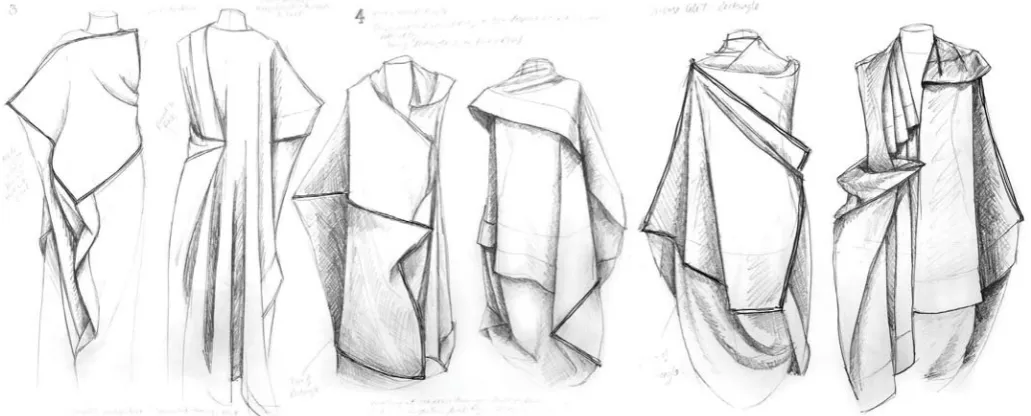
An important element of design development for me is to draw, by sketching the draped shapes created on the dress form helps process the fabric and body relationship. Drawing design ideas helps me to understand the movement and interaction of fabric around the body. It creates a deeper understanding of the shape forming and the amount of volume created or not created, almost generating a sense of physically being within the fabric myself. It allows me to interpret the folding, structure and twisting more in depth, analysing contrast and shadowing as line and shading changes and progresses throughout the drawings.
The ‘rectangle’ toile forms interesting shape and asymmetry. The fabric is pleated and folded at different points around the form creating unusual areas of suppression, altering the body’s silhouette as seen in Figure 14. The weight of the georgette fabric used for the initial toiles forms f luid drape on the dress form however, for the outcome that I want to achieve a more structured fabric is required.
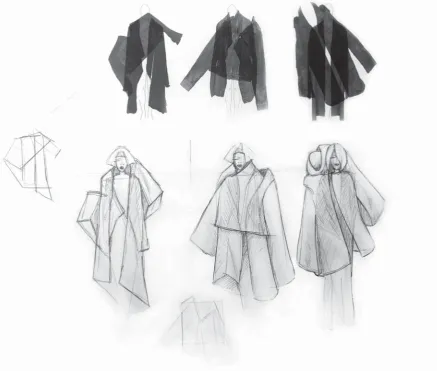
For the second set of 3-D toiles I choose to use a cotton calico, I construct a single four-sided rectangle and play with this on the dress form. The calico creates a more desirable structure and volume on and around the body. I dart out a section of the ‘rectangle’ on one shoulder to form an ‘anchor point’, this supports the toile on the form. To increase volume further I decide to add a second 3-D ‘rectangle’ toile to the first, this creating greater surface area to manipulate and move around the body as seen in Figure 15 and Figure 16.
The ‘rectangles’ are shifted, rotated, ref lected and transformed onto the front, back and side of the figure, allowing the 3-D toile to interact with the shape of the form unconventionally. Alexander McQueen designed from the side of the body as it shows most of the curves, this way he could get the best proportion and silhouette to f low around the body (Bolton et al., 2011). Japanese designers also work around the body, creating oversized garments that move with and independently of the figure, with a “void created between body and cloth” (Wilcox, 2001, p. 30). The area of dart suppression that I created on the shoulder is shifted around the form. I concentrate on moving the area of suppression to parts of the body where this normally would not occur, darts normally follow the contours of the body to add shaping for fitting purposes. I want to do the opposite, so therefore the silhouette of the body within cannot be recognised as illustrated in Figure 17 and Figure 18.
The third toile is constructed out of black and white calico, consisting of two contrasting four sided trapezoidal prism
shapes, joined together at the narrowest end to form an ‘hourglass’. The ‘hourglass’ is inverted with the white half inside of black half to explore wrapping around the body (Figure 19). Using the contrasting black and white to colour block creates unusual focus areas, illusion of shape and voided space on and around the form.
Yamamoto starts his design from the back of the body at the two points above the shoulder blades (English, 2011), I too naturally drape from the back of the body. I drape the toiles from the centre back (CB) neck and shoulders with these forming the main structural anchor points to hold the weight of the pieces. The initial balance points for designing are the CB neck and shoulders, while the CB neck and waist are the main structural points, from where the garment hangs (Lindqvist, 2014).
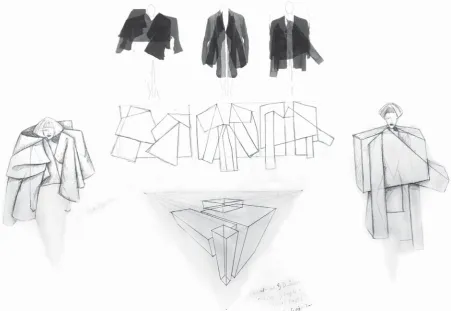
The fabric is used to morph parts of the body such as shoulders and head and exaggerates the body asymmetrically, the shapes evolve as they shift and open up around body, forming different silhouettes and contrast as seen in Figure 20.
The ‘hourglass’ shape is then opened up and positioned asymmetrically on the figure, opening the shape up enables the fabric to envelope the body, creating more volume and blurring the shape underneath. The fabric across the back shoulders is pleated out horizontally creating a ‘kick out’ section, this armour-like feature adds structure and stability across the back. This shape is then rotated around the body to form different shapes and silhouettes as illustrated in Figure 21 and Figure 22.