
A microarray approach to understanding stress in a coral reef fish
16
0
0
Full text
(2) A microarray approach to understanding stress in a coral reef fish. Thesis submitted by Karin Sonja KASSAHN B.Sc.(Hons), The University of Adelaide in November 2006. for the degree of Doctor of Philosophy in Zoology within the School of Marine and Tropical Biology James Cook University.
(3) Statement of Access. I, the undersigned, the author of this thesis, understand that James Cook University will make this thesis available for use within the University Library and, via the Australian Digital Theses network, for use elsewhere. I understand that, as an unpublished work, a thesis has significant protection under the Copyright Act and; I wish this work to be embargoed until 22nd of February 2008.. (Karin Sonja Kassahn). (Date). i.
(4) Statement of Sources. DECLARATION. I declare that this thesis is my own work and has not been submitted in any form for another degree or diploma at any university or other institution of tertiary education. Information derived from the published or unpublished work of others has been acknowledged in the text and a list of references is given.. (Karin Sonja Kassahn). (Date). ii.
(5) Electronic Copy. I, the undersigned, the author of this work, declare that the electronic copy of this thesis provided to James Cook University, is an accurate copy of the print thesis submitted, within the limits of the technology available.. (Karin Sonja Kassahn). (Date). iii.
(6) Statement of the contribution of others. All chapters of this thesis include collaborative work with my supervisors Prof. Ross H. Crozier and Dr. M. Julian Caley. The thesis chapters two, three, and four also include collaborative work with Dr. Alister C. Ward, Dr. Glenn Stone and Dr. Ashley R. Connolly. While undertaking these collaborations I was responsible for the project concept and design, the collection of the majority of the samples, the laboratory work, the statistical analyses, synthesis, and the preparation of manuscripts and this thesis. Funding for this project was provided by James Cook University and the Great Barrier Reef Marine Park Authority under the Science for Management Award program. My supervisors assisted with funds obtained from James Cook University (RHC), The Australian Research Council (RHC, MJC), The Estate of W. V. Scott (RHC), and the Hermon Slade Foundation (MJC). In-kind support was provided by Dr. Alister C. Ward (microarray slides), and the Adelaide Microarray Facility (use of laboratory facilities). I received stipend support from an International Postgraduate Research Scholarship (Australian Government) and School of Tropical Biology (James Cook University) as well as a completion scholarship from James Cook University. Lewis Anderson and Dr. Line Bay provided assistance with the collection of Pomacentrus moluccensis and the performance of stress experiments. Zebrafish genomic DNA samples were kindly provided by the Zebrafish Facility, The University of Adelaide. Dr. Glenn Stone provided support with the experimental design of the microarray experiments and the statistical analyses of the microarray data. Dr. Ashley R. Connolly provided support with the design and performance of the microarray experiments. Ching Crozier provided assistance with the laboratory work.. iv.
(7) Dr. Andrew Perkins, Milena Gongora, Simon Wilkins and The ARC Special Research Centre in Function and Applied Genomics at The Institute for Molecular Bioscience, University of Queensland, provided assistance with the annotation of the zebrafish microarray features. Lauryne Grant, Caroline Chong, Zoe Baker, and Dr. Matthew Symonds provided help with proof-reading and editing of this thesis.. This work conforms to ethical requirements at relevant authorities and collection of animals was authorised from the Great Barrier Reef Marine Park Authority, permit number G04/12331.1.. v.
(8) Acknowledgements Many people have helped me conduct and complete the research in this thesis. I would like to thank: • My supervisors and mentors, Prof. Ross Crozier and Dr. Julian Caley, for their continuous support and guidance. It has been great working with you. Thank you for all your support. • My collaborators Dr. Ashley Connolly, Dr. Alister Ward and Dr. Glenn Stone for their many contributions to this work. It has been very enjoyable working with you. • Ching Crozier for her help with the laboratory work and being such a kind and accommodating lab manager. • Prof. David Miller for his advice with the microarray experiments and many interesting discussions. • The organisations that provided financial assistance: James Cook University, GBRMPA and grants awarded to my supervisors. • Staff at The Lizard Island Research Station, especially Lyle and Anne, for providing assistance during field collections and stress experiments. • The Zebrafish Facility, The University of Adelaide for providing the zebrafish samples. • Dr. Andrew Perkins, Milena Gongora, and Simon Wilkins at the Institute for Molecular Bioscience, University of Queensland, for help with the annotation of the zebrafish array features. • The members of the Crozierlab and fellow postgraduate students and post-docs at JCU, in particular Lewis Anderson, Zoe Baker, Michelle Boyle, Sara Ceccarelli, Caroline Chong, Faye Christidis, Jane DeGabriel, Kirsten Evertz, Michelle Guzik, Kylie Gorringe, Ben Moore, Thomas Rayner, Familie Schlüns, Angela Shuetrim, Matthew Symonds for many discussions, encouragement throughout this project and, above all, your friendship. • My officemates Lauryne Grant and Rodrigo Esparza-Salas for many discussions, hours of entertainment, and your fabulous officemateship.. vi.
(9) General Abstract Coral reef fishes are expected to experience a rise in sea surface temperatures due to climate change. How well tropical reef fishes will respond to these increased temperatures and which genes are important in the response to elevated temperatures is not known. Microarray technology provides a powerful tool for gene discovery studies, but the development of microarrays for individual species can be expensive and time-consuming. There often are, however, microarrays available for related species. I show that inter-species genomic hybridisation experiments can be used to assess which genes are conserved enough for microarray analysis across species, and thus introduce a novel application of microarray technology. I performed a series of tests to determine whether a microarray developed for the zebrafish Danio rerio is useful for measuring gene regulation in the coral reef fish Pomacentrus moluccensis. I hybridised genomic DNA from both taxa onto the D. rerio microarray, and based on significant cross-hybridisation, inferred that most genes share significant sequence similarity between the two taxa. I also sequenced eight nuclear genes. These genes showed an average sequence similarity of 81%. Finally, I used quantitative real-time PCR to validate the microarray data for differential expression. The results of the genomic hybridisation experiments, direct sequence comparisons, and quantitative real-time PCR indicate that the D. rerio microarray is useful for measuring gene regulation in P. moluccensis. I then used the D. rerio microarray to characterise the transcriptional responses of P. moluccensis to elevated temperatures over five days. Heat stress elicited differential expression of 324 genes. The functions of heat-responsive genes indicated that prolonged heat exposure leads to oxidative stress and protein damage, challenges the immune system, and causes reallocation of energy sources. I have shown that a temperature increase of three degrees above normal can lead to significant gene regulation in a coral reef fish suggesting that climate change will have measurable impacts upon coral reef fish physiology. In order to identify upstream regulators of the transcriptional responses observed and test for the presence of a general stress response, I measured the early gene responses of P. moluccensis to hypoxic, hyposmotic, cold and heat shock. Early stress responses three hours after exposure were generally associated with a vii.
(10) suppression of transcription, but the responses of individual genes varied depending on the type of stressor applied. Only a few genes showed consistent regulation across stress treatments. However, a series of gene functions showed consistent responses across stress treatments, suggesting that there are common effects of stress on biological function. I present a conceptual model of the interactions between stress responses at different levels of biological organisation. I propose that stress commonly leads to a reduction in cellular oxygen levels and oxidative stress. Reduced cellular oxygen levels initiate endocrine, cardio-respiratory, and cellular responses many of which are aimed at restoring cellular oxygen balance. Oxidative stress in turn activates certain signal transduction pathways, immediate early genes, and transcription factors. The transcriptional stress profiles measured in environmental genomic studies are likely the result of the activation of these redoxsensitive signalling pathways and transcription factors. Further, I tested whether genes with stress-related functions evolve at accelerated rates. To do this, I competitively hybridised genomic DNA from D. rerio and P. moluccensis to a D. rerio microarray. 985 genes showed evidence of accelerated rates of sequence evolution between D. rerio and P. moluccensis. Rapidly diverging genes were overrepresented for receptor, transcription co-activator, and cell signalling functions, but not for stress-related gene functions. I obtained orthologous sequences to D. rerio for the teleosts Takifugu rubripes and Gasterosteus aculeatus. A selection of rapidly diverging candidate genes showed accelerated rates of sequence evolution across multiple teleost lineages. I have shown that genomic hybridisation experiments on microarrays can be successfully used to identify rapidly diverging genes, in particular in species that currently lack genome sequence data and for which bioinformatic approaches are thus not applicable.. viii.
(11) Table of contents CHAPTER 1 General Introduction…………………………..……………………….1 CHAPTER 2 Heterologous microarray experiments used to identify the early gene response to heat stress in a coral reef fish………….………………………….……...9 Abstract…………………………………………………………...……….………9 Introduction…………………………………..…………………………….…….10 Materials and Methods..…………………………………………………….……12 Thermal stress experiments………………………………………..…..……12 Microarray platform…………………………………………….…….….…13 Comparative genomic DNA hybridisation experiment…………...................13 Microarray analysis of heat-stressed P. moluccensis……………….…..….14 Microarray statistical data analysis and data mining……………….……..14 Quantitative real-time PCR data verification of array data...……….….….17 Direct sequence comparison between D. rerio and P. moluccensis….…..…20 Results……………………………………...…………………………………….20 Estimation of sequence similarity between D. rerio and P. moluccensis……………………………………..…….………………….20 The early gene expression response to heat stress……...…………………..22 Verification of microarray data using real-time PCR……...……………….27 Discussion……………………………………………..…………………………28 Interpreting results from heterologous microarray experiments………...…29 The early gene response to heat stress……………...………………………30 Conclusion………………………………………………….……………………33 CHAPTER 3 The transcriptional responses of a coral reef fish to stress: conservation of gene function responses but variable gene responses…….………..34 Abstract……………………………………………………….………………….34 Introduction………………………………………………………………………35. ix.
(12) Materials and Methods…………………………………………...………………37 Stress experiments…………………………………………………………..37 Microarray platform…………………………………..……………………38 Microarray analysis of stressed P. moluccensis…………………….……...38 Microarray data analysis and data mining…………………….…………...39 Identification of gene functions responsive to stress….…………………….42 Hierarchical clustering and visualisation of gene responses across stress treatments…………………………………………………………….…..42 Results…………………………………………….……………………………...43 The transcriptional responses to prolonged heat…………………………...43 The early gene responses to cold, heat, hypoxic, and hyposmotic stress…...53 The expression profile of stress-responsive genes across treatments…........55 Discussion…………………………………………………………….………….58 Common gene function responses elucidate how stress affects biological function in P. moluccensis……………...…………………..……………59 The gene expression response to prolonged heat………….……………......62 The early gene response to cold shock…………………………..….………64 The early gene response to moderate heat shock shock………….…………65 The early gene response to severe heat shock……….…………...…………65 Acclimation………………….……………………………….…..……….…66 The early gene response to hypoxia….…………………………..…………67 The early gene response to hyposmotic stress…………………………...…68 Strategies for managing and interpreting environmental genomic data.......69 Conclusion…………………………………………...…………………………..71 CHAPTER 4 Using inter-species genomic hybridisations to identify rapidly diverging genes………………………………………………….…………………..72 Abstract…………………………………..…………...………………………….72 Introduction……………………………………………...….....…………………73 Materials and Methods……………………………………..………………….…75 Inter-species genomic DNA hybridisation experiments……....…………….75 Microarray statistical data analysis and data mining……………………...76 Estimation of evolutionary rates across teleost lineages using tree branch lengths........................................................................................................78 x.
(13) Results……..…………………………………………………………………….80 Identification of rapidly diverging genes using inter-species genomic hybridisations............................................................................................80 Functions of rapidly diverging genes……………………………………….83 Evolutionary rates of these rapidly diverging genes in other teleosts..…….90 Discussion………………..………………………………………………………95 Analysis of inter-species genomic hybridisation experiments to identify rapidly diverging genes……………………...………………………......95 Relationship between rates of evolution and gene function........………..….97 Comparative genomics of teleosts…………………………….…………….99 Limitations of IGH experiments for the identification of rapidly diverging genes………….…………………………...……………………………..99 Outlook………………………………………………………………….…100 Conclusion………………………………………………...…...……………….101 CHAPTER 5 Modelling the stress response: molecular and physiological correlates and their evolutionary significance……………………….…………….103 Abstract………………………………………………...……………………….103 Introduction……………………………………………...……………………...104 Stress commonly leads to reduced cellular oxygen levels…………....……108 The endocrine system coordinates stress responses and affects rates of transcription…………..………………………………………………..108 Production of reactive oxygen species during cellular stress………..……110 Oxidative stress causes protein damage and induces a heat shock response………………………………………………..……………………….110 Insights from cell biology – activation of signal transduction pathways and immediate early genes during stress…………….......…………….112 The activation of NFκB, HIF-1α and other transcription factors during stress……………………………………...………………….………....114 An evolutionary perspective on the relationship between stress and adaptive evolution……………………………………….…….………..115 Stress and the effects of climate change on population viability….……….118. xi.
(14) CHAPTER 6 General Discussion………………………………………………….121 General Summary…………………………………………………………...….121 Summary and Discussion of Key Findings………………..…….…...………...122 The performance of heterologous microarray experiments...……………..122 Transcriptional responses of a coral reef fish to environmental stress..….123 The application of microarrays to identify rapidly diverging genes in nonmodel teleost species…………………………...……….……….....125 A conceptual model of the stress response…………………..…….……...126 Overall Conclusions and Future Directions……………………..……………..127 Bibliography…………………………………………………………………….…129 Appendix 1………………………………………………………………………...148 Appendix 2………………………………………………………………………...149 Appendix 3………………………………………………………………………...150 Appendix 4 to 6…………………………………………………………….……...160. xii.
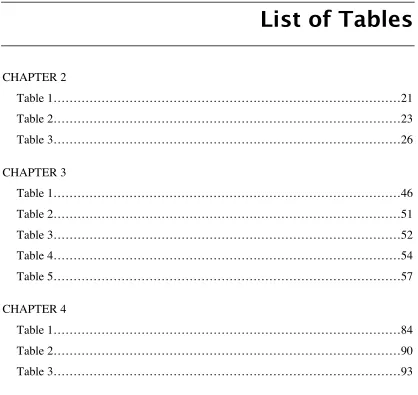
(15) List of Tables CHAPTER 2 Table 1……………………………………………………………………………21 Table 2……………………………………………………………………………23 Table 3……………………………………………………………………………26 CHAPTER 3 Table 1……………………………………………………………………………46 Table 2……………………………………………………………………………51 Table 3……………………………………………………………………………52 Table 4……………………………………………………………………………54 Table 5……………………………………………………………………………57 CHAPTER 4 Table 1……………………………………………………………………………84 Table 2……………………………………………………………………………90 Table 3……………………………………………………………………………93. xiii.
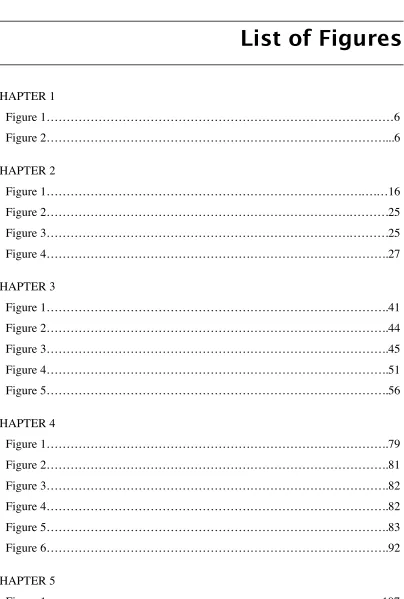
(16) List of Figures CHAPTER 1 Figure 1……………………………………………………………………………6 Figure 2…………………………………………………………………………....6 CHAPTER 2 Figure 1…………………………………………………………………….….…16 Figure 2………………………………………………………………….……….25 Figure 3………………………………………………………………….……….25 Figure 4…………………………………………………………………………..27 CHAPTER 3 Figure 1…………………………………………………………………………..41 Figure 2…………………………………………………………………………..44 Figure 3…………………………………………………………………………..45 Figure 4…………………………………………………………………………..51 Figure 5…………………………………………………………………………..56 CHAPTER 4 Figure 1…………………………………………………………………………..79 Figure 2…………………………………………………………………………..81 Figure 3…………………………………………………………………………..82 Figure 4…………………………………………………………………………..82 Figure 5…………………………………………………………………………..83 Figure 6…………………………………………………………………………..92 CHAPTER 5 Figure 1…………...…………………………………………………………….107. xiv.
(17)
Figure
Related documents
Following epithelial differentiation, genome amplification and differentiation-dependent late gene expression were ob- served in mutant cell lines, but at a rate significantly
A New validated RP-HPLC method has been developed for the quantitative determination of Cefdinir in bulk and pharmaceutical capsule dosage forms. Statistical
Figure 1: NCSP coverage (%) in the three years ending 30 September 2017 by ethnicity, women aged 25–69 years, Total Coverage. Table 1: NCSP coverage (%) in the three years ending
30 NICE, 21 Public Health England, 12 UK Chief Medical Officers, 31 and the WHO 32 recommend treatment of suspected and confirmed influenza for individuals at risk of
(NAM) is an effective and successful procedure enabling the the alveolar segments to increase the overall procedural success in cleft routine at certain centers in western
Data collection: SMART (Bruker, 2002); cell refinement: SAINT (Bruker, 2002); data reduction: SAINT ; program(s) used to solve structure: SHELXS97 (Sheldrick, 1997); program(s) used
Data collection: SMART (Siemens, 1996); cell re®nement: SAINT (Siemens, 1996); data reduction: SAINT ; program(s) used to solve structure: SHELXTL (Sheldrick, 1997); program(s) used
As in the case of astemizole tetrachlorocuprate(II) (Parvez & Braitenbach, 2000), the phenylethyl C atoms are disordered over C20±C27 and C20 0 ±C27 0 , indicating the presence
